3 Days in Madrid: A First-Timer’s Itinerary That Leaves Room to Wander
Three days is a great amount of time for a first visit to Madrid. You can see the major sights, go inside places like the Royal Palace and Prado Museum, and still have time for neighborhood wandering, long meals (like how the Spanish do it!), and Madrid’s famously late evenings.
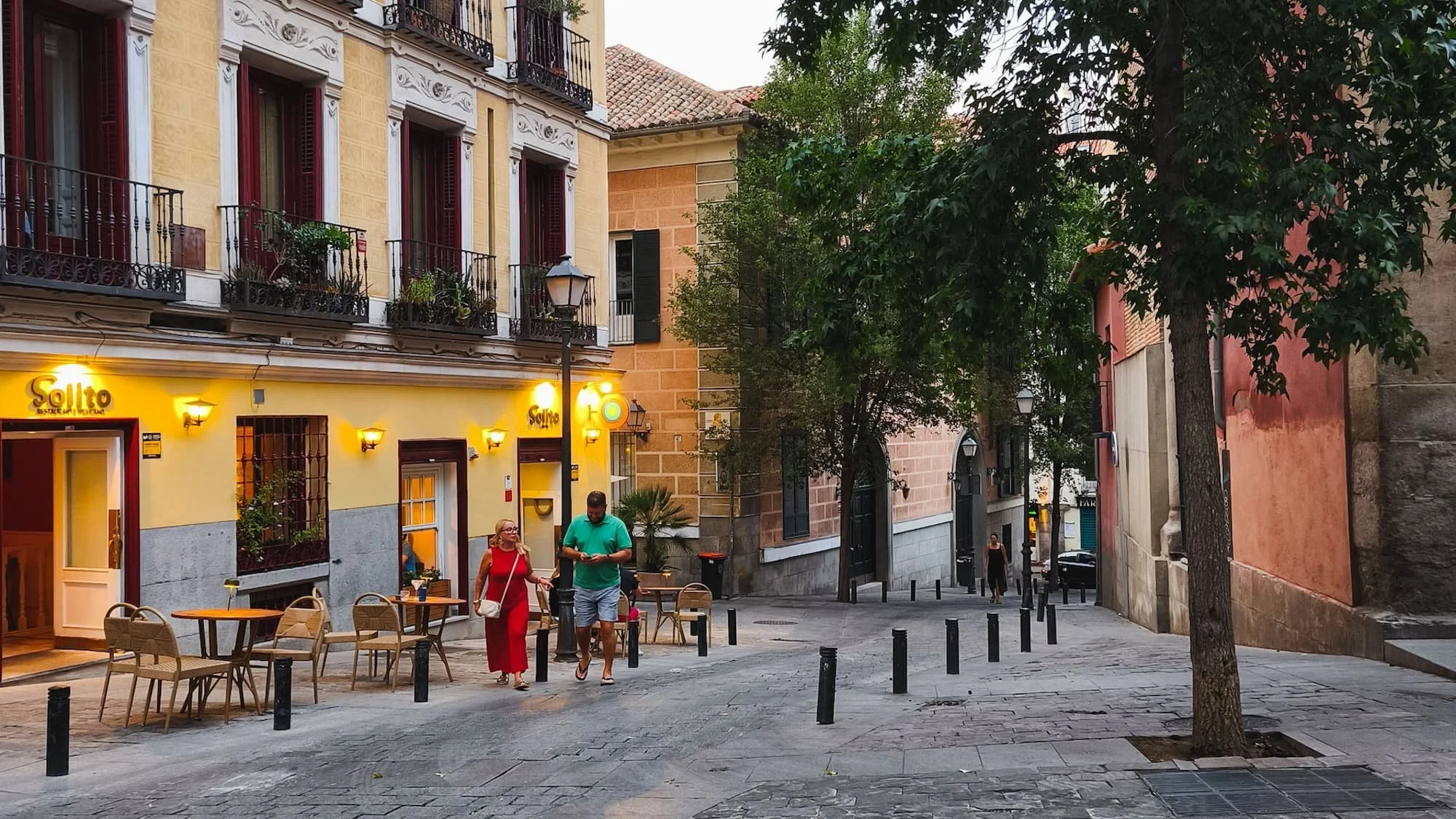
After spending a few months in Madrid, I really think a lot of Madrid is about taking in the atmosphere. The city is dense, there is energy everywhere, and much of the joy is in wandering the streets.
So, I designed this itinerary to not prescribe rigid walking routes. Instead, each day is grouped by area and follows a general flow based on geography, opening hours, free admission periods, and when different parts of the city are best experienced. Within that structure, you should wander.
Have only 1 day? My Madrid in 1 Day itinerary follows a much tighter route designed to cover as much as possible with limited time.
Have 2 days or 4–5 days? See my suggestions below on how to structure those trips.
Want more detail on the places mentioned below? See my What to Do in Madrid guide for descriptions, ticket notes, and my impressions of each sight.
Quick Plan
Time needed: 3 full days, with adjustments below for 2-day and 4–5-day trips.
Best for: First-time visitors who want Madrid’s major sights, neighborhoods, food stops, and city atmosphere without following a rigid schedule.
Day 1 — Old Madrid: Royal Palace, historic center, Puerta del Sol, and Gran Vía.
Day 2 — Park and Museum: Retiro Park, Salamanca, the Prado, and Barrio de las Letras nightlife.
Day 3 — Neighborhoods: Chueca, Malasaña, Templo de Debod, and a La Latina tapas night.
Pace: Moderate overall; Day 1 is the fullest.
Walking level: Moderate to high, with the most walking and cobblestones on Day 1.
Transportation needed: Mostly walking, with a few short metro rides depending on where you stay and how much energy you have.
Watch out for: The line for the Prado’s free admission period, crowded central areas, and intense summer heat.
Opening hours: This itinerary works on most days, since the main indoor sights are generally open daily. Still, double check Royal Palace closures and Sunday or Monday hours for smaller food stops and independent businesses.
Route Maps
Here is an overview map of the main areas of the 3 days, as well as Google map links with exact stops that you can just take and use:
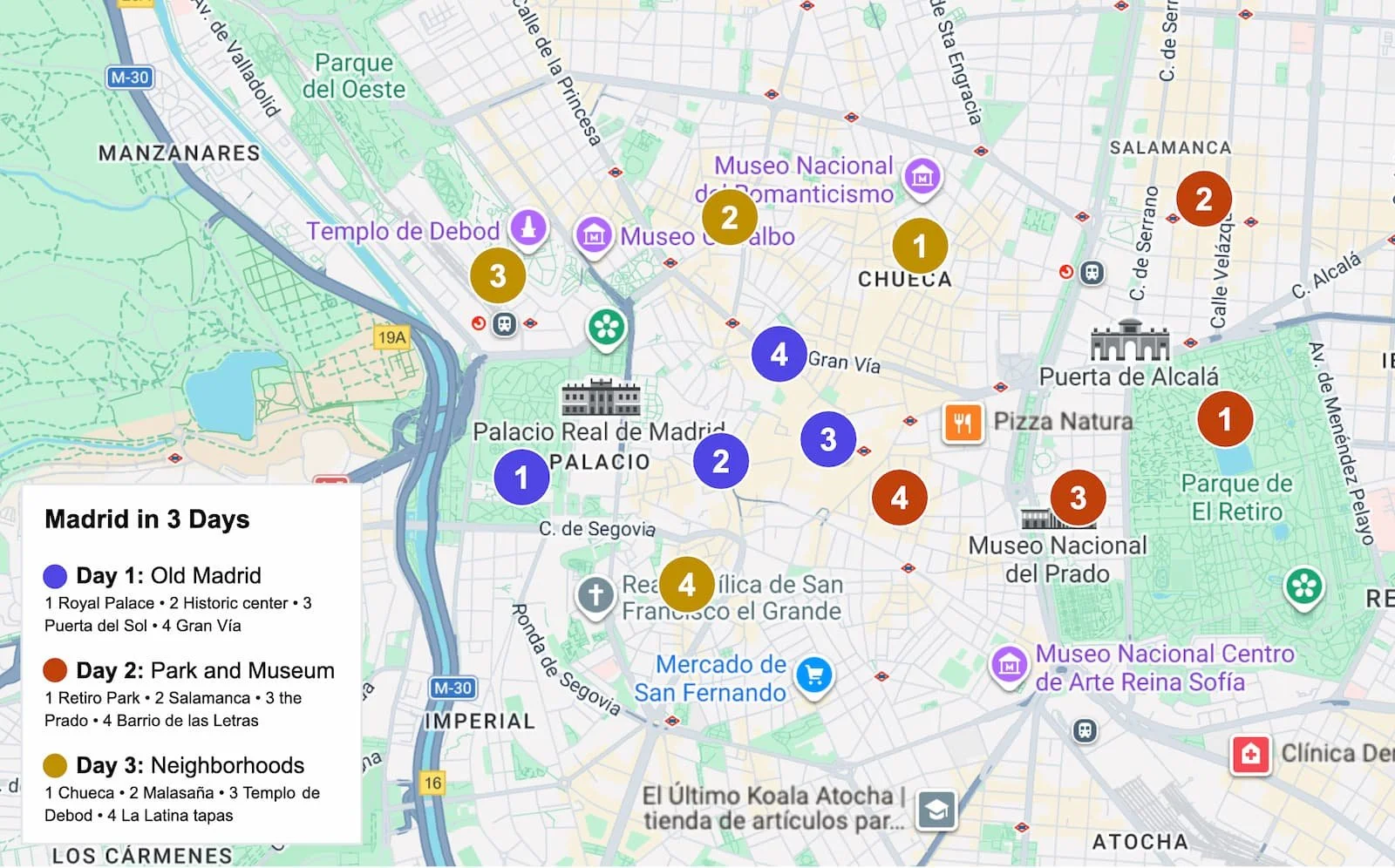
Overview of the areas covered across three days in Madrid.
Day 1 — Royal Madrid and the Historic Center
General flow: Chocolatería San Ginés → Royal Palace area → Plaza de la Villa → Plaza Mayor → Mercado de San Miguel → Puerta del Sol → Gran Vía
This is the busiest day, but it covers the places you would probably want to see on a first Madrid trip. Better to do the classic sights first when you’re itching to do them and have all the energy, then let the next two days become progressively looser.
Morning — Churros at Chocolatería San Ginés
30–45 minutes
Start at Chocolatería San Ginés, Madrid’s most famous cafe for churros and thick hot chocolate. Churros are traditionally eaten for breakfast in Spain, and these are not nearly as sweet or heavy as the version you might be imagining.
You do double back toward this area later, but this will give you some energy for the walk-heavy Royal Palace area.
Get the churros con chocolate, or try the thicker porras if you want something more substantial. The portions are fairly generous, so sharing is reasonable.
Late Morning to Early Afternoon — Royal Palace and Surroundings
2.5–3.5 hours
Head to the Royal Palace, the largest royal palace in Western Europe, for a morning interior visit.
The Palace interior opens at 10:00, so this is the main fixed-time attraction around which Day 1 is built. Book ahead and aim for an entry around 10:00 or 10:30.
After touring the interior, spend some time exploring the surrounding plazas, gardens, and viewpoints. Possible stops include:
Plaza de la Armería, the open plaza between the palace and cathedral
Plaza de Oriente, the elegant square facing the palace
Sabatini Gardens, the formal gardens beside the palace
Mirador de la Cornisa, a free viewpoint over western Madrid
Campo del Moro, the larger and leafier gardens below the palace
Almudena Cathedral is right beside the palace, so it’s easy to step inside if you’re interested. Personally, I think the gardens and viewpoints are more interesting.
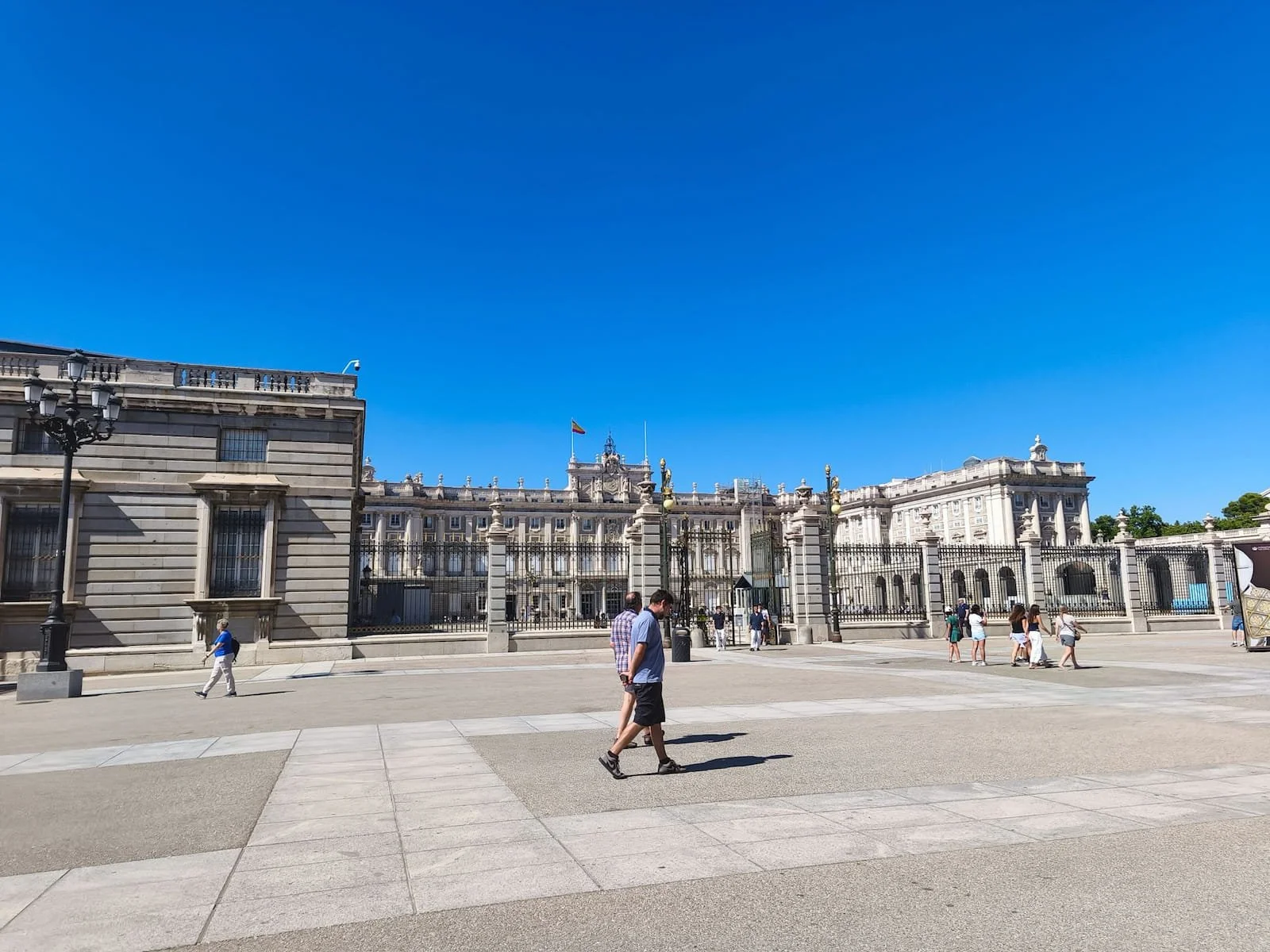
The Royal Palace is the main fixed-time stop on Day 1.
Early Afternoon — Walk through Old Madrid
1–1.5 hours
From the palace area, walk toward Plaza Mayor through the older streets of Madrid.
On the way, pass through Plaza de la Villa, one of Madrid’s most well-preserved medieval squares surrounded by some of the oldest buildings in the city. It feels intimate and almost tucked away, especially after the scale of the Royal Palace.
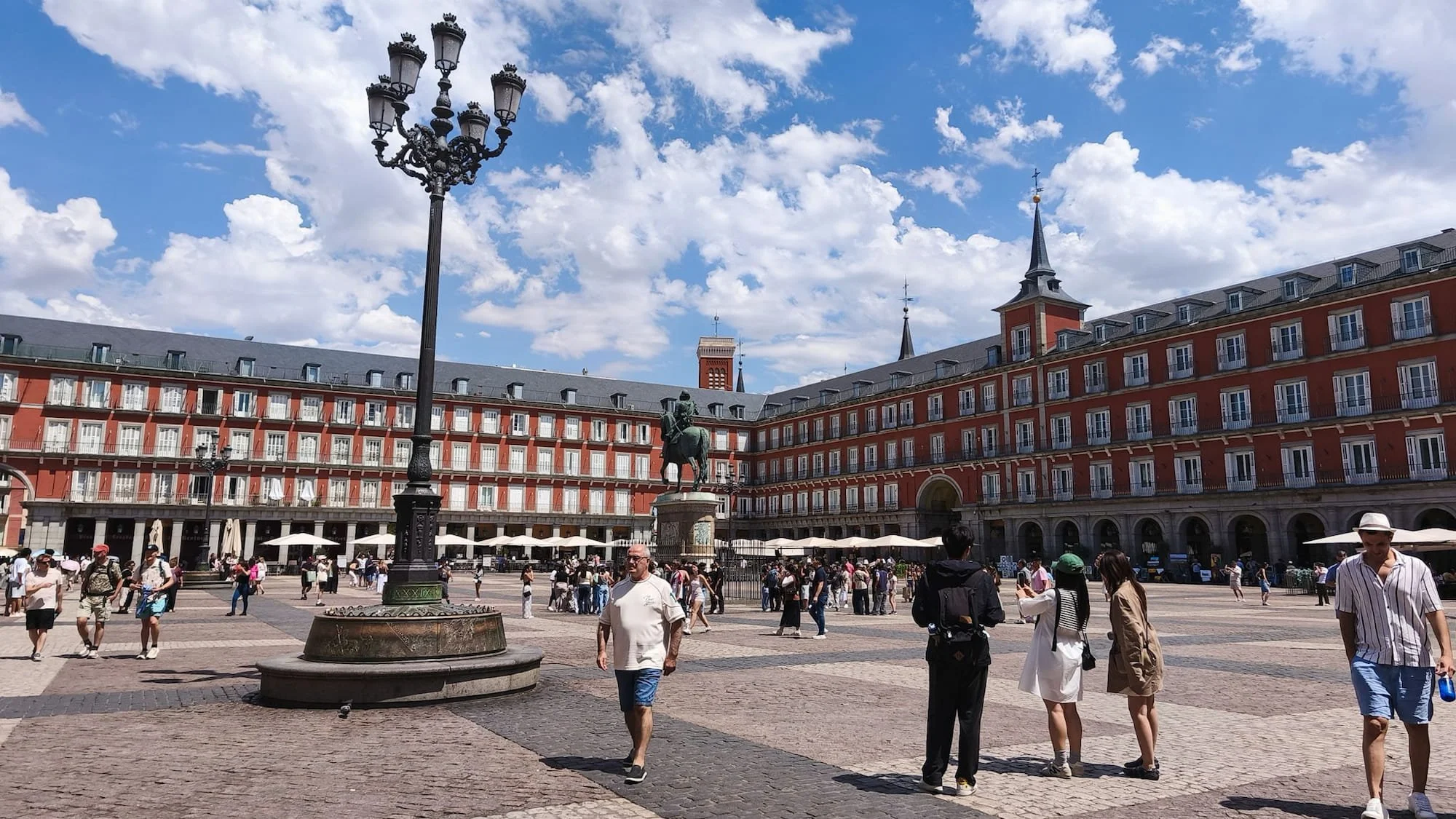
Then, continue along Calle Mayor and any nearby side streets that catch your attention before reaching Plaza Mayor, Madrid’s grand historic square that bustles with activity. Spend some time walking through it, looking around, taking some photos, and taking in the energy.
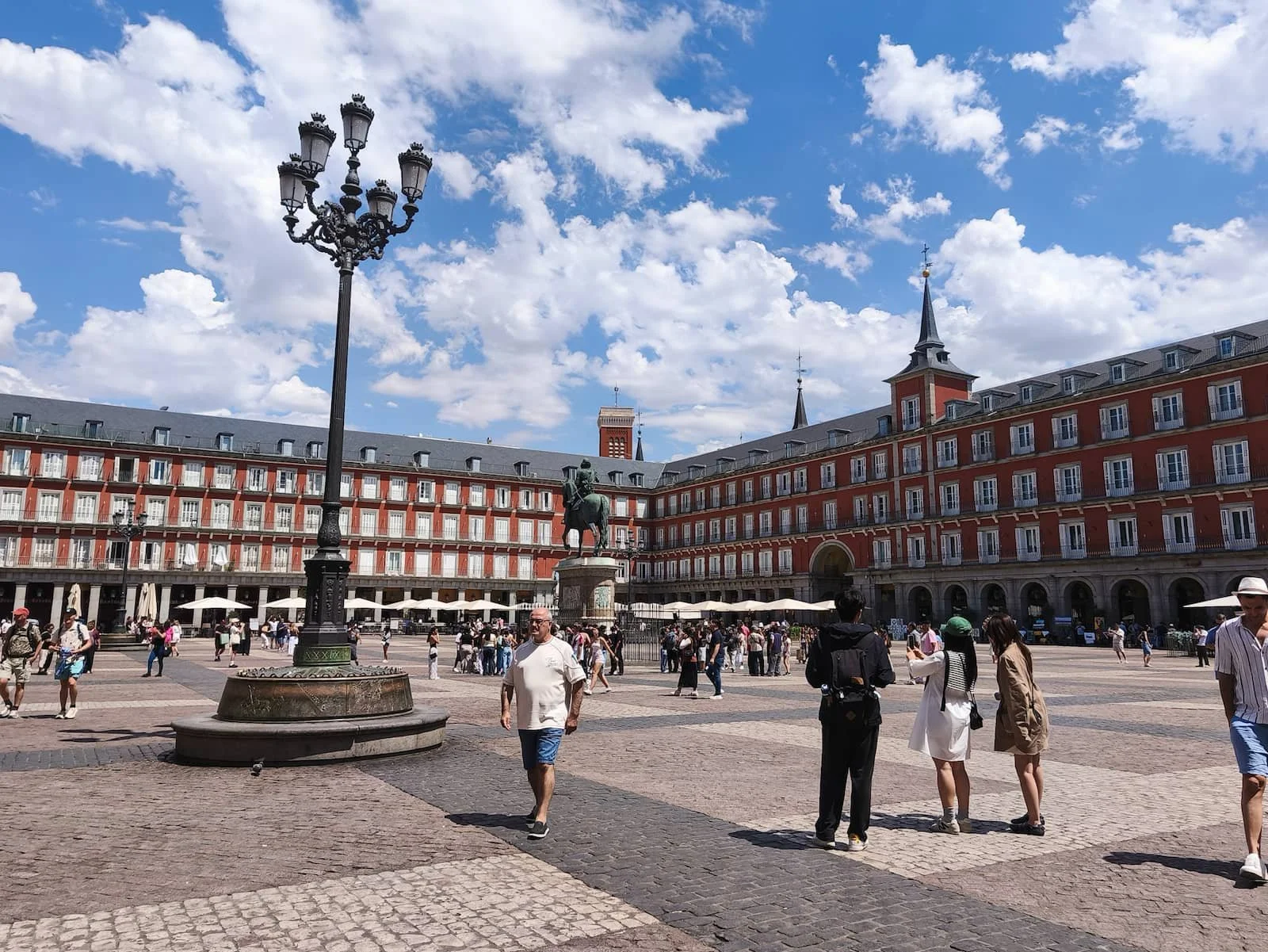
Plaza Mayor in the daytime feels open, grand, and full of people and energy.
Lunch — Mercado de San Miguel
45 minutes–1.5 hours
Have lunch at Mercado de San Miguel.
The market is housed in a beautiful iron-and-glass building and appears on nearly every Madrid must-do list. But it’s also crowded, touristy, and marked up accordingly.
Even so, I still think it is worth doing on a first Madrid trip since it’s very central and lets you try several small things without committing to a long formal lunch.
Some Spanish bites you can try there:
Jamón ibérico
Croquetas
Empanadas
Tortilla española
Spanish cheeses
Olives or gildas
Seafood
The first time I was there, I was quite impressed by the colorful displays of food and had some yummy empanadas and fish. There is some standing and sitting room dotted around the market, but expect it to be crowded (and you’ll likely need to stand).
Also, keep a close eye on your belongings here. I actually had my phone pickpocketed inside the market, so this warning is unfortunately based on personal experience.
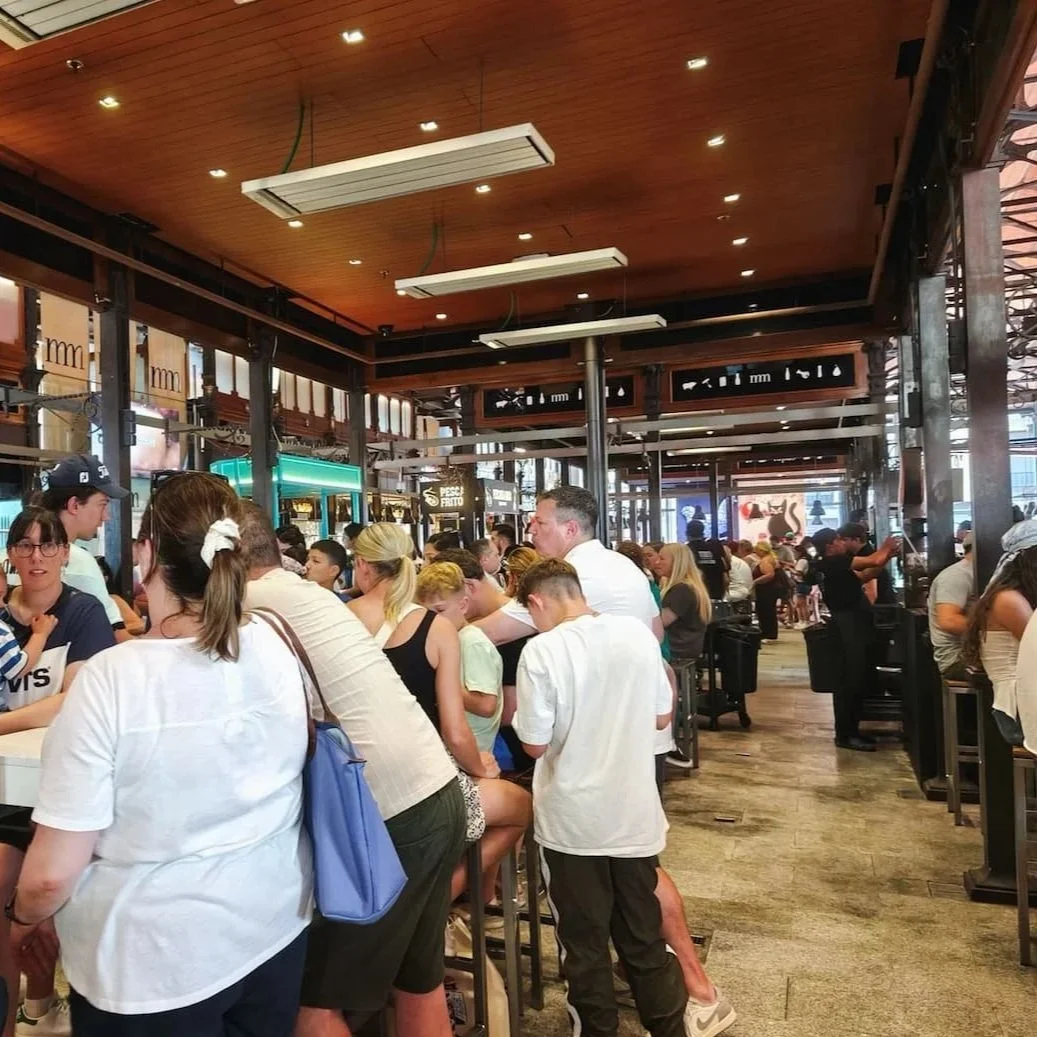
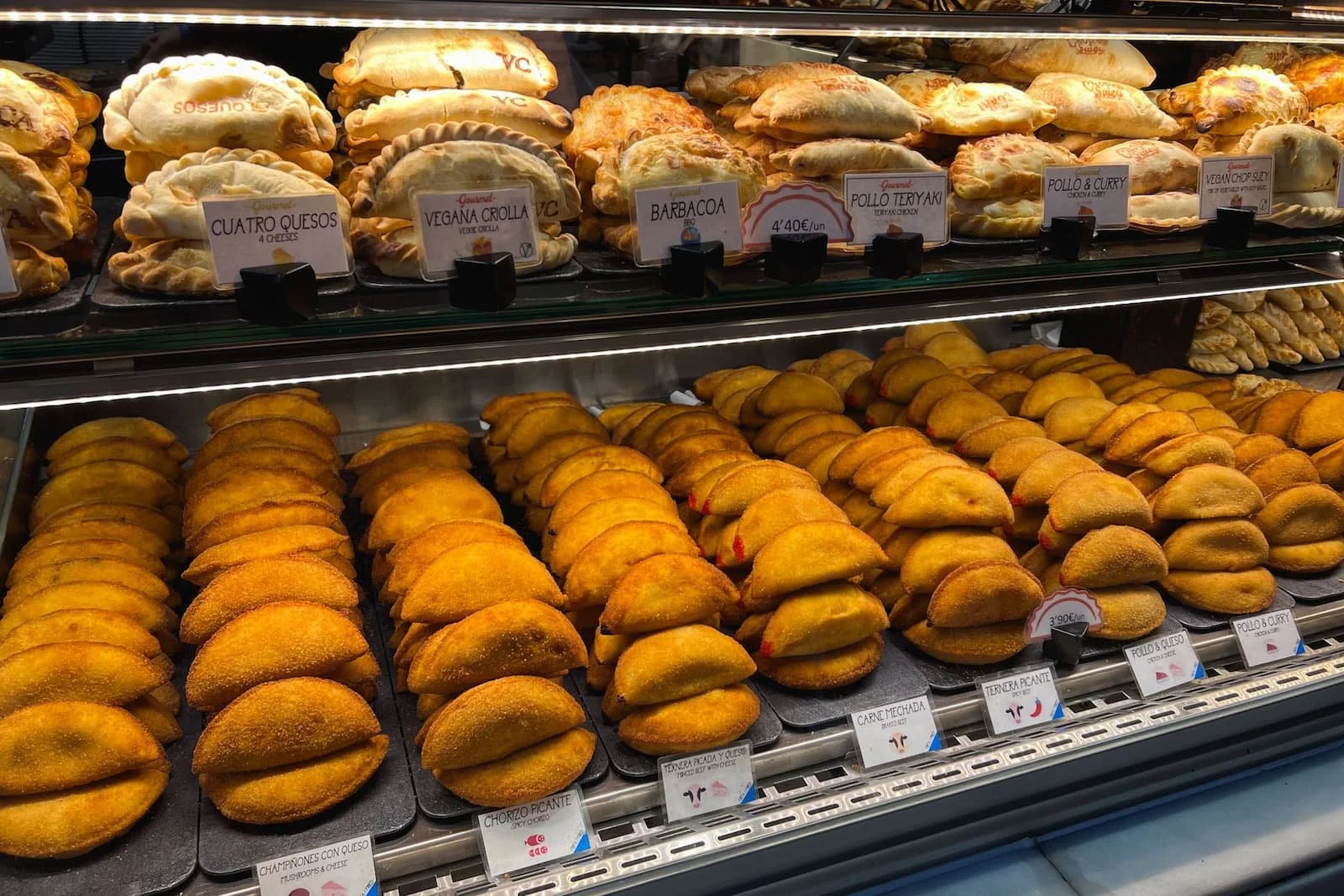
The market feels too crowded or the tourist markup puts you off? Bocadillo Oink and Pignic Ibérico are nearby alternatives for a quick jamón ibérico sandwich.
Prefer a sit-down lunch? Reserve a table at nearby Botín instead. It is recognized by Guinness World Records as the world’s oldest operating restaurant and is especially known for its cochinillo. This will be a longer and more expensive meal, so choose it instead of the market rather than trying to do both.
Late Afternoon — Puerta del Sol and the Central Streets
1–2 hours
Continue toward Puerta del Sol, a high-energy public square that is the symbolic center of Madrid. It’s also a busy commercial center and gathering point, surrounded by some of the densest shopping in the city.
Look for:
The Kilometer Zero marker for the center of Spain’s road network
The Bear and the Strawberry Tree statue
The Real Casa de Correos clock, which does Madrid’s annual New Year’s countdown
Sol is usually packed, which honestly gives you another taste of Madrid’s energy. Wander through the surrounding shopping streets on your way toward Gran Vía.
Evening — Gran Vía
1–2 hours
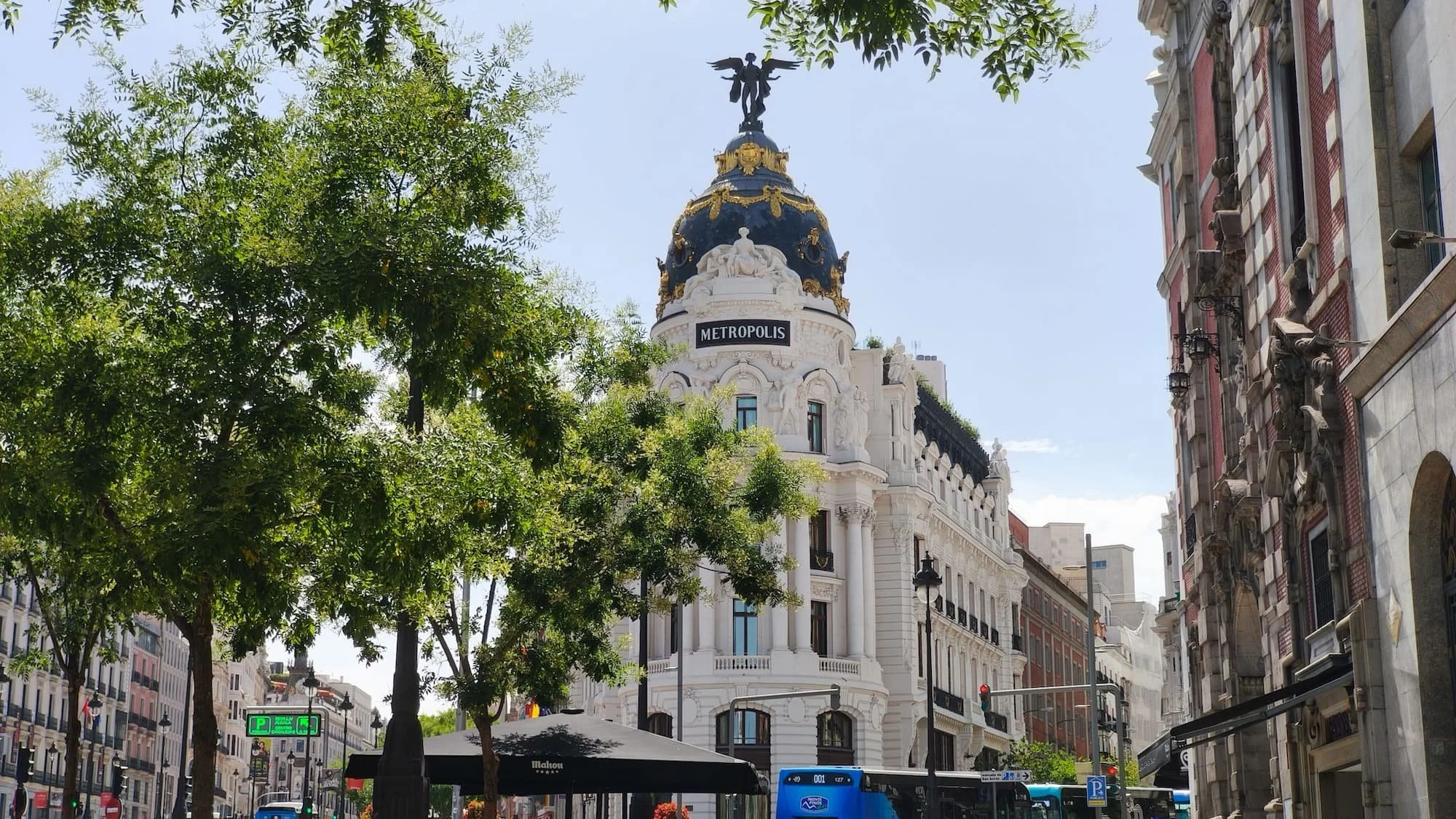
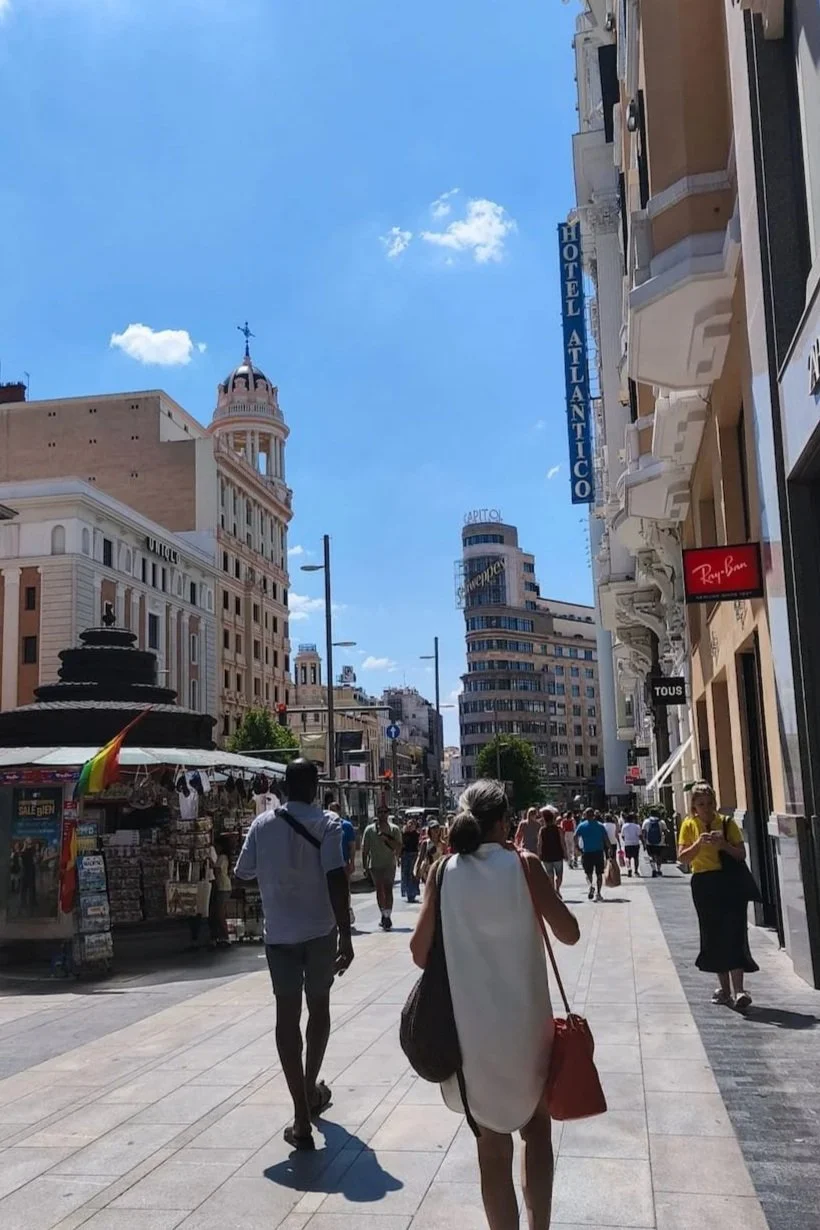
Finish the sightseeing portion of the day on Gran Vía, Madrid’s central thoroughfare that for me, best showcases the architectural grandeur and the energy of the city. To me, Gran Vía is worth walking because of its scale, theaters, shops, traffic, and general overstimulation. If you love big city energy, here it is.
Especially look for the Metropolis Building, a beautiful Beaux-Arts building with its intricate façade details and winged statue on top.
I’d recommend walking the street a bit, but do as much as you’d like since it could be very stimulating after already doing a lot this day. You can also stop at one of the nearby rooftop bars for a drink and a break from the crowds.
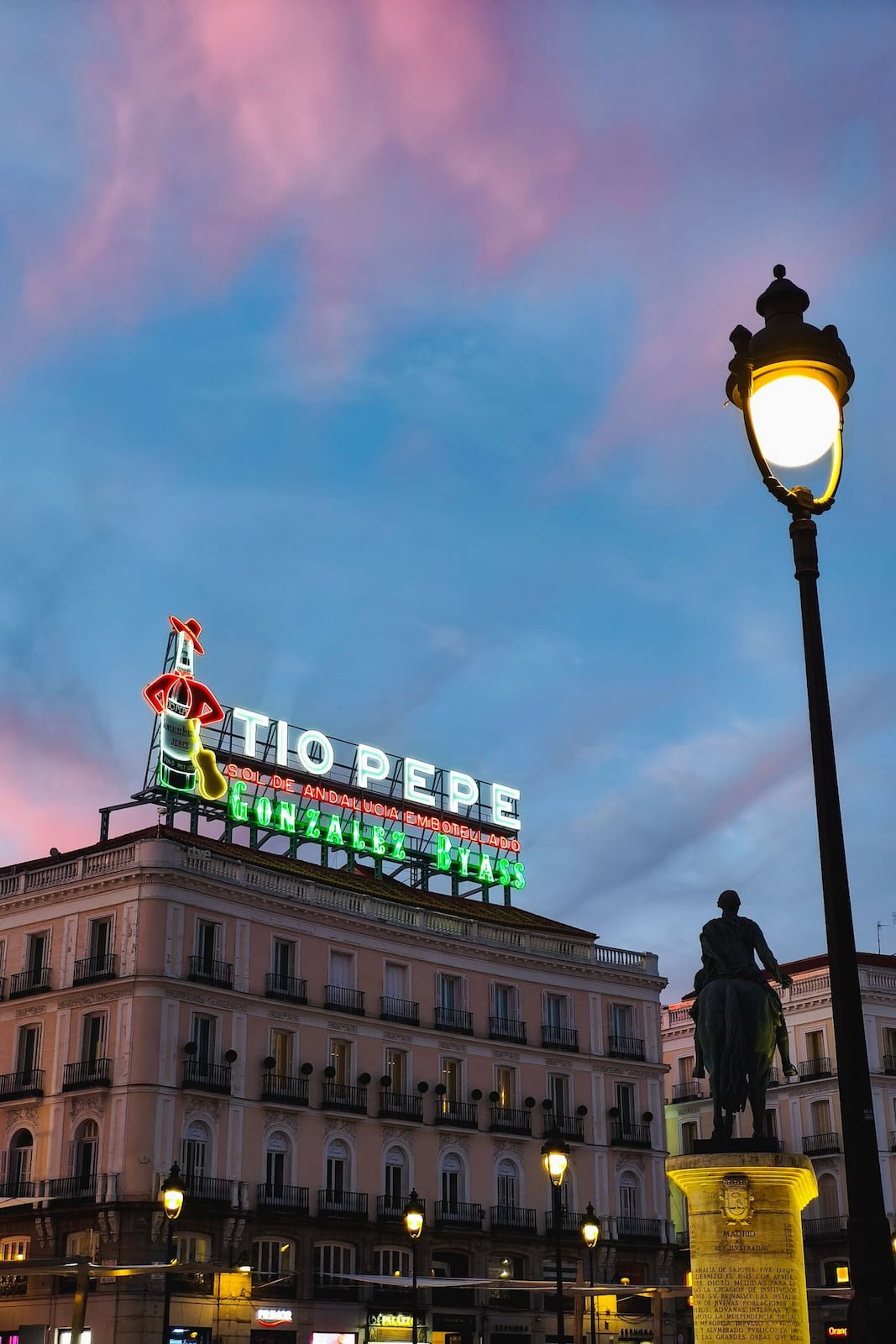
Dinner
After such a full day, I would keep dinner simple and fairly open.
Stay near Gran Vía, return to your lodging for a break before heading out again, or walk into Malasaña for something casual.
For a convenient sit-down option near Gran Vía, try Restaurante La Barraca, a Valencian restaurant known for paella and other rice dishes.
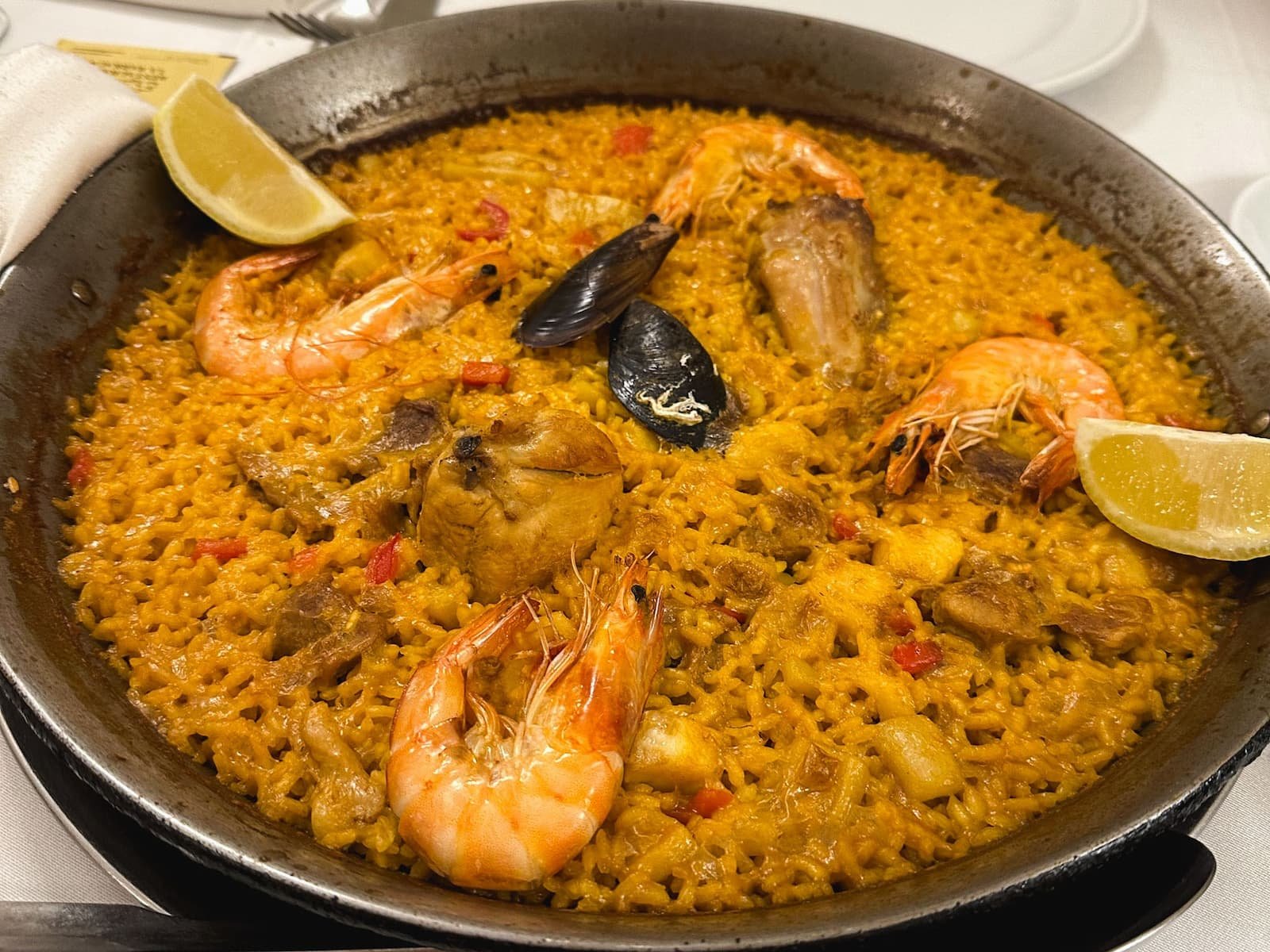
Paella at Restaurante La Barraca, a convenient dinner option near Gran Vía.
Example Timing
9:00–9:45 Chocolatería San Ginés
10:00–13:00 Royal Palace and surrounding area
13:00–14:15 Walk through Plaza de la Villa and Plaza Mayor
14:15–15:30 Mercado de San Miguel
15:30–17:00 Puerta del Sol and surrounding streets
17:00 onward Gran Vía, shopping, drinks, and dinner
You can shift the whole timing later if you’d rather have a chiller morning and don’t mind a later lunch.
Day 2 — Retiro, Salamanca, and the Prado
General flow: Puerta de Alcalá → Retiro Park → Salamanca → Cibeles and Paseo del Prado → Prado Museum → Barrio de las Letras
This day is deliberately slower after a stimulating Day 1. It shows you a greener, calmer, and more polished side of Madrid, focusing on Retiro Park and Paseo del Prado — which together form part of a UNESCO World Heritage Site — as well as Salamanca and the Prado Museum, which for me is a must-visit.
Late Morning — Puerta de Alcalá and Retiro Park
1.5–2 hours
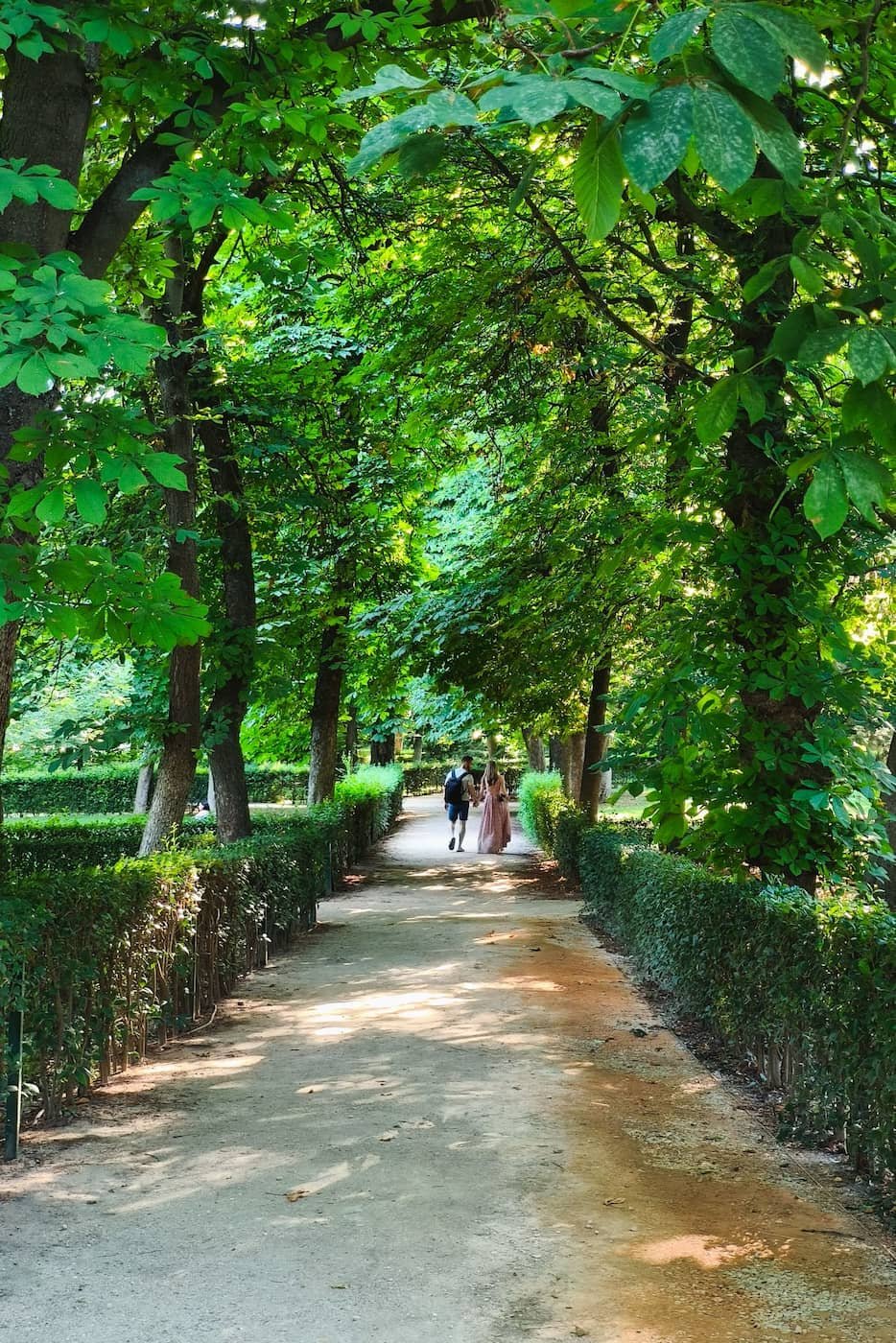
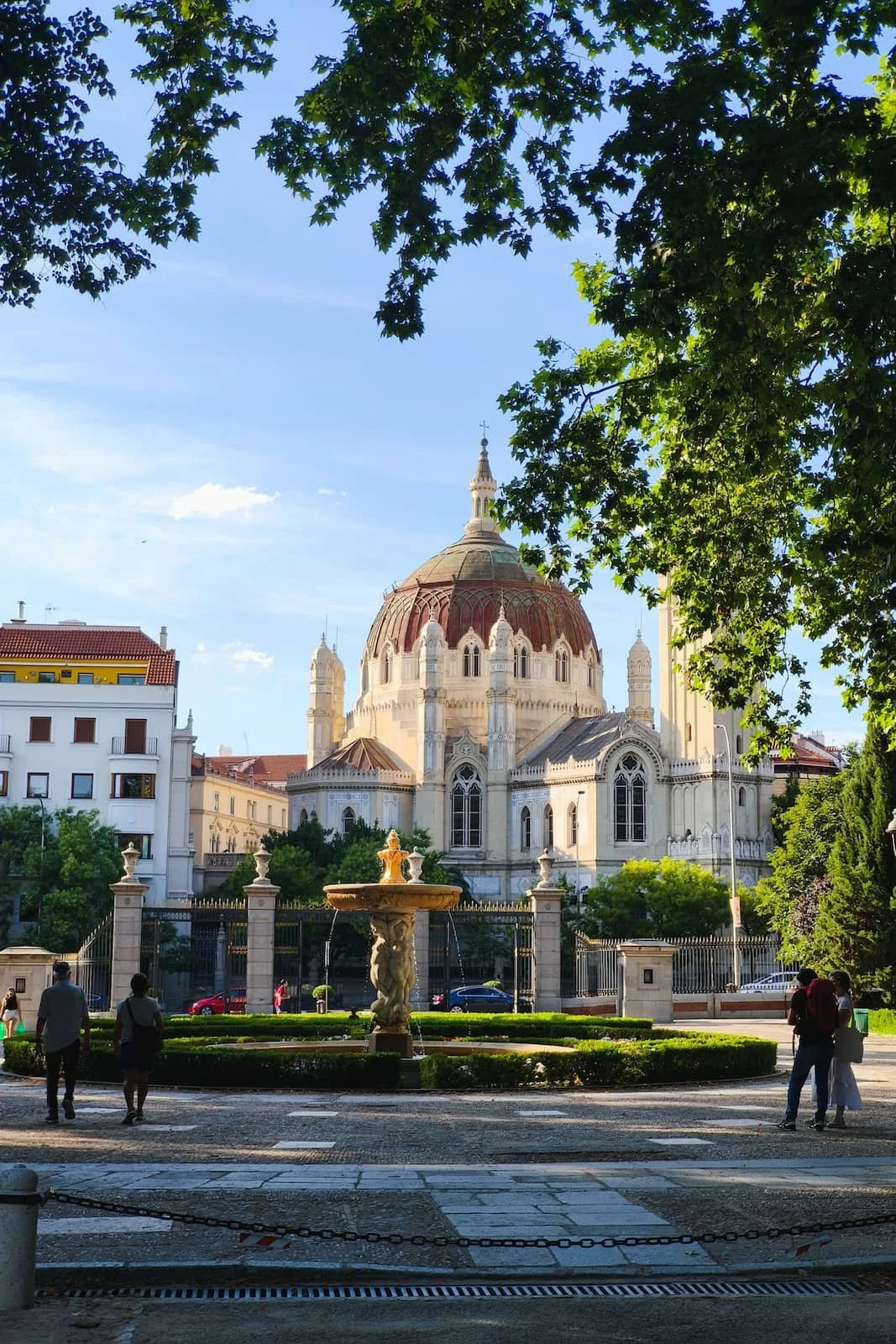
There’s no need to wake up especially early today. Get coffee and start with a relaxed walk through Retiro, Madrid’s central park (and one of my favorites in the world).
Before entering, stop by Puerta de Alcalá, an 18th-century monument that was once one of the royal gates into Madrid.
Depending on how much you feel like walking, see:
Retiro Lake and the Monument to Alfonso XII, the park’s grand and busiest central area
The Rose Garden, especially when the flowers are in season
The wooded paths, for a quieter walk away from the lake
Palacio de Velázquez
The Palacio de Cristal area, including the pond and surrounding paths
Walk as much as you want, sit down when you want, and enjoy having a softer, greener start to the day.
Early Afternoon — Salamanca and Lunch
2–3 hours
From the park, continue north into Salamanca.
Developed in the 19th century as a planned residential expansion for Madrid’s elite, Salamanca feels very different from the maze of the historic core. The streets follow an orderly grid, the buildings are elegant, and the whole neighborhood feels wider and more polished.
Today, it’s still one of Madrid’s most affluent neighborhoods and is especially known for high-end shopping. But you don’t need to care about luxury stores to enjoy it. I’d treat this area as a different taste of Madrid that contrasts with the busy places you saw on Day 1.
Wander around:
Calle de Serrano
Calle de Jorge Juan
Calle de Goya
Calle de Velázquez
Mercado de la Paz and the surrounding streets
This is also a good place to take a proper, long lunch break. Browse Mercado de la Paz or choose somewhere around Jorge Juan and the surrounding streets that looks appealing.
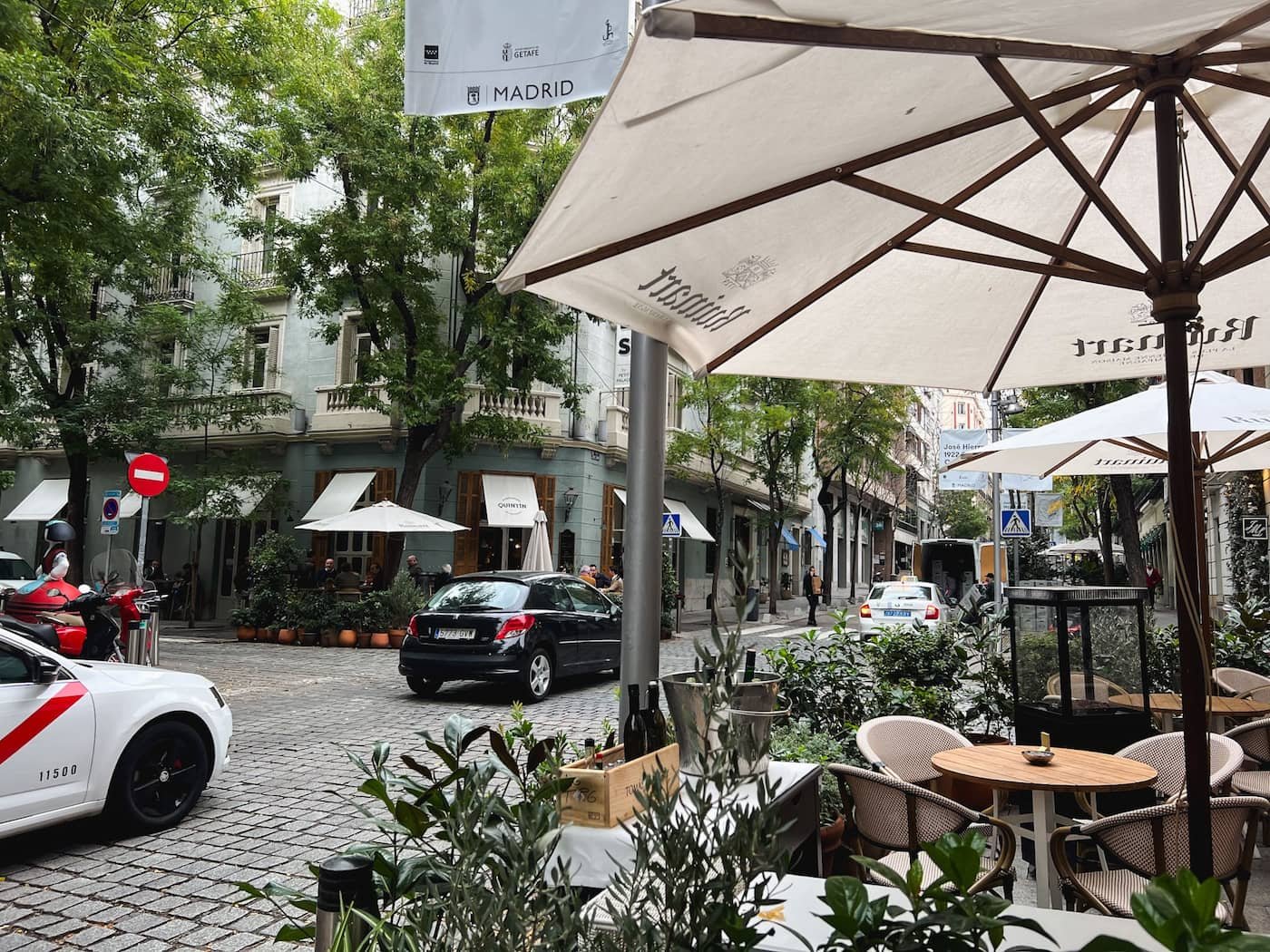
A leafy terrace in Madrid’s Salamanca neighborhood.
Late Afternoon — Cibeles and Paseo del Prado
30–60 minutes
After lunch, make your way back toward the Prado. You can take the metro if you want to save your legs, but the walk creates a nice transition into the museum portion of the day.
Pass through:
Plaza de Cibeles, with its famous fountain
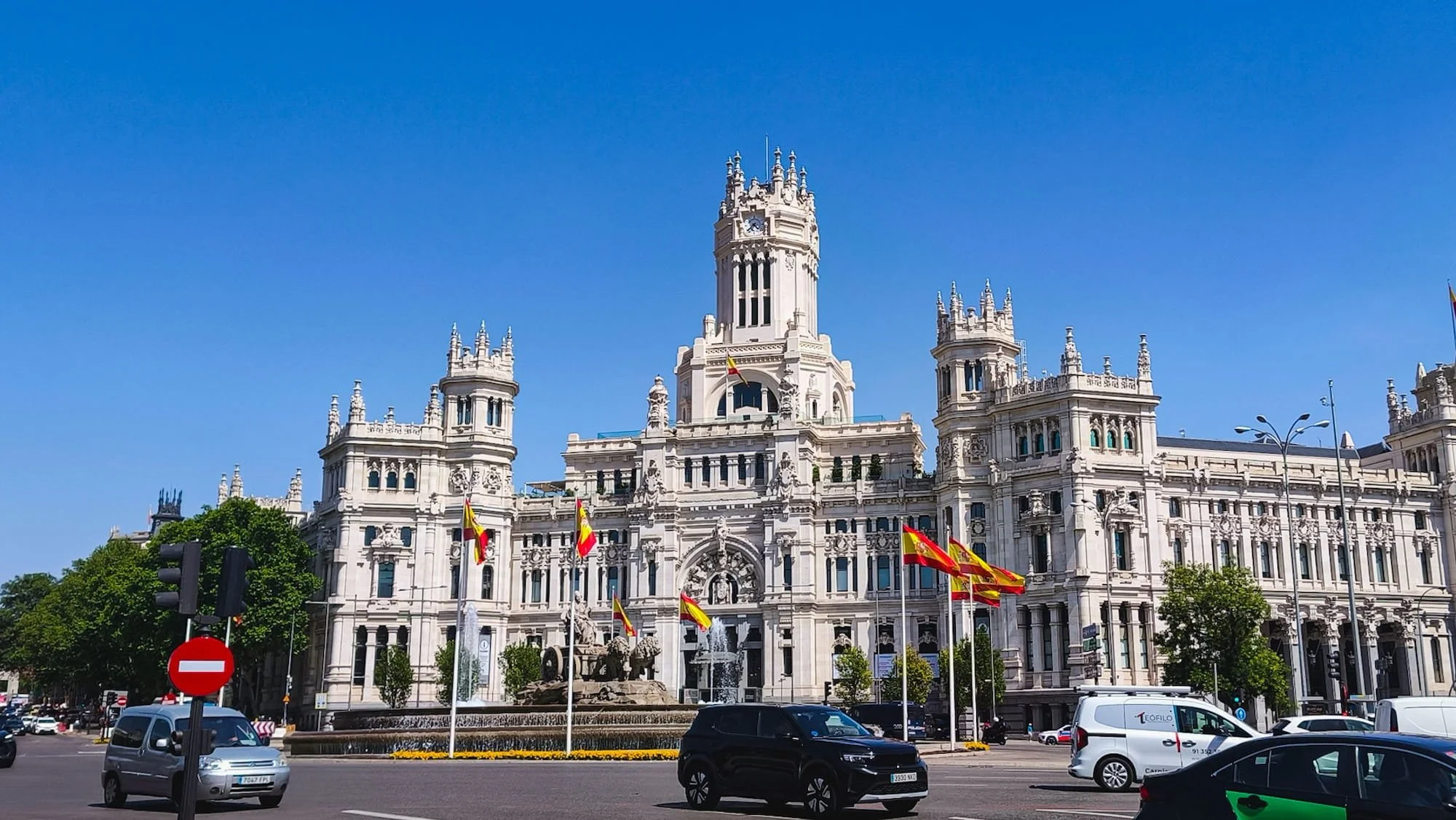
Palacio de Cibeles, the striking building that now houses Madrid’s city hall
Paseo del Prado, the tree-lined boulevard running through the museum district
You don’t need to spend a long time at any of these. They’re mostly part of the scenery as you make your way toward the Prado.
Evening — Prado Museum
2–3 hours
The Prado is, in my opinion, a must-visit on a first Madrid trip — even if you’re not big on art. It is one of Spain’s most important cultural institutions and is especially known for its collection of Spanish and European painting.
The museum offers free admission during its final two opening hours:
Monday–Saturday: 6:00–8:00 PM
Sundays and public holidays: 5:00–7:00 PM
I think this is a great benefit and worth taking advantage of. Since free admission is subject to capacity, aim to arrive around 30–45 minutes before the free period begins and expect to queue.
Two hours is enough for a focused visit, but definitely not enough to cover the entire museum. While you’re waiting, look up what you most want to see. I’d prioritize the major works by Velázquez and Goya, along with Bosch’s The Garden of Earthly Delights.
For a lower-friction visit, buy a regular late-afternoon ticket instead. You’ll have more control over your timing, avoid planning the afternoon around the queue, and can stay longer if you want.
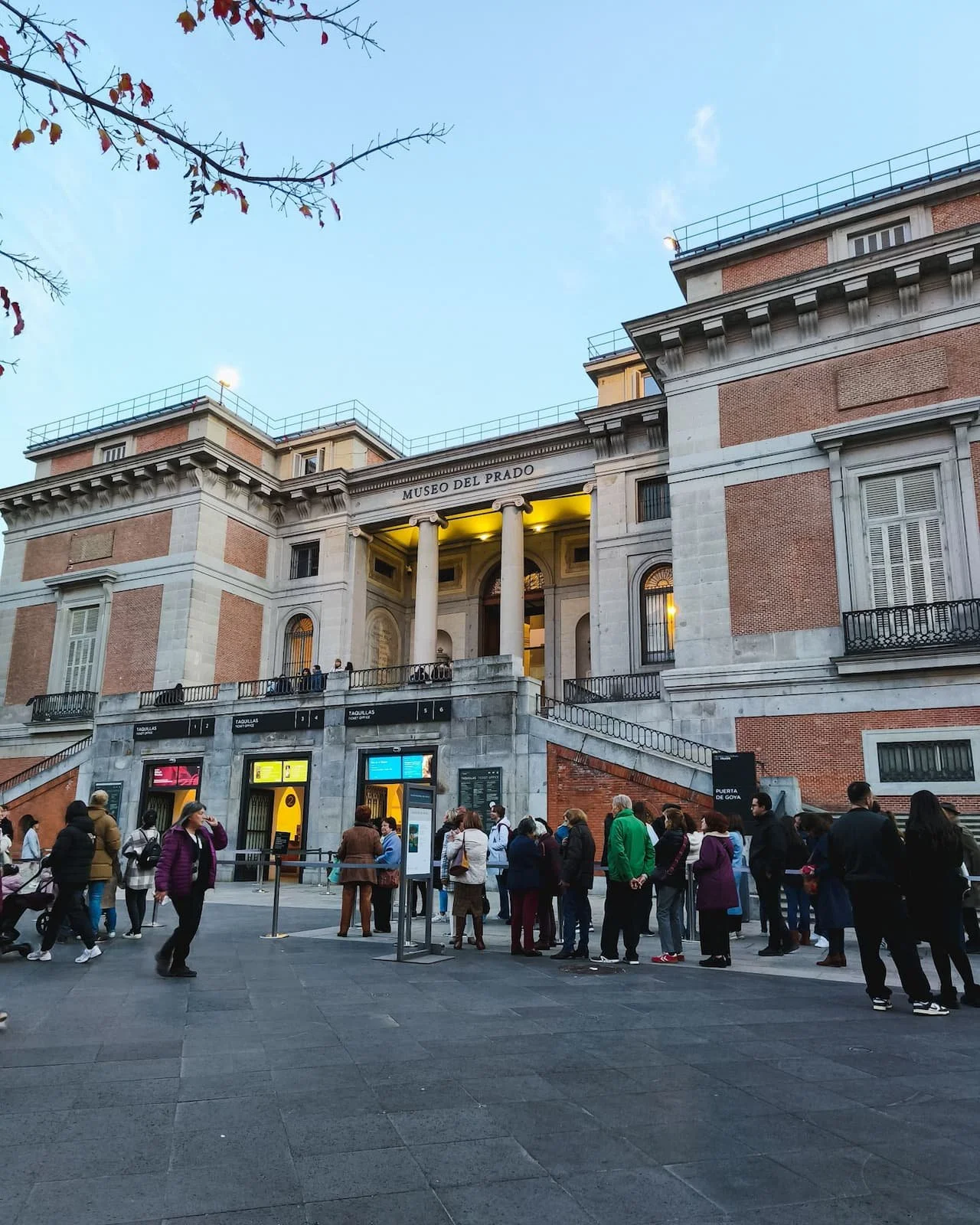
The Prado Museum, which offers free admission during its final two opening hours.
Prefer Modern Art?
Swap the Prado for the Reina Sofía if modern and 20th-century art interest you more. But I would choose one rather than trying to fit both major museums into this one day.
Night — Barrio de las Letras
1.5–3 hours
After the museum, walk into Barrio de las Letras for dinner, tapas, or drinks.
The neighborhood is right next to the Prado area and is historically Madrid’s literary enclave, associated with many of the major writers of Spain’s Golden Age. Now it’s a lively gastronomic area that retains its artistic history, such as Cervecería Alemana, a 1904 tavern once favored by Ernest Hemingway.
Wander toward Plaza de Santa Ana through the smaller streets of the neighborhood and choose somewhere that appeals to you. The idea is to eat and experience Madrid’s famous nightlife as much as you want.
Example Timing
11:00–11:10 Puerta de Alcalá
11:10–13:00 Retiro Park
13:00–16:30 Salamanca, shopping, and lunch
16:30–17:15 Cibeles and Paseo del Prado
17:15–18:00 Queue for the Prado
18:00–20:00 Free Prado admission
After 20:00 Dinner or drinks in Barrio de las Letras
On Sundays and public holidays, move the afternoon roughly one hour earlier to account for the 5:00–7:00 PM free-admission period.
Day 3 — Madrid’s Neighborhoods
General flow: Chueca → Malasaña → flexible afternoon → Templo de Debod → La Latina
The first two days cover Madrid’s major sights. Day 3 is intentionally looser, with more time for neighborhood wandering, shopping, a long lunch, or a break before Madrid’s very late evening.
Today moves through three different sides of the city: colorful and progressive Chueca, alternative Malasaña, and the traditional tapas streets of La Latina.
Late Morning — Chueca
1–1.5 hours
No need to wake up especially early today. Start with coffee and a wander through Chueca.
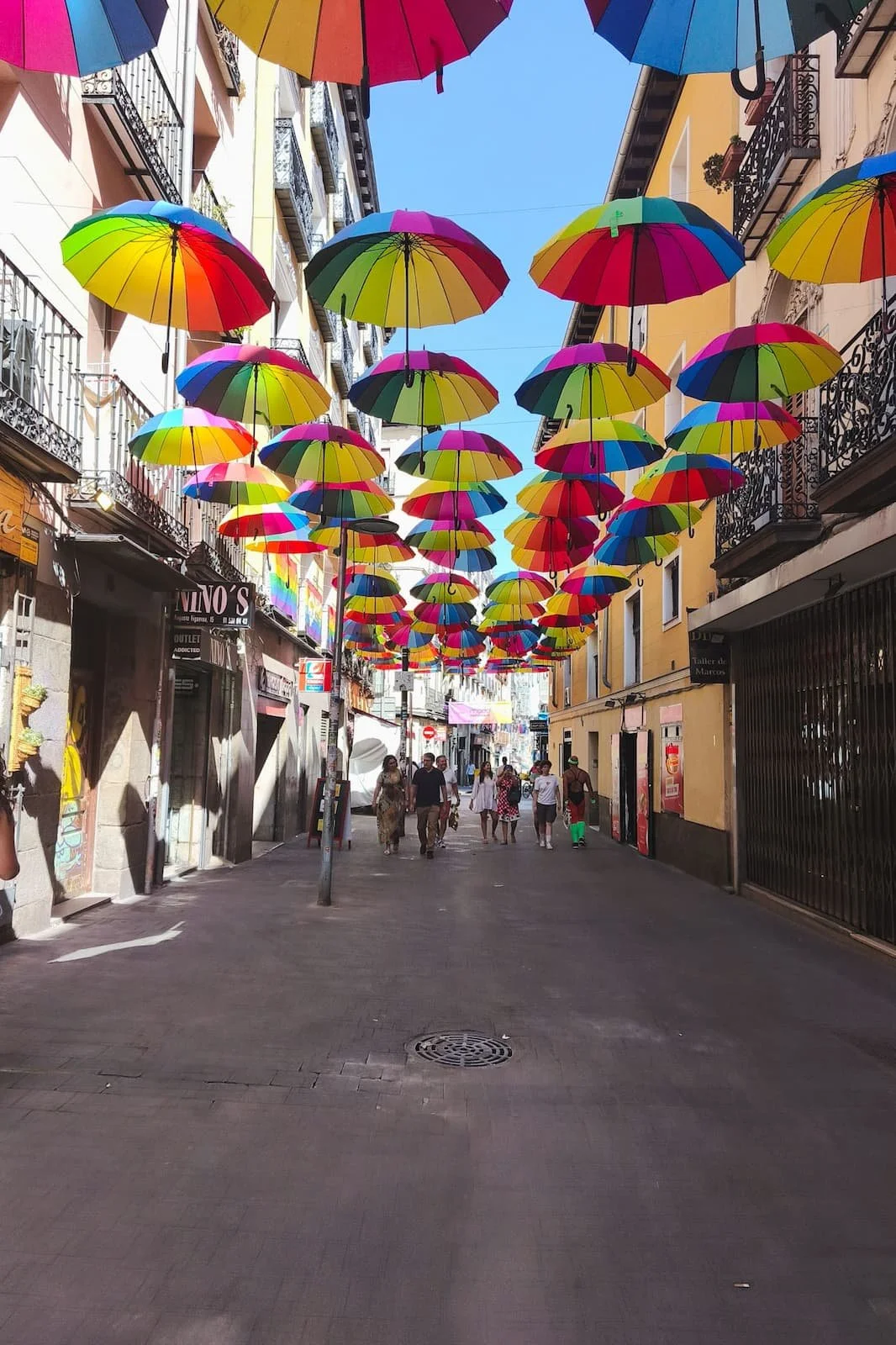
Chueca is one of Madrid’s best-known LGBTQ+ neighborhoods and feels colorful and social, with plenty of boutiques, restaurants, terraces, and lively side streets.
Walk around Plaza de Chueca and the surrounding streets, browse any shops that catch your attention, or sit and sip a coffee.
Early Afternoon — Malasaña and Lunch
2–3 hours
Continue into neighboring Malasaña for lunch and more wandering.
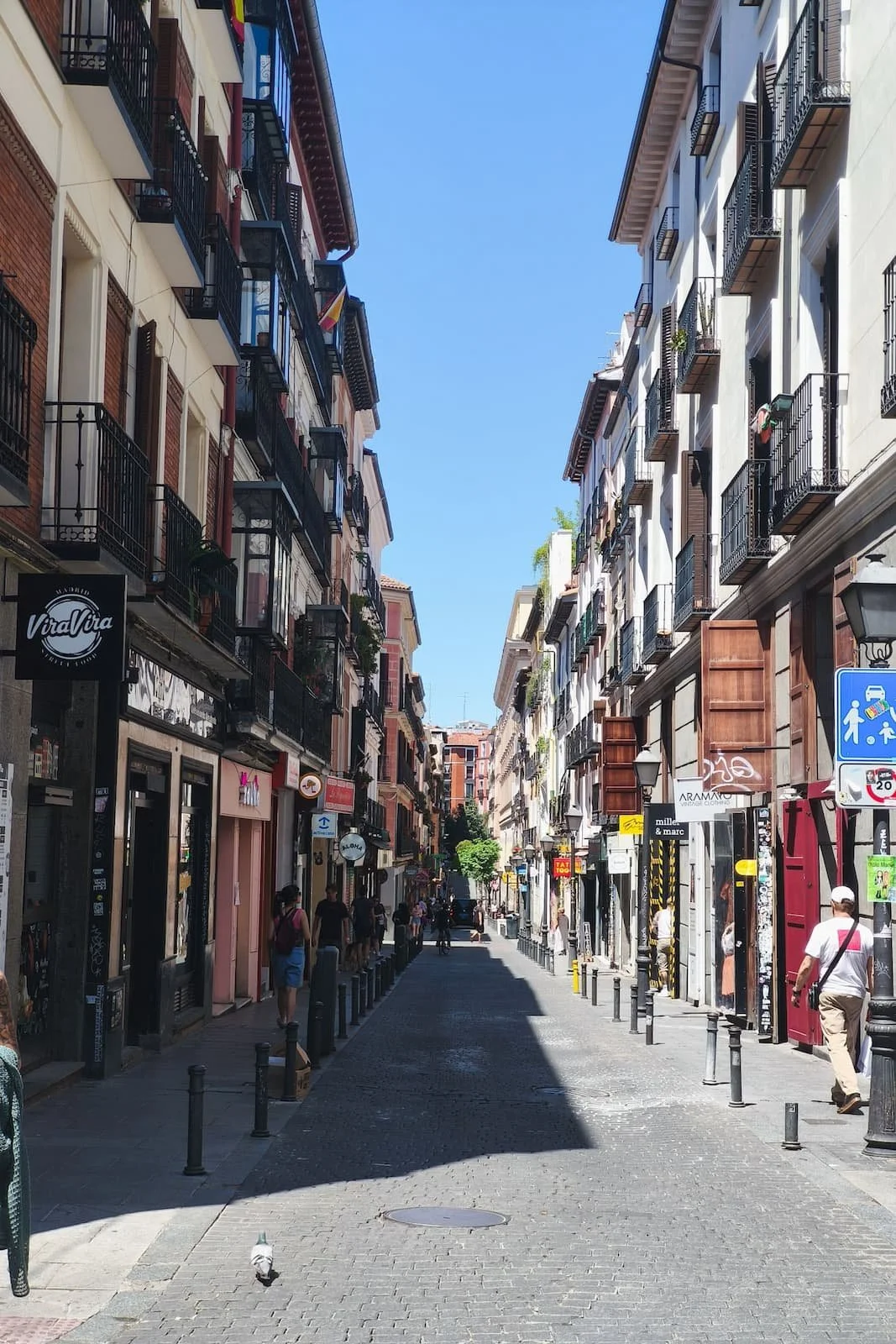
Malasaña is closely connected to Madrid’s 1980s countercultural movement and is still one of the city’s main areas for vintage shopping, independent businesses, and slightly alternative energy.
Explore the streets between Tribunal and Noviciado, including Calle del Espíritu Santo, Calle de la Palma, Calle del Pez, and Plaza del Dos de Mayo.
Look for:
Vintage and secondhand stores
Independent clothing and design shops
Record and comic shops
Street art
Cafés, bars, and small plazas
For something casual and Spanish, try Pez Tortilla for its very good, gooey tortilla española and croquetas. You could also stop at Bar Padrao, where drinks come with free (!!) tapas.
Malasaña also has plenty of international restaurants, so this is a good time to take a break from traditional Spanish food if you want one. For example, one of my favorite places for gyros is Vira Vira, in the neighborhood.
Flexible Afternoon
Leave the middle of the afternoon open.
Depending on your energy and interests, you could:
Continue shopping
Stop for coffee or dessert
Revisit somewhere you loved or catch somewhere you missed
Visit the Reina Sofía or another museum
Explore Lavapiés neighborhood
Add a farther-out sight like the Santiago Bernabéu Stadium or Las Ventas Bullring
Or, return to your hotel and rest
This is intentional. The previous two days are full, and Madrid runs late. A break when you need it can make the evening much more enjoyable.
Around Sunset — Templo de Debod
45 minutes–1.5 hours
Head toward Templo de Debod around sunset if the timing and weather work.
This is an ancient Egyptian temple that was moved to Madrid in the late 1960s and now sits in a park overlooking western Madrid. It’s one of the city’s most popular sunset spots.
In the winter, this usually fits naturally before dinner. In the summer, sunset can be extremely late, so you may prefer to eat first, visit afterward, or skip it. I’d say this is a cool spot, but there’s no need to force it if the weather is bad or you would rather stay in the neighborhoods.
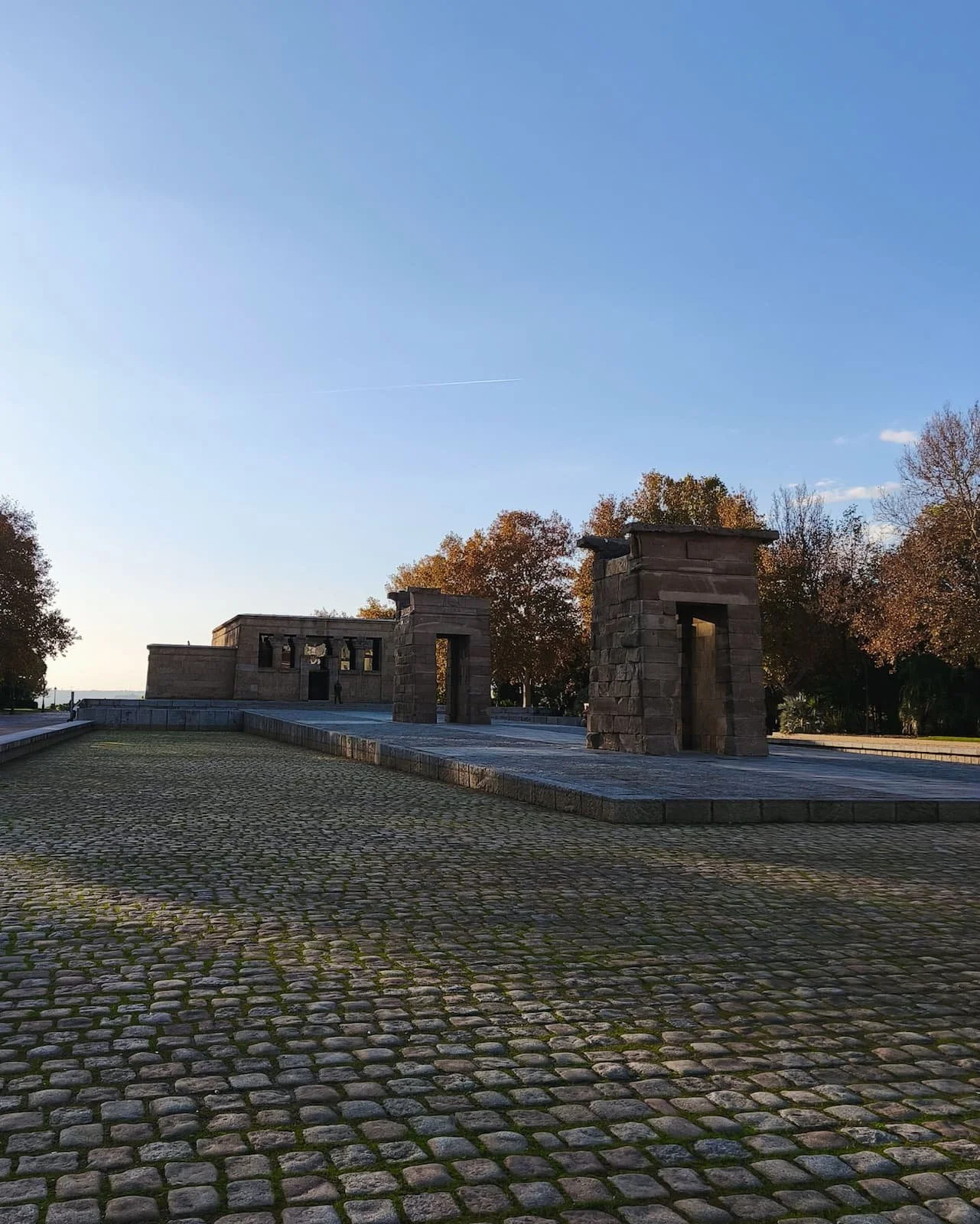
Templo de Debod, one of Madrid’s most popular places to watch the sunset.
Evening — La Latina and Cava Baja
2–3 hours
Finish the trip with a tapas night in La Latina.
La Latina is one of Madrid’s classic tapas neighborhoods, with traditional taverns, newer bars, and lively streets centered around Cava Baja.
You can choose one tavern for a full dinner or turn the evening into a tapas crawl, ordering one or two things at each stop and gradually building your meal. If you want a full meal, La Taberna de Peñalver on Cava Baja has some of the best paella in the city.
Eat, drink, and stay out as long as you feel like staying out on your final night.
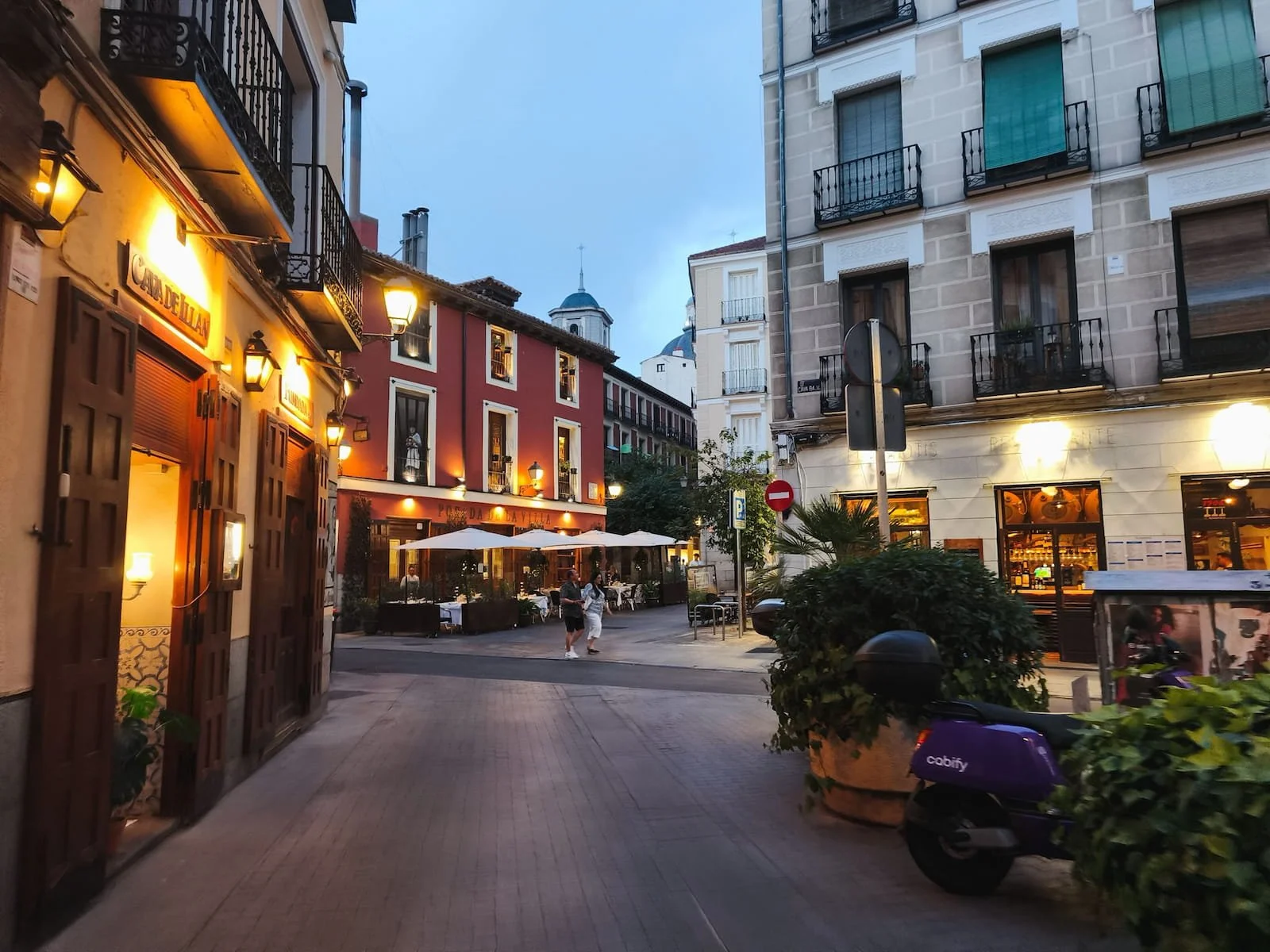
La Latina beginning to come alive in the evening.
Example Timing
11:00–12:30 Chueca
12:30–15:30 Malasaña and lunch
15:30–18:30 Flexible afternoon or hotel break
Around sunset Templo de Debod
After sunset Tapas in La Latina
Adjust the sunset and dinner timing according to the season.
If Day 3 Falls on a Sunday and You Like Flea Markets
Visit El Rastro in La Latina in the morning, then continue to Chueca and Malasaña afterward.
El Rastro is Madrid’s huge Sunday flea market, filling the neighborhood with antiques, clothing, secondhand goods, souvenirs, and general chaos (I know because I stayed right above it for a month haha).
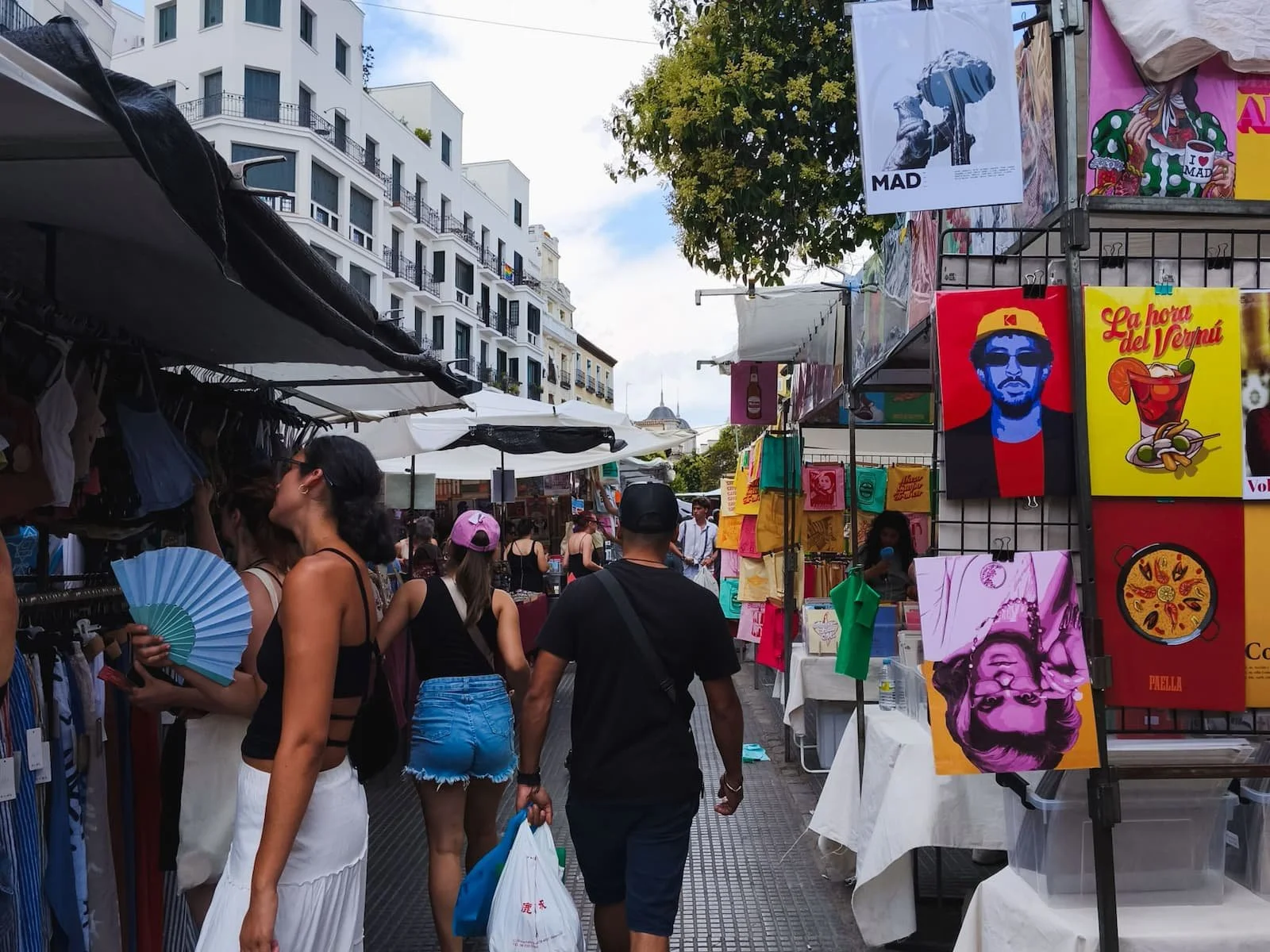
El Rastro fills the streets of La Latina every Sunday morning.
Have Only 2 Days in Madrid?
With two days, follow Days 1 and 2 above, then use the evenings to fit in some neighborhood time.
Day 1
Follow the Royal Palace and historic-center itinerary, then have dinner or drinks in Malasaña or Chueca.
Day 2
Follow the Retiro, Salamanca, and Prado itinerary, then end with tapas or drinks in Barrio de las Letras or La Latina.
Have 4 or 5 Days in Madrid?
For most first-time visitors, I would spend three full days in Madrid and use a fourth or fifth day for a day trip.
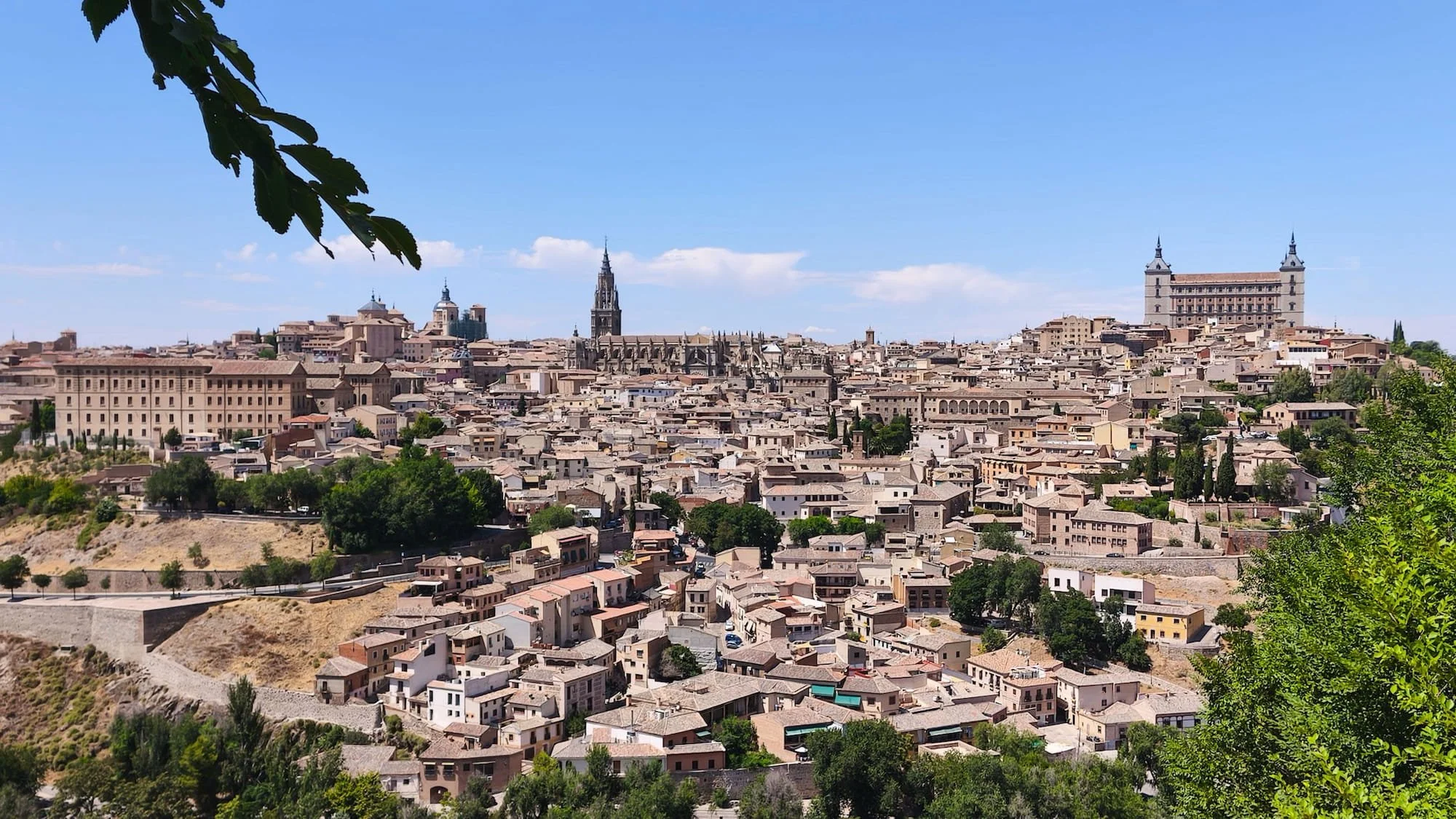
Day 4 — Toledo
Take a day trip to Toledo for its layered Christian, Jewish, and Islamic history, medieval streets, cathedral, viewpoints, and dramatic hilltop setting.
See my Toledo day-trip itinerary for the route and how to get there.
Day 5 — Segovia
Take a day trip to Segovia for the Roman aqueduct, cathedral, the fairytale-like Alcázar, and a smaller, easier-going historic center.
See my Segovia day-trip itinerary for the route and my Segovia transportation guide for how to get there.
With five days, you can take both day trips. Or, keep one extra day in Madrid if you would rather spend more time in museums, neighborhoods, shops, or restaurants.
Planning Notes
Keeping it simple here so this post doesn’t explode, but you can check out the logistics section in my Madrid 1-day itinerary for more tips on what to bring, safety, etc.
Getting Around
Most of each day is walkable once you reach the starting area. You may want to use the metro between Salamanca and the Prado, or between the Day 3 neighborhoods, Templo de Debod, and La Latina.
See my Madrid Start Here guide for an easy summary on ticket options and airport connections.
What to Book in Advance
Book the Royal Palace interior ahead, especially on weekends and during busy travel periods.
For the Prado, you can either queue for the free evening admission period or buy a regular late-afternoon ticket if that timing works better for you.
Book Bernabéu tours, performances, and Toledo or Segovia trains in advance if you plan to add them.
A Few Practical Notes
Wear comfortable shoes, carry water in hot weather, and keep your belongings secure in crowded central areas.
For the specific items I use on walk-heavy city trips, see my one-bag packing list.
Questions?
Thanks for reading! Feel free to leave a comment below or send me a message with any questions — I’m always happy to help when I can. And if you try this itinerary, I’d love to hear how it goes.
If you’re still planning for Madrid, start with my Madrid Travel Guide: Start Here, where I’ve collected my Madrid logistics, neighborhood notes, packing tips, and related posts.
You may also like:
How I Plan Low-Friction Itineraries — the process I use to build routes like this one that reduce backtracking and decision fatigue
Stockholm 3-Day Itinerary — Planning a trip farther north? This Stockholm itinerary covers Gamla Stan, Djurgården, Södermalm, and an archipelago cruise, with daily routes, maps, and realistic timing
My Travel Approach — how I think about practical, active, low-friction travel
My 8 Items That Make One-Bag Travel Work — my core items that make moving through cities easier