My 8 Items That Make One-Bag Travel Work
AFFILIATE DISCLOSURE: This post contains affiliate links. Links marked with (*) may earn me a small commission if you purchase, at no extra cost to you. (I only recommend things I personally use and love!). As an Amazon Associate I earn from qualifying purchases.
Over the years, I’ve gone through a lot of versions of my one-bag packing list. I’ve tried different backpacks, clothing systems, shoe strategies, and plenty of random “travel essentials” that turned out to be less essential than I thought.
As my packing system has become more stable, these are the items that have made the biggest difference and have stayed in rotation. They’re not the most unique items in the world — some are pretty standard one-bag travel things, like a backpack, packing cubes, a travel adapter, and others, like my laundry setup, are more specific to the way I travel. But for me, they’re the pieces that make the whole system work. They consistently reduce the annoying parts of travel, keep my bag at the volume I want, and help me move through places with more flexibility and ease.
I already include a quick version of this list in my full one-bag packing list, but this post goes deeper into why these 8 items matter and how they fit into my overall system. I tend to think about my setup in four parts: mobility, organization, versatility, and self-sufficiency. In other words: how I move through places, how I make a small bag work, how I do more with fewer items, and how much I need to rely on my environment. These 8 items sit across those categories.
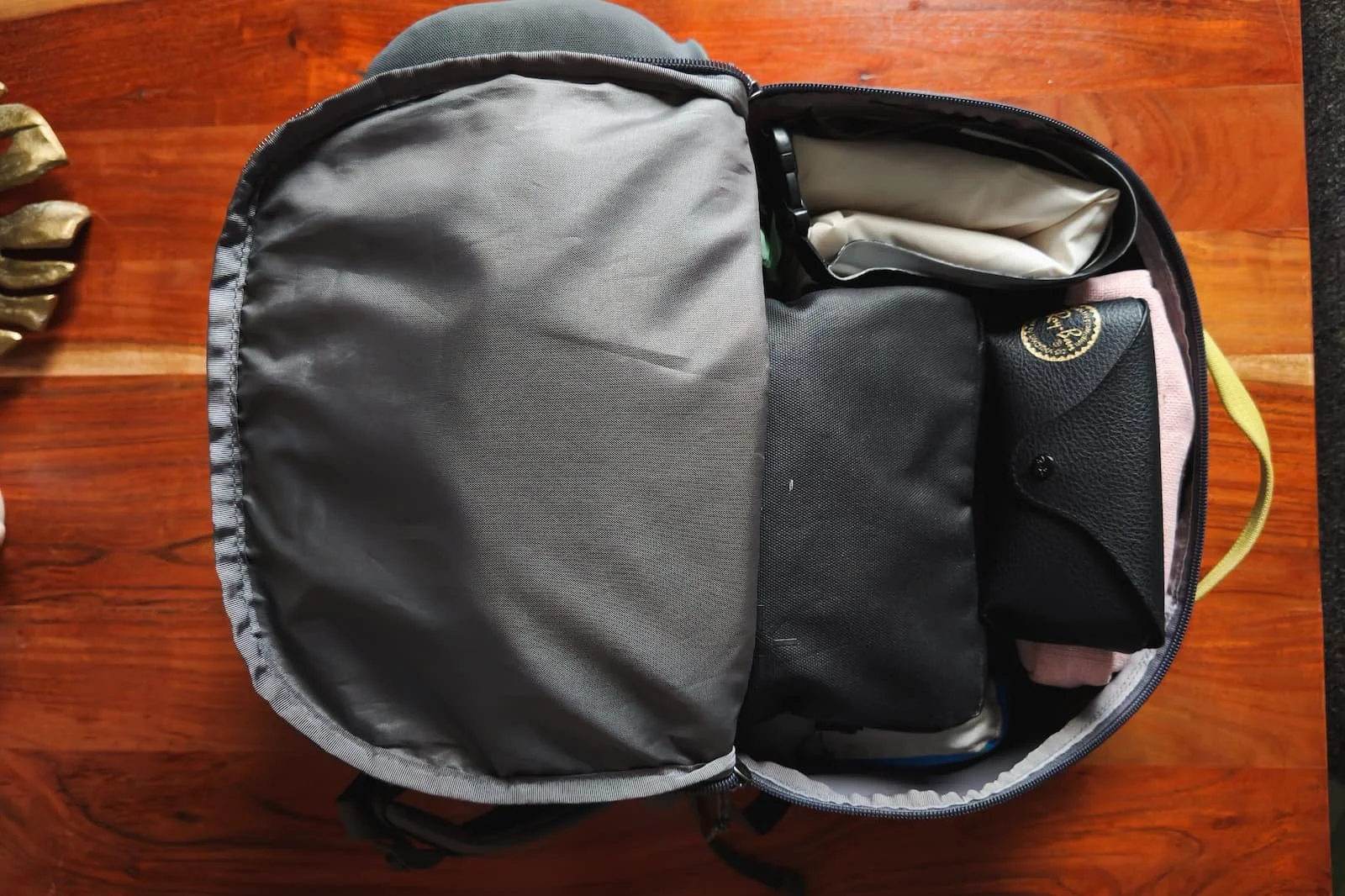
A peek into the inside setup of my one-bag.
Mobility (move through places without friction)
🎒 Main backpack
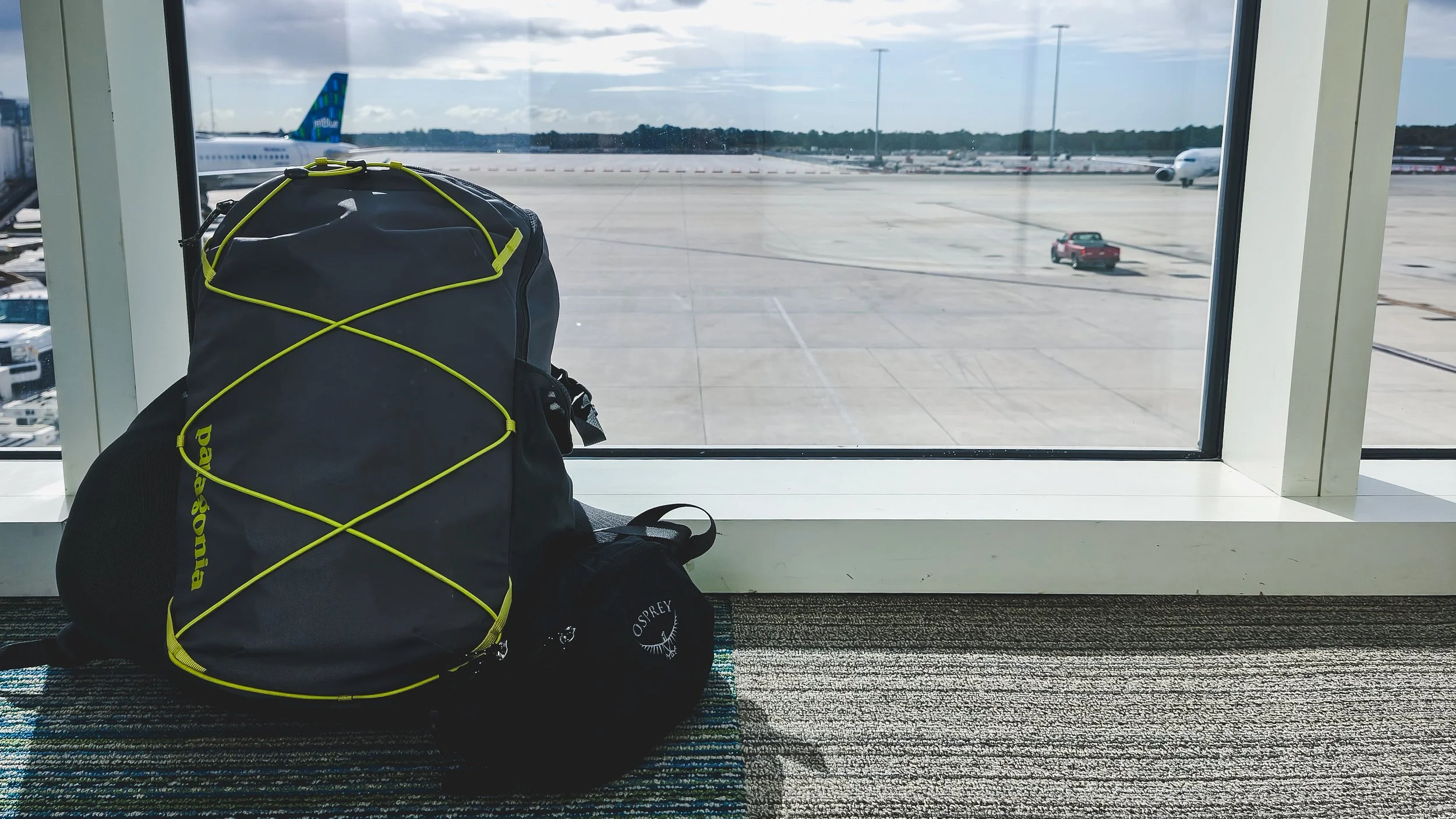
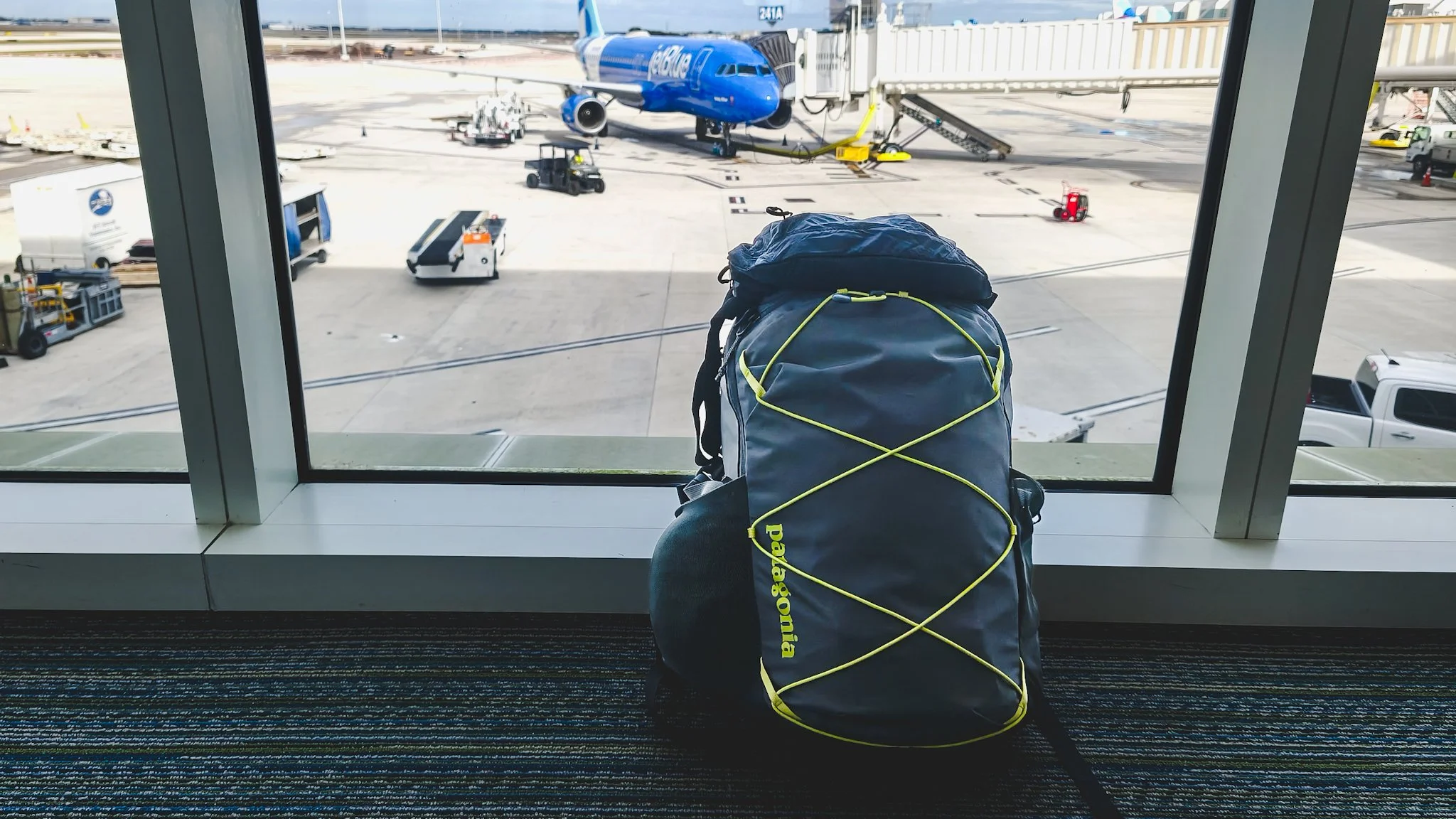
Patagonia Refugio 30L Backpack (*)
Lets me move like I’m not traveling.
Note: I’m using the previous version—this links to the current model, which has a slightly updated design.
My main backpack sets the limit for everything else I bring.
I intentionally use an everyday-sized backpack instead of a traditional travel pack. It carries more naturally, fits into normal environments, and removes that constant awareness of having something bulky on my back. It’s structured and roomy enough to live out of, but it still feels like a normal backpack. Plus, it also makes flying less stressful, knowing I can fit it under the seat if I absolutely need to.
The size keeps the rest of my packing system honest. If something doesn’t fit comfortably in this bag, that’s usually a sign I need to cut something, not upgrade to a bigger pack. It took a while in my one-bagging journey to get down to this size, but now I know I don’t need more volume than this. (If you’re curious about how everything fits into my Refugio, I wrote a post on how I pack it.)
In Practice:
The biggest difference for me is during transitions: getting from a bus station or airport to my lodging, walking around to my lodging, or waiting in a cafe with all my stuff before check-in. I don’t feel overloaded or like I’m dragging my whole life around with me.
Once I’ve unpacked, I can use the same bag as my normal day-to-day backpack. It’s just a regular backpack I happen to be living out of.
However though, I am still gradually trying to get my setup closer to 20–25L, since the smaller and more everyday the backpack feels, the better the whole system works.
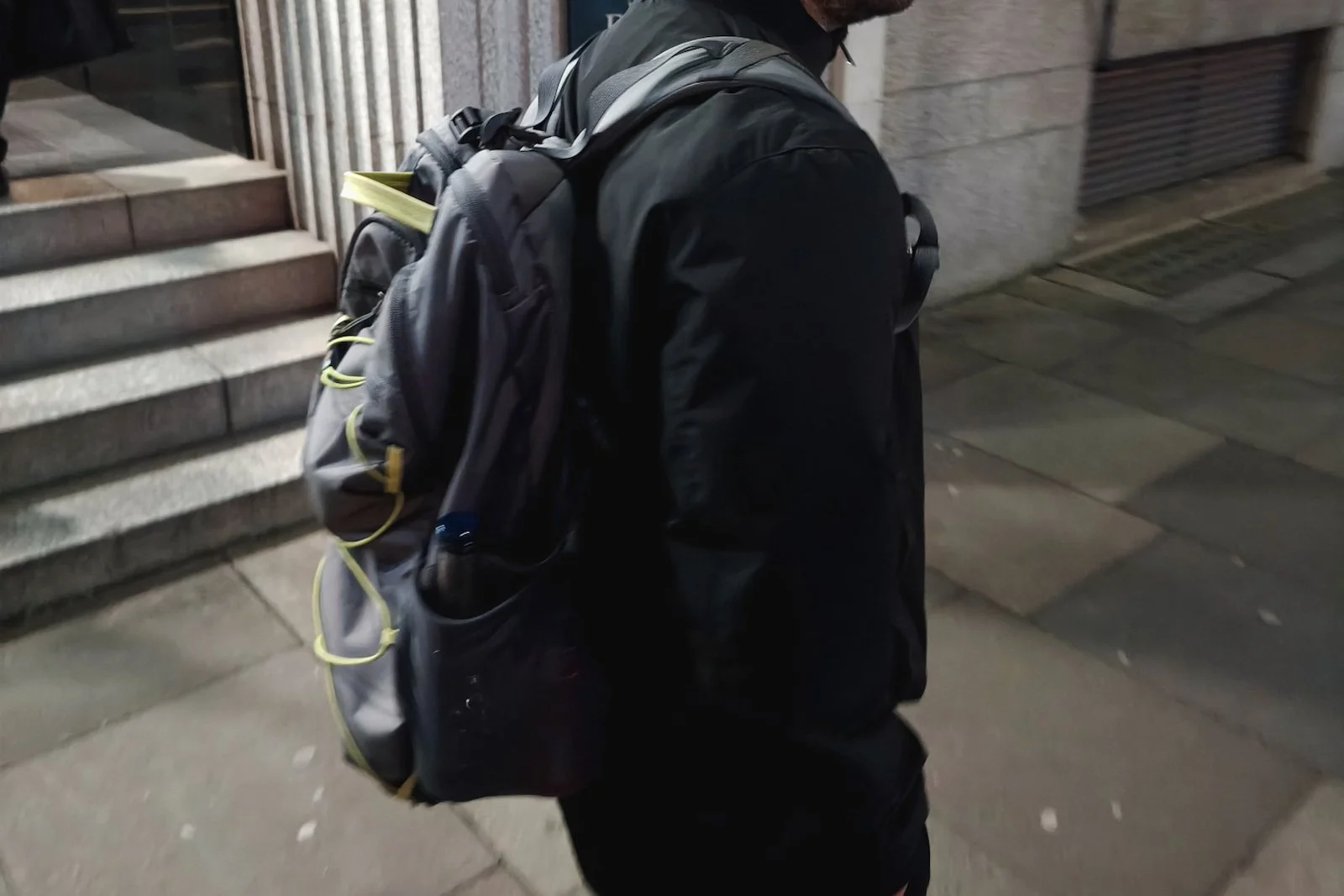
I use the same one-bag setup even for work trips, like this one to London, and just take the same backpack to work after unpacking. Here my partner is kindly carrying it for me when I met up with him to explore the city after work.
👜 Essentials sling
Osprey Ultralight Stuff Waist Pack (*)
Removes the need to reach into my main bag and keeps valuables close.
I guess technically this makes me a two-bag traveler, but this is the kind of second bag that makes “one-bag” travel easier, not harder.
I keep everything I know I’ll reach for in transit in here: passport, wallet, phone, AirPods, portable charger, lip balm, and glasses. That means I don’t have to open my main backpack in a busy airport terminal, dig through my stuff on a bus, or risk having something spill out and losing it.
It also keeps my most important valuables in front of me and on me, which matters a lot in busy transit areas where I need to stay more aware of my stuff.
I’ve found 2L to be the sweet spot, since it’s small enough to carry without thinking about it, but big enough for actual day-out essentials.
In Practice:
Once I get to my seat on a plane, I can put my main backpack in the overhead bin and sit down with just my sling. I don’t have to get up mid-flight to look for something, because the things I need are already with me.
At my destination, it becomes my main “out exploring” bag. It’s light and easy to carry, but still fits the basics I want for the day, including a small water bottle.
Organization (make a small bag actually work)
🧳 Packing cubes
Eagle Creek Pack-It Isolate Packing Cubes (*)
Turn my bag into a stable system instead of a pile.
Note: My set is old and I can’t find them anymore — I’ve linked a newer version here.
I use two cubes: a medium one for my clothes and a small one for underwear and socks. (I go deeper into how I plan my clothing in my capsule wardrobe post.) This keeps everything contained, organized, and easy to find.
Before I used packing cubes, I would just fold my clothes and put them directly into my suitcase or bag. The fabric would unfold, get tangled, and take up more space than it needed to. Smaller items would disappear into the pile, and I’d end up repacking and refolding multiple times.
Regular packing cubes help with organization, but compression cubes are what really changed the volume issue for me. They don’t magically make clothes weightless, but they do squeeze out extra air and stop fabric from expanding inside your bag, which is a huge part of making a smaller bag work.
This is probably the item that unlocked the most volume reduction in my one-bag setup. It turns clothes into a much smaller, regular-shaped module instead of loose fabric.
In Practice:
I’ve actually been using these cubes as my wardrobe every day for the past several years, even outside of travels when I’m at a stable base. And they still look almost new, which says a lot about the durability.
They also make unpacking at my destination very easy since I just take the cubes out and set them inside a closet or drawer. So I never need much space for my clothes, and they stay neat and contained.
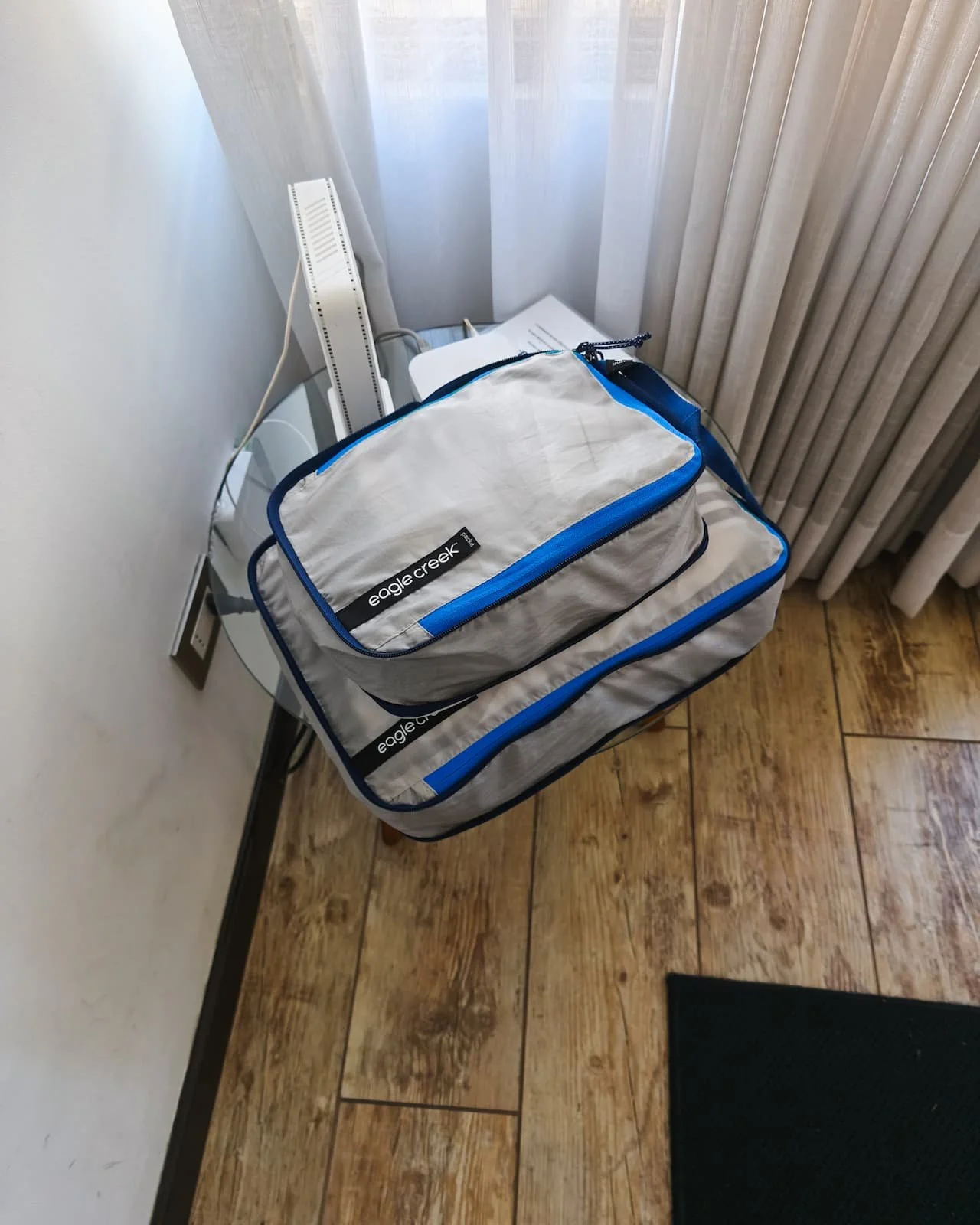
The packing cubes make unpacking clothes a breeze and let me turn any surface into a closet.
👝 Shoe pouch
Peak Design Shoe Pouch (*)
Contains dirt so the rest of my stuff stays clean.
Since my backpack has one main compartment, I rely on organizational cubes and pouches to keep things neat and contained. This is especially important for my shoes, which are usually the only truly dirty thing I bring in my bag. I know some people dangle shoes outside their bags, but I don’t like the dust or the swinging, so I always pack my shoes inside my bag.
For me, a good shoe pouch needs to be fully opaque (not mesh) to fully keep dirt in, and just big enough for 1 pair of shoes so it fits neatly at the bottom of my bag. A lot of shoe pouches are either too porous or too bulky, but the Peak Design one fits both criteria well.
A shoe pouch also makes shoes easier to pack because it turns them into a more regular shape and helps the bottom of my bag pack more consistently. Shoes are awkward on their own, but once they’re in the pouch, they become one contained block that I can build the rest of my bag around.
In Practice
The shoe pouch mostly just lives at the bottom of my bag. At my destination, I usually take it out once and pack it once, so I don’t need it to be exciting. But the fact that it keeps my shoes contained and my clean stuff clean without me thinking about it much is why I like it.
Versatility (do more with fewer items)
🧥 Insulated jacket
Patagonia Nano Puff Hoody (*)
Extends my temperature range without adding bulk
The Nano Puff is one of the most versatile clothing items I pack. For me, it’s pretty much the only insulated layer I need for fall, spring, and winter.
For its weight and volume, it does a really good job with warmth. When I combine it with a weatherproof shell on top and a fleece or base layer underneath, I don’t feel like I need another jacket, even in colder conditions.
I also have the black version, which makes it low-profile enough to wear in slightly nicer settings. It doesn’t look like a hiking-only layer, so I don’t feel the need to pack a separate “city” jacket.
The key is that I pack it in one of the outer mesh pockets of my backpack instead of burying it inside the main compartment. That way, it’s easy to grab on a cold plane, during a chilly evening, or whenever the weather changes. It also makes it easier to justify as a just-in-case layer, because it doesn’t take up space inside my bag.
In Practice
I love my Nano Puff. It has saved me many times, from unexpectedly cold airplane cabins to an impromptu winter trip to the Atacama Desert, where it gets bitingly cold at night.
It’s probably the single most useful clothing item I own when I compare how often I use it with how little space it takes up.
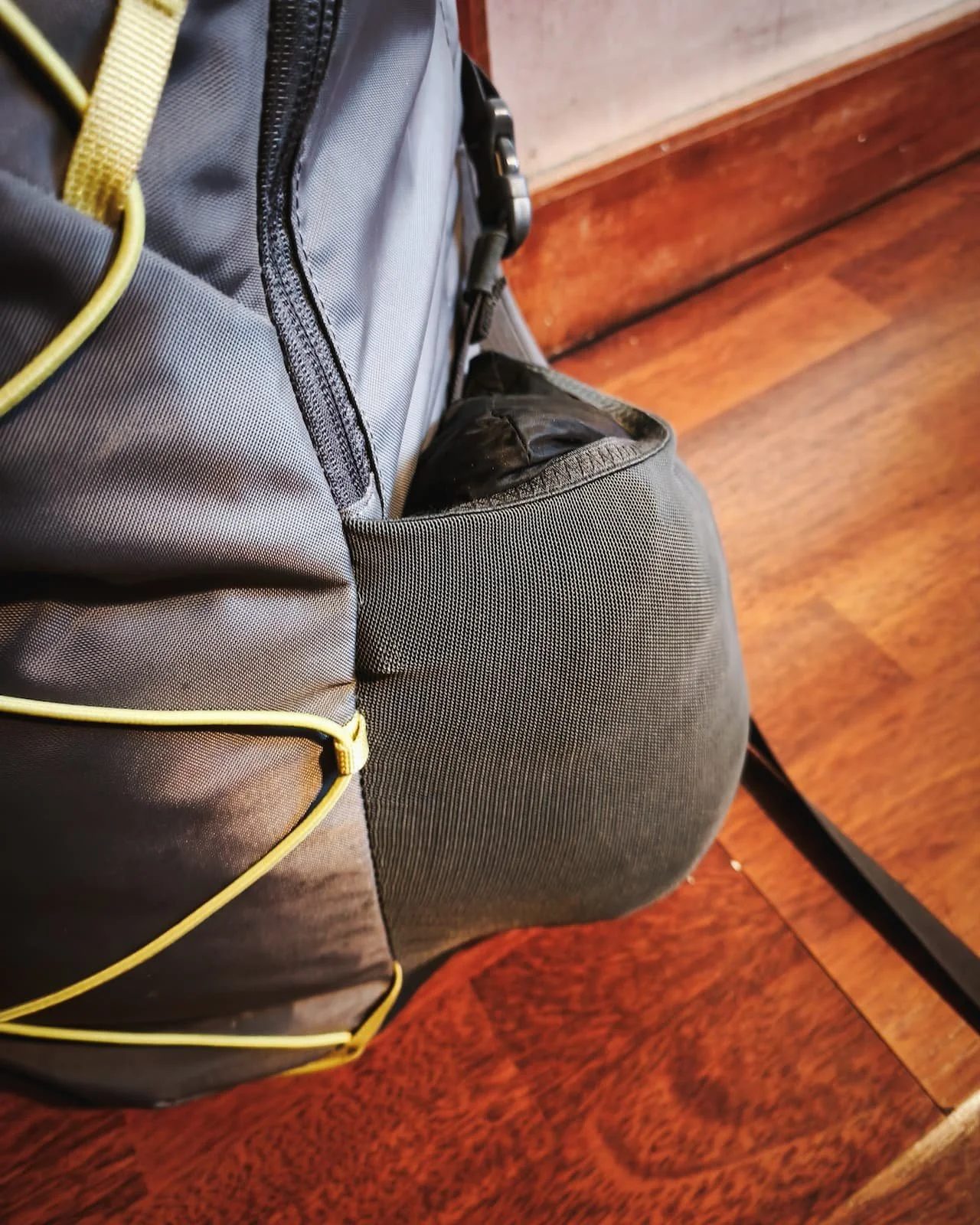
I keep this where I can grab it quickly, and it doesn’t compete for interior backpack space.
👟 Trail running shoes
Nike Pegasus Trail Running Shoes (*)
Eliminates the need for multiple shoes
I wrote a full post about my 2-shoe one-bag strategy, and trail runners are one half of that system. Here, I’ll keep it focused on why they make my essentials list.
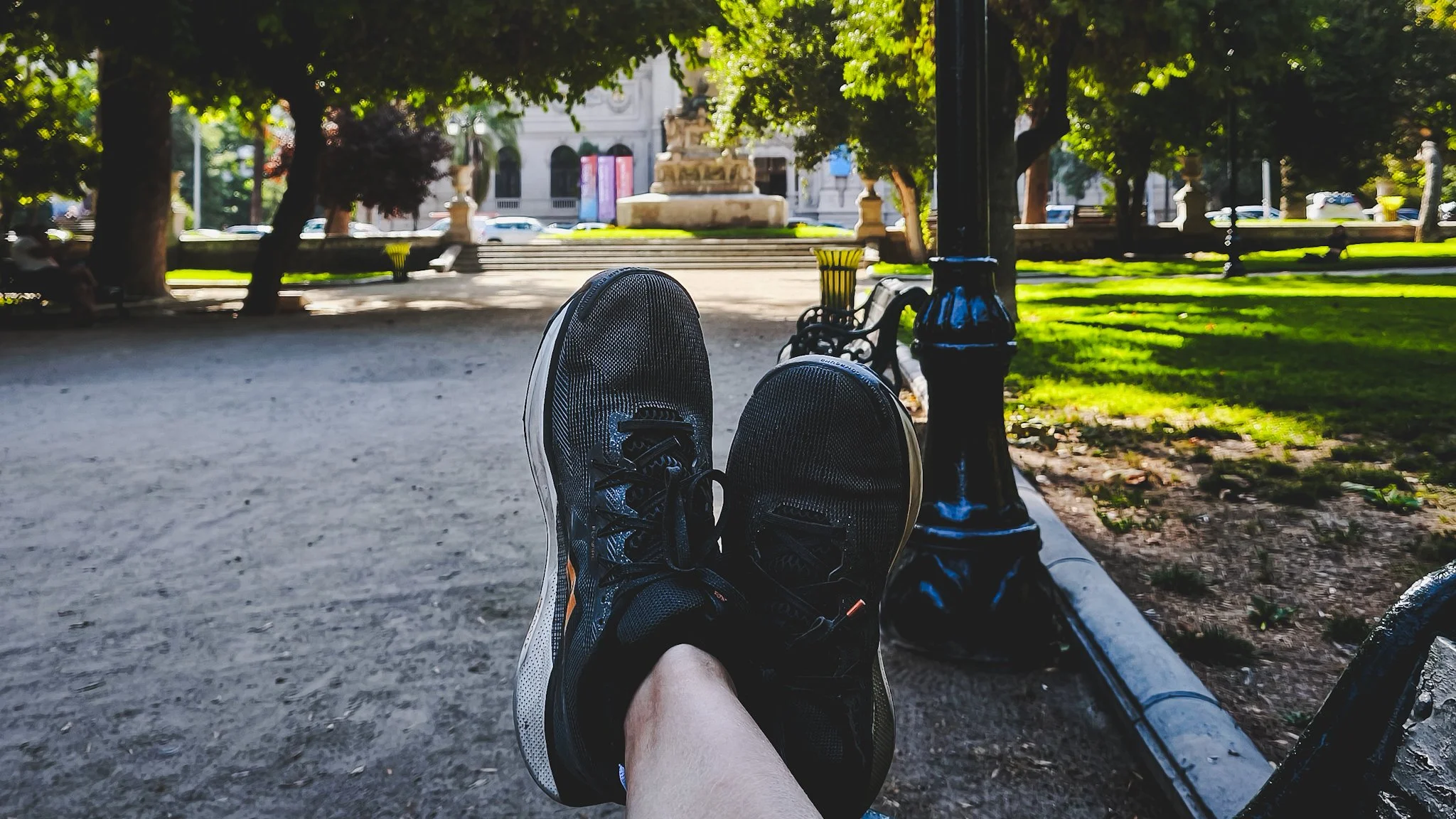
For most trips, I’ve found that a low-profile pair of trail runners covers the majority of situations I actually encounter. By low-profile, I mean something black or neutral enough for cities, not bright hiking colors. The Nike Pegasus Trail works especially well for me because the tread is moderate enough for concrete, but still useful for light hikes.
They’re my main sightseeing shoes in urban settings because they’re comfortable for long days on my feet and sleek enough for city wear. I can also wear them to casual or slightly nicer dinners with a dress, which helps me avoid packing a separate “nice” shoe. Since they’re running shoes, I can use them for everyday runs. And since they’re trail shoes, I can also take them on light hikes.
Basically, they support the way I like to travel: active, flexible, and low-friction. Because they’re so versatile, I can usually travel with just this pair plus one specialized shoe if needed, like flip-flops for water contexts. That cuts down on weight, but it also cuts down on decision fatigue. Most days, these are just the default shoes I wear.
In Practice
The one exception is when I’m training seriously for a race or traveling for a destination race. In that case, I’ll strategically replace them with dedicated road running shoes, especially if I know I won’t need the tread.
That’s still part of the same system, though. The point isn’t that trail runners are perfect for every trip, but that they’re the best default I’ve found for the way I travel: walking-heavy city days, everyday runs and workouts, and light hikes without packing a separate hiking shoe.
Self-sufficiency (reduce dependence on place)
🔌 Travel adapter
Epicka Universal Travel Adapter (*)
Makes power a non-issue everywhere
This adapter has 4 plug types and works in 200+ countries. I’ve used it across the US, Europe, South America, and Asia without issues. It also has USB-A and USB-C ports, plus a spot for a US-style plug, so I can use it directly with cables or plug in another charging block if needed.
For me, the main benefit is consistency. I don’t need to carry a separate set of plug heads or think through what adapter I need before each trip. It’s more space- and weight-efficient, and it keeps my charging setup the same almost everywhere.
One caveat: it’s not especially powerful, so I don’t use it for fast charging or high-power devices, but I don’t really need those things when I travel anyway. It works well for charging my phone and e-reader overnight, and I can charge my laptop by plugging my computer charger into it.
In Practice
I like that for something the size of a rolled-up sock, I never really have to think about whether I’ll be able to charge things when I arrive. There’s something satisfying about getting to a destination, checking the outlet type, and just pushing out the plug I need.
I also use it as my main charging block at home. This is my second one in several years, so it has held up well for the amount I use it.
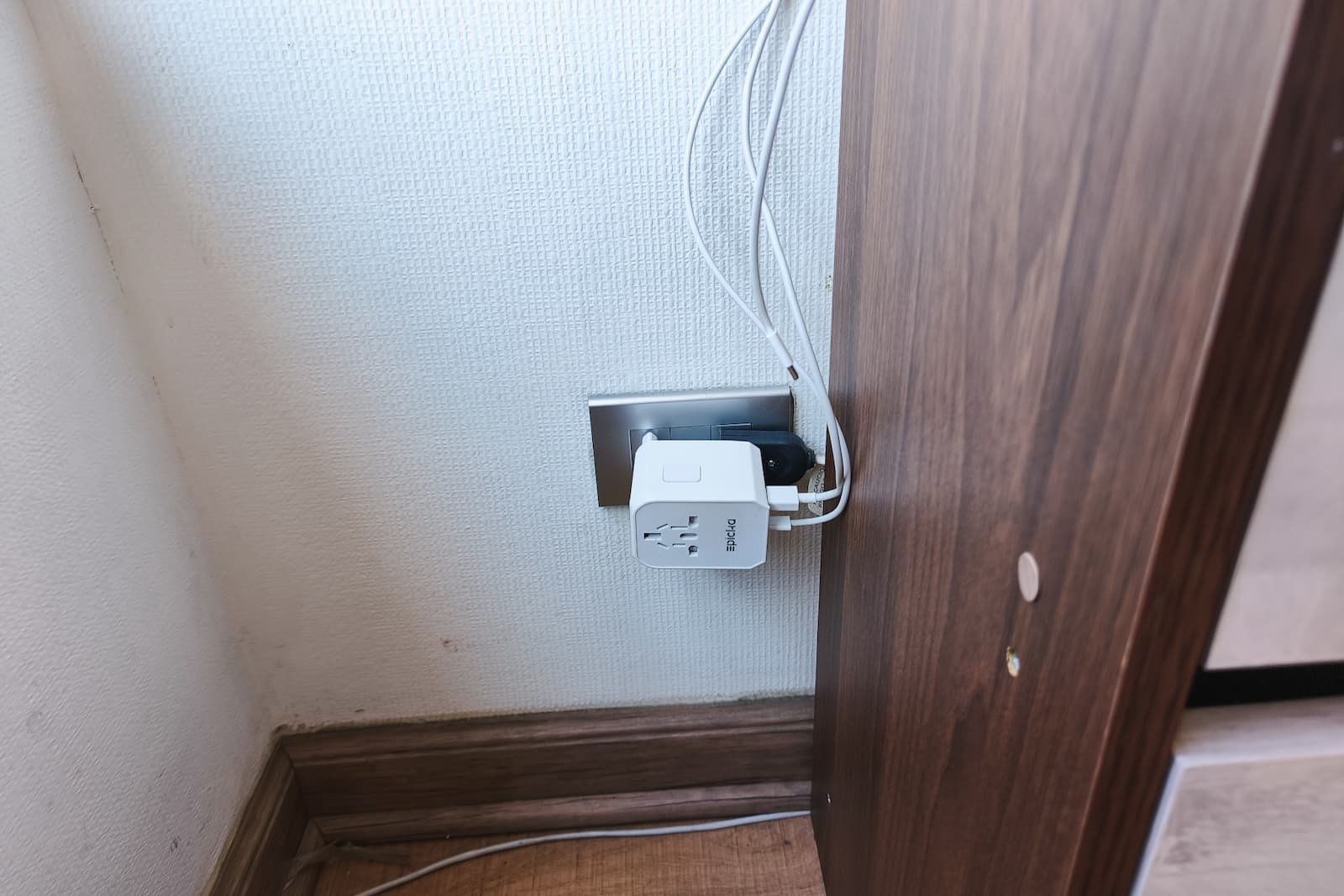
One less thing to think about.
🧼 Laundry system
Scrubba Wash Bag (*)
Removes the need to overpack clothes or rely on laundry access
Friction removed: running out of clothes, location dependency
Key idea: turns any place into a reset point
I wrote a full post about my portable laundry system, which centers around the Scrubba Wash Bag, so I’ll keep this focused on why it makes my essentials list.
The Scrubba is what lets me pack way less on trips where my clothing volume would otherwise explode if I didn’t do laundry. This is especially useful for 1–2 week trips where I don’t want to bring more than a week’s worth of clothes, but also don’t want laundry access to become a major lodging filter.
It gives me more flexibility because I don’t have to pay more for a place with a washer or spend part of the trip figuring out a laundromat in a new environment. It’s not that laundry planning is impossible, but it is one more mental task, and I’d rather not spend travel energy on it if I don’t have to. Having my own laundry setup has unlocked a lot more lodging options for me, and I feel much less blocked when a good place doesn’t have laundry.
The bag itself packs down to about the size of a 500ml water bottle (maybe smaller), and has small bumps inside that mimic a traditional washboard. For me, that makes it feel cleaner and more effective than washing clothes directly in a sink.
In Practice
I’ve used this for both shorter trips and extended (1 month or more) trips. After using it as my only laundry solution for 2 months though, I’ll admit it got a little tiring. But for trips around a month or less, it works really well.
For me, the sweet spot is washing every ~3 days so the loads stay small and easy. It’s much less annoying than letting it pile up into a bigger task. It also works well for quickly refreshing pieces I need clean for the next day.
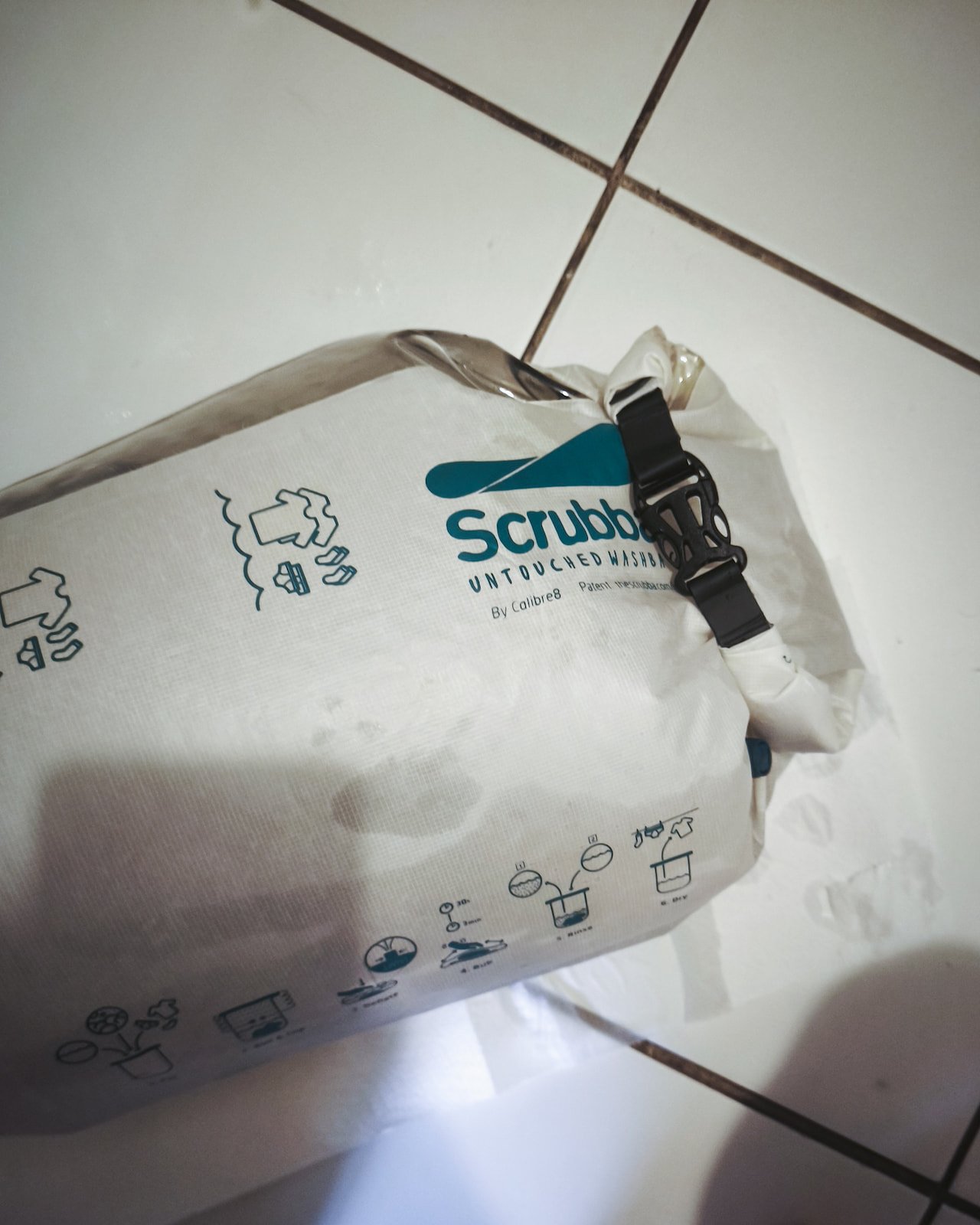
Scrubba in the process of washing clothes. This is how I get away with packing fewer outfits.
These aren’t the only things I pack (obviously haha), but they’re the ones that most make the whole system work.
One-bag travel isn’t really about minimizing for the sake of it. It’s about reducing friction so moving between places feels easier and more natural. These are the items that do that for me.
If you want the full breakdown of everything I bring, you can check out my complete one-bag packing list.
Thanks for reading — I hope this post helps you pack a bit lighter!
Have a question about this?
Shoot me a message or leave a comment below — I read everything, and I’m always happy to help if I can!