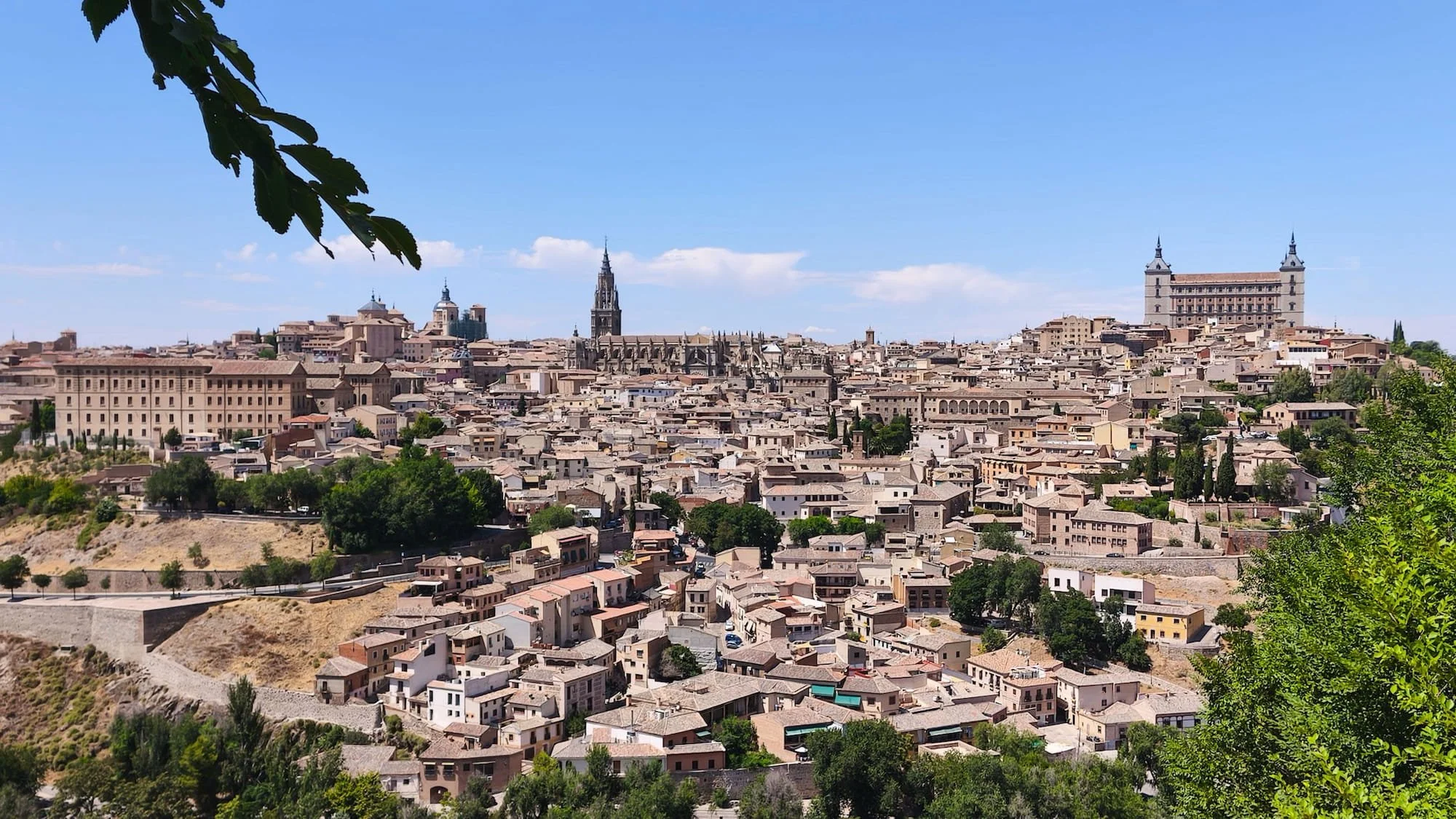
Toledo Day Trip from Madrid: Self-Guided Walking Itinerary + Map
Less than 40 minutes on the high-speed train, Toledo is one of the easiest day trips from Madrid.
The hilltop city is often called the “City of the Three Cultures” because Christian, Muslim, and Jewish communities all shaped its history and architecture. The reality wasn’t always quite as harmonious as the nickname suggests, but you can still see that cultural layering throughout Toledo’s UNESCO-listed historic center.
I designed this itinerary around that history, with at least one major religious monument connected to each tradition:
Christian: Toledo Cathedral, one of Spain’s most important Gothic cathedrals
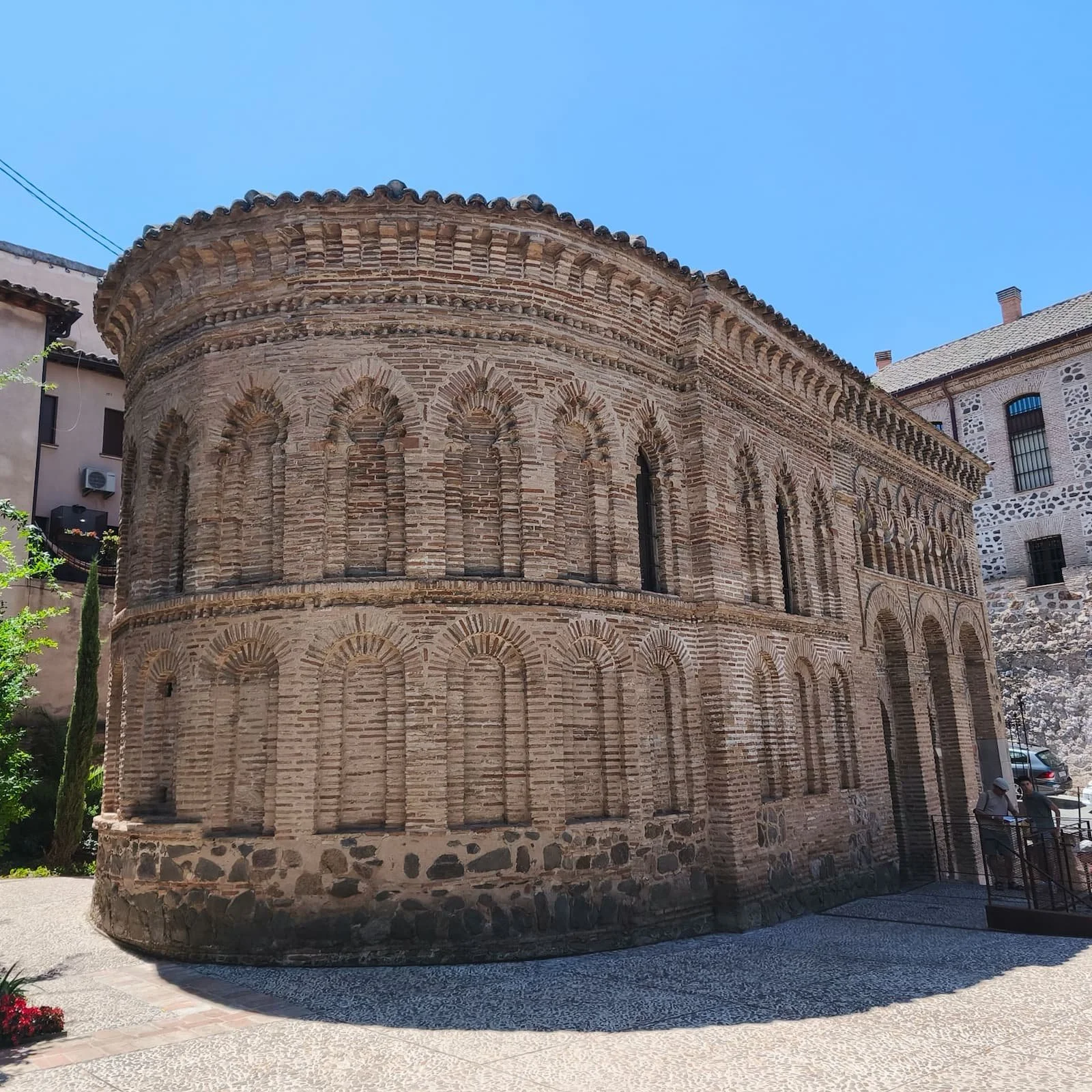
Islamic: Cristo de la Luz, Toledo’s oldest standing monument
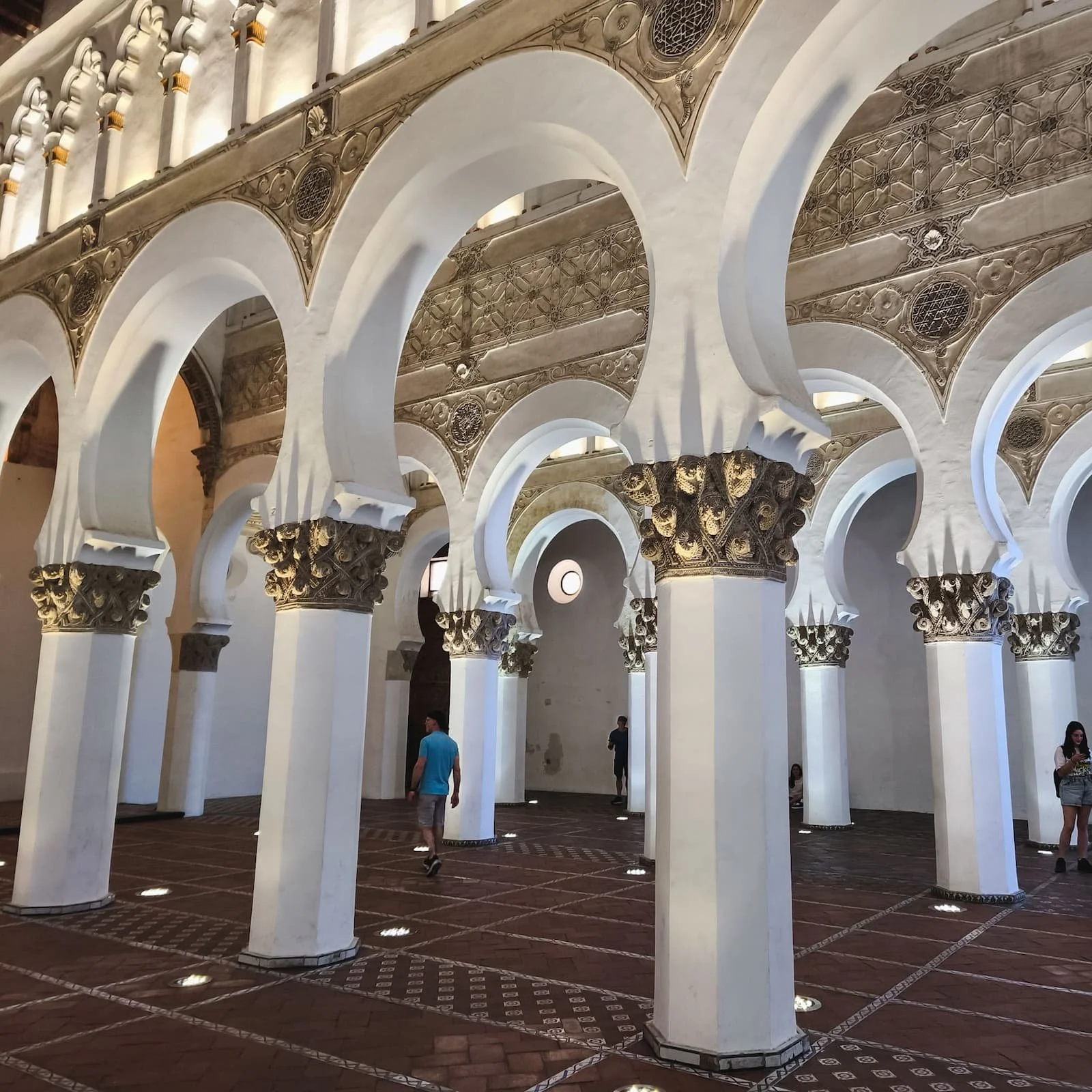
Jewish: Santa María la Blanca, a medieval synagogue known for its rows of white horseshoe arches
The route also includes Toledo’s winding old streets, local marzipan, a traditional Castilian lunch, and the classic view from Mirador del Valle.
I originally built this route for our own Toledo day trip, and we tested the full itinerary ourselves. We moved through it fairly quickly, but the suggested timing below is a little more generous, with extra room for longer monument visits, breaks, and wandering.
Quick Plan
Total time: Full day from Madrid, around 11–12 hours total
Best for: Independent visitors who want to see Toledo’s major historical monuments without renting a car or taking a tour
Route in Toledo: Train station → Plaza de Zocodover → Alcázar exterior → Toledo Cathedral → marzipan → Jewish Quarter and monuments walk → lunch → Mirador del Valle → train station
Best timing: Aim to arrive in Toledo around 09:00–09:30
Transportation needed: High-speed Avant train from Madrid Atocha, then walk, bus, or taxi into the historic center
Main bookings: Round-trip train tickets, Toledo Cathedral, and the Toledo Tourist Wristband
Pace / walking level: High. Toledo is compact, but it’s hilly, and this route includes cobbled streets, monument interiors, and an optional 35–45-minute walk to Mirador del Valle
Watch out for: Toledo Cathedral doesn’t open for tourist visits until 14:00 on Sundays, so the standard order below works best Monday through Saturday. The other wristband monuments are generally open daily, although hours vary seasonally and holiday closures may apply.
Route Map
🏛️ Main Old Town Walking Route
Follows the main sightseeing route through Toledo, including from the train station to Plaza de Zocodover, the Alcázar, Cathedral, and the Jewish Quarter before lunch.
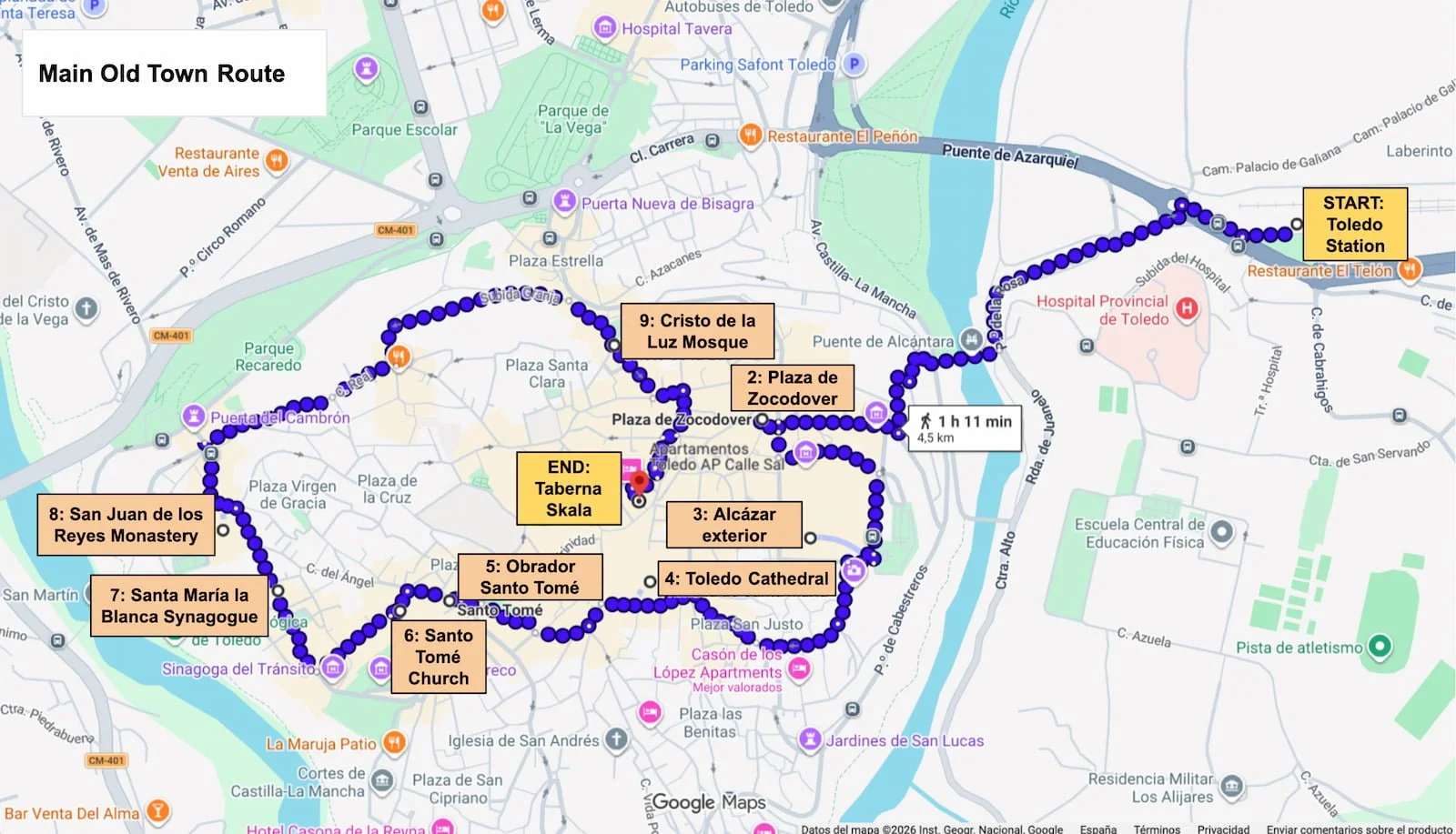
Map data © Google.
🌅 Walk to Mirador del Valle & Train Station
The afternoon walk to Mirador del Valle via Puente de Alcántara, followed by the route back to Toledo's train station.
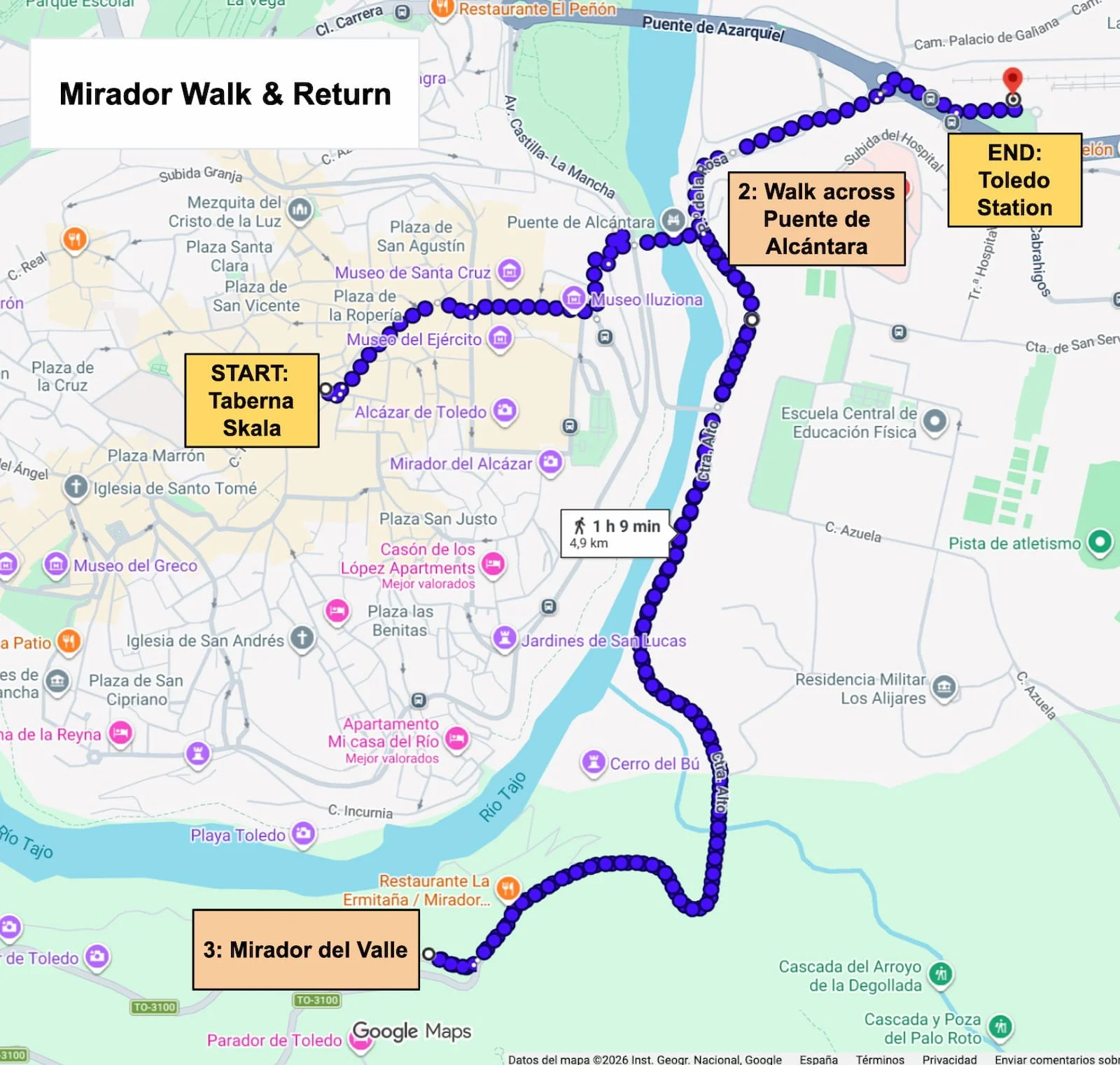
Map data © Google.
One-Day Toledo Itinerary
Total walking: Around 6–10 km depending on how many monuments you visit and whether you walk to Mirador del Valle. Expect hills, uneven streets, and a lot of time on your feet.
Start of the Day — Train from Madrid to Toledo
Allow: Around 1 hour, including the train journey and arrival
Take a morning Avant train from Madrid Puerta de Atocha–Almudena Grandes to Toledo. The ride itself takes around 35 minutes — see the transit section below for booking and details.
Toledo station is also worth a quick look before you leave. It was built in a Neo-Mudéjar style, with decorative brickwork, tiled interiors, horseshoe arches, and a tall clock tower.
Arrival — Walk to Plaza de Zocodover
Allow: 20–30 minutes
From the station, you can walk, take a city bus, or get a taxi to the historic center.
The walk to Plaza de Zocodover takes around 20–25 minutes and is uphill, but it’s scenic and gives you an immediate view of Toledo across the river. I enjoyed the walk personally. Plus, there are actually escalators for the final ascent into old town (which I didn’t know about but you can take advantage of!).
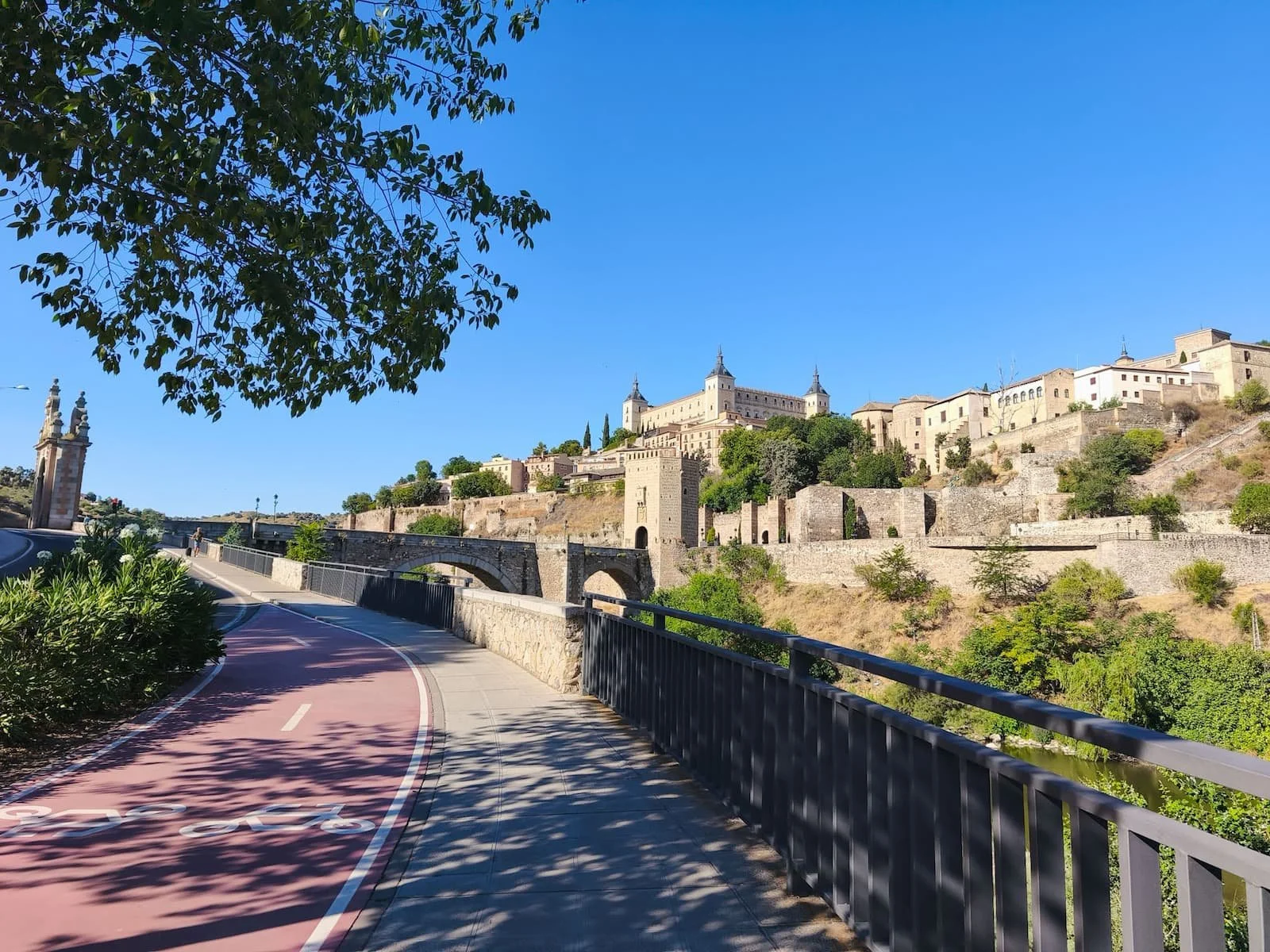
When the hilltop Toledo opens up on the nice riverside walk from the station.
First Stop — Plaza de Zocodover + Alcázar Exterior
Allow: 30–35 minutes
Start at Plaza de Zocodover, Toledo’s main central square and longtime public gathering place. Over the centuries, it has hosted markets, festivals, public ceremonies, and less cheerful events like executions during the Spanish Inquisition.
From the plaza, walk toward the Alcázar for exterior views. I don’t think you need to spend your limited day inside unless you’re especially interested in military history, since this itinerary already includes a lot of major interiors.
Instead, take the smaller winding streets from the Alcázar toward Toledo Cathedral. They’re quieter and more atmospheric than the main pedestrian thoroughfare and give you a first taste of Toledo’s medieval old town.
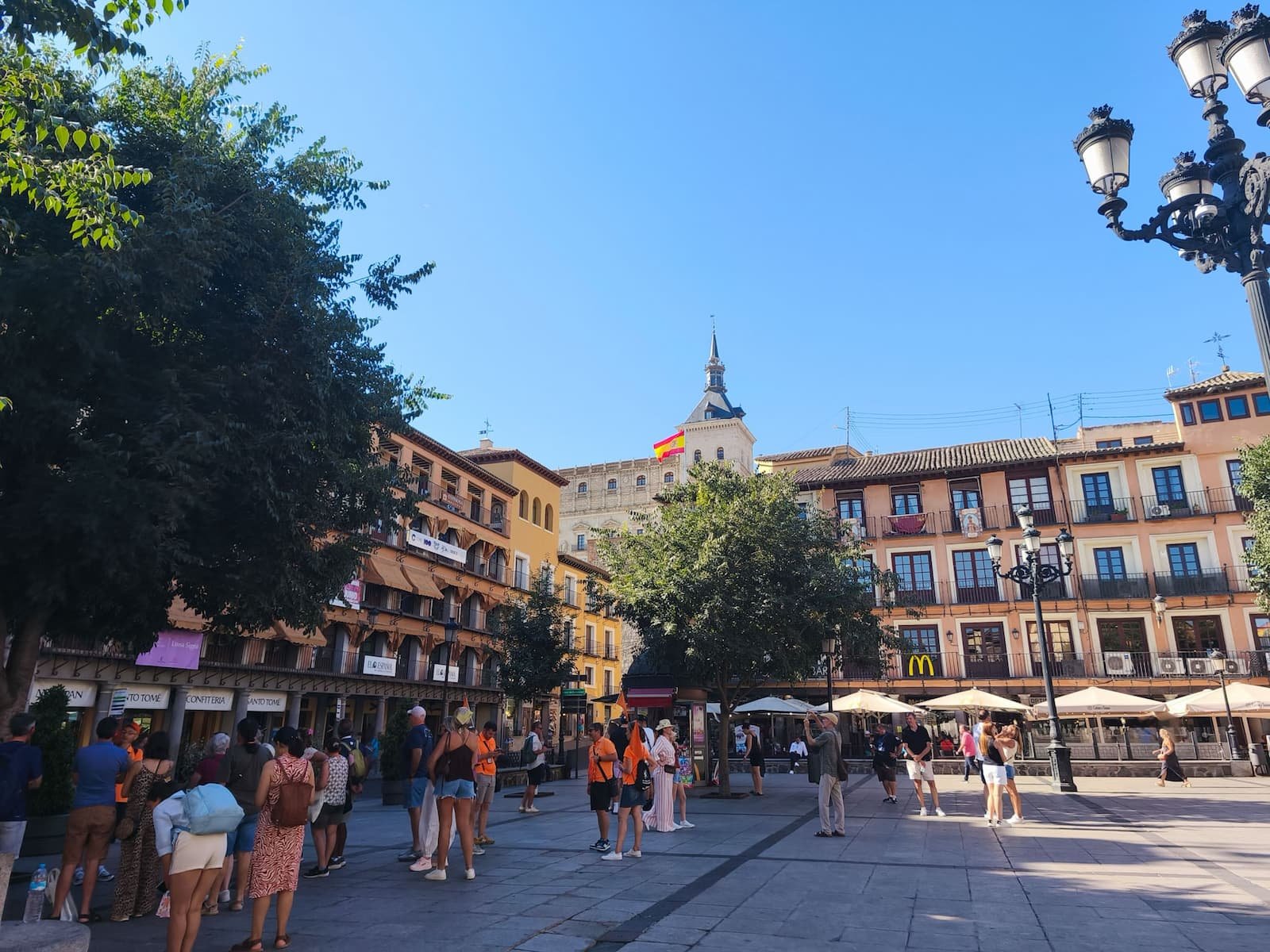
Plaza de Zocodover.
Late Morning — Toledo Cathedral
Walking time: Around 7 minutes from the Alcázar area
Allow: 1.5 hours
Toledo Cathedral is the biggest paid visit of the day.
Construction began in the 13th century on the site of Toledo’s former main mosque, and now the Cathedral is considered one of the greatest examples of Spanish Gothic architecture.
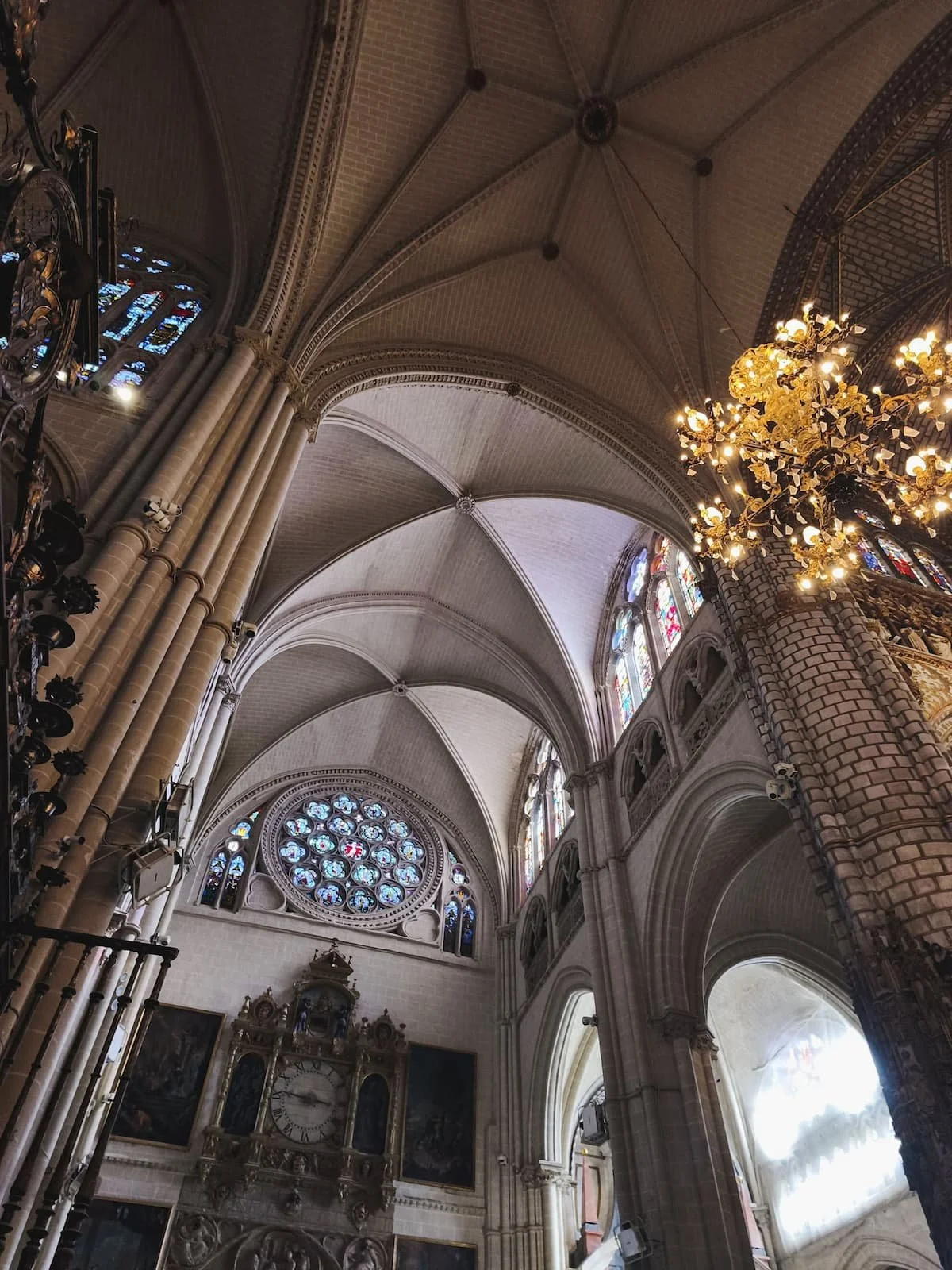
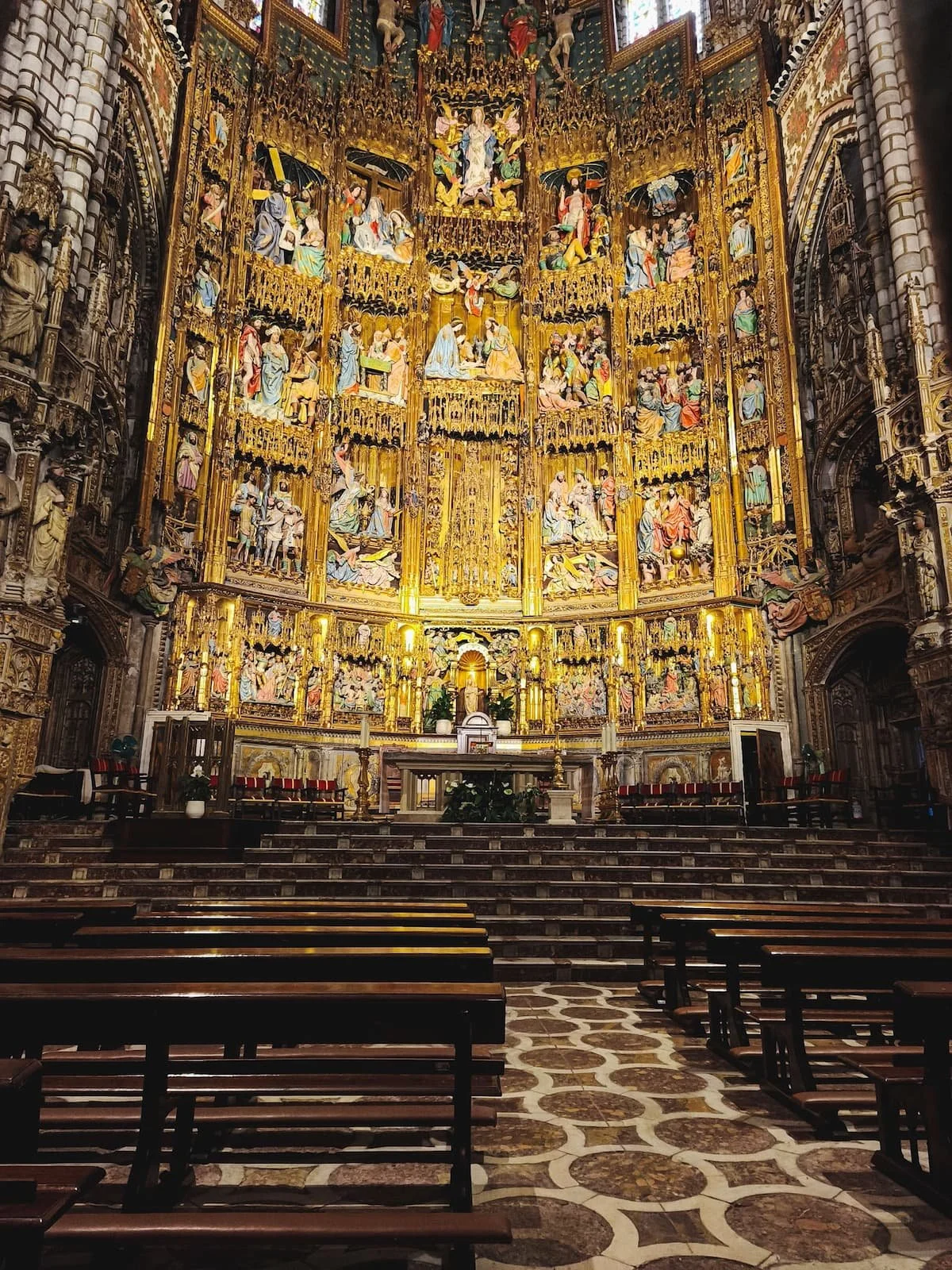
The interior is enormous and densely decorated, with chapels, stained glass, carved choir stalls, religious paintings, and an extremely elaborate main altar.
The main things to look for are:
The Main Chapel and altarpiece: A huge gilded Gothic altarpiece depicting scenes from the life of Jesus
El Transparente: An elaborate Baroque marble and stucco installation designed to channel light behind the main altar
The Sacristy: Paintings by El Greco, Goya, Caravaggio, Titian, and other major artists
The choir: Intricately carved wooden choir stalls and a richly decorated enclosure
The Chapter House: Known for its Mudéjar-style ceiling and portraits of Toledo’s archbishops
The Treasury: Religious objects, including the large processional monstrance used during Corpus Christi
Unfortunately, El Transparente was closed for renovations during our visit, but everything else was still magnificent. I especially loved the enormous main altar and the stained glass. Rather than a few giant windows, many of the panes felt smaller and more intricate, with geometric patterns that echoed the carved decoration around them.
When we visited in 2026, the Cathedral was also hosting its special 800th-anniversary exhibition. The cloister had been incorporated into the exhibition and required a separate ticket. The exhibition is scheduled to run through October 14, 2026, so normal cloister access may differ after that date.
Practical information:
Hours: Generally Monday–Saturday 10:00–18:30 and Sunday 14:00–18:30
Booking: Recommended but not essential far in advance. Tickets can be purchased online (with timed entry) or at the ticket office if you want more flexibility.
Important: Special religious celebrations can affect cultural visiting hours
Check the Toledo Cathedral official site for bookings and updates.
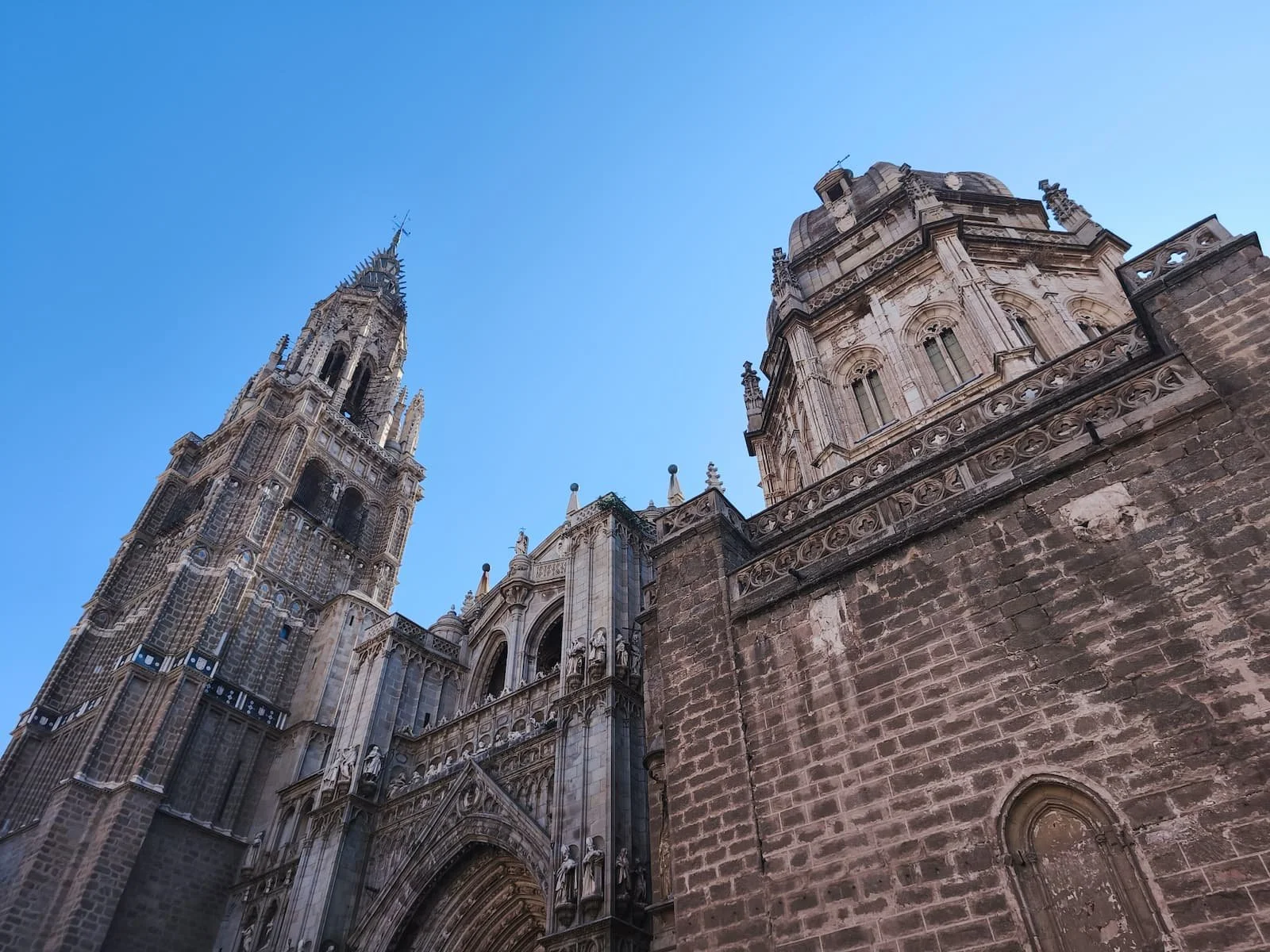
Gothic exterior of the Cathedral.
Snack Break — Marzipan at Santo Tomé
Walking time: Around 5 minutes from Toledo Cathedral
Allow: 15–20 minutes
After the Cathedral, walk to the original Obrador Santo Tomé location in Toledo’s historic center.
Toledo has been associated with marzipan for centuries. Its exact origin is debated, but one popular story connects it to convents using almonds and sugar to make food during periods of shortage in medieval Toledo.
At Santo Tomé, get a bag of mazapán de delicias if you want the traditional small shapes. The flavor was mild and not as overwhelmingly almond-y as I expected, and it was a quick sugar boost before all the walking ahead.
Practical information:
Hours: Generally open daily 9:00–21:00.
Check the Obrador Santo Tomé website for the most recent hours and updates.

The two bags of mazapán de delicias that we got.
Early Afternoon — Jewish Quarter + Toledo Monument Walk
Allow: Around 2–2.5 hours
Continue west into Toledo’s former Jewish Quarter. This part of the city feels a little quieter than the area around the cathedral, with narrow lanes, stone buildings, small plazas, and traces of the Jewish community that once played an important role in Toledo’s history.
The neighborhood is also where several of Toledo’s most interesting religious and historical monuments are clustered. They are close enough to visit as a walking loop, although part of the appeal is simply moving through the streets between them.
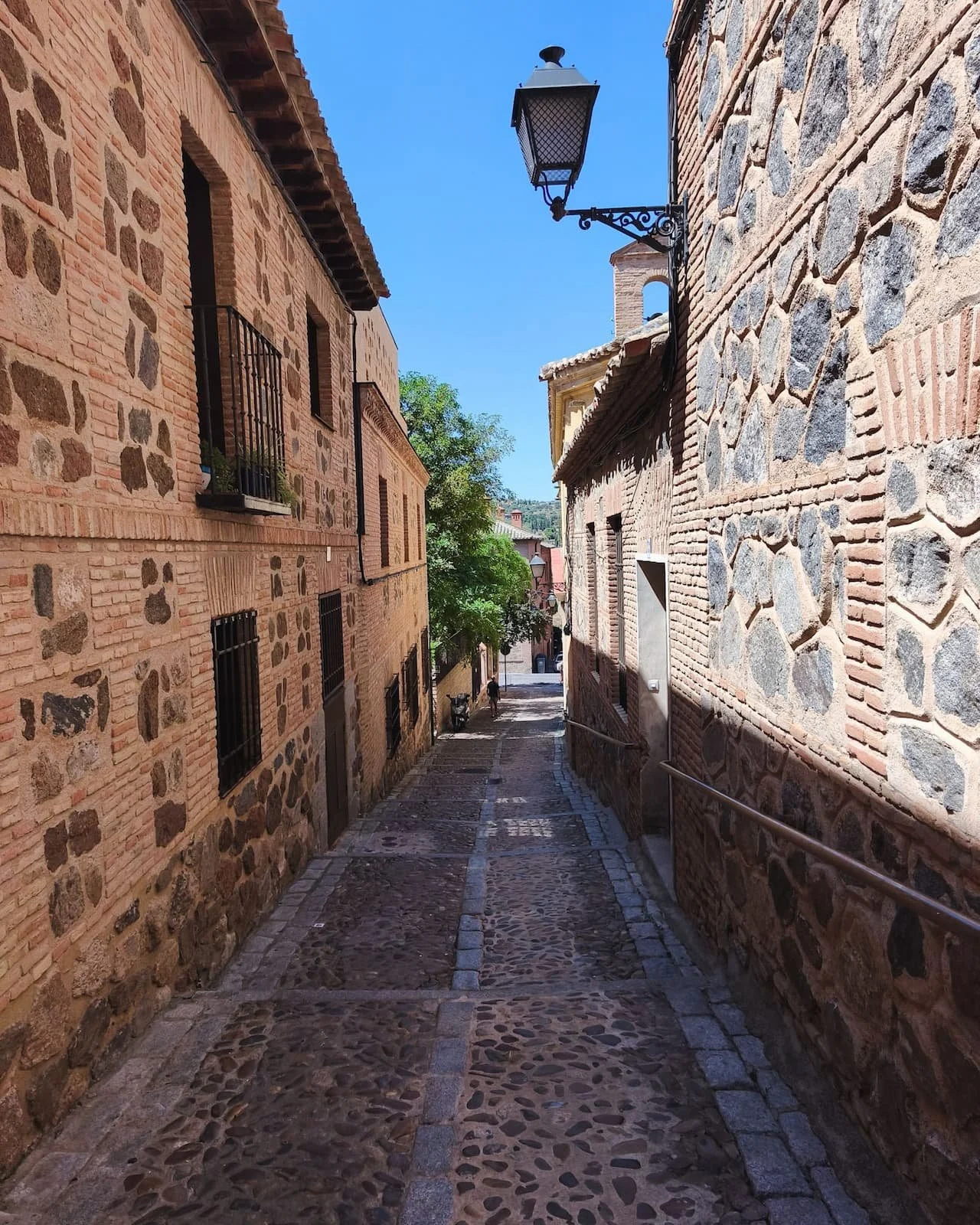
Quiet narrow street in the Jewish Quarter.
All seven monuments below are included with the Toledo Tourist Wristband (see What to Book in Advance below for more details on that).
Most of the monuments are relatively small, and we managed to visit all seven. We thought each added something different, but you definitely don’t need to go to all of them.
I’d prioritize:
Santo Tomé Church
Santa María la Blanca Synagogue
San Juan de los Reyes Monastery
Cristo de la Luz Mosque
Those four give you the strongest mix of Toledo’s Jewish, Islamic, Christian, and artistic heritage. They also make the Tourist Wristband worthwhile.
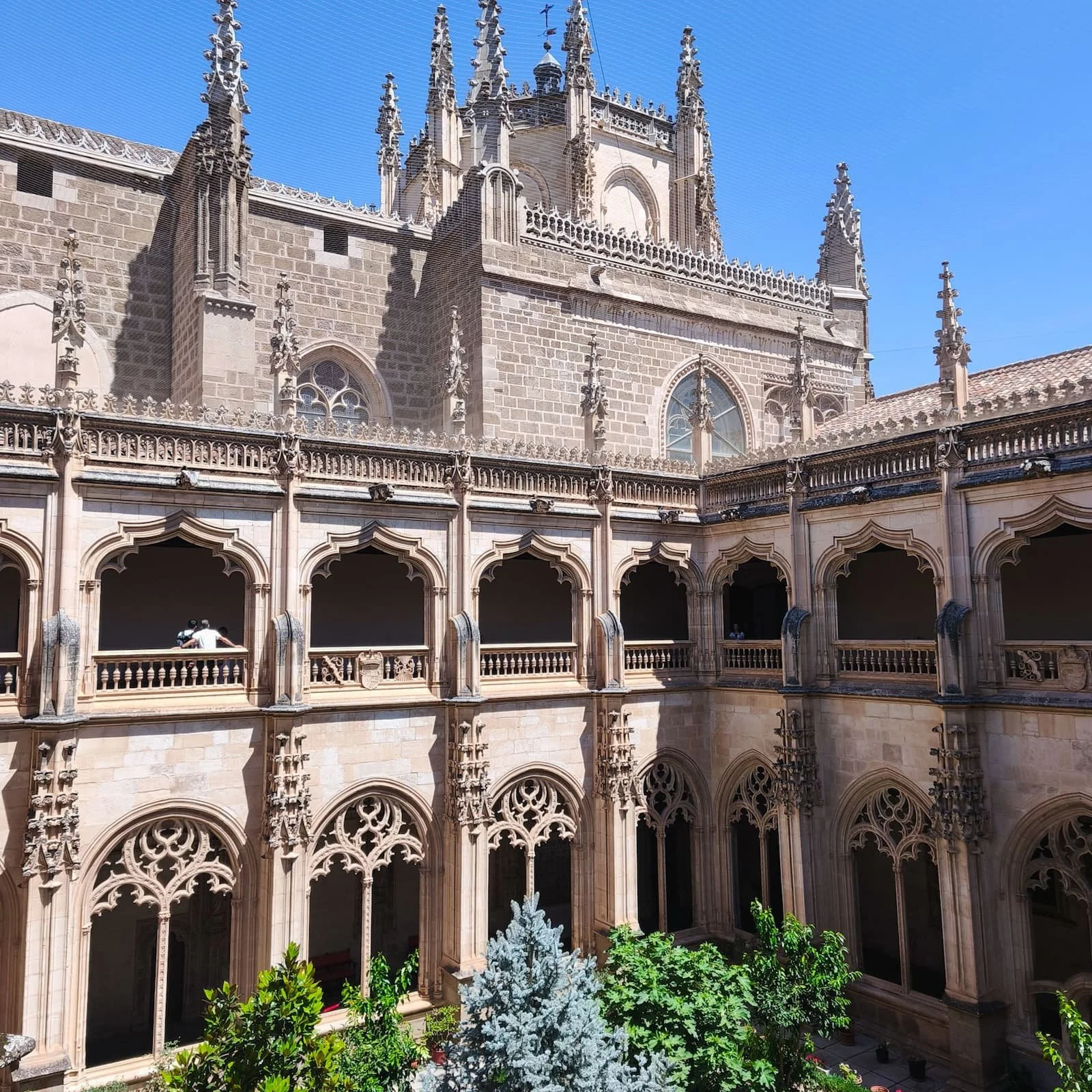
After those, I’d prioritize:
El Salvador Church
Royal College of Noble Maidens
Jesuits Church / San Ildefonso
That isn’t a ranking of historical importance — it’s just the order I’d choose for a first-time day trip based on how distinctive the visits felt.
The box below gives a brief description (and a bit of my impressions) of each monument in the geographical order I’d recommend visiting them. The route creates a loop through the Jewish Quarter and old town before ending at Cristo de la Luz, close to the lunch area.
One of Toledo’s most historically layered monuments, with Roman remains, Visigothic elements, Islamic horseshoe arches, and later Christian additions. It’s basically a compact architectural timeline showing how Toledo repeatedly reused and transformed the same religious spaces, and there’s even an archaeological excavation site underground. This is the one I’d especially read about before and during your visit, since it’s a bit hard to see and appreciate the layers without some context.
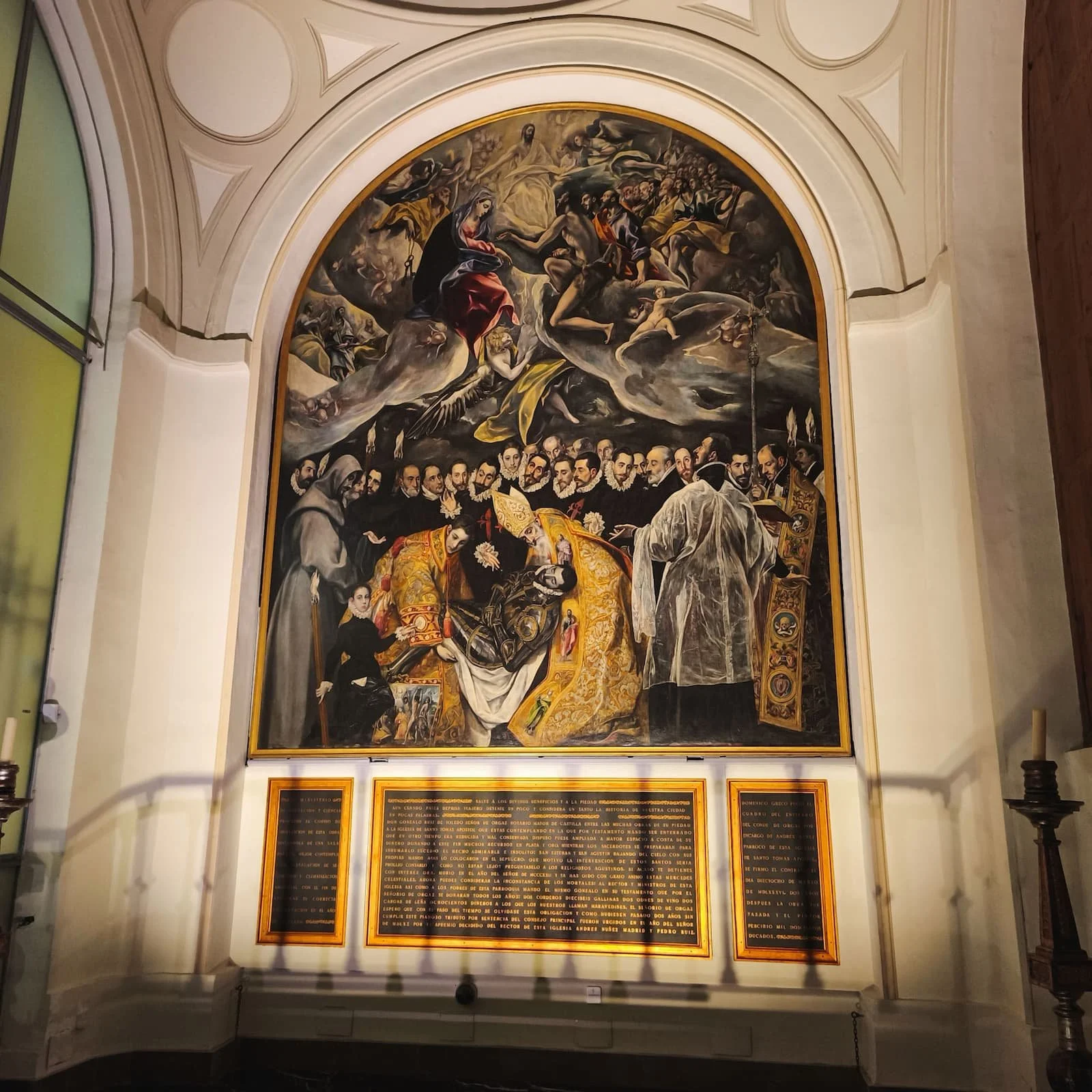
Santo Tomé ChurchThis small church is primarily visited for El Greco’s The Burial of the Count of Orgaz, one of his most famous paintings. And honestly, that’s mostly what the visit is. During our trip, visitors entered the room containing the painting but couldn’t explore the main church itself.
Santa María la Blanca SynagogueA medieval synagogue with rows of white horseshoe arches supported by octagonal columns. Built as a synagogue by Mudéjar craftsmen, its white horseshoe arches reflect the Islamic-influenced architectural traditions of medieval Toledo.
San Juan de los Reyes MonasteryA 15th-century monastery commissioned by the Catholic Monarchs. The church is impressive, but the main highlight is its two-level cloister, with detailed stonework, Mudéjar-style ceilings, and a quiet central garden. As someone who loves cloisters, I loved this one.
Royal College of Noble MaidensA former educational institution founded for young women from noble families with limited financial resources. Its interiors include tapestries, decorated ceilings, a beautiful wooden staircase, Baroque details, and a peaceful courtyard. This felt like one of the less visited monuments since we were completely alone inside and could really appreciate the quiet interior.
Jesuits Church / San IldefonsoA large Baroque church with two towers you can climb for broad views over Toledo’s rooftops. It’s an alternative viewpoint if you don’t plan to visit Mirador del Valle, although the two views are completely different. We didn’t climb the towers since we were already planning to visit the mirador later.
Cristo de la Luz MosqueThe best-preserved surviving mosque from Islamic Toledo, traditionally described as the only one remaining from the city’s original mosques. Dating to around the year 999, the small building preserves its brick arches, geometric vaulting, and Islamic architectural details alongside a later Christian apse. There’s also a walled garden with a central fountain, roses, and a viewpoint.
Practical information:
Hours: The monuments are open daily, but closing times vary by season and monument. Some close earlier in winter, and ticket offices stop selling tickets shortly before closing. Check Toledo Monumental for current hours before your visit.
Booking: The Toledo Tourist Wristband covers them all; otherwise, you can buy tickets at the door.
Check the Toledo Monumental official site for bookings, hours, and updates.
Mid-Afternoon — Traditional Toledo Lunch at Taberna Skala
Allow: 1–1.5 hours
Taberna Skala is a compact, historic tavern in the historic center that serves straightforward Castilian raciones in a simple but lively space.
Traditional Toledo dishes include:
Carcamusas: Pork stewed with tomato, vegetables, and sometimes peas
Torreznos: Thick pieces of fried pork belly with crispy skin
Carrilleras: Slow-cooked pork or beef cheeks
My partner and I shared a full portion of carcamusas with bread, plus half portions of torreznos and patatas bravas. It was all delicious — the torreznos were crispy, and my partner thought the carcamusas was one of the best stews he’d had.
Take this time to rest too. You’ll already have done several hours of walking, and there’s still another substantial stretch afterward.
If Taberna Skala is full, you can also go to the nearby Taberna El Gallo for a slightly more spacious place that serves traditional local dishes alongside more casual options.
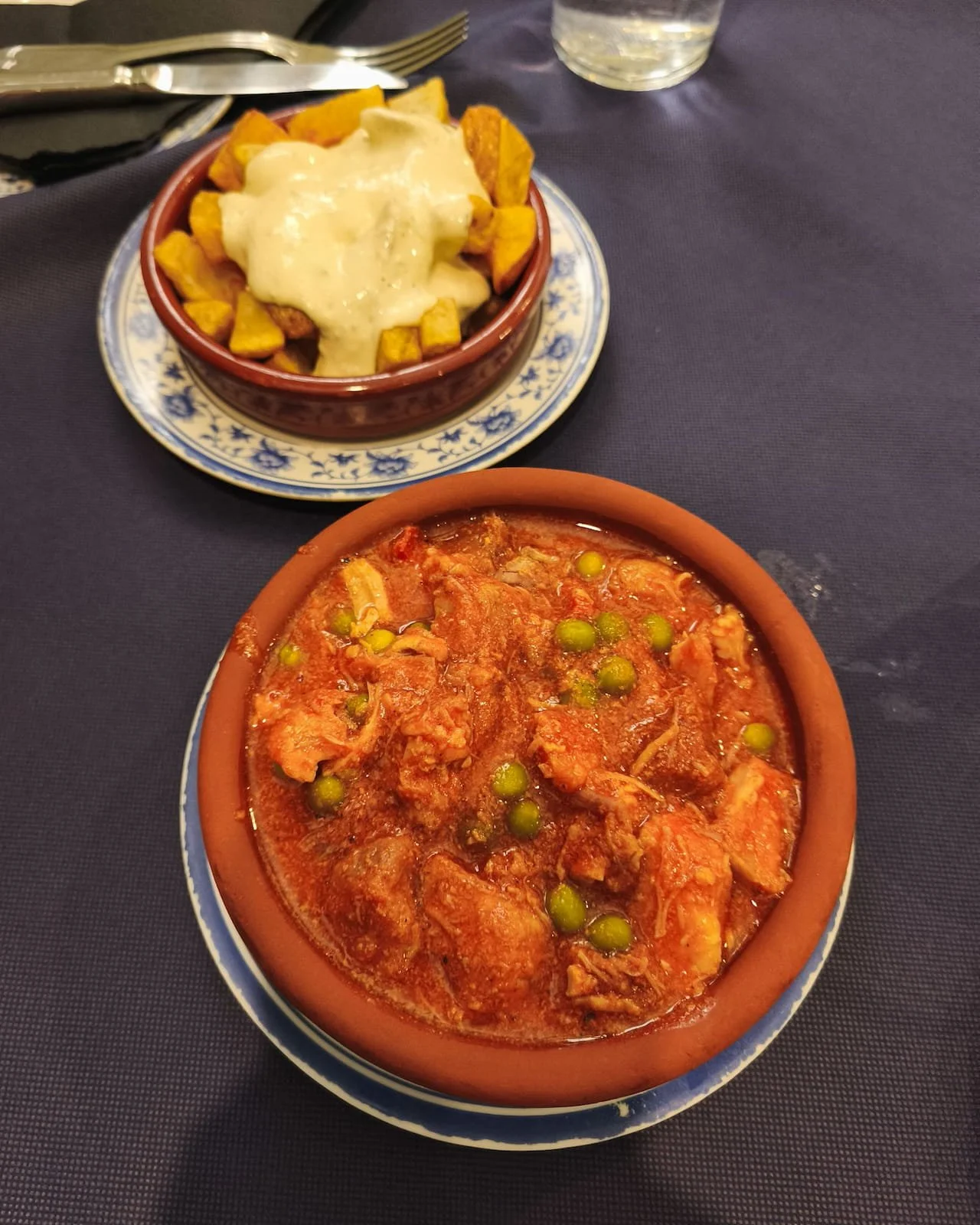
Our delicious carcamusas and patatas bravas at Taberna Skala.
Late Afternoon — Return Through the Old Town
Allow: Around 30 minutes
After lunch, wander slowly back through the old town toward Plaza de Zocodover. You can also use this time to visit a monument you skipped earlier, stop for coffee, or browse a few shops.
Before leaving the old town, buy water near Plaza de Zocodover. There aren’t many convenient places to stop once you begin the walk to Mirador del Valle.
Final Sight — Mirador del Valle
Walking time: Around 35–45 minutes from Plaza de Zocodover
Allow: 20–30 minutes at the mirador
Don’t skip Mirador del Valle on a first trip to Toledo.
The viewpoint sits across the Tagus River and gives you the classic panorama of the entire old city, with the Alcázar, Cathedral, rooftops, walls, and river all visible together. Inside the old town, you mostly experience Toledo as narrow streets and tightly packed buildings, but from here, you see how the whole city fits together. It’s a great view.
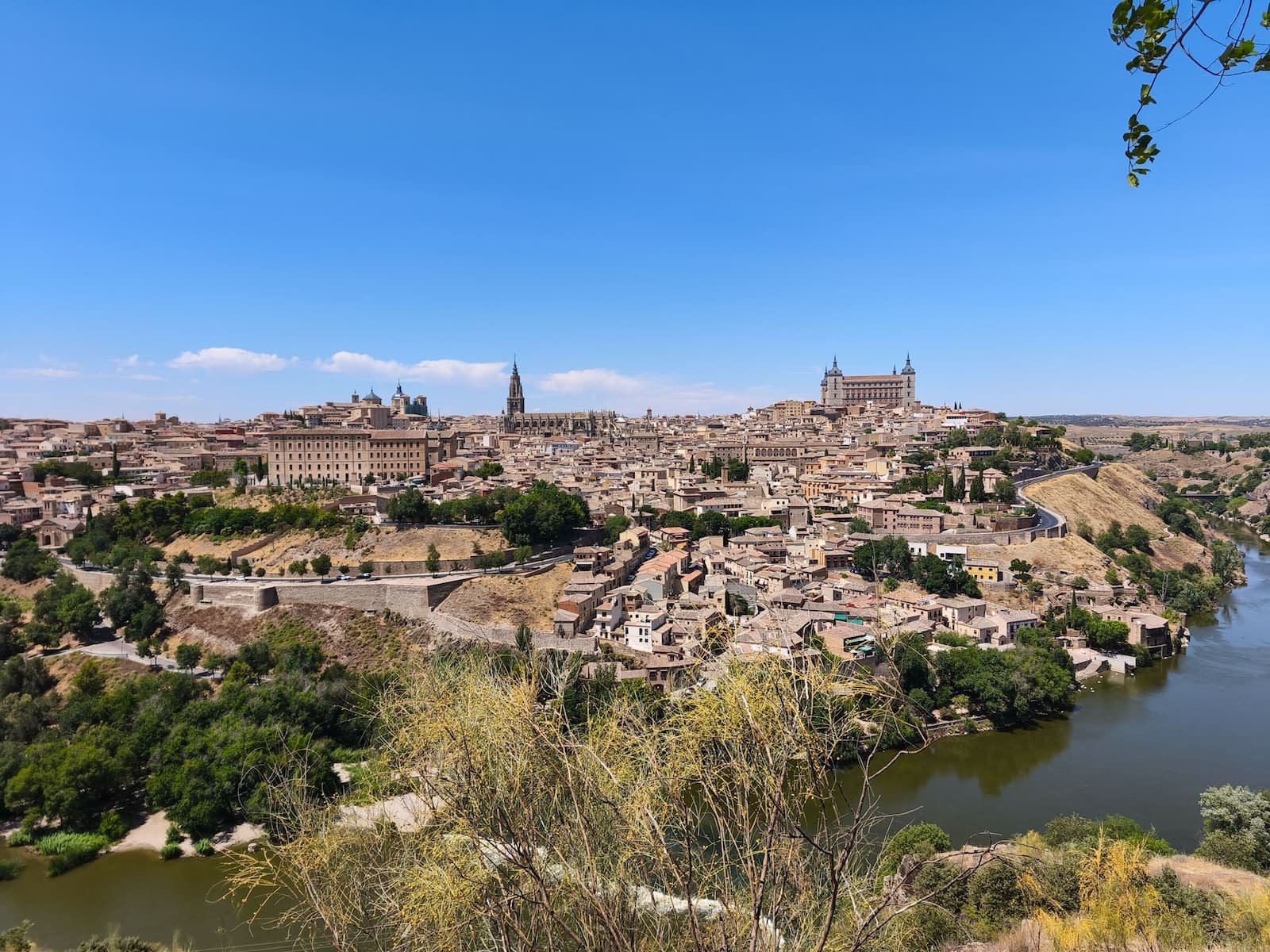
The payoff at Mirador del Valle after the climb.
If you’re walking: We really enjoyed the route. It’s definitely not short, and it’s uphill, especially during the second half, but it becomes increasingly scenic once you cross the river and start getting wider views back toward Toledo. Plus, basically no one else was on the walk until closer to the Mirador, so we had the views to ourselves.
Bring water, especially in summer. The route is exposed for most of the way.
Other ways to get there:
Toledo tourist train: A roughly 45-minute loop that normally includes a short photo stop at the viewpoint
Taxi: The easiest choice if you want more time at the mirador or are trying to reach it near sunset
Hop-on sightseeing bus: Another possible option, though less efficient if you only want the viewpoint
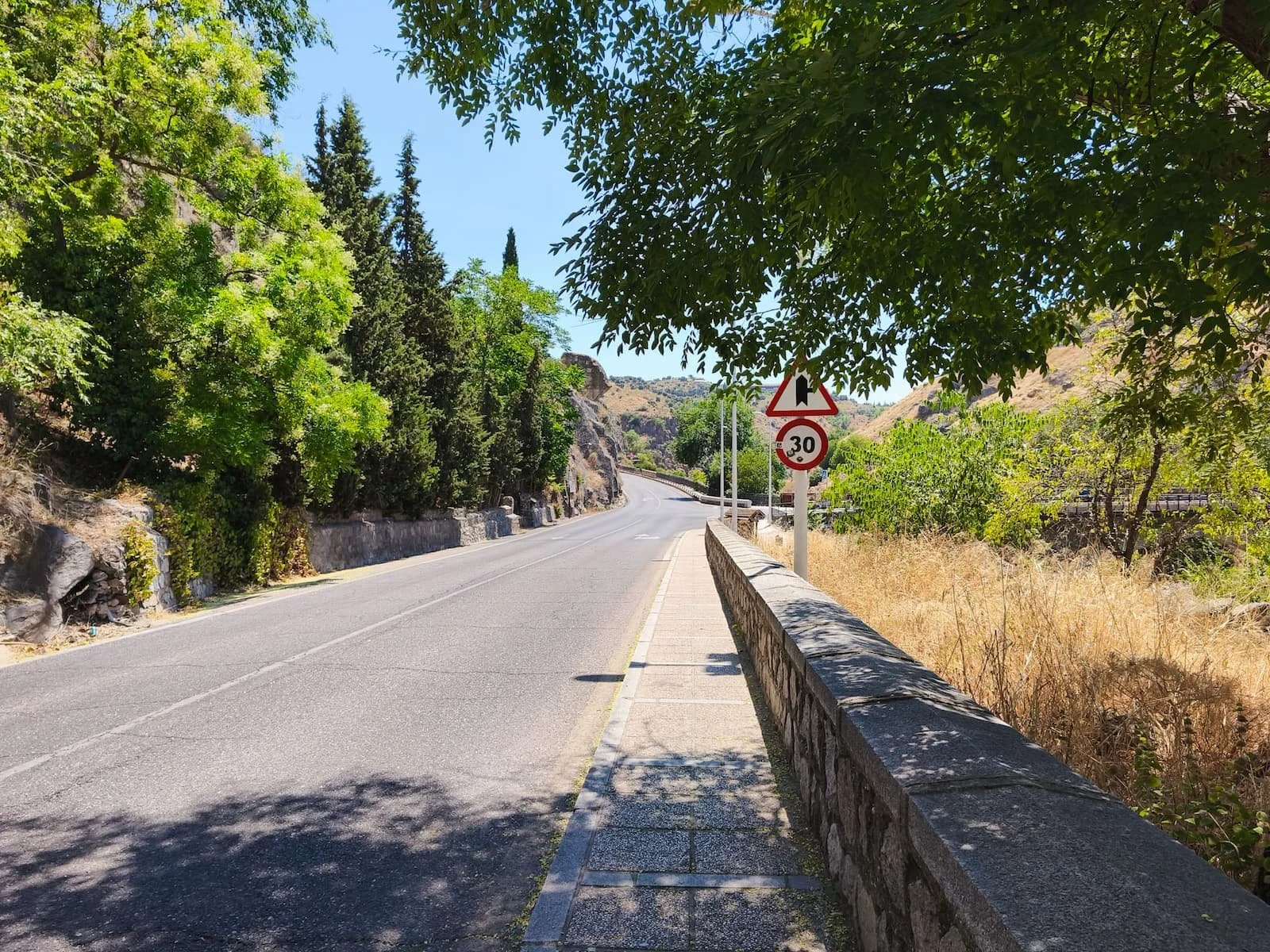
Sidewalk along the walking route to Mirador del Valle.
Evening — Return to Toledo Station + Train to Madrid
Walking time: Around 30–40 minutes
From Mirador del Valle, you can walk back to Toledo station in around 30–40 minutes. The return walk is much easier as most of it is downhill.
You can also call a taxi directly to the station, which is the safer option if your return train is approaching.
Make sure to leave enough buffer to pass through the station security check and find your platform without stressing out.
Example Timing
Here’s some suggested timing for the full version of the itinerary:
08:30–09:30: Train from Madrid to Toledo
09:30–10:00: Walk, bus, or taxi to Plaza de Zocodover
10:00–10:20: Plaza de Zocodover + Alcázar exterior
10:30–12:00: Toledo Cathedral
12:00–12:20: Marzipan at Santo Tomé
12:20–14:30: Jewish Quarter and monument route — enough for roughly four priority monuments at a comfortable pace, or all seven only if you move quickly
14:30–16:00: Lunch
16:00–16:45: Old town wandering + anything missed
16:45–17:30: Walk or ride to Mirador del Valle
17:30–18:00: Mirador del Valle
18:00–18:40: Return to Toledo station
Around 19:15–20:30: Train back to Madrid
This schedule works most comfortably with four or five monuments. Visiting all seven is possible, but you’ll need to move quickly and keep each visit fairly short.
What to Book in Advance
Toledo Cathedral
I’d buy the ticket online if you know you’ll follow this schedule, particularly on weekends or during busy travel periods. Just note that a ticket bought online has entrance hours.
That said, we did see plenty of availability shortly before our visit though, so you’ll likely be able to buy it the night before, on the train, or at the ticket office if you want more flexibility.
Toledo Tourist Wristband
The Toledo Tourist Wristband costs €14 and includes seven monuments:
San Juan de los Reyes Monastery
Santa María la Blanca Synagogue
Santo Tomé Church
Cristo de la Luz Mosque
El Salvador Church
Jesuits Church / San Ildefonso
Royal College of Noble Maidens
Individual entry currently costs €4 per monument, so the wristband already saves money once you visit four. It remains valid for seven days, although if you’re day-tripping, you will use it over one very ambitious afternoon.
When you scan the QR code from your order email at your first monument, staff will exchange it for a physical wristband that you wear for the remaining entries.
I thought it was completely worth it since it made entering the monuments a breeze, and it also made us go into the less-visited monuments.
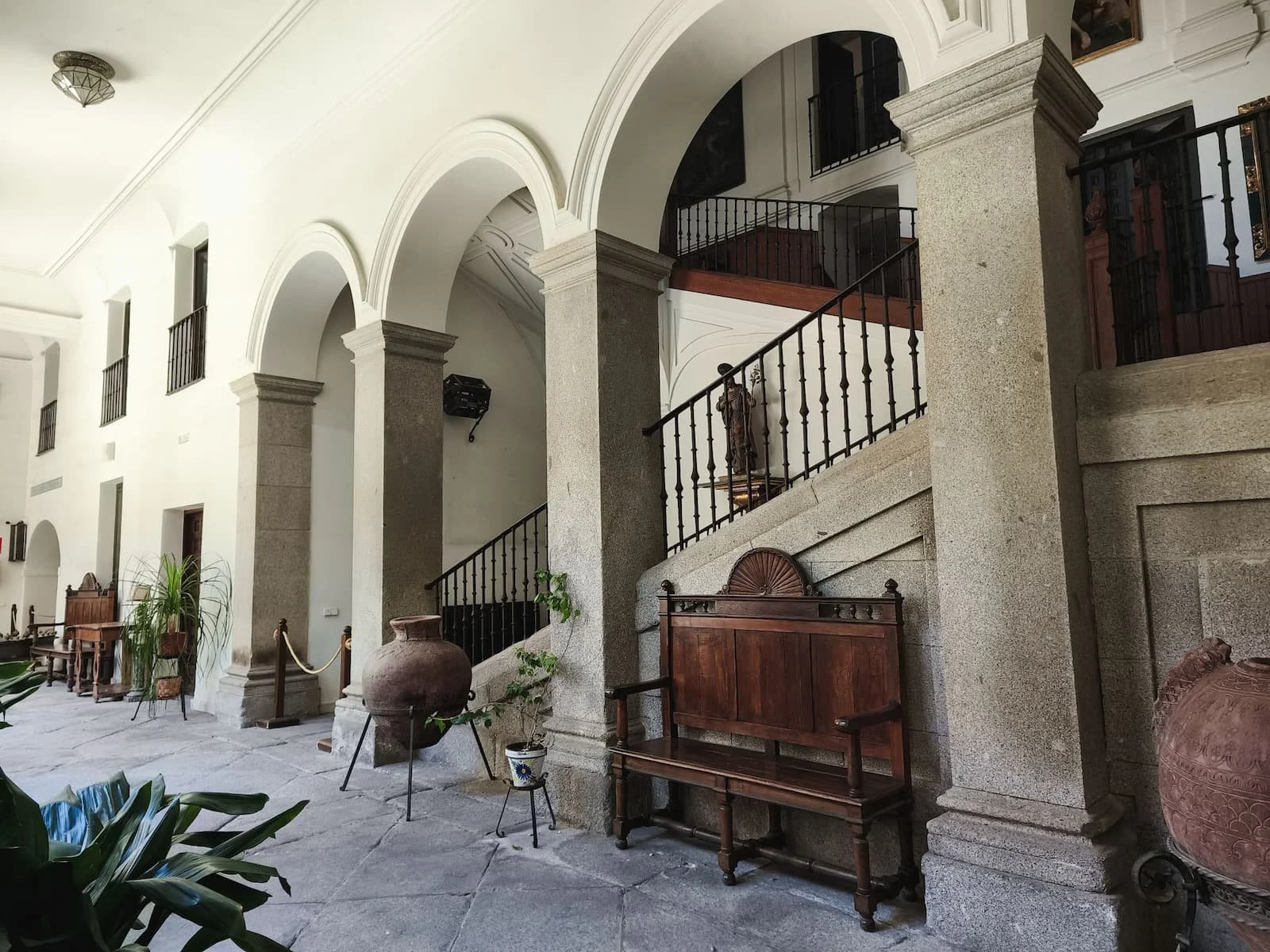
Interior of the Royal College of Noble Maidens, one of the wristband monuments that seemed to be less visited.
Getting to Toledo from Madrid
The easiest way to reach Toledo independently is the high-speed Avant train from Madrid Puerta de Atocha–Almudena Grandes to Toledo rail station.
Madrid–Toledo Train Tickets
Book both your outbound and return trains ahead of time. The route is popular with both commuters and day-trippers, and the most useful morning and evening departures can sell out.
You can book your tickets on the official site Renfe, or through authorized aggregators like Trainline.
At Madrid Atocha
Head to the high-speed rail departure area rather than the Cercanías platforms.
Before reaching the train, you’ll pass through a quick luggage security check. Our passports weren’t checked, but Renfe tickets are technically personal, so I’d still bring the ID or passport associated with your booking.
Changing Your Return Train
If you finish earlier than expected, you can check the conditions attached to your ticket in the Renfe app or ask at the Toledo station ticket office whether you can move to an earlier train.
Renfe currently allows changes on many Avant tickets, with the first change generally free, although availability and the conditions attached to your booking still matter. Third-party bookings may need to be managed through the company you purchased from, so check the applicable terms rather than assuming you can change the ticket at the station.
We finished earlier than expected and were actually able to move our return ticket to an earlier train for free.
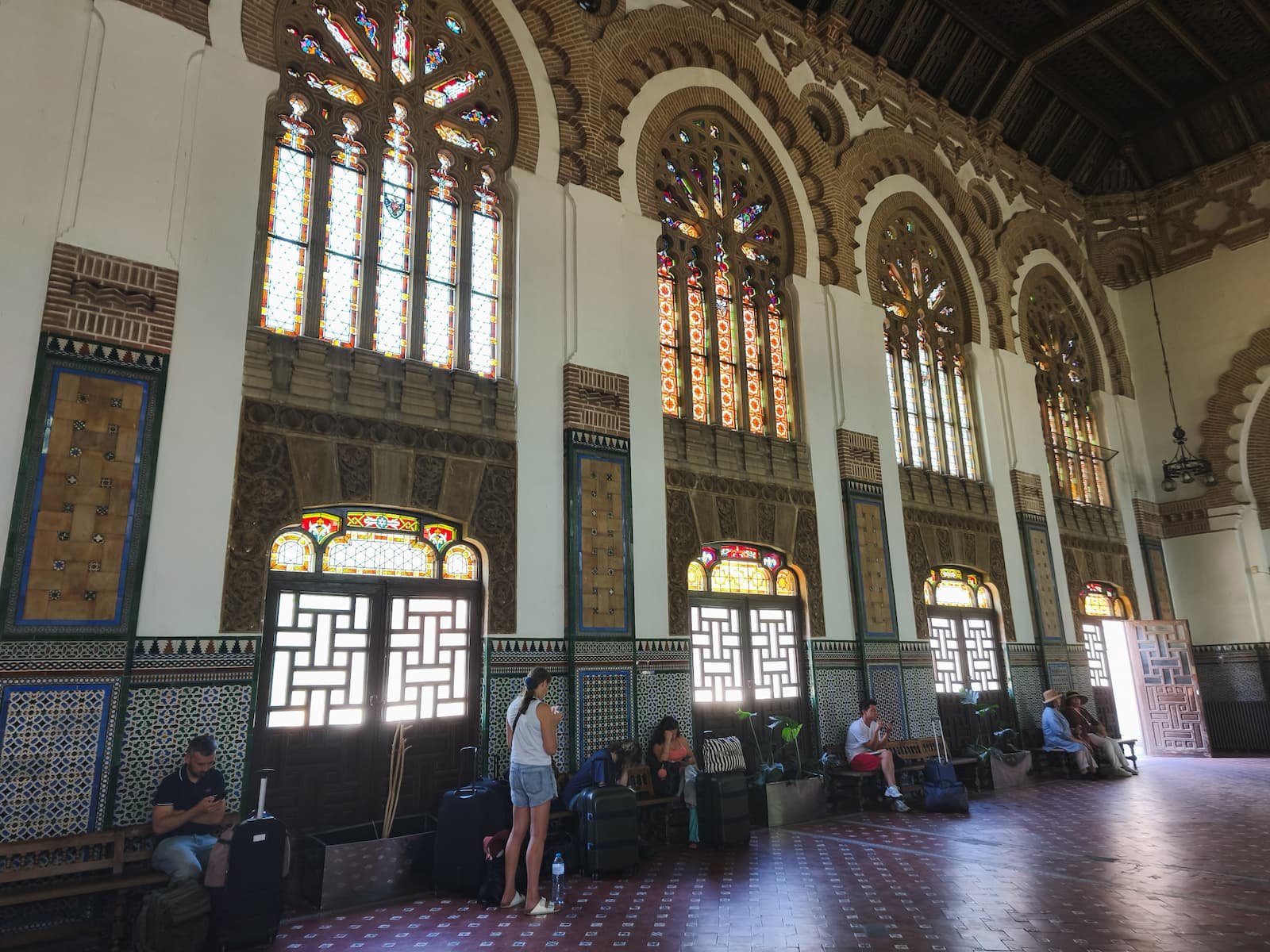
Interior of Toledo train station.
A Few Final Practical Notes
Read a Little Before You Go
There are a lot of monuments in this itinerary, and many are much more interesting once you understand how they fit into Toledo’s history.
The wristband sites provide a brochure, but I’d still read a quick overview of Toledo and the individual monuments beforehand. Even a few short summaries make it much easier to notice how Islamic, Jewish, Gothic, Mudéjar, and later Christian architecture overlap.
Bring a Portable Charger
Your phone will be doing a lot throughout the day, including holding your train and monument tickets, navigating between stops, taking photos, and potentially calling a taxi at the end.
Do You Need Cash?
We didn’t need cash anywhere on this itinerary. Still, carrying a small amount isn’t a bad idea for minor purchases or unexpected card-machine issues.
Other Ways to Plan Your Toledo Visit
If You’re Especially Interested in El Greco
Add the El Greco Museum while you’re in the Jewish Quarter. El Greco spent the most important years of his life and career in Toledo.
It isn’t essential for a first day trip because you’ll already see his work in Santo Tomé Church and Toledo Cathedral, but it’s worth adding if you’re especially interested in his life and art.
If You’re Visiting on a Sunday
Reverse the day around the Cathedral’s 14:00 opening.
Visit the Jewish Quarter and wristband monuments in the morning, have lunch, enter the Cathedral after 14:00, and then continue to Cristo de la Luz and Mirador del Valle.
If It’s Raining
Toledo still works fairly well in the rain because much of this itinerary is indoors.
I’d choose fewer monuments and spend longer inside each one rather than constantly taking your umbrella in and out. You could also replace Mirador del Valle with the El Greco Museum or another indoor stop.
If You’re Staying Overnight
Split the Cathedral, Jewish Quarter, and wristband monuments across two days.
That gives you time to do the itinerary slower, add El Greco Museum, the Synagogue of El Tránsito and Sephardic Museum, see sunset at Mirador del Valle, and wander more.
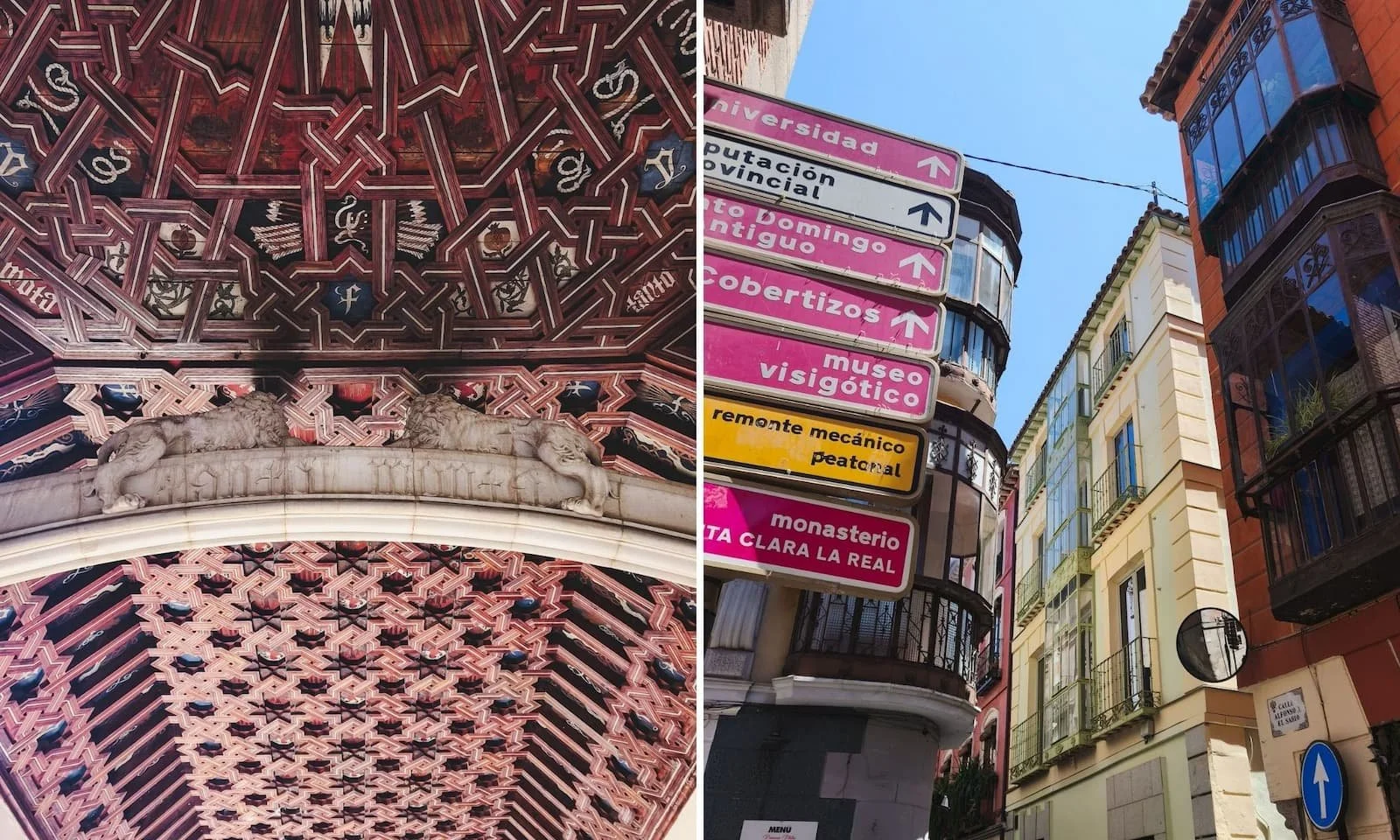
This itinerary is designed to help you make the most of a day trip, but if you have extra time, leave room to wander. Toledo is full of beautiful details that are easy to miss.
Closing
Thanks for reading! I hope this itinerary helps you plan a full but manageable day in Toledo.
If you try the route, I’d love to hear how it goes. And if you’re still planning and have questions, feel free to leave a comment or send me a message. I’m always happy to help when I can.
If you’re planning more time around Madrid, these guides might help:
Madrid Travel Guide: Start Here — where I’ve collected my Madrid logistics, neighborhood notes, packing tips, and related posts
What to Do in Madrid — a practical reference guide to Madrid sights, food stops, neighborhoods, and planning notes
Madrid 1-Day Itinerary — a full walking route through Madrid’s main first-time highlights
Madrid 3-Day Itinerary — a more relaxed first-time itinerary before adding a Toledo day trip
Slow Traveling Madrid — a glimpse into my routines and real monthly costs staying a couple of months in Madrid
Segovia Day Trip from Madrid — another classic no-car day trip with a Roman aqueduct, Gothic cathedral, and fairytale-like castle