What to Do in Madrid: A Practical Guide to Sights, Food Stops, and Neighborhoods
Madrid is one of my favorite cities for low-friction travel because so much of the city works on foot. For many of the sights you’d likely want to visit as a tourist, you can go from one to another without transit. And all the while the streets are their own experience, with people lingering outside, café tables spilling onto sidewalks, plazas full of life, and that general Madrid energy that makes you want to stay outside just a bit longer.
After spending a few months in Madrid, I wanted one place to collect the information that actually helps you decide what to do. So, this is my practical Madrid reference guide for building your own trip.
Instead of just giving you a giant generic attractions list, I curated this around the places that tend to come up for first-time visitors, plus the ones I’ve discovered during my visits. For each place, I include quick notes on who it’s best for, how long to spend there, what to pair it with geographically, practical details to check before going, and my honest impressions from visiting myself.
Want a ready-to-follow itinerary?
Follow my Madrid in 1 Day itinerary
for a tight, well-routed highlights day, or my
Madrid in 3 Days itinerary
for a slower, area-based trip with interiors, neighborhoods, long meals,
and more time to wander.
Green Spaces and Scenic Viewpoints
Retiro Park
Listed as a UNESCO’s World Heritage Site (in conjunction with the nearby Paseo del Prado), Retiro Park is one of central Madrid’s main green spaces. Its history is tied to the former Buen Retiro Palace gardens, and today it includes tree-lined paths, monuments, the main lake, the 19th-century Crystal Palace, and several garden areas
For me, Retiro feels part urban forest and part a more relaxed European garden. The first time I visited was in the autumn, when the leaves were fully in their fall foliage era, and the crunch below my feet gave me a new rhythm from the hard cobblestones in the other parts of the city. And the second time I visited, in the summer, the park was alive with saturated colors in the flowers and the leaves, contrasting with the bright blue sky.
It’s great to have a park like this to decompress in the middle of the city. I like just strolling here with a coffee in hand.
Best for: A calm start, a slower morning, a reset between busier areas, or an easy walk that doesn’t require much planning.
How long to spend: 45 minutes to 1.5 hours. Longer if you want a proper park break.
Pair with: Prado Museum, Puerta de Alcalá, Cibeles, shopping around Serrano street.
Practical notes:
Ticket: Free to enter.
Hours: April to September 6am - 12 midnight; October to March 6am - 10pm.
Check the official Madrid tourism page if you want current details on opening hours, seasonal closures, or specific garden areas.
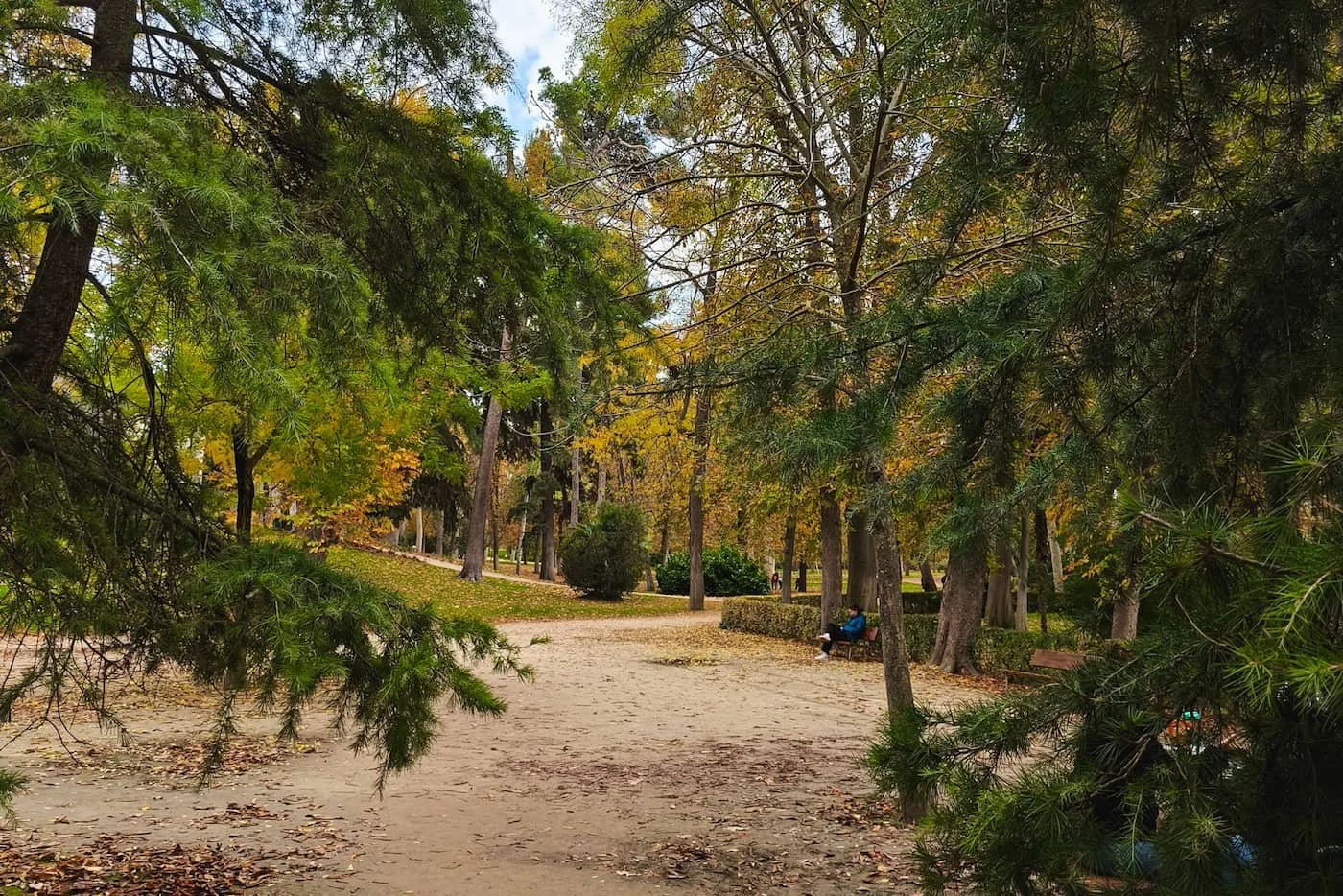
Retiro Park path in the fall – part of it that felt like an urban forest.
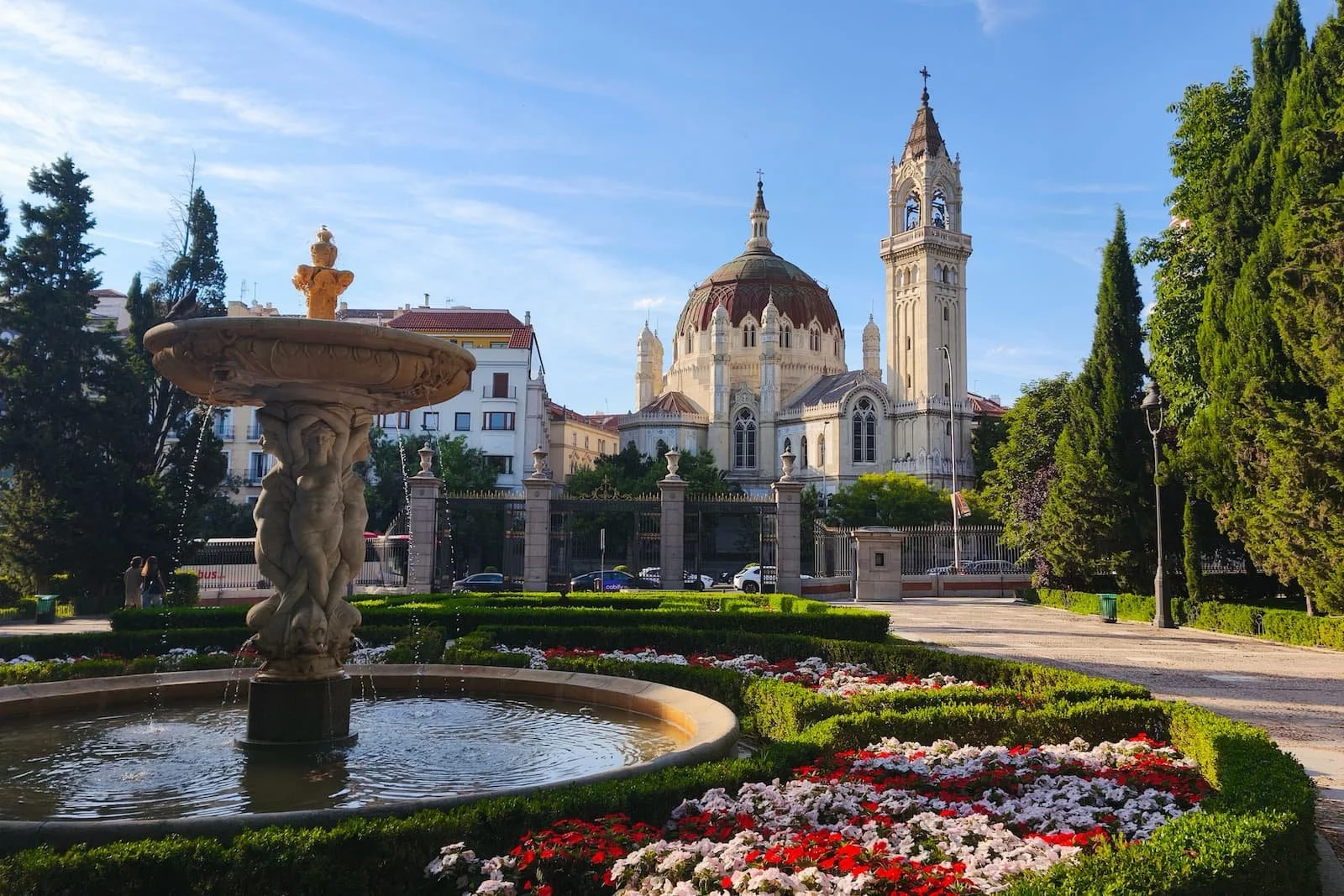
The entrance at Puerta de Hernani in the summer. Accidentally discovered this view of the San Manuel and San Benito Church when trying to exit the park. So ethereal with the summer light and the fountain and flowers in the foreground.
Templo de Debod
Templo de Debod is an ancient Egyptian temple from the 2nd century BC, originally built in Nubia and later donated to Spain (deconstructed, moved, and rebuilt in its current site, crazy) as a token of thanks for the country’s participation to save monuments threatened by the Aswan Dam.
It now sits in an elevated park near near Plaza de España is often recommended as a sunset viewpoint, but also because it’s an ancient Egyptian temple in Madrid, which is not exactly something you pass every day. I personally found it cool to see, especially when the evening light hits the temple, but I would keep it optional on a short itinerary and wouldn’t force the climb if you’re already tired.
Best for: Sunset, viewpoints, something different, and extra time near the Royal Palace or Plaza de España area.
How long to spend: 20 to 45 minutes.
Pair with: Royal Palace area, Plaza de España, or a slower evening walk.
Practical notes:
Ticket: Free to visit.
Hours: Tuesday to Sunday 10:00am – 8:00pm (winter) or 7:00pm (summer); access to the temple closes half an hour earlier/
Check the official Madrid tourism page for current details on hours specifically if you want to enter the temple and for closure dates.
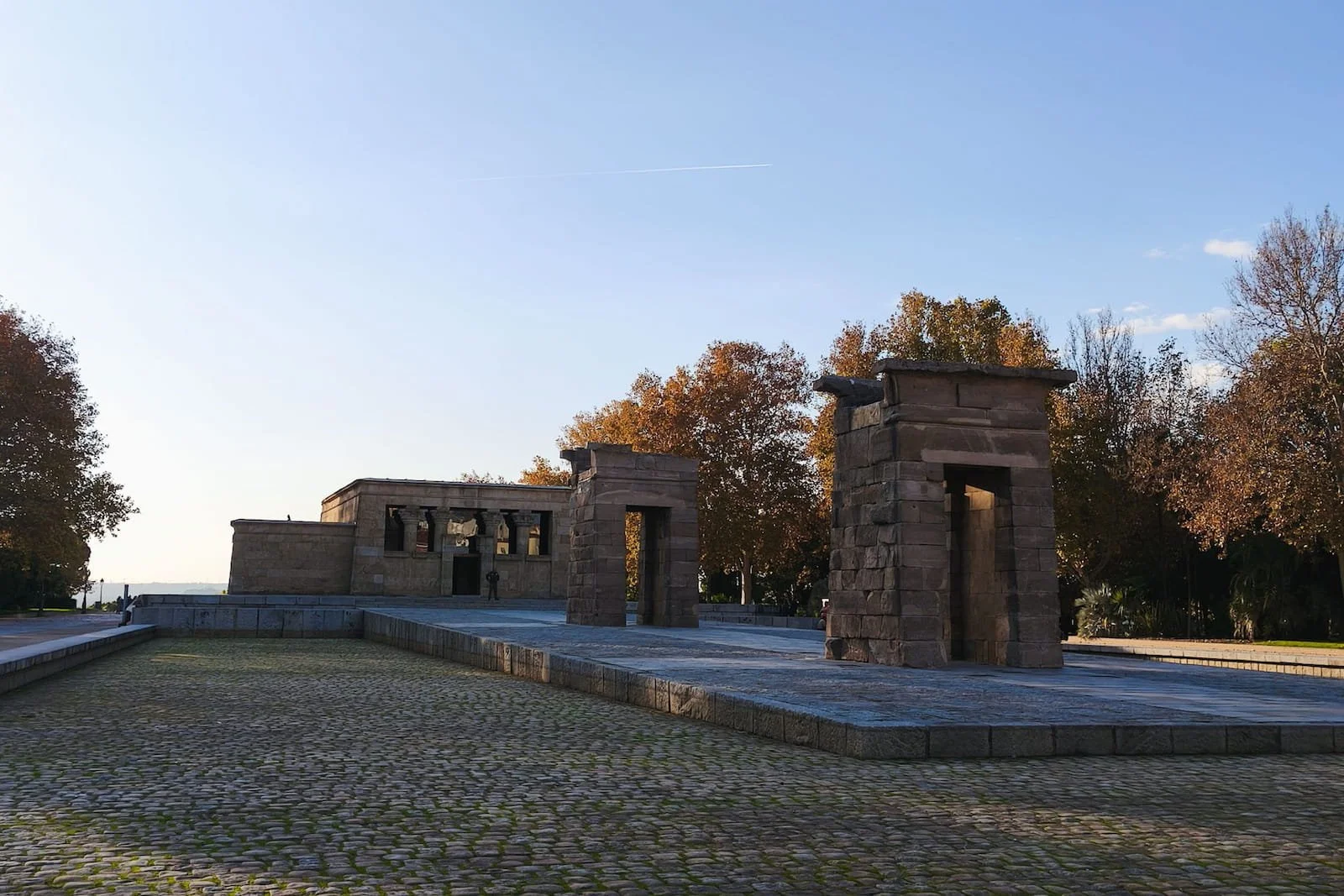
Templo de Debod in the winter evening light.
Walks That Make Madrid Feel Like Madrid
Paseo del Prado, Cibeles, and Puerta de Alcalá
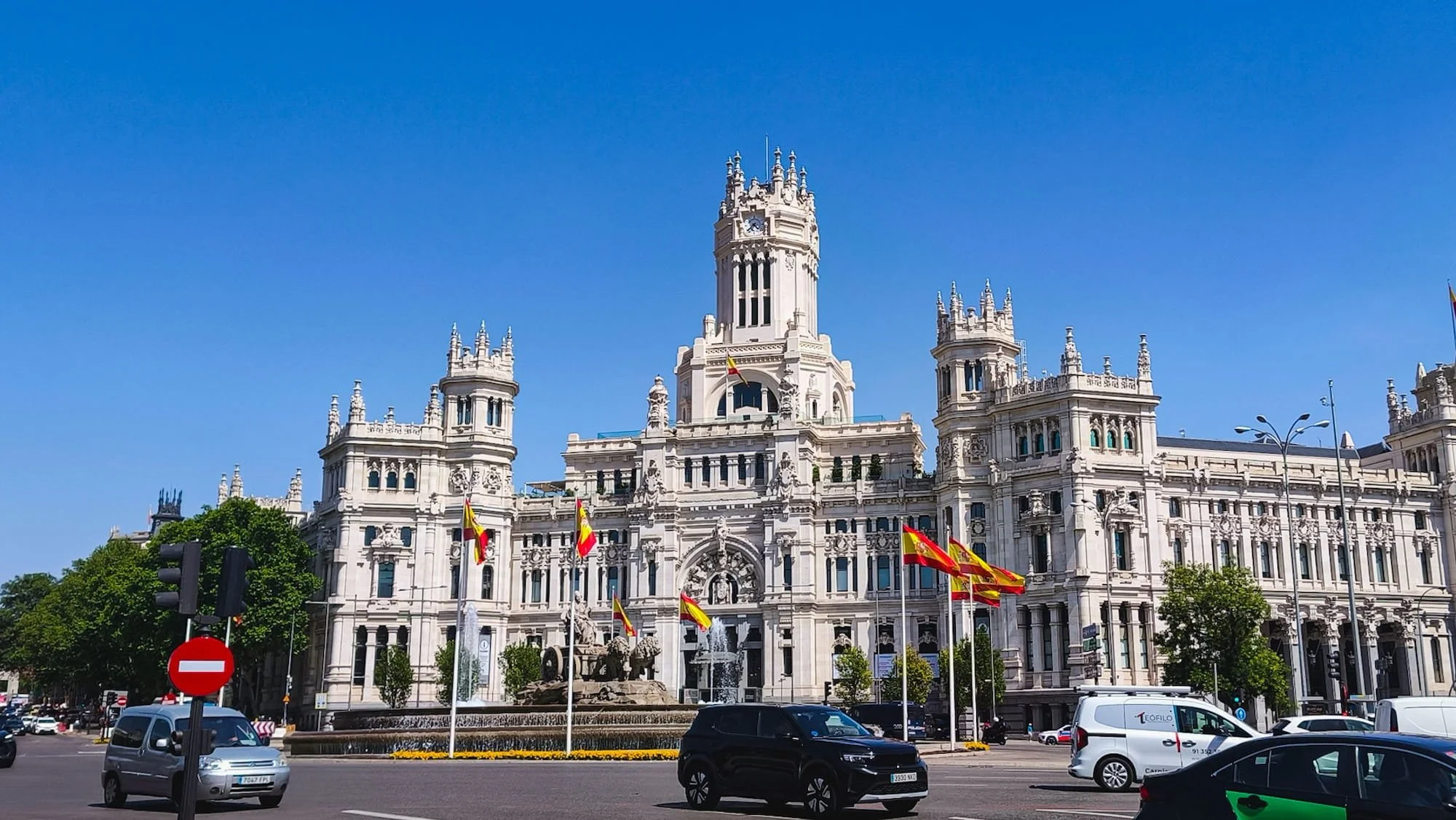
Paseo del Prado is one of Madrid’s most important historic boulevards and part of the city’s UNESCO-listed “Landscape of Light” together with Retiro. Along this route, Puerta de Alcalá and Plaza de Cibeles work as scenic stops that help link Retiro, the Prado, and the central city on foot. Puerta de Alcalá is a neoclassical gate that was once part of the city walls and now frames the entrance to Retiro Park. Plaza de Cibeles is a huge roundabout featuring a neoclassical fountain in front of Cibeles Palace, now housing city hall.
Treat this whole section as a scenic transition. You pause, take a few photos, feel like you are very much in Madrid (especially with the Spanish flags blowing in the wind), and keep walking.
Best for: Scenic walking, photo stops, and connecting Retiro or the Prado with central Madrid.
How long to spend: 20 to 45 minutes, depending on how often you stop.
Pair with: Retiro Park, Prado Museum, Gran Vía, Calle de Alcalá.
Practical notes: These are outdoor public spaces, so they are easy to pass through and free to visit. No ticket planning needed.
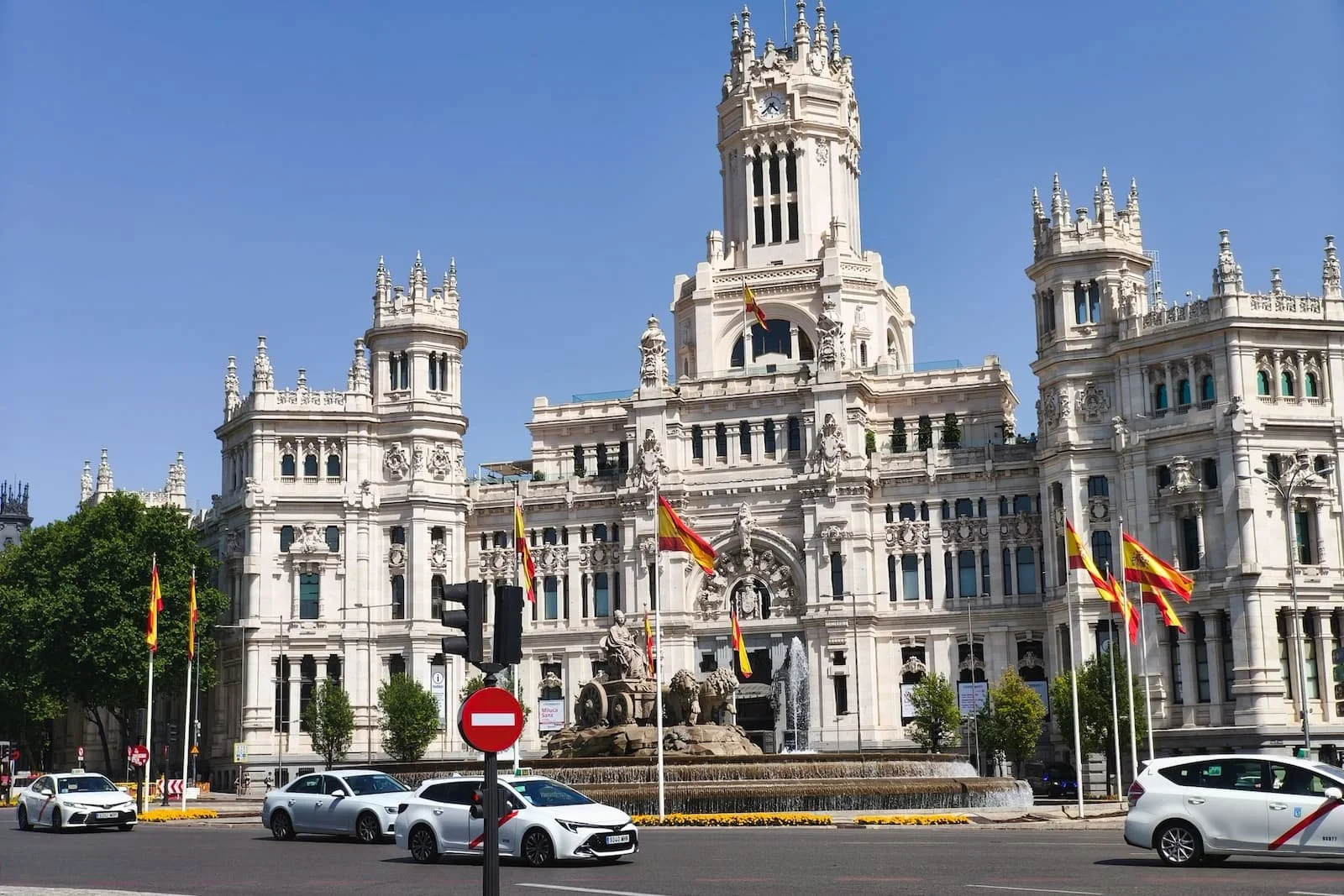
The grand Plaza and Palacio de Cibeles.
Gran Vía
Gran Vía is one of Madrid’s main avenues, built as part of the city’s early 20th-century modernization. It is known for its theatrical scale, shopping, cinemas, rooftops, and a mix of architectural styles, including some of Madrid’s most recognizable early skyscrapers and Art Deco-influenced buildings.
Gran Vía is one of my favorite Madrid walks because it gives you the city in full volume with grand buildings, traffic, crowds, and constant movement. So for those of you like me who love big-city energy and all the chaos that comes with it, this is the street to go.
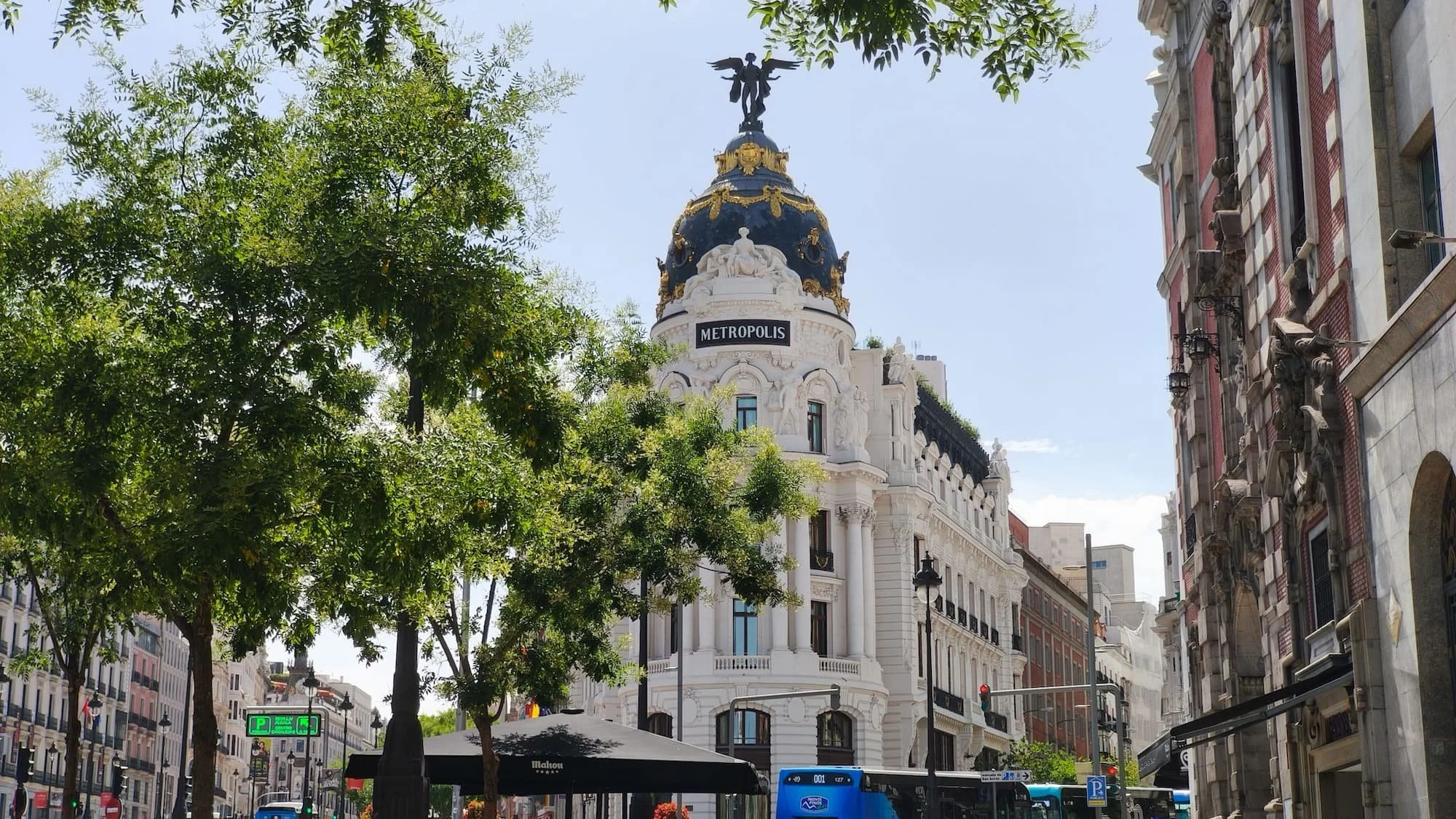
Look for the Metropolis Building (a magnificent Beaux-Arts building with an angel statue on top that marks the beginning of Gran Vía), the Telefónica Building (once one of Europe’s tallest buildings), and Callao Square (busy entertainment and commercial area featuring the 1920s Cine Callao building).
Best for: Architecture, city energy, shopping, theaters, and walking through the center.
How long to spend: 30 minutes to 1 hour as a walk. Longer if you shop, stop for coffee, visit a rooftop, or see a show.
Pair with: Cibeles, Calle de Alcalá, Callao, Sol, Chueca, or Malasaña.
Practical notes: Free to walk. No planning needed unless you are booking a show, visiting a specific rooftop, or shopping.
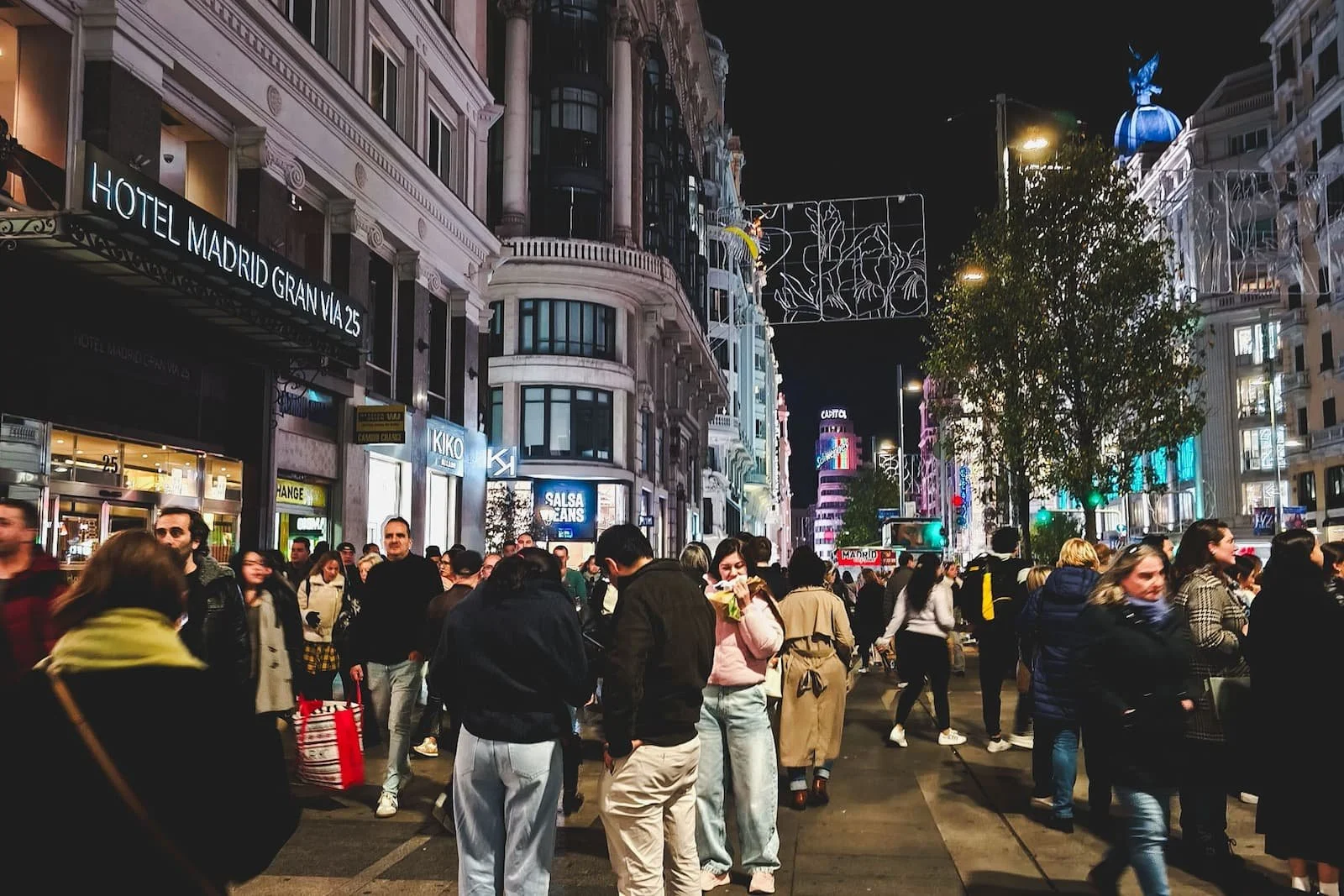
Gran Vía is big, crowded, and energetic pretty much every time I’ve been there.
Puerta del Sol
Puerta del Sol is a bustling public square that marks the geographic center of Spain. One of the city’s main meeting points, it’s known for landmarks like Kilometer Zero (stone slab that marks the center of Spain), the Bear and the Strawberry Tree statue, the Tío Pepe billboard, and the former Royal Post Office building, whose clock is tied to Spain’s New Year’s Eve countdown tradition. It’s also surrounded by some of the densest shopping in the city, and I often see groups doing campaigning or other activities involving microphones when I pass by.
Note that this area is usually super crowded, so I would treat Sol more as a useful connector than a place to spend a lot of time, unless you’re there to shop.
Best for: A quick landmark stop, central orientation, shopping access, and connecting Gran Vía with Plaza Mayor or Old Madrid.
How long to spend: 10 to 20 minutes, unless you’re shopping.
Pair with: Gran Vía, Callao, Plaza Mayor, Chocolatería San Ginés, or Madrid de los Austrias.
Practical notes: Free to visit and always accessible. Expect crowds and keep an eye on your belongings here since it is one of the busiest pedestrian areas in the city.
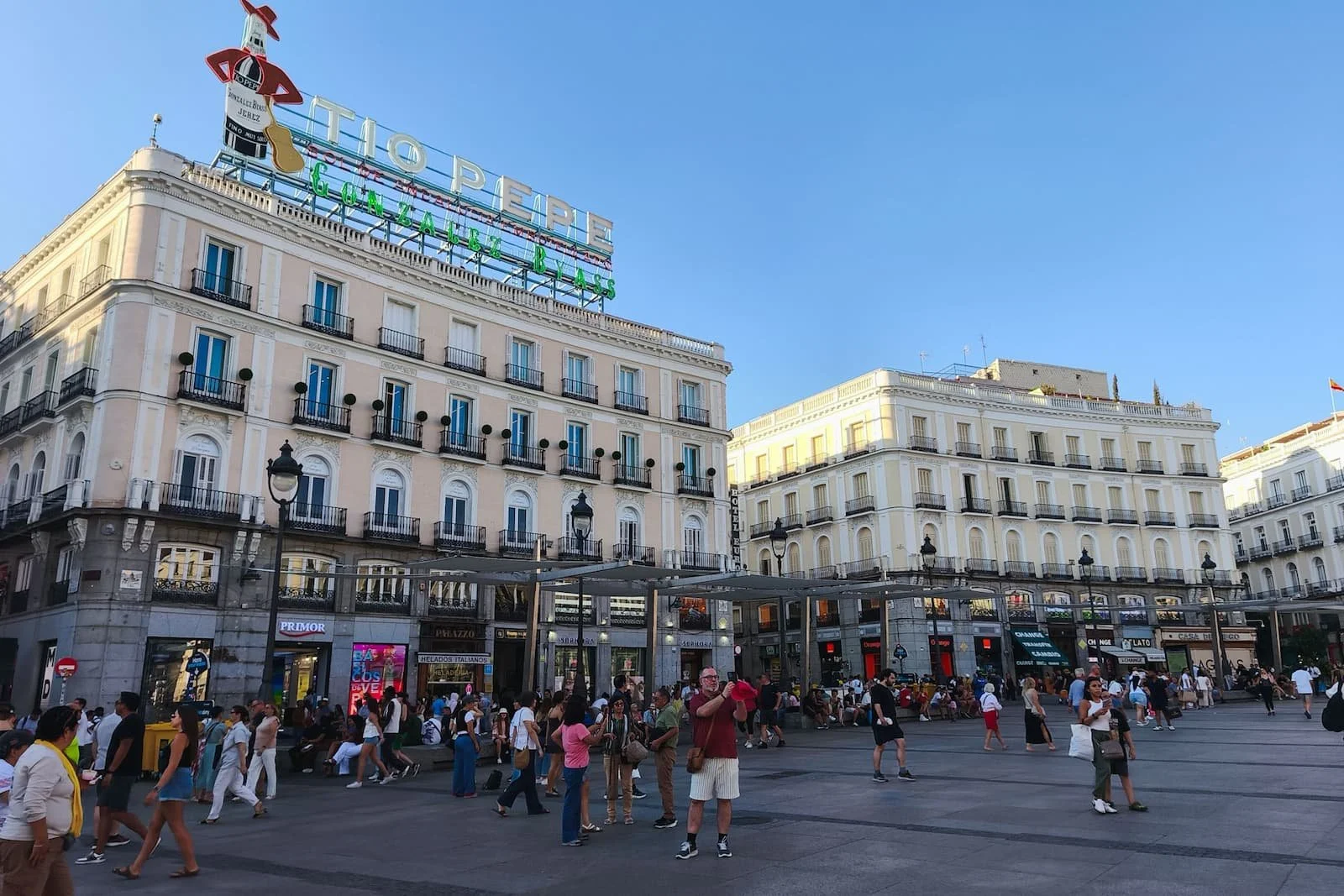
The bustling Puerta del Sol on a summer afternoon.
Old Madrid, from Plaza Mayor to the Royal Palace
Plaza Mayor
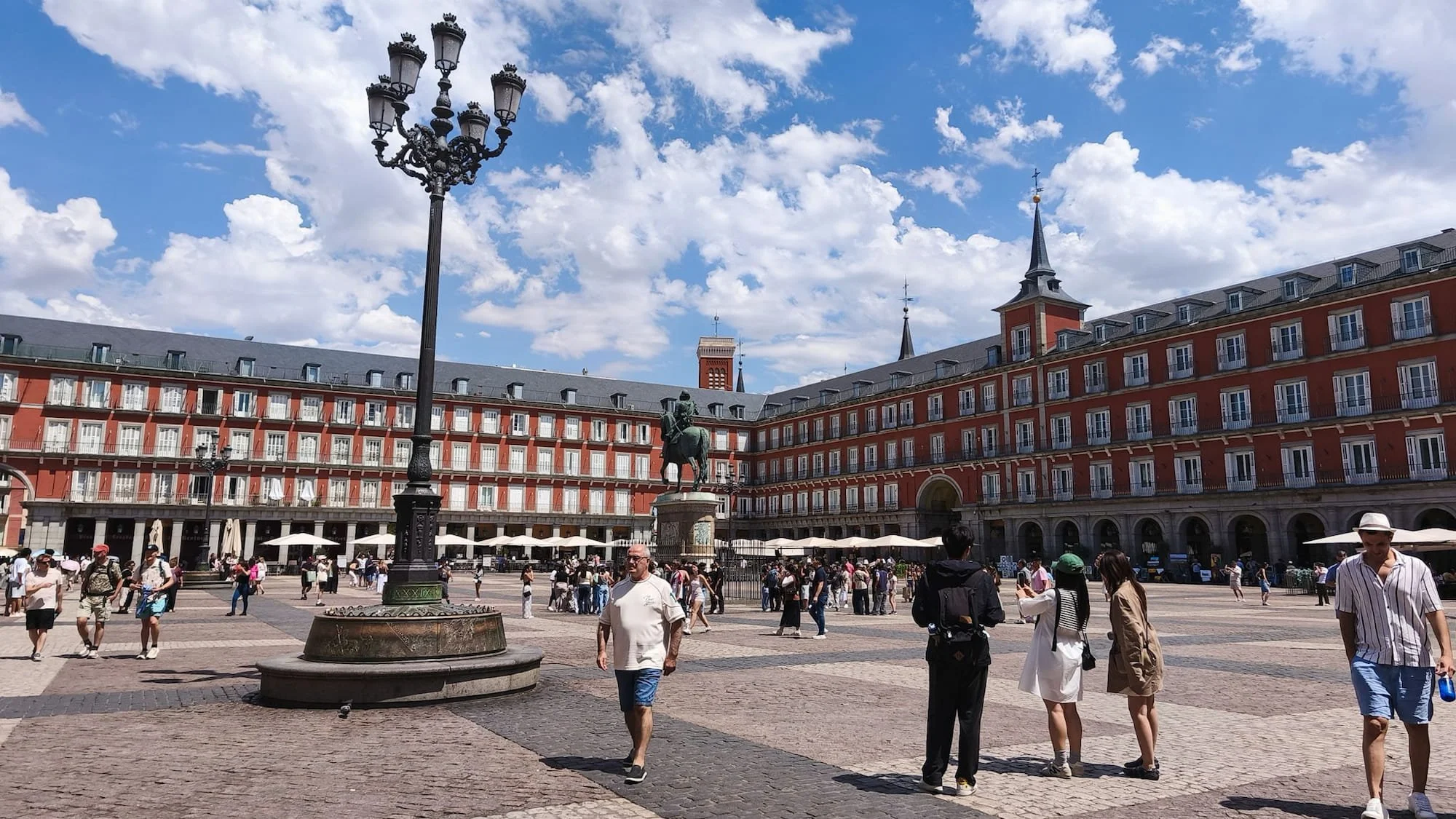
Plaza Mayor is Madrid’s grand historic square, developed in its current form during the Habsburg period and long used for markets, ceremonies, festivals, and public events. Its enclosed rectangular layout, arcaded edges, and uniform façades in the Herrerian style of the Spanish Renaissance make it one of the most recognizable architectural spaces in the old city.
I mean, in the present, it’s still a public square with a lot going on. It’s the site of the city’s annual Christmas market, and, when I visited in the summer, the plaza was hosting an outdoor movie festival showing classic Spanish-language films. It’s touristy and always full of people, but I still looked forward to walking through it every day when I stayed near it during one of my visits to the city, just for the architecture and atmosphere.
Best for: First-time visitors, historic Madrid, and a quick central stop.
How long to spend: 10 to 20 minutes unless you are sitting down for food or drinks.
Pair with: Mercado de San Miguel, Chocolatería San Ginés, Plaza de la Villa, Puerta del Sol
Practical notes: Outdoor public square. Free to visit.
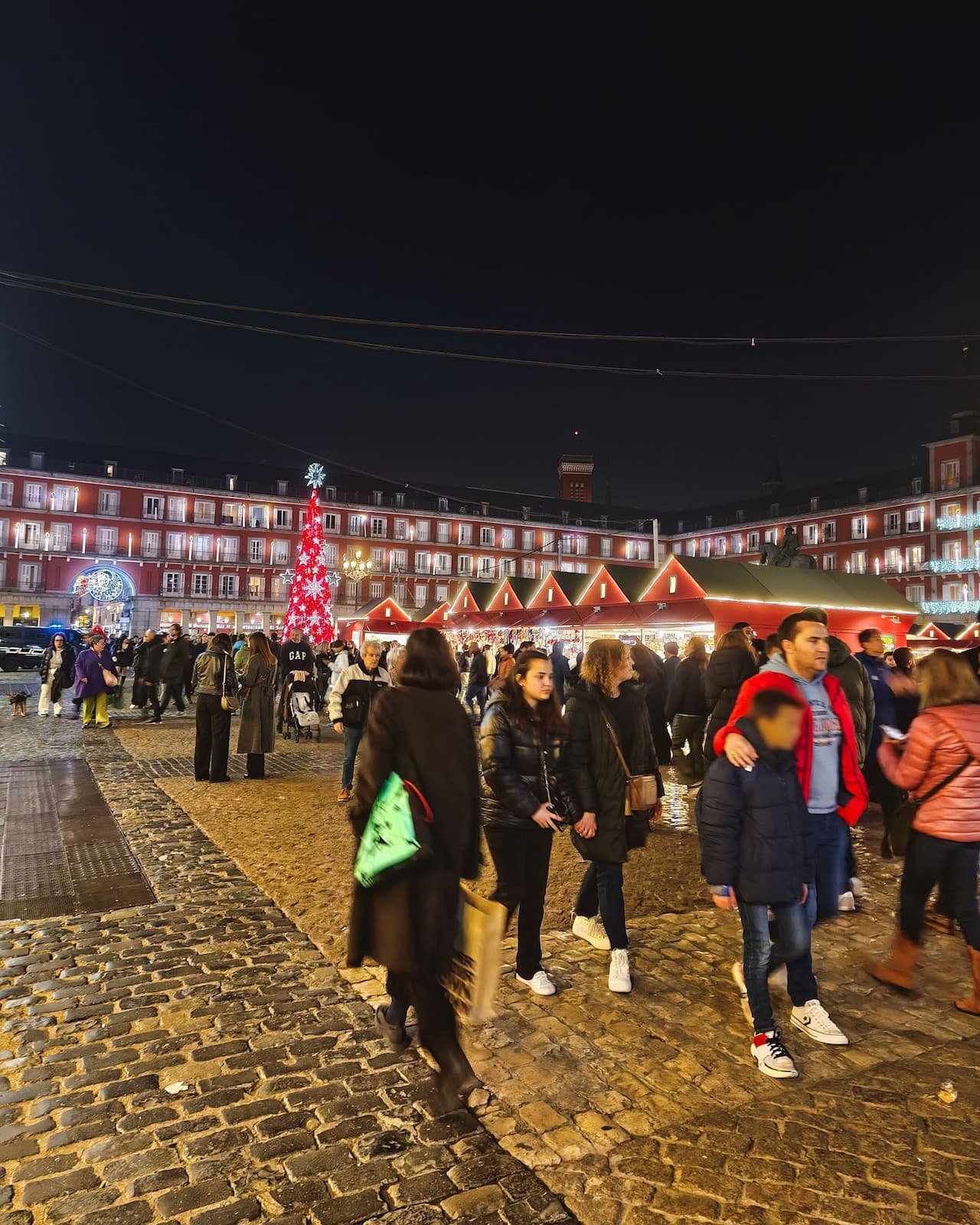
Plaza Mayor Christmas market. The stalls all kind of sold the same things, but the atmosphere was great.
Plaza de la Villa
Plaza de la Villa is a small historic square near Plaza Mayor and one of the best-preserved corners of old Madrid. It is known for buildings from different periods, including the medieval Casa y Torre de los Lujanes, the 16th-century Casa de Cisneros, and Casa de la Villa, Madrid’s former city hall.
Compared to the other larger plazas in the city, like Plaza Mayor, this plaza feels noticeably more intimate and more medieval-looking. Even though it’s located right in the bustle of Old Madrid, every time I’ve seen it, it’s felt a bit like people tend to pass by and not notice or linger, which makes the plaza feel a bit frozen in time.
Best for: A quick historic stop, a quieter detour, and adding old Madrid texture between bigger sights.
How long to spend: 10 to 15 minutes.
Pair with: Plaza Mayor, Chocolatería San Ginés, Mercado de San Miguel, or the Royal Palace area.
Practical notes: Outdoor public square. Free to visit.
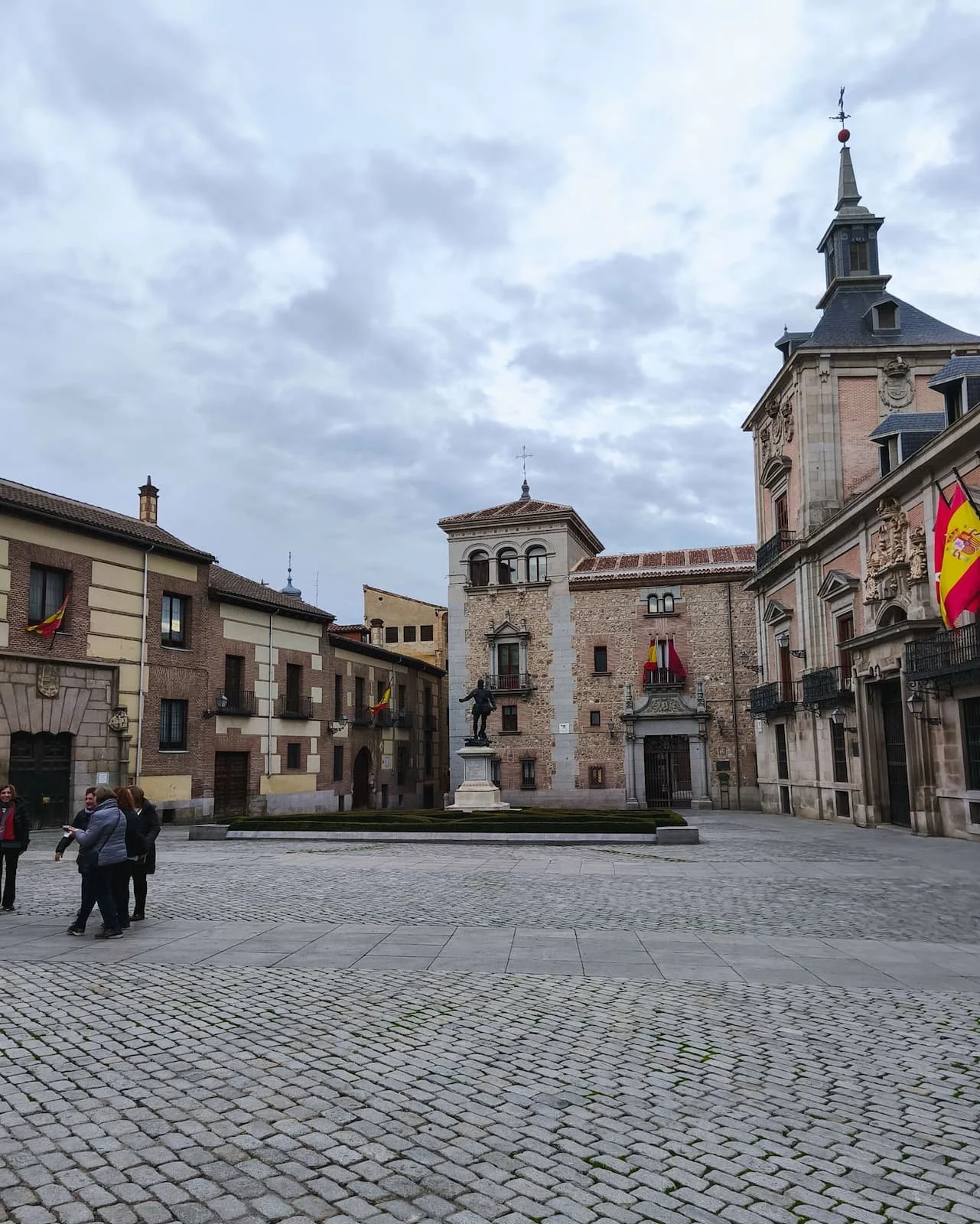
Plaza de la Villa, quiet and intimate.
Royal Palace & Surroundings
The Royal Palace area sits on the western side of central Madrid and includes the Royal Palace (one of Europe’s largest palaces), Almudena Cathedral, Plaza de Oriente, gardens, viewpoints, and nearby remains of the city’s earlier walls. The current palace was built in the 18th century after the old Alcázar burned down, and its scale gives this part of Madrid a much more formal, monumental feel than the tighter streets of the historic center.
I’m bundling the surroundings into this one entry, but there is actually quite a lot to see there. This includes gardens and plazas, such as Plaza de la Armería (huge open plaza between the palace and the cathedral), Plaza de Oriente (elegant square facing the palace that has statues of 44 Spanish kings), Sabatini Gardens (Neoclassical garden that emphasizes symmetry), and Campo del Moro (19th-century English-style garden with a great view of the Palace). There’s also Mirador de la Cornisa, a free viewpoint over Madrid from the elevated Palace area.
Honestly, I like this area even without going inside the palace, especially the cultivated gardens. It’s also a little tourist-heavy, especially Plaza de la Armería, but the scale makes the crowds more dispersed.
Best for: Palace views, scenic walking, photo stops, gardens, viewpoints, and a slower section.
How long to spend: 45 minutes to 1.5 hours for the exterior area and nearby viewpoints. Add more time if you tour the palace interior.
Pair with: Almudena Cathedral.
Practical notes: The exterior area is all free to the public, but below is information for touring the Royal Palace interior.
Ticket: Depending on ticket type, but the self-guided standard tour is 18€.
Hours: Monday to Saturday 10:00am – 6:00pm (October to March) or 7:00pm (April to September); Sundays 10:00am – 4:00pm. Box office closes 1 hour early.
Check the official Patrimonio Nacional page for current details on hours and booking options.
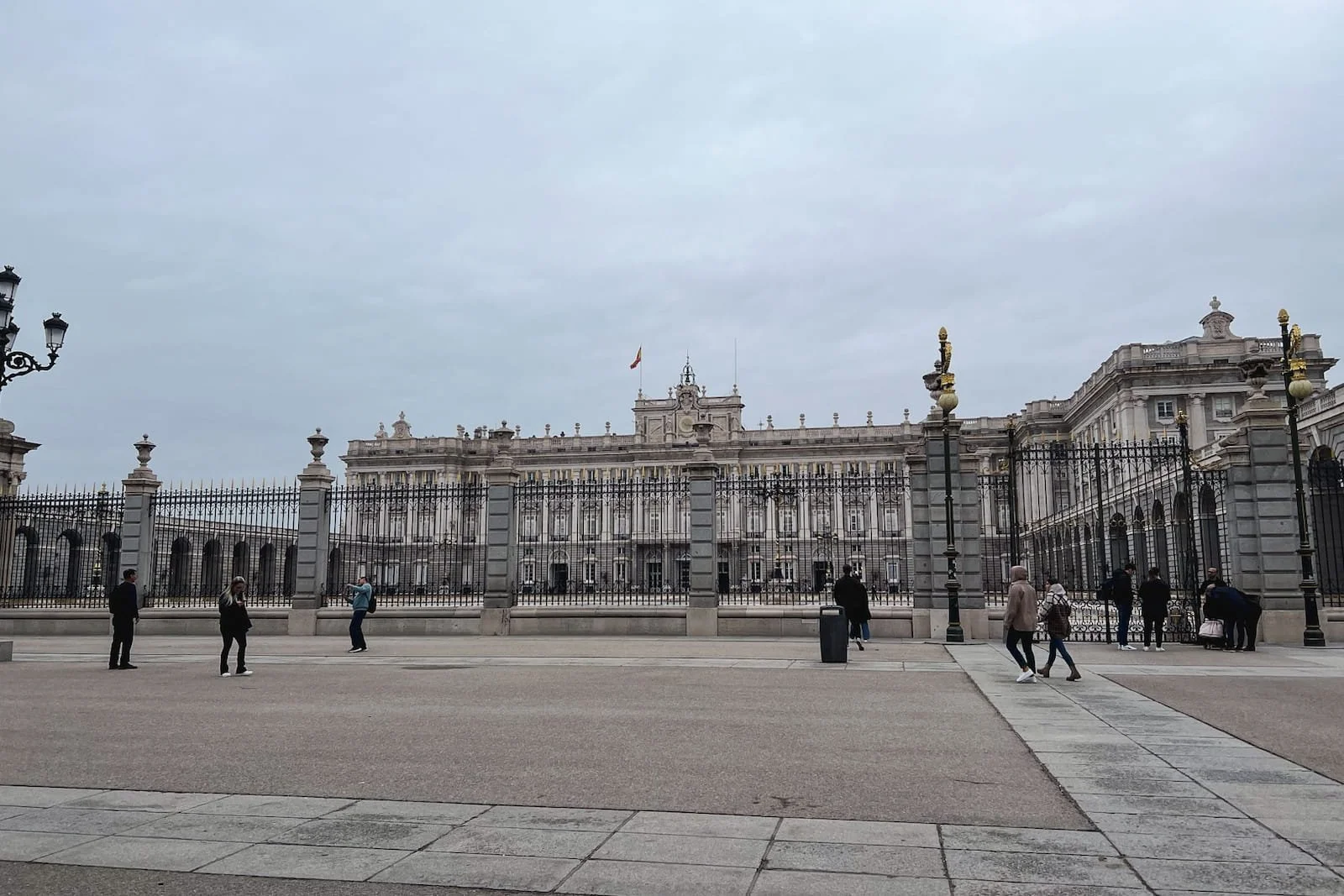
The Royal Palace area is worth walking through even if you do not tour the palace interior.
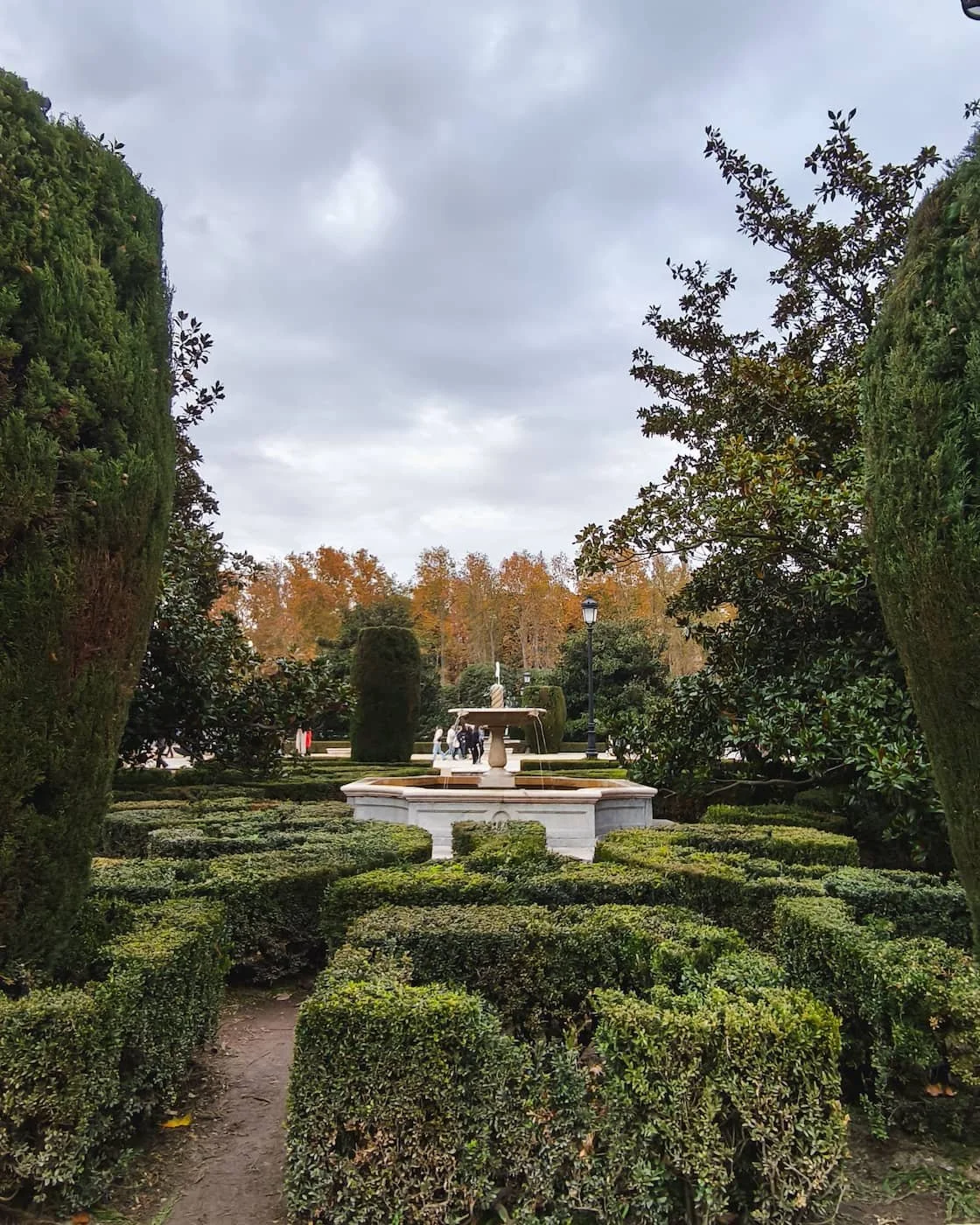
Sabatini Gardens, with its boxwood maze.
Almudena Cathedral
Almudena Cathedral is Madrid’s main cathedral, located next to the Royal Palace. Its foundation stone was laid in the late 19th century, but the building was completed much later, which is why it feels more modern and stylistically mixed than many older European cathedrals.
Almudena is important, but it’s not like the main cathedral “must-see” that you get in cities like Toledo, Seville, or Segovia. It’s relatively new by European cathedral standards and sits next to the much more dominant Royal Palace, so I would think of it more as a worthwhile stop when you’re in the area than as one of Madrid’s main attractions on its own.
While you’re there, it is also worth looking for the Old Arab Walls right next to the cathedral. They date back to Madrid’s 9th-century Islamic period and are some of the oldest surviving structures in the city.
Best for: Pairing with the Royal Palace, cathedral interior, and palace-area views.
How long to spend: 15 to 30 minutes for a quick look inside; 45 minutes to 1 hour if adding the museum and dome.
Pair with: Royal Palace area, Plaza de la Villa, or the walk from Plaza Mayor toward the palace.
Practical notes: The main cathedral is generally the quick, easy stop. The museum and dome are separate and paid.
Ticket: €8 for general entry.
Hours: Main cathedral open daily from 10:00am to 9:00pm. Museum and dome open Monday to Saturday, 10:00am to 2:30pm, and closed Sundays, religious holidays, and during special services.
Check the official Almudena Cathedral page for current details before going.
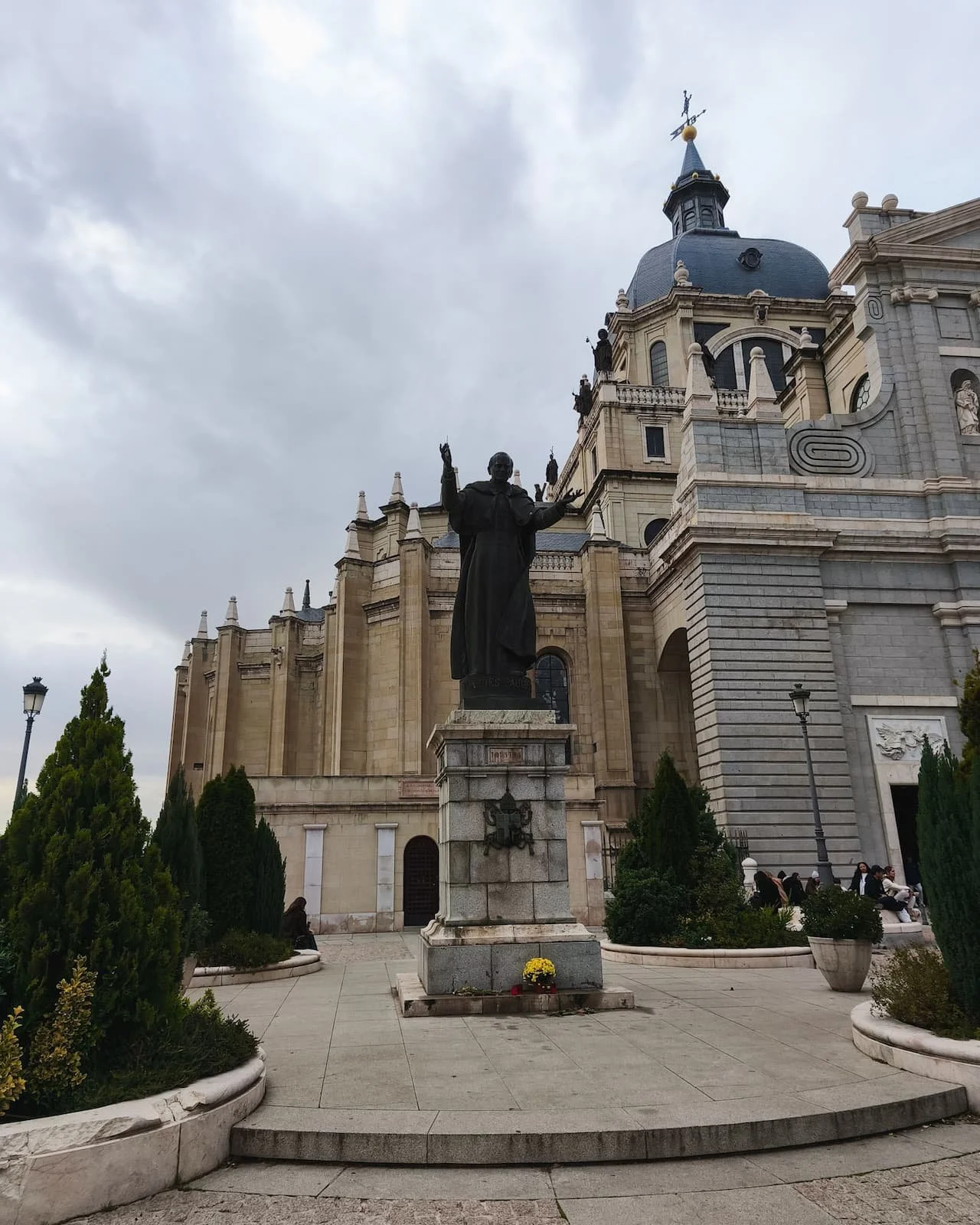
Almudena Cathedral is worth a visit when you’re in the area.
Neighborhoods to Wander
Malasaña
Malasaña is a central neighborhood north of Gran Vía, known for casual restaurants, vintage shops, and nightlife. Its identity is strongly tied to Madrid’s countercultural scene, especially the post-Franco Movida Madrileña, so it tends to feel younger, more casual, and more alternative than the polished shopping areas nearby.
I stayed in Malasaña for a month and loved it for its easy access to casual, affordable, slightly hip eateries (I especially liked this Gyro place called Vira Vira) and interesting little shops. I would use Malasaña for some afternoon browsing, or when you want an easy but still lively evening. It’s directly north of Gran Vía so you don’t need to take transit there separately.
Best for: Casual drinks, informal dinner, cafés, vintage shops, nightlife.
How long to spend: 1 to 3 hours, depending on whether you are just eating, getting drinks, or wandering.
Pair with: Gran Vía, Chueca.
Practical notes: Best in the afternoon or evening when the area is most lively.
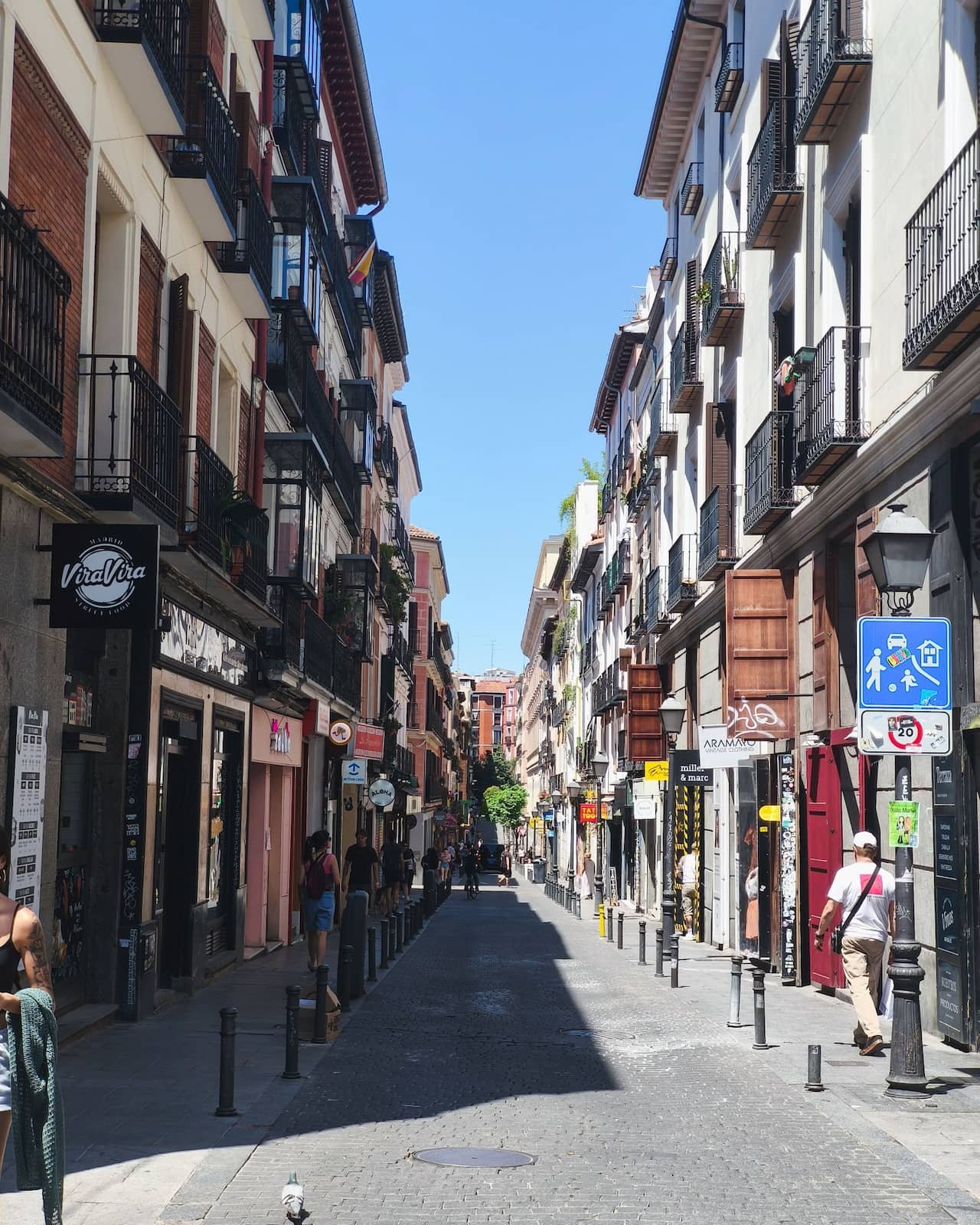
Street in Malasaña full of casual eateries and independent shops.
La Latina
La Latina is one of Madrid’s classic tapas neighborhoods, especially around Cava Baja and the streets near Plaza de la Cebada. The area overlaps with some of Madrid’s oldest urban fabric, so it combines narrow streets, traditional taverns, evening energy, and a more informal historic feel.
I would choose La Latina if you want a tapas crawl. The neighborhood has a more traditional feel, though it’s also popular and can be crowded, especially on Calle Cava Baja (one of the most lively streets in Madrid lined with taverns and tapas bars).
Another famous stop is the El Rastro flea market, which has taken place every Sunday in Plaza de Cascorro since the 18th century. It’s one of the largest and most famous flea markets in Europe, so if you’re a vintage or market lover, definitely stop by.
Best for: Tapas, traditional taverns, evening atmosphere, and a more classic Madrid dinner area.
How long to spend: 1 to 3 hours.
Pair with: Plaza Mayor area, or a slower evening after sightseeing.
Practical notes: Best in the evening or for a Sunday plan around El Rastro if you are nearby. Reservations can be useful for specific restaurants, especially popular tapas spots. Expect crowds around Calle Cava Baja during peak dinner hours.
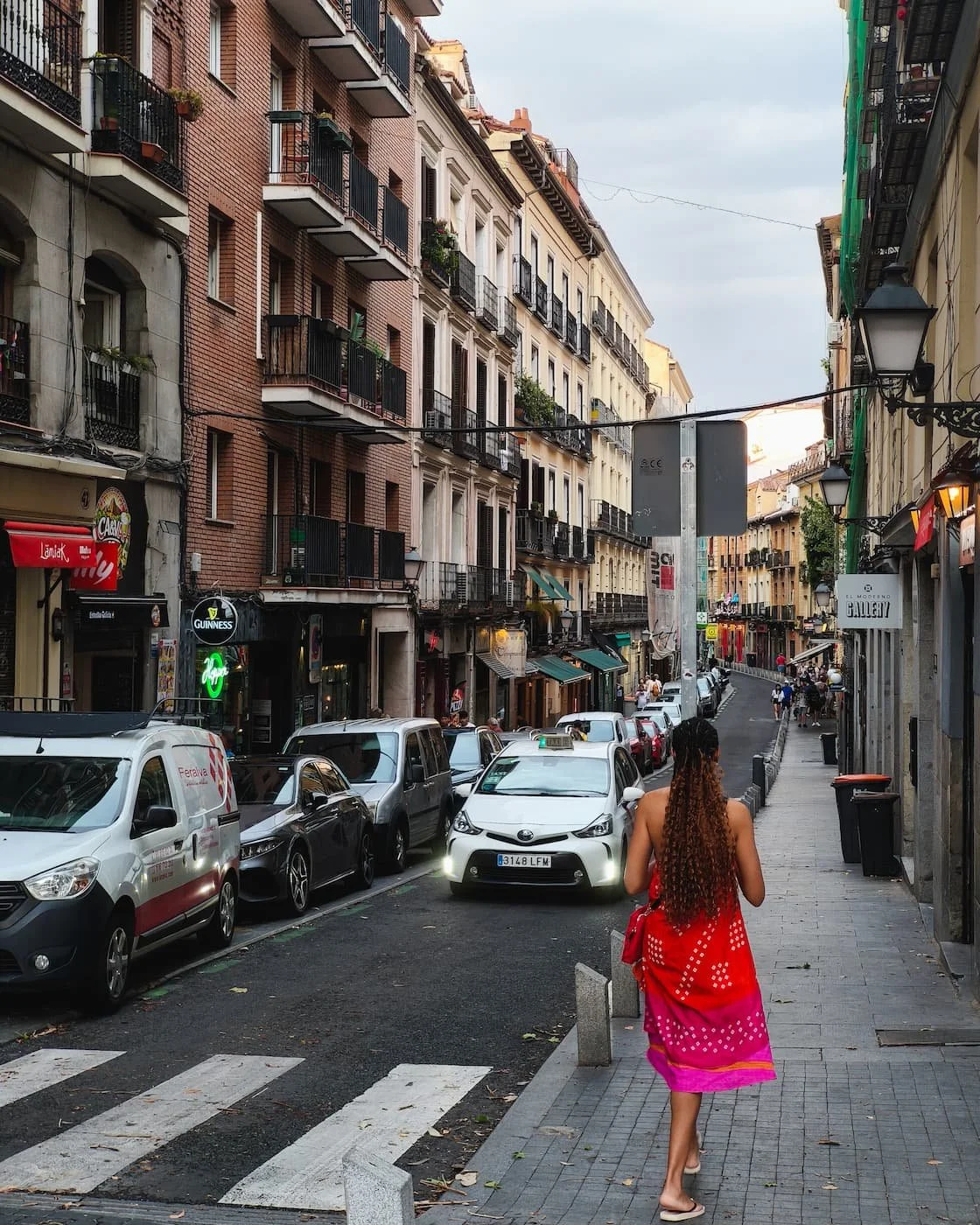
Calle Cava Baja in La Latina, lined with taverns and tapas bars. In the night, this street fills out and gets super lively.
Salamanca and Serrano
Salamanca is one of Madrid’s most polished neighborhoods, developed as a planned 19th-century expansion with wider streets and a more orderly layout than the historic center. Serrano and the surrounding Golden Mile are known for high-end shopping, elegant façades, and a refined feel.
This neighborhood is great if you want a break from the bustle and winding streets of the historic center and a more elegant, shopping-focused, less chaotic side of Madrid. It’s right north of Retiro Park, so they pair well together.
Best for: Shopping, elegant streets, polished city walks, restaurants, and a calmer atmosphere.
How long to spend: 45 minutes to 2 hours, depending on whether you are just walking through, shopping, or stopping for food.
Pair with: Retiro Park, Puerta de Alcalá, National Archaeological Museum, Colón.
Practical notes: This is one of Madrid’s higher-end shopping areas. Most useful during shopping hours or for lunch, coffee, or a polished evening stop.
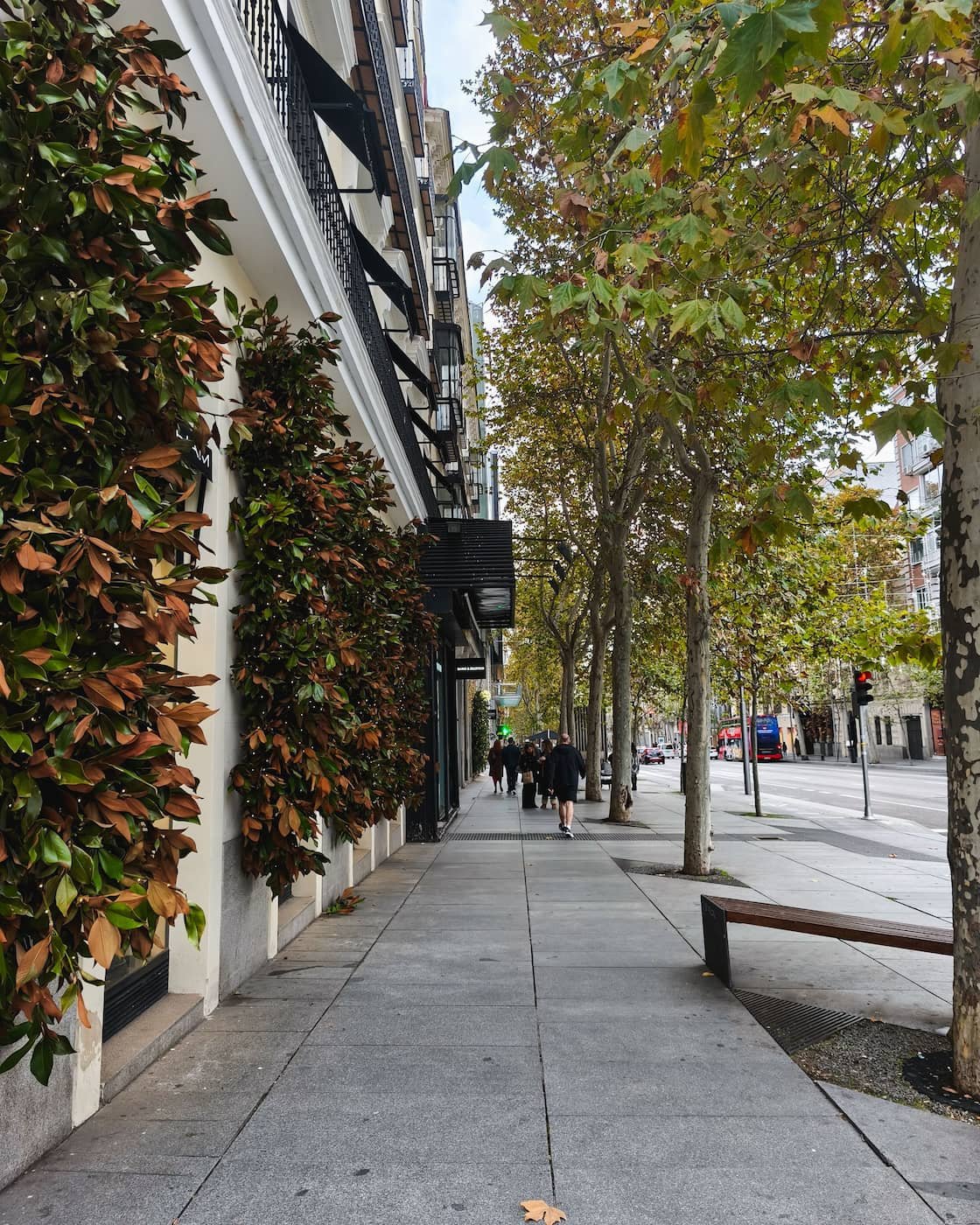
Polished, tree-lined street in Salamanca neighborhood near Sarrano. It’s a polished, peaceful walk.
The Madrid Museum Question
Madrid has several major museums, but I’d say the choice of which one to visit boils down to:
If you only choose one museum, I would choose the Prado.
If you prefer modern art, consider Reina Sofía.
If you want a broader collection and have extra time, consider the Thyssen.
These three form Madrid’s “Golden Triangle of Art.”
Prado Museum
The Prado Museum opened in 1819 and is now Madrid’s most important art museum and one of the major art museums in the world. Its collection is especially influential for Spanish painting, with major works by Velázquez, Goya, El Greco, and other European masters. If you only choose one major museum in Madrid, I would choose the Prado because it gives you the strongest single look at Spain’s art history in the city.
Like many major European museums, the Prado also feels impressive as a space, not just as a collection. The interiors add to the experience, and it was genuinely cool to see Las Meninas in person after seeing it referenced so many times in art/history contexts. Photos are not allowed inside, and the free-entry hours can get crowded, so if you go during a popular time, expect a busier, more compressed visit rather than a calm, slow museum afternoon.
Best for: First-time visitors, Spanish painting, art history.
How long to spend: Around 2 hours for a focused visit. Longer if you love art or want to explore more of the collection.
Pair with: Retiro Park, Paseo del Prado, Puerta de Alcalá, Cibeles, or the Thyssen if you are doing an art-heavy day.
Practical notes:
Ticket: General admission is currently €15, though there is usually a free-entry window during the last two hours before closing.
Hours: Monday to Saturday 10:00am–8:00pm; Sundays and public holidays 10:00am–7:00pm. Entry is allowed until 30 minutes before closing.
Check the official Prado website for current hours, ticket prices, free-entry details, temporary exhibitions, and booking options before going.
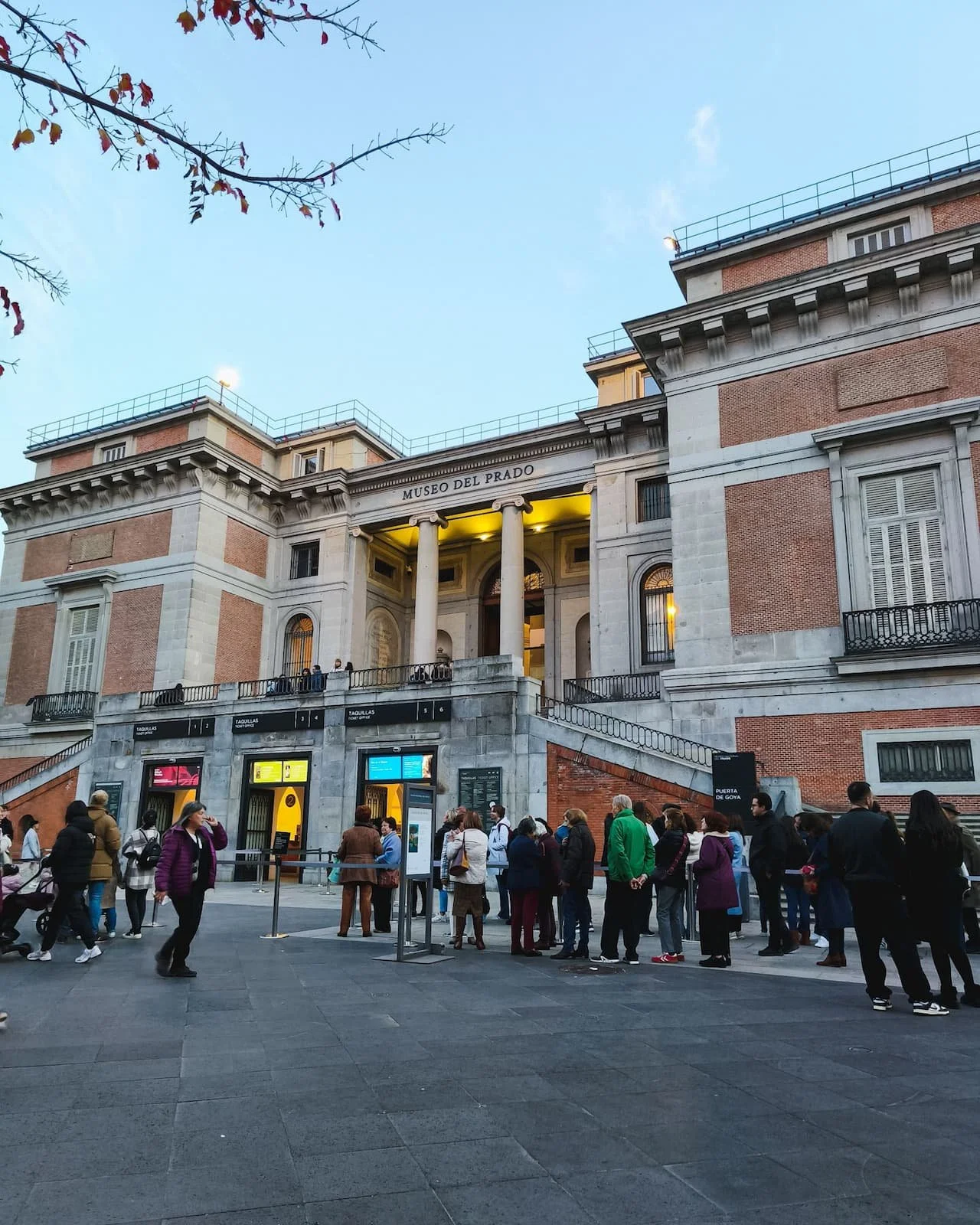
An exterior shot of the Prado since photos are not allowed inside.
Reina Sofía
Reina Sofía is Madrid’s major modern and contemporary art museum, located near Atocha station. Its main site combines the older Sabatini Building, a former hospital structure, with the later Nouvel expansion. The architecture feels very different from the neoclassical Prado.
This is where you go if Picasso, Dalí, Miró, and 20th-century art are more your thing, so I would add Reina Sofía if you have more than one day or if modern art is a major interest. The most famous piece in the museum is Picasso’s anti-war masterpiece Guernica. When I visited during the museum’s free entrance hours, it was so crowded in front of that piece that I honestly couldn’t appreciate it very much, so I’d take that into account for your own visit.
Besides the art, there is a (relatively quiet) garden in the courtyard, and the glass elevators are sort of an experience that gives you a quick glimpse of the surrounding rooftops at the higher floors.
Best for: Modern art, Picasso, travelers who want a second major museum.
How long to spend: 1.5 to 2.5 hours for a focused visit.
Pair with: Retiro Park, Lavapiés neighborhood, Prado and Paseo del Prado if you’re doing a museum day.
Practical notes:
Ticket: General admission is currently €12, though there is usually a free-entry window during the last two hours before closing.
Hours: Monday and Wednesday to Saturday 10:00am–9:00pm; Sunday 10:00am–2:30pm; closed Tuesdays.
Check the official Reina Sofía website for current hours, ticket prices, free-entry windows, and booking options.
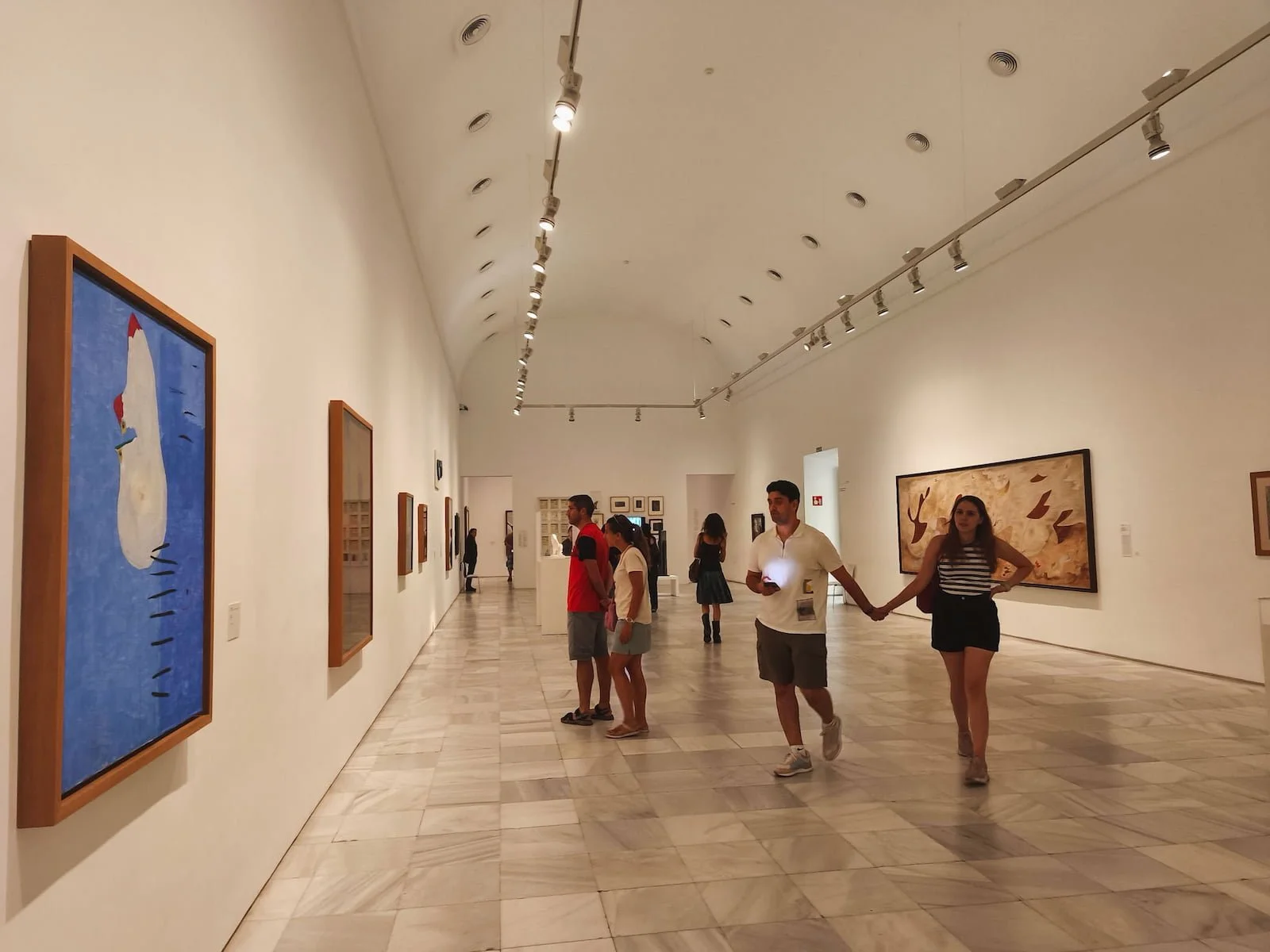
Interior gallery in Reina Sofía.
Thyssen-Bornemisza Museum
The Thyssen-Bornemisza Museum is part of Madrid’s museum triangle and is housed in the Villahermosa Palace, a neoclassical palace on Paseo del Prado. Its collection covers a broad range of European art, making it a bridge between the older works of the Prado and the modern focus of Reina Sofía. I wouldn’t make the Thyssen a must-do for every first-time visitor, but it is a strong option if you have extra time or want a broader art day.
From my own visits. My favorite piece in the museum is Dalí’s Dream Caused by the Flight of a Bee Around a Pomegranate a Second Before Awakening, whose relatable subject material combined with its ridiculously long name made me chuckle a bit (something that doesn’t really happen for me in art museums lol).
Unlike the Prado and Reina Sofía, which have free entrance hours towards the end of every day, the Thyssen has it on Monday afternoons. Perhaps that’s one reason that makes it less crowded during those hours. It made the visit overall more relaxed, and I was able to stare at Dalí’s Dream piece for as long as I wanted.
Best for: A second or third museum day, travelers who want a less obvious museum choice, and art lovers building a fuller Madrid itinerary.
How long to spend: 1.5 to 2.5 hours.
Pair with: Retiro Park, Gran Vía, Salamanca area.
Practical notes:
Ticket: General admission is currently €14, though Mondays are usually free entry.
Hours: Monday 12:00pm–4:00pm (free entry); Tuesday to Friday 10:00am–9:00pm; Saturday 10:00am–11:00pm; Sunday 10:00am–7:00pm
Check the official Thyrssen-Bornemisza website for current hours, ticket prices, free-entry windows, and booking options.
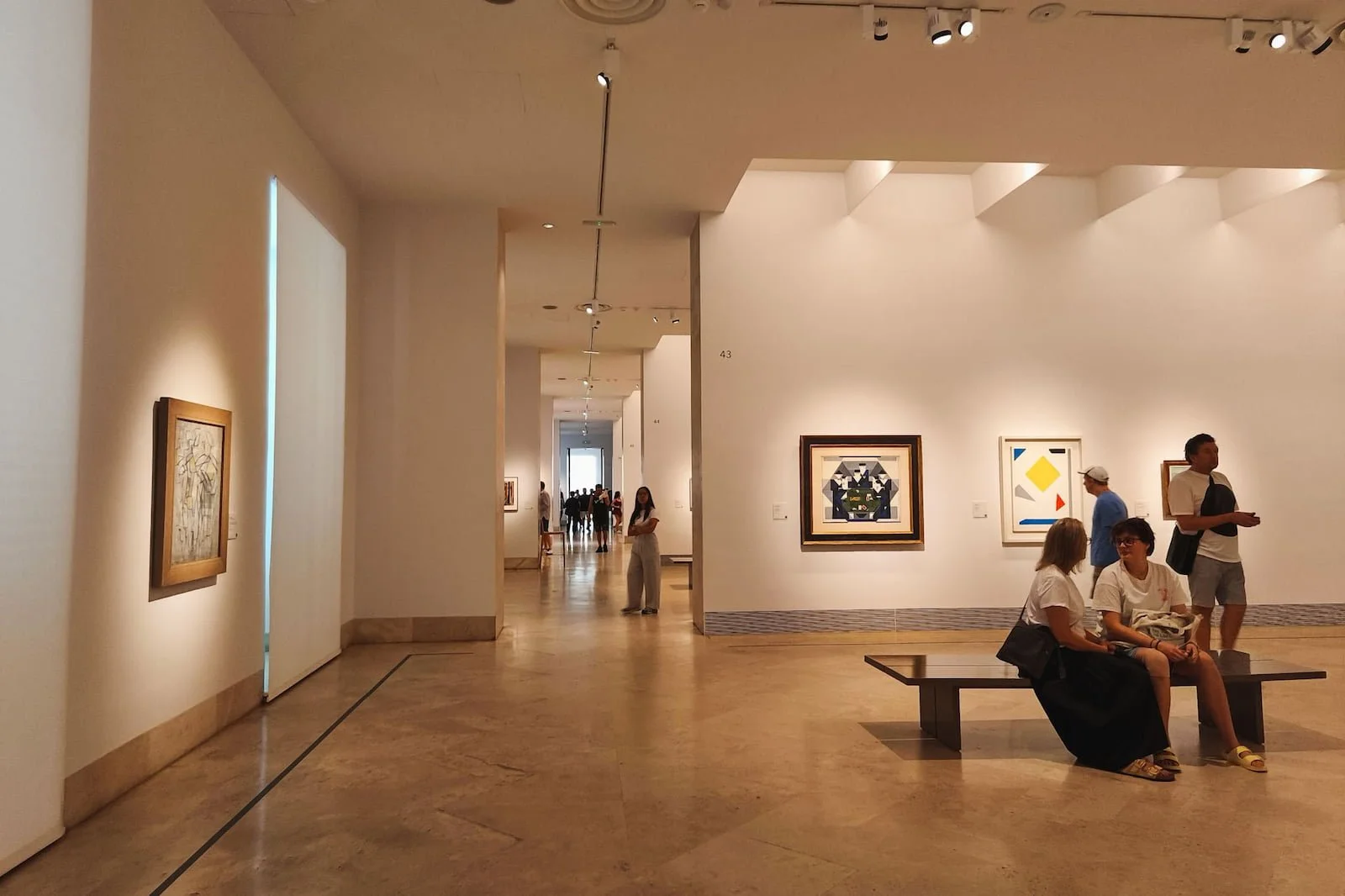
Interior gallery in the Thyssen.
Select Food Stops I Actually Use
Madrid has a lot of food options, from classic Spanish stops to global cuisines. For this post, I’m keeping the food section focused on Spanish food stops that are easy to pair with sightseeing, including some touristy-but-useful classics and a few casual places I personally liked. But I do share more of my favorite everyday restaurants (including Chinese, Taiwanese, Georgian, and other cuisines) in my slow-travel Madrid notes.
Mercado de San Miguel
Mercado de San Miguel is a historic iron-and-glass market building near Plaza Mayor, originally opened in 1916 as a local food market. It was later renovated and reopened as a gourmet market, which is why it feels more polished and tourist-oriented than a traditional neighborhood market.
For me, the first time I visited I was quite excited by the bustle of the market and the colorful displays of jamón, empanadas, fruits, seafood. But honestly after the first couple of visits, I don’t really go there anymore since the stalls have tourist markups and it’s crowded. I also got my phone pickpocketed there when I briefly took my hand away from it while ordering empanadas (only for one second!!), so I’m also maybe biased.
That said though, I still think it’s worth it for a first-time visitor, since it’s really convenient to sample Spanish small bites. The building is also a fine example of Parisian-style cast-iron and glass architecture. I’d just come with realistic expectations.
Best for: A first Madrid food stop, sampling several things in one place, a convenient lunch near Plaza Mayor, or a low-commitment snack stop.
How long to spend: 30 minutes to 1 hour.
Pair with: Plaza Mayor, San Ginés, Plaza de la Villa, or the Royal Palace area.
Practical notes:
Price range: $$.
Hours: 10am–midnight (Monday to Thursday) or 1am (Friday to Sunday).
Check the official Mercado de San Miguel website for current hours and vendor information.
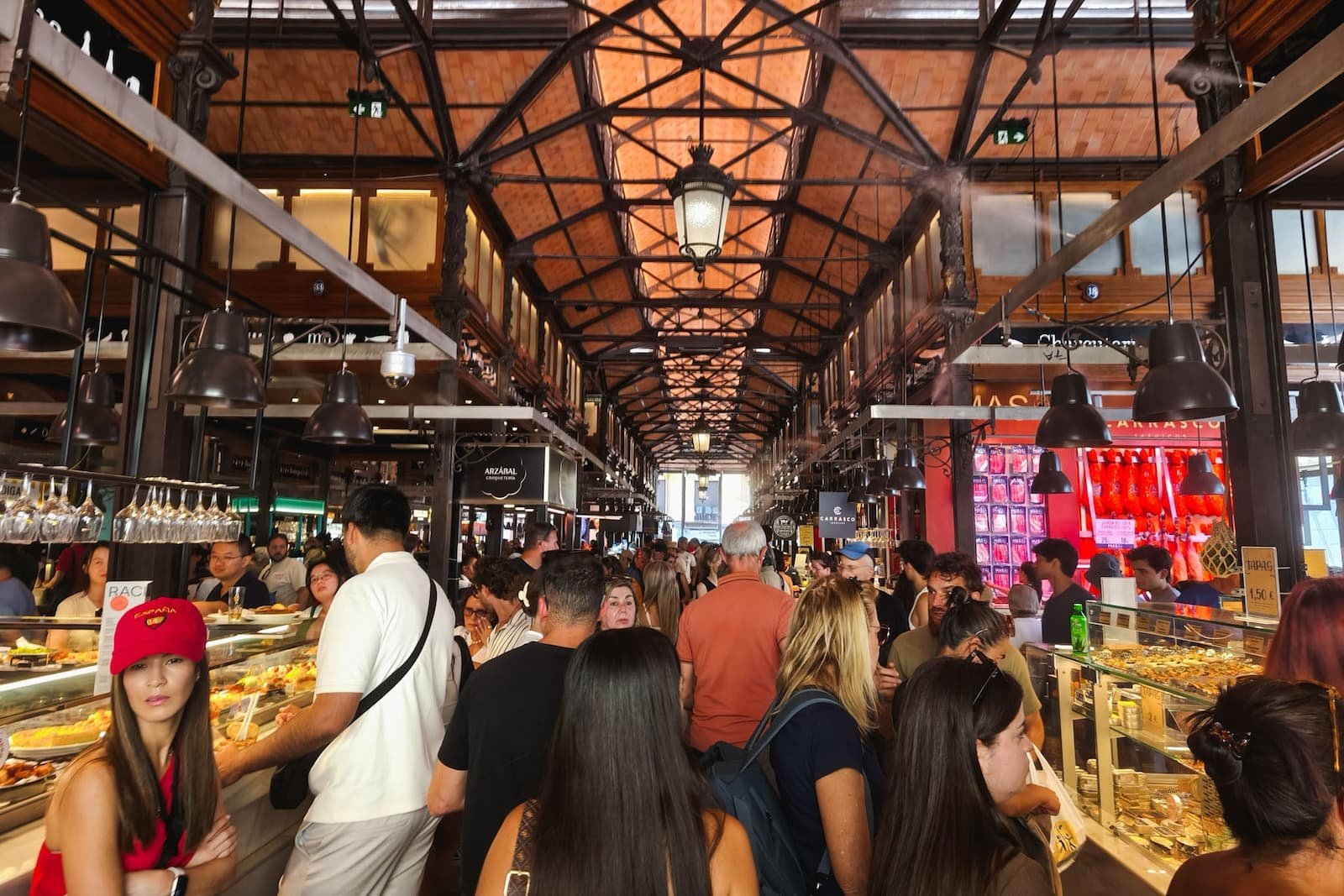
Mercado de San Miguel can be super crowded, but worth a visit for the mouthwatering displays of alllll the food.
Chocolatería San Ginés
Chocolatería San Ginés is one of Madrid’s classic churros con chocolate spots, located in a small passageway near Puerta del Sol and Plaza Mayor. Open 24/7, it has been serving churros and thick hot chocolate since 1894, and it’s still part of Madrid’s long-running café and late-night snack culture.
Like Mercado de San Miguel, it’s also touristy and often crowded with long waits, but I also think it’s worth going once. It’s especially great as a “merienda” (afternoon snack) after lots of walking, since the churros and hot chocolate combo does hit the spot then. Both the churros and the hot chocolate are not too sweet, since the churros are simply fried dough with salt and the chocolate has very high cocoa content. So my honest opinion, with my American sweet tooth, is that I’ve had better haha, but it’s still good to try this traditional Spanish version.
The portions can be large, so I would treat this as a shared dessert or snack rather than a full meal. Unless your full meal is chocolate, in which case I’m not here to judge.
Best for: Churros con chocolate, a classic Madrid snack, to satisfy a fried dough and chocolate craving.
How long to spend: 20 to 50 minutes, depending on the line and whether you sit down.
Pair with: Plaza Mayor, Puerta del Sol, Mercado de San Miguel.
Practical notes:
Price range: $.
Hours: Open 24/7.
Check the official San Ginés website for most updated info and menu details.
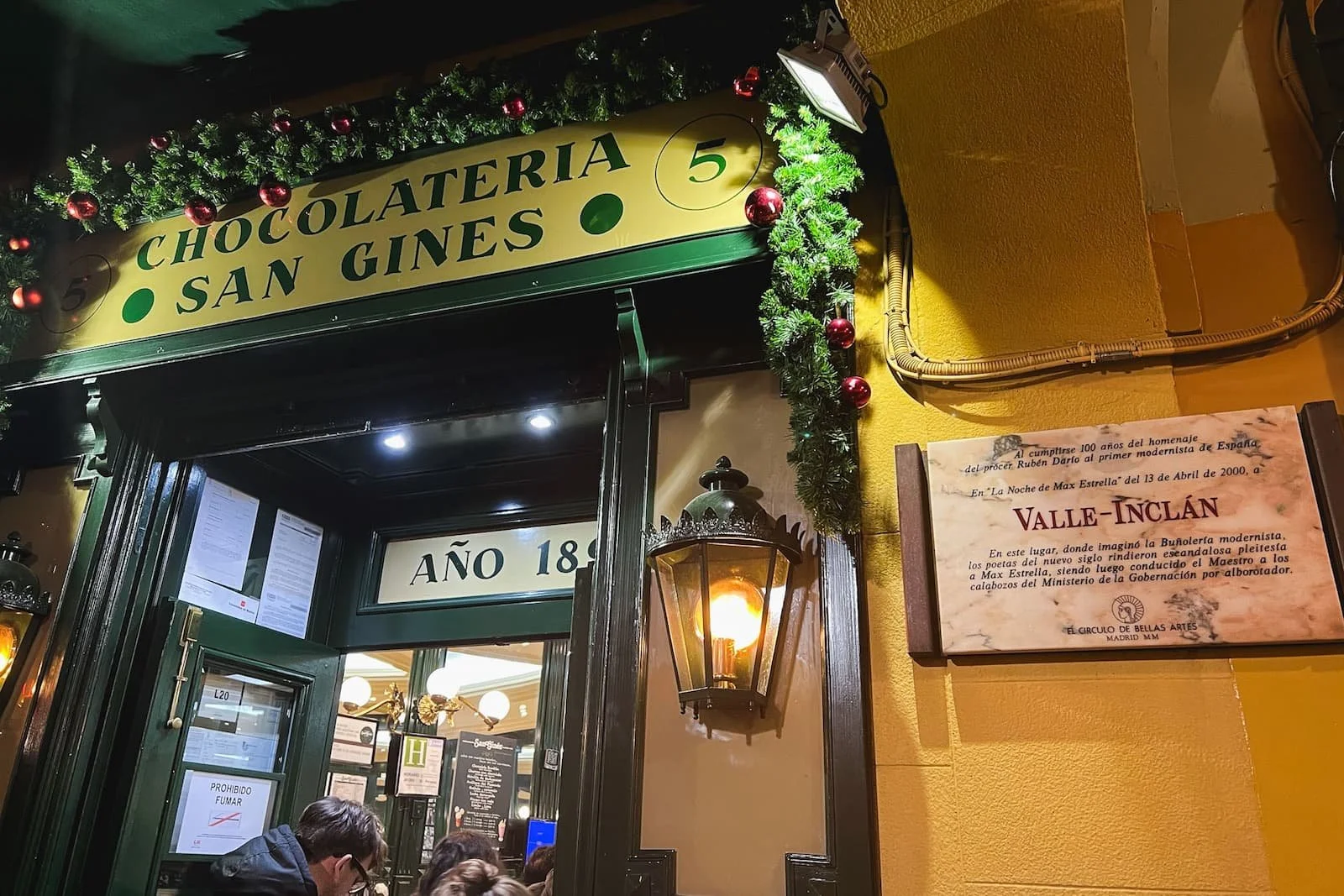
Exterior of Chocolatería San Ginés. Discover the churros and hot chocolate for yourself :)
Casa Amadeo Los Caracoles
Casa Amadeo Los Caracoles is a traditional tapas spot in La Latina, especially known for its namesake snails and other raciones (shared tapas), with a lively tavern atmosphere inside and a large terrace outside.
The raciones were huge. We ordered the classic snails and a pork ear dish (“oreja adobada”). The snails are cooked in this super savory paprika-and-chorizo based broth that you’re supposed to slop up with bread, and pretty much the only way to eat the snails is to use your hands to grab it and scoop it out with a toothpick.
Besides the food, my favorite part was meeting Señor Amadeo, the founder and owner of the place, who you will likely interact with. He came over asking us what we ordered, brought us our snail order, and taught us that we’re supposed to soak up all the broth with bread. He even crouched down and deeply inhaled the aroma of the snails, commenting on how great it smells. Approaching 100 years old (!!) at the time we went, he was full of energy, going around clearing plates and chatting with patrons. What an absolute icon.
Best for: Traditional tapas, old-school Madrid atmosphere, and a more classic La Latina evening.
How long to spend: 1 to 2 hours, depending on whether it is a quick tapas stop or part of a longer night.
Pair with: La Latina, Cava Baja, Plaza Mayor.
Practical notes:
Price range: $-$$
Hours: Monday to Sunday 10:00am to 1:00am
Check the Casa Amadeo Los Caracoles website for hours and the menu.
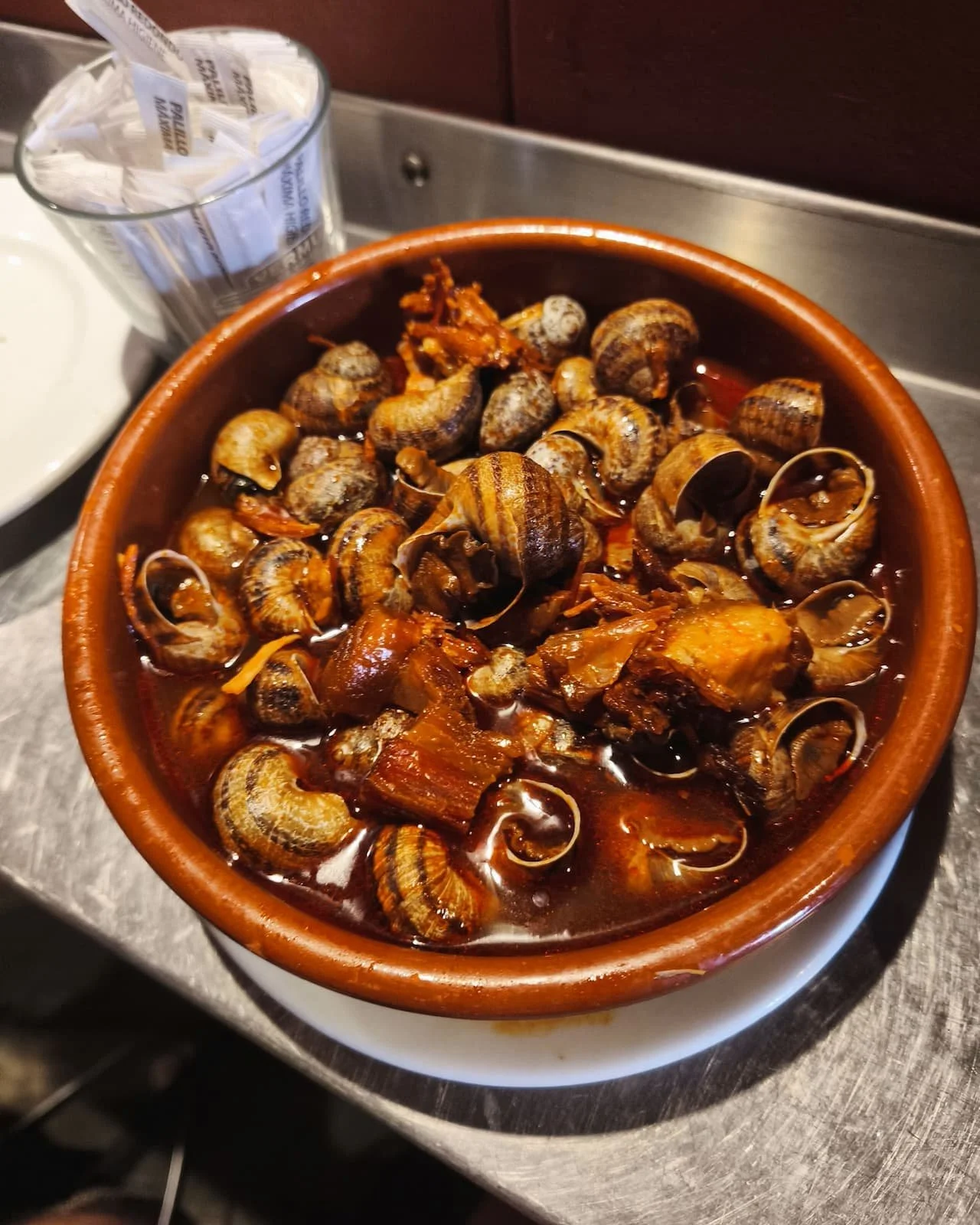
Our caracoles ración at Casa Amadeo Los Caracoles.
Bar Padrao
Bar Padrao in Malasaña is a fun experience: its main appeal is that you get free tapas with every drink order. You read that right.
The catch is that you can’t choose the tapas they give you, but that random element is part of the fun. When we went, we ordered two tintos de verano for 4€ each, and got a giant fried chicken bocadillo that managed to fill us for the meal. I saw that the tables around us that ordered multiple drinks got a giant dish of paella, so I was a little sad we didn’t get to try that.
If you want the free-tapas-with-drinks experience in a different area, check out El Respiro in Chueca and Petisquera near the Tribunal.
Best for: Casual drinks and tapas, the tapas roulette experience.
How long to spend: 1 to 2 hours.
Pair with: Malasaña, Gran Vía, Chueca, or a casual evening nearby.
Practical notes:
Price range: $.
Hours: Monday to Saturday 1:00pm to 12:00am, closed Sunday.
Check the Bar Padrao website for the most updated hours and rough costs.
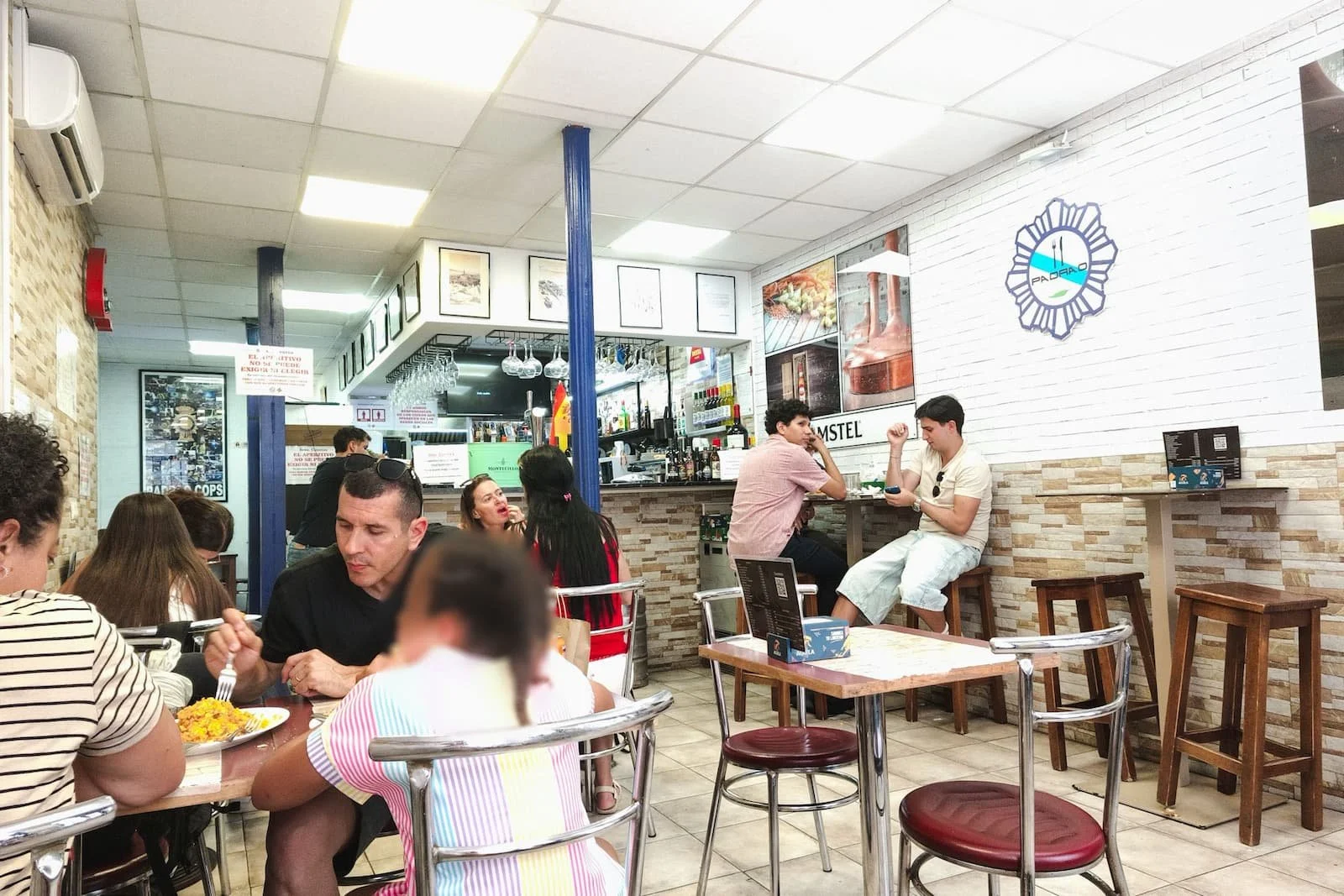
It’s very casual Bar Padrao. You can see a dish of paella on that table, free with a drink order. We didn’t get to try that particular one but did get a giant sandwich.
Bocadillos Oink
24/7 spot for jamón ibérico sandwich with a funky name and a few locations around central Madrid, including on Gran Vía and near Plaza Mayor. As someone who can eat jamón pretty much every day and only avoid doing so for fear of turning into salt, I’ve tried many spots around the city for this sandwich and this is still my favorite.
First, you can request to have it heated (which makes the bread less hard), and second, they put a thin layer of tomato sauce so the sandwich is juicier. Other places I’ve tried don’t do either. I like the version without cheese to taste the jamón without distractions.
Best for: Quick, convenient meal while walking around the center, or a snack to keep you going.
How long to spend: Just time ordering (most are takeout counters).
Pair with: Gran Vía, Sol, Callao, Plaza Mayor, or a route through the historic center.
Practical notes:
Price range: $
Hours: Open 24/7
Tip: Have liquids with you for after the sandwich since it can make your mouth a bit dry.
Pez Tortilla
If you want to try tortilla española, I think this is the place to go. It’s a casual spot where you can try the tortilla with several different flavor combos, including the classic onion. The first location was on Calle de Pez in Malasaña (hence the name), but now there are a few locations, including one in La Latina and another in Sol.
I think it’s the best tortilla española I’ve had, even better than other more “gourmet” places — they were flavorful and perfectly runny and gooey. We tried the classic onion one, a truffle and jamón one, and a red pepper one, and my favorite was the classic. Each portion comes with a slice of bread, and for us, two portions per person were enough for an easy meal.
Best for: Casual meal.
How long to spend: 30–45 minutes.
Pair with: Malasaña, Gran Vía, La Latina, Cava Baja, Puerta del Sol.
Practical notes:
Price range: $
Hours: Depending on location, but generally open until later in the night.
Check the Pez Tortilla website for hours and the menu.
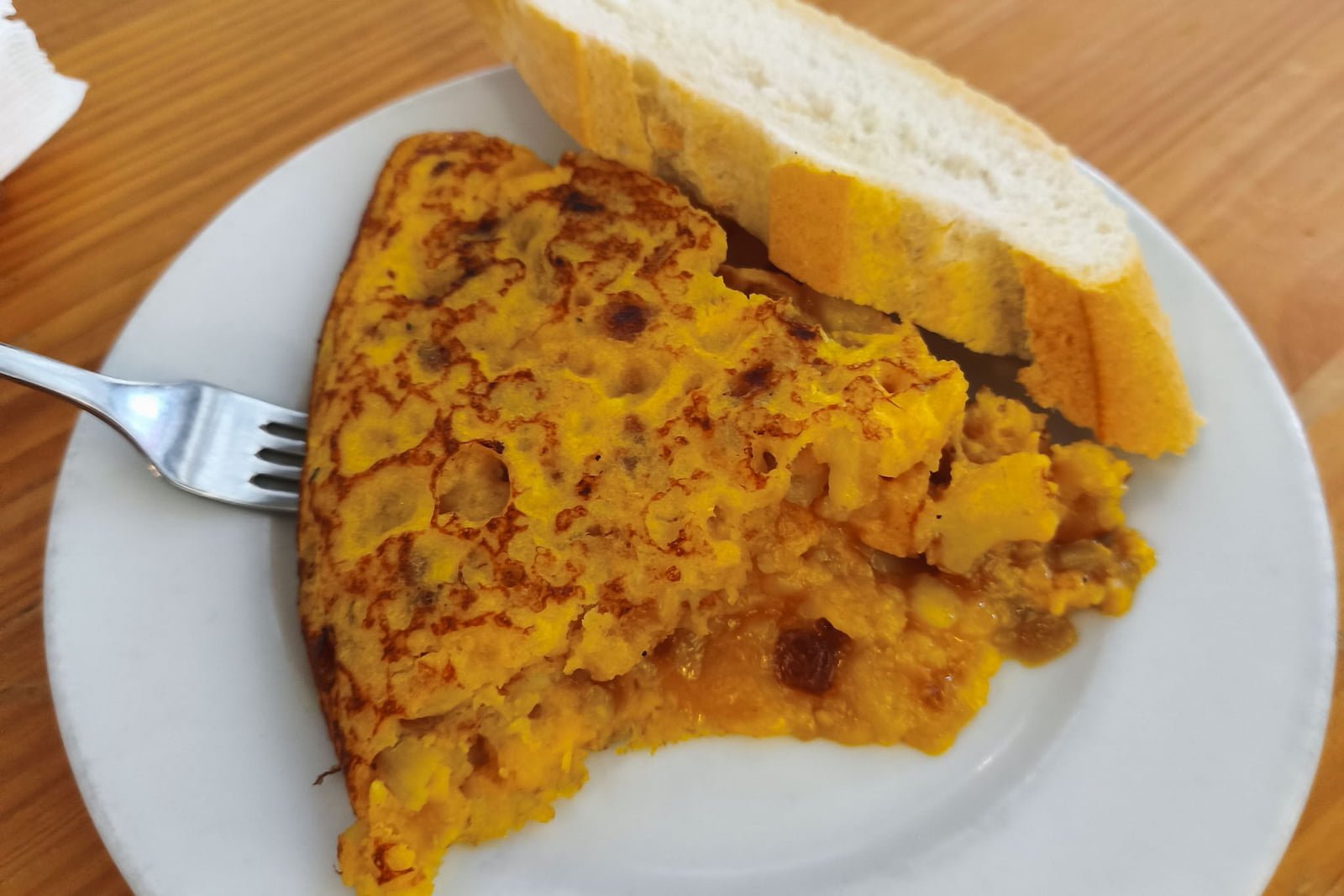
Our slice of the classic onion (look at the gooeyness!) in the La Latina location of Pez Tortilla.
Worth the Detour
These places are a bit out of the usual tourist areas, but I think they’re worth a visit if they interest you.
Santiago Bernabéu Stadium
Santiago Bernabéu Stadium is Real Madrid’s home stadium, located north of Madrid’s main sightseeing center in the Chamartín area. It opened in 1947 and has been heavily transformed over time, so today it combines football history, club museum elements, and a very modern stadium-tour experience.
If you’re interested in football, even if you’re not a Real Madrid fan, Bernabéu is worth considering because of the influence this club has on Madrid and on the sport more broadly.
I’m not a Real Madrid fan, but I am an avid football fan (Arsenal, unfortunately for my emotional stability 😂). I still did the Bernabéu stadium tour and found it really cool, which is why I think it makes sense to add it if football is even a moderate interest for you. That said, it is a bit out of the way, so I would not necessarily recommend the trek unless you have the time, the interest, or a football fan in your group.
Best for: Football fans, Real Madrid history, sports culture
How long to spend: 1 to 2 hours for the stadium tour, depending on current access and how much time you spend in the museum/shop.
Pair with: Paseo de la Castellana, Chamartín, Nuevos Ministerios, or a separate north Madrid outing.
Practical notes: This is a paid attraction and works best as a planned visit rather than a casual drop-in. Check the official Real Madrid Bernabéu page for current hours, ticket prices, tour access, match-day restrictions, and renovation-related changes before going.
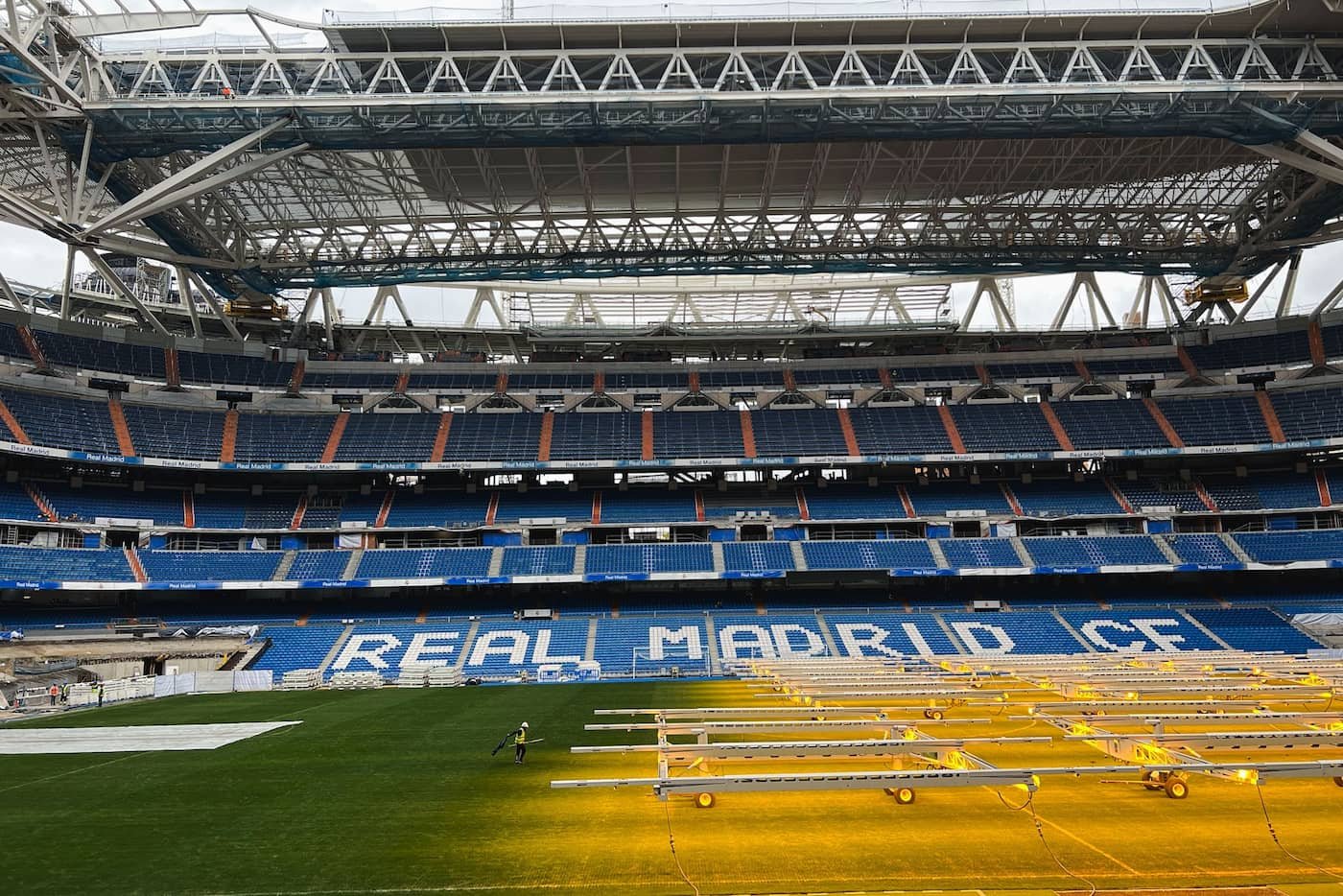
The first part of the stadium tour at the Bernabéu was the stadium seating. It was one of the first times I’d been in a major European football stadium, so I was awed by the scale.
How I’d Prioritize by Trip Length
Keeping this section concise since this post is long, but I do want to share some of my suggested priorities following my approach on how I plan low-friction itineraries.
If You Have 1 Day in Madrid
For one day in Madrid, I would keep the route simple: one major museum or palace-area visit, one scenic walk, a few historic-center stops, and one dinner area.
A strong first-time route could include Retiro, the Prado, Gran Vía, Puerta del Sol, Plaza Mayor, Mercado de San Miguel, San Ginés, Plaza de la Villa, and the Royal Palace area.
This is what I did in my Madrid in 1 Day walking itinerary, so check out that post for the full step-by-step route (with map).
If You Have 2 to 3 Days in Madrid
With 2 to 3 days, you can stop squeezing everything into one route and make more interest-based choices.
I would add more breathing room around the Prado or Royal Palace, choose a second museum if you want one, spend an evening in Malasaña or La Latina, and leave time for more wandering or detouring to more local food spots or markets.
If You Have 4 to 5 Days in Madrid
With 4 to 5 days, Madrid starts working well as both a city break and a base.
I’d add more neighborhoods, slower meals, extra museum time, farther-out sights like Bernabéu or Las Ventas if they interest you, and possibly a day trip to Toledo or Segovia.
If You Are Staying Longer
For a longer stay, Madrid becomes less about “what attractions should I see?” and more about building a rhythm.
Spread out your museum visits, revisit neighborhoods you liked, try more casual meals, take slower walks, and use the city as a base for day trips.
For more on this (including my routines and real monthly costs), see my notes on slow traveling Madrid.
Where to Go From Here
Thanks for reading. Madrid is one of my favorite cities, and I hope this guide helps you decide what actually fits your trip, whether you are planning one full day, a long weekend, or a slower stay.
If this list is making you wonder where to stay to reach all of this easily, I also wrote Where to Stay in Madrid: Why I Wouldn’t Overthink the Neighborhood. Basically: stay central, then don’t spiral.
If you’re still planning, start with my Madrid Travel Guide: Start Here, where I’ve collected my Madrid logistics, packing tips, itinerary links, and related posts.
And if you visit any of these places or use this guide while planning, I’d love to hear how it goes. Feel free to leave a comment or send me a message, especially if you’re still deciding what to prioritize.