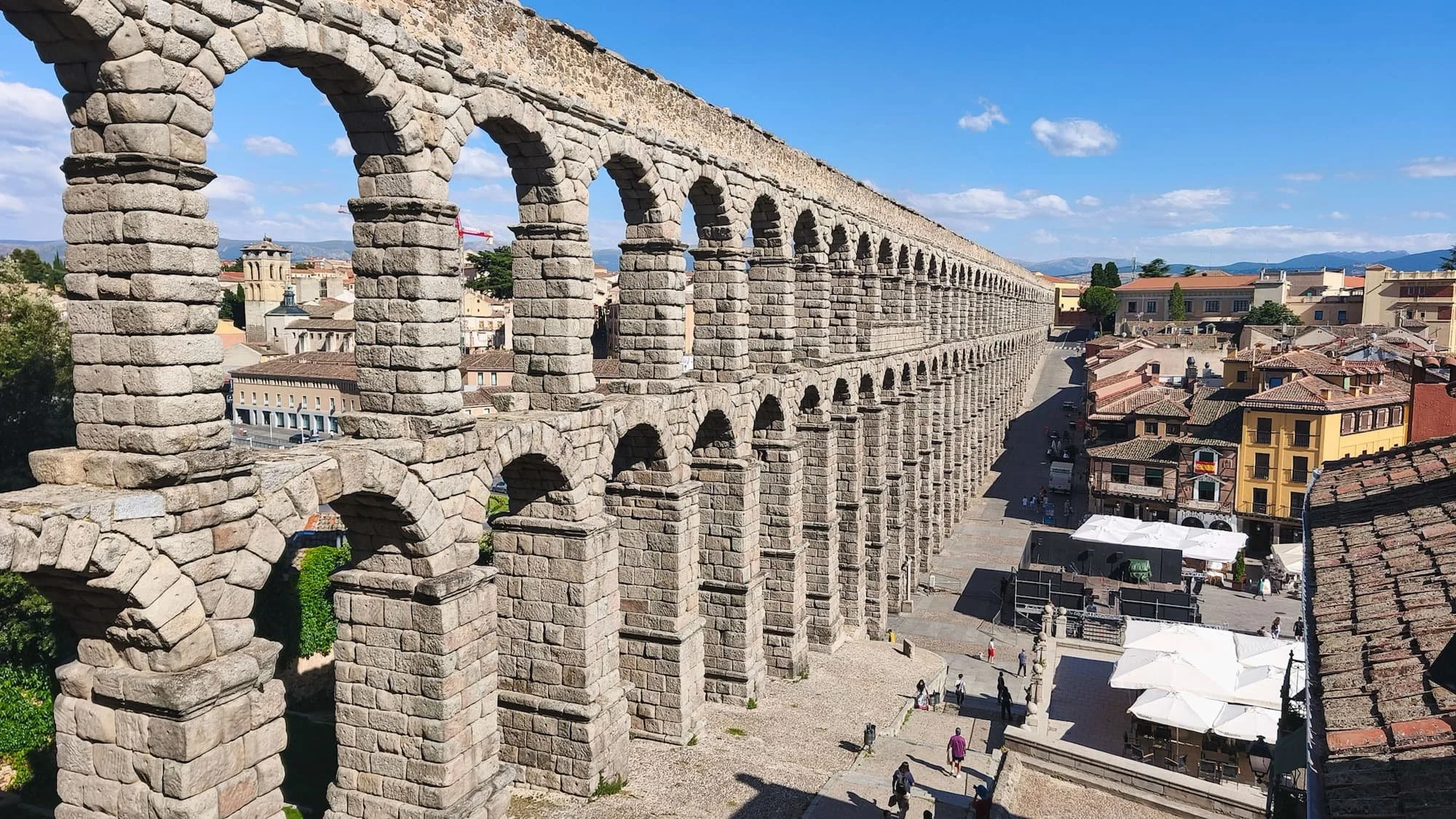
Segovia Day Trip from Madrid: A No-Car Itinerary + Map
Dating back over 2,000 years, Segovia is an ancient city and one of the easiest, most classic day trips from Madrid. A dramatic, extremely well-preserved Roman Aqueduct dominates the skyline at the entrance, medieval streets lead to a huge Gothic cathedral, and old city walls open up to a famous castle often linked to later fairytale castle designs.
This itinerary is built as a full but manageable day trip from Madrid. I designed it (and followed it myself!) to see the first-time highlights in a way that takes opening hours, time needed at each stop, and efficient routing into account. It doesn’t just follow where everyone else is going, but deliberately takes quieter, more scenic routes to see more of the city where it makes sense.
So it’s ready for you to take and follow exactly, or see the modifications section at the end for suggestions on how to adjust it.
Stop Notes
Total time: Full day from Madrid, about 12 hours total.
Best for: Independent visitors who want the first-time, classic Segovia day trip without renting a car or taking a tour.
Route in Segovia: Aqueduct → old town walk → Cathedral → lunch → Jewish Quarter / city walls → Alcázar → optional mirador → ponche segoviano → train back.
Best timing: Aim to be at the Aqueduct around 10:00–10:30am.
Transportation needed: High-speed train from Madrid to Segovia Guiomar, then bus or taxi between the station and old town. See my full step-by-step guide on this transit.
Main bookings: Alcázar recommended; Mesón de Cándido if you specifically want to eat there
Pace / walking level: Moderate to high. Segovia is compact, but this route includes hills, stairs, uneven stones, optional climbs, a slower lunch, and an optional small hike to the mirador.
Watch out for: Segovia Guiomar is not in the old town, lunch timing can affect the route, and the city has lots of hills, stairs, uneven stones, and optional climbs.
Opening hours: You can generally follow this itinerary any day of the week, since all major stops are typically open daily, but note that the Cathedral opens later on Sundays. I still recommend checking the latest information for any unexpected closures before you go.
Route Map
This map shows the main areas of the route. For the detailed itinerary and exact stops, see the itinerary section below.
Use these linked Google maps for the exact stops, including smaller viewpoints and suggested routes:
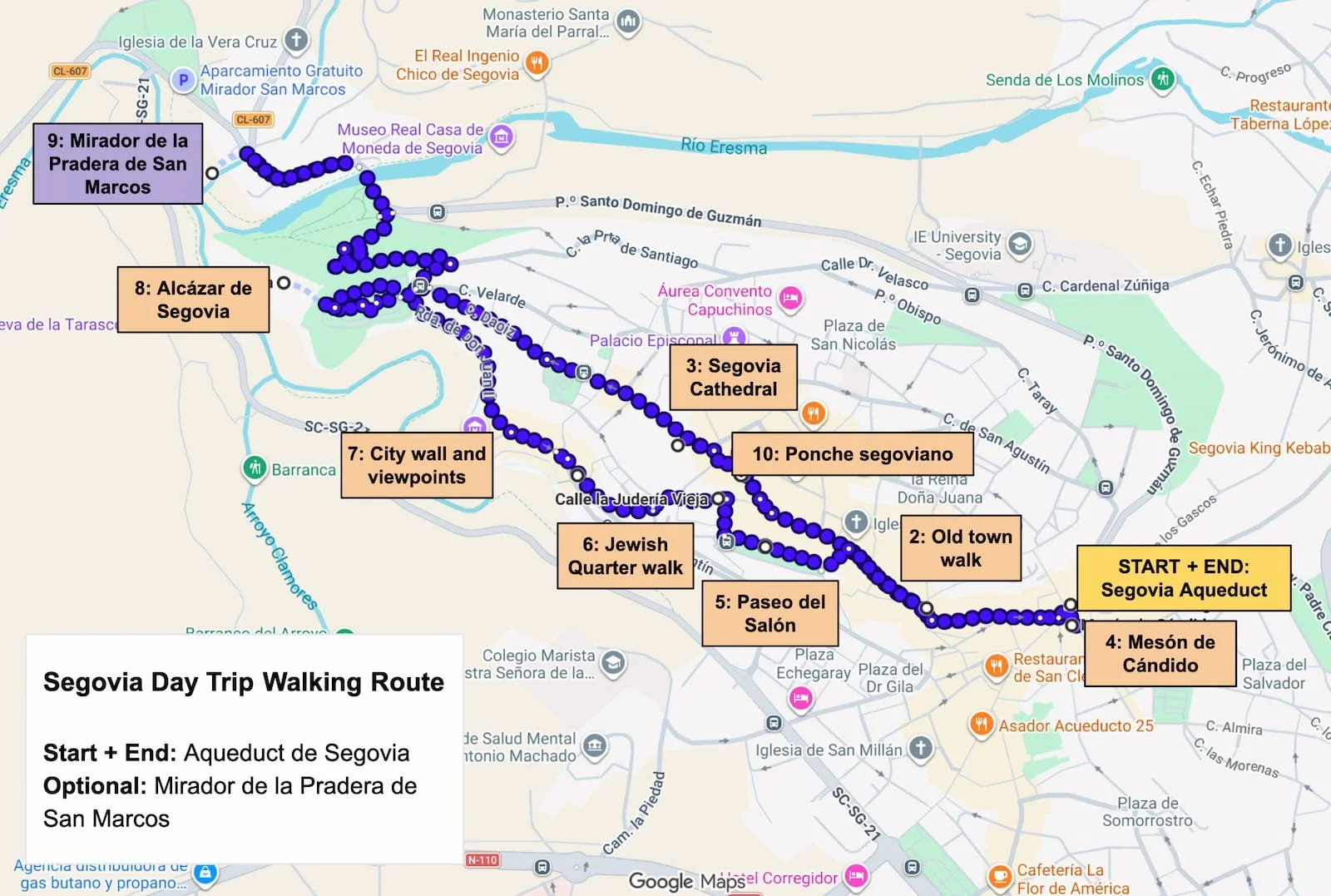
A walkable Segovia day trip route from the Aqueduct to the Cathedral, Mesón de Cándido, Jewish Quarter, city walls, the Alcázar, and optional hike to Mirador de la Pradera de San Marcos, then back to take transit. (Map data © Google)
Itinerary
Note: I keep the descriptions of each stop fairly brief here. If you’d like more details on each stop, such as more detailed descriptions, hours, ticket tips, and my (more animated haha) impressions, see my stop notes sections below.
Total walking: 5–6 km, not including walking inside each stop; includes hills, stairs, and an optional climb
Overview
Morning — Train from Madrid + transfer to the Aqueduct
Take the high-speed train from Madrid Chamartín-Clara Campoamor to Segovia Guiomar, then a public bus (line 11 or 12) or a taxi into the old town.
For full transit details, see my guide to getting from Madrid to Segovia Old Town.
Late Morning — Roman Aqueduct + Plaza del Azoguejo
Start at the Roman Aqueduct, Segovia’s most famous landmark and the most dramatic introduction to the city.
See it from Plaza del Azoguejo first, then climb the Postigo stairs for the elevated view back across the arches, with the town beyond.
Late Morning — Walk to Plaza Mayor and Segovia Cathedral
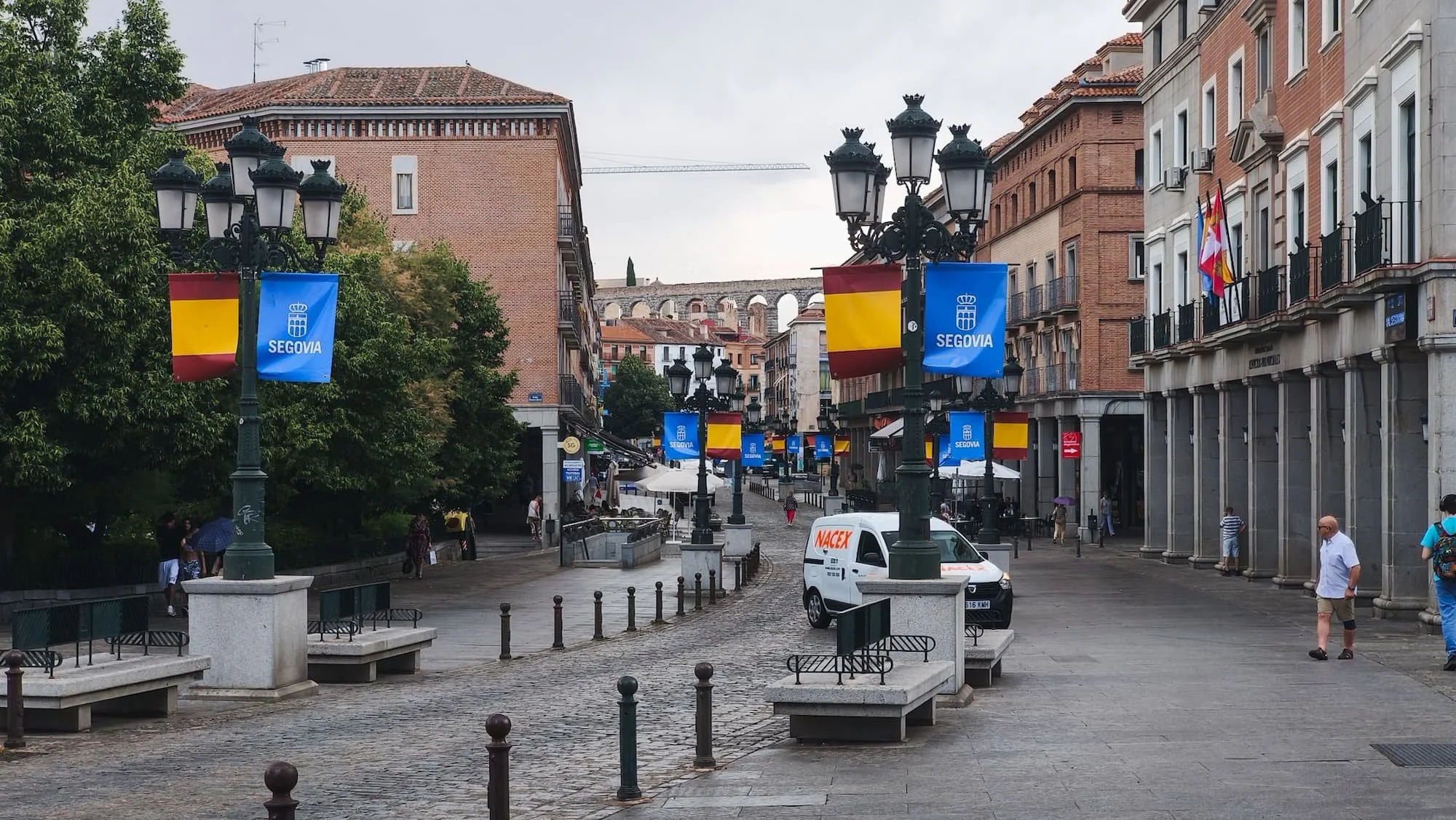
From the Aqueduct, walk uphill through the old town, along Calle Cervantes and Calle Juan Bravo.
Along the way, look up at the decorated façades and stop along some viewpoints, especially Mirador de la Canaleja, Casa de los Picos, and Iglesia de San Martín as you pass.
You will pass close to the Jewish Quarter, but I’d save most of that wandering for after you’re fed from lunch, when you’re back in this area.
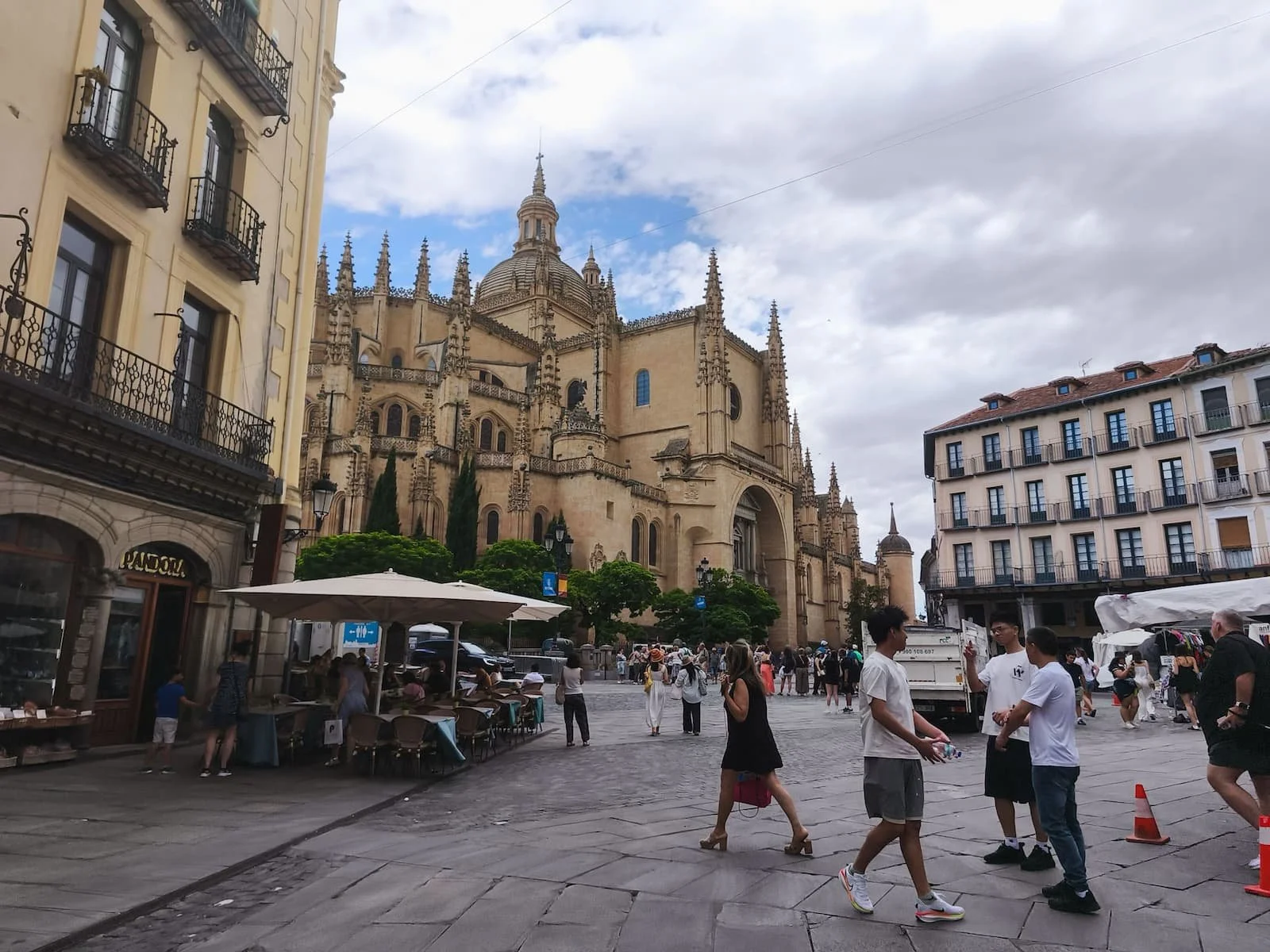
The route opens up into this view of the Segovia Cathedral with Plaza Mayor in the foreground. I knew what the Cathedral looked like before I went but the scale still tripped me a bit. So beautiful.
Midday — Segovia Cathedral
Visit Segovia Cathedral, the large Gothic cathedral that anchors Plaza Mayor and the middle of the old town. It’s nicknamed “The Lady of the Cathedrals” for its graceful silhouette.
For this itinerary, I’d keep this to the general self-guided visit unless you really want the tower. The tower can only be accessed at fixed times (and you’ll already have the option to climb the Alcázar tower later), whereas the general visit gives you flexibility.
Lunch — Mesón de Cándido
Walk back down toward the Aqueduct for lunch at Mesón de Cándido, one of the classic places to try cochinillo (slow-roasted sucking pig), a Segovia speciality.
This is the main intentional backtrack in the itinerary, but I think it is worth it since it is only about 10–15 minutes away through the pretty old town.
Afternoon — Jewish Quarter + City Wall Route to the Alcázar
After lunch, walk back uphill and use the Jewish Quarter and old city wall route to reach the Alcázar.
A good route is:
Mesón de Cándido → Calle Cervantes → Calle Juan Bravo → Puerta de la Luna → Paseo del Salón → Puerta del Sol → Calle de la Judería Vieja → Puerta de San Andrés → Calle del Socorro → Ronda de Don Juan II → Alcázar
This route is quieter and more scenic than simply walking through the old town again, with city wall views, old gates, and glimpses of the valley below.
Look at my notes down below for what each of these stops entail.
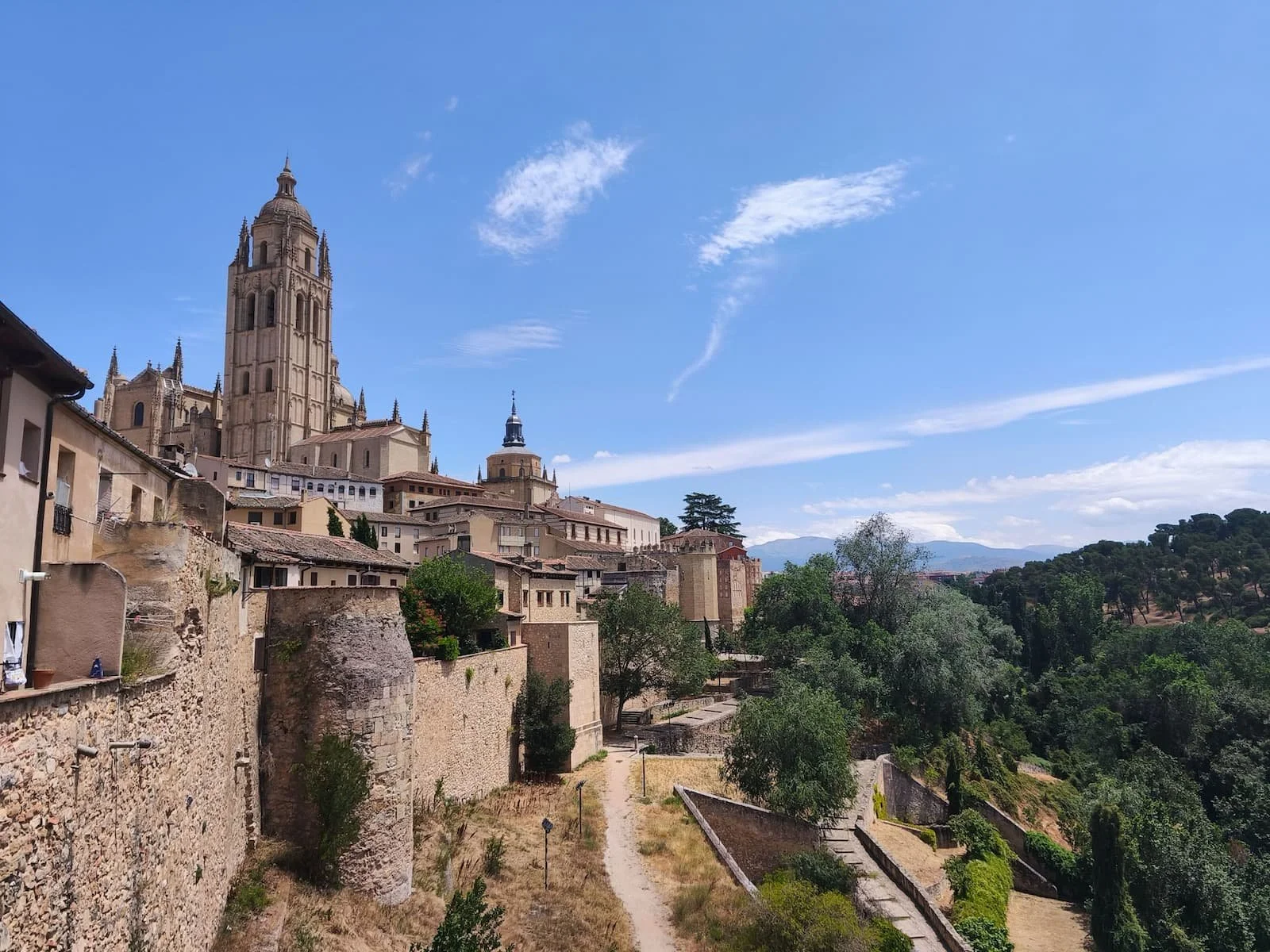
This route towards the Alcázar gives you this viewpoint of the old city walls on one side, the valley on the other, and the city and cathedral beyond. It’s near the Museo de Segovia.
Afternoon — Alcázar of Segovia
Visit the Alcázar of Segovia, the famous medieval castle at the far end of the old town ridge, known for its fairytale-like silhouette and often linked to later castle designs in film.
For a first visit, I’d book the Palace + Museum ticket, and add the Tower if you want the full castle experience and are okay with a narrow stair climb.
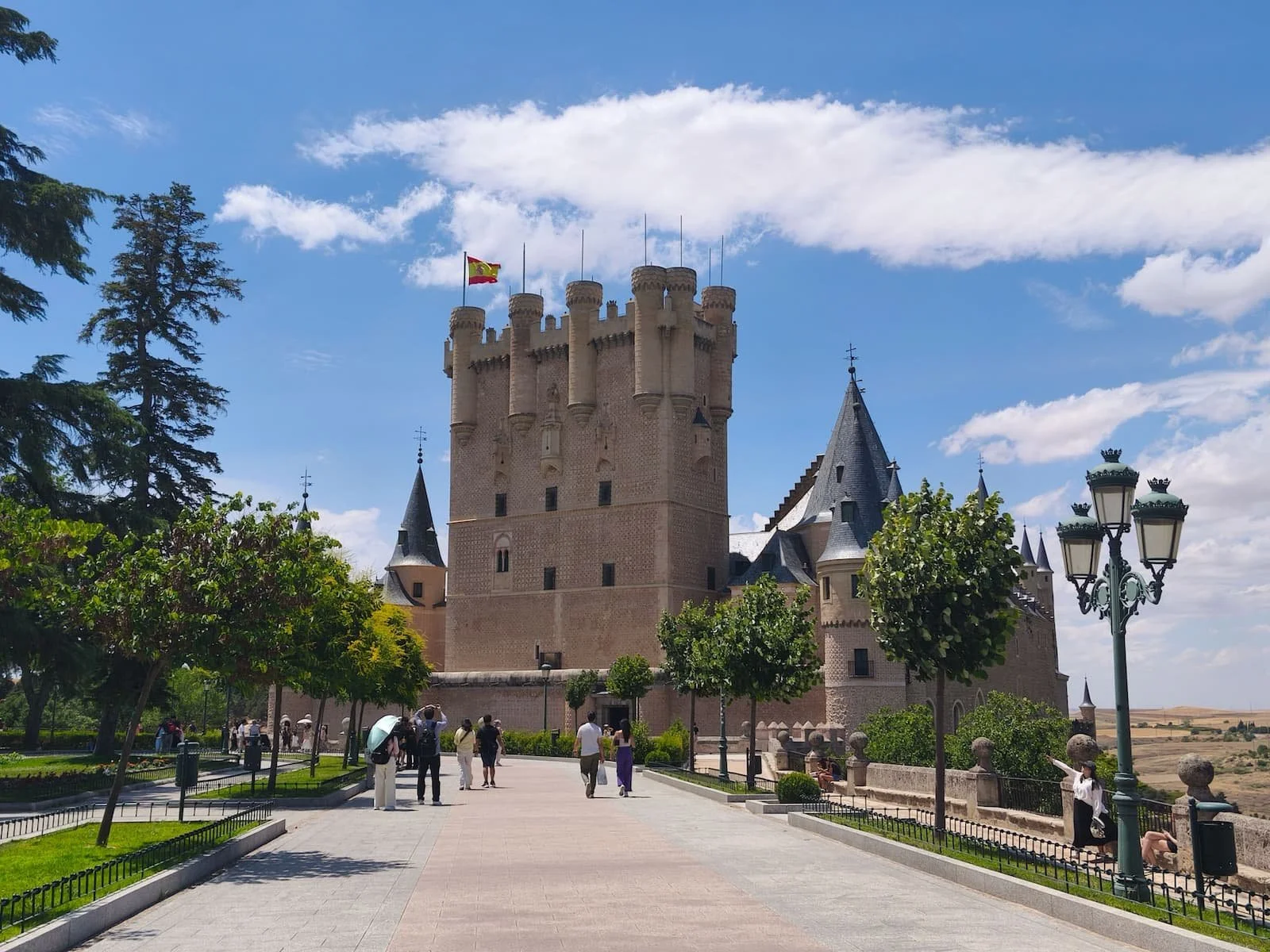
Alcázar de Segovia from the castle grounds. I’d spend some time admiring its exterior before heading in.
Optional Late Afternoon — Mirador de la Pradera de San Marcos
After the Alcázar, you can walk down into the valley to Mirador de la Pradera de San Marcos for the postcard view of the castle from below.
I’m keeping this optional because it is a hike down to the valley and back up (😱) when you have already done a whole day of walking. But the view is magnificent.
Early Evening — Return Toward Town + Optional Ponche Segoviano Stop
If you walk back through town, stop by Plaza Mayor for ponche segoviano (classic Segovian cake) at Pastelería Limón y Menta or Confitería El Alcázar.
It’s a good final break before heading back to Segovia Guiomar for the train to Madrid.
Evening — Train Back to Madrid
Aim for an early evening train back unless you specifically want dinner in Segovia. I’d rather get back to Madrid before the return feels too late or stressful.
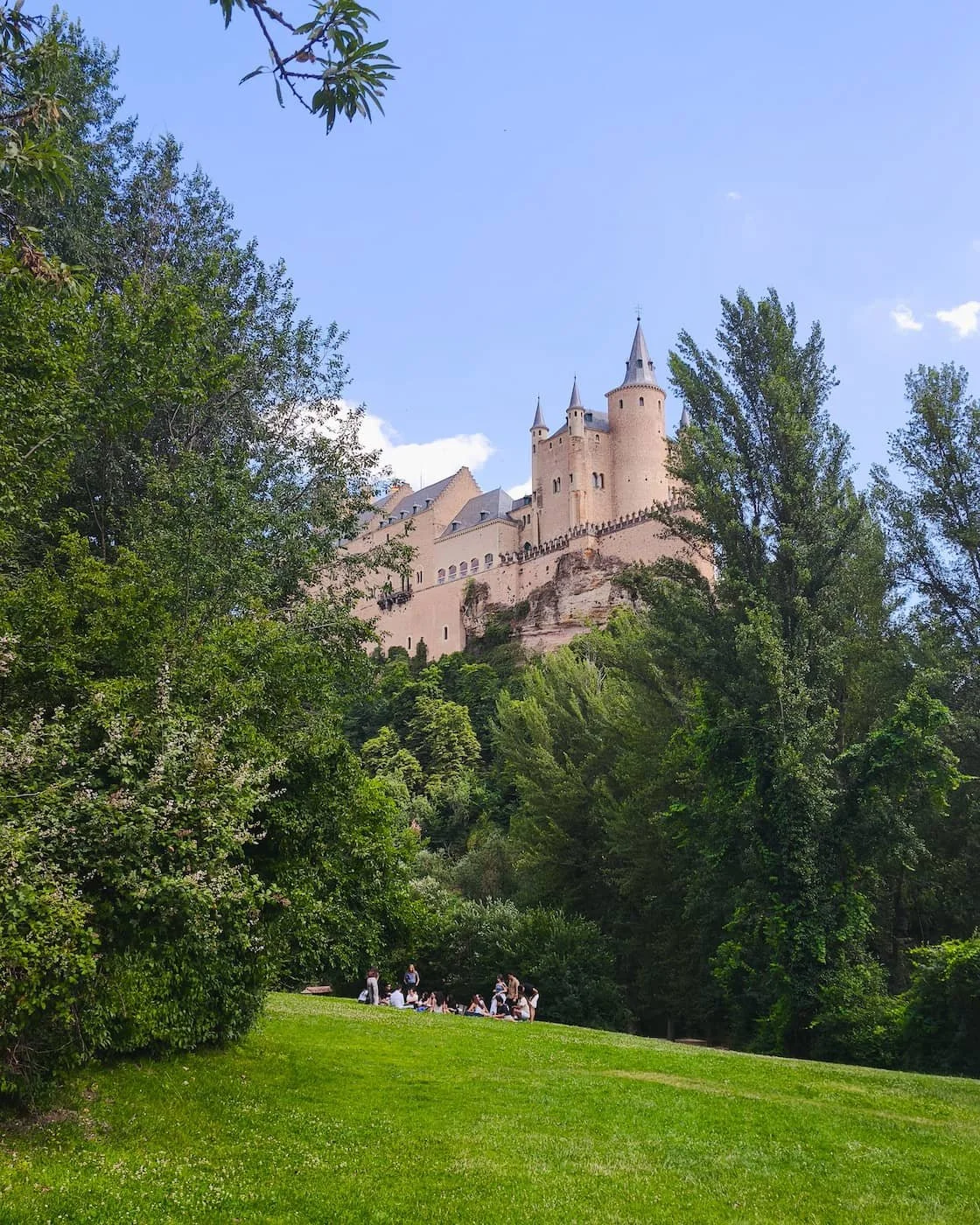
True fairytale view of the Alcázar from Mirador de la Pradera de San Marcos.
Example Timing
Here’s a realistic full-day timing that you can adaptable to your own. The main things to protect are your lunch timing, Alcázar ticket, and return train buffer.
09:00–10:30 Train from Madrid + transfer to the Aqueduct
10:30–11:10 Roman Aqueduct + Plaza del Azoguejo
11:10–11:30 Walk to Plaza Mayor and Segovia Cathedral
11:30–12:50 Segovia Cathedral
13:00–14:30 Lunch at Mesón de Cándido
14:30–15:30 Jewish Quarter and wall route to the Alcázar
15:30–17:00 Alcázar of Segovia
17:00–18:00 Optional Mirador de la Pradera de San Marcos
18:00–19:00 Return toward town / optional ponche segoviano stop
19:30–20:30 Train back to Madrid
Practical Tips
Getting from Madrid to Segovia Old Town
The simplest no-car option is to take the high-speed train from Madrid Chamartín-Clara Campoamor to Segovia Guiomar, then take Bus 11, Bus 12, or a taxi into the old town.
The key thing to know is that Segovia Guiomar is 5km outside of the historic center, among highways and fields — you can’t walk it realistically.
For the full step-by-step breakdown, including Chamartín station tips, which bus to take, taxi estimates, and how much buffer to build in, see my guide to getting from Madrid to Segovia Old Town.
Book the Alcázar ahead and Mesón de Cándido if you must eat there
If you only book one paid stop in advance, I’d make it the Alcázar. Tickets are limited so I’d book if you want the tower, or if you are visiting on a weekend, holiday, or busy travel period.
And if you definitely want to eat cochinillo at Mesón de Cándido, make a reservation. We went on a weekday and there were plenty of seats left, but I wouldn’t count on it especially on holidays or weekends.
I’d also book the Cathedral tower only if you’re committed to that specific viewpoint; otherwise, the general Cathedral visit is easier to keep flexible. The Aqueduct is outdoors and does not need a ticket.
Watch your footing and wear supportive shoes
There are stairs, sloped streets, uneven stones, and narrow wall paths. The Ronda de Don Juan II route offers a full view of the Alcázar most of the way, but don’t stare at it so much that you forget you are walking on narrow, uneven stones!
And for the amount of walking you’ll do, and on uneven cobblestones, hills, and dirt paths (if you do the Mirador), supportive walking shoes are a must .
Save energy for the afternoon
The Alcázar and optional mirador both require walking. If you know you want to walk down to Mirador de la Pradera de San Marcos, be careful not to burn all your energy before then.
Bring a portable charger
This is a full day that includes taking multiple legs of transit. You don’t want to have your phone battery die and lose your navigation tool and ticket bookings!
Stop Notes: Roman Aqueduct
The Aqueduct is the obvious place to start because the buses drop you off there, but also it’s mentally impossible to avoid stopping and admiring it for a bit once you see it.
Built around the 1st or 2nd century AD, it’s so well preserved that it was in use until very recently in 1973. It’s now a UNESCO World Heritage Site, and its scale is truly a sight to behold. It’s also impressive because apparently no mortar was used to hold the stone blocks together — it really says something about the engineering when these giant stacked blocks can last this well this long.
Plaza del Azoguejo is the classic view from below, but I especially liked the elevated view from the Postigo stairs. From there, you get the Aqueduct on one side and the city on the other, which makes it one of the best first views of the day. When I first got there in the morning, it was cloudy and a bit rainy, which gave the Aqueduct a dramatic moody view that contrasted with the way it looked when it got sunny in the afternoon.
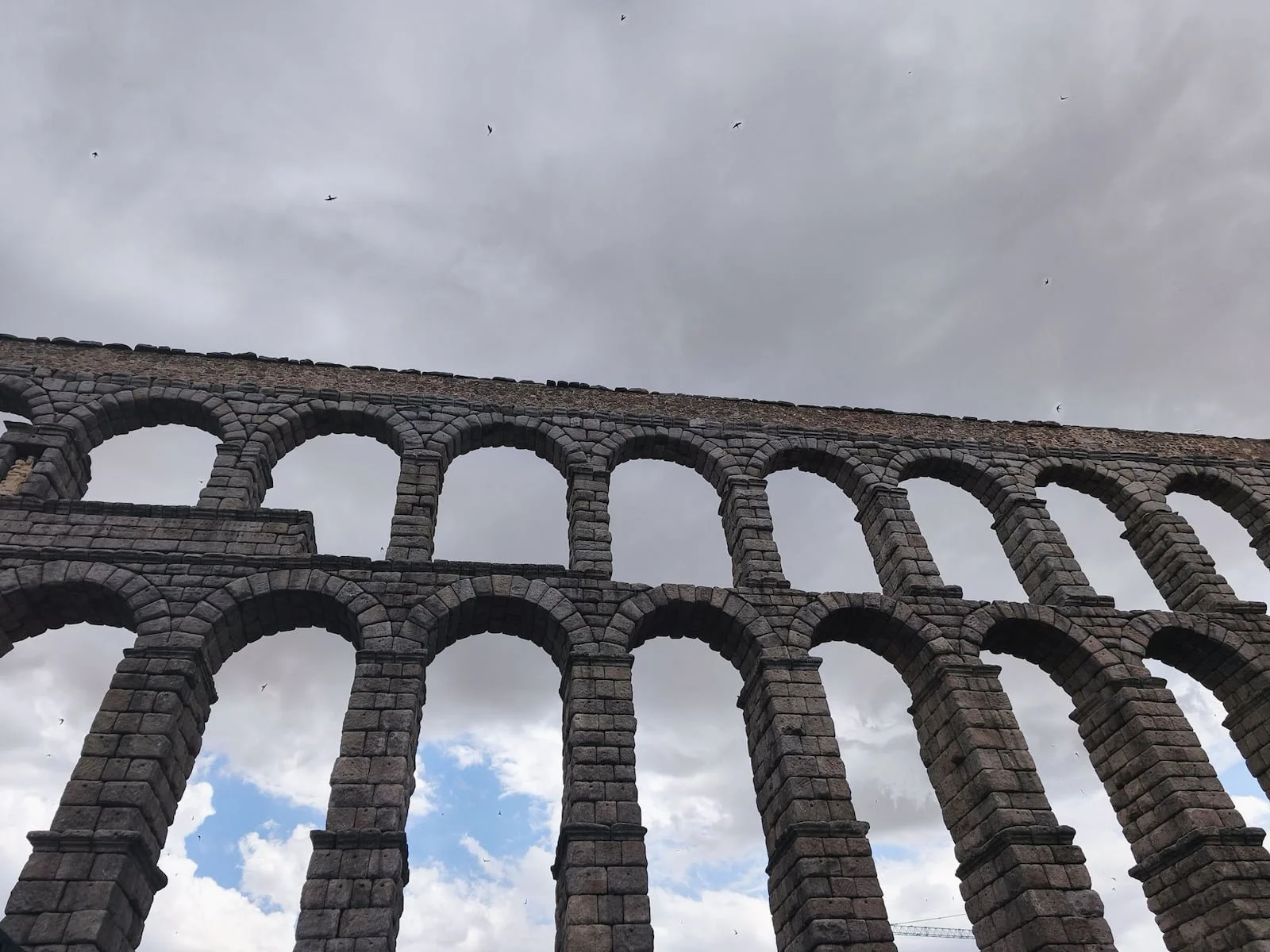
When it’s cloudy, the Aqueduct looks dramatic and moody with birds flying overhead.
Stop Notes: Old Town Walk
The walk from the Aqueduct to Segovia Cathedral is short, but I’d recommend building some time to see some decorated façades and a few quick stops along the way and take photos.
From the Aqueduct, follow Calle Cervantes and Calle Juan Bravo toward Plaza Mayor – these two streets make the spine of the old town and where these stops are. Specifically look for:
Mirador de la Canaleja gives you a view down over the old city.
Casa de los Picos is a 15th century building with a distinctive pointed façade, likely as a symbol of defensive strength and status.
Iglesia de San Martín is a Romanesque church dating back to the 12th century, with a plaza in front.
And overall just take your time walking through these streets since it’ll be your first taste of the medieval architecture and feel of Segovia old town — I was in a bit of a rush getting to the cathedral, so one thing I wished I did was to plan to have more buffer for this first walk through.
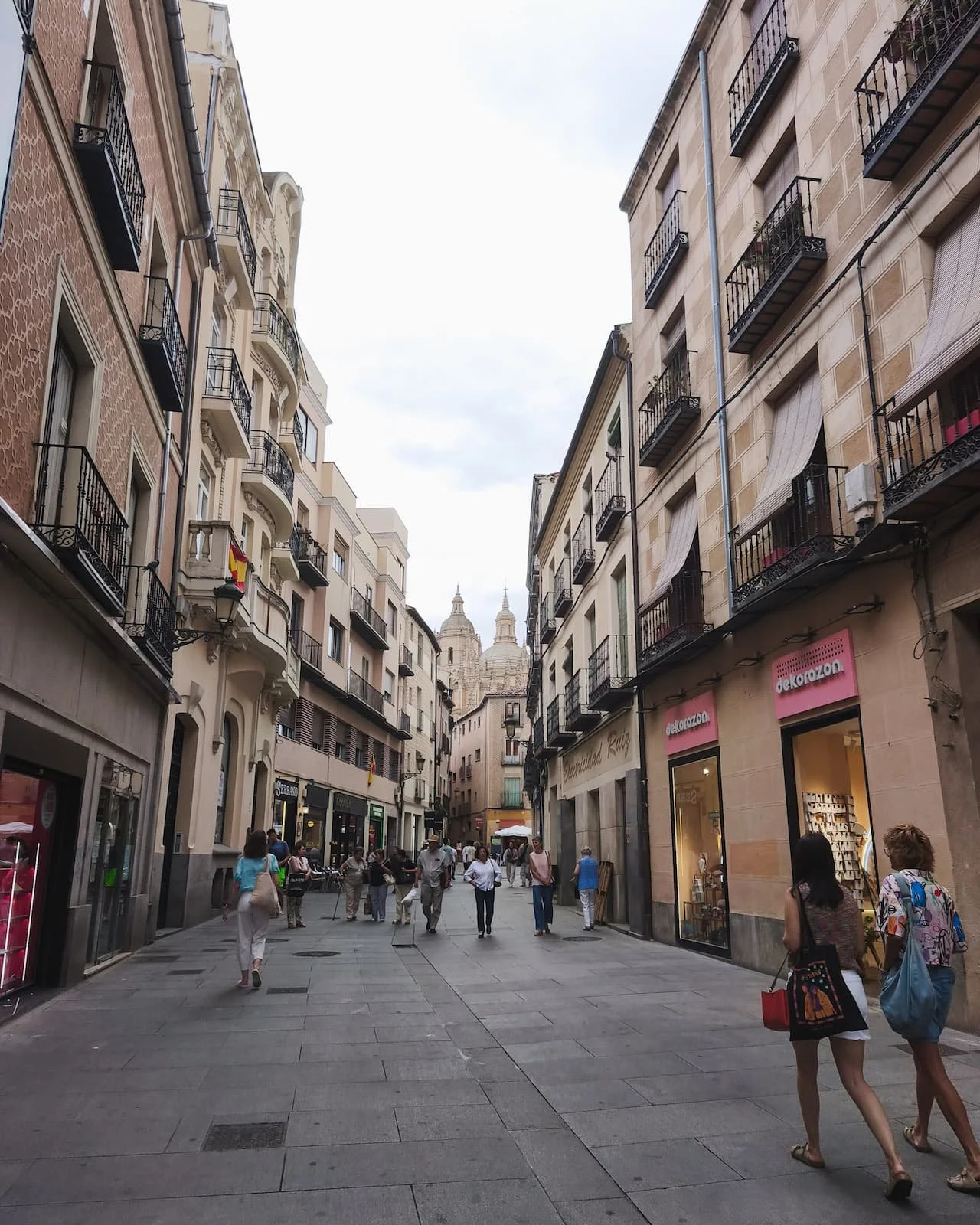
Gentle climb through old town towards the Cathedral, here on Calle Juan Bravo.
Stop Notes: Segovia Cathedral
Practical info:
Tickets: €4 for general visit; more for guided tours.
Hours: Monday to Saturday 9:00am - 9:30pm; Sunday: 12:45pm - 9:30pm
Dress code and decorum: It’s recommended to dress respectfully, and hats are not allowed. And also stay quiet and respectful since it’s a religious site.
Check the official Segovia Cathedral page for current details and bookings before going.
For a 1-day itinerary, I’d keep this to the general visit unless you really want the tower or other guided tours. The tower tour is a good option if you love viewpoints, but it makes the day more rigid since it runs at set times, takes about 1 hour, and involves spiral stairs
I did the general visit since you can do things at your own pace, and I already had the scheduled visit to the Alcázar (with tower access) later. I’d suggest buying tickets earlier so you can skip the line. We went on a weekday and there was still a little line.
The must-sees inside the Cathedral for me were:
The nave: It’s not as expansive as I expected from my experience with other European cathedrals because the space is divided by chapels / altar areas, but the ceiling designs are cool.
The cloister: My favorite part. It has this granite pillar courtyard view, with slight academia literature vibes.
The museum in the basement: A collection of religious art.
Overall, I actually found the exterior of the Cathedral to be more memorable than the interior. I found the Cathedral’s nickname “The Lady of the Cathedrals” to be pretty apt since it’s really elegant, with its abundance of delicate (by cathedral standards haha) spirals arranged circularly.
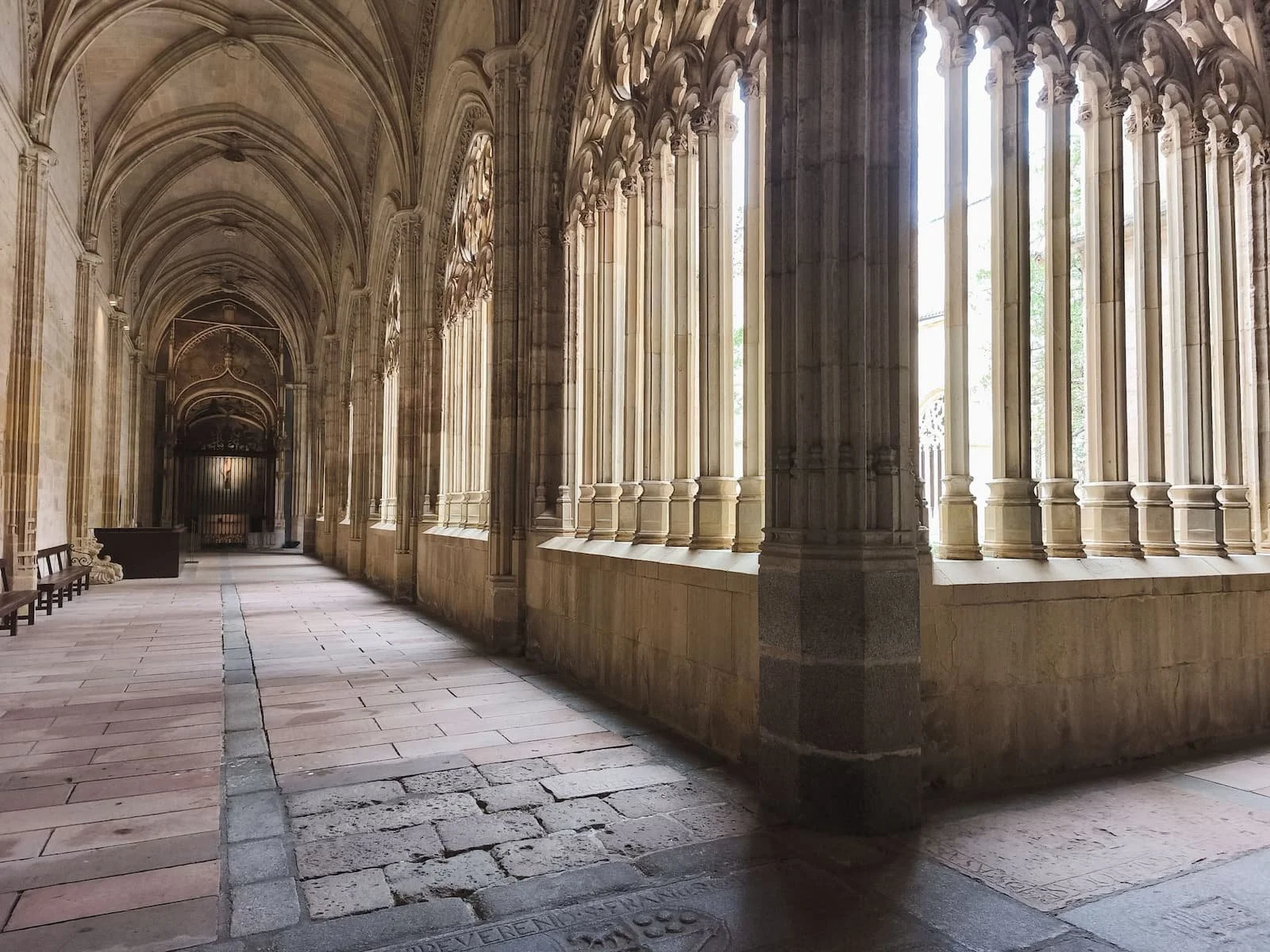
Cloister in Segovia Cathedral. It really reminds me of courtyards in cozy academia literature.
Stop Notes: Lunch at Mesón de Cándido
Practical info:
Price range: $$
Hours: Everyday, 1:00pm - 4:30pm for lunch service, and 8:00pm to 11:00pm for dinner service.
Check Mesón de Cándido’s website to reserve and check current details.
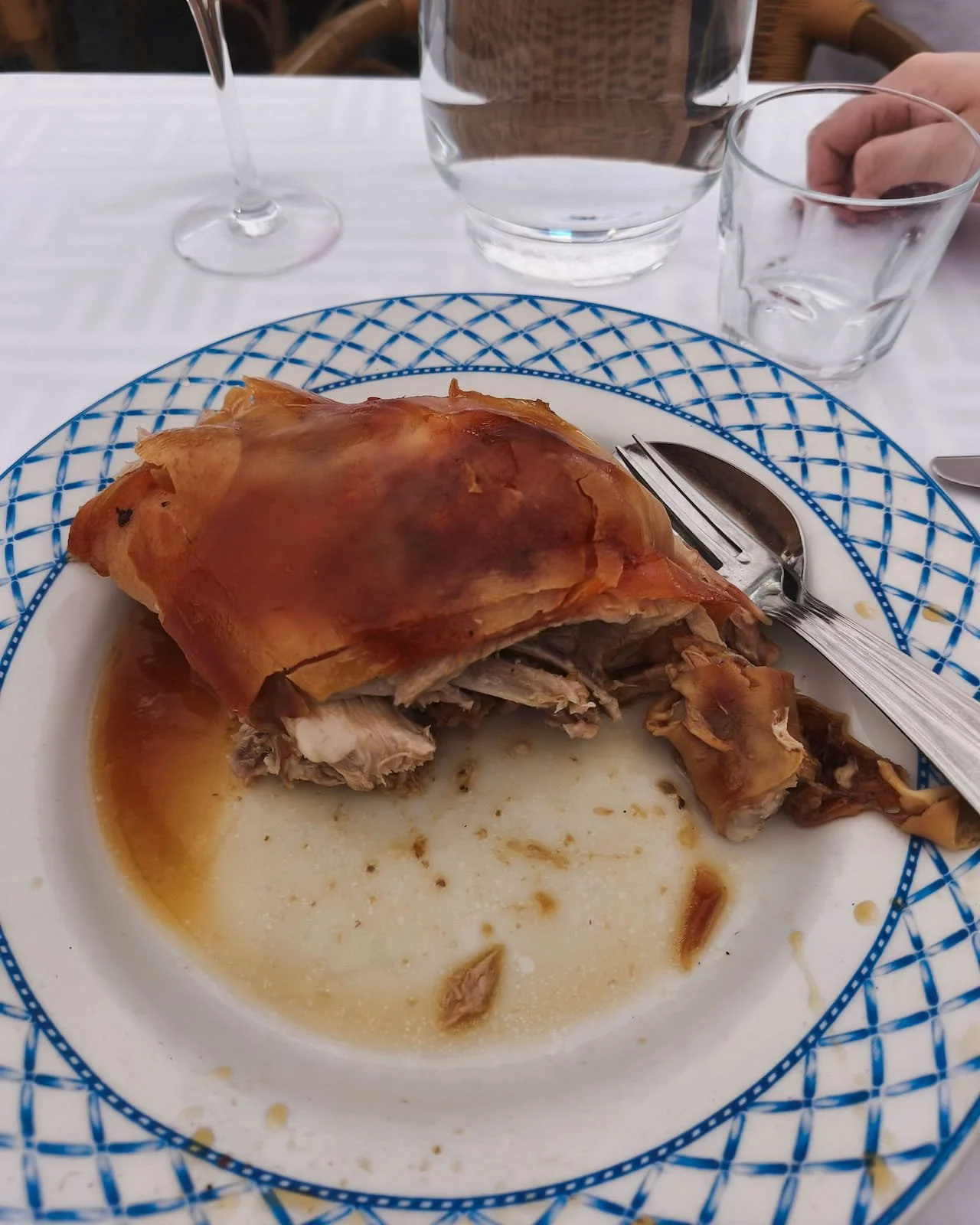
Segovia is especially known for cochinillo, or roast suckling pig, a traditional Castilian dish slow-roasted until the meat is tender and the skin is crisp. It’s definitely not for everyone, but it is one of the city’s most famous foods, and Mesón de Cándido is one of the classic places to try it.
When ordering cochinillo, you could ask for what cuts they have and they would give you a choice; otherwise, I believe they give you a random piece. You can ask what cut they recommend if you don’t know (some are bigger, some are juicier, etc).
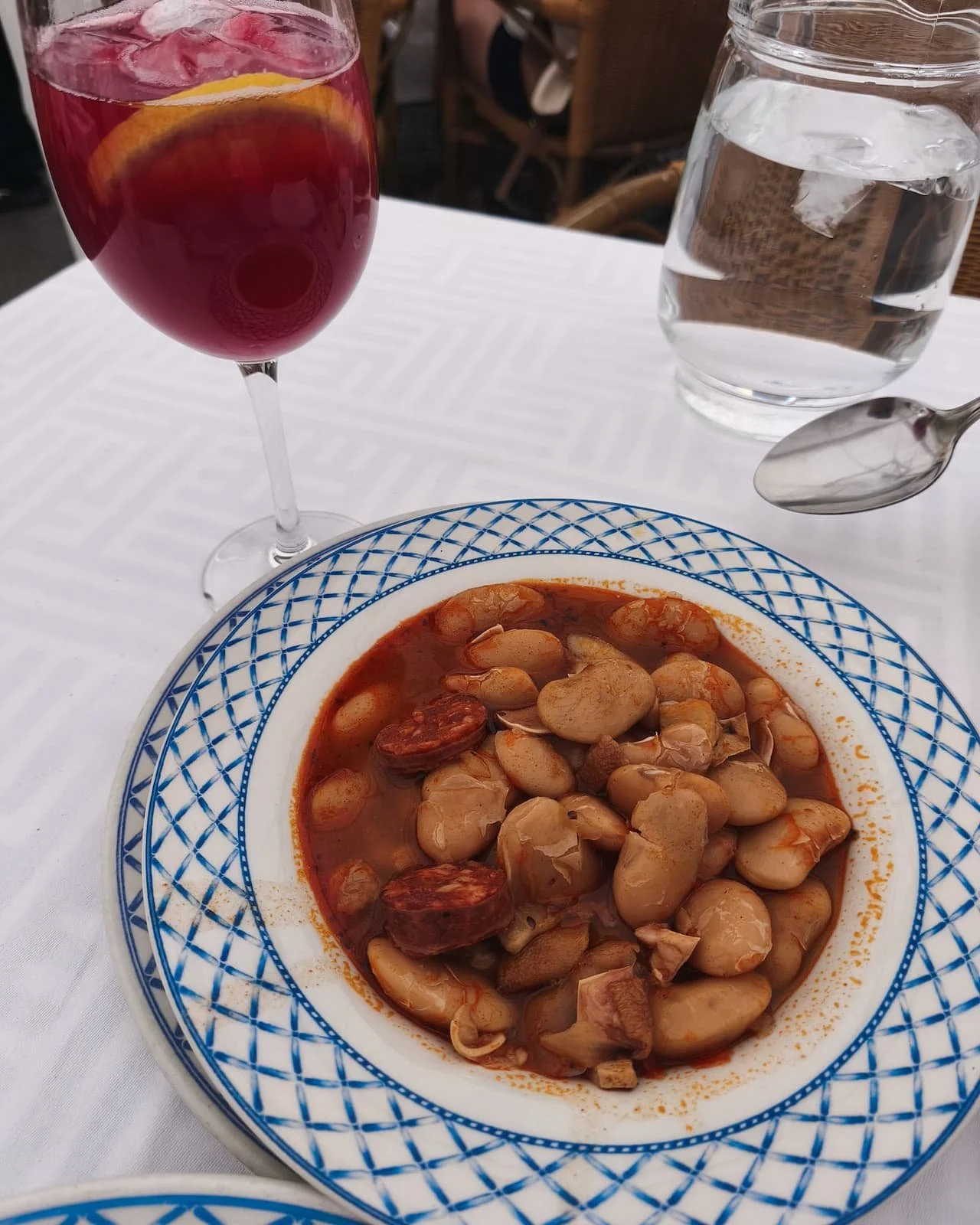
My partner and I shared a portion of cochinillo, judiones de la Granja to start, and tinto de verano for the hot weather. The judiones are a traditional Segovian bean stew, and this one had chorizo and pig ear in it.
Overall, I think that was plenty of food for two people, and both dishes were delicious. The cochinillo was a bit gamey at parts, but the juice that comes with it helps with it, and the skin was crispy and my favorite part. And the judiones come with giant beans and a lot of flavor, a bit salty but I’d imagine it’d go great with bread (which wasn’t complimentary).
If you want to eat at Mesón de Cándido, book ahead, especially on weekends and holidays. We booked ahead and though there were still plenty of seats when we went, I did read online that the place can fill up fast.
Stop Notes: Jewish Quarter + City Walls
After lunch, walk back uphill through the old town, then use the Jewish Quarter and city wall route to reach the Alcázar.
This was definitely the better way than simply walking through the old town again. It is more scenic along the walls, quieter, and gives you a different side of Segovia between the lunch stop and the Alcázar.
The route I’d suggest is:
Mesón de Cándido → Calle Cervantes → Calle Juan Bravo → Puerta de la Luna → Paseo del Salón → Puerta del Sol arch → Calle de la Judería Vieja → Puerta de San Andrés → Calle del Socorro → Ronda de Don Juan II → Alcázar
I loved this route. It was way quieter than the old town (most of the time there were few people on the streets with us), so we can just let Segovia unfold slowly: narrow streets, stone buildings, city wall views, and glimpses of the green belt below. And towards the end, you get an unobstructed view of the Alcázar as you walk towards it.
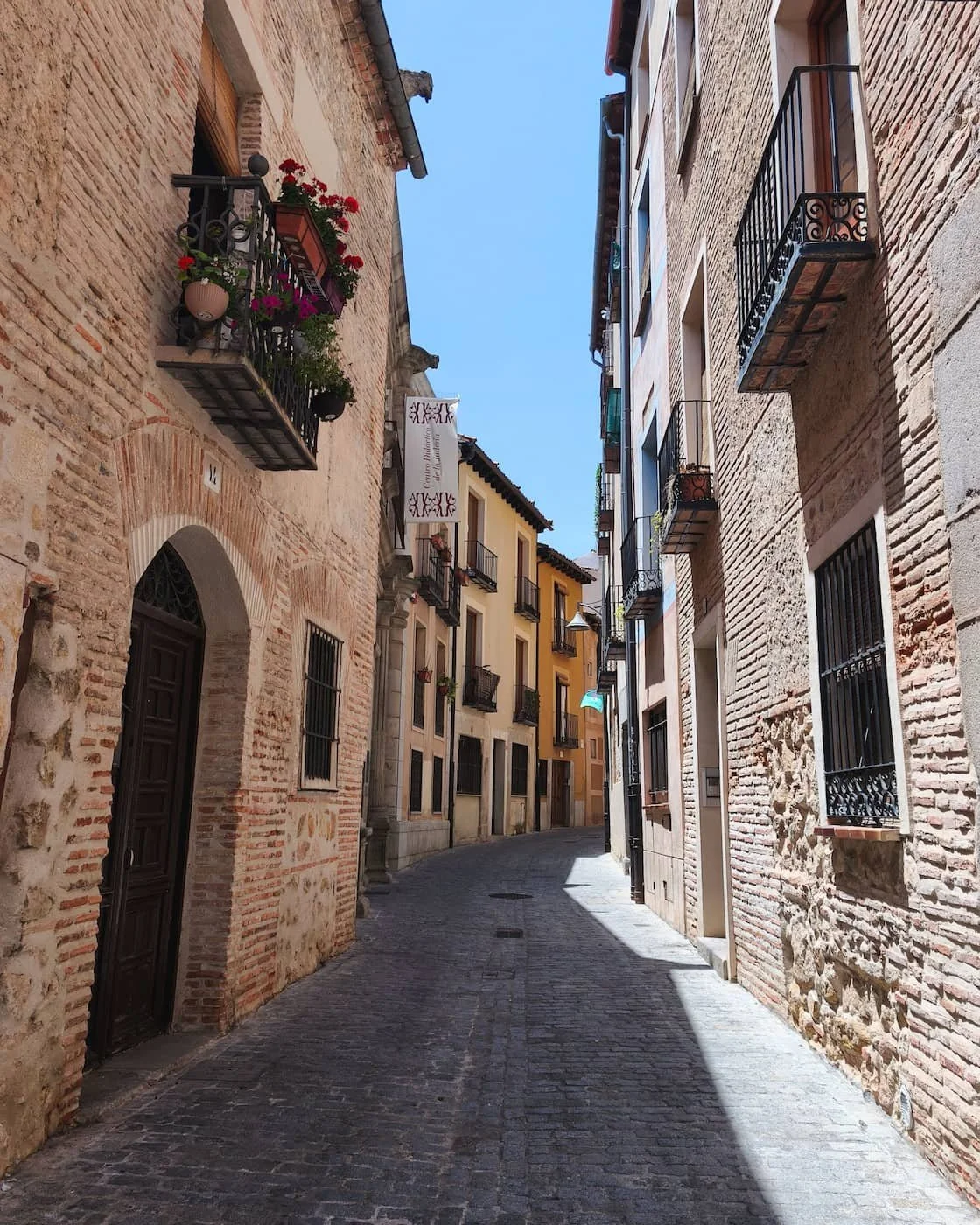
The narrow, intimate Calle de la Judería Vieja, when we were there, was very quiet.
A few notes on the route:
Puerta de la Luna and Puerta del Sol are the two arches on the two ends of Paseo del Salón, with stairs leading from the old town down to the Paseo. The view down is great, but be aware they’re wind tunnels so watch your step and eyes.
Paseo del Salón is a nice green space with views of the valley below. Quiet and a good contrast to the busier old-town streets.
Calle de la Judería Vieja is a narrow street that was the main axis of the Jewish Quarter.
Puerta de San Andrés is a well-preserved medieval wall gate with two round towers. It is a paid attraction if you want to go inside, but you’d need to plan around opening hours and extra time. We didn’t go in and didn’t regret it, since you can still see the gate from viewpoints along the route.
Calle del Socorro has the Mirador del Museo area, where you can get views of the wall, old town, and Cathedral.
Ronda de Don Juan II was one of my favorite parts of the route. Use the top walkway along the wall for a view of the Alcázar almost the whole way. Amazing. Just be careful of the narrow walk and uneven stones — don’t fall from staring at the Alcázar view too much!
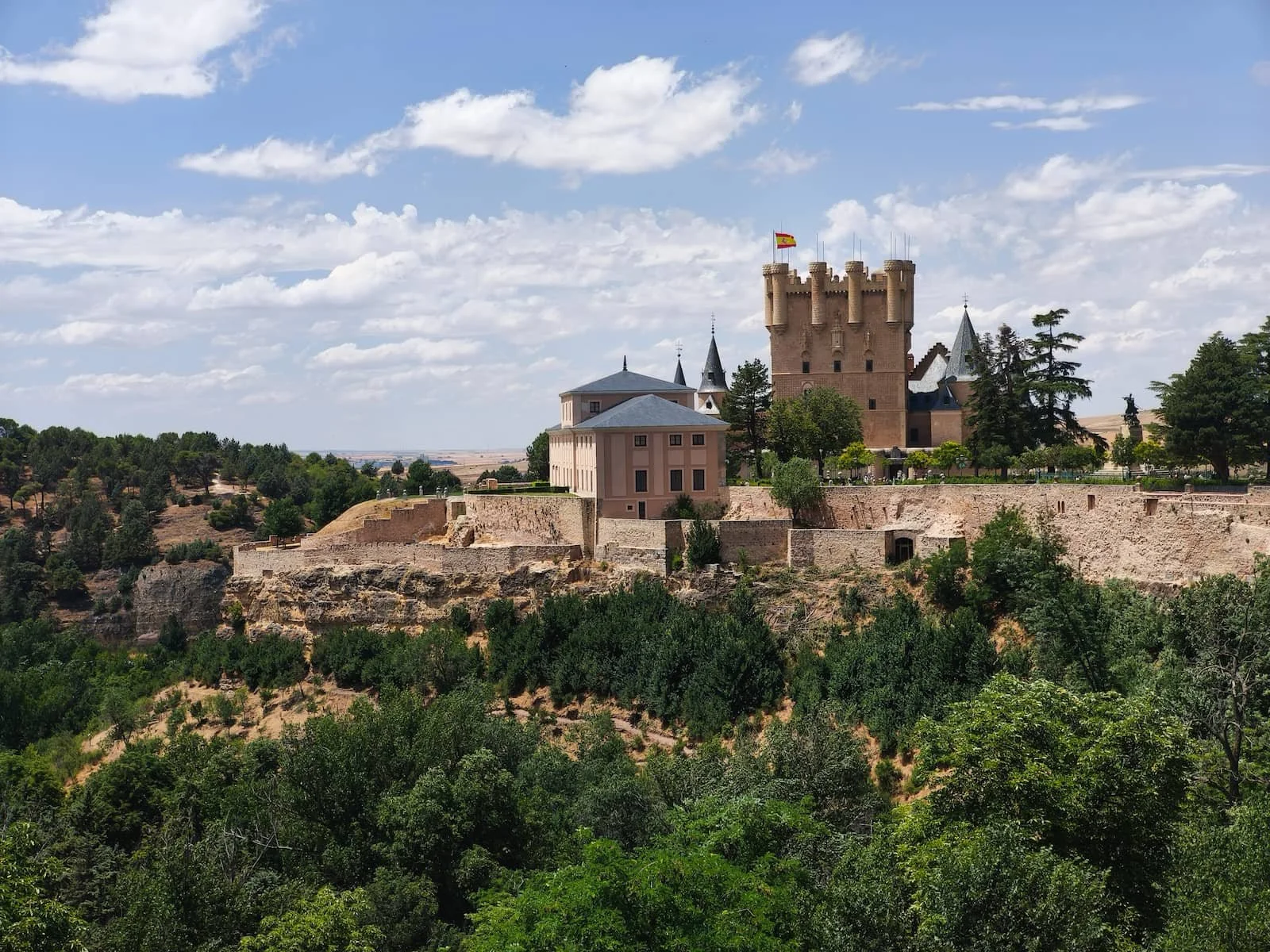
I didn’t expect to see this view of the Alcázar when I climbed up to the top of the wall on Ronda de Don Juan II, so I blurted out “Now that’s a castle!!” to my partner’s amusement.
Stop Notes: Alcázar of Segovia
Practical info:
Tickets: €7 for Palace + Museum; €11 for Palace + Museum + Tower, which is what I booked; more expensive combinations available with extras like audioguide or guided visit.
Hours: Everyday, 10:00am - 6:00pm (November to March) or 7:30pm (April to October). Closed certain days of the year.
Dress code: No official dress code, though comfortable and non-slip walking shoes are a must for the tower climb.
Check the official Alcázar de Segovia page for current details and bookings before going.
To me, the Alcázar of Segovia is the major visit in this itinerary besides the aqueduct. The castle has existed in some form since at least the 12th century, and it later became closely tied to the monarchs of Castile, including Isabella I, who was crowned in Segovia and later funded Columbus’s voyage to the Americas.
I mean, I thought I was over my princess phase, but seeing the castle reactivated it. The cylindrical towers capped with blue cones, the turrets, the drawbridge, and the moat really make it feel like the real thing behind what Disney was trying to emulate with its fairytale castles.
Besides the exterior, the interior was the highlight. The interiors are not all untouched medieval originals — the Alcázar had a major fire in the 19th century — but they still feel incredibly atmospheric. I especially liked the Hall of Kings, which is lined with portraits of past kings and queens of Castile, little descriptions of them in medieval Spanish, and a stunning Mudéjar ceiling. The windows in the castle also offer views of the vast valley beyond.
There were also armor and weapons. Note that you are not supposed to touch anything (honestly a no brainer since these are historical artifacts after all), but some people were touching and posing with their arms on cannons for pictures. Really irritating.
My partner, who usually is not as easily impressed with historic architecture as I am, enjoyed the visit as well.
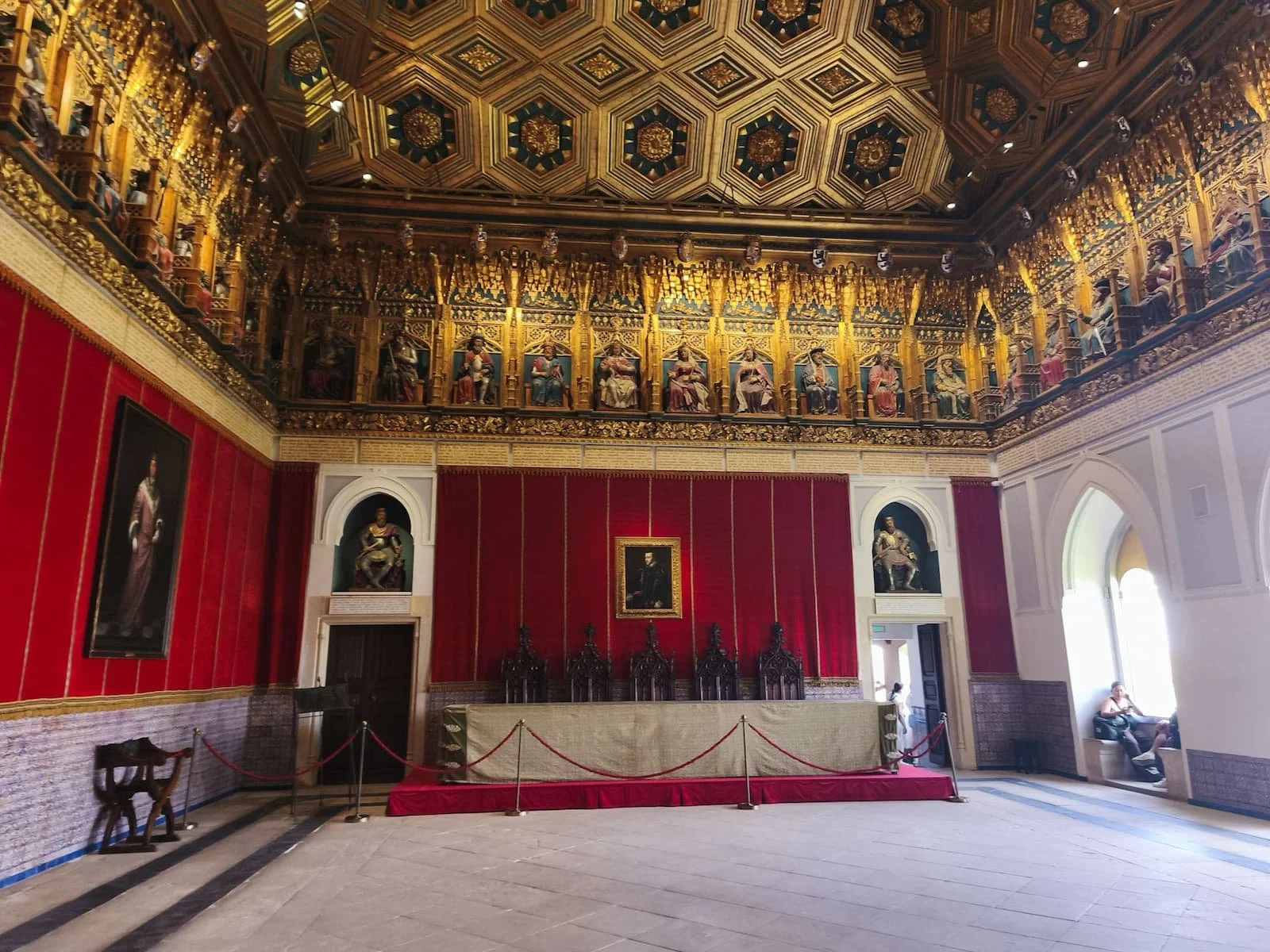
Hall of Kings in the Alcázar.
Since this was our first visit, I booked the Palace + Museum + Tower option, since online sources seem to recommend the tower for the fairytale-feeling views. You get an hour to see the interior before the scheduled tower climb.
I did the tower climb, but I’m honestly not sure how worth it it is for everyone. The itinerary already gives you a lot of viewpoints, and Segovia honestly looks better to me when the viewpoint is not panoramic but more intimate. Although the top down view of the castle and the valley beyond was beautiful. The climb itself was interesting: very narrow, low stairs that definitely make it feel like you are inside an old castle. So gauge your energy and mobility before deciding to do it.
Still, if you want the full castle experience and you’re okay with stairs, the tower does make the visit feel complete.
I’d recommend booking the Alcázar ahead, especially if you are visiting on a weekend, holiday, or busy travel period. I’d also recommend getting there a little earlier to stroll the outside grounds before your entry time.
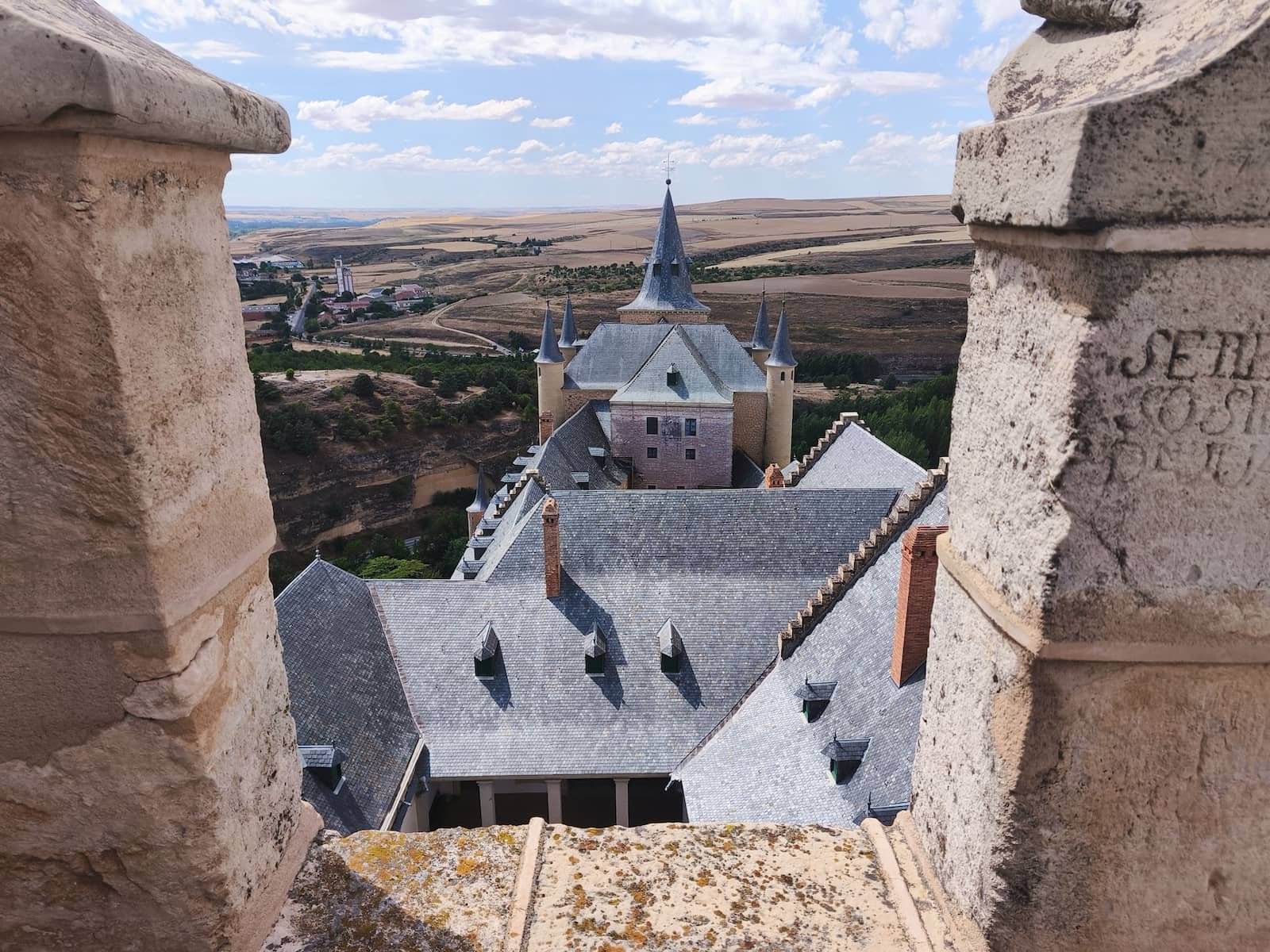
Top-down view of the castle and valley beyond in one of the viewpoints on the tower.
Stop Notes: Mirador de la Pradera de San Marcos
After the Alcázar, you can walk down into the valley toward Mirador de la Pradera de San Marcos for the postcard view of the castle from below.
As I said earlier, I think this stop is optional for this itinerary because it is a bit of a hike down (which wasn’t too much of a problem), meaning a hike back up (which was a little more of a problem since we’d already done a whole day of walking).
That said, even though I was tired, I still thought it was totally worth it. The way down into the valley is quiet and full of trees, feeling a bit like a nature hike. Then you follow the town streets a little before entering the mirador area. Overall, we only saw a handful of other people the entire way there.
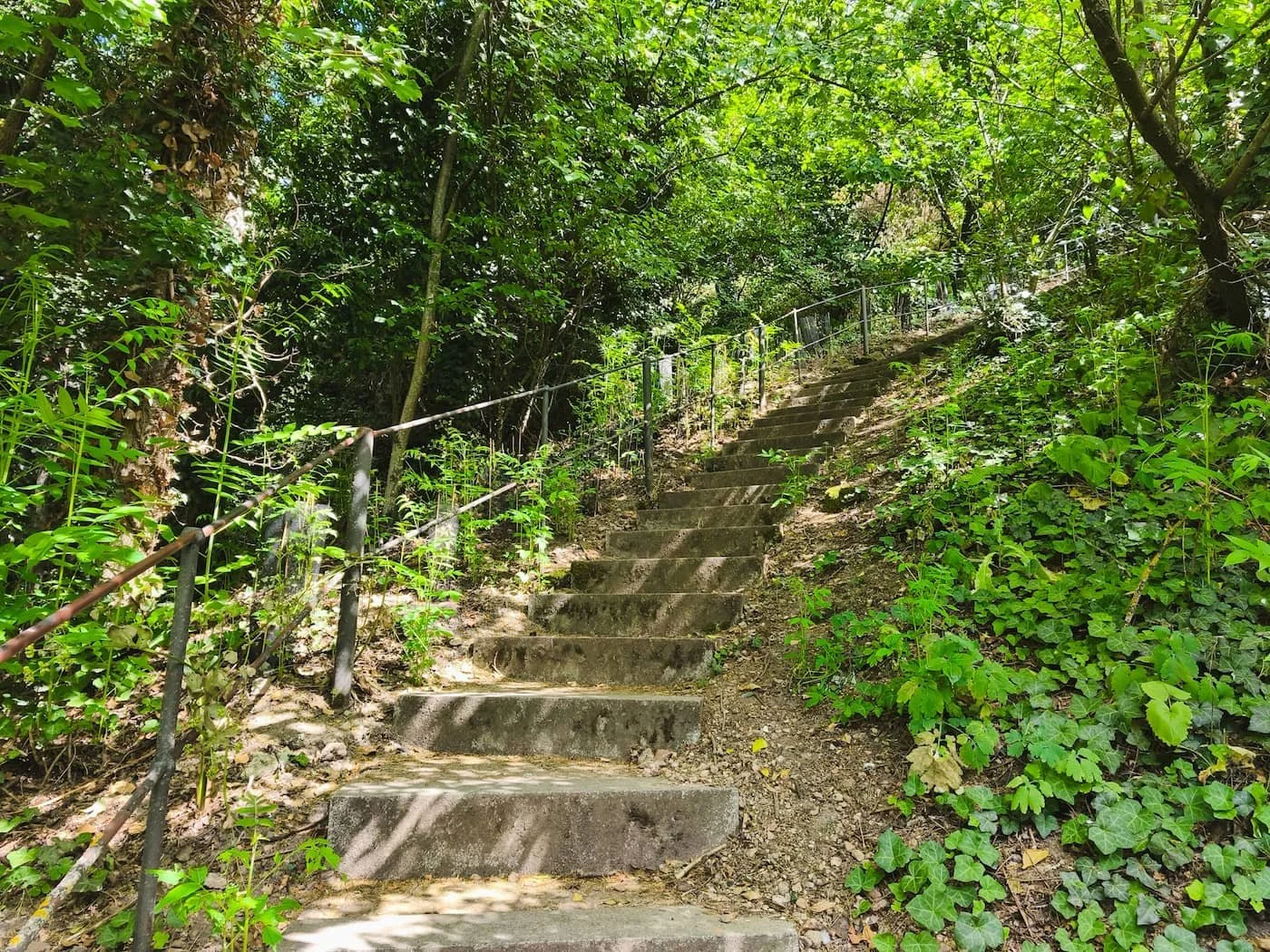
The hike down/up the valley towards the Mirador de la Pradera de San Marcos, mostly stairs. The greenery here contrasts with the yellow fields in the valley beyond.
The mirador itself is a big grassy area with a full view of the castle on top. This view is really the view that reminds me most of fairytales — like the view a wary traveler gets when they finally reach the town and the magnificent castle greets them. Besides a group of people lounge and picnic in the far side of the grassy area, we pretty much had it to ourselves.
There is also a real nature trail with a river beyond the grassy area, which is cool for a quick look. I’d recommend sitting on the grass a little to view the castle and rest your legs for the climb back up.
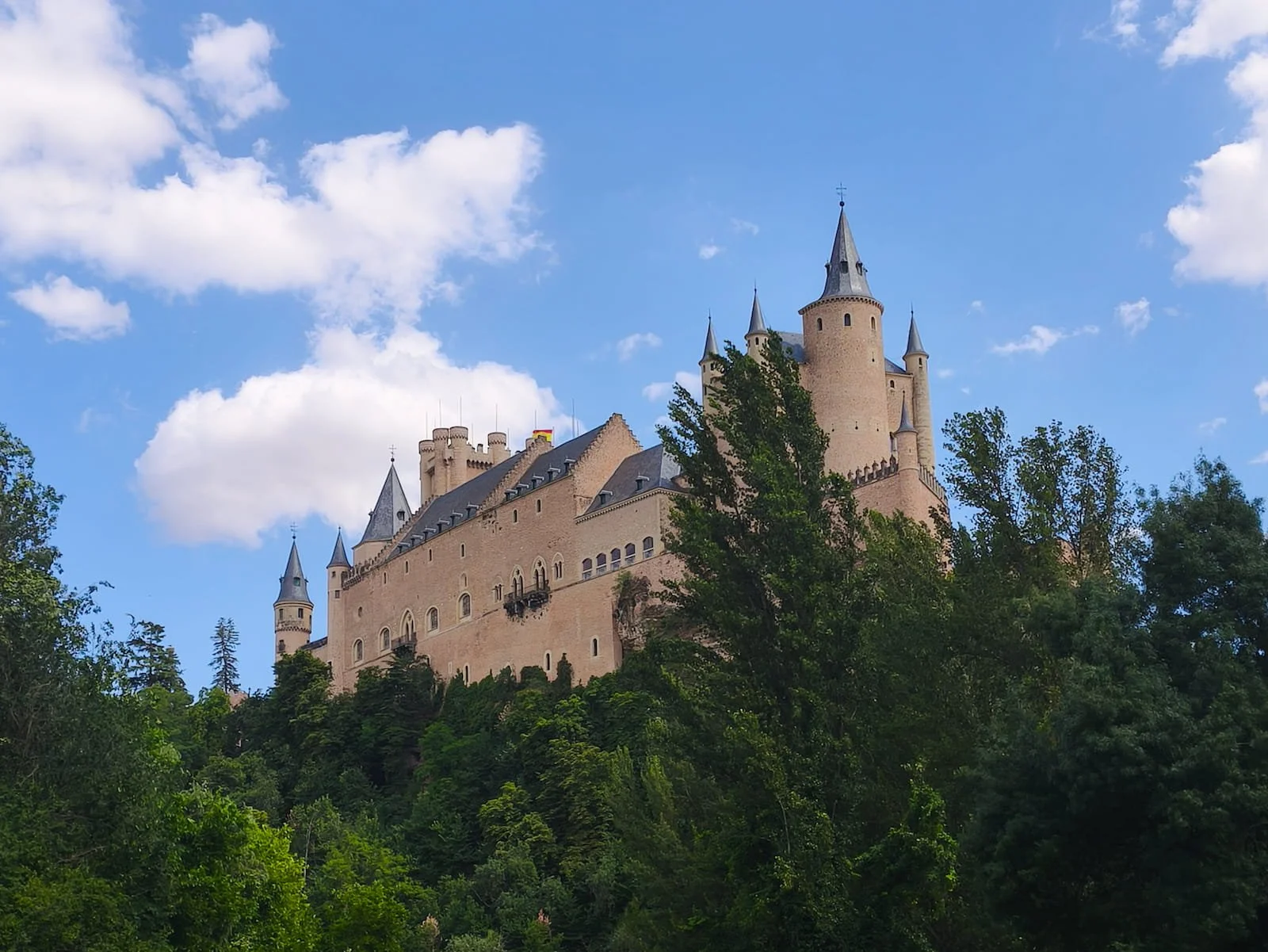
The Alcázar rises above the treeline, like it’s ready to welcome you to Segovia.
Stop Notes: Ponche Segoviano
If you are walking back through town after the mirador or Alcázar, you can stop by Plaza Mayor to get ponche segoviano at Pastelería Limón y Menta or Confitería El Alcázar, both pastry shops near the Cathedral.
Ponche segoviano is a layer cake consisting of moist sponge cake soaked in syrup and layered with sweet egg yolk cream, wrapped in a blanket of marzipan, and topped with a toasted criss-cross sugar pattern. I think it’s a welcome reward after a day of walking (and climbing).
The internet suggests that the original recipe was developed at Confitería El Alcázar, but that Limón y Menta has the best version.
We had it at Limón y Menta, and I have to say it was really good. It wasn’t too sweet, and I especially liked the chewy texture of the marzipan with the soft cream. We sat outside facing the Cathedral, and it was a welcome break to rest our legs, treat ourselves to some yummy dessert, and view the Cathedral before heading back.
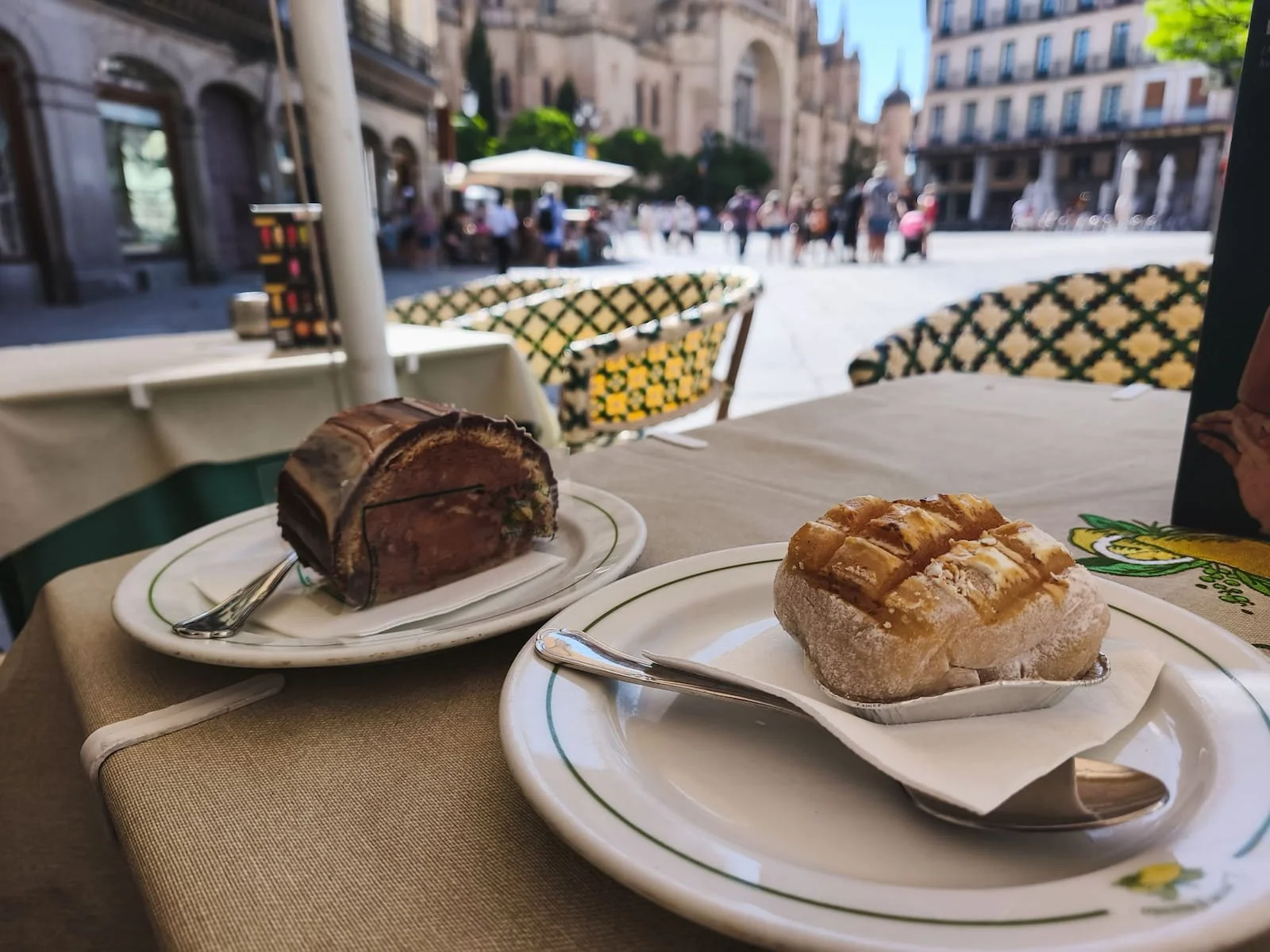
Our ponche segoviano (the yellow one) and a chocolate cake at Pastelería Limón y Menta, in our nice seat with Cathedral view.
Modifications
If you want a lower-effort day
Skip Mirador de la Pradera de San Marcos and end with the Alcázar. You will still have a very complete Segovia day trip.
If you don’t want a heavy lunch
Share the dishes at Mesón de Cándido. Or, skip it and eat tapas or raciones around Plaza Mayor or between the Cathedral and Alcázar. This makes the route more linear, though you lose the classic cochinillo stop.
If you don’t want to climb towers
Skip both the Cathedral tower and the Alcázar tower. The itinerary already has plenty of viewpoints from the Postigo stairs, Paseo del Salón, the wall route, and the optional mirador.
If you are taking a later train from Madrid
You can still do the route, but keep the Aqueduct and Cathedral sections shorter in the morning to protect your more inflexible lunch and Alcázar timing. You can always sit outside at Mesón de Cándido to view the Aqueduct more, or spend a bit more time there before taking transit back to the train station.
If the weather is hot
The Cathedral and Alcázar interiors give you some relief. It was super hot outside when we visited, but the interior of the castle was quite cool. Some rooms even felt like there was natural AC. Powerful engineering.
If the weather is rainy
The Aqueduct can still look dramatic in cloudy or rainy weather. Just be careful on the stairs and stone streets, and keep the morning flexible.
Closing
Thanks for reading! I hope this itinerary helps you plan a full, low-friction day in Segovia.
If you try this route, I’d love to hear how it goes. And if you’re still planning and have questions, feel free to leave a comment or send me a message. I’m always happy to help when I can.
If you’re planning more time in Madrid, these guides might help:
Madrid Travel Guide: Start Here — where I’ve collected my Madrid logistics, neighborhood notes, packing tips, and related posts.
What to Do in Madrid — a practical reference guide to Madrid sights, food stops, neighborhoods, and planning notes.
Madrid 1-Day Itinerary — a full walking route through Madrid’s main first-time highlights.
Madrid 3-Day Itinerary — a balanced first-time itinerary to follow before adding a Segovia day trip.
Slow Traveling Madrid — a glimpse into my routines and real monthly costs staying a couple of months in Madrid.
Toledo Day Trip from Madrid — another classic no-car day trip with a Gothic cathedral, historic Jewish Quarter, layered Christian, Jewish, and Islamic heritage, and panoramic views from Mirador del Valle.
You may also like:
How I Plan Low-Friction Itineraries — the process I use to build routes that reduce backtracking, decision fatigue, and the “wait, where are we going next?” problem.
My Travel Approach — how I think about independent, active, low-friction travel.