How I Travel With Less Friction
Most travel advice focuses on where to go, but I think just as much about how each decision affects how the trip feels once you get there. Beyond seeing what you want to see, a lot of what shapes a trip is the day-to-day ease or friction that makes it easier or harder to actually do those things.
Many trips feel stressful not because the destination is wrong, but because the logistics are heavier than they need to be. You might be trying to squeeze in too many places, carrying too much luggage, navigating complicated transport, or following sightseeing days that don’t flow well. Packing too much can make you dread airport security, customs, or those rickety stairs in an otherwise charming apartment. A poorly planned itinerary can waste time and energy or leave you without enough time for the experiences you cared about most.
Those stressors can shape a trip more than people expect. I’ve also heard people say that they don’t want to travel anymore because it feels like too much work.
So, I’d rather make those decisions ahead of time so that during the trip, they feel almost invisible. For me, low-friction travel is about removing unnecessary logistical effort so I can spend more of my energy on the experience itself.
A lot of this blog is really an extension of that effort, but this post is the framework behind that: how I choose destinations, think about transport, build efficient itineraries, choose where to stay, and pack in a way that makes travel feel lighter, simpler, and easier to move through.
Before getting into that though, it helps to be clear about what actually creates that friction in the first place.
What actually creates friction?
Much of travel friction comes from a few recurring things:
Too many small decisions (what to do, what to wear, where to go next)
Inefficient movement (crossing the same areas repeatedly, backtracking, poorly routed days)
Logistical weight (carrying more than you need, dealing with transfers or coordination)
Daily drag (inconvenient locations, safety concerns, or anything that makes outings feel harder)
Plan instability (needing to constantly adjust, rethink, or decide what to do next)
These are the things that add up over the course of a trip. Most of what I do when planning is just trying to reduce them ahead of time, so that once I’m there, things feel simpler and easier to move through.
Here’s the framework I use:
How I plan trips with less friction
1. Choose destinations that fit your interest and capacity
This step helps me avoid choosing a trip that looks good in theory but would be too logistically heavy, tiring, or complicated for the kind of trip I actually want.
When I plan a trip, the first thing I do is choose destinations that fit both my curiosity and my capacity. I start with places I actually want to go, then filter based on how realistic they are to execute well at that moment. So for me, it’s interest first, feasibility second.
Interest leads because this is travel after all. The world is full of places, and it’s not possible to visit all of them in one lifetime, so I’d rather start with the ones I genuinely feel drawn to. It can be tempting at times to choose places only because they seem easy, but I try not to let “easy” determine the list too early. Once I think through the logistics more carefully, some places still feel worth the extra effort.
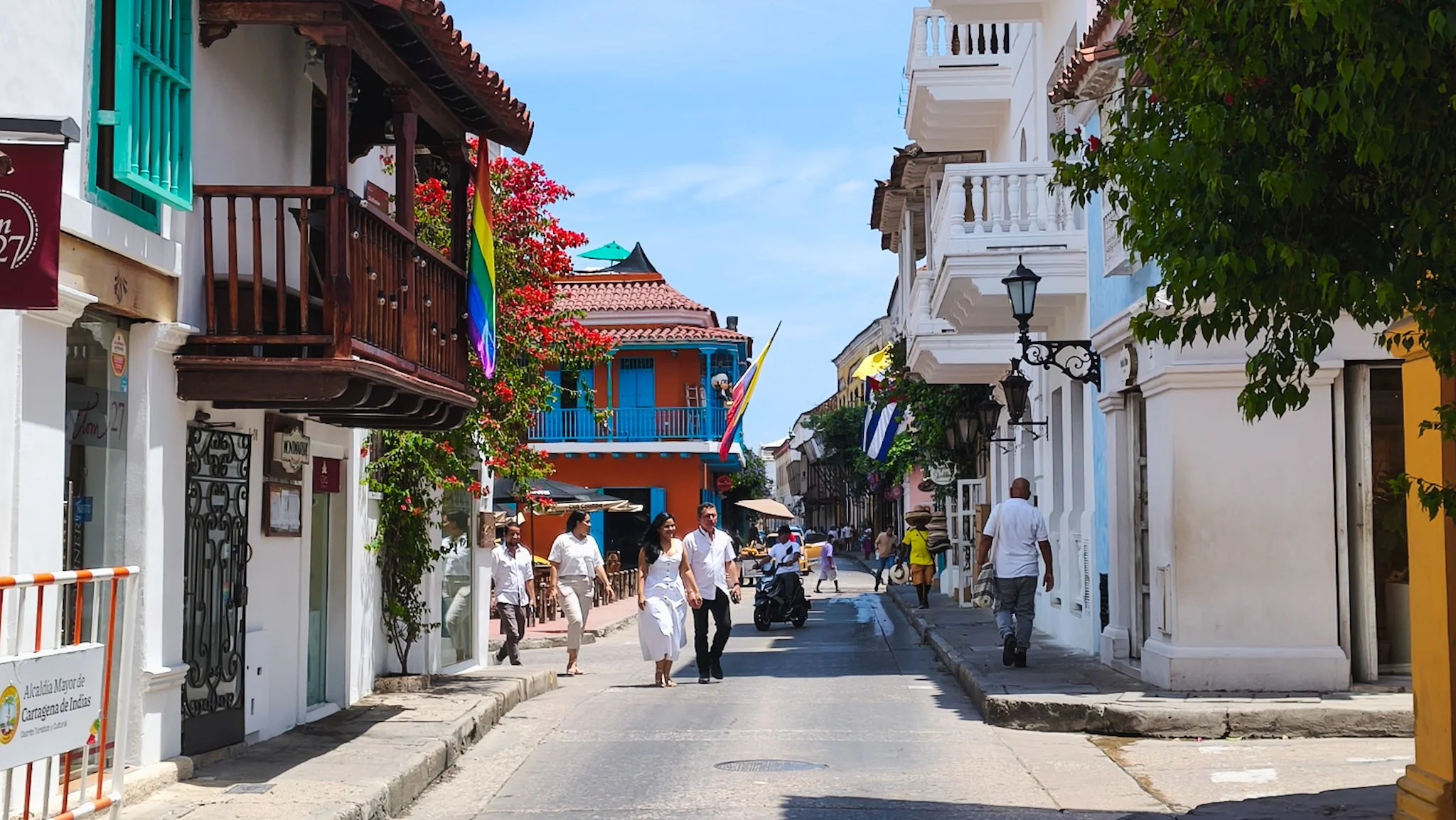
Once I have a shortlist of places that interest me, I think about what kind of trip I can realistically execute based on my energy and what I want out of the trip at that point in time. Do I feel up for a logistically complex trip that involves driving long distances to remote hiking trails? Or do I want a trip centered around cities that are easy to move through by public transport, where I can skip the car entirely and stay in neighborhoods that are convenient and well connected?
This part of the process is really about being honest with myself. If I choose a trip with more logistical complexity than I actually have the energy for, the logistics can start to weigh down the whole experience instead of supporting it. Over time, I’ve also noticed that certain patterns repeat in the kinds of trips I enjoy most and the kinds I’m willing to work harder to make happen.
Of course, there are times when the places I want to go clash with the travel style I’m in the mood for. I might really want to camp in a remote national park, for example, but feel daunted by the logistics. When that happens, I try to be realistic with myself: is this a real, grounded interest that makes the complexity feel worthwhile, or am I mostly daydreaming about the fun parts while ignoring what the trip would actually require?
If it’s the latter, I save the trip for another time. If it’s the former, I start planning.
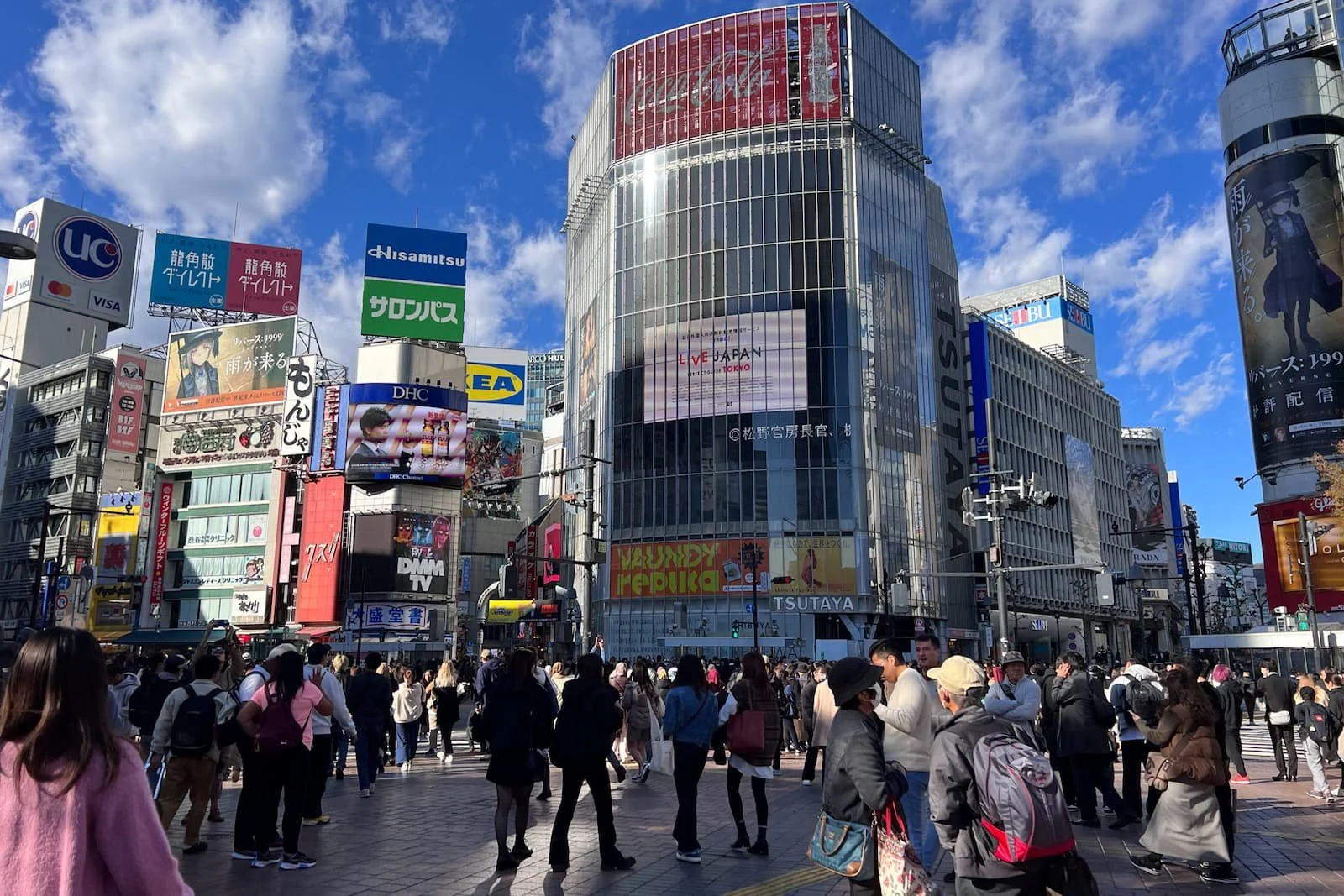
Tokyo is a great example of a logistically smooth destination — it’s huge and dense, but still remarkably easy to move through thanks to its excellent public transportation
2. Organize sights into efficient daily routes
This is a summary of my more detailed post on how I plan low-friction travel itineraries, where I break down the full process from messy wishlist to map, clusters, day blocks, and route.
This step reduces inefficient movement: backtracking, unnecessary transit, and having to figure out where to go next. It’s probably the most important part of my planning process.
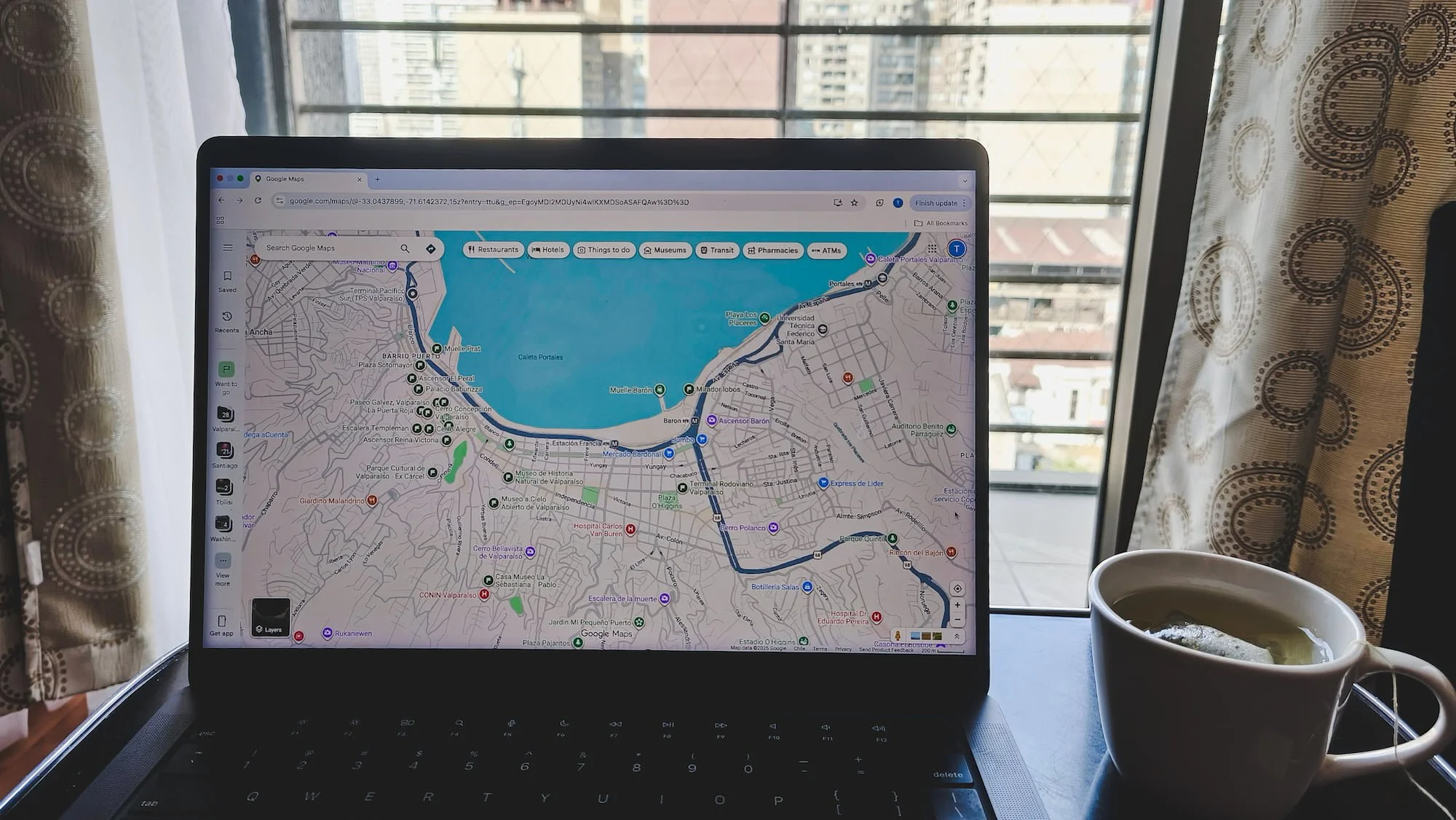
Once I know where I’m going, I start planning what I want to do in each place and how to move through it in a way that feels efficient and realistic. I begin by researching the places, sights, and experiences I’m interested in and writing them all down, then mapping them out in Google Maps to get a clear view of where everything is.
From there, I start organizing them deliberately. I group things by area so I’m not crossing the city multiple times or wasting time and energy moving back and forth. Then I layer in practical constraints like opening hours and the role each stop plays — whether something makes more sense earlier in the day, whether it’s a longer walk that requires more energy, or whether it’s tied to a specific time like a meal or a closing window.
By this point, each day is no longer just a list, but something more structured. I map out walking routes that connect things in a way that makes sense geographically, so I’m not constantly rethinking decisions on the fly or adjusting plans in the moment. Putting in that effort upfront makes it much easier to follow the route and stay focused on the experience during the trip.
See this in practice: my itinerary posts are all built on this same process, including my Barcelona 2-day itinerary, Lima Barranco walking route, half-day Panama City layover itinerary, and Valdivia 4-day itinerary. Each one had different constraints, pacing, and priorities, but the underlying logic was the same.
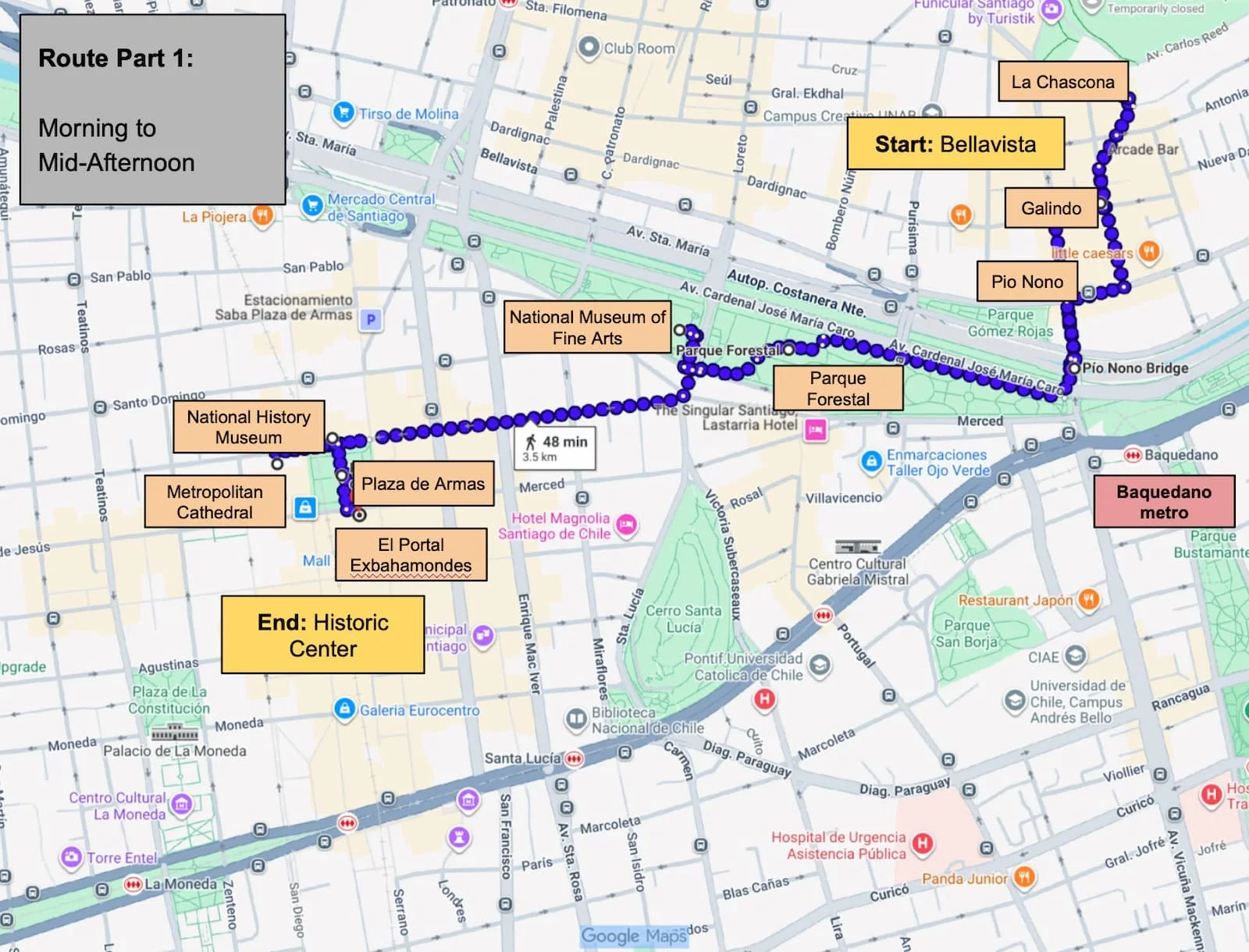
Example of how I group places by area and map routes to minimize backtracking, from my Santiago 1-day itinerary.
3. Use the itinerary to set realistic scope
This step helps me avoid building a trip that feels rushed, overloaded, or unstable by letting the shape of the itinerary determine how much time a destination actually needs.
When I have a somewhat flexible schedule — say, a week of vacation time and I’m deciding where to go during that week — I don’t start by asking how many days I should spend in a place. I let the itinerary answer that. Once I’ve mapped out what I want to do and how those things fit together, it becomes much clearer how much time I actually need.
So, for example, if I’ve gone through the process in the previous step and can cover everything I want to see in about 3 days, I know I can plan to spend around 3–4 days there. Usually I’ll lean toward 4 so I have a little padding, which has almost always served me well because, let’s be real, something always comes up during travel.
When I have a more rigid schedule — like only having one weekend — I use the itinerary a little differently. Instead of deciding how long to stay, I use it to figure out whether everything I want to do in a destination could realistically fit into that amount of time, or whether I need to adjust my expectations.
Sometimes that means cutting down the itinerary and prioritizing only the things I can do well within the time I have. Other times, if it doesn’t feel worth going all the way to a destination only to do half of what I wanted, I’ll save it for a longer trip instead.
But besides time, I also think about this in terms of energy. Besides just active exploring, travel also includes energy dedicated to transit and logistics, and sometimes, especially during long trips, I need to build in lower-output days to reset and recharge so I don’t burn out. So, when I determine the days I need for the trip and how my itinerary fits, I also take those different energies needed into account. I wrote more about that in my post on the 3 travel modes I use to plan trips around energy.
Planning this way helps me avoid overstuffing a trip or stretching a destination longer than it really needs. It also helps me be more realistic about what I can do well, rather than trying to force a trip into an amount of time that doesn’t actually fit it.
See this in practice: my Santiago 1-day itinerary shows how I plan around a tight time constraint, with a realistic route, clear priorities, and rest breaks instead of trying to fit in everything.
4. Choose transport based on effort, not just cost or time
This step helps me avoid transit choices that look fine on paper but end up adding extra transfers, waiting time, or stressful travel days.
Once I know where I’m going and how long I’ll be at each place, I figure out concretely how I’m going to get there and move between places if the trip includes multiple destinations. Usually, by the time I reach this step, I already have a rough sense of the transit options from the feasibility filter in the first step. So, at this point, I’m doing more detailed research and booking the transport.
What I’m usually looking for is a balance between effort, cost, and my own preferences around different types of transit. In general, I prefer not to rent a car unless I really have to and have already decided in the first step that I’m up for that kind of trip. Part of that is practical — I don’t enjoy the stress of driving in a new place — but part of it is also personal preference. I genuinely like experiencing places through their public transportation systems, so on most trips I’m deciding between train, flight, and bus.
Sometimes the answer is a no-brainer, like flying between distant countries. But in other cases, especially when traveling within denser regions like Europe, the choice takes more thought. Train travel is very much my style — it feels more grounded, flexible, and honestly just romantic — but it can also be more expensive and time-consuming than flying, especially when booked closer to the date.
At the same time, trains usually come with less logistical friction. Stations are often easier to reach, boarding tends to be less stressful, the overall experience usually feels simpler, and sometimes the views are worth it. So what I’m really asking at this stage is not just which option is cheapest or fastest, but how much effort it takes to move between places, and whether that effort feels worth it for this particular trip.
Sometimes I’ll decide that a train ticket is worth paying a little more for because the experience itself matters to me, or because it makes the day feel easier overall. Other times, a flight is simply the more practical choice. The point is not to follow one rule every time, but to choose the option that makes the trip feel smoother in real life.
5. Choose neighborhoods based on daily ease and price
This step reduces daily drag from long commutes, inconvenient returns, and the feeling that every outing takes more effort than it should.
Where you stay can have a huge effect on how easy each day of a trip feels, especially when time is limited. For me, choosing where to stay starts with the neighborhood, because that decision shapes how much effort it takes to move through the trip day to day.
For my travel style, which strongly prefers walkable, efficient routes and independence from cars, location matters a lot. So when I’m choosing a neighborhood, I prioritize proximity to the things I want to do, safety, walkability, and, if a place isn’t especially walkable, good transit access. I’ve stayed farther out before to save money or get a larger place, and when I think back on those trips, one of the strongest memories is often the daily commute into the city. That becomes even more noticeable on shorter trips, when it can feel like a significant chunk of your limited time is being spent just getting where you want to go.
After I’ve identified a few neighborhoods that fit these factors, I balance convenience with price. The most ideal area is sometimes priced out, so I compare a few options and think about what my budget actually gets me in each one. If a slightly less central neighborhood still feels easy enough to move through, I’ll often choose it over the ideal area for cheaper housing.
Because of that, I’m usually willing to pay more for a better location — and then make up for it by being less demanding about the lodging itself. If I’m working with the same budget, I’ll almost always choose a smaller, simpler place in a central, walkable location over a more luxurious place farther outside the city. For me, a better location removes more friction from the trip than extra space or nicer amenities add.
See this in practice: You can see a full example of how I apply this framework in my Santiago neighborhoods guide, but I use the same logic for every destination I go to. For a more nuanced example, I also wrote about why I wouldn’t overthink the neighborhood in Madrid but rather spend more energy on the actual lodging itself when a city is already dense, connected, and walkable.
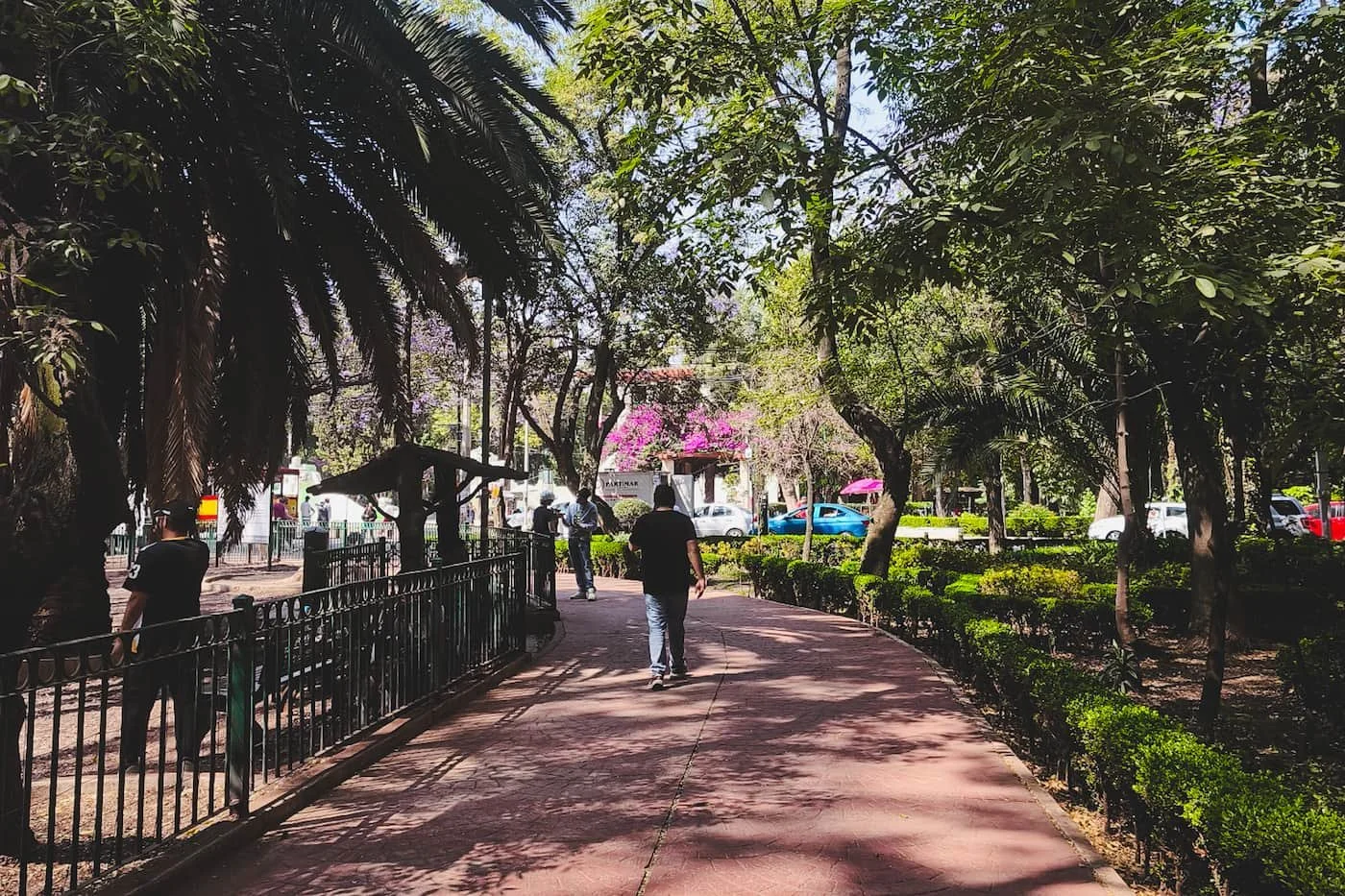
In Mexico City, staying in Condesa or Roma Norte made it much easier to see things on foot, especially given the traffic and crowded public transportation. I really felt the difference when I stayed farther from the center on a second visit.
6. Pack to reduce friction in movement and decisions
This step helps me bring only what I’ll actually use, so I have less to carry, fewer things to keep track of, and fewer small decisions to make each day.
When it comes to packing, it’s not just about what you bring — it’s about bringing the right things, and only the right things, so you can move through a trip more easily and spend less time making small decisions, like what to wear each day.
The goal is to remove unnecessary friction. Fewer items means fewer decisions — what to wear, what to carry, what to keep track of — and less bulk overall, which makes travel feel lighter and easier. For example, I rely on a small capsule wardrobe that mixes and matches across situations, so getting dressed each day is straightforward. I also limit myself to two pairs of shoes per trip, which cuts down what is often the bulkiest category without feeling restrictive.
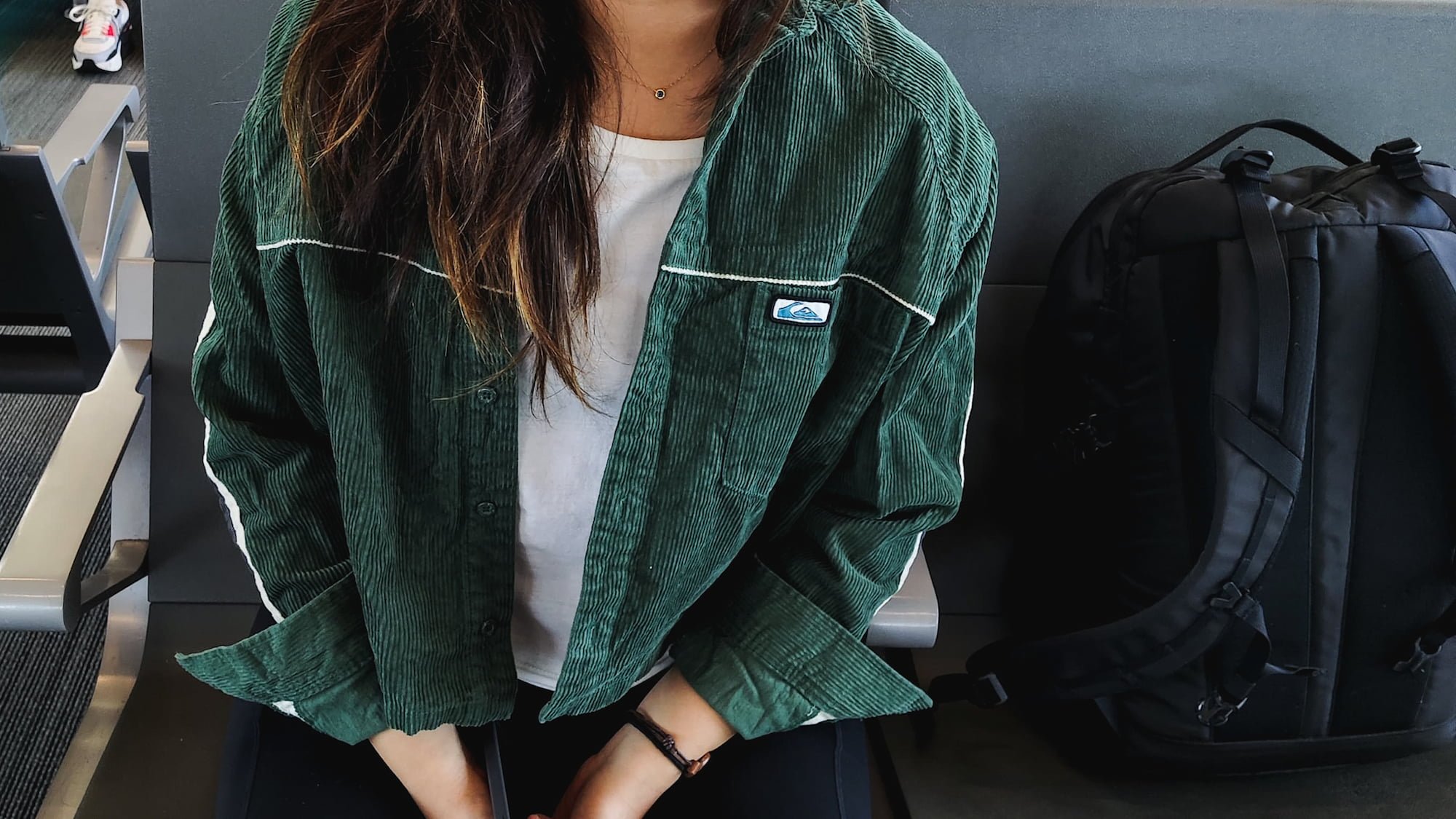
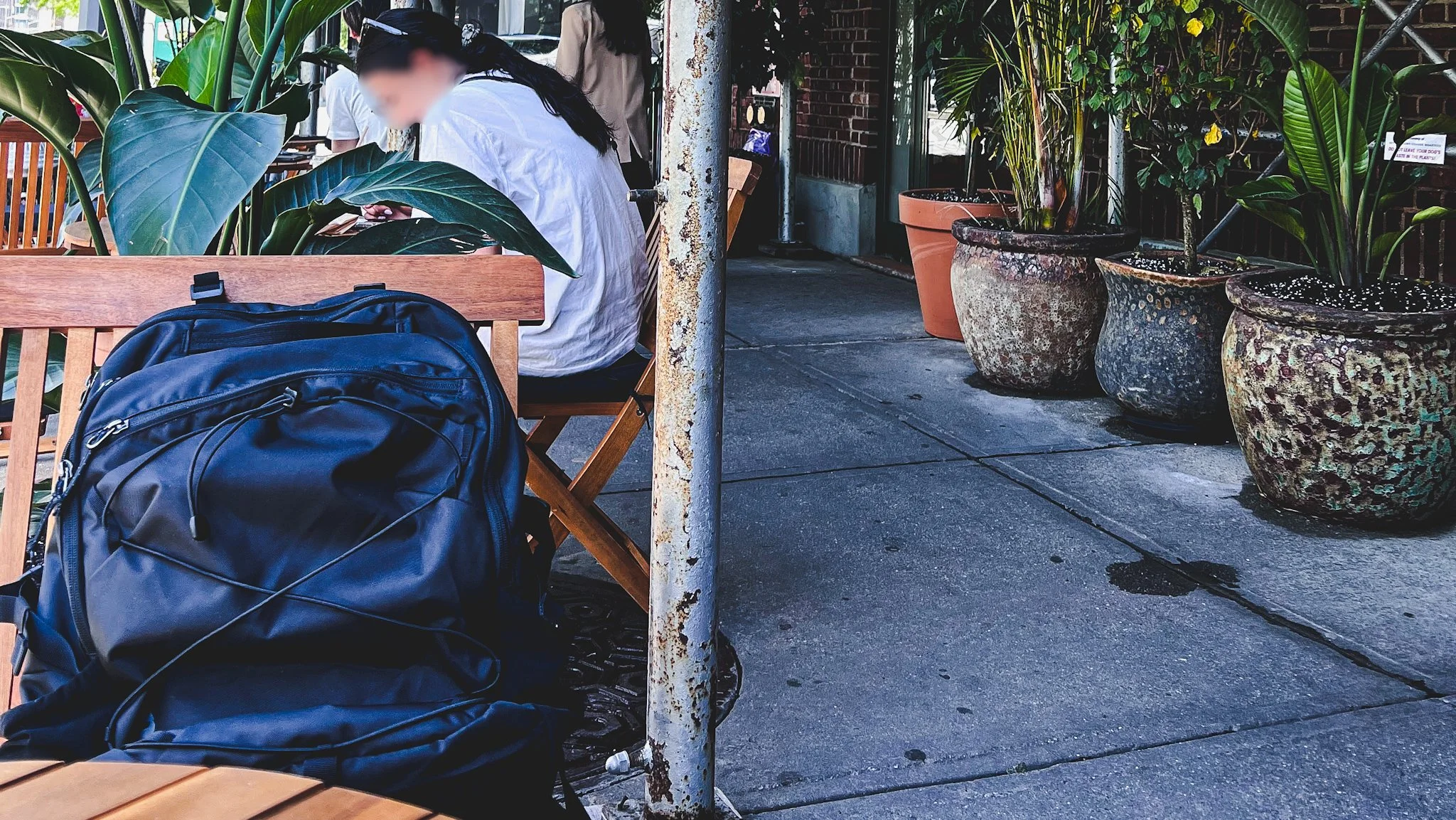
Over time, this has settled into a system that prioritizes versatility and simplicity. I focus on items that can serve multiple purposes and work across different situations, so I don’t need to pack for every possible scenario. At least for now, all of my trips fit into an everyday-sized backpack (30L) and a small sling bag, with a base packing list that I adjust depending on the destination and length of the trip. Sometimes that even means bringing very little when I know I won’t need much.
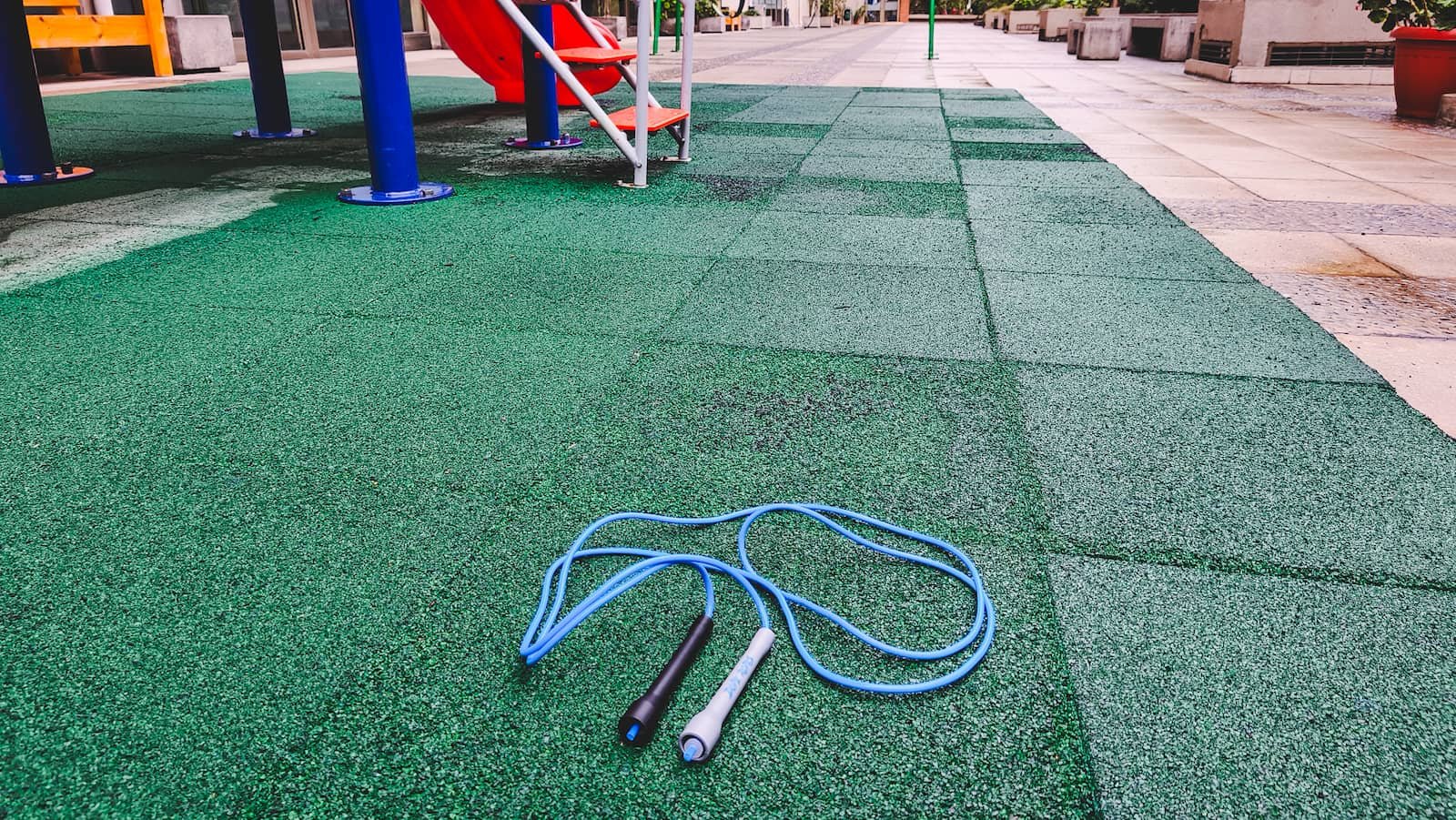
Thinking about packing this way makes me more intentional about what earns a place in my bag. Because I treat it as a system rather than just a list of items, I can make room for things that either reduce friction or support how I actually want to live on the road. For example, carrying a simple laundry system means I don’t have to rely on finding accommodations with laundry, which opens up more options for where I can stay. Intentional packing also lets me maintain routines while traveling, like bringing a jump rope, which has become one of the simplest and most portable ways for me to stay active. Overall, I use this filter throughout my broader one-bag setup, which I broke down in the 8 items that make most my one-bag setup work.
I’ve written more detailed posts on this approach and why I’m drawn to it, but at a high level, packing this way makes it easier to move, easier to adapt, and easier to focus on the experience instead of the logistics. I’ve also turned this into a step-by-step workbook for designing your own one-bag system, where I break down the decision-making process behind what to bring and why.
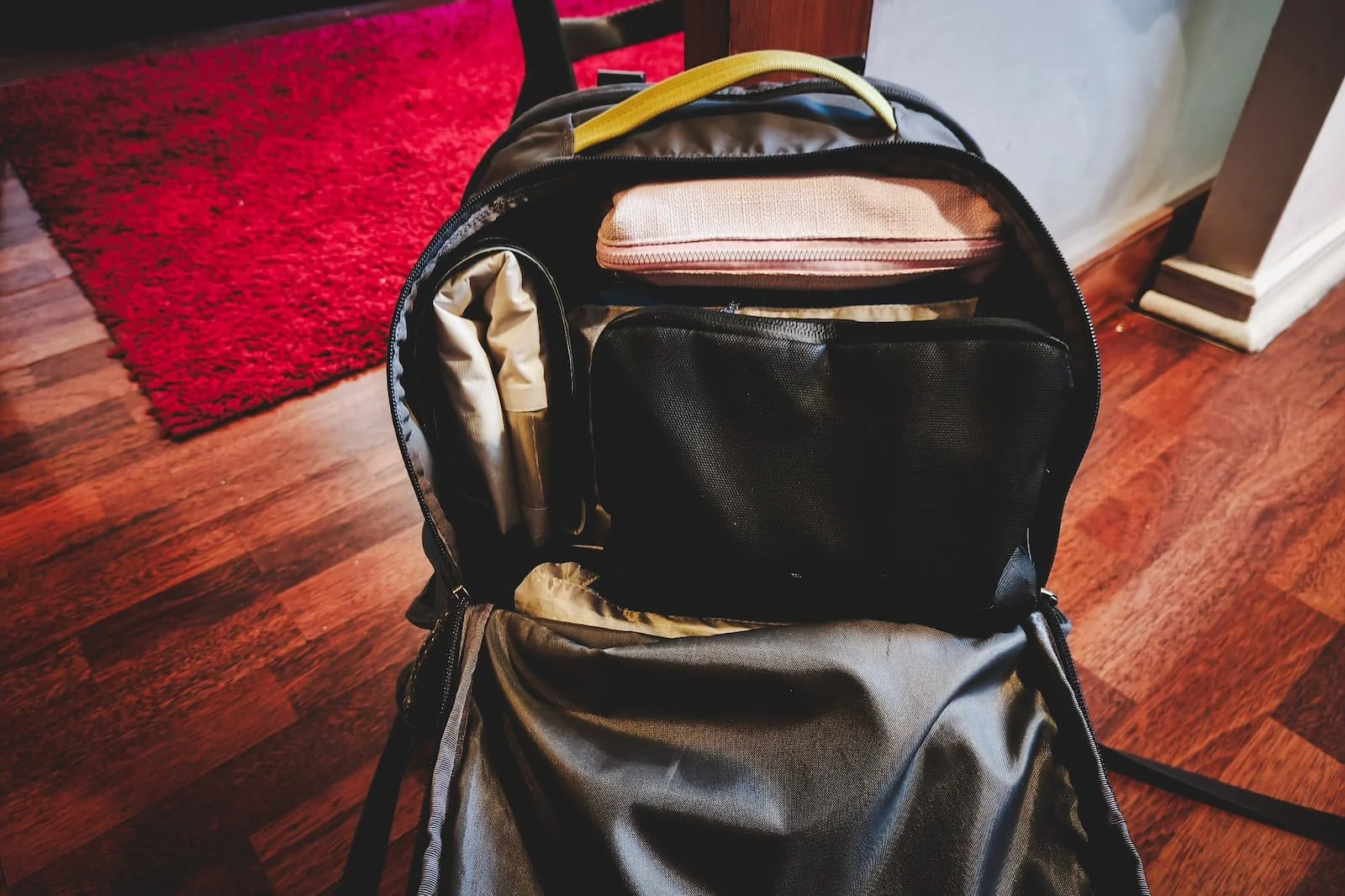
My one-bag setup: fewer items, less bulk, and easier movement on the road.
Closing
I don’t really think of this as a rigid system — it’s just the way I’ve learned to plan trips so they feel easier to move through, take less energy to manage day to day, and leave more room to actually experience the place. The way I plan has evolved over time, and it will probably keep evolving.
But what won’t change for me is the ultimate goal of planning. To me, it’s not about optimizing everything. It’s about removing the small frictions that add up over the course of a trip, so that when you’re there, you’re not thinking about logistics. You’re just in it.
Thanks for reading – I hope this helps you make your trips a little smoother!
Have a question about this?
Shoot me a message or leave a comment below — I read everything, and I’m always happy to help if I can!