Santiago in 1 Day: Ultimate Itinerary + Map (Efficient, Walkable, Local-Approved)
AFFILIATE DISCLOSURE: This post contains affiliate links. Links marked with (*) may earn me a small commission if you purchase, at no extra cost to you. (I only recommend things I personally use and love!). As an Amazon Associate I earn from qualifying purchases.
Last updated: October 2026
Since my partner is a native Santiaguino, Santiago holds a special place in my heart. It’s also a relatively easy city to explore independently, with a compact center, an excellent Metro system, and many major sights connected on foot.
Because I love this city so much, the challenge is deciding what to fit into one day. Santiago has historic landmarks, museums, neighborhoods, viewpoints, and plenty of classic foods worth trying.
I designed this Santiago 1-day itinerary as a forward-moving route through Bellavista, Parque Forestal, the historic center, Santa Lucía, and Lastarria. I’ve also included a quick overview, detailed stop notes, and easy ways to adjust the day. And after having my partner play tourist to test the full route together, I’m happy to report that he approves :)
For a longer visit, see my 3-Day Santiago Itinerary or my Santiago Start Here guide.
Quick Plan
Time needed: 1 full day, about 10–11 hours
Best for: First-time visitors who want Santiago’s historic highlights, museums, neighborhoods, classic foods, and city views in one well-routed day
Route: Bellavista → Parque Forestal → Museo Nacional de Bellas Artes → Plaza de Armas → one downtown museum → Paseo Ahumada → La Moneda → Barrio París-Londres → Santa Lucía Hill → Lastarria
Best timing: Start around 10:30 if you are only exploring Bellavista, or 10:00 if you want to visit La Chascona before lunch
Walking level: High; expect 8–10 km / 5–6 miles, mostly on flat city streets with some cobblestones and a short hill climb
Pace: Full but adjustable. Museum visits are the easiest parts to shorten or skip.
Transportation needed: Metro, taxi, or rideshare to Bellavista and back from Lastarria; the itinerary itself is designed as a walking route
Watch out for: Pickpocketing and phone theft in crowded downtown areas, narrow stairs on Santa Lucía Hill, and the Cathedral’s shorter weekend hours
Opening hours: This itinerary works best Tuesday through Sunday. Galindo, La Chascona, and most museums on the route are closed on Mondays.
Maps
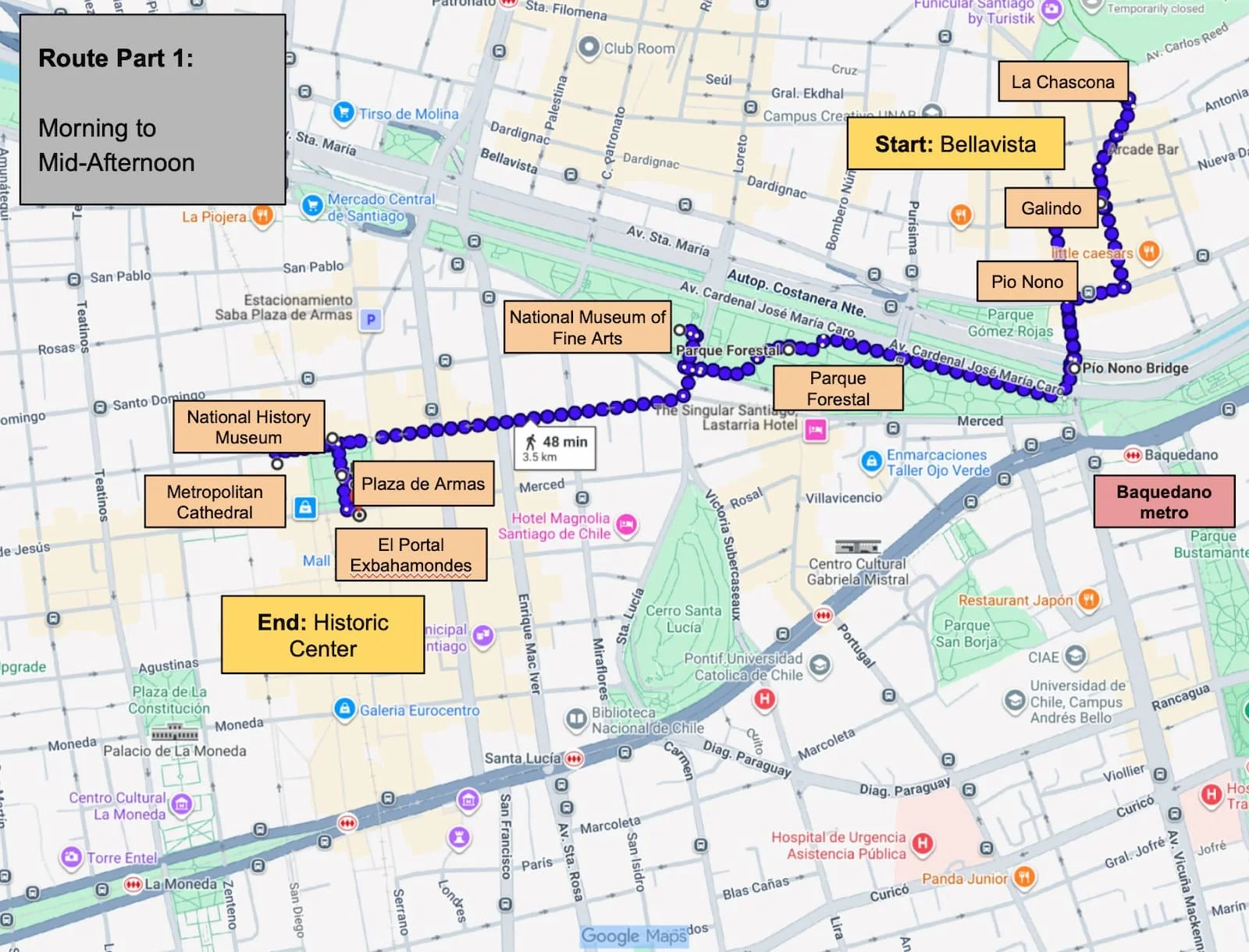
First part of the route (morning to mid-afternoon): Start the day with street art and Chilean food in Barrio Bellavista, then National Museum of Fine Arts, Plaza de Armas and surrounding landmarks and museums, and classic joint for “completos” (Chilean loaded hot-dogs), El Portal Exbahamondes. (Map data © Google).
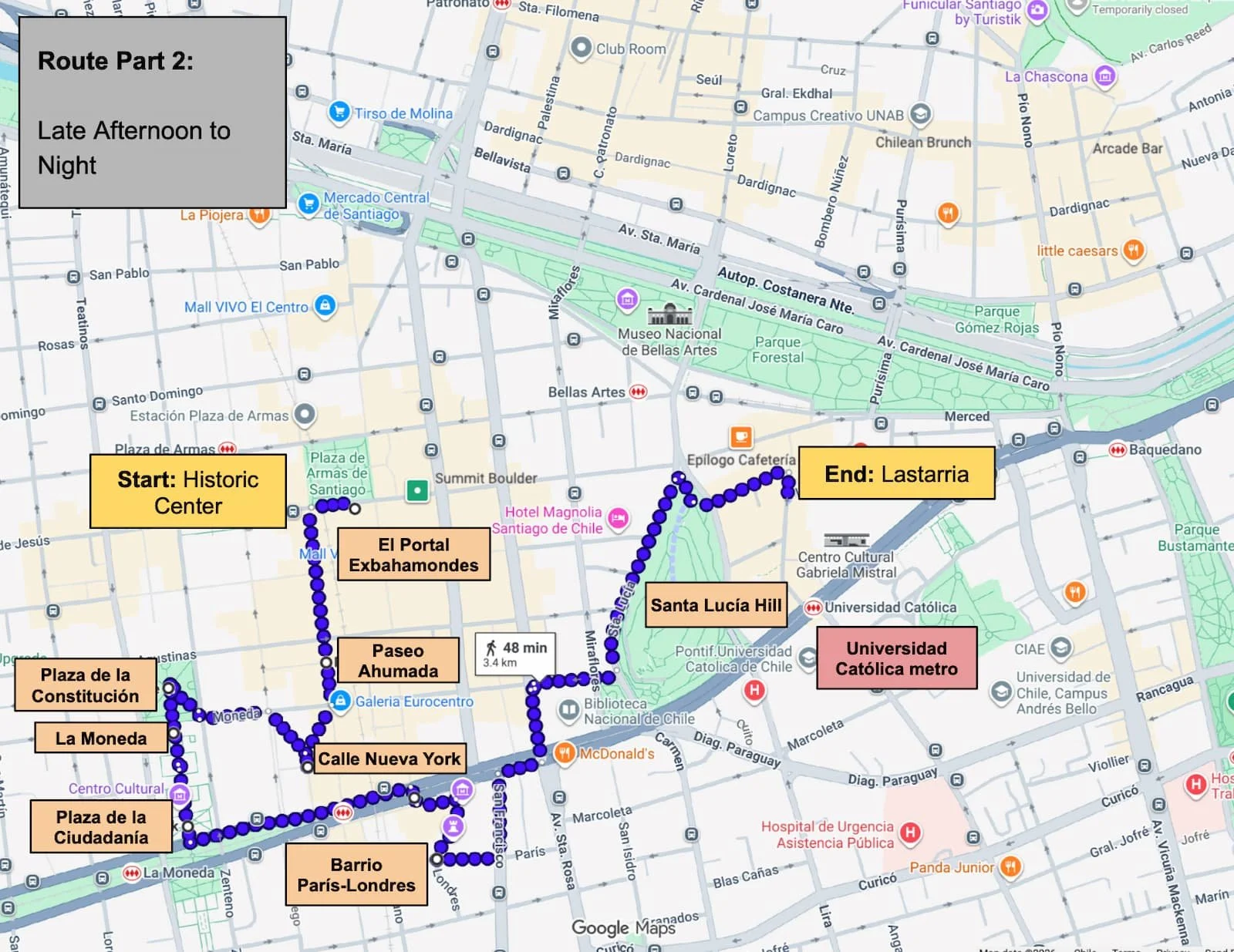
Second part of the route (mid-afternoon to evening): After eating completos, continue along the downtown pedestrian streets to La Moneda and its surrounding plazas, then stroll through Barrio París-Londres. Finish with the climb up Santa Lucía Hill, followed by dinner and drinks in Barrio Lastarria. (Map data © Google).
Hour-by-Hour Itinerary
This route flows naturally from one area into the next, and the easiest way to do it is to just follow it in order. But if you want a shorter day or want to skip stops, see the Modifications section below for suggestions.
Overview:
Morning — Barrio Bellavista (1–1.5 hrs)
Walk through Barrio Bellavista for street art and neighborhood vibes
Visit La Chascona (Pablo Neruda’s house)
Late Morning / Early Midday — Lunch in Bellavista (1 hr)
Lunch at Galindo (classic Chilean)
Try the pastel de choclo (Chilean corn pie)
Midday — Parque Forestal + Fine Arts (1.5 hrs)
Walk Parque Forestal (~20 min)
Visit the National Museum of Fine Arts (Museo Nacional de Bellas Artes) (~1 hr)
Early Afternoon — Historic center (45–60 min)
Walk through Bellas Artes neighborhood to Plaza de Armas (~10 min)
Plaza de Armas loop (~30 min)
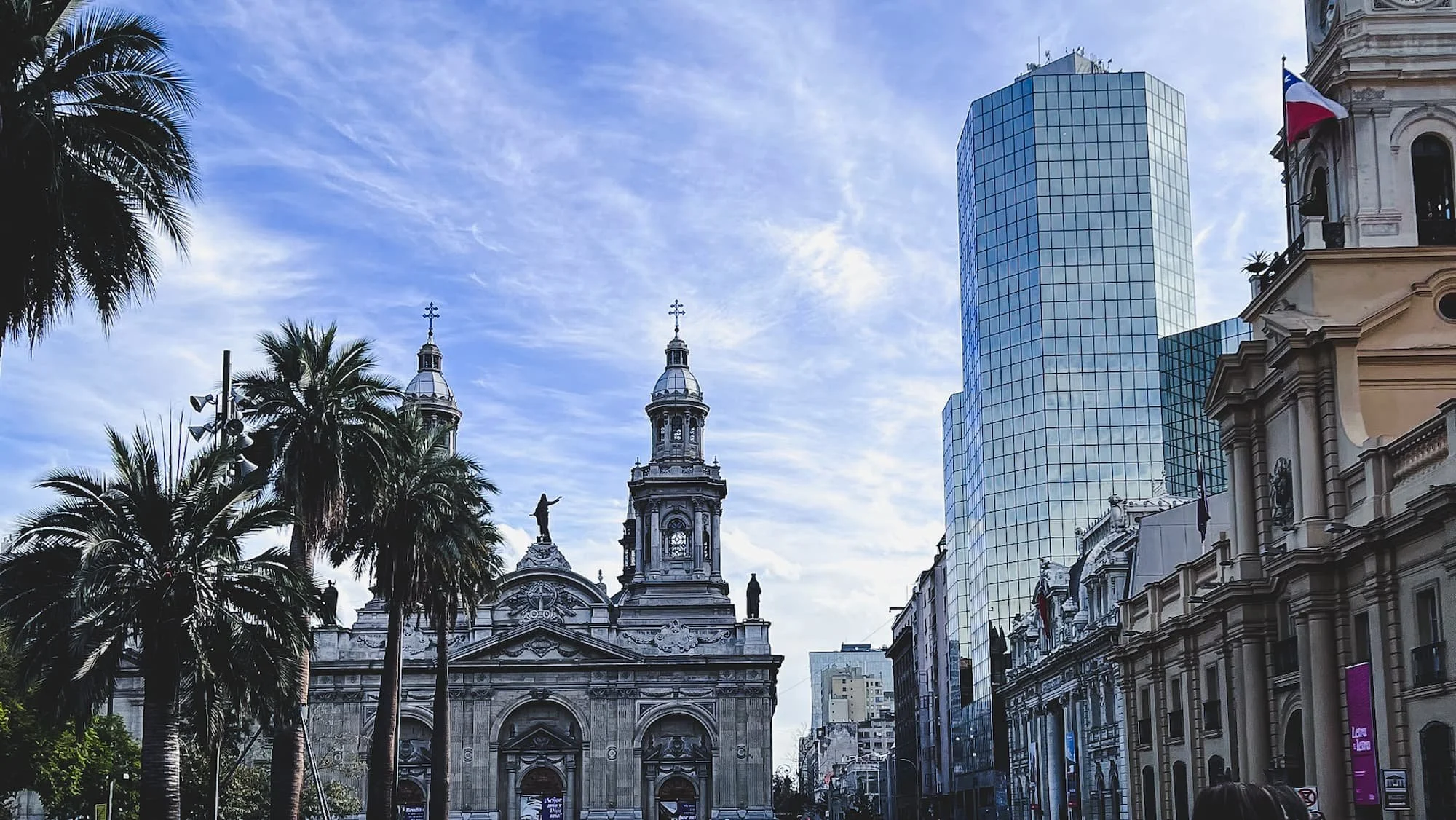
Metropolitan Cathedral of Santiago exterior and interior (~20 min)
Mid-Afternoon — Museum + grand civic buildings (1.5 hrs)
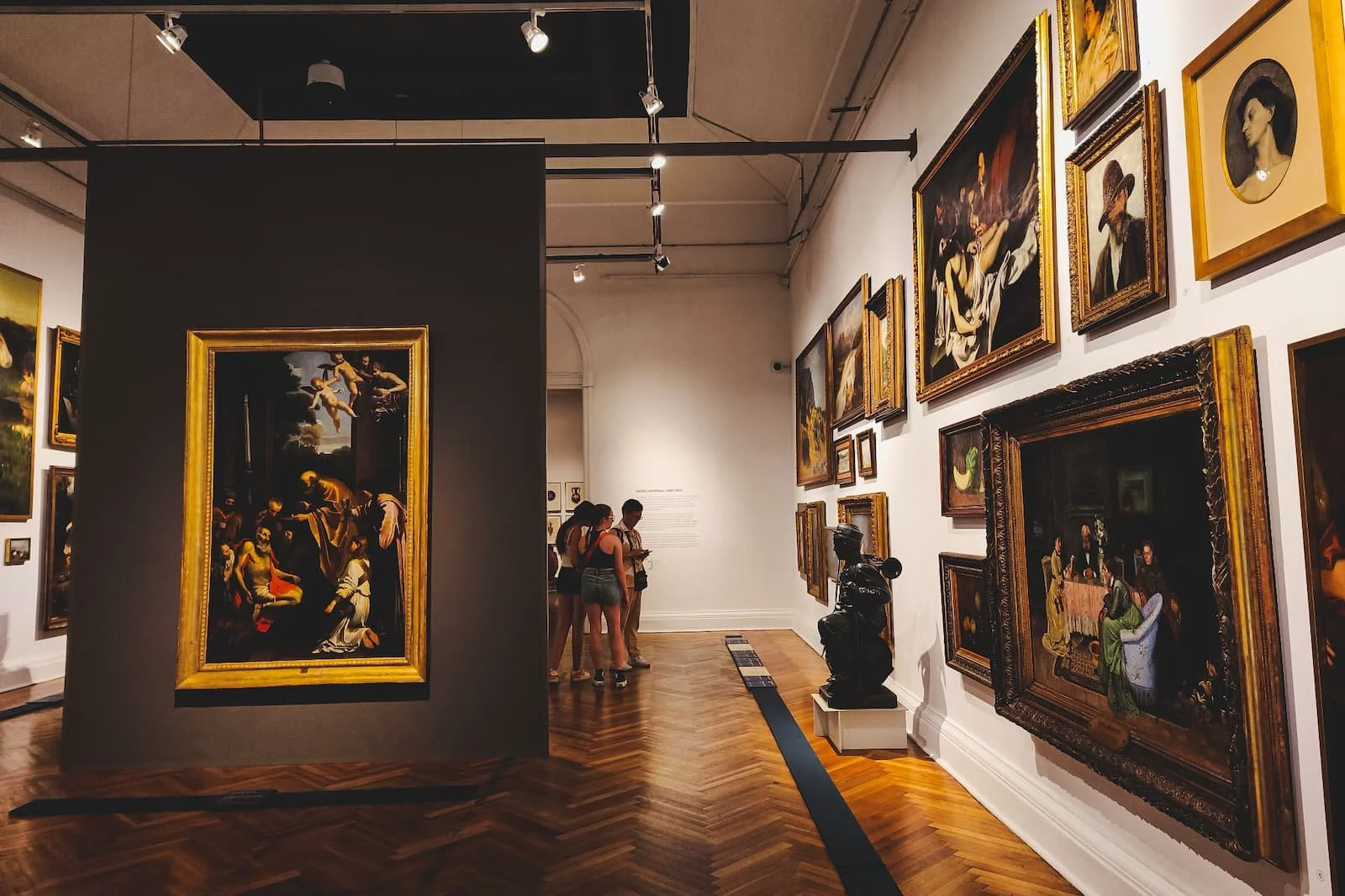
Visit the Museum of Pre-Columbian Art (60–90 min), or skip the museum for more time exploring the historic center.
Plaza Montt Varas photo stop (~10 min)
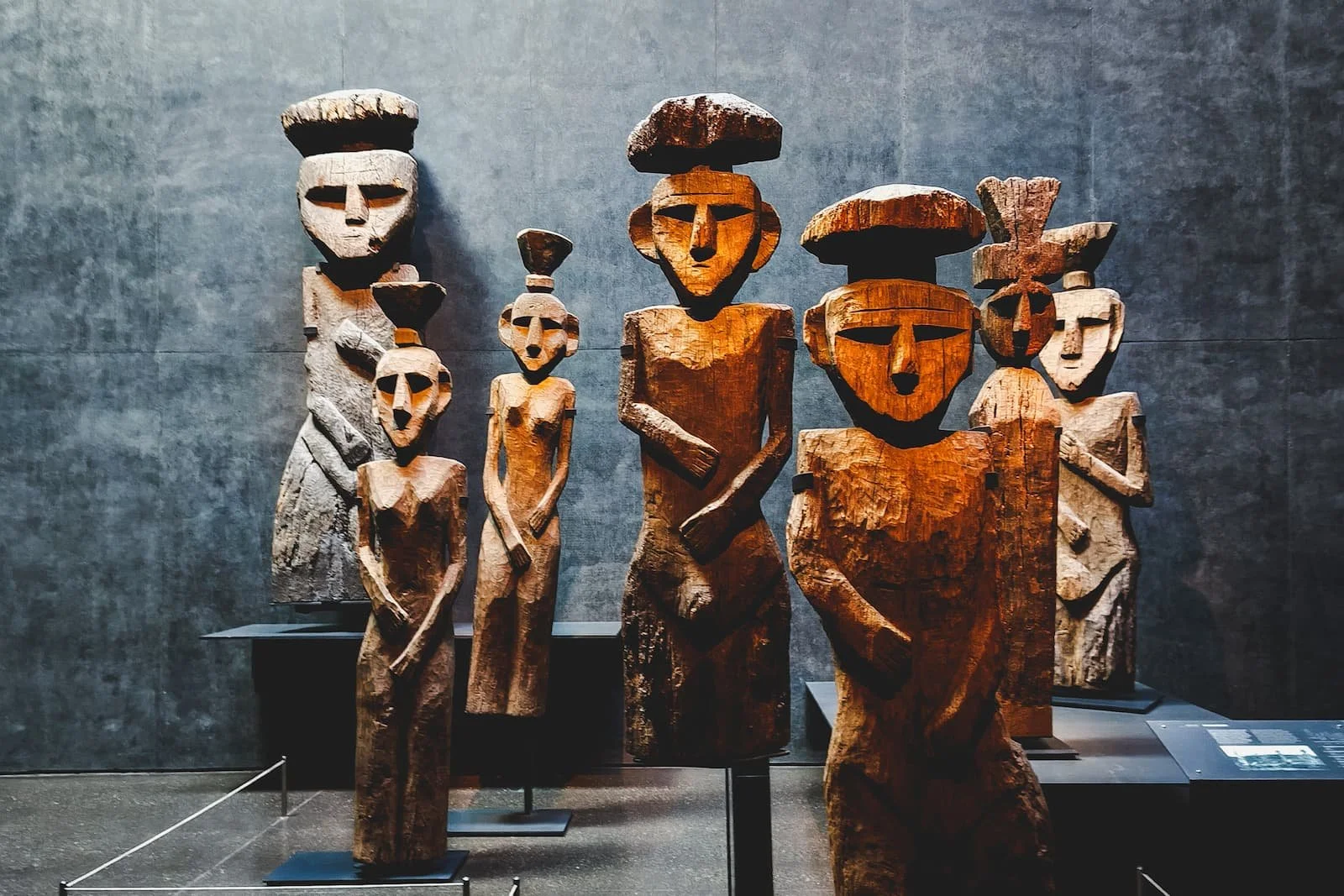
Display inside the Museum of Pre-Columbian Art.
Late Afternoon — Snack + downtown streets (45–60 min)
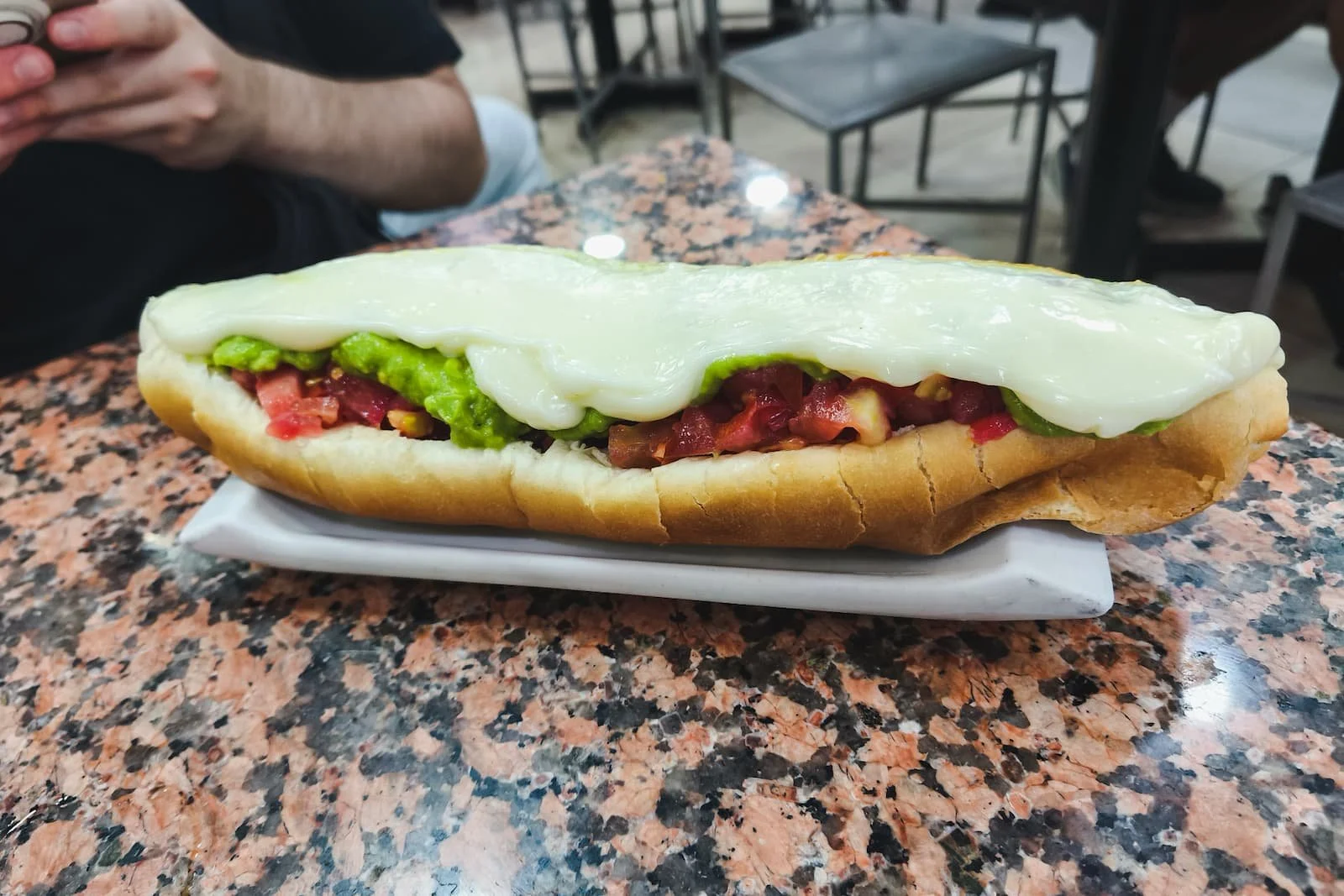
Completos (loaded Chilean hot dogs) at El Portal Ex-Bahamondes
or mote con huesillo (classic Chilean beverage) from a street stand
Walk Paseo Ahumada + Calle Nueva York (Stock Exchange view)
Late Afternoon / Early Evening — La Moneda (Presidential Palace) (40 min)
Explore Palacio de La Moneda exterior + Plaza de la Constitución (~30 min)
Short rest on the nearby grassy lawn Plaza de la Ciudadanía (~10 min)
Optional: Centro Cultural La Moneda
Early Evening – Barrio París-Londres (30 min)
Walk to Barrio París-Londres (~10 min)
Stroll the streets (15–20 min)
Optional stops:
Church of San Francisco
Londres 38
Late Afternoon / Early Evening — Climb Santa Lucía Hill (30-60 min)
Walk to Santa Lucía Hill (10 min)
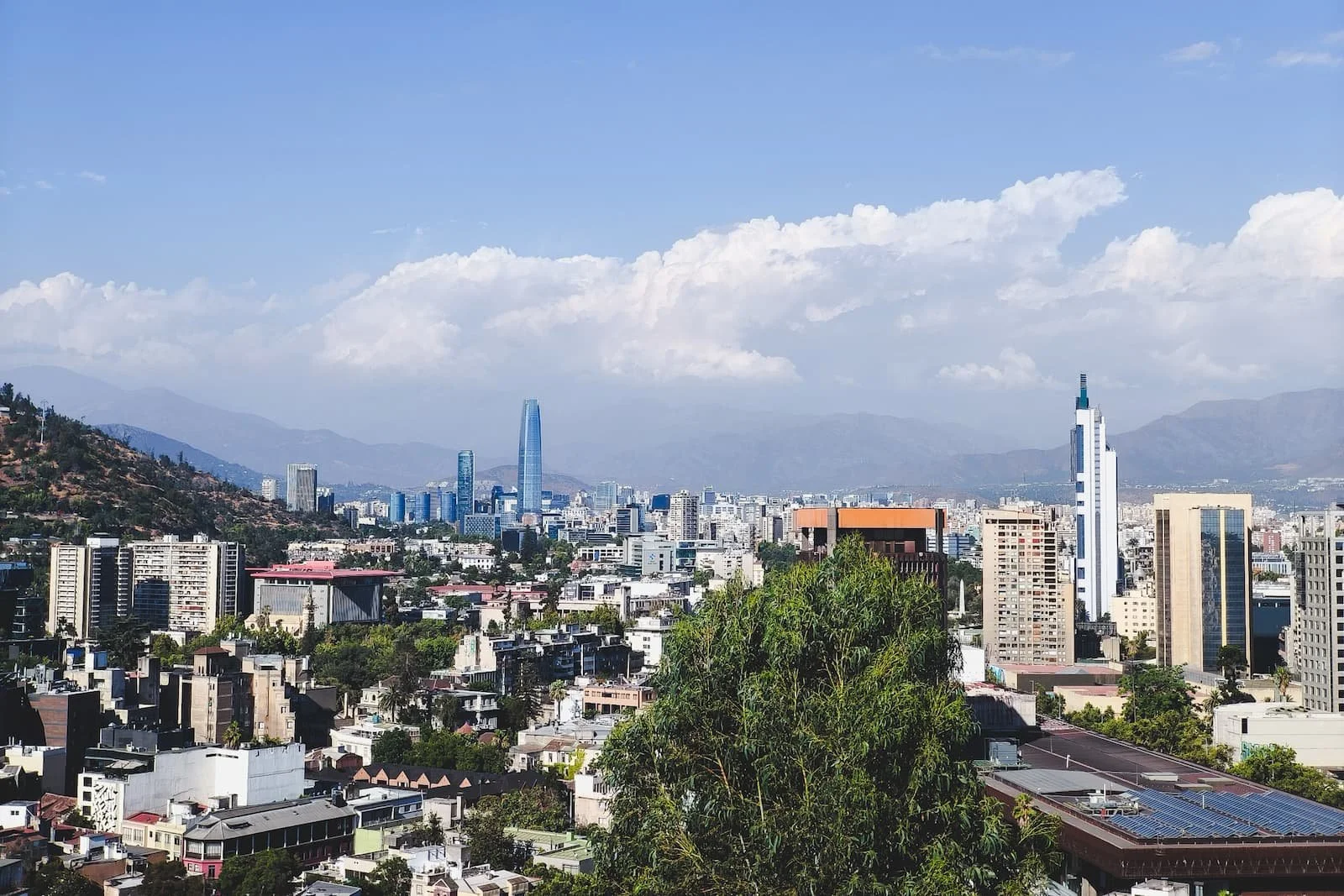
Climb the hill for panoramic view the city and the Andes (30–60 min)
Evening — Dinner + Drinks in Barrio Lastarria (2 hrs)
Walk to Barrio Lastarria (~10 min)
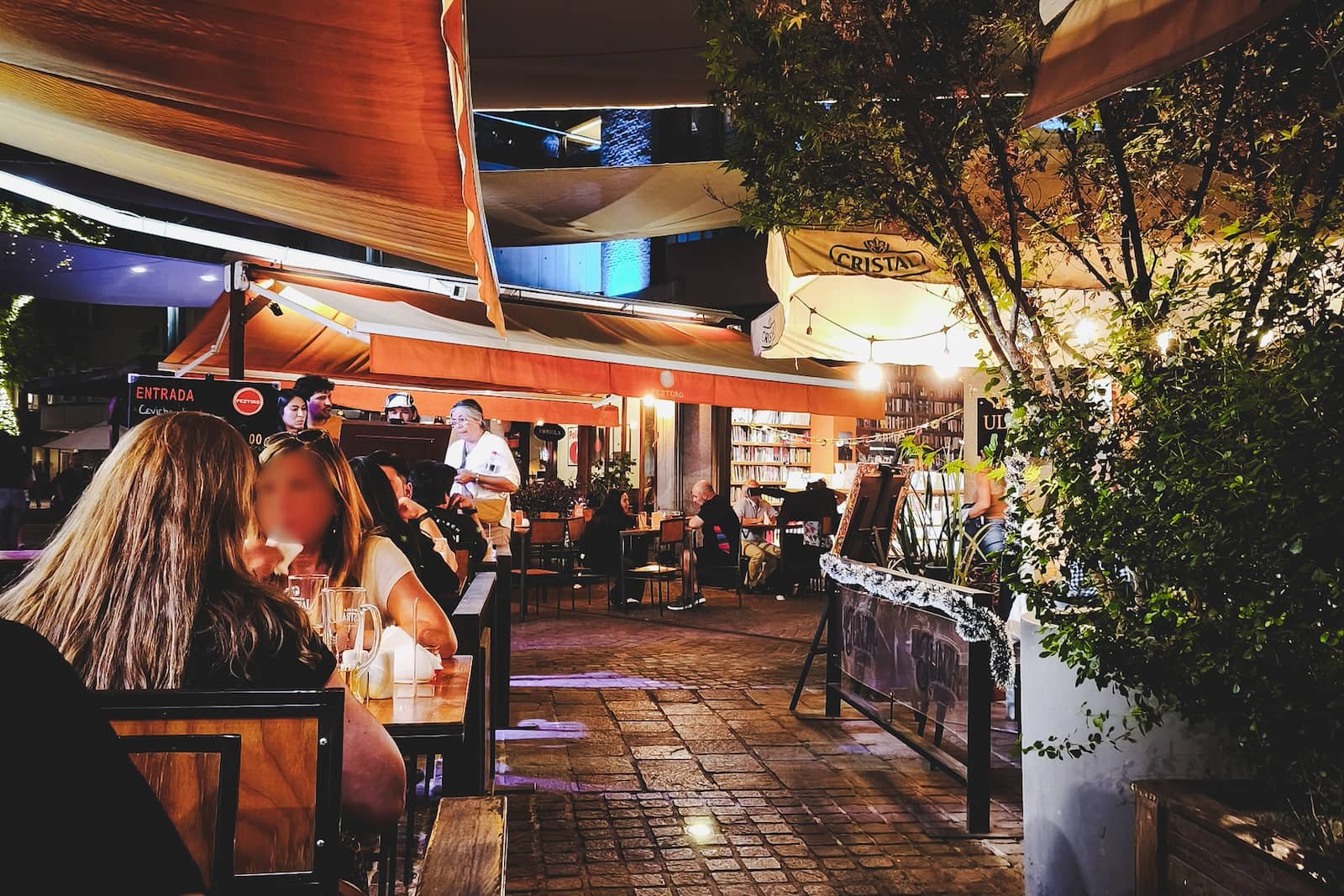
Dinner at Peztoro
Try the chorrillana
Drinks and a relaxed end to the day
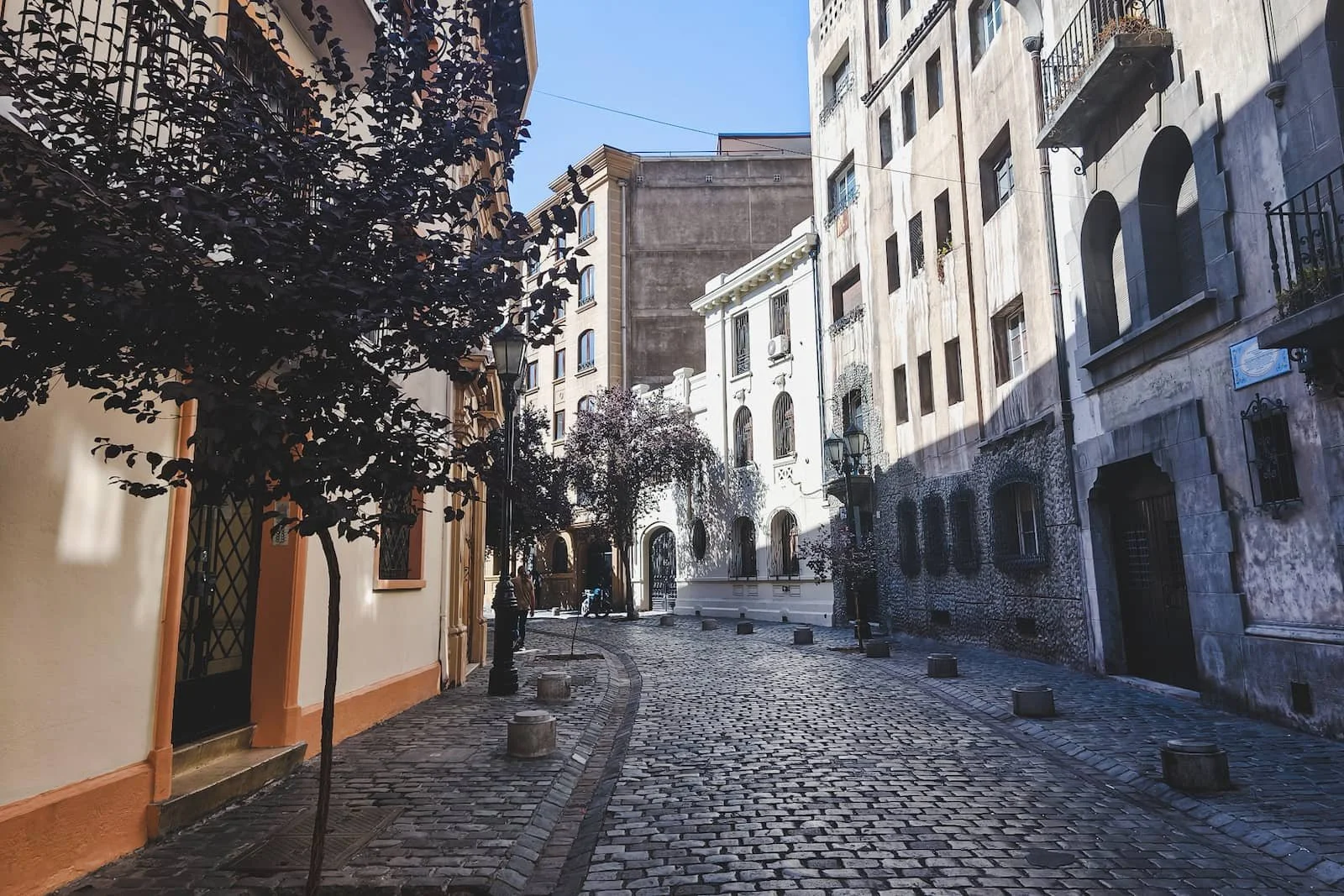
Cobblestone streets of Barrio París-Londres.
Example timing (what I followed):
10:30–12:00 Explore Bellavista → 12:00–13:00 Lunch at Galindo → 13:00–13:20 Parque Forestal → 13:20–14:05 Museo Nacional de Bellas Artes → 14:15–14:45 Plaza de Armas and Cathedral → 14:45–16:15 Your choice of museum → 16:15–17:00 Snack and stroll through the downtown streets → 17:00–17:40 La Moneda → 17:50–18:10 Barrio París-Londres → 18:20–19:00 Santa Lucía Hill → 19:10 onward Dinner and drinks in Lastarria
If you want to visit La Chascona, start at 10:00 and spend 10:00–11:00 inside, followed by an hour exploring Bellavista before Galindo opens at noon.
Weekend note: The Cathedral closes at 14:30 on Saturdays and 13:00 on Sundays, so the example timing generally only allows an interior visit Tuesday through Saturday. On Sundays, admire the exterior or skip the Fine Arts Museum to reach Plaza de Armas earlier.
Logistics: Transit, Safety + What to Wear
Hours
Many places are closed on Mondays, so you really can’t do this itinerary on that day unless you skip Galindo and most of the museums.
If it's Monday, consider doing what’s still open (Bellavista art walk, Plaza de Armas, La Moneda exterior, Santa Lucía), plus checking out Costanera Center (big mall in the tallest building in South America, reachable on Metro Line 1).
Transit notes
Transit to start point (Bellavista): Take the metro to Baquedano station (Line 1 or 5), then follow Avenida Vicuña Mackenna, cross the bridge, and onto Pio Nono (main street) in Bellavista. Alternatively, you could take rideshare (Uber or Cabify) directly to Patio Bellavista (the start point of Pio Nono).
Transit from end point (Lastarria): Metro station Universidad Católica (Line 1) is right next to Lastarria (note that the metro doesn’t open all night; check here for schedule). Alternatively, you can call rideshare back to your lodging – if so, I’d call the car for pickup either on streets Monjitas or Merced (to the north of the neighborhood) to avoid heavy foot and car traffic.
→ Check out my guide on how to ride Santiago’s metro like a local (buy and load bip! transit card, tips on safety and fare transfers, and more!)
Safety
Most of this route is busy with pedestrian traffic during the day, so I personally feel comfortable walking it. Some Bellavista side streets feel less secure, so I’d stay near Pío Nono and the busier surrounding streets. Lastarria’s main strip is lively and well lit at night, but after dinner I’d head directly back to your lodging rather than wander toward the quieter historic center.
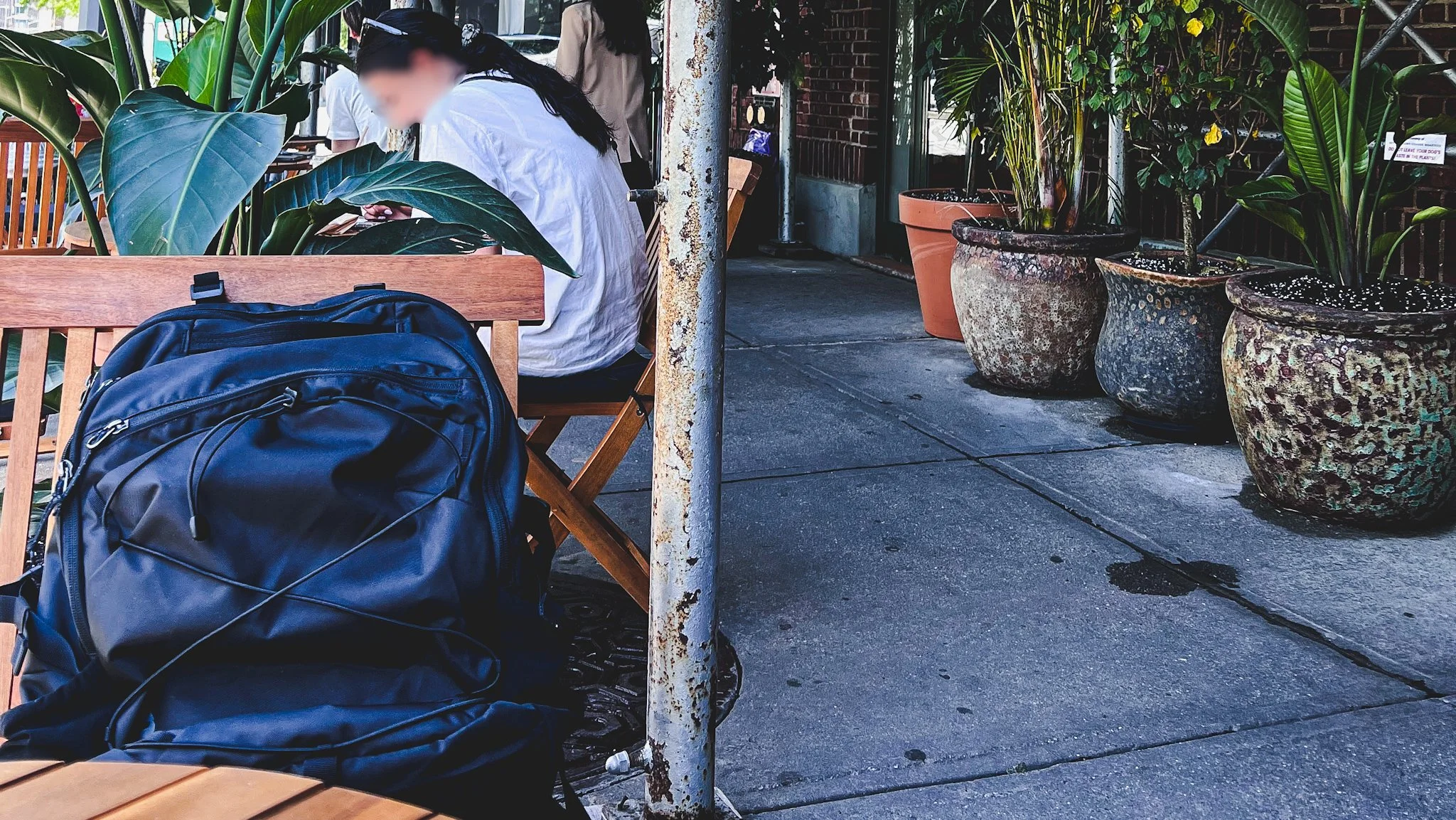
However, since this route goes through busy downtown areas, there is opportunistic theft especially around metro entrances and busy tourist streets and areas. Make sure to keep your usual big-city habits with you (bag awareness, phone out minimally while walking). Especially look out for people on bikes zooming past to grab your phone!
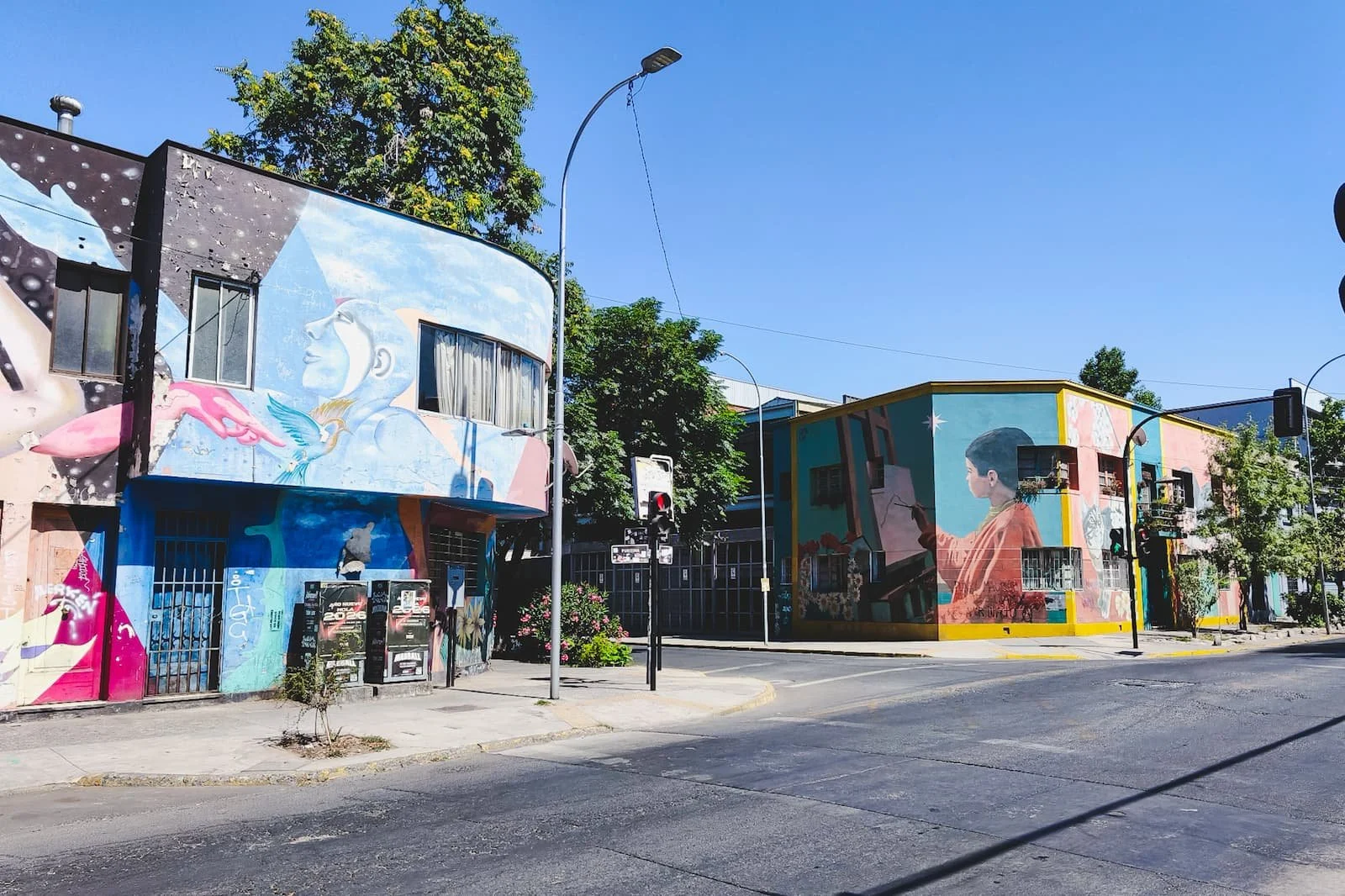
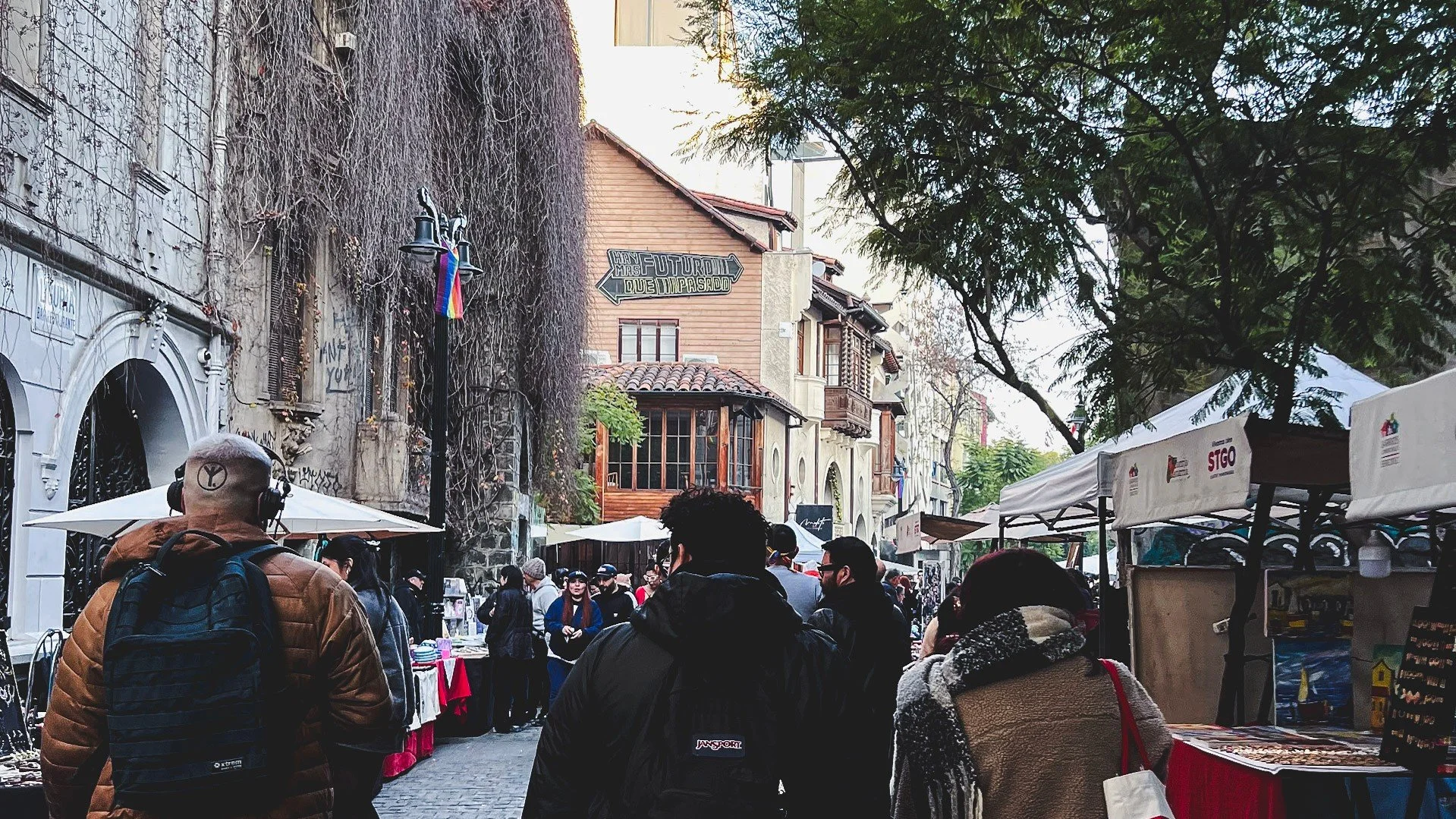
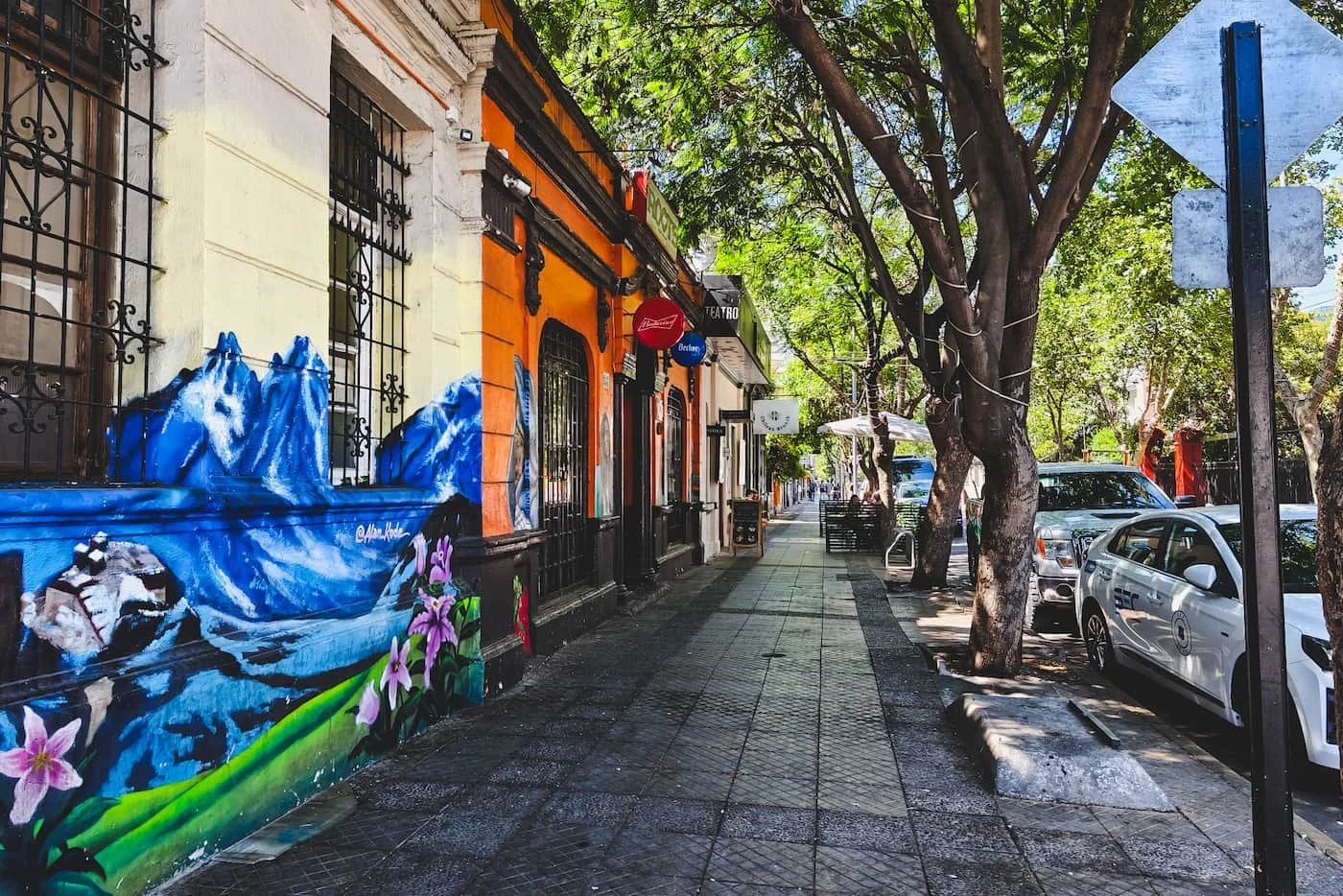
Murals covering entire building facades in Barrio Bellavista.
What to wear + bring (one-bag friendly)
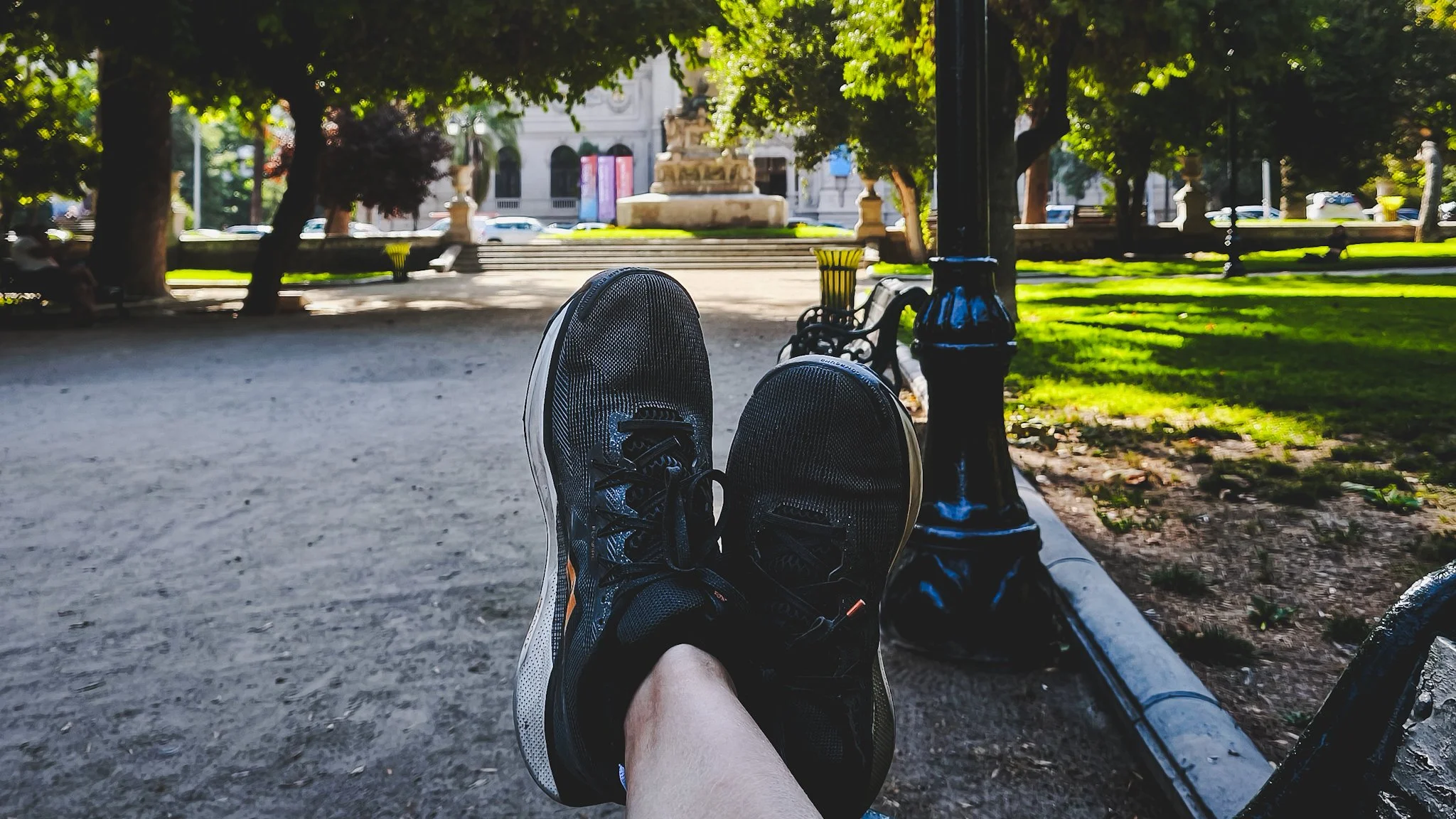
Footwear: Wear comfortable shoes as you’ll be doing a lot of walking, and some of it on uneven cobblestone streets and narrow stone stairs (on Santa Lucía Hill).
→ Check out my guide for the best shoes to pack for versatility in travel (hint: trail runners like these Nike Pegasus Trail (*) — my current shoe!)Clothing + layers: Wear breathable, comfortable clothing you can walk in all day. Santiago’s semi-arid climate means big temperature swings between daytime and night, so a light layering system works best — think a base you won’t overheat in, plus a packable layer you can throw on after sunset or on the hill.
Note: For the Metropolitan Cathedral, there’s a sign at the door to wear respectable clothing, but the specific requirements are not listed. I saw plenty of folks wearing shorts and tanks in the summer inside, but I’d keep a packable layer in mind for coverup.
→ Check out my packing list for my favorite layerable travel clothing (hint: merino wool!)Sling / crossbody: For a one-bag setup, I recommend a sling or crossbody rather than a backpack. It keeps valuables in sight in busy areas and gives you quick access to your phone, water, and layers without taking anything off.
→ I really like my Osprey Ultralight Collapsible Stuff Waist Pack (*) — extremely lightweight and comfortable to carry.
Water / sun protection: Especially in the summer, Santiago’s sun is relentless, so make sure to wear sunscreen and bring water (Santiago’s tap water is drinkable, but you can also get bottled water at convenience / grocery stores like Lider Express).
Key Stops: My Notes, Why Visit, Hours, Costs + Tips
Below, you’ll find more detail on each stop, including why I included it and the practical information you’ll need. You don’t need to treat every interior stop as mandatory.
Barrio Bellavista
What is it: Santiago’s vibrant bohemian neighborhood between the Mapocho River and San Cristobal Hill.
Why visit: Admire the colorful murals lining the streets, take in the vibrant energy, eat at the various restaurants and cafes, check out the theaters and art galleries.
Where to go: When you get out of the Baquedano metro station, follow the big Av. Vicuña Mackenna to cross the river onto Pio Nono (the main street of the neighborhood). I recommend sticking around that street and the surrounding ones since it’s the most dense and well-trafficked. Also check out Patio Bellavista for a modern outdoor dining/shopping area and Plaza Camilo Mori for a central gathering spot of the bohemian scene.
Safety: While the area is lively and full of people during the day, it gets less secure at night – if you have to visit then, stay on well-lit main streets then.
La Chascona
What is it: One of three house-turned-museums associated with Pablo Neruda in Chile (and the only one in Santiago). It’s shaped like a boat.
Why visit: Check it out if you’re a fan of Neruda, literary history, and/or quirky architecture. Or if you don’t go in, rest your feet in the outside seating area and admire the fun blue exterior.
Hours: Tuesday–Sunday, 10:00–18:00 from March through December and 10:00–19:00 in January and February.
Entrance fees: 11,000 CLP / ~$12-13 USD.
Website: Link here.
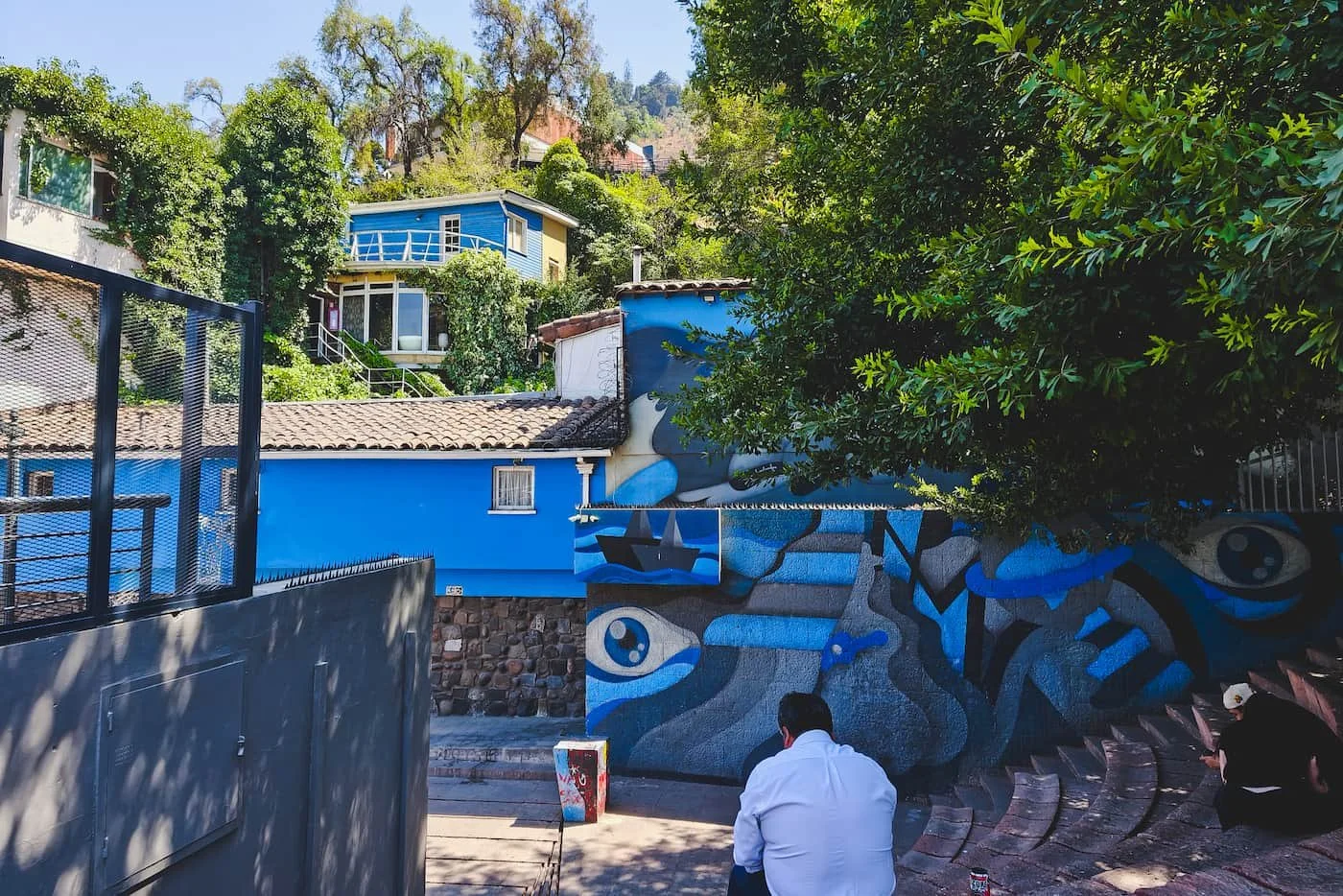
Blue exterior of La Chascona.
Galindo
What is it: Typical Chilean cuisine, open since 1968.
Why go: Get a taste of pastel de choclo (Chilean corn pie), one of my favorite Chilean dishes – note that it’s sweet and savory, and I know some folks who couldn’t get used to the sweetness for a meal, but I (and my Chilean partner) think you need to try it since it’s an emblematic dish. For those of you who do like the sweetness, ask for some sugar to sprinkle on top (it’s what the Chileans do and it really brings out the flavor of the corn!)
Hours: Tuesday–Thursday 12:00–23:00; Friday–Saturday 12:00–00:00; Sunday and public holidays 12:00–22:00. Closed Monday.
Cost: $$ (~$12 USD for pastel de choclo)
Tips: The traditional amount to tip in restaurants in Chile is ~10%.
Website: Link here.
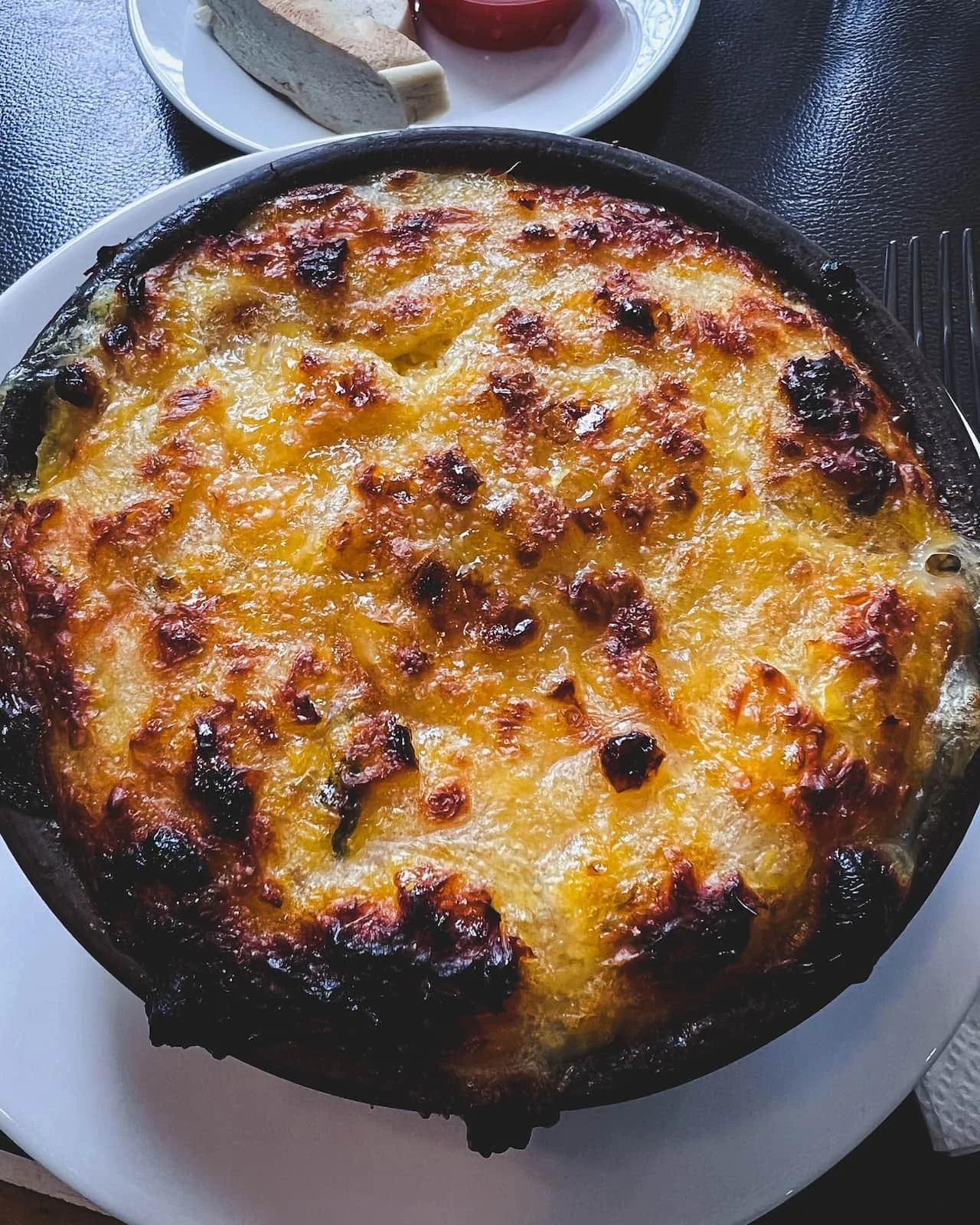
Pastel de choclo (Chilean corn pie) at Galindo.
Parque Forestal
What is it: Big park on the northern border of Bellas Artes neighborhood.
Why walk through: A good example of the types of greenspaces in Santiago. It’s my favorite way of getting from Bellavista to the Bellas Artes Museum – the wide dirt paths and lots of trees are so much more pleasant than the sidewalks along the busy avenues on both sides.
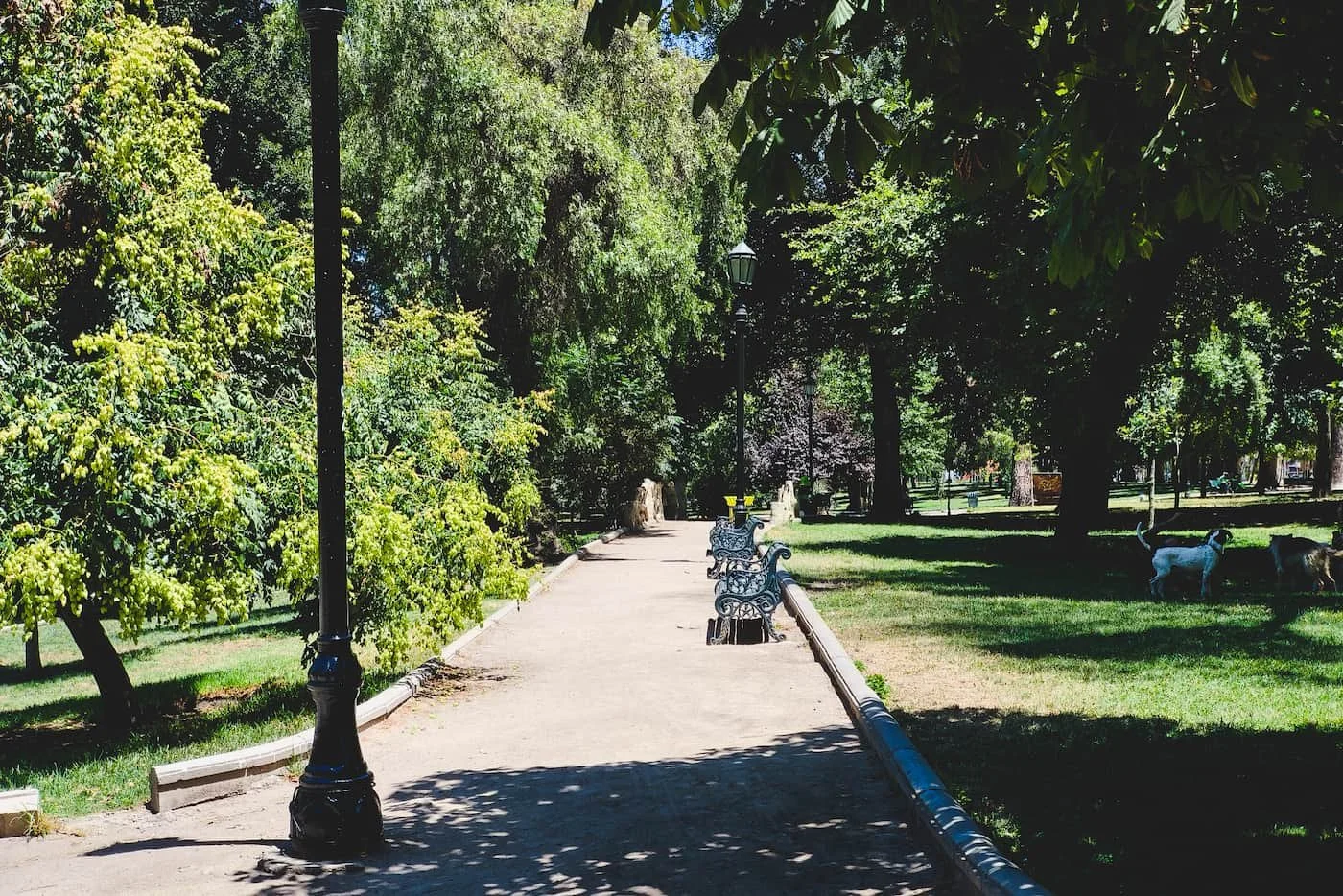
Path in Parque Forestal.
National Museum of Fine Arts (Museo Nacional de Bellas Artes)
What is it: One of Chile’s major museums and the oldest fine arts museum in South America (established in 1880). Situated in the Palace of the Fine Arts, a majestic Beaux-arts building facing Parque Forestal.
Why visit: Take in the beautiful building and the grand entrance hall, check out art by a range of Chilean and South American artists, including surrealist Roberto Matta.
Hours: Tuesday–Sunday 10:00–18:30; last entry at 18:20.
Entrance fees: Free.
Website: Link here.
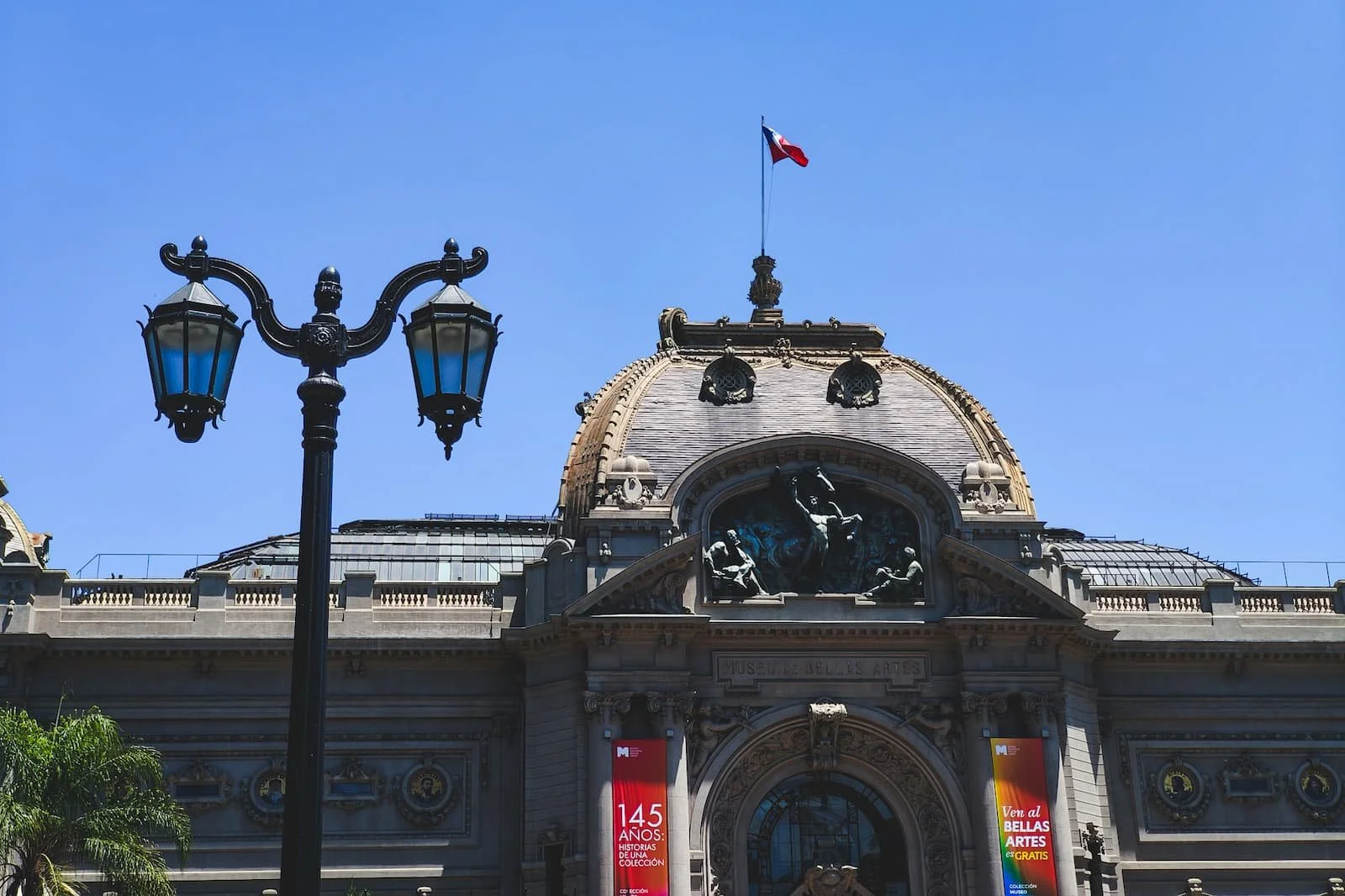
Exterior of National Museum of Fine Arts.
Plaza de Armas
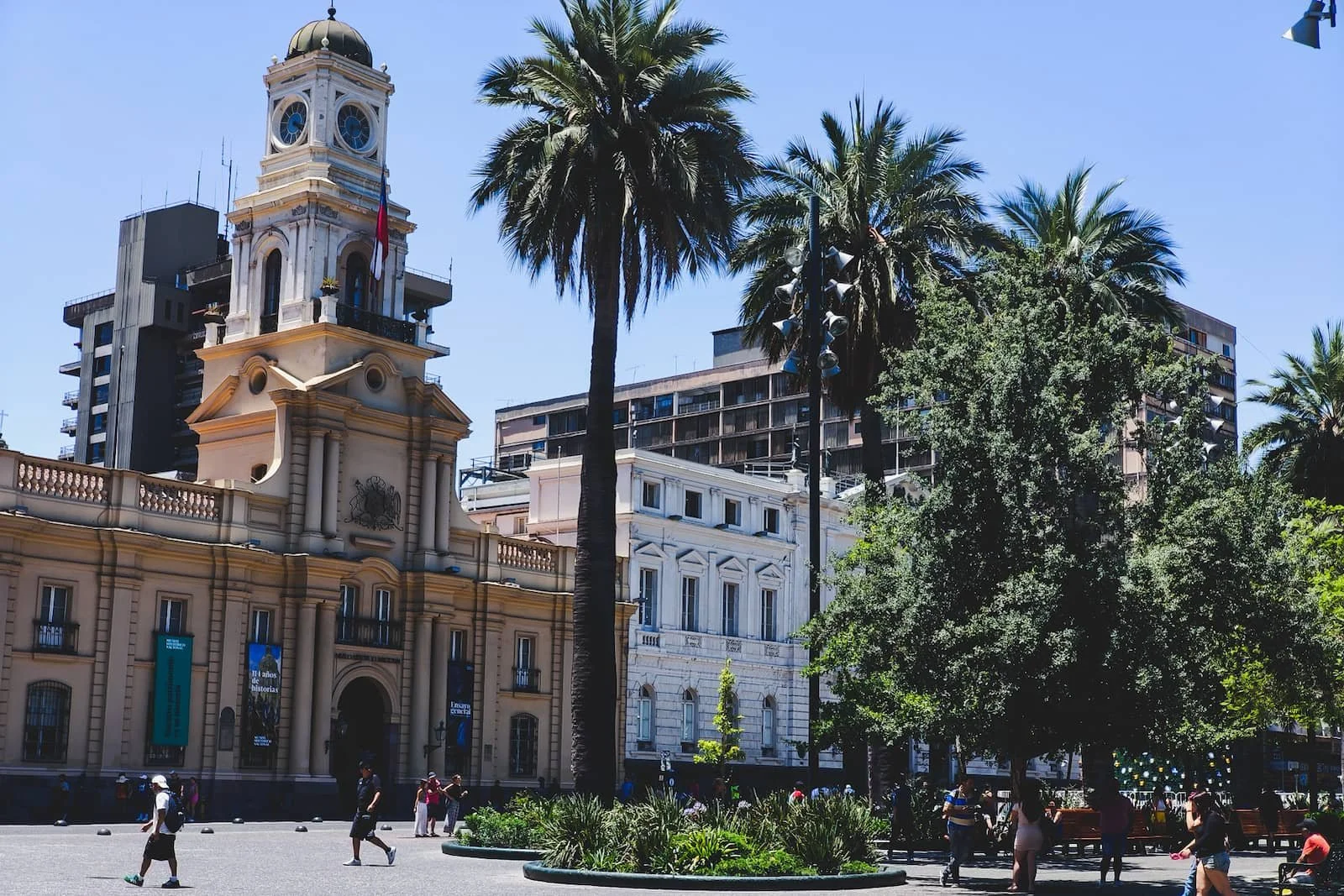
What is it: The main square of Santiago, now and during the Spanish colonial period, surrounded by historic buildings and palm trees.
Why walk through: This is Santiago’s historic center, and several stops on this itinerary are clustered around it. The plaza is also an active gathering place, where you’ll see people relaxing, playing chess, and even skateboarding.
Safety: This is a very busy area with opportunistic theft, so be extra aware of your bags and belongings.
Metropolitan Cathedral (Catedral de Santiago)
What is it: The main seat of the Catholic Church in Chile, dating back to the 18th century. Located in front of Plaza de Armas.
Why visit: Admire the neoclassical architecture, take in the grand marble nave and dome – the entire complex is a national monument.
Visit norms: As stated in the cathedral website, follow the visit norms as this is a religious site (no food, keep voices down, no flash photography).
Hours: Monday 10:00–14:30; Tuesday–Friday 9:30–18:00; Saturday 10:00–14:30; Sunday 9:00–13:00. Hours may change for religious services or special events.
Entrance fees: Free.
Website: Link here.
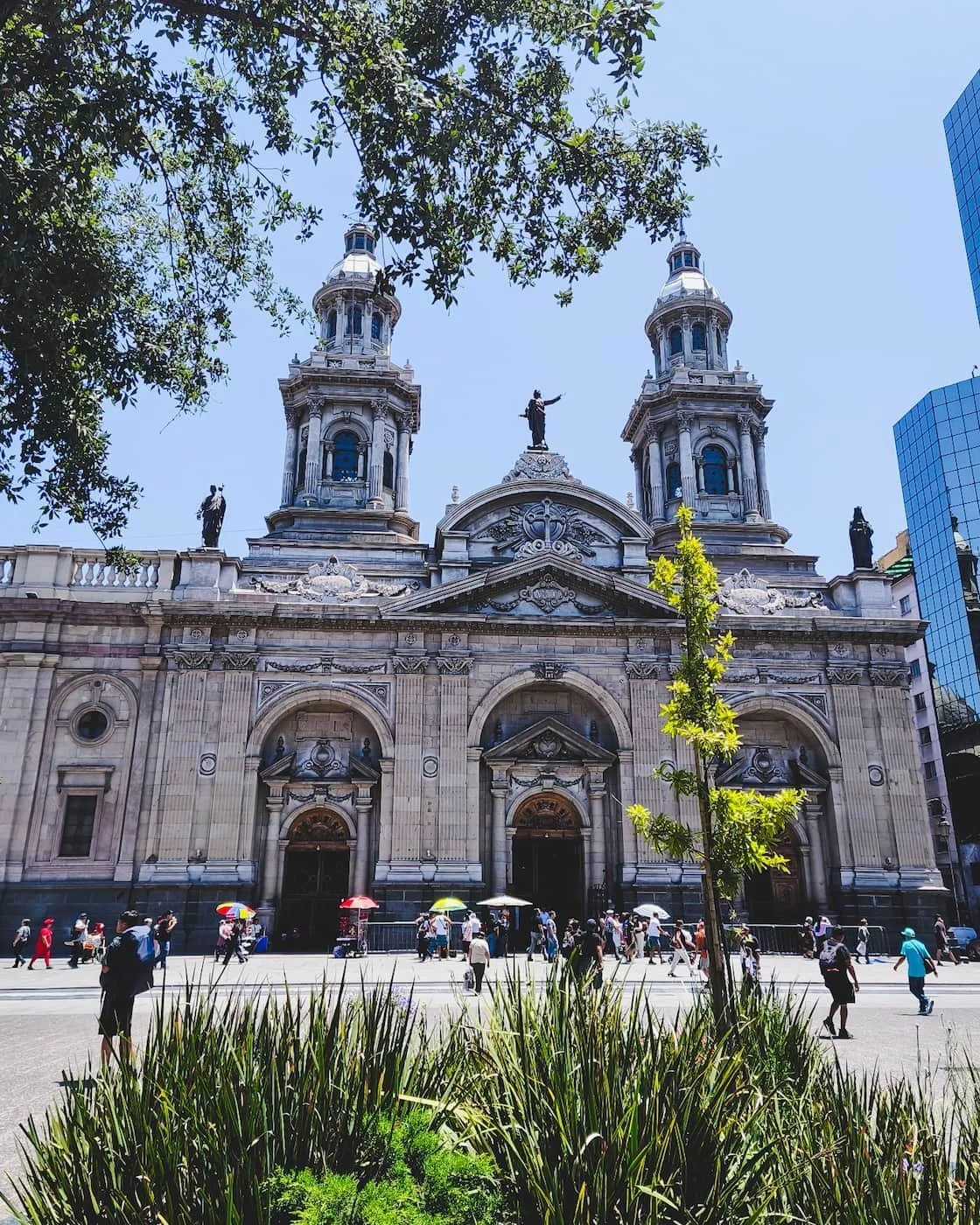
Exterior of Metropolitan Cathedral of Santiago.
National History Museum (Museo Histórico Nacional)
Note: I had originally recommended choosing between this museum and Museum of Pre-Columbian Art, but this museum closed in August 2026 for a major renovation and expansion project expected to last approximately three years. It's currently not open to visitors, but I'm keeping it here for reference and for when it eventually reopens.
What is it: Museum that overviews Chilean history from its indigenous peoples to the 1970s (government of Salvador Allende). Located in front of Plaza de Armas, in a historic neoclassical building where the first congress of the Chilean republic met.
Why visit: I really like this museum – I find it to be a great way to get a comprehensive view of Chile’s political and social history through artifacts and information displays. You can see archeological products as well as everyday objects (like furniture, clothing, and carriages).
Hours: Temporarily closed for renovations (since August 2026).
Entrance fees: Free (when open).
Website: Link here.
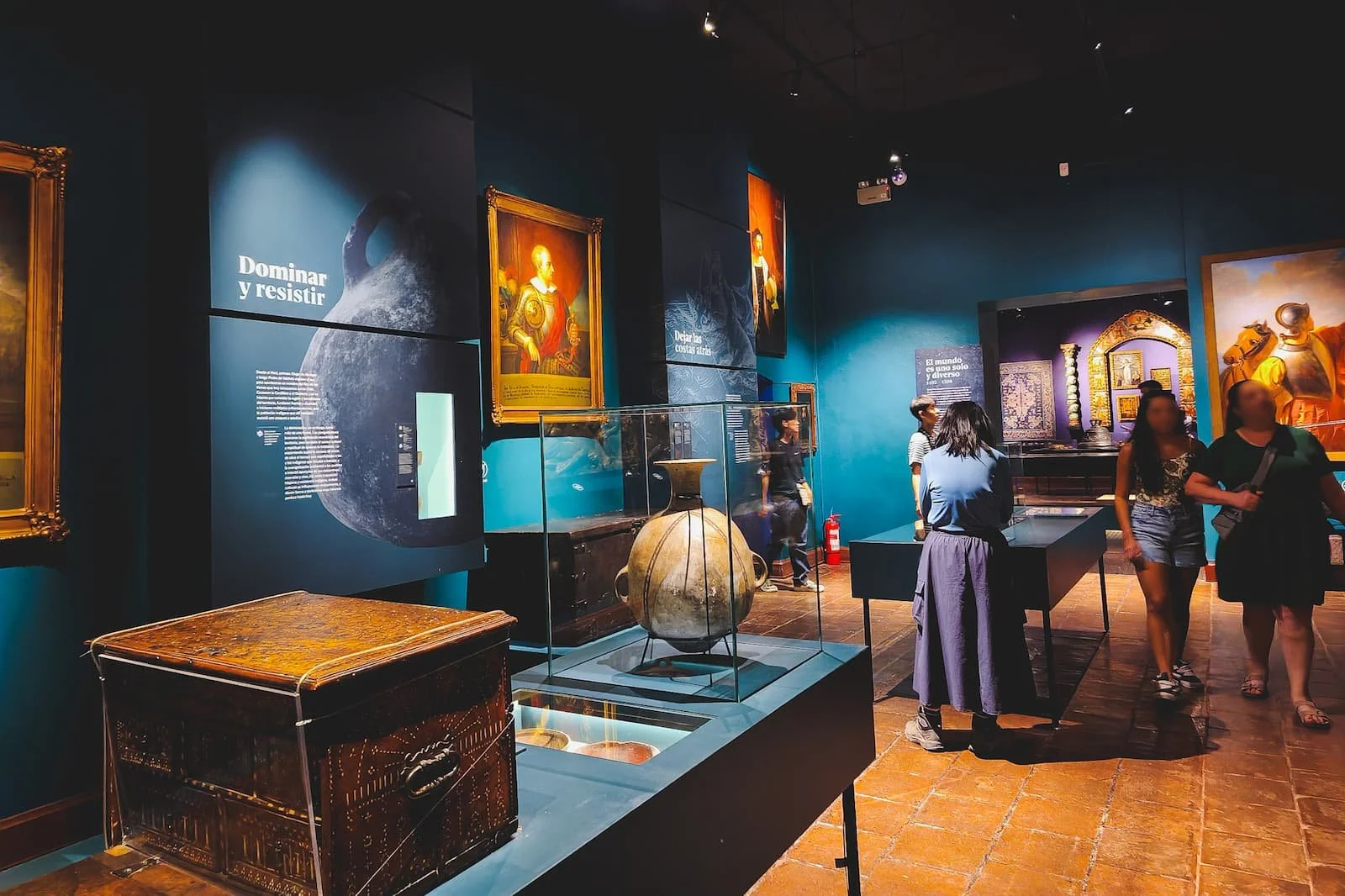
Interior displays of the National History Museum.
Museum of Pre-Columbian Art (Museo Chileno de Arte Precolombino)
What is it: Museum dedicated to the art of the indigenous peoples of Central and South America prior to European conquests. Located 1-2 blocks from Plaza de Armas.
Why visit: This is very unique to the region and is an extensive collection of art from indigenous cultures like the Mapuche, the Maya, the Inca, just to name a few. See textiles, pottery, carvings, and even Chinchorro mummies, the oldest mummies in the world.
Hours: Tuesday-Sunday 10:00-18:00.
Entrance fees: 12,000 CLP / ~$13 USD for foreigners.
Website: Link here.
Completos (Chilean hot-dogs) at El Portal Ex-Bahamondes
What is it: El Portal Ex-Bahamondes (est. 1930) is reportedly the birth place of the “completo italiano” – Chilean hot dogs loaded with mashed avocado (“palta”), diced tomatoes, and mayonnaise. Located in the historic commercial center Portal Fernández Concha next to Plaza de Armas.
Why go: Completos are a classic, very popular Chilean fast food, and in my opinion a must-try – it’s made of the same type of hot dog and bun as American hot dogs, but the combo with avocado, tomato, and mayo makes it very different. Order the classic completo italiano.
Hours: Everyday 9:00-evening (19:30 or 22:00, hours vary).
Cost: ~5,400 CLP / ~$6 USD for a large completo italiano. As a snack, the large size can be shared amongst two people.
Tips: The traditional amount to tip in restaurants in Chile is ~10%.
Mote con huesillo from street stands
What is it: Mote con huesillo is a traditional Chilean non-alcoholic drink / dessert made from sweet dried peach (huesillo) juice, topped with wheat berries (mote) and rehydrated dried peaches. The pedestrian streets around Plaza de Armas, including Paseo Ahumada and Paseo Estado, are dotted with the street stands where it is traditionally sold.
Why eat: This is a very popular Chilean drink, especially in the summer, so worth trying for the local food tasting. It’s also just so good – if you love peaches like me, you will love this stuff. Especially on a hot summer day, after walking around sightseeing, it’s so refreshing and energizing.
Hours: Vary by stand, but most are open in the afternoon. Because it is mainly a summer drink, far fewer stands operate during colder months.
Cost: Varies by stand, but usually around $1–3 USD.
Payment: Many stands are cash only, though some do take credit cards.
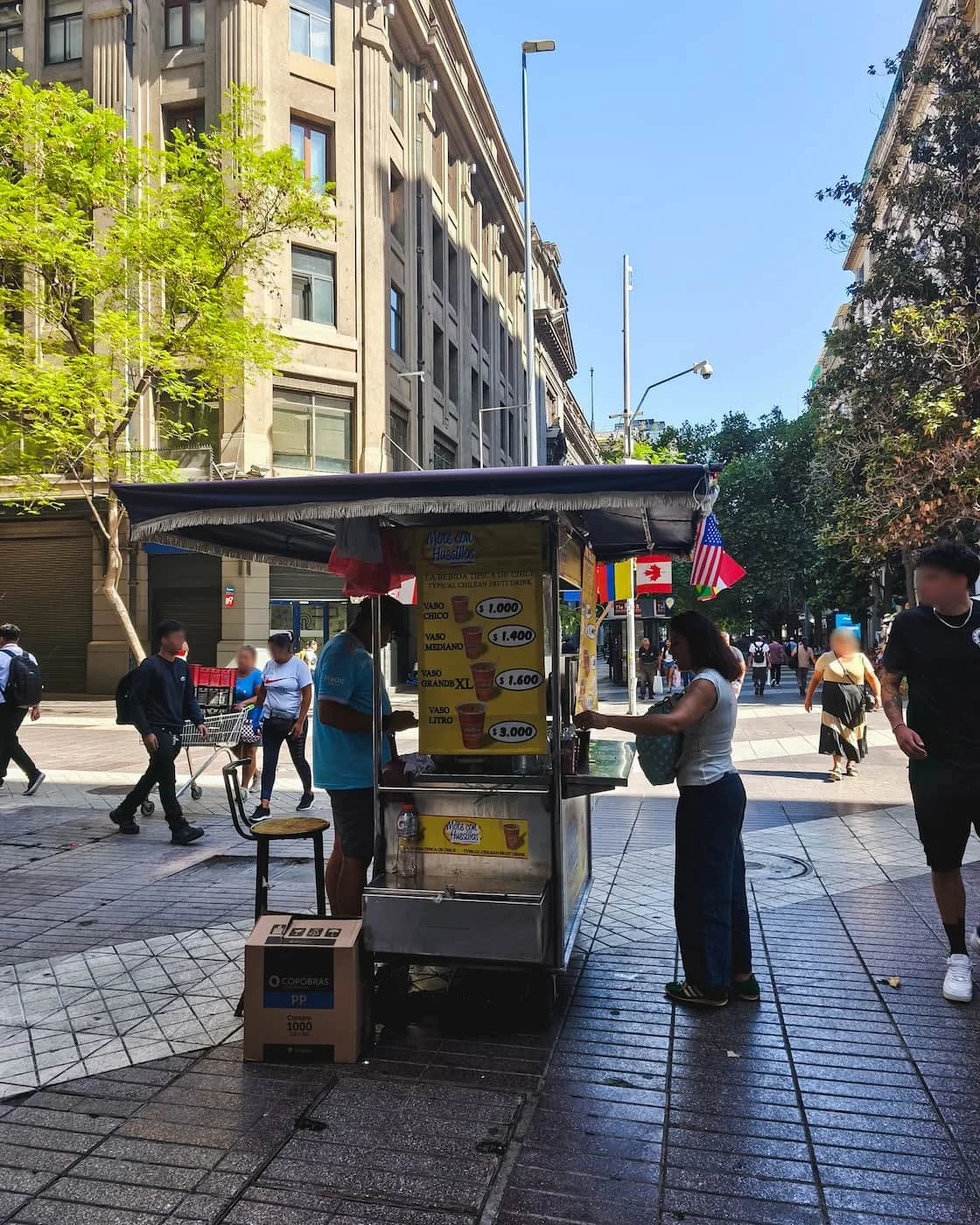
Street stand on Paseo Ahumada selling mote con huesillo.
Paseo Ahumada & Calle Nueva York
What is it: Pedestrian (car free) streets in the heart of downtown Santiago that connect Plaza de Armas with Santiago’s main avenue, La Alameda, to the south.
Why visit: Lively commercial zone with street performers, lots of shopping galleries, malls, stores, and restaurants, and street stands. Sometimes it could be a little chaotic, but great for walking around and feeling the pulse of the city.
What to see and do: Eat mote con huesillo from a street stand! And on Calle Nueva York (beautiful cobblestone street), turn around for a view of the Stock Exchange building, a grand French Renaissance-style building.
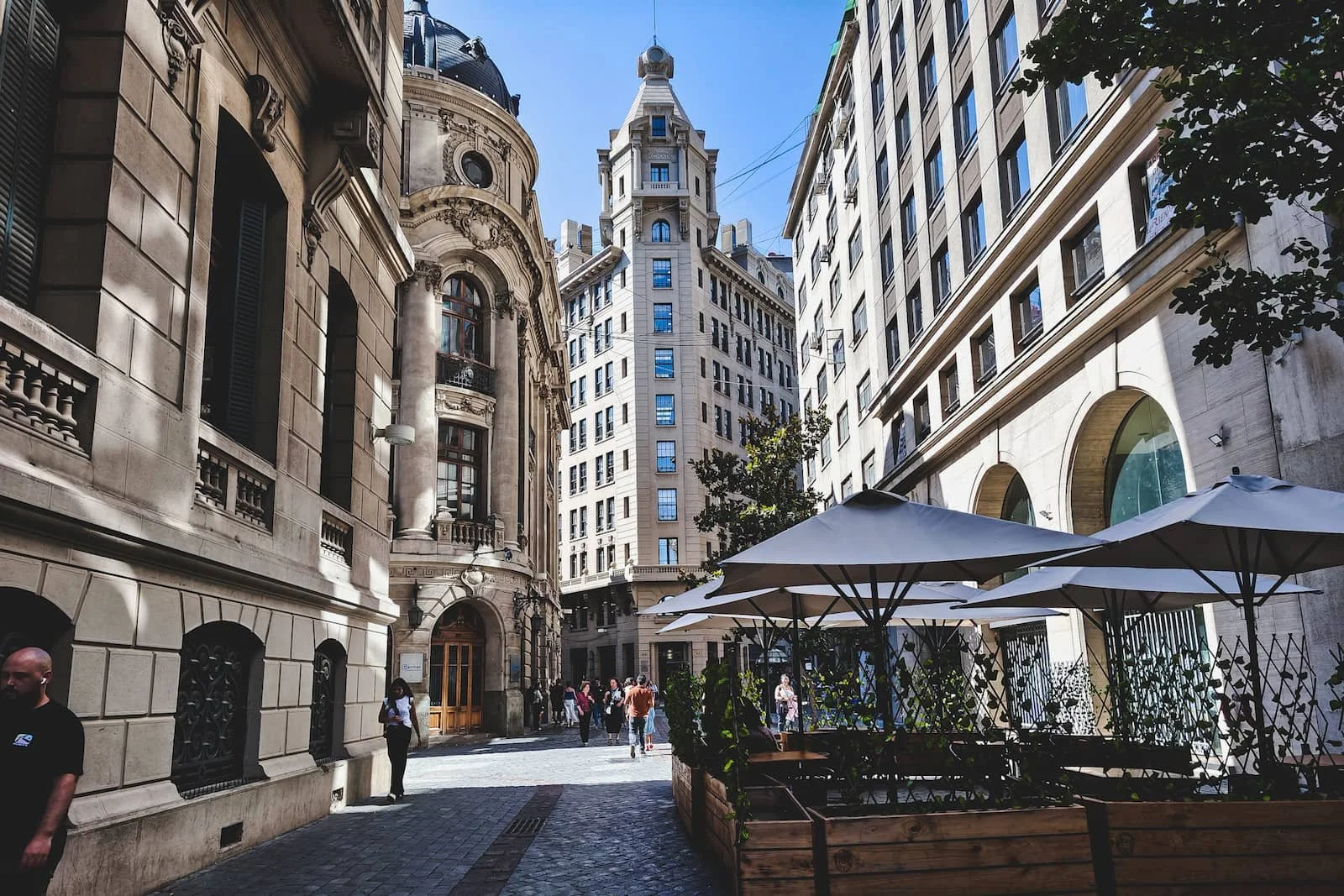
View from Calle Nueva York.
La Moneda
What is it: Officially Palacio de La Moneda, this is the seat of the President of Chile. It’s a grand neoclassical palace that occupies an entire block.
Why visit: A must-see – one of the iconic landmarks of the city, and a very historically significant one. The palace was bombed during the 1973 military coup d'état that started the Pinochet dictatorship. Large portions of the building were destroyed then but have since been restored.
What to see and do: Walk around the exterior of La Moneda to take in the view and the surrounding plazas. Take a rest in the grassy areas of Plaza de la Ciudadanía outside while admiring the building (and the huge Chilean flag right there). Optionally, head down the ramp at Plaza de la Ciudadanía to Centro Cultural La Moneda, a basement center that showcases various exhibitions.
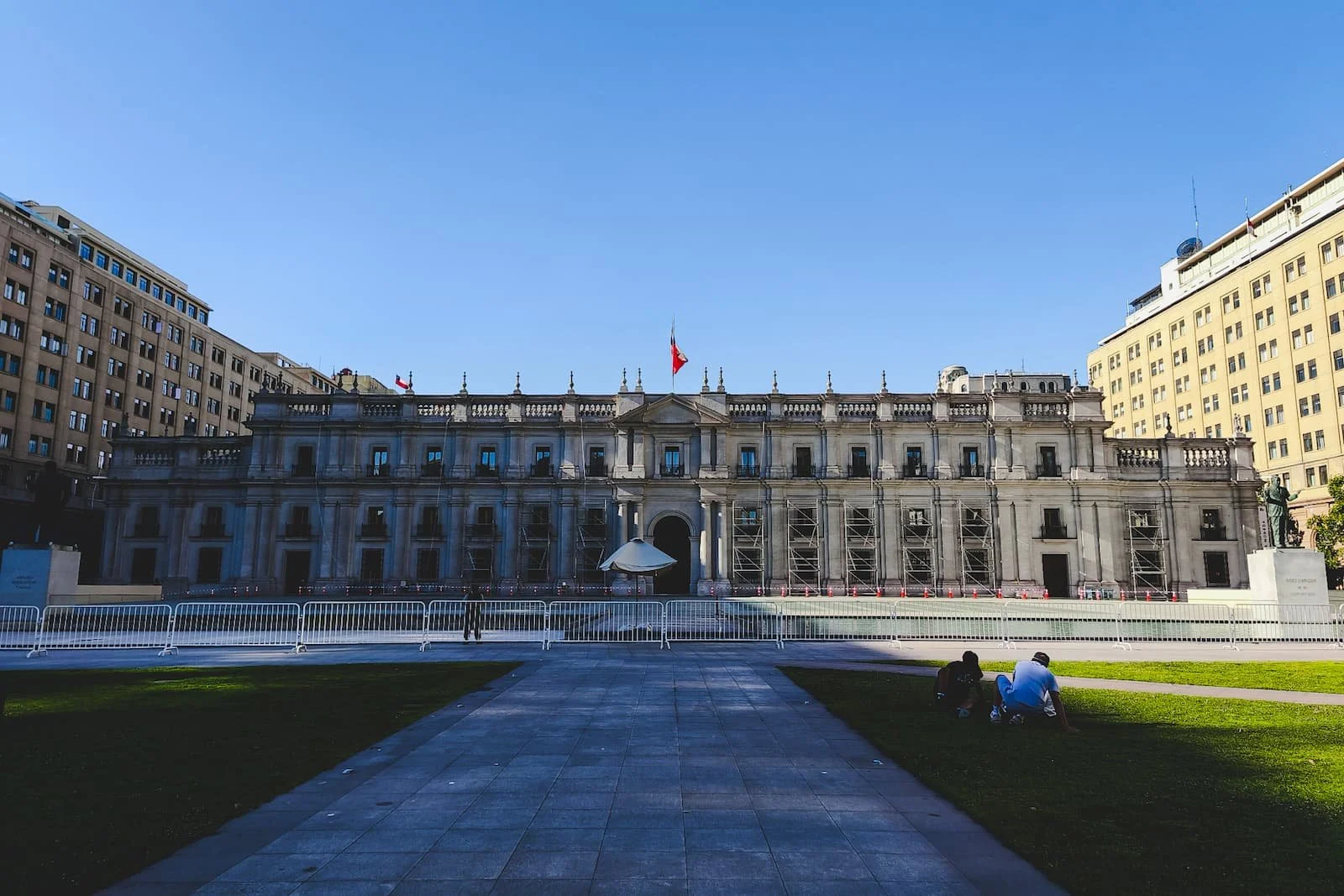
Exterior (back) of La Moneda, taken from Plaza de la Ciudadanía.
Barrio París-Londres
What is it: Neighborhood centered on two short cross-streets south of La Alameda, known for its cobblestone streets with French-style mansions turned into hotels and shops.
Why visit: European elegance in Santiago. I think it has a distinct feel compared to the rest of the city, and is a great spot to walk around for the vibe and for photos, as well as see some history.
What to see: Church of San Francisco (consecrated in 1622) is one Santiago’s oldest colonial-era buildings and has survived a bunch of earthquakes. Londres 38 is a former dictatorship-era torture site that’s now a memorial/museum. There’s also an elaborate arch bridge on Calle París.
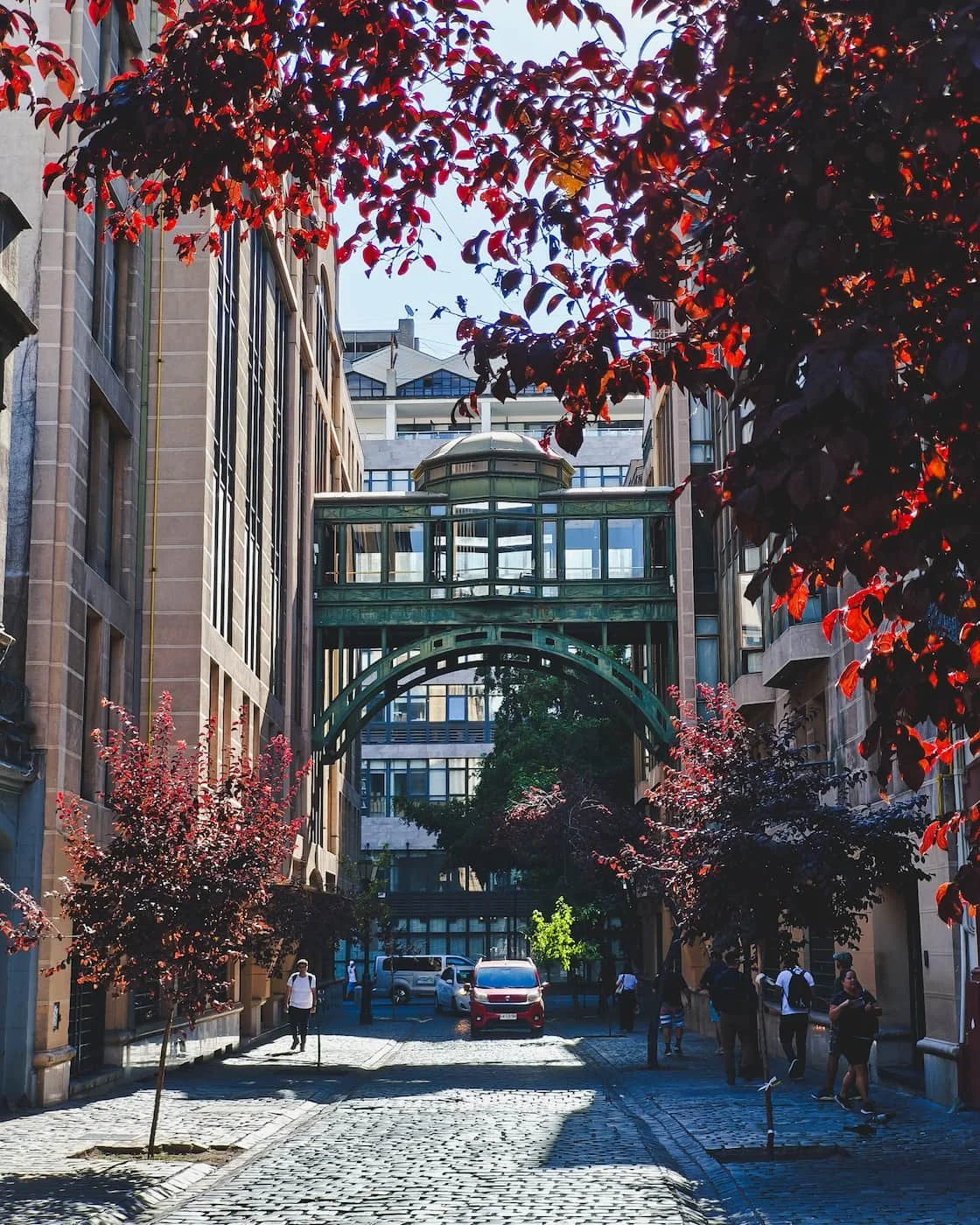
The arch bridge on Calle París.
Santa Lucía Hill
What is it: Small hill in the center of the city with lots of greenery and dominated by Castillo Hidalgo, a historic fort that has its structures and terraces now blended into the hill.
Why visit: It’s a short climb to the top (~30 minutes), but the pay-off of the view up top is totally worth it and the various historic structures dotted around the hill make it more than a nature climb.
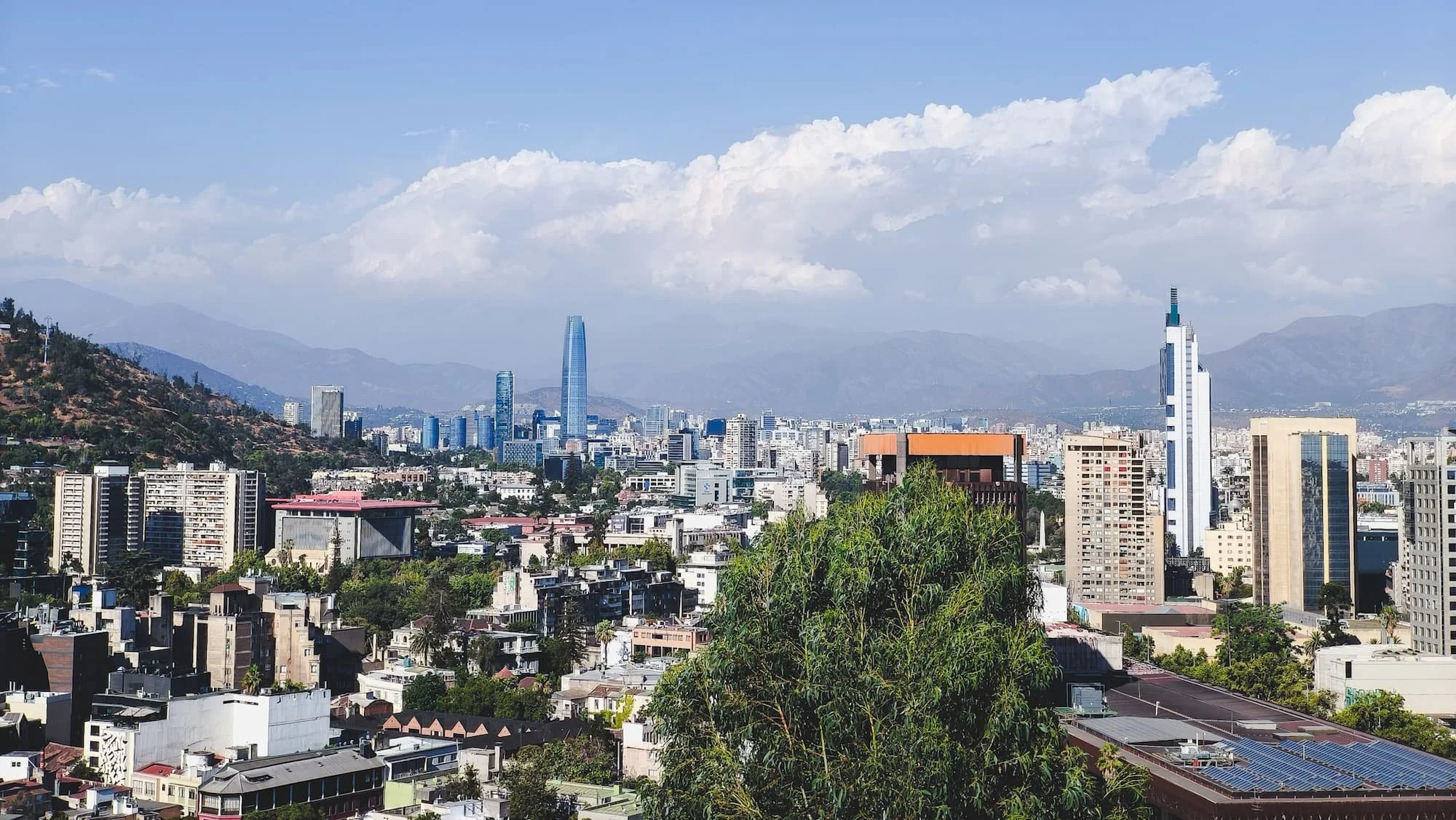
What to see: Neptune Fountain at the base of the hill. Structures of Castillo Hidalgo. At the top, you have a panoramic view of the city, with Gran Torre Costanera (the tallest building in South America) and the majestic Cordillera de los Andes.
Safety: The stairs become narrow and uneven near the top, so take your time.
Hours: In summer, Monday 12:00–20:30 and Tuesday–Sunday 7:00–20:30. In winter, Monday 12:00–19:30 and Tuesday–Sunday 8:00–19:30. Closed when it rains.
Entrance fee: Free.
Website: Link here.
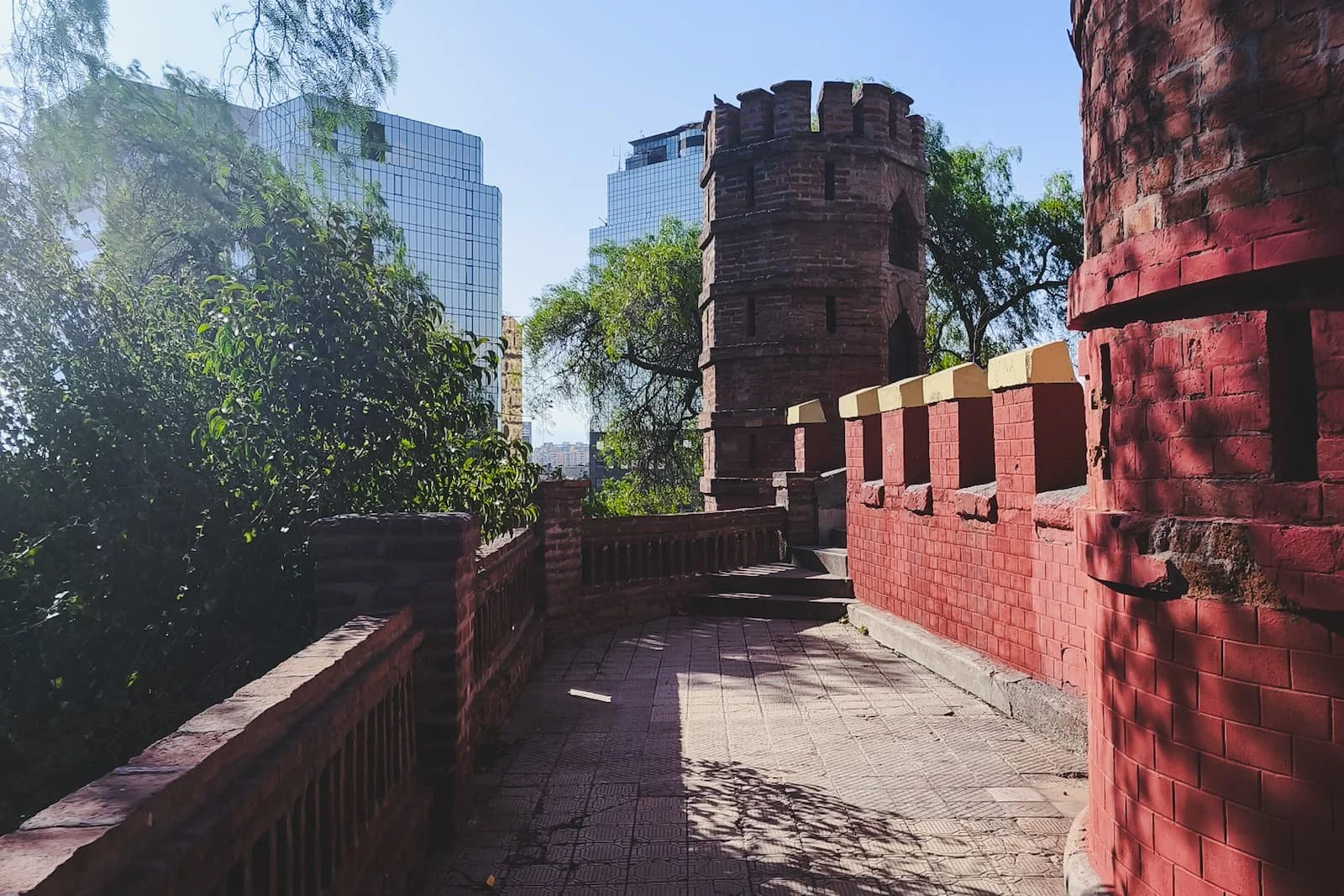
Parts of Castillo Hidalgo on Santa Lucía Hill.
Barrio Lastarria
What is it: Neighborhood directly east of Santa Lucía Hill, a popular tourist hub with lively streets full of restaurants, cafes, wine bars, and street vendors.
Why visit: Great for outdoor dining and nightlife, and to have a relaxed and well-deserved end to a full day of sightseeing :)
What to do: Walk around and take in the atmosphere. Dinner and drinks at Peztoro, a Chilean/Italian restaurant. Try their chorrillana (Chilean plate with fries topped with various meats) and sit outside.
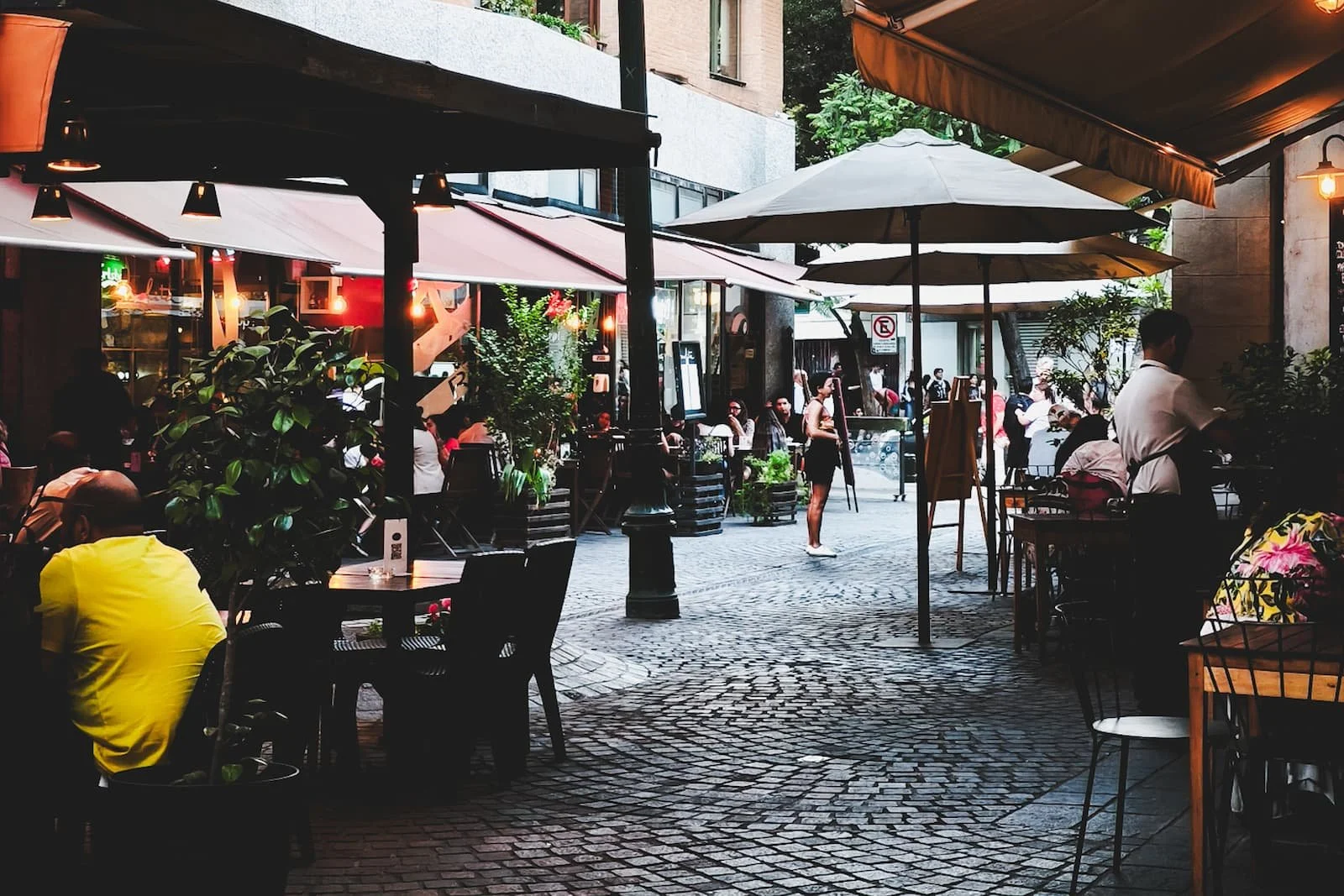
Outdoor dining in Barrio Lastarria.
Modifications
The route can stay mostly the same. These modifications show you which stops to remove or adjust based on your time, the weather, and your energy level.
If you don’t have / want a full day…
Skip: One of the museums.
Keep: Plaza de Armas, La Moneda, and surrounding areas for the historic landmarks. Santa Lucía Hill for the panoramic view of Santiago.
If it’s rainy…
Skip: Santa Lucía Hill – it’s closed when it’s raining.
Keep: The museums (maybe go into both the National History Museum and the Pre-Columbian Art Museum). I’d still recommend going to Plaza de Armas, La Moneda, and the surrounding areas, but you can duck into the nearby indoor areas once in a while when you want to escape the rain. Some indoor areas are: Portal Fernández Concha (near Plaza de Armas, where El Portal Ex Bahamondes is), Centro Cultural La Moneda (basement of Plaza de la Ciudadanía).
If you want to make the day exercise-focused + have 1-2 extra hours in the morning…
Add: Hike San Cristóbal Hill – large hill area that houses Parque Metropolitano, Santiago’s largest park. The climb and the summit give you panoramic views of the city. Take the cable car down.
Skip: Santa Lucía Hill later in the afternoon – you will already have gotten all the views of the city from a much higher point.
Maybe also skip: Some of the stops in the center/downtown areas, since the hill is a hike. I’d still recommend going to Plaza de Armas and La Moneda, and pick one of the museums though.
Final Thoughts
This route gives you a practical introduction to several sides of Santiago, from Bellavista and traditional Chilean food to the historic center, museums, La Moneda, Santa Lucía, and Lastarria.
It is a full day, but easy to adjust. You can shorten a museum visit, skip an interior stop, or move Santa Lucía earlier without changing the whole route.
I would not add much more. If you have extra time, it is better to spread Santiago across another day than turn this one into a race.
If you follow the route, tell me in the comments or send me a message to let me know how it went. Feel free to ask any questions as well!
More Santiago guides
3 Days in Santiago — for a longer itinerary
Santiago Start Here Guide — for all of my Santiago planning resources
Where to Stay in Santiago — neighborhood comparisons and where I’d stay
Valparaíso Day Trip from Santiago — for an easy trip beyond the city