A Skill I Come Home to on the Road
One thing people don’t talk about much with long-term travel is how easily habits fall apart. At home, routines have a way of carrying themselves — you know where you’ll work out, when to do certain chores, which grocery store you’ll go to, which cafe you’ll stop by in the morning. Even when a habit takes effort, it usually takes less effort than rebuilding it from scratch.
Once I started traveling full-time, I realized how much that background structure had been doing for me in my prior, less transitory life. Now that I’m constantly adapting to new neighborhoods and mentally rehearsing new languages just to buy something as basic as toilet paper, the habits that aren’t strictly necessary to live tend to be the first ones to slip. I work, cook, and clean regularly because I have to, but other routines disappear to make room for the energy spent adapting. And when the routines that disappear are the ones that give me a sense of progress or accomplishment, it leaves me feeling a little unmoored.
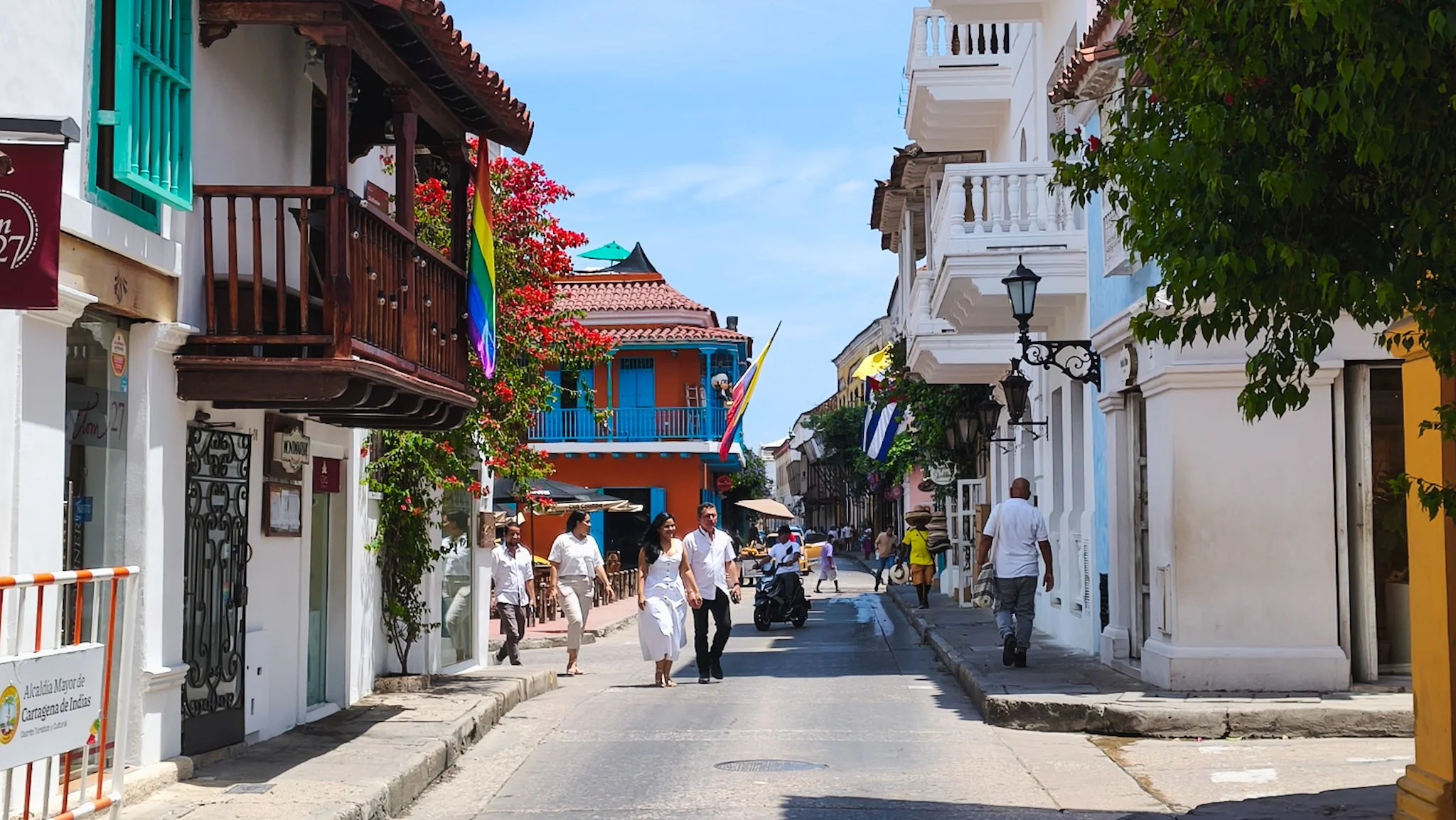
For me, the biggest one has always been exercise. I used to run consistently and race recreationally, and in theory, running is an ideal fit for low-friction travel: it requires minimal gear, can be done anywhere, and is a built-in way to explore a place. The idea of exploring a city through running feels efficient and a little romantic, as you lace up your shoes and head out into a new city, learning it through movement.
But in practice, running has never been something I naturally default to. In my head I’m always the kind of person who goes for an effortless sunrise run in a new city, but in reality I’m usually standing there looking at my running shoes and convincing myself to go. While traveling, that mental effort compounds. I’m not just running; I’m figuring out routes, navigating unfamiliar streets, thinking about safety, and adjusting to environments I don’t know yet. At some point, the friction becomes just high enough that it’s easier to put off. And yet I kept trying to make running be the thing I stuck with, because it seemed like it should fit my travel style so well.
Over time, as I struggled to run consistently while traveling, I started thinking more intentionally about why that was. I realized I wasn’t actually trying to maintain the habit of running itself so much as hold onto the sense of continuity it gave me and to have a practice that felt like mine wherever I was. I still run sometimes, but I’ve come to see that running isn’t the practice I return to most easily when everything else is changing.
I’ve always thought of myself as a pretty adaptable person. I don’t need a permanent home base to feel okay, and I can settle into new places relatively easily. But I’ve realized there’s a difference between not needing permanence and not needing continuity. When your environment is always changing, it helps to have something that doesn’t reset, something you can return to and slowly improve at over time.
Of course, there are other ways to measure progress. Work and writing can offer that too, but those are often tangled up with external validation (does it earn money? is it useful to someone else? will this “go somewhere”?). Other hobbies can offer a sense of improvement too, but I wanted to hold onto the part of running that mattered to me — a physical practice that gave me movement, repetition, and a sense of improvement without being tied to productivity.
That, more than running itself, was what I had been trying to preserve. It was one of the things that had made running meaningful to me when I had a permanent home, and it feels even more important now. When so much of life on the road is temporary, it matters more to have some reliable way to feel progress.
At that point, the question became finding a physical practice I could genuinely keep while traveling, one I would actually look forward to doing, that could be done almost anywhere with minimal gear, and that would still give me a tangible sense of progress over time. I ended up trying a range of different workouts (enough that I even wrote about the types of exercise that work well for one-bag travel). Somewhere in that process, I tried jump rope for the first time and pretty much just wished I had started earlier.
On a practical level, it checks almost every box. All you need is a rope, which takes up almost no space in my one-bag setup, and a pair of supportive shoes, which can just be the shoes I already wear day to day. It requires very little space, so there’s not much to figure out before starting (really just a matter of finding a quiet spot outdoors with enough space). Sessions can be short and still feel worthwhile, so I can squeeze in a quick workout in the morning before heading out to explore for the day.
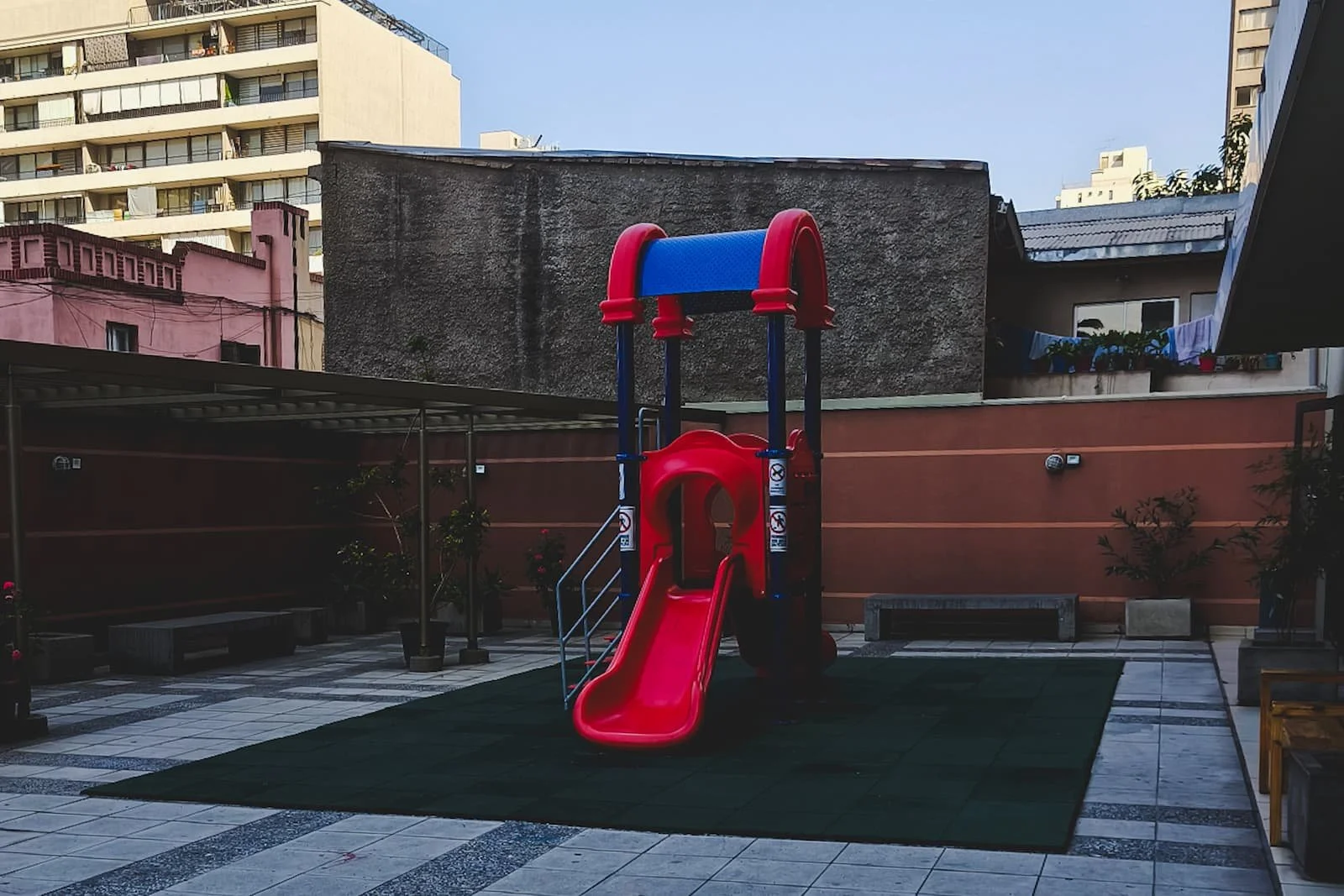
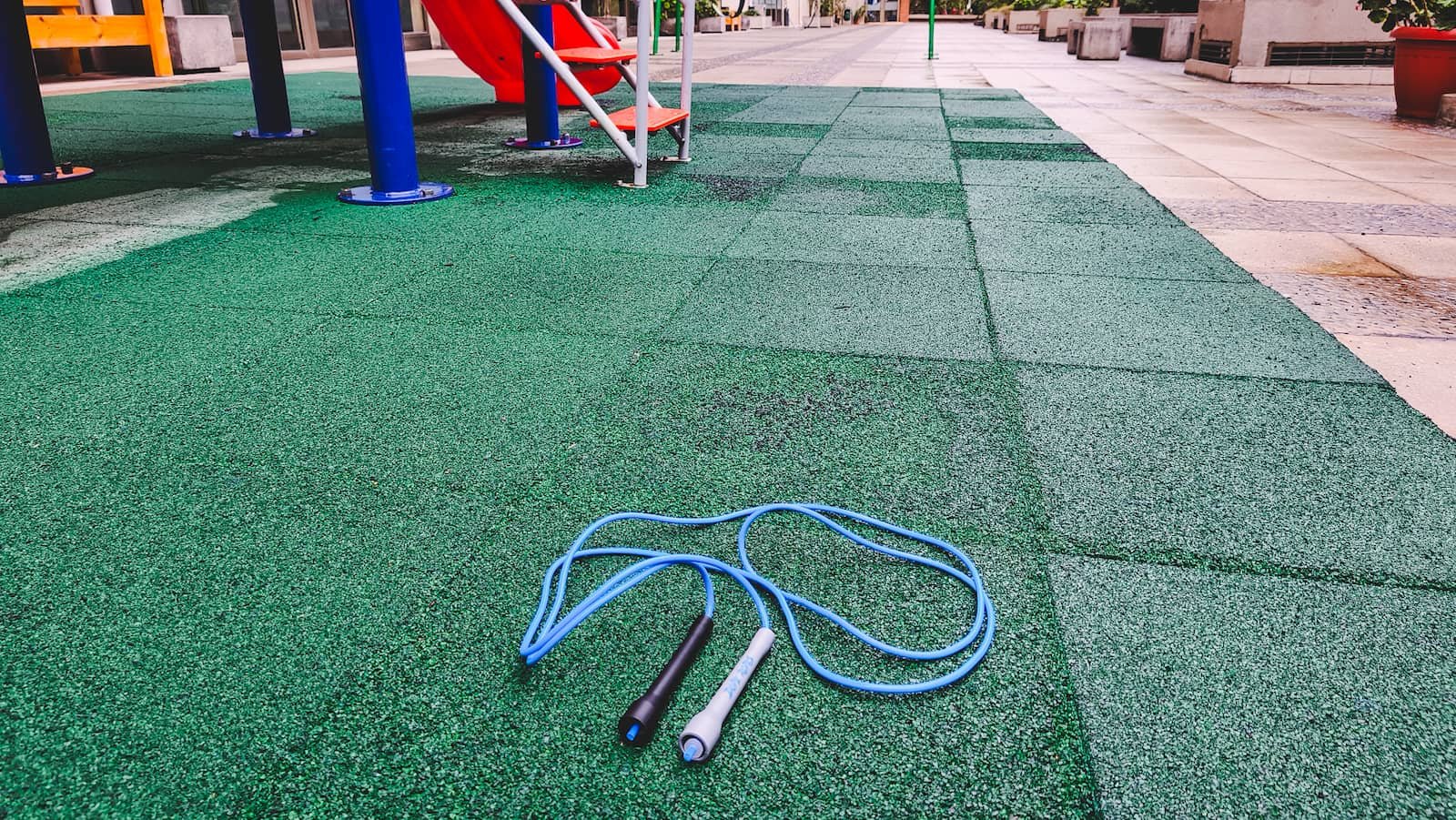
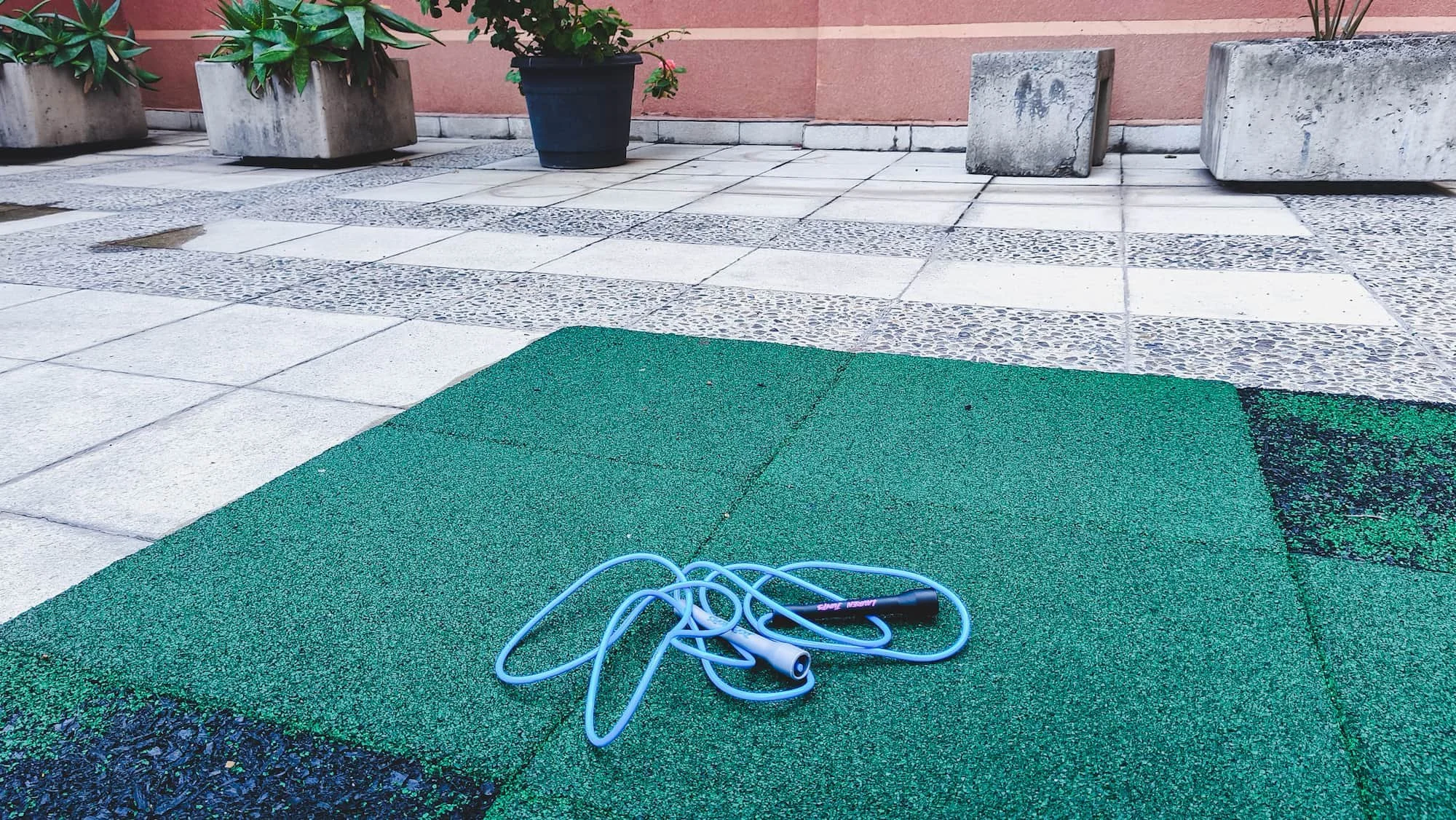
I got lucky with one of my Airbnbs, which had this often empty cushioned playground for practice.
But what really made it click for me was that jump rope is skill-based. There is always something to work on, whether it’s a new step, a new combo, or a cleaner rhythm. And when that step that made me feel self conscious and awkward in public a few days ago suddenly starts to make sense, the satisfaction is real.
There are other practices that can work this way. Yoga can be one, and I had been doing it alongside running for years. But it’s realistically much more comfortable with a mat, and a mat is more to carry than a rope. More than that, for me, jump rope gives me a stronger boost of energy, a more tangible sense of skill progression, and the kind of low-setup ease that makes it much easier to keep on the road.
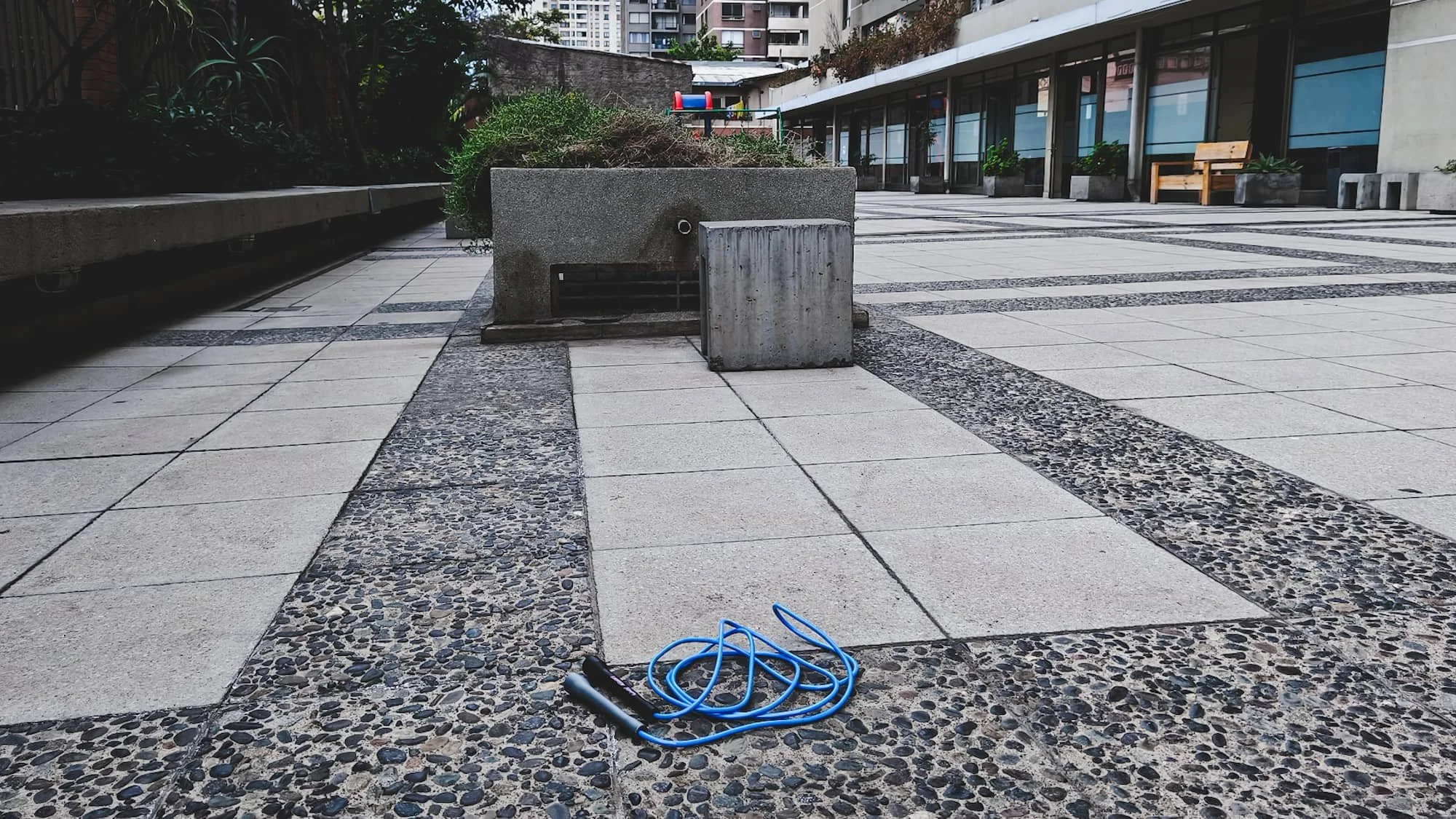
So lately, wherever I go, I try to find a small patch of ground, whether it’s a corner of a quiet plaza, a backdoor parking lot, or (if I’m lucky!) an empty cushioned playground, where I can practice several times a week. Nothing elaborate, just myself and my rope to keep the thread going. The city changes, but the rope stays the same, and when I come back to my practice, the road feels a little more like home.
To keep that sense of continuity, I’ve started keeping a simple log of my jump rope sessions as I go. Nothing overly structured or like a training plan, just a way to track the proof of my practice wherever I am, and, to be honest, indulge my desire for visible progress a little more too.
If you want to see what it looks like to keep a portable practice going across places, I’m sharing short entries here: Jump Rope Logs.
Have a question about this?
Shoot me a message or leave a comment below — I read everything, and I’m always happy to help if I can!