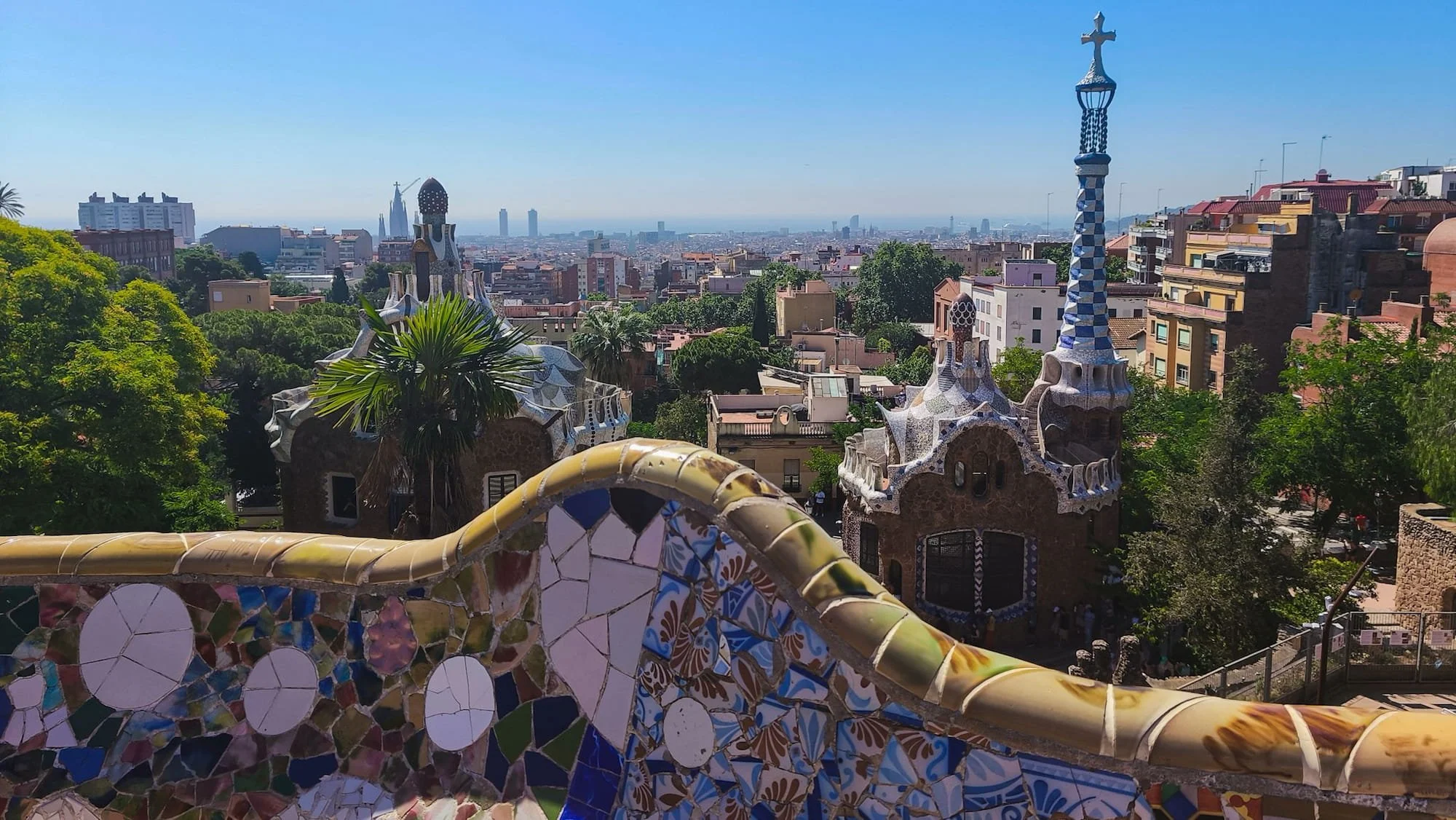
Barcelona in 2 Days: A Well-Routed Itinerary for First-Time Visitors
Last updated: August 2026
Barcelona is one of the world’s most visited cities for a reason: it’s colorful, energetic, full of culture and famous architecture, and very good at making you stop in the middle of the street for photos.
It can also be crowded, chaotic, and difficult to wing. The major sights are spread across different areas, and several require timed tickets that can sell out in advance.
I designed this Barcelona 2-day itinerary to make the geography and logistics easier. Day 1 covers the old city and waterfront, while Day 2 focuses on Gaudí, Gràcia, and Eixample, with route flow, timed tickets, opening hours, and crowds in mind.
We also tested most of the itinerary during our own trip, so I’ve included personal notes and adjustments from the experience. You can just book the tickets and go!
Quick Plan
Time needed: 2 full days
Best for: First-time visitors who want Barcelona’s major sights, neighborhoods, food stops, and city atmosphere without overplanning every hour
Day 1: Plaça de Catalunya → La Rambla → La Boqueria → small El Raval wander → Gothic Quarter → lunch → El Born → Parc de la Ciutadella / Port Vell / Barceloneta waterfront
Day 2: Park Güell → Gràcia → lunch → Sagrada Família → Eixample walk → Casa Milà exterior → Casa Batlló → Passeig de Gràcia
Pace: Full but manageable; timed attractions should be booked in advance
Walking level: High. Expect a lot of steps both days.
Transportation needed: Metro or taxi to Park Güell; metro/bus/taxi between Gràcia and Sagrada Família depending on how much walking you want. See my guide to getting around Barcelona
Watch out for: Pickpocketing in crowded areas, touristy food around La Rambla, and timed-ticket logistics for Park Güell, Sagrada Família, and Casa Batlló
Opening hours: The main ticketed attractions in this itinerary are typically open daily, but some restaurants, markets, and smaller businesses in Barcelona close on Sundays (including some eateries in this itinerary). If your visit includes a Sunday, double-check food stops in particular.
Route Maps
These maps below give you an overview of the route. If you want ready-to-use Google Maps routes of each day, use these:
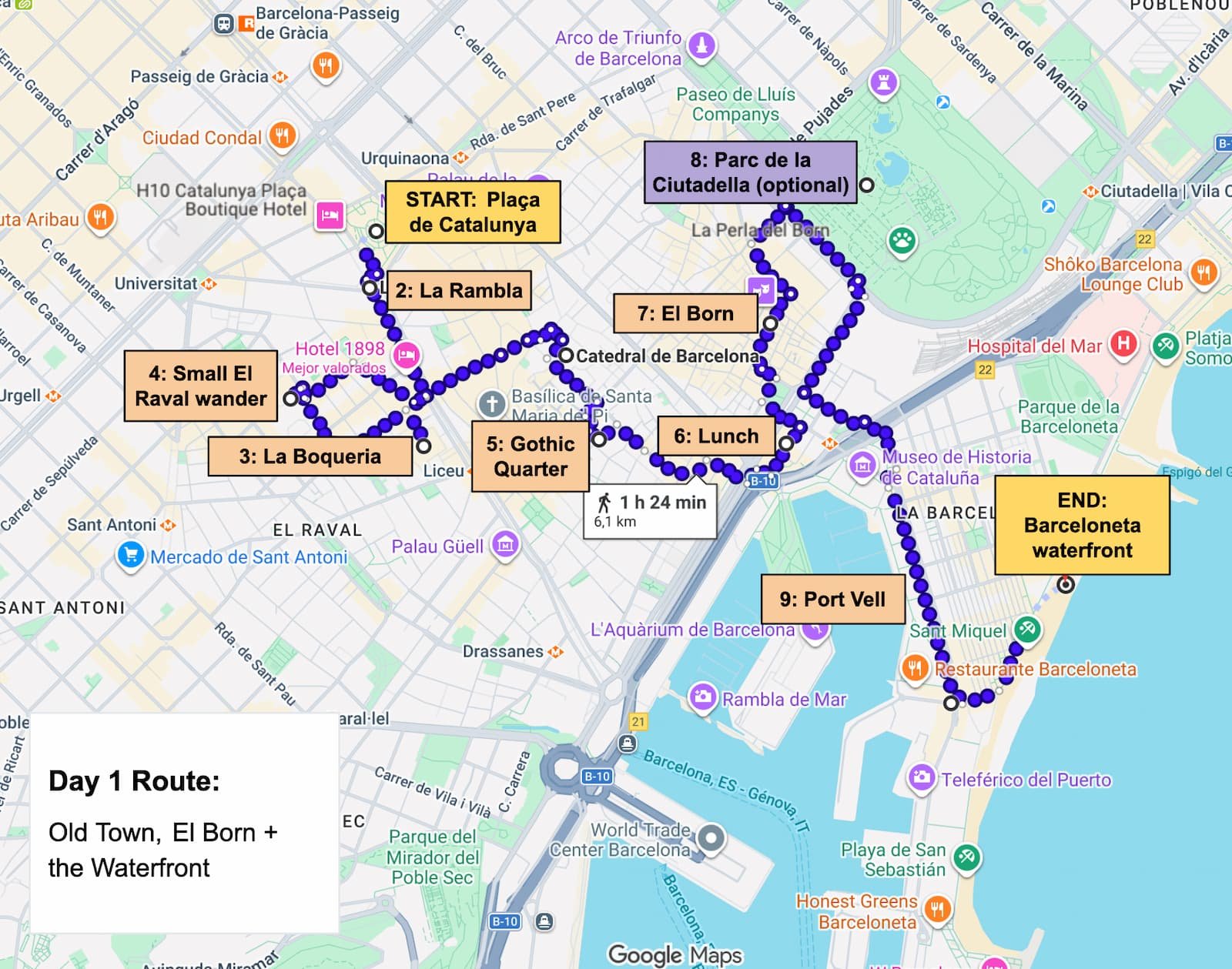
Day 1 route: Old Town and the waterfront (Map data © Google)
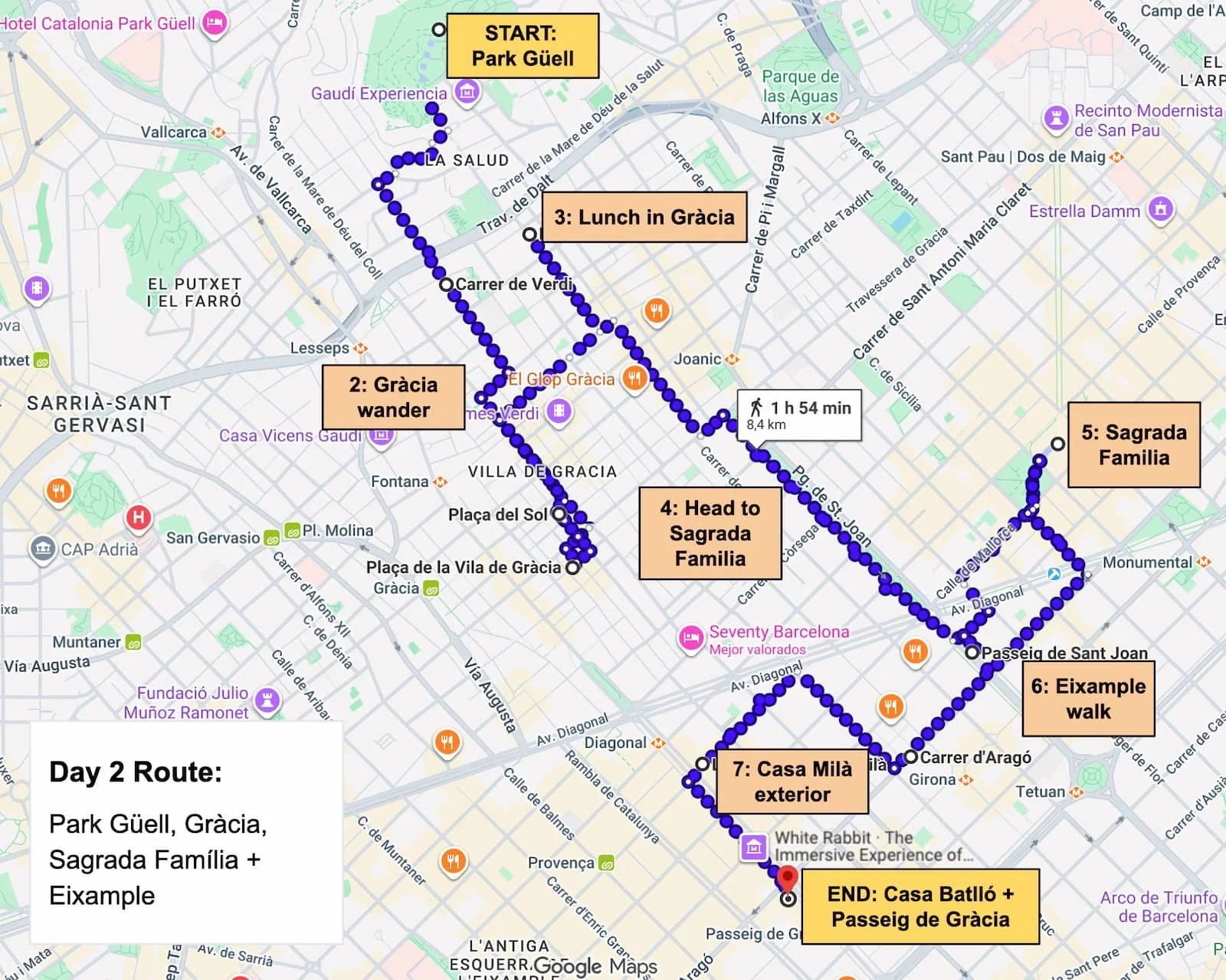
Day 2 route: Gaudí, Gràcia, and Eixample (Map data © Google)
Day 1 Itinerary: Old Town, El Born + the Waterfront
Day 1 is the classic “old Barcelona” day. It starts with Barcelona’s central tourist axis around Plaça de Catalunya, La Rambla, and La Boqueria, then moves into the Gothic Quarter and El Born before ending near the waterfront.
There’s nothing that needs to be booked in advance this first day, so I’d keep the itinerary structured but not overly rigid. Follow the route to hit the main areas in an order that makes sense, but leave room within each neighborhood to wander.
Late Morning — Start at Plaça de Catalunya, La Rambla + La Boqueria
Suggested time: 45–60 minutes
Start around Plaça de Catalunya, Barcelona’s central square and a useful starting point between the newer city and the old city. From there, walk down La Rambla, the famous pedestrian boulevard, toward Mercat de La Boqueria, Barcelona’s best-known food market.
La Rambla is crowded and touristy, but it’s also worth walking on a first trip. I would treat it as a transition walk rather than a place to linger.
La Boqueria has market history going back much further than its current tourist-heavy reputation. Meat stalls were documented around this area as early as 1217, and the foundation stone for the current market was laid in 1840. It’s colorful, iconic, chaotic. I wouldn’t plan a full meal here, but it’s a fun stop for a quick snack before the rest of the walk. We had a bocadillo de jamón ibérico there, and it was quite good.
Notes: This is one of the busiest tourist stretches in Barcelona, so keep your belongings close. And La Boqueria is closed Sundays, so if your Day 1 falls on a Sunday, you’ll need to skip the market or swap in another snack stop.
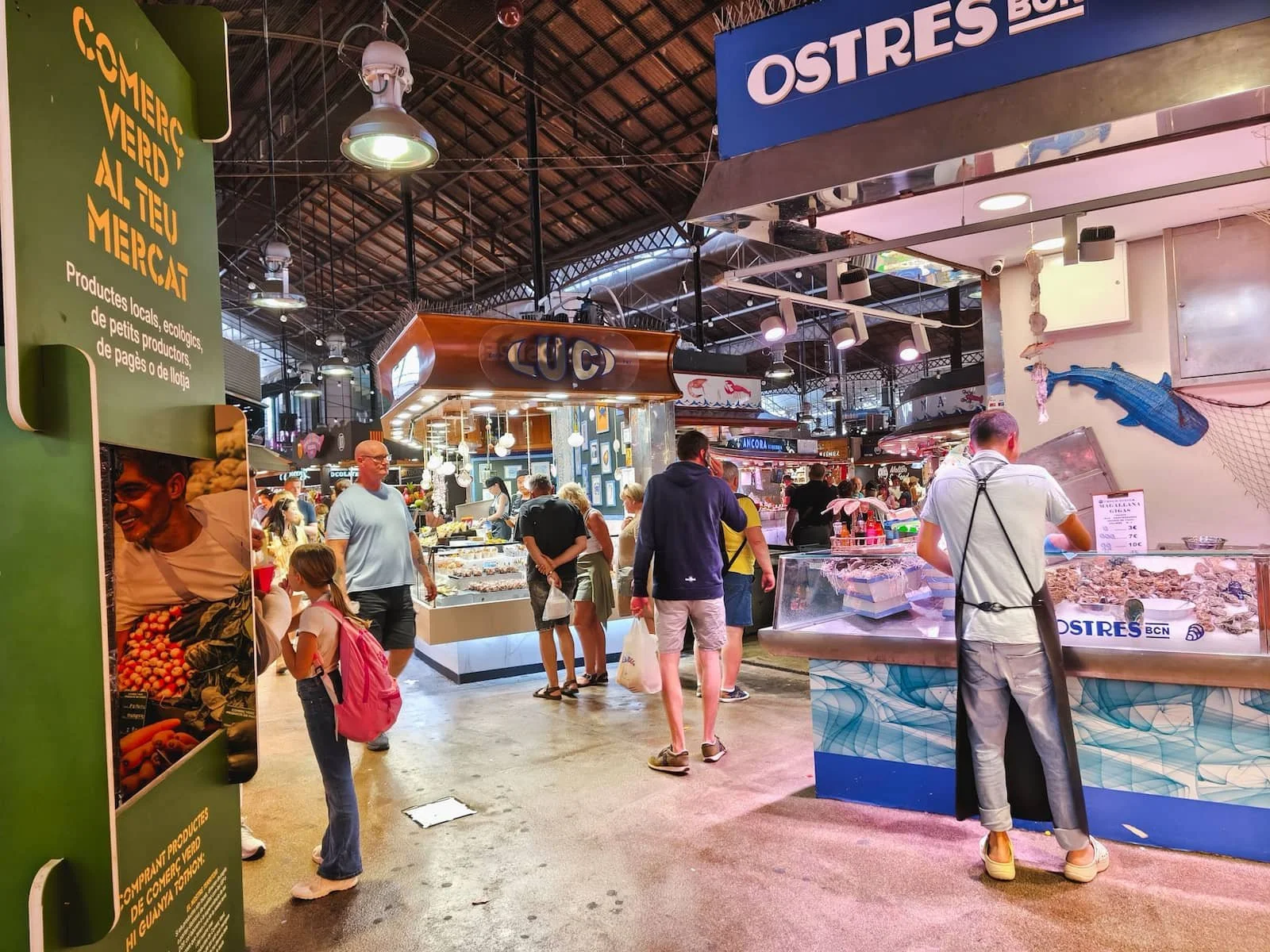
La Boqueria market
Midday — Take a Short El Raval Wander
Suggested time: 20–30 minutes
From La Boqueria, you can make a short loop into El Raval, a central neighborhood just west of La Rambla. Used to be the dense working-class and industrial area in the 19th century, the neighborhood now has a more alternative, multicultural, slightly rough-around-the-edges feel.
Some streets had cute boutiques and a more local contrast after the polished market zone. I also liked the visual texture with narrow streets, iron balconies, flowers, and cream-colored stone buildings. But parts of the area farther from La Rambla felt a little less comfortable, and I found myself holding my bag a bit tighter. So I’d suggest doing a short dip if you’re curious, then continue toward the Gothic Quarter.
Early Afternoon — Wander the Gothic Quarter
Suggested time: 1.5–2 hours
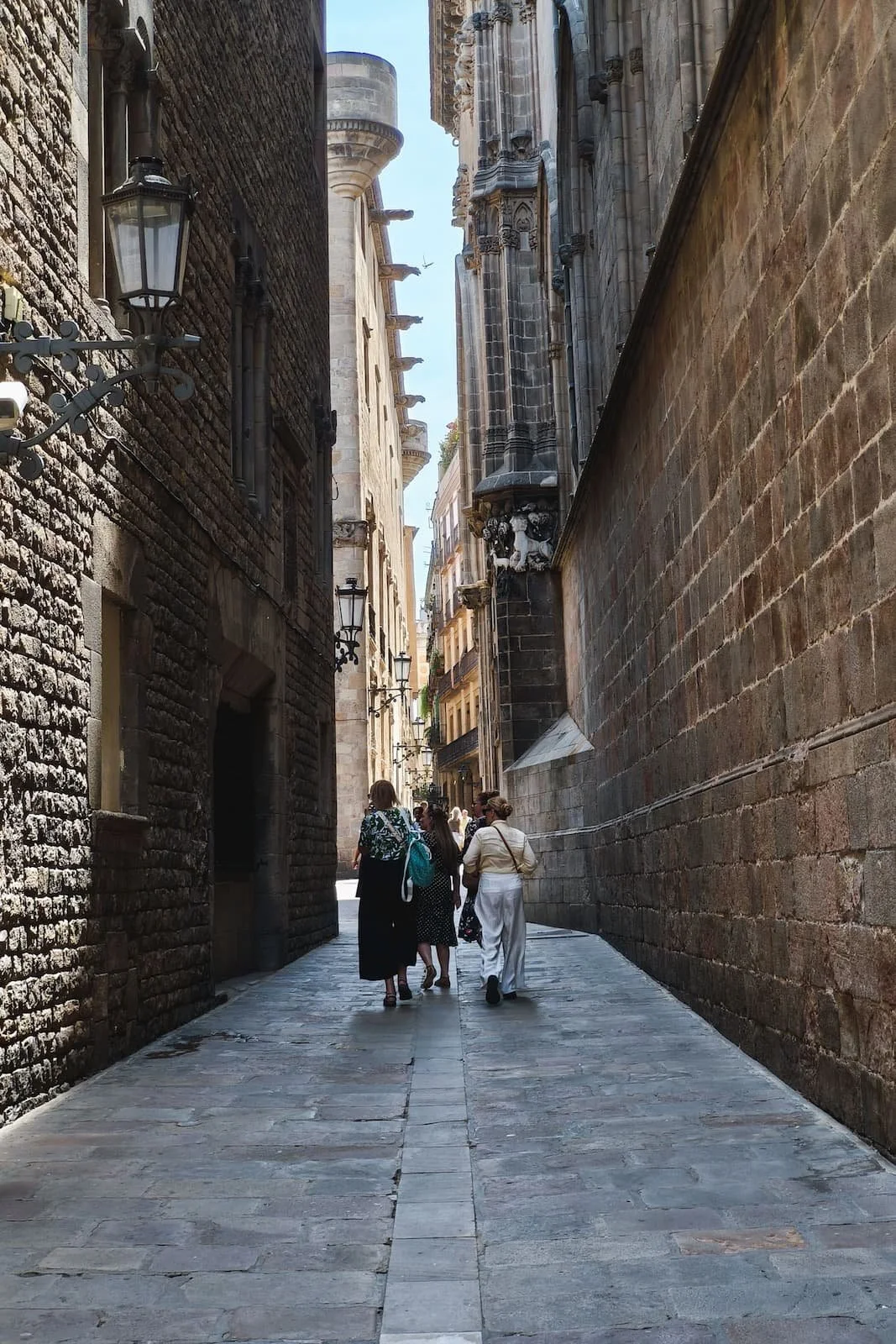
Spend the early afternoon in the Gothic Quarter, Barcelona’s historic old-city core, known for its narrow streets, plazas, Roman remains, and cathedral area. The Roman city of Barcino was founded here around the 1st century BC, and you can still see traces of it among the Roman ruins hidden in the area.
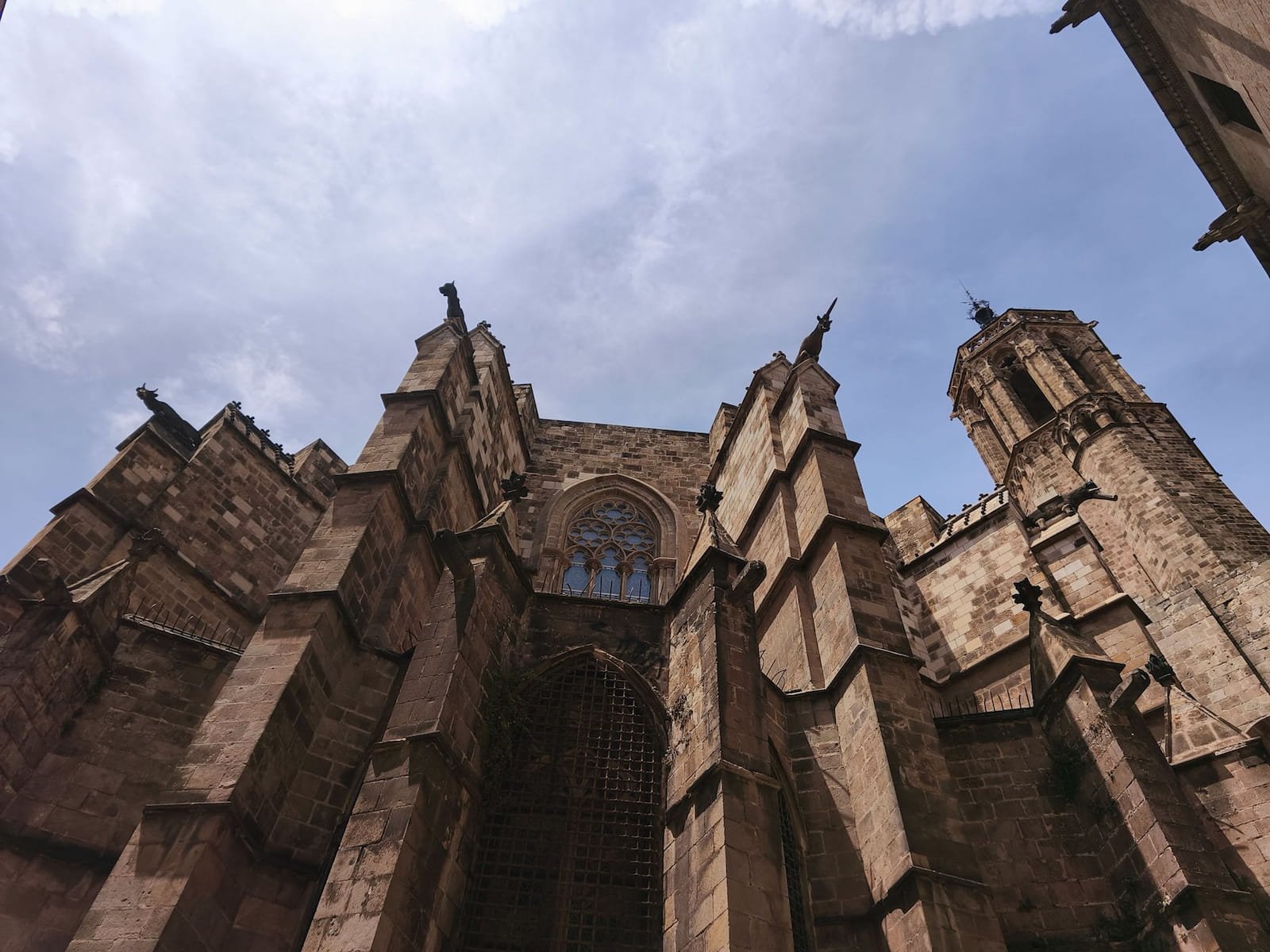
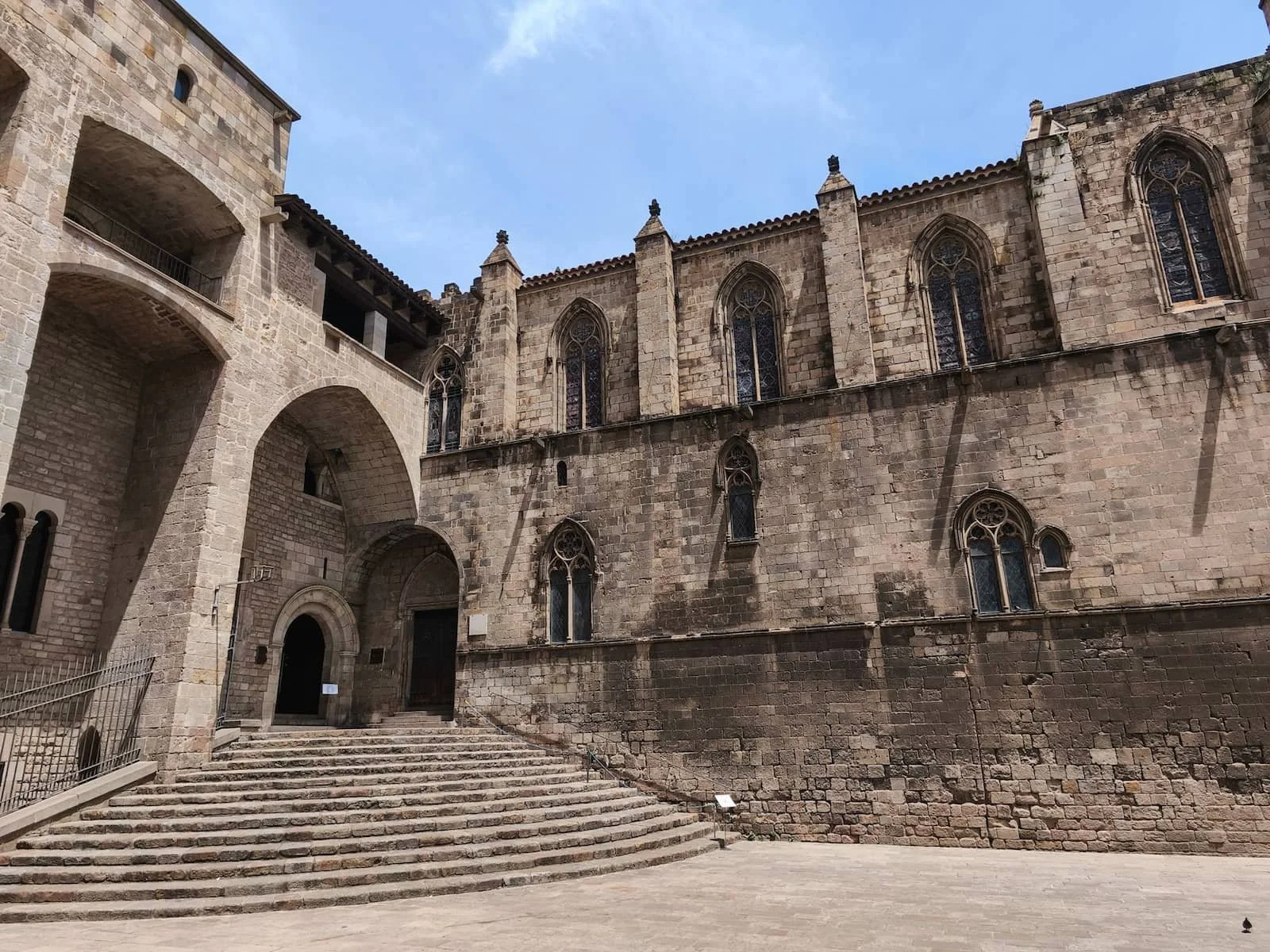
Aim for a few anchor points, then let yourself wander between them:
Barcelona Cathedral exterior — the main Gothic cathedral in the old city
Plaça del Rei — a historic square surrounded by medieval buildings
Roman walls — remnants of ancient Barcino
Temple of Augustus — a small Roman temple ruin tucked inside an indoor courtyard
Bishop’s Bridge — a photogenic neo-Gothic bridge built in 1928, despite looking much older
Plaça Sant Jaume — Barcelona’s political square
Hidden courtyards and narrow side streets — very much the point of this area
You can certainly see the main stops since the area is compact, but I would not turn this into a strict checklist. The Gothic Quarter works best when you have a rough route, then let the old-city streets do some of the work.
I would also not necessarily go inside Barcelona Cathedral if the line is long, especially with Sagrada Família the next day.
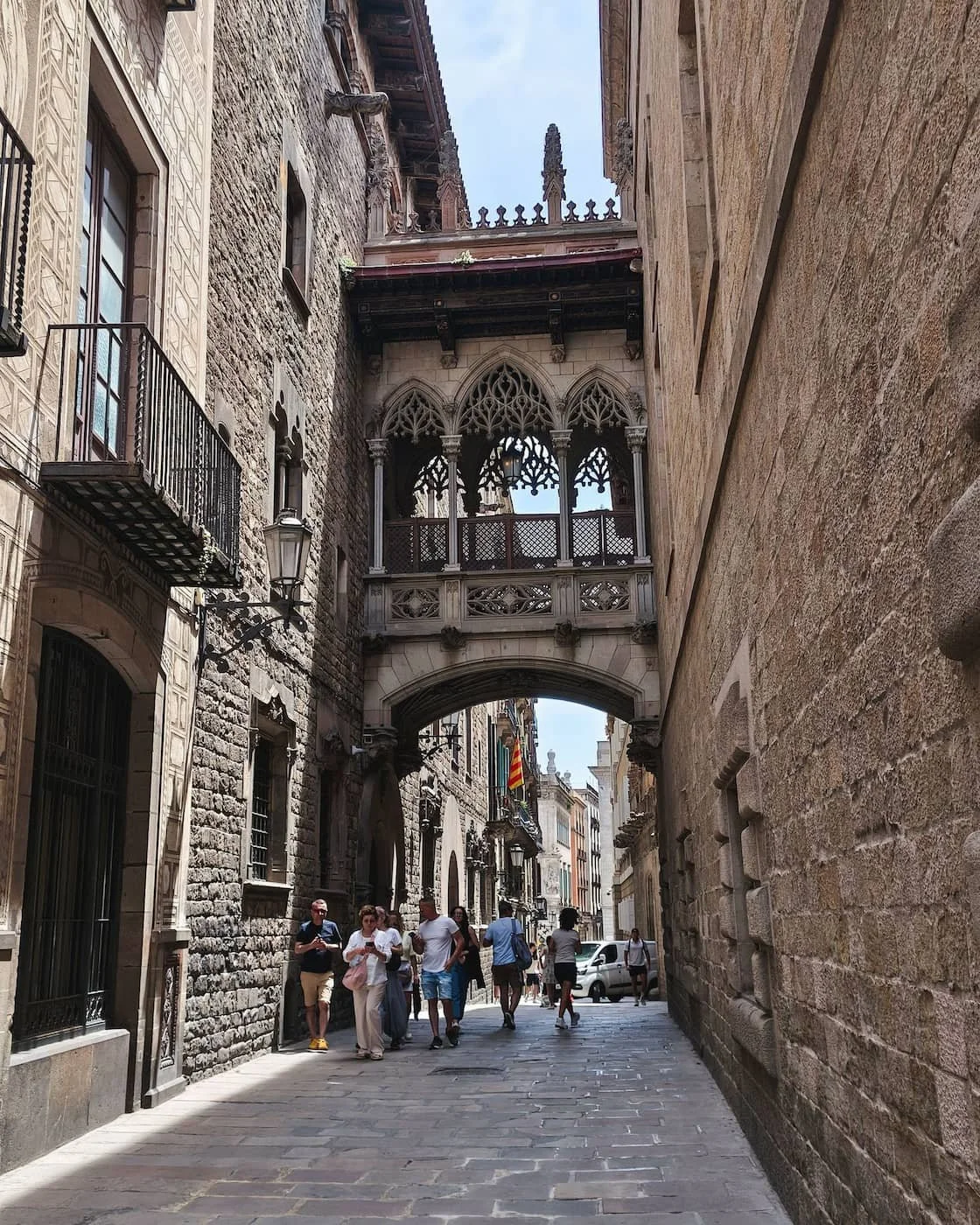
Bishop’s Bridge
Afternoon — Lunch Near El Born
Suggested time: 1–1.5 hours
For lunch, I would avoid eating directly on La Rambla.
The easiest option is to eat in or near El Born, the old-city neighborhood where the route goes next. Gothic Quarter side streets can also work if you choose carefully.
What I recommend: Can Paixano for sandwiches and cava if it fits your timing and tolerance for a busy, casual spot. It’s traditional, casual, often crowded, and not exactly a slow sit-down lunch, but the sandwiches and atmosphere were great. I love the liver pâté and pork sandwiches there.
Note: Can Paixano is typically closed Sundays, so if your Day 1 falls on a Sunday, swap in another lunch stop and double-check current hours before you go.
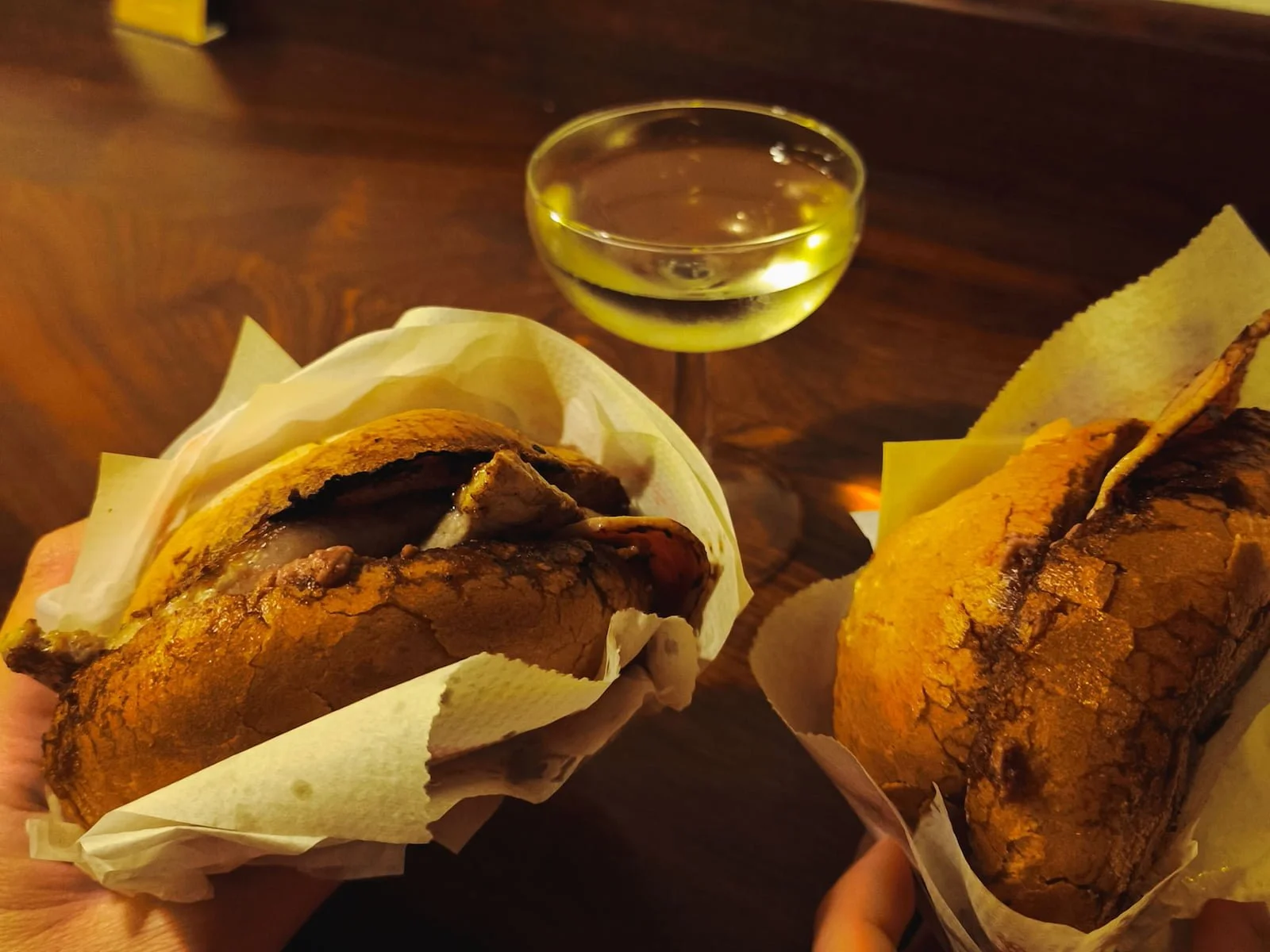
Sandwiches and cava at Can Paixano
Late Afternoon — Explore El Born
Suggested time: 1–1.5 hours
We didn’t make it to El Born on this trip (since we did this day after 20+ hours of no-sleep travel haha), but I’ve kept it in the itinerary because it fits naturally between the Gothic Quarter and waterfront.
Historically, this area was tied to Barcelona’s medieval maritime and merchant life. Santa Maria del Mar, one of its major landmarks, began construction in 1329, during a period when Barcelona was a major Mediterranean power. The Picasso Museum, another major anchor in the area, opened in 1963 on Carrer de Montcada.
While the Gothic Quarter is more of a historic maze, El Born has a more polished, neighborhood-oriented mix of streets, boutiques, cafes, and bars. Spend the late afternoon exploring the atmospheric streets and old-meets-stylish feel we unfortunately ran out of energy for.
See:
Santa Maria del Mar — a Gothic church in the heart of El Born
Passeig del Born — the neighborhood’s main pedestrian stretch
El Born side streets — good for wandering, shops, cafes, and casual stops
Picasso Museum area, even if you do not visit the museum
I’d spend as much or as little time as you like here before continuing toward the waterfront.
Early Evening — Walk toward Parc de la Ciutadella, Port Vell or Barceloneta Waterfront
Suggested time: 1.5–2 hours
From El Born, end the day by moving toward the water.
You can either walk through Parc de la Ciutadella, a large city park near El Born, or head more directly toward Port Vell, Barcelona’s old harbor area, and Barceloneta, the waterfront neighborhood by the beach.
I would treat Barceloneta as a waterfront walk rather than a full beach session, unless beach time is a major priority for you.
For a first day, this works well as a sunset-ish decompression walk after the tighter, busier streets of the old city. You get a different but essential side of Barcelona — it is a city on the Mediterranean, after all — and some time to slow down.
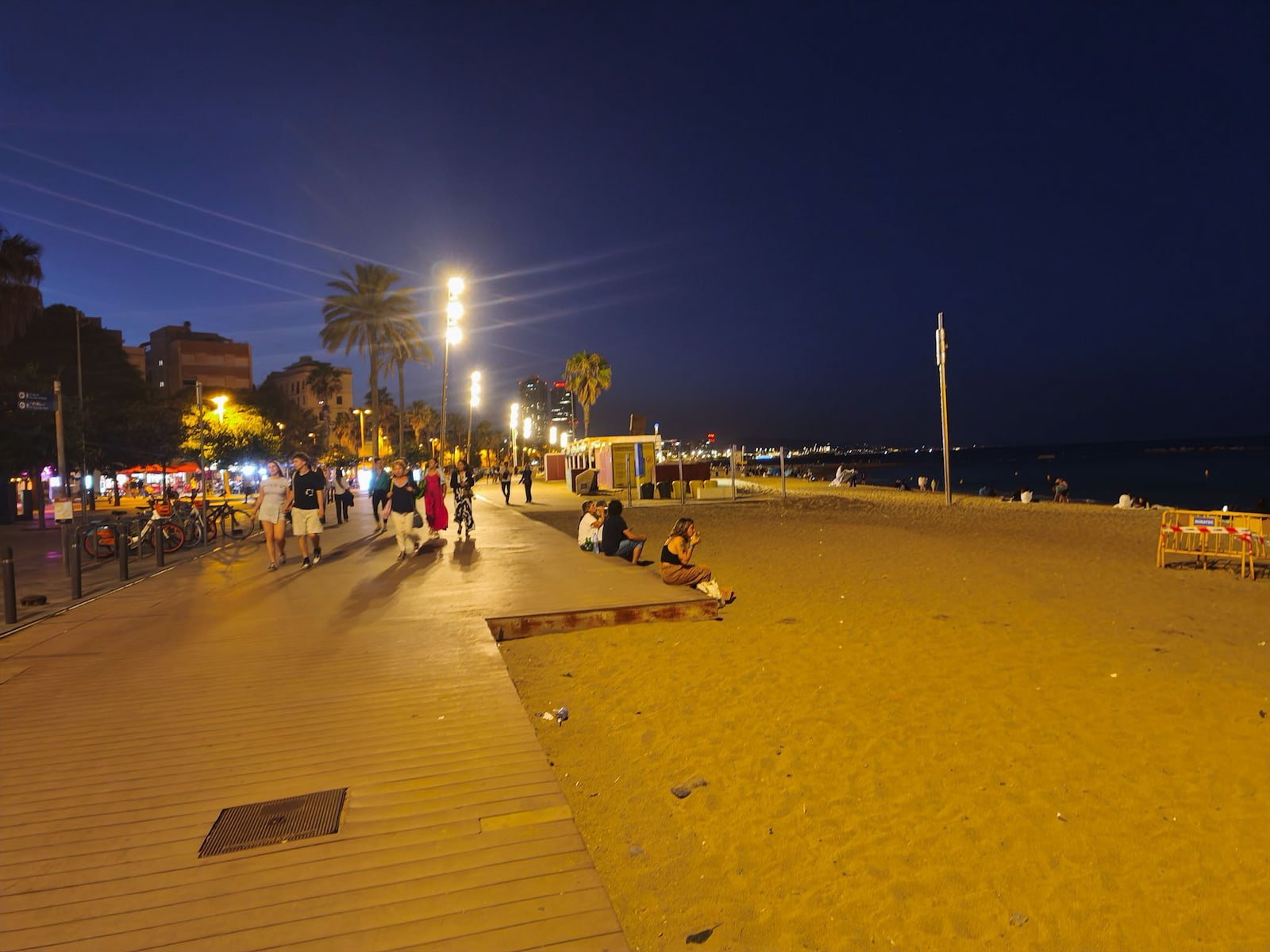
Barceloneta at night
Day 1 Example Timing
11:00–12:00 Plaça de Catalunya, La Rambla + La Boqueria
12:00–12:30 short El Raval wander
12:30–14:15 Gothic Quarter
14:15–15:30 lunch near El Born
15:30–17:00 El Born
17:00–19:00 Parc de la Ciutadella, Port Vell or Barceloneta waterfront
Day 2 Itinerary: Park Güell, Gràcia, Sagrada Família + Eixample
Day 2 is the Gaudí-heavy day, but it’s not only about Gaudí. Park Güell and Sagrada Família are the main anchors, while Gràcia and Eixample give the day some neighborhood texture in between.
This is also the day to plan more carefully. Park Güell, Sagrada Família, and Casa Batlló all use timed tickets, and popular time slots can sell out in advance.
Morning — Visit Park Güell
Suggested time: 1.5 hours
Start the day at Park Güell, Gaudí’s hillside park known for colorful mosaics, curved stone structures, city views, and some of Barcelona’s most recognizable imagery. Built between 1900 and 1914, it was originally planned as a private residential estate, but that idea did not really take off, which worked out pretty well for the rest of us.
I would take the metro or a taxi there unless you’re already staying close. The park is uphill from much of the city, and you will already walk plenty later.
Inside Park Güell, focus on:
Dragon Stairway — colorful mosaic staircase and one of the park’s most famous photo spots
Nature Square — large open terrace with city views and a curved mosaic bench (see the hero image of this post!)
Hypostyle Room — columned hall underneath the main terrace
Laundry Room Portico — a slanted stone walkway built into the landscape
El Turó de les Tres Creus — an optional extra viewpoint if you want a higher view over the city
Park Güell is touristy, but it is still worth seeing on a first Barcelona trip. I would go earlier in the day if you can, since it is mostly outdoors and gets crowded. We went around 10 AM, and it was already quite busy.
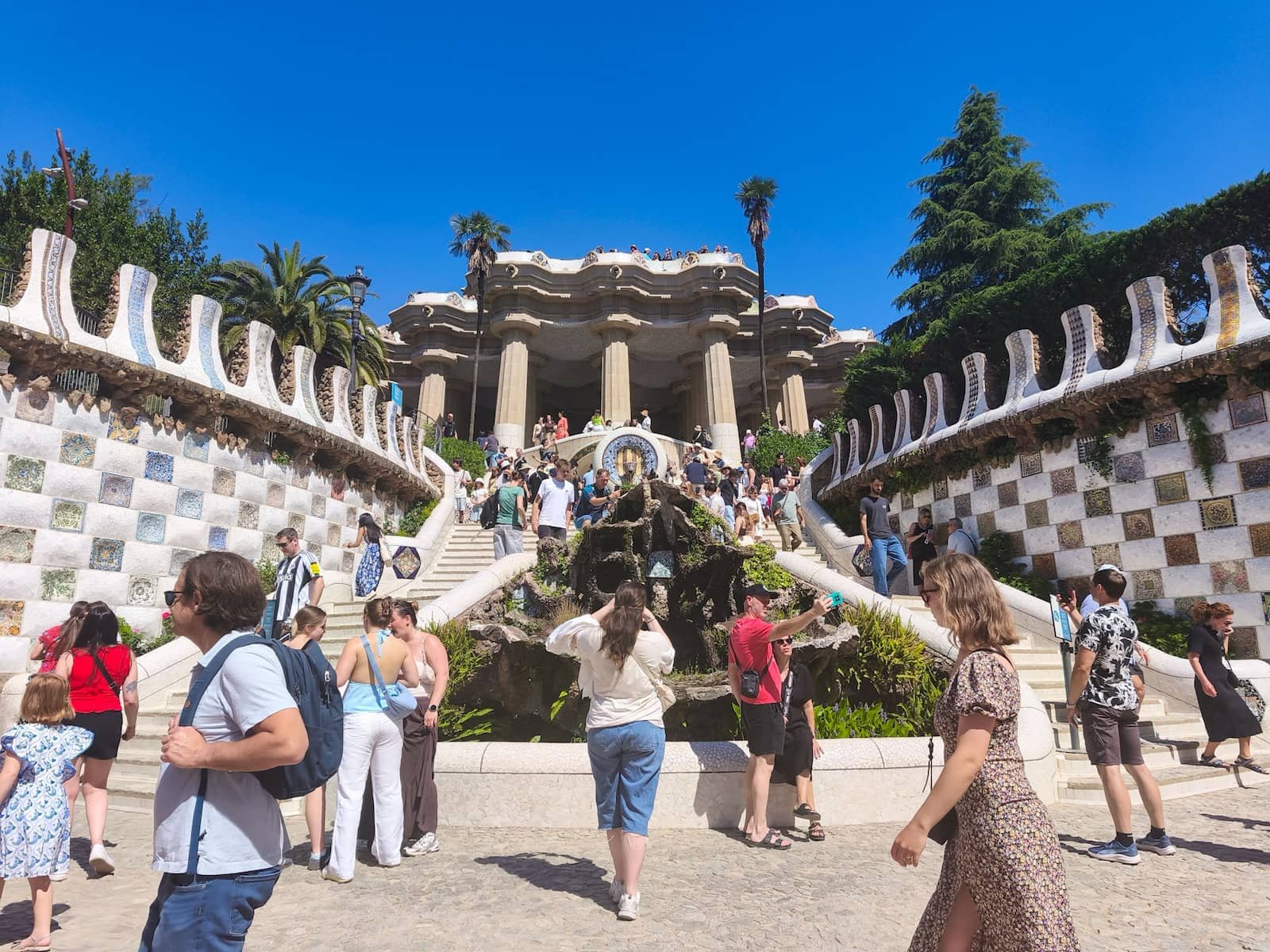
Monumental staircase
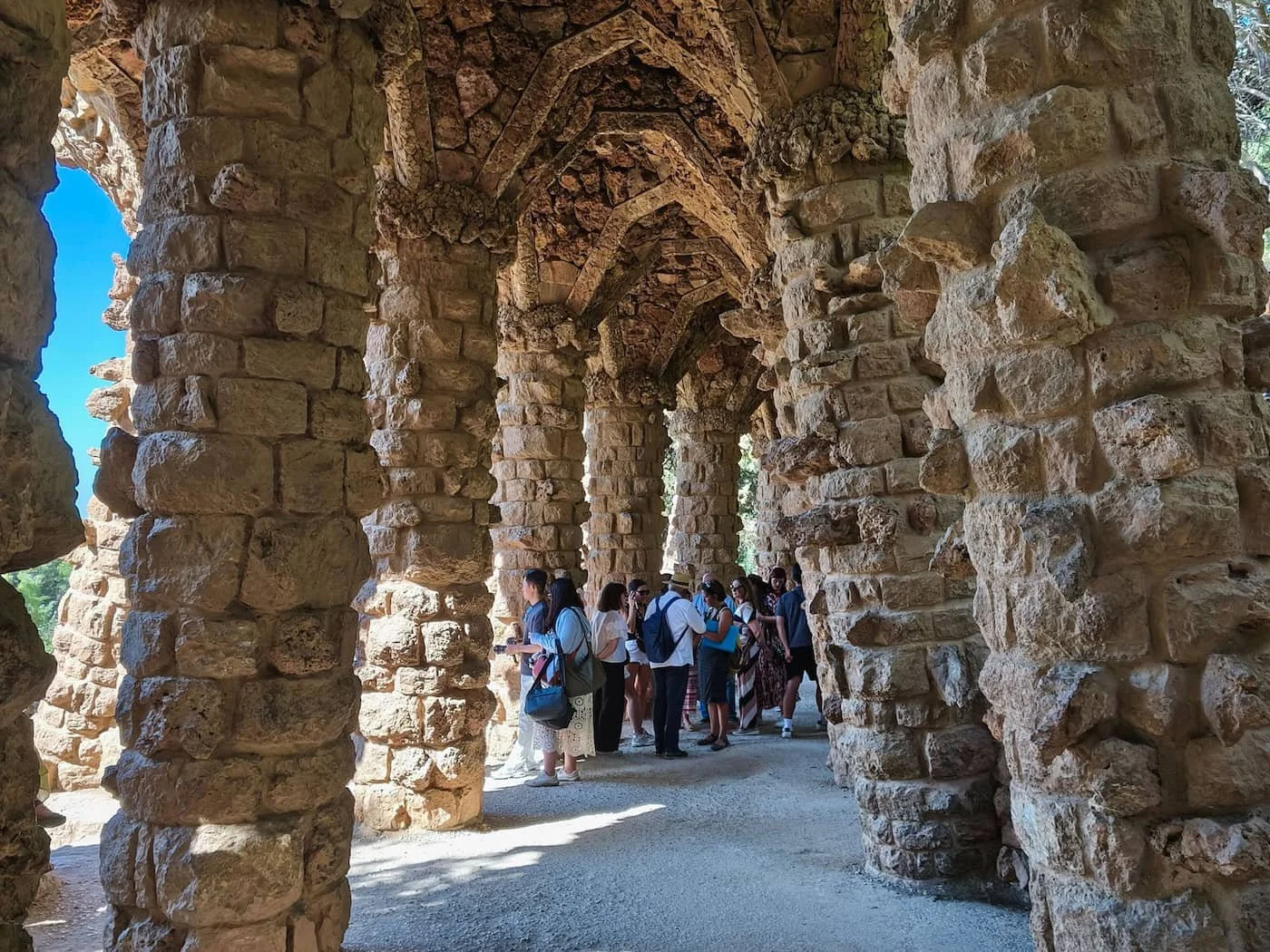
Laundry Room Portico
Late Morning — Wander Gràcia, Coffee or Vermouth
Suggested time: 1–1.25 hours
After Park Güell, head into Gràcia, a former independent town that still has a more neighborhood-like feel, with smaller plazas, cafes, and a chiller pace than the big sightseeing areas. It’s also known for its bohemian, creative vibe.
You can loosely wander around:
Plaça del Sol — one of Gràcia’s livelier neighborhood squares
Plaça de la Virreina — a quieter square facing a pretty church
Plaça de la Vila de Gràcia — a classic neighborhood square with a distinctive clock tower
Carrer de Verdi — lively street lined with Catalan taverns and artsy independent shops
I wouldn’t overplan this area. Let it be a coffee, vermouth, or wandering break between major attractions.
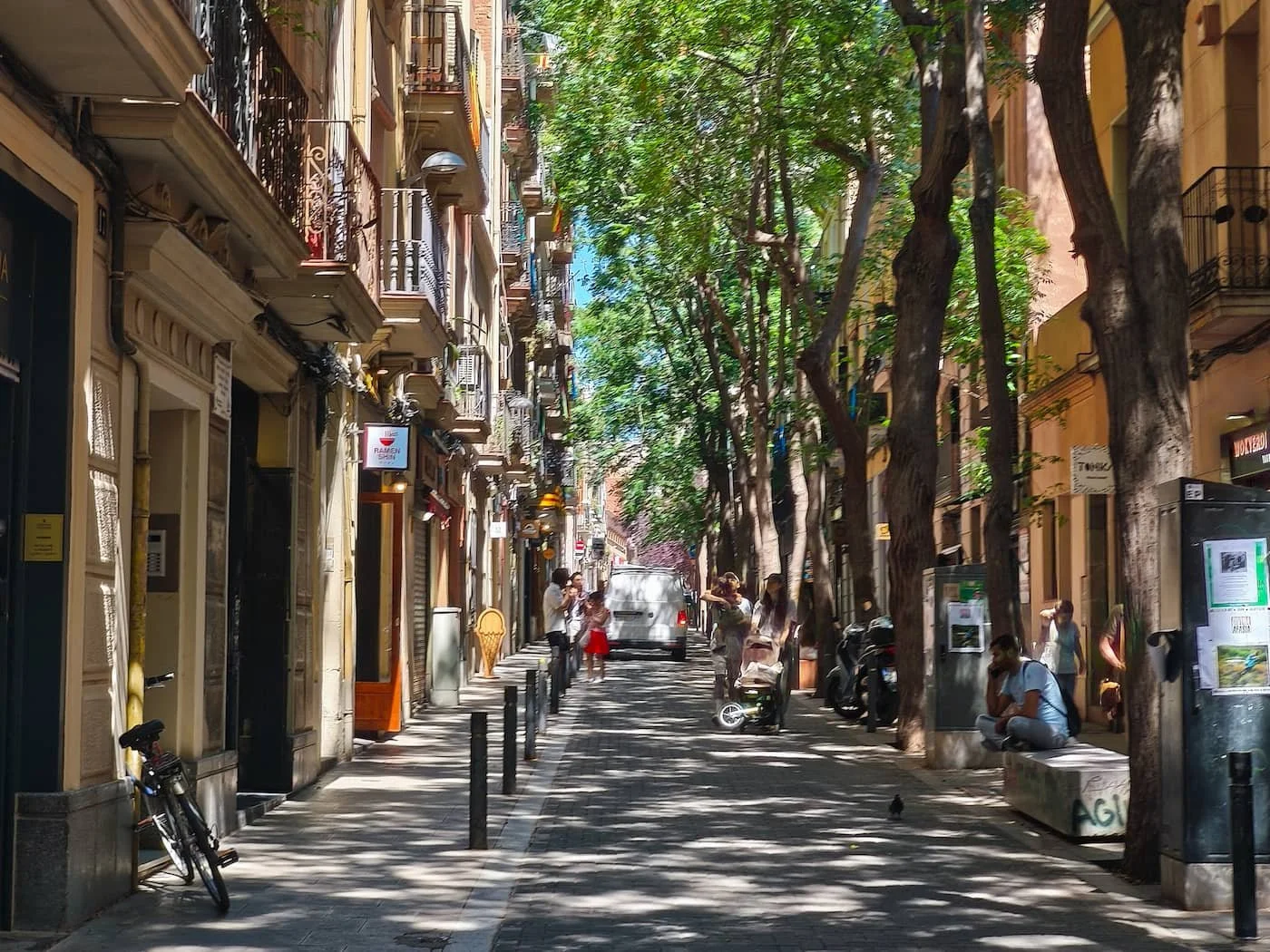
Carrer de Verdi in Gràcia
Early Afternoon — Lunch in Gràcia
Suggested time: 1–1.25 hours
Eat lunch in Gràcia before heading toward Sagrada Família.
We ate at Bar Restaurant Casi, a casual neighborhood restaurant with friendly service, a family-run feel, and very good food. It’s a bit uphill back toward the Park Güell direction, but I thought the backtrack was worth it. This was probably the friendliest restaurant we went to in Barcelona.
We had gazpacho on a hot day, and the person serving us told us it was his mom’s traditional recipe, which was very charming and also genuinely delicious.
Note: Bar Restaurant Casi is typically closed Sundays, so if your Day 2 falls on a Sunday, swap in another lunch stop and double-check current hours before you go.
Other options to consider:
La Pubilla — a popular spot for Catalan-style lunch or menú del día
La Pepita — a livelier tapas option if you want something less traditional-feeling
Afternoon — Head toward Sagrada Família
Suggested time: 30–45 minutes
After lunch, start heading toward Sagrada Família. This is a longer walk, so try to rest your legs during lunch; alternatively, you can take transit here.
If you walk, one option is to route via Avinguda de Gaudí, a diagonal pedestrian avenue with a direct view toward Sagrada Família. If you go this way, you can also consider passing near Recinte Modernista de Sant Pau, a large modernist hospital complex.
We didn’t do that route since it would have been a bit of a detour from lunch. Instead, we walked down Passeig de Sant Joan, a wide, tree-lined boulevard with broad sidewalks, bike lanes, cafes, and benches to rest a little.
Afternoon — Sagrada Família Exterior First Look + Buffer
Suggested time: 30 minutes
Build in a buffer before your Sagrada Família entry time.
The exterior is worth seeing before going inside — as soon as you glimpse the basilica, you’ll probably want the time to do that anyway. The exterior is so impressive, and the façades are so detailed and different from each other, that it takes a while to take in all of it.
So the buffer time is good for arriving without stress, taking exterior photos first, and giving yourself a little room in case lunch or transit runs long.
Note: Be vigilant of crowds and potential pickpockets when taking photos.
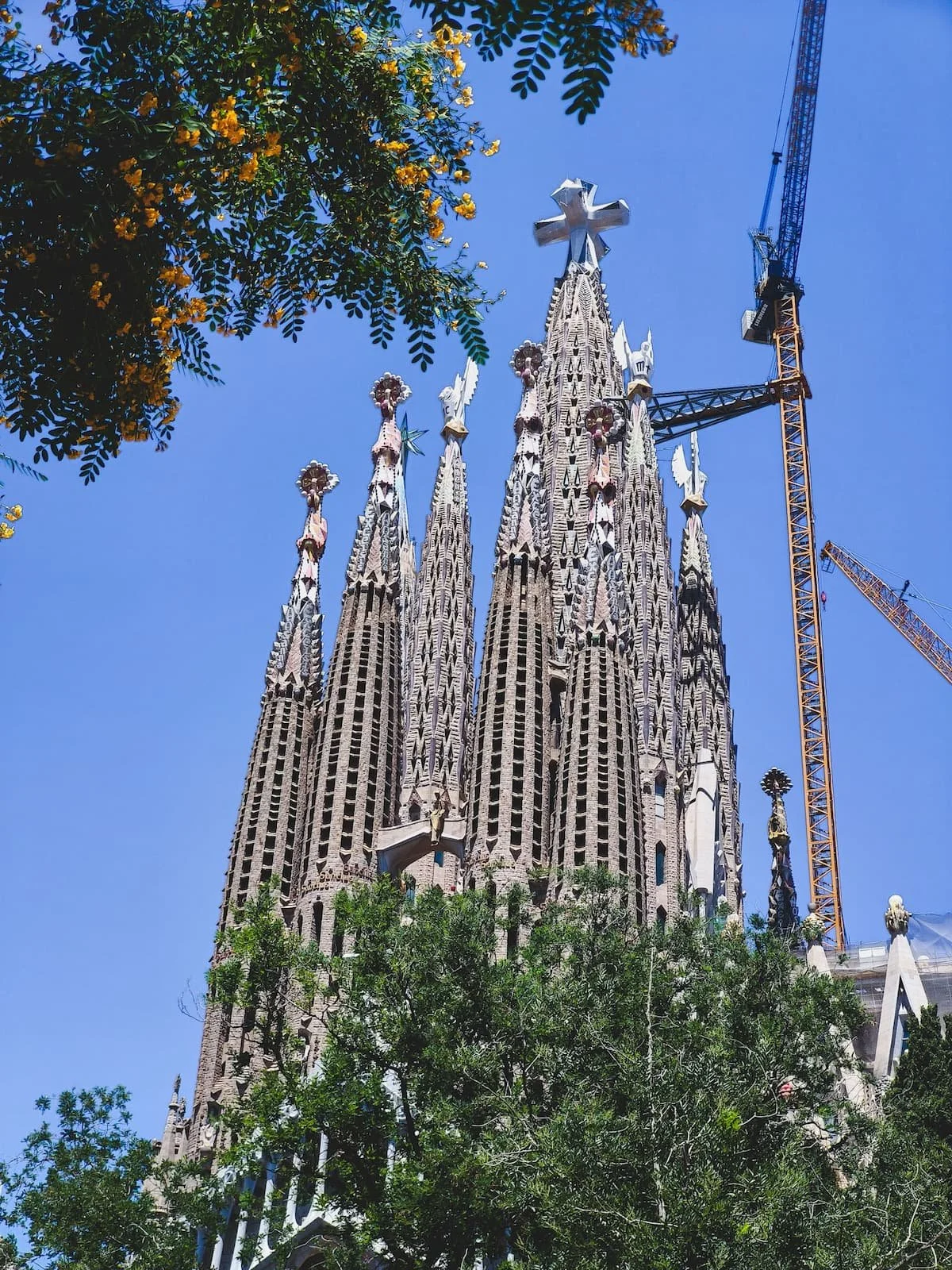
Sagrada Família view from the plaza across. Wow.
Mid/Late Afternoon — Visit Sagrada Família
Suggested time: 1.5–2 hours
Gaudí’s still-unfinished basilica is the major architectural centerpiece of Barcelona. Construction began in 1882, and more than 140 years later, it’s still ongoing. In 2026, the central Tower of Jesus Christ reached its final height of 172.5 meters, making the basilica the tallest church in the world.
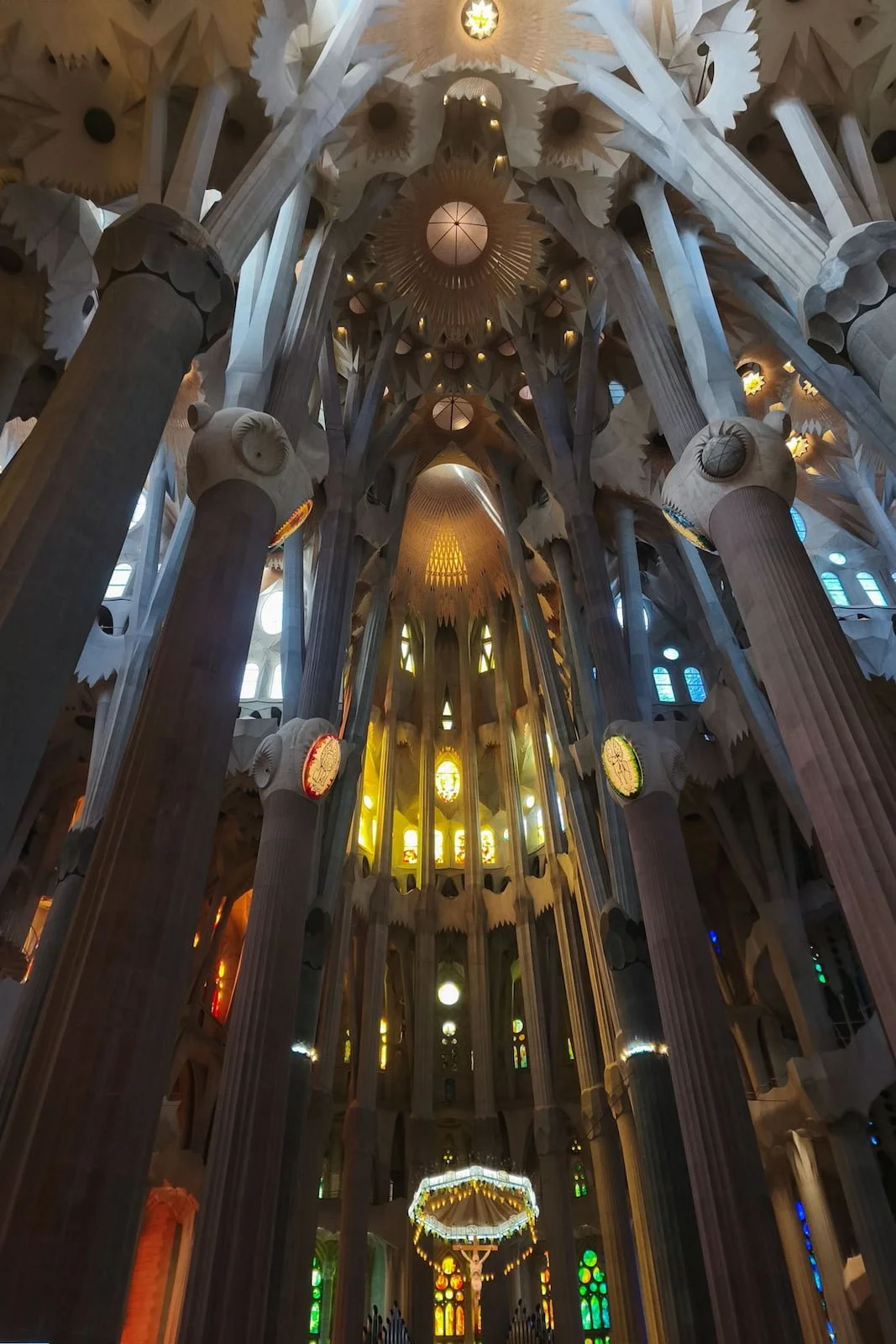
This is the main interior stop of the itinerary, and I would give it enough time. This is one of the few places where I think the interior really does feel different in person, even if you have seen many photos. It’s huge, bright, strange, organic, and genuinely impressive.
I would also use the audio guide here, or at least sit for a bit and listen to part of it. A lot of the value of Sagrada Família comes from understanding the design choices, symbolism, and how intentional everything is.
There is also a small museum/exhibition area with more context on Gaudí, the design process, and the construction of the basilica. I wouldn’t rush the main interior to spend a long time there, but it’s worth a quick look if you have the energy.
You can add tower access if it’s available and important to you, but in my opinion it’s not mandatory. I have more detail on that decision in the route notes section below.
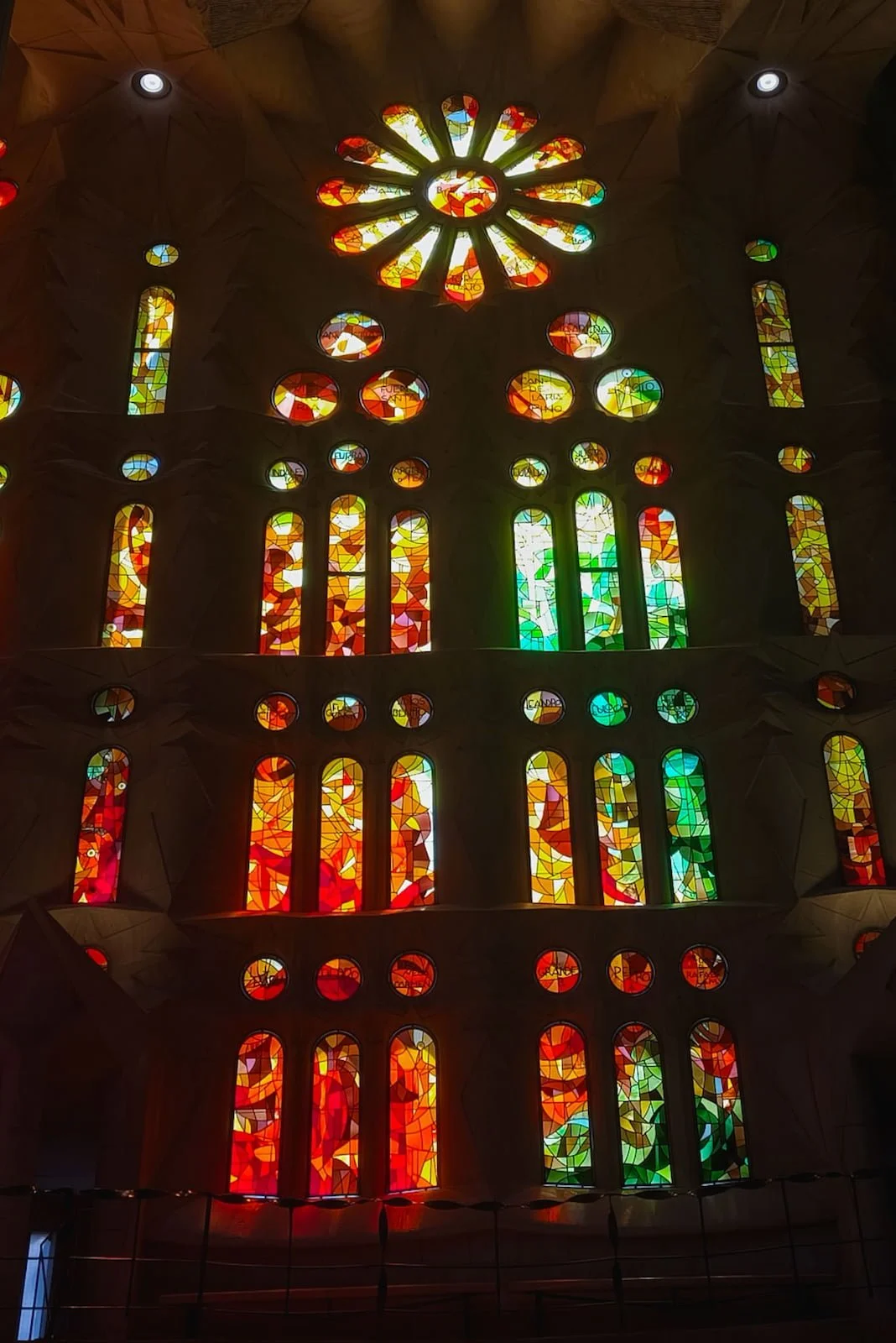
Early Evening — Walk through Eixample toward Casa Batlló
Suggested time: 45–60 minutes
After Sagrada Família, walk through Eixample, Barcelona’s elegant grid-planned district known for wide streets, chamfered corners, and modernist architecture. This walk transitions you to Casa Batlló and gives you a very different city texture from the Gothic Quarter and El Born.
On the way, you can pass:
Casa Milà / La Pedrera exterior — another major Gaudí building on Passeig de Gràcia
Eixample blocks and façades — good for seeing the city’s modernist apartment buildings and grid layout
Passeig de Gràcia — Barcelona’s major shopping and architecture boulevard
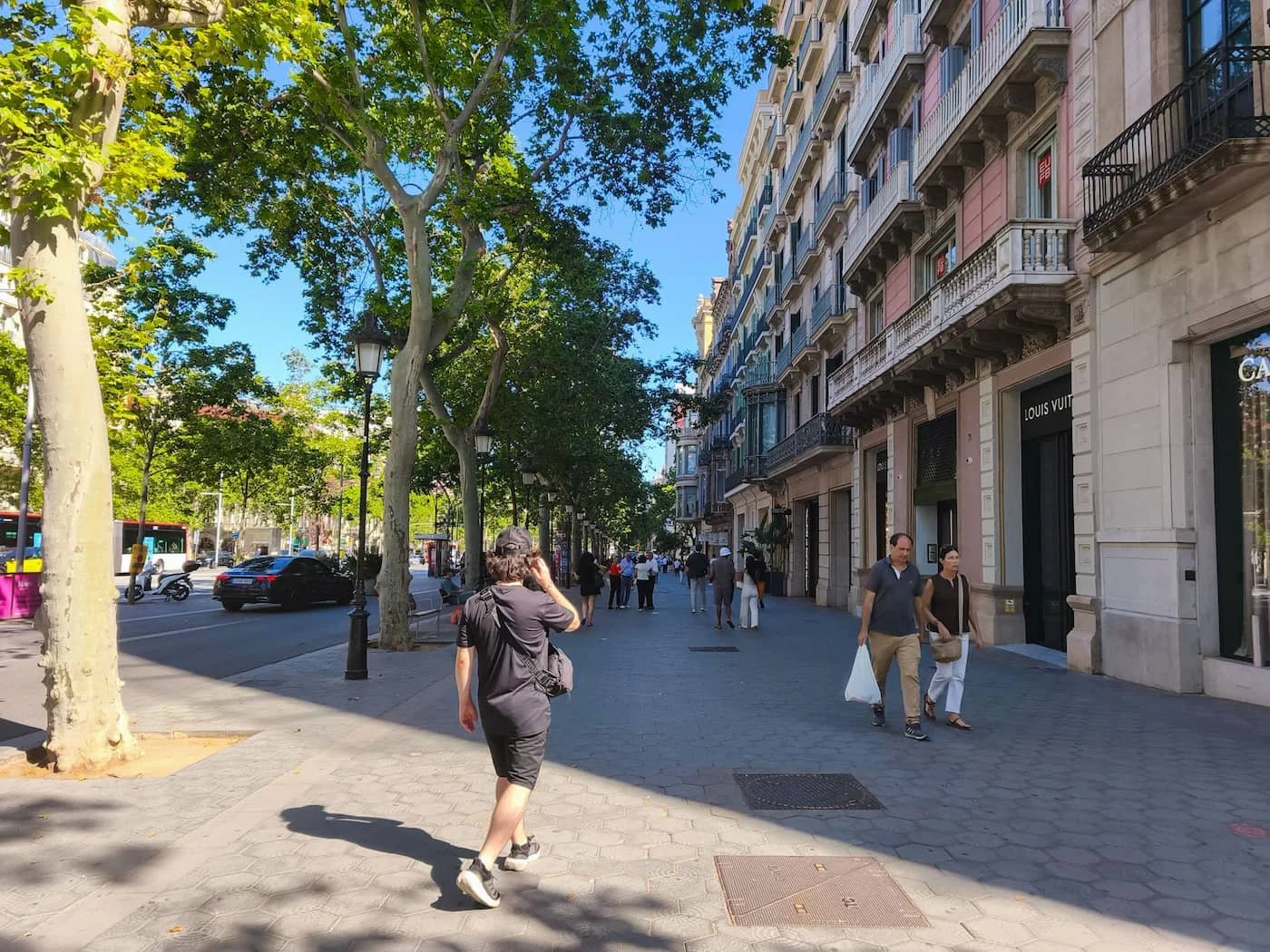
Eixample
Evening — Visit Casa Batlló or See the Exterior
Suggested time: 1–1.5 hours inside, or 10–15 minutes outside
End the main sightseeing day at Casa Batlló, one of Gaudí’s most famous residential buildings, known for its colorful façade, curved shapes, and highly designed interior. The original building dates to 1877, but Gaudí redesigned it between 1904 and 1906 for the Batlló family, a prominent textile industralist in the city.
The exterior is the obvious draw, but the interior is to me also a part of the experience. Overall, there’s an undulating feel inside the house — there are very few straight lines, and the curves, flowing wooden ceilings, and blue-dominant colors kind of made me feel like I was underwater.
Casa Batlló is on Passeig de Gràcia, one of Barcelona’s main shopping and architecture streets, so it works well as the final ticketed stop. I enjoyed my interior visit, but if you’re tired, you can also just stop by and take a look at the exterior.
Afterward, you can stay around Passeig de Gràcia for a little shopping, continue walking, or keep dinner simple nearby as a casual end to the day.
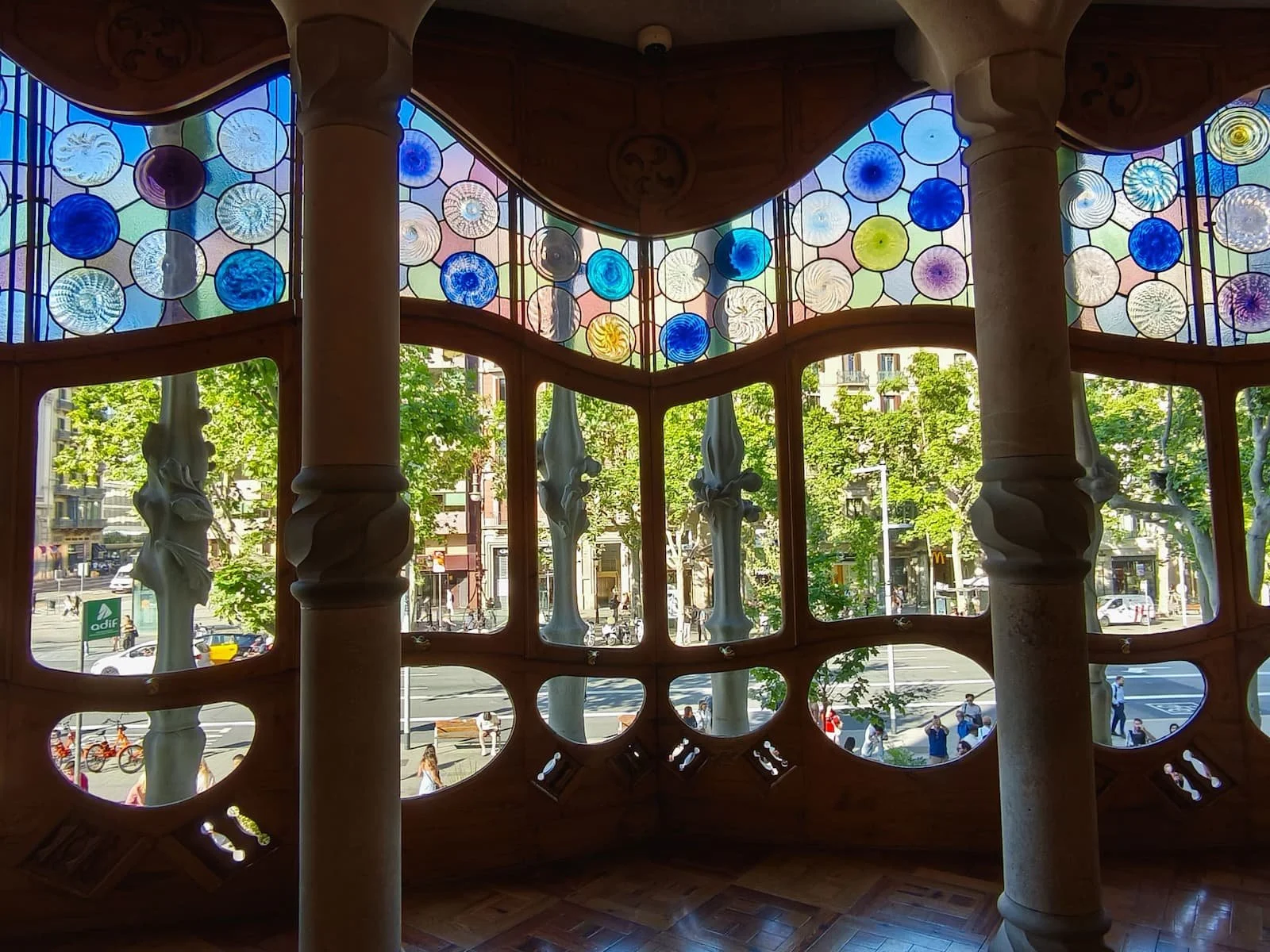
Inside Casa Batlló
Day 2 Example Timing
10:00–11:30 Park Güell
11:30–12:45 Gràcia wander, coffee or vermouth
13:00–14:15 lunch in Gràcia
14:15–14:45 walk or transit toward Sagrada Família
14:45–15:15 Sagrada Família exterior first look + buffer
15:30–17:30 Sagrada Família
17:30–18:30 walk through Eixample toward Casa Batlló
18:30–19:30 Casa Batlló and/or Passeig de Gràcia exterior walk
A Few Notes on This Itinerary
Day 1 Is More Flexible Than Day 2
Day 1 is mostly about neighborhoods, so I would keep it structured but loose. The route gives you clear direction, but you can take it looser within each neighborhood and use detailed itinerary stops as suggestions.
I’d say the main areas to focus on are the La Rambla area (for the first-time visitor, though it’s definitely not a chill wander), Gothic Quarter, and Barceloneta.
Book the Big Day 2 Sights in Advance
Day 2 is more timing-sensitive because Park Güell, Sagrada Família, and Casa Batlló all use timed tickets. I would book those in advance, making sure you have enough time to transit between the three, then let the rest of the day stay more flexible.
Why This Route Does Park Güell Before Sagrada Família
Park Güell generally makes sense earlier in the day because it’s popular, mostly outdoors, and gets more crowded as the day goes on. Going earlier lets you avoid the most crowded and hottest times.
Sagrada Família is often recommended in the morning or later afternoon for better light inside, but for this route, I think it makes more sense to do Park Güell in the morning, then work your way back toward Sagrada Família in the afternoon rather than optimizing for the best times inside the basilica. It’s busy at basically all times of the day.
Is the Sagrada Família Tower Climb Worth It?
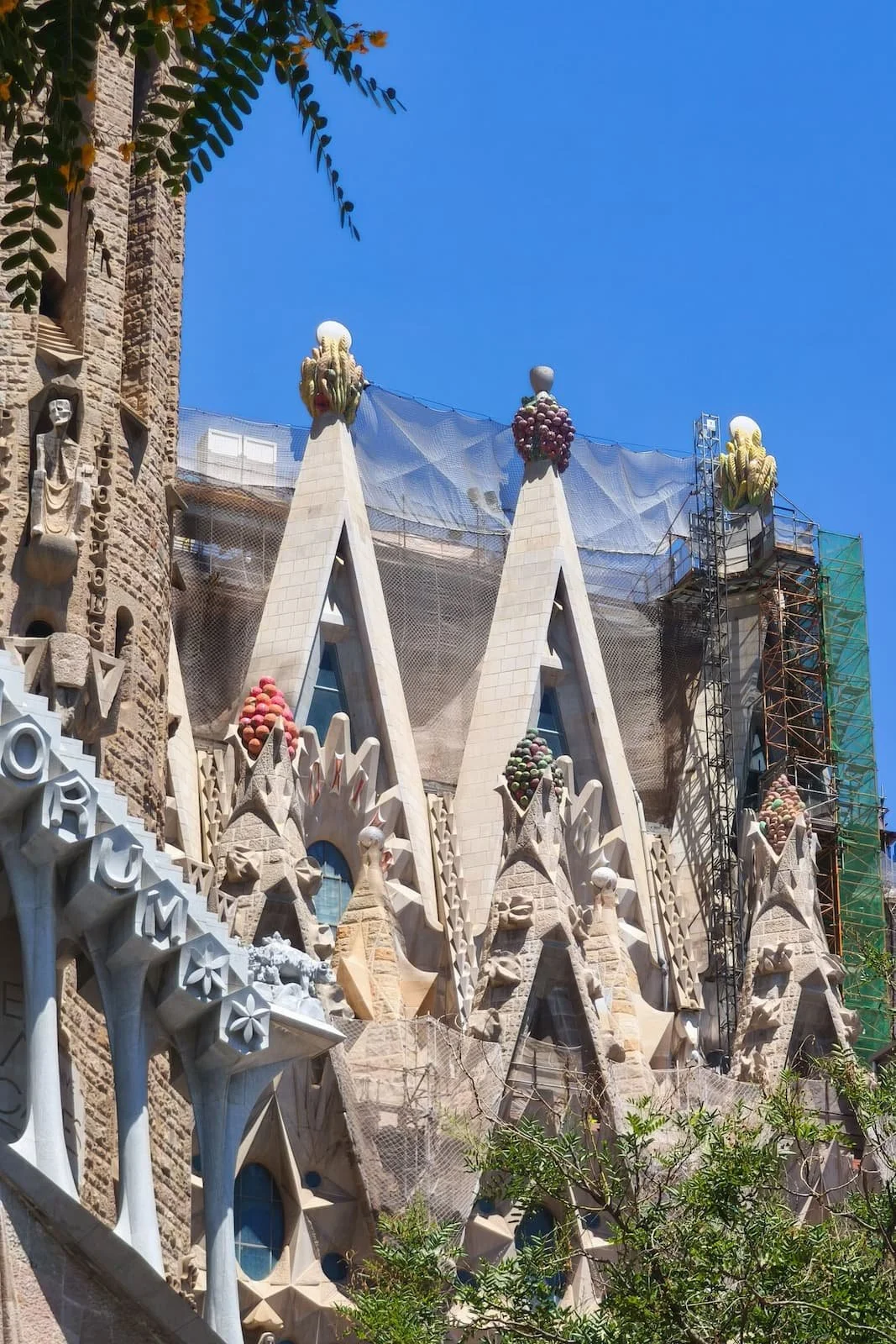
The tower climb is optional. I did it on a previous visit and thought it was interesting, especially for seeing some of the fruit sculptures (my favorite haha) and exterior details up close, but it was not the most memorable part of the visit.
The basilica interior and exterior are the main experience. I’d add a tower only if you like viewpoints, don’t mind heights or narrow stairs, and can get a time that fits your route.
If choosing between them, I’d lean Passion façade for city-center views. The Nativity façade faces the eastern side of Barcelona.
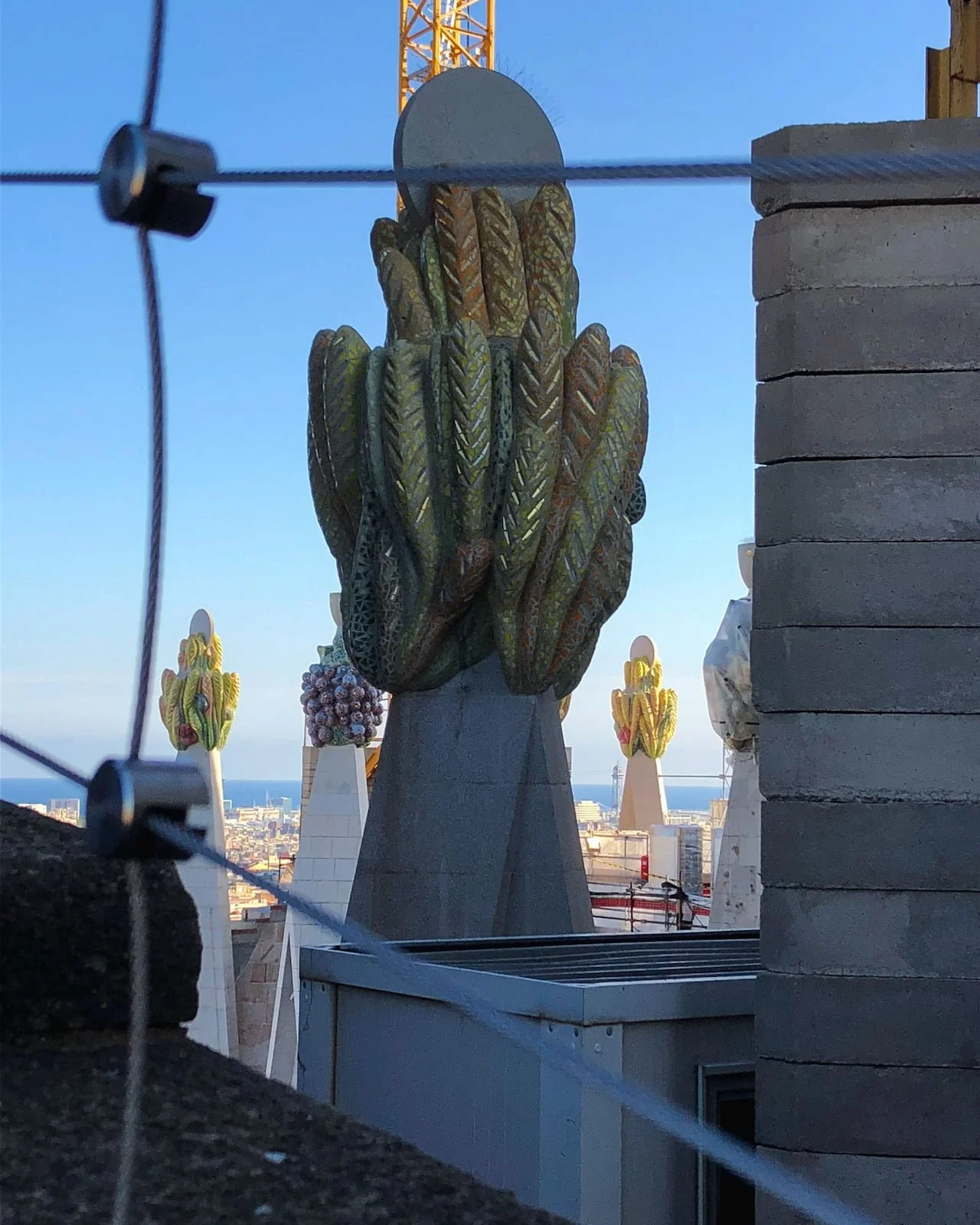
Fruit sculptures and view of the city from Sagrada Família tower climb
Logistics: Transit, Tickets, Safety + What to Wear
Getting around
This itinerary is mostly walkable once you are in each area, but I’d recommend taking transit to get to the starting points and back to your lodging at the end of the day, and any other stretches you’d rather not walk.
The most convenient transit options in Barcelona are the Metro and official black-and-yellow taxis. See my guide to taking the Metro and bus in Barcelona for how to navigate and pay for them.
Tickets to book in advance
For this itinerary, I would book Park Güell, Sagrada Família, and Casa Batlló in advance. These are the main timed-ticket attractions, and popular time slots can sell out. Here are links to the official ticket pages for your convenience:
I’d book Sagrada Família first, and book it as soon as possible (definitely not the day of).
Ticket note: We didn’t need our passports for ID check at any of the entrances in 2026, including Sagrada Família, but I’d still check the latest requirements before you go. You can scan tickets on your phone, but I’d recommend taking screenshots too in case your signal is spotty. Mine was unreliable near Park Güell, and I had to scramble a bit through my inbox while trying to make my timed entrance.
Safety
Use normal big-city awareness, especially in crowded tourist areas.
Be extra careful around:
La Rambla
La Boqueria
Gothic Quarter crowds
Metro stations
Sagrada Família exterior crowds
Keep your phone and wallet secure, avoid leaving your phone loose on cafe tables, and be especially aware when stopping for photos or navigating maps.
What to wear and bring
This is a very walk-heavy itinerary, so wear comfortable shoes.
Bring or wear:
Comfortable walking sneakers
A secure crossbody or sling bag
Water
Sunscreen
Sunglasses
A light layer if visiting outside of summer
Portable charger
These are all items I include in my one-bag packing list, which is built around active, city-heavy travel like this. I’ll link my Spain-specific packing list here once it’s ready, but for now, my general one-bag packing guide is the best place to start.
Modifications
If you only have 1 day in Barcelona
I would do a compressed version of Day 2 plus a short old-town wander and optional beachfront ending:
Park Güell → Sagrada Família → Gothic Quarter / El Born → optional Barceloneta
This is not as balanced, but it gives you the biggest Barcelona “icons” with a bit of old-city atmosphere.
If you have 3 days in Barcelona
Add Montjuïc as a third day.
We did not do this on our 2-day route, but it would make sense if you have more time and want views, museums, gardens, and a slower day after the two heavier sightseeing days.
Possible Day 3 structure:
Plaça d’Espanya
Montjuïc area
Museu Nacional d’Art de Catalunya exterior/viewpoint
Montjuïc gardens
Optional museum visit
Optional castle or cable car
Poble-sec for food/drinks
This would also help balance the trip because Days 1 and 2 are dense, while Montjuïc can be more flexible.
If you want a slower trip
Cut El Raval or El Born from Day 1 and choose either Casa Batlló or Park Güell on Day 2, not both.
That gives you more room to enjoy the neighborhoods and space out the ticketed things more.
Related Posts + Final Thoughts
Thanks for reading! I hope this itinerary helps you make the most of two full days in Barcelona.
Two days is not enough to see everything, but it is enough to get a strong first impression if you plan the route carefully. We felt like we were able to cover a lot with this itinerary.
If you try this itinerary, I’d love to hear how it goes. And if you’re still planning and have questions, feel free to leave a comment or send me a message. I’m always happy to help when I can.
If you’re planning your time in Barcelona, see my How to Get Around Barcelona for breakdown on airport transportation, metro and buses, ticket payment, and which transit pass makes sense for your trip.
You may also like:
Madrid Travel Guide: Start Here — if you’re heading to Madrid too, here’s where I’m collecting all of my Madrid guides, including itineraries, logistics, where to stay notes, and packing tips.
How I Plan Low-Friction Itineraries — the process I use to build routes that reduce backtracking, decision fatigue, and the “wait, where are we going next?” problem.
My Travel Approach — how I think about independent, active, low-friction travel.