How I Slow Travel Madrid: Routines and Real Monthly Costs
Out of all the cities I’ve stayed in for a month or longer, Madrid is one of my favorites, and one I can genuinely see myself living in long-term.
After years of traveling, I’ve realized that the places I most enjoy spending extended time tend to be walkable, have plenty to see even when you’re simply getting from place to place, and have a tangible city energy. Madrid definitely ticks all of those boxes. Central Madrid is fairly compact for a major capital, so it doesn’t feel sprawling in the way London does. I love having the freedom to get almost anywhere on foot and occasionally use the extremely well-connected metro when I actually need it.
Madrid has also felt relatively affordable to me compared with many other major European cities. Our grocery spending was similar to what we spent while slow traveling in Santiago, Chile, and I found it easier to get genuinely good, inexpensive food at casual restaurants here than in many other cities where I’ve spent extended time.
I was especially impressed by the variety of cuisines, including very authentic and affordable Chinese food. We ended up eating out more often than we otherwise might have, which honestly became one of the most enjoyable parts of staying here.
We’ve now spent one autumn/winter month and one summer month in Madrid. Here’s a look at the routines we fell into, the everyday places we kept returning to, and how much I approximately spent each month.
Hopefully, this helps you plan your own slow travel in Madrid or decide whether it’s somewhere you’d want to spend more than a typical few-day visit.
Planning a shorter trip? Start with my Madrid in 1 Day itinerary, Madrid in 3 Days itinerary, or my overall guide to what to do in Madrid.
My Routine in Madrid
My partner and I stayed for around a month each time, which was enough time to establish a rhythm while still slowly working through the touristy things.
Because of the time zones we worked across, we were honestly living on a pretty late schedule, usually sleeping around 2–3 AM and waking up around 10–11 AM. But compared with the U.S., people in Spain already eat later, Madrid nightlife is legendary, and in summer the sun didn’t fully set until almost 10 PM — so you can count that as adaptation, right? It also meant we still got a few hours of actual nighttime before going to bed, which was good for our circadian rhythms.
Both my partner and I freelance, so we don’t necessarily have fixed work schedules or traditional workweeks, but we still naturally settled into a daily rhythm.
Morning
Most mornings, we would sip coffee at the apartment and get a few hours of work done.
One of the nice things about staying for a month is that there’s no pressure to rush outside immediately and maximize every daylight hour, so we could start the day slowly without feeling like we were wasting our limited time in Madrid.
Lunch
Around 2–3 PM, we would head out for lunch, which often became the anchor for getting us out of the apartment and starting the rest of the day. See the list below for some of the casual restaurants we visited most often.
I loved using lunch this way while slow traveling. We didn’t need to plan a full sightseeing day; we just needed to choose somewhere to eat, and then we were already outside and could decide what else we felt like doing.
Afternoon
After lunch, we might walk through another neighborhood, run errands, go grocery shopping, visit a museum, browse some stores, or take the long way home. Some days, we’d just go back to the apartment and get a few more hours of work done.
Everyday errands felt easy because groceries and shops were almost always within walking distance. For example, the Lidl we used most often was around a five minute walk from our apartment. So, we could usually incorporate whatever we needed into a walk we were already taking.
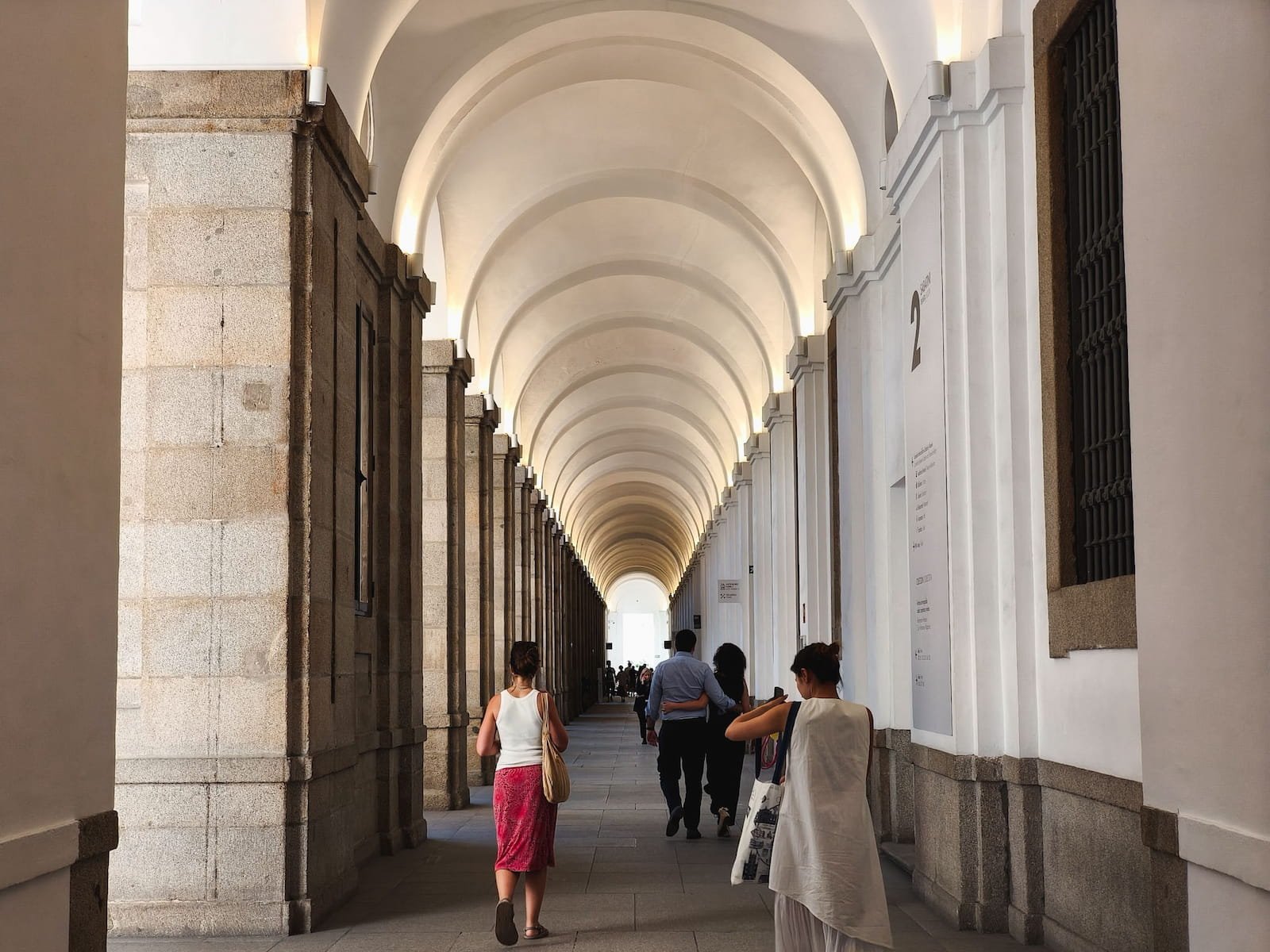
Cloister inside the Reina Sofía Museum, where we visited after shopping at the Mercadona around there.
Dinner
For dinner, we often cooked at home, though we also went out regularly for casual meals and to enjoy the nighttime atmosphere.
When we cooked, our meals were usually simple, and we tried to take advantage of local ingredients and flavors. One of our most common meals was a lentil stew with garlic, onions, carrots, and, most importantly, plenty of Pimentón de la Vera.
Pimentón de la Vera is a smoky Spanish paprika made by slowly drying red peppers over wood fires in the La Vera region. It has a much deeper, richer flavor than the paprika I usually encountered in the U.S. and makes even our usual pot of lentils taste more locally tailored.
Evening
I’m not a huge nightlife person, at least not in the clubbing or partying sense, but I loved being outside and enjoying Madrid’s nighttime atmosphere.
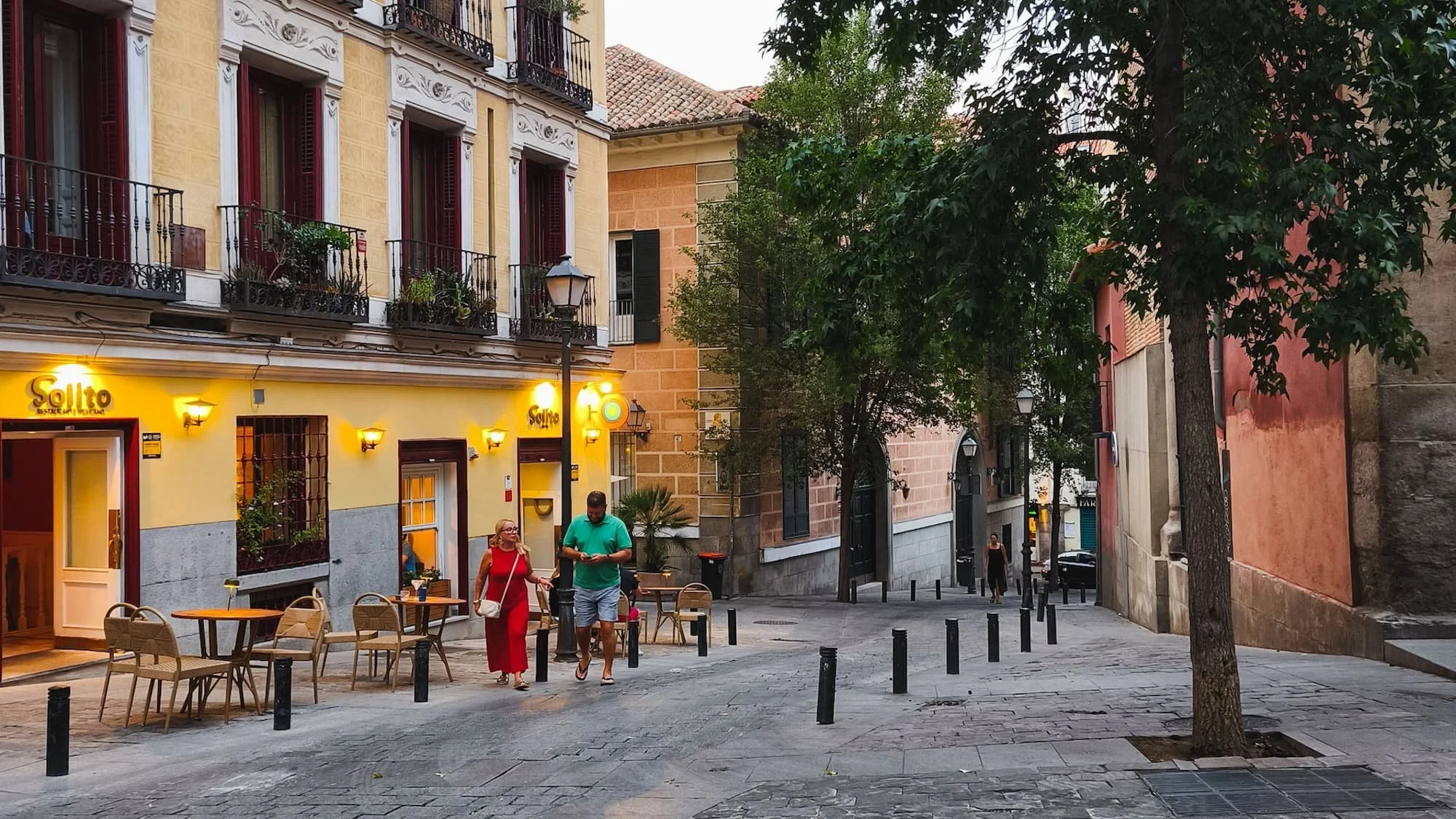
Many evenings, we would just walk around the neighborhood. I love that the plazas and sidewalks are actually used by people sitting outside, eating, talking, laughing, and having a good time. That’s how public spaces ought to be used, in my opinion.
During our second month in Madrid, the 2026 FIFA World Cup was happening. (I mean, as a die-hard football fan, it was the reason I wanted to be in Spain in the first place — and man, did my bet pay off!). So at night, we’d go to a local bar to watch games and scream at the screen with everyone else.
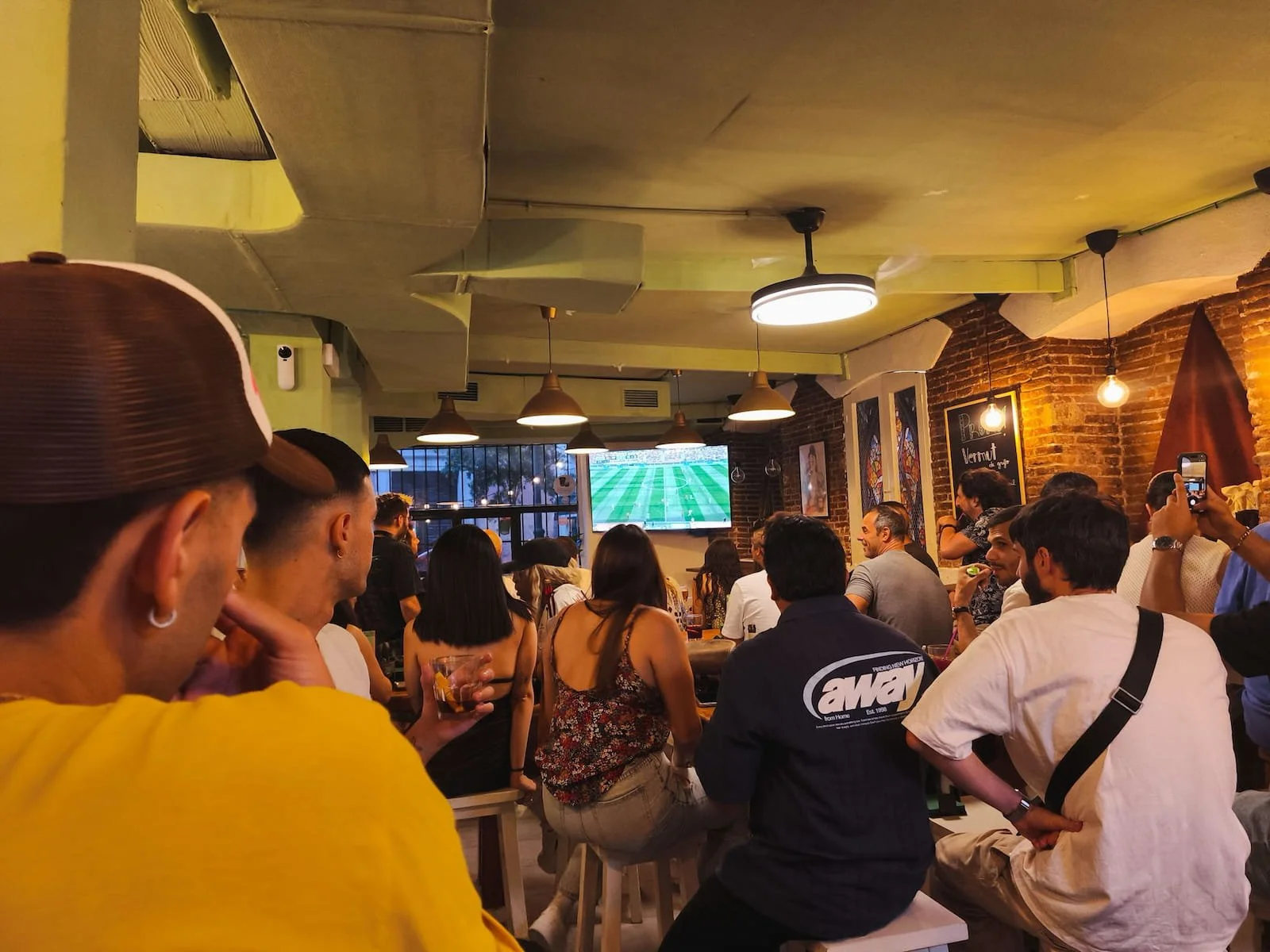
Watching a World Cup match in one of the bars in La Latina. I absolutely loved the energy.
Days Off
Our days off were when we did more of the traditional tourist things around the city. If you’re visiting Madrid for a shorter trip, I’ve strung together the first-time highlights in my Madrid in 1 Day itinerary and created a more relaxed version in my Madrid in 3 Days itinerary.
Some of our favorite activities included visiting museums (often taking advantage of their free-admission periods), checking out more local markets, catching a show at the theaters (we saw the Lion King musical in Spanish), and seeing movies at cinemas that showed films in their original language.
But honestly, we spent a lot of our free time just taking long walks. Having a full month meant we could explore streets and neighborhoods that most visitors wouldn’t prioritize on a shorter trip, like going across the river to Casa de Campo or exploring Chamberí. Sometimes there was a specific destination at the end, but often the walk itself was the activity.
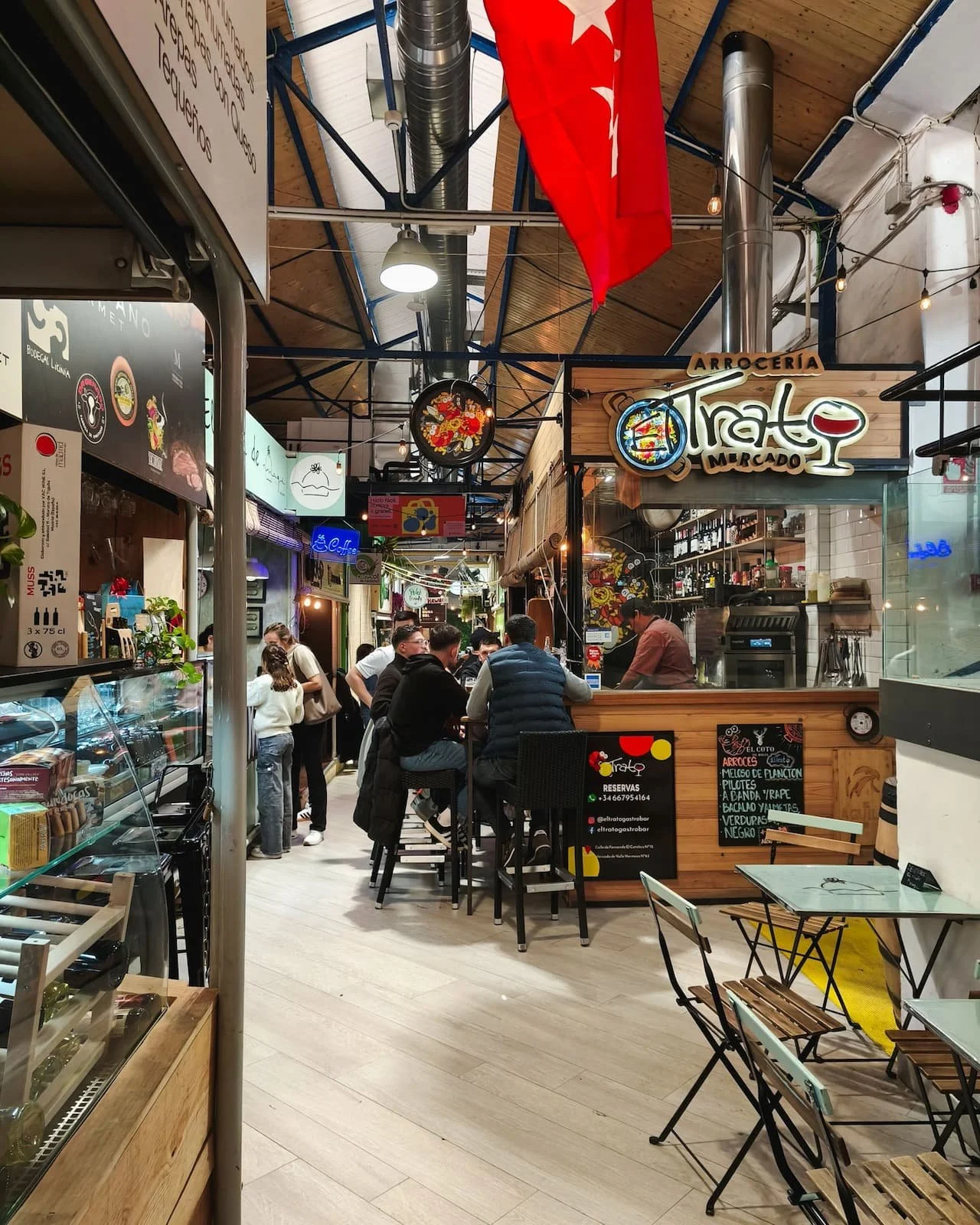
Mercado de Vallehermoso in the Chamberí neighborhood — we liked this one far more than the touristy Mercado de San Miguel, but it is a bit out of the way from the tourist center.
Neighborhoods We Stayed In
During our first month, we stayed at the base of Malasaña, close to Gran Vía and within short walking distances of Chueca, Plaza de España, and the rest of the historic center.
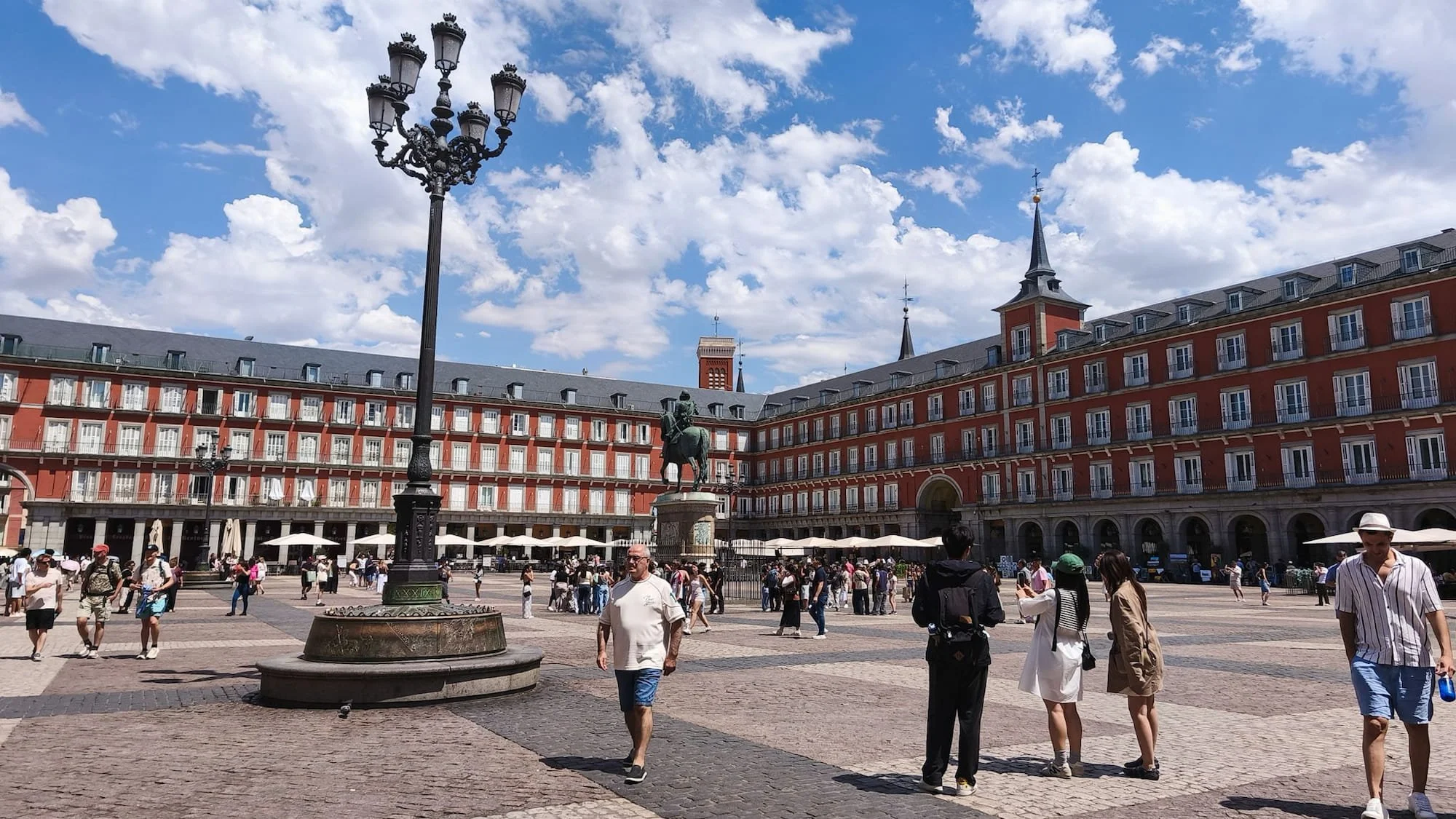
For our second month, we stayed directly on Plaza de Cascorro in La Latina, right above the streets where the El Rastro flea market takes place on Sunday mornings. I loved stepping outside into the older streets, busy terraces, and plazas full of people eating and socializing.
But honestly, one of my main takeaways after staying in both areas is that the exact neighborhood doesn’t matter all that much as long as you’re somewhere within central Madrid. The center is compact enough that you can walk between most neighborhoods fairly easily, and the metro fills in the gaps when you don’t feel like walking. I explain that argument in more detail in my guide to where to stay in Madrid.
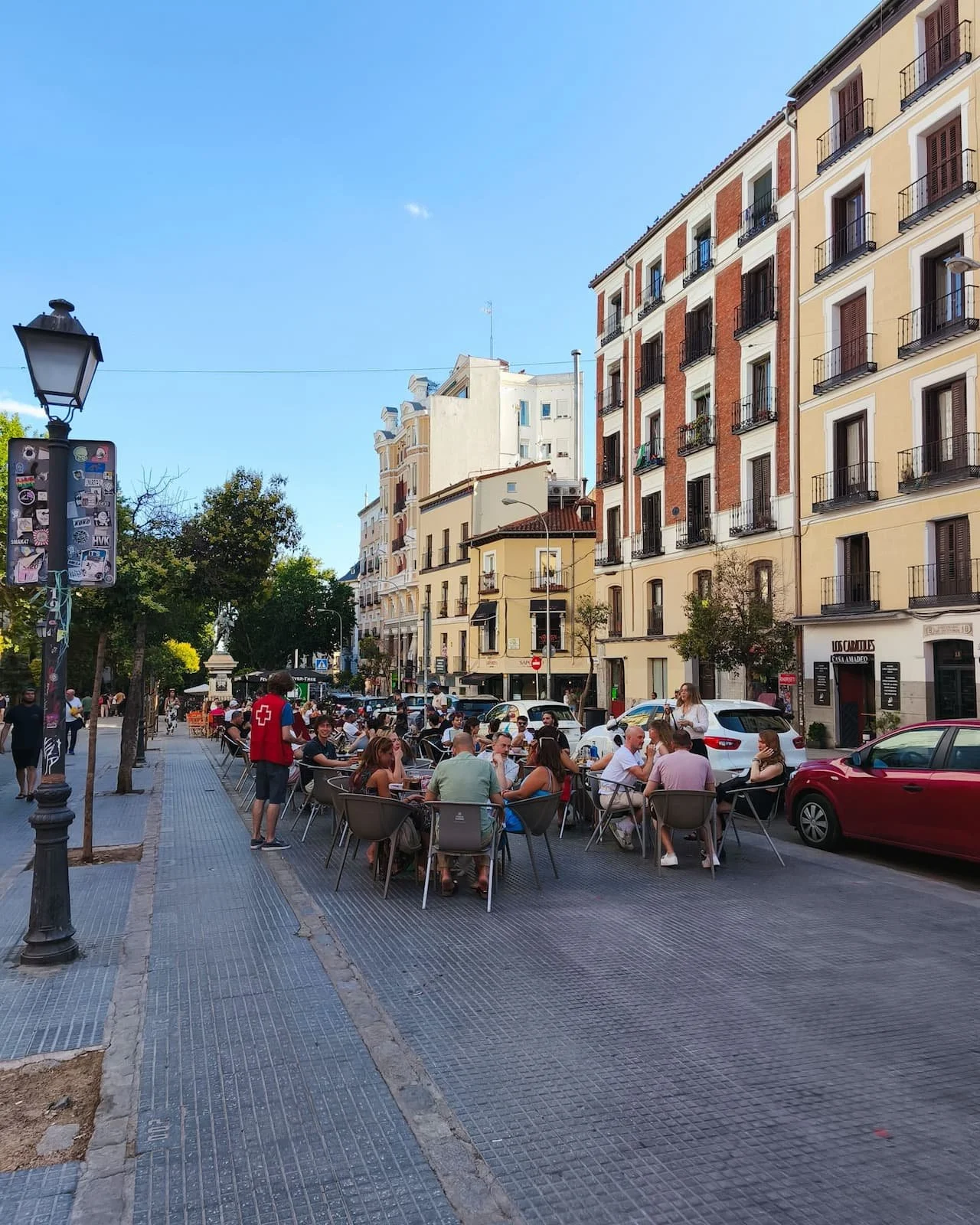
Plaza de Cascorro in La Latina, where I stayed for a month in the summer. It’s such a treat to walk out every day to this atmosphere of people out dining and just having a good time.
Everyday Spots I Kept Coming Back To
Staying longer in a city means you get to try plenty of places and eventually decide which ones are actually worth returning to. These are the grocery stores, restaurants, and everyday spots that gradually became part of our routine.
You’ll notice that many of the restaurants aren’t Spanish. We still ate plenty of Spanish food, but one of the things I appreciated about Madrid was how easy it was to find very good, affordable food from a wide range of cuisines.
Markets and Grocery Stores
Lidl — Multiple Locations
Our main grocery store for everyday shopping. It’s a German global discount market chain, and you’re able to find brand names as well as their own (often lower cost) versions of many grocery items here. In our experience, prices were generally lower than at Carrefour or Día, and I appreciated that many locations had self-checkout.
Hualian Market — Plaza de España
The Asian grocery store we found in central Madrid with the best prices. It has an extensive instant noodle selection (including the amazing Indomie) plus plenty of frozen dumplings and other easy things to cook at home. It’s located in a small cluster of streets near Plaza de España with lots of Asian supermarkets, restaurants, bakeries, and bubble tea shops.
Mercadona — Multiple Locations
Can you even stay in Spain for an extended period without mentioning Mercadona? There are fewer locations in central Madrid, but it’s always fun to browse for its affordable store-brand products, prepared foods, and, our favorite item, coconut ice cream served inside an actual coconut shell. Stores also tend to have a little sitting area with disposable utensils where you can eat casually.
Casual Restaurants and Snacks
Note: Lunch in Madrid is commonly around 2–4 PM, while dinner often starts around 9 PM or later.
These are the grocery stores, restaurants, and everyday spots that became part of our routine, plus a few we liked enough that we would have happily returned. Most are also relatively affordable; once you move away from the most tourist-heavy places, it’s completely possible to eat a satisfying meal for under €10 per person.
For more iconic Madrid food stops and tourist classics like Mercado de San Miguel, see my full guide to what to do in Madrid.
Pignic Ibérico — Puerta del Sol
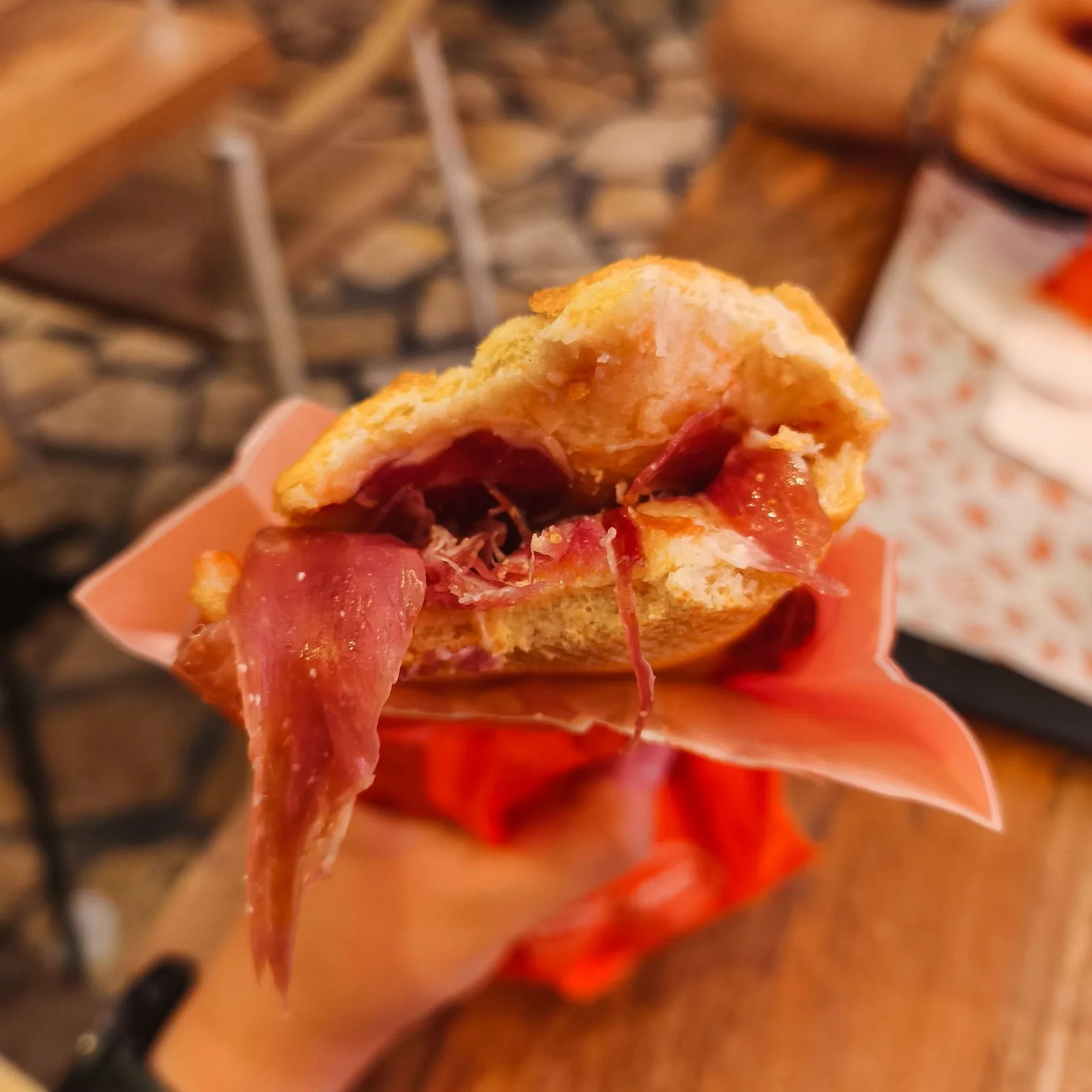
If you only try one bocadillo de jamón ibérico, make it this one. Get the “Bigpig” version for extra jamón and a much better jamón-to-bread ratio than anywhere else I tried in Madrid. The tomato inside keeps it juicy, and you can have the bread toasted too.
Restaurante Xiongzai — Plaza de España and Gran Vía
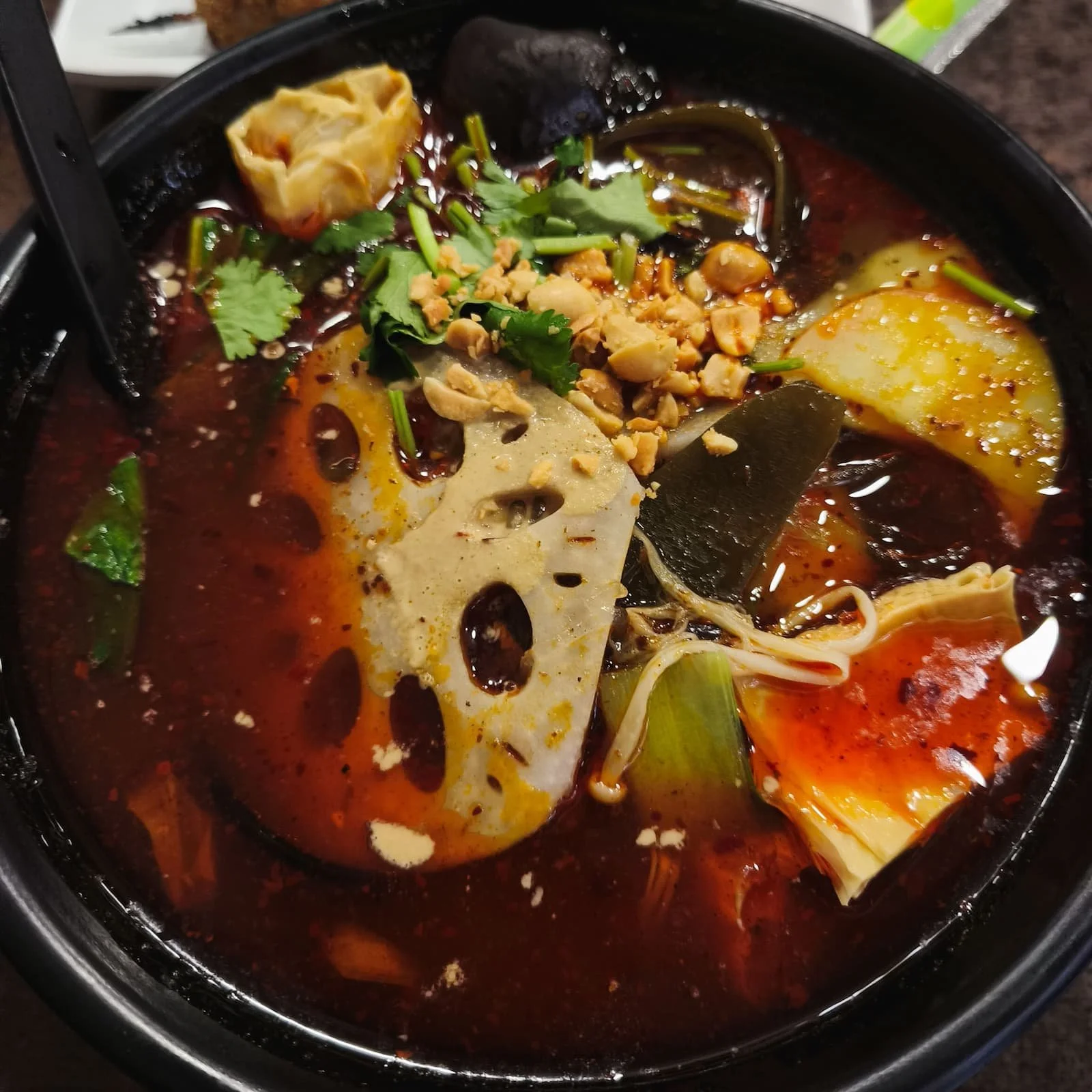
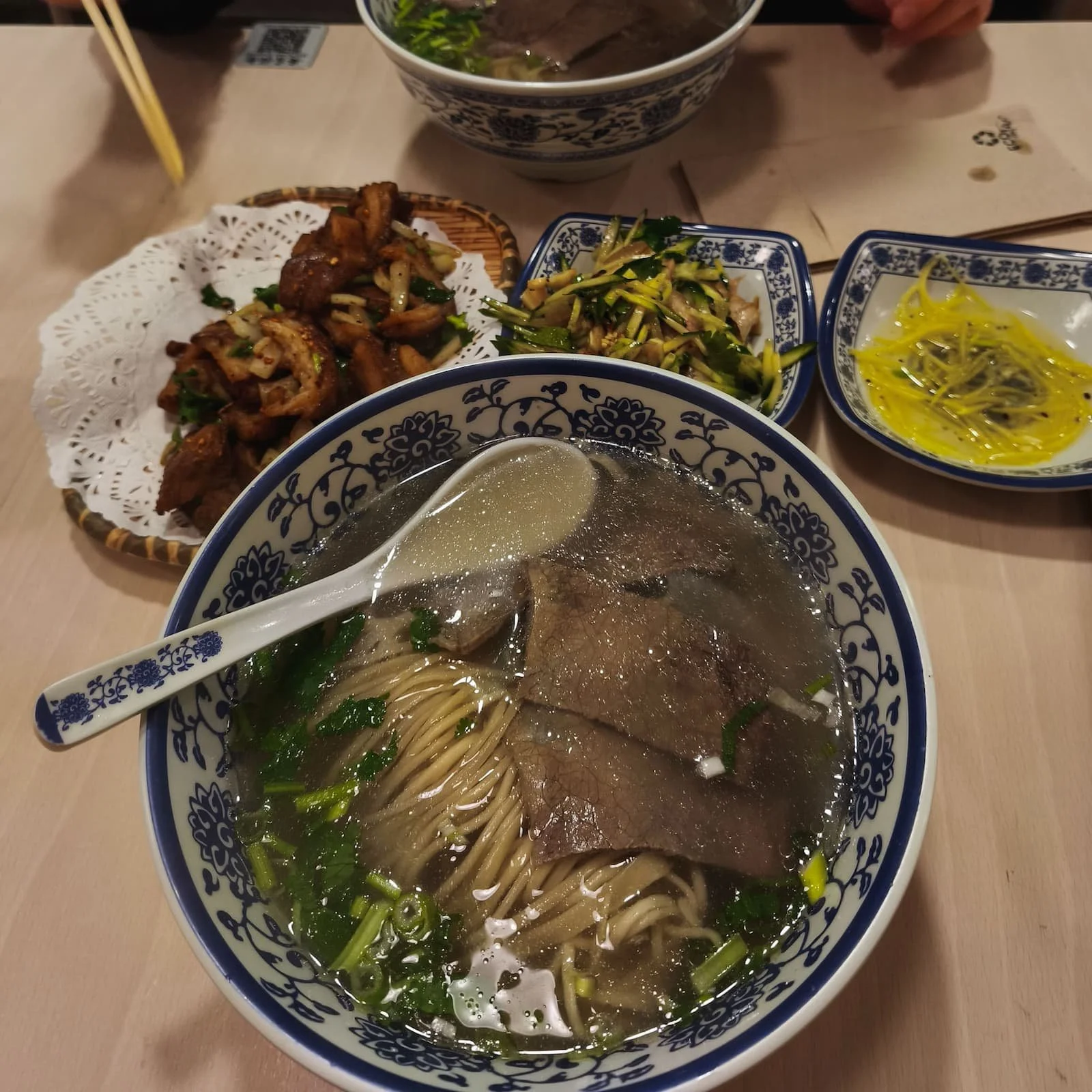
Affectionately called El Winnie because its name means “little bear” and its logo looks like Winnie the Pooh. I loved the bowls of steaming mala soup packed with Chinese vegetables, tofu skin, lotus root, glass noodles, and other accompaniments, all for under €7. This was probably the restaurant we visited most often.
Andong Ramen — Plaza de España
Giant bowls of chewy, hand-pulled noodles in a rich bone broth for under €7. The pig-ear salad is really good too. Super authentic flavors overall.
Huang’s Bao — Plaza de España
A cozy spot specializing in freshly made baozi. The classic pork version was my favorite, but they also have vegetable fillings and sides like tea eggs and unlimited pickled mustard greens.
Vira Vira — Malasaña
Huge customizable gyro wraps. My partner and I usually added all of the toppings, which included cabbage, onions, carrots, pickled peppers, corn, and pomegranate for that burst of juice and freshness, then asked for extra sauce or extra spice.
Bar Padrao — Malasaña
A casual Spanish bar where you receive a dealer’s-choice free tapa with every drink order. Both for the food and for the experience. I talk about it more in my what to do in Madrid guide.
Pez Tortilla — Multiple Locations
My favorite tortilla española in Madrid: gooey, rich, and delicious. The locations are casual and counter-served, which makes them easy stops for a quick meal. I also talk more about this one in my what to do in Madrid guide.
99 Cheesecake — Malasaña
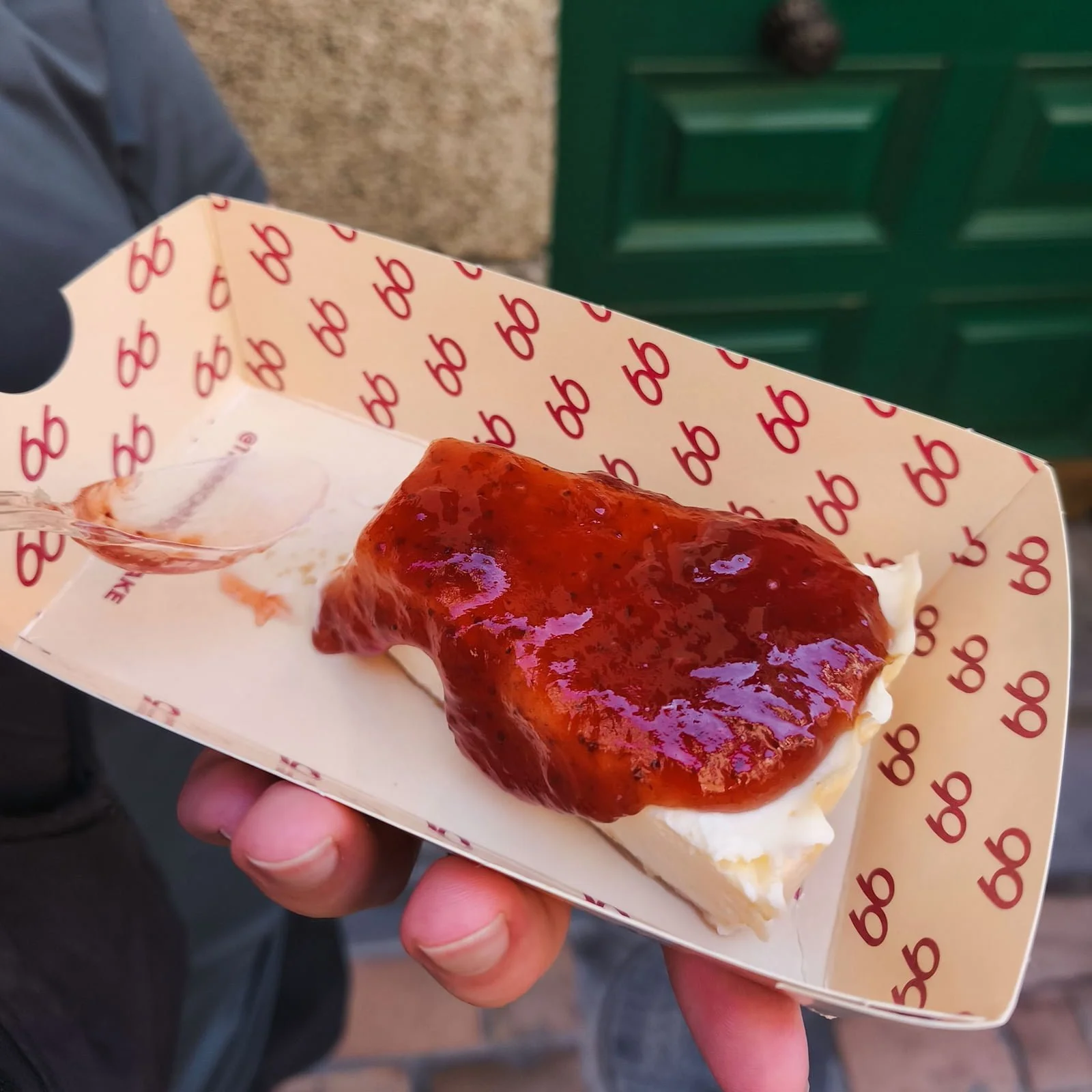
Slices of cold, creamy cheesecake starting at €0.99. You can add toppings like berry jam or white-chocolate hazelnut cream for another €0.99, which they give to you in a generous slather. Need I say more?
Pharmacies
To be honest, we didn’t use pharmacies very often besides buying contact-lens solution, so I can’t offer much of a comparison. They’re easy to spot throughout the city by their illuminated green crosses, though many have limited online information, so you may simply need to walk in and ask whether they carry what you need.
Shopping
Madrid’s shopping tends to be clustered around particular streets and neighborhoods rather than entirely consolidated inside malls.
El Corte Inglés
Spain’s iconic department-store chain and a useful place to shop for clothing, cosmetics, electronics, food, and home goods all in one place.
Gran Vía and the Surrounding Streets
This is where I did most of my clothing shopping. Gran Vía has large international chains and flagship stores, with even more shops on the surrounding streets. Plus many stores are situated inside grand buildings with beautiful interiors (especially check out the Uniqlo and Zara there).
Calle de Serrano and Salamanca
Best known for designer and luxury stores, though there are also more accessible chains. I usually paired shopping here with a walk through nearby Retiro Park.
El Rastro
Madrid’s huge Sunday flea market around Plaza de Cascorro. I personally didn’t buy anything there, but we stayed directly above it for a month, so we ended up walking through it almost every week. There’s an enormous amount to browse.
My Favorite Walks in Madrid
Madrid is one of those cities where walking never really feels like dead time between places. In fact, it’s quite the opposite, and that just makes going outside for a walk that much easier. Here are some of my favorite places and streets to walk in Madrid.
Retiro Park
A mix of forest-y paths, formal gardens, fountains, and monuments. Both the wide walkways and the narrow, shaded paths give you an escape from the bustle of the city, and you can see locals getting their exercise in or just lounging about.
The Royal Palace Gardens at Night
Most visitors see the Royal Palace during the day, but I especially loved walking through the surrounding gardens at night. Lamps softly light up the flowers and paths, couples linger on benches under the trees, and the stately palace itself glows in the background. It’s so romantic.
Gran Vía and the Surrounding Streets
It’s basically always touristy, loud, and crowded, but it’s great when you want to feel Madrid’s city energy. From there, you can wander into Malasaña, Chueca, Sol, or the smaller streets around Callao.
La Latina and Madrid de los Austrias
One of my most frequent walks during our second stay. I would wander from La Latina toward Plaza Mayor, the smaller streets of Madrid de los Austrias, and up towards Gran Vía and Malasaña for food. Even after passing the same places repeatedly, there was always something happening that I don’t think I’d ever get tired of it.
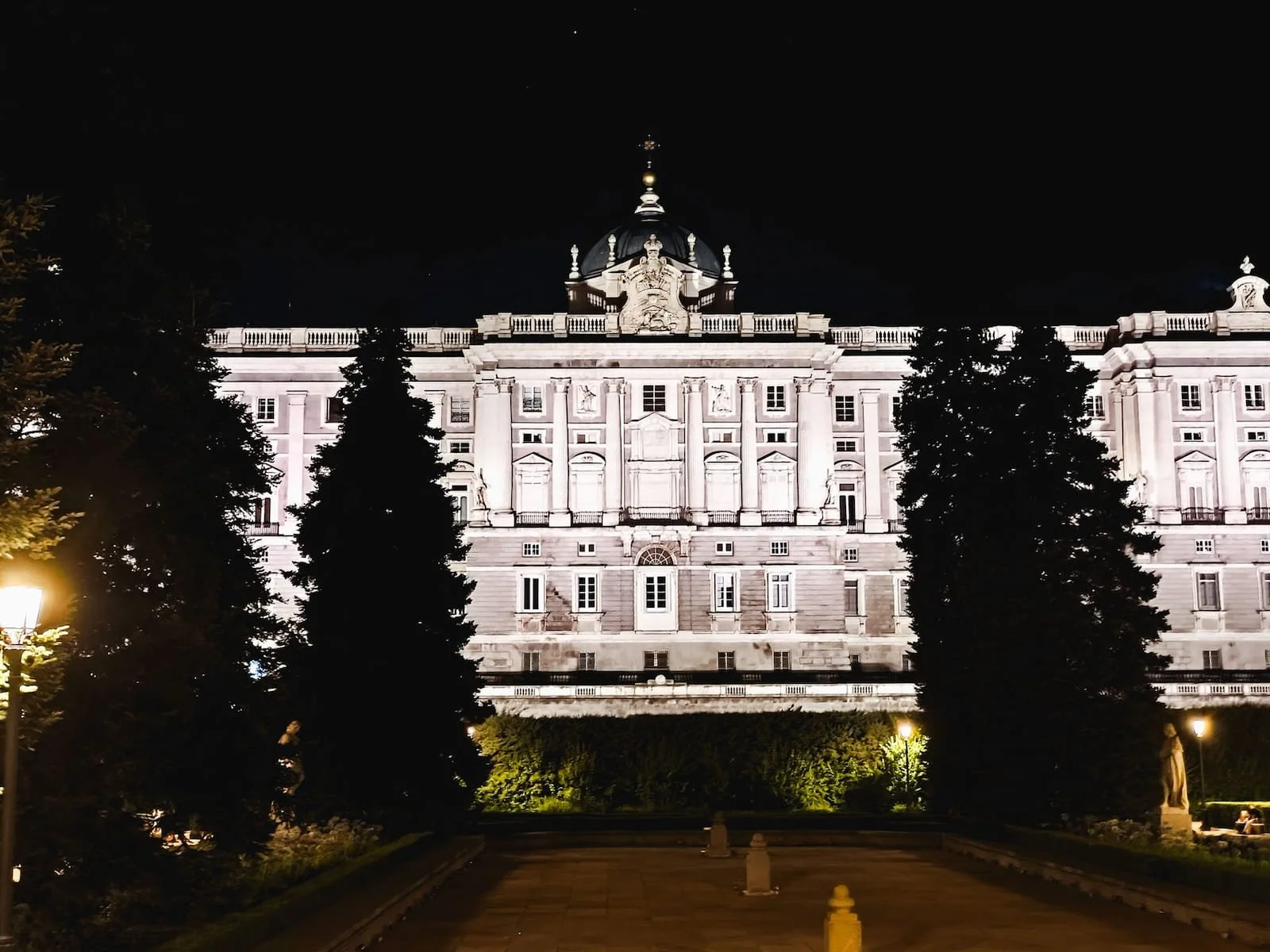
Royal Palace lit up at night.
My Real Monthly Cost Breakdown
These are my approximate monthly costs in Madrid. I split some expenses with my partner, including rent, groceries, and some restaurant meals, so the numbers below reflect my individual share rather than our combined household spending.
| Category | Approximate Monthly Cost |
|---|---|
| Airbnb (1BR, split) | $1,100 |
| Groceries (split) | $150 |
| Eating out | $400 |
| Everyday transport | $15 |
| Activities & entertainment | $150 |
| Personal & miscellaneous | $200 |
| Regular carrier international data plan | $60 |
| Total | ~$2,000–2,200 |
This is probably toward the lower end for someone staying in central Madrid for a month in a private apartment. The main things keeping my costs down were pretty straightforward:
Splitting rent with my partner: This made the biggest difference (duh lol). If you’re traveling solo and want your own apartment, you’ll likely spend more.
Choosing comfort over luxury: We looked for places that were comfortable and central enough to walk most places, but not especially polished or in pricier neighborhoods like Salamanca.
Cooking around half our meals: When we ate out, many of our regular spots were inexpensive casual restaurants rather than formal or tourist-oriented places. But because we stayed for a full month, we still had plenty of time to try the Spanish dishes and restaurants we wanted without making every meal a special travel meal.
Walking almost everywhere: Madrid’s compact center made this easy, and we almost always chose to walk even when it took 40 minutes to 1 hour.
For solo travelers: If you’re renting your own private apartment, I’d expect to spend closer to $2,700–3,200 USD per month, with accommodation accounting for most of the difference.
Who Madrid Is Best For as a Slow Travel Base
I think Madrid is amazing for someone looking for an energetic, international city that still feels relatively manageable.
It isn’t a mega-global city on the scale of London or New York, where everything seems to pass through it, but you’re unlikely to run out of neighborhoods to explore, restaurants to try, museums to visit, or simply places to sit and enjoy the atmosphere. A lot of the appeal honestly comes from doing as the Spanish do: enjoying life and taking in the atmosphere.
Madrid works especially well for people who want to walk outside and immediately feel some city energy, as well as those who value the convenience of an extremely walkable center and well-connected metro. You can easily live here without a car, and places like Toledo and Segovia also make easy no-car day trips.
Within the city center, English is widely spoken enough that you can generally get by with little or no Spanish in hotels, restaurants, and tourist-facing businesses. Still, knowing some Spanish makes everyday interactions easier and helps you feel less like you’re simply passing through.
Madrid May Be Less Ideal For
Madrid may not be the best fit for travelers trying to maintain an ultra-cheap digital-nomad budget, especially if they want a private apartment in the center.
It’s also less ideal if you want a particularly quiet or sleepy environment. You can absolutely build a relaxed routine here, but Madrid itself is busy, social, and energetic.
And in the summer, the heat can be brutal. During hotter periods, we shifted even further toward a Spanish schedule, staying inside during the hottest part of the afternoon and going out later in the evening.
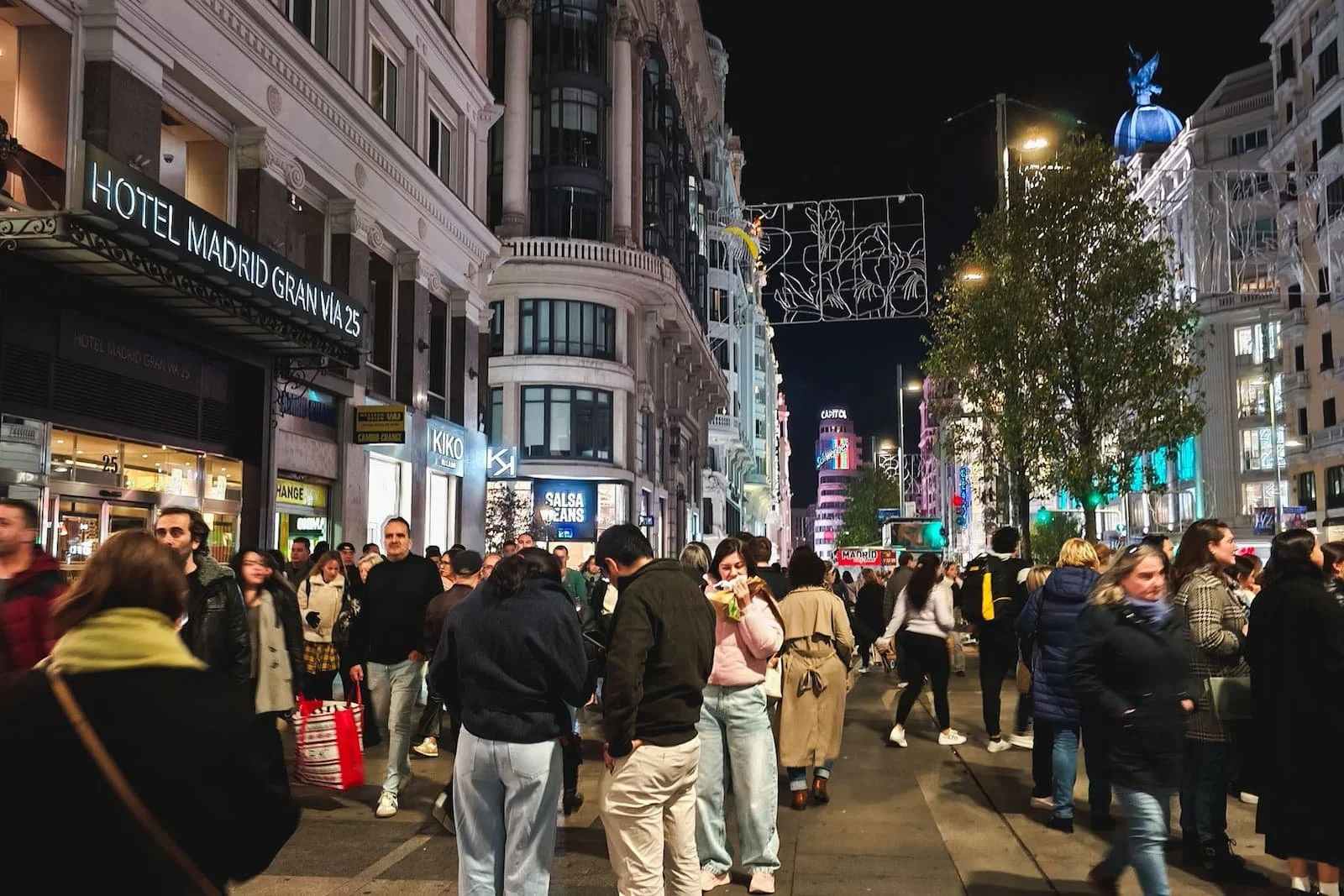
The always busy Gran Vía.
Final Thoughts
Honestly, even after spending a couple of months in Madrid, I still didn’t feel finished with it. I could easily imagine returning for another long stay, or even eventually living there more permanently.
Beyond just being a beautiful city, what made Madrid so attractive to me was how naturally it fit into everyday life. We could work, run errands, eat well, and take long walks while still feeling like we were experiencing the city rather than putting normal life on pause. And on a more personal note, the energy of Madrid seemed to seep into me too. I felt so happy and lively there.
So if you’re considering staying in Madrid for longer than a typical trip, I hope this gave you a realistic sense of what daily life there can look like.
Feel free to leave a comment below or send me a message with any questions — I’m always happy to help when I can! You can also start with my Madrid Start Here guide for all my posts about the city. And if you end up spending a longer stretch of time in Madrid, I’d love to hear what your own routine looks like.