One-Bag Packing List for Valdivia, Chile: Rain Layers, Grip Shoes + Humidity-Friendly Clothes
AFFILIATE DISCLOSURE: This post contains affiliate links. Links marked with (*) may earn me a small commission if you purchase, at no extra cost to you. (I only recommend things I personally use and love!). As an Amazon Associate I earn from qualifying purchases.
In classic southern Chile fashion, Valdivia has unpredictable weather. For one-bag travel, that means packing for more than just temperature.
Compared with a dry, more consistent city like Santiago, Valdivia asks a little more from your packing list. Rain, humidity, river/coastal wind, slippery walking surfaces, and summer mosquitoes are all worth paying attention to. But this is still very doable in one bag — you just want a small capsule of breathable layers, rewearable pieces, all-day walking shoes, and a little more drying buffer than you’d need in a drier climate.
Below, I’ll focus on the Valdivia-specific adjustments. If you want the full baseline, start with my complete One-Bag (30L) Packing List for Indefinite Four-Season Travel.
This post focuses on what to pack. For how to get there, where to stay, and how to move around without a car, see my Valdivia travel logistics guide.
- Valdivia in 4 Days → Full itinerary covering the city, Isla Teja, and a Niebla + Corral day trip
- Niebla + Corral Day Trip → Step-by-step coastal day trip without a car
- Valdivia Travel Logistics → How to get there, where to stay, and how to get around without a car
If you're passing through Santiago before or after Valdivia:
- Santiago Start Here → All my Santiago itineraries and guides in one place
Valdivia One-Bag Packing Priorities: What’s Worth Making Space For
Summer can be warm (I visited toward the end of summer and had hot afternoons), but Valdivia still cools down at night. The riverfront can feel breezy, the coast around Niebla can be windy and foggy, and rain is an even more important packing factor once you move outside the driest summer window.
Compared with Santiago, I would pack a little less optimistically for Valdivia. Santiago’s dry air makes laundry easier, layers can be lighter, and shoes do not need to handle wet ground as often. In a one-bag setup, that does not mean adding a lot more stuff — it just means shifting the balance toward weather protection, grip, and a little more laundry buffer.
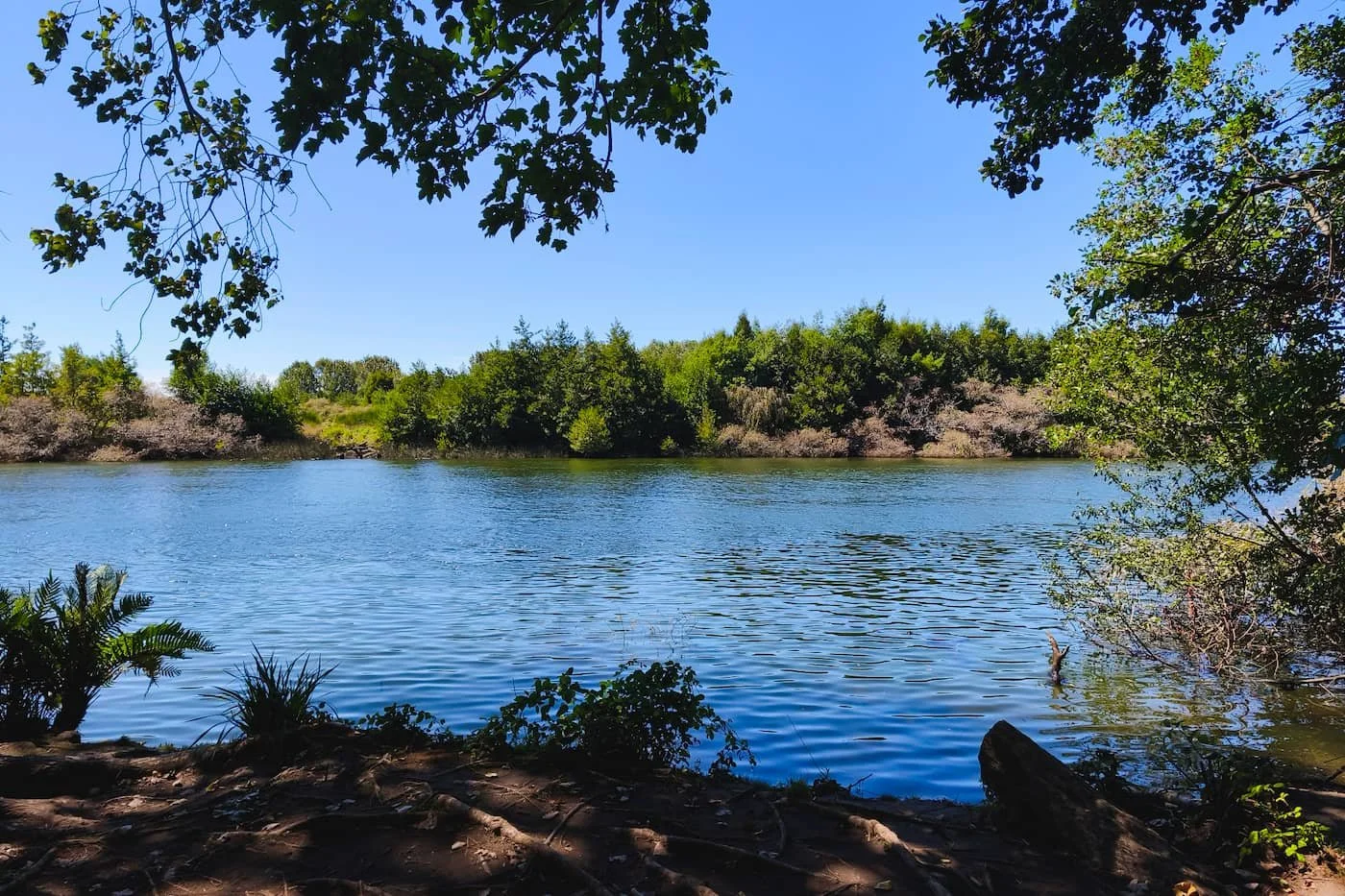
A riverfront path in the Jardín Botánico de UACh on Isla Teja. Between parks, riverfront paths, and outdoor walking areas, Valdivia feels greener and damper than cities like Santiago, which is part of why I’d pack with more weather flexibility.
The big packing priorities are:
Layers over one heavy item
Valdivia’s weather can shift throughout the day. Instead of relying on one bulky jacket, I would pack flexible layers: a breathable base, a light long sleeve or mid-layer, a rain/wind shell, and an insulated layer for colder months.
Rain and wind protection
For shoulder season or winter, I would not rely on “I’ll just dodge the rain,” since when rain comes, it can come hard. A rain shell and/or an umbrella are worth the space. Even in the summer, a lightweight windbreaker shell can be useful for cooler evenings, river walks, or coastal days.
Sun protection, even when it feels cool
Even though Valdivia is cooler and wetter than Santiago, that does not mean low sun. I would still treat sunscreen as a daily item in summer, especially in more exposed areas like the riverfront, outdoor spaces in Isla Teja, or crossing the bay by ferry.
Humidity and slower laundry
This is the big one. Valdivia is humid, and clothes can take longer to air-dry (it’s common for lodgings to especially not have a dryer). I would not assume that you can wash something at night and have it dry by morning. Quick-dry fabrics would help a lot, but it still does not always mean overnight-dry.
Shoes that can handle damp ground
Valdivia is compact and walkable, but the ground can be wet. Between rain, riverfront paths, market floors, and ferry docks, I would prioritize shoes with actual grip and that protect your feet from wetness. Plus, if you go to the coast, the hilly roads and beach trails further warrant grippy, supportive shoes.
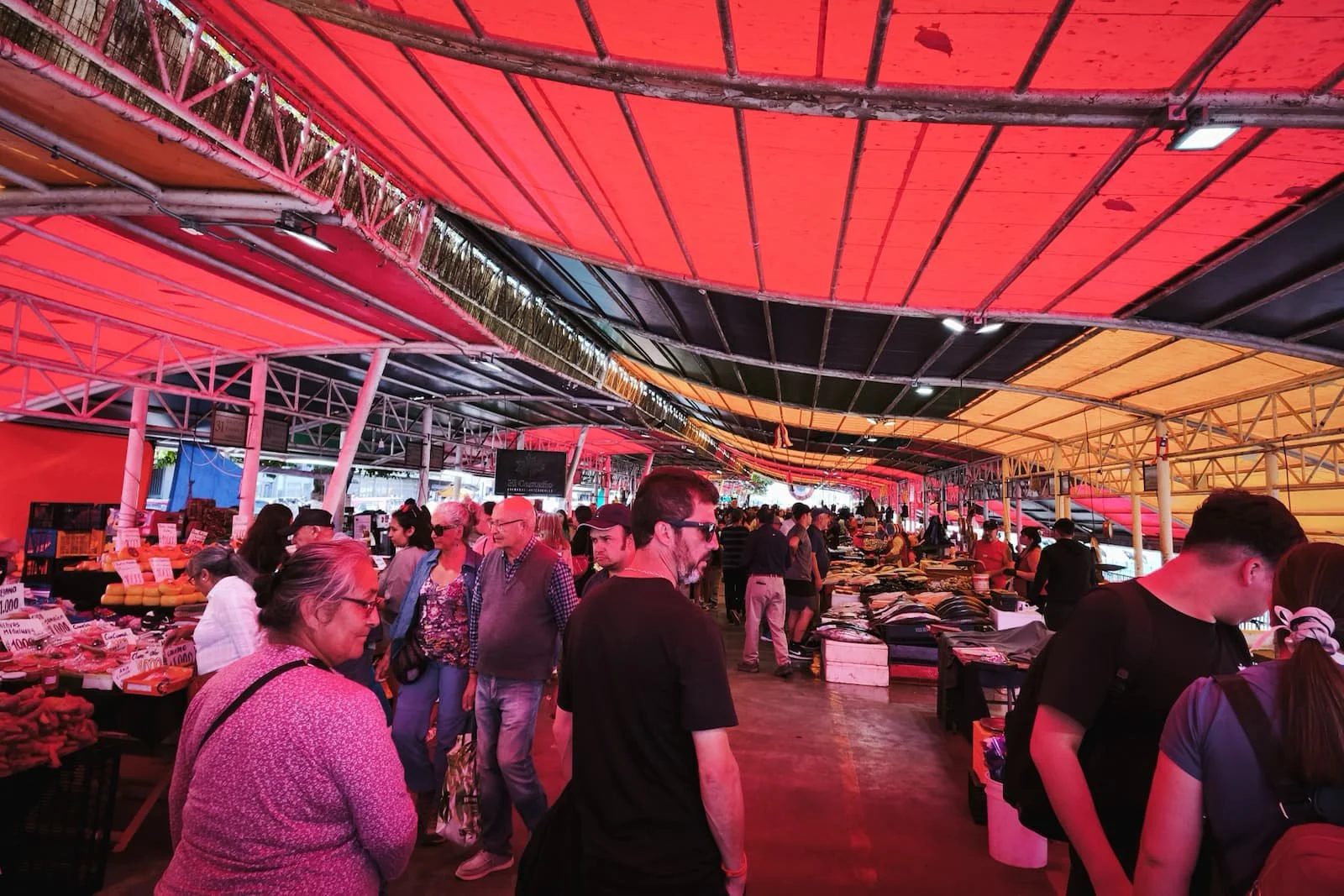
Even in the city, Valdivia’s markets, riverfront areas, and ferry docks are good reasons to prioritize shoes with grip. Mercado Fluvial, for example, always has wet ground from the fresh seafood produce the stands sell.
Summer mosquitoes
I did not experience a huge mosquito problem when I visited toward the end of summer (just a bite here and there), but mosquitoes can be more of an issue in the warmer months. A small repellent and a lightweight long sleeve could be helpful especially then.
Valdivia by Season: Quick Clothing Priorities
If you only want the quick version, here’s how I would adjust a small one-bag capsule by season. Still check the forecast, though — this table is more of a mental shortcut than a strict seasonal rule.
| Season / Situation | What to prioritize |
|---|---|
| Summer | Short sleeves, shorts or lightweight pants, plus an evening layer |
| Shoulder season | Short sleeves or light long sleeves, long pants, mid-layer, rain shell |
| Winter | Long sleeves, long pants, insulated layer, rain shell, warmer socks |
| Any season | Laundry buffer and quick-dry fabrics |
| Niebla / ferry day | Wind / rain shell, long pants or a warmer layer depending on the forecast |
For shoes, I would prioritize grip first, then weather resistance. In shoulder season, water-resistant sneakers or trail runners are usually enough for normal city walking. In winter or a rainier forecast, I’d consider something more waterproof, but only if it is still comfortable enough for long walking days.
Core Capsule Priorities for Valdivia
You do not need a special Valdivia wardrobe. If you already pack with a small travel capsule, the same basic setup can work here too.
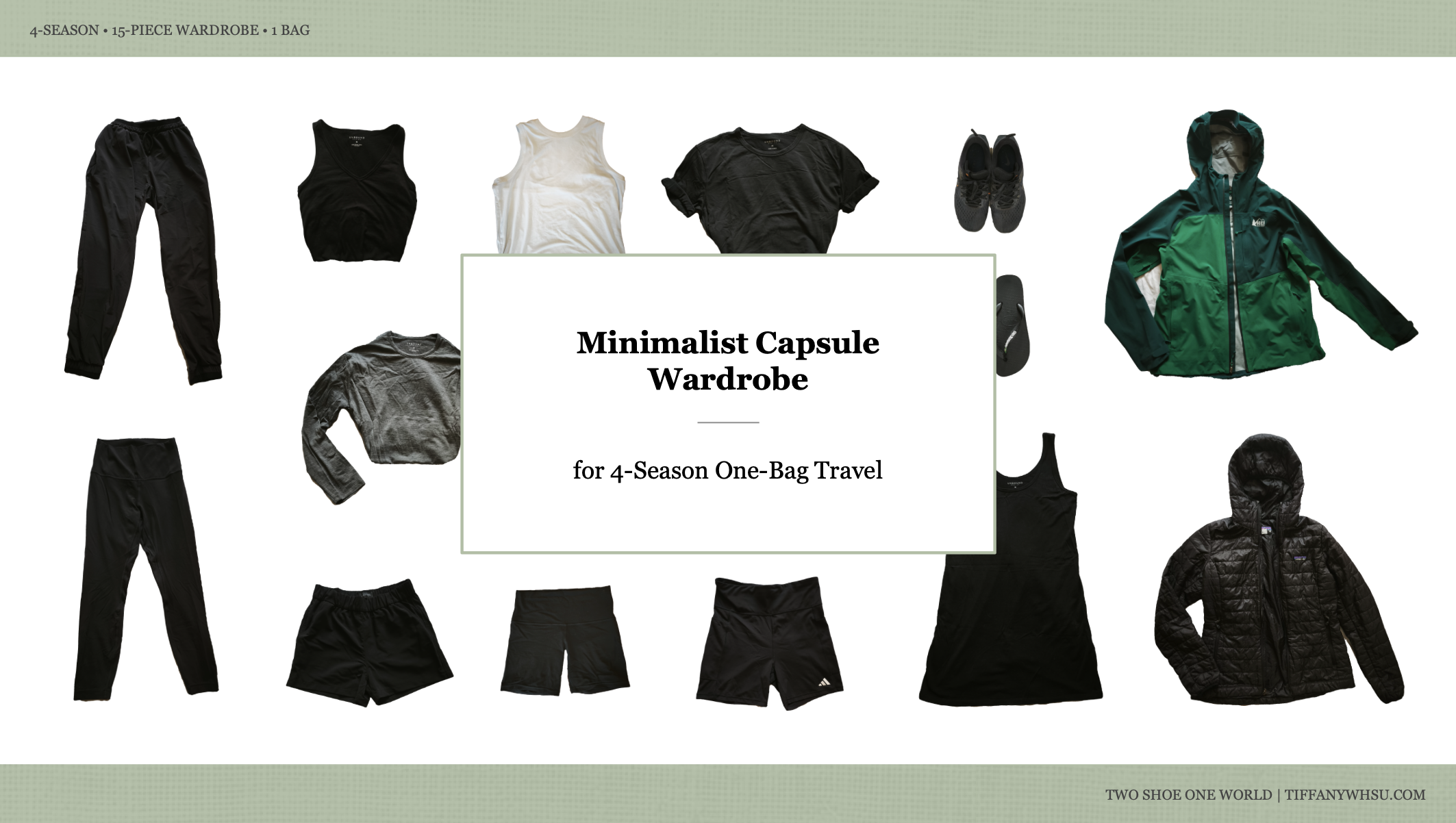
My 15-item travel capsule wardrobe is built around that idea: a small set of clothes can cover most travel scenarios if the pieces layer, mix, and repeat well. For Valdivia, I would not reinvent that system — I would just pay extra attention to the pieces that matter most in a wetter, slower-drying climate.
In practice, that means prioritizing breathable base pieces, a useful long sleeve, bottoms that do not feel miserable when damp, a comfortable mid-layer, a real rain/wind shell, and enough socks and underwear to avoid emergency laundry.
Breathable base tops
Your base tops should be comfortable for walking, easy to rewear, and light enough to layer under something warmer. Merino and technical fabrics work well because they resist odor, pack small, and dry better than cotton. I practically wore my Unbound Merino V-Neck (*) every day on my trip since it’s stylish enough for city wear on its own, layers great, and can handle repeated wears.
For summer, this might mean T-shirts and tanks. For shoulder season or winter, I would lean more toward lightweight tees and long sleeves that can sit under a mid-layer.
A lightweight long sleeve
A long sleeve is useful in Valdivia because it can cover light warmth, sun protection, mosquito protection, and layering under a fleece or rain shell.
For summer, this could be a sun hoodie, merino long sleeve, or lightweight synthetic layer. For cooler months, it becomes part of the main layering system. I use an Unbound Merino long sleeve (*) for this role because it layers easily without feeling too technical.
Bottoms that do not punish you when wet
The key is avoiding bottoms that become miserable when damp. Heavy denim is not ideal here because it dries slowly and feels uncomfortable in wet weather.
I would prioritize lightweight travel pants, running pants, leggings, or shorts depending on the season. If you are staying longer, traveling without reliable laundry, or visiting during wetter months, this is the category where I would be more willing to add a little buffer.
A comfortable mid-layer
A fleece or light sweater is one of the most useful items for Valdivia. It works for cool summer evenings, breezy riverfront walks, ferry days, layering under a rain shell, and hanging around lodging if the room feels damp or chilly.
I would choose something comfortable enough to wear lounging indoors, not just a technical piece that only feels right outside, since it could get cold at night even inside.
A rain/wind shell
For Valdivia, a shell is more important than it is for Santiago. In summer, a lightweight windbreaker with water resistance may be enough; I carried my ultra-packable Patagonia Houdini (*) every day and pulled it out when it got chillier at night or when wind chill hit on the ferry ride. In shoulder season and winter, I would want something thicker or more waterproof.
This is the piece that makes the rest of the capsule work.
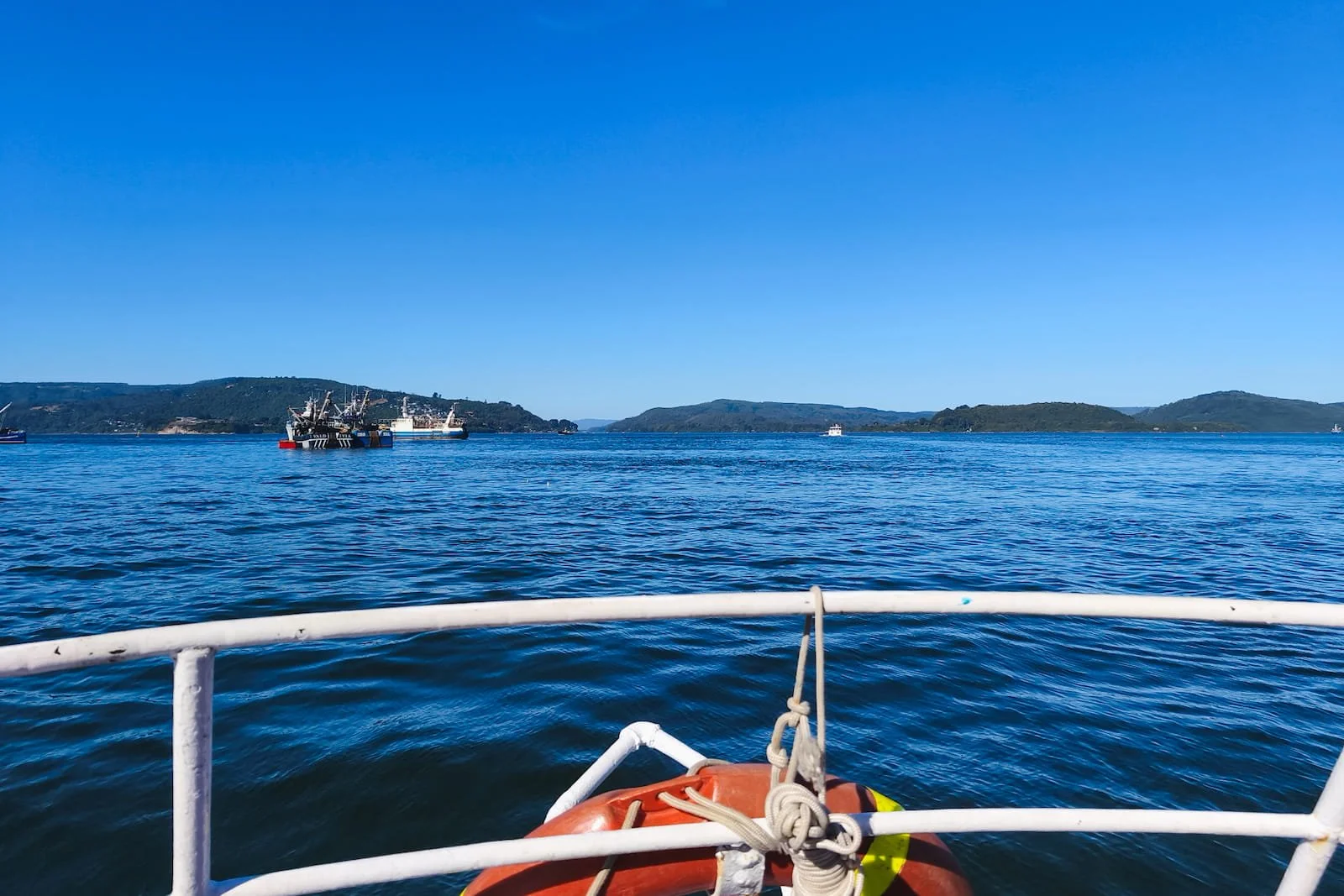
I ended up using my shell constantly around Valdivia, especially on ferry rides and cooler evenings.
Socks and underwear
Because drying can take longer, I would not cut this category too aggressively. Make sure to bring enough underwear to last you the trip plus a bit of buffer.
Socks also deserve a little more margin because wet socks are annoying and can take longer to dry than lightweight tops. I would lean toward merino or technical socks if you have them. They resist odor, feel better for long walks, and give you more flexibility if laundry takes longer than expected. I usually travel with Icebreaker merino socks (*) for this reason.
Optional active or elevated piece
Valdivia does not require anything overly dressy. If you want something nicer for dinners, cafés, or brewery visits, one simple elevated piece is enough: a travel dress, black pants, or a polished merino top. I brought my Unbound Merino tank dress (*), and it worked well with a simple pair of legging shorts underneath for both more active days and a nicer dinner date.
If you are doing parks, long walks, or more active days, choose an active-friendly outfit that can still pass casually in town.
Shoes for Valdivia: Grip Matters
As I said earlier, grippy shoes go a long way in Valdivia, especially when the forecast predicts rain or if you plan to walk on trails on Isla Teja or on the coast.
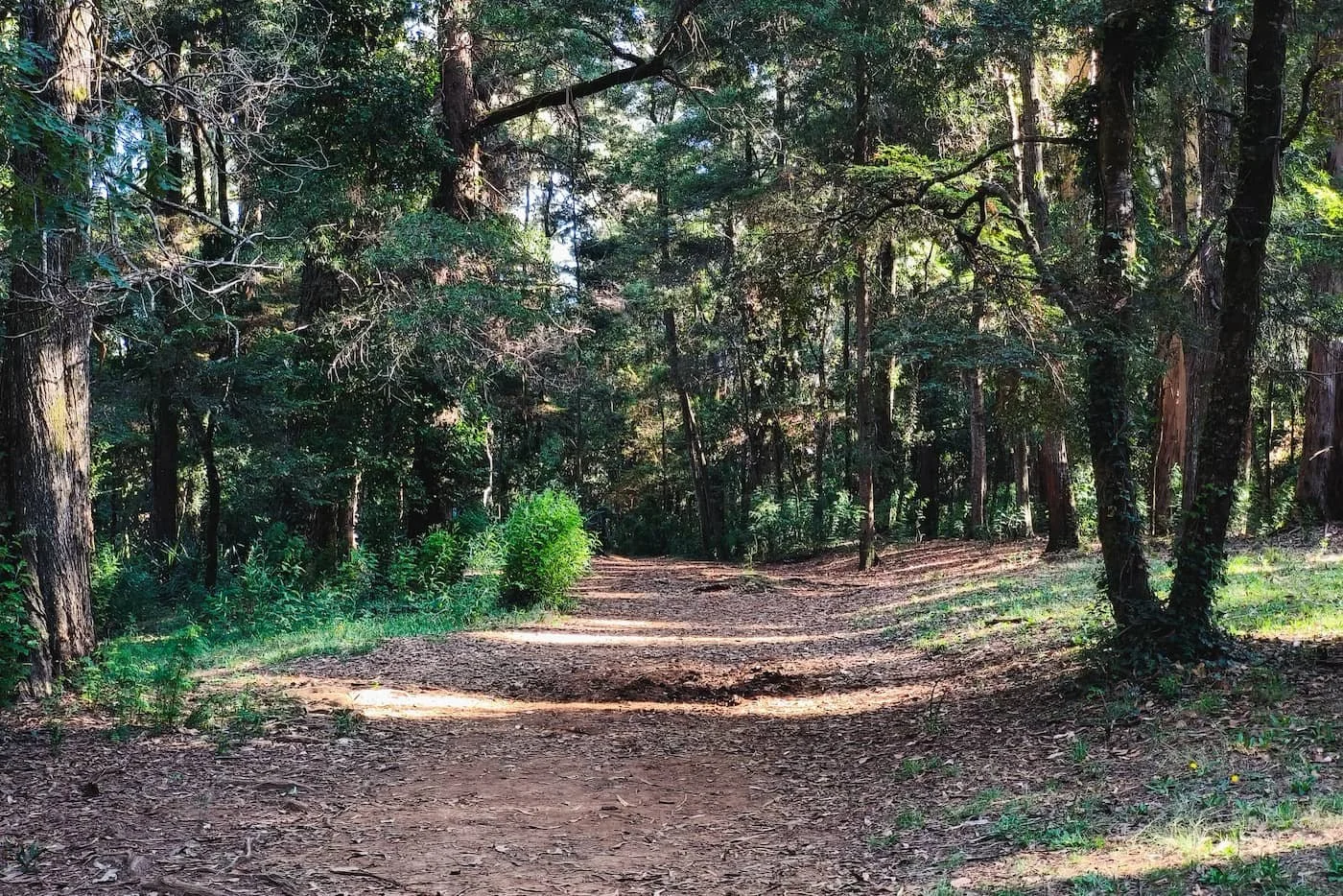
A trail in Parque Saval on Isla Teja. Besides city streets, parks, trails, and damp ground are part of the walking experience in Valdivia.
For your primary shoe, look for:
good traction
comfort for long walking days
enough support for 15–20k steps
some weather resistance for light rain or damp ground
dark or easy-to-clean color if possible
Trail runners are my favorite solution for this kind of trip because they work for city walking, parks, uneven ground, and damp surfaces without feeling as bulky as hiking shoes. I usually prefer low-profile trail runners with low-to-moderate tread as a primary one-bag travel shoe, which I break down more in my 2-shoe one-bag travel strategy.
For a secondary shoe, I would choose just one:
sandals or flip flops for summer, hostels, shared showers, or casual lounging
flats if you want something slightly nicer
light boots in winter or rainier months, ideally worn in transit so they do not take up bag spac
Laundry + Fabric Strategy in a Humid Climate
For one-bag travel, laundry is often what lets a small capsule work, especially on longer trips. For a short Valdivia trip, you may not need to wash anything at all — but if you do, give yourself more drying margin than you would in a dry climate.
Many lodgings do not have dryers, and some do not have washers either. Even if you hand-wash something, the humidity can slow drying enough that your overnight laundry is still damp the next afternoon. That definitely happened to me when I visited.
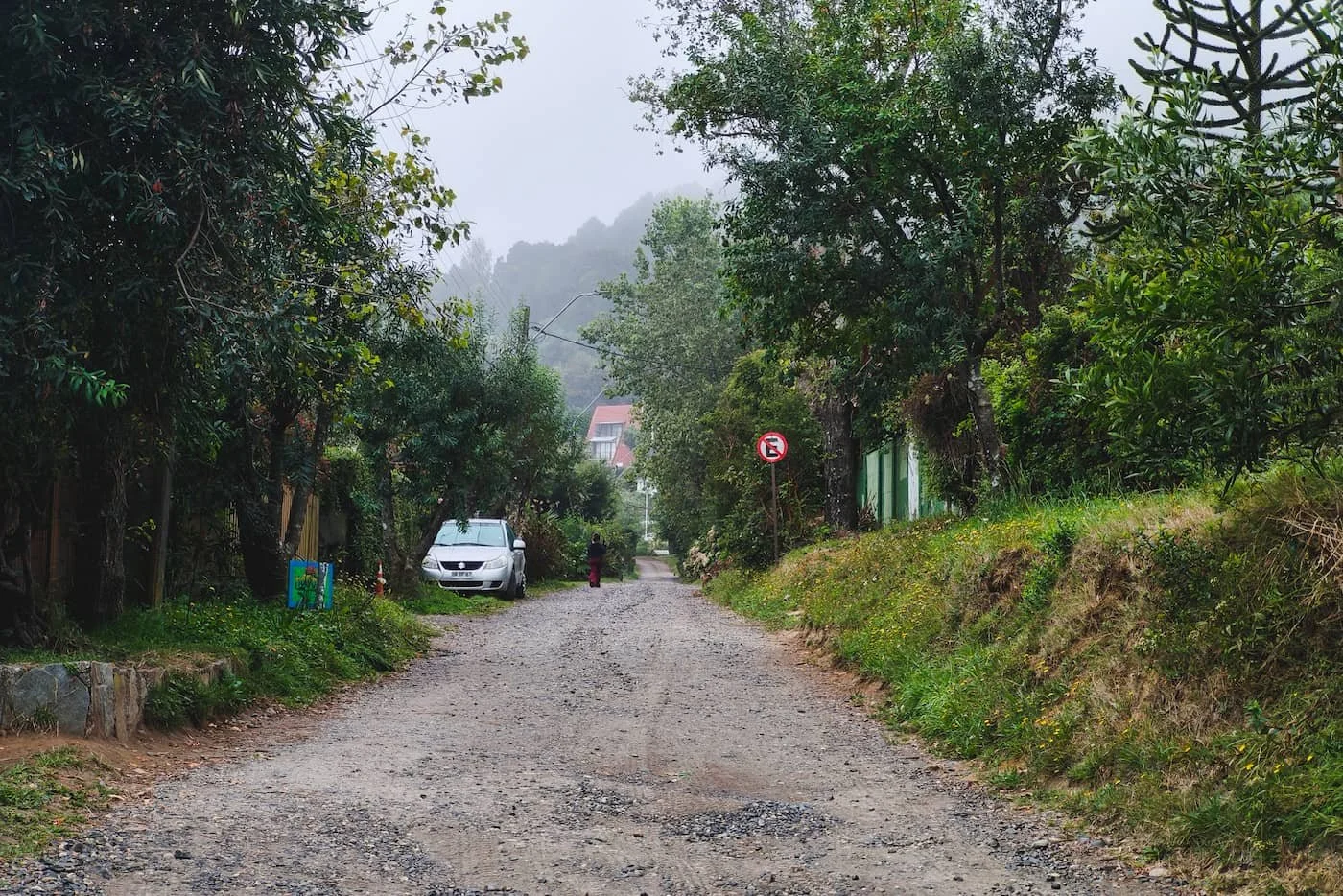
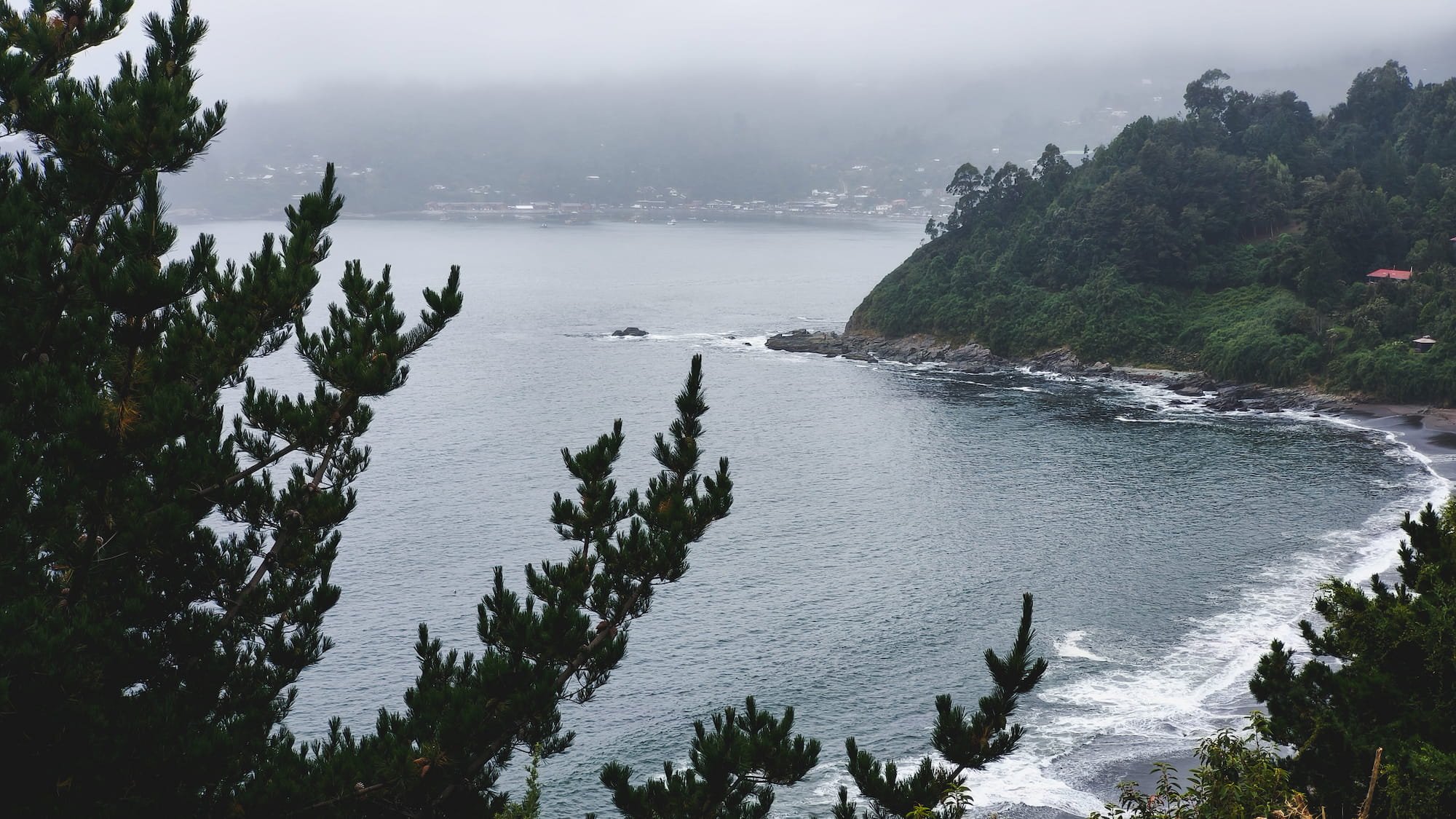
Niebla’s cooler, foggier coastal weather is a good reminder that Valdivia can feel damp even when it is not actively raining.
So, for Valdivia, I would:
wash earlier in the day so clothes have more time to dry
wash before you run out of clean clothes
roll clothes firmly in a towel before hanging to remove as much water as possible
prioritize airflow when drying
avoid washing thick items unless you have a full drying day
pack one more wearable outfit and underlayers than you would in a dry climate
carry a small dry bag or plastic bag just in case you need to pack damp socks or a half-dry shirt
Fabrics I would prioritize:
merino wool
lightweight synthetics
thin technical pants
nylon or polyester blends
lightweight fleece
Fabrics I would avoid relying on too heavily:
thick cotton
denim
bulky sweaters
heavy socks that take forever to dry
A few small laundry tools can help, mostly because they give you more control over washing and drying. A travel clothesline lets you hang clothes where there is better airflow, detergent sheets make small washes easier, and a dry bag is useful if something is still damp when you need to move lodging.
These do not solve the humidity issue, but they make it easier to manage. I use a Scrubba wash bag (*), Sea to Summit travel clothesline (*), and little detergent sheets as part of my travel laundry setup, which I break down in my portable laundry system for one-bag travel.
Essentials for Valdivia: Sun, Bugs, Rain + Tech
Besides clothing, most of what you need for Valdivia is pretty standard travel gear. These are the small essentials I’d pay extra attention to because of Valdivia’s sun, rain, humidity, local transport, and coastal day trips.
Skin + sun
As I mentioned earlier, the sun can still feel strong in Valdivia, especially around open water. I would treat sun protection as a daily thing, not just something for beach days.
Pack sunscreen, sunglasses, and a hat or visor. A lightweight long sleeve is also useful if you prefer clothing-based sun protection.
Rain + damp-weather items
Consider a packable rain shell, a small umbrella, a waterproof pouch for your phone/wallet/passport, and a backpack rain cover if your bag is not very water-resistant.
For me, the rain shell comes before the umbrella because it is more useful for hands-free walking, ferry days, and coastal weather. But a compact umbrella can still be worth it for slower city days.
Mosquitoes + comfort
In the summer, consider a small mosquito repellent, anti-itch cream, or a lightweight long sleeve for evenings. I did not find mosquitoes overwhelming during my end-of-summer visit, but I did get the occasional bite.
For most travelers, I’d treat this as a comfort item rather than a major packing concern.
Cash + small bills
Even if you usually travel mostly card-first, I would keep some cash on hand in Valdivia.
You need cash for local bus and ferry fares, and some market stalls or souvenir stands may be cash-only. This is especially important if you are doing the Niebla + Corral day trip, where you may be taking a local bus, ferry, or buying from smaller vendors.
I would try to carry small bills and coins so you can pay closer to the exact fare on local buses. Drivers can give change, but it can mean standing near the front of the bus while they count it out between stops, which is not the most comfortable setup when the bus is crowded or moving quickly.
Tech
Chile uses Type C and Type L plugs, so a universal travel adapter is the easiest option if you travel often. I use my trusty Epicka Universal Travel Adapter (*), which has been the most convenient setup for me because I can use it across different countries without thinking much about plug types.
I would also bring a small power bank to keep your phone charged on long walking days, navigation-heavy days, and day trips. This is especially useful if you are going to Niebla and Corral, where you may be using maps, taking photos, and relying on your phone for transport logistics.
What to Keep Accessible for the Bus to Valdivia
If you are taking a long-distance bus to Valdivia, I’d pack the things you need for the trip near the top of your bag, in your sling, or in whatever personal item you already carry.
The bus is simple and direct, but it is long (10–14 hours if you are coming from Santiago), and you may not have predictable food or bathroom stops. I would pack assuming you’ll want the basics easily accessible without digging into your main bag mid-trip.
Handy transit items:
portable travel battery
earphones or headphones
downloaded music, podcasts, shows, or maps
snacks or easy bus food
filled water bottle
light layer for air-conditioning or nighttime travel
valuables kept close, not under the bus
rain shell near the top of your bag in case you arrive to wet weather
The water bottle is useful for the bus ride, but it is also worth having for the whole trip. Tap water in Valdivia is potable, and in my experience, it tasted amazing.
If you are deciding whether to bus or fly, I cover the full tradeoff in my Valdivia travel logistics guide. This packing section is just about what I would want within reach once I’m already on the bus.
Example One-Bag Packing List for Valdivia
Here is the short version of what I would pack for a short Valdivia trip of about a week or less, using a one-bag setup.
This assumes you are staying in the city, walking a lot, doing at least one coastal or ferry day trip, and may or may not have easy laundry access. If you are staying longer, I would not necessarily add much more, but plan to do laundry — except I would add buffer where it matters most: underwear, socks, and maybe one extra top or bottom.
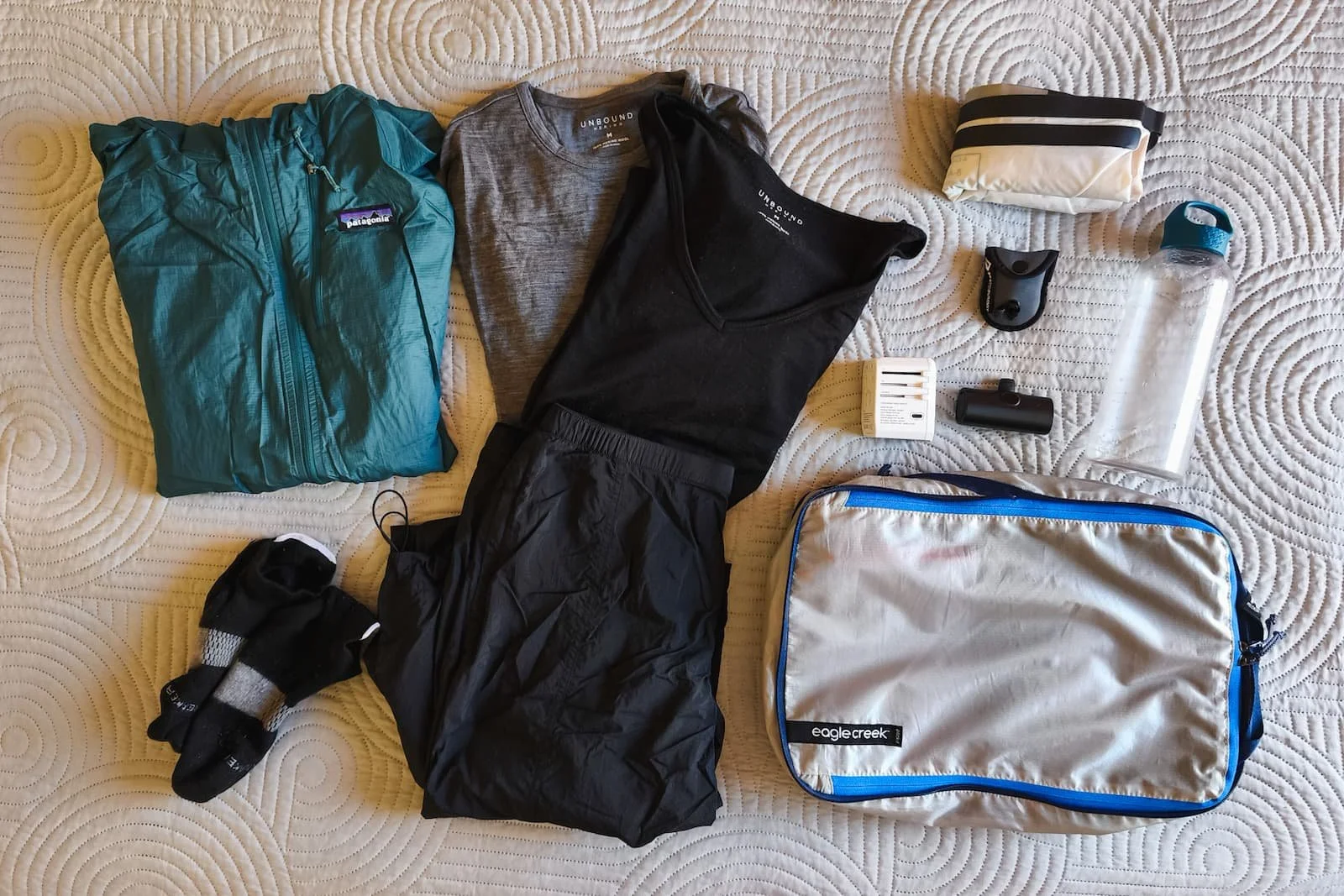
Some of the key items in my one-bag packing list for Valdivia: layers for changing weather, fabrics that can handle slower dryer (merino and lightweight synthetics), and essentials for bus and ferry days.
Clothing
3–4 breathable tops
1 lightweight long sleeve
1 mid-layer fleece, sweater, or quarter-zip
1 rain/wind shell
2–3 bottoms depending on season
7–9 underwear
3–4 bras or base layers
4–5 pairs walking socks
1 sleep outfit
optional active outfit or elevated outfit
Shoes
primary walking shoes with grip, ideally trail runners or weather-friendly sneakers
1 secondary shoe: sandals, flip flops, flats, or light boots depending on season
Accessories + essentials
sunscreen
sunglasses
hat
mosquito repellent in summer (optional)
compact umbrella if visiting in a rainier season (optional)
universal travel adapter
small power bank
earphones or headphones for long bus rides
reusable water bottle
snacks for bus or ferry days
small amount of cash, ideally with small bills / coins
waterproof pouch or dry bag
daily essentials (hygiene, skincare, makeup, etc)
portable laundry setup if you already use one (optional)
Final Packing Notes
Valdivia is not difficult to pack for in one bag, but it does reward a more thoughtful setup to account for its unpredictable weather. The goal isn’t to pack for every possible scenario, but to bring the right small set of items: layers you can combine, shoes that can handle wet ground, fabrics that do not punish you if laundry takes longer, and a few essentials for sun, rain, and summer bugs.
For my own trip near the end of summer, the biggest surprises were how hot the days could feel, how much the temperature cooled at night, and how slowly clothes dried compared with drier parts of Chile.
So my Valdivia packing advice is simple: pack light, but do not pack too optimistically. The goal is still one bag — just not a one-bag setup that depends on perfect weather, overnight laundry, or dry sidewalks. A little extra drying buffer, a real rain/wind layer, and shoes with grip will make the whole trip feel easier.
Thanks for reading — happy packing!
Have a question about this?
Shoot me a message or leave a comment below — I read everything, and I’m always happy to help if I can!