Valdivia, Chile: How to Get There + Plan an Easy, Walkable Trip
Valdivia is one of the easiest cities to visit in southern Chile. It’s compact, walkable, well connected by bus, and centered around its riverfront. You don’t need a car, and you don’t need to over-optimize every logistics decision for the trip to work well.
This guide covers the main setup decisions — how to get there, where to stay, and how to get around — so you can keep the trip simple and low-friction. (And if you’re looking for a day-by-day plan, I link my 4-day itinerary below!)
Quick Take
Take the bus if you’re already traveling through Chile and don’t mind a long ride. It’s cheap, direct, and avoids airport-transfer friction. Flying only makes sense if the timing is clearly better.
Stay near the riverfront in central Valdivia. This gives you the easiest access to the markets, restaurants, cafés, river walks, and Isla Teja.
You don’t need a car. Most of the trip is walkable, with local buses and occasional rideshares for longer distances.
Plan for 4 full days (not including travel). That’s enough time for the city, Isla Teja, a slower brewery/waterfront day, and a Niebla + Corral day trip without rushing.
Bring cash for local transport. Buses and ferries are simple but often cash-based, and rideshare can be less reliable from coastal towns.
Build in a little weather flexibility. Valdivia’s weather can shift quickly, so simple area-based days and a light rain layer make the trip easier.
For the full day-by-day plan, see my 4-day Valdivia itinerary, which follows this exact no-car setup.
- Valdivia in 4 Days → Full itinerary covering the city, Isla Teja, and a Niebla + Corral day trip
- Niebla + Corral Day Trip → Step-by-step coastal day trip without a car
- One-Bag Packing for Valdivia → How to pack for Valdivia's unpredictable weather in just a carry-on
If you're passing through Santiago before or after Valdivia:
- Santiago Start Here → All my Santiago itineraries and guides in one place
How to Get to Valdivia
Start Here: Bus vs Fly at a Glance
If you’re coming from Santiago, the choice is mostly between speed and simplicity.
Fly if you want the shortest travel day and don’t mind airport logistics.
Take the bus if you want the simplest, cheapest option and don’t mind a long ride.
Flying saves time in theory, but in practice, limited flight schedules and airport transfers can eat into that advantage. The bus is slow (usually 10–12 hours from Santiago) but it’s straightforward and gets you from city center to city center. Honestly, for most travelers who aren’t in a rush, the bus is the simpler choice.
If you’re already in southern Chile, skip the flight decision entirely — a regional bus is usually the easiest option.
Below, I’ll break down each option in more detail.
Taking the Bus from Santiago (Simplest Overall Option)
From Santiago, long-distance buses are the most common way to reach Valdivia.
Major companies include FlixBus and Turbus. I recommend prebooking tickets on their website.
Most routes depart from terminals near Estación Central in Santiago (e.g., Terminal San Borja, Terminal Alameda)
Travel time: ~10–12 hours (can be longer with traffic)
You’ll usually find both daytime buses and overnight / sleeper-style buses. The choice mostly comes down to whether you’d rather spend a full day in transit or try to sleep on the bus overnight.
The route mostly follows Chile’s main north–south highway, stopping in cities along the way. If you’re traveling more slowly, you can break this up via places like Temuco or Osorno.
Things to know:
Buses are generally comfortable and reliable
Bathrooms are onboard, but there are usually no scheduled food or bathroom stops — I’d bring water and food / snacks
Bus terminals can be chaotic — keep an eye on your belongings
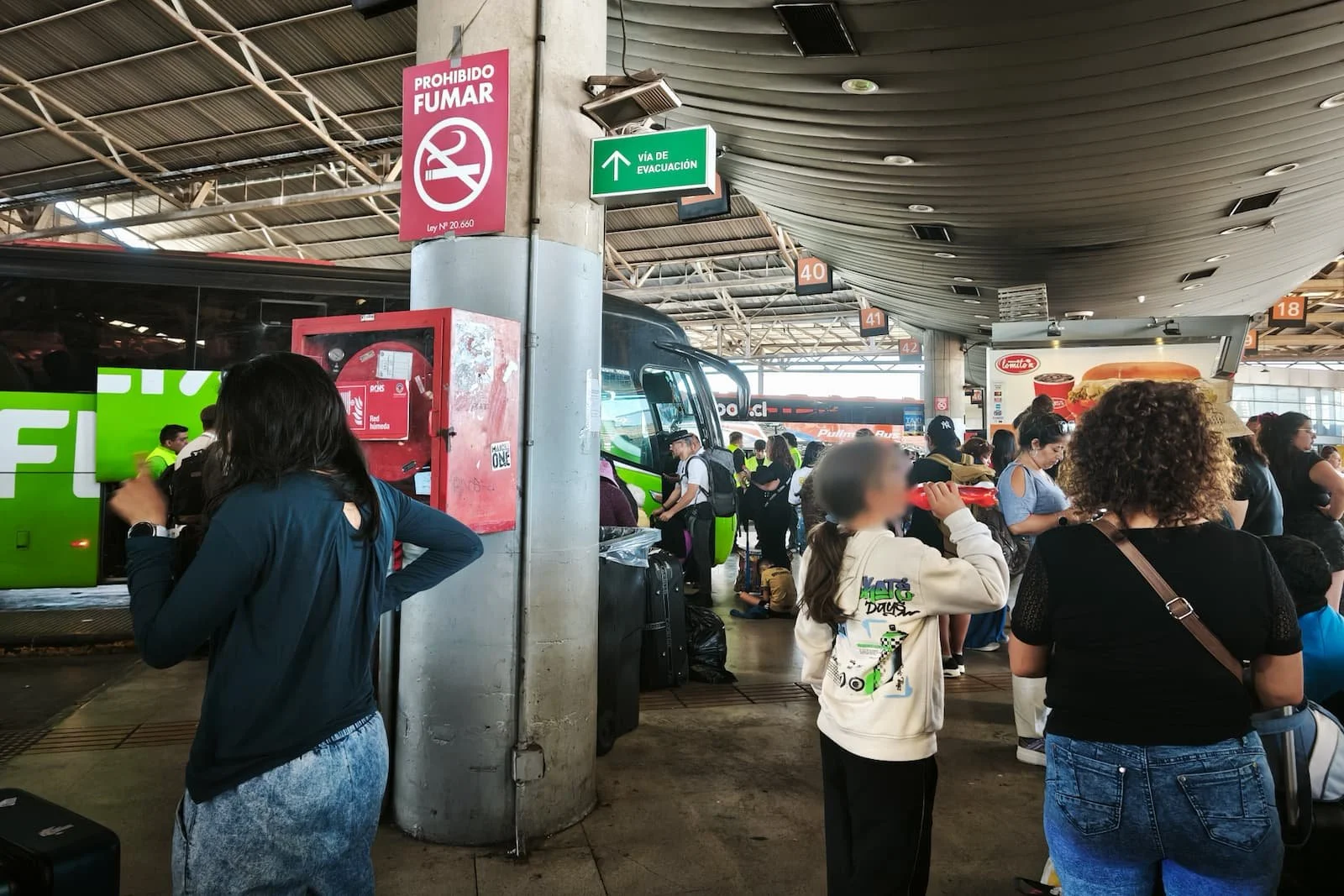
Bus terminals in Santiago can be busy, but routes to Valdivia are straightforward and well-connected.
Flying from Santiago (Faster, More Moving Parts)
You can also fly from Arturo Merino Benítez International Airport to Pichoy Airport.
Flight time: ~1.5 hours
Airlines: typically LATAM Airlines or Sky Airline
Frequency: usually 1–2 flights per day
The main tradeoff is logistics:
You’ll need to get to the airport in Santiago (see my Santiago → SCL airport transport guide for full details)
And from Pichoy Airport (~32 km outside Valdivia) into the city
Rideshare options near the Valdivia airport can be limited, so most travelers rely on pre-booked transfer services. A few options include:
Already in Southern Chile?
If you’re already traveling in southern Chile (like in Pucón or Puerto Varas) the easiest option is to take a regional bus to Valdivia.
Routes between southern cities are well connected
Travel times are much shorter than from Santiago
You avoid airport logistics entirely
One of the main operators in southern Chile is JAC, which runs comfortable and reliable routes between cities in this region. We took JAC from Valdivia to Pucón, and it worked smoothly.
For these shorter routes, the bus is usually the lowest-friction option by far.
My Setup
I took a direct FlixBus from Santiago (Terminal San Borja) to Valdivia.
The bus was clean, comfortable, and had AC
There’s a bathroom onboard, but no guaranteed stops
We sat in the front row on the second level — fun for the view, but it’s mostly highway (and can get hot in the sun)
One thing to note: delays happen. Due to traffic and accidents, our trip took closer to 14 hours instead of 10–12. We arrived at the Valdivia bus terminal around 2 AM and had no problem getting an Uber to our accommodation.
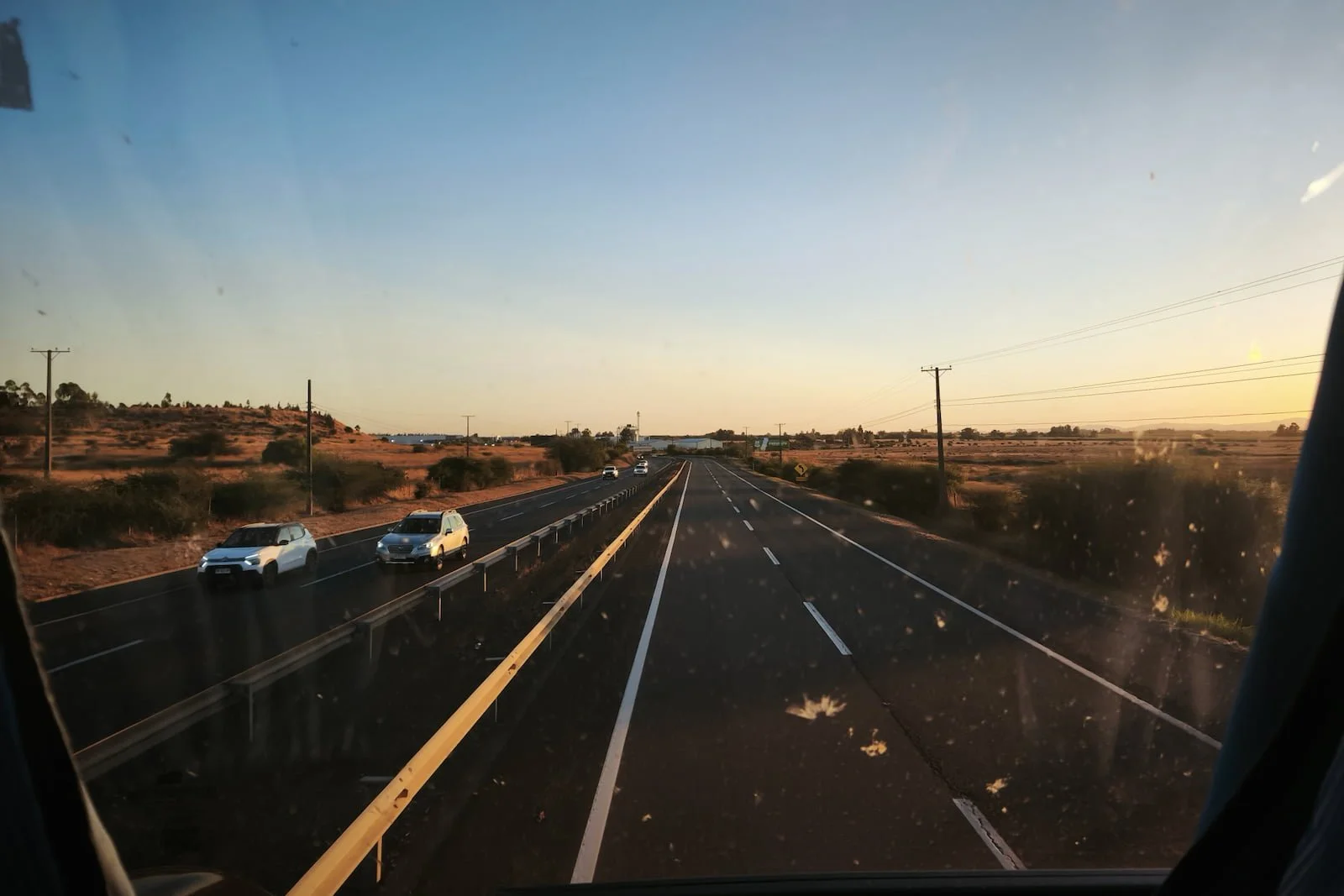
The bus ride from Santiago is long but simple, with mostly highway the entire way.
Where to Stay in Valdivia
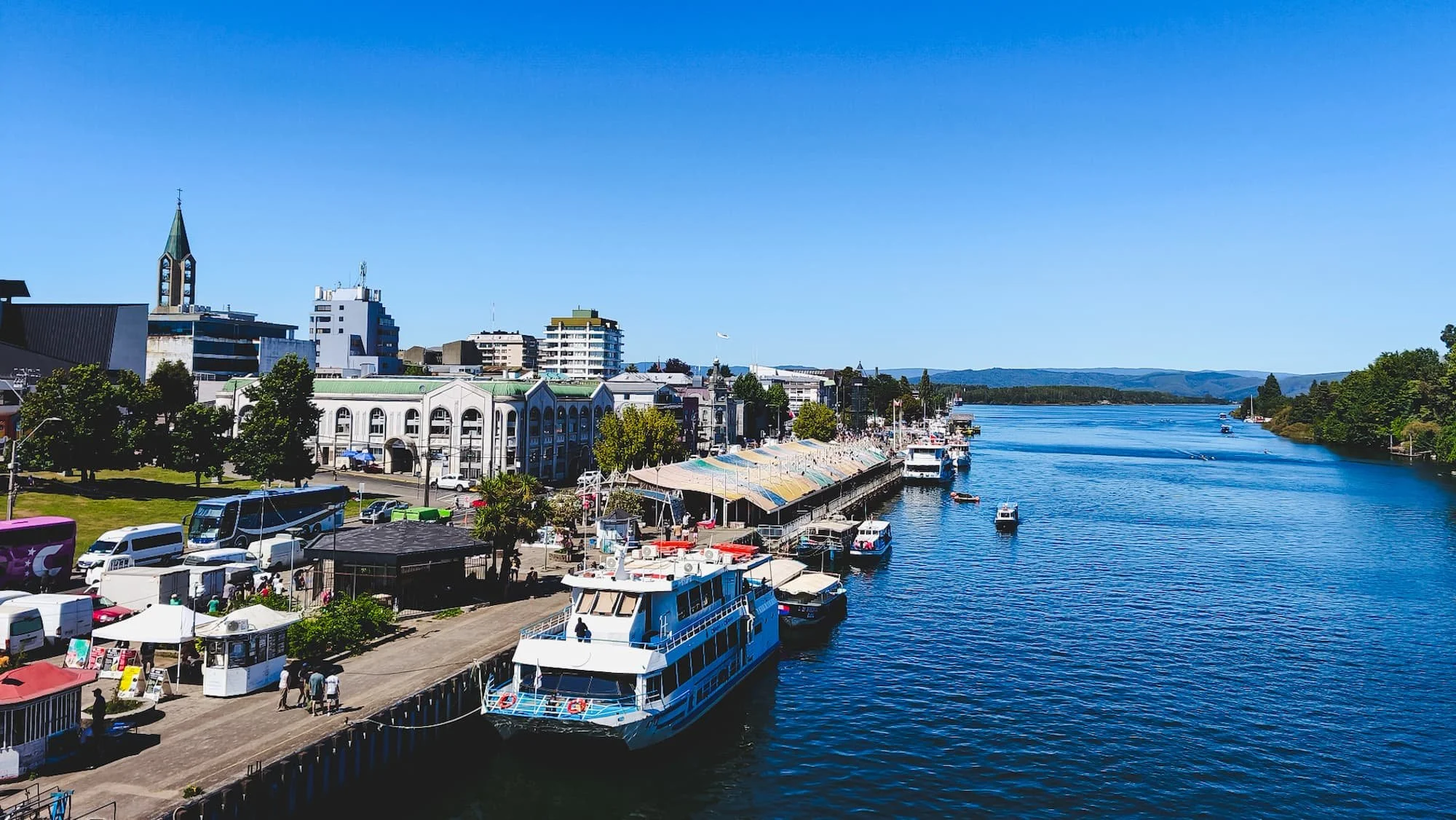
For most travelers, I’d stay near the riverfront in Valdivia’s central area.
By central area, I mean the broader walkable zone that includes the waterfront, markets, bus station, restaurants, cafés, and the bridge to Isla Teja — not just the busiest blocks around the market.
The city is compact, so as long as you stay within this general area, you’ll be able to walk most places. You’ll probably end up on the riverfront Costanera more than once — we did every day — so being close to it makes the trip feel much easier.
Within this central area, there are a few distinct pockets:
Northwest (downtown core): The busiest and most convenient area, closest to the markets, plazas, restaurants, and main stretch of the waterfront. Best if you want everything right outside your door (but usually pricier).
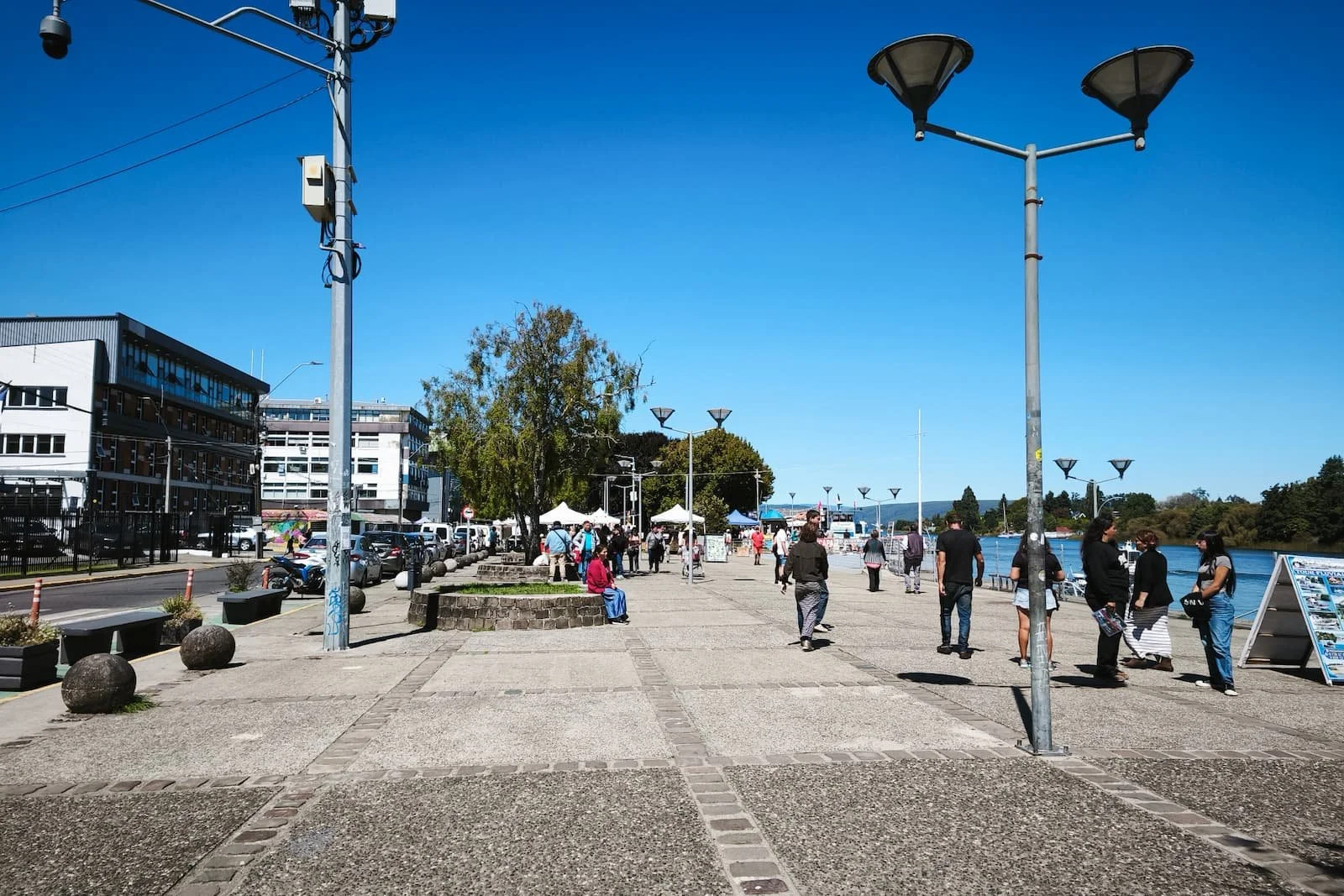
The northwest / downtown core puts you closest to the busiest stretch of the Costanera, markets, plazas, and restaurants.
Northeast (quieter waterfront): More residential and calm, with access to the quieter side of the Costanera and closer proximity to the bus station. Slightly farther from the main downtown core.
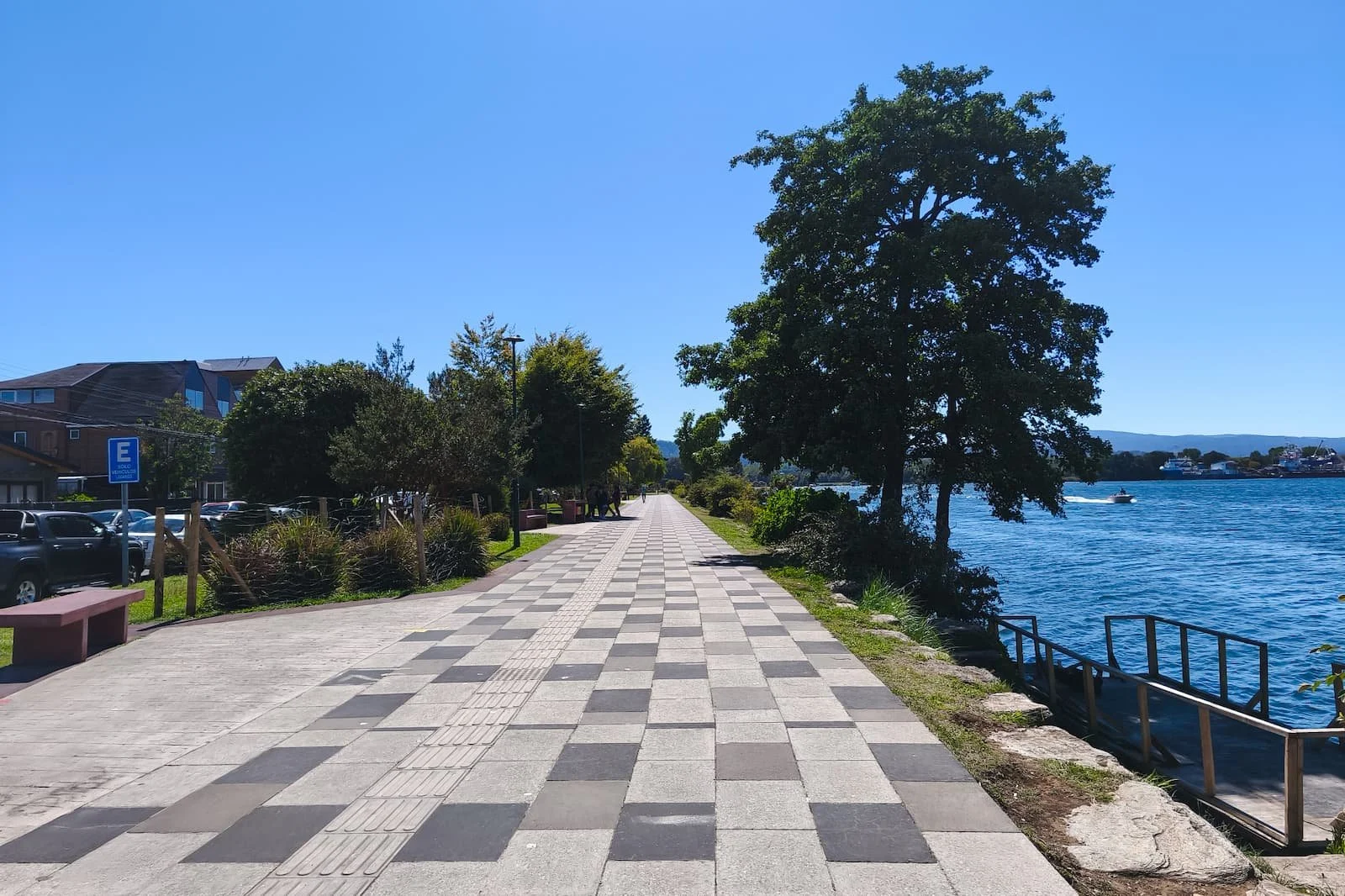
The northeast side of the waterfront feels calmer and more residential, while still keeping you within Valdivia’s walkable central area.
South Valdivia (more residential): More local-feeling and often more affordable, but a bit farther from the main riverfront and busiest areas.
All that said, Valdivia is small enough that you don’t need to over-optimize this — as long as you’re near the river and within the central area, your trip will flow easily.
What about Isla Teja?
Isla Teja is a separate area across the river, not part of central Valdivia. It’s green, calm, and close to parks, cafés, breweries, and the university campus. It’s a great place to spend a day, but as a base it adds a bit more friction because you’ll need to cross the bridge whenever you want to go downtown.
For a 4-day Valdivia trip like mine, I’d stay central and treat Isla Teja as a dedicated day. It keeps the trip simple, walkable, and flexible without turning every outing into a mini commute.
Getting Around Valdivia Without a Car
You Don’t Need a Car
Given how compact and walkable Valdivia is, this is an easy city to visit without renting a car.
For a 4-day trip like mine, you’ll mostly use:
Walking: best for central Valdivia, the Costanera, and Isla Teja
Local buses: useful for reaching Kunstmann Brewery and Niebla
Rideshare / Uber: convenient if you don’t want to deal with bus logistics, crowding, or cash payment
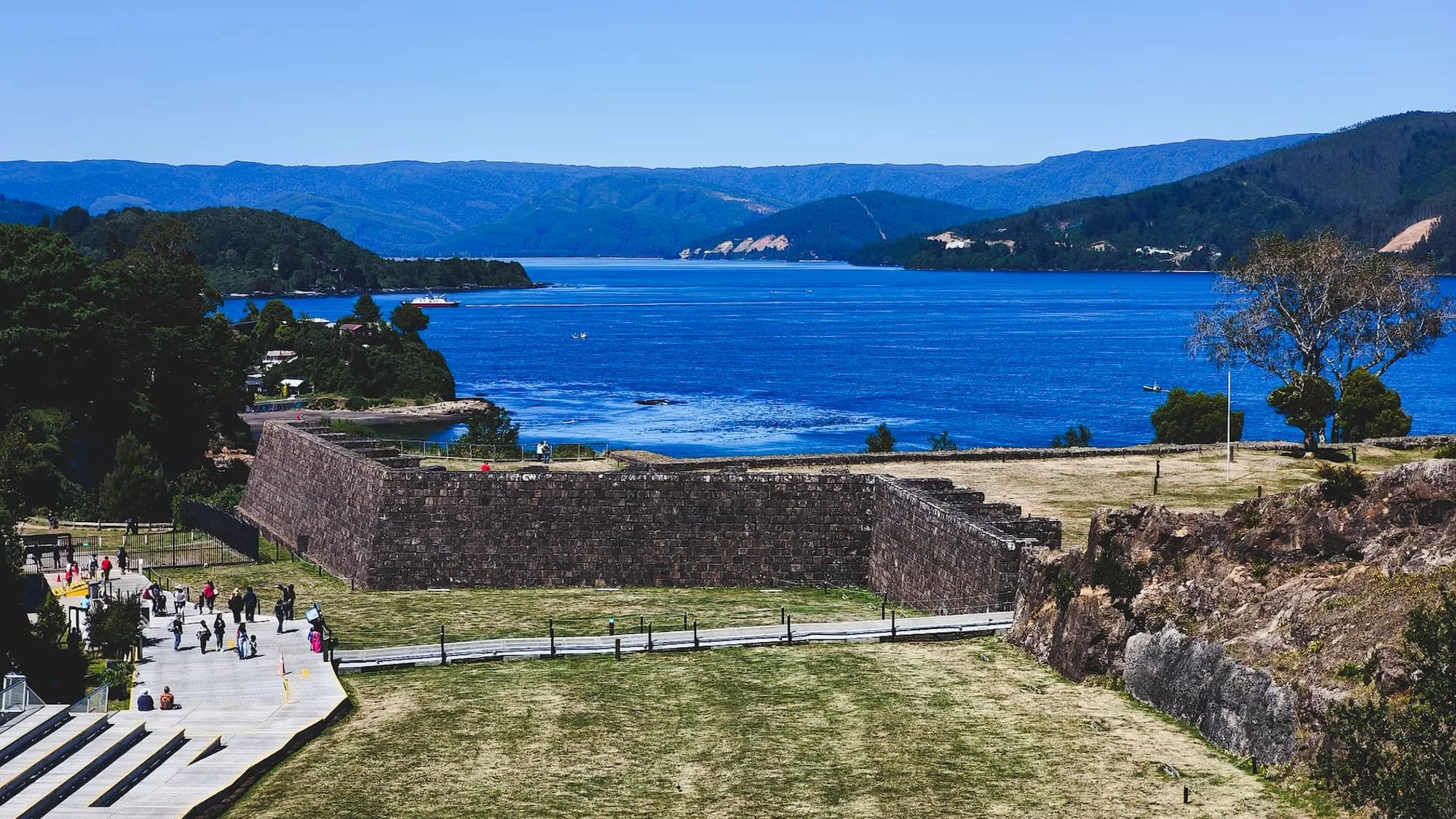
For the Niebla / Corral day trip, you can take a local bus or rideshare to Niebla, then the ferry across to Corral. For full ferry details and timing, I break it down step-by-step in my Niebla + Corral day trip guide.
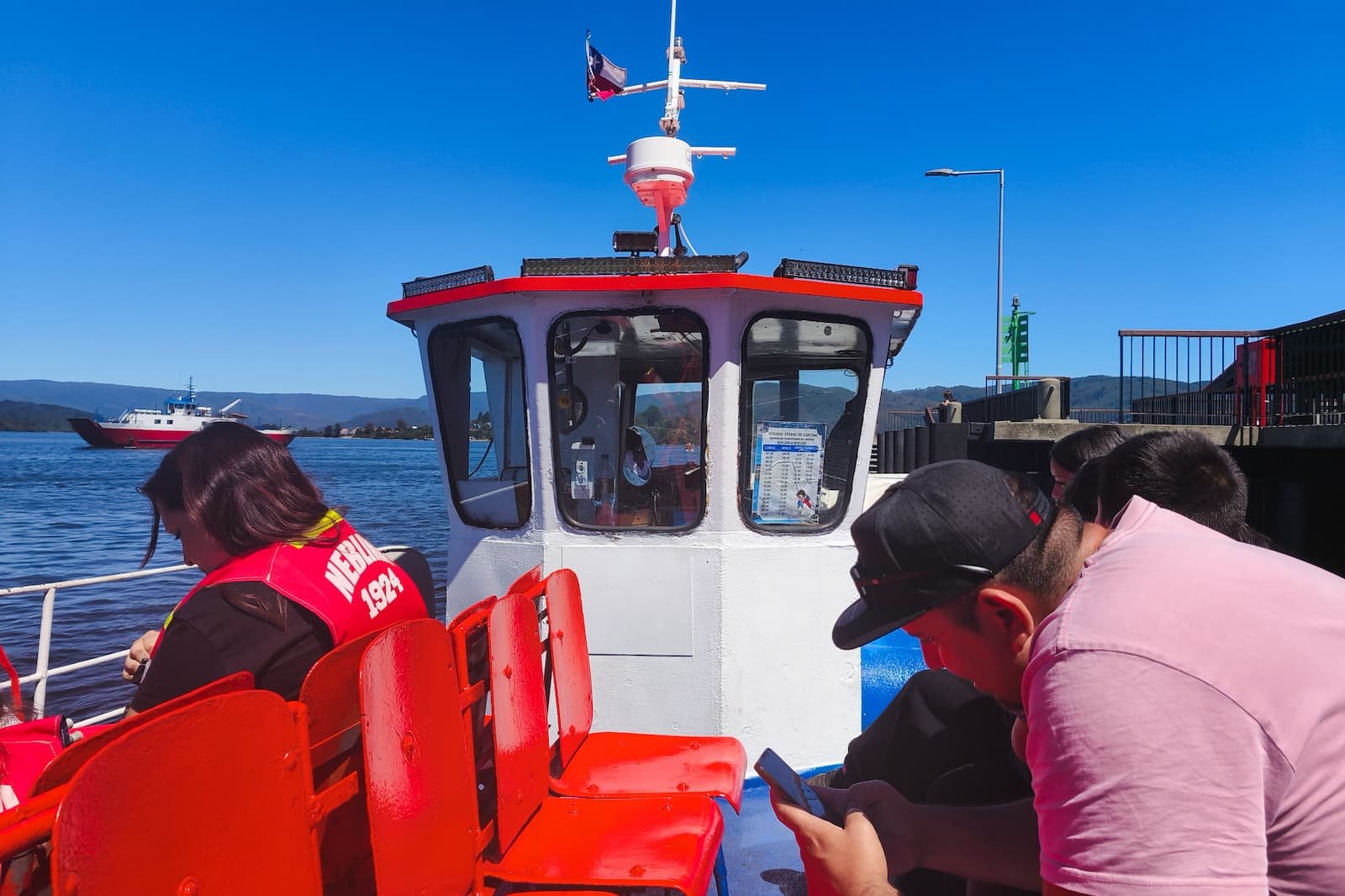
The ferry between Niebla and Corral is a simple and scenic part of the standard coastal day trip.
Uber is widely available in Valdivia itself, but I wouldn’t rely on it as your only return option from smaller coastal towns like Niebla. For those trips, keep the bus as your backup.
And unless you’re planning more remote day trips outside the area, renting a car is more hassle than necessary.
How to Take the Local Bus
Valdivia’s local bus system is affordable, convenient, and reaches most places you’ll need for this itinerary. For this trip, the main bus you’ll use is Línea 20, which goes toward both Cervecería Kunstmann and Niebla.
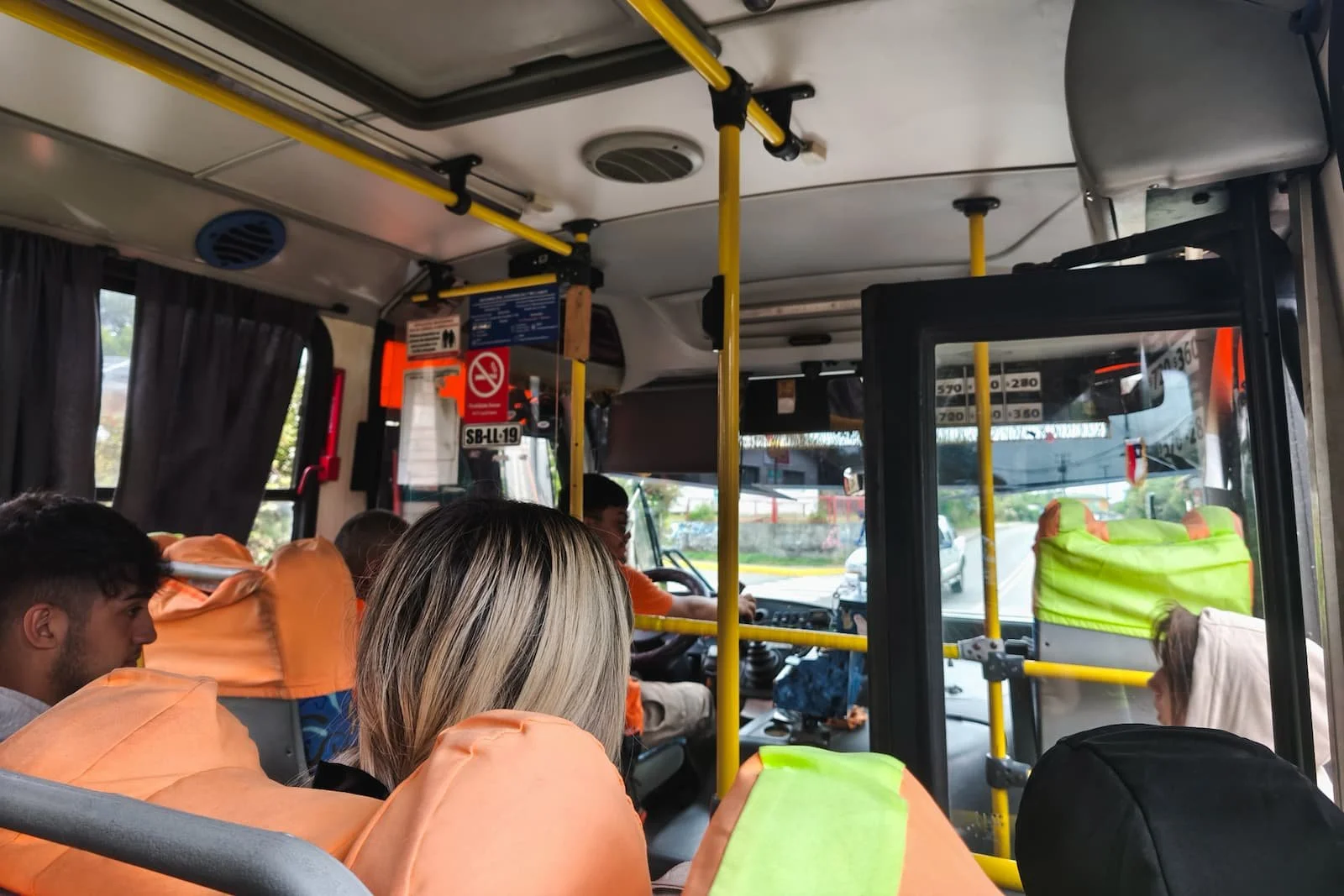
Local buses are affordable and cover most routes you’ll need, including Niebla and Kunstmann. This is the interior of a Línea 20 bus coming back to Valdivia from Niebla.
To take the bus:
Find a stop served by Línea 20 (Google Maps is reliable for this)
Wave your arm when the bus approaches, otherwise it may not stop
Pay the driver directly in cash when you board
Fare was around 800–1,000 CLP one way
A few safety notes: buses can get crowded during peak hours, especially on routes toward Niebla, and may be standing-room only. And hold on when boarding — local buses can accelerate and brake pretty abruptly, so grab a rail as soon as you get on.
Buses and ferries are cash only, so make sure you have it on hand. I also recommend having small bills to make the exchange much easier rather than waiting for change.
How Many Days Do You Need in Valdivia?
For me, 4 full days in Valdivia (not including travel days) is the ideal amount of time if you want to experience the city, Isla Teja, and the coast without rushing.
A simple structure looks like this:
Day 1: Explore downtown Valdivia
Day 2: Spend the day on Isla Teja
Day 3: Keep things flexible with Kunstmann Brewery and a slower waterfront day
Day 4: Take a coastal day trip to Niebla and Corral
This itinerary works especially well if you’re staying central and getting around without a car, since each day is grouped by area and keeps backtracking low.
For the full day-by-day version, see my 4-day Valdivia itinerary.
Final Thoughts: Keep Valdivia Simple
Valdivia feels better when you don’t rush it. The city’s appeal is less about checking off big sights and more about its rhythm and atmosphere: walking the waterfront, lunching on seafood, lingering over coffee and cake, meandering on Isla Teja, and leaving room for slower wandering.
The logistics are simple enough that you don’t need to over-plan every movement. Stay near the riverfront, skip the rental car unless you’re planning more remote day trips, and use walking, buses, and rideshares to fill in the gaps.
The main thing is to keep the structure simple but not rigid. Stay around a central base, then plan your days by area. You’ll mostly walk within each part of the city, then use simple transit — buses, rideshare, or the ferry — to connect the bigger pieces. But do leave enough buffer for rain, crowded buses, or a slower-than-expected lunch. Valdivia rewards that kind of flexible pacing.
Plan Your Trip Next
If you’re planning a few days in Valdivia, these guides pair well with this logistics post:
Valdivia in 4 Days → Complete itinerary covering the city, markets, riverfront, Isla Teja, and a Niebla + Corral day trip
Niebla + Corral Day Trip from Valdivia → Hour-by-hour itinerary for Spanish forts, a traditional fair, and the scenic ferry across the bay
Packing for Valdivia in One Bag → Complete guide for packing for Valdivia (weather, essentials, and more) in just a carry on
And if you’re passing through Santiago before or after Valdivia, these guides may help:
Santiago Start Here → All my Santiago itineraries and guides in one place
Santiago in 1 Day → Ultimate itinerary + map if you only have limited time
Santiago in 3 Days → Well-paced itinerary covering the city’s main highlights
Where to Stay in Santiago → Best neighborhoods, safety, and centrality
Getting Around Santiago → Metro, bip! card, safety, and local transit tips
What to Pack for Santiago → My carry-on layering system for Santiago
Thanks for reading – if you end up doing this trip, let me know in the comments below how it goes for you!
Have a question about this?
Shoot me a message or leave a comment below — I read everything, and I’m always happy to help if I can!