4 Days in Valdivia: An Easy Itinerary for Markets, Isla Teja & the Niebla Coast
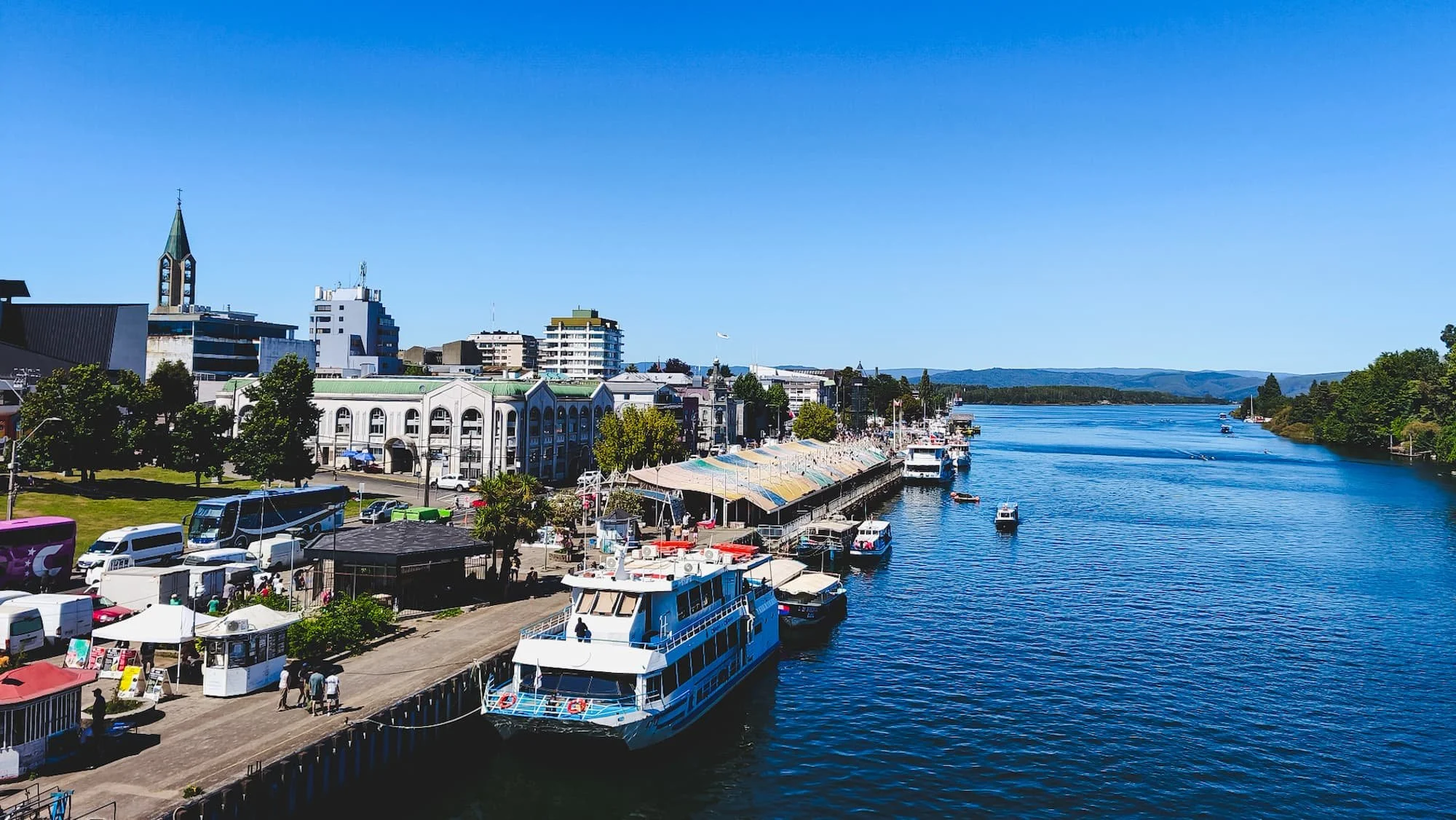
Valdivia — often called “La Perla del Sur” (Pearl of the South) in Chile — is a river city in the heart of the Chilean south. Several rivers meet here before flowing into the Pacific, and the waterfront is very much the center of local life: seafood markets, sea lions lounging near the docks, boats moving through the harbor, and people strolling along the Costanera in the evenings.
The city also feels noticeably different from much of the rest of Chile. Valdivia was an initial hub for German settlers in the mid-19th century, and that influence still shows up everywhere — from its food (sausages! tartare! cheese!!), its architecture, to the region’s strong beer culture. Combined with the surrounding temperate rainforests, islands, and coast, it feels like a slice of Chile that many foreign visitors don’t really know about.
To me, 4 days is the perfect amount of time to experience Valdivia and its surroundings at a comfortable pace. The city shines when you can slow down, since a lot of the appeal is its relaxed rhythm. Four days will give you time to amble along the waterfront, linger over seafood or cake, cross to Isla Teja, and take an easy day trip out to the coast.
Table of Contents
Who This Itinerary Is For
This itinerary is for travelers who want to see Valdivia without overcomplicating the trip and follows my broader low-friction travel approach.
I grouped the days by area to keep the route logic clear, pace realistically, and cut down on backtracking. Most of the city portion can be done on foot. The pace is intentionally relaxed too, because Valdivia just feels better that way (though see the Modifying This Itinerary section below if you’d rather hustle a bit). If you want the planning logic behind routes like this, I break it down in my guide to planning low-friction travel itineraries.
I also balanced heavier days with a chiller brewery-focused day in the middle (if you want the broader way I think about pacing trips, I explain it in my post on planning around energy, not just time).
So, if you like walkable cities with an atmospheric waterfront, local food, and itineraries that feel structured but not rigid, read on!
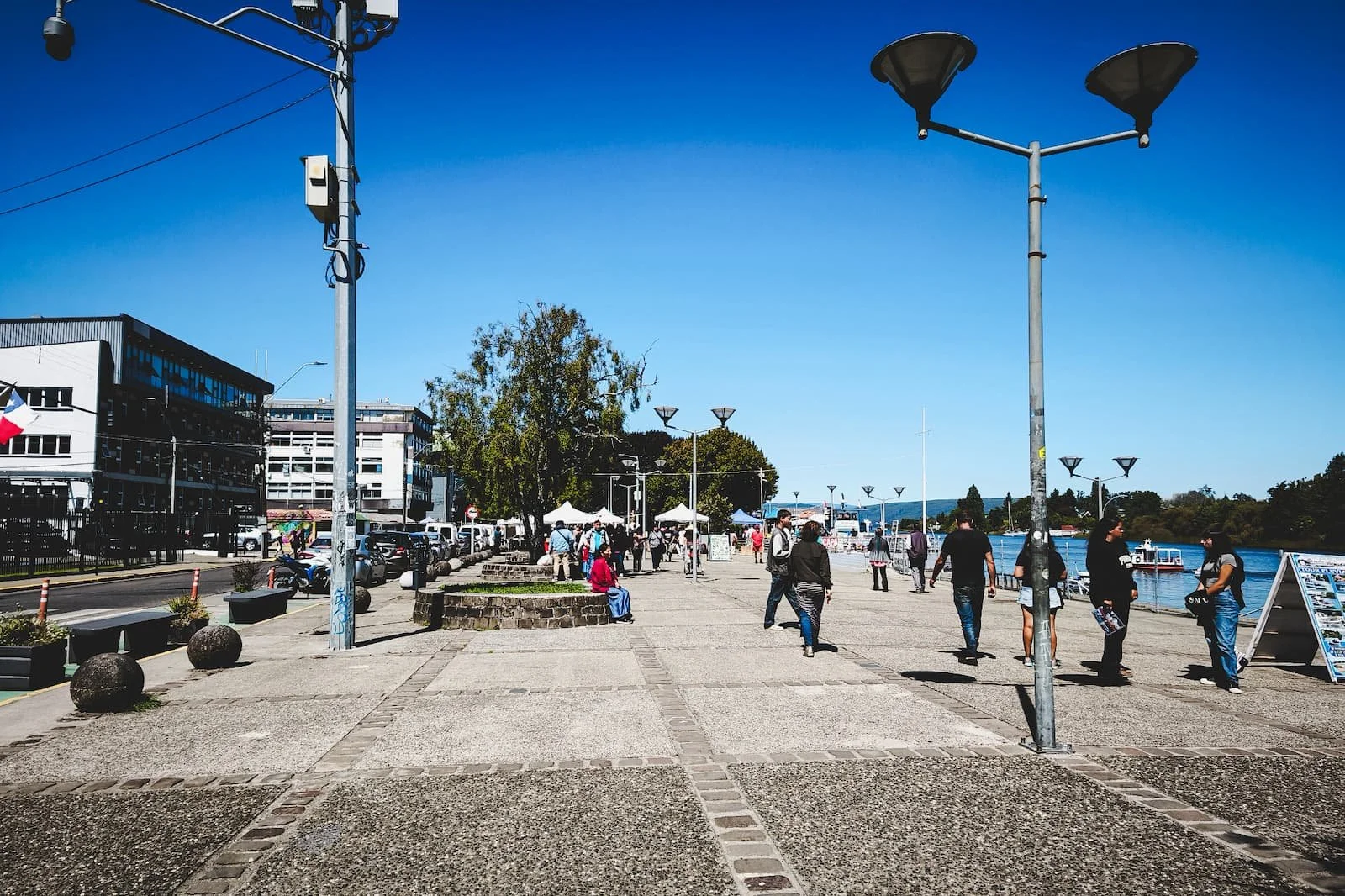
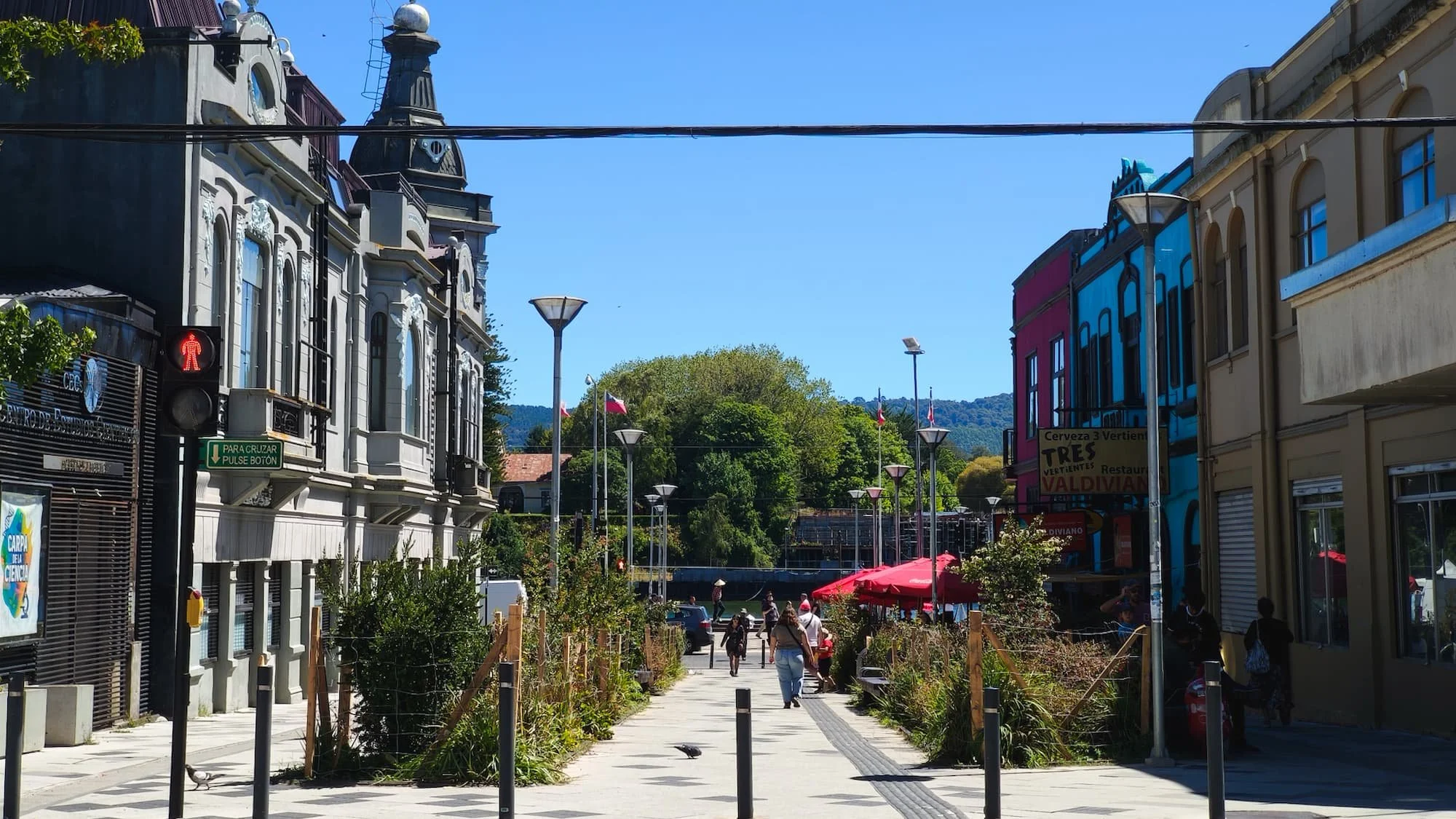
The riverside Costanera is one of the best places to experience Valdivia’s everyday rhythm.
Quick Trip Snapshot
Best time to visit: Summer (December–March) for the driest weather and longest days
Getting around: Mostly on foot, with occasional buses or Uber rides; Day 4 also includes a ferry
Where to stay: Downtown Valdivia if you want the most walkable base
Daily walking: ~5–8 km / ~3–5 miles per day
Pace: Relaxed overall, with one more transit-heavy coastal day
Day 1: Riverside & Downtown Valdivia — Mercado Fluvial, Plaza de la República, Costanera waterfront, and Chocolatería Entrelagos
Day 2: Isla Teja & Parks — Jardín Botánico UACh, Café Hausmann, Parque Saval, and riverside views
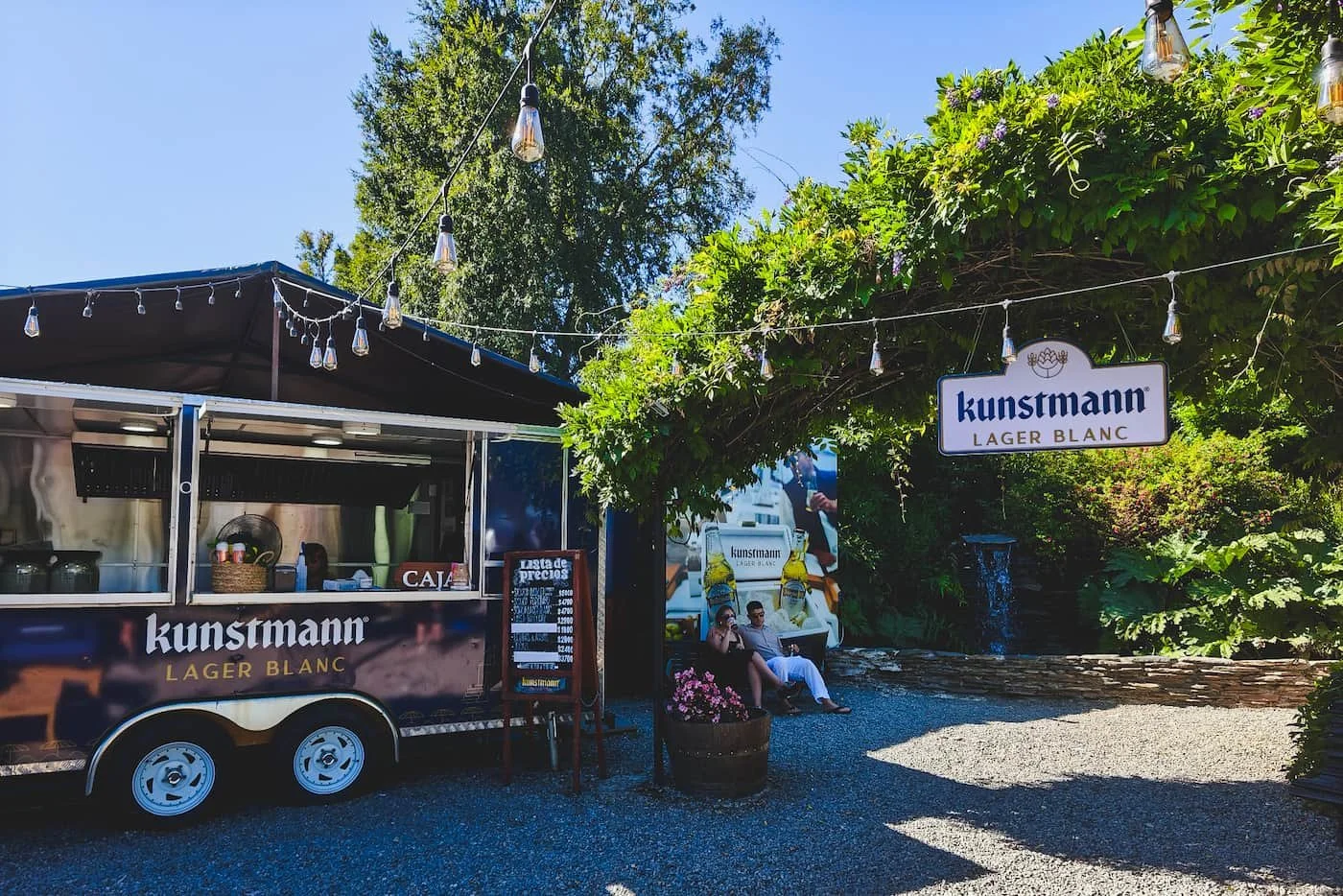
Day 3: Kunstmann Brewery & a Slower Day — Feria Fluvial ceviche, Cervecería Kunstmann, and a flexible afternoon in Valdivia
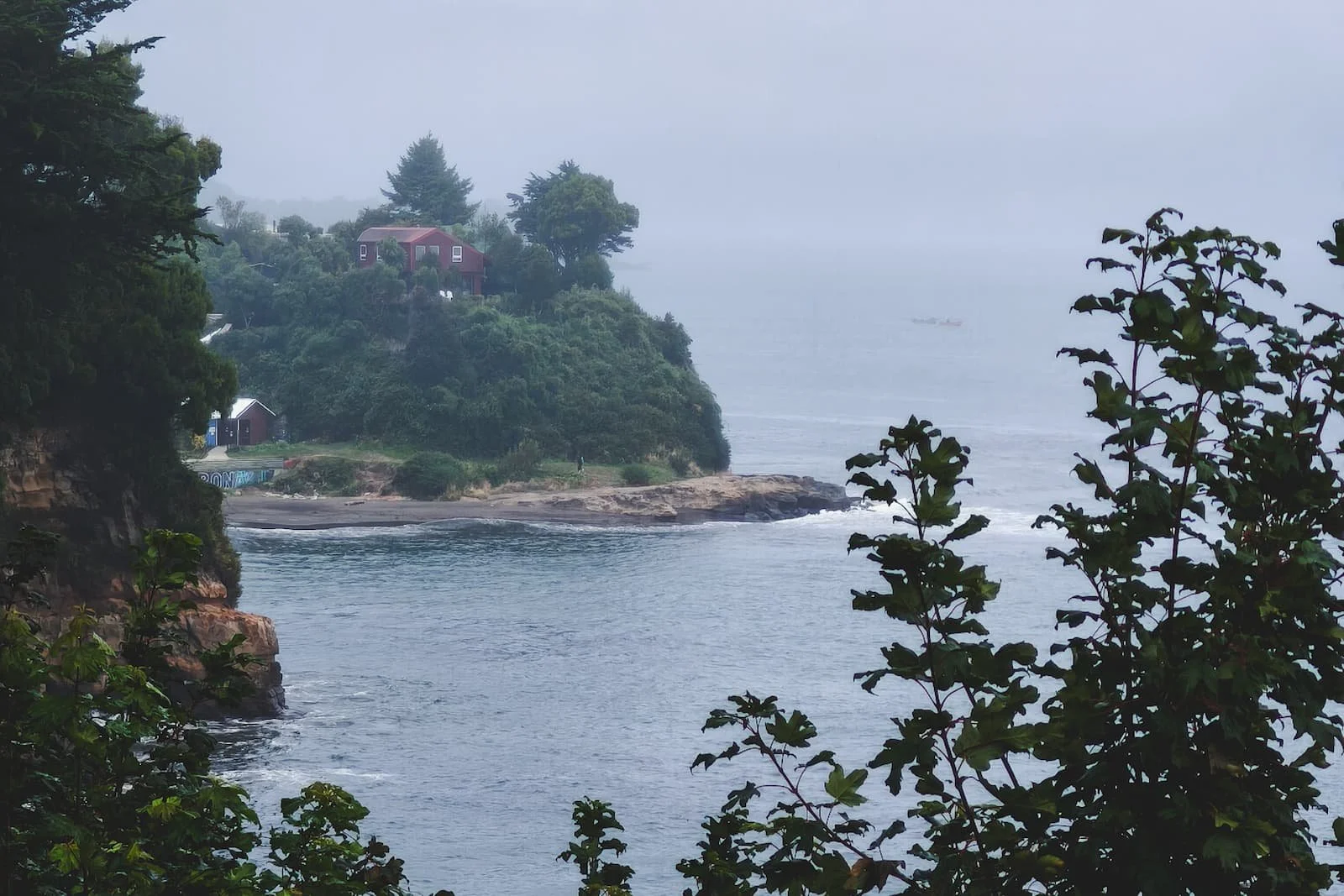
Day 4: Coastal Forts & the Bay — Niebla, beaches, a feria costumbrista, and the ferry to Corral
These guides cover nearby coastal trips and practical planning:
- Niebla Day Trip from Valdivia → Coastal forts, feria lunch, and ferry to Corral
- Valdivia Travel Logistics → How to get there, where to stay, and how to get around (no car rental)
- One-Bag Packing for Valdivia → How to pack for Valdivia's unpredictable weather in just a carry-on
Most travelers reach Valdivia via Santiago. If you’re passing through the capital first, these guides may help with planning the rest of your trip:
- Santiago in 1 Day → Ultimate itinerary + map if you only have limited time
- Santiago Neighborhoods, Decoded → Best areas for a walkable stay
- One-Bag Packing for Santiago → Layering system + local add-ons
- SCL Airport to Santiago → Time, cost, and transport options
- Ride the Santiago Metro Like a Local → bip! card, best lines, and tips
Quick 4-Day Valdivia Itinerary Overview
Each day focuses on a different side of Valdivia.
| Day | Theme | Highlights |
|---|---|---|
| Day 1 | Riverside & Downtown Valdivia | Mercado Fluvial, seafood lunch at Mercado Municipal, Plaza de la República, Costanera waterfront walk, Chocolateria Entrelagos |
| Day 2 | Isla Teja & Parks | Puente Pedro de Valdivia views, Jardín Botánico UACh, crudo at Cafe Hausmann, Parque Saval, Teja Market, Museo Histórico y Antropológico |
| Day 3 | Kunstmann Brewery & a Slower Day | Costanera or neighborhood walk, ceviche at Feria Fluvial, Cervecería Kunstmann, river cruise or cafe break, evening waterfront stroll |
| Day 4 | Coastal Forts & the Bay | Castillo de Niebla, Playa Grande or Playa Chica, feria costumbrista lunch, ferry across Corral Bay |
Valdivia is a fairly small city, and most of the days in this itinerary move at a relaxed pace. You’ll cover much of the city center and riverfront on the first day, then spend the following days exploring the surrounding areas, from Isla Teja to Kunstmann to the coast. If you want to speed things up, slow things down, or choose a different base for your stay, I cover that later in the post.
Map of This Valdivia Itinerary
This itinerary is organized by area clusters to keep travel time minimal and help each day flow naturally.
Day 1: Mercado Fluvial → seafood lunch → Plaza de la República & downtown → waterfront Costanera → Chocolatería Entrelagos → Torreón de los Canelos
Day 2: Puente Pedro de Valdivia → Jardín Botánico UACh → Café Hausmann → Parque Saval → Teja Market → Museo Histórico → Muelle Los Castaños
Day 3: Costanera or residential neighborhood stroll → ceviche lunch at Feria Fluvial → Cervecería Kunstmann → evening waterfront stroll
Day 4: Valdivia → Niebla → Castillo de Niebla → Playa Grande or Playa Chica → lunch at a feria costumbrista → ferry to Corral → explore Corral → ferry back to Niebla
Most of the Valdivia days can be done entirely on foot, since the city center is compact and walkable. The only transit needed is a short bus or Uber ride to Cervecería Kunstmann, plus the bus-and-ferry combination for the coastal day to Niebla and Corral.
4-Day Valdivia Itinerary Map (Overview of Each Day’s Route)
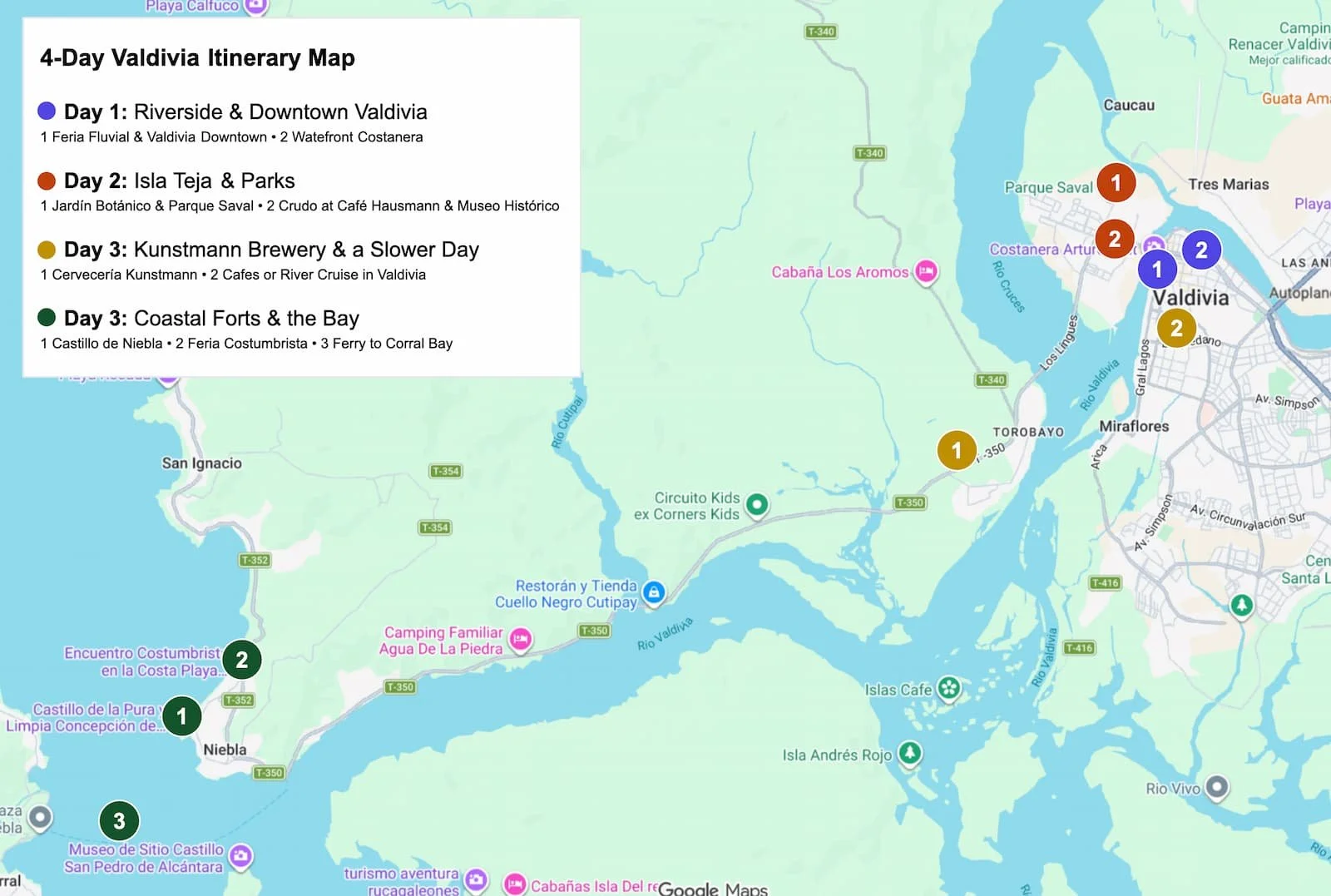
This map gives a high-level look at how the itinerary is grouped: the historic riverfront on Day 1, Isla Teja on Day 2, a lighter Cervecería Kunstmann day on Day 3, and the coast on Day 4. (Map data © Google)
Day 1 – Riverside & Downtown Valdivia
Day 2 – Isla Teja & Parks
Day 3 – Kunstmann Brewery & a Slower Day
Day 4 – Coastal Forts & the Bay
Day 1 Valdivia Route Map: Riverside & Downtown
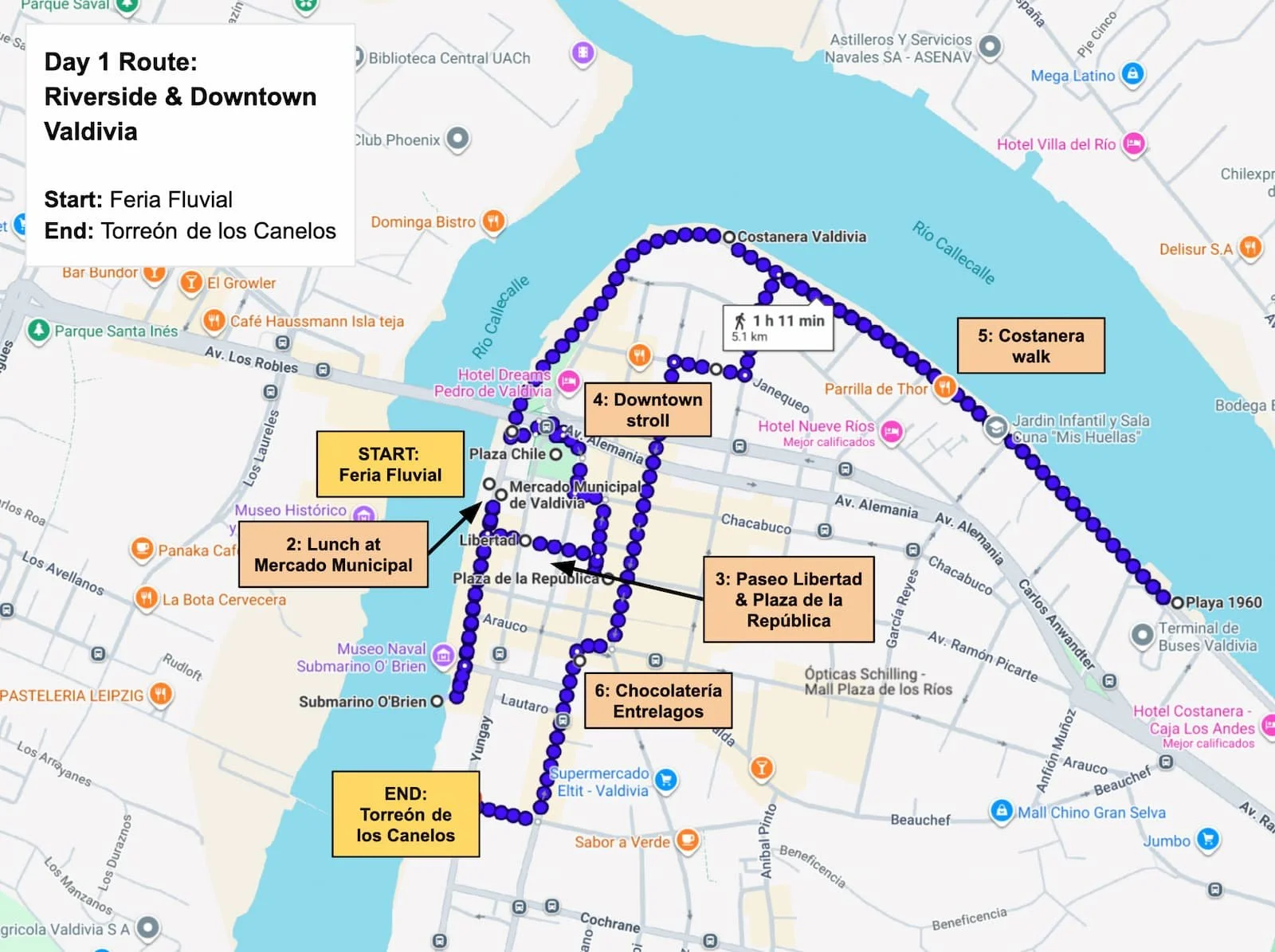
Route overview:
This first-day route stays within Valdivia’s compact downtown core, linking the riverfront, central plaza, chocolate stop, and Torreón on an easy mostly flat walk. (Map data © Google)
Why this route works:
It’s a low-effort introduction to the major highlights of Valdivia city after arrival, with plenty of flexibility to shorten or extend the Costanera walk.
Day 2 Valdivia Route Map: Isla Teja & Parks
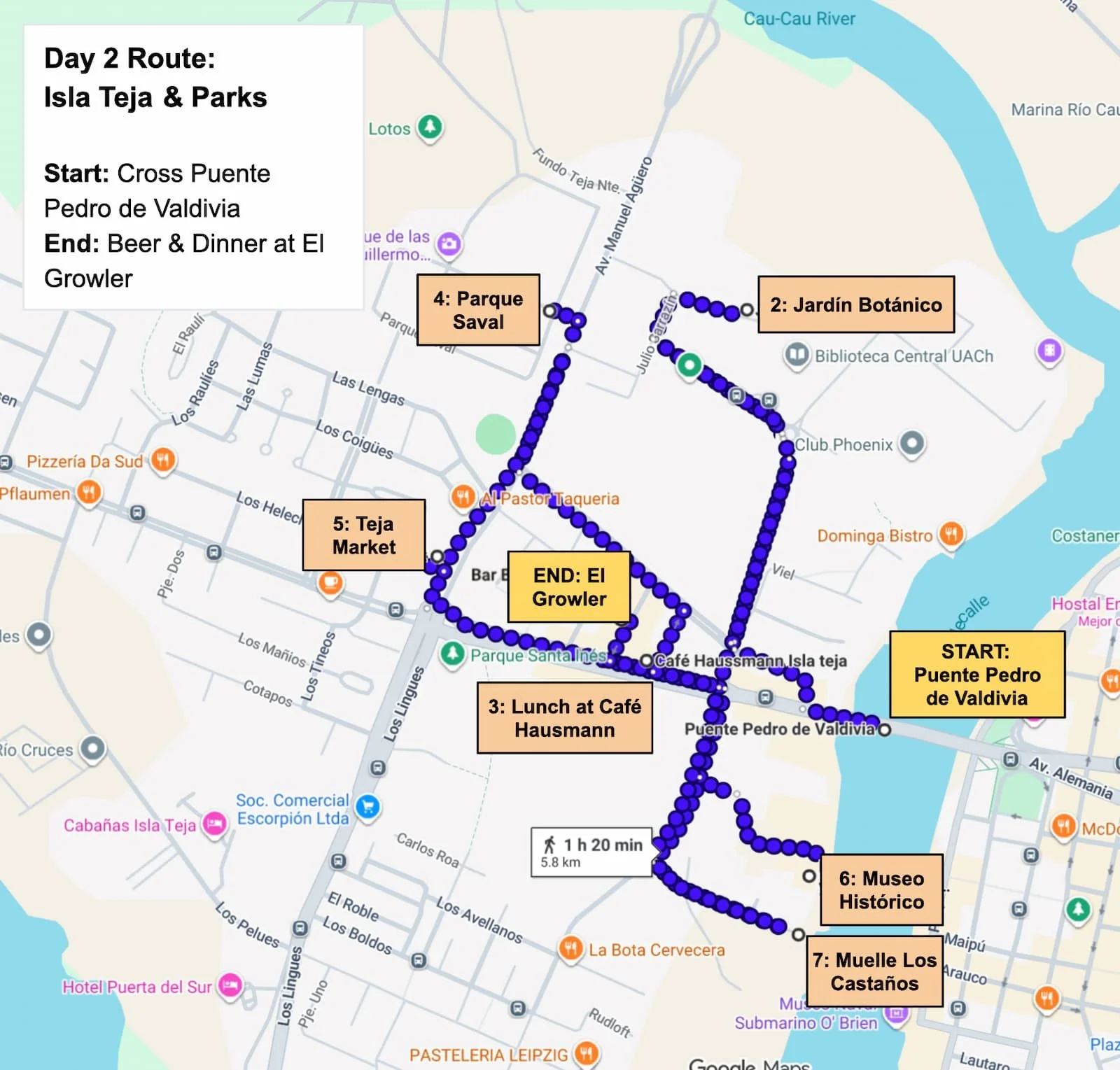
Route overview:
This route groups the main Isla Teja stops into one day, starting with the university gardens and ending back along the river. (Map data © Google)
Why this route works:
By keeping the whole day on Isla Teja, you only need to cross the bridge once and can explore the island at a relaxed pace.
Day 3 Valdivia Route Map: Kunstmann Brewery & the Waterfront
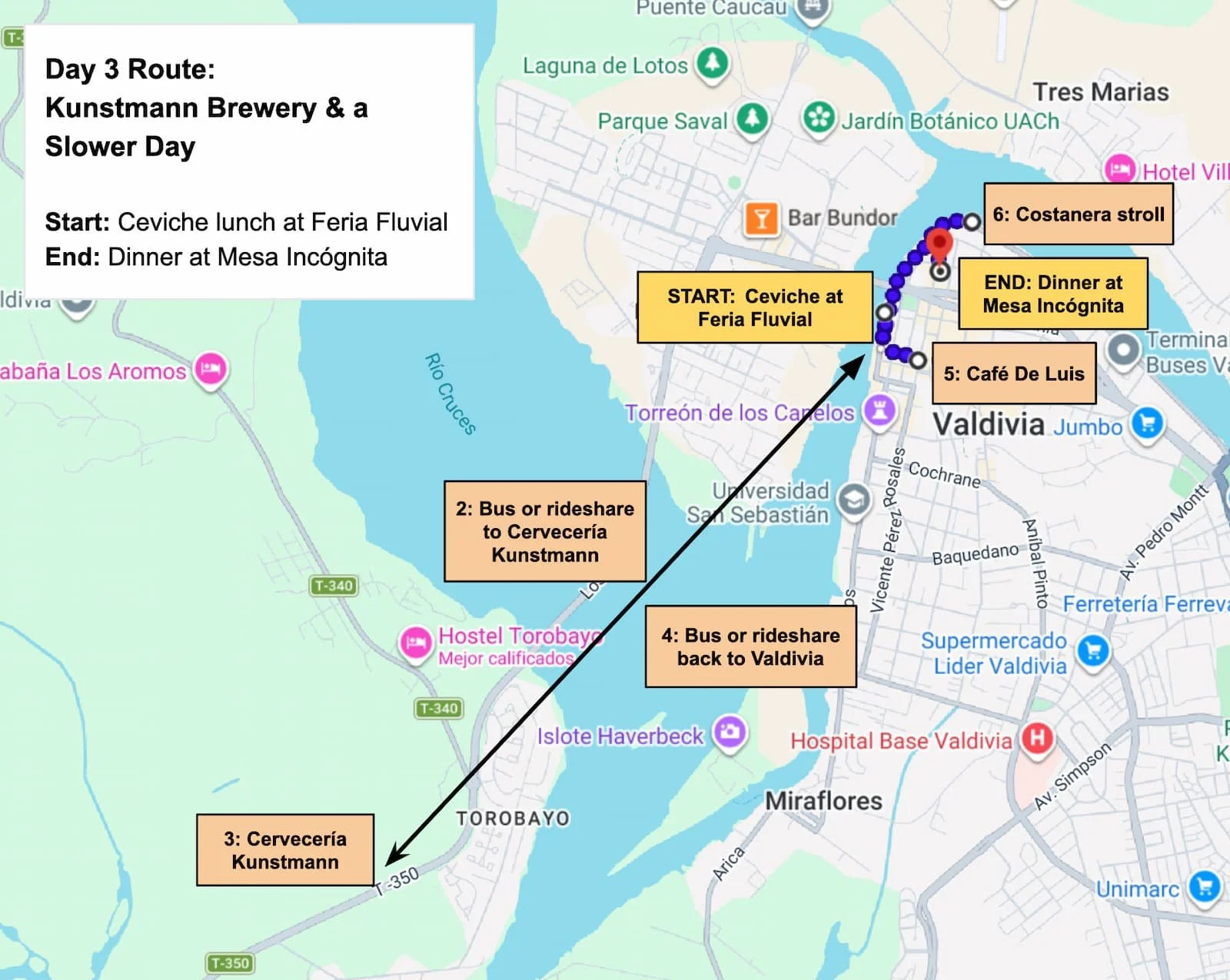
Route overview:
This day combines a relaxed morning in Valdivia with a short transit trip to Cervecería Kunstmann and an easy return to the waterfront in the evening. (Map data © Google)
Why this route works:
It keeps the city-center portions flexible while making room for one main outing, so the day feels lighter after the longer walks of Day 2.
Day 4 Valdivia Route Map: Coastal Forts & the Bay
Looking for the Day 4 route map?
You’ll find the full walking route and stop-by-stop map in my Niebla Day Trip Itinerary.
Day 1: Riverside & Downtown Valdivia
After a travel day, I planned the first full day so that it’s low-effort but still lets you hit up the most emblematic parts of Valdivia, including the waterfront costanera, Feria Fluvial, Plaza de la República and the downtown areas, and Chocolatería Entrelagos. The entire route stays close to the river and downtown core, so you can explore without rushing.
Distance: ~4–5 km / 2.5-3.5 miles walking (mostly flat waterfront paths)
Time needed: ~5–6 hours
Pace: Relaxed
Suggested timing
12:00 — Explore Mercado Fluvial and surrounding waterfront
13:00 — Lunch at Mercado Municipal
14:30 — Plaza de la República
15:00 — Walk along the Costanera
16:30 — Chocolate stop at Chocolatería Entrelagos
17:30 — Torreón de los Canelos
Midday: Feria Fluvial & the Calle-Calle Waterfront
Suggested time: ~1 hour
Start your day at Feria Fluvial de Valdivia, the city’s most iconic market sitting directly on the riverfront.
Stalls here sell fresh seafood, fruits and vegetables, and regional products like sausages, hot sauces, and local cheeses. Valdivia is a top destination in Chile for its salmon, particularly fresh and smoked that you can buy directly from the fishermen in the market. It’s lively and often crowded, so watch your footing (the floors can be wet) and keep an eye on your belongings.
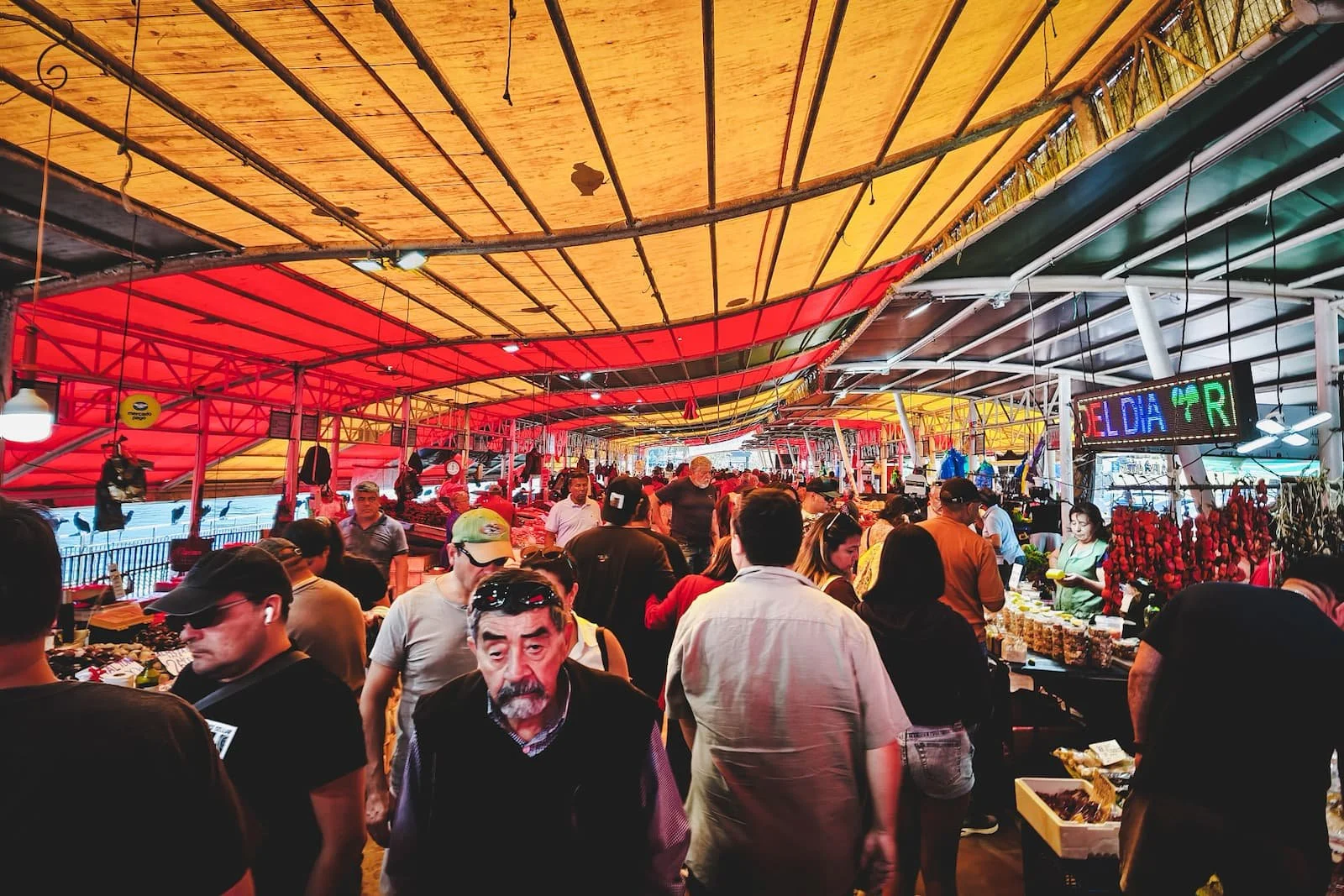
Feria Fluvial de Valdivia is the city’s most iconic waterfront market.
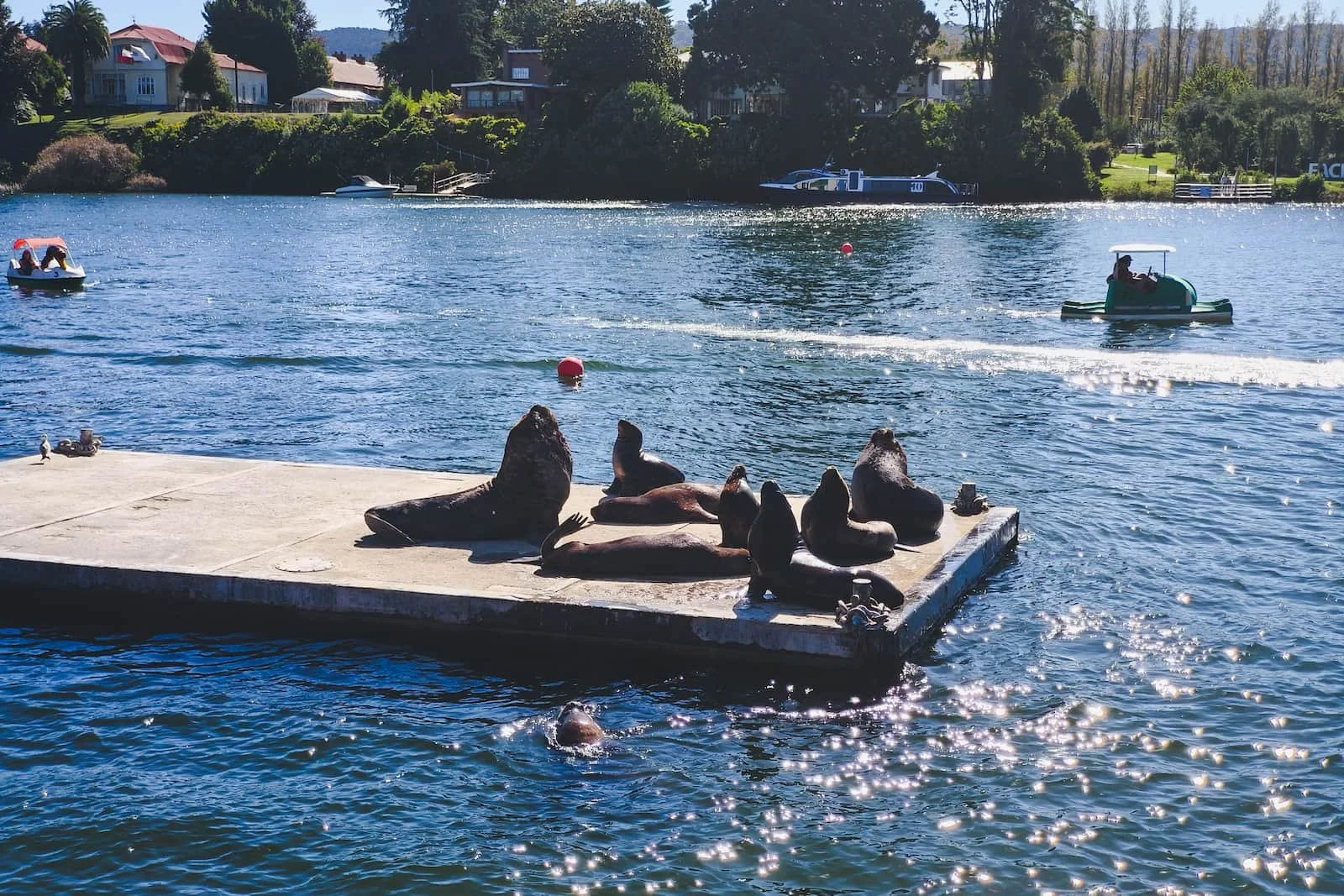
After browsing the market, spend a little time along the surrounding waterfront of the Calle-Calle River. This is where you’ll usually spot Valdivia’s famous sea lions lounging near the docks — they’re pretty much the city’s unofficial pets and are often brazenly trying to steal fish from the market stands or just napping in the middle of the sidewalks (certainly not afraid of humans at all; if anything, you should be slightly afraid and don’t get too close!). Also be sure to check out Submarine O’Brien, a decommissioned Chilean Navy submarine docked on the end of the waterfront walk.
You’ll probably also see vendors offering river tours here. I’d save those for another day and keep this first afternoon easy.
Hours of the market: Daily, 8:00 AM–4:30 PM. Check their Instagram page for latest info.
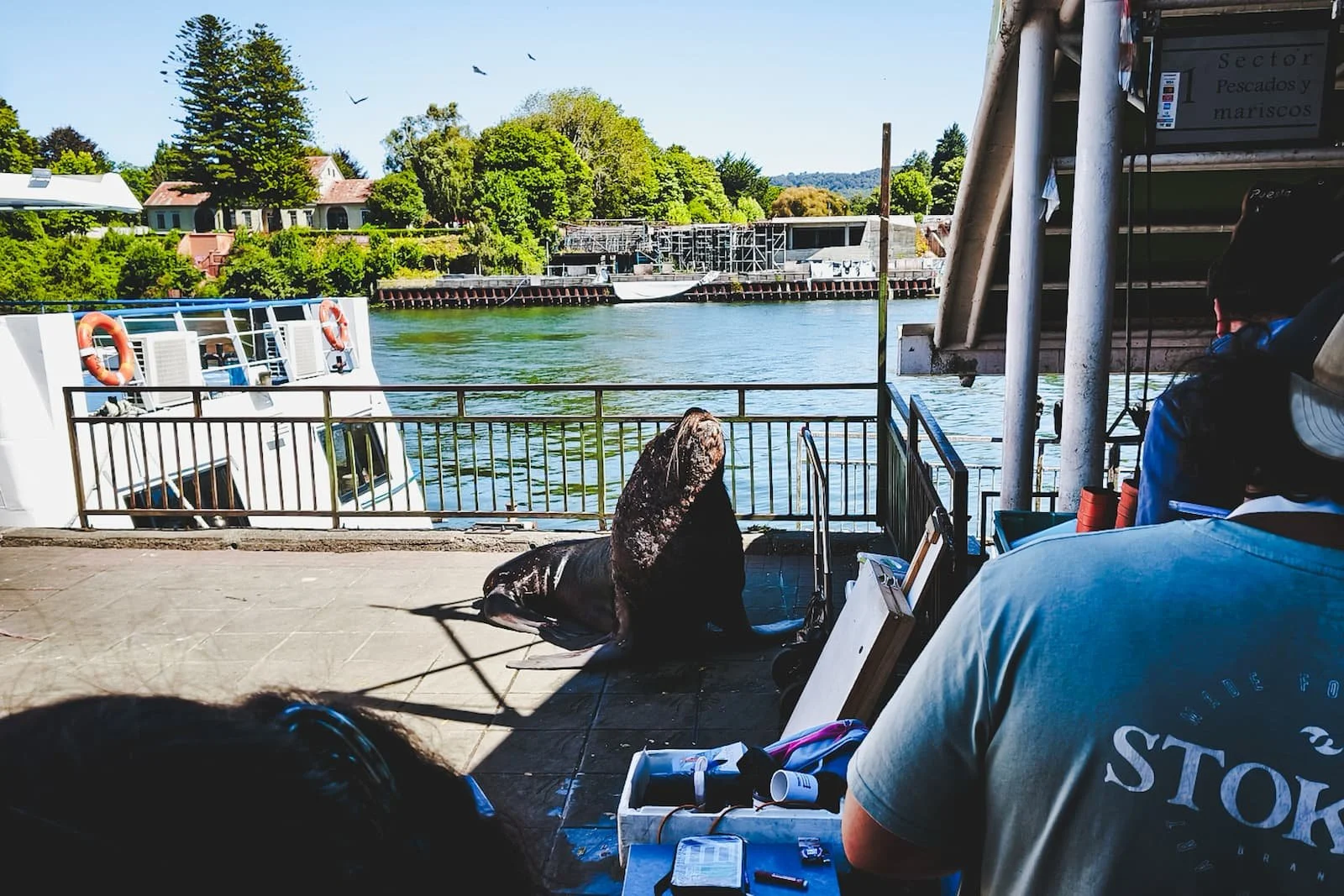
Sea lions lounging near the docks have become unofficial mascots of Valdivia.
Lunch: Seafood at Mercado Municipal
Suggested time: ~1–1.5 hours
For lunch, walk a few minutes to Mercado Municipal de Valdivia.
The first floor focuses on handicrafts and traditional souvenirs, while the second floor has several seafood restaurants with views over the river.
Expect a bit of enthusiastic recruiting from restaurant staff outside — that’s normal. Just take a quick look at the menus and pick whichever place looks best to you.
We had lunch at Magia Mar. I ordered a pulmay, a magnificent southern Chilean dish that combines seafood (mussels and clams), smoked pork ribs, chicken, longaniza sausages, and potatoes, all steamed together in a large pot with a light white-wine broth and garnished with parsley. My oh my, what an incredibly satisfying meal to open the trip after a long travel day before — hearty, flavorful, and distinctly southern Chilean. It was superb to look at too.
My partner ordered fried merluza austral (local hake) with fries. The batter was well seasoned and fried crisp while the fish inside stayed juicy. Overall, a great lunch.
Hours of the market: Daily, 10:00 AM–7:00 PM.
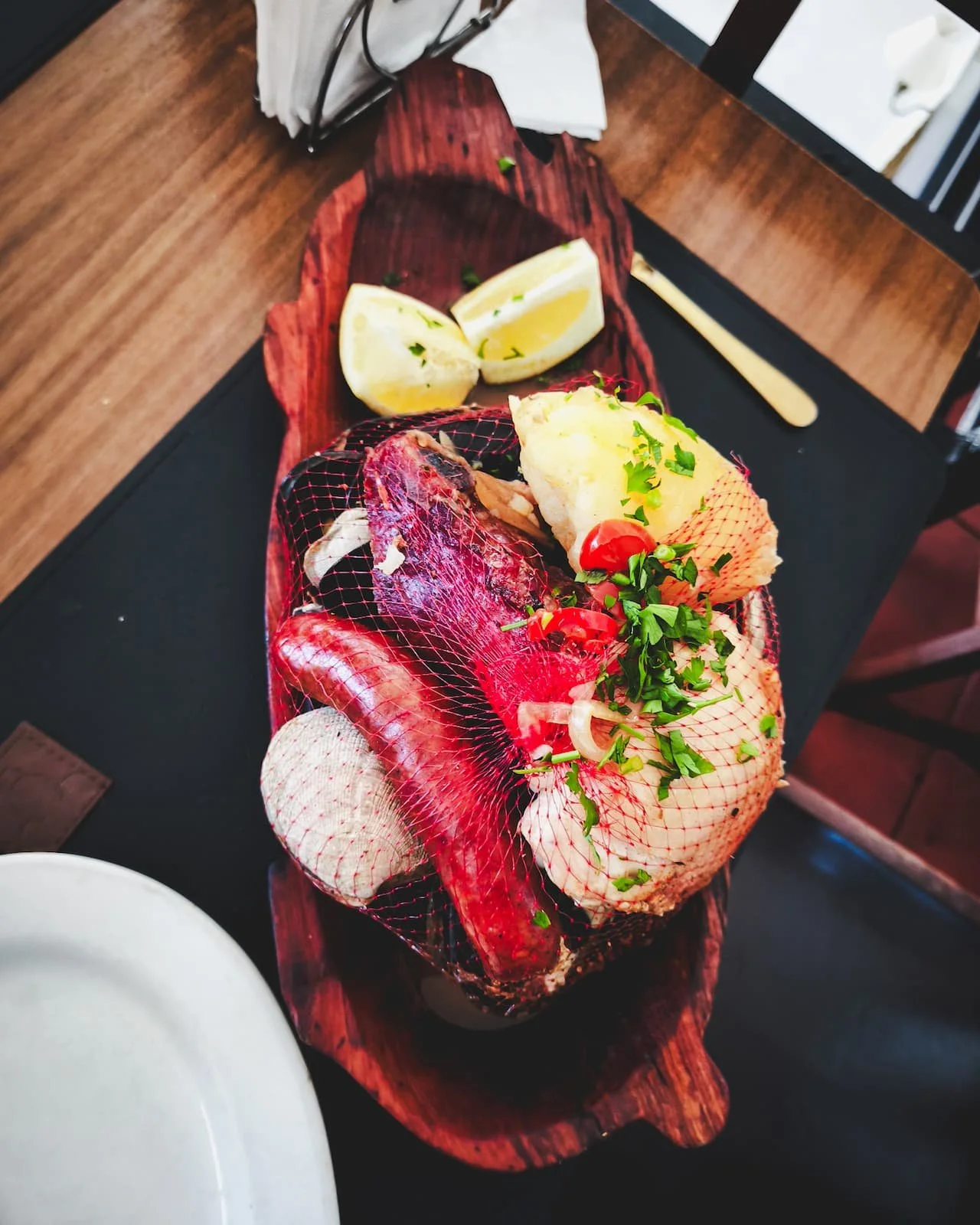
Pulmay — a hearty southern Chilean dish with seafood, sausage, and potatoes.
Afternoon: Paseo Libertad, Plaza de la República & Downtown Valdivia
Suggested time: 30–60 minutes
After lunch, walk inland along Paseo Libertad toward Plaza de la República, Valdivia’s main central square.
Paseo Libertad is the pedestrian artery that connects the riverfront with the civic heart of the city. Historically it was known as Calle de los Abastos (“Supply Street”), and today it’s definitely the most pleasant stretch of road to walk from the riverfront to the downtown area. The surrounding buildings, cafés, and street lamps give it an old-world charm, while the Catedral de Valdivia rises along the street and frames the approach to the plaza.
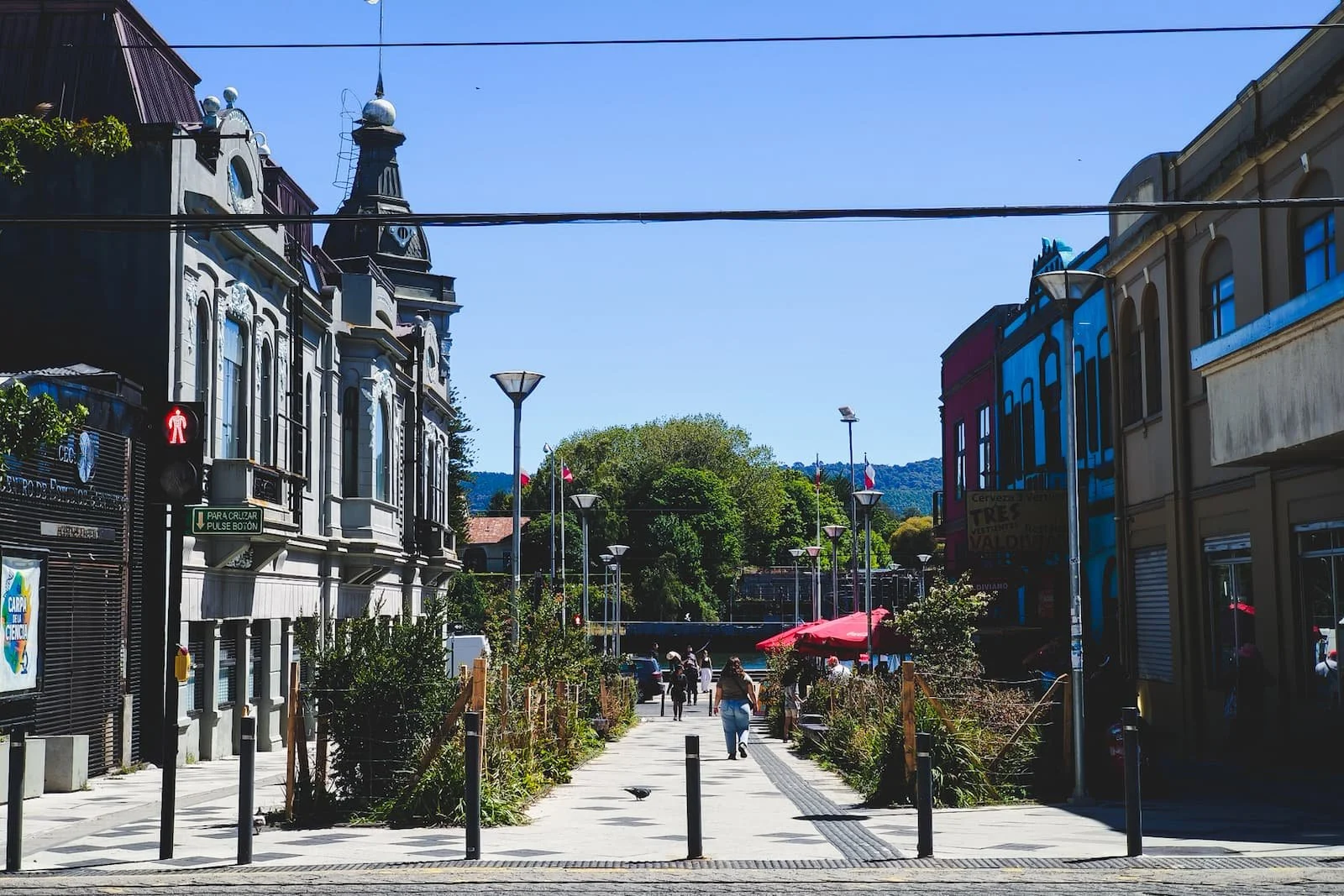
Paseo Libertad connects the riverfront with Valdivia’s historic downtown.
Plaza de la República centers around a traditional gazebo and gives you a quick sense of Valdivia’s civic and historic center. It’s not just an old plaza though — locals actually use it as a gathering place, and it’s common to see musicians or troubadours playing in the square.
Afterward, wander a bit farther around the nearby commercial streets and Plaza Chile, which faces Hotel Dreams, a contemporary sail-shaped hotel and casino. Even modern buildings here still nod to Valdivia’s river and coastal culture.
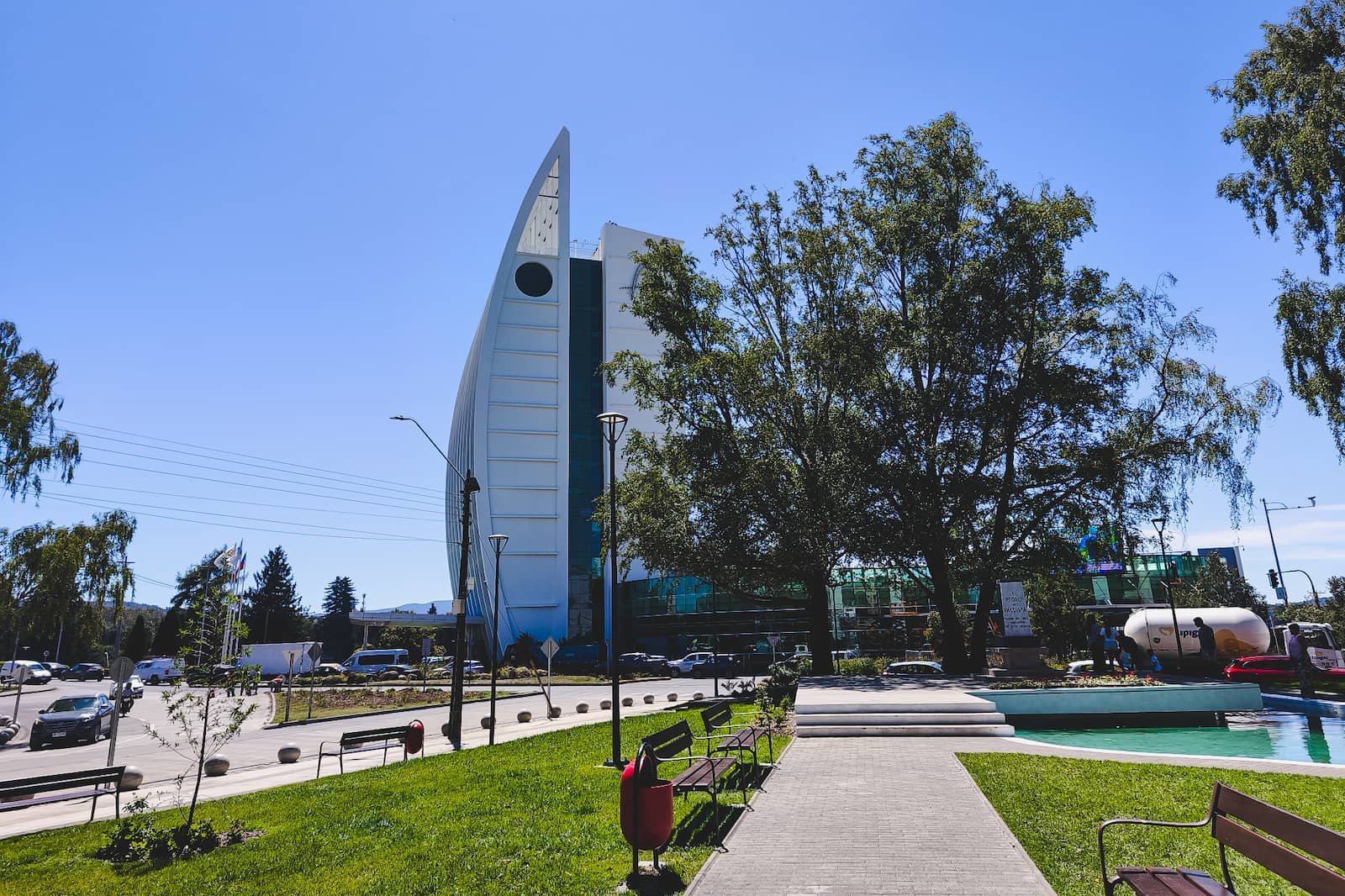
Plaza Chile sits beside the sail-shaped Hotel Dreams along the waterfront.
Late Afternoon: Walk the Costanera
Suggested time: ~1–1.5 hours
From downtown, follow the Costanera, Valdivia’s riverside promenade running along the Valdivia River. The path is easy to follow and continues all along the waterfront border of the city.
While the west side is high-energy, with vendors, markets, and crowds, the east side is a totally different vibe — a much calmer promenade that offers broader river views lined with trees and greenery.
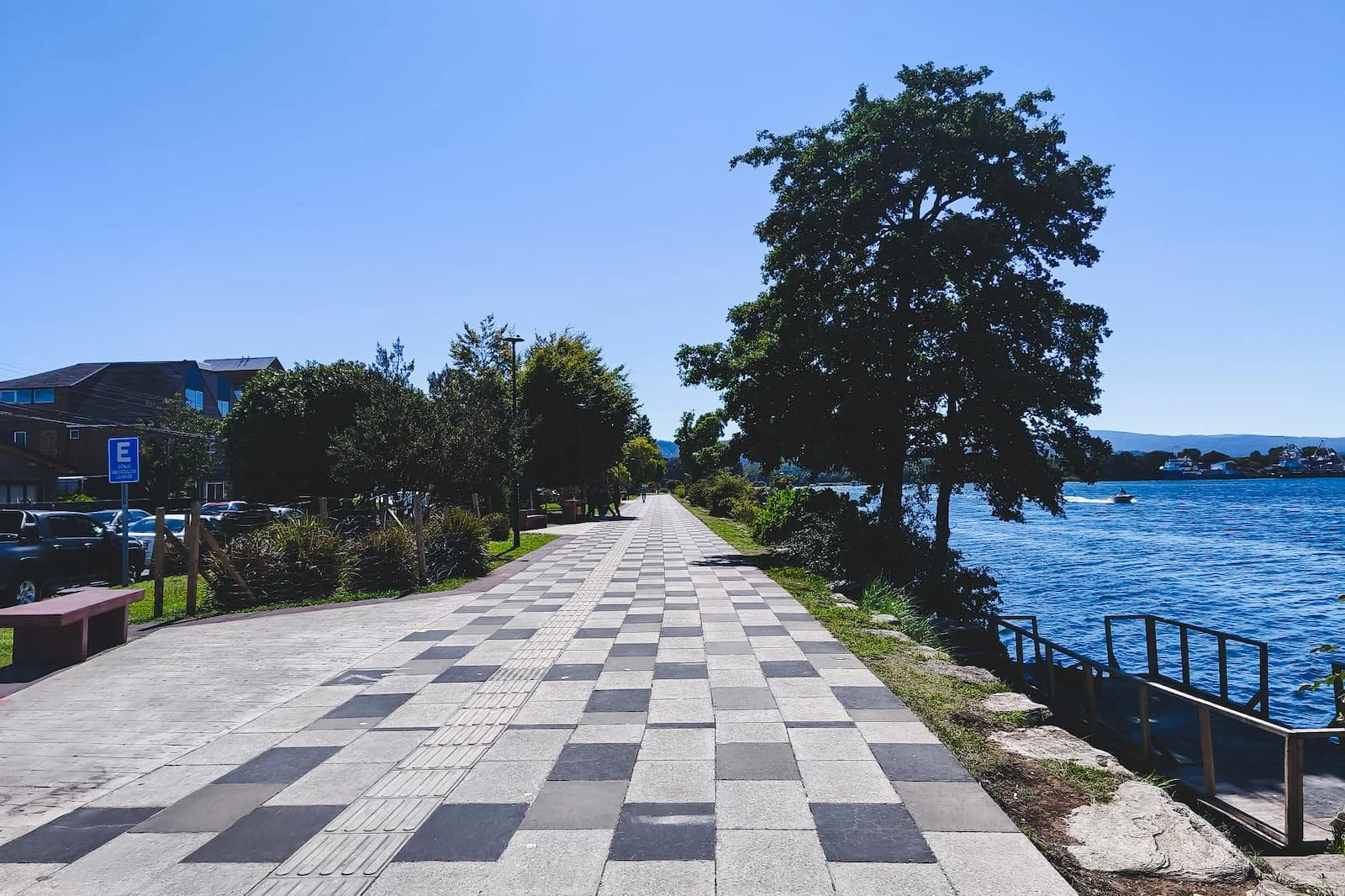
The east side of the Costanera features a wide promenade with much fewer crowds.
The Costanera is a must-do in Valdivia and part of the city’s everyday rhythm. In a city this small, where many of the main sights sit close to the water, you’ll likely walk there more than once during your trip (we did every day) to just stroll along, see the sunset views, or just watch the boat traffic drift by.
For this day though, walk as much or as little as you like.
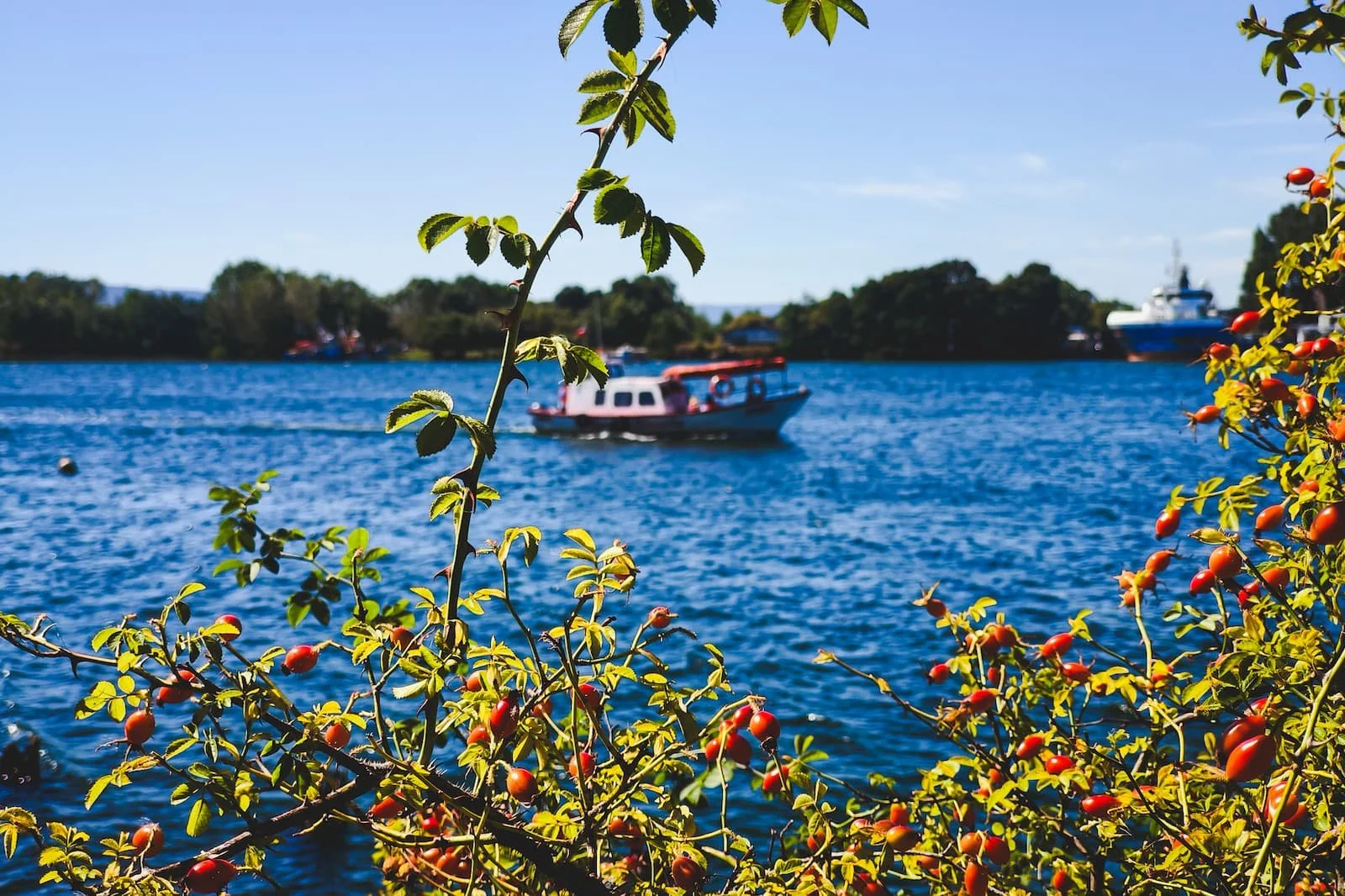
You can see boats passing by the river.
Afternoon Break: Chocolatería Entrelagos
Suggested time: ~1 hour
Follow the waterfront back toward the west side of downtown and stop at Chocolatería Entrelagos for a rest and something sweet.
Entrelagos is one of the most recognizable chocolate brands in southern Chile. The company was founded in Valdivia in the 1950s by German immigrants, reflecting the region’s strong German heritage and confectionery traditions.
We treated ourselves to a hot chocolate, churros con chocolate, and a slice of amazing chocolate rum cake (recommend all of them). The décor — warm wood tones, paintings, and an ornate interior — feels almost more European than Chilean, reflecting the German heritage that still shapes much of southern Chile.
Hours of the chocolatería: (add hours if desired) Monday–Friday, 8;15 AM–10:00 PM; Saturday, 9:15 AM–10:00 PM; Sunday, 10:15 AM–10:00 PM. Check their website for updated info.
Price range: $$
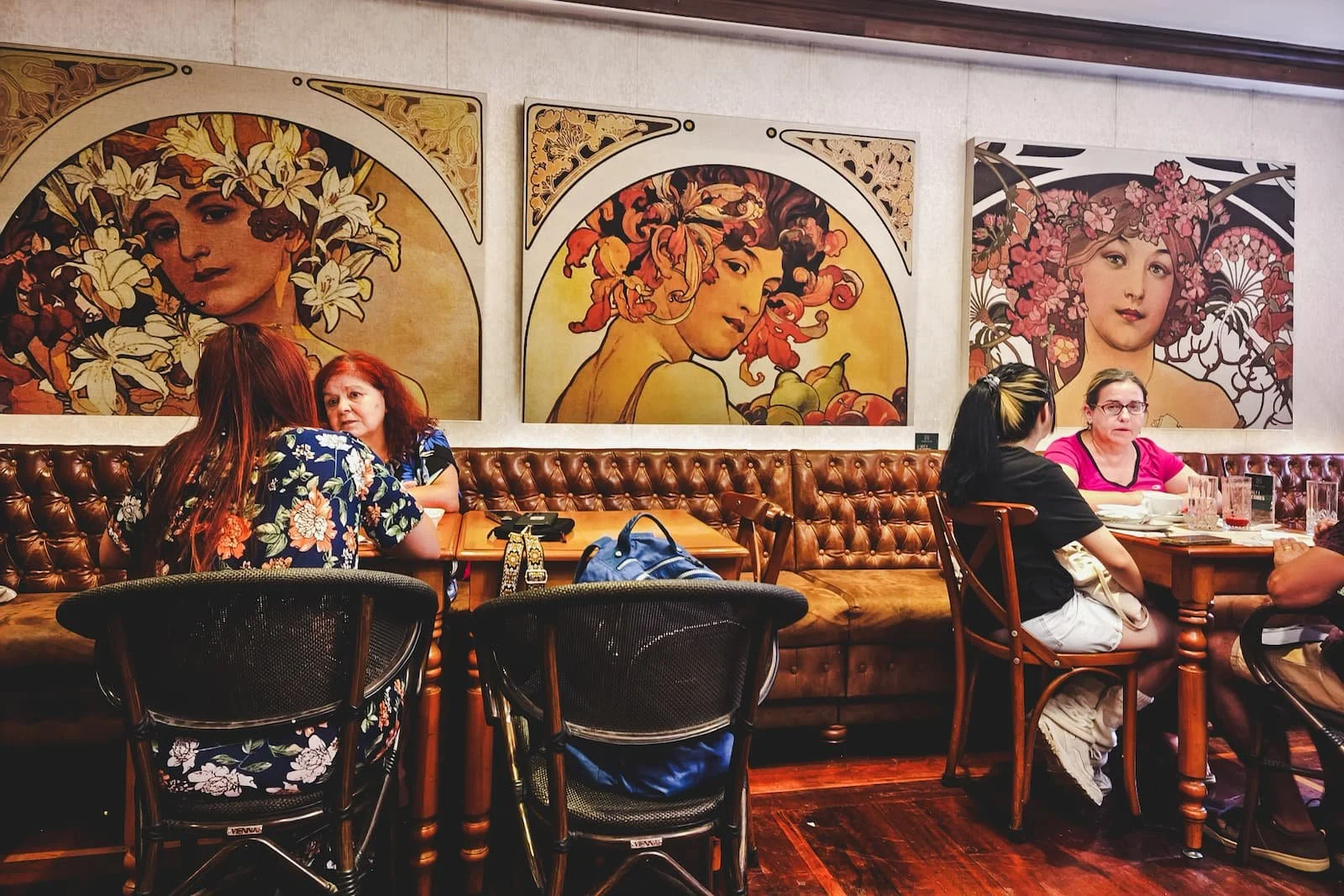
The interior at Entrelagos is part of the appeal — all wood, paintings, and old-school charm.
Early Evening: Torreón de los Canelos
Suggested time: ~15 minutes
After your chocolate break, continue on to Torreón de los Canelos, one of the remaining Spanish colonial defensive towers in Valdivia.
The tower was part of the 18th-century Spanish fortification system built to defend the city from pirates and foreign attacks. It once formed part of the fortified wall surrounding the colonial settlement. Across the city on the eastern side stands its twin tower, Torreón del Barro.
Today it’s a small but interesting historical site that adds a bit of context to Valdivia’s past without turning the day into a museum-heavy itinerary. It’s literally just the tower, so there’s no need to spend a lot of time there.
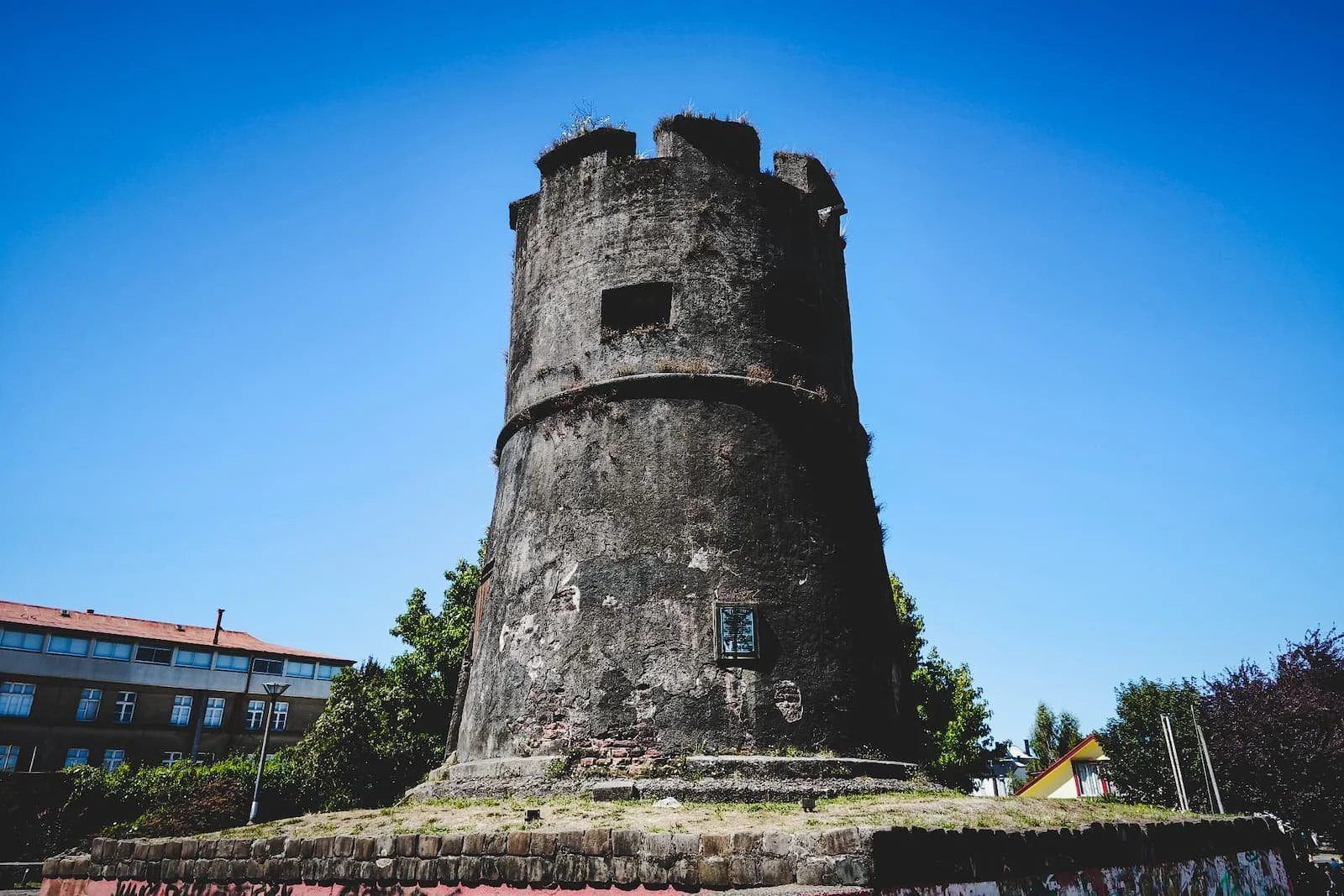
Torreón de los Canelos is one of the few remaining towers from Valdivia’s Spanish colonial fortifications.
Dinner Ideas
If you want to keep dinner simple after the decadent chocolate stop, this is a good night to put together a casual meal with local products. Valdivia is renowned throughout Chile for its cheese, sausages, and beer, thanks in part to the region’s German heritage.
Try picking up:
longaniza (a traditional Chilean sausage related to chorizo)
queso mantecoso, a rich buttery southern Chilean cheese (often melted to eat with bread)
bread, crackers, fruit, and/or beer to round things out
A practical place to do that is Supermercado Eltit, which has a more local feel than larger chains and sits just a couple of streets from the Torreón.
Otherwise, downtown Valdivia has plenty of restaurant options, including several good asado and grill restaurants to try the sausages and cheeses.

Supermarket Eltit in Valdivia downtown sells various local products.
Day 2: Isla Teja & Parks
Isla Teja was the historic center of German settlement in Valdivia, and that influence still shows today in the cafés, markets, breweries, and architecture. Much of the island is also home to the Universidad Austral de Chile, which gives the area a relaxed, intellectual atmosphere. The island feels greener and quieter than downtown Valdivia, with charming wooden houses that host cafés and breweries and large parks and ponds blend city life with nature.
Today focuses entirely on the island, which lets you explore it without crossing back and forth over the river.
Distance: ~6–8 km / ~4–5 miles walking
Time needed: ~8–9 hours
Pace: Relaxed
Suggested timing
Eat breakfast beforehand since you’ll be walking quite a bit in the botanical gardens before lunch.
10:30 — Cross Puente Pedro de Valdivia to Isla Teja
11:00 — Jardín Botánico de la Universidad Austral de Chile
12:30 — Lunch at Café Hausmann
14:00 — Parque Saval
16:00 — Stop at Teja Market
16:30 — Museo Histórico y Antropológico Mauricio van de Maele
18:00 — Riverfront view from Muelle Los Castaños
18:30 — Dinner and beers at El Growler
Morning: Cross Puente Pedro de Valdivia to Isla Teja
From downtown Valdivia, cross Puente Pedro de Valdivia toward Isla Teja. From the bridge, you get one of the best panoramic views of the city and its waterfront — the river, boats, Costanera, and surrounding greenery all come into view.
It’s worth pausing for a moment to take it in. Just be careful when stopping since the bridge sidewalk is fairly narrow and traffic passes close by.
Late Morning: Jardín Botánico de la Universidad Austral de Chile
Walking time: ~20 minutes
Suggested time: ~1 hour
From the bridge, walk through the shaded pedestrian path along Calle Los Laureles, which leads into the campus of the Universidad Austral de Chile.
The Jardín Botánico is one of the most peaceful places in the city. The large garden includes multiple sections, including:
shaded forest paths
a quiet dirt trail along the river
ponds and wetlands
labeled plant species throughout the gardens
Our favorite was a “healing forest” area that feels more like a natural woodland than a formal botanical garden. Valdivia is actually surrounded by the Valdivian temperate rainforest, so the botanical garden does a good job capturing the surrounding environment.
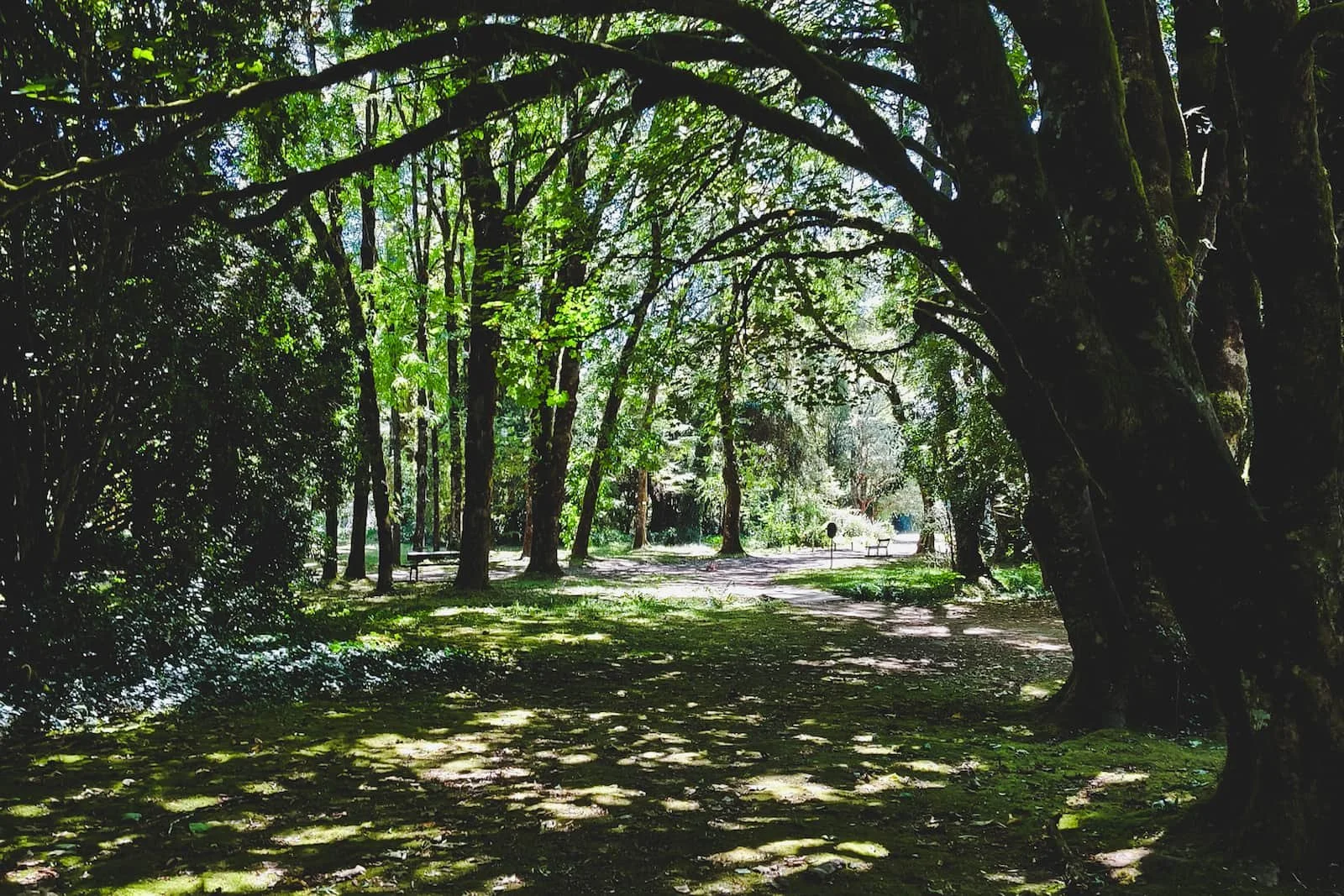
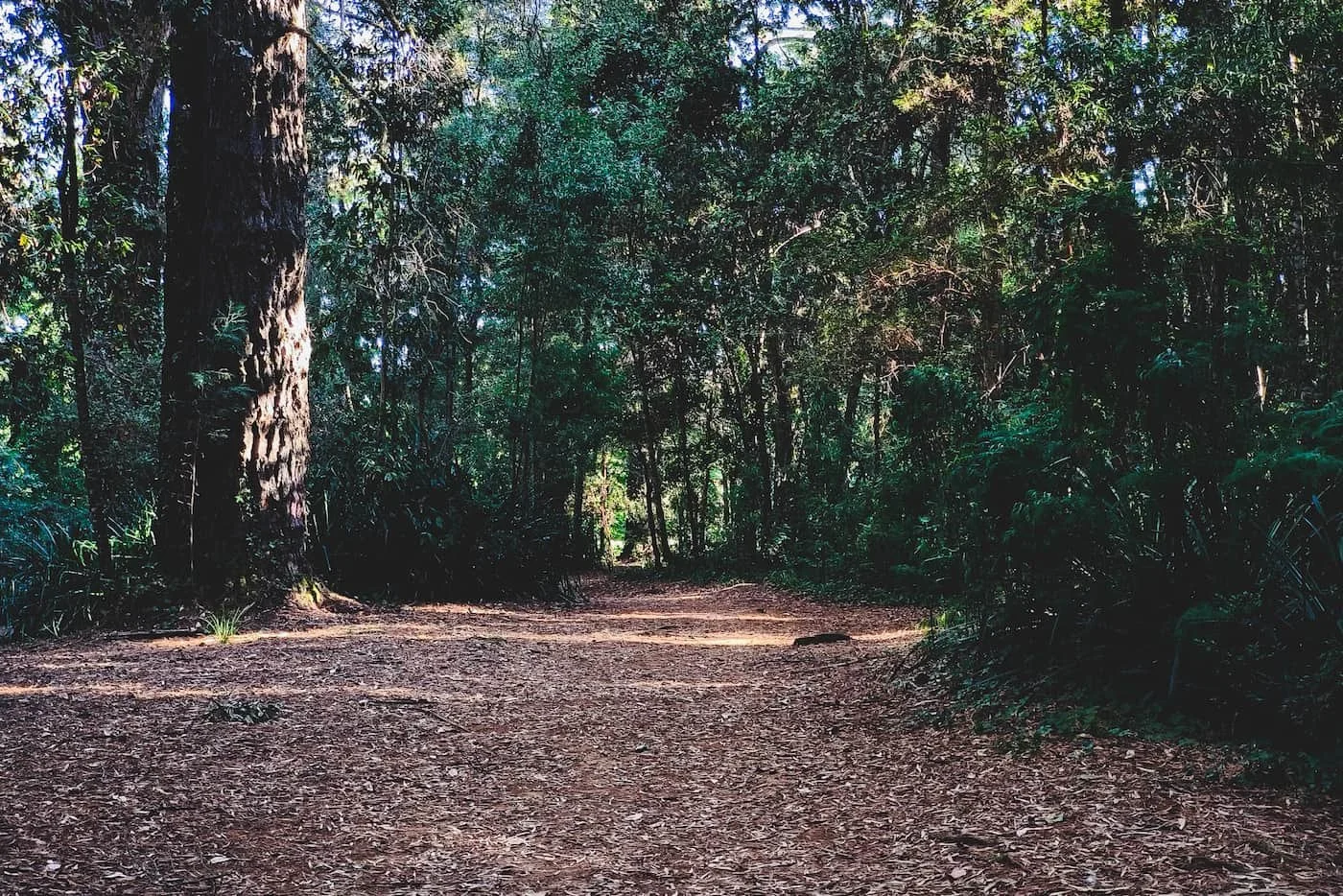
Much of the garden feels closer to a forest than a formal botanical collection.
In the morning the gardens are especially quiet, and we found it to be the perfect place to walk slowly and enjoy the fresh southern Chilean air.
There’s also a small outdoor café near the entrance if you want to grab a coffee before strolling.
Hours: Daily, 9:00 AM–6:00 PM. Check their Instagram for the latest info.
Entrance: Free admission.
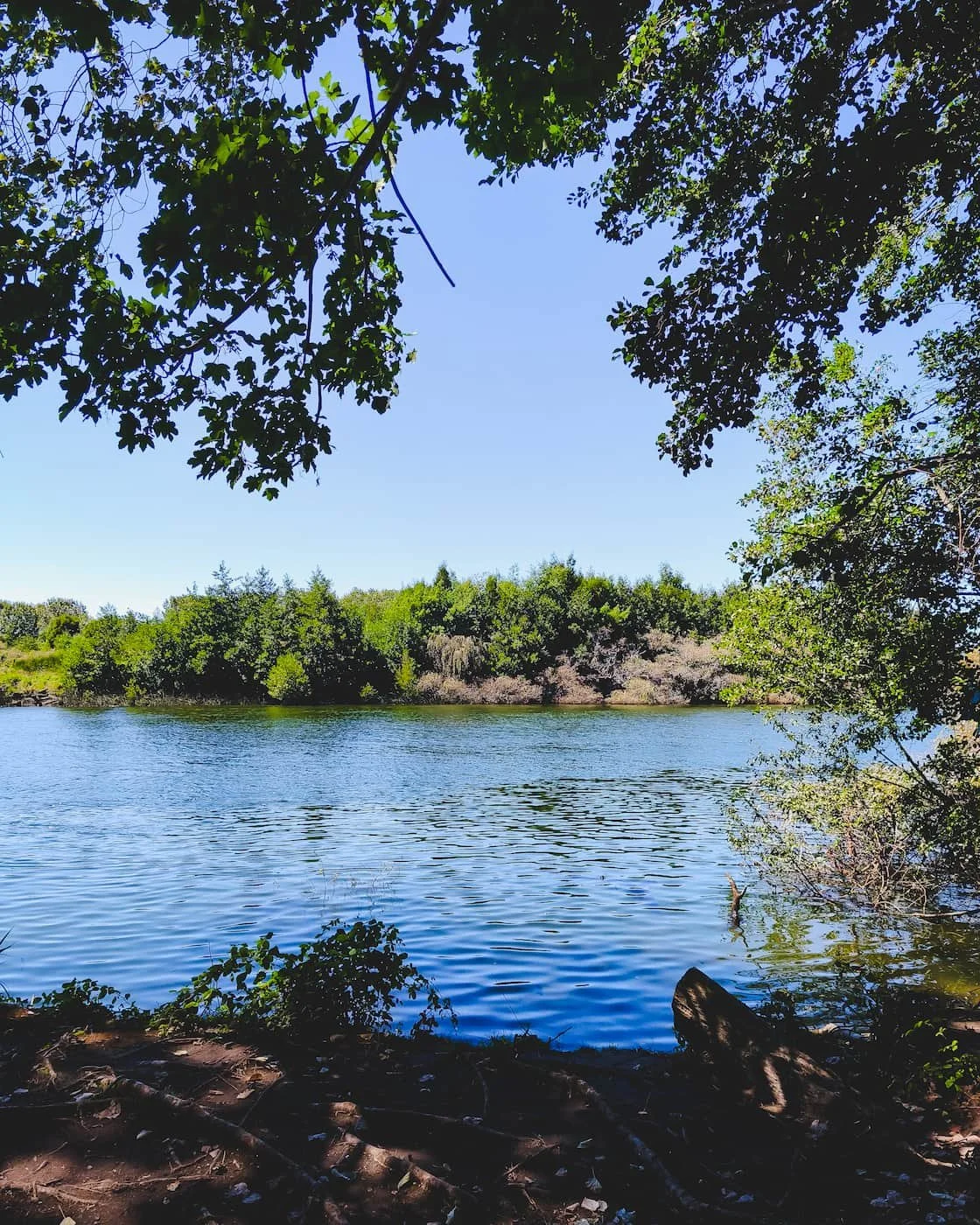
The Jardín Botánico also has a tranquil riverside dirt path that really makes you feel you’re outside of a city.
Lunch: Café Hausmann for Crudo
Walking time: ~20 minutes
Suggested time: 1–1.5 hours
Head to Café Hausmann, one of Valdivia’s classic German-influenced cafés with a nice and relaxed wooden porch as its outdoor seating area.
Order the crudo, a regional specialty. Crudo (meaning “raw”) is the Chilean version of steak tartare, influenced by German Mett brought by immigrants who settled in southern Chile.
The dish is typically served with:
finely minced raw beef
onions
pickles
mustard or other condiments
toasted bread
At Café Hausmann the portion is generous, with plenty of bread and condiments so you can assemble each bite yourself. As a tartare lover myself, this dish was amazing (for a fraction of the price I’d get in back in the U.S. too!).
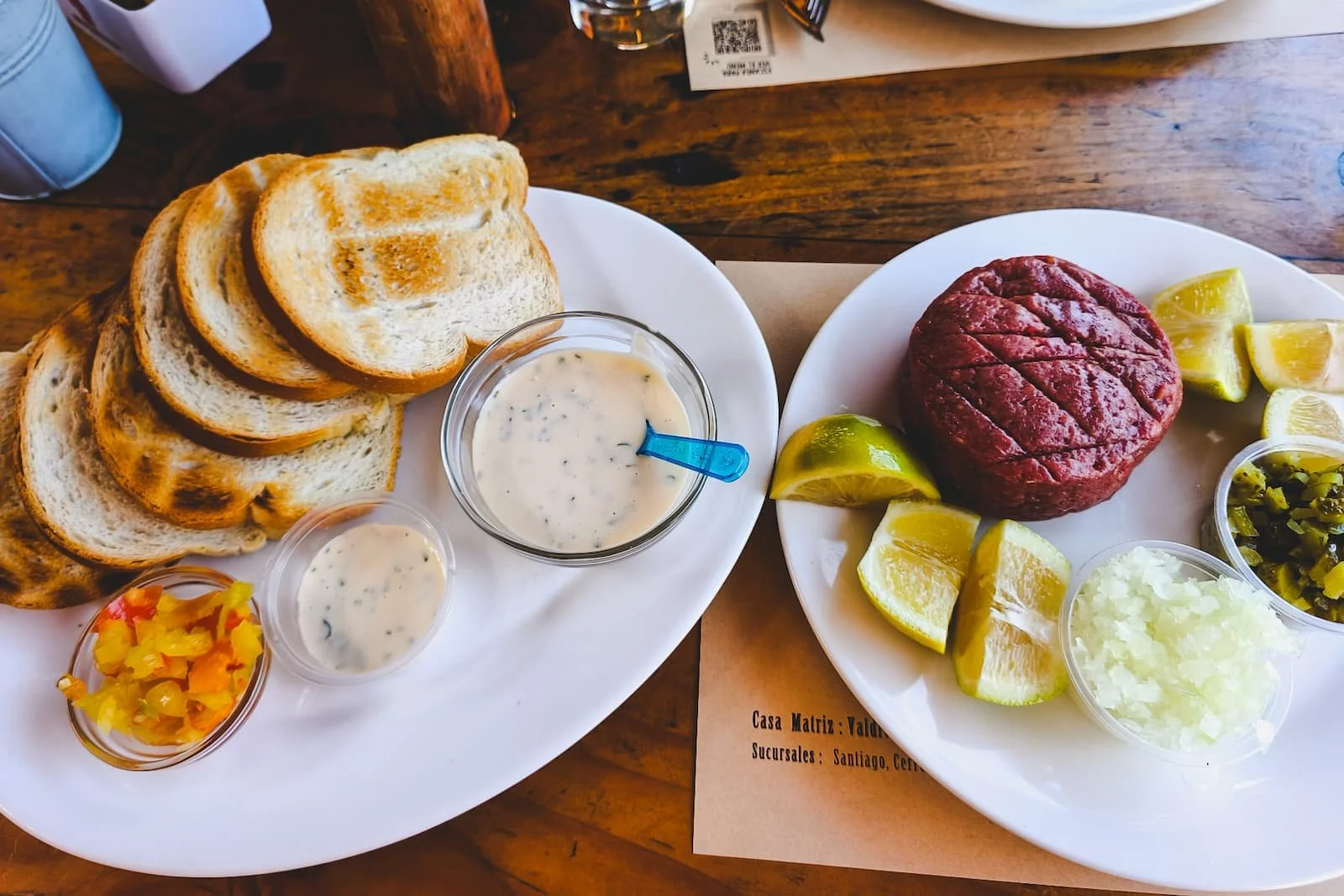
Crudo is one of the region’s most classic German-influenced dishes and a must-try on Isla Teja.
Hours: Usually opens around 11:00 AM or 12:00 PM and stays open into the evening. Check the latest hours on their online menu.
Price range: $$
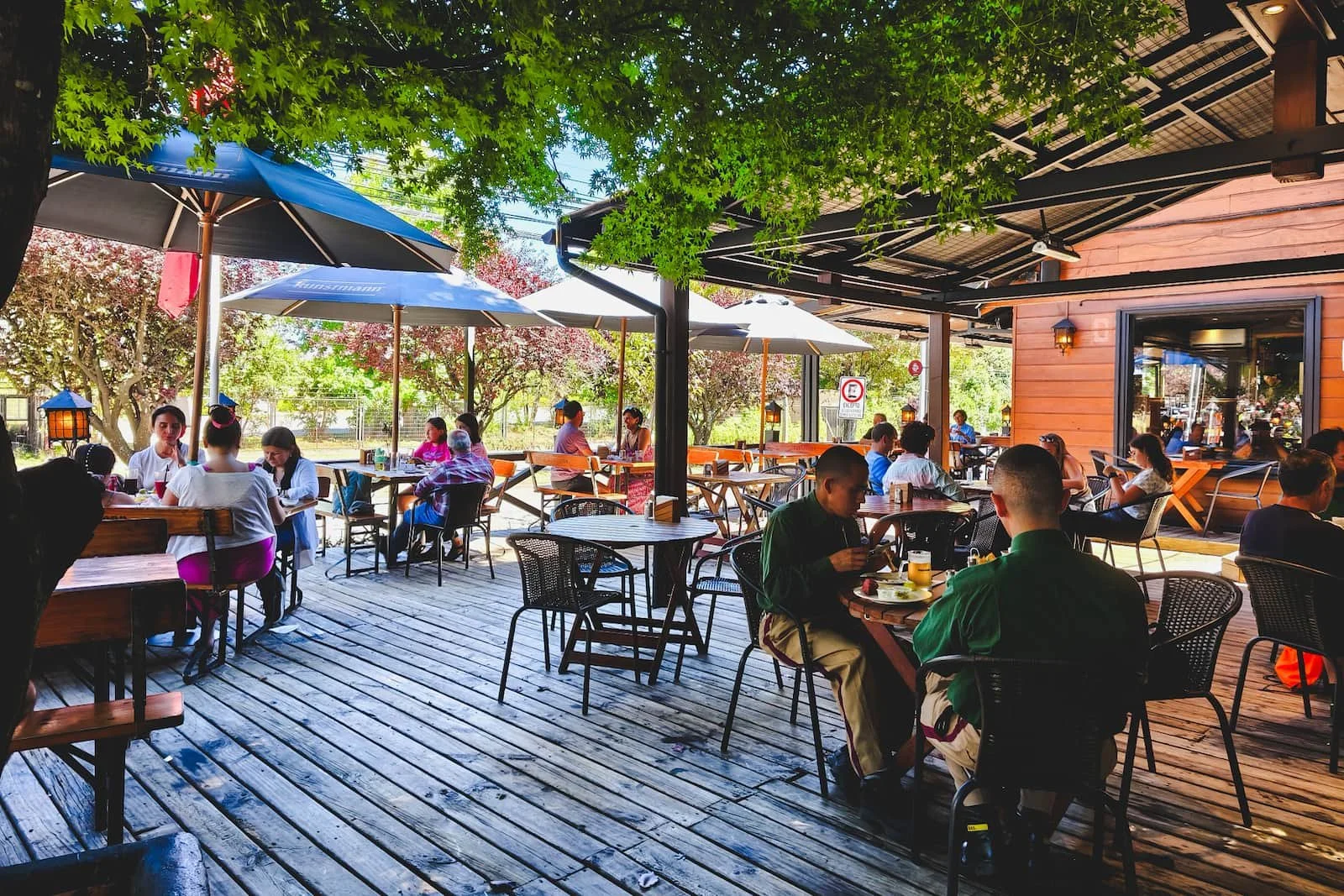
Outdoor dining at Café Hausmann is nice and relaxed.
Mid-Afternoon: Parque Saval
Walking time: ~30 minutes
Suggested time: 1.5–2 hours
Next, walk to Parque Saval, a large park on Isla Teja featuring open lawns and nature trails. It’s one of Valdivia’s most prominent green spaces.
The park includes:
walking paths through forested areas
ponds and small bridges
sculptures and art installations
wide lawns and picnic areas
an event center that hosts festivals and fairs
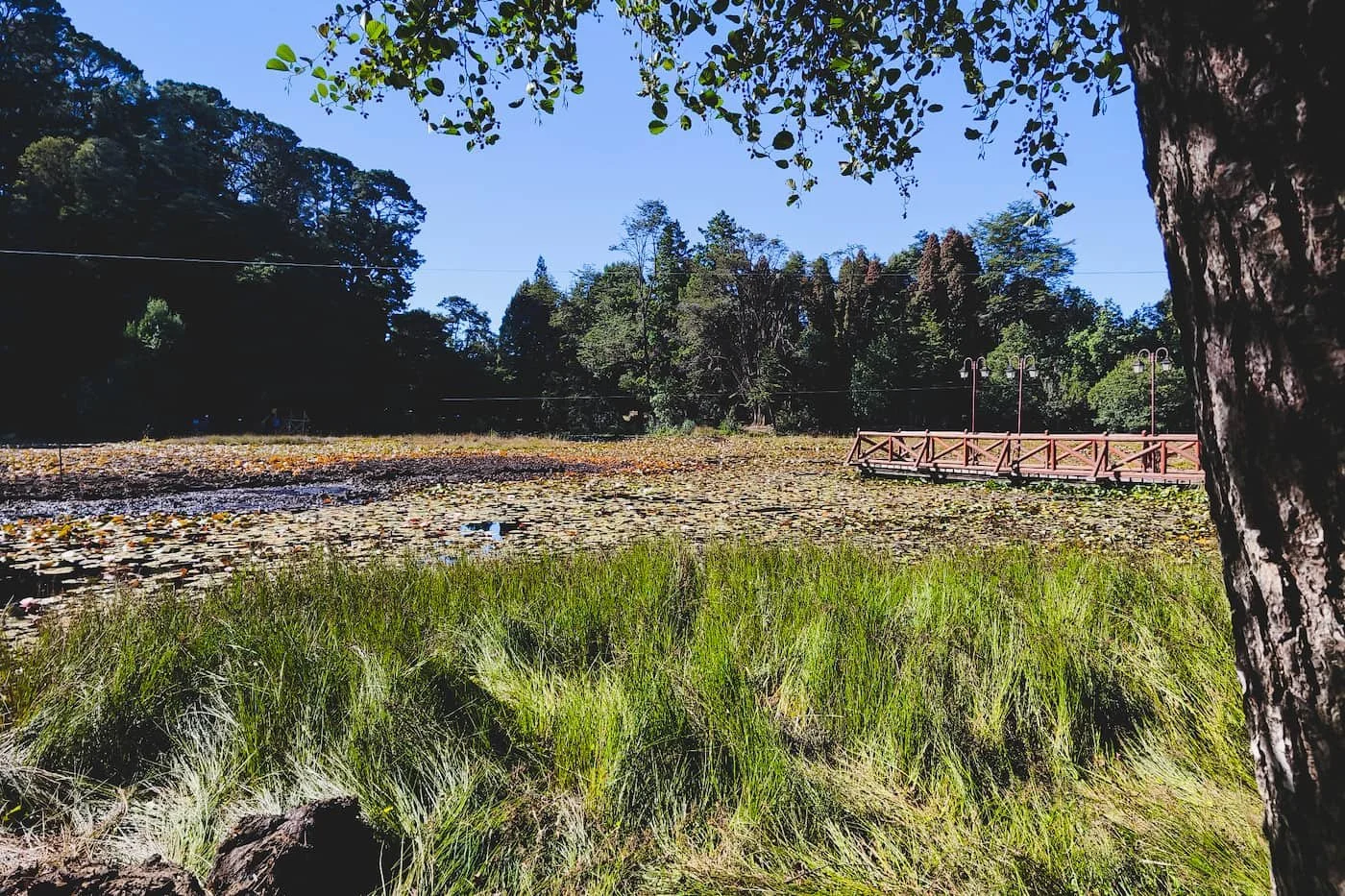
Parque Saval has plenty of open space, but the lily pond was one of the prettiest corners.
When we visited, we unexpectedly stumbled into a festival in the event center featuring a crafts fair and beer fair, so there was lots to see. We also had surrenditipous timing that let us bump into a very energetic Linkin Park tribute band that had the crowd all riled up. Definitely a fun surprise to be part of a local event here.
Hours: Hours vary by season, so check the official site for the latest schedule.
Entrance fee: 500 CLP per adult
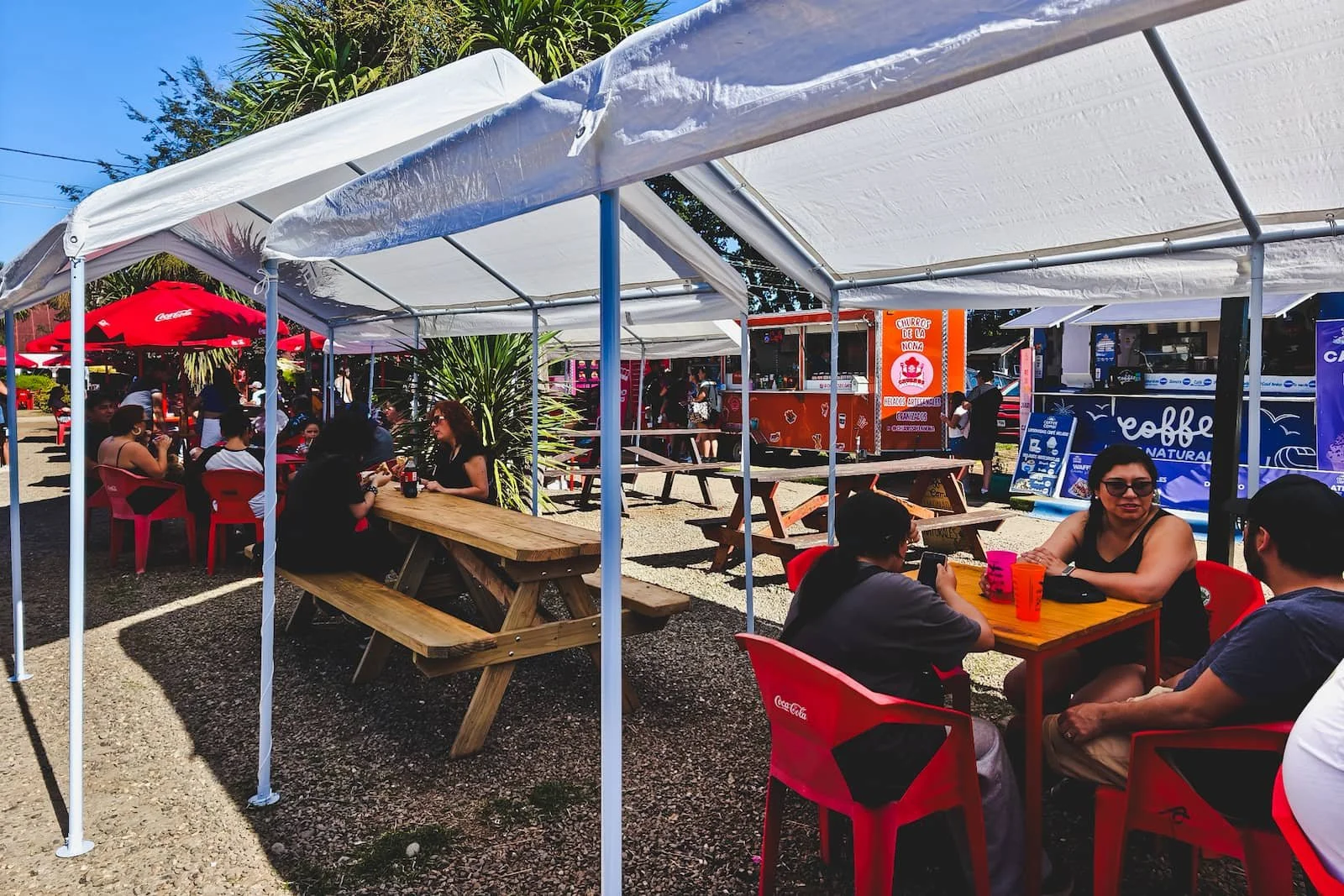
Outdoor festival going on in the event center, featuring crafts, beer stalls, and live music performances.
Late Afternoon: Museum & River Views
Walking time: ~30 minutes total
Suggested time: ~1.5–2 hours
After leaving Parque Saval, stop at Teja Market, about a 7-minute walk away.
This market features more local produce and regional products than the larger supermarkets downtown. You’ll find a great variety of sausages, cheeses, pickles, and local specialty foods.
It’s just fun to browse for a bit or buy some to try later, but it’s also a good place to grab a drink or snack after your park walk. True to its brewing culture, Valdivia has also developed a reputation in Chile for kombucha, so that would be a good drink to try.
Next, continue to the Museo Histórico y Antropológico Mauricio van de Maele, about a 15-minute walk away.
The museum, run by the Universidad Austral de Chile, provides excellent context for the region. Exhibits cover:
indigenous cultures of southern Chile
Spanish colonization
German immigration and settlement
the cultural development of Valdivia
Unfortunately, the museum was temporarily closed during our visit. The hours online were unclear and didn’t mention the closure — we walked around the entire perimeter looking for the entrance before discovering that it was temporarily closed on their Instagram page. If it’s open during your visit, it’s definitely worth stopping in.
From there, walk down to Muelle Los Castaños (about 10 minutes away). The small dock offers a great perspective back toward the main Valdivia waterfront — you can see Feria Fluvial, the boats moving along the river, and the surrounding greenery that defines the city.
Museum hours: Tuesday–Sunday, 10:00 AM–1:00 PM and 2:00 PM–6:00 PM. Check their Instagram page for updates.
Museum admission: 2,000 CLP for adults
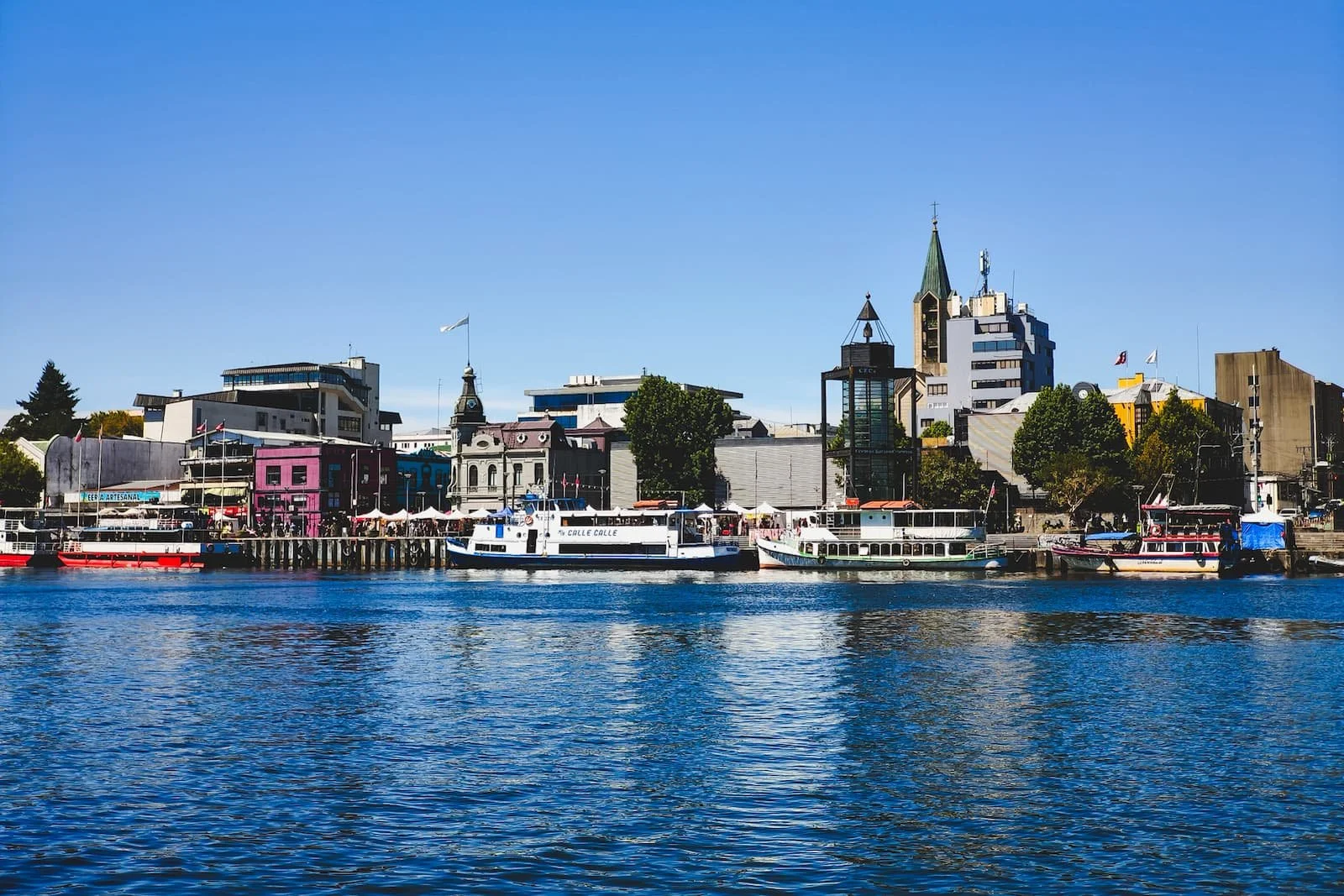
From Muelle Los Castaños, you get a quieter perspective back toward Valdivia’s working waterfront.
Evening: Beers & Dinner at El Growler
Isla Teja is home to several of Valdivia’s best small breweries. We stopped at El Growler, which has a rotating selection of craft beers on tap.
We ordered a sour beer and an American IPA. Both were excellent. The American IPA was really smooth and well balanced. And my partner, who isn’t usually a big beer guy, actually really liked the sour because of its fruit-forward flavors and mild acidity.
We also had dinner here and enjoyed the fish and chips, which were crisp, hot, and satisfying after a day of walking.
If you want another option for dinner instead though, consider La Última Frontera, a quirky restaurant and bar nearby known for its Chilean sandwiches and eclectic decor.
Hours: Monday–Thursday: 4:00 PM–12:00 AM; Friday–Saturday: 1:00 PM–1:00 AM; Sunday: 2:00 PM–9:30 PM – check their Instagram for the latest info.
Price range: $$
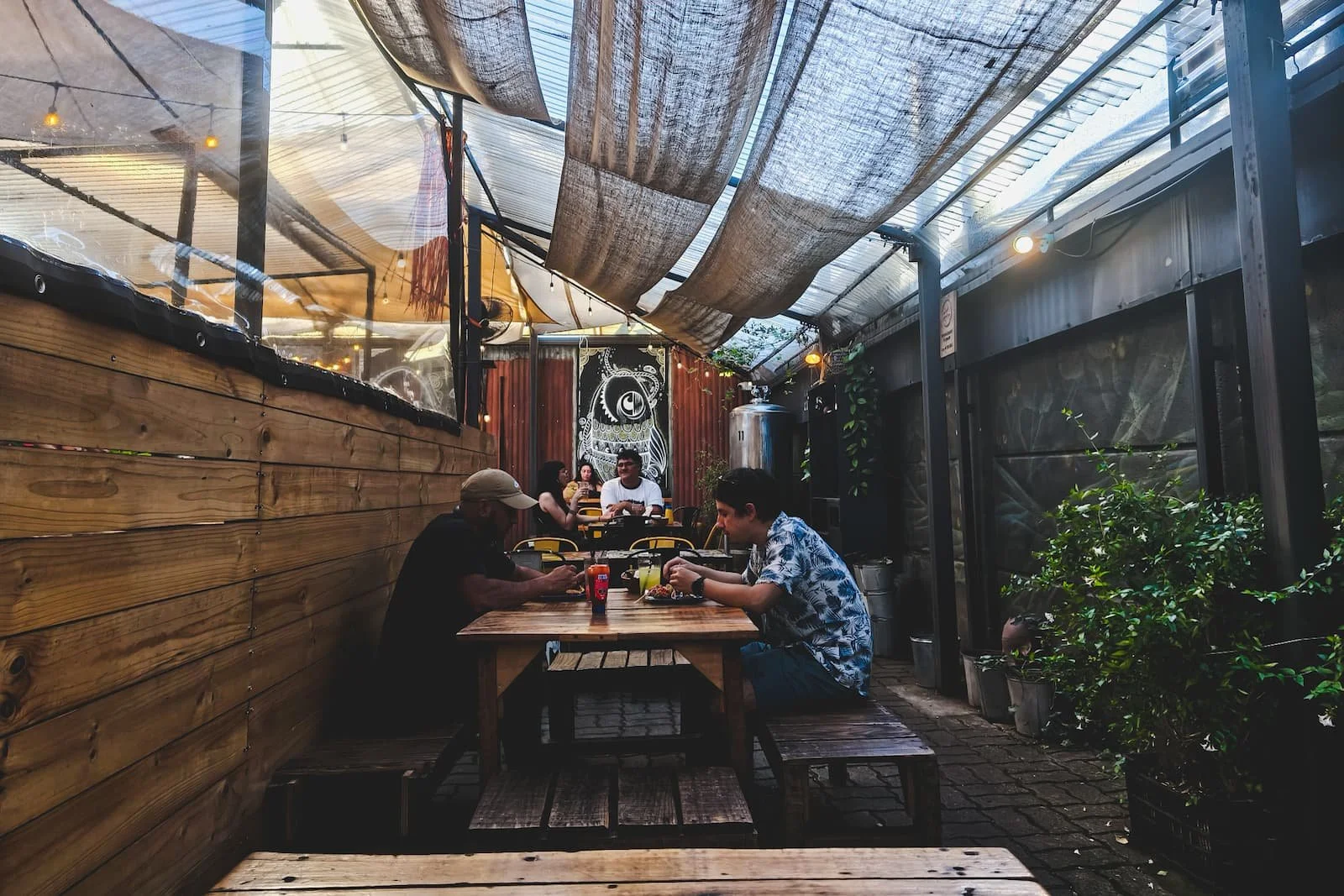
Ending the day with craft beer on Isla Teja fits naturally in one of Chile’s best-known beer cities
Day 3: Kunstmann Brewery & a Slower Day
After the full day of walking on Day 2, take it chiller on Day 3. The main activity is visiting Cervecería Kunstmann — one of Chile’s most prominent beer brands — and flexible time around Valdivia’s waterfront to experience the city in different lights or repeat any favorites.
This is your last full day in Valdivia proper, since Day 4 will be focused on a full day trip to the nearby coast.
Distance: ~3–5 km / ~2–4 miles walking, plus short transit
Time needed: ~6–8 hours
Pace: Relaxed
Suggested timing
Sleep in a bit today — Valdivia is a chill city, so take it easy :)
10:30 — Optional morning walk, run, or neighborhood stroll
12:00 — Ceviche lunch at Feria Fluvial
12:40 — Transit to Cervecería Kunstmann
13:00 — Cervecería Kunstmann visit
15:00 — Return to Valdivia
15:30 — River cruise or café stop
17:30 — Evening stroll along the Costanera
19:00 — Dinner at Mesa Incógnita
Morning: Take It Slow
Keep the morning flexible today.
But if you want to get moving, here are a couple of options:
Run or walk along the Costanera
The quieter east side of the waterfront is particularly good for a morning jog or walk, with wide river views and fewer crowds than the main market area.
Explore Valdivia’s residential neighborhoods
Another option is wandering the southern residential area of Valdivia — roughly the quadrant bordered by:
General Lagos (west)
Camilo Henríquez (east)
Cochrane (north)
Baquedano (south)
This is a calm neighborhood with visible traces of Valdivia’s German colonial past. You’ll see older houses with wooden detailing, gardens, and small panaderías and cafés scattered through the streets.
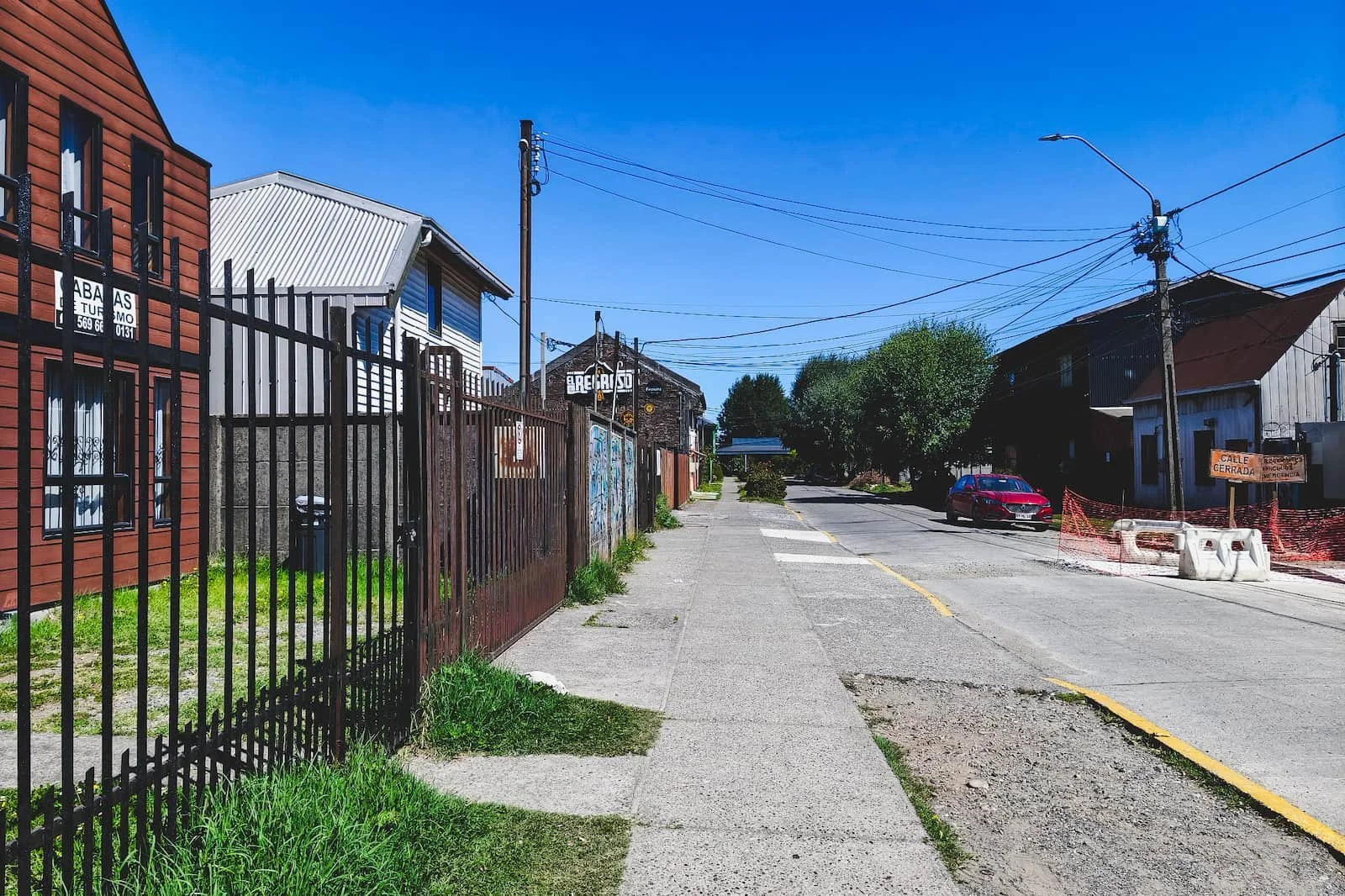
One of the quiet residential streets in Valdivia, with a lot of that older German-influenced character still showing through.
Lunch: Ceviche at Feria Fluvial
Suggested time: 30–45 minutes
Head back to the Feria Fluvial de Valdivia for a quick lunch.
Several small stands here sell freshly prepared ceviche made with local seafood. Options usually include:
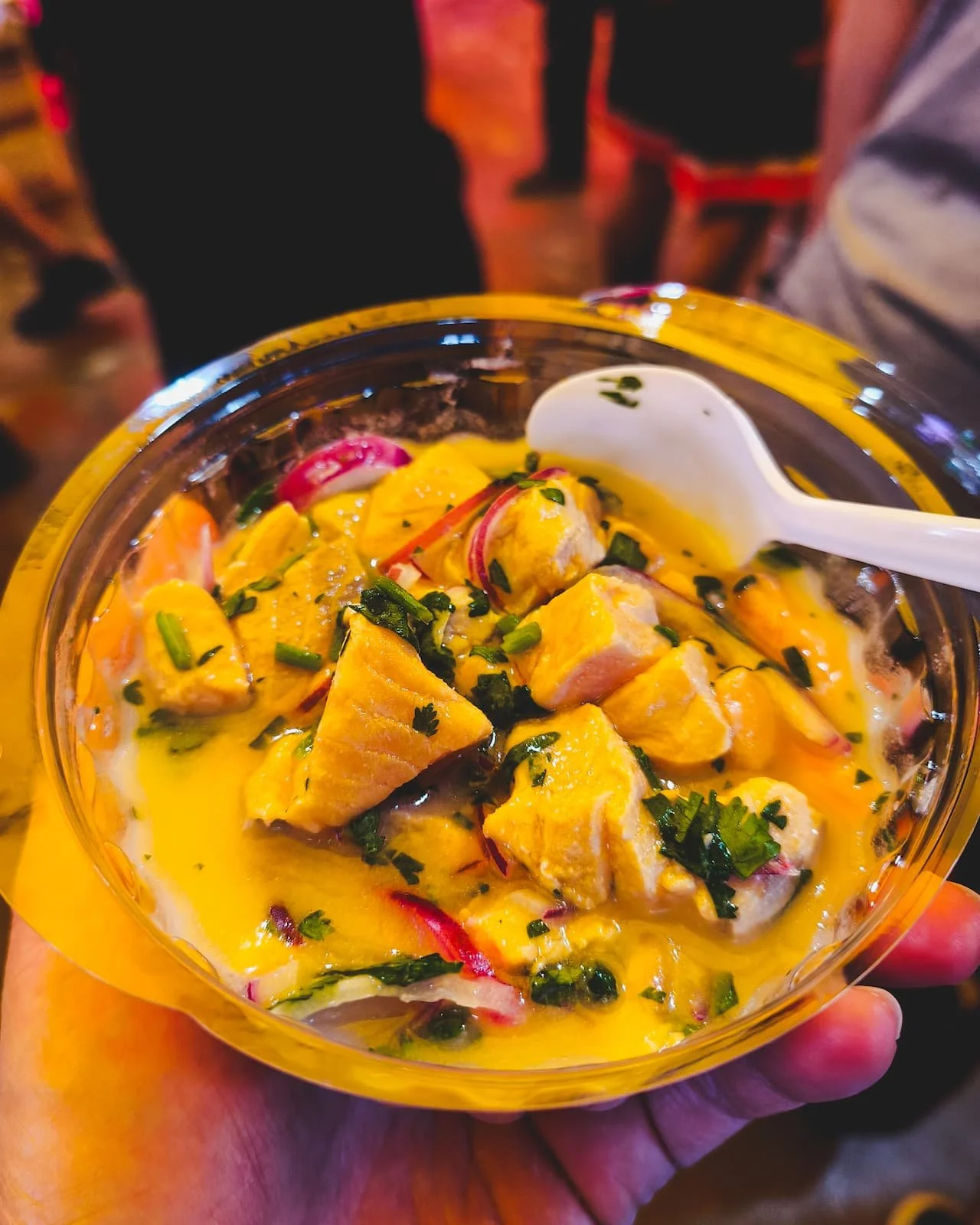
salmon ceviche
reineta (Chilean hake)
octopus and mixed seafood
Valdivia is known for its fresh salmon, so I really recommend the salmon ceviche. It really was excellent.
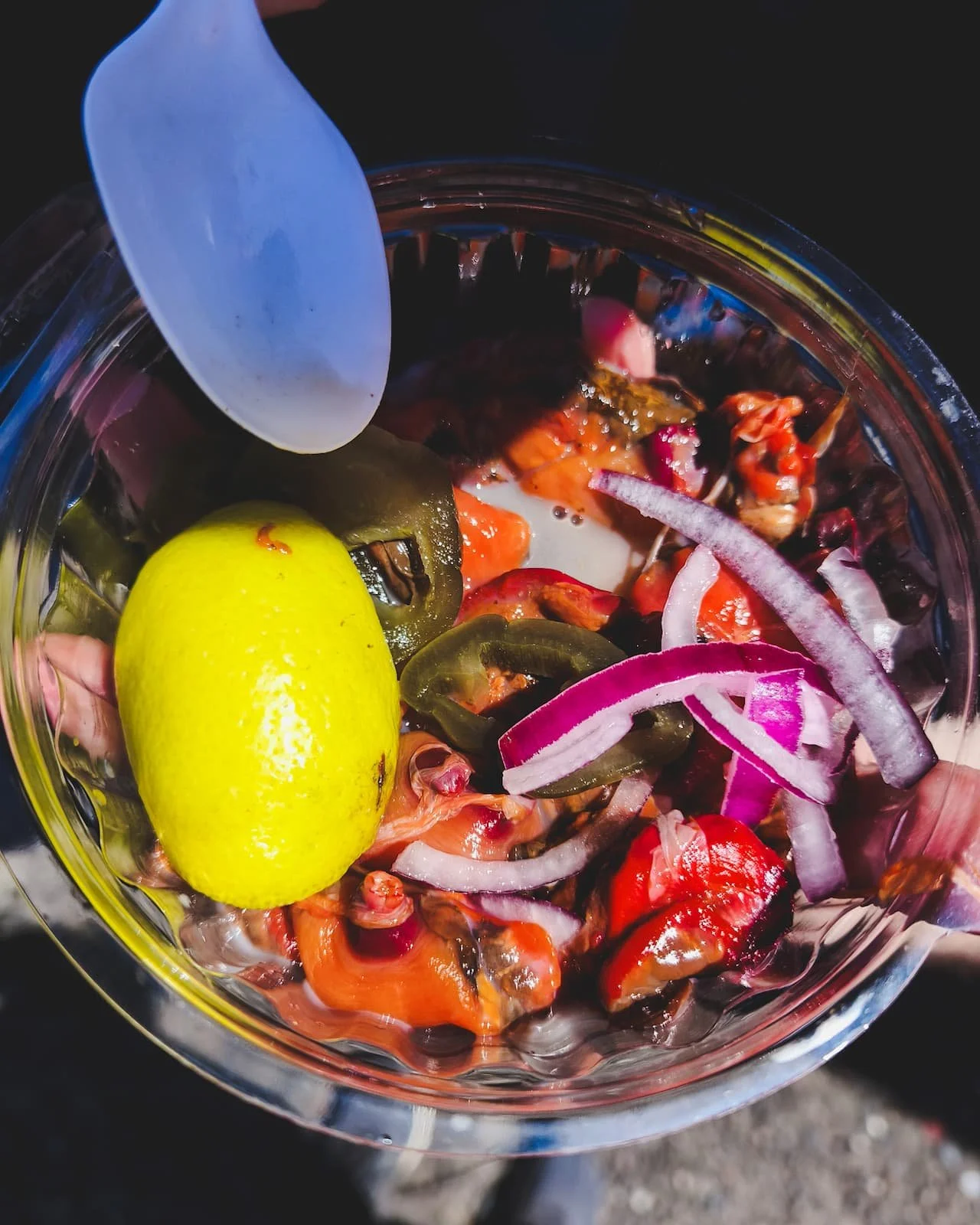
If you’re feeling adventurous, try piure — a Chilean sea squirt with a very distinctive flavor. To me it tasted like oysters but with an even more intense ocean flavor and a slightly metallic note. Not something I’d order regularly haha, but definitely an interesting local experience.
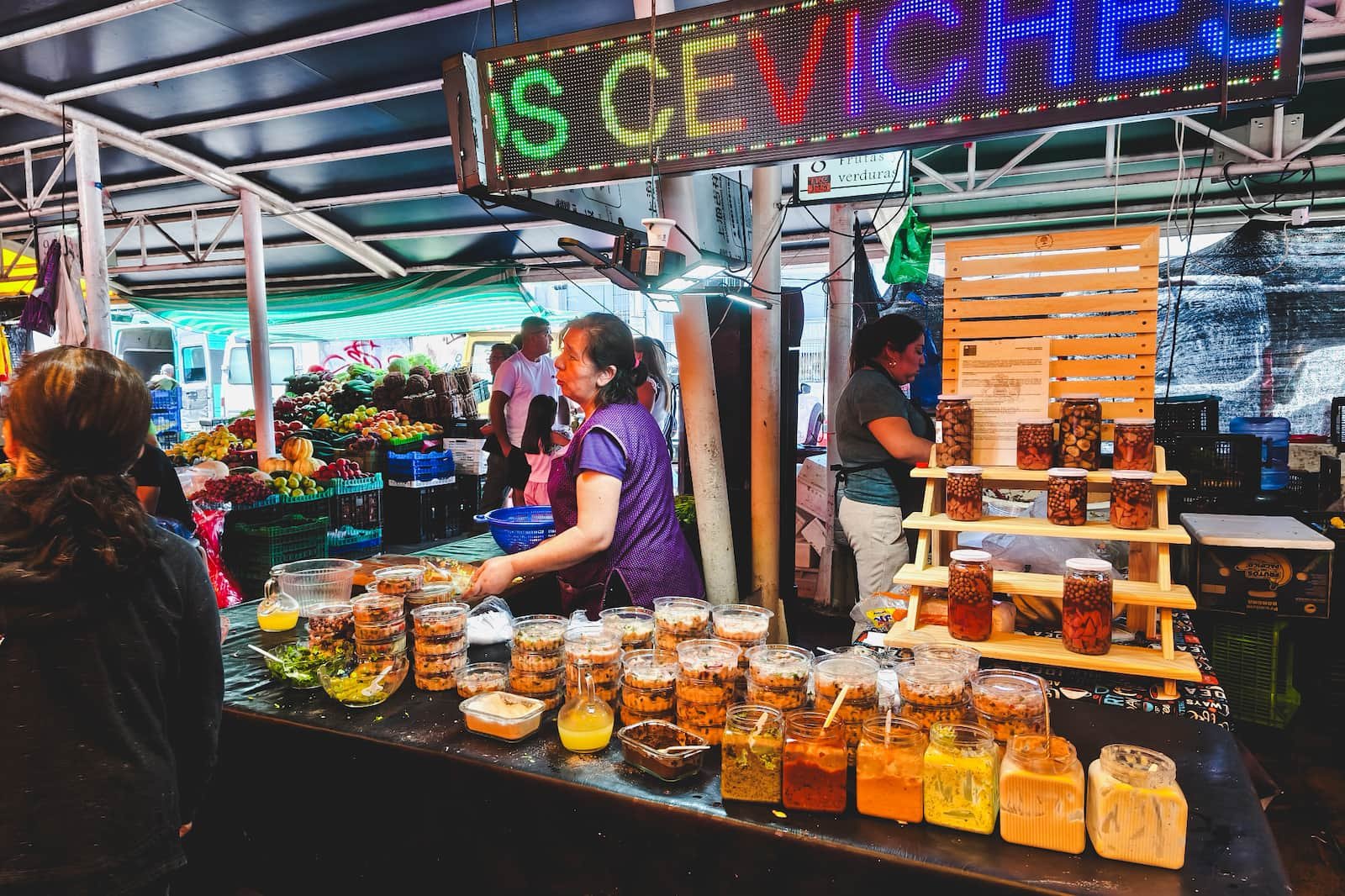
One of the ceviche stands in feria fluvial, with freshly prepared ceviche and self-serve condiments.
The stands usually have self-serve condiments, including chopped onions, lemon juice, jalapeño, and various hot sauces.
They can get very crowded during peak lunch hours, so try to go a little earlier if you can. There’s no seating, so you’ll probably be standing around, but you can take the ceviche to go and watch the river while you eat.
Hours: Usually morning through early afternoon
Price range: $
Payment: Most stands accept cards, but it’s good to have some cash just in case.
Afternoon: Cervecería Kunstmann
Transit time: ~15–30 minutes each way (bus or Uber)
Suggested time: 1–3 hours, depending on whether you do a tour or eat at the restaurant
Especially if you’re a beer aficionado, it’s hard to visit Valdivia without seeing the headquarters of Cervecería Kunstmann, one of Chile’s most well-known breweries.
To get there from downtown Valdivia:
Take bus Ruta 20 toward Niebla, which drops you close to the entrance in about 20 minutes
Or take an Uber, which is widely available in Valdivia
See “Getting Around” section below for more details on both options.
The brewery complex has a strong German aesthetic, reflecting the company’s heritage. Right at the entrance you’ll see photo spots, including a giant decorative beer barrel.
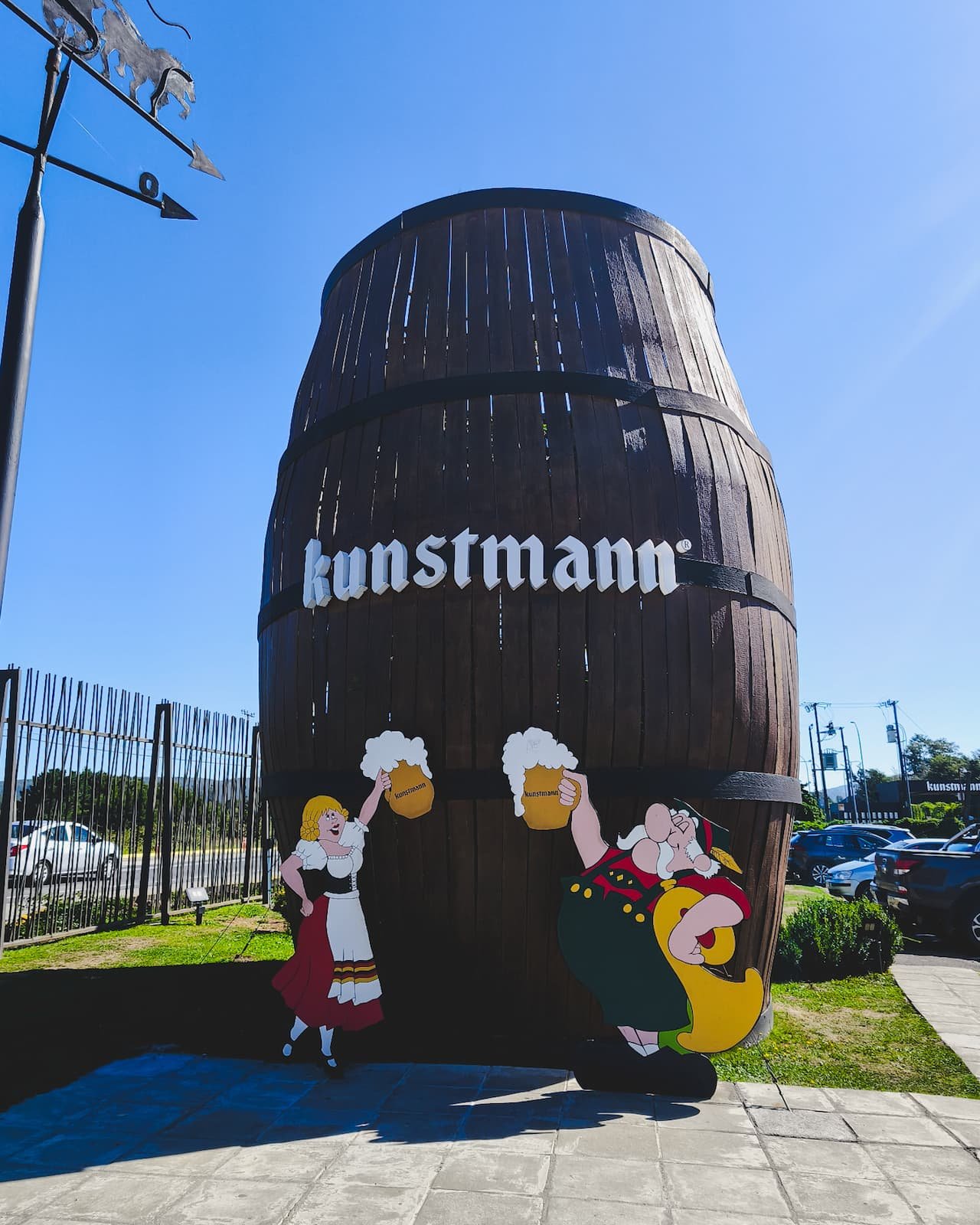
The giant beer barrel outside Kunstmann is very much part of the experience.
Inside the complex free access area (outside of tours), you’ll find:
a restaurant
a small museum
a shop
an outdoor beer stand and seating area
You can try many of their flagship beers in the outdoor beer stand, including the famous Torobayo, an amber ale with really enjoyable malty notes. You can bring home the reusable, designed beer cup too, as a souvenir!
The restaurant serves Chilean-German fusion food typical of the area, including crudo, sausages and sauerkraut, burgers, and beer tasting flights. You could eat there, but the food will be a bit of a repeat from other places in Valdivia.
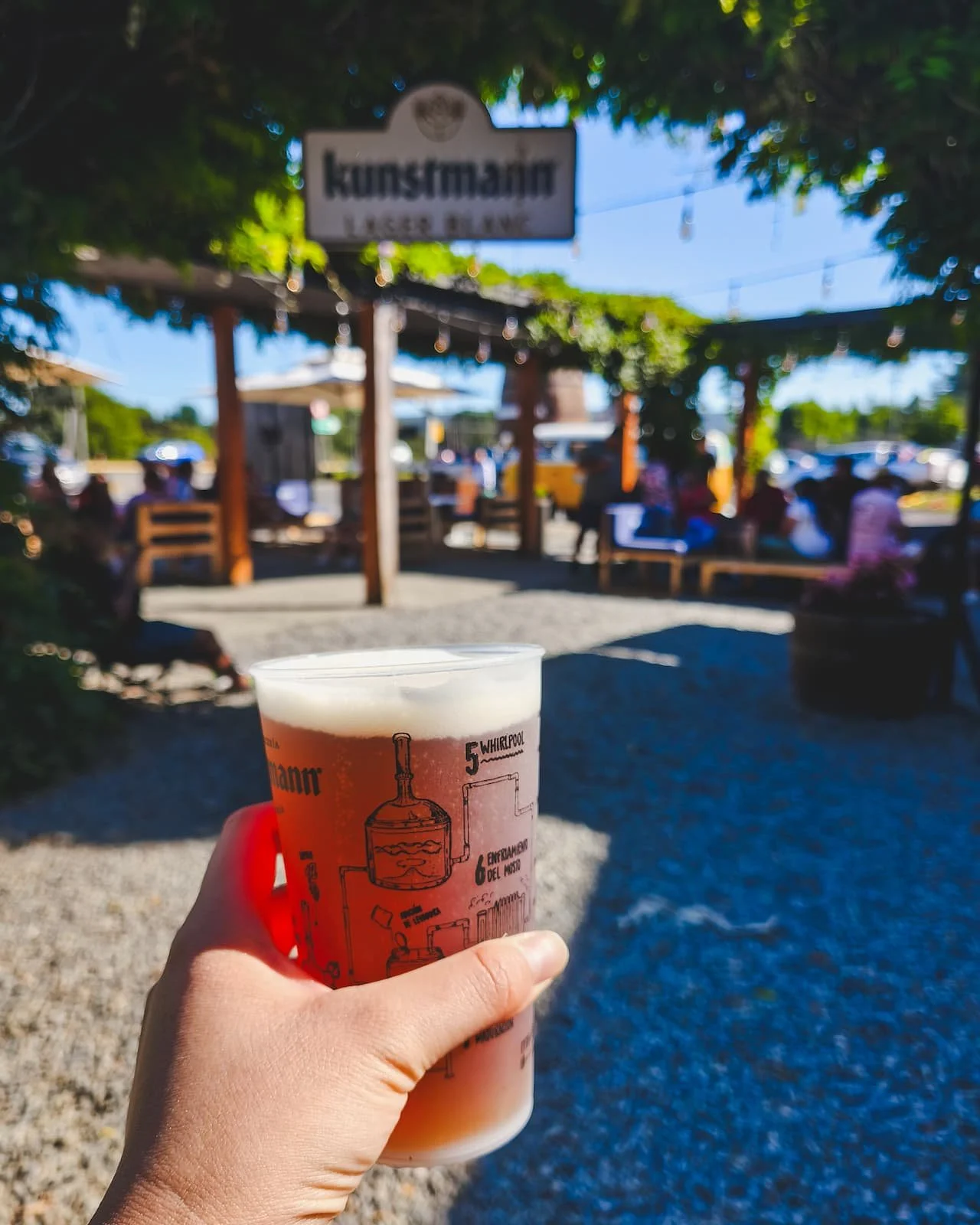
Torobayo at Kunstmann — definitely the beer to start with, and a sunny chill outdoor spot too.
Brewery tours
Kunstmann also offers several guided tours. The standard brewery tour includes:
the hop garden
brewhouse
fermentation tanks
packaging areas
explanations of the brewing process
Most tours also include a complimentary draft beer.
We didn’t do the tour since we were feeling a bit tired and my partner especially is not huge on beer. Instead, we grabbed a Torobayo at the outdoor seating area, explored the free museum, and walked around the complex. Honestly, there isn’t that much to see without a tour, so in retrospect I kind of wish I had done one. Still, it’s a fun atmosphere overall.
Hours: Daily, 12:00 PM – 11:00 PM
Tour price: Around 22,000 CLP for the standard brewery tour
Check their website for current schedules and prices.
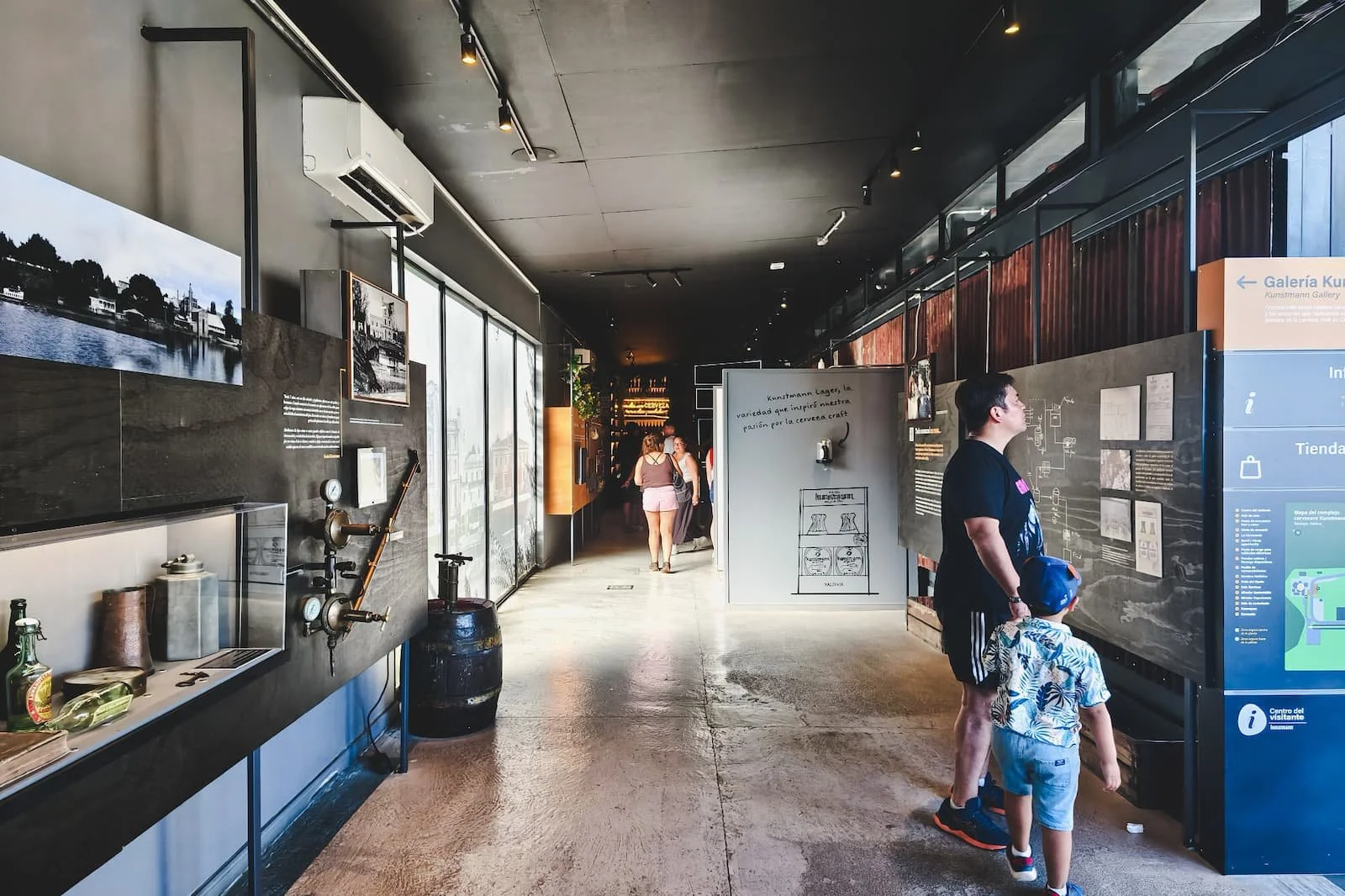
The small museum inside the Kunstmann complex traces the history of brewing in Valdivia.
Late Afternoon — River Cruise or Café
In the spirit of an easy day, keep the afternoon flexible. Here are two good options.
Option 1 — Riverboat Cruise
Take a riverboat cruise on the Calle-Calle, Cau-Cau, and Valdivia Rivers.
These cruises focus more on the urban landscape than on nature, which is actually nice at this point in the trip. From the water, you can see the Valdivia riverfront and Isla Teja from a different angle, get close to the sea lion colony near Feria Fluvial, and spot Submarino O’Brien. Some cruises also time their route to pass the Cau-Cau Bridge, the lifting bridge next to Isla Teja.
You can shop around with the many tour vendors on the waterfront. Otherwise, Barcos de Los Ríos is a local company, and Nomades (kind of the Chilean equivalent of Viator) also sells tours.
Option 2 — Café and Cake
If you’d rather just chill, stop at Café de Luis in downtown Valdivia.
We had a torta de ciruela — a plum and walnut sponge cake filled with manjar, walnuts, and cream — and it was so good. Plum is a local product of the region, and you could really tell it was fresh.
We also had a kuchen de berries, a traditional German cake that’s very popular in Chile. My Santiaguino partner grew up eating it. It has a sweet dough base, creamy custard filling, and berries on top. This one also used locally grown berries.
Both were excellent. The seating area is nice and relaxing too, again reminiscent of German cafes.
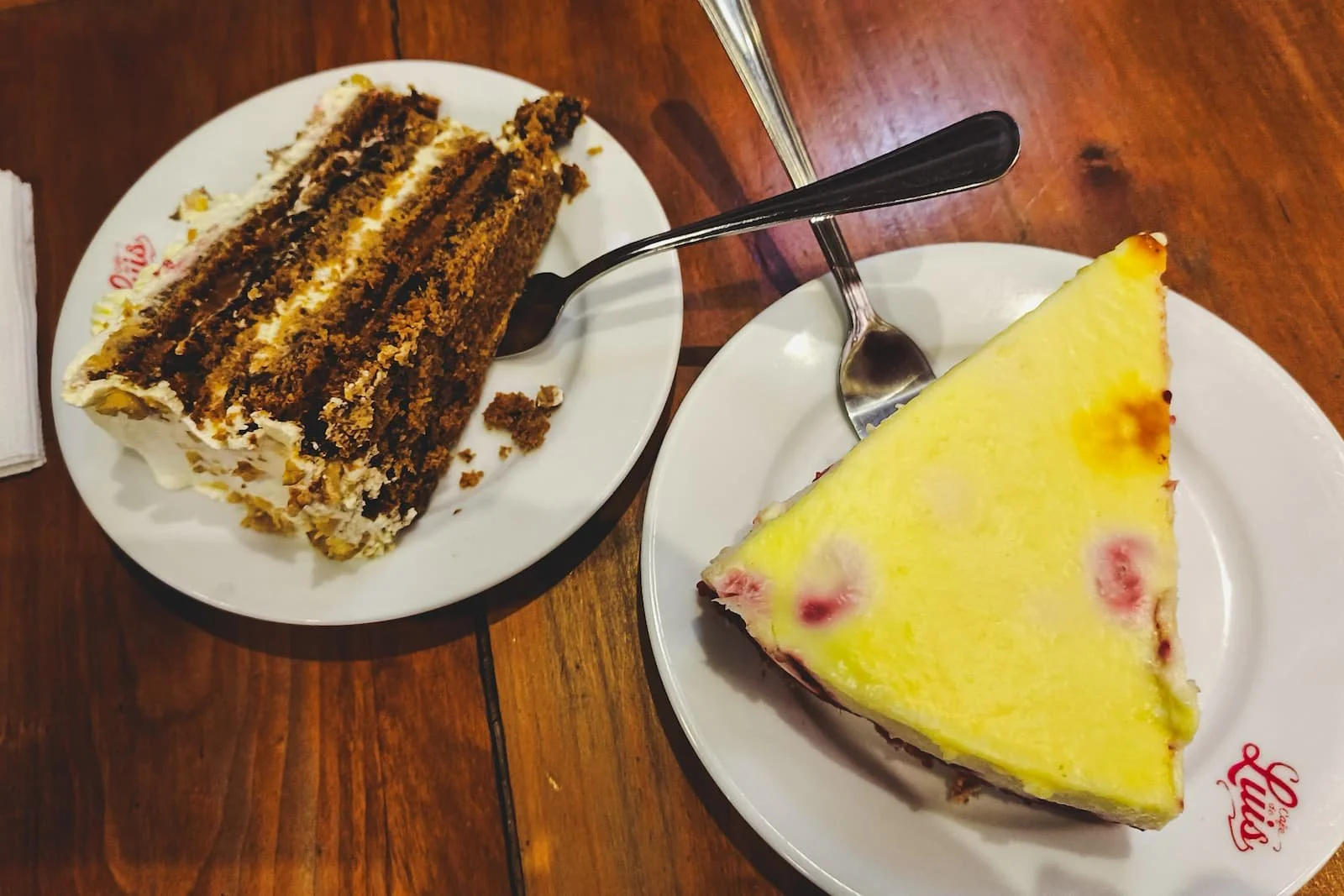
We went with the torta de ciruela and a berry kuchen, and both were excellent.
Evening — Stroll Along the Costanera
Suggested time: 1–2 hours
Take an evening walk along the waterfront. The Costanera has a different energy at night — fewer vendors and less chaos, but more calm, with people out for relaxed strolls and enjoying the twilight light.
When we were there, there was a group circle going, which added to the atmosphere.
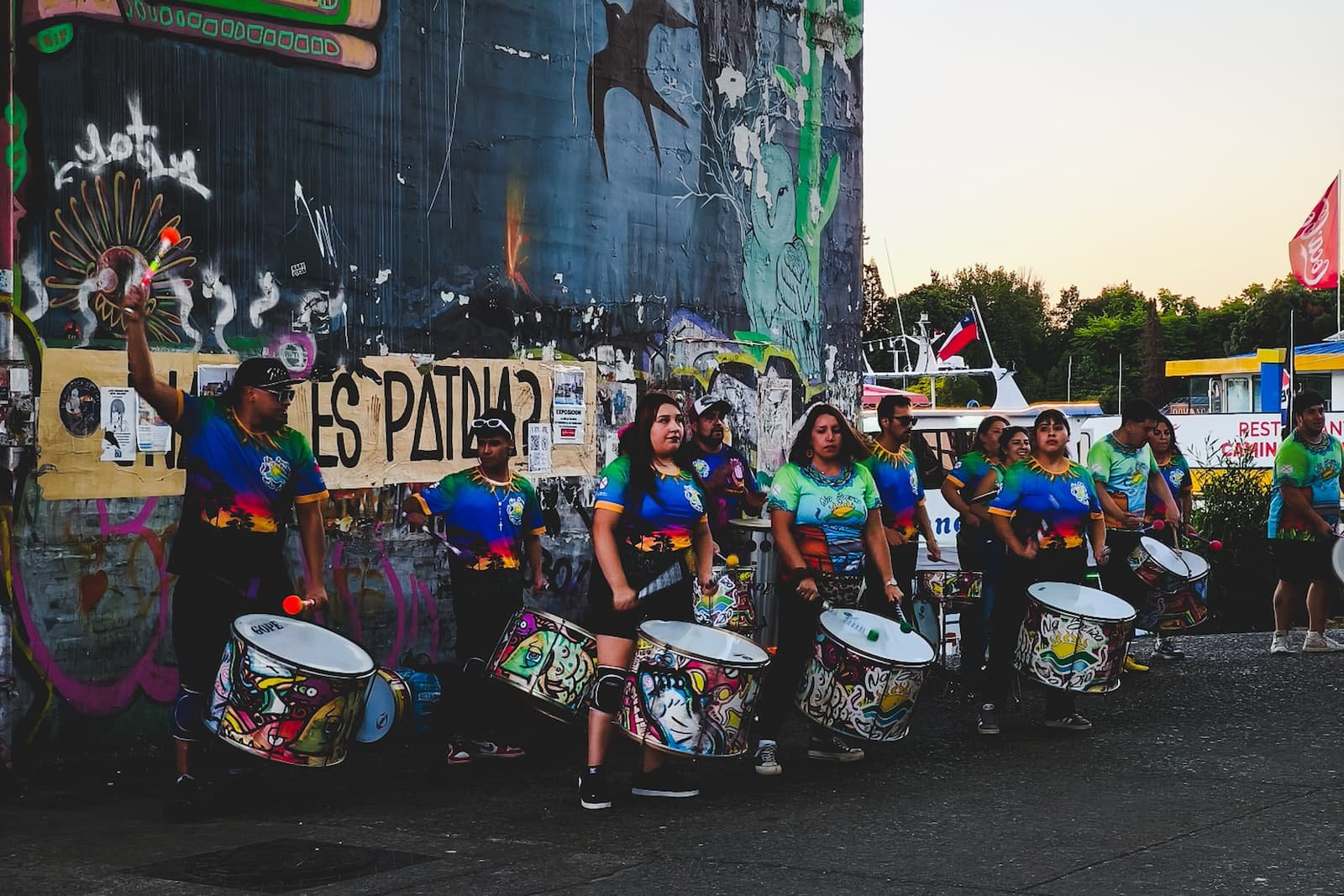
We happened to catch a drum group on the waterfront, which made the evening Costanera walk even better.
At night, you might even see sea lions just napping in the middle of the sidewalk. They truly act like they own the city (though they probably do haha).
Plaza de la República looks different in the evening too — much more relaxed compared to the high-energy daylight hours. I really liked the way the blue roof of the gazebo blended into the purple evening sky.
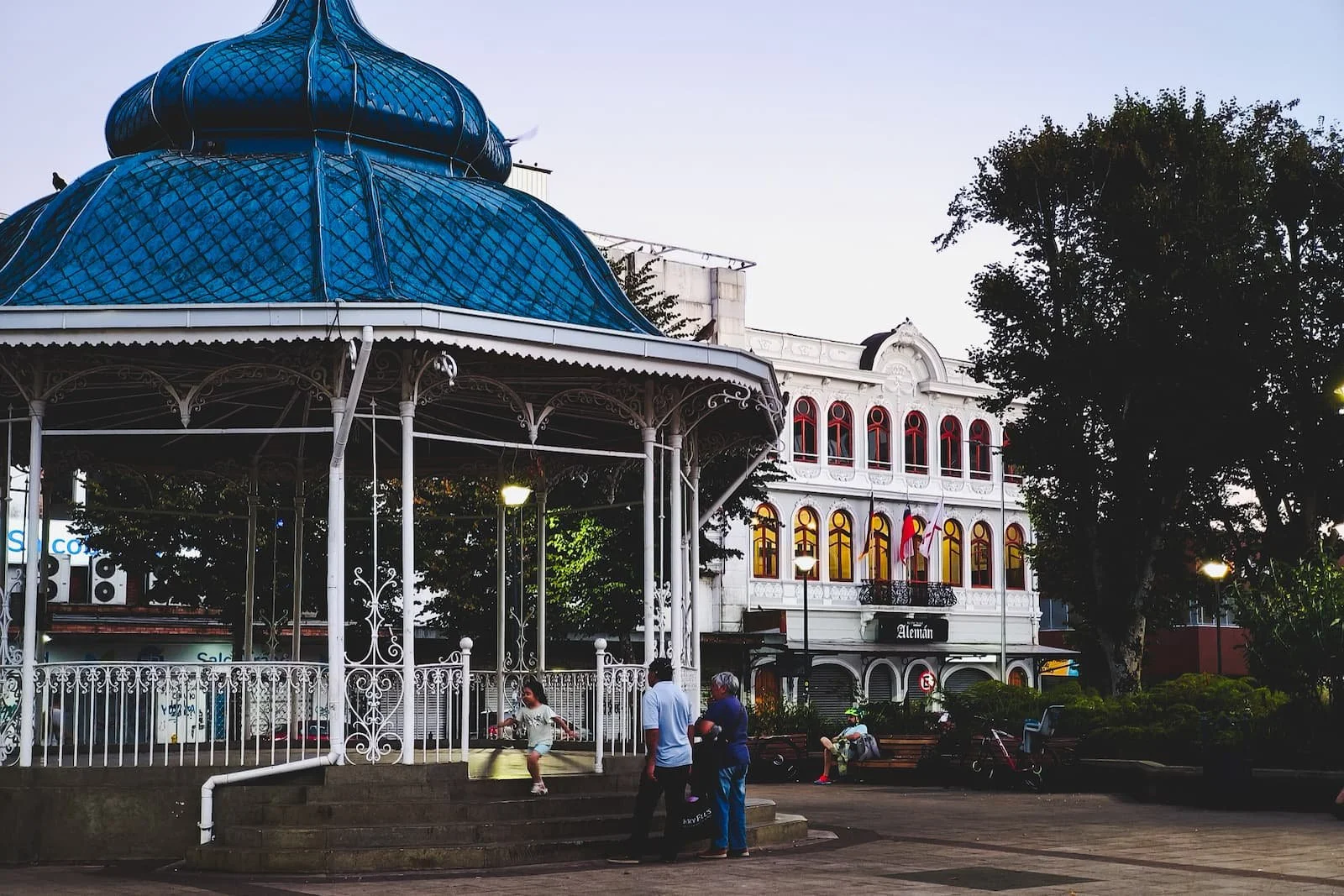
Evening colors give Plaza de la República a dreamy vibe.
Dinner — Mesa Incógnita
Suggested time: 1–2 hours
Mesa Incógnita is a gourmet restaurant in downtown Valdivia focused on local cuisine with a more elevated twist, using locally sourced ingredients. It’s also one of the highest-rated restaurants in the city.
I’d suggest making a reservation since it’s very popular. We walked in about an hour before closing and still had to wait around 20 minutes for a table.
The free bread with their homemade pebre was really good, and for appetizers we ordered sopaipillas, Chilean fried dough made with squash. They were freshly fried, soft and doughy, and came with a side of pebre.
For mains, we ordered an asado de tira a la parrilla, grilled short ribs with greens and potatoes in sauce, and “que no te dé cuco el osobuco” (most of the menu names are cute puns), an osso buco slow-cooked in cast iron over spinach risotto with roasted tomato.
To be honest, we found the mains just ok. They were clearly trying to do something gourmet and local, but the short ribs were a bit tough and the osso buco was really salty.
Overall, we were a little disappointed, but given the rave Google reviews, it may just have been a fluke and still be worth trying.
Hours: Sunday–Tuesday: 12:00 PM–4:30 PM; Wednesday–Saturday: 12:00 PM–11:00 PM
Price range: $$–$$$
Reservations: Check their website for the latest info
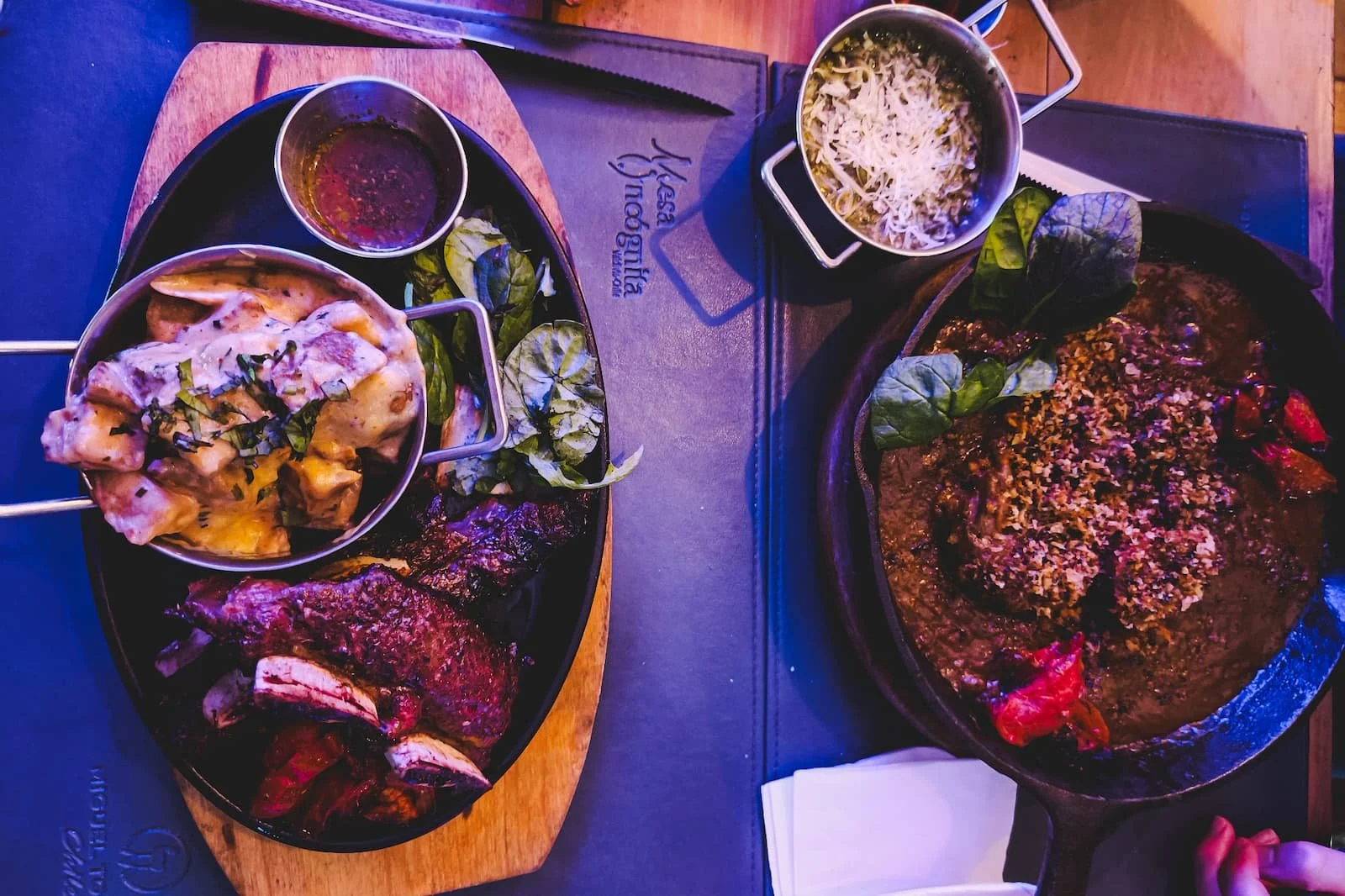
Dinner at Mesa Incógnita, where the menu leans local and a little more elevated.
Day 4: Coastal Forts & the Bay
Niebla is a coastal town near Valdivia known for its 17th-century Spanish fort, panoramic ocean views, local food markets, and ferries to the other coastal towns in the region. It’s a popular and easy day trip from Valdivia.
This day follows my detailed Niebla day trip itinerary — below is a summary, so check that post for the entire plan!
Distance: ~5–8 km / ~3–5 miles walking (some hills), plus ground transit and ferry
Time: 8–9 hours
Pace: Moderate
Suggested timing
09:30 — Transit to Niebla
10:00 — Museo de Sitio Castillo de Niebla
12:00 — Brief beach stop
12:30 — Lunch at a feria costumbrista
14:30 — Ferry to Corral
15:00 — Explore Corral
16:30 — Ferry back to Niebla
17:00 — Transit back to Valdivia
Morning: Transit to Niebla
Transit from Valdivia to Niebla [~30–40 minutes]
Late Morning: Museo de Sitio Castillo de Niebla
Suggested time: 1.5–2 hours total
Visit Museo de Sitio Castillo de Niebla [1–2 hours]
Brief stop at the surrounding plaza, craft stands, and coastal viewpoints [~10 minutes]
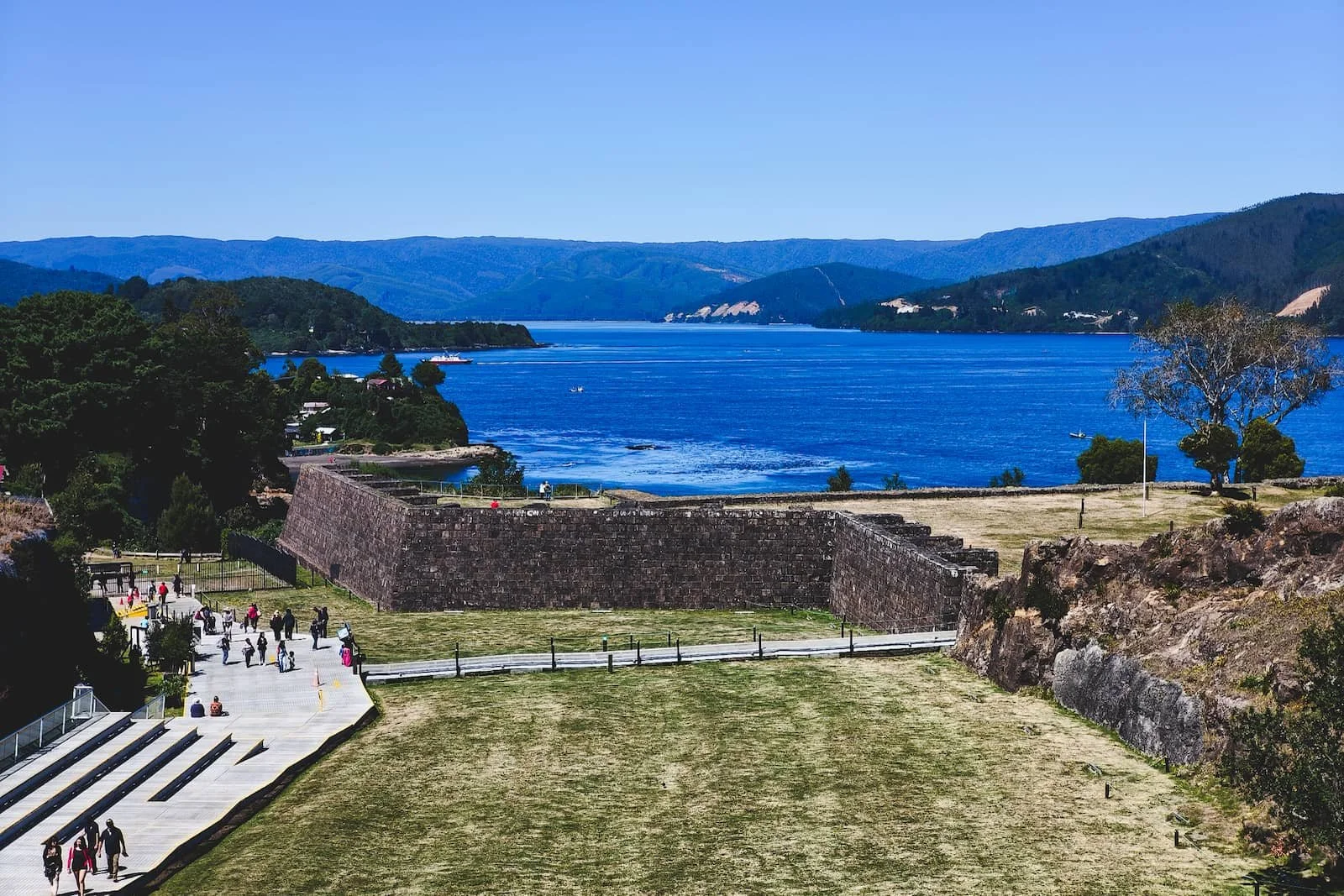
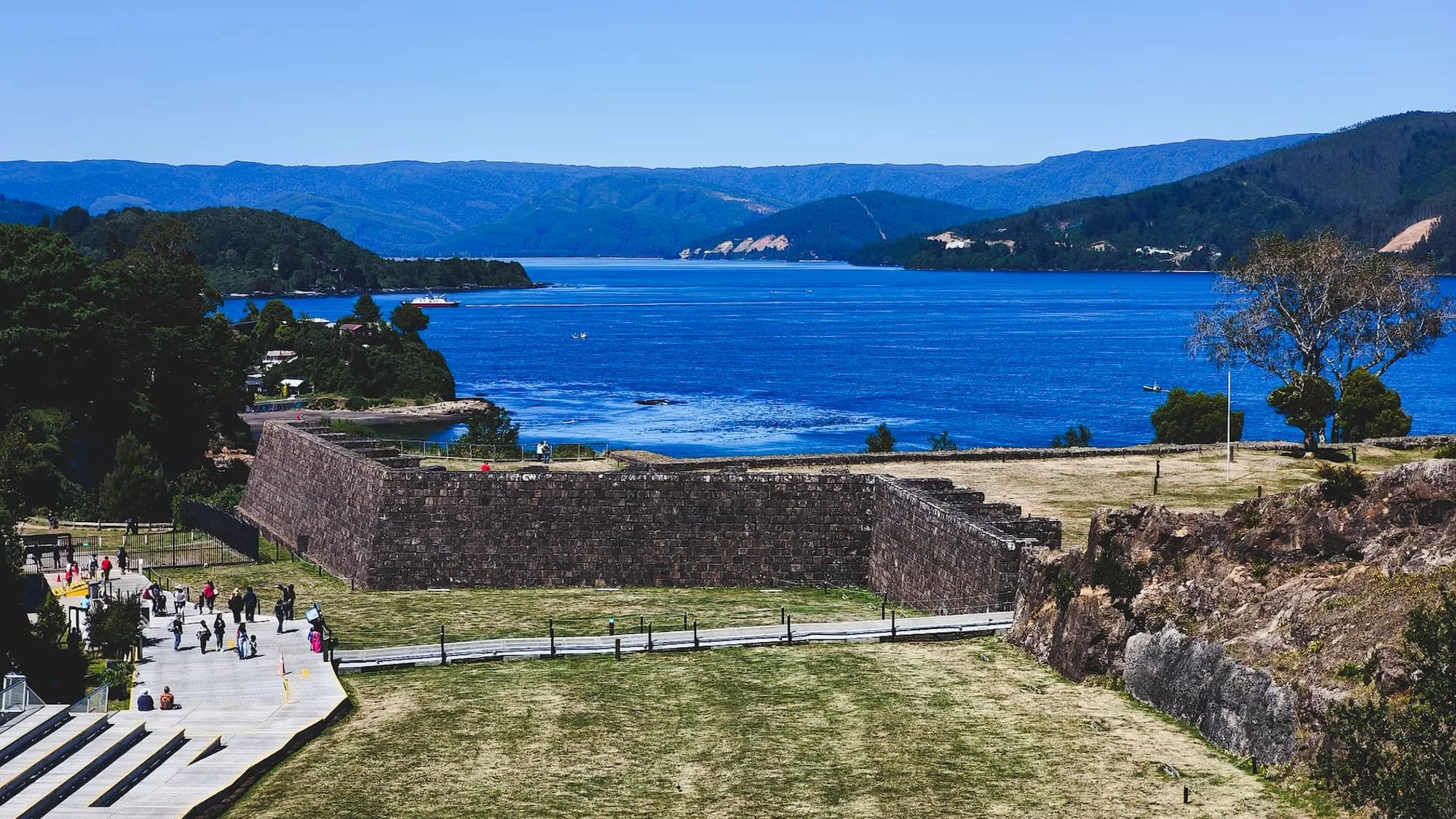
Castillo de Niebla, part of the Spanish fort system built to defend the entrance to Valdivia’s bay.
Midday: Brief Beach Stop & Lunch at a Feria Costumbrista (Traditional Fair)
Suggested time: 1.5–2.5 hours total
Stop briefly at one of Niebla’s nearby beaches [10–20 minutes]
Lunch at a feria costumbrista (traditional food fair) [1–2 hours]
There are a couple of feria options depending on the day and season. If the ferias are closed, there are still plenty of casual restaurants and cafés around Niebla for a similar lunch stop.
→ See the full Niebla day trip guide for which one to choose and how to plan this part of the route
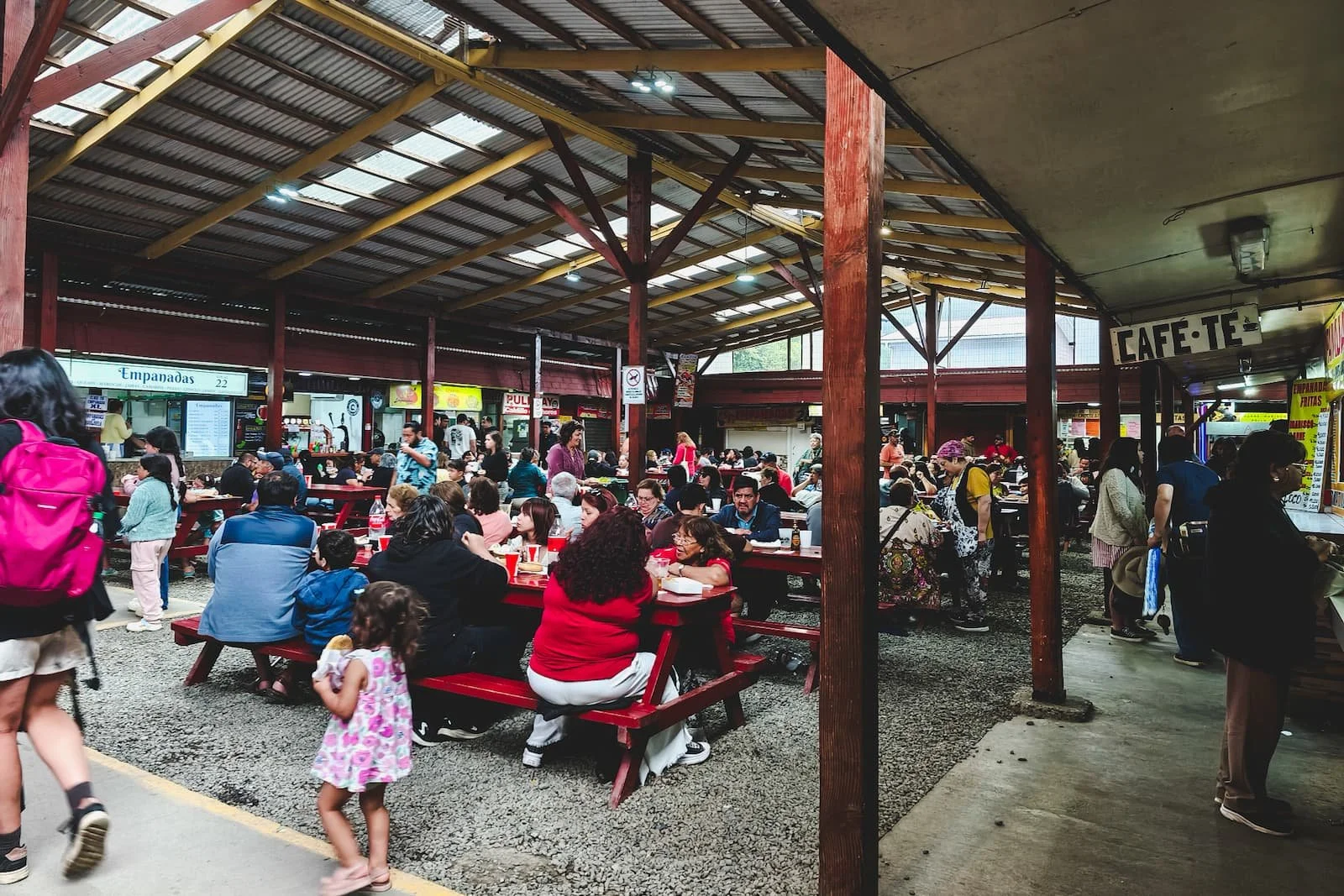
One of the ferias costumbristas in Niebla, with rows of traditional food stalls, crafts, and live performances.
Afternoon: Ferry to Corral & Explore Corral
Suggested time: 3–4 hours total
The ferry runs regularly throughout the day, with more frequent service in the summer.
Walk to Terminal de Pasajeros de Niebla
Ferry to Corral [~30 minutes]
Explore Corral [1.5–2.5 hours]
coastline walks
Corral’s downtown plazas
hillside town streets
local restaurants and cafés
Ferry back to Niebla [~30 minutes]
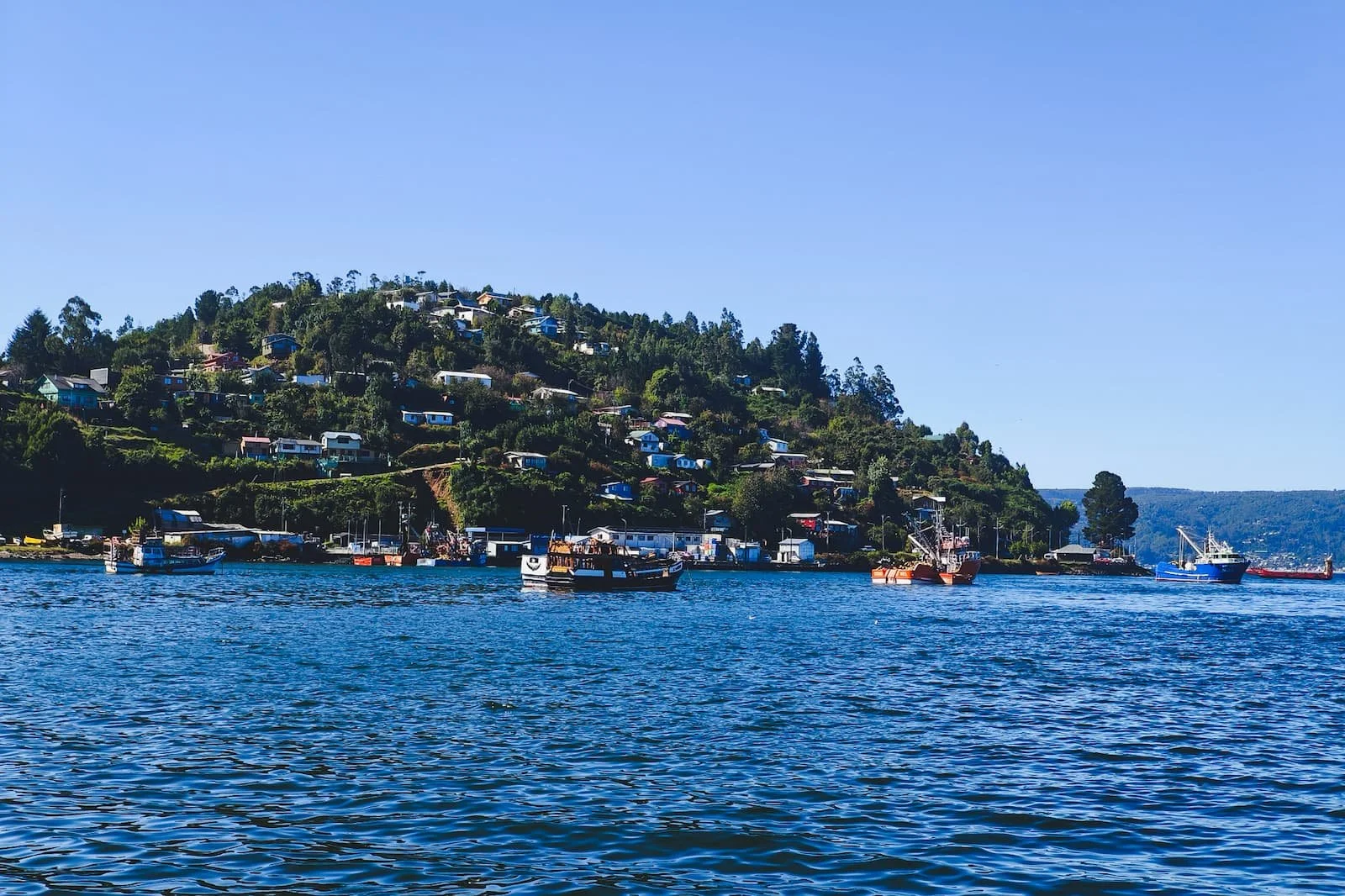
The ferry between Niebla and Corral is part of the experience, with great views across the bay.
Evening: Transit back to Valdivia
Transit from Niebla to Valdivia [~30 minutes]
For the exact walking route, full map, detailed stop notes, and logistics, see the full guide: Niebla Day Trip Itinerary from Valdivia.
Modifying This Itinerary
Valdivia is a great city to explore at a relaxed pace, so this itinerary is pretty flexible. Here are a few ways to adjust it depending on your energy level, the weather, or just what kind of trip you want.
If You Want a Longer Trip
I really think Valdivia is the kind of city where simply wandering the waterfront or sitting in a café is part of the experience. So if you want to do that more, you can easily stretch this itinerary by:
spending more time along the Costanera
adding more river walks or park time on Isla Teja
lingering longer at cafés to read, get some work done, or just chill
trying another brewery, like Cuello Negro
adding an extra day for Niebla and the coast so you can also visit Isla Mancera
We actually used an extra day to go back to Niebla and got to experience the coast in both fog and sun, which gave it totally different vibes.
If You’re Short on Time
If you only have 2–3 days or just want to hustle a bit more, you could combine parts of Day 1 and Day 3 — for example, exploring the Costanera and downtown Valdivia in the morning, then going to Cervecería Kunstmann in the afternoon.
If possible, I’d still try to make it out to the Niebla area, since the coastal forts and ferias costumbristas are some of the most unique historical and cultural experiences in the region.
Rainy Day Alternatives
Rain is common in Valdivia, especially outside of summer, but the city is very used to wet weather and honestly it’s part of the charm.
Some good rainy-day options include:
visiting more museums like the Museo Naval Submarino O’Brien
lingering longer in cafés or panaderías
exploring indoor markets
shifting the Cervecería Kunstmann visit to a rainy day, since much of the complex is indoors
Or, just embrace the weather and go for a rainy walk or run along the waterfront or coast :)
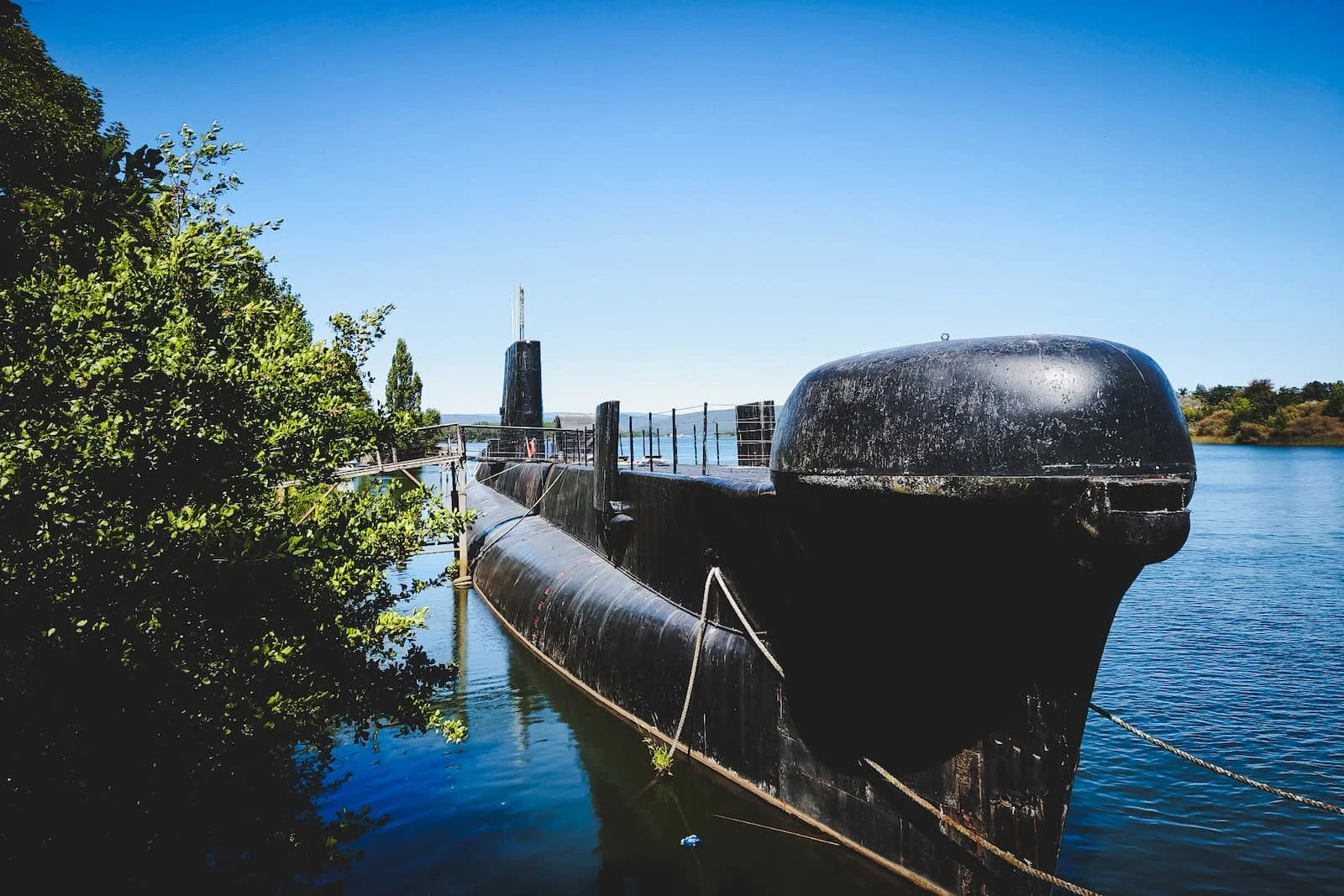
Museo Naval Submarino O’Brien is right on the waterfront Costanera, near Feria Fluvial.
Practical Tips for Visiting Valdivia
Here’s a quick summary of the practical things that will help this itinerary run smoothly. I detail all the transport, bus, and neighborhood logistics in my dedicated Valdivia logistics guide, and I have a full setup on packing for Valdivia’s changeable weather (in just a carry on) in my one-bag packing guide for Valdivia.
Best Time to Visit
Summer (December–March) has the driest and sunniest weather, but also more tourists — though when we visited in February, it still felt pleasant and not crowded.
Shoulder seasons (September–November and April–May) can be a really nice balance, with spring blooms or fall foliage and fewer visitors. Just be prepared for more unpredictable rain.
Winter (May–September) is cold and very wet, with June usually being the rainiest month. That said, rain is part of life in Valdivia, so if you don’t mind the weather, it can be a cozy time to enjoy the atmosphere, cafés, and craft beer.
How to Get There
From Santiago:
Take a direct long-distance bus from one of Santiago’s terminals to the Valdivia bus terminal downtown.
Or fly from Santiago Airport to Valdivia Pichoy Airport, then take pre-booked airport transport into the city.
From other southern Chile cities, like Pucón or Puerto Varas:
Take a bus into the Valdivia bus terminal.
Getting Around
Valdivia’s local bus system is affordable, convenient, and reaches most places you’d need to go. For full details on how to use it, see my Valdivia Logistics Guide.
Uber and other rideshare apps are also widely available.
Safety Tips
Valdivia generally feels quite safe, but there are a few practical things worth keeping in mind.
Watch your footing around Mercado Fluvial. The ground can get wet and slippery from seafood stalls and river spray.
Be careful around sea lions. They lounge anywhere in the waterfront and are used to people, but they’re still wild animals (large and strong ones too), so give them space and don’t try to get too close.
Hold on when boarding buses. Local buses can accelerate and brake pretty abruptly, so it’s best to grab a rail when getting on.
River edges and docks can be slippery, especially after rain.
Otherwise, basic city awareness is usually enough — keep an eye on your belongings in crowded areas and stick to well-lit streets at night.
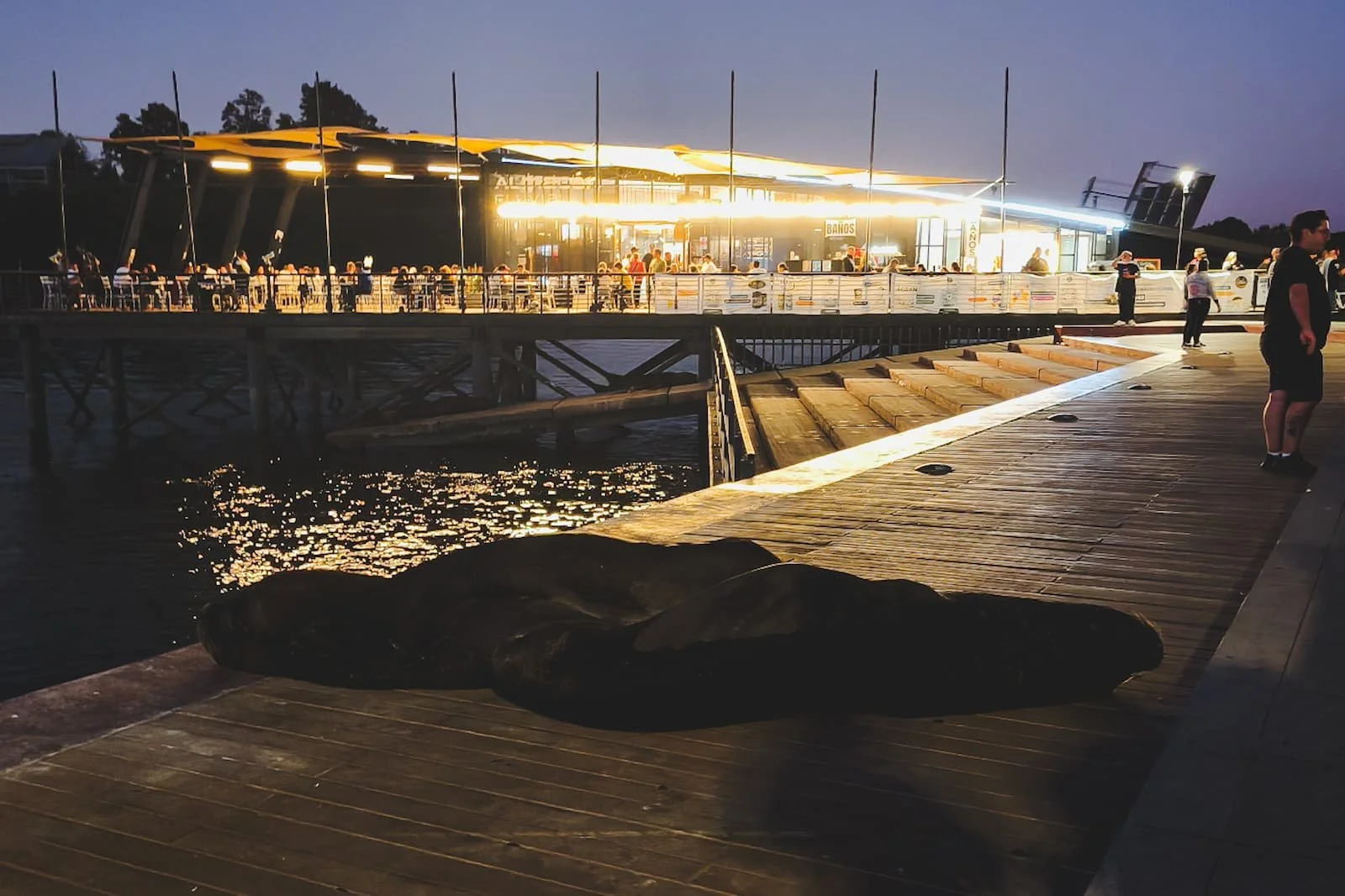
Sea lions sleeping in the middle of the waterfront boardwalk. Do not disturb – this is their city!
What to Pack
A few things will make your trip much more comfortable:
a rain and wind jacket — a must for Valdivia’s unpredictable weather and for the wind chill on the coast, especially on the ferry
comfortable walking shoes — Valdivia is best explored on foot
a reusable water bottle — the tap water is drinkable and tastes amazing
cash in Chilean pesos — necessary for buses and some local food stalls
For more detail, see my Valdivia One-Bag Packing Guide.
Where to Stay
Northwest Valdivia: The downtown core, with plazas, markets, and the busiest stretch of the waterfront. Best if you want maximum convenience, though accommodation here tends to be pricier.
Northeast Valdivia: Quieter and more residential, with a calm waterfront path, though a bit farther from the main downtown sights.
South Valdivia: More residential and generally more affordable, but farther from the main action.
Isla Teja: Green, calm, and high quality of life, with easy access to parks and the university area, though not as central as staying downtown.
Final Thoughts
Four days in Valdivia is enough time to experience both the city itself and the surrounding coast without rushing. You’ll explore the riverfront and downtown, spend time in the parks and gardens of Isla Teja, enjoy the city’s food and beer culture, and take a day trip to the historic forts and fishing towns along the Pacific.
What I like most about Valdivia is that it rewards a slower pace. In my opinion, the experience isn’t just checking off sights, it’s taking the time to linger over its food, culture, and nature. If you have less time, you could combine parts of the itinerary and get a taste of the city. But if you can give Valdivia a full four days, you’ll get to see the different sides of the city in a rhythm that matches its vibe.
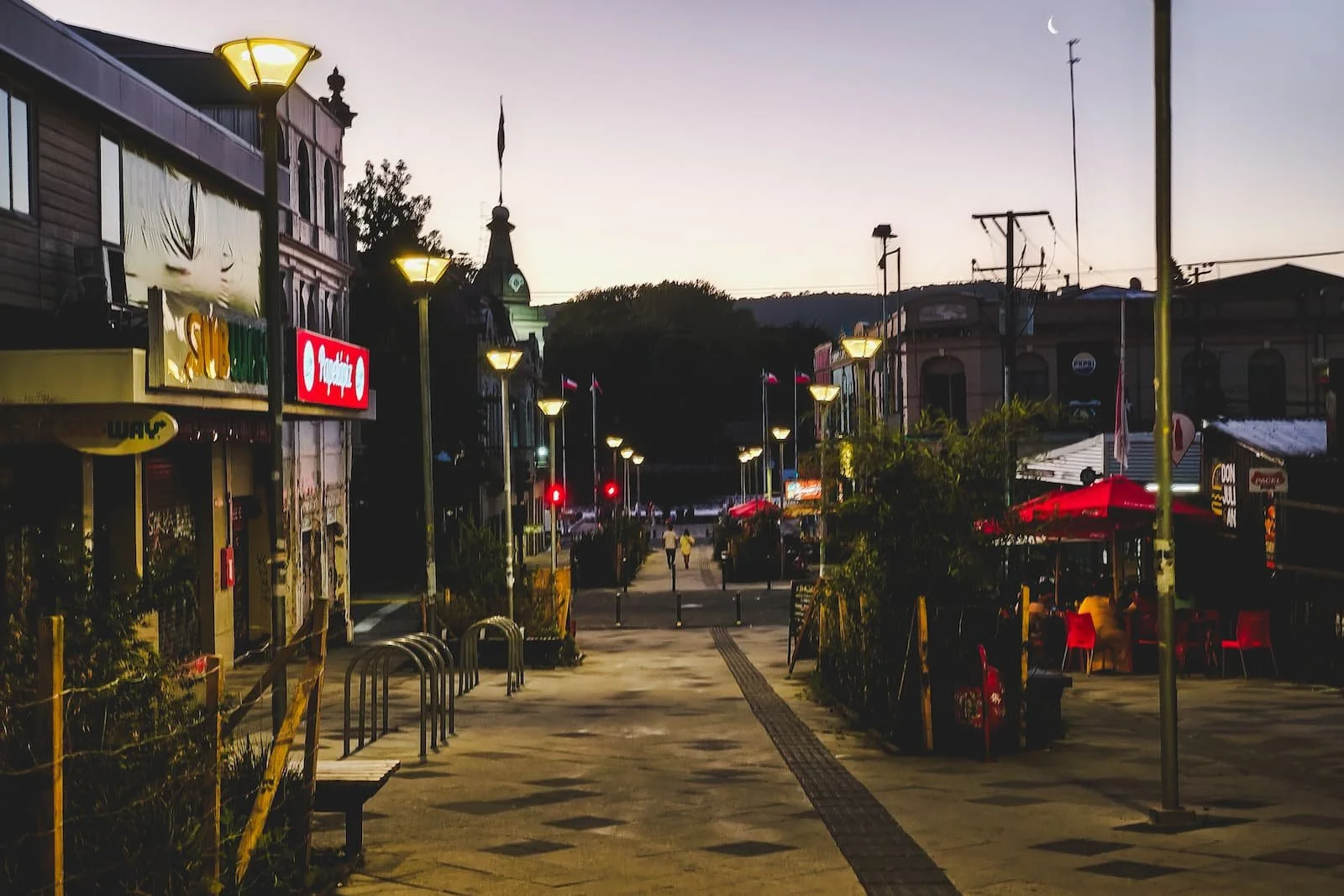
Paseo Libertad in the evening, when the street lamps come on and downtown Valdivia slows down a bit.
Next Up: More Chile Travel Guides
Here are more guides for your trip to Valdivia:
Niebla Day Trip from Valdivia → Detailed itinerary for an easy day trip to the coast
Valdivia Travel Logistics → How to get there, where to stay, and how to get around (no car rental)
Packing for Valdivia in One Bag → Complete guide for packing for Valdivia (weather, essentials, and more) in just a carry on
If you are passing through Santiago, here are some guides that might help:
Santiago in 1 Day → Ultimate itinerary + map if you only have 1 day
Santiago Neighborhoods, Decoded → Best bases for a walkable trip
One-Bag Packing List for Santiago → Layering system + local add-ons
SCL Airport to Santiago → Time, cost, and safety
Ride the Santiago Metro Like a Local → bip! card, best lines, and tips
Santiago Start Here → Running list of itineraries and guides
Thanks for reading — I hope you enjoy Valdivia and southern Chile!
Have a question about this?
Shoot me a message or leave a comment below — I read everything, and I’m always happy to help if I can!