How I Slow Travel Santiago: Routines and Real Monthly Costs
I’ve spent a lot of time slow traveling and digital nomading in Santiago, first because my partner is a native Santiaguino, and later because I came to genuinely love the city for my own reasons. Of all the major Latin American cities where I’ve spent time, including Buenos Aires, Lima, and Bogotá, Santiago is the one I find most comfortable day to day.
What makes Santiago stand out to me is how easy it is to build a life here. Its neighborhoods are compact, walkable, and well connected by public transportation, so daily life feels simple and flexible even as a foreigner. The city also offers strong infrastructure, including modern housing and fast internet (Chile’s fixed broadband speeds are actually ranked amongst the top in the world), which is a real plus for remote workers. While Santiago is not the cheapest city in Latin America, it still feels relatively affordable for a major city. I’ll share my real monthly budget in Santiago later in this post, but overall it strikes a balance between comfort, convenience, and cost of living that I haven’t found elsewhere in the region.
Beyond daily logistics, Santiago also gives you access to both the mountains and the coast. They say in Chile that you can hike in the mountains in the morning and watch the sunset by the beach later that same day. After spending so much time here, I’ve found that this mix of city routine and easy access to nature is a big part of what makes Santiago such a rewarding place to stay longer.
Planning your trip? If you’re only in Santiago for a few days, start with my 1-day itinerary or 3-day itinerary. If you’re staying longer, also check out guides to Santiago neighborhoods and the Santiago Metro to help you more easily plan and navigate this city.
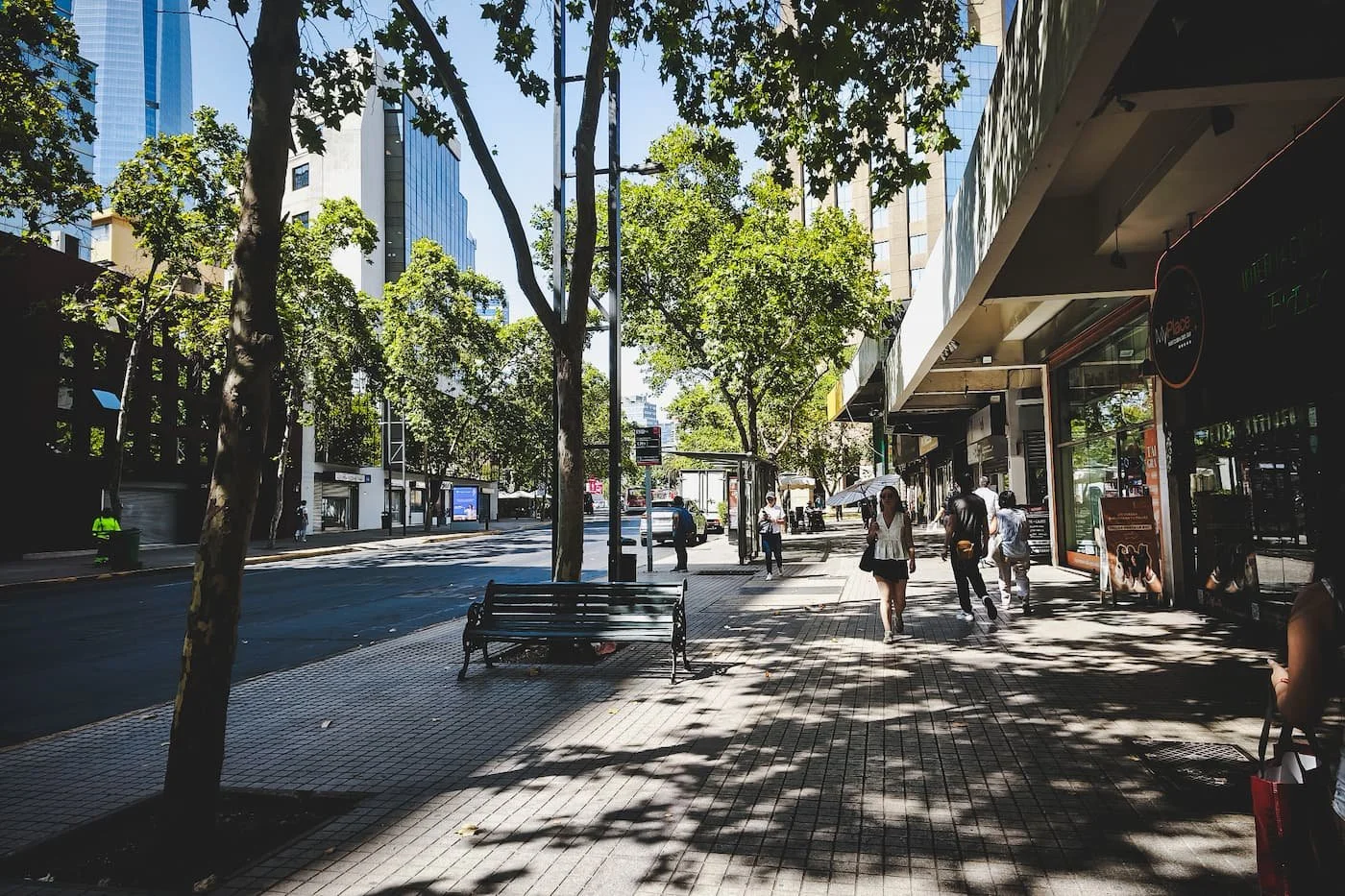
A street-level view of the commercial area on Avenida Providencia, a good example of Santiago’s walkability, connectivity, and everyday livability.
Table of Contents
My Weekly Rhythm in Santiago
Over time, I’ve settled into a rhythm in Santiago that feels easy and sustainable, even when I’m changing lodging every month or so to try different neighborhoods (see my guide to the best neighborhoods to stay in Santiago, compiled from these experiences). When I was working remotely in the corporate world, my weekdays were fairly predictable. Now that I freelance and run my blog, my routine is a bit more flexible. Some days I work from home all day, and other days I run errands or grocery shop in the afternoon when markets are quieter.
Honestly, overall, my day-to-day life in Santiago does not feel very different from my daily life back in the U.S. To me, that says a lot about how easy living in Santiago for a few months can be. Here’s what a typical weekday looks like for me.
Morning
Most mornings start with coffee. I usually brew beans from one of the excellent local roasteries in the city, which I’ll share later in this post.
If I have time, I’ll also go for a run or a workout before starting work, partly to take advantage of Santiago’s green spaces. For my favorite routes around the city, see my Santiago Running Routes Guide.
After that, I settle in for a few hours of remote work.
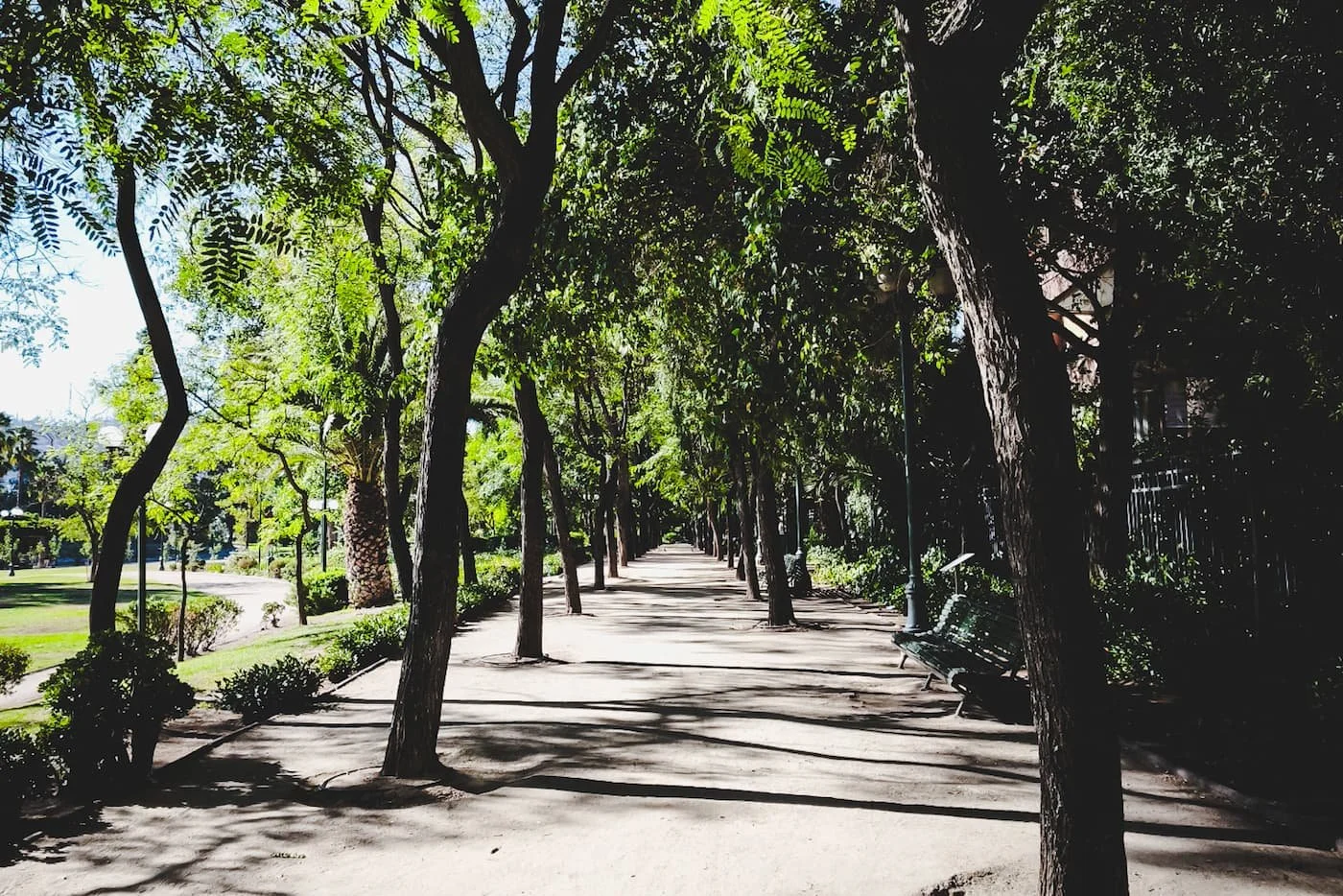
Parque Inés de Suárez in Providencia, where I ran a few loops recently.
Lunch
Some days I cook at home using groceries from the neighborhood markets I’ll mention later. Other days I go to a nearby local eatery.
Santiago has many small restaurants that are only open during lunchtime and offer a menú del día, which usually includes an appetizer, main dish, and sometimes a drink or dessert at a very reasonable price. They’re great for a quick weekday meal and often feature classic Chilean dishes.
Afternoon
Afternoons are usually a mix of more work and errands. As I mentioned earlier, Santiago’s compact and walkable neighborhoods make it easy to fit everyday tasks into the day. For example, a grocery store has never been more than a 10 minute walk away for me, so I’ll often pick up groceries while taking a short walk around the neighborhood.
Evenings
My evenings are generally pretty calm since I’m not a big nightlife person. Santiago does have bars and clubs, but overall the city tends to wind down earlier than some other Latin American capitals.
If I didn’t exercise in the morning, I’ll often go for a run or workout in the evening while it’s still light outside. After that, I either cook dinner at home or occasionally go out with my partner to one of our favorite restaurants around the city.
Many evenings end with a walk around the neighborhood followed by a quiet night in with a movie and snacks (I’ve developed a particular fondness for Chilean snacks like Ramitas and Bon-o-Bon).
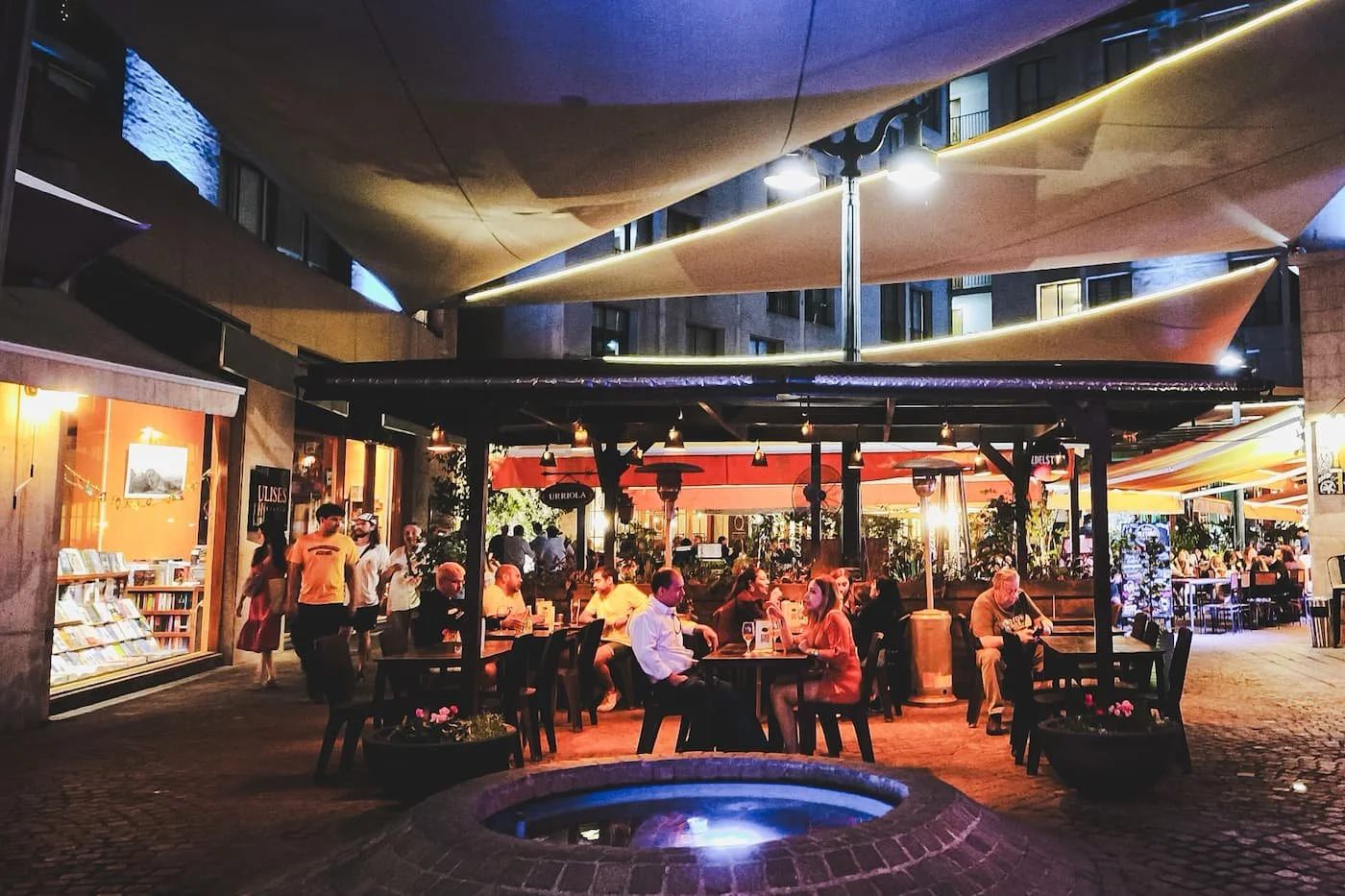
Santiago isn’t a big late-night party city, but the evenings are still lively like the outdoor dining and wine bar scene in Barrio Lastarria.
Weekends
Weekends are when we explore more of the city. If you’re visiting Santiago for a shorter trip, I outline the highlights in my Santiago in 1 Day itinerary and a more relaxed version in my Santiago in 3 Days itinerary.
Some of our favorite activities include walking or hiking around Cerro San Cristóbal, visiting one of the many museums (many of them free) in the city, wandering through Barrio Italia, or shopping at Costanera Center or Parque Arauco. We’re also going to a ballet at Teatro Municipal soon and will report back on how it is.
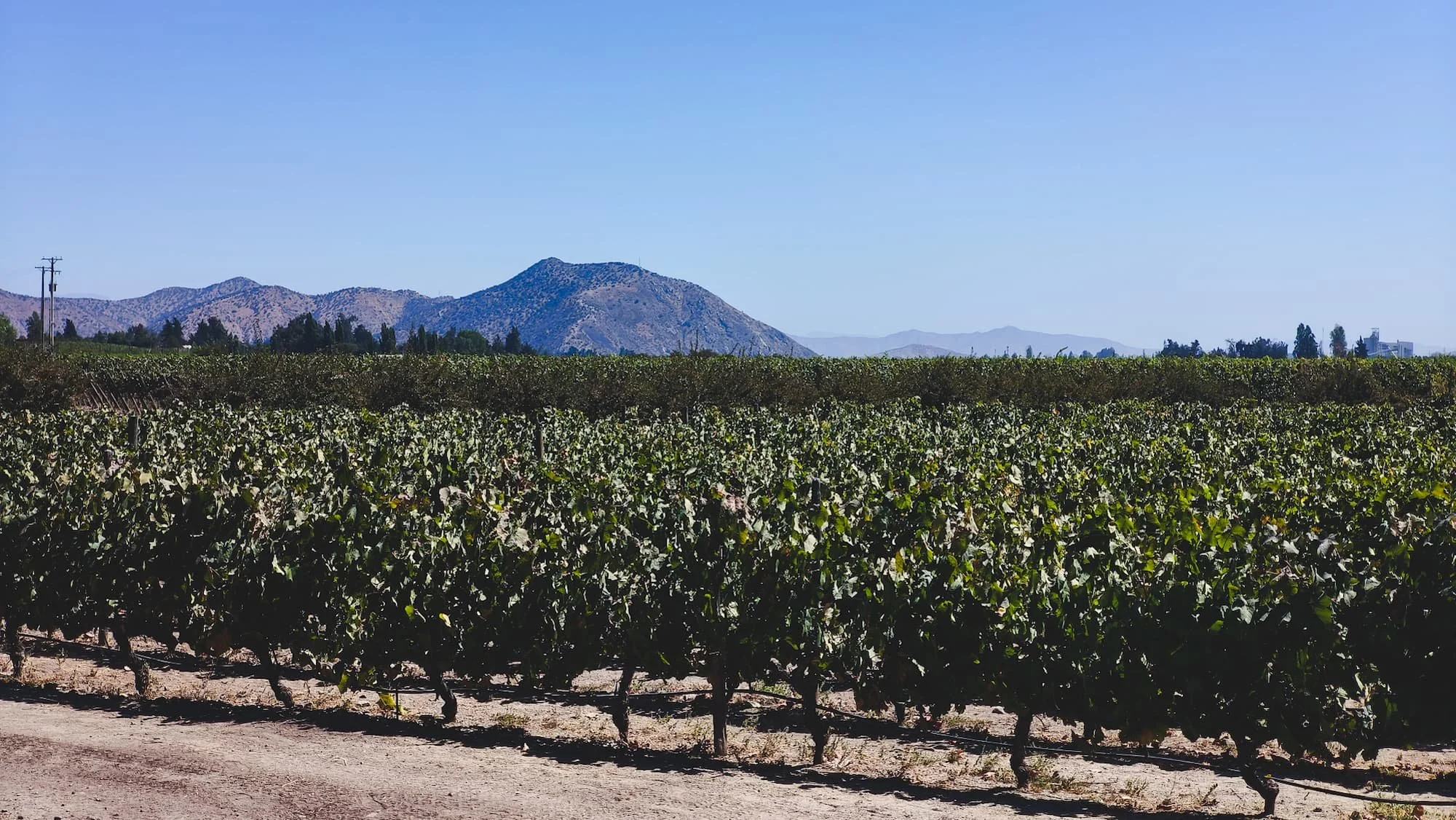
We also occasionally take advantage of Santiago’s location by doing day trips to the mountains, the coast, or nearby cities, many of which are accessible by public transportation — including this Concha y Toro winery day trip from Santiago (no car). Santiago is also a great base for planning broader Chile trips, such as our recent adventure taking a long-distance bus to the South to spend a few days in Valdivia.
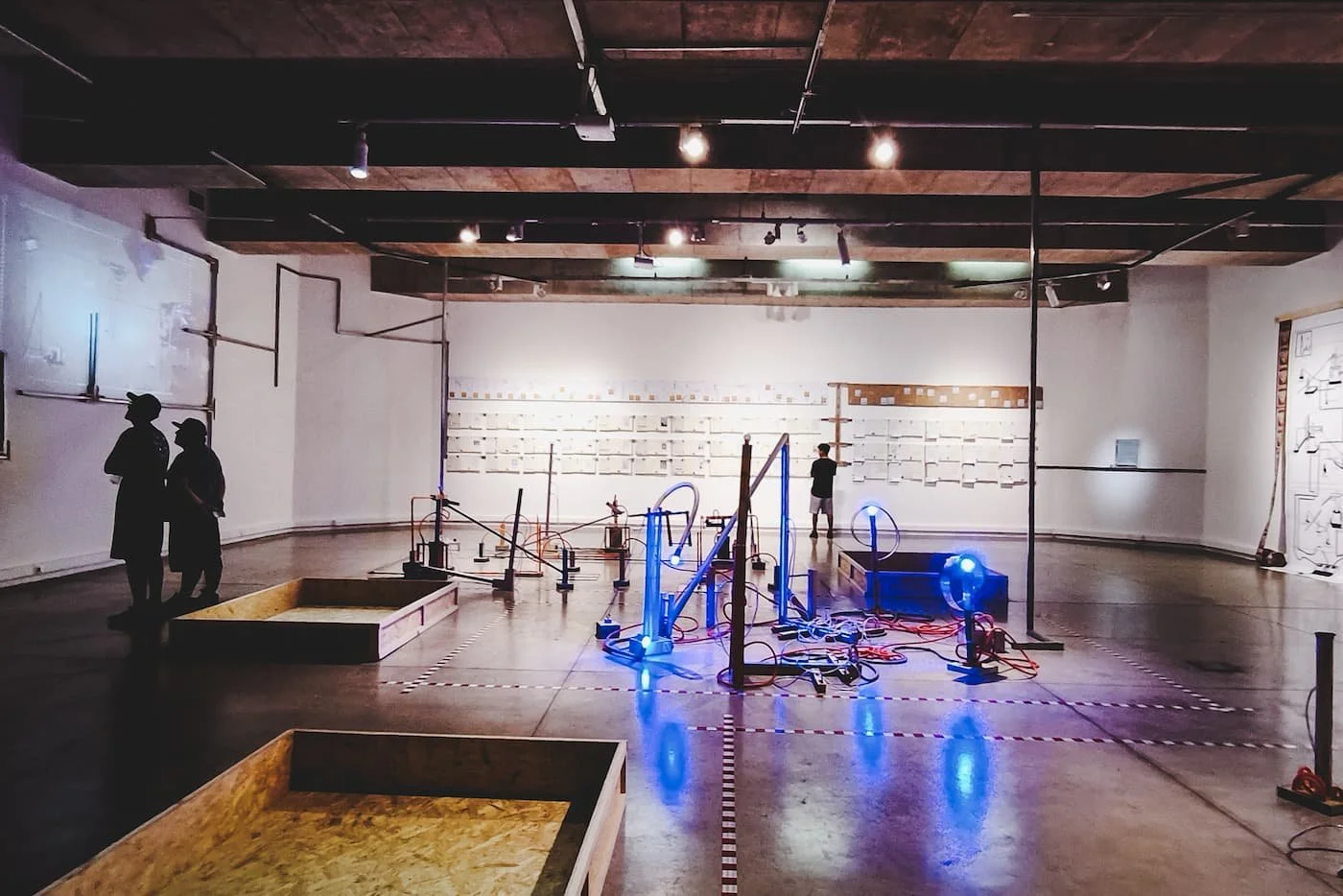
An exhibit at Museo de Arte Contemporáneo (Museum of Contemporary Art), located in Bellas Artes and one of the many national museums in the city with free admission.
Neighborhoods I Spend the Most Time In
Over the past couple of years, I’ve stayed in 20+ Airbnbs across Santiago neighborhoods, which has given me the chance to experience several different ones. But now that I know the city more, I’ve found myself gravitating toward a few areas in particular.
If you’re deciding where to stay, I break down in detail the pros and cons of each area in my guide to the best neighborhoods to stay in Santiago. But these are where I personally spend the most time.
Providencia
I’m often drawn to Providencia and the areas around it because, in my opinion, this part of Santiago offers one of the best balances between comfort and convenience. It’s walkable, well connected by metro, and close to grocery stores, shops, cafés, and restaurants, while generally feeling calmer and more relaxed than the downtown core. That combination makes it a balanced part of the city to settle into for a longer stay.
Lastarria / Bellas Artes
I also stay in Lastarria and Bellas Artes fairly often, partly because it can be easier to find housing there at a lower price point. This area is compact, walkable, and has a more historic and cultural feel. It’s home to several museums, a huge number of cafés and restaurants, and easy access to the historic center. It’s also very well connected by multiple metro lines. The downside is that it tends to be more crowded and, for me, feels a bit less calm and safe than areas closer to Providencia.
Barrio Italia
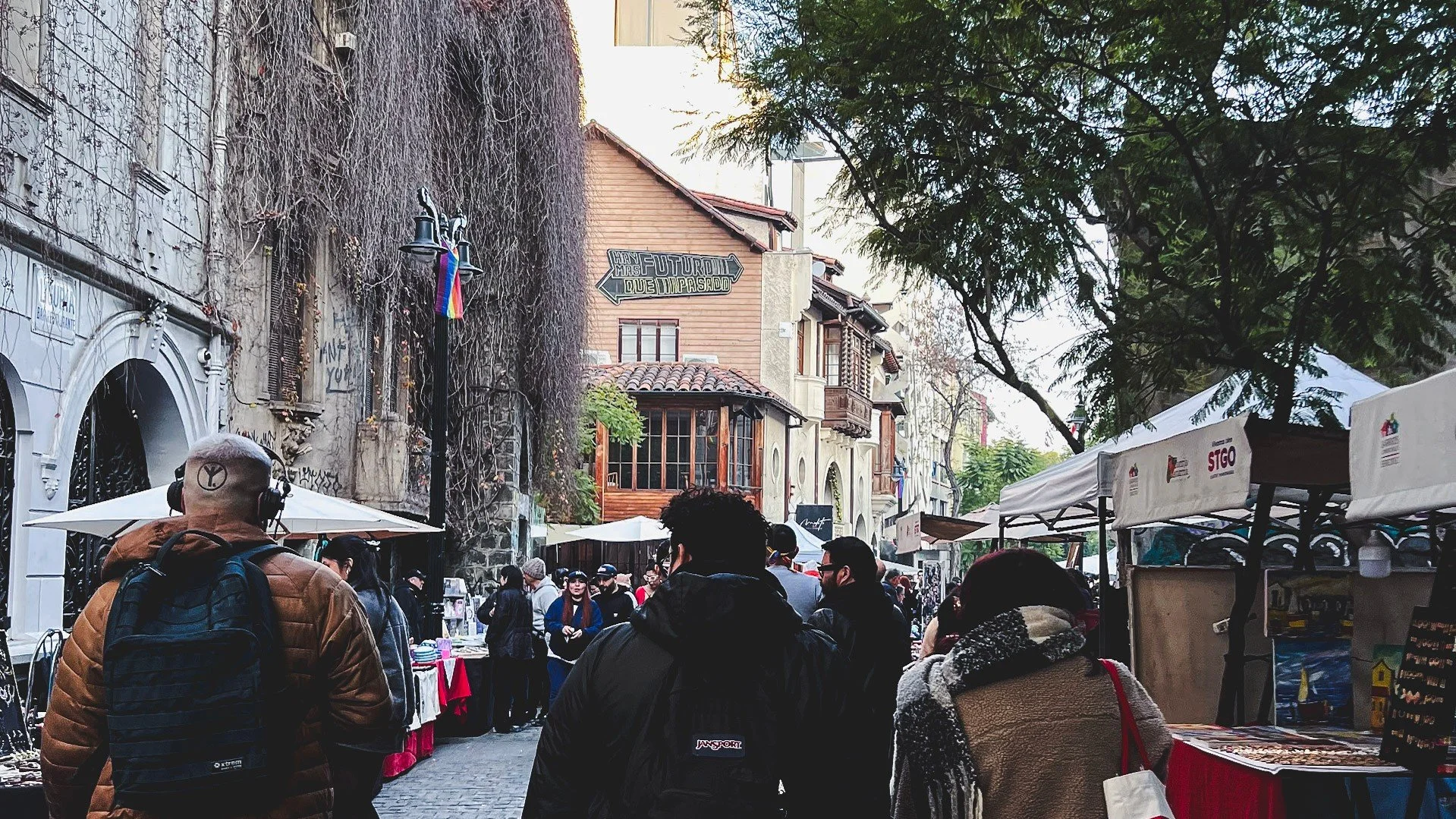
Barrio Italia has a relaxed, creative atmosphere, with design shops, craft markets, restaurants, and lots of outdoor dining. It’s one of my favorite neighborhoods for slow wandering and long afternoons. The main downside is that it’s a little less convenient by metro, so getting to other parts of Santiago is not quite as seamless. Housing also tends to be slightly pricier. I’ve stayed in this neighborhood a few times and loved it, but I usually choose other areas first for a better balance of price and convenience.
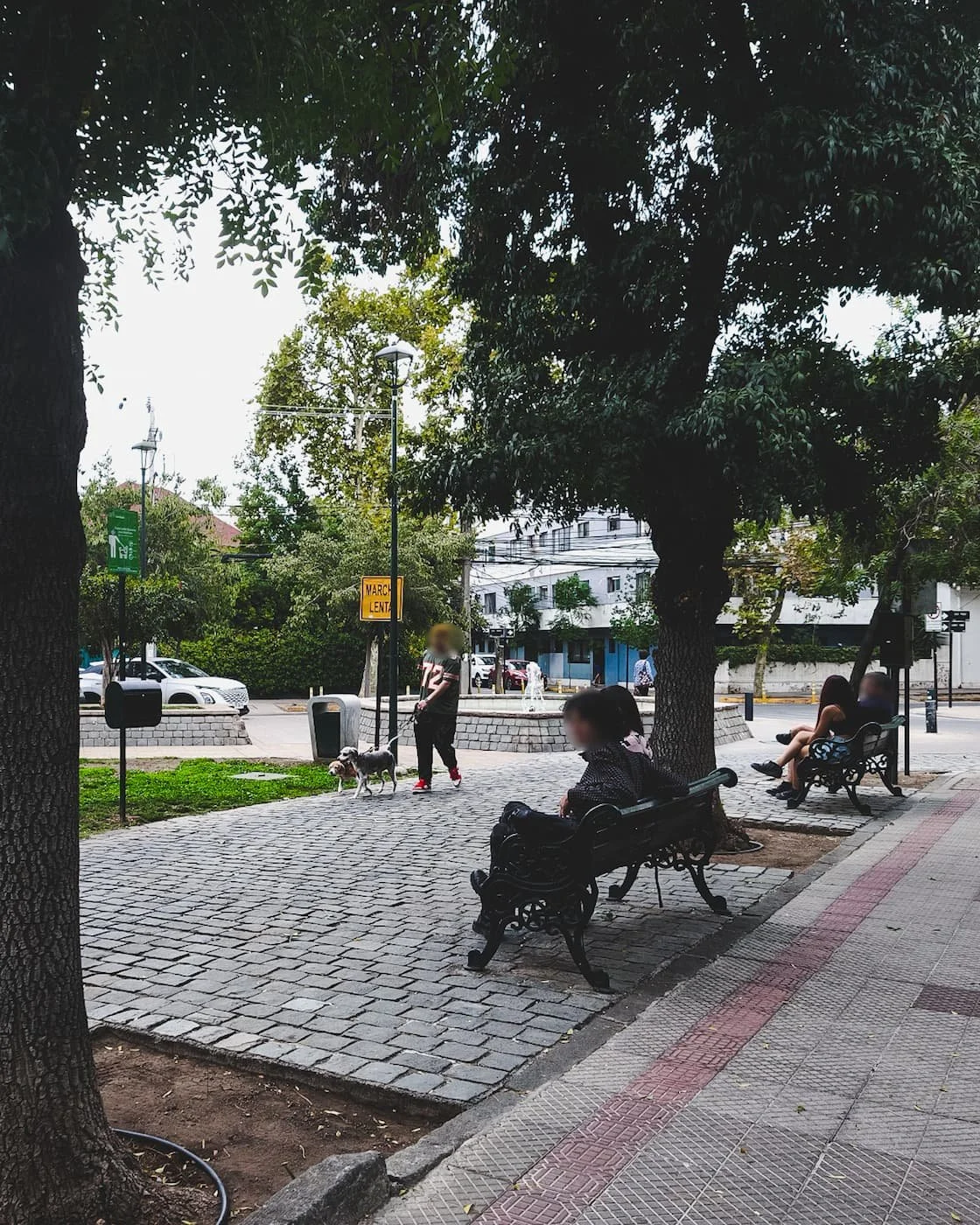
Plaza Julio Prado, one of my favorite local small parks in Providencia to sit and chill a while.
Everyday Spots I Keep Coming Back To
I usually like to try new places when I travel, but after spending so much time in Santiago, there are a handful of spots I keep coming back to. These are the places that have become part of my regular routine.
Markets / Grocery
Lider Express (multiple locations)
This is the grocery chain I use the most for everyday shopping. It’s part of Walmart, and I’ve found the quality to be consistent and the prices generally lower than other supermarket chains. I also appreciate that many locations have self-checkout.
La Vega or local ferias (farmers’ markets)
This is where I go for fresh fruits and vegetables. It’s significantly cheaper than supermarkets and often better quality. You can easily get a week’s worth of produce for two people for under 20,000 CLP. It’s usually cash only and can feel a bit hectic, but it’s a very local experience! Check this Santiago municipal page on ferias near your lodging.
Asian grocery stores (Patronato / Providencia)
When I get home-sick food-wise, these are my go-to for cooking Asian food. They carry staples like soy sauce, sesame oil, and rice vinegar, and the selection and pricing are much better than what you’ll find in regular Chilean supermarkets.
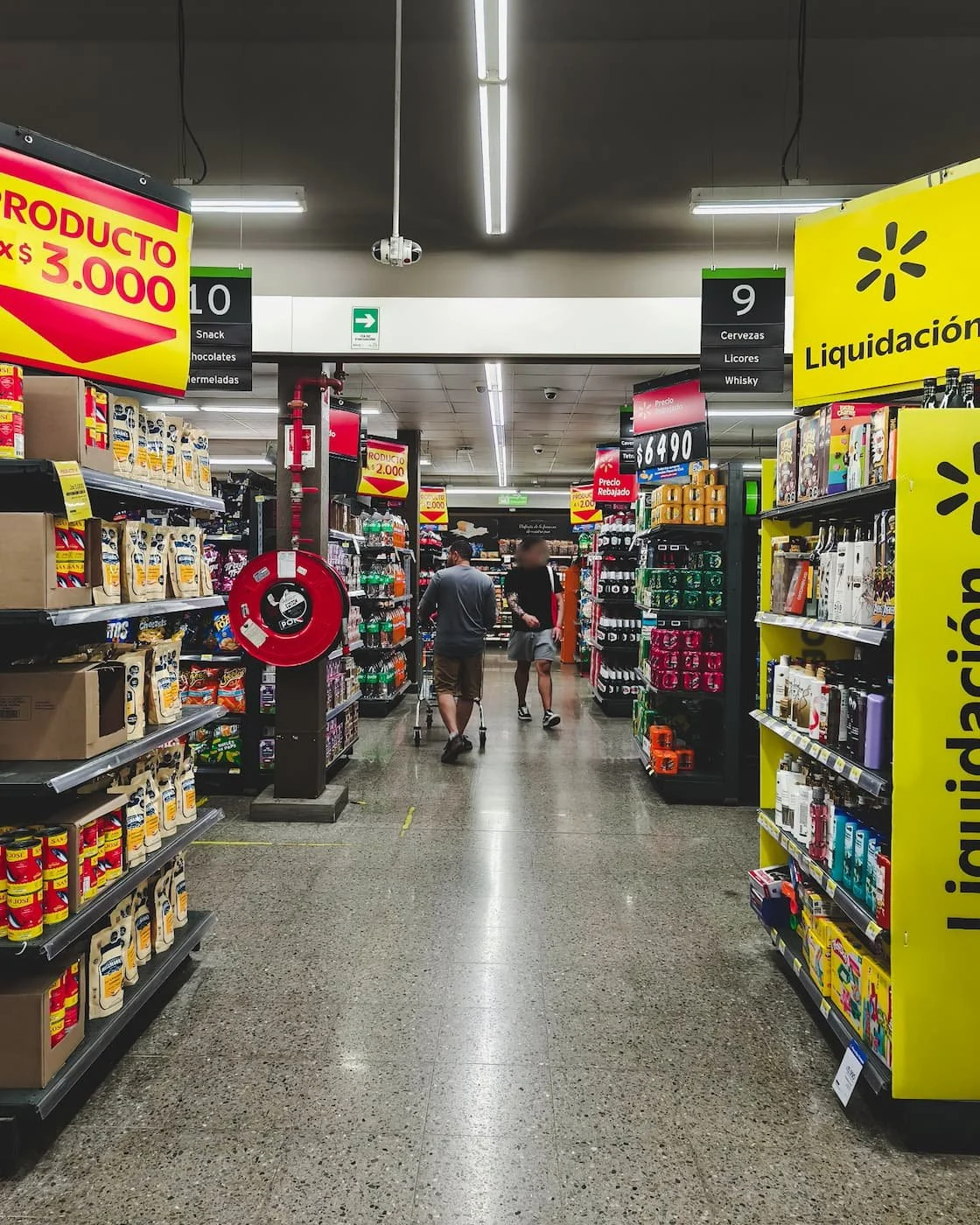
Inside a Lider Express, my most frequented grocery chain. This one is a medium sized one – there are locations that are more sized like convenience stores, and some that are large and spacious.
Casual Restaurants / Snacks
Note: In Santiago, lunch is typically around 1–2 PM and dinner around 7–8 PM.
El Hoyo (Providencia / Barrio Italia)
A classic Chilean spot with a lively atmosphere. One of my favorite places for pastel de choclo.
Restaurante Moray (Barrio Italia)
My go-to for Peruvian classics like grilled octopus and ceviche.
Restaurante Rincón de Jano (Barrio Italia)
A good local option for their menú del día and chill outdoor seating.
Montana Gelato (Lastarria)
Excellent gelato and, in my opinion, some of the best ice cream in the city.
Patagual (Barrio Italia)
One of my favorite places to get mote con huesillo, a traditional Chilean drink/dessert amazing especially in hot weather.
Empanadería San Luis (Ñuñoa)
A great stop for classic Chilean empanadas like empanada de pino or de queso.
Hocha (Providencia)
The only Taiwanese spot I know of in Santiago (started by Taiwanese immigrants), and a solid option when my Taiwanese soul craves those flavors.
Dominó (multiple locations)
A classic local chain for completos, Chilean loaded hot dogs.
Little Caesars (multiple locations)
Very affordable family-sized pepperoni pizza – my Santiaguino partner says this is a true local favorite, and the Friday night lines seem to back that up xD
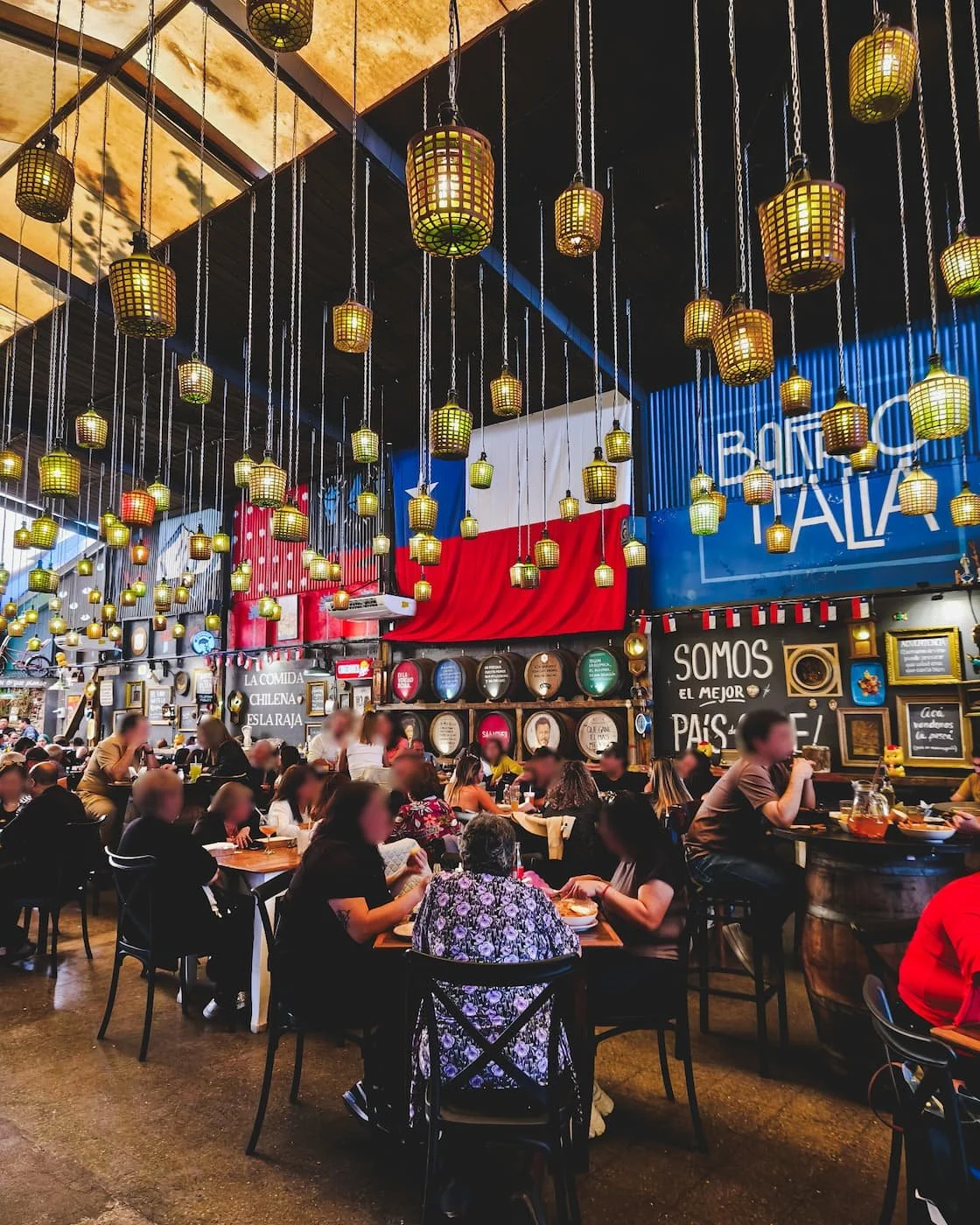
El Hoyo, a classic Chilean restaurant in Barrio Italia with an eclectic, festive atmosphere and my favorite pastel de choclo in the city.
Cafés / Coffee Roasteries
Café D’Lara (Centro)
More of a roastery than a café. They roast fresh beans weekly (sourced from various places like Brazil, Colombia) and are more moderately priced.
Singular Coffee Roasters (multiple locations)
A hip, higher-end café with multiple locations around the city. Also sources beans from various places.
Pharmacies
Tip: Check availability online before going and show the pharmacist the exact item you need.
Dr. Simi
Usually the cheapest option, especially with Monday discounts. Many products are not out on open shelves, so you often need to ask the staff for them directly. It’s a good option for basic medications and pharmacy items, but it doesn’t tend to carry as many general drugstore products.
Cruz Verde
A more full-service drugstore option. Like Dr. Simi, some pharmacy items may need to be requested at the counter, but Cruz Verde also carries more everyday personal care products like soap, shampoo, skincare, and contact solution.
Shopping
Costanera Center (Providencia)
My default for most things including clothes, makeup, skincare.
Parque Arauco (Las Condes)
I come here occasionally for a change of scenery, plus if I want to get some in-a-pinch kitchen tools from Ikea for longer stays.
Vivo Imperio (Centro)
Convenient option if I’m staying downtown.
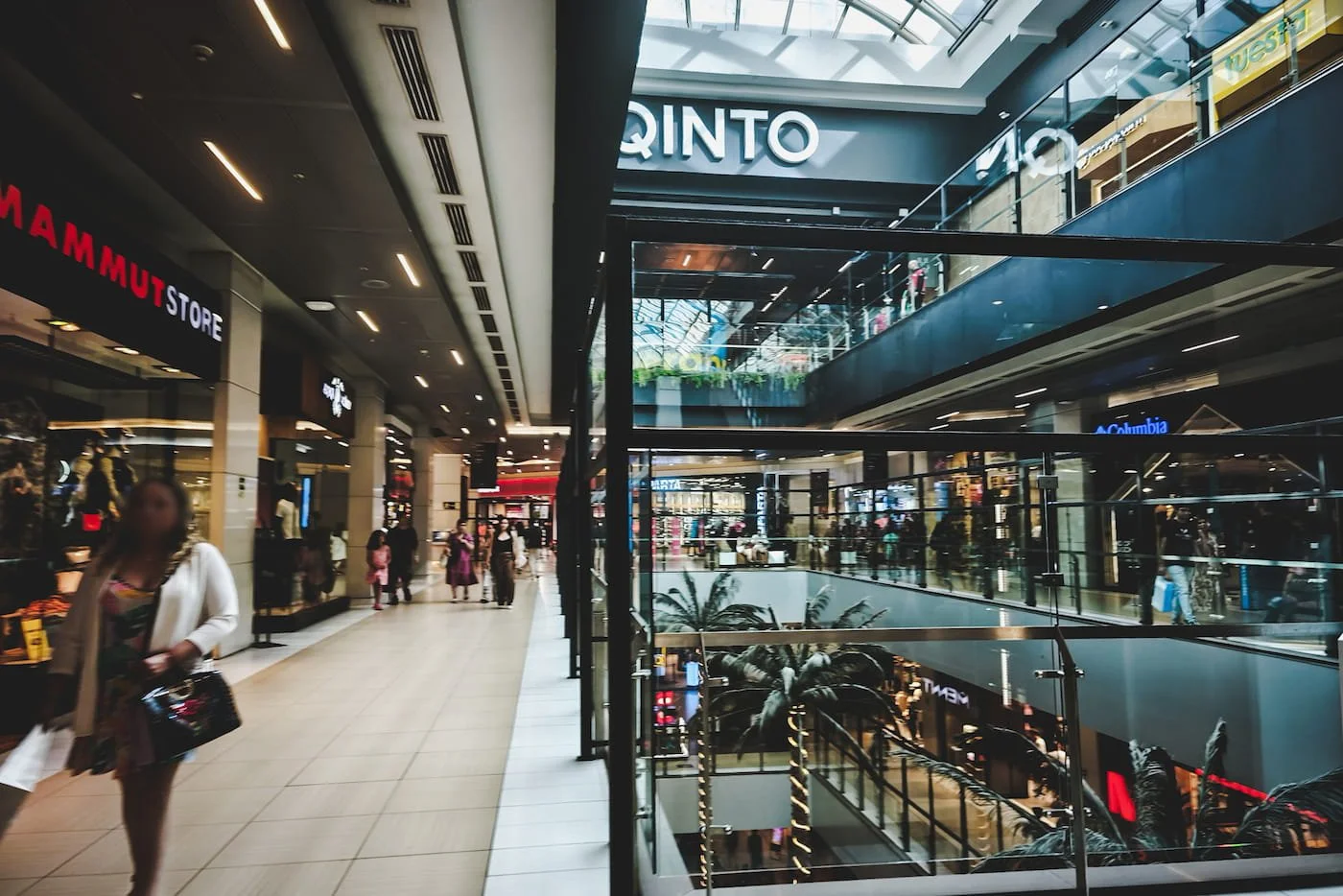
The always bustling Costanera Center, the largest shopping center in South America, is my go-to for most things.
Workout Spots
I tend to prefer running outdoors and doing bodyweight workouts rather than going to a gym (see my 4 go-to workouts for one-bag travel). These are some of the spots for running in neighborhoods I tend to stay in. For a full list, see my Santiago running routes guide.
Parque Forestal (Bellas Artes / Lastarria)
Parque Bustamante (Barrio Italia / Providencia edge)
Mapocho river paths (Providencia)
My Real Monthly Cost Breakdown
These are my approximate monthly costs in Santiago. I split some expenses with my partner (like rent and groceries), so the numbers below reflect my share rather than our combined household spending.
| Category | Approximate Monthly Cost |
|---|---|
| Airbnb (1BR, split) | $450 |
| Groceries (split) | $100 |
| Eating out | $150 |
| Transport (metro, bus, very occasional Uber) | $20 |
| Coffee / snacks | $50 |
| Activities / entertainment | $30 |
| Personal / misc. spending | $150 |
| Phone / data | $60 |
| Total | ~$1,000–1,100 |
This reflects my share of a 1BR Airbnb split with my partner. We usually book apartments in the $800–900/month range, often prioritizing price over a perfect location or nicer amenities. If you’re traveling solo or want a more central or polished apartment, your rent will likely be higher. For example, in a more desirable part of Providencia, a 1BR Airbnb can easily cost closer to $1,200–1,400/month. Keep in mind that this is the pricing for short-term rentals – if you plan to stay longer and sign a lease, the rent will be lower, but that also comes with its own headaches.
This total also does not include health or travel insurance, since that cost is personal and not specific to Santiago. In my case, that adds about $190/month.
A few quick notes on the numbers above:
Housing: My housing costs are lower in part because I’m flexible about apartment features and exact location. Traveling with a flexible one-bag setup that I can live out of indefinitely makes it much easier for me to stay in simpler places when the price is right. For example, I’m ok with not having in-unit laundry because I already have a portable system for doing laundry while traveling.
This is exactly what I use my 1-bag packing system for — deciding what I actually need for a trip like this. → Download it here
Groceries: My costs stay fairly low because I shop pretty simply and often buy produce at local farmers’ markets.
Transport: I mostly walk or use public transportation, which keeps this category low even with the occasional Uber. I also do not commute daily. Given current Santiago fares, this number is plausible for a light transit user, but you’ll spend more if you ride transit every day.
Phone / data: I’m using $60 here because that is how much I pay for 30 days of international data with my cell phone plan, and I think it’s realistic for many foreign travelers relying on international data plans. However, if you could get a local Chilean mobile plan, the cost is usually much cheaper.
Why my total is on the lower end: Splitting rent makes the biggest difference. I’m also comfortable staying in simpler apartments and less-than-perfect locations to save money.
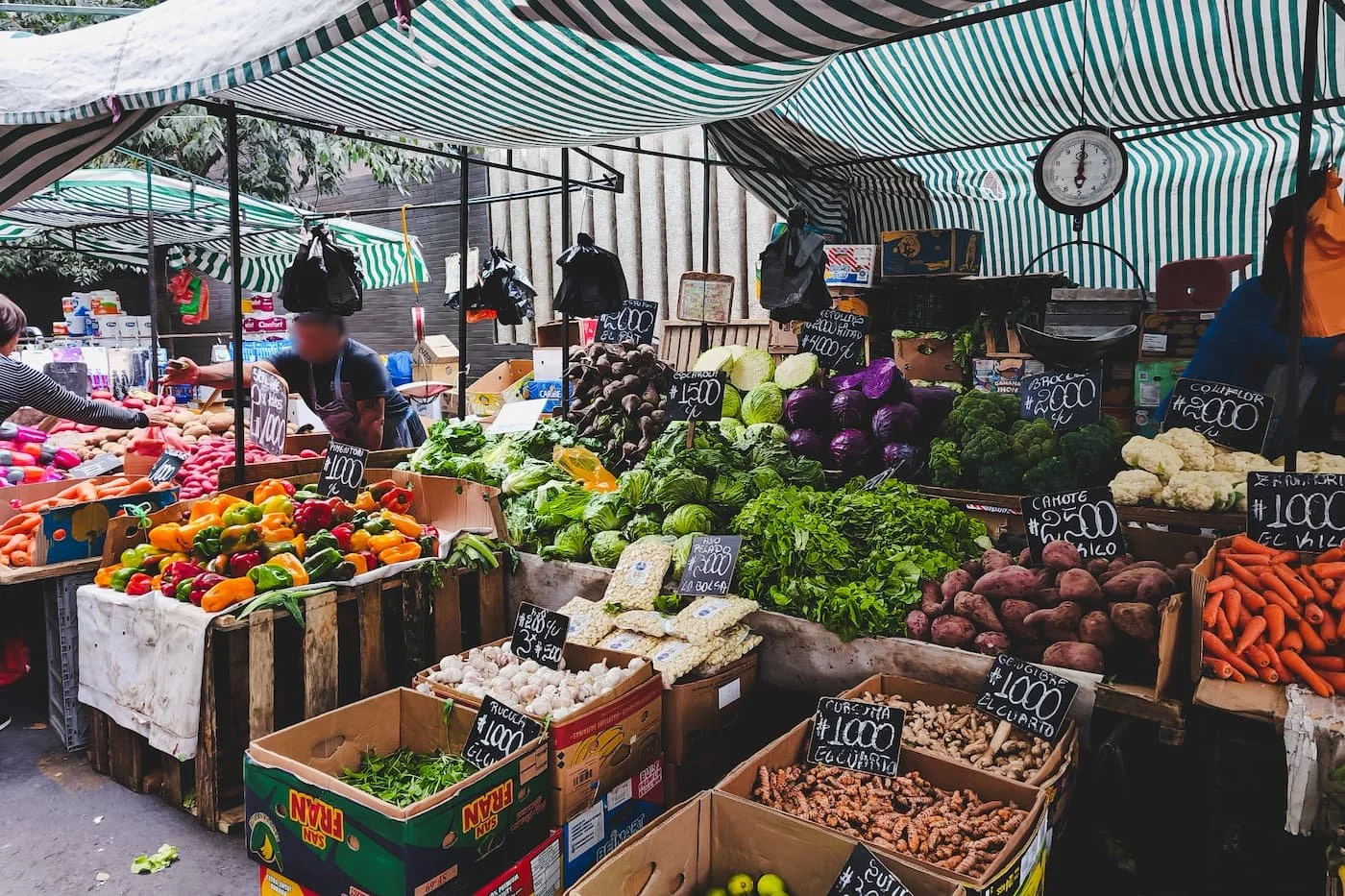
One way my partner and I save money is to buy produce at local ferias (farmers’ markets) for often better fruits and vegetables at a much cheaper price. Plus, ferias are definitely a local experience.
For a solo traveler, I think a more realistic comfortable monthly budget in Santiago is:
~$1,500–2,000+/month
A large part of that comes down to housing. On the lower end, that would mean a more budget-conscious setup, like a less central apartment and cooking more at home. On the higher end, a more central or higher-end apartment and more frequent dining out can push costs closer to $2,000 or more.
Overall, I’d describe Santiago as mid-range rather than cheap. It’s not the lowest-cost city in Latin America, but depending on your housing choices, it can still be a very manageable place to stay for a month or longer.
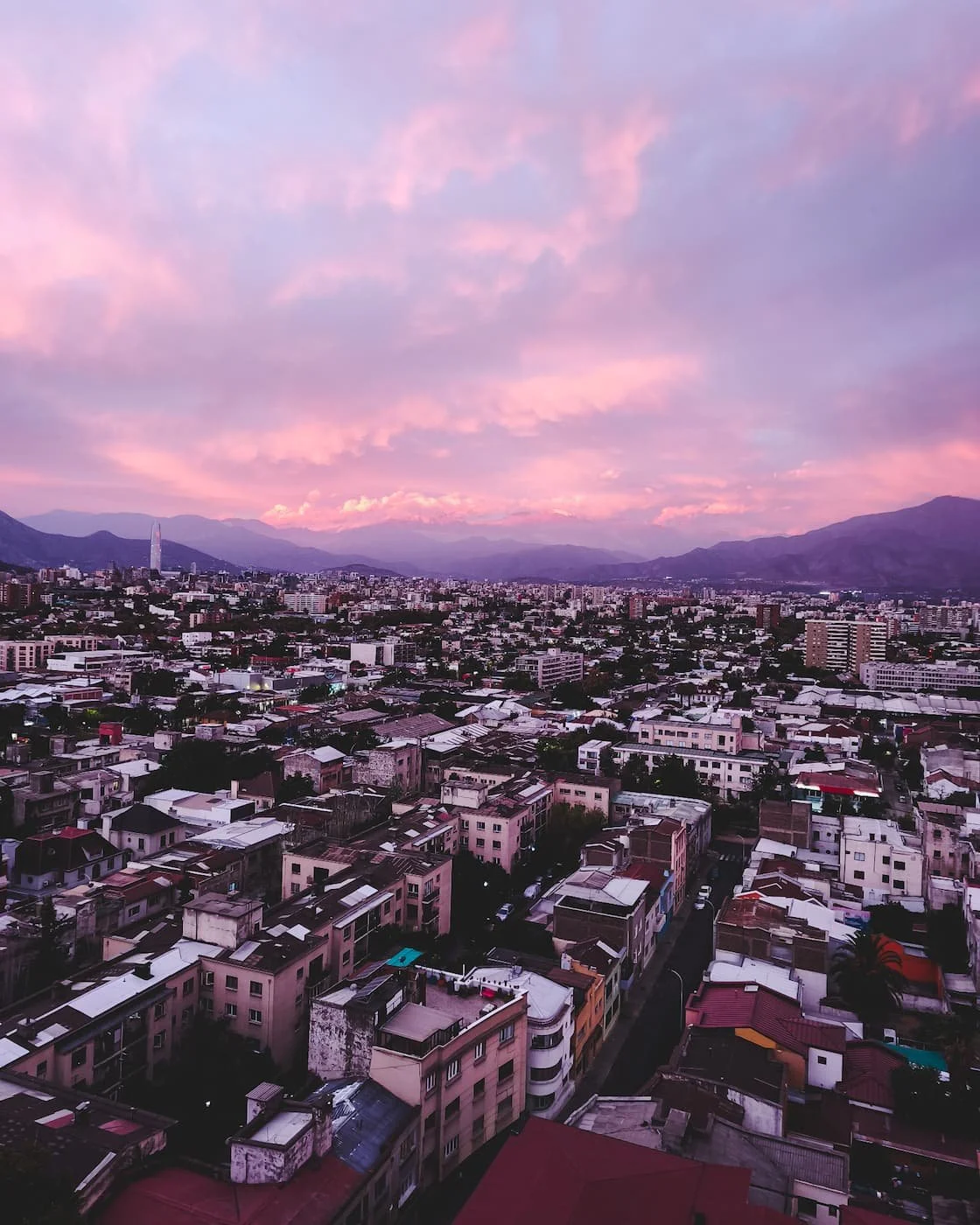
View from my Airbnb at south end of Av. Vikuña Mackenna, at the border of Providencia. Not the most privileged location in terms of metro access or “nice” surroundings nor does it have in-unit washer, but it has this absolutely amazing panoramic view, is relatively affordable, and is 5 minutes away from a great Friday feria (farmer’s market).
Things I’ve Come to Appreciate About Living in Santiago
To be honest, I did not know much about Santiago when I first came two years ago. I more or less booked a month-long stay and winged it. What I came to appreciate quickly was how easy the city felt to live in. Since it was also my first time in South America, I really did not know what to expect, but Santiago immediately felt walkable, convenient, and easy to navigate, so I settled in much faster than I expected.
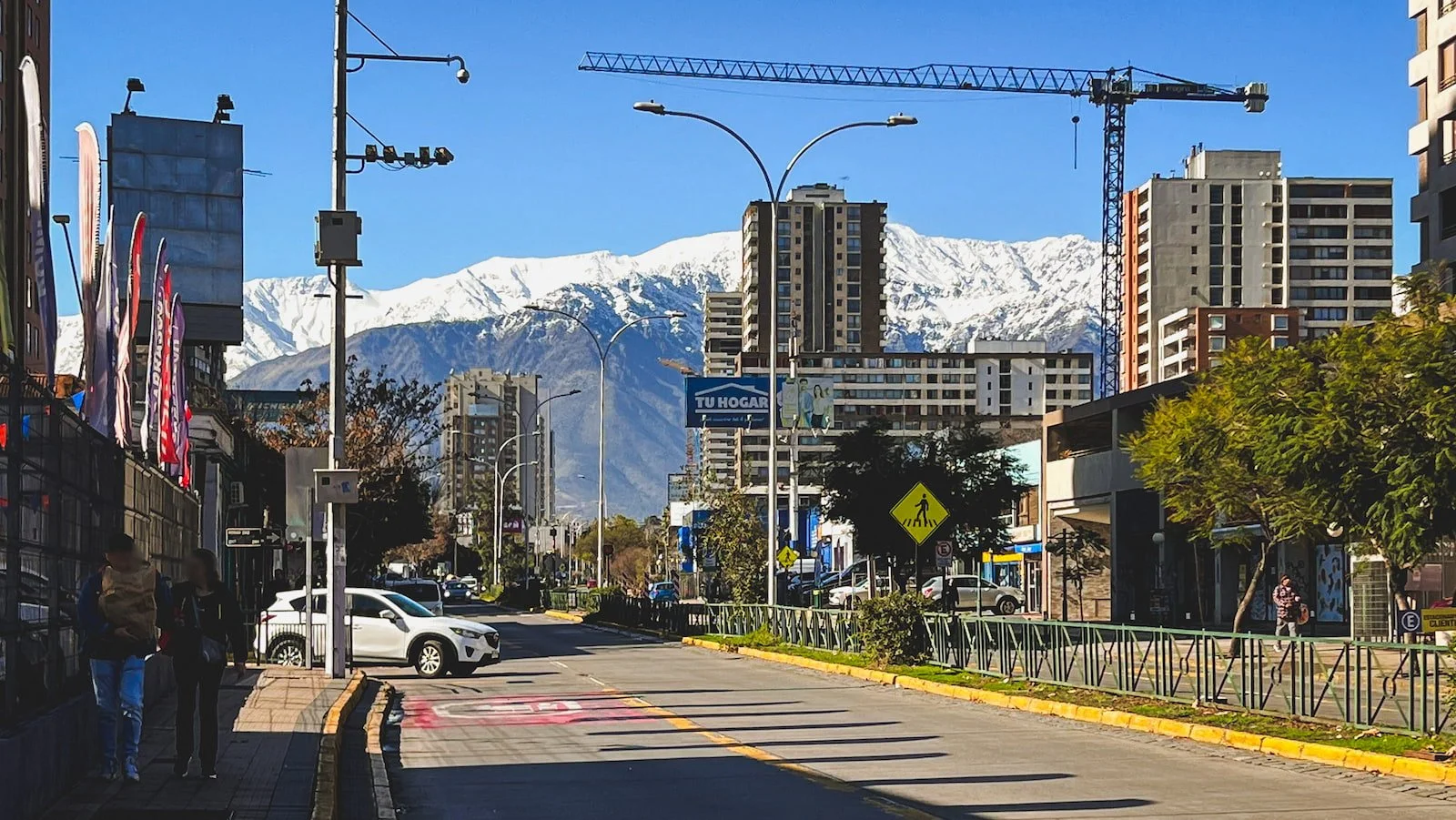
The Andes were another thing that I could not (and honestly, still can’t) get over. Seeing mountains constantly in the background, especially when they are snow-capped in winter, gives the city a sense of scale and drama that is hard to find in most major cities. It just makes everyday life here feel more special.
I have also come to appreciate the overall comfort of daily life here. In areas like Providencia, Vitacura, and Las Condes, the streets are wide, the buildings are modern, and the overall environment feels polished and well maintained. Something else that makes a bigger difference than people might think is that tap water is safe to drink in most of Chile. After traveling in places where you always have to think about drinking water, not having to worry about it feels like a real quality-of-life upgrade.
The biggest downside for me has been the air. The first time I hiked Cerro San Cristóbal in winter and saw the layer of smog over the city, it really struck me. I am not especially sensitive to air pollution myself, but people who are should be aware of it. I am, however, sensitive to dry air, and Santiago can feel very dry, especially in the hotter months.
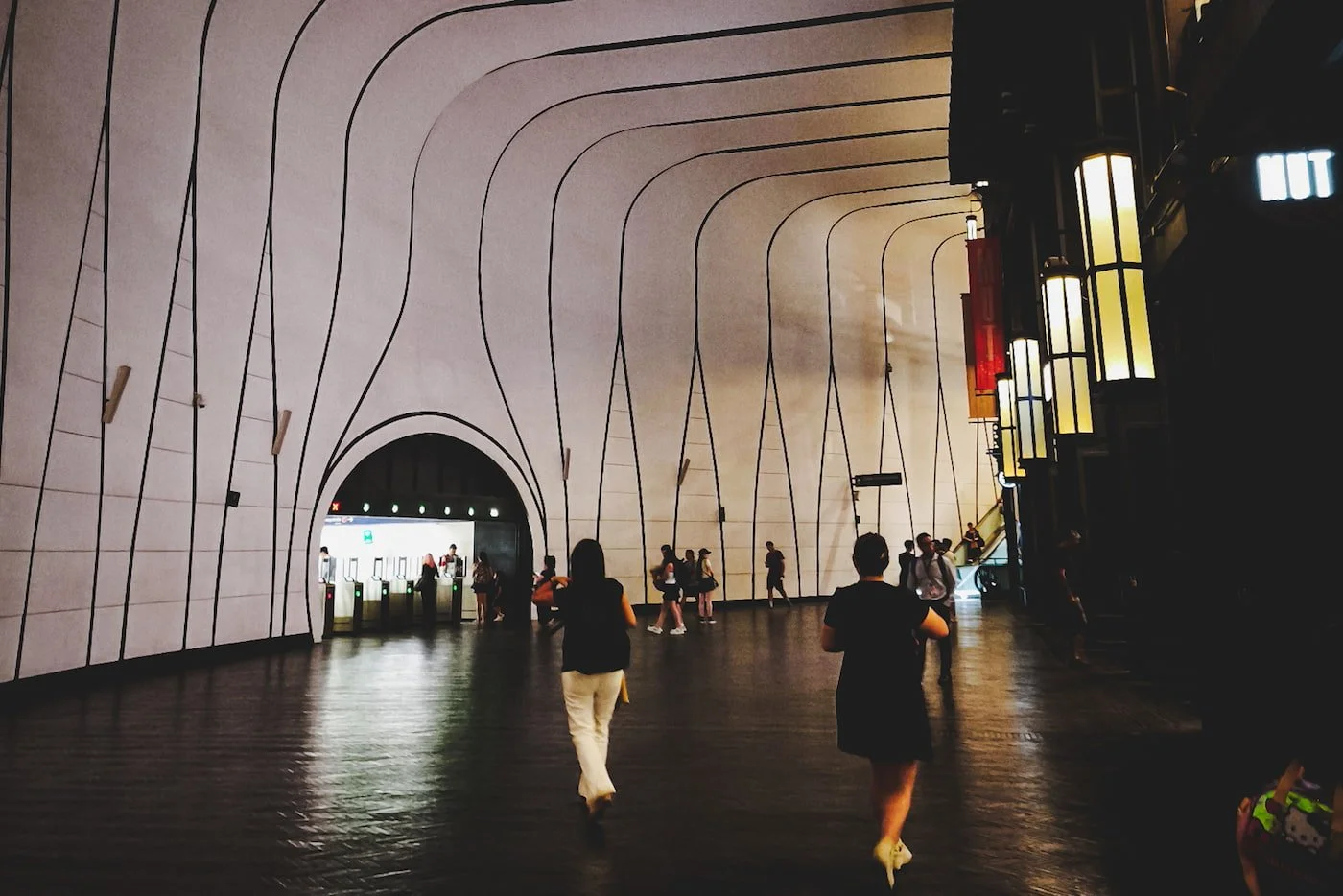
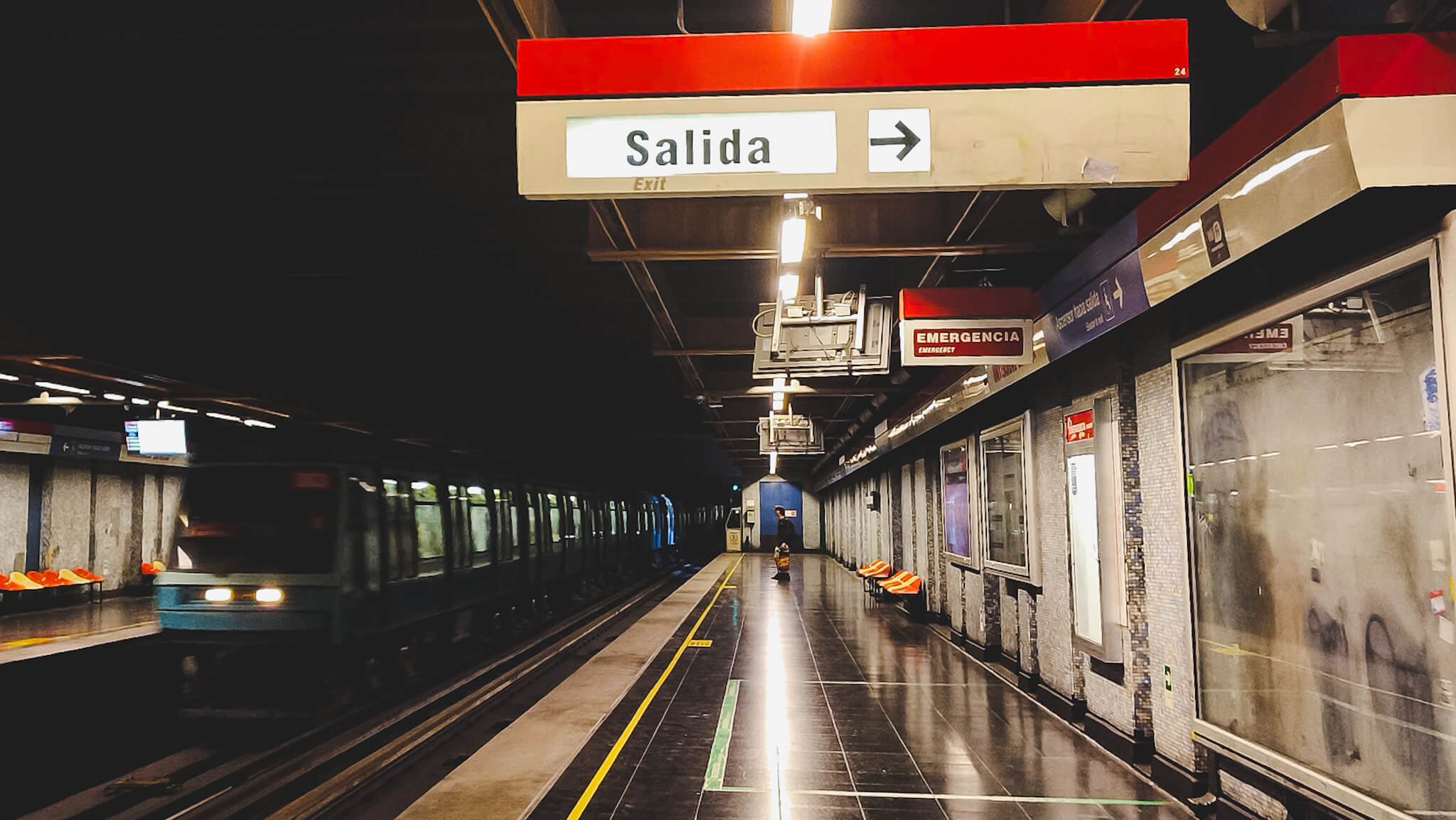
Inside the Tobalaba metro station under Mercado Urbano Tobalaba, a modern shopping center known for its sustainable development and integrated green spaces.
Who Santiago Is Best For as a Slow Travel Base
With its walkability and strong public transportation, Santiago works especially well for travelers who value being able to get around easily without relying on a car. That is a big part of why it works so well for me. Even beyond the city, Chile is well connected by long-distance buses (and some trains), so it is relatively straightforward to explore other regions.
Santiago’s modern apartments, reliable infrastructure, and overall convenience also make it a particularly good fit for remote workers and travelers who want to settle into a routine. You can build a rhythm, get work done, and feel comfortable day to day without too much logistical friction. In many ways, it offers a high quality of life without the price tag of more expensive global cities.
If you’re hoping to learn Spanish, Santiago can be a bit of a mixed bag. People are generally friendly, but Chilean Spanish is known for being one of the harder variants to learn because people use a lot of slang, speak quickly, and often drop syllables. It can be challenging at first, though rewarding once you start catching phrases you recognize.
Less ideal for
On the flip side, Santiago is still one of the more expensive cities in Latin America, so it is less ideal for travelers trying to stick to ultra-cheap nomad budgets. And as I mentioned earlier in the post, it is not the kind of city with nonstop nightlife or constant street energy into the early hours of the morning. Travelers looking for that kind of atmosphere may find Santiago a bit quieter and more subdued.
Overall, I think Santiago is best for travelers who want a comfortable, well-functioning base rather than an ultra-budget or uber-high-energy destination.
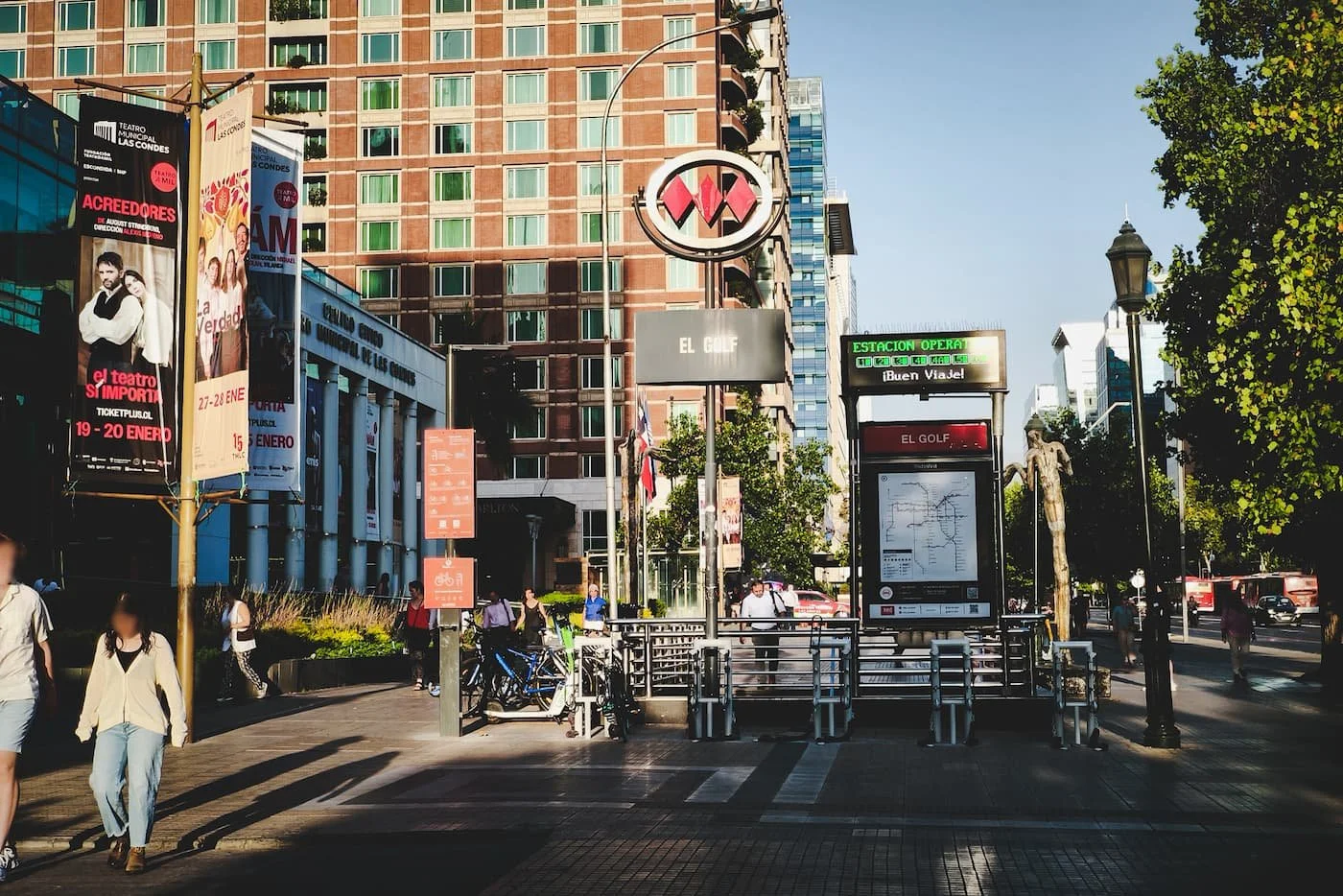
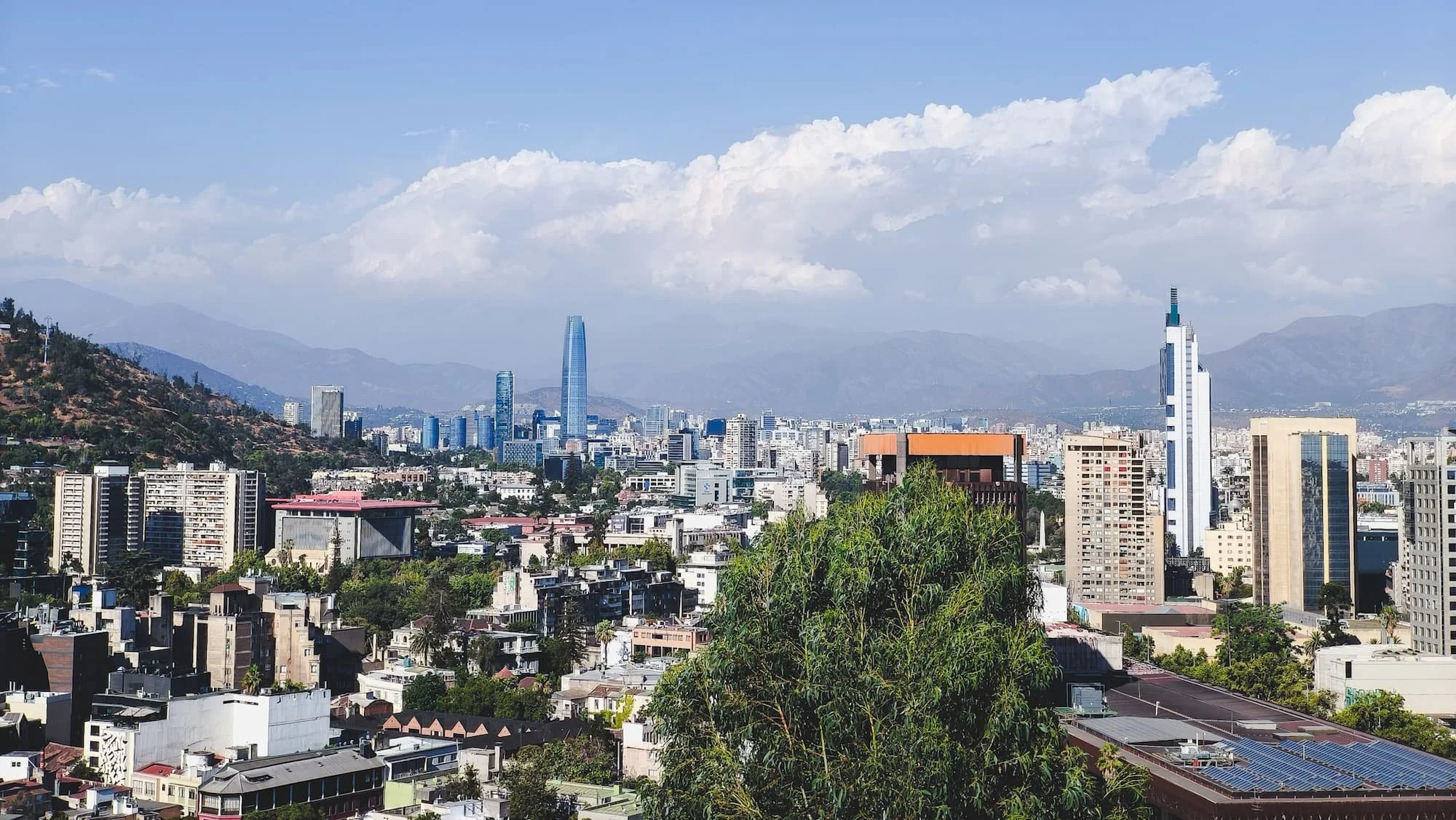
The El Golf neighborhood, Santiago’s financial district often referred to as “Sanhattan” and an example of the city’s modernity.
FAQ
Quick answers if you’re planning a longer stay in Santiago:
Is Santiago expensive to live in?
Santiago is not the cheapest city in Latin America, but it offers good value for the quality of life. I would consider it a mid-range destination, especially with housing being the biggest cost factor.
Is Santiago good for digital nomads?
Yes, Santiago works well for digital nomads thanks to its reliable infrastructure, fast internet, and ease of daily life. It is especially well suited for those who want a comfortable and structured base rather than a high-energy destination.
How much does it cost to live in Santiago per month?
My monthly cost in Santiago is around $1,000–1,100 (sharing housing and some expenses with my partner). For a solo traveler, a more realistic comfortable budget is $1,500–2,000+ per month, depending mostly on rent and how much you cook vs. eat out.
Wrap-up
Santiago may not be the most obvious slow travel destination in South America, and it is probably not the first city people picture when they think about digital nomad bases in the region. But for me, it has turned out to be one of the easiest cities to settle into. If you value walkable neighborhoods, excellent public transportation, modern infrastructure, dramatic mountain views, friendly locals, and a balance between city life and outdoor access, it is a genuinely rewarding place to stay for a while.
Next Up: Continue Planning Your Santiago Trip
Santiago Neighborhoods, Decoded → Best bases to stay for a walkable trip
One-Bag Packing List for Santiago → Layering system + local add-ons
Ride the Santiago Metro Like a Local → bip! card, best lines, and tips
Santiago Start Here → All my Santiago guides in one place
Thanks for reading – I hope you get to stay a while in this beautiful city.
Have a question about this?
Shoot me a message or leave a comment below — I read everything, and I’m always happy to help if I can!