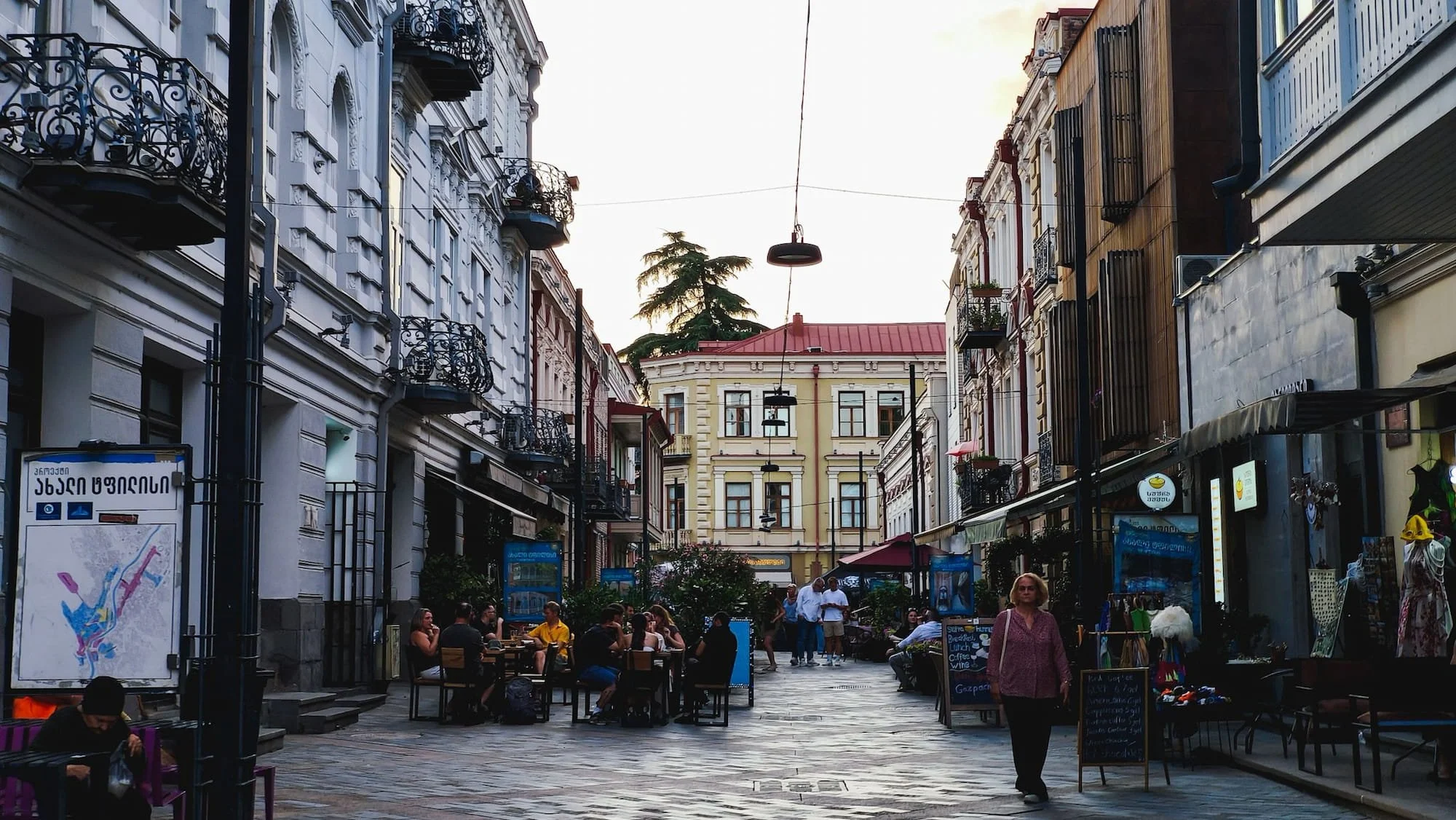
Where to Stay in Tbilisi: A Comparison of the Central Neighborhoods
Choosing where to stay in Tbilisi can make a noticeable difference to your trip. So, here’s a quick, practical comparison of the main central areas, with the things I think are most useful to know before booking.
There are cities like Madrid or New York (or Manhattan at least) where the central areas are compact and very walkable, so your day-to-day experience doesn’t change quite as much depending on where you stay. Tbilisi is different. Its central neighborhoods might look fairly close together on a map, but getting between them isn’t always seamless, so you’re more likely to feel the commute. Walking can mean uneven or missing sidewalks, awkward crossings, traffic, and hills, while the metro is useful but fairly limited in terms of coverage. So if you stay a bit farther from the main tourist areas, you’ll probably notice the extra effort.
Beyond getting around, the neighborhoods themselves also have quite different atmospheres. Staying in Old Tbilisi feels different from staying in Vera, Avlabari, or around Marjanishvili.
I spent about a month in Tbilisi, staying near Rustaveli Avenue and Orbeliani Square and exploring most of the central neighborhoods on foot, with the occasional metro ride. For a first trip, that’s also the area I’d recommend. You’re still close to most of the major sights, but it feels calmer and more practical than staying directly in Old Tbilisi. The comparisons below are based on that month in the city, with the strongest firsthand experience around Rustaveli and Orbeliani.
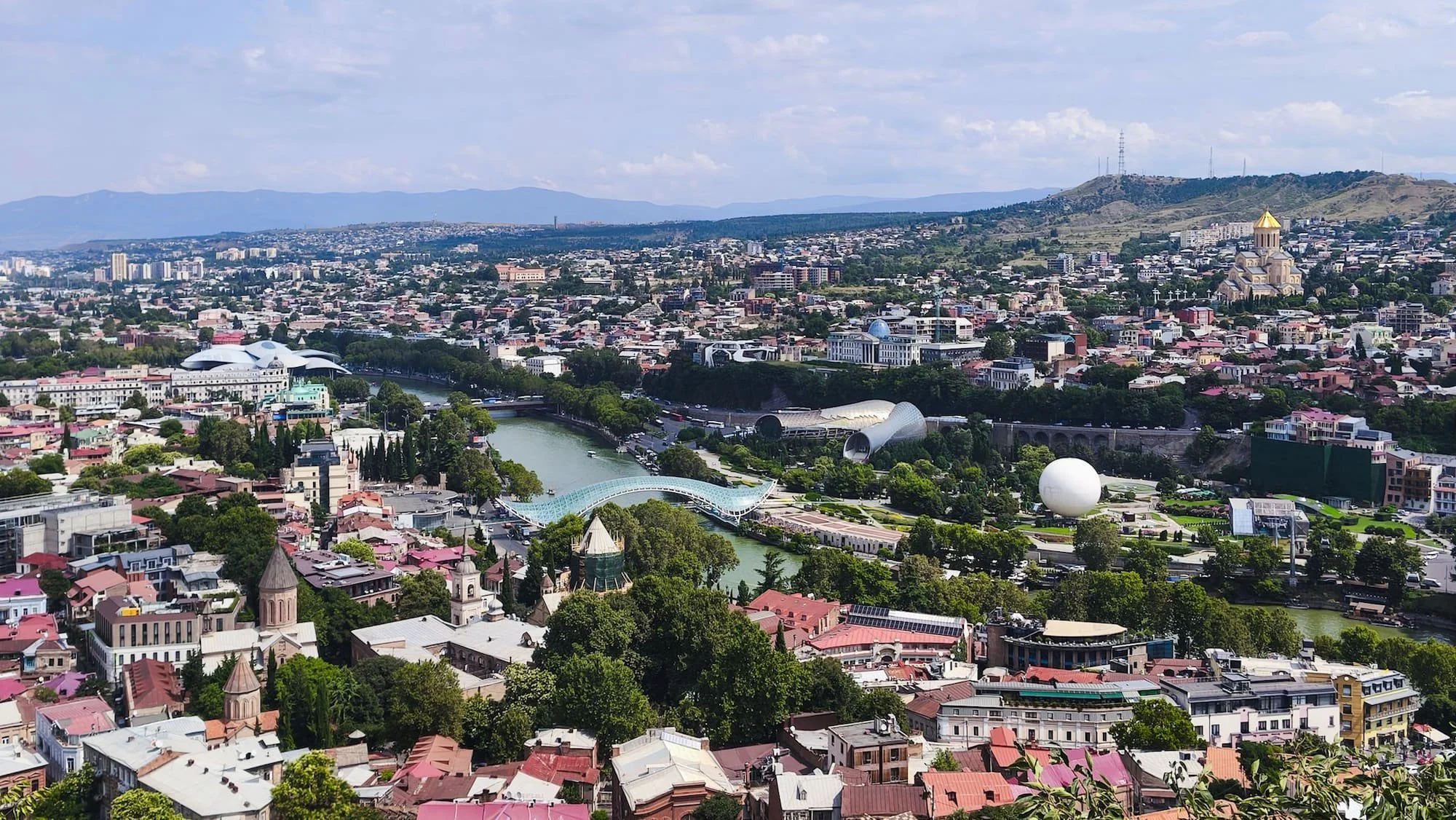
Here’s a quick look at where the main areas sit relative to each other:
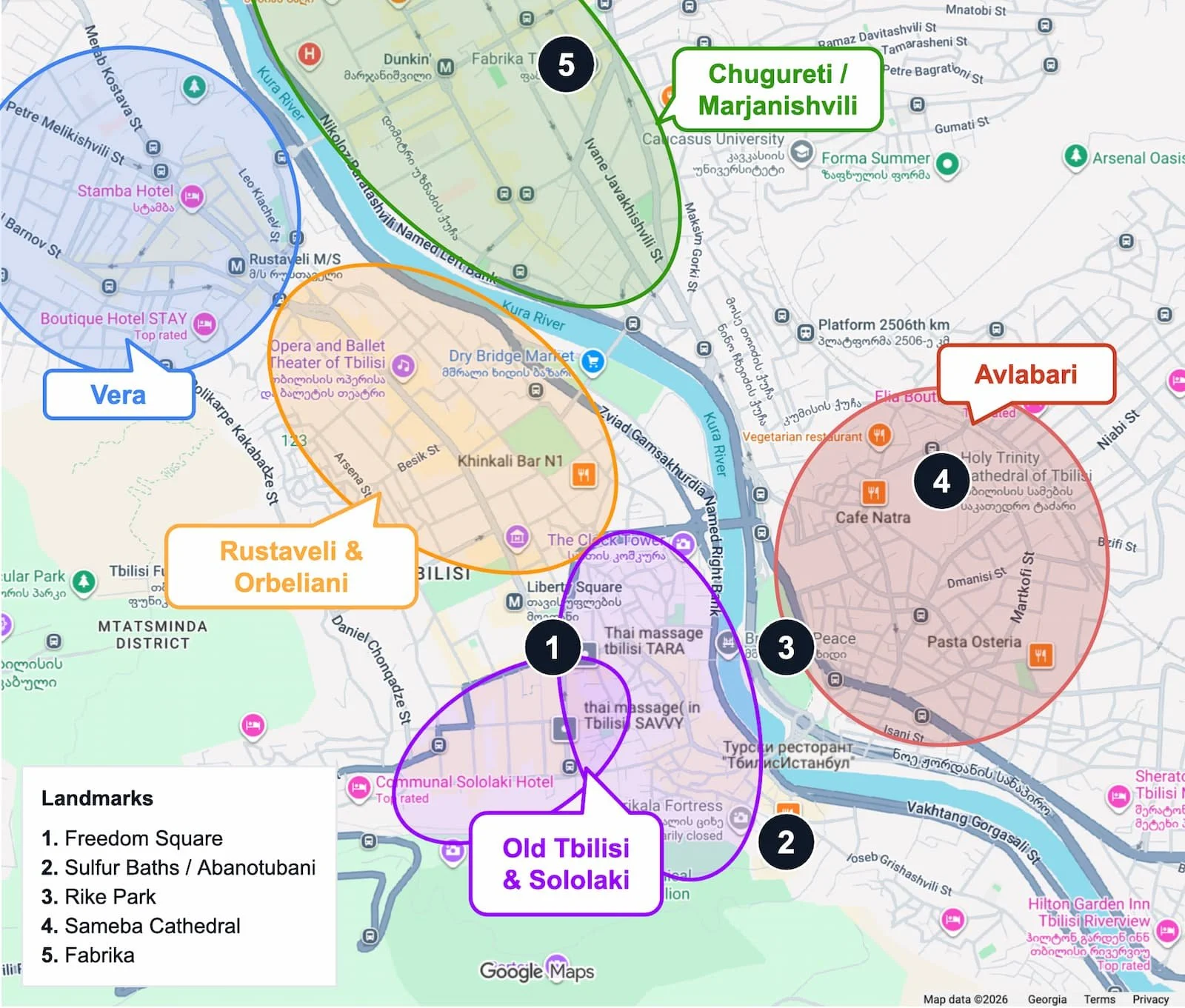
The main central areas I’d consider staying in Tbilisi, with a few landmarks for orientation. Map data © Google.
| Area | Best for |
|---|---|
| Rustaveli & Orbeliani | Best overall for a first visit |
| Old Tbilisi & Sololaki | Being closest to the main sights |
| Avlabari | More affordable stays while remaining fairly central |
| Vera | Cafes, restaurants, and a longer stay |
| Chugureti / Marjanishvili | Creative atmosphere and good-value accommodation |
Still planning your trip? My Tbilisi Start Here guide has an overview of the city and links to all of my Tbilisi posts.
Rustaveli & Orbeliani
Best overall for a first visit
I’m using Rustaveli and Orbeliani fairly broadly here to mean the area around Rustaveli Avenue, Orbeliani Square, Freedom Square, and the lower part of Mtatsminda before the streets start climbing steeply uphill. This is one of Tbilisi’s main civic and commercial areas, with major institutions, parks, shopping, and older residential streets branching off the main avenues.
This is where I stayed for about a month, and after spending time in other parts of central Tbilisi, it’s still the area I’d probably choose again (along with Vera, see below).
The easiest way I can describe it is as a calmer alternative to staying directly in Old Tbilisi. You’re still very central — Freedom Square and the historic center are within walking distance — but things are noticeably quieter, especially once you get a few streets away from Rustaveli Avenue.
For sightseeing, the location works very well. Rustaveli Avenue runs through the area, Liberty Square metro is at one end, and Rustaveli metro is farther north. You can walk down toward Old Tbilisi or use the metro when you’re heading farther away. If you want to see how I’d structure the main sights from this area, my 3-day Tbilisi itinerary lays everything out by day.
It’s also one of the areas that worked best for us in terms of everyday convenience. There are plenty of places to eat around Orbeliani Square and the surrounding streets, a large Carrefour for groceries, and Galleria Tbilisi (a big mall) at Freedom Square if you need to pick up clothes or anything else during your trip.
There are also a few green spaces mixed into the neighborhood, including 9 April Park. The area isn’t completely flat, but if you stay closer to the river side of Rustaveli rather than farther uphill into Mtatsminda, you can avoid many of Tbilisi’s steeper streets.
Like elsewhere in Tbilisi, walking here comes with some of the city’s usual quirks. Sidewalks and crossings can be inconsistent, and Freedom Square is more of a busy traffic hub than a square where you’d spend much time. The river also looks much more accessible on a map than it actually is. Major roads run along much of it, and getting down to the riverfront from this side of the city is not straightforward (I tried to do so for running, but gave up).
Note that during our stay in summer 2026, Rustaveli Avenue was also undergoing major reconstruction, which unfortunately caused quite a bit of disruption, including repeated utility outages. That was tied to the construction happening at the time, so I wouldn’t treat it as a permanent feature of the neighborhood, but it’s worth checking for major roadworks before you book.
Why stay here
Very central without being directly inside the busiest tourist area
Easy walking access to Freedom Square and Old Tbilisi
Good metro access by Tbilisi standards
Lots of restaurants around Orbeliani and Rustaveli
Easy grocery shopping
Galleria Tbilisi is nearby
Relatively flat if you stay in the lower part of the neighborhood
Quieter than much of Old Tbilisi
Things to know
Rustaveli Avenue and Freedom Square can still be busy
Sidewalks and pedestrian crossings aren’t always great
River access is poor despite how close it looks on a map
Streets farther uphill into Mtatsminda get much steeper
Individual streets can be affected by construction
My take: If I were recommending one area to someone visiting Tbilisi for the first time, this would be it.
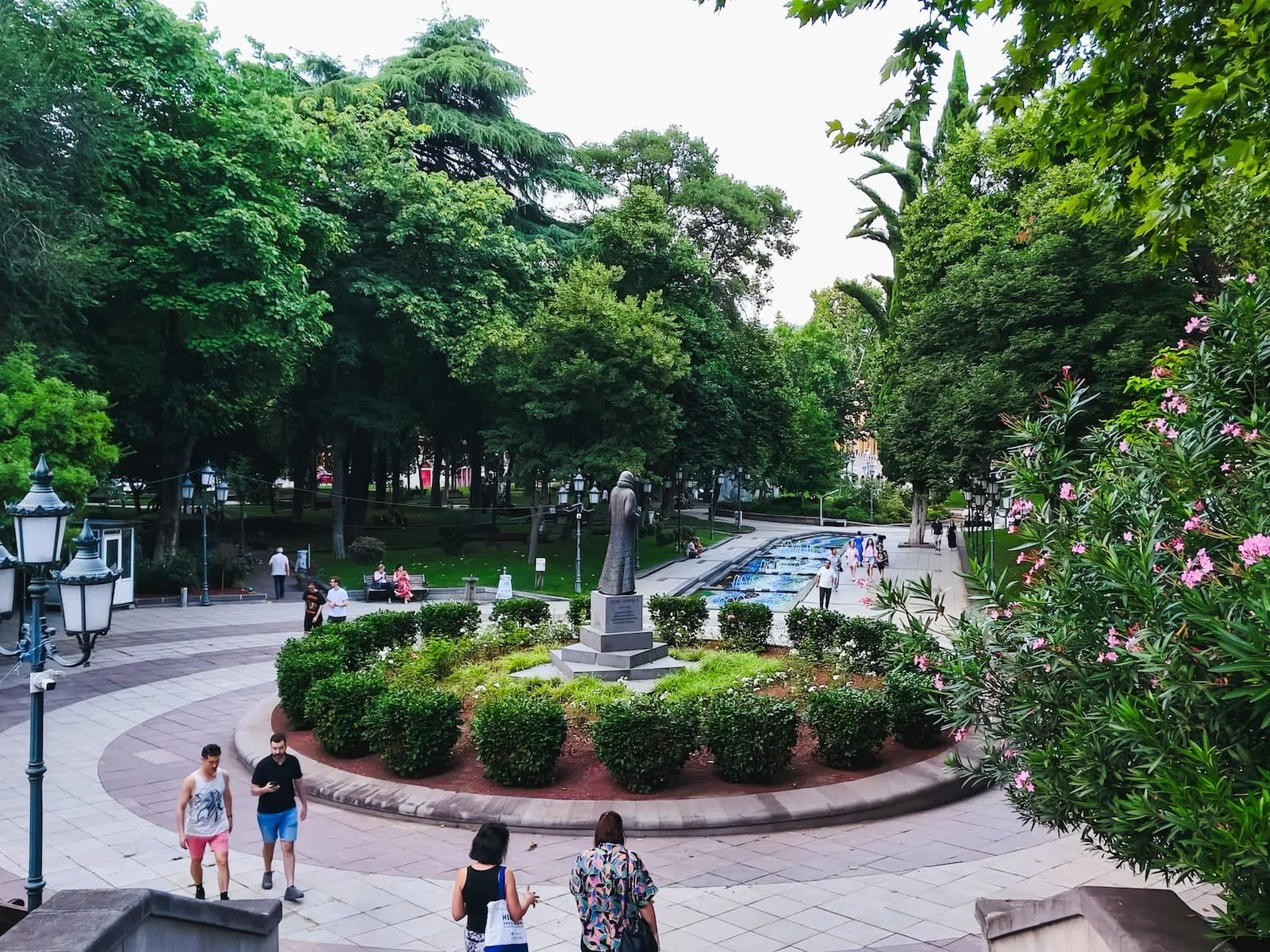
9 April Park. We pretty much crossed it every time we went to eat in Orbeliani Square or to buy groceries in Carrefour.
Old Tbilisi & Sololaki
Best for sightseeing convenience
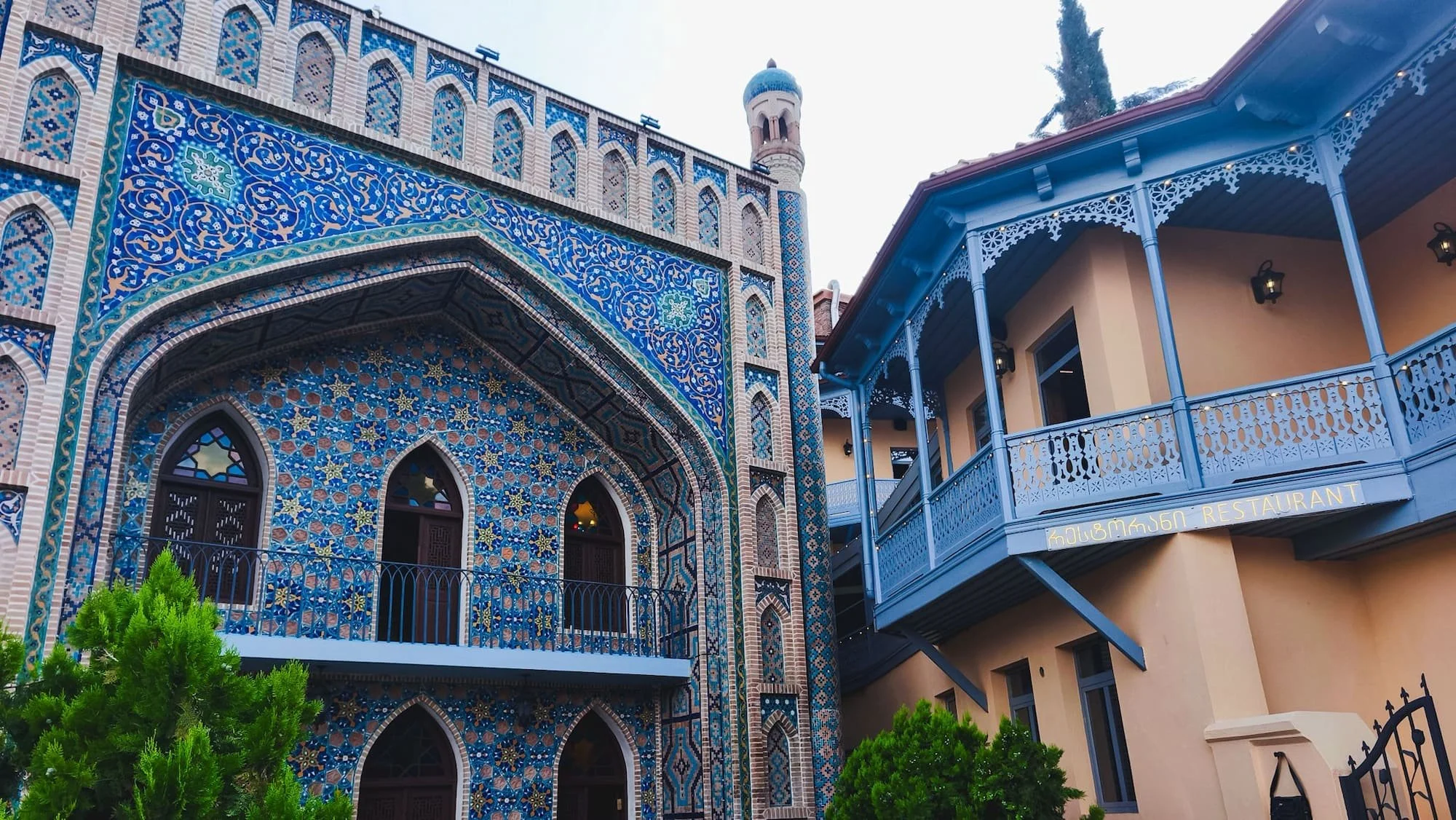
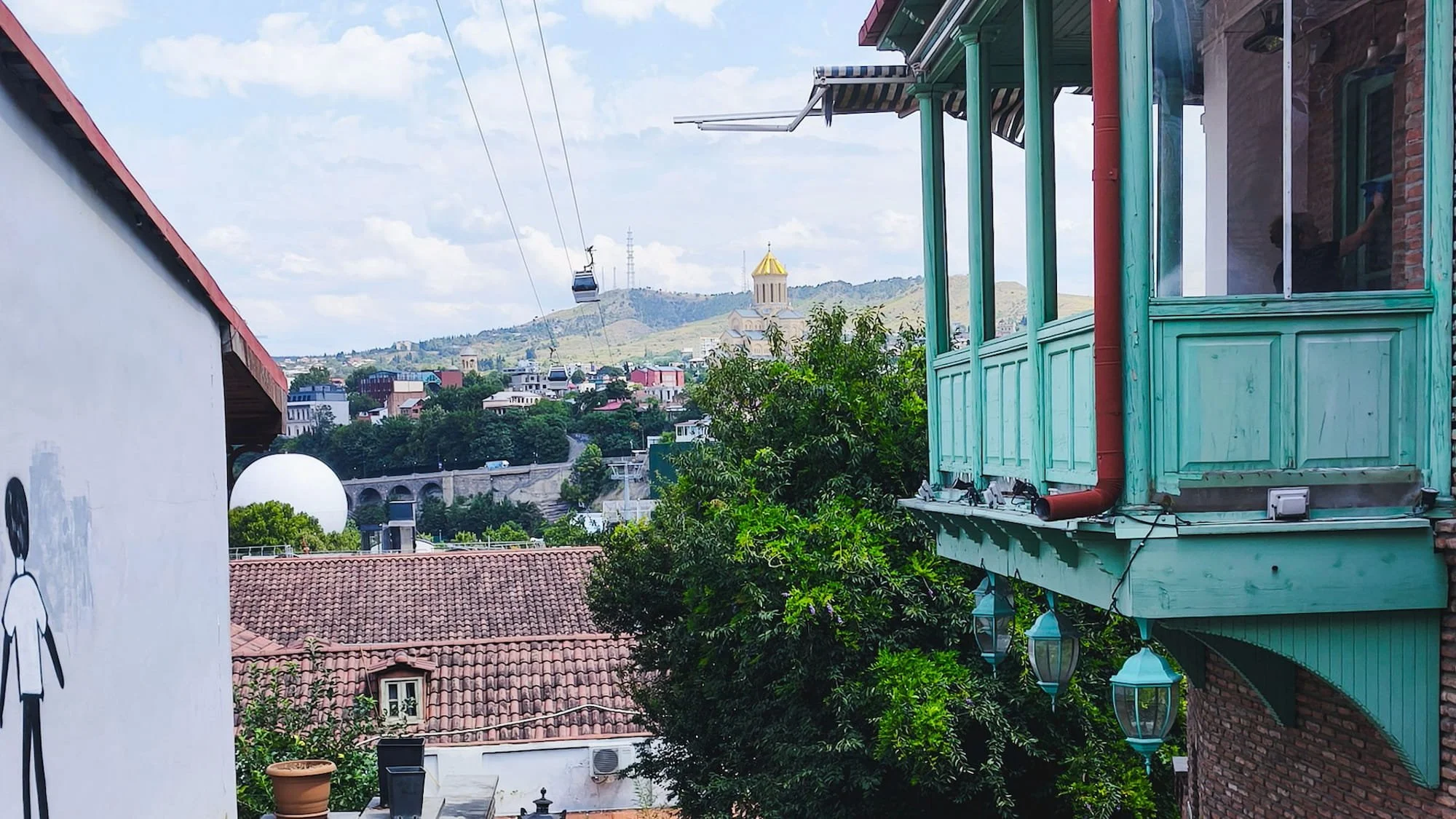
If your priority is stepping outside your hotel and immediately being surrounded by Tbilisi’s most famous sights, Old Tbilisi is hard to beat. This is the historic core of the city, with old churches, balconies, bathhouses, winding streets, and much of the architecture people most associate with Tbilisi.
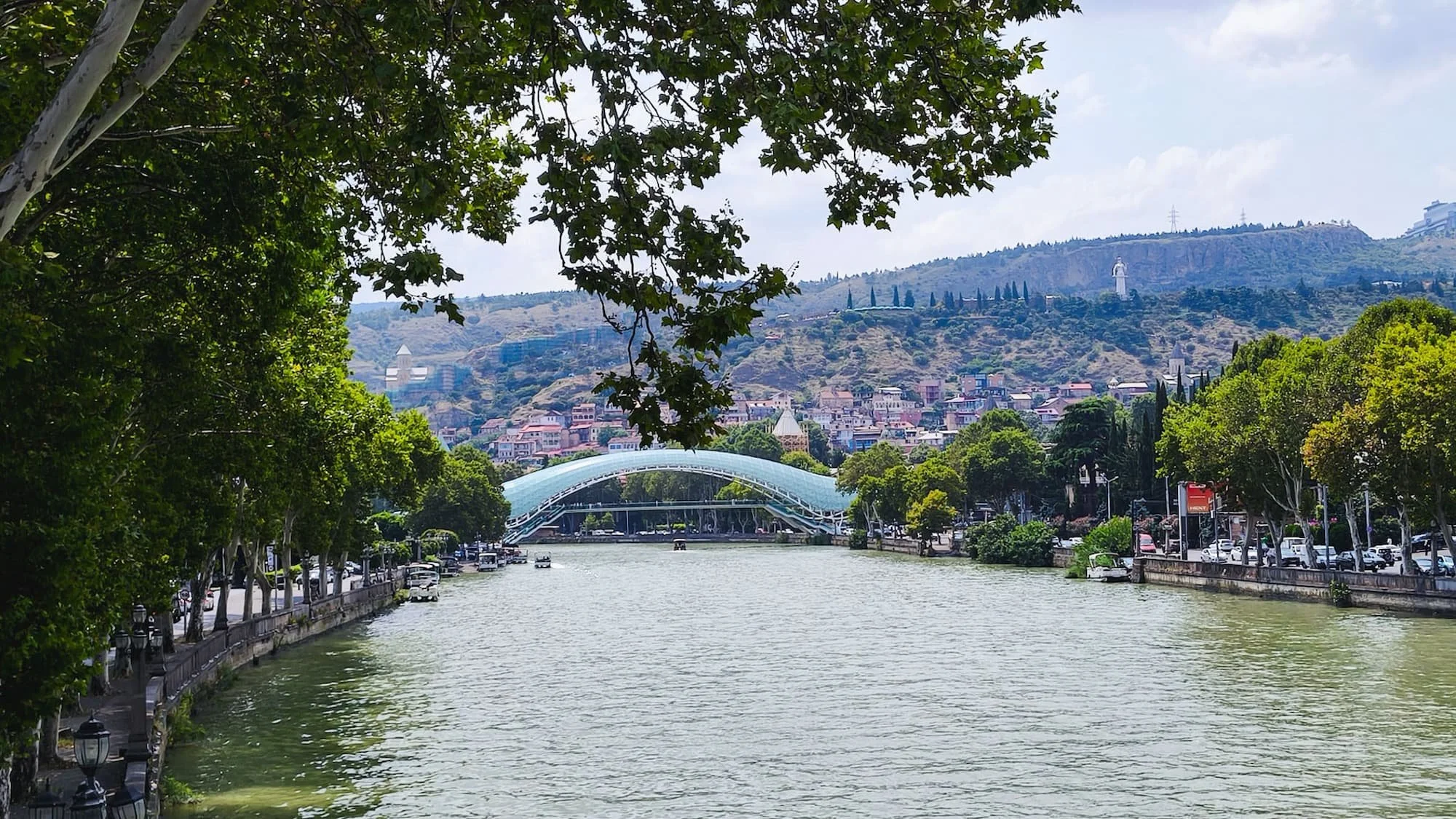
So here, you’d be within easy walking distance of places like the sulfur baths, Narikala Fortress, Rike Park, the cable car, and many of the streets and landmarks that make up the classic first-time sightseeing route.
For a very short trip, that convenience is a real advantage. If you only have a night or two, being able to walk straight into your sightseeing without thinking much about transportation can make a lot of sense.
The tradeoff is that this is also the most tourist-oriented part of the city. There are more tour groups, souvenir shops, restaurants aimed at visitors, and people around throughout the day. Depending on the exact street, it can also be noisier at night.
I also think there’s a difference between visiting Old Tbilisi and actually living in it day to day. After spending a month nearby, I personally preferred being slightly outside the historic center. Rustaveli and Orbeliani were still close enough that getting to the sights was easy, but everyday errands and quieter evenings felt a little simpler. If you’re only in Tbilisi for a short trip, the extra activity probably won’t be much of an issue, but for a longer stay, I’d personally choose somewhere a little calmer.
Sololaki sits just west of the Old Town and is worth considering separately even though I’d group the two together for planning purposes. It still gives you excellent access to Freedom Square and the historic center, but many streets feel more residential. Just pay attention to elevation when booking. Lower Sololaki near Freedom Square is easy to reach, while streets farther uphill can involve a substantial climb.
Why stay here
The easiest area for walking to the classic Tbilisi sights
Lots of restaurants, cafes, and hotels
Historic architecture right outside your door
Immediate energy in your surroundings
Particularly convenient for a short sightseeing-focused stay
Things to know
More touristy than surrounding neighborhoods
Can be noisy and crowded
Tourist-oriented restaurants and shops are more common
Some parts of Sololaki become very hilly
My take: Great if atmosphere and maximum sightseeing convenience matter most. I’d still choose Rustaveli or Orbeliani if I wanted something a little calmer without giving up much convenience.
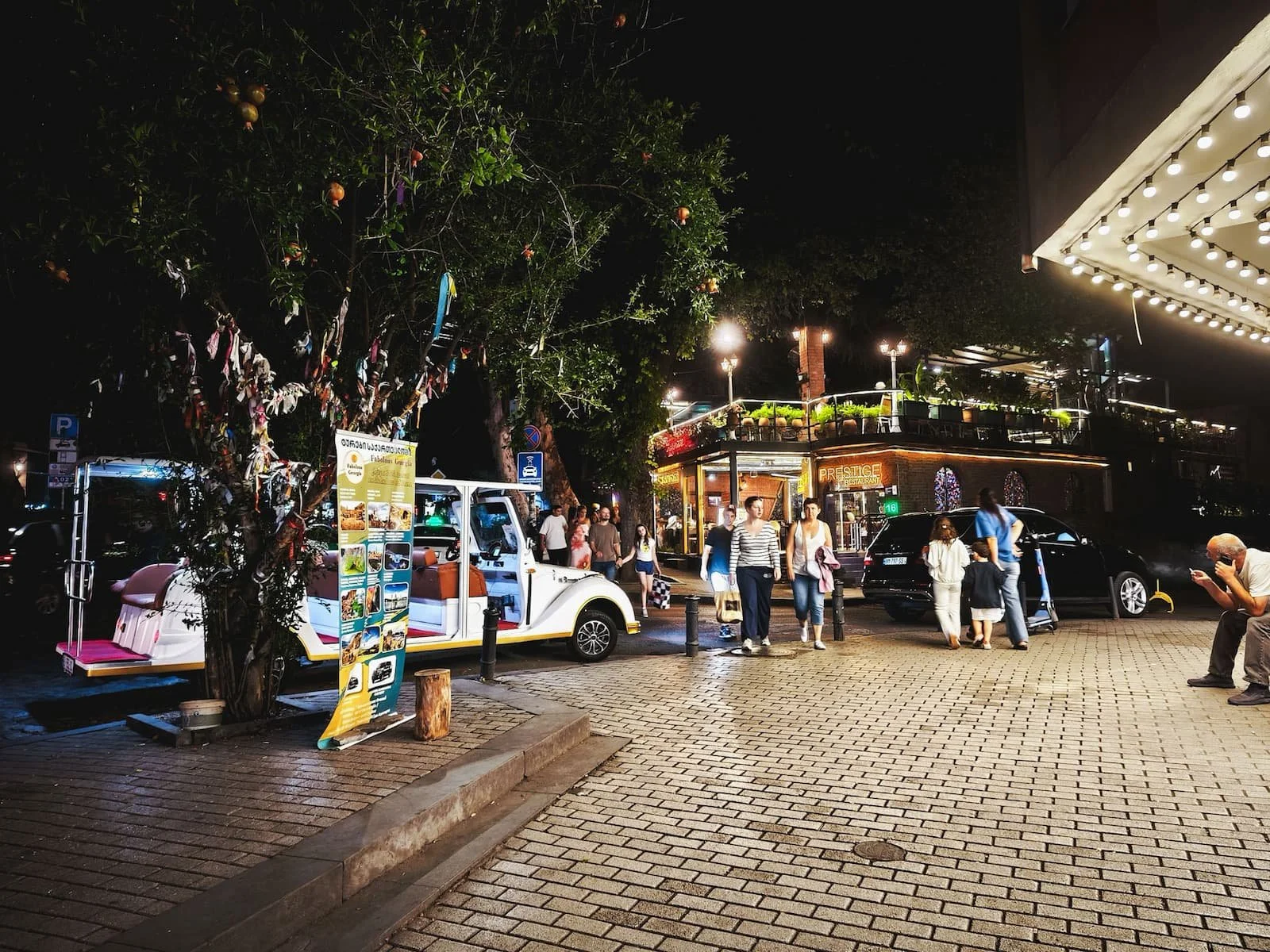
Night scene on Kote Afkhazi St, an avenue in the old historic area. It’s lined with restaurants, bars, and souvenir shops and stays busy until later in the night.
Avlabari
Best for more affordable stays close to the center
Avlabari is on the opposite side of the river from Old Tbilisi and is one of the city’s older residential districts, with a strong neighborhood feel and major landmarks like Sameba nearby.
When I was looking at accommodation, I noticed quite a few relatively affordable hotels and apartments here compared with some of the more obvious tourist areas. Obviously it’s not cheaper across the board, but it’s definitely an area I’d check if you’re trying to keep accommodation costs down.
Location matters in Avlabari. If you stay near Avlabari metro, Rike Park, or the river, you’re still very close to the historic center. Old Tbilisi is just across the river, Sameba Cathedral is nearby, and Rike Park is a nice bit of open green space to have close by if you want somewhere easy to walk, sit outside, or just take a break from the surrounding streets.
As you move farther uphill and away from the metro, Avlabari becomes less convenient for a sightseeing-focused visit simply because you’re getting farther from the historic center and the main sights. The walking can also feel more involved. Tbilisi is hilly in plenty of places, but in Avlabari the elevation felt more built into the neighborhood itself, and I came across more rough or unpaved sections of road with loose stones and uneven surfaces than around the main stretches of Rustaveli and Old Tbilisi. So a distance that looks manageable on a map can feel a little more substantial once you’re actually walking it.
One advantage is Avlabari metro if you stay near it. Tbilisi’s metro network isn’t extensive, but this station puts you on the line that connects directly to Liberty Square, Rustaveli, and Marjanishvili.
Why stay here
Often has more affordable accommodation options
More residential atmosphere
Close to Sameba Cathedral
Good location if you stay near Avlabari metro or Rike Park
Useful metro connection to other central neighborhoods
Easier access to Rike Park and the river than from some areas west of the river
Things to know
Gets much hillier farther from the river
Exact location matters a lot
Walking can feel less straightforward in some parts
Less convenient for sightseeing if you stay farther east
My take: A good value option, especially if you find somewhere close to the metro or Rike Park. I’d check the exact address and walking routes before booking.
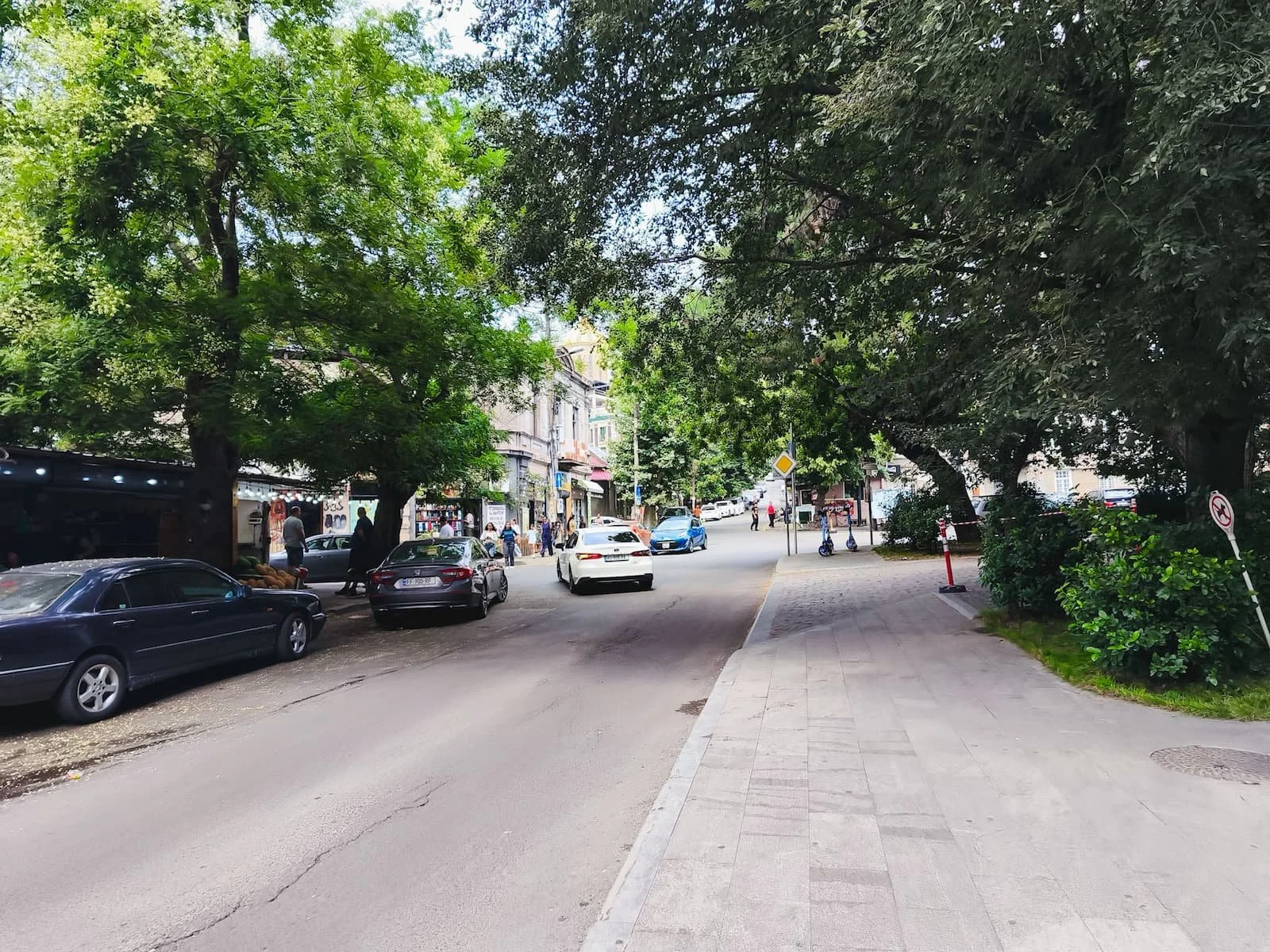
Avlabari between Rike Park and Sameba Cathedral. The streets are hilly there.
Vera
Best for cafes, restaurants, and a longer stay
Vera is a long-established residential area directly north of Mtatsminda, starting around where Rustaveli Avenue ends. Today, it mixes older housing with newer apartment and commercial buildings, along with smaller streets lined with cafes, restaurants, bars, and some of the city’s more design-focused businesses.
Compared to Old Tbilisi, I’d say Vera feels noticeably more modern and residential, with a mix of larger avenues and newer-looking apartment and commercial buildings, alongside smaller streets where older buildings have been converted into cafes, restaurants, bars, and other businesses.
Overall, the neighborhoods felt quieter than the historic center while still having plenty going on around you. There also seems to be a concentration of more design-focused and creative spaces here, ranging from small cafes to larger places like Stamba and Rooms Hotel. Both are in Vera, and the area around them has become particularly associated with the city’s cafe, restaurant, and design scene.
Vera Park is also a really nice bit of green space to have nearby. It has sloping lawns, plenty of benches, water fountains, and views opening out across the city. Compared with many of the smaller parks around Old Tbilisi, it feels quieter and more peaceful. When I visited, I wanted to linger a while rather than just pass through.
The downside for a first-time visitor is location. Vera sits farther north, so places like the sulfur baths, Narikala, and much of Old Tbilisi are no longer just outside your door. You can still reach them using the metro, Bolt, or even a longer walk, but it adds a little friction to a sightseeing-heavy trip. Rustaveli metro is useful for the southern part of Vera, although the neighborhood stretches far enough that some accommodation will be a decent walk from the station. But if you’re staying longer and don’t mind the commute to do sightseeing, it feels like a really livable area — if I were to come back to Tbilisi for a longer stretch again, I’d personally probably try this area.
Accommodation here also spans quite a range. There are apartments and smaller guesthouses, but Vera is also home to some of Tbilisi’s best-known boutique and design hotels, so I wouldn’t think of it primarily as a budget alternative to the historic center.
During my visit, there was construction along one of the major roads as well, although that is obviously something that can change.
Why stay here
More modern, residential neighborhood feel
Excellent cafes, bars, and restaurants
Vera Park
Quieter than Old Tbilisi
Lots of interesting design-focused businesses and hotels
Good for travelers who enjoy spending time around their immediate neighborhood
Rustaveli metro is accessible from the southern end
Things to know
Farther from the main historic sights
Some parts are a decent walk from the metro
Less convenient for a short, sightseeing-heavy trip
My take: I’d seriously consider Vera for a longer stay. If I were spending a week or more in Tbilisi and cared as much about enjoying my immediate neighborhood as sightseeing convenience, it would be much more appealing. For a short first visit, I still think Rustaveli or Orbeliani works better.
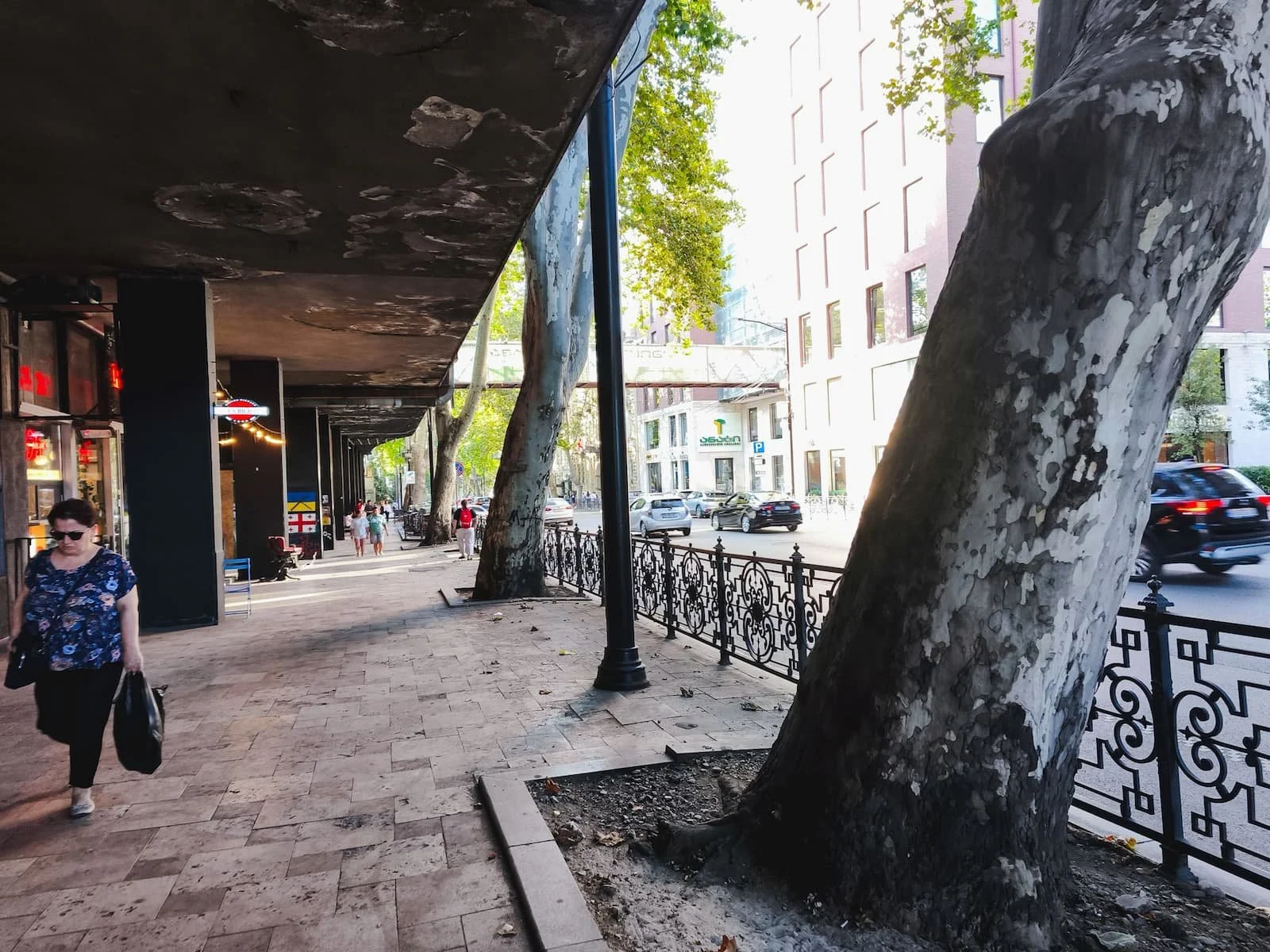
Merab Kostava Street in Vera, one of the avenues that run through the neighborhood. More modern high-rises here compared to the Old Tbilisi area.
Chugureti / Marjanishvili
Best for creative atmosphere and good-value stays
This is the area around Fabrika on the east side of the river. You may see accommodation listed under Chugureti or Marjanishvili, so those are more useful names to look for when you’re actually searching for hotels.
I spent much less time here than around Rustaveli, so I’d treat this section more as an impression than a neighborhood I know block by block. Chugureti has a layered history, with 19th-century German settlement and later Soviet-era development both shaping the area. Today, that mix contributes to a more creative, slightly alternative atmosphere, especially around Fabrika, with street art and repurposed older buildings.
Overall, this area feels more residential than Old Tbilisi, but definitely not sleepy. Cafes and businesses line the streets, plenty of people are out and about, and the areas around Fabrika and Marjanishvili Square are particularly lively.
Fabrika itself is one of the obvious draws. It’s a former Soviet sewing factory that has been converted into a hostel and creative complex with cafes, bars, shops, studios, and a courtyard that becomes a lively gathering spot in the afternoon and evening. Staying nearby could be especially appealing if you like having this kind of social, creative space within easy walking distance.
Accommodation searches often turn up fairly affordable options in this part of the city too, so it’s worth comparing with Avlabari if budget is one of your priorities. And Marjanishvili metro makes getting around relatively straightforward. From there, you can reach Rustaveli, Liberty Square, and Avlabari without needing to rely on a car.
The tradeoff is that you’re not especially close to many of the major first-time sights. The western edge of the neighborhood is still fairly easy to walk from — Orbeliani Square is just across the river via Dry Bridge — but if most of your itinerary revolves around Old Tbilisi, you’ll probably use the metro or Bolt more often than you would from Rustaveli, Orbeliani, or the historic center.
Why stay here
More residential neighborhood atmosphere
Lots of cafes and restaurants
Fabrika is nearby
Good metro access from Marjanishvili
Often has reasonably priced accommodation
Good fit if you prefer creative neighborhoods to traditional tourist areas
Things to know
Not the most convenient base for walking to the major sights
You’ll probably use public transportation more
Exact location still matters within the neighborhood
My take: A good option for a longer stay or if the neighborhood itself is part of what you want to experience. I probably wouldn’t make it my first recommendation for a two- or three-day sightseeing trip.
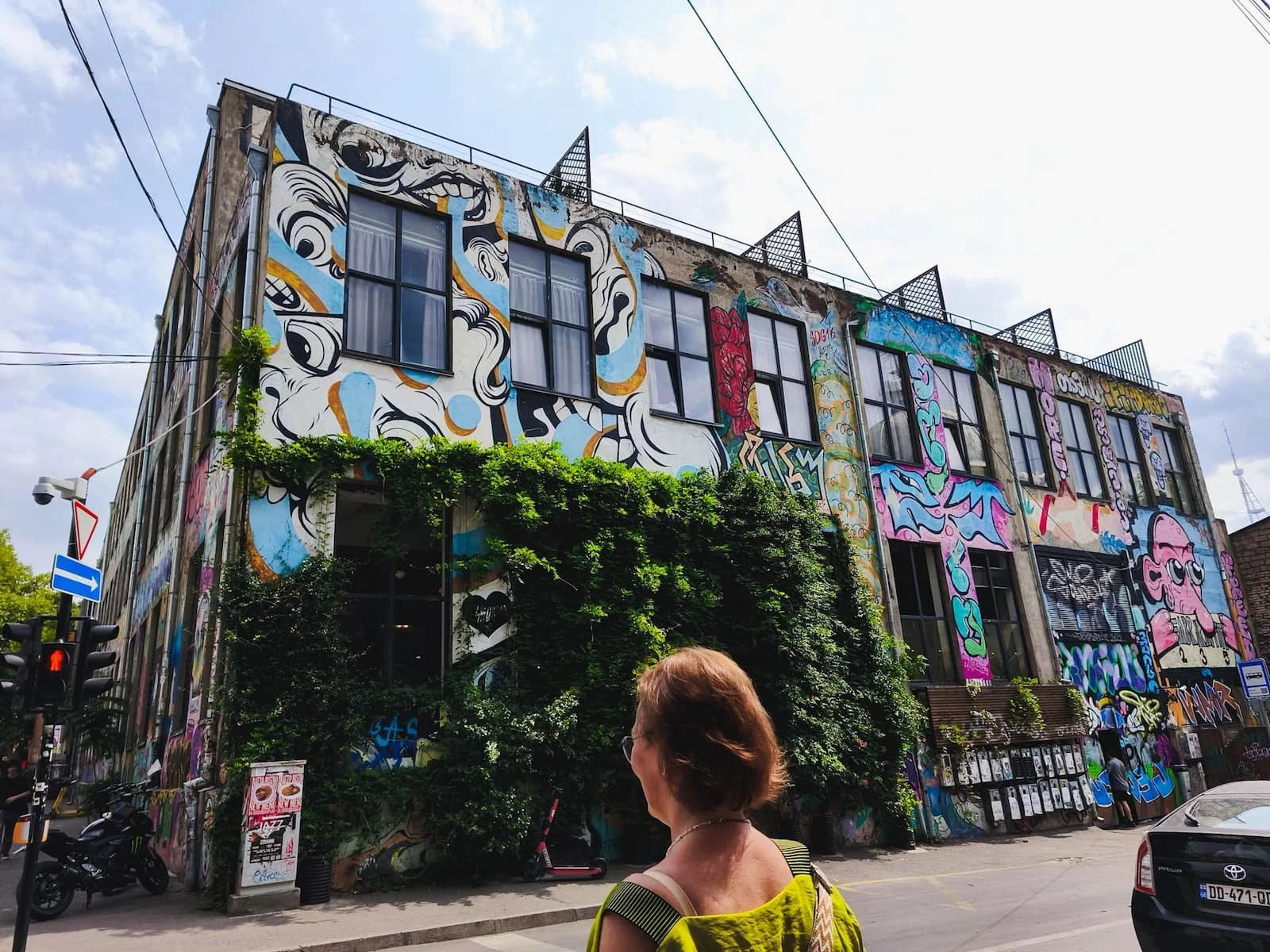
Colorful murals on the exterior of Fabrika, one Soviet-era development turned into a creative complex in Chugureti.
Questions?
Thanks for reading! Feel free to leave a comment below or send me a message with any questions — I’m always happy to help when I can.
If you’re still planning your trip, check out my Tbilisi Start Here guide for an overview of the city and links to all of my Tbilisi posts.
You may also like:
3 Days in Tbilisi — my suggested itinerary for seeing the main sights without too much backtracking
What to Do in Tbilisi — a curated guide to the main sights, walks, and neighborhoods, with opening hours, suggested pairings, and practical planning notes.
What to Eat in Tbilisi — a guide to must-try Georgian dishes, from khinkali and khachapuri to lobio and mtsvadi, plus my favorite restaurants and where I liked each dish.
Getting Around Tbilisi, coming soon — practical notes on the metro, buses, Bolt, and walking in the city
Things to Do in Tbilisi — a curated guide to the main sights, walks, and neighborhoods, with practical details for planning