What to Do in Tbilisi: Best Sights, Neighborhoods + Viewpoints
Tbilisi is a city where a little geographic planning goes a long way, since the main sights are spread across several distinct parts of the city and getting between them on foot isn’t always straightforward or pleasant.
Many places in this guide are sights you’ll probably see on your regular tourist lists, but I’ve organized them into areas that make sense to explore together, with notes on how long to spend, what’s nearby, and what I thought was actually worth your time.
If you’d rather just follow a ready-made route that strings the main sights into coherent days, see my 3-day Tbilisi itinerary.
Old Tbilisi and the Narikala Hillside
Rike Park & Bridge of Peace
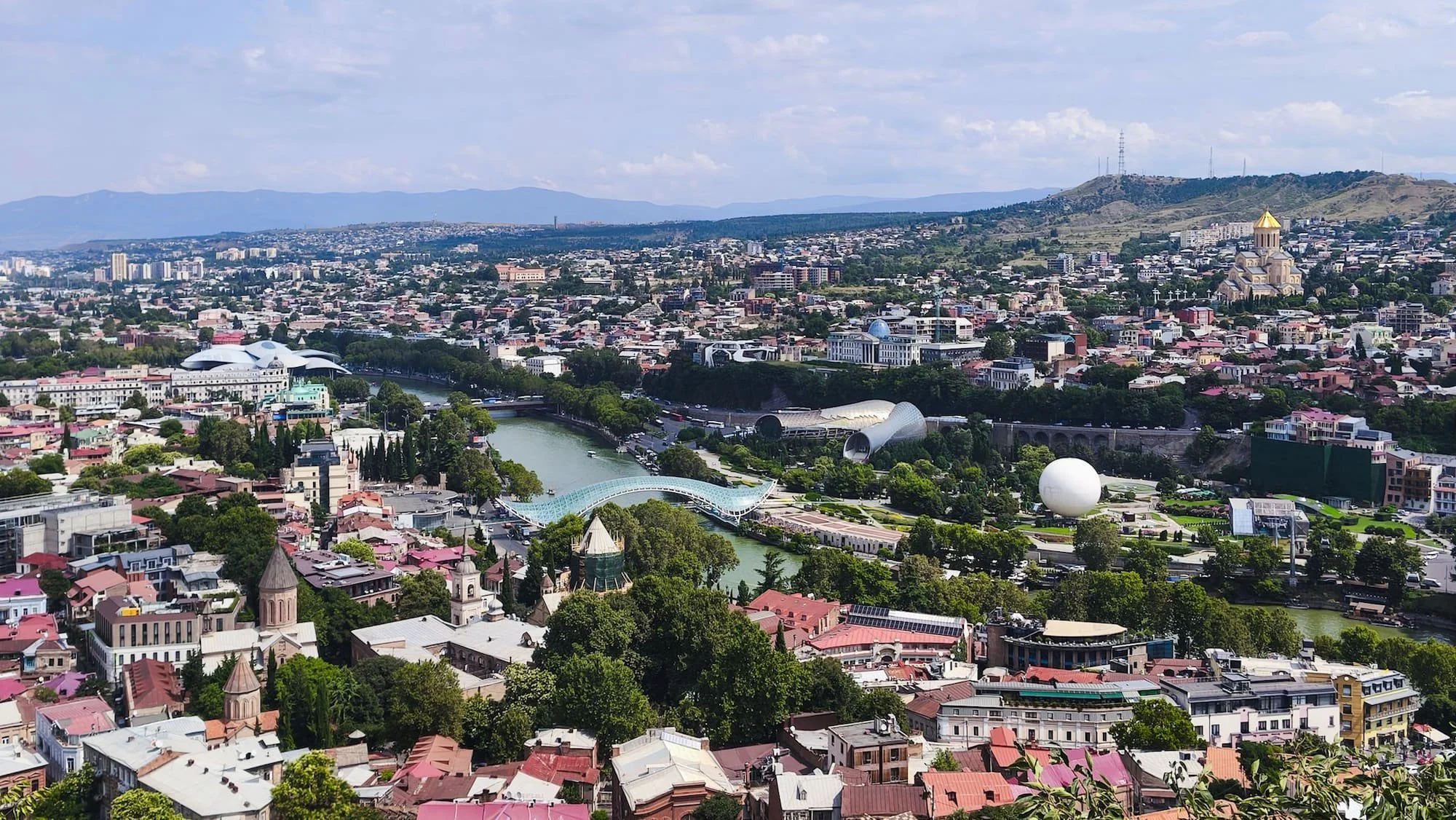
One of the bigger parks in central Tbilisi, Rike Park is probably most visited for the Bridge of Peace and the cable car up to Narikala. But I also found it to be a nice respite from the surrounding busy city streets, with paths along the river and views opening toward the surrounding hills.
There’s also a giant tethered balloon that dominates the skyline around the park and can be ridden for views over the city, plus fountain light shows at night.
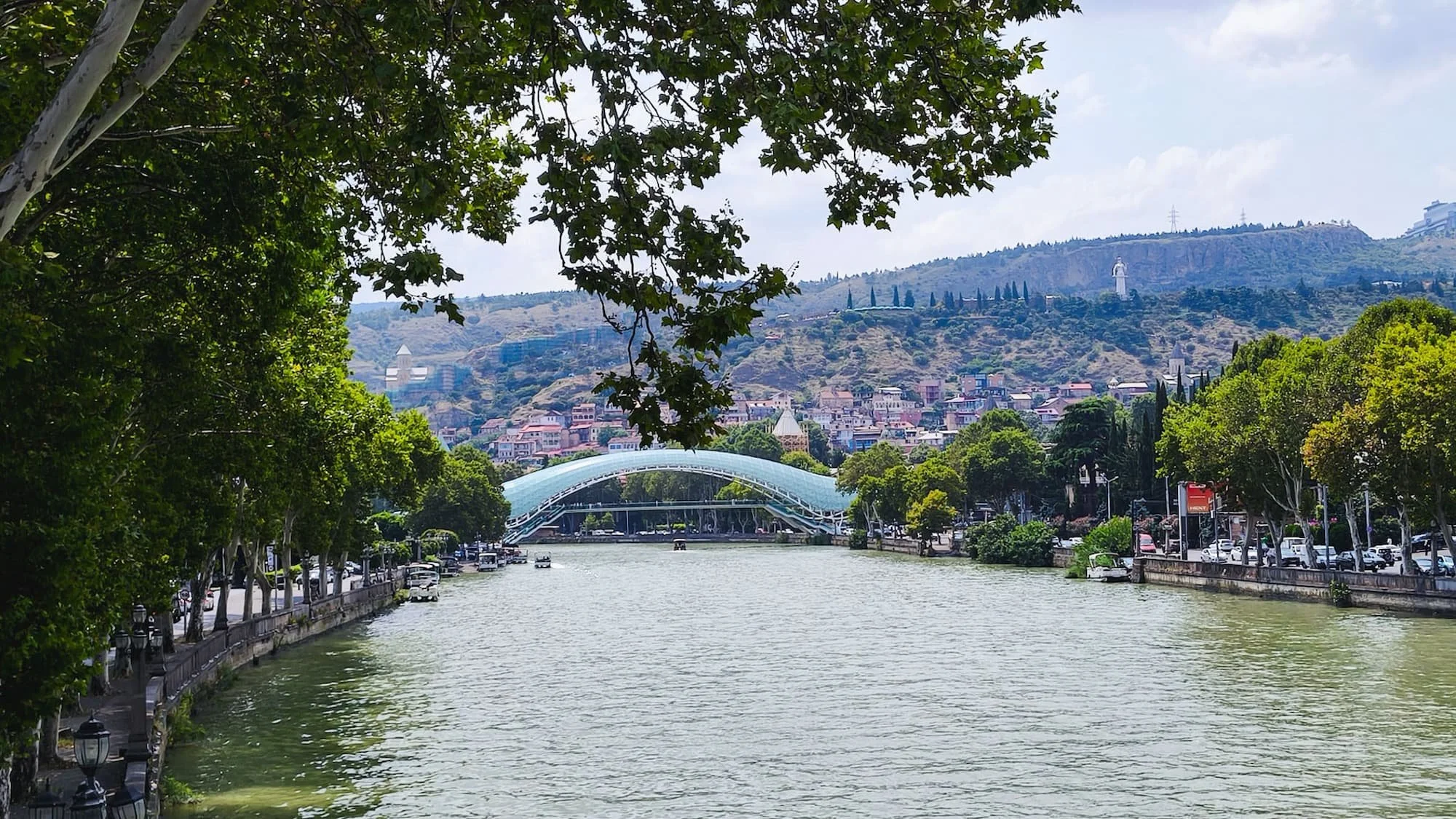
The Bridge of Peace is a futuristic, wave-like pedestrian bridge connecting Rike Park with the Old Town across the Kura River. Designed by Italian architect Michele De Lucchi, it opened in 2010 and lights up at night with thousands of LEDs.
For me, it was worth walking across once both for the unusual futuristic design and the open views along the river. It does tend to be crowded, though, especially during the busiest sightseeing hours.
How long to spend: 20–30 minutes. Longer if you want a proper park break.
Pair with: Cable car, Narikala, Mother of Georgia, Avlabari.
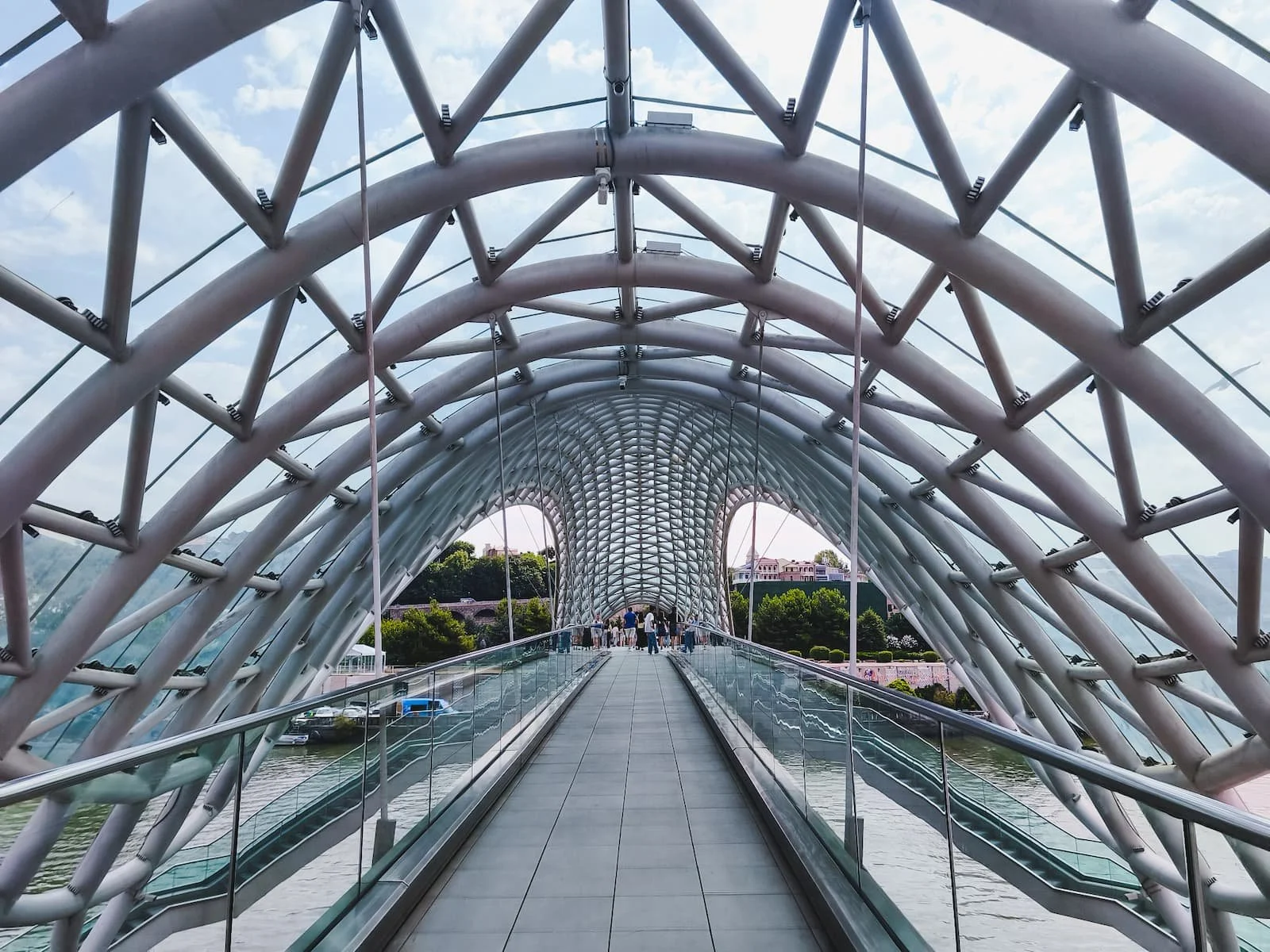
On Bridge of Peace.
Rike Park to Narikala Cable Car
The cable car from Rike Park is the easiest way to reach the Narikala hilltop.
The ride only takes around two to three minutes, but the full-length windows give you wide views over the river, Old Tbilisi, and the surrounding hills. If you are afraid of heights, the feeling of hanging over the city may be slightly uncomfortable, although it is over quickly.
During our visit, the ticket window was marked cash only, which was confusing. However, we could tap a contactless bank card directly at the turnstile. Cash was only needed if you wanted to buy a transit card.
The line was around ten minutes when we went at approximately 11:00 AM.
How long to spend: Allow around 10–20 minutes including a possible queue.
Pair with: Rike Park, Narikala Hilltop, Mother of Georgia.
Cost: Around 2.5 GEL one way during our 2026 visit.
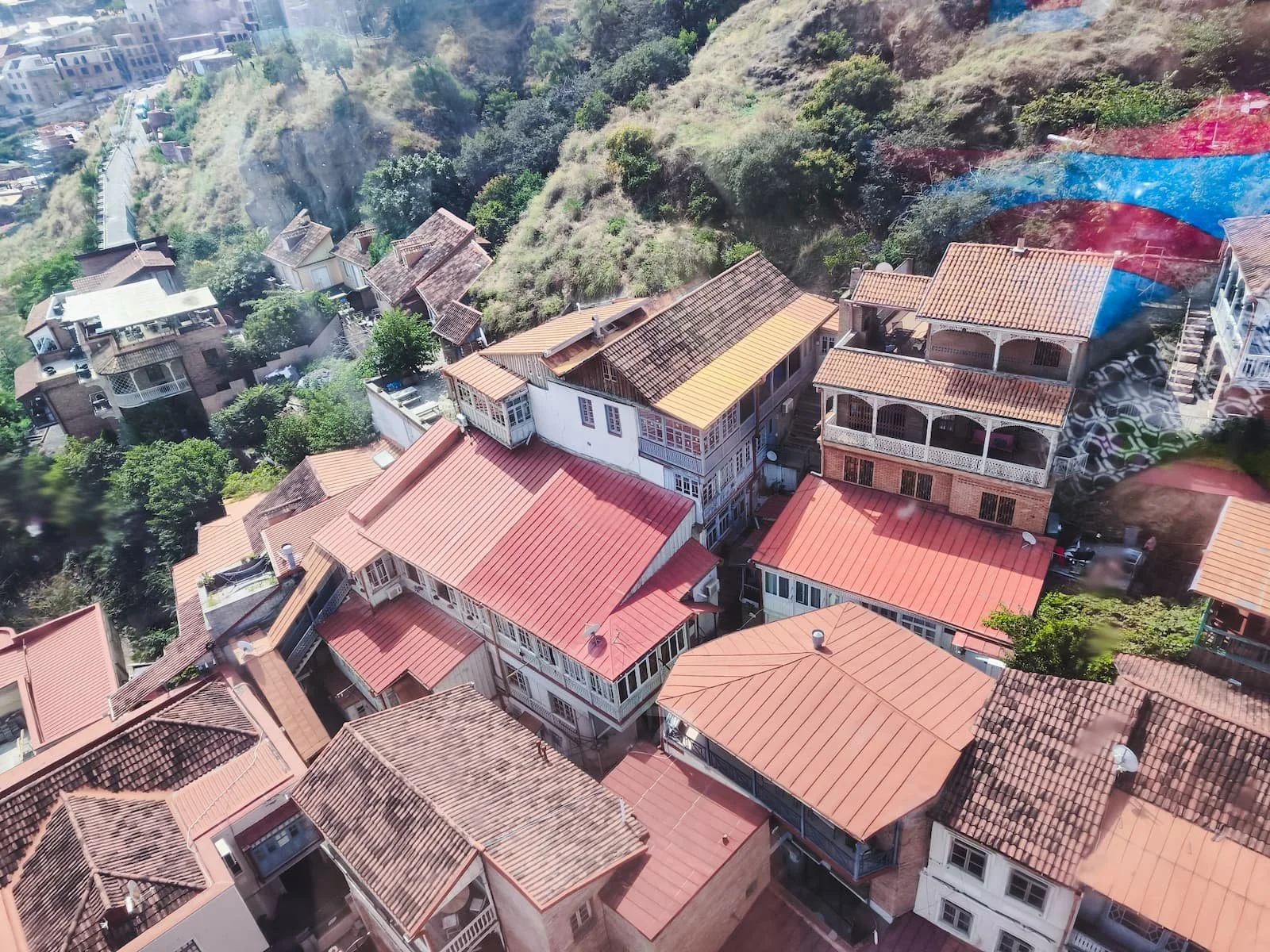
View from cable car. I was fortunate enough to sit right next to the full-length window.
Narikala Hilltop
Narikala hilltop is one of Tbilisi’s most recognizable viewpoints, with panoramic city views on one side and a green valley containing the Botanical Garden on the other.
You can reach it either by climbing through the Betlemi hillside neighborhood from the Old Town or by taking the cable car from Rike Park.
Some of the main things to see up here include:
Narikala Fortress: One of the defining landmarks of Old Tbilisi, the fortress is the ruins of a 4th-century ancient citadel consisting of stone walls perched perilously along the hill ridge. Unfortunately, much of it was covered in green construction netting during our visit, but you can still get a sense of how imposing the setting is.
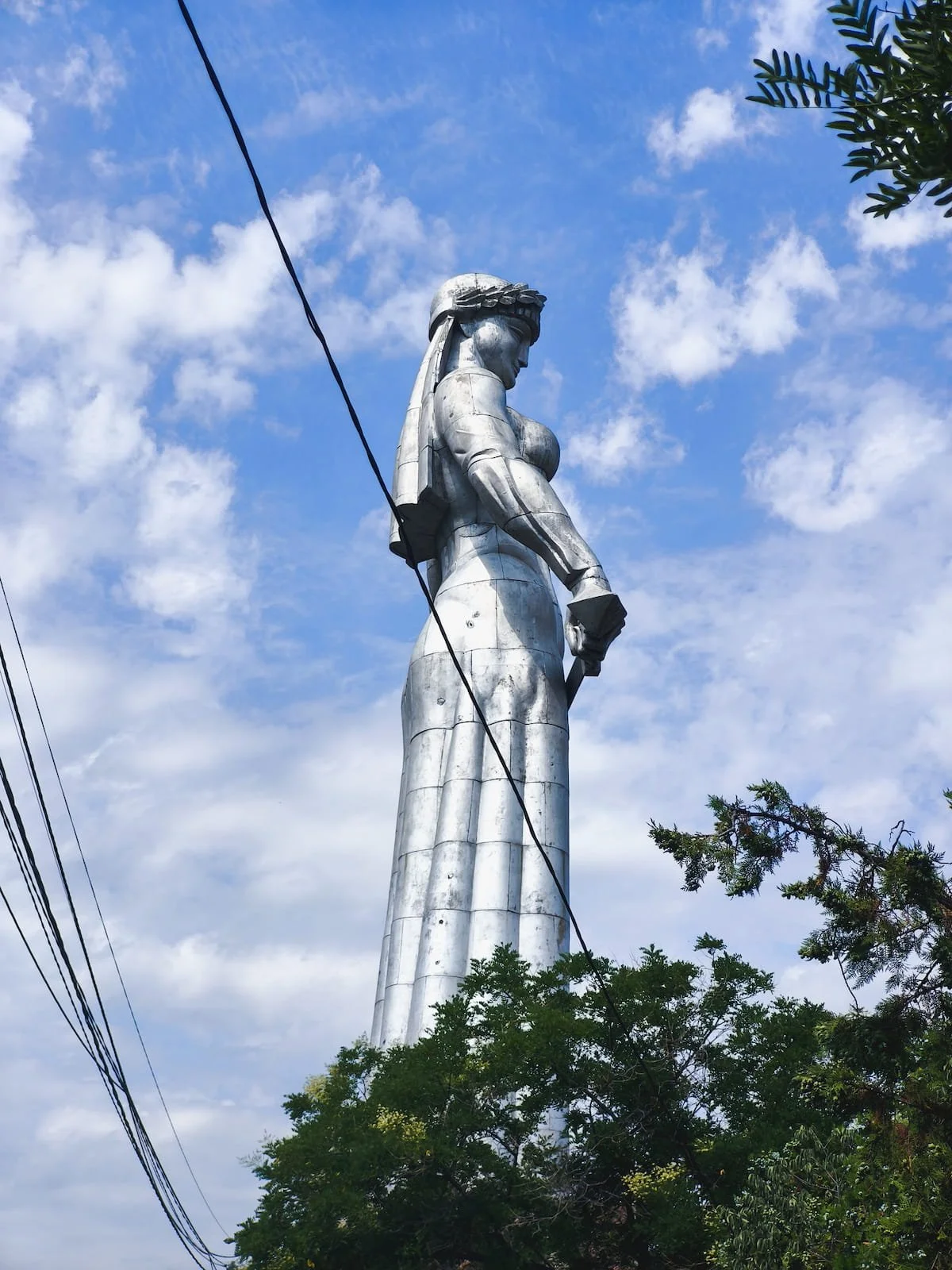
Mother of Georgia: An enormous aluminum statue overlooking the city, holding wine in one hand for friends and a sword in the other for enemies. It was erected in 1958 for the 1,500th anniversary of Tbilisi and has become one of the city’s clearest symbols of Georgian hospitality and its willingness to defend itself. From the hilltop you are mostly beside or below the statue, so this is not necessarily where you get the best full frontal view of it.
National Botanical Garden: The large wooded valley on the opposite side of the ridge contains walking paths, rivers, and a waterfall. You can look down into the greenery from Narikala, but entering the garden is enough of an activity that I would treat it separately rather than automatically adding it to a quick Old Town visit.
If you take the cable car, you arrive beside Narikala Fortress and can follow the hilltop path toward Mother of Georgia. If you walk up from Betlemi, different stairways reach the ridge near either the statue or the cable car area, although some paths were closed because of construction during our visit.
How long to spend: Around 30–45 minutes for the hilltop itself.
Pair with: Rike Park, cable car, Betlemi and Gomi.
Entrance: Free. The Botanical Garden requires a separate ticket.
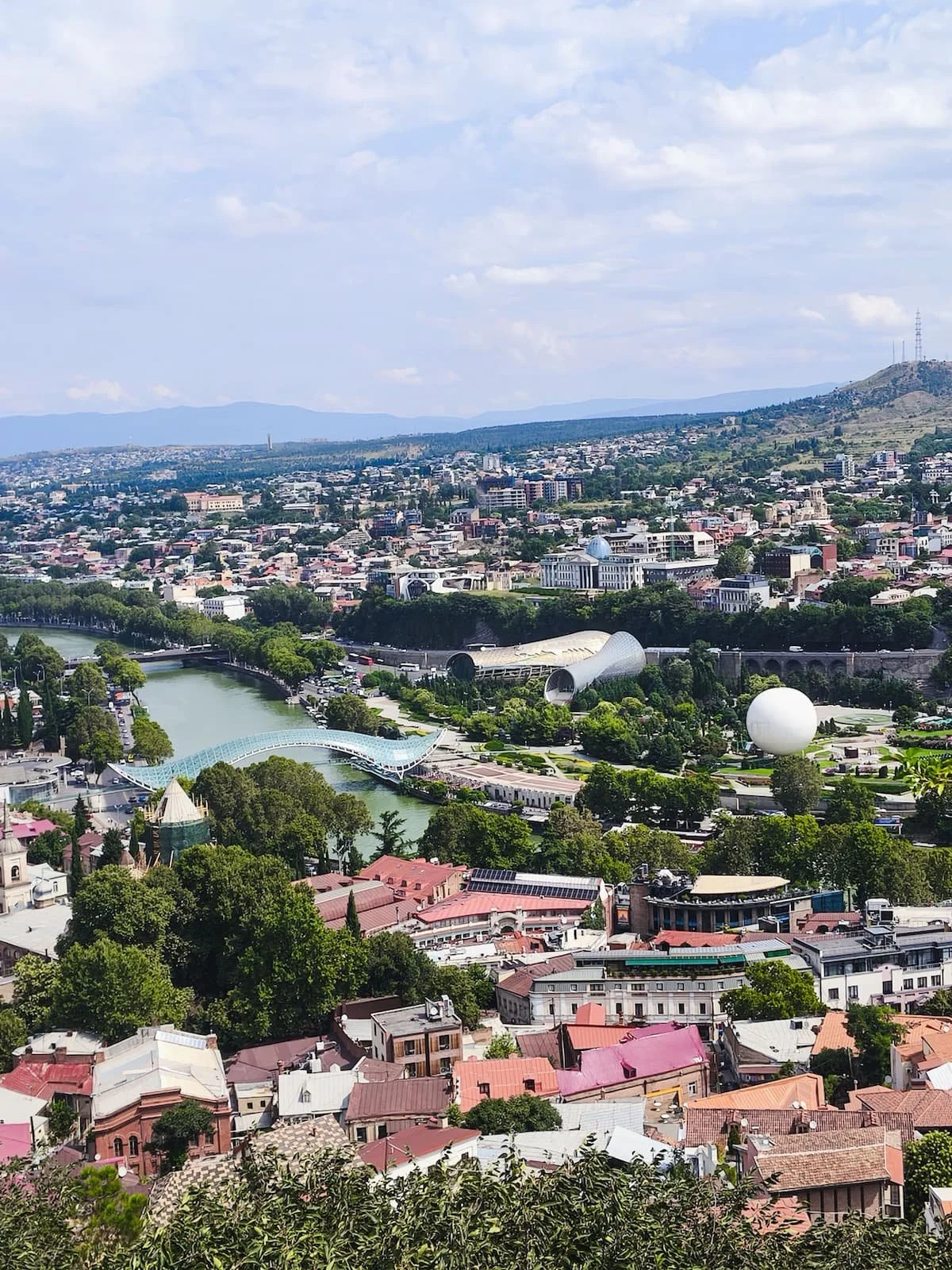
Betlemi and Gomi
Betlemi and Gomi are historic hillside areas between Narikala and the lower Old Town.
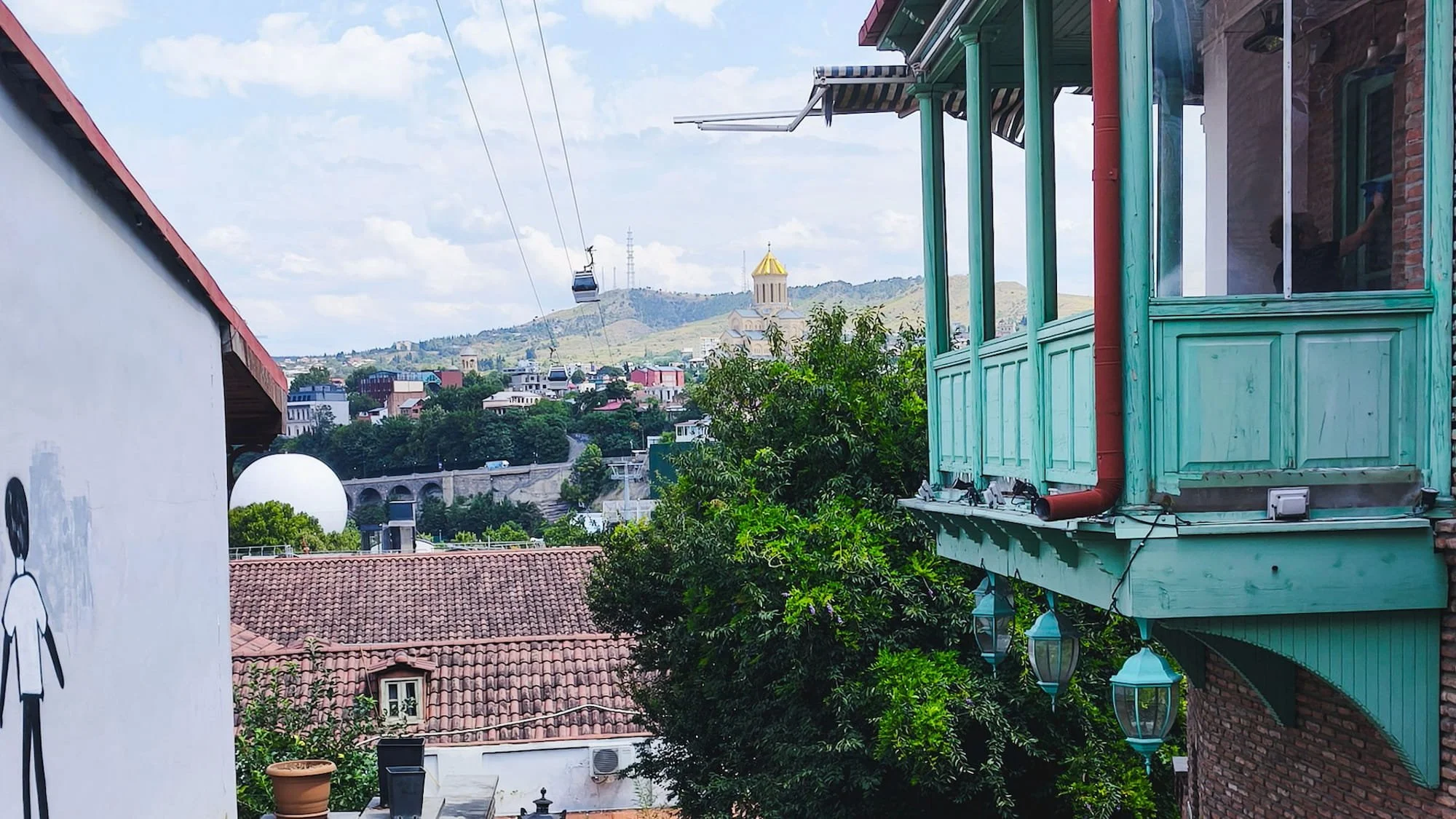
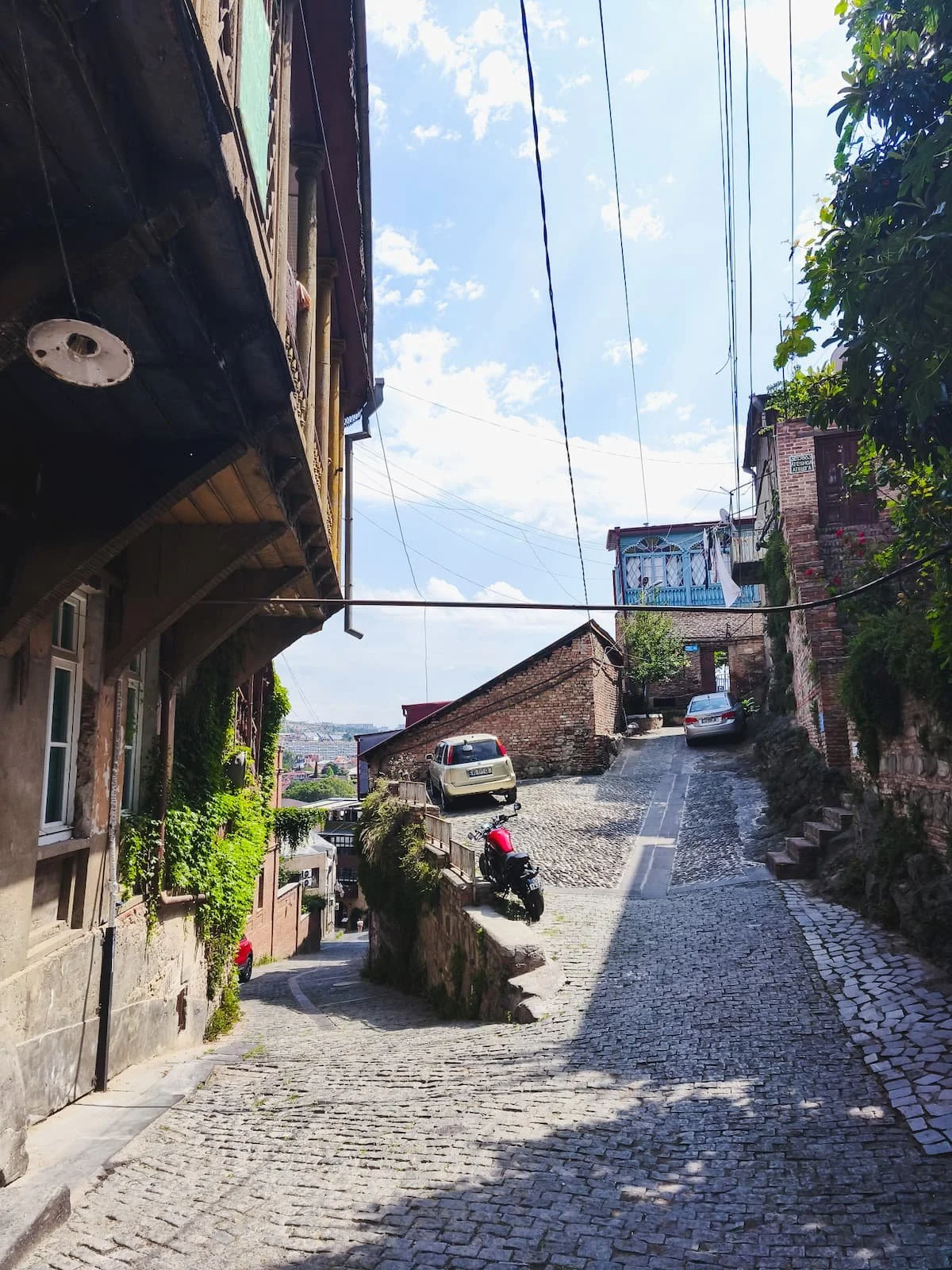
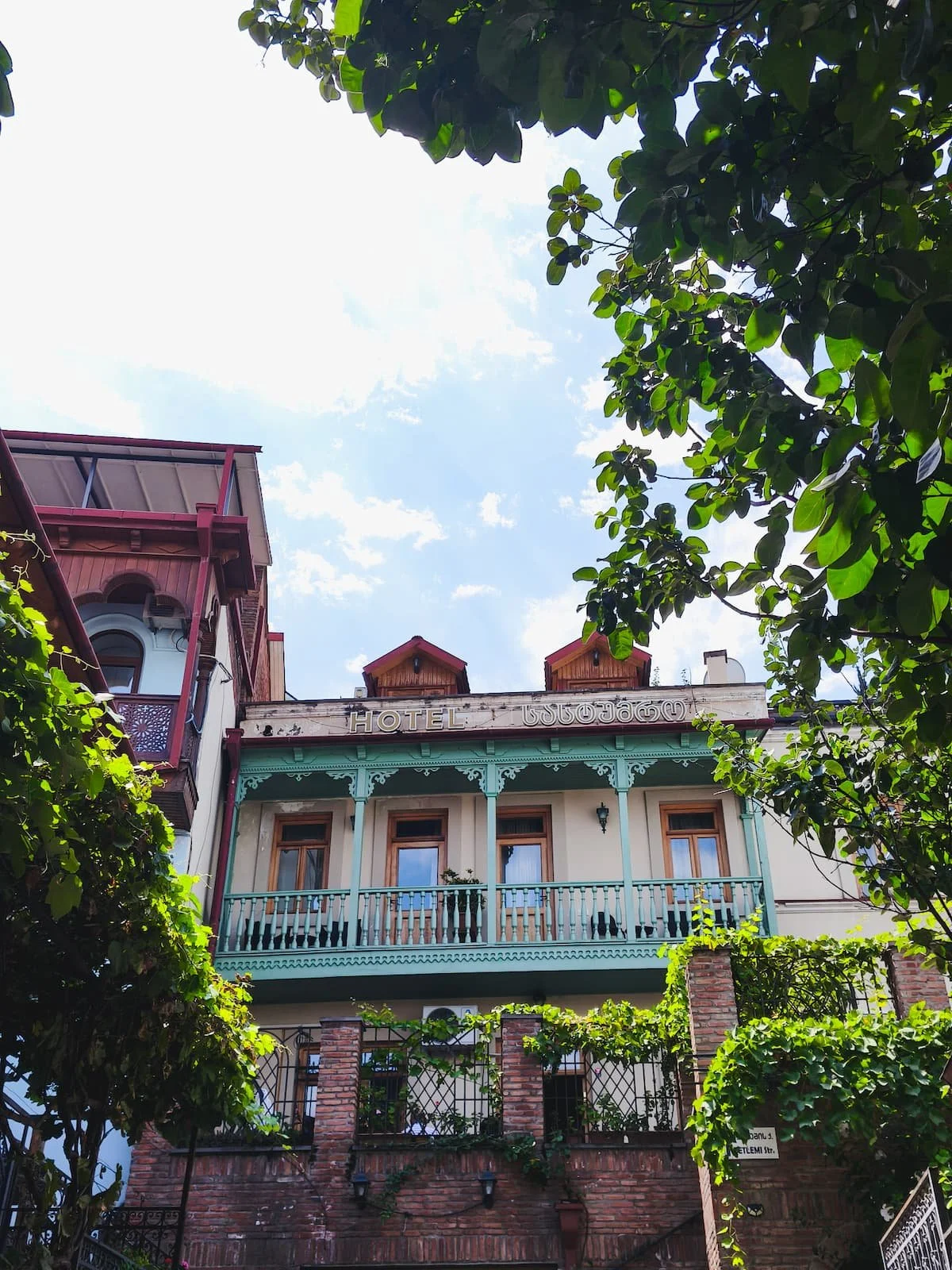
This is one of the best parts of Tbilisi for seeing how the older residential city fits together. The main appeal is not one specific attraction, but the quiet residential atmosphere with colorful wooden balconies and courtyards tucked between trees, and stunning views of the city below and the hilltop above that just peak out in unexpected corners. The streets are steep and uneven, so watch your step as you walk.
Honestly, I personally loved this section. It’s likely that most people take the cable car up and down Narikala and skip this area, since it was much calmer and quieter than the crowded hilltop and lower Old Town. At times, we were the only ones on the street.
I would use Betlemi and Gomi Streets as loose markers rather than trying to follow one exact route. Paths can also close because of construction, as happened near Narikala during our visit.
How long to spend: Around 30–60 minutes depending on how much you wander.
Pair with: Narikala Hilltop, Mother of Georgia, Lower Old Tbilisi.
Lower Old Tbilisi
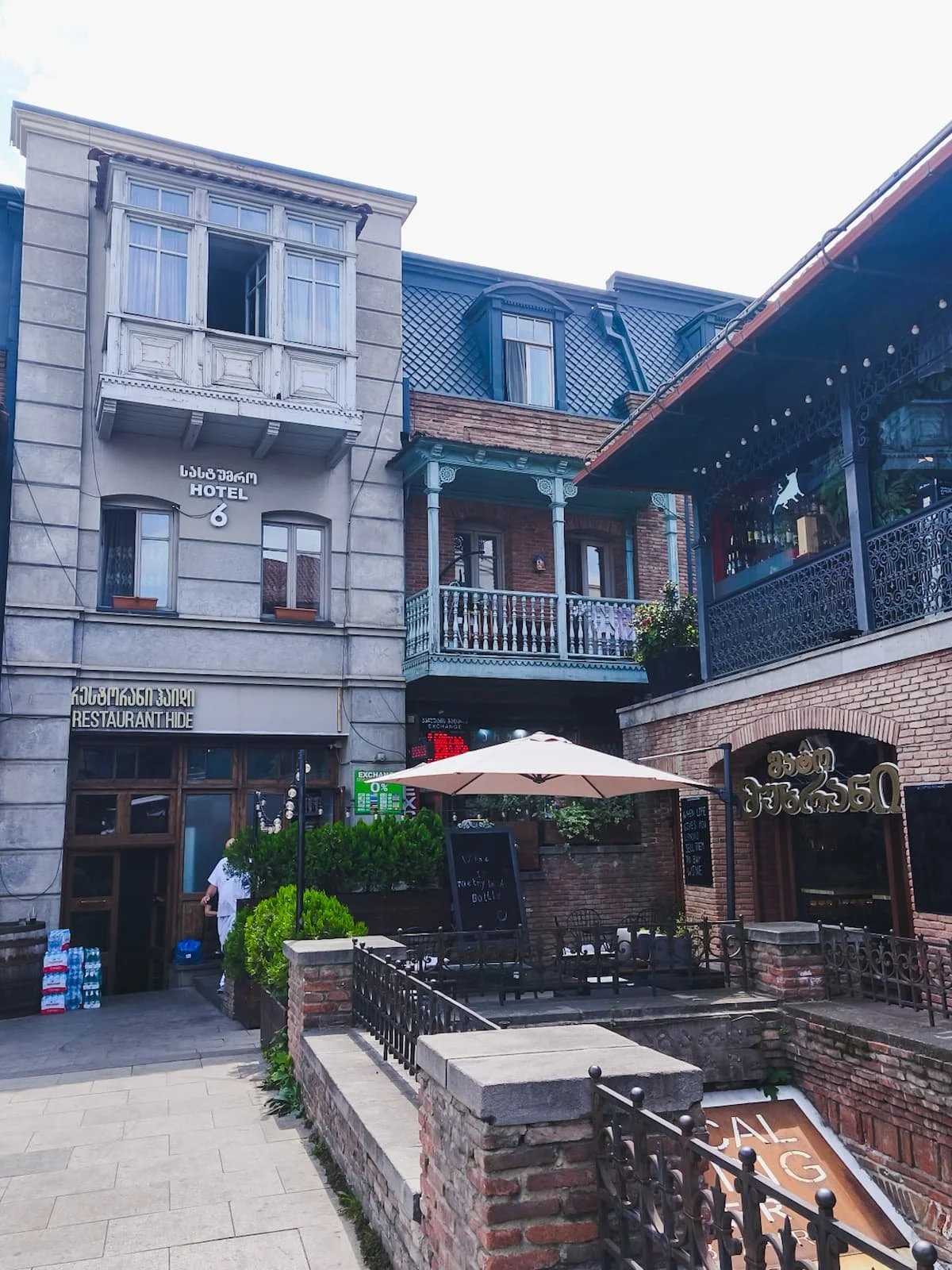
The lower part of Old Tbilisi is the main tourist center, a dense network of pedestrian streets, little squares, restaurants, wine bars, churches, and old balconied buildings between the river and the Narikala hillside. You will probably pass through it several times while exploring the historic center. The vibe is energetic (though a bit touristy in my opinion), and the architecture is beautiful.
Some places to look out for:
Meidan Square: A busy square at the foot of the hillside and a useful orientation point between Narikala, Abanotubani, and the lower Old Town. It is surrounded by restaurants and traditional balconied buildings, although the square itself does not require much time.
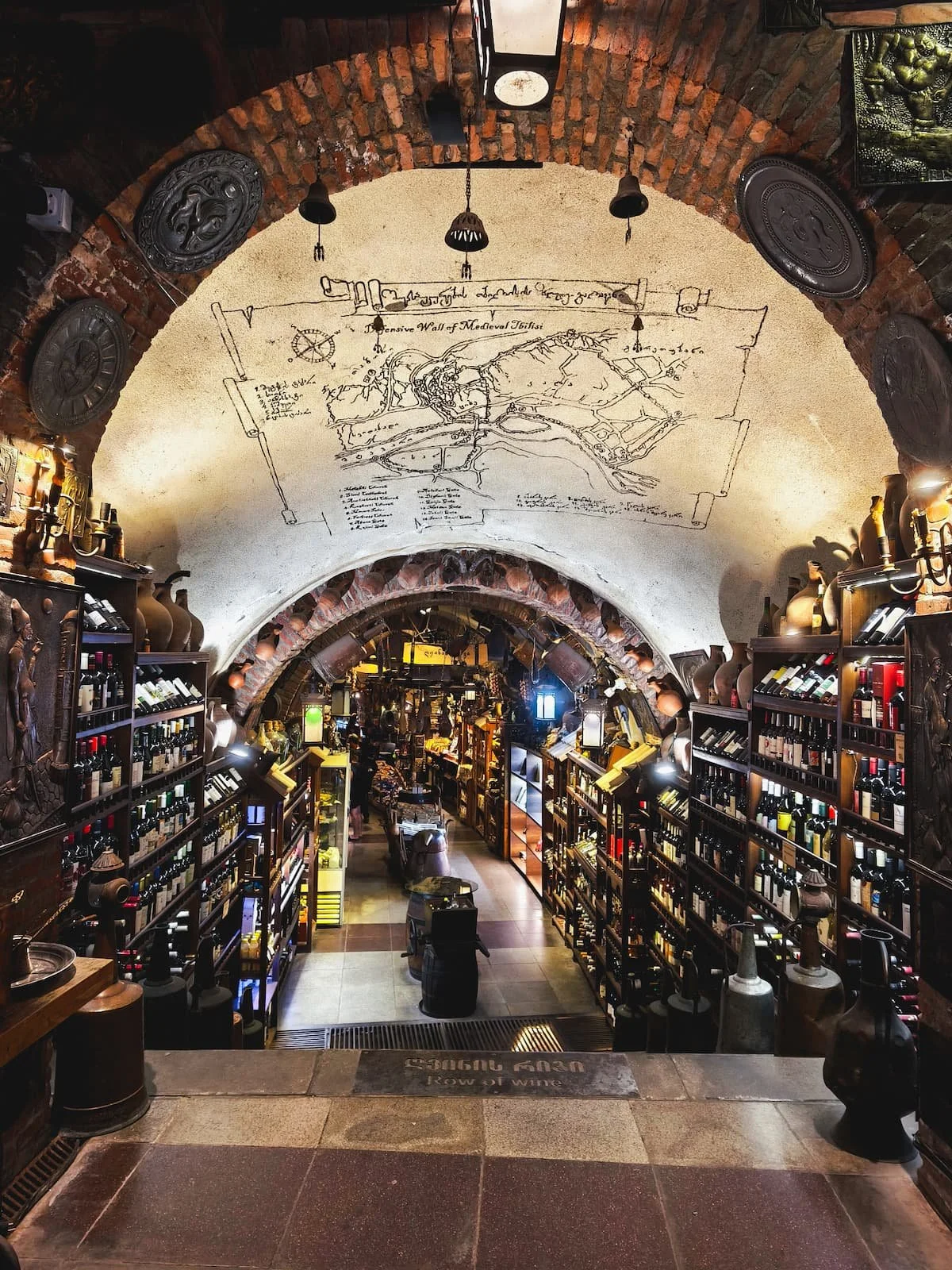
Meidan Bazaar: A small underground market beneath the square selling Georgian wine, churchkhela, spices, ceramics, crafts, and souvenirs. It is mainly aimed at visitors, but the brick-vaulted underground setting is unique on its own and makes it worth a quick look if you are already passing through.
Erekle II Street: A pedestrian street lined with cafés, shops, and wine bars. It is fairly polished and visitor-oriented, but works well as a pleasant connector through the neighborhood.
Shardeni Street: One of the busiest restaurant and bar streets in the Old Town. I found it more touristy than atmospheric, so I would walk through rather than make it a destination of its own.
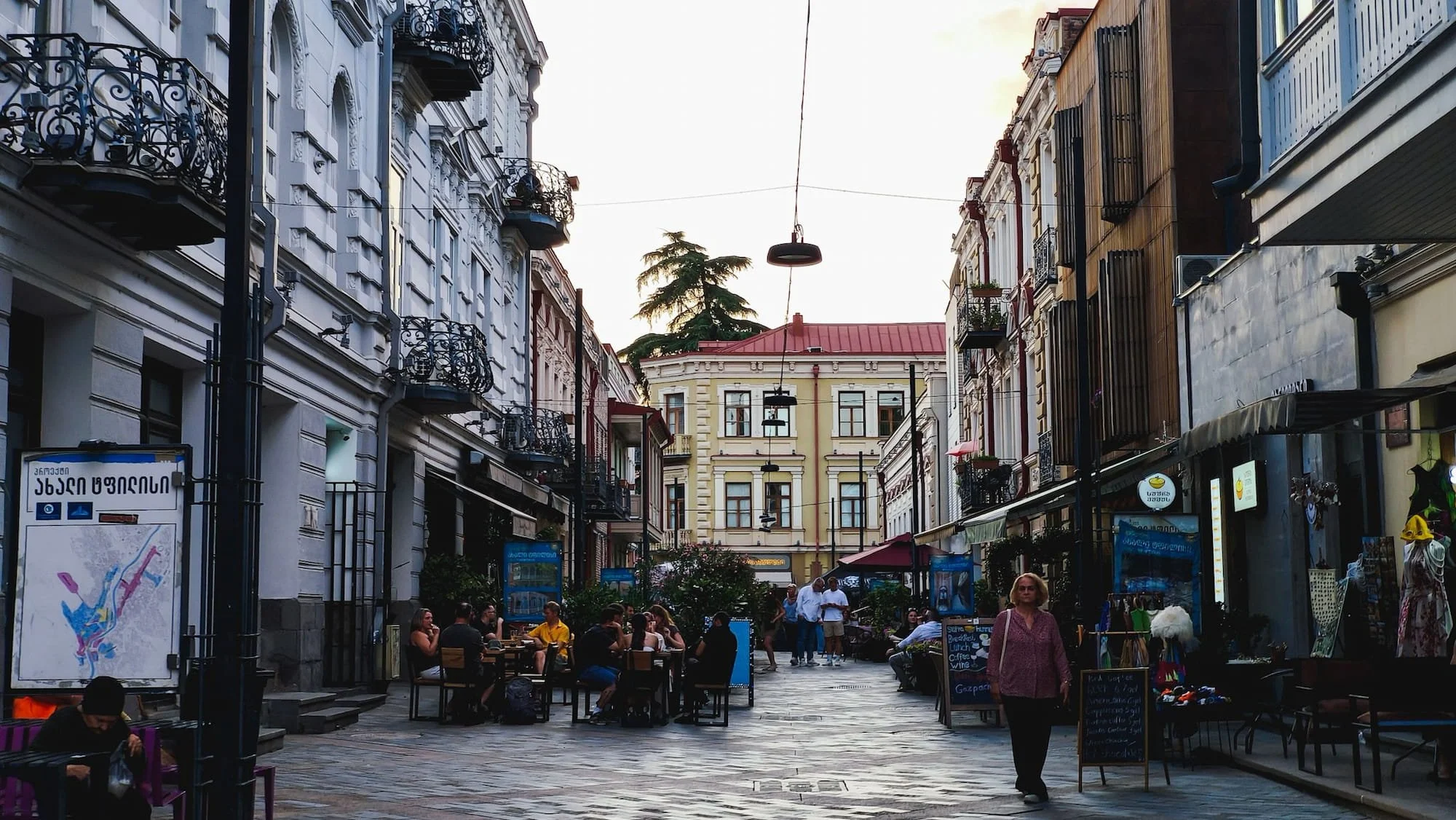
The smaller surrounding lanes were generally more interesting to me than any one of the named streets themselves, especially where old wooden balconies and courtyards sit beside newer restaurants and businesses.
How long to spend: Around 30–60 minutes as part of a broader Old Tbilisi walk.
Pair with: Sioni Cathedral, Gabriadze Clock Tower, Anchiskhati Basilica, Abanotubani.
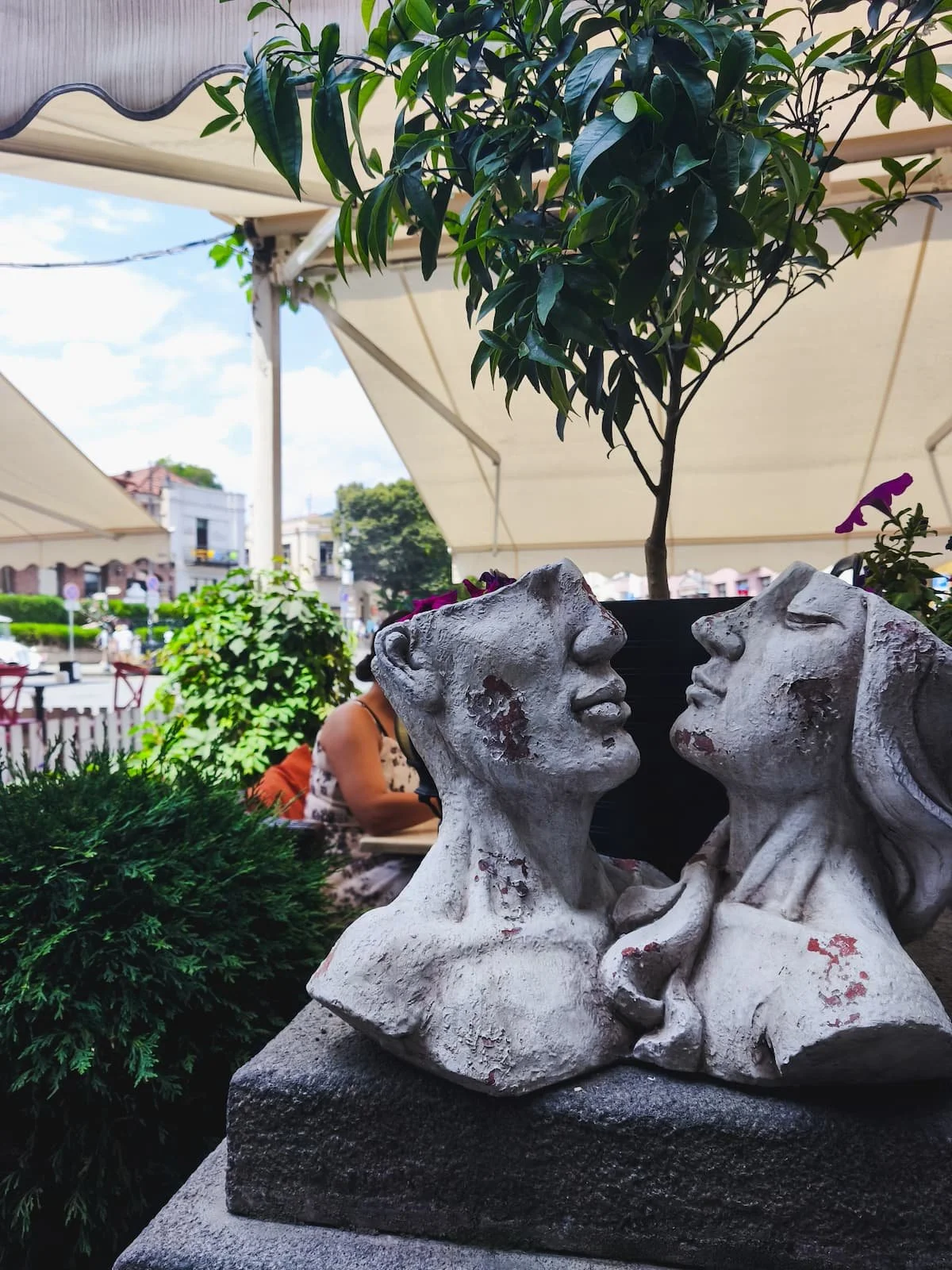
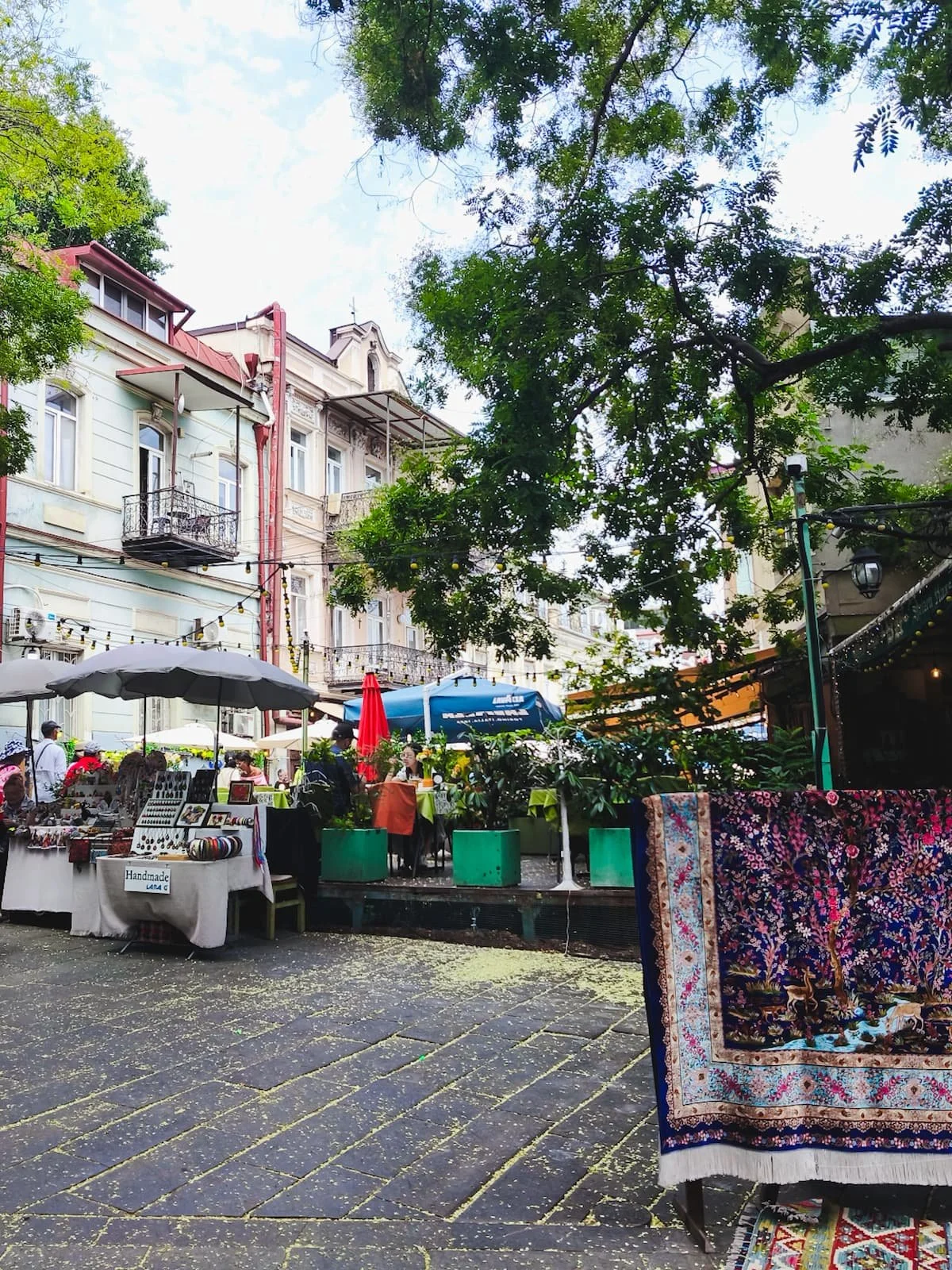
Sioni Cathedral
Sioni Cathedral is one of Tbilisi’s most important active Georgian Orthodox churches. It was the main seat of the Patriarch of the Georgian Orthodox Church until Sameba Cathedral opened and replaced it in 2004. Sioni also holds the Cross of St. Nino, a cross made of grapevine branches bound with Saint Nino's own hair and the most sacred relic in the Georgian Orthodox Church. St. Nino brought Christianity to Georgia in the 4th century.
The church has roots going back to the early medieval period, although it has been damaged, rebuilt, and altered repeatedly over the centuries. Compared to Sameba, Sioni is much less opulent, but it’s not its size rather than its long history and continuing religious role that make it significant.
You can simply take a look from the outside, though I don’t really think there’s too much to see without entering. If you do, remember that it remains an active place of worship rather than simply a historical attraction.
How long to spend: Around 10–20 minutes.
Entrance: Free to enter.
Remember: Dress codes tend to be strict.
Pair with: Lower Old Tbilisi, Erekle II Street, Meidan Square.
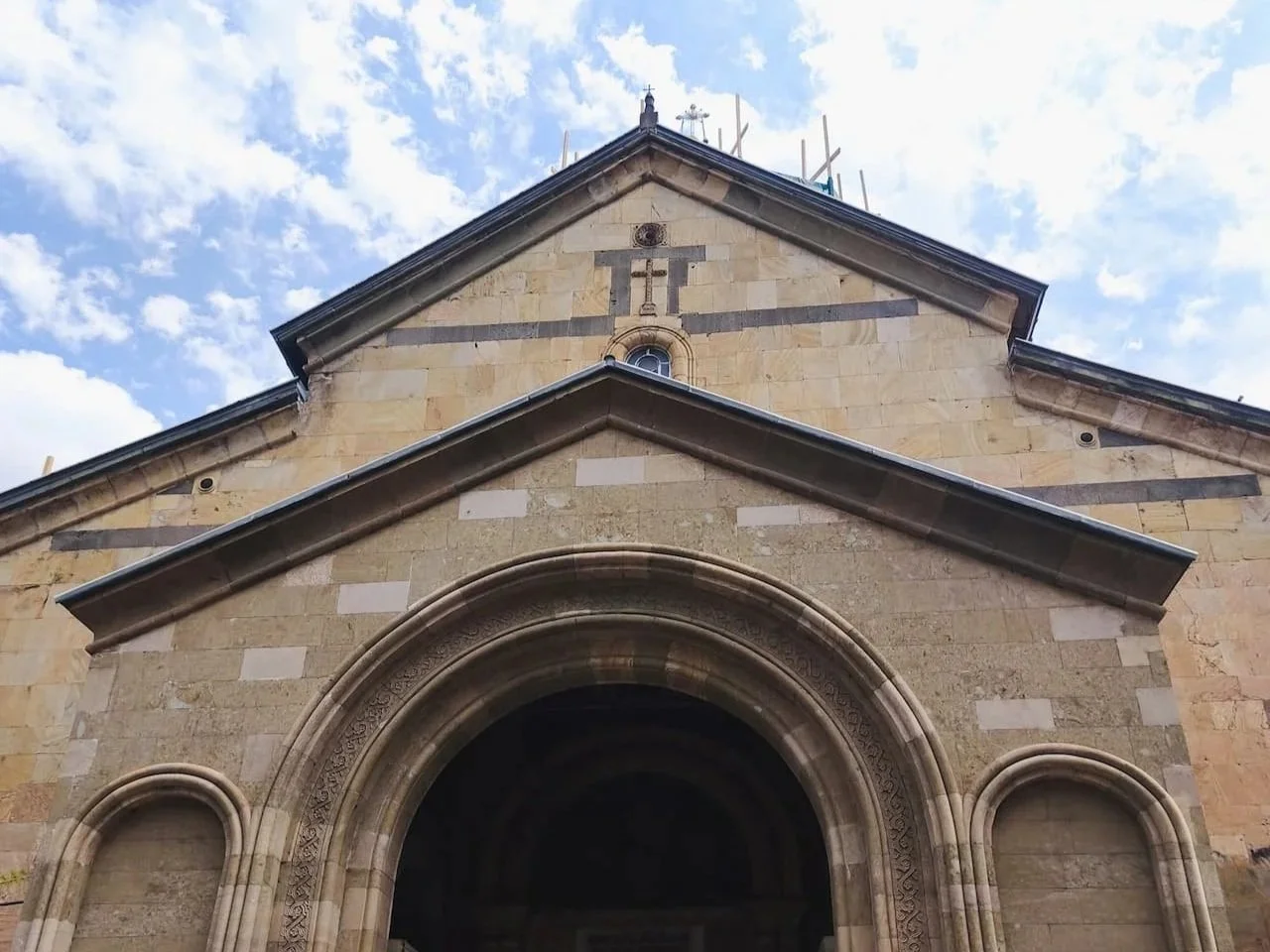
Sioni Cathedral.
Gabriadze Theatre and Clock Tower
The Gabriadze Theatre was founded in 1981 by Georgian artist, writer, and puppeteer Rezo Gabriadze, who also created many of the theater’s puppets, sets, and productions. The whimsical clock tower beside it looks much older, but it was actually added by Gabriadze in 2010.
Today, it’s one of the most photographed sights in central Tbilisi, with its deliberately crooked form, mismatched tiles, tiny windows, and handmade details that make it feel almost like part of a storybook set. Every hour, a small golden angel appears and rings the bell, while at noon and 7:00 PM the tower puts on a longer puppet performance called The Circle of Life.
We didn’t catch the longer puppet performance while we visited, but it was still worth a quick stop to see the quirky design, which honestly gave me a little bit of Disney energy. It can get quite crowded around the tower, especially around performance times or if you’re trying to take photos.
How long to spend: Around 5–10 minutes, longer if you stay for one of the performances.
Pair with: Anchiskhati Basilica, Lower Old Tbilisi.
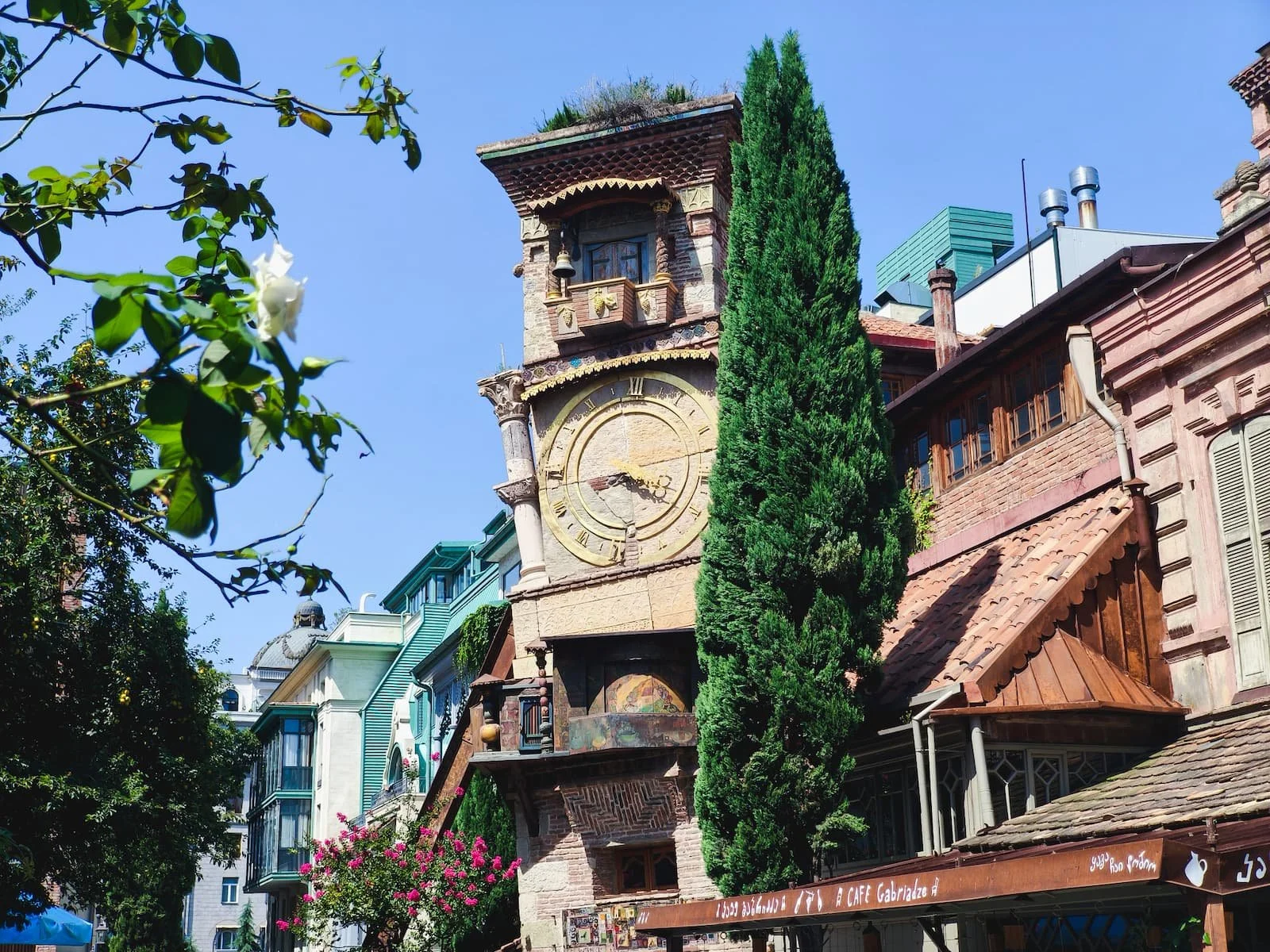
Gabriadze Clock Tower.
Anchiskhati Basilica
Anchiskhati Basilica is believed to be Tbilisi’s oldest surviving church, dating to the sixth century.
It is much smaller than Sioni or Sameba, with a simple stone-and-brick exterior that gave me a sense of the age of the church. The interior was also more modest, with faded frescoes and not so grand or heavily decorated.
Dress rules to enter the church were enforced quite strictly during our visit, and photography was not permitted. Be prepared to cover shoulders and legs, and women may also be expected to cover their hair depending on the rules in place when you enter. I found its austerity to be a bit intimidating, to be honest, but it was definitely memorable.
If you don’t want to enter, I think it’s still worth a quick visit to see the exterior of the building and its small, peaceful courtyard.
How long to spend: Around 10–15 minutes.
Pair with: Gabriadze Clock Tower, Lower Old Tbilisi.
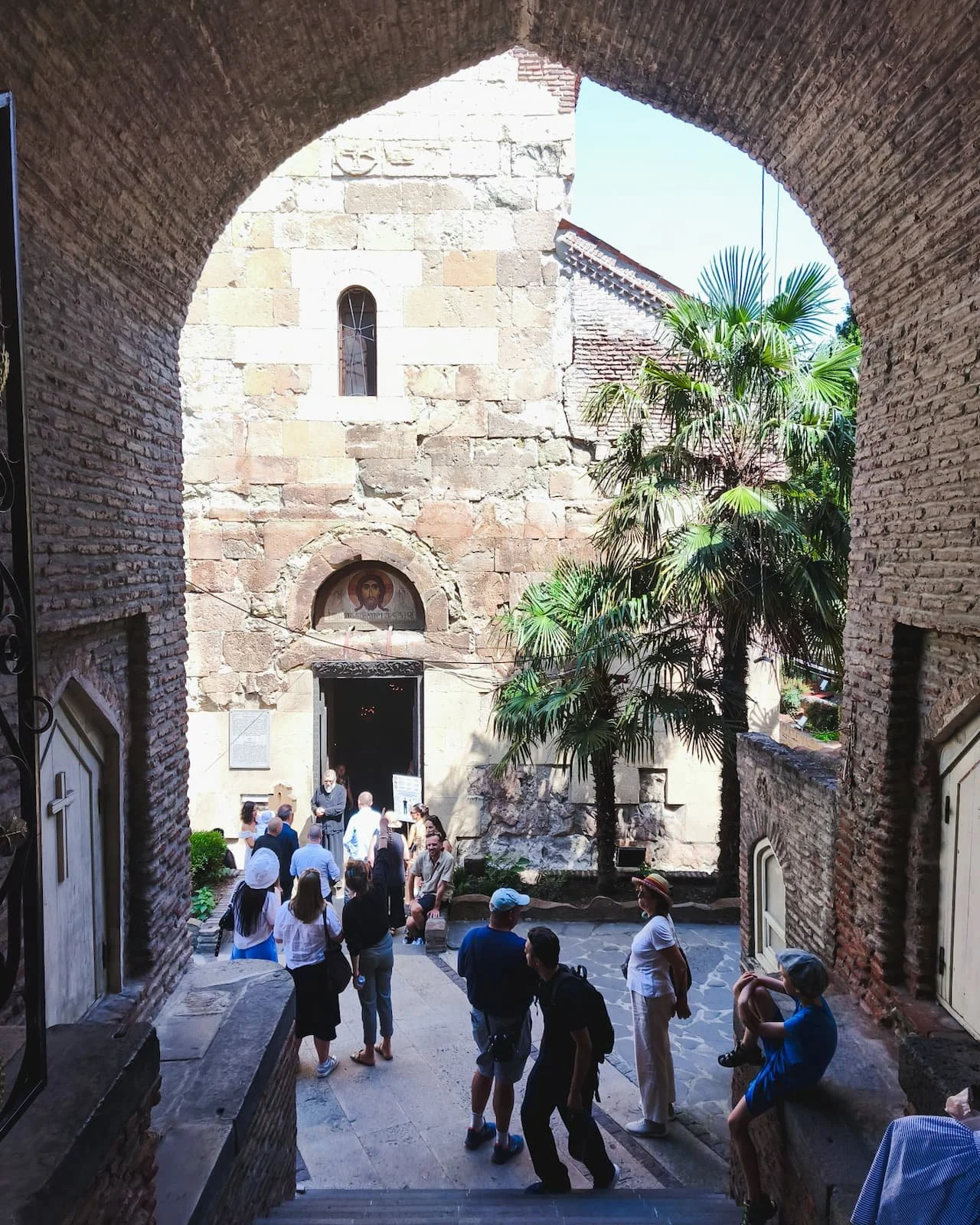
Entrance to Anchiskhati Basilica.
Abanotubani and Leghvtakhevi Gorge
Abanotubani is Tbilisi’s historic sulfur bath district and one of the most distinctive parts of the Old Town.
Instead of the wooden balconies and hillside houses you see nearby around Meidan Square, the landscape here is defined by low brick domes covering bathhouses built partly underground, and a stream that runs below a gorge that leads to a waterfall.
The hot sulfur springs and the bathhouses built around them are closely tied to Tbilisi’s history and even to the traditional story of the city’s founding, with the name Tbilisi coming from the Georgian word for “warm.”
Some things to see while walking through the district:
Sulfur bath domes: The rounded brick roofs clustered around the district are the easiest way to see the unusual structure of the historic bathhouses from outside.
Chreli Abano: Its blue-tiled Persian-style façade makes this the most visually recognizable bathhouse in the district. You can see the exterior without booking a bath.
Leghvtakhevi Gorge: Continue behind the bathhouses and a short walkway leads into a narrow rocky gorge. The walkway can become crowded, so this is definitely not a quiet nature escape despite the dramatic cliffs.
Leghvtakhevi Waterfall: The path ends at a small waterfall. The waterfall itself is fairly modest, but I thought the enclosed gorge made the short walk worthwhile.
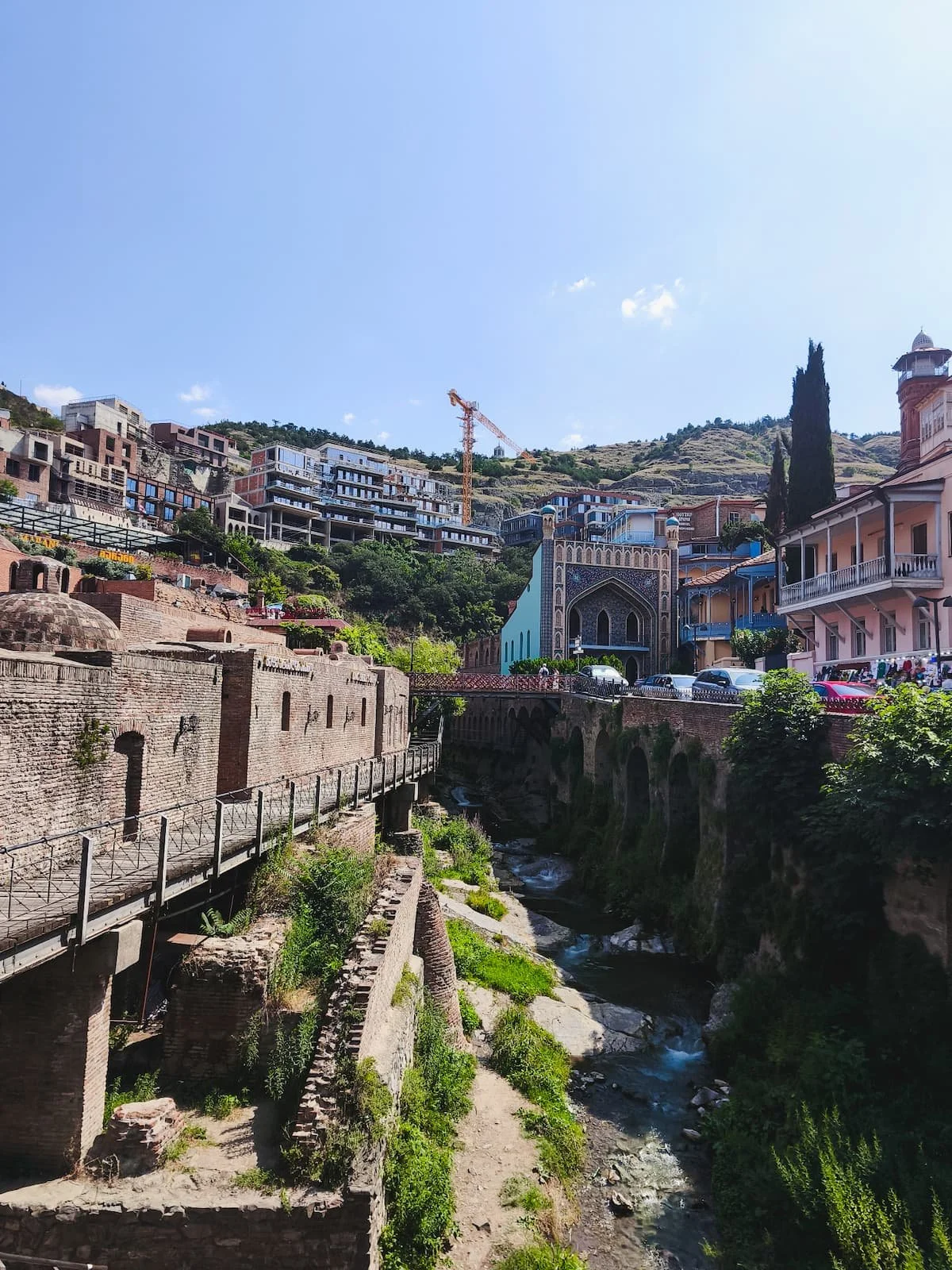
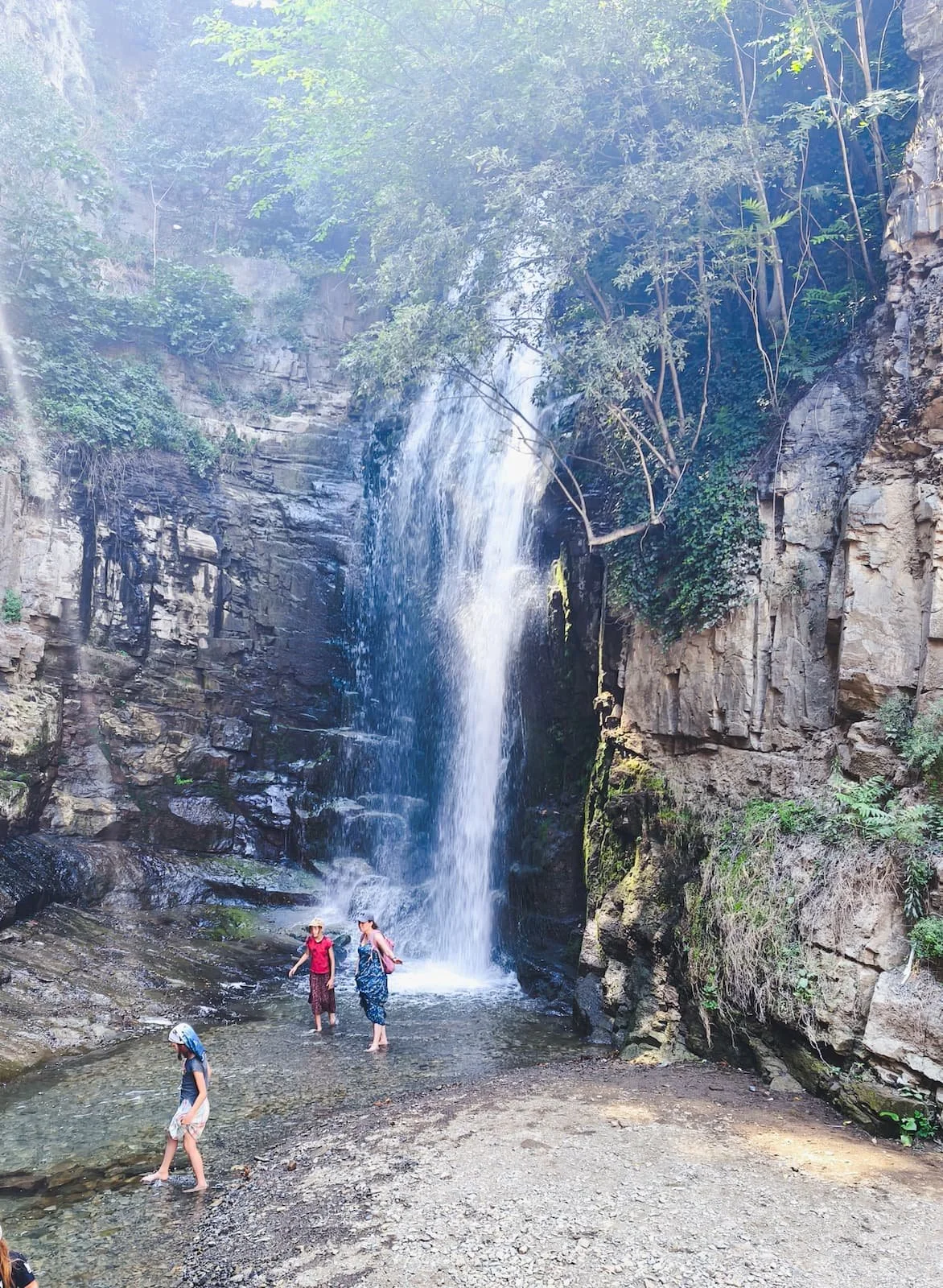
Sulfur Bath
Actually bathing in Tbilisi’s natural sulfur water is a separate experience from simply walking through Abanotubani, and I think it’s worth doing at least once on a first visit.
We booked a private room at Chreli Abano with a hot sulfur pool, cold plunge, and sauna. After a full day of walking around Tbilisi, the hot water felt incredible, and I was ridiculously relaxed afterward.
There are several bathhouses in Abanotubani, ranging from inexpensive public baths to more elaborate private rooms. If your budget allows, I’d personally choose a private room with a cold plunge — the hot sulfur water gets very warm, and alternating between the two was probably my favorite part.
For room choices, how long to book, what to bring, kisa scrubs, and what the experience is actually like, see my Tbilisi sulfur bath guide.
How long to spend: Around 1 hour without a professional scrub; 90 minutes to 2 hours if you add one.
Best time: Evening after sightseeing.
Where we went: Chreli Abano.
Cost: Depends on the bathhouse and room you choose.
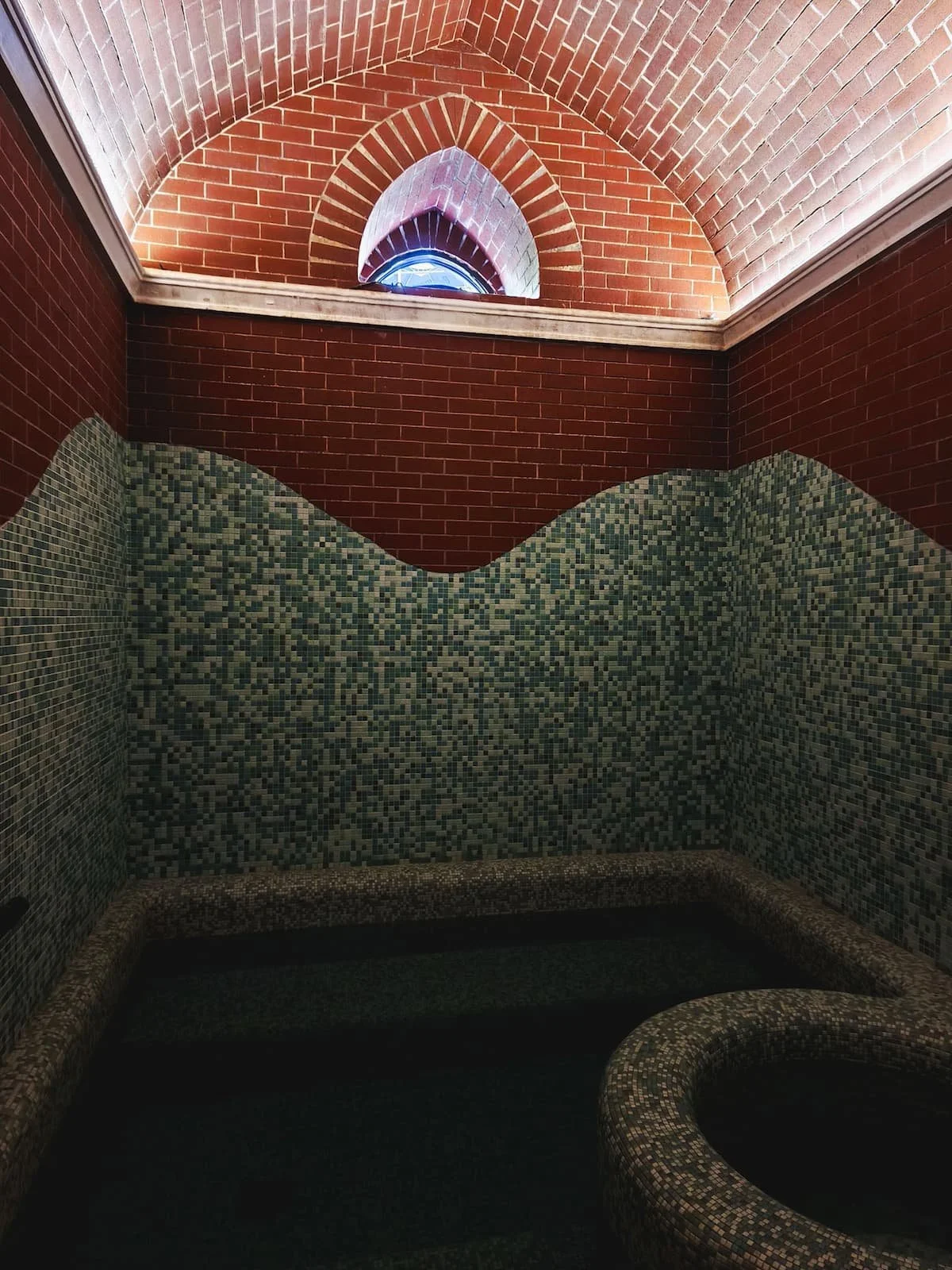
The hot and cold sulfur pools with nice, dark atmosphere in our room in Chreli Abano.
Sololaki
Sololaki Neighborhood
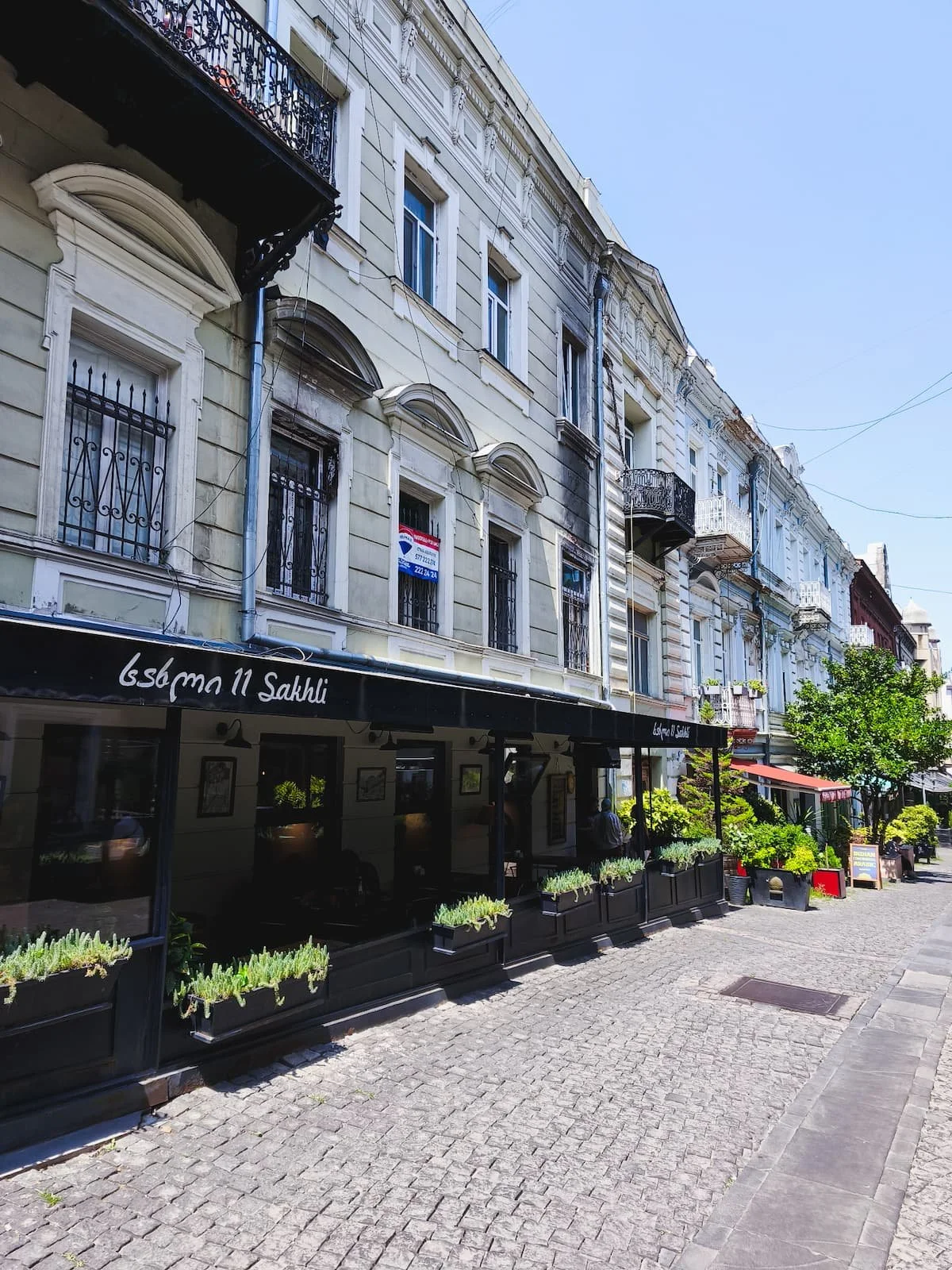
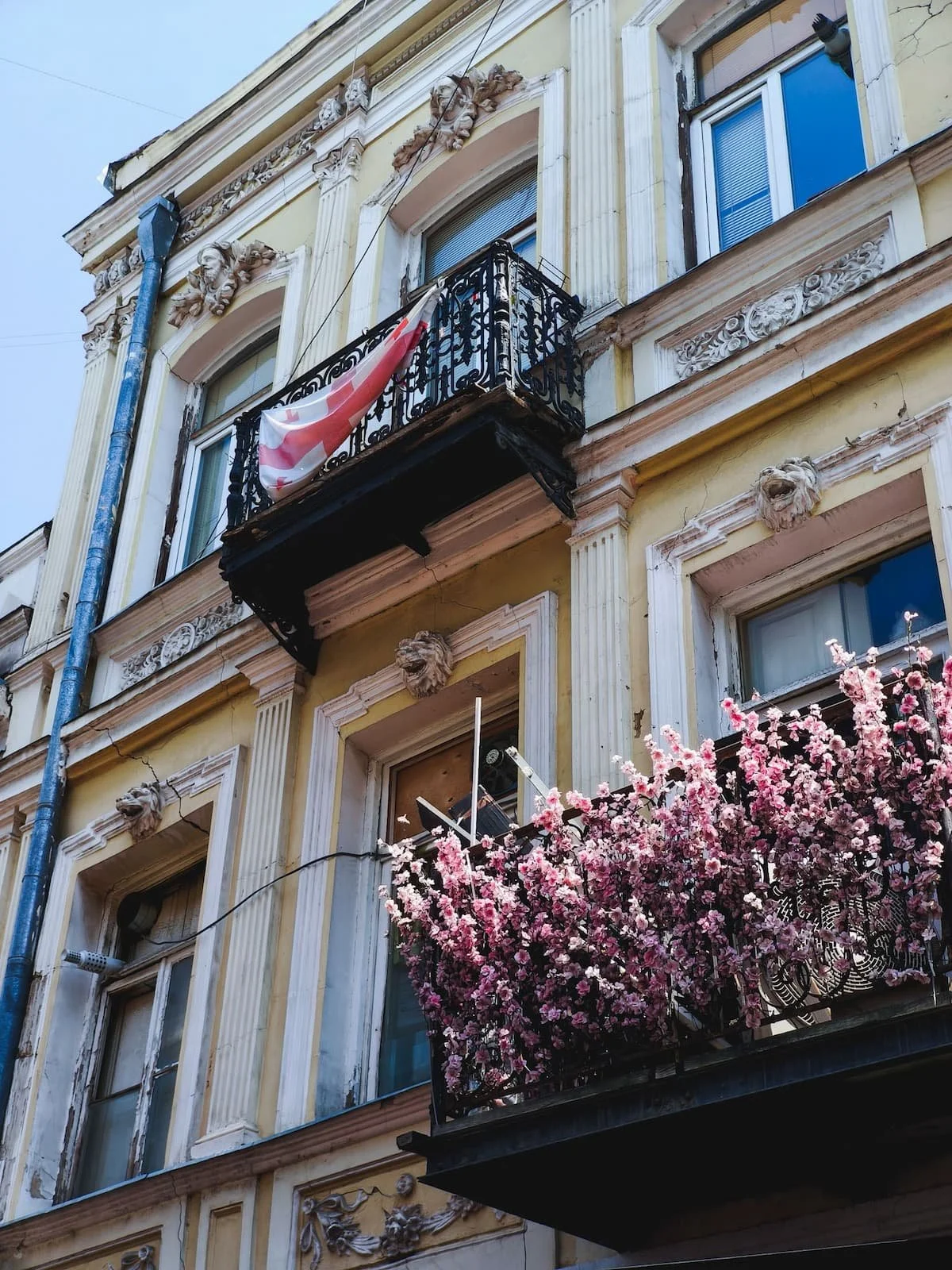
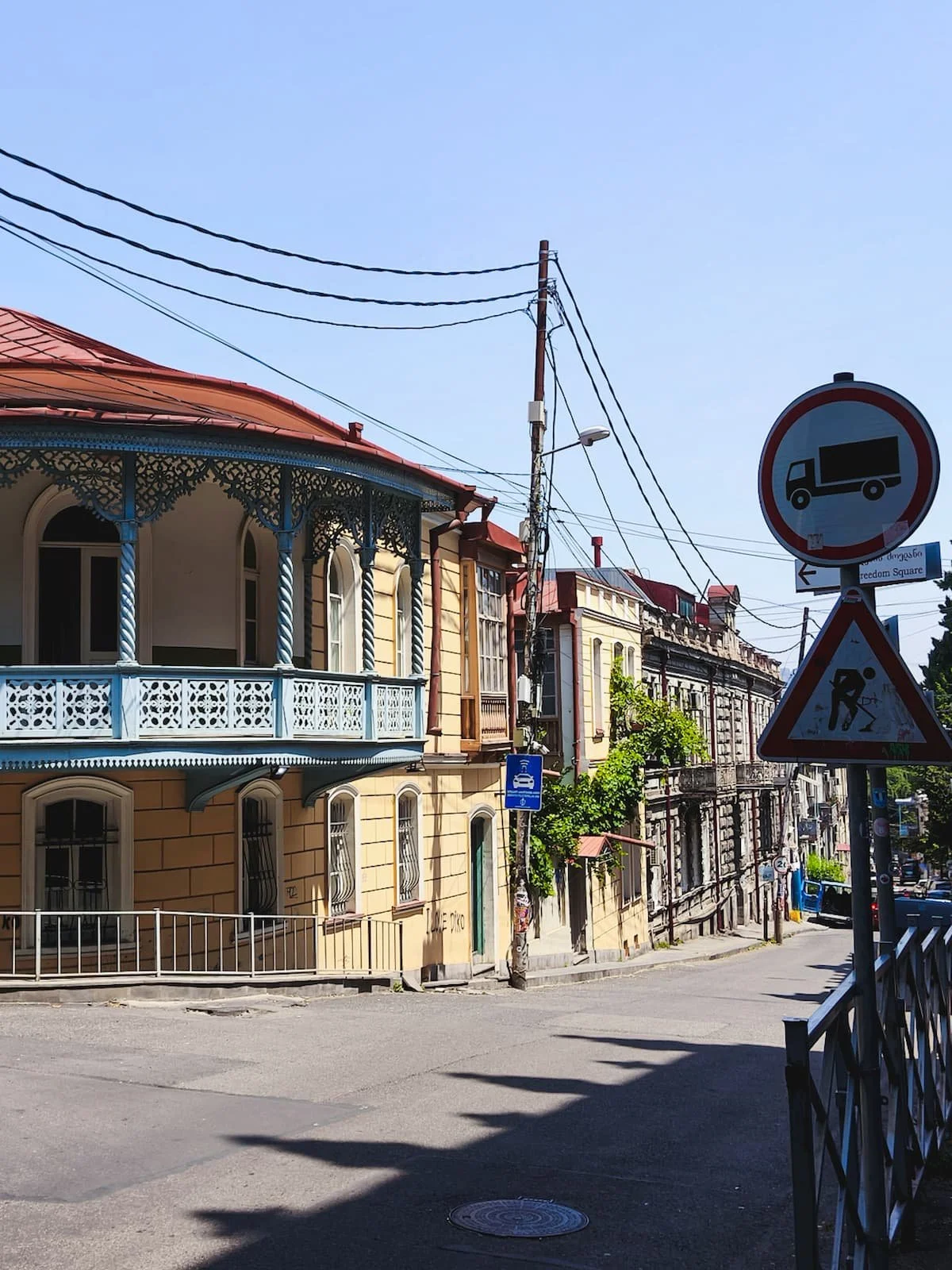
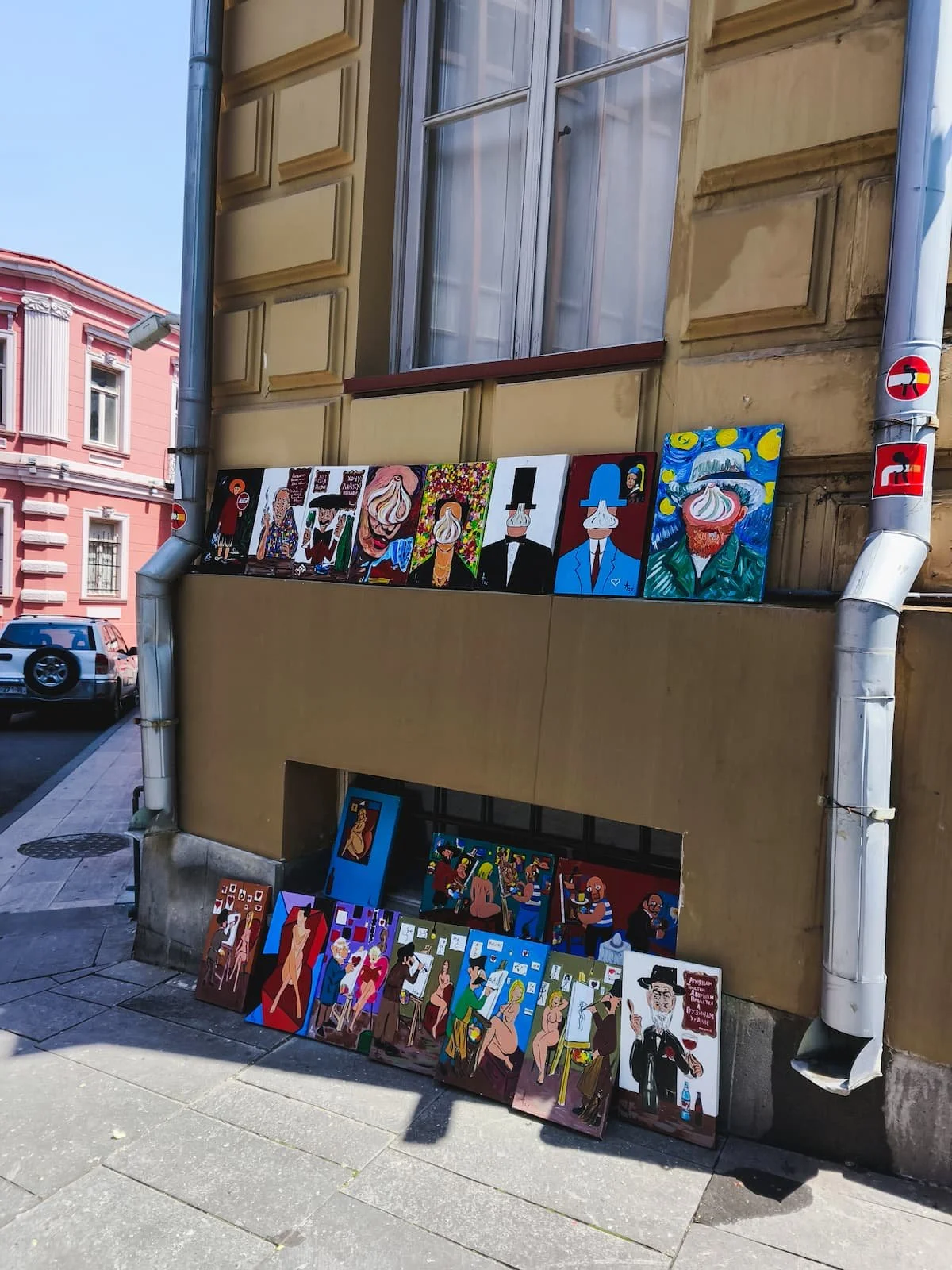
Sololaki is one of my favorite parts of central Tbilisi for seeing the city’s faded residential architecture.
The neighborhood developed as a wealthy district in the 19th and early 20th centuries, and many of its old merchant houses still have carved balconies, elaborate doors, painted entryways, decorative staircases, and shared courtyards.
What makes Sololaki interesting now for me, is the contrast. Formerly grand buildings can be weathered or partly deteriorated, while new cafés and restaurants occupy rooms and courtyards inside them. It gives the neighborhood a very different feeling from the more heavily restored parts of Old Tbilisi.
Rather than trying to find every notable building, I would use a few streets and squares as loose markers:
Galaktion Tabidze Street: A lively street leading away from Freedom Square, with historic buildings mixed with cafés and restaurants.
Gudiashvili Square: A compact restored square surrounded by traditional balconies and decorative façades. It is much more polished than many of the surrounding streets.
Lado Asatiani Street and Machabeli Street: Good streets for wandering more slowly and looking for carved balconies, colorful doors, interior courtyards, and weathered architectural details.
Brothers Seilanov House: Known online for its painted entrance hall, although access should not be assumed. It was closed and marked as private property when we visited.
Many of the buildings are still residential. Doors that appear open in older blog posts or social media may be locked, and I would treat any accessible interiors as a bonus rather than building the walk around entering specific houses.
How long to spend: Around 1–1.5 hours if you enjoy architecture and wandering residential streets.
Pair with: Freedom Square, Writers’ House, lunch at Deda.
Writers’ House
Writers’ House occupies an early-20th-century mansion originally built for Georgian cognac producer and philanthropist David Sarajishvili.
The building is one of Sololaki’s better-known examples of the neighborhood’s former wealth. Its courtyard and garden are also home to a Café Littera, a renowned, upscale restaurant that showcases “Nouveau Georgian” cuisine.
Access may vary depending on the day and events. It was closed when we passed on a Sunday, so check before making it the main reason for visiting the neighborhood.
How long to spend: Depends on access and whether you stop at the café.
Pair with: Sololaki.
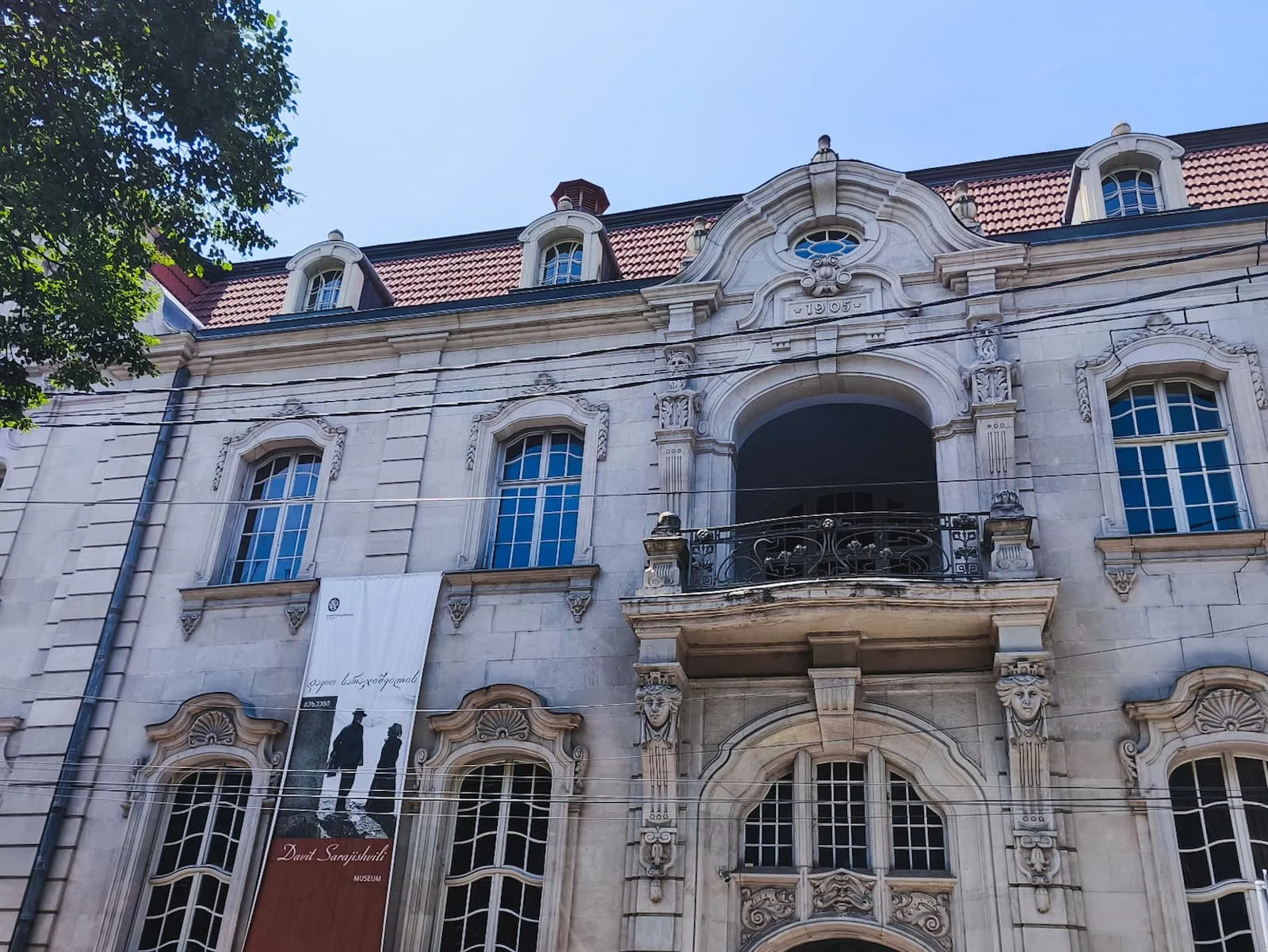
Exterior of Writers’ House.
Central Tbilisi: Freedom Square and Rustaveli Avenue
Freedom Square
Freedom Square (or Liberty Square) is considered the center of Tbilisi. It first took its current name in 1918, during the brief independence of the First Democratic Republic of Georgia between Russian Imperial and Soviet rule. The square has also been the setting for several major moments in the city’s history, including the 1907 Tiflis bank robbery, when Bolshevik revolutionaries attacked a state bank cash shipment to raise money for revolutionary activities, as well as demonstrations surrounding Georgian independence and the 2003 Rose Revolution.
At the center is the tall St. George Monument, unveiled in 2006 and dedicated to Georgian freedom and independence. During the Soviet period, the square was known as Lenin Square and a large statue of Lenin stood here until it was removed in 1991.
Today, the square is surrounded by grand buildings, most notably the Tbilisi City Assembly building with its ornate clock tower, and it functions more like a major traffic circle than a pedestrian plaza where you would spend much time. From an orientation standpoint, though, it marks the transition between several different parts of central Tbilisi. Rustaveli Avenue begins here, while the streets of Sololaki climb away behind it and Old Tbilisi sits just beyond.
How long to spend: Around 10 minutes. It’s more of an orientation point and a quick stop for the architecture and surroundings than somewhere to linger.
Pair with: Old City Walls, Sololaki, Georgian National Museum, Rustaveli Avenue.
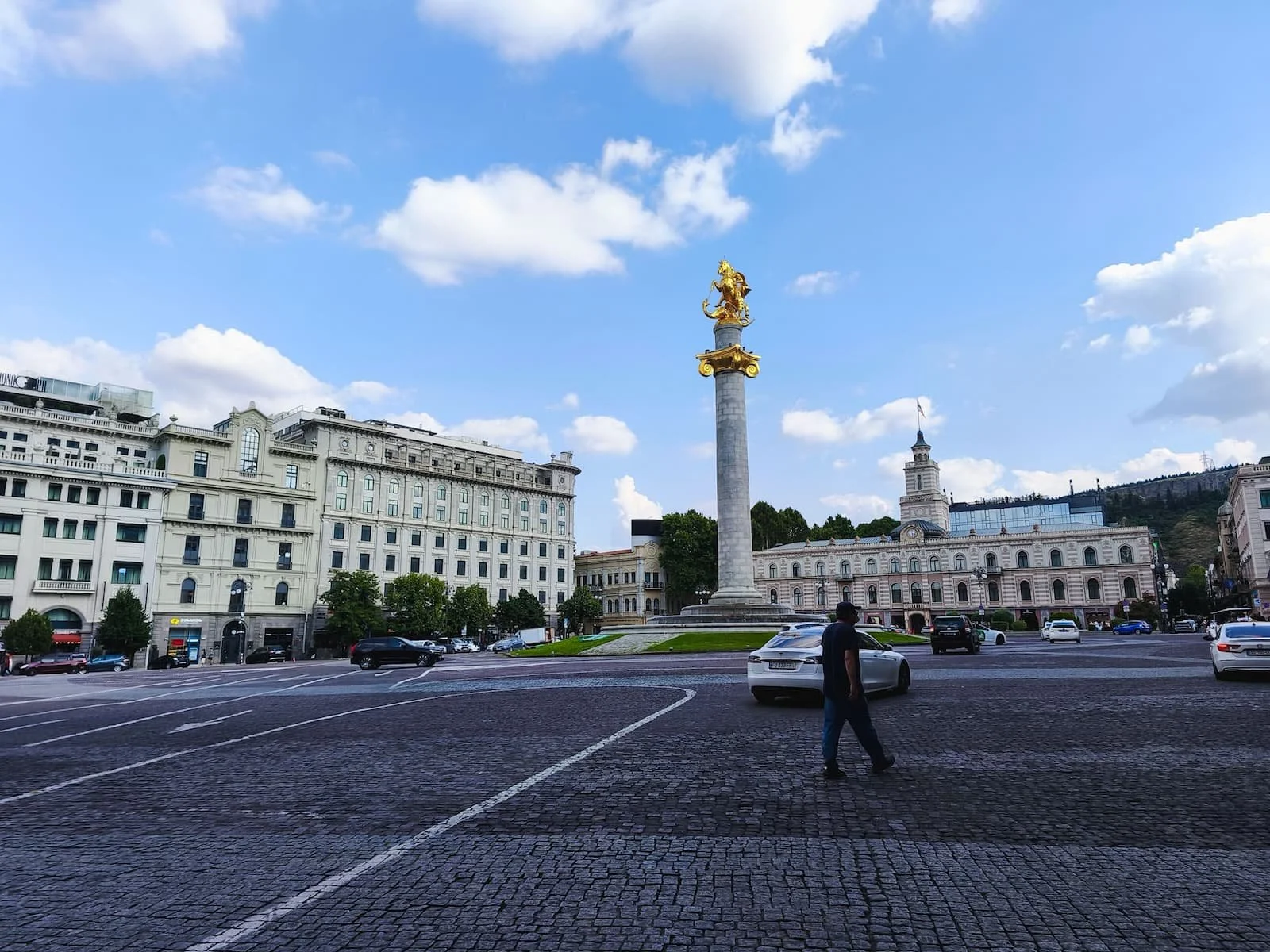
Freedom Square.
Old City Walls
Just beside Freedom Square on Pushkin Street, you can find sections of Tbilisi’s old city walls exposed below the modern roadway.
Tbilisi was historically a fortified city, with defensive walls surrounding much of the old center. The fortifications were damaged and rebuilt repeatedly as the city changed hands over the centuries, which is why the surviving sections contain masonry from different periods. Parts of the old wall can still be traced elsewhere around central Tbilisi as well.
The site is not presented as a polished archaeological attraction (or even really presented at all). Old masonry sits beneath traffic and beside graffiti and newer construction. That contrast makes it a good example of how layers of Tbilisi’s history remain embedded directly into the modern city. And if you’re not really looking for it, you might just miss it entirely.
To reach the wall remains more easily, use the underground pedestrian passages around Liberty Square to cross the roads rather than waiting for the busy traffic above.
How long to spend: Around 5–10 minutes.
Pair with: Freedom Square, Sololaki, Georgian National Museum.
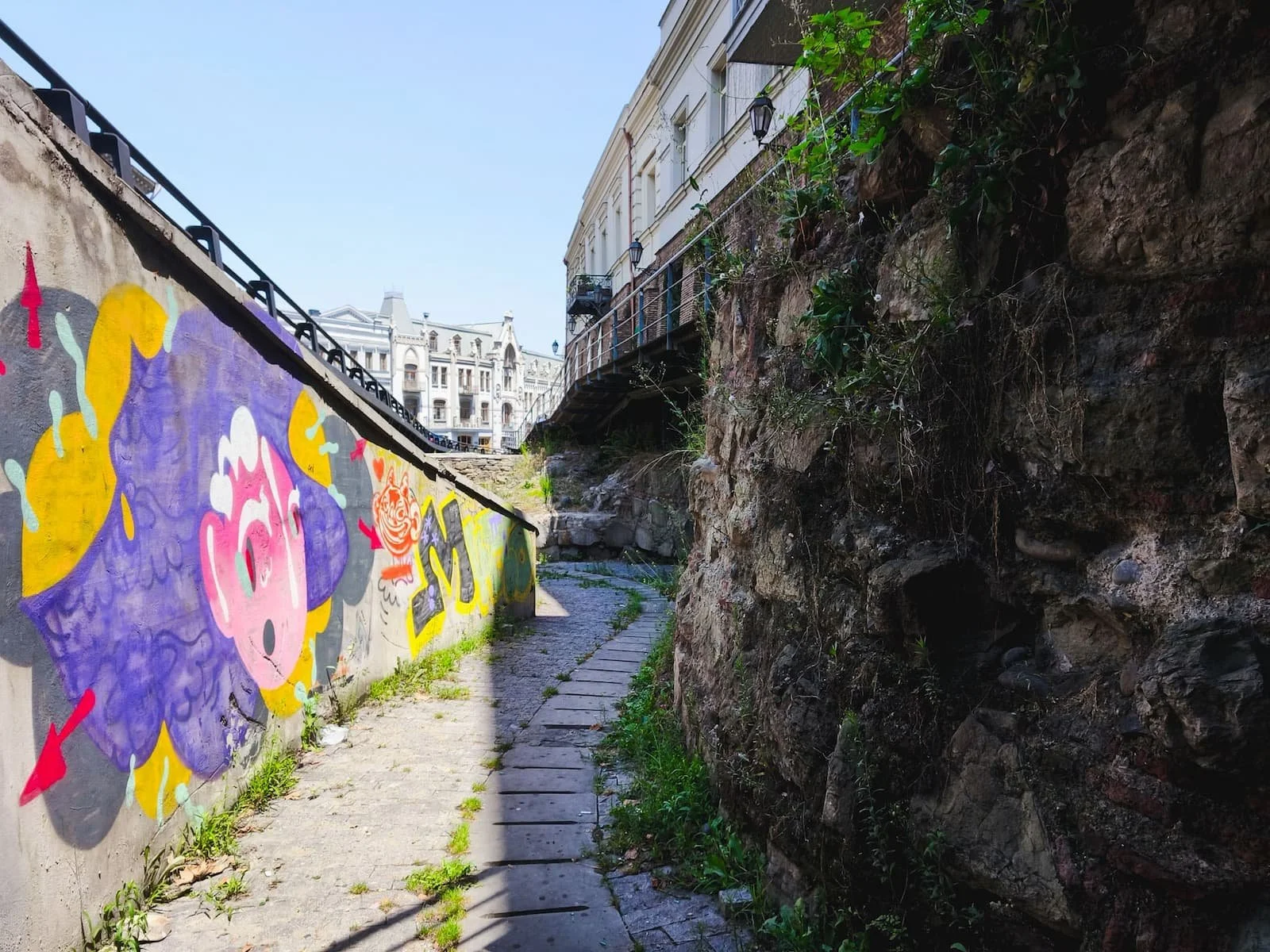
Old City Walls on one side, graffiti on the other.
Dry Bridge Market
Dry Bridge Market is Tbilisi’s best-known flea market, and it’s located literally on and around the bridge along the pedestrian sidewalks.
Vendors sell Soviet memorabilia, cameras, paintings, enamelware, rugs, records, coins, old household items, and objects of uncertain age or authenticity. The market became especially important in the early 1990s after the collapse of the Soviet Union, when economic hardship led many Tbilisi residents to sell personal belongings, books, silverware, and other possessions here. That history helps explain why Soviet-era objects and everyday items still make up such a large part of what you see today.
Even if you don’t plan to buy anything, I found the market interesting simply as a collection of material from the Soviet and post-Soviet periods. It is outdoors, so the number of vendors depends on the weather and time of day, and late morning and early afternoon are generally better than the end of the day for a higher concentration of vendors.
How long to spend: Around 15–20 minutes for a quick walkthrough, longer if you’re actively shopping.
Hours: Generally daily, 09:00–17:00, though vendors depend on weather conditions.
Entry: Free.
Pair with: Orbeliani Square, 9 April Park, Georgian National Museum.
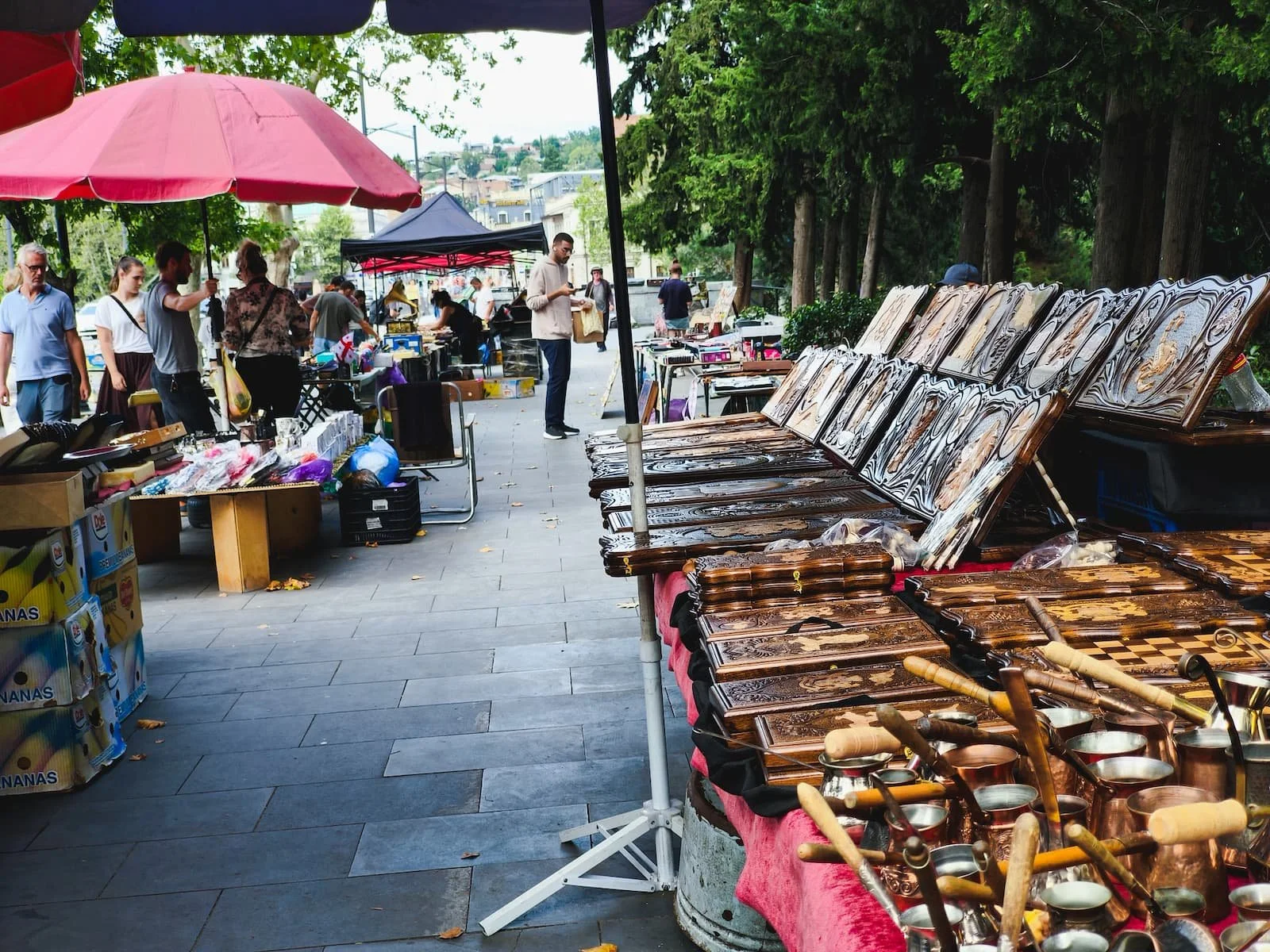
Dry Bridge Market.
Orbeliani Square and 9 April Park
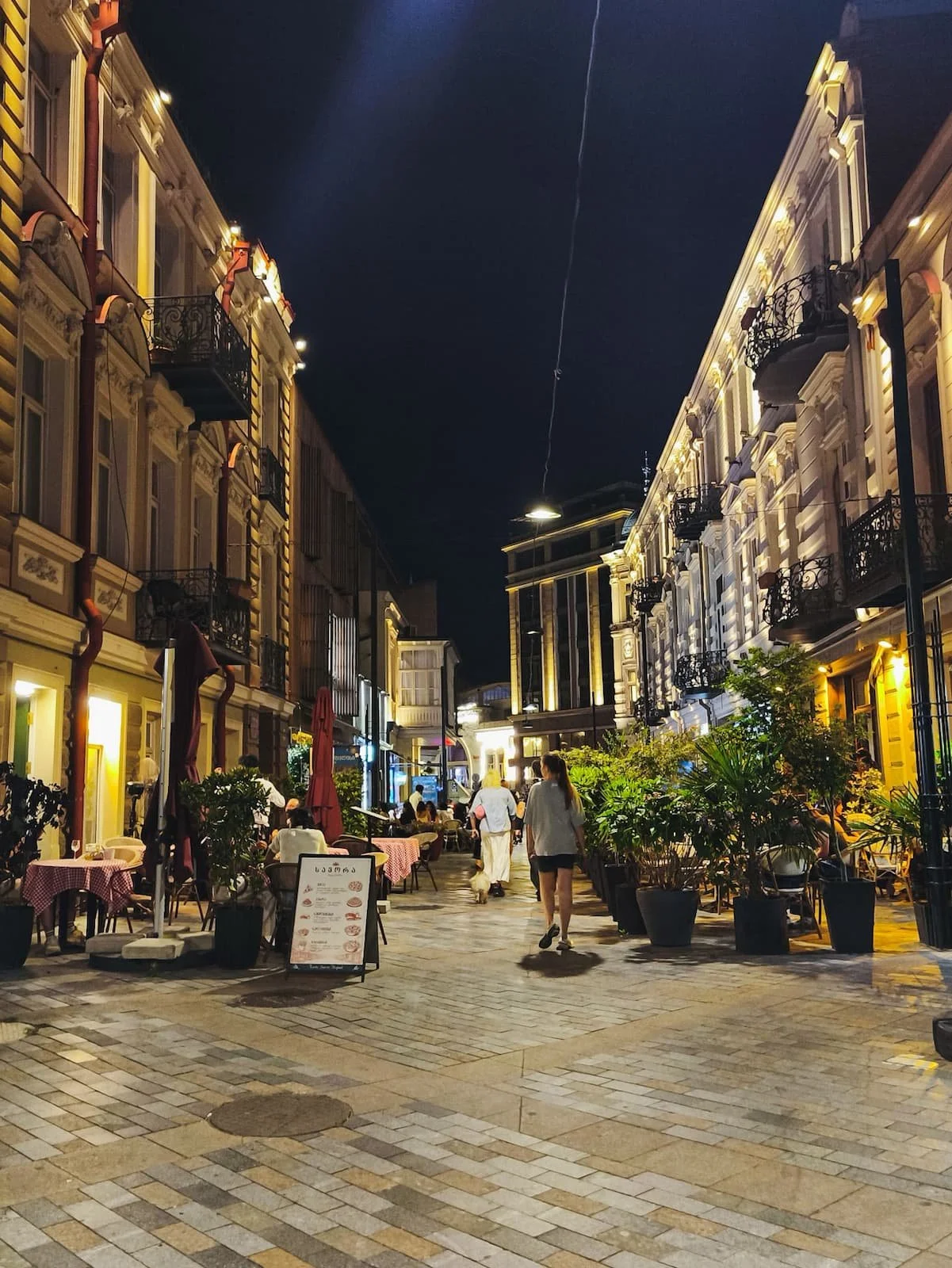
This is an area between Dry Bridge and Rustaveli Avenue where there is a concentration of restaurants, green spaces, and just areas to chill and socialize.
Orbeliani Square is a small restored area of central Tbilisi with decorative façades, balconies, restaurants, and a covered flower market. It looks considerably more polished than many of the older residential areas nearby and is pleasant for a short walk, coffee, or meal. There’s often some street music going on too, which gives the area an overall relaxed but still lively vibe.
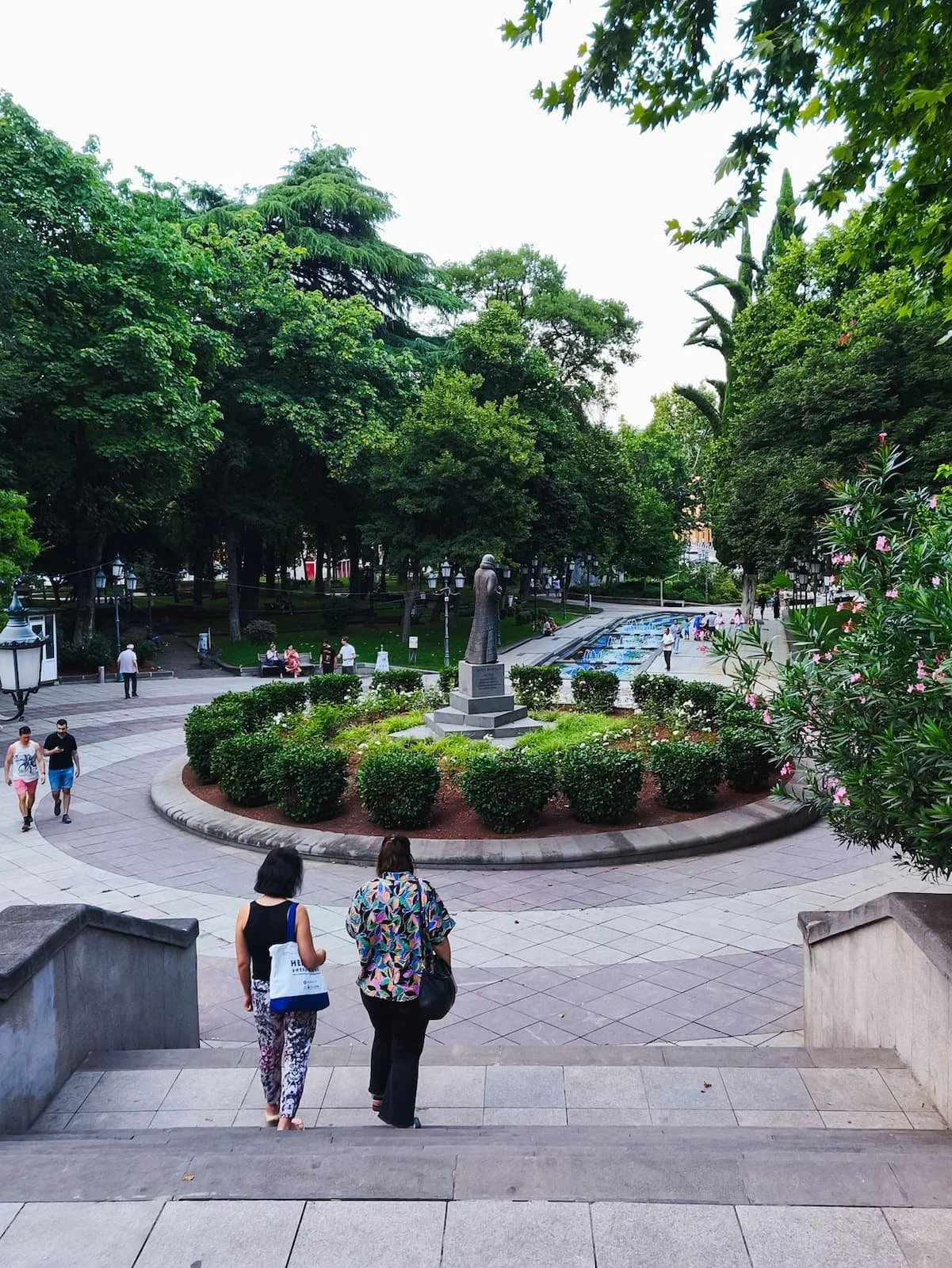
Next to Orbeliani Square is 9 April Park, one of Tbilisi’s older public parks. The park itself is fairly small, but very pleasant and leafy, with an abundance of trees and benches. It’s nice to cut through it on the way to Rustaveli Avenue.
I would treat both as transition points that just make the walk between Dry Bridge and Rustaveli much more pleasant. Though I do like the many eateries around Orebliani Square, for example the original Café Dapha for the best khinkali I had in the city and an excellent (very authentic) Thai restaurant. See my guide to what to eat in Tbilisi for more on that!
How long to spend: Around 20–30 minutes while walking through.
Pair with: Dry Bridge Market, National Gallery, Georgian National Museum, Rustaveli Avenue.
Georgian National Museum
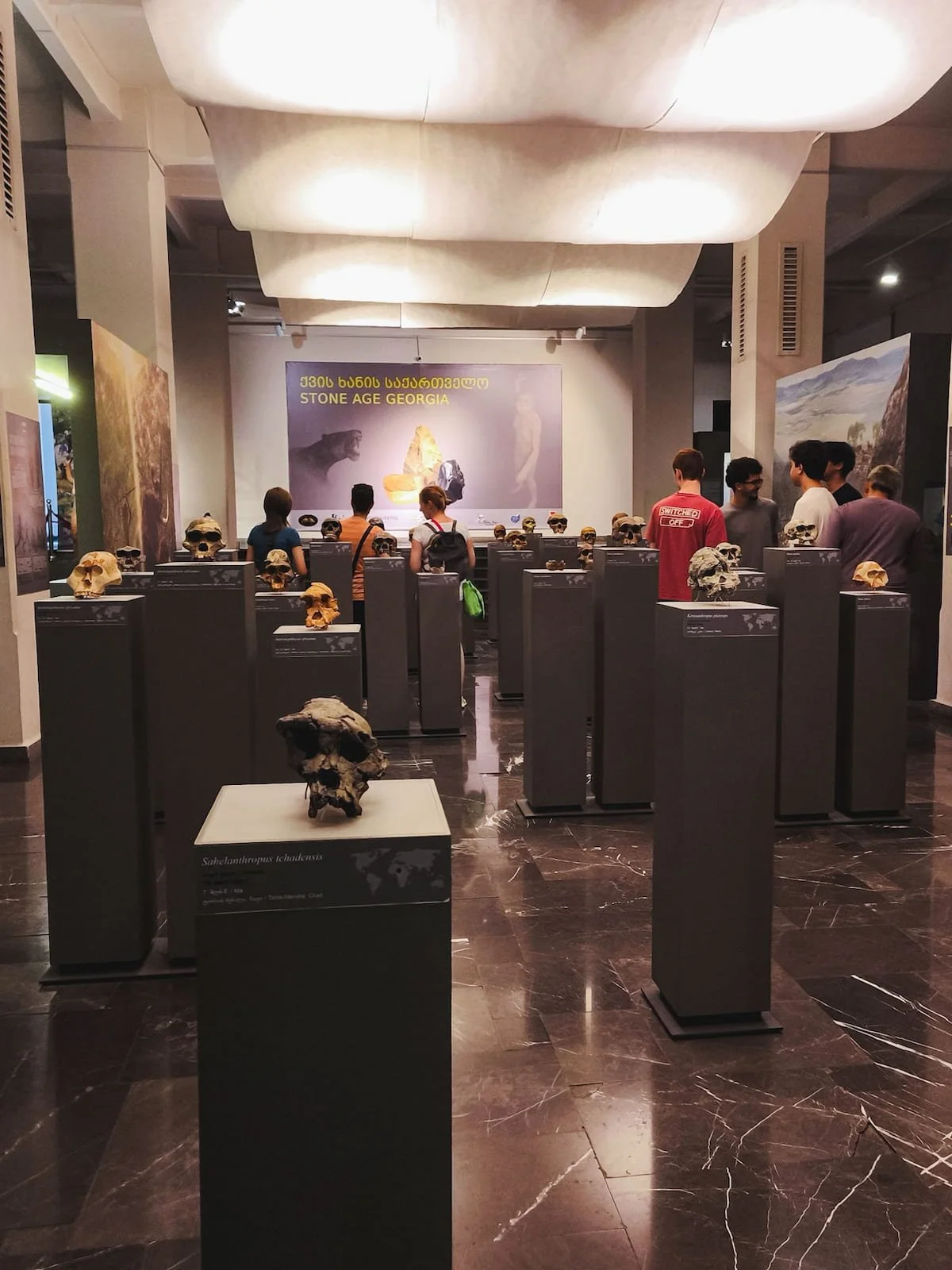
The Georgian National Museum is the best choice for visitors who want a broad introduction to Georgia through archaeological and historical objects.
The collections include Paleolithic tools, ancient gold and silver work, and material from Georgia and the wider region.
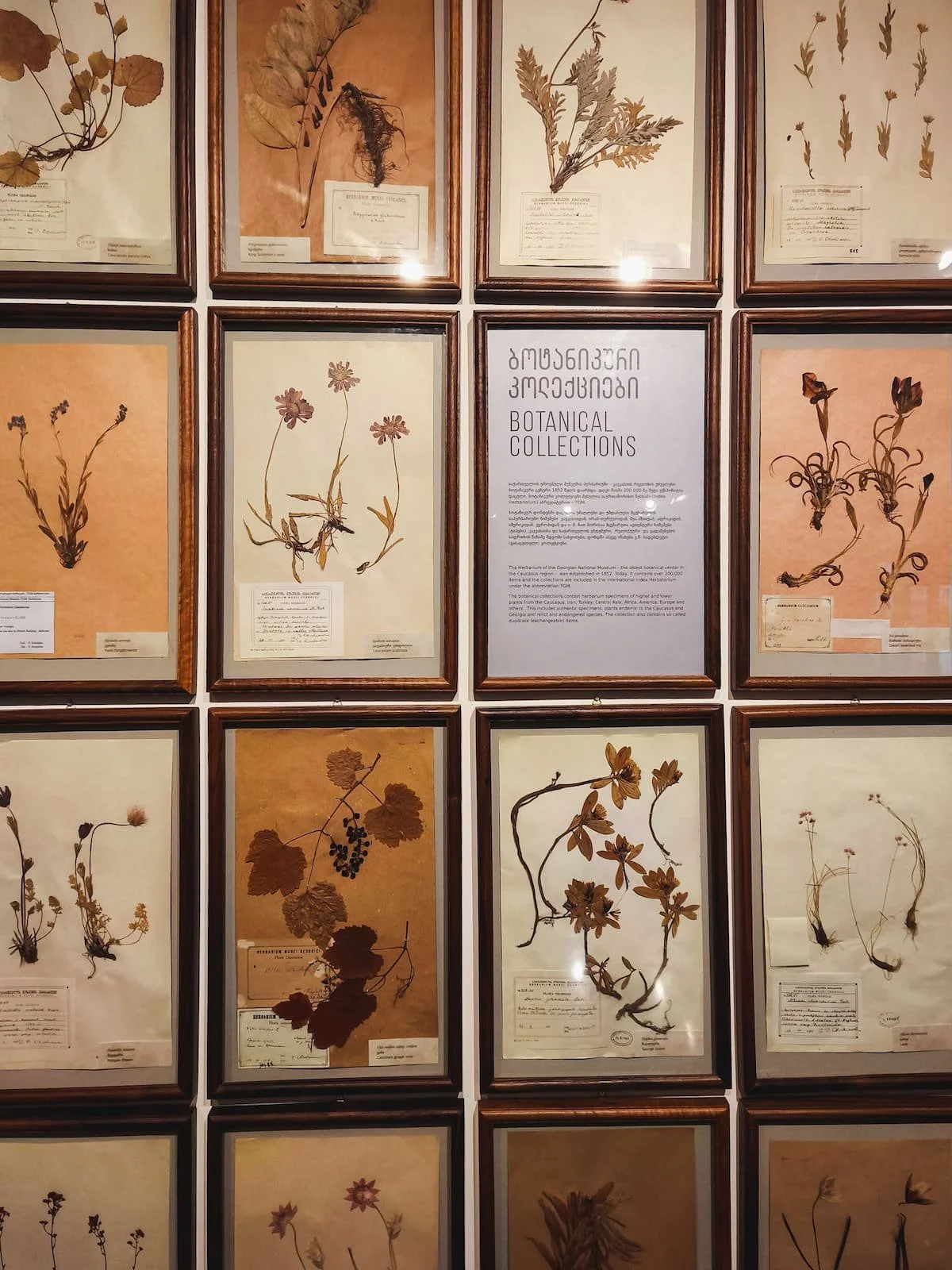
I’d say the strongest point of the museum is the objects themselves. The flora and fauna section has an extensive collection of dried herbs, which I found especially interesting given how prominently herbs feature in Georgian cuisine, along with preserved animal specimens, including an entire jar filled with snakes (eek!). I was also particularly impressed by the metalwork, from religious objects to intricately made jewelry and other everyday pieces. Together, the collections give you a sense of Georgia’s long history of craftsmanship and its connections with the wider region.
I did find the overall historical storytelling to be less clear though. Rather than leading visitors through one strong chronological narrative, the museum often presents objects with fairly limited connecting explanation. The Soviet Occupation exhibition, for example, contains substantial material and many artifacts, but I found the narration somewhat disjointed.
Choose this museum if archaeology and artifacts interest you. If you’re hoping to pair the artifacts with a clearer understanding of Georgian history , though, I’d read up a little before or during your visit.
How long to spend: 1.5–2 hours for a fairly detailed visit, including time to read the informational plaques.
Hours: Generally Tuesday–Sunday, 10:00–18:00, with last admission at 17:30.
Admission: 40 GEL for adult foreign visitors; 20 GEL for adult Georgian citizens.
Pair with: Orbeliani Square, Rustaveli Avenue.
Check the official Georgian National Museum site for current hours and ticket information.
Rustaveli Avenue
Named after national poet Shota Rustaveli, Rustaveli Avenue is Tbilisi’s grand central boulevard and one of the main spines of the modern city.
The avenue developed into an important civic and cultural axis as Tbilisi expanded beyond the older fortified city, particularly during the 19th and early 20th centuries. Many of the theaters, museums, government buildings, and cultural institutions that still define the street were built during this period, when Tbilisi was increasingly taking on the appearance of a European capital.
Some places to look out for along the way:
Kashveti Church: An active Georgian Orthodox church opposite 9 April Park. The current church was built between 1904 and 1910, although religious buildings have occupied the site for centuries.
Parliament of Georgia: One of the avenue’s most imposing buildings, constructed during the Soviet period as the House of Government of the Georgian SSR. Its monumental design mixes Soviet civic architecture with elements drawn from traditional Georgian architecture. The space outside has also played an important role in protests and political events in Georgia’s recent history.
Rustaveli National Theatre: One of Georgia’s major theaters, housed in an ornate Baroque- and Rococo-influenced building completed in 1901 for the Tbilisi Artistic Society. The Georgian Drama Theatre moved here that year.
Tbilisi Opera and Ballet Theatre: Probably the most immediately distinctive building along Rustaveli, with an ornate Moorish-inspired exterior designed by German architect Viktor Schröter.
Though there are plenty of cultural buildings and architectural details to notice along the way, a lot of the appeal is also simply walking the avenue itself.
Note: Rustaveli Avenue is under major reconstruction work until November 2026, so the exact walking experience can be very different while it’s underway. It certainly was during our visit — we happened to see its normal state for only about a day before construction started, and the work also ended up affecting our stay quite a bit. I’ll share more about that in my Slow Traveling in Tbilisi post, coming soon.
How long to spend: Around 45–60 minutes for a leisurely walk without going inside the museums.
Pair with: Georgian National Museum, 9 April Park, Freedom Square.
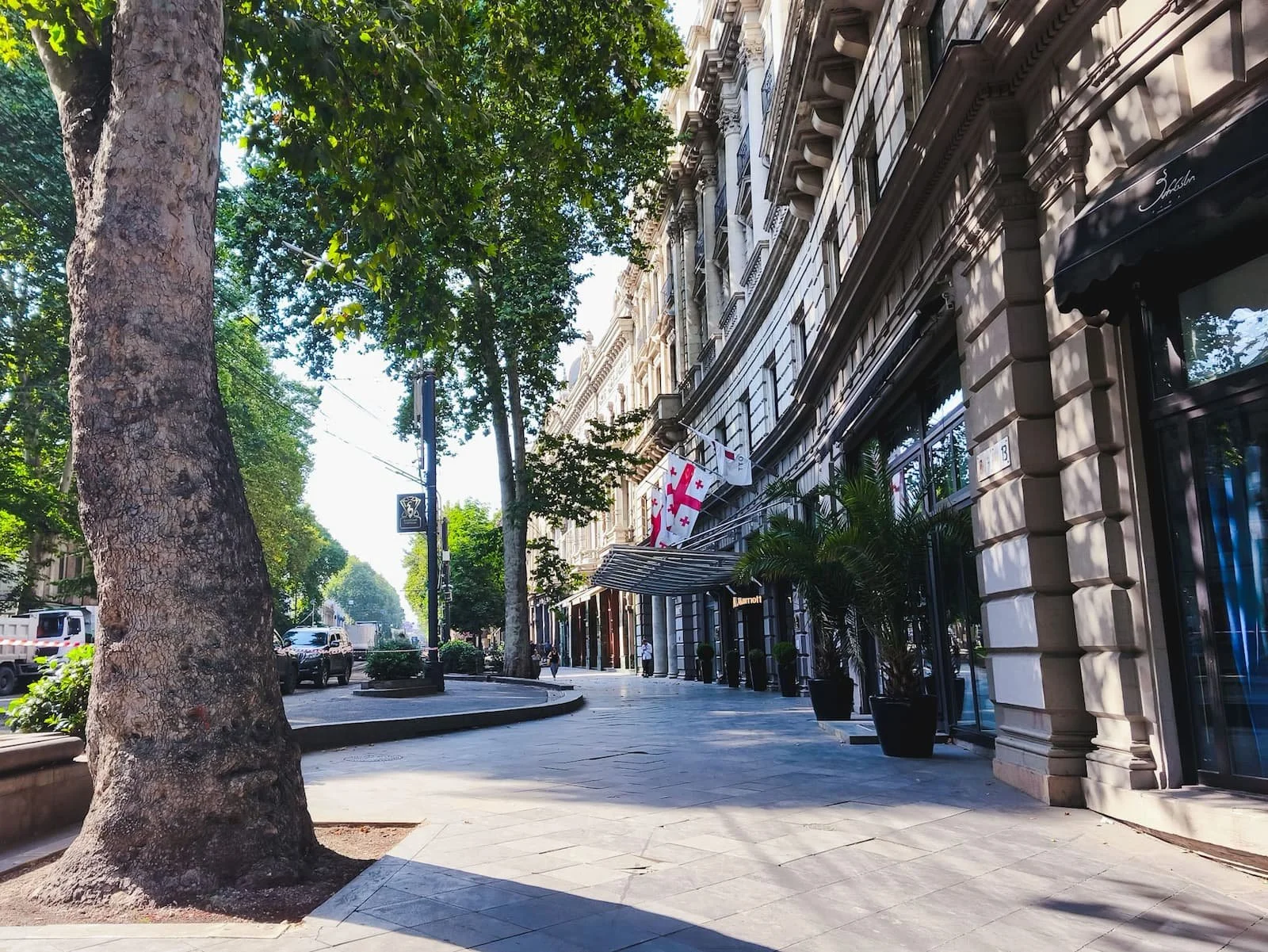
Section of Rustaveli Avenue (with construction in 2026).
Avlabari and the Eastern Side of the River
Metekhi Church
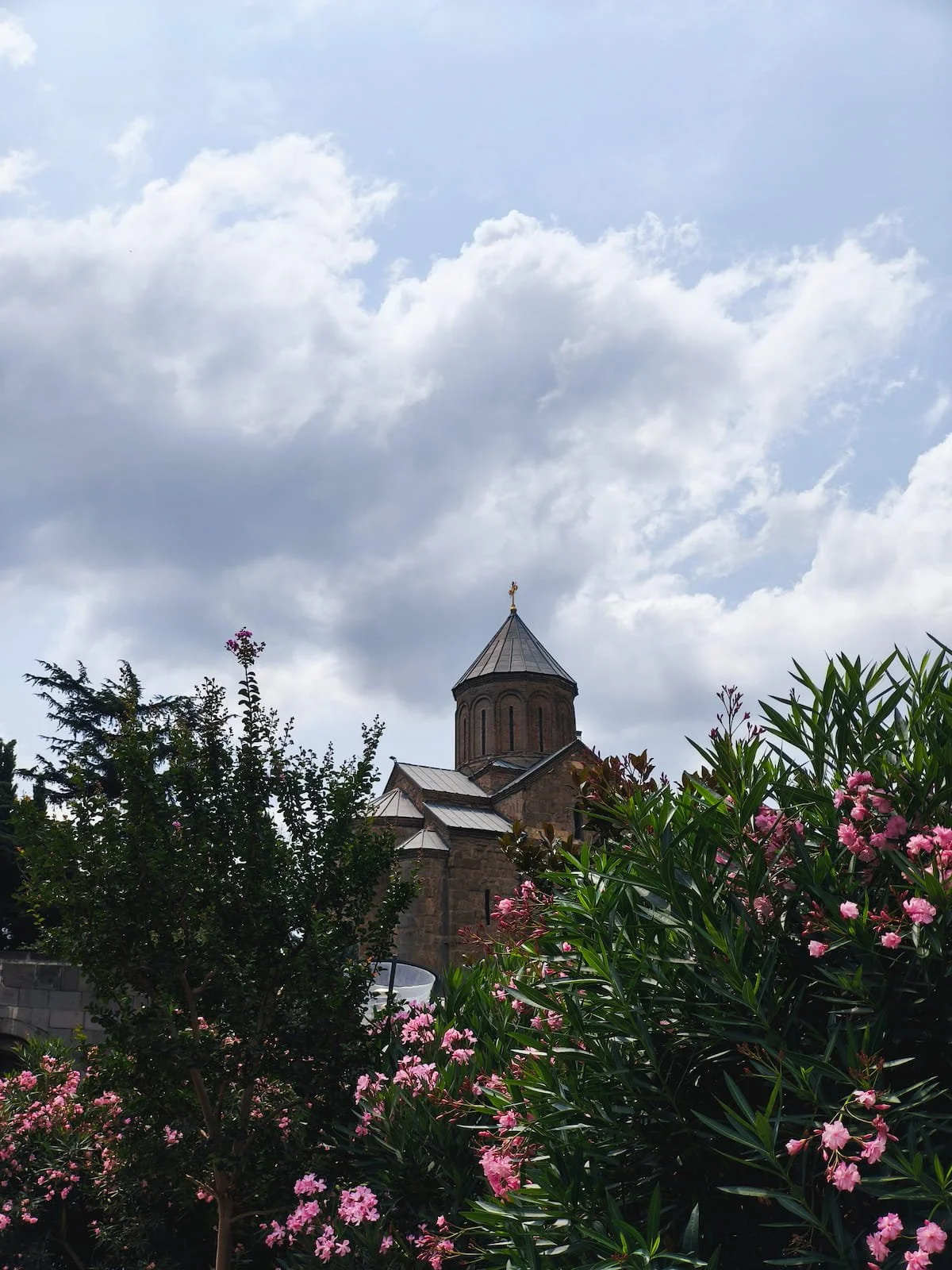
Metekhi Church sits on a cliff above the Kura River facing Old Tbilisi. The current church dates largely to the 13th century, although a church stood on the site as early as the 5th century under King Vakhtang I Gorgasali. The area later formed part of a royal fortress and palace complex overlooking the river.
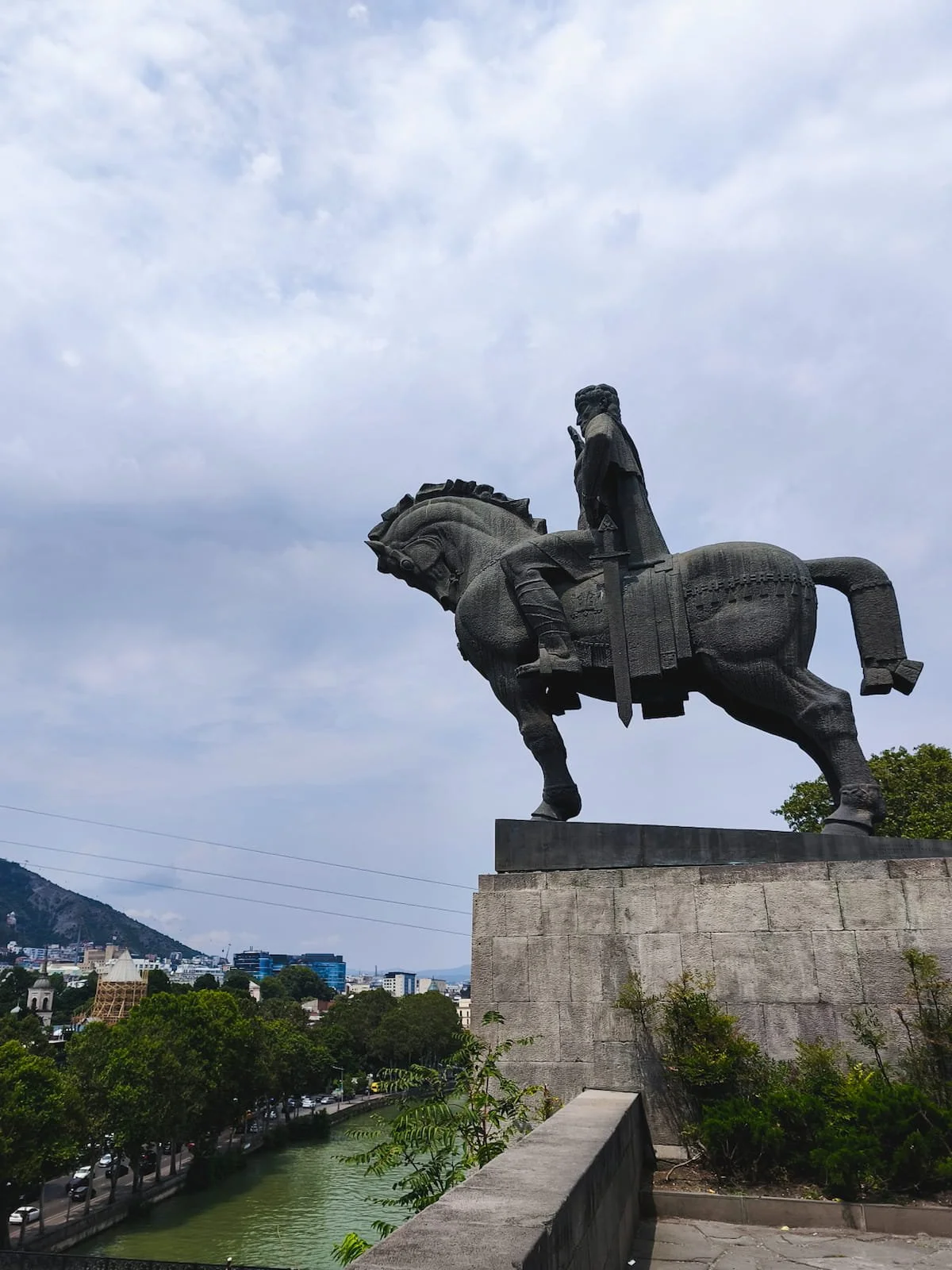
For me, the setting is one of the main reasons to visit. From around the church, you get a wide panoramic view across the river toward the Narikala hillside, Abanotubani, and the dense buildings of the Old Town. Beside the viewpoint is a bronze equestrian statue of King Vakhtang I Gorgasali, the 5th-century monarch traditionally associated with the founding of Tbilisi. The statue has overlooked the city from Metekhi since 1965.
The viewpoints are probably the main reason many visitors come here, but I also really liked the green garden beside the church, with plenty of benches where you can sit and enjoy the scenery. You can also get a particularly nice view back toward the church itself from the garden.
How long to spend: Around 15–20 minutes.
Pair with: Avlabari, Wine Rise, Queen Darejan Palace.
Avlabari
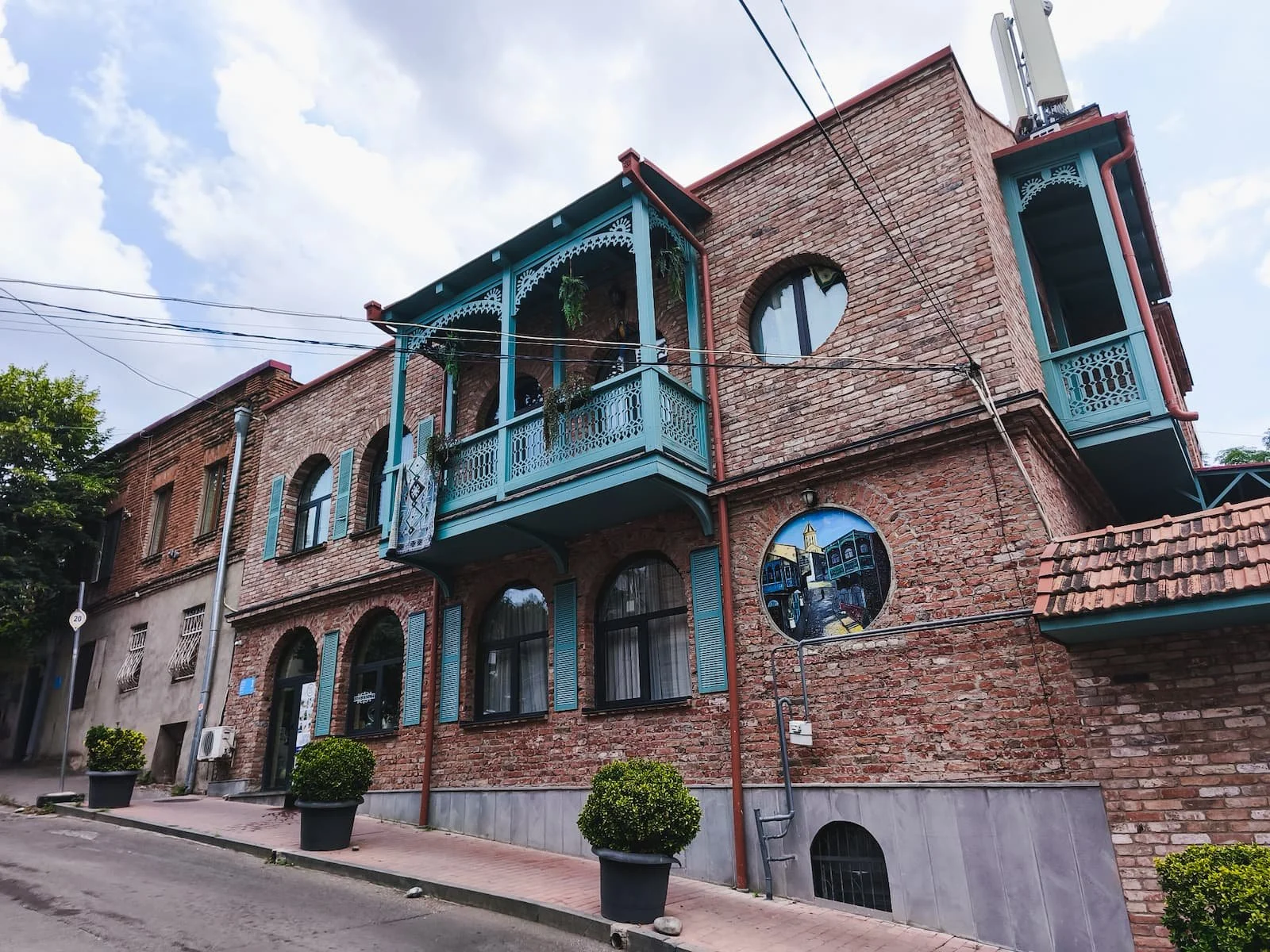
Avlabari sits across the river from Old Tbilisi and is one of the city’s oldest historic districts. The area was known as Isani in medieval sources, while the name Avlabari appears in written records from the late 14th century. Historically, it also became an important center of Tbilisi’s Armenian community.
It still feels noticeably more residential than the most heavily visited streets on the opposite bank. If you’re walking from Metekhi Church toward Sameba Cathedral, you’ll pass through the neighborhood naturally, which is how I’d explore it rather than coming here for one single major attraction.
A couple of things to see along the way:
Wine Rise: A short but steep historic lane climbing from the riverfront into Avlabari.
Queen Darejan Palace: As you climb, look toward the hillside for its distinctive semicircular blue balcony. The surviving palace dates to the 18th century and was built as a residence for Queen Darejan, wife of King Erekle II.
The residential streets between these sights also give you a different view of Tbilisi from the more restored Old Town below.
Avlabari is also conveniently connected by metro. Avlabari station is on Line 1, the red line, which connects directly with Liberty Square and Rustaveli. To reach the Fabrika area, you can continue to Marjanishvili station on the same line.
How long to spend: Around 30–45 minutes between Metekhi and Sameba.
Pair with: Metekhi Church, Sameba Cathedral.
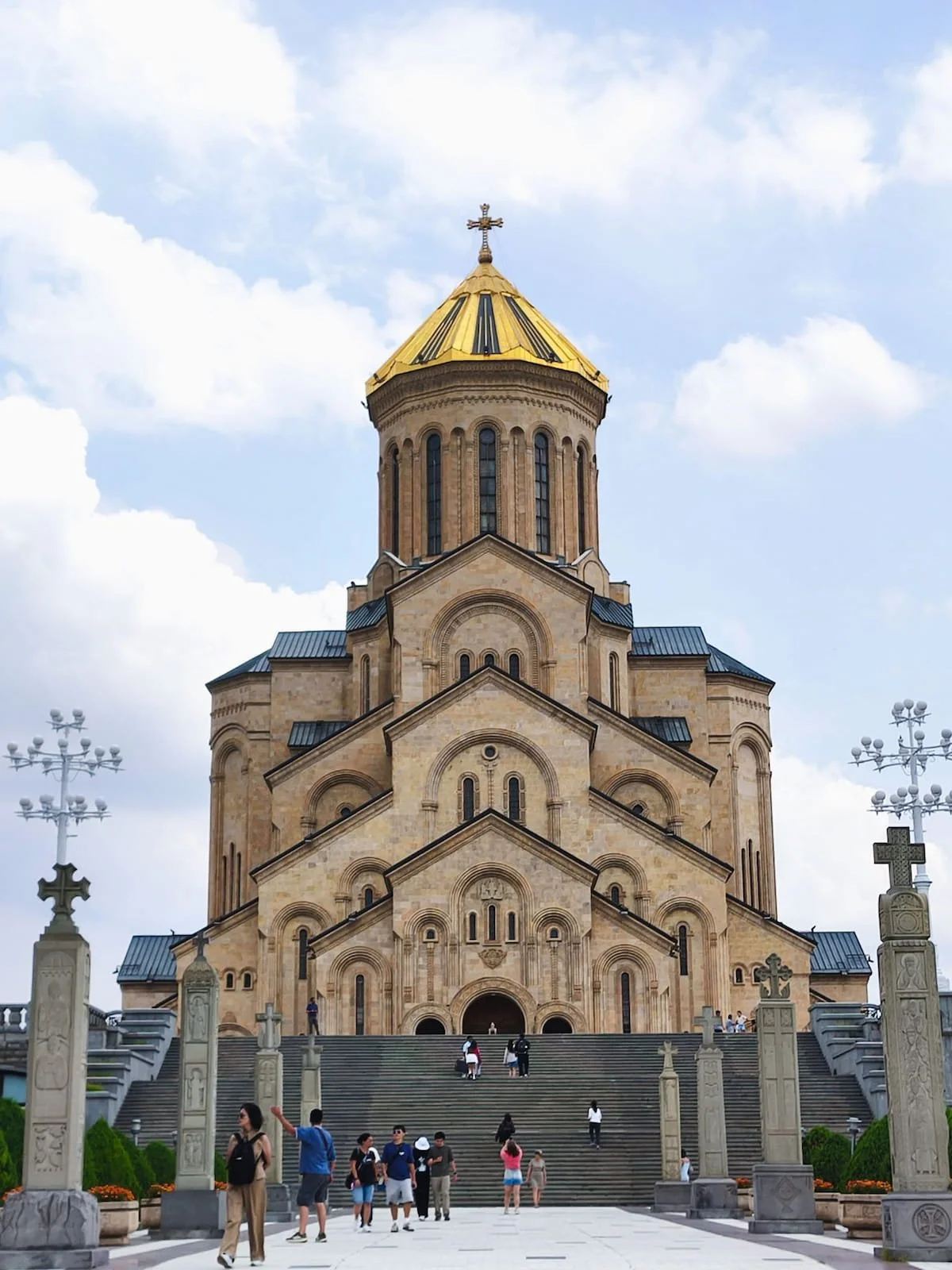
Sameba Cathedral
Sameba, or Holy Trinity Cathedral, is the main cathedral of the Georgian Orthodox Church. Unlike many of Tbilisi’s best-known churches, it is modern. Construction began in the mid-1990s and the cathedral was completed and consecrated in 2004. It was conceived in part to commemorate 2,000 years since the birth of Christ and 1,500 years of the Georgian Orthodox Church.
Although newly built, its architecture deliberately draws on traditional Georgian church forms. Architect Archil Mindiashvili designed it as a monumental synthesis of styles found in Georgian religious architecture over different periods, centered around a cross-shaped plan and enormous dome. From the front, the cathedral looks especially symmetrical, which to me somehow makes it look even bigger.
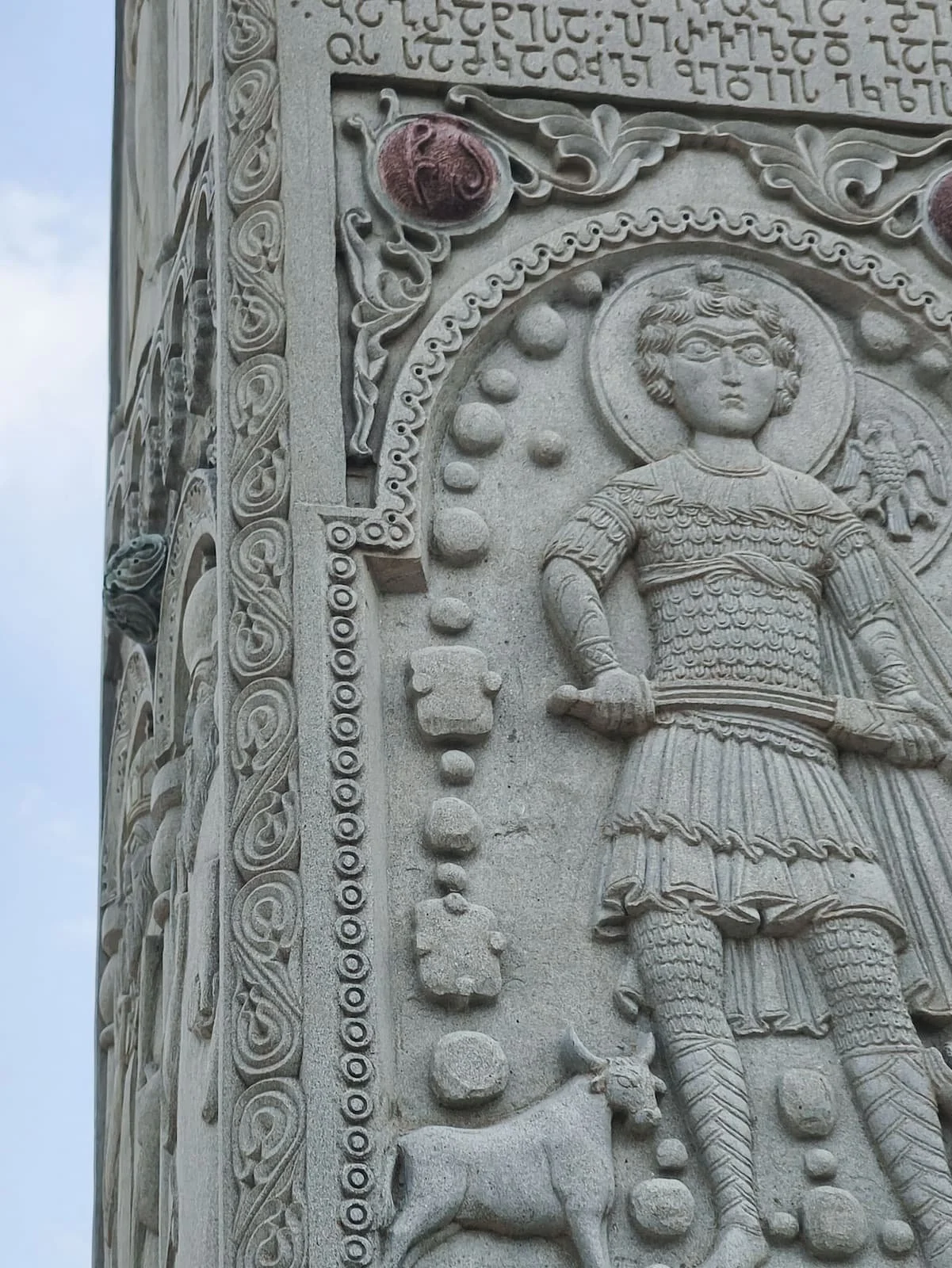
For me, its scale, elevated position, and landscaped grounds are the main reasons to visit. The complex is huge and open, so you can walk around and see the cathedral from all four sides rather than approaching it through dense surrounding streets as you do with many of Tbilisi’s older churches. The front approach is especially dramatic, with a long, broad walkway creating a head-on view toward the cathedral and stone pillars on the sides decorated with carved Christian imagery.
At about 86 meters high, it’s the third-tallest Eastern Orthodox cathedral in the world, and because it sits on a hill, you’ll probably see it dominate the skyline from various points within central Tbilisi even before you visit it.
If you want to go inside, remember to dress appropriately since this is an active Orthodox church. We saw scarves available to borrow for covering legs and heads. We actually didn’t go inside because we were a bit churched-out by the time we got here, but I still thought the exterior and grounds themselves were enough of a satisfying visit on their own.
How long to spend: Around 30–45 minutes including the grounds.
Pair with: Avlabari, Metekhi Church.
Modern and Creative Tbilisi
Fabrika
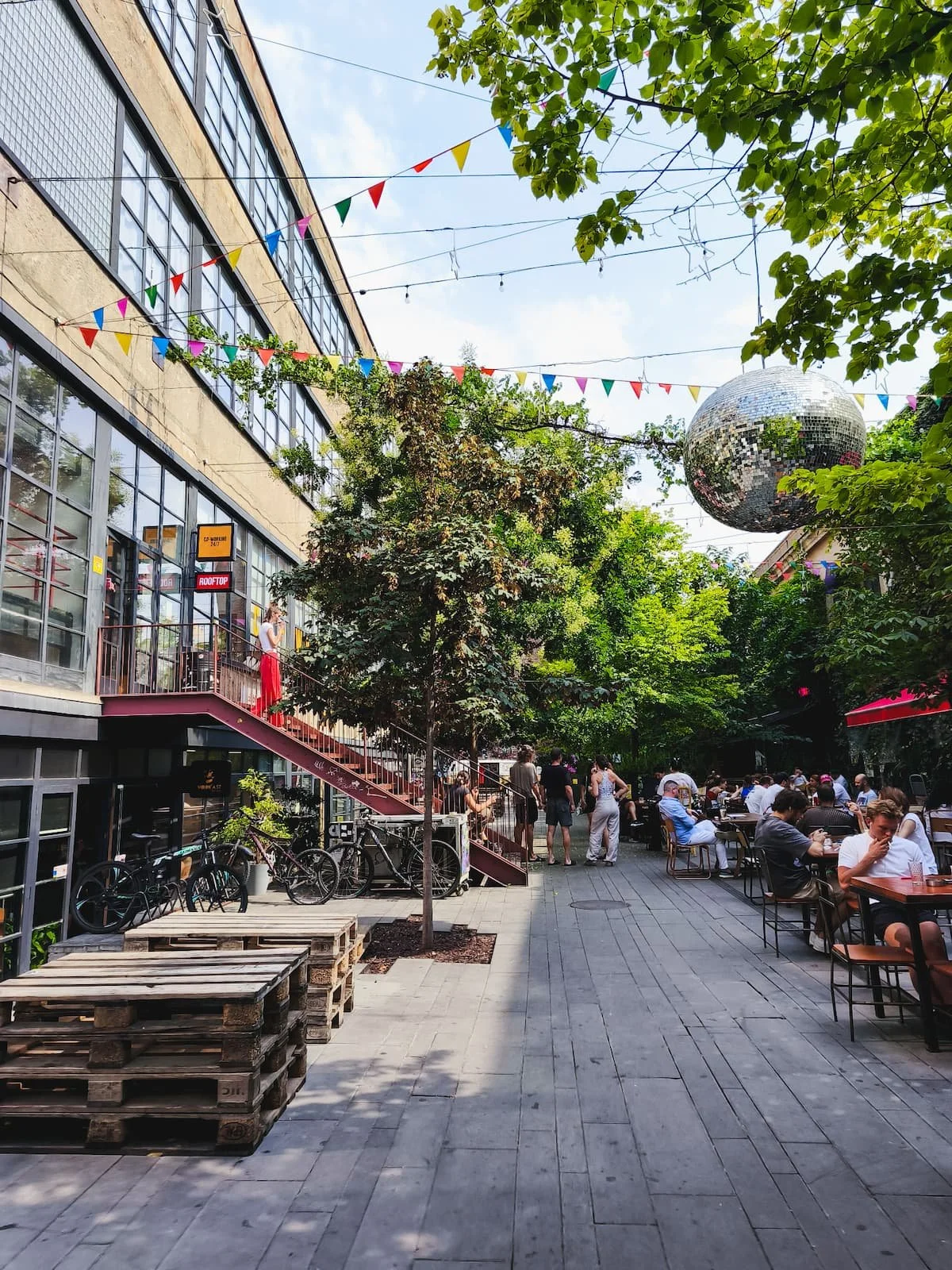
Fabrika occupies a former Soviet sewing factory that has been converted into a hostel and creative complex. The old factory was repurposed in the 2010s as part of a broader effort to give new life to abandoned industrial buildings around Tbilisi, and it has since become one of the city’s best-known hubs for artists, designers, freelancers, travelers, and independent businesses.
The old industrial building now contains a hostel, coworking and social spaces, while the courtyard is surrounded by cafés, bars, independent shops, and studios. Murals and street art cover much of the surrounding space.
There is not really a list of sights to work through here. The point is more to wander around the courtyard, look through the shops, get a coffee or drink, and spend some time in a part of Tbilisi that feels very different from the historic center. It definitely skews young and hip, with a more alternative and internationally oriented feel than the traditional neighborhoods you’ll see elsewhere in the city.
Inside, the hostel reception doubles as a large social and coworking space, with lots of plush seating, a restaurant, coffee, plants, colorful prints, and people working or chatting throughout the room.
The courtyard is the star for me. One side is lined with small independent shops selling things like ceramics, prints, clothing, and skateboarding-related goods, while cafés and bars spill their seating out across the other side. It’s definitely somewhere you could easily hang out for a while, and I liked it best as a later-afternoon stop, when the courtyard was active enough to feel lively without needing to turn it into a nightlife destination.
How long to spend: Around 1–2 hours, depending on whether you stop for food or drinks.
Pair with: Marjanishvili and the surrounding Chugureti neighborhood.

Vera
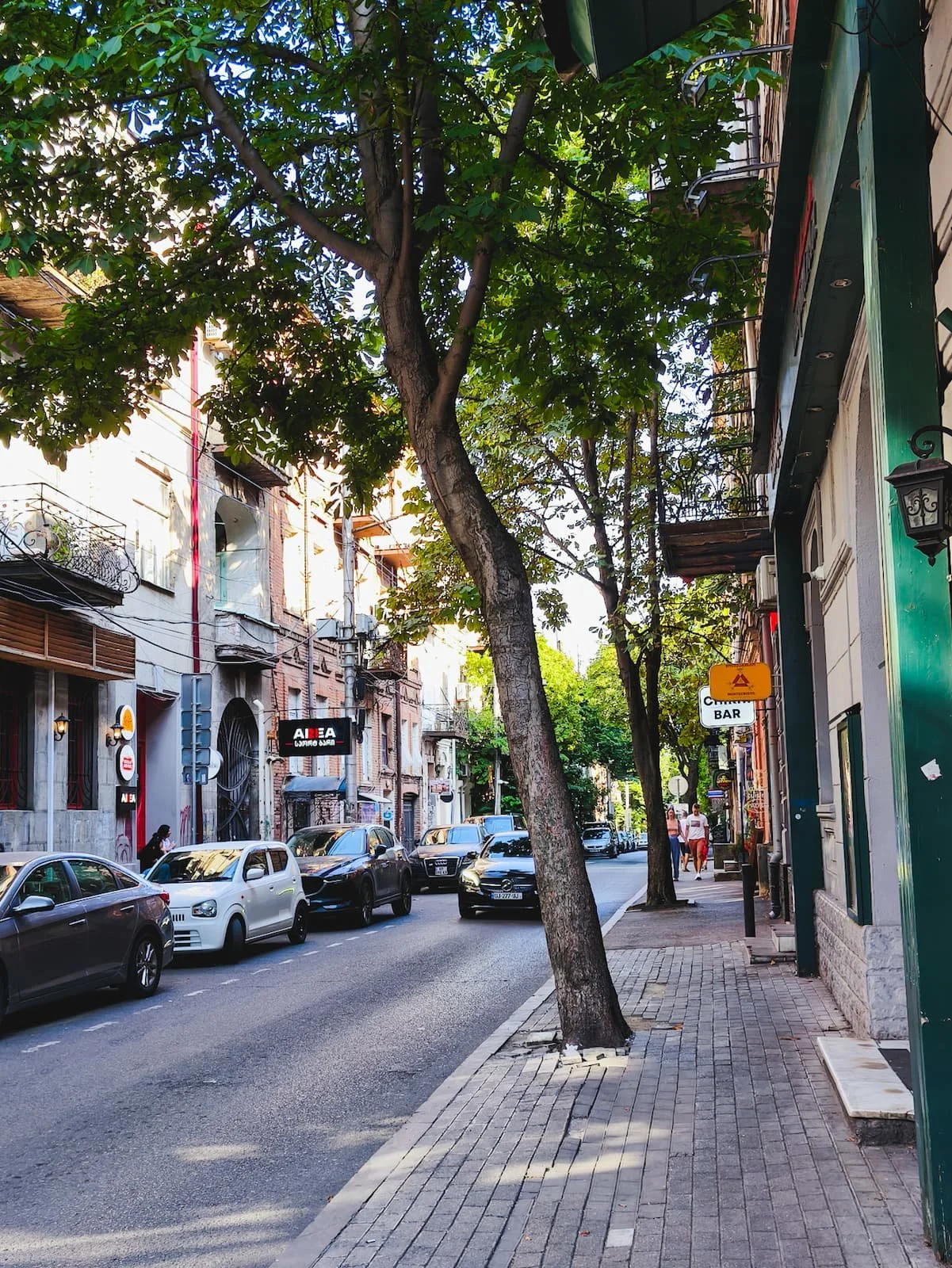
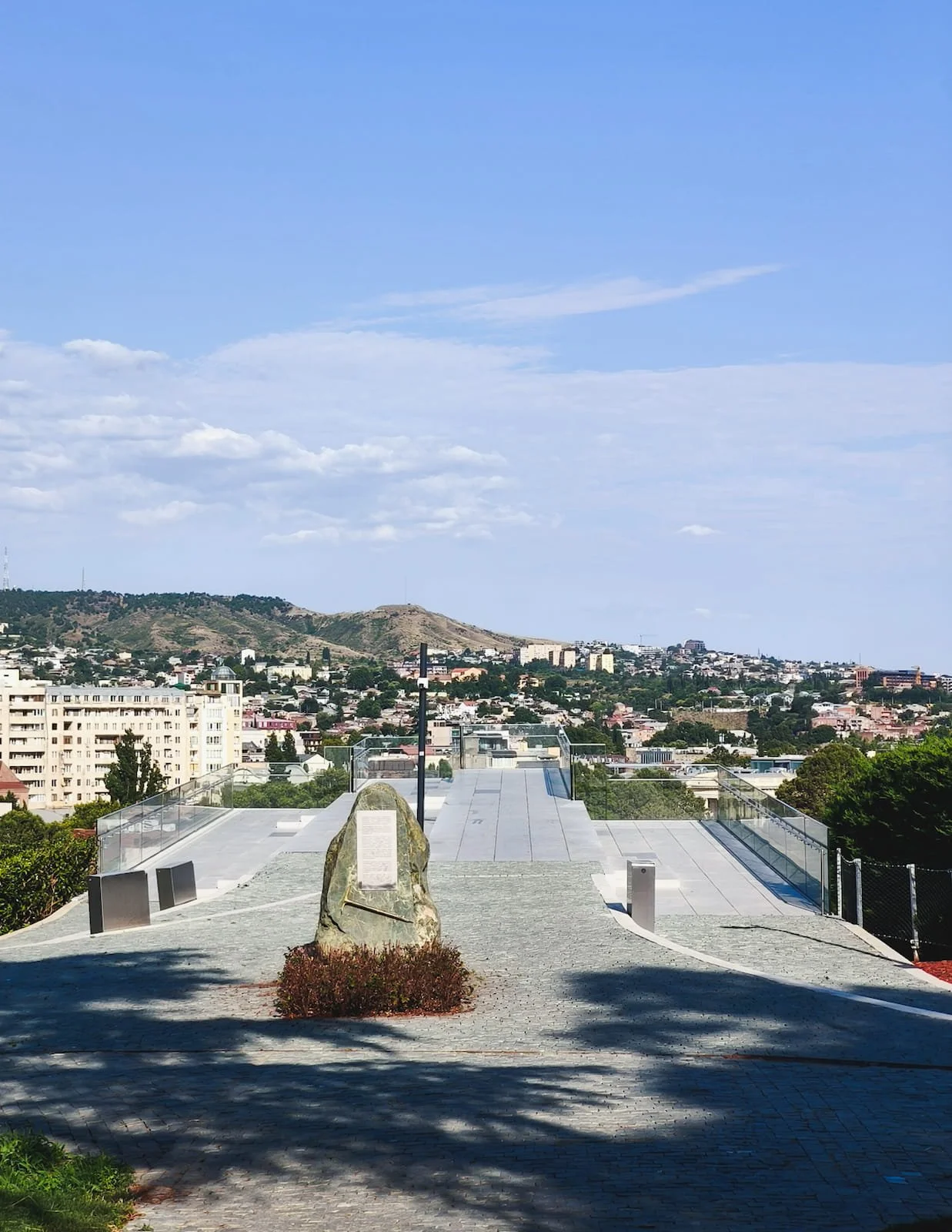
Vera is a residential neighborhood just north of Rustaveli Avenue with a noticeably more contemporary feel than Old Tbilisi or Sololaki. A lot of what stood out to me was the mix of older houses and buildings repurposed into polished cafés, restaurants, hotels, and bars, so the neighborhood feels historic but modern at the same time. The smaller streets around Giorgi Akhvlediani Street were a good example of this contrast.
One of the best-known examples of this newer side of Vera is Stamba Hotel, which occupies part of a former Soviet-era printing-house complex. The industrial structure has been repurposed with restaurants, cafés, greenery, and dramatic contemporary interiors, and even if you are not staying there, it is worth stopping by for coffee or simply to look around.
Vera Park adds a quieter, greener side to the neighborhood. The park sits above the river and has sloping lawns and benches where you can sit with views across the city. There is also a glass viewing platform extending over the hillside. The view is great, although standing next to transparent glass with nothing visibly underneath was slightly unnerving for me.
Farther uphill, Petre Melikishvili Avenue feels broader and more urban, with shops, restaurants, a cinema, and stretches of covered sidewalk that, for whatever reason, reminded me a little of avenues I grew up around in Taipei. The Tbilisi Concert Hall is also here, with the bronze Muse sculpture outside, created by Georgian sculptor Merab Berdzenishvili in 1971.
Vera does not have many major attractions, which is part of the appeal. I would not prioritize visiting it over Old Tbilisi or Sololaki on a short trip, but it is worth adding if you have extra time or are already nearby. It’s a great neighborhood to wander through, stop for coffee or food, and get a feel for a more contemporary side of everyday central Tbilisi.
How long to spend: Around 45–90 minutes, longer if you stop for food or coffee.
Pair with: Rustaveli Avenue, Mtatsminda, or an evening meal nearby.
Orbeliani Bazaar
Orbeliani Bazaar is a modern food hall and market near Orbeliani Square, located above a Carrefour supermarket. Although the current space feels thoroughly contemporary, it revives the site’s history as a market area dating back to the late 19th century.
Today, it has a huge variety of food stalls and restaurants, including Georgian food alongside Turkish dishes, burgers, crêpes, Belgian fries, Korean and Vietnamese food, and even Japanese revolving kaiten sushi and a modern bubble tea stall.
And by modern, I really do mean it. The two-story space feels young and polished, with lots of communal seating and people working on laptops. There’s also a terrace-like seating area between the levels with cushions where you can hang out.
I’d say it’s worth visiting to see the space and maybe sample a couple of snacks, especially if you’re already around Orbeliani Square. That said, the food itself wasn’t a highlight for me. I tried several stalls and didn’t find anything good enough that I’d come back repeatedly for meals, so I’d think of this more as an interesting food-hall stop than one of my top places to eat in Tbilisi.
How long to spend: Around 30–60 minutes for a look around and snack, longer if you settle in for a meal or work for a while.
Pair with: Orbeliani Square, 9 April Park, Dry Bridge Market, Rustaveli Avenue.
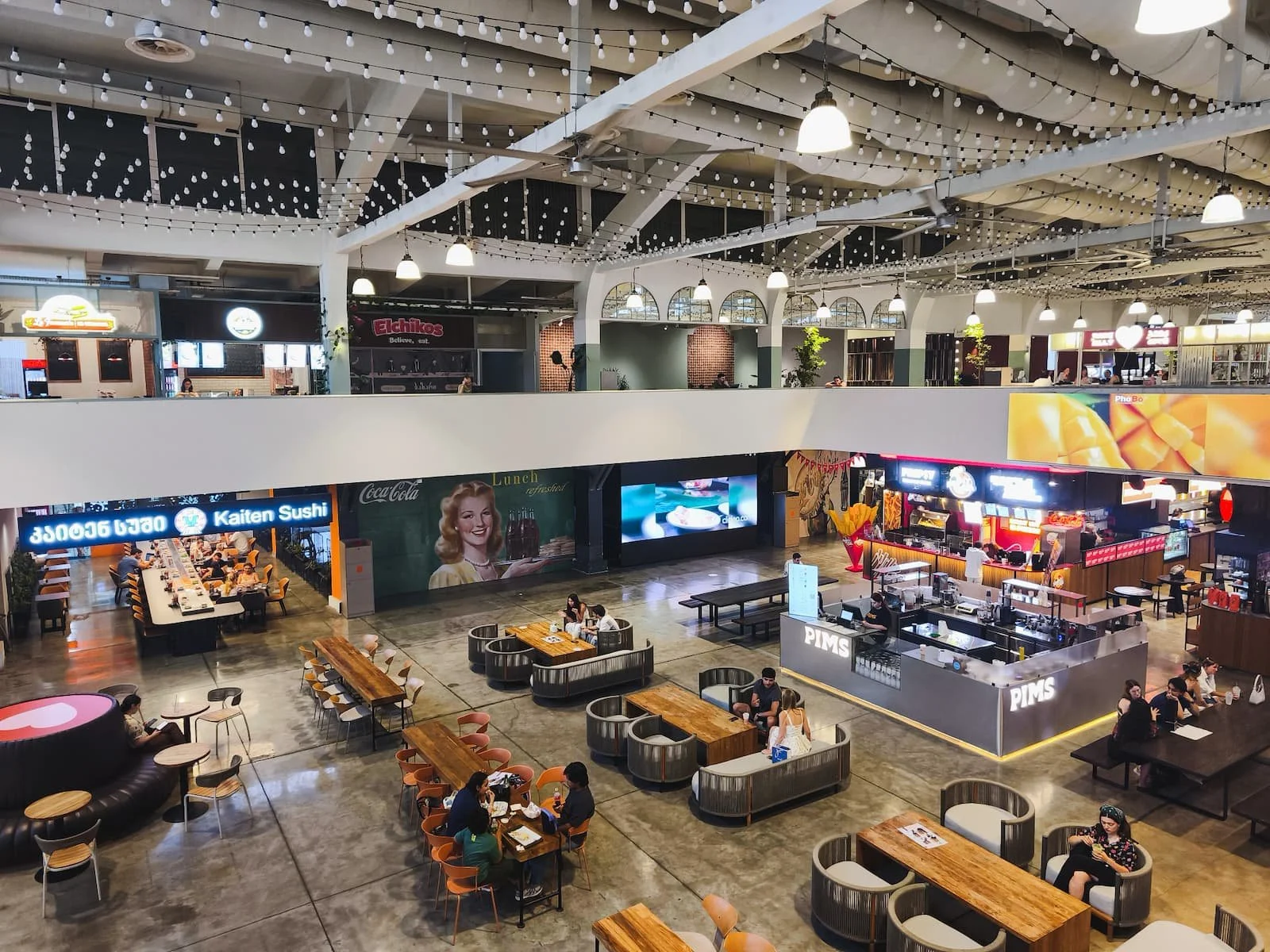
Orbeliani Bazaar.
Viewpoints and Places Worth a Little More Time
A couple of places I had planned to visit but didn’t make it to during this trip are still worth mentioning, especially if you have more than three days in Tbilisi.
Chronicles of Georgia
Chronicles of Georgia is a huge hilltop monument north of central Tbilisi, overlooking the Tbilisi Sea. Designed by Georgian sculptor Zurab Tsereteli beginning in the 1980s, it consists of 16 enormous pillars covered in reliefs depicting Georgian rulers, historical figures, and scenes from Christianity.
I had planned to go, but it’s far enough outside the center that it really works better as its own outing rather than something you casually add to a sightseeing day. If you have extra time and like monumental architecture or unusual viewpoints, though, this is probably the place I’d add first.
How long to spend: Around 45–60 minutes at the monument, plus transportation.
Pair with: Tbilisi Sea if you want to make more of the trip north.
Entrance: Free.
Mtatsminda Park
Mtatsminda Park sits high above central Tbilisi on Mount Mtatsminda and combines city viewpoints with an amusement park, restaurants, and the historic funicular ride up the mountain.
This was another place I considered but ultimately didn’t get to. I’d treat it less as a must-see attraction and more as an optional evening or half-day outing, particularly if you want another panoramic view of Tbilisi or enjoy amusement parks. The funicular also makes the journey up part of the experience.
How long to spend: Around 1–3 hours depending on whether you’re mainly going for the view or staying for rides and food.
Best time: Late afternoon into evening would make the most sense to me for the views and city lights.
Getting there: The funicular is the most distinctive way up; check current operating hours before going, since park services can vary.
Questions?
Thanks for reading! Feel free to leave a comment below or send me a message with any questions — I’m always happy to help when I can. And if you visit any of these places, I’d love to hear what you thought.
If you’re still planning your trip, check out my Tbilisi Start Here guide for all of my posts about the city, including transportation, sulfur baths, where to stay, food, and ready-made itineraries.
You may also like:
3 Days in Tbilisi — a ready-made itinerary that strings many of these sights into three geographically organized days
What to Eat in Tbilisi — Georgian dishes to try, where we had good versions, and what I’d order at each restaurant
Where to Stay in Tbilisi — a comparison of the main central neighborhoods, including which areas are best for sightseeing, a longer stay, or a quieter base.
How I Plan Low-Friction Itineraries — the process I use to build routes that reduce backtracking and decision fatigue
My 8 Items That Make One-Bag Travel Work — my core items that make moving through cities easier