Tbilisi Sulfur Baths: What to Expect at Chreli Abano
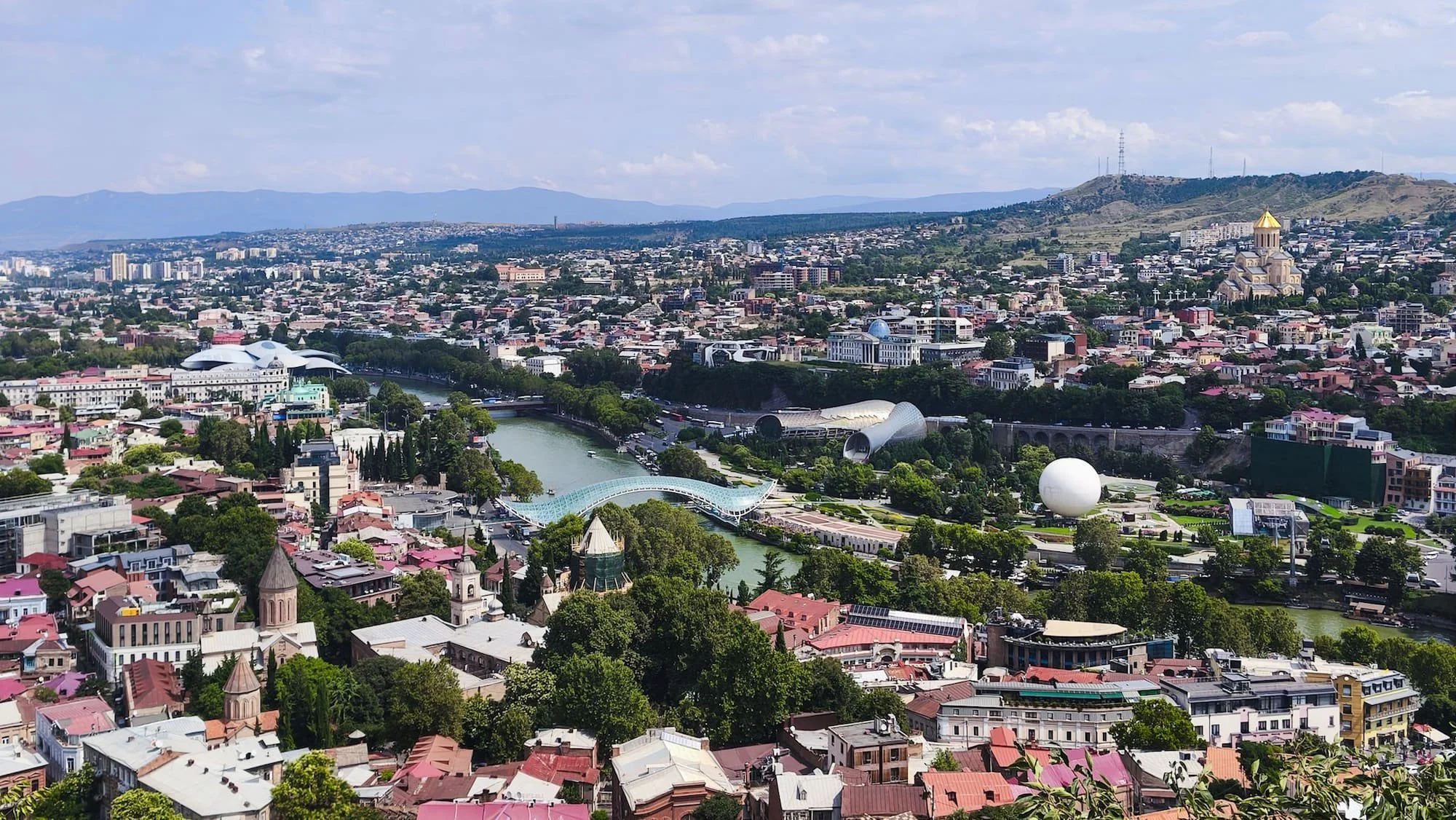
Tbilisi’s historic sulfur baths are in Abanotubani, the bath district beneath the Old Town. The rounded brick domes you see throughout the neighborhood are actually the roofs of the bathhouses below ground.
Going to a sulfur bath is one of the classic things to do in Tbilisi, but I had quite a few questions before we went to Chreli Abano, one of the most recognizable bathhouses in the district. How long do you book? Do you wear a swimsuit? Do you need slippers? How much time should you book for? Do you need a professional scrub? And what exactly are you supposed to do in there?
So in this guide, I’ll answer all of those questions based on our own experience at Chreli Abano, including how to choose a room, how long to book, what to bring, what a kisa scrub is, and what the sulfur bath experience is actually like.
We booked a private room with a hot sulfur pool, cold plunge and sauna. I didn’t personally try the other bathhouses, so most of this guide is specific to Chreli Abano, though I’ll also cover a few other options based on research so you have some idea of how they compare.
For a full route through Old Tbilisi that ends at the baths, see my three-day Tbilisi itinerary.
Which Tbilisi Sulfur Bath Should You Book?
There are several sulfur bathhouses clustered together in Abanotubani, ranging from inexpensive public baths to much more elaborate private rooms. The first decision is whether you want a public bath or a private room.
Some Tbilisi bathhouses still have traditional public bathing areas, while others focus more heavily on private rooms. Public baths are much cheaper, but with a private room, you have the entire space to yourself and whoever you're visiting with.
Since this might be the only sulfur bath experience we do in Tbilisi, we knew we wanted a private room. It felt much more relaxing to have the whole space to ourselves — and after all, the bath is meant to be R&R, no?
If you're traveling as a couple or simply aren't particularly interested in bathing communally with strangers, I'd personally pay more for the private option.
After you decide on that, you can narrow things down based on the bathhouse itself, the rooms available, and the amenities you care about.
Chreli Abano
Chreli Abano is the one we chose and the only bathhouse I can personally review.
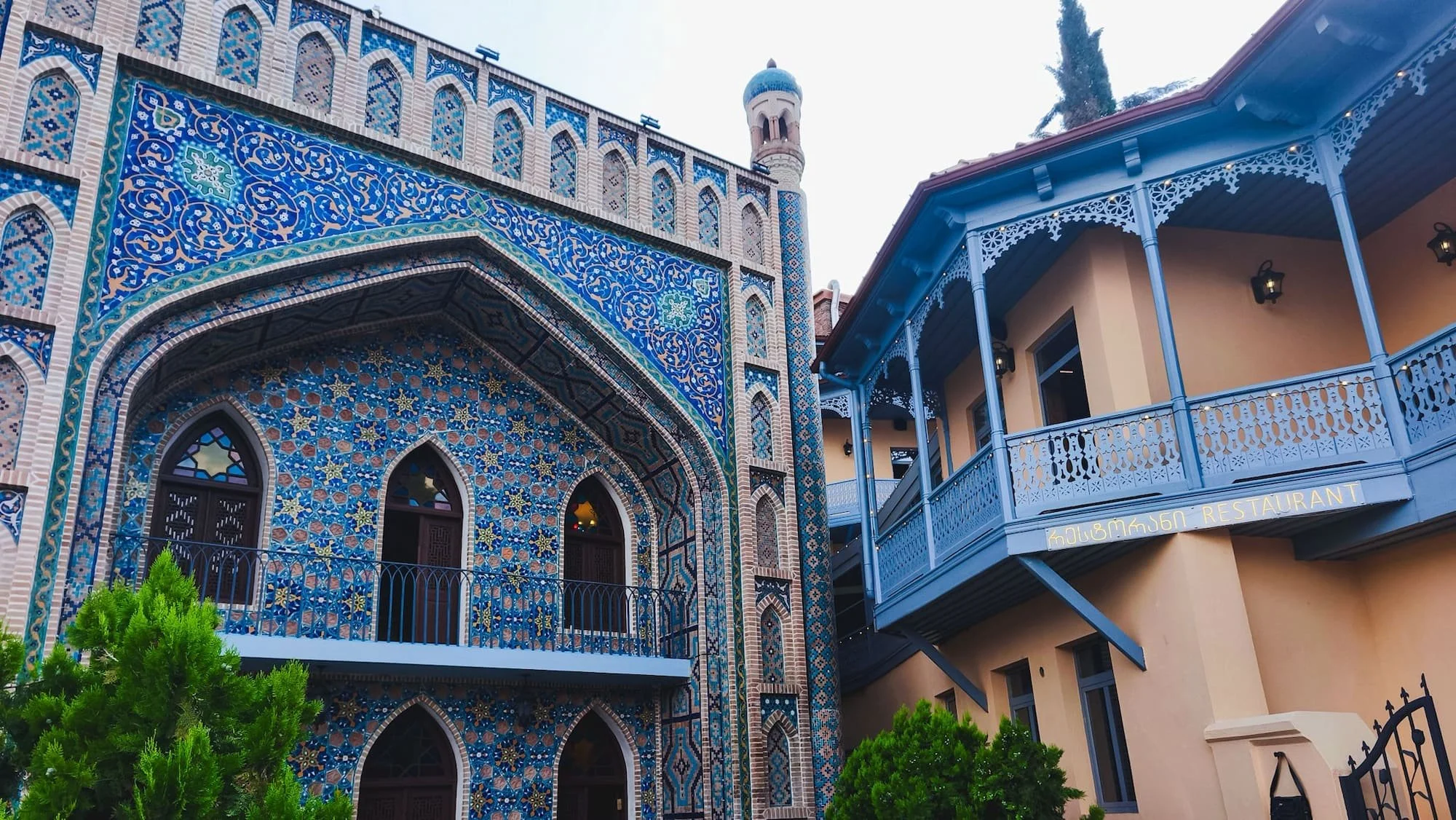
Also known as the Orbeliani Baths, it’s one of the most famous bathhouses in Tbilisi and is easy to recognize by its elaborate blue-tiled facade. The current building dates to the late 19th century, though sulfur bathing in this part of the city goes back centuries.
Honestly, part of the reason we chose it was simply because it’s the famous one lol. For our first sulfur bath experience in Tbilisi, we figured we might as well go with the classic. We also wanted a private bath and liked being able to see the different rooms and amenities before booking.
It’s one of the most popular options and the popular rooms can sell out early, so I’d suggest reserving ahead if you know when you want to go.
We really enjoyed it and would happily recommend it for a first visit.
What About the Other Bathhouses?
I didn't visit these personally, so here’s what I know from research rather than firsthand.
Bathhouse No. 5 is worth looking into if you want something more traditional and inexpensive. The bathhouse dates to 1925 and still has some Soviet-era details, including mosaics in some of its rooms. It offers both private rooms and gender-separated public bathing areas and is much less spa-like than Chreli Abano. Recent visitors still report using its communal baths, so this is probably the option I'd investigate first if the public bath experience is specifically what you're after.
Gulo's Thermal Spa is another long-running bathhouse in Abanotubani. The building dates to the 19th century and has apparently gone by several names over the years, including Bakhmaro and the Garrison Baths — the latter because soldiers once bathed there — before eventually becoming Gulo's. Today it's another popular option if you want a private room, with rooms at different price points and amenities including hot and cold pools, and a sauna in some.
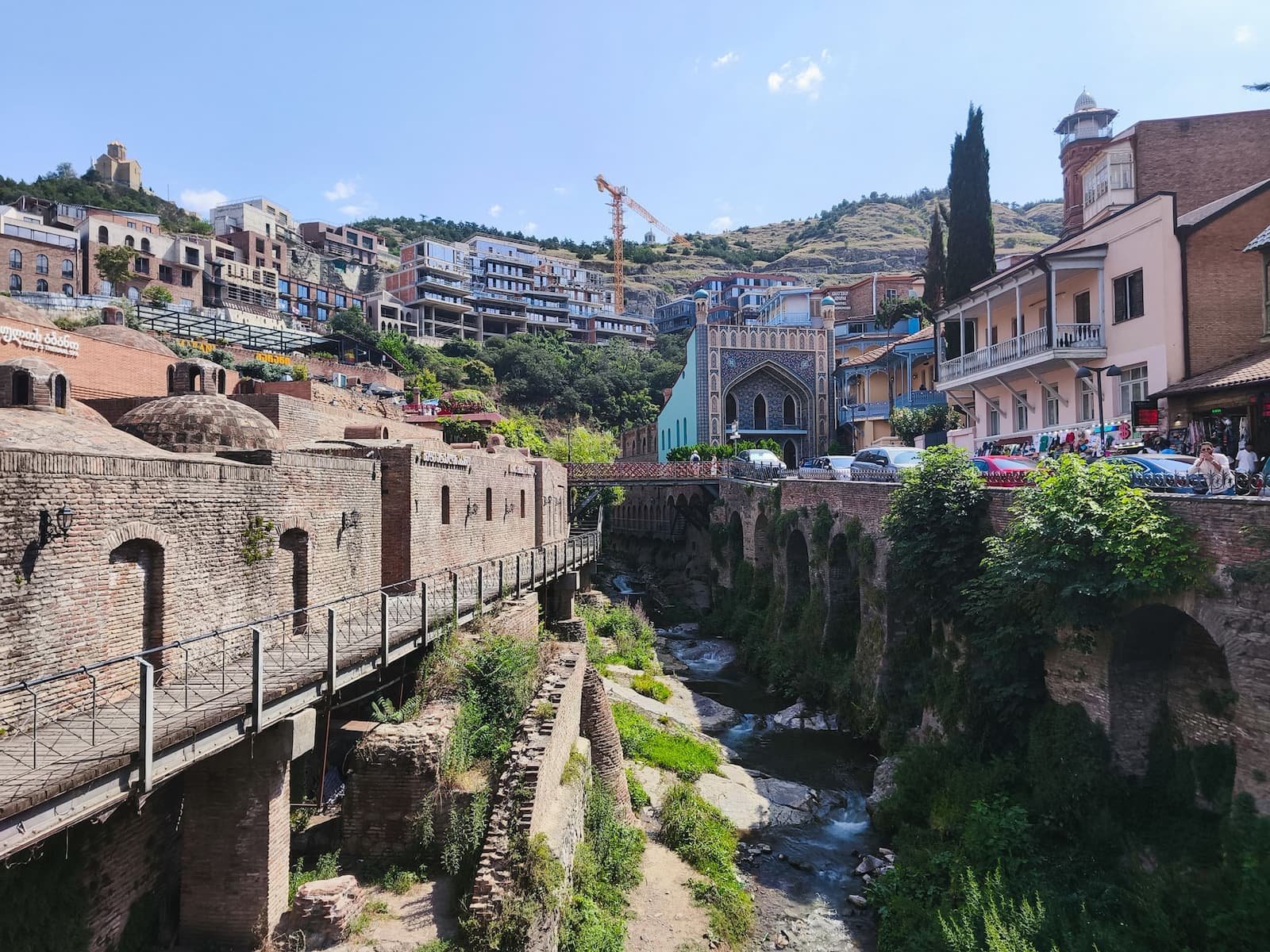
Abanotubani sulfur bath district in Tbilisi with brick bath domes and Chreli Abano in the background.
Choosing a Room at Chreli Abano
All of Chreli Abano’s rooms are private, so when you book a room, you have the entire space to yourself and your group. The listed capacity is simply the maximum number of people the room can accommodate — you don’t need to fill it.
Chreli Abano lists the amenities included with each room, and pay attention that rooms at the same price don’t necessarily include the same things. As of 2026, for example, Rooms 2, 3, 4 and 5 are all 200 GEL/hour, but only Rooms 2 and 4 include a cold sulfur pool and Finnish sauna, while Rooms 3 and 5 only list a hot sulfur pool. So it’s worth comparing the amenities rather than choosing based on price alone.
Is the Cold Plunge Worth It?
If your budget allows, I would absolutely choose a room with a cold plunge in addition to the hot sulfur pool. For us, the hot sulfur pool made us so warm that cooling down immediately with the cold plunge felt not just nice but kind of necessary xD.
At Chreli Abano, the rooms that came with a cold plunge also came with a Finnish sauna. If we could’ve saved money and gotten just the cold plunge without the sauna, we probably would’ve done that. But that wasn’t an option, so we paid for the room with both and saw the sauna as a nice extra.
Our Room: No. 4 Alexandre Dumas
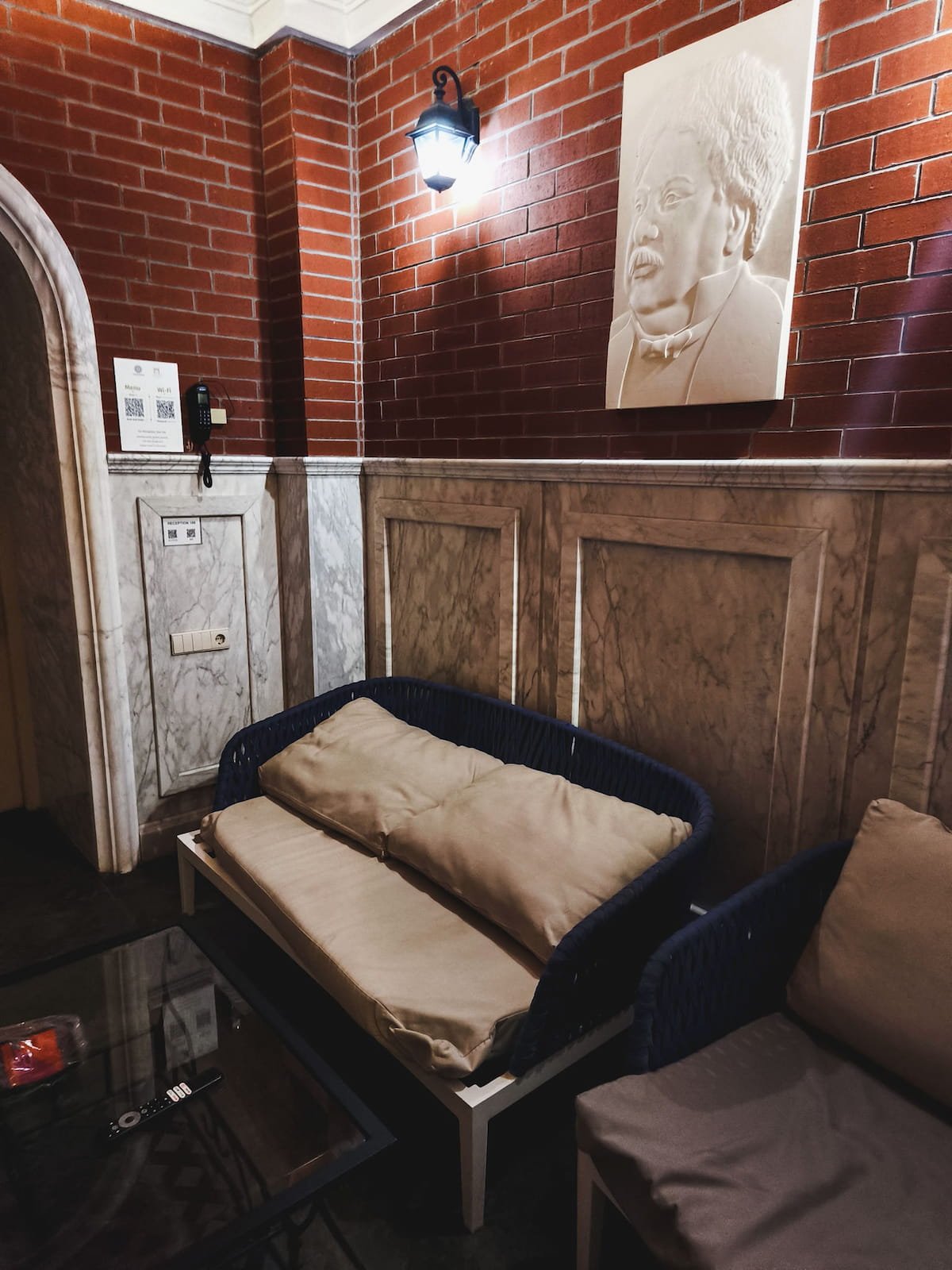
We chose Room No. 4, Alexandre Dumas, partly based on online recommendations and partly because we liked the design of the room. At 200 GEL/hour, it included both a cold plunge and Finnish sauna. The room is named after French writer Alexandre Dumas, who visited Tbilisi’s sulfur baths during his travels through the Caucasus in the 19th century.
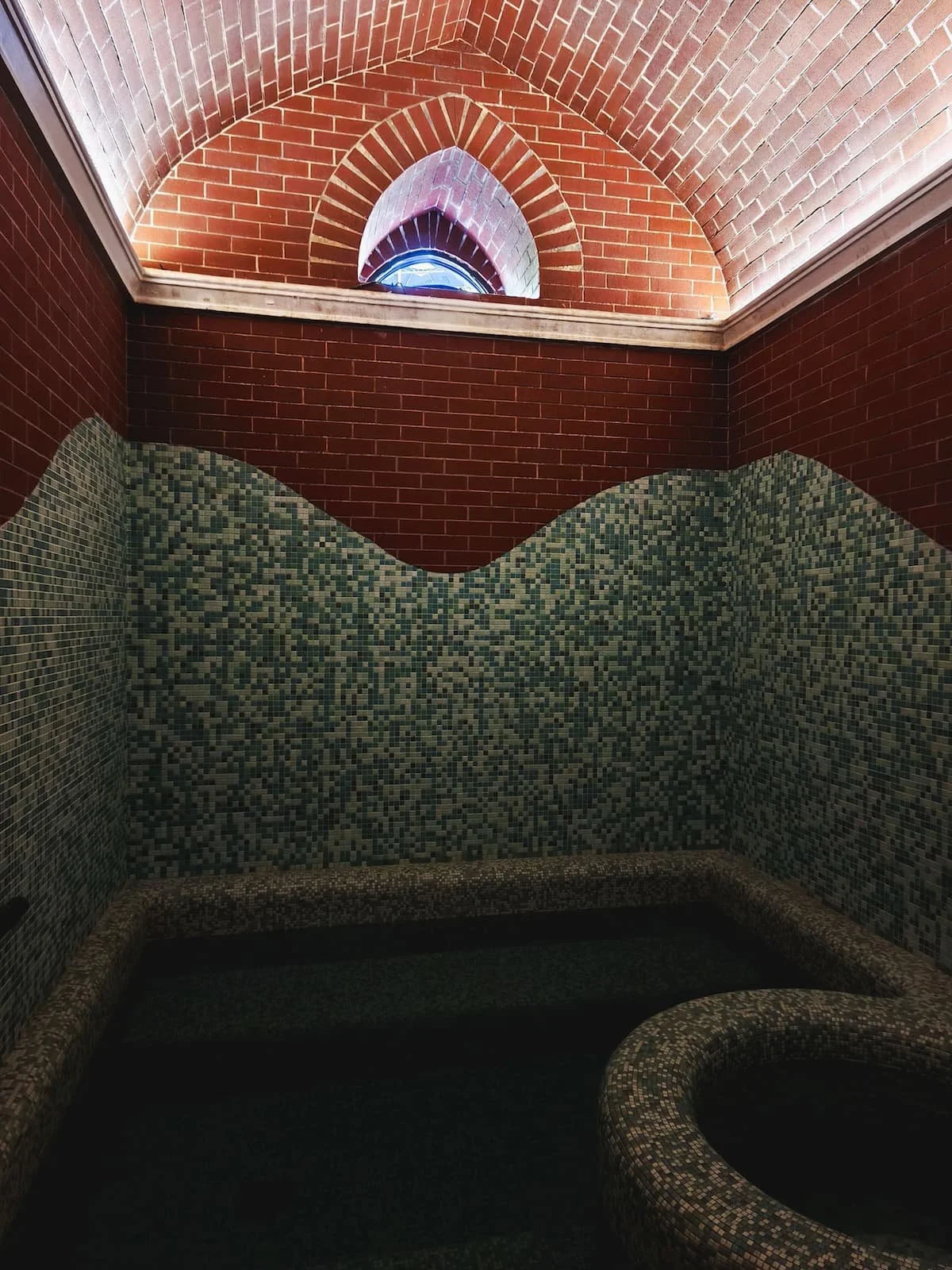
The space was huge for two people, with the hot and cold pools, sauna, a changing room, restroom, two standing showers, and a sofa area that we honestly didn’t use at all. The hot pool in particular definitely had capacity for more than two people.
Chreli Abano lists the room for up to six people, but since all rooms are private, you don’t need to fill that capacity. For us, the extra space was nice, but we mainly chose it for the cold plunge and the design.
How Long Should You Book?
The minimum booking at Chreli Abano is one hour, and after that you can add time in 30-minute increments.
We booked one hour without a professional scrub, and for us that was enough. Keep in mind that you shouldn’t spend too much time continuously in the hot sulfur pool — the very hot water can cause you to overheat, so take breaks and get out before you start feeling too warm, dizzy, or uncomfortable. Honestly, we couldn’t stay in ours for more than about 5–10 minutes at a time before wanting to get out or jump into the cold plunge anyway. Granted, we visited in the height of summer, and I can imagine sitting in hot sulfur water feels a little different when it’s freezing outside.
So if you’re just soaking, I think one hour is perfectly reasonable.
If you’re adding a professional kisa scrub, though, I’d consider 90 minutes or even two hours. The scrub itself takes around 15–20 minutes, and you’ll still want time to soak before and after, rinse off, and get dressed without being stressed about the clock.
And definitely leave enough time at the end of your booking to shower, dry off, and get dressed. The attendants are good about letting you know when your time is up — they knocked on our door pretty much exactly at the end of our hour.
Should You Get a Kisa Scrub?
A traditional kisa scrub is one of the classic add-ons to a Tbilisi sulfur bath. After you’ve soaked for a while and your skin has softened, a bath attendant called a mekise comes into the room and exfoliates you with a coarse scrubbing mitt, usually while you lie on the stone platform beside the baths. The treatment typically also involves rinsing you off afterward, and some versions include soap or a brief massage.
I debated for a while whether to do it, but ultimately decided not to since neither my partner nor I are particularly into spa treatments involving another person. I was mostly interested in it for the cultural experience. If you have very sensitive or irritated skin, I’d probably skip aggressive exfoliation altogether.
We actually did end up buying scrubbing mitts to do a much more casual version ourselves instead. Obviously, it’s not the same experience as getting the traditional kisa treatment from a mekise, but if you don’t want the professional scrub, I do think getting a mitt is a fun way to try the exfoliating part on your own. Once our skin had softened in the hot water, we could definitely see dead skin coming off. Very satisfying.
Chreli Abano normally sells disposable scrubbing mitts as well as reusable ones made from old carpet in colorful patterns. When we visited, they’d run out of the disposable ones, so we bought a reusable glove instead. (I did ask the guy we took us to our room whether it was definitely new for hygienic reasons, and he looked mildly incredulous that I was asking lol). And honestly, the reusable glove makes a fairly fun souvenir.
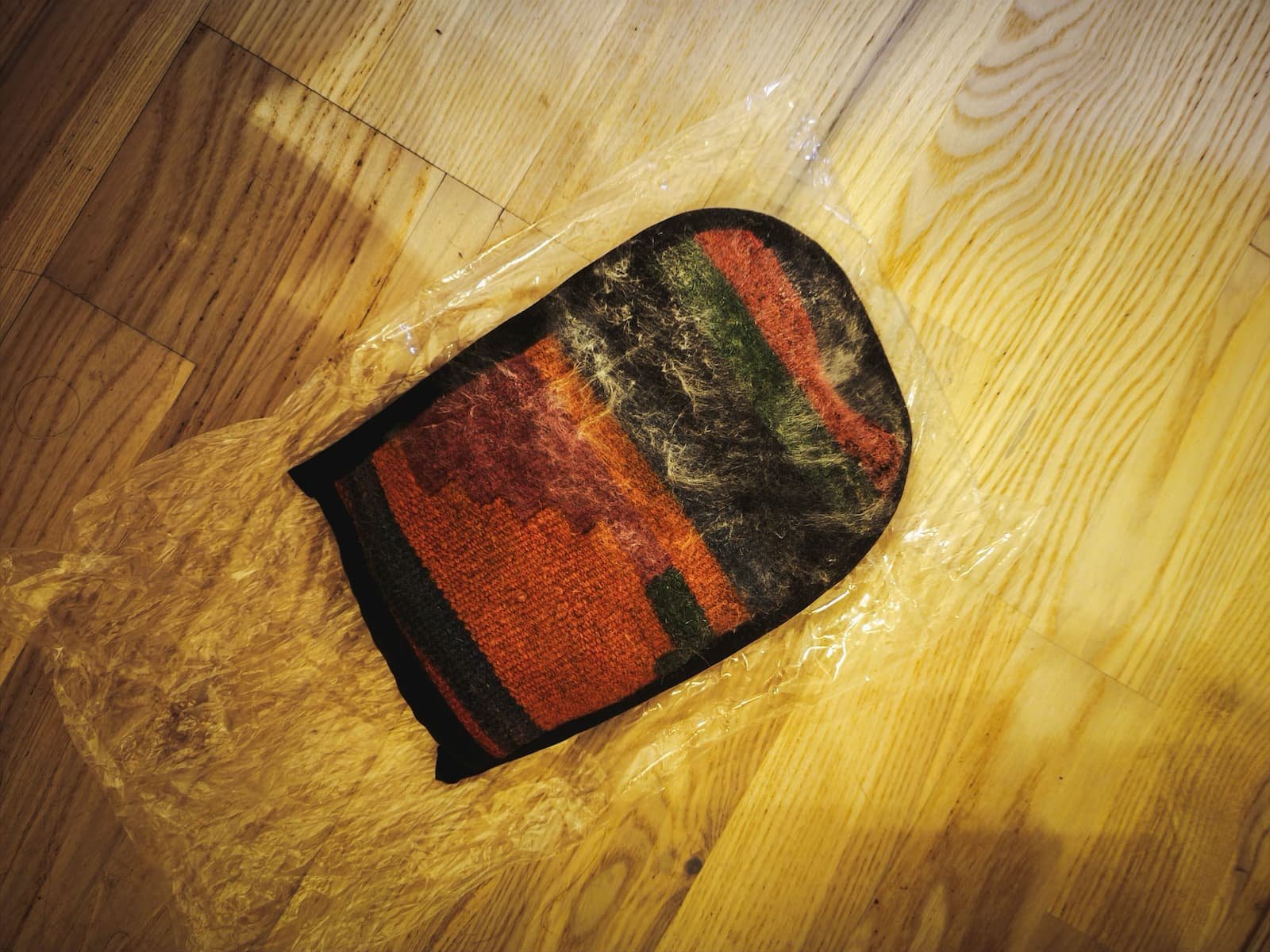
Our (used) reusable kisa scrubbing mitt we bought at Chreli Abano.
Booking and Timing Your Visit
When Should You Go?
I would place the sulfur bath in the evening after exploring Old Tbilisi.
Our booking was 6:00–7:00 PM, which I thought was almost perfect. After several hours of walking around and climbing Tbilisi’s hills, getting into the hot sulfur water felt incredible. I was so relaxed afterwards that I really just wanted to sit down and eat dinner. (Speaking of dinner, if you want a guide to food and restaurant recommendations, check out my guide to what to eat in Tbilisi).
The sulfur water can make you sleepy (it definitely did for me), so I personally wouldn’t recommend doing it earlier in the day if you still have a lot of sightseeing planned afterwards.
How to Book Chreli Abano
We had some issues with the website. The reservation pages were having trouble loading, and when they finally did, the SMS confirmation code never arrived on my U.S. phone number.
So we ended up booking by email instead, and they responded and confirmed our reservation super quickly. They were also very responsive when I emailed with additional questions.
If the online booking system isn’t cooperating for you either, I’d use the website to check the available rooms and times, then email them with your preferred room, date, time, and number of people.
Website: https://chreliabano.ge/ge
Email: contact@chreli-abano.ge
How Payment Works
We paid for the room and our supplies at the counter when we checked in. When we visited in 2026, everything could be paid by card, both the room and any add-ons you get like supplies, beverages, snacks. You can get all of those add-ons at the moment.
The exception was the professional kisa scrub, which had to be paid directly to the attendant in cash. When we visited, it was 30 GEL per session, though I’d double-check the current price before you go so you can bring the right amount. The scrub price also didn’t include the mitt, which had to be purchased separately at the counter.
When to Arrive
I’d arrive about 15 minutes before your reservation. There can be a line at check-in, especially in the evening (we waited around 10 minutes), so I’m glad we weren’t cutting it close.
If you’re early, you can wait in the lobby or outside and they’ll call you when your room is ready.
What to Bring to the Tbilisi Sulfur Baths
Because we were sightseeing all day before the bath, we really didn’t want to carry a full spa bag around Tbilisi. So we brought very little (only bottles of water and little portable towels), and honestly, you don’t need much.
Definitely bring drinking water. You’re spending time in very hot water and potentially a sauna, so it’s easy to get overheated. Sip water while you’re there, and get out of the hot pool if you start feeling too warm, dizzy, or uncomfortable.
We also brought our tiny microfiber travel towels. Towels weren’t included with our room, though you can get bath supplies at reception, so bringing your own small towel is an easy way to avoid paying for one there.
Slippers are optional. We didn’t bring any because we figured we could buy them there if we decided we wanted them. The floors can be pretty slick since water is constantly running toward the drains, so they may be worth having if you’re worried about slipping. We ended up going barefoot, walked carefully, and were completely fine. The rooms are cleaned after each group, so we didn’t find hygiene to be an issue walking around barefoot, but that also depends on individual comfort.
As for a swimsuit, in a private room it’s entirely up to you and whoever you’re with. You can wear one or go nude — we did the latter because, I mean, it was just us lol. The door locks from the inside, and staff didn’t need to enter during our booking, so the room felt completely private. You don’t need to interact with anyone while you’re inside either; staff told us they’d call the phone in the room 15 minutes before our time was up, though we didn’t actually hear it ring.
You can bring toiletries if you want to shower properly afterward, though we mostly just rinsed ourselves off rather than doing a full soap-and-shampoo shower (sulfur water is traditionally thought to have skin benefits, and internet suggests that it’s good to let it linger rather than immediately scrubbing everything off). I’d also avoid wearing clothes you’re extremely precious about, since the sulfur smell can linger a little on your skin. If that bothers you, bring a clean shirt or a full change of clothes for afterward.
And if you’re doing the kisa scrub or scrubbing yourself, you might want some lotion or moisturizer afterward. Your skin can feel a bit dry after exfoliating, and Chreli Abano also sells moisturizer if you don’t want to carry your own.
What You Can Buy There
You can also buy supplies there if you don’t want to carry everything around all day. Chreli Abano sells things like towels, slippers, and moisturizer at reception, so you could decide what you’d rather buy there than carry around all day.
You can also order extras like tea and spa treatments. And when we visited, we also got a coupon for the restaurant next door, though I wouldn’t count on that still being offered.
Take Your Jewelry Off
I’d recommend taking off all jewelry and wearables before getting into the sulfur bath.
Silver is the main thing to be careful with because sulfur can cause it to tarnish very quickly. Solid gold is more resistant, but gold jewelry is usually made from alloys rather than pure gold, and gemstones and other materials can react differently too.
I took everything off from the neck down. I did actually leave my solid-gold earrings in because I figured the water wouldn’t touch them much, and they were completely fine. But that’s very much a do-at-your-own-risk situation.
What the Sulfur Bath Experience Is Actually Like
The sulfur smell was quite strong when we first entered, but we got used to it quickly. If you’ve never smelled sulfur before, the best comparison is basically strong boiled eggs or a fart lol. It honestly wasn’t bad though, and I actually quite liked the whole sensory experience once we settled in. Our room was also dimly lit, which made everything feel much more relaxing.
The water itself had a really distinctive feel. It felt heavier than normal bath water and slightly slick on the skin, almost like a natural moisturizer. The temperature in our hot pool was perfect, and after spending the whole day sightseeing and walking up and down Tbilisi’s hills, it genuinely felt like the heat was melting the soreness out of my body.
I’d recommend just resting your head on the ledge, doing absolutely nothing for a while, and letting the sulfur water do its job. Just don’t stay in until you’re already feeling overheated. We would get out once we started feeling too warm, and if you book a room with a cold plunge, that gives you a very effective way to cool down.
I really loved the cold plunge, honestly. We’d sit in the hot sulfur pool until we got warm, get out and dip into the cold pool for a bit, then go back into the hot water and repeat. The temperature change completely wakes you up, and I ended up liking the alternating hot-and-cold part of the experience quite a few times.
Of course, you don’t need to do dramatic hot-to-cold plunges if you don’t enjoy them or have health reasons to avoid rapid temperature changes. The main thing is to listen to your body and just do what feels best to you.
The Finnish sauna, meanwhile, was just okay for me. If I wanted to feel warm, I much preferred sitting in the sulfur bath. The sauna was HOT (I basically started sweating immediately), and because my skin still had sulfur water on it, I didn’t want to touch my face or eyes. So I just let the sweat run down my face, which wasn’t exactly the height of luxury. We probably spent about five minutes in there before going straight back to the pools.
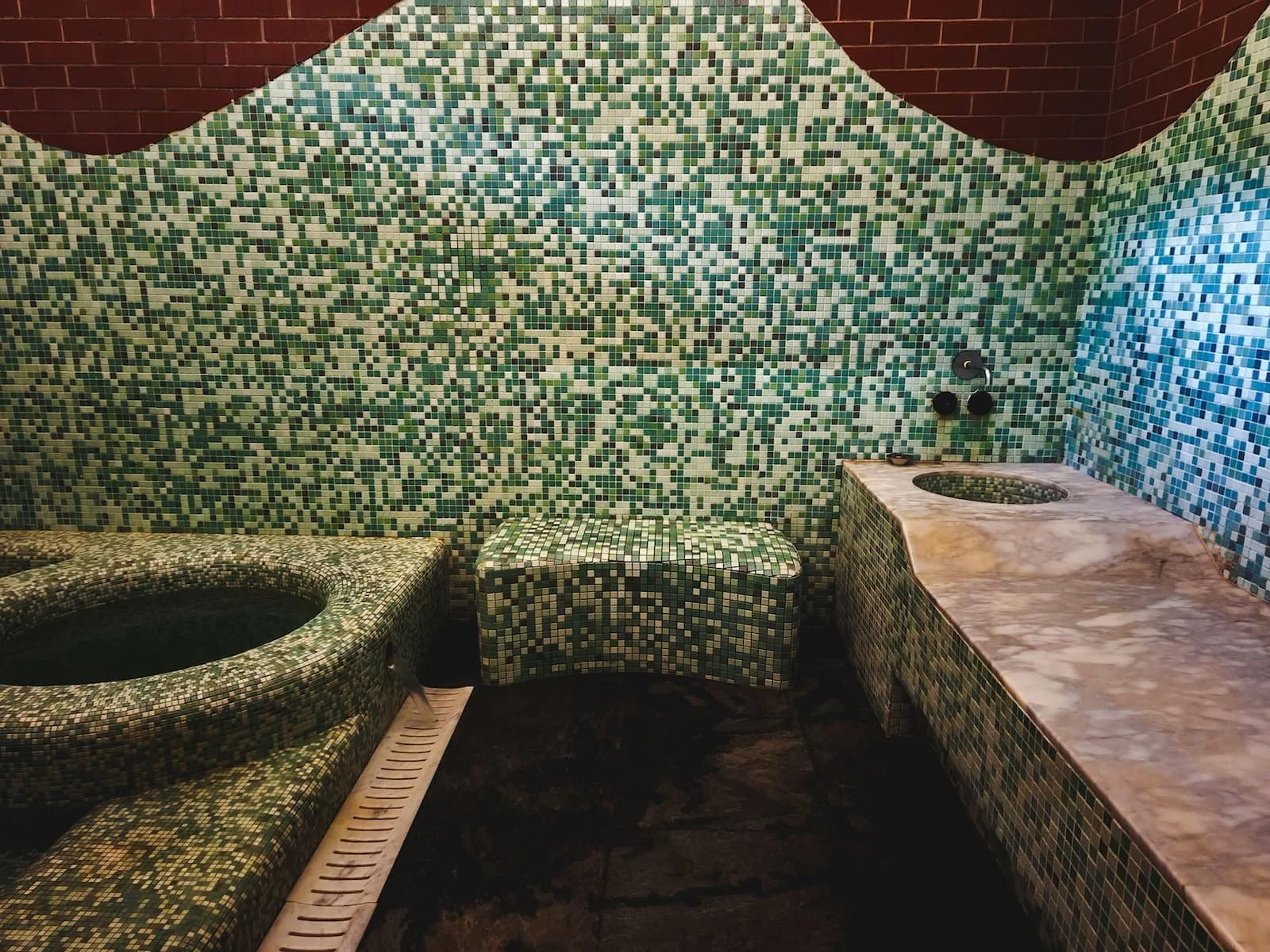
The pool area in Room 4 at Chreli Abano – the little cold plunge is on the left of the photo, and on the right is the stone massage bench where we scrubbed ourselves.
Suggested One-Hour Routine
You absolutely don't need to follow an exact schedule, but if you're wondering how an hour actually gets filled, something like this works:
First 5 minutes: Undress, use the restroom if needed and take a quick shower.
Next 10–15 minutes: Relax in the hot sulfur pool, getting out whenever you feel too warm.
Cold plunge: Dip into the cold pool briefly if your room has one and you want to.
5–10 minutes: Try the sauna.
5–10 minutes: Self-scrub with a kisa mitt while your skin is warm, then rinse off.
Next 10–15 minutes: Go back to the sulfur bath and alternate with the cold plunge if you like.
Last 10 minutes: Rinse, dry off and get dressed.
I'd err on the side of getting out a few minutes early rather than frantically trying to pull clothes onto damp skin while the attendant is knocking at the door telling you your time is up.
Is a Tbilisi Sulfur Bath Worth It?
I'd say yes, especially on a first trip to Tbilisi.
I'm actually not a huge hot-bath person, but I still thought the whole experience was really worth doing. The sulfur baths are such a distinctive part of Tbilisi, and it's one of those activities that actually feels connected to the city rather than being something you could do anywhere.
And whether it was the sulfur water, the heat, the scrub, placebo effect or some combination of all of them, I felt so relaxed afterward. Mentally relaxed, physically relaxed, muscle aches gone. My skin felt ridiculously soft too.
So yes: I'd absolutely include a sulfur bath on a first-time Tbilisi itinerary. And then I'd go directly to dinner before your body melts from the relaxation.
Questions?
Thanks for reading! Feel free to leave a comment below or send me a message with any questions — I’m always happy to help when I can. And if you visit any of these places, I’d love to hear what you thought.
If you’re still planning your trip, check out my Tbilisi Start Here guide for all of my posts about the city, including what to do and eat, transportation, where to stay, and ready-made itineraries.
You may also like:
What to Do in Tbilisi — curated guide to sights, neighborhoods, museums, and viewpoints, with practical information to help you plan your days
3 Days in Tbilisi — a ready-made itinerary that strings many sights (including this sulfur bath experience!) into three geographically organized days
How I Plan Low-Friction Itineraries — the process I use to build routes that reduce backtracking and decision fatigue
My 8 Items That Make One-Bag Travel Work — my core items that make moving through cities easier