Santiago Neighborhoods, Decoded: The Easiest Bases for a Walkable Trip
Visiting Santiago and deciding where to stay? Compared to many other major Latin American cities, Santiago is relatively compact, and, most importantly, is very well-connected by its excellent public transportation system. That means your exact base is less likely to make or break your trip, but Santiago’s neighborhoods still have distinct energies that can shape your experience and impressions of the city. If you want a fuller picture of what day-to-day life here actually feels like, read my slow travel Santiago guide.
In this post, I’m sharing an overview of 5 neighborhoods I’d genuinely recommend based on personal experience. Across multiple visits to Santiago, I’ve stayed in each of these areas (some for extended stretches) and formed opinions on what matters most to me as a female traveler: safety, walkability, transit access, affordability, food scene, noise/sleep-friendliness, and runner-friendliness (gotta keep up that training!).
More Santiago planning help:
Santiago 1-day itinerary → Ultimate full-day walking route to hit the city’s highlights
Santiago in 3 days → Landmarks, neighborhoods, viewpoints, markets, and modern Santiago organized into 3 logical days
What to pack for Santiago → Carry-on layering system for Santiago’s sun and temperature swings
SCL airport to the city → All transport options, costs, convenience, and local tips
Getting around Santiago → How to use the metro like a local (bip! card, best lines, safety, rush hour)
Santiago “start here” → Running list of itineraries and guides, updated regularly
Quick rules for choosing where to stay (Santiago edition)
Anchor near Metro Line 1 if you can. Many major sights and convenient connections sit along Line 1, so staying near an L1 station makes getting around noticeably easier.
Decide what you want your evenings to feel like. Residential areas are quieter at night, whereas the downtown areas could have restaurants and nightlife going late into the evening.
Block-by-block matters. Even in the same neighborhood, two streets can feel totally different (especially after dark), so read recent reviews and prioritize good foot traffic around your accommodation.
Quick guide to my recommended neighborhoods
Most visitors (especially first-timers): Bellas Artes / Barrio Lastarria — dense, walkable, and central, with great food and nightlife, plus easy access to the historic core and metro.
Closest to the main historic sights: Historic Center / Plaza de Armas — most convenient for daytime sightseeing (Plaza de Armas, La Moneda), but could be hectic during the day and less secure at night.
Best all-around base: Providencia — calmer and more residential than the downtown areas, great for walking and everyday convenience, with solid transit if you stay near Avenida Providencia.
More commercial / upscale: Las Condes — modern, polished, and quieter at night; great if you want newer buildings and convenient access to shopping mall / park, but pricey and farther from central Santiago.
Bohemian / design-forward: Barrio Italia — cafés, boutiques, and a creative vibe; great for wandering and outdoor dining.
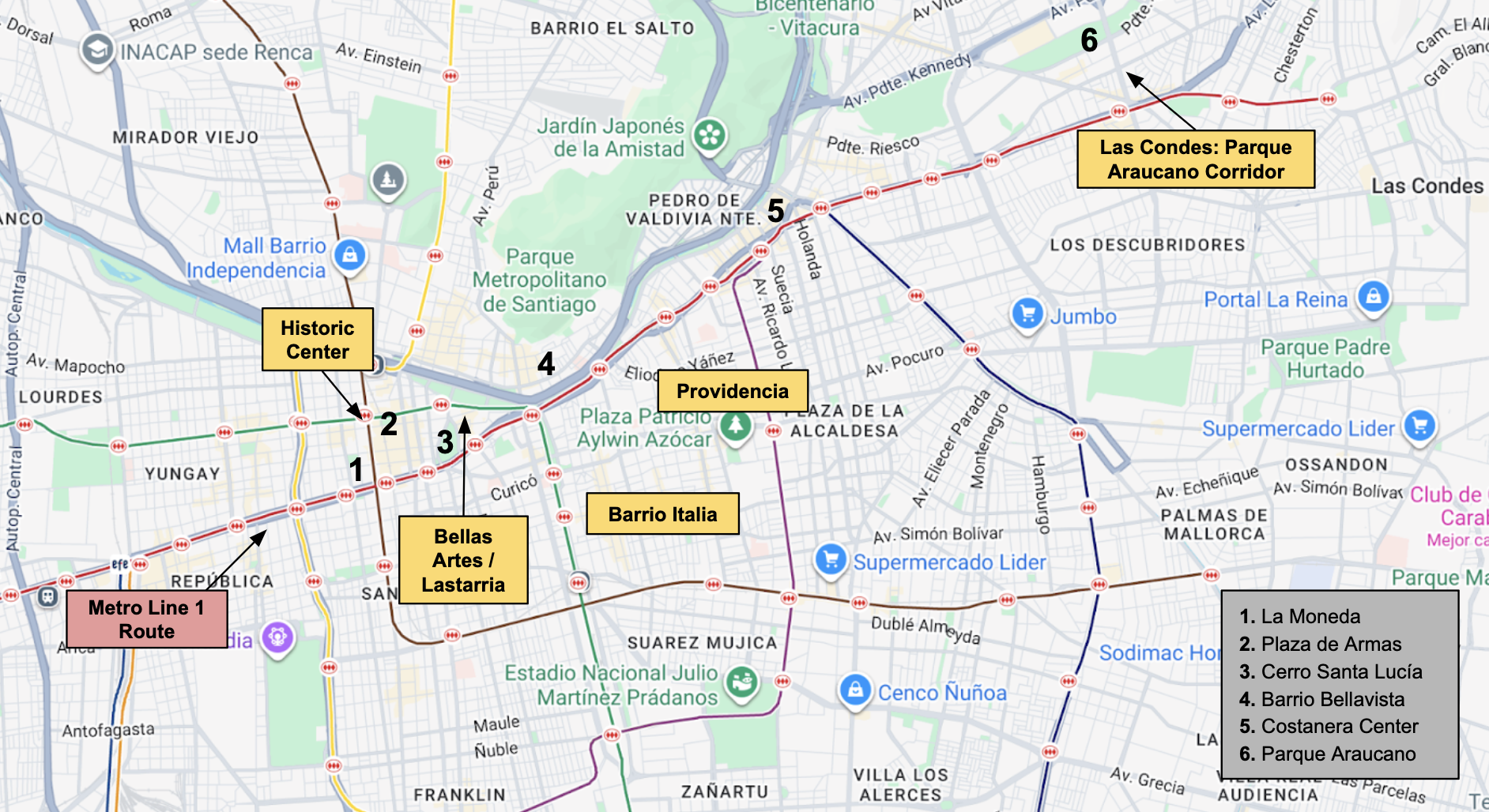
Map of Santiago’s best neighborhoods to stay (with key landmarks), centered on Metro Line 1. (Map data © Google)
Bellas Artes / Barrio Lastarria
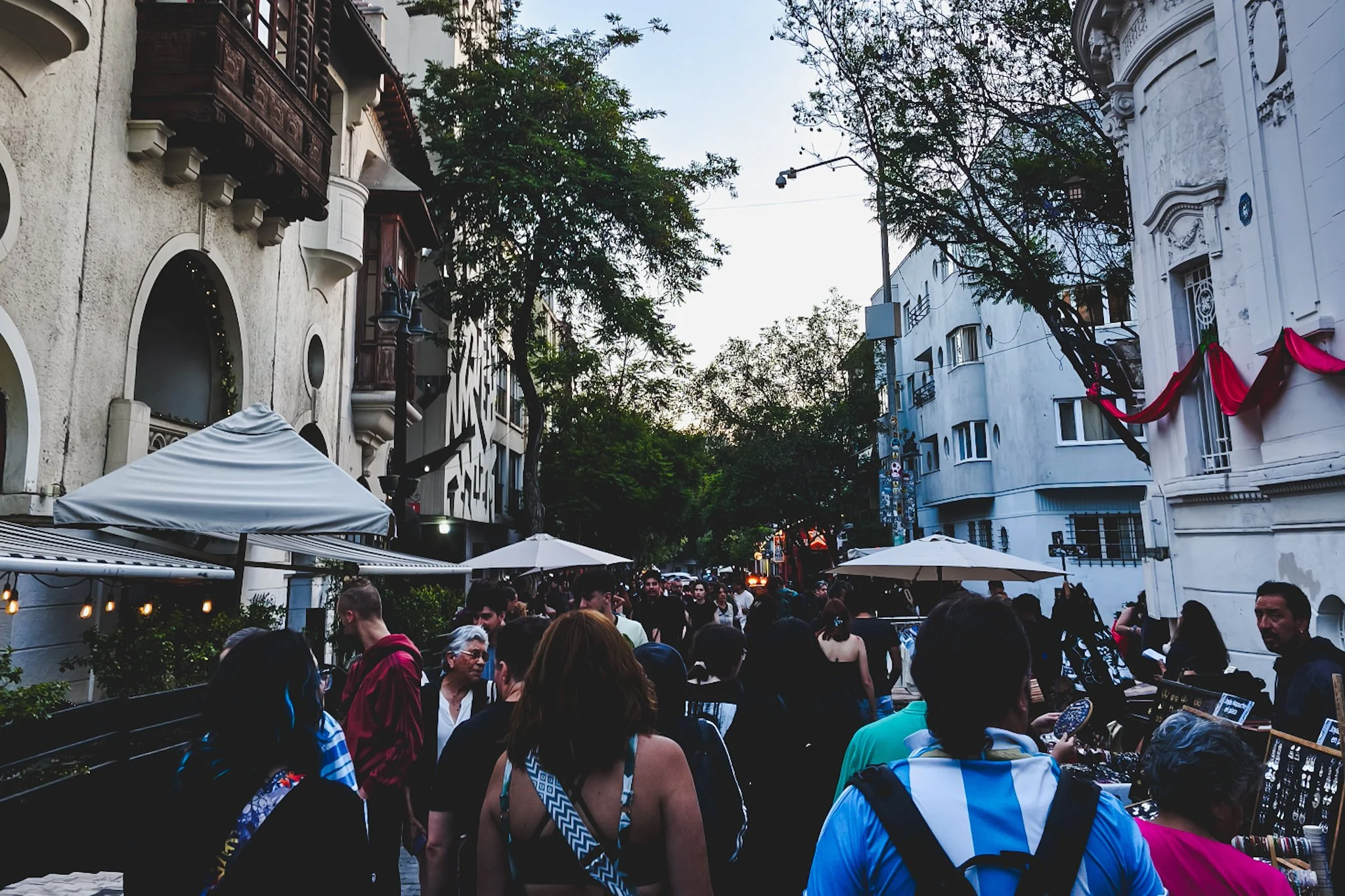
The busy main strip in Barrio Lastarria, with dining and street stalls lining the sides and charming historic architecture.
✨ Vibe: Lively downtown area packed with cafes and restaurants — walkable, central, and energetic.
✅ Best for: Food and nightlife, first-timers, walking-heavy itineraries.
⚠️ Avoid if: You’re a light sleeper or want quiet evenings; you prefer calmer and more residential neighborhoods.
Bellas Artes / Barrio Lastarria is one of Santiago’s most popular neighborhoods for visitors thanks to its dense mix of cafés, restaurants, museums, and nightlife. It’s known for its historic architecture, cobblestone streets, and an atmosphere that stays lively well into the night. It’s also very central, with an easy walk to the historic core and quick metro access to other parts of the city.
My ratings as a female traveler:
Safety: 3.5/5 (Moderate to Good)
This is a very busy area for foot and car traffic, and I feel comfortable day and night. However, there is opportunistic theft, and some areas feel less secure at night (especially the streets surrounding Cerro Santa Lucía). I keep my usual big-city habits (bag awareness, phone out minimally while walking).Walkability: 5/5 (Excellent)
This area is compact, easy to navigate, and enjoyable to walk around. However, the main Lastarria strip can get packed at peak meal times and weekends, so if you want to avoid crowds, you may find yourself taking parallel side streets.Centrality / Transit access: 5/5 (Excellent)
The neighborhood is right smack in the downtown areas of the city – it’s a quick walk to the historic core (right next door) and has convenient metro access to go to neighborhoods like Providencia and beyond.Affordability: 3/5 (Moderate/Mixed)
The Barrio Lastarria side (East of Cerro Santa Lucía) is one of the more expensive neighborhoods for tourists, but the Bellas Artes side (West of Santa Lucía) is more affordable.Food scene: 5/5 (Excellent)
If your trip revolves around cafés, wine bars, and restaurant hopping, this is the neighborhood to be. There’s a huge concentration of options at different price points, from quick bites to date-night spots. Just know that the most central Lastarria places often price for the location and ambiance.Sleep-friendliness / Quietness: 2/5 (Challenging)
Concentration of food and car traffic, and bars, clubs, and restaurants could go late into the night. It might be OK if you have your windows closed, but harder in the hot summer when you might need to keep the windows open for circulation.Runner-friendliness: 3/5 (Moderate/Mixed)
The streets are too crowded to run comfortably, but it does have easy access to great routes nearby, including Parque Forestal paths and the city’s Sunday open-streets (ciclovía) routes. You’re also a walkable distance from Cerro San Cristóbal if you want hill training.
Historic Center / Plaza de Armas
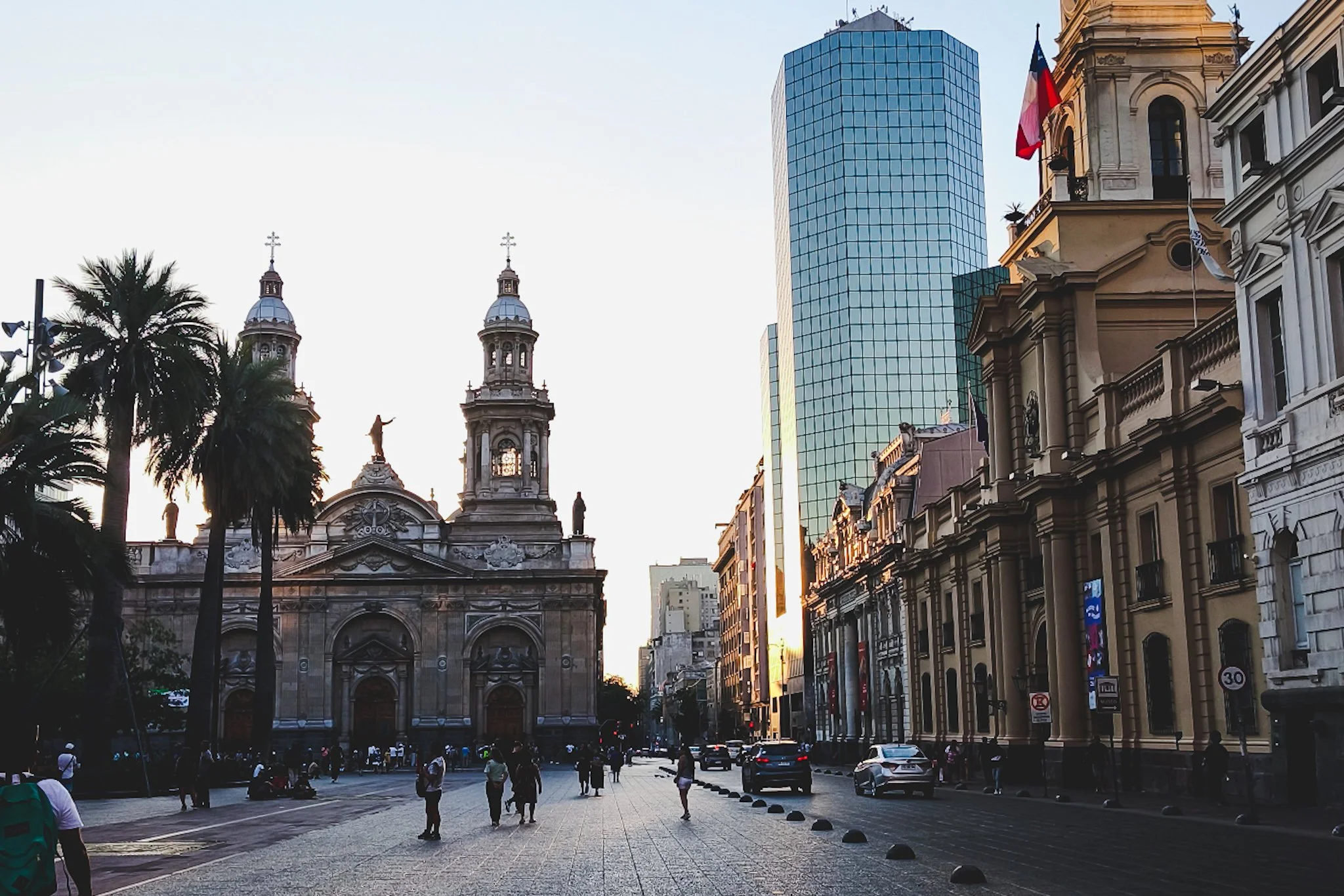
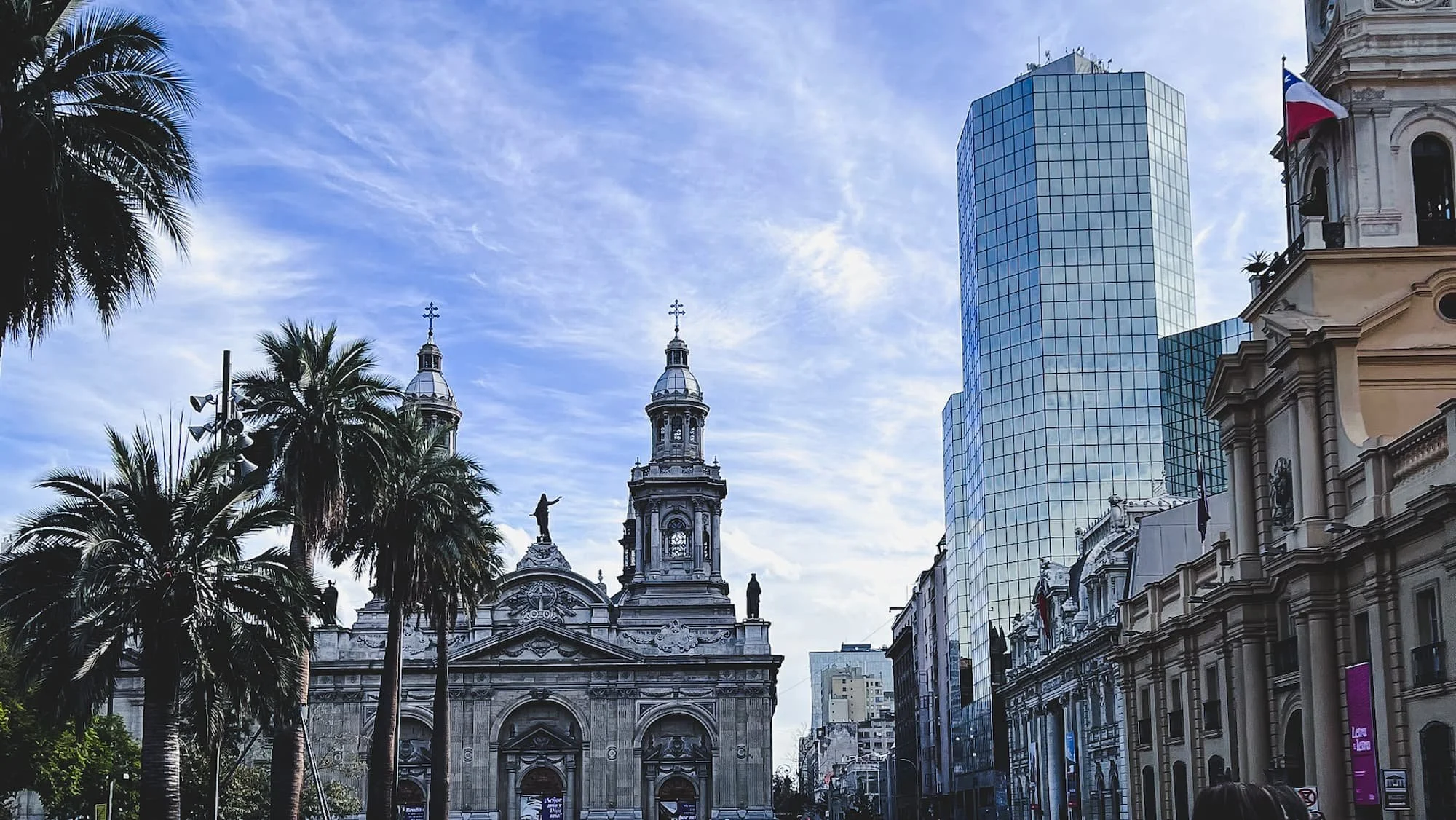
Plaza de Armas is the heart of Santiago’s historic center, surrounded by historical landmarks and lots of energy during the day.
✨ Vibe: Core of downtown Santiago — historic landmarks, busy streets, and city-center energy.
✅ Best for: First-time sightseeing, short walk to major landmarks, maximum metro convenience.
⚠️ Avoid if: You want quiet streets or a base that feels comfortable walking around late at night.
The Historic Center is the downtown area around Plaza de Armas and La Moneda — the oldest part of Santiago and the former Spanish colonial core. It’s incredibly convenient to tackle the city’s most iconic historic buildings and museums on foot, but it also has city-center characteristics: crowded and hectic during the day, and noticeably quieter (and more hit-or-miss in terms of safety) after dark.
My ratings as a female traveler:
Safety: 3/5 (Moderate/Mixed)
In the daylight, the area has high foot traffic, and petty theft is the main risk particularly around crowded pedestrian streets and near metro entrances. At night though, it’s much emptier and some blocks feel noticeably less secure – I wouldn’t choose this area for long evening walks.Walkability: 5/5 (Excellent)
If your goal is sightseeing on foot, this is one of the most efficient areas. It’s compact and dense, and you can knock out a lot of Santiago’s “first timer” landmarks just by walking.Centrality / Transit access: 5/5 (Excellent)
It’s one of the most convenient bases for moving around the city – easy access to multiple metro lines that make it easy to get both deeper into Centro and out toward Providencia/Las Condes.Affordability: 4/5 (Good)
Prices vary block by block. In general, lodging and meals around the core historic grid can be good value for how central it is, but if you drift toward Bellas Artes/Lastarria, prices tend to rise.Food scene: 4/5 (Good)
Plenty of choice and convenience: quick lunches, classic Chilean spots, casual international food, and coffee/bakeries. However, for the “best” restaurants and vibe, I do find myself going more towards Bellas Artes (or farther towards Barrio Italia, see below).Sleep-friendliness / Quietness: 4/5 (Good)
It depends a lot on your exact street. Some buildings are quiet during non-business hours, but many streets have daytime noise (traffic, horns, crowds), and certain blocks can be louder in the evenings or early mornings.Runner-friendliness: 2/5 (Challenging)
Not ideal for training due to crowds, narrow sidewalks, cobblestones, street crossings. If you want a smoother route, you’ll likely head toward wider paths like in Parque Forestal (near Bellas Artes), which is a short distance away.
Providencia
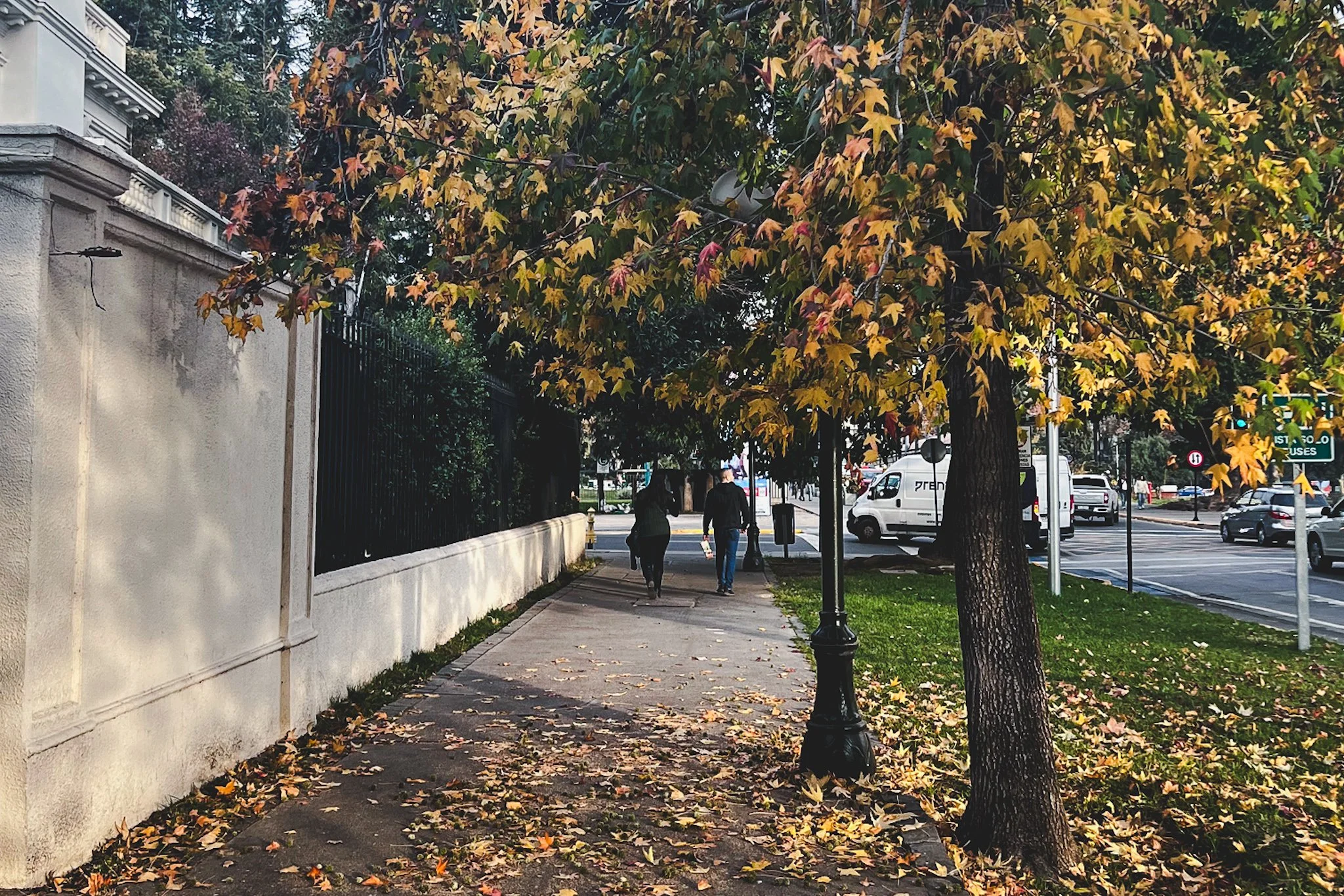
Providencia’s leafy, wide sidewalks are some of my favorite places in Santiago for an easy stroll (or a run).
✨ Vibe: The middle ground — tree-lined streets, a local feel, but still easily accessible to sightseeing.
✅ Best for: A comfortable home base, quieter nights with city convenience.
⚠️ Avoid if: You want to be in the densest tourist and sightseeing zone.
Providencia is a top all-around base with a mix of residential streets and commercial pockets, but it’s a full comuna (administrative district), so the experience varies by pocket. Near Avenida Providencia it’s busier and more commercial with the best transit access (including Metro Line 1). Farther south toward Barrio Italia, it’s calmer and more residential, but typically farther from the metro.
My ratings as a female traveler:
Safety: 4/5 (Good)
Providencia is consistently one of the areas that I feel the most comfortable in. The residential areas are calm and peaceful, and the commercial areas on Avenida Providencia are high in foot traffic both day and night. However, there is still big-city theft, so I still keep my awareness around me.Walkability: 5/5 (Excellent)
The many straight, wide, and tree-lined sidewalks make Providencia so enjoyable – those streets are some of my favorite places to have a stroll in the city. However, since the area is more residential, you do have to walk more to reach transit and grocery spots, unless you’re staying near Avenida Providencia.Centrality / Transit access: 3.5/5 (Mixed to Good, depending on area)
This depends on which part of Providencia you’re staying – good if you’re staying closer to Avenida Providencia, where you’ll have easy access to Metro Line 1. The Barrio Italia / Ñuñoa side is farther from metro lines, though buses are readily available.Affordability: 3/5 (Moderate)
In terms of housing, rates are higher due to the location’s popularity. There’s a selection of hotels, B&Bs, and rentals along Avenida Providencia Providencia, but farther into the residential streets, lodging options can thin out (more long-term apartments and older homes).Food scene: 4/5 (Good)
There is a wide range of different cuisines and food spots in the area, but they tend to be concentrated in certain areas, especially along Avenida Providencia and near Barrio Italia.Sleep-friendliness / Quietness: 5/5 (Excellent)
Most of the district is quiet and residential, so there’s not too much noise during the day and is definitely quiet at night. Avenida Providencia is a large road with car and foot traffic through, so if you’re staying directly on that street, you will experience some noise.Runner-friendliness: 5/5 (Excellent)
The sidewalks are generally excellent or easy running with minimal interruptions. Close to Avenida Providencia, you’ll have access to the paths in Parque Balmaceda and the Sunday open-streets (ciclovía) route on Andrés Bello. More towards the western edge of the district, you’ll have access to Parque Bustamante and its paths (one of my favorite parks to run loops at).
Barrio Italia
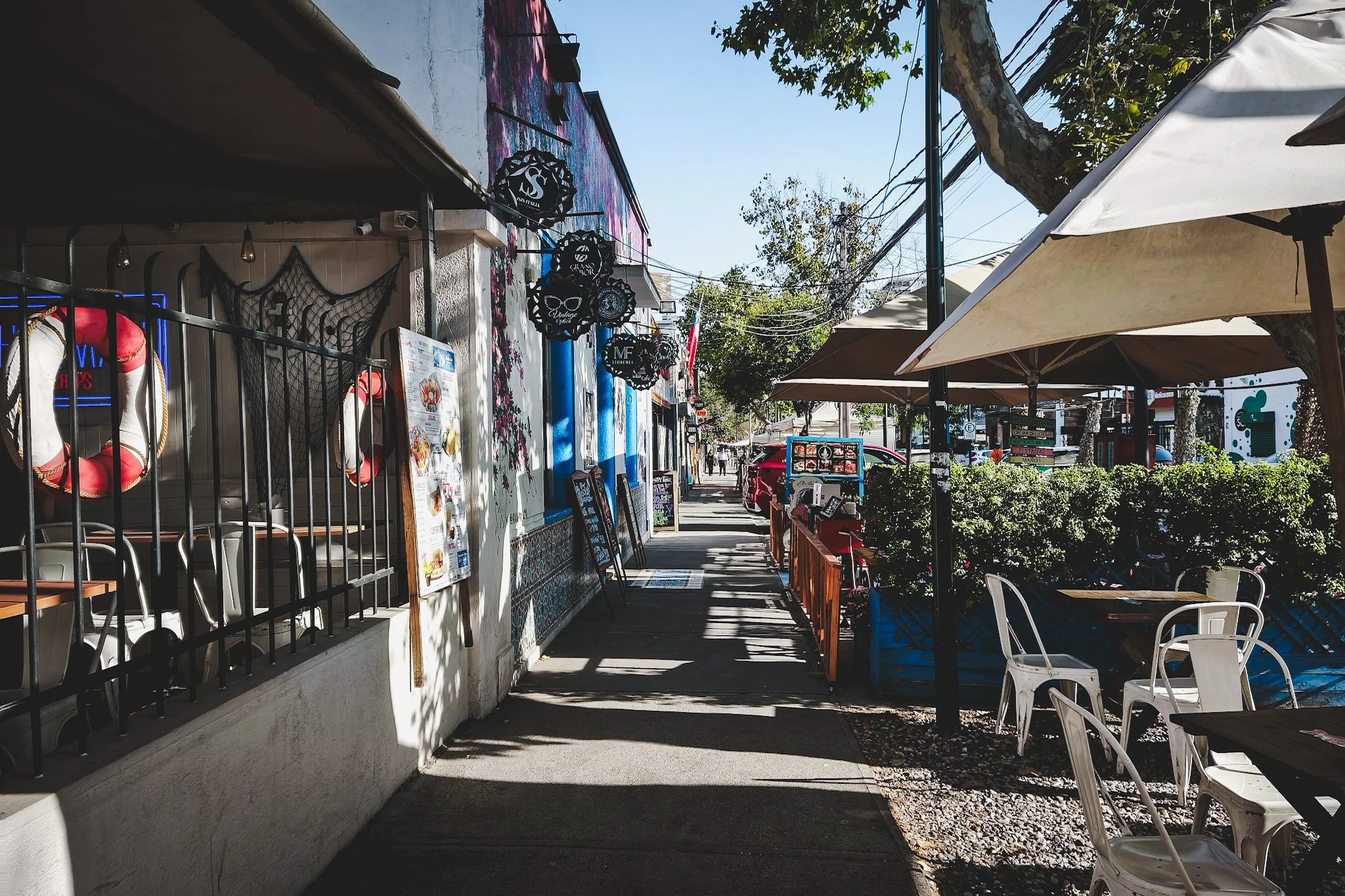
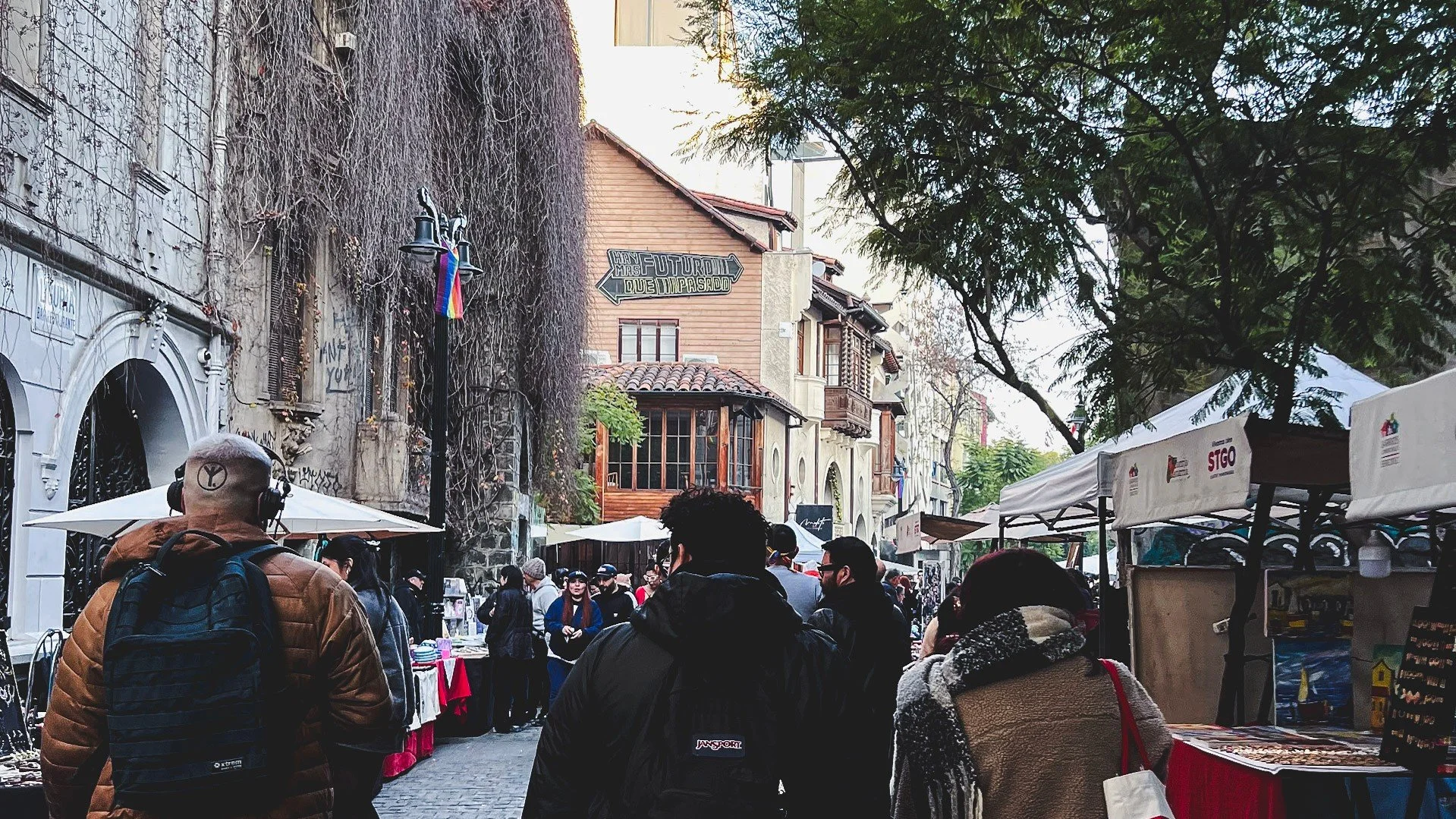
Sidewalk in Barrio Italia — this creative neighborhood is all about local design, boutiques, cafes, and outdoor dining.
✨ Vibe: Bohemian and creative area – full of boutiques, cafes, craft markets.
✅ Best for: Browsing shops, coffee + outdoor dining, slower pace.
⚠️ Avoid if: You want to be right on the metro or prioritize late-night convenience.
Barrio Italia centers around Avenida Italia, a roughly 1-mile / 1.5 km north–south stretch spanning parts of Providencia and Ñuñoa. I call it out separately because it has a distinct personality: boutique shopping, local crafts, and a creative, hip vibe. It’s also one of the best areas in Santiago for outdoor dining with a lively street atmosphere.
My ratings as a female traveler:
Safety: 5/5 (Good)
Barrio Italia is one of the areas where I feel most comfortable. The main restaurant and café corridors are usually still lively into the night, which keeps the streets active. That said, it’s still a popular dining/shopping area, so opportunistic theft happens.Walkability: 5/5 (Excellent)
The neighborhood in general has the great tree-lined sidewalks typical of Providencia, so it’s very pleasant to walk in. Avenida Italia itself has narrow sidewalks, much of which are used for outdoor dining, which is amazing for the dining experience but could make the sidewalk a bit congested when there’s high foot traffic.Centrality / Transit access: 3/5 (Moderate/Mixed)
Barrio Italia itself is not served by any metro stops – the closest metro stops are served by the north-south Line 5, which is less convenient than the east-west Line 1. And these stops are at least a 10-15 minute walk away, which is higher for the standards of central Santiago.Affordability: 3/5 (Moderate)
Restaurants and lodging tend to be pricier in this neighborhood, with a fewer selection of hotels and hostels. In my experience, you can definitely find Airbnbs around, but they tend to be nicer apartment buildings with a more premium price tag.Food scene: 5/5 (Excellent)
Avenida Italia has excellent dining options, with a variety of cuisines ranging from Chilean, Italian, Japanese, Indian, Irish and German beer gardens, and more. Many of the restaurants have more of a modern vibe, and the district has in my opinion one of the best scenes for outdoor dining in the city. Some of my favorite restaurants in the city are in Barrio Italia, including El Hoyo, a huge traditional Chilean restaurant with excellent pastel de choclo (Chilean corn pie).Sleep-friendliness / Quietness: 5/5 (Excellent)
Avenida Italia itself has restaurants that go into the night, but the surrounding streets are very quiet.Runner-friendliness: 4/5 (Good)
The main difficulty for running in the neighborhood is a lack of large green spaces close by. The sidewalks are good for easy running, though Avenida Italia itself is too crowded to run in for most of the day (in the mornings it is emptier and more peaceful). On Sundays though, the city’s open-streets (ciclovía) route goes through Av. Irarrázaval, the southern border of Avenida Italia, and it’s great long runs or uninterrupted hard training.
Las Condes (Manquehue to Parque Araucano / Parque Arauco corridor)
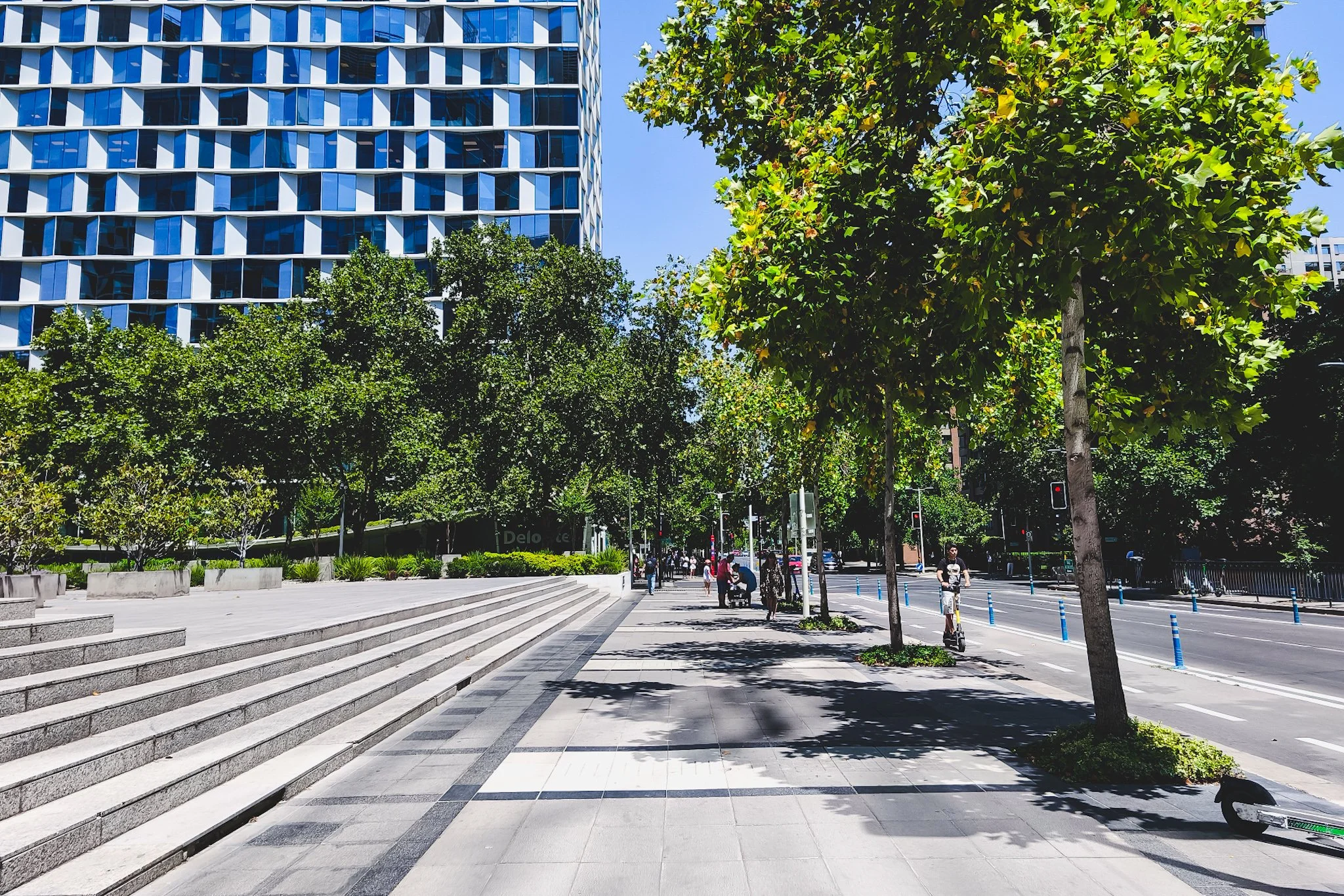
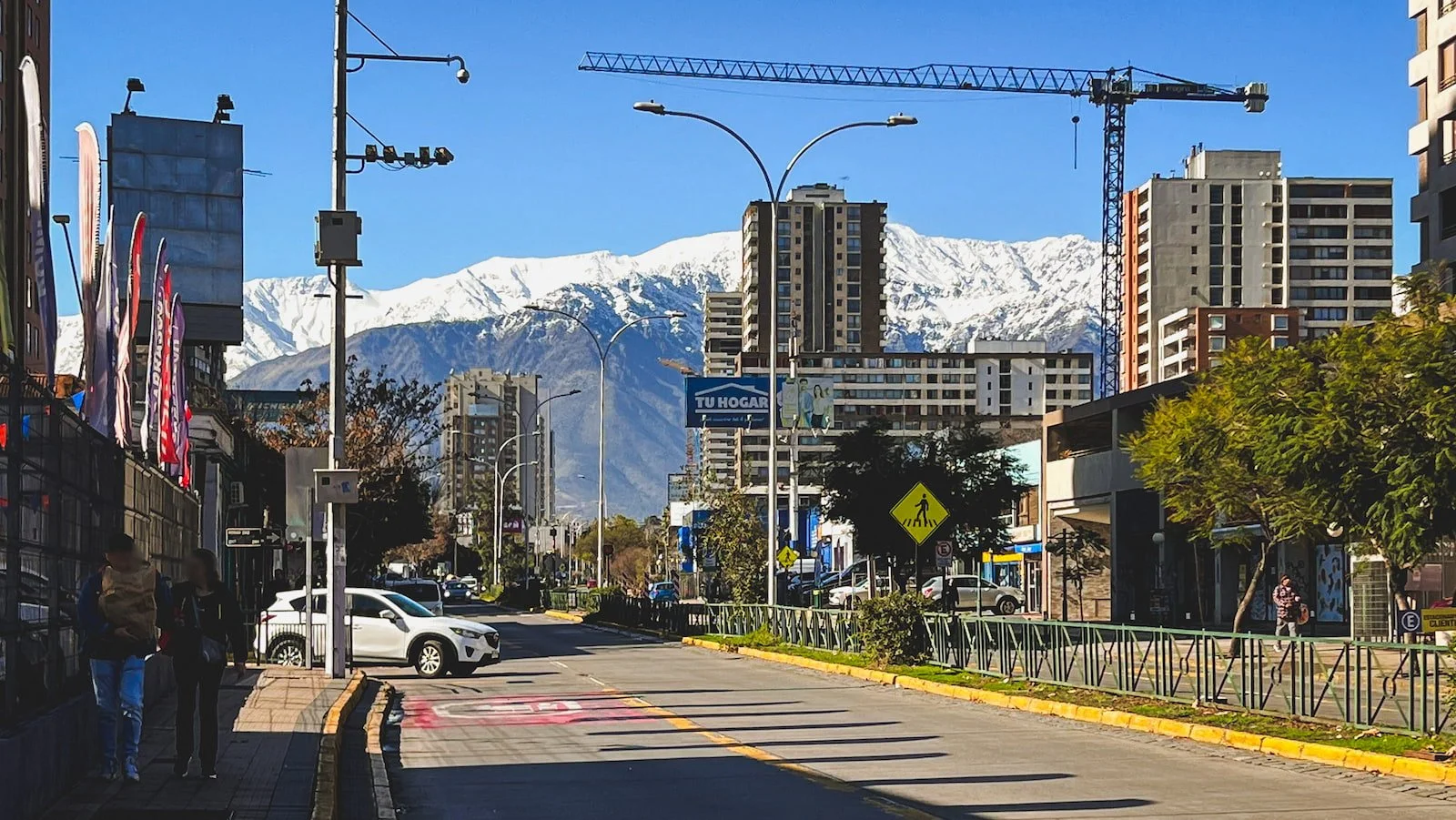
Las Condes feels modern and spacious, with wide avenues, newer buildings, and a more polished atmosphere.
✨ Vibe: Modern and polished — wide avenues, newer buildings, and an upscale, business-y feel.
✅ Best for: Modern comforts, easy access to mall, and you don’t mind being farther from central Santiago.
⚠️ Avoid if: You want the most convenient walkability or transit access, or you want to be in the middle of the action.
Las Condes is huge, so I’m not going to pretend I’ve covered all of it. But, I have spent time in the Manquehue → Parque Araucano / Parque Arauco pocket, and it’s a great snapshot of the area. It’s more spacious and modern than central Santiago, with wide avenues, newer buildings, and a more business-oriented and affluent atmosphere. However, it is farther from central Santiago sightseeing.
My ratings as a female traveler:
Safety: 4/5 (Good)
In this specific pocket of Las Condes, I feel safe walking around. It’s busier with cars than with dense crowds, and it has a more upscale feel. Overall it feels lower stress than the downtown areas (Bellas Artes / Historic Center), but the wide car-centric avenues and mall concentration feel more exposed than the “lived-in” vibe of Providencia.
Walkability: 4/5 (Good)
I walked from Manquehue station toward Parque Araucano and the mall, and it was very doable. The main tradeoff is that it’s more big blocks than meandering streets and is a lot less compact than the downtown areas. However, the sidewalks tend to be wide and separated from car traffic, so I never feel too close to the car traffic.
Centrality / Transit access: 3/5 (Moderate/Mixed)
Las Condes is farther away from the downtown areas of Santiago, but Manquehue station is on Metro Line 1, which makes it a convenient transit to museums and landmarks. However, since the area is more spread out, the subway station tends to be a longer walk away (for example, it’s 20-30 minutes from Parque Arauco, the mall).Affordability: 2/5 (Pricey)
Lodging options tend to be more upscale (e.g. luxury hotels like Mandarin Oriental), though food options are more of a mix of price ranges (e.g. fast food and mall options, to high-end restaurants).Food scene: 3/5 (Moderate)
The mall area itself has a ton of options you’d expect from a major shopping center, but the surrounding area is way less dense and packed with options and independent restaurants compared to neighborhoods downtown.Sleep-friendliness / Quietness: 5/5 (Excellent)
This neighborhood is generally quiet – there’s some traffic noise near major roads, but not nightlife that goes into the night.Runner-friendliness: 4/5 (Good)
Parque Araucano is a real plus if you like staying active — it’s an easy anchor for a run or workout loop, and the wider streets/sidewalks make the roads much easier to run on than the crowded central Santiago.
Next Up: More Santiago Travel Guides
If you're planning a trip to Santiago, these guides may also help:
Santiago in 1 Day → Ultimate itinerary + map if you only have 1 day
Santiago in 3 days → Practical itinerary to experience Santiago’s landmarks, neighborhoods, and viewpoints
Slow travel in Santiago → My routines, every spots, and real monthly costs as a digital nomad in Santiago
One-Bag Packing List for Santiago → Layering system + local add-ons
SCL Airport to Santiago → Time, cost, and safety
Ride the Santiago Metro Like a Local → bip! card, best lines, and tips
Santiago Start Here → Running list of itineraries and guides
Have a question about this?
Shoot me a message or leave a comment below — I read everything, and I’m always happy to help if I can!