Ride the Santiago Metro Like a Local: bip! Card, Best Lines + Essential Tips
Last updated: March 2026
Efficient, reliable, and high coverage, Santiago’s metro system is consistently considered as one of the best in Latin America. If you’re wondering whether you should even use the metro (when rideshares like Uber and Cabify are convenient and relatively cheap), the answer is a resounding yes. It really does connect the city and conveniently takes you to all the tourist sights. Plus, Santiaguinos are proud of their metro system, so it’s also a cultural experience!
In this post, I outline ways of navigating Santiago metro (especially how my partner, a Santiago native, and I do it), including how to pay for rides, how to buy and reload the transit card, which metro lines are most convenient, and tips on safety, rush hour, and etiquette.
Santiago Metro now accepts contactless bank cards and digital wallets at turnstiles through its new Pago Ágil system, which launched on February 13, 2026. That means some riders can now tap a Visa or Mastercard — or use Apple Pay / Google Pay — at the gates instead of using a bip! card.
That said, the bip! card is still the most universal and dependable option, especially if you’ll be taking buses or making transfers. Your full bip! guide lives below.
More Santiago planning help:
Santiago 1-day itinerary → Ultimate full-day walking route to hit the city’s highlights
Santiago in 3 days → Landmarks, neighborhoods, viewpoints, markets, and modern Santiago organized into 3 logical days
Slow travel in Santiago → My routines, every spots, and real monthly costs as a digital nomad in Santiago
Where to stay in Santiago → Best neighborhoods, safety, and centrality (from lived experience)
Santiago packing list (one-bag) → Carry-on layering system for Santiago’s sun and temperature swings
SCL airport to the city → All transport options, costs, convenience, and local tips
Santiago “start here” → Running list of itineraries and guides, updated regularly
Quick Answers
Hours: Not 24/7, generally early morning to 23:00. Check the most updated schedule here
Fares: 735-895 CLP (~$1 USD) depending on the hour. Check the most updated fares here.
How to pay: You can use either a bip! card (a physical transit card) or a contactless bank card / phone wallet to tap into Metro stations. That said, I still recommend the bip! card as the most universal option — especially if you’ll also be taking buses or making transfers. I recommend that you get the card at the airport self-service machines (accept credit cards) if possible, but all metro stations in the city sell it (though mostly cash only). To reload, you can use an online method. For details, see the sections below on how to buy a bip! card and how to reload it.
Coverage: The metro can take you directly to most major areas you’d want to go as a tourist (downtown and historic center, Providencia, Costanera Center, and more). Line 1 is by far the most convenient, as many of these sights and transit connections sit on it. However, coverage in Las Condes is more limited. Check the official metro map here.
Safety: The metro, especially more trafficked lines like Line 1, are generally safe, but look out for opportunistic theft.
Rush hour: The metro can get extremely crowded during weekday rush hour, so try to plan around that if you can.
Buses + transfers: Metro and buses share the same Red Movilidad fare system — one payment allows up to 2 transfers within 2 hours.
→ Update (March 2026): Even though Metro now accepts contactless tap-to-pay, buses and the integrated transfer system aren’t included yet — so a bip! card is still the most reliable way to handle buses and transfers.
Visitor cheat sheet: The 3 most useful lines for most tourists are Line 1, Line 3, and Line 5—here’s how they map to the most common neighborhoods + sights:
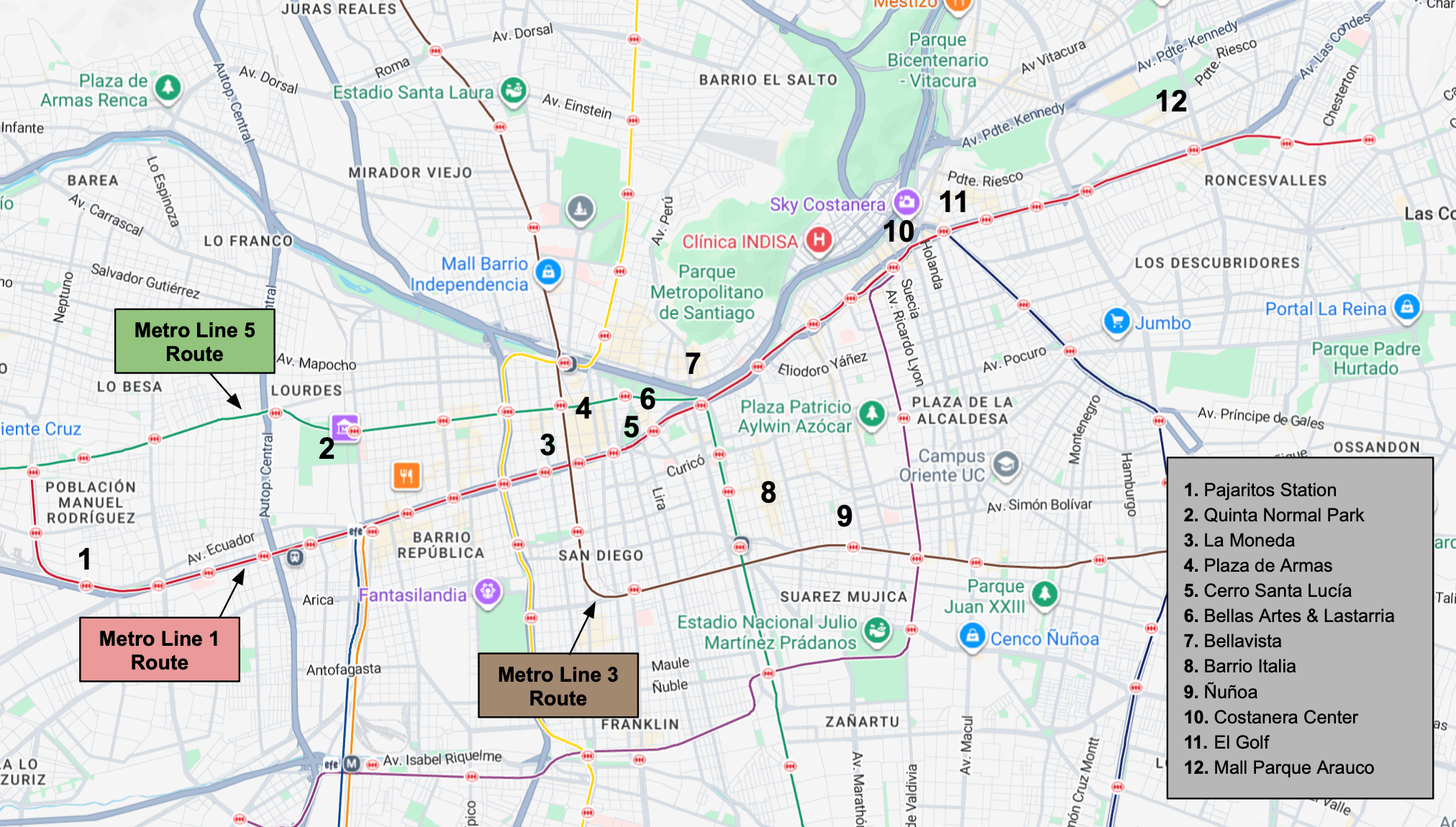
Map with Metro Lines 1 (red), 5 (green), 3 (brown) and key sights and neighborhoods marked (Map data © Google).
Basics: Hours, Cost, and Coverage
When the metro runs:
Santiago metro does not run 24/7 – it generally runs from early morning (6:00-7:30) to 23:00. Check the most updated schedule here.
How to pay:
You can use either a transit card (called the bip! card) or a contactless bank card / phone wallet to ride the metro. See below on how to get and reload the bip! card.
Fares vary between 735 and 895 CLP (~$1 USD) depending on the hour. Check the most updated fares here.
To pay at the stations, you'll tap into the gates. Since the fares are fixed, you don't need to tap out at your destination station.
Note: you may see online that you can pay through an app at the gates – these options are generally tied to Chilean apps and accounts (often requiring a RUT, or Chilean ID number), so they’re not the most practical option for most tourists.
→ Note: If you want the most reliable, widely compatible payment option as a visitor — especially for buses and transfers — bip! is still the move, and the rest of this guide shows exactly how to use it.
Coverage:
The metro generally covers many places you’d want to go as a tourist. The main thing to note is that the metro is limited in Las Condes – Line 1 does go into that area through El Golf, Manquehue (where Parque Arauco shopping center is), and a bit past that, but not beyond. So if you plan to stay deeper in Las Condes, check the metro map to see whether your area is served. Otherwise, you would need to consider bus routes or take rideshare (Uber, Cabify).
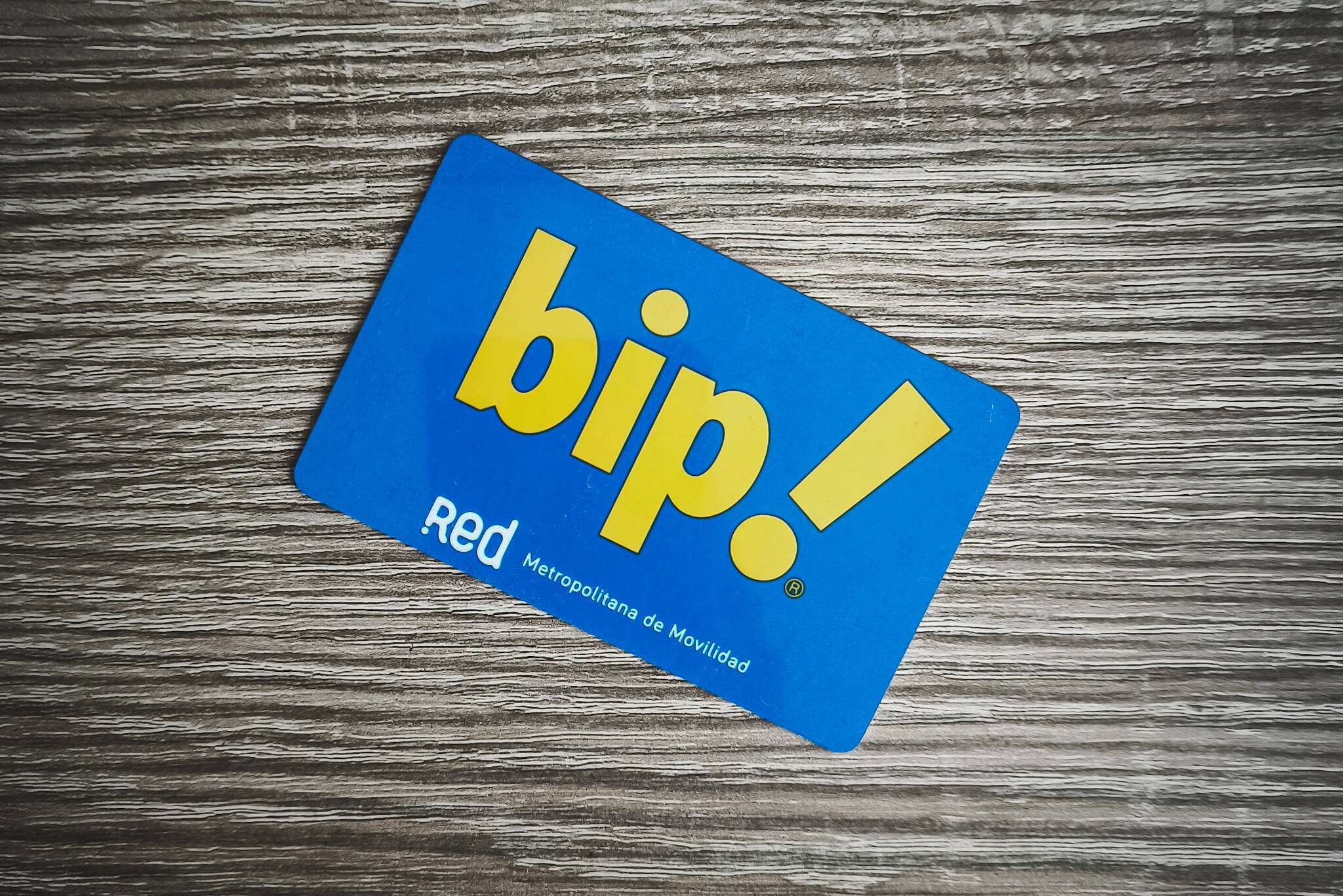
The bip! card.
How to Buy a Bip! Card
It's actually not that easy to get a bip! card since even though metro stations sell them, most are cash only (and you really don’t need cash as a visitor in Santiago). Therefore, I highly recommend getting your bip! card at the airport if you can, since you can pay with credit card, can use the self-service machines in English (if needed), and won't need to worry about hunting one down in the city. Nonetheless, below are the main ways I recommend to get the bip! Card.
Cost of the card: 1,550 CLP (~$2 USD) for the blank card, then an initial load of 1,000 CLP is required.
[⭐ Recommended] Airport self-service machines:
Available in the airport terminals outside of security. Both the international and domestic terminals have these machines. (See Santiago Airport’s official IG post for photos). You can buy the card and load it there.
Credit cards are accepted.
Metro station self-service machines:
Available at all metro stations. The type and look of the machine available depends on the station – some look much older, and some are more modern and newer. Look for the machines that say “Carga y venta de tarjetas” or “Compra y carga de tarjetas” (buying and loading of cards).
Mostly cash only, but a limited number of stations take credit cards. As far as I know, Tobalaba station (entrance near the MUT shopping center) does take credit cards, but not many of the big stations in the downtown area (such as Baquedano or Santa Lucía) do. Many metro stations have ATMs, so you can withdraw cash there.
Metro station ticket offices / info desks with staff:
Available at some bigger metro stations. But usually, the staff doesn't speak English. You can say: “Me gustaría comprar una tarjeta bip, por favor.” (I would like to buy a bip card, please), and hand them cash that equates to the amount of the card plus the amount you want to load.
Cash only. Many metro stations have ATMs, so you can withdraw cash there.
According to the official page of the Red Movilidad (the Santiago public transportation system), you can also get the card at bip! centers or authorized retailers (such as supermarkets like Unimarc). But my partner and I have never used these methods, so I can’t speak to them.
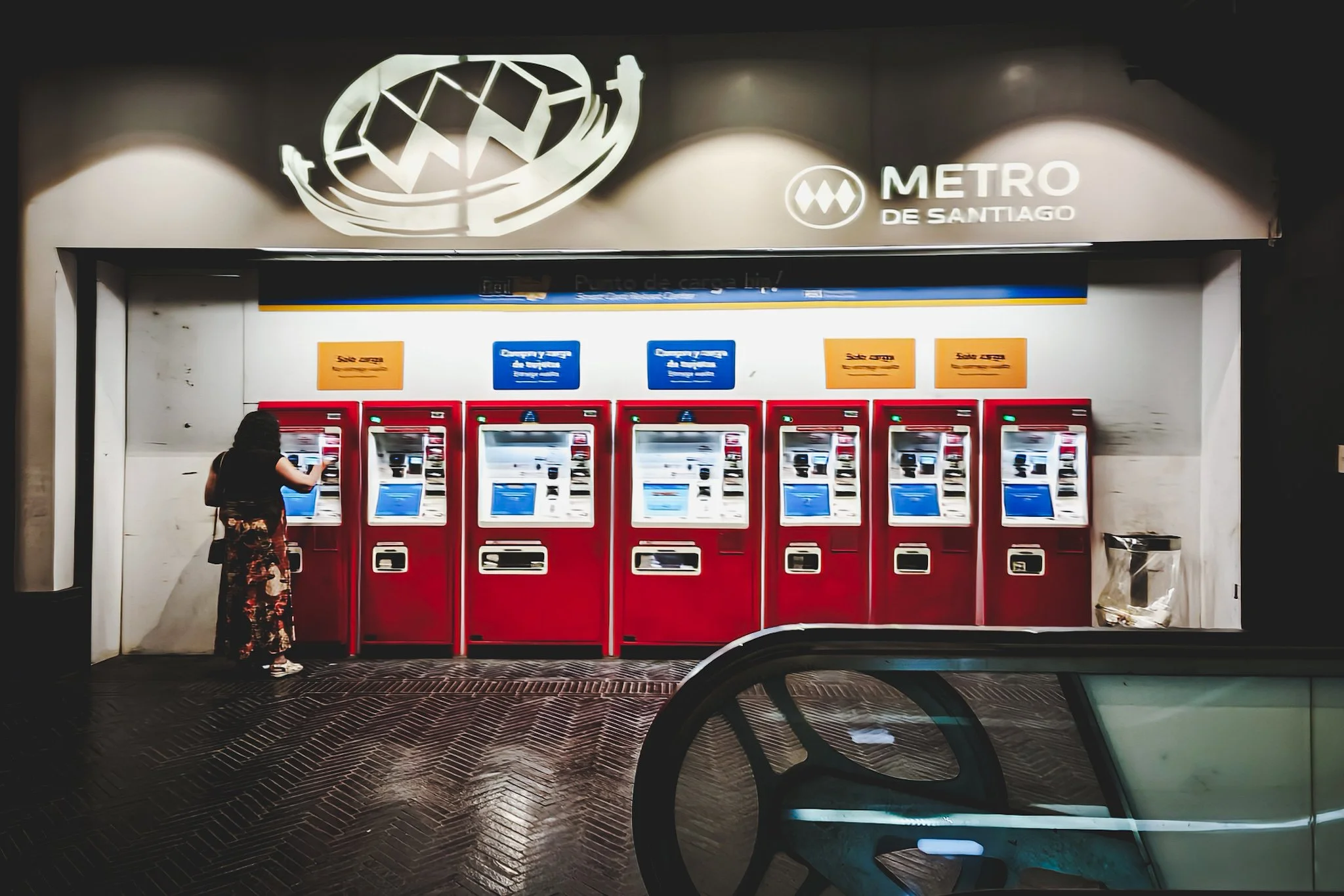
Bip! card purchase and reload stations in Metro Tobalaba – these are the new machines that take credit cards
How to Reload Your Bip! Card
Similar to buying a bip! Card, there are a few ways you can reload it. My recommended method is the first one below (pay online, active at station) since you can pay with credit card and activation machines are available at all stations.
[⭐ Recommended] Pay online, then activate at metro station self-service machines:
First, you pay online through this page on the official bip! card site. Click on either the Movired or PagoYa options. Then, enter the “No bip!” number on your card, choose the amount you want to reload (minimum of 1,000 CLP and maximum of 25,000 CLP), and enter your email. Choose your payment option (which is likely to be “Paga con Tarjeta” if you’re paying by credit card). Go through the payment process, get your confirmation, and you’re done with this step.
Second, when you’re at a metro station, look for a reload machine, like the one in the photo below or newer ones in some stations. There, insert your bip! card in the slot, then click “Activa Carga Valida Tarjeta”. That activates the reload you paid online.
And that’s it, you can tap into the metro now!
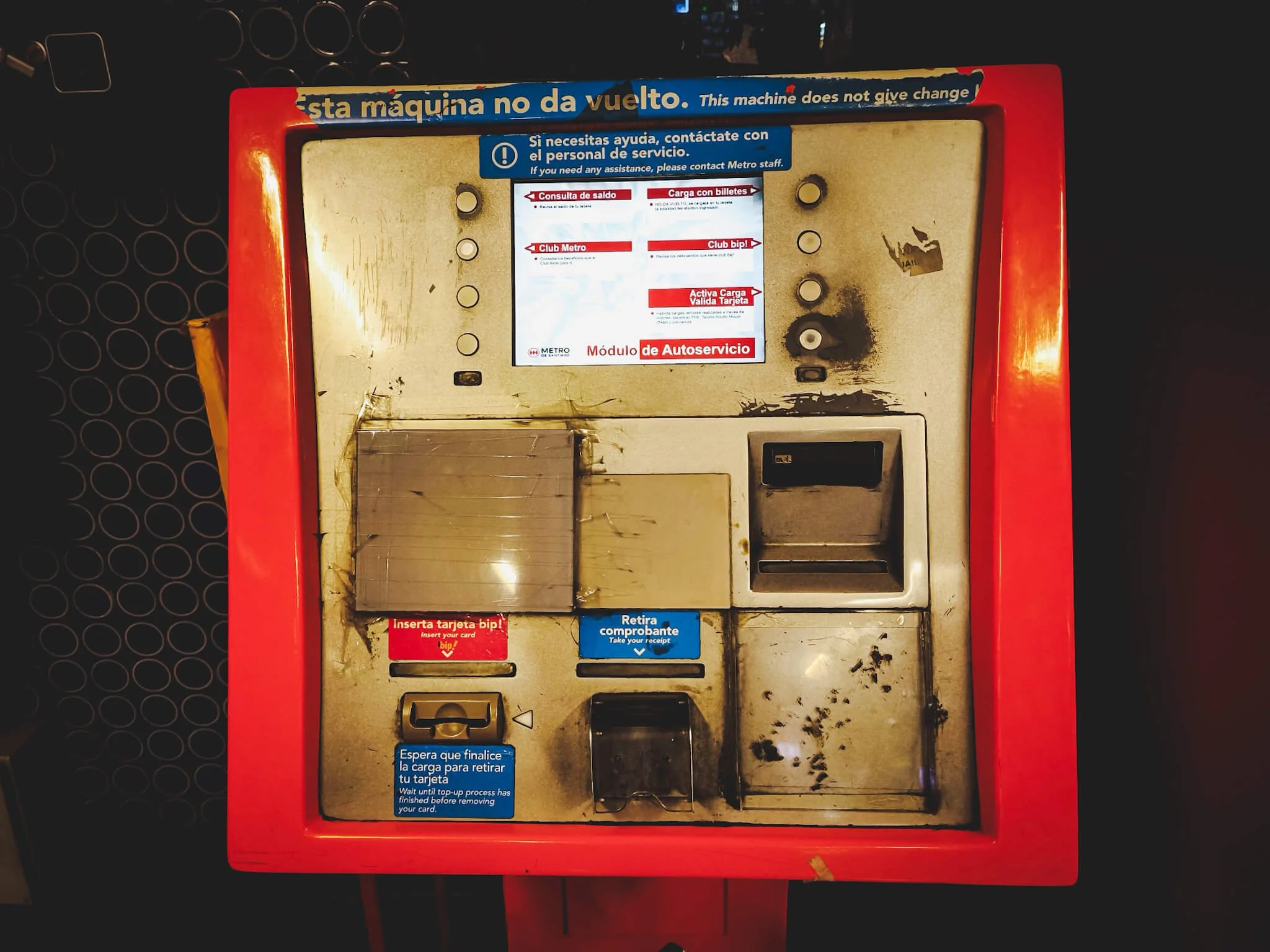
Bip! card reload machine at metro Universidad Católica. This is an older model; some stations have newer machines.
Pay at metro station self-service machines:
Available at all metro stations. Instead of paying online first, you can pay and reload with the same machines as the previous method.
Mostly cash only, but a limited number of stations take credit cards (e.g. Tobalaba entrance under MUT shopping center). Many metro stations have ATMs, so you can withdraw cash there.
Pay at metro station ticket offices / info desks with staff:
Available at some bigger metro stations. These are the same offices as in the buy card section above. Again, the staff doesn’t usually speak English, but you can say: “Me gustaría recargar mi tarjeta bip, por favor.” (I would like to reload my bip card, please), and hand them the amount in cash that you’d like to reload.
Cash only. Many metro stations have ATMs, so you can withdraw cash there.
Best Metro Lines for Visitors
(Refer back to the map above for how each of these lines map to major landmarks.)
Most convenient, by far: Line 1 (red line)
Major landmarks: This line connects many of the major landmarks that you would want to see as a tourist, including the downtown / historic core (e.g. La Moneda), Barrio Lastarria and Santa Lucía Hill, and Costanera Center (tallest building in South America and large shopping center).
Las Condes: This is the only line that goes deeper into Las Condes, so if you’re staying there, you’ll want to stay near this line (e.g. near El Golf or Manquehue) for maximum ease of moving around the city.
Airport connection: This line serves Pajaritos, the intermodal station that connects to buses that take you to the airport.
Other convenient metro lines include:
Line 5 (green line): Connects Bellas Artes, Quinta Normal Park (which contains major museums like the Museum of Memory & Human Rights and Museum of Natural History), and Barrio Italia.
Line 3 (brown line): Connects Ñuñoa (district directly south of Providencia) with the downtown historic core.
If you’re deciding on neighborhoods to base to stay (and how convenient they are to the metro), check out my breakdown on 5 best neighborhoods in Santiago →
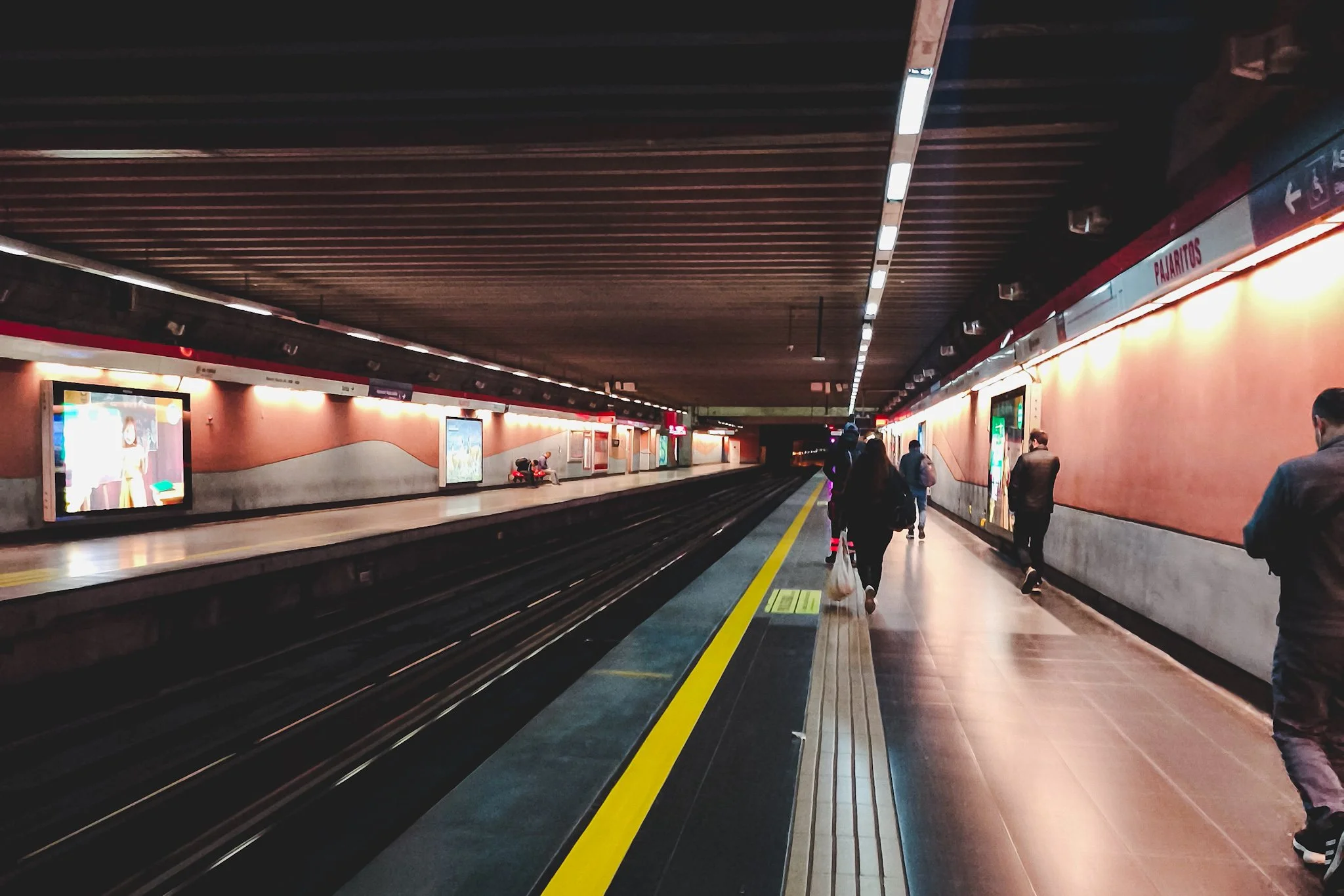
Metro platform at Pajaritos intermodal station, which connects to airport buses.
Tips: Safety, Rush Hour, Etiquette
Safety
I generally feel safe personally at all hours in the metro, especially the most trafficked lines like Line 1 (which you’ll likely spend most of your time on).
However, opportunistic theft exists, especially around crowded areas such as the platform, station entrances, and on the train. Since Line 1 is the most crowded metro line, look out for this especially.
Be aware of your belongings at all times; on the train (and really just in the station in general), I recommend wearing your backpack in front of you.
Rush Hour
Rush hours are weekdays in the mornings (~7:00-9:00) and evenings (~17:00-20:00), and the metros can get extremely crowded during those times. If you can, plan around those times so that you’re avoiding taking the metro then.
For Line 1, rush hour tends to impact the direction towards Los Dominicos more in the morning, and the direction towards San Pablo more in the evening.
Etiquette
People are generally organized and respectful around the Santiago metro (much more so than the New York City one for example) – if the platform is crowded, wait your turn to get on the train (after people get off and people in front of you get on), and don’t hold up the train doors.
If you’re carrying a bulky bag or backpack on a crowded train, take it off and put it between your legs to make space for people.
There are priority seats on the trains. You can sit on them, but make sure to offer up the seat for people who are elderly, disabled, pregnant, or less able to stand.
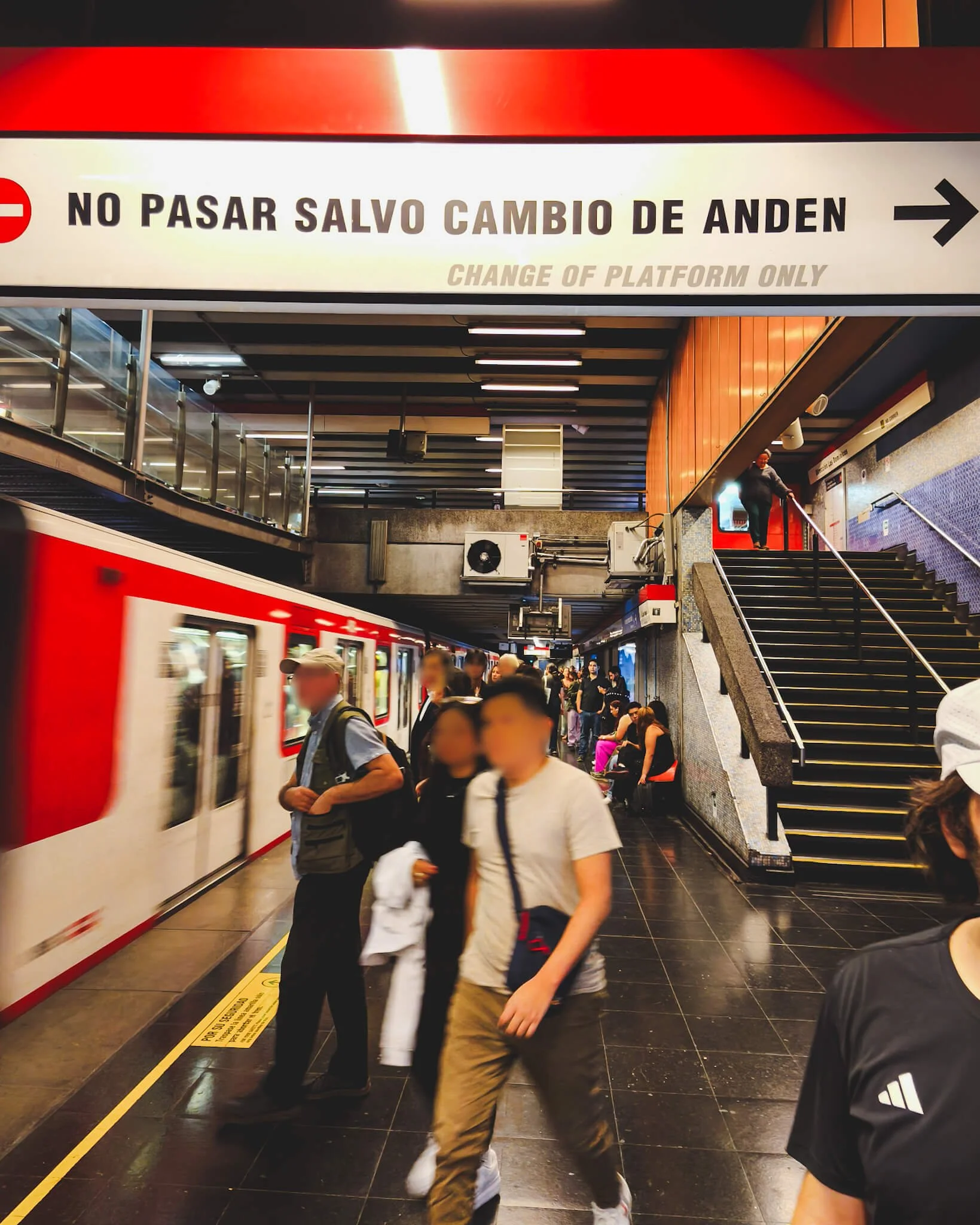
Baquedano station Line 1 platform during non-rush hours: already lots of people!
Note on Buses and Fare Transfers
Quick note: Even though Metro now accepts contactless tap-to-pay, buses do not yet accept contactless bank cards or phone wallets. That means bip! is still the simplest way to handle buses + transfers without thinking too hard about what’s accepted where.
Santiago’s buses and metros are all part of the same public transportation system, the Red Movilidad. This means that the fare system is integrated, and with a single payment, you can make up to two transfers in 2 hours. For example, if you took the bus and paid the fare, you can then take the metro within 2 hours of the first payment for no additional charge. See the most updated version of this rule and additional stipulations on the official site.
A quick tip: You can enter a bus with insufficient balance on your card, but if you want to enter a metro afterwards, you will have to recharge beforehand. You can’t enter the metro with insufficient balance.
Next Up: More Santiago Travel Guides
If you're planning a trip to Santiago, these guides may also help:
Santiago in 1 Day → Ultimate itinerary + map if you only have 1 day
Santiago in 3 days → Practical itinerary to experience Santiago’s landmarks, neighborhoods, and viewpoints
Slow travel in Santiago → My routines, every spots, and real monthly costs as a digital nomad in Santiago
Santiago Neighborhoods, Decoded → Best bases for a walkable trip
One-Bag Packing List for Santiago → Layering system + local add-ons
SCL Airport to Santiago → Time, cost, and safety
Santiago Start Here → Running list of itineraries and guides
Have a question about this?
Shoot me a message or leave a comment below — I read everything, and I’m always happy to help if I can!