One Day in Athens: A First-Timer's Itinerary + Map
Athens is a very doable city to explore in one well-planned day, especially because so many of its major ancient sights are clustered around the Acropolis.
This itinerary is for travelers who only have one day in Athens before continuing elsewhere in Greece. It also works well for a long layover, which was our situation. The route is based on the day we followed ourselves, with slightly more generous timing in a few places so you don’t have to rush quite as much as we did.
You’ll ease into the morning near Monastiraki, visit the Acropolis before the worst afternoon heat, stop for a proper Greek lunch in Koukaki, cool off inside the Acropolis Museum, and finish with a slower wander through Plaka and Anafiotika. So follow along for one day in this ancient city!
Visiting during a long layover like we did? My Athens Airport Layover Guide covers luggage storage, the airport metro, how much time to leave before your next flight, and other practical info to help you make the most of it.
Quick Plan
Total time: Around 10–12 hours in central Athens
Best for: First-time visitors who want to see the Acropolis and surrounding historic center in one full but manageable day
Route: Monastiraki → Roman Agora area → Acropolis → Greek lunch in Koukaki → Acropolis Museum → Plaka and Anafiotika → optional Syntagma Square
Best timing: Start in central Athens by around 08:00–09:00 and reserve the Acropolis for late morning
Transportation needed: None within central Athens; the main route is walkable. Metro or taxi required if traveling from Athens Airport or elsewhere in the city.
Main bookings: Acropolis timed-entry ticket and Acropolis Museum ticket; lunch reservations are optional
Pace / walking level: Moderate to high. The sights are close together, but the route includes hills, slippery stone surfaces, an exposed archaeological site, and several hours on your feet.
Watch out for: Summer heat and limited shade at the Acropolis. Archaeological sites may adjust their hours or temporarily close during extreme heat.
Route Map
🏛️ One-Day Athens Walking Route
This route connects Monastiraki, the Roman Agora area, the Acropolis, Koukaki, the Acropolis Museum, Plaka, Anafiotika, and optional Syntagma Square.
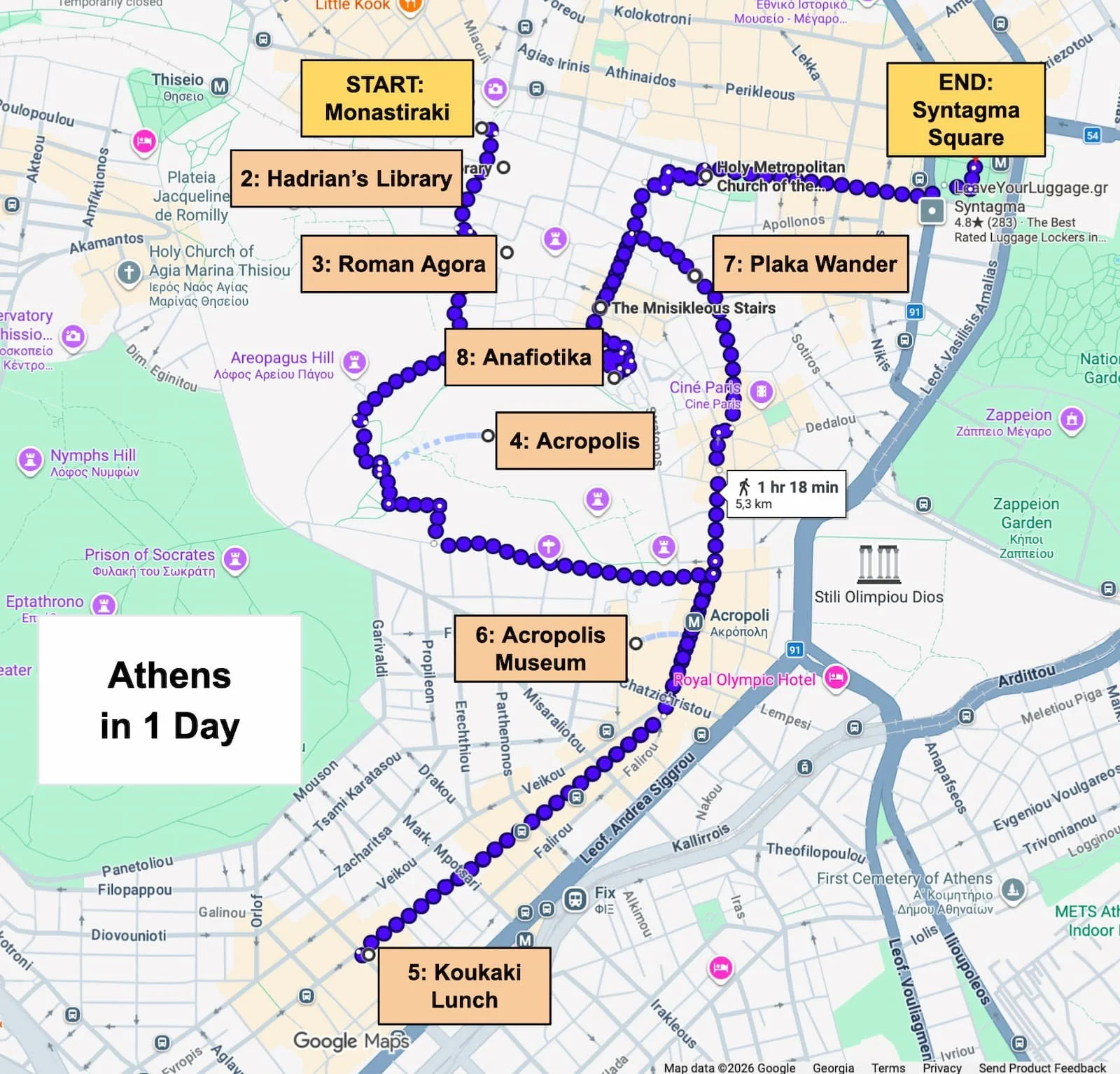
Map data © Google.
One-Day Athens Itinerary
Total walking: Around 6-10 km depending on how much wandering you do on the Acropolis and Plaka, with several hills, especially on the climb to the Acropolis, plus stairs in Plaka.
Start of the Day — Coffee Near Monastiraki
Allow: Around 30–45 minutes
Start near Monastiraki with coffee and get ready for the heavy sightseeing day.
We liked the iced espresso at Cupaki Street Espresso, which was only a short walk from Monastiraki station.
You can also check out a Greek supermarket and get a quick snack to munch and walk with – we went to AB Vasilopoulos Supermarket and got a Caprice, classic Greek chocolate wafer sticks with lots of smooth hazelnut filling. Yummy and provides an energy boost for the climbing coming.
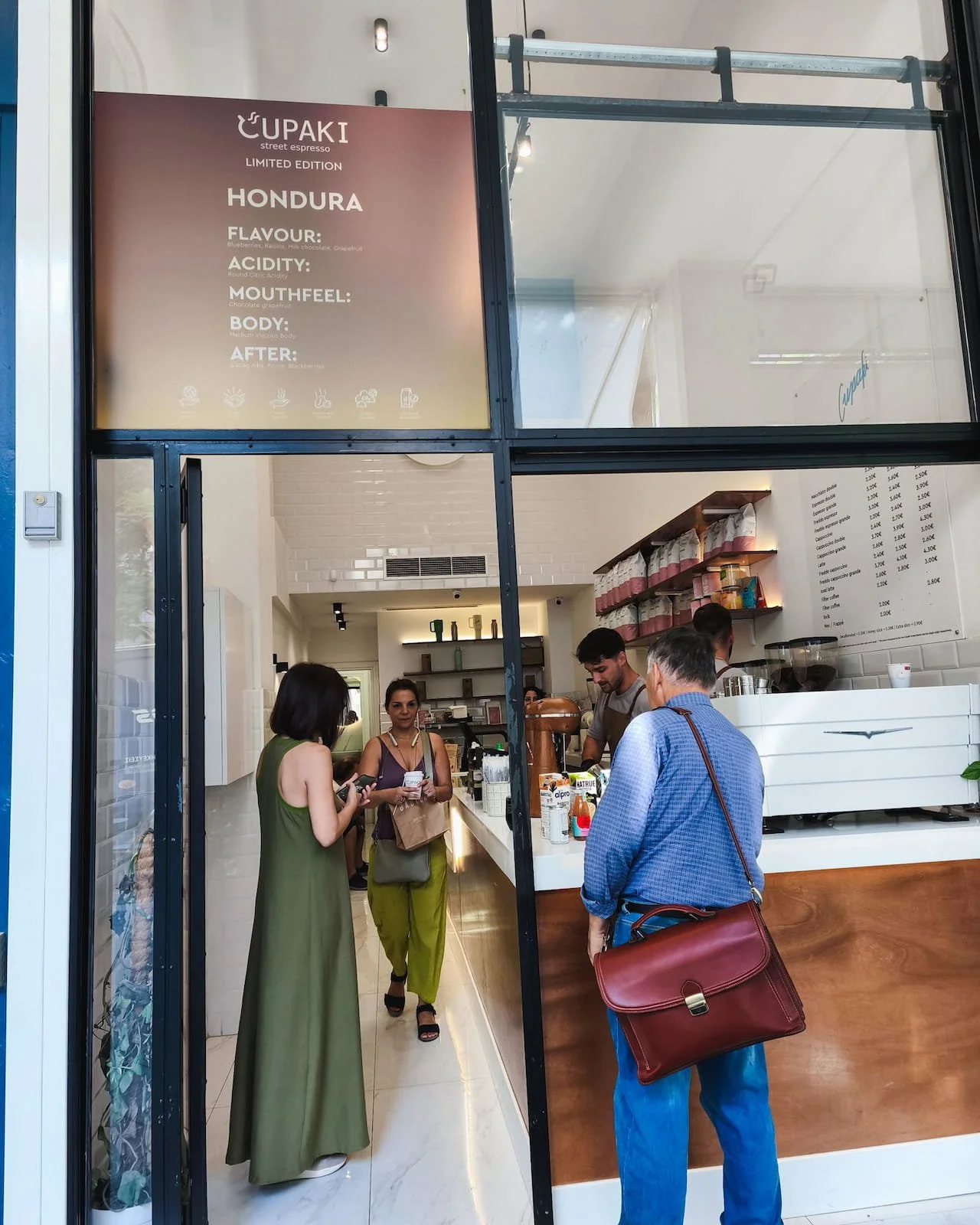
Cupaki coffee shop near Monastiraki station.
First Stop — Roman Agora Area
Walking time: 7 minutes from Cupaki Street Espresso
Allow: 20–30 minutes for the exterior loop, or 45–60 minutes if entering.
The Roman Agora area works well as the first historical stop of the day. It is compact, atmospheric, and close to both Monastiraki and the Acropolis.
The main things to see are:
Hadrian’s Library exterior: The remains of a large complex built under the Roman emperor Hadrian, just beside Monastiraki
Roman Agora: The commercial center developed during Athens’ Roman period
Tower of the Winds: An octagonal marble tower that functioned as a sundial, weather vane, and water clock
Gate of Athena Archegetis: The monumental western entrance to the Roman Agora
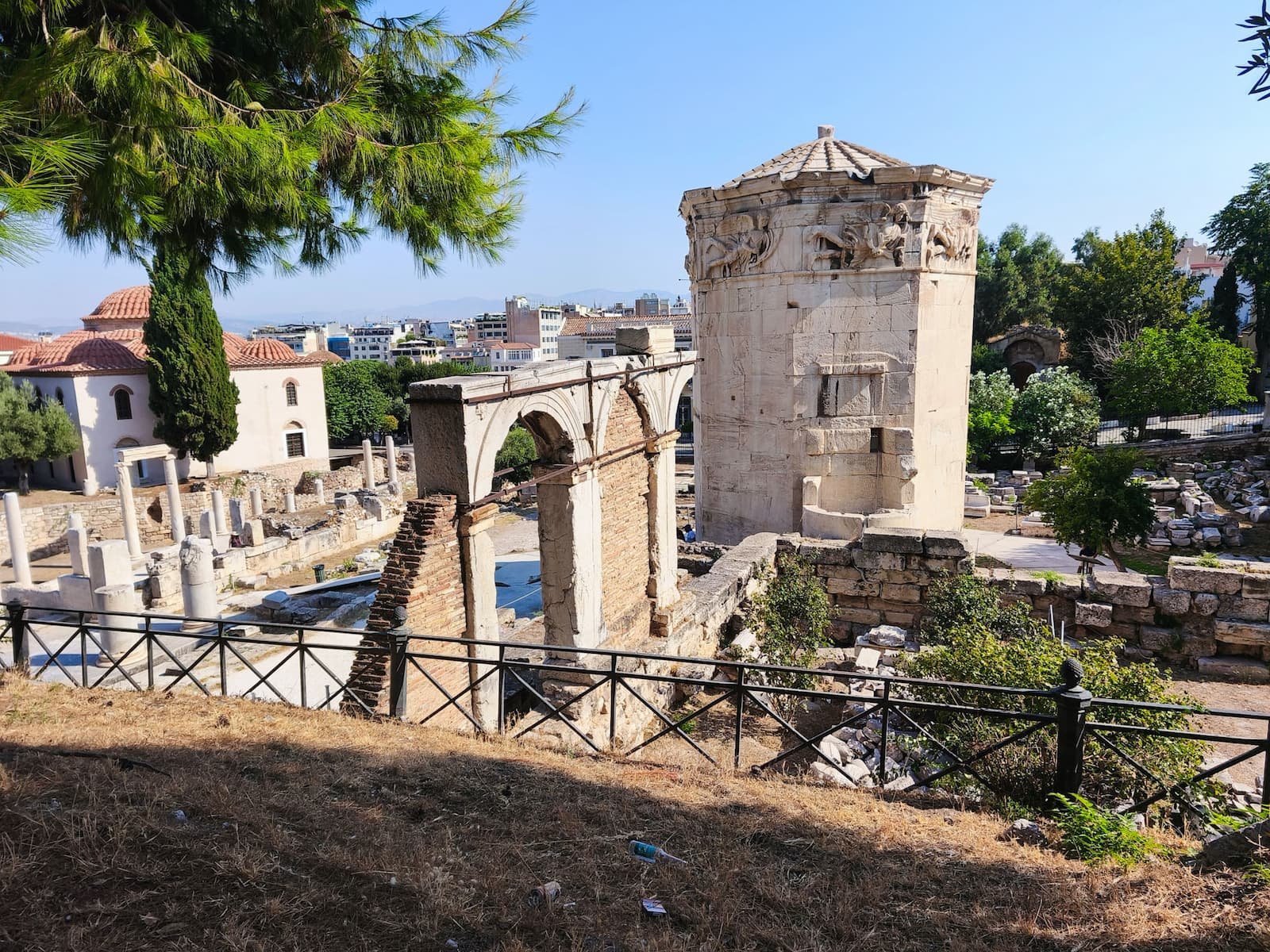
The Roman Agora, with Tower of the Winds.
We were running slightly short on time, so we didn’t actually enter the Roman Agora. But you can see much of the archaeological site from the surrounding streets, including the Tower of the Winds, although entering obviously gives you the experience of walking among the ruins and reading the informational signs.
If you want to enter, give yourself closer to an hour. Otherwise, the exterior loop is a good lower-effort archaeological introduction before the much larger Acropolis visit. The vibe in the morning around the neighborhood was quite nice too; while we were there, there were a few locals sitting around playing the bouzouki while singing.
Practical information:
Hours: Open daily at 08:00 but closing time varies per season.
Tickets: €10 per person
Booking: Usually not necessary far in advance
Check the official Hellenic Heritage site for current hours and tickets.
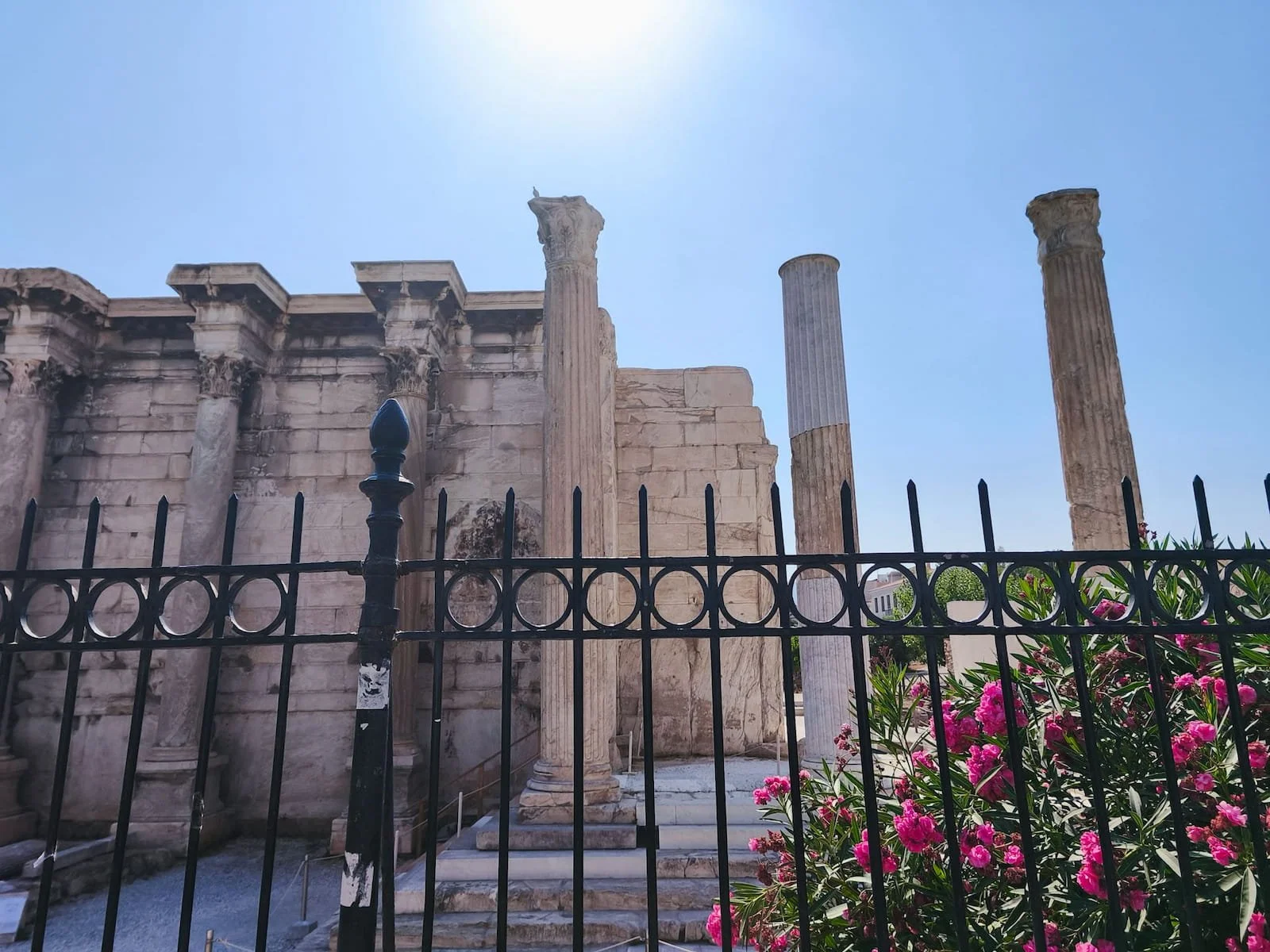
Hadrian’s Library.
Late Morning — Walk to the Acropolis Entrance
Walking time: Around 10–15 minutes uphill
Allow: Around 30–35 minutes total, including finding the entrance and queueing
From the Roman Agora area, begin the uphill walk toward the Acropolis entrance. Make sure you have water and re-apply sunscreen if needed before you start the climb.
The actual walk takes around 10–15 minutes, but give yourself extra time to find the correct entrance and join the line for your timed-entry window. Even with a ticket, you will probably still have to queue.
We visited during a heatwave, and the entrance area was extremely crowded. We were amazed to find the Red Cross handing out ice-cold bottles of water, which was wonderful (though it was funny to see the crowds desperate for them). There was also a bathroom in the waiting area.
Main Sight — Acropolis
Allow: 1–1.5 hours
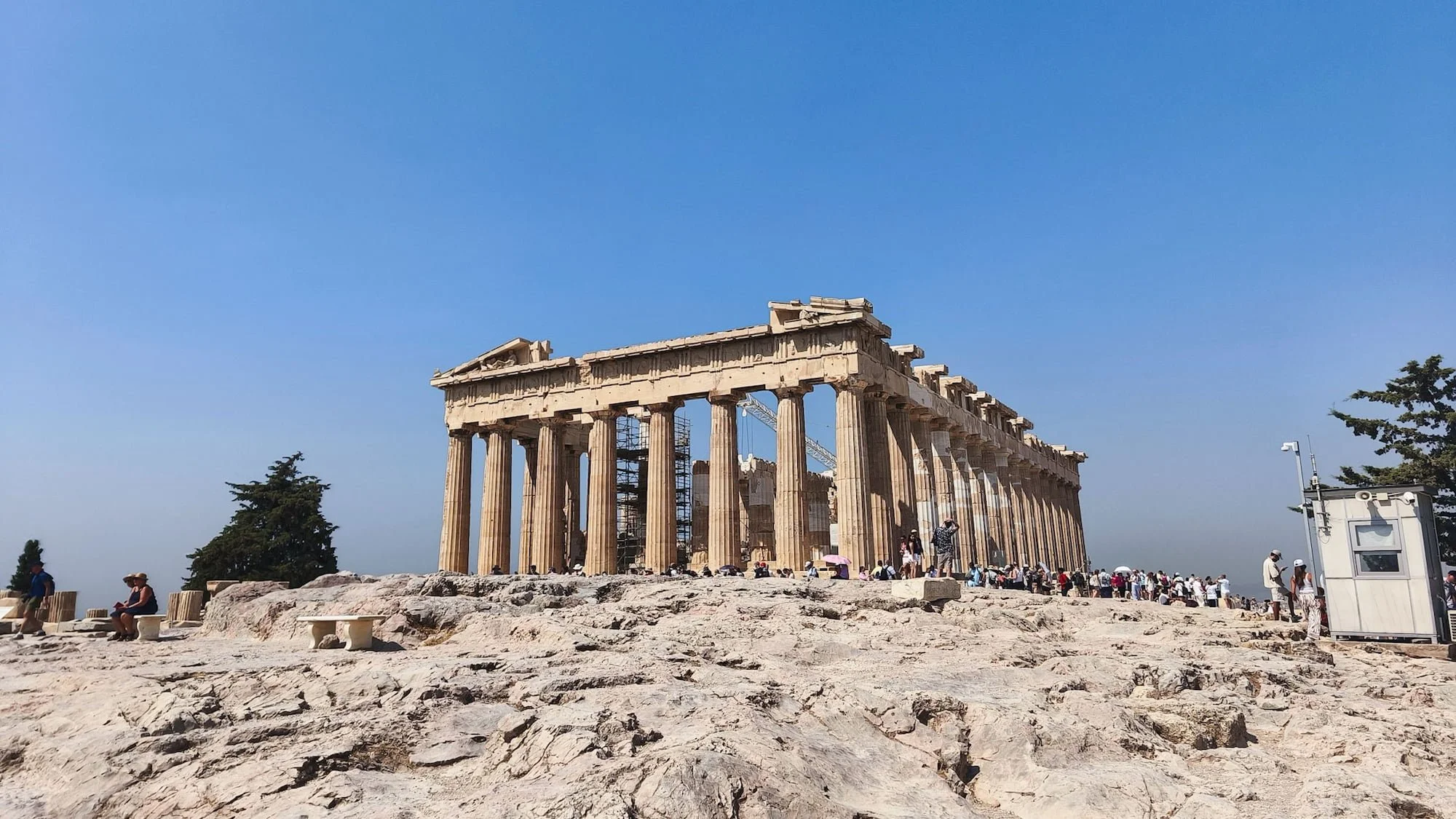
The Acropolis is the anchor of the day, and you should budget enough time to wander through the whole hilltop. After wanting to see it for so long, I’d say it lived up to expectations for sure.
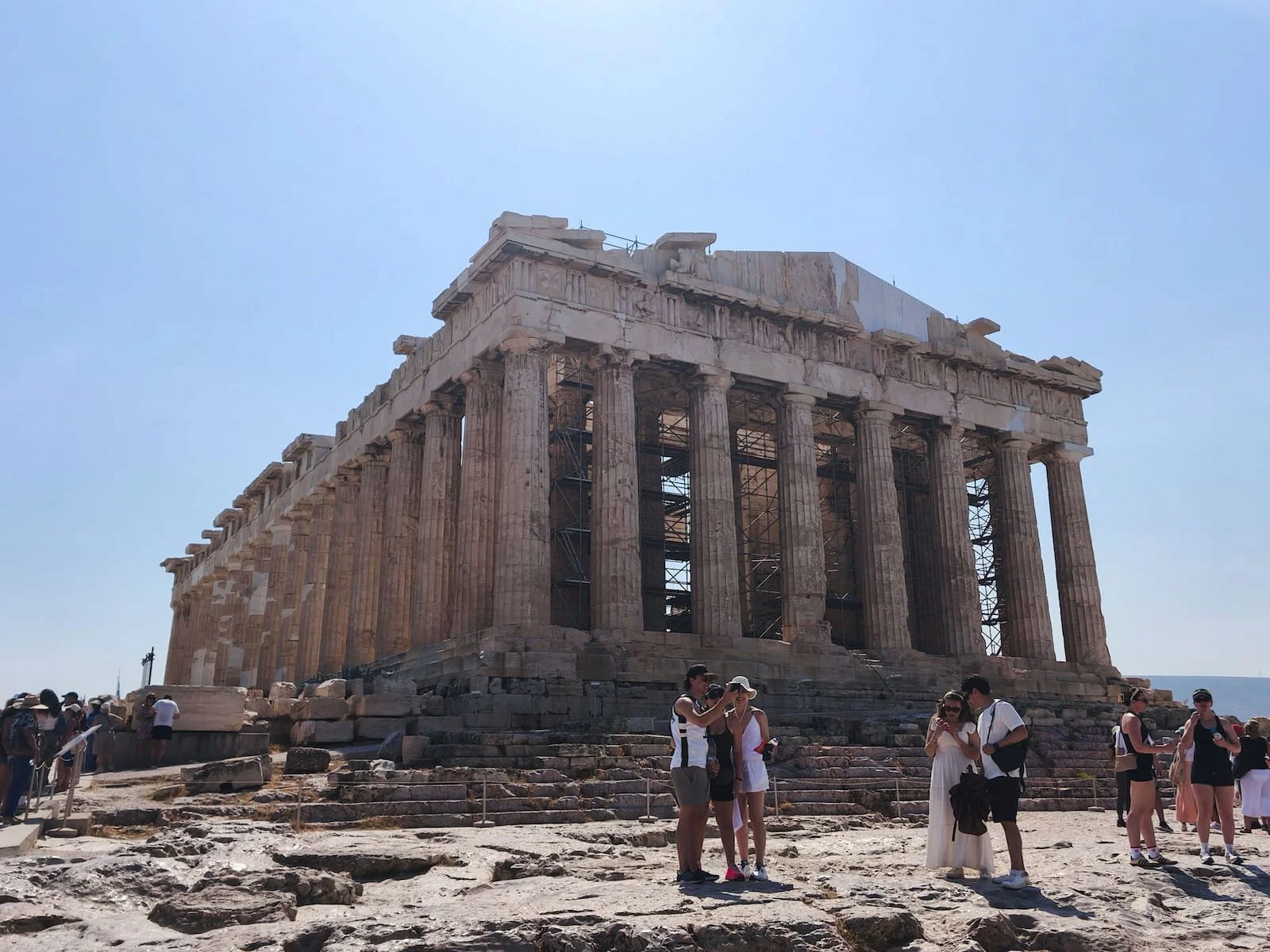
The Parthenon. What a sight.
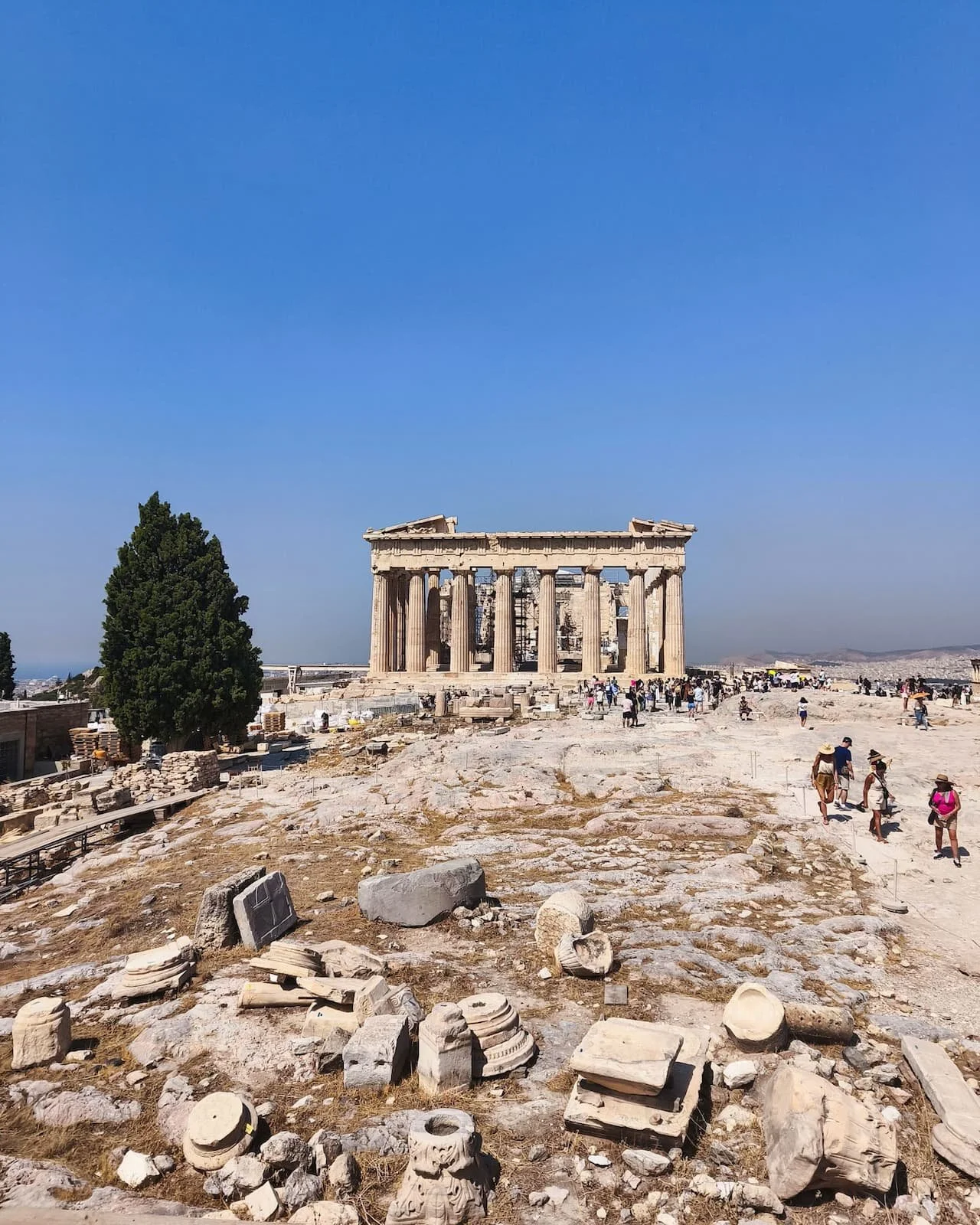
Once you go through the entrance, you should stay on the designated path until you get to the open hilltop. The route rises past the Odeon of Herodes Atticus before funneling through the Propylaea onto the main hilltop, where the Parthenon and Erechtheion come fully into view.
The principal monuments to look for are:
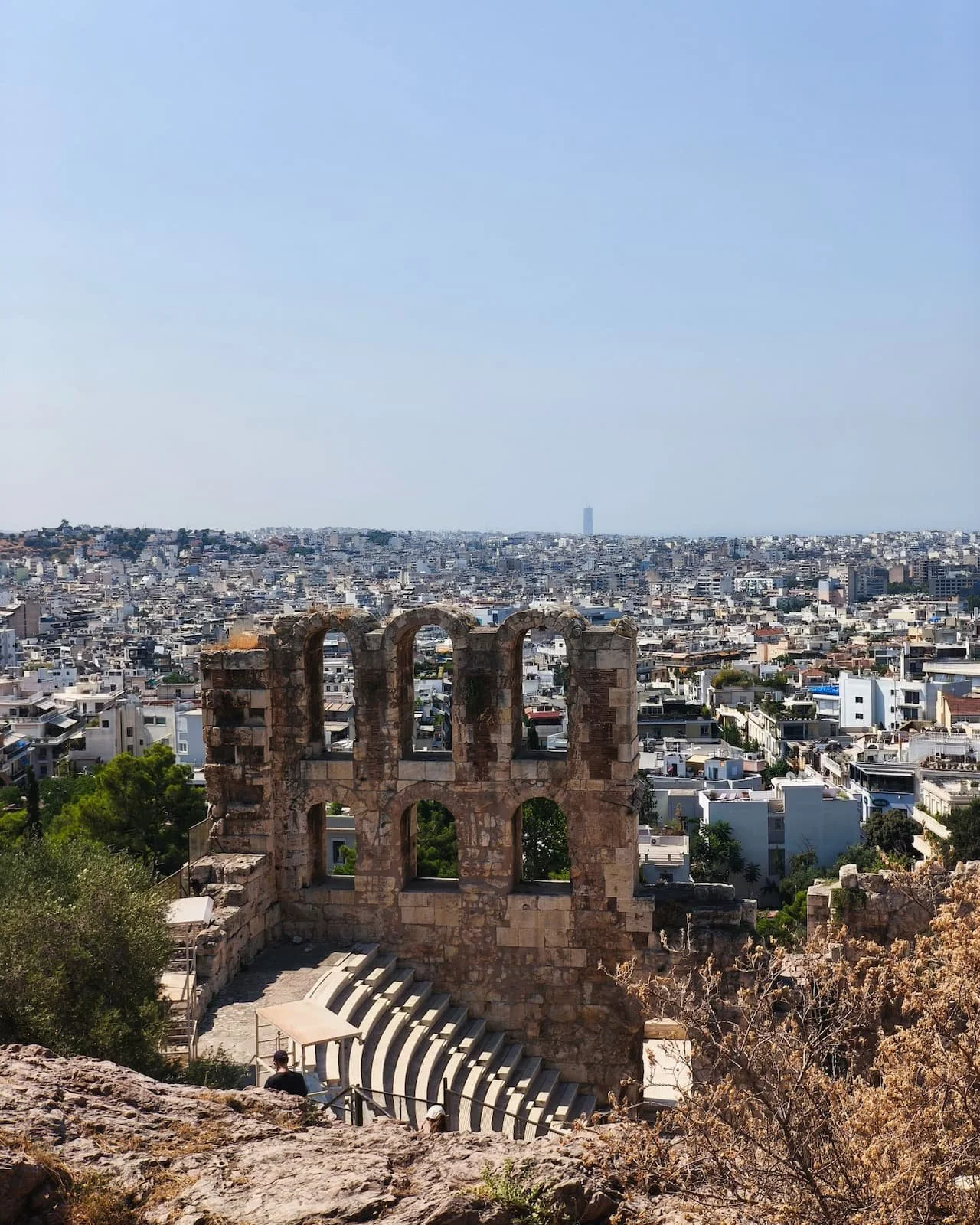
Odeon of Herodes Atticus: A stone theater built in AD 161 that is still used for performances today
Propylaea: The monumental gateway into the main Acropolis complex
Temple of Athena Nike: A small temple dedicated to Athena in her role as the goddess of victory
Erechtheion: An asymmetrical temple best known for the Porch of the Caryatids, where sculpted female figures serve as columns
Parthenon: The enormous fifth-century BC temple dedicated to Athena and the defining monument of the Acropolis
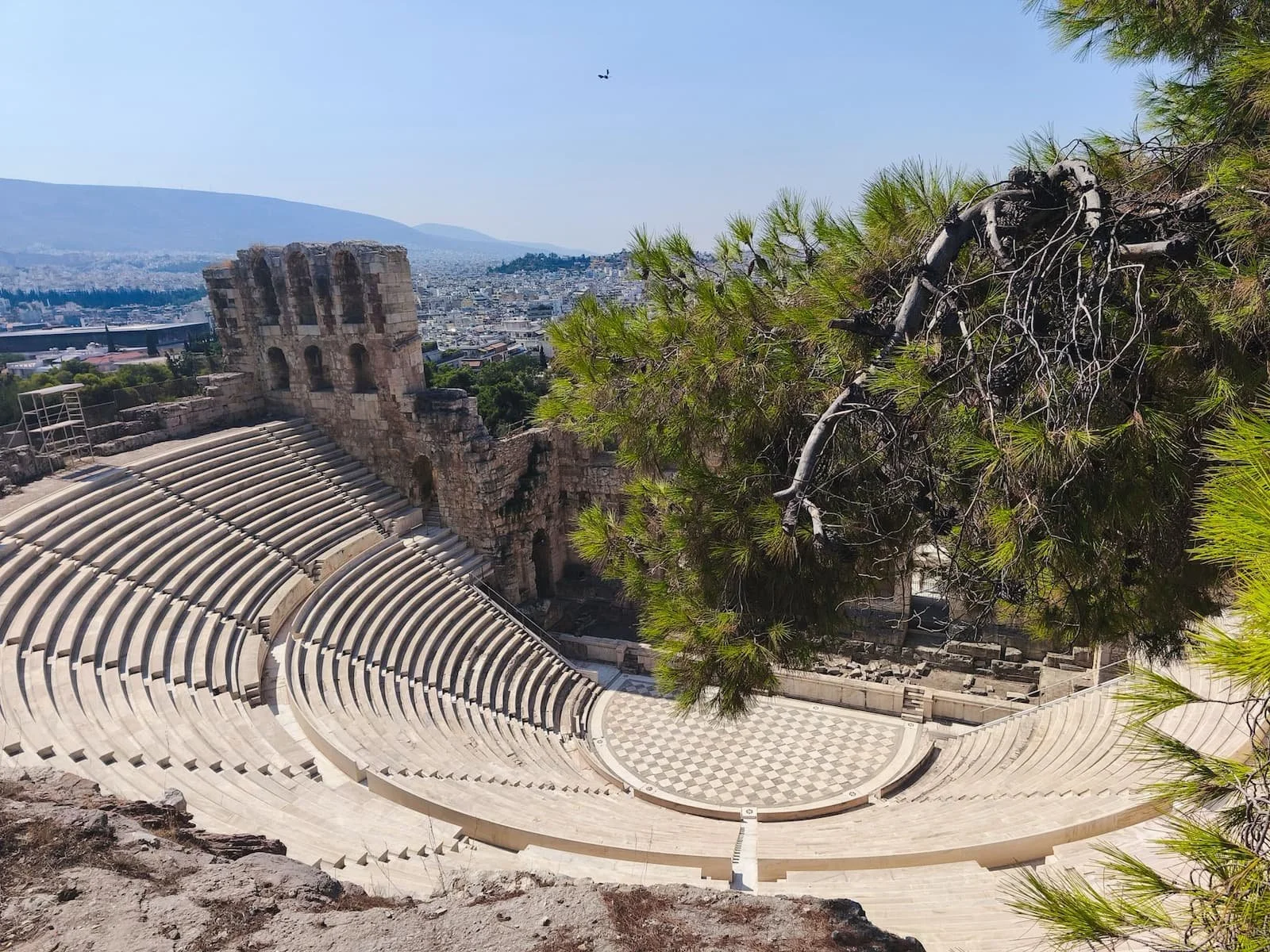
Odeon of Herodes Atticus, with view of Athens beyond.
The Parthenon is obviously the main sight, and you can see it from several angles as you move around the top of the hill. The panoramic views across Athens are also impressive, stretching over the city to the Saronic Gulf, part of the Aegean Sea. Be sure to walk around the perimeter so you can take in the views from every side.
The Acropolis is an active archaeological and restoration site, so scaffolding or conservation work may be visible during your visit. There was some scaffolding in Parthenon during our visit, but it didn’t detract from its majesty.
Practical information:
Hours: Generally 08:00–20:00 during the main summer season, although hours and heat closures can change
Tickets: €30 per person
Booking: Reserve a timed entrance in advance, especially during summer
Important: Arrive before your ticket time because you may still need to queue
Check the official Hellenic Heritage site for current tickets, operating hours, and heat-related changes.
Early Afternoon — Walk Down Toward Koukaki
Walking time: 20–30 minutes
After leaving the Acropolis, walk down toward Koukaki for lunch.
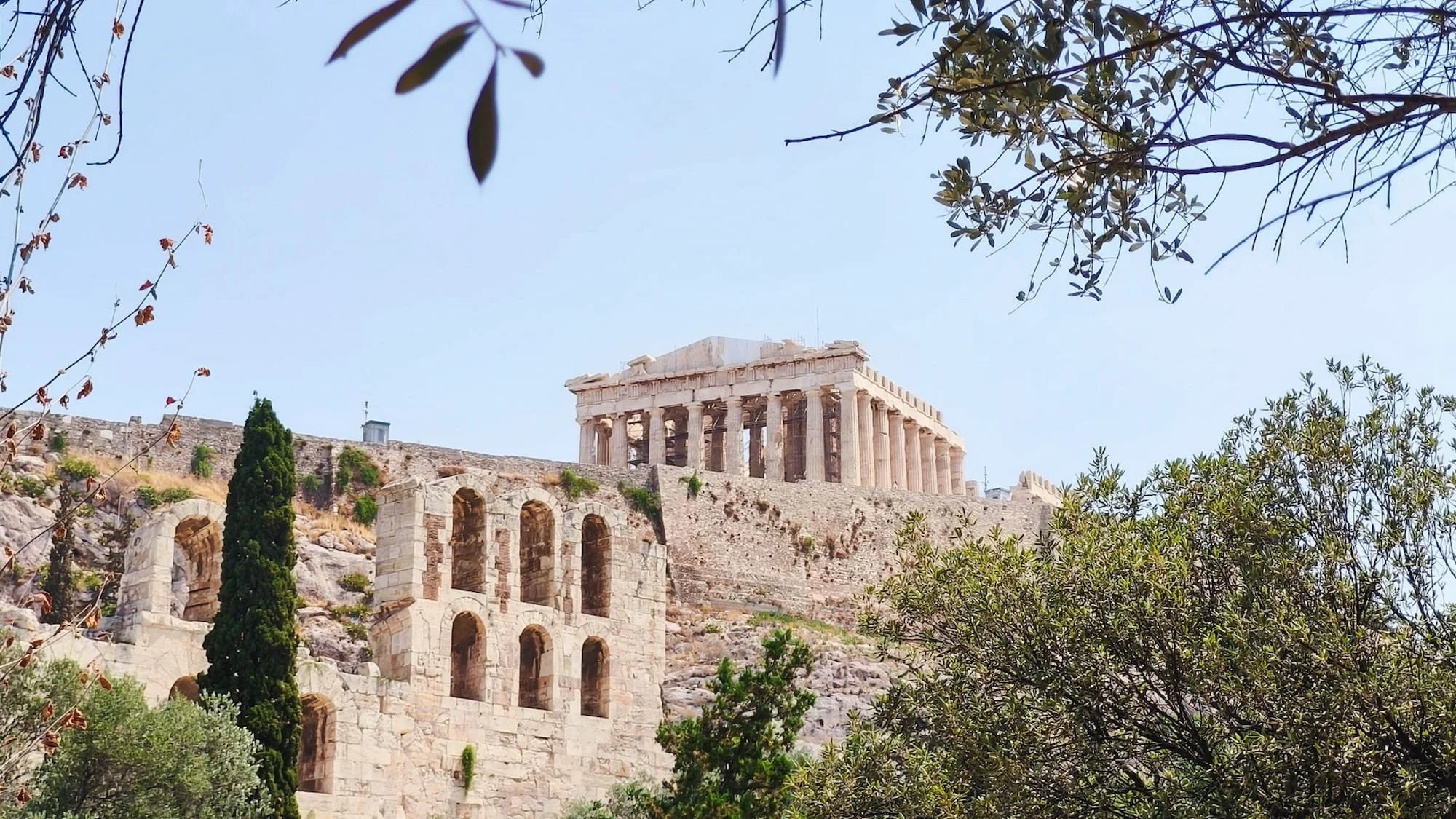
I recommend taking the gradual pedestrian slope that passes the Acropolis Museum. The street is wide and scenic, and you can look up to see the Parthenon perched above the city. The hero image for this post was taken from this area.
You could also eat in Plaka if you don’t want to make it to Koukaki, but it will generally feel more touristy. Koukaki is still close to the Acropolis and gives you a glimpse of a more everyday residential neighborhood.
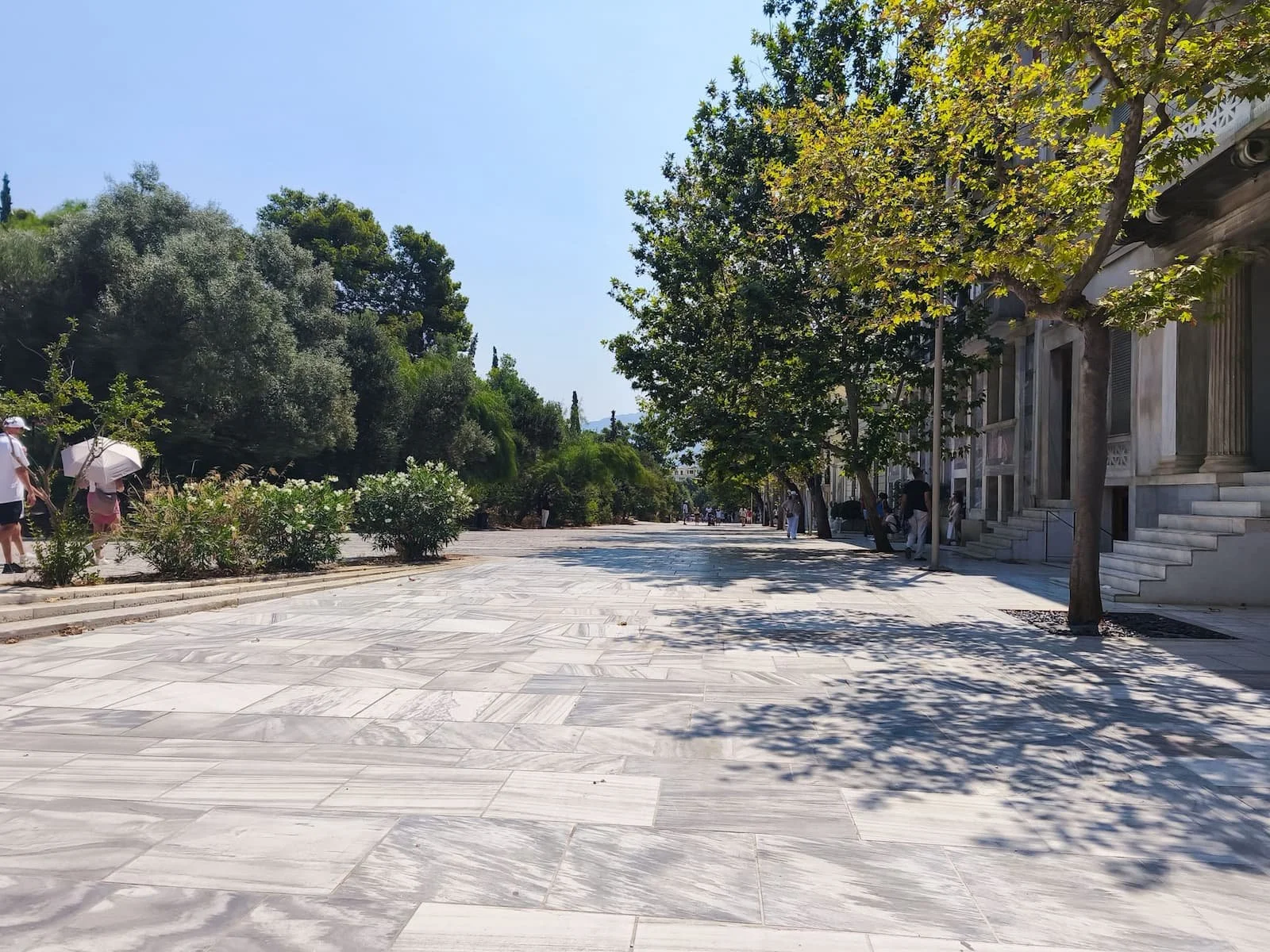
Pedestrian walkway leading from the Acropolis.
Lunch — Traditional Greek Food in Koukaki
Allow: 1–1.5 hours
We ate at Dyo Dekares i Oka, which I highly recommend.
This is not a restaurant for views or a fancy dining experience — it’s a place to come for excellent traditional Greek cuisine prepared well.
We had a Greek salad (one of my favorite types of salad in the world that I had been just waiting to eat in Greece), which was extremely fresh and came with good-sized blocks of feta. We also ordered spicy cheese dip, kebabs in yogurt sauce, and freshly baked bread.
Everything was amazing, and the portions were large.
Practical information:
Hours: 13:00–23:00 according to Google Maps, though the restaurant’s website does not state their hours
Price range: $$
Reservations: You can make a reservation online, although there were plenty of available tables when we visited.
Check the Dyo Dekares i Oka website for current hours, reservations, and menu.
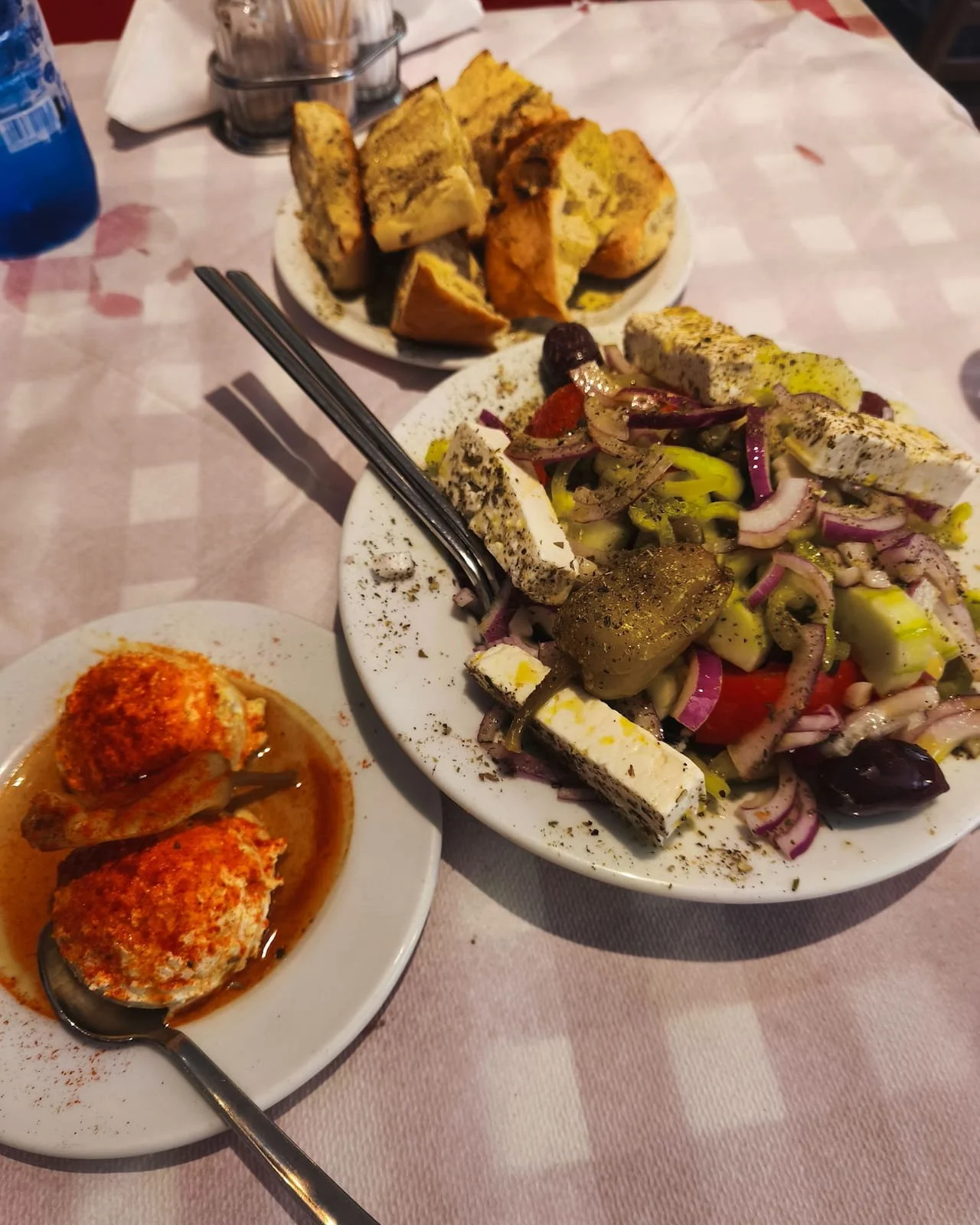
Our lunch at Dyo Dekares i Oka (kebab not pictured since I was too busy devouring it).
Mid-Afternoon — Acropolis Museum
Walking time: 10–15 minutes from Dyo Dekares i Oka
Allow: 1.5–2 hours
Situated in a modern building and very well air-conditioned, the Acropolis Museum is the best indoor move to spend the hottest hours of the afternoon.
The museum was designed to house archaeological finds from the Acropolis and its surrounding slopes. Its collection includes statues, architectural pieces, and objects associated with the temples and sanctuaries above.
There are also extensive informational displays about the history of Athens and the Acropolis. One detail I found especially interesting was that one way people worshipped Athena was to commission sculptures as offerings to the goddess, which helps explain the enormous number of statues and fragments connected to the site
There is also a film about the history of the Acropolis and an upper gallery surrounded by glass windows. The seating there gives you a direct view of the Acropolis itself. There’s overall a good amount of seating in the museum, so I’d take the opportunity to rest your legs in the air-conditioning before heading out again.
At the bottom of the building, glass floors reveal parts of the archaeological excavation beneath the museum. Your museum ticket also includes access to the excavation, which is entered separately from the museum’s entrance courtyard, so hold on to your ticket.
Practical information:
Hours: Open daily, with later closing on most summer days and especially late hours on Fridays. Hours vary by season and day, so check the official museum website.
Tickets: €20 per person
Booking: You can book tickets ahead of time online or buy them in person at the museum
Check the Acropolis Museum’s official website for current hours and tickets.
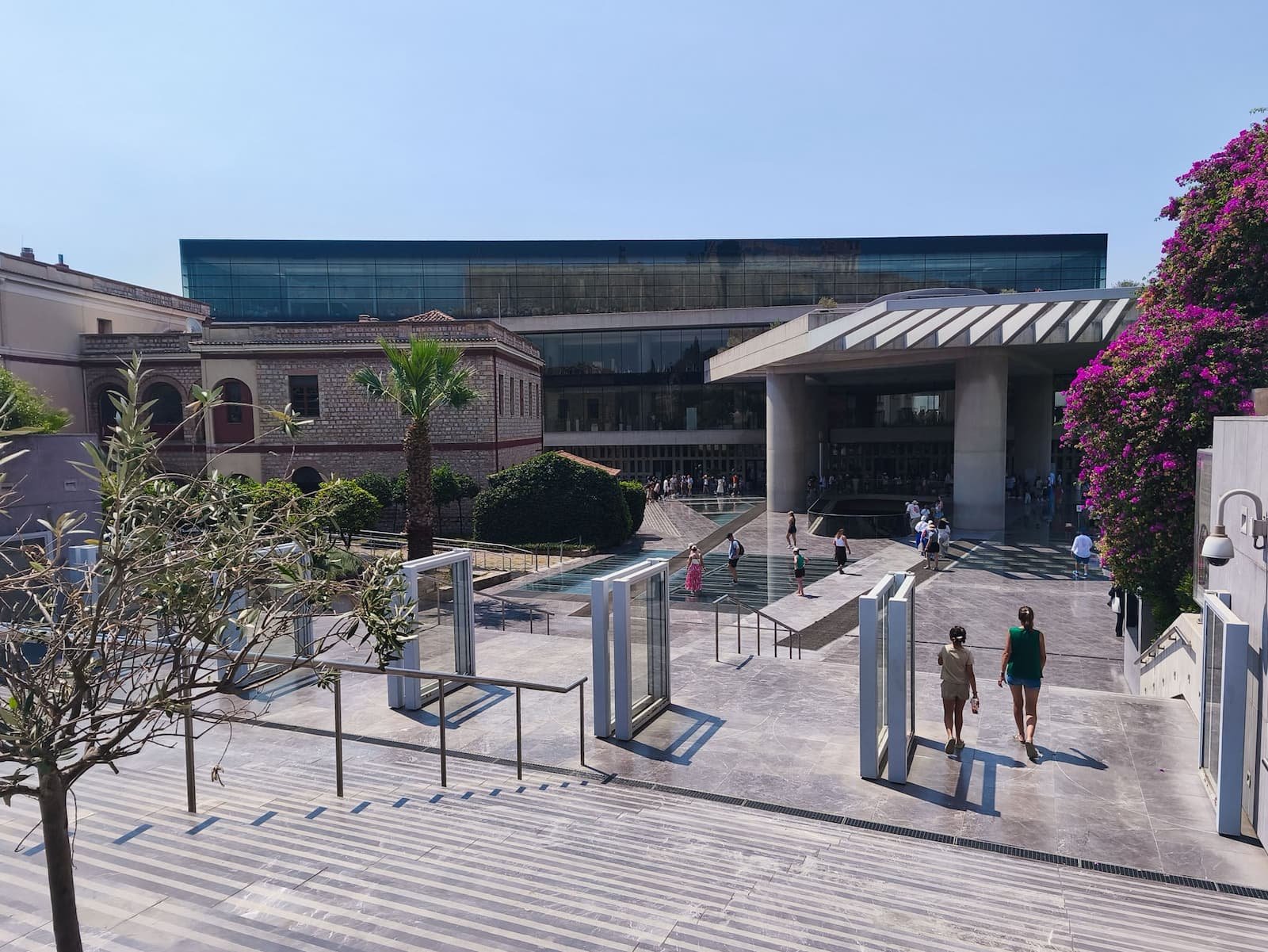
Entrance to the Acropolis Museum.
Late Afternoon — Plaka + Anafiotika
Allow: Around 2 hours
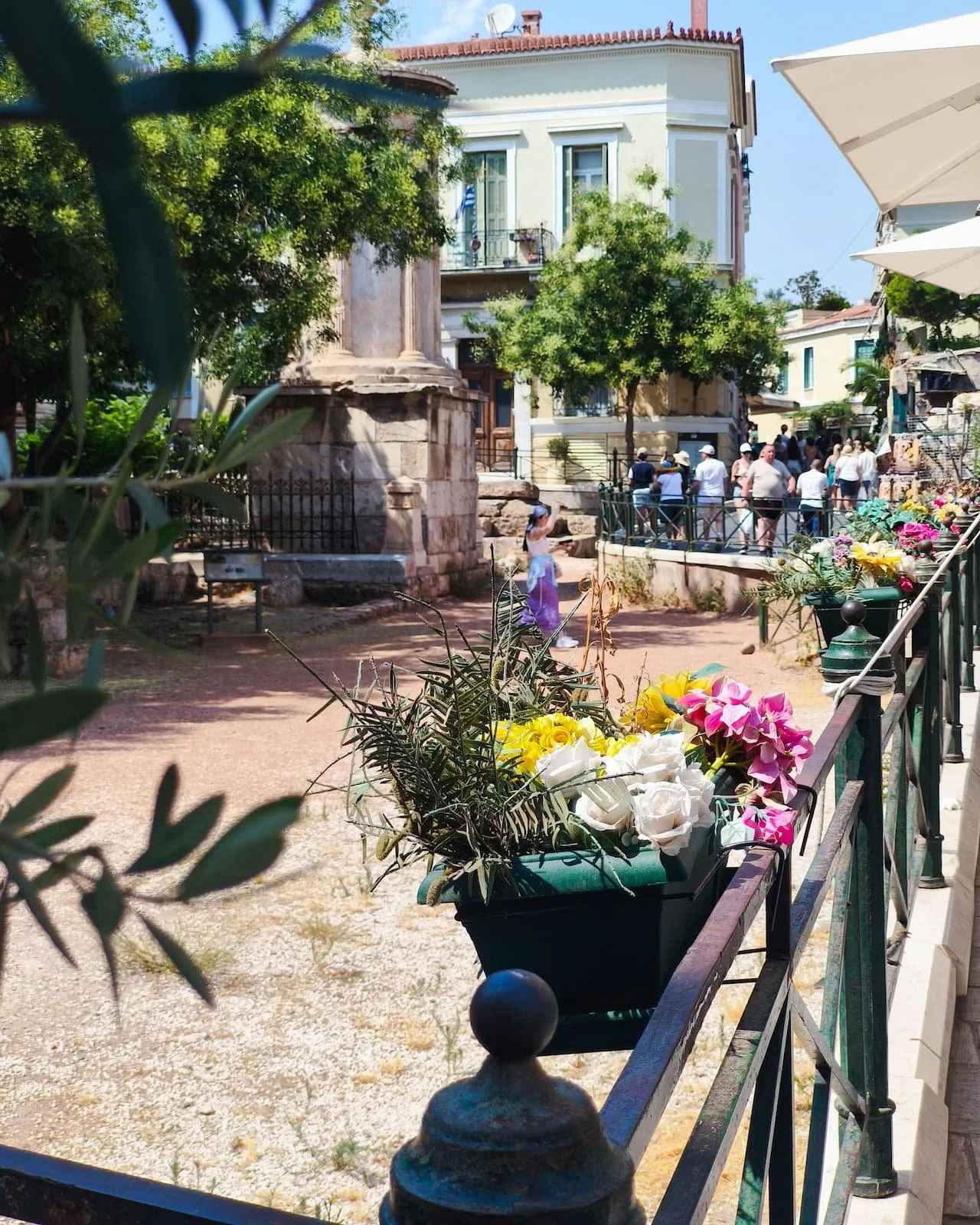
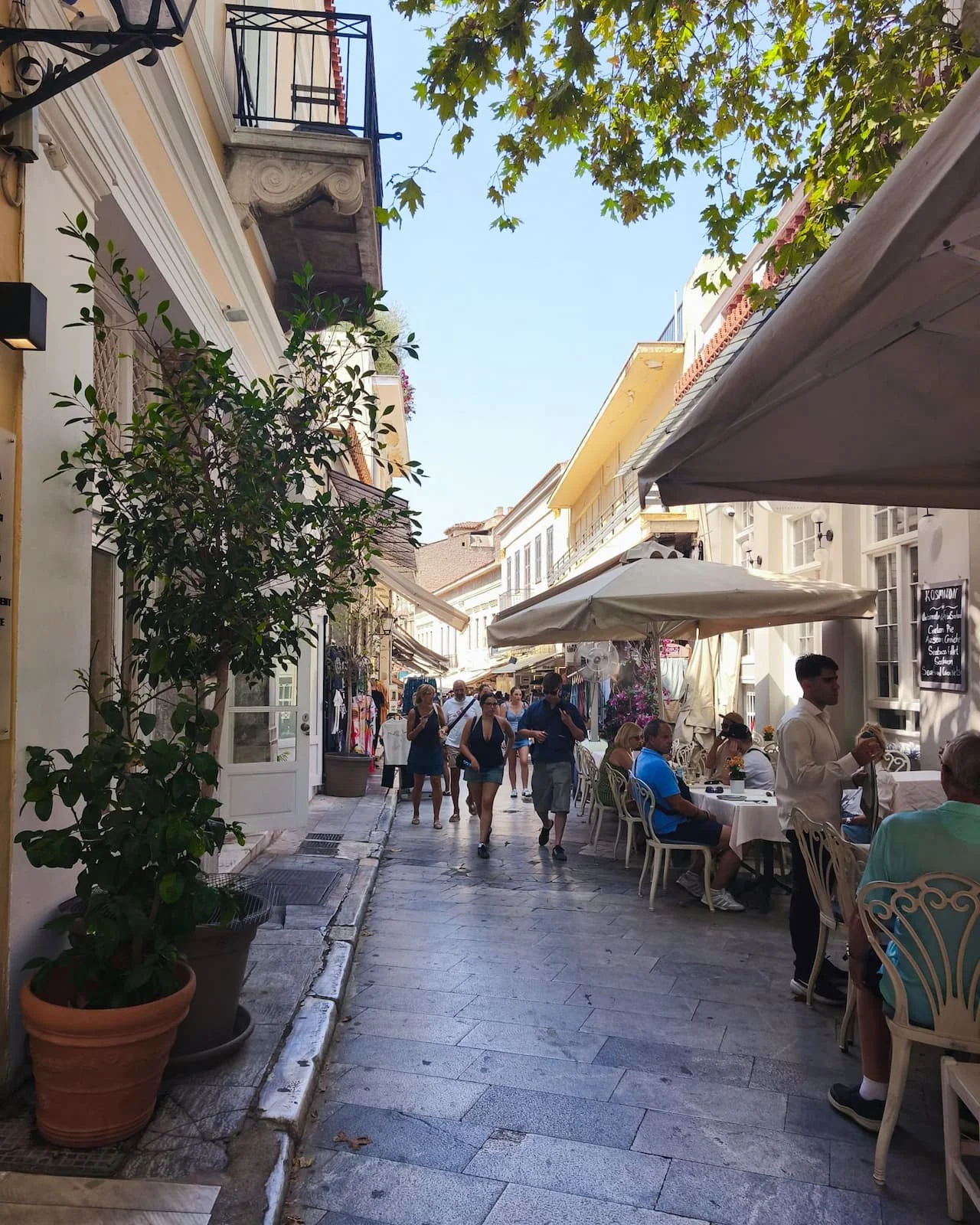
Plaka is one of Athens’ oldest neighborhoods and one of its most scenic, with narrow streets lined with shops and outdoor restaurants, greenery and flowers bursting from the walls, small stairways climbing toward the Acropolis, and just a general vibe that you’ve stepped into an old movie.
I’d keep this portion of the day loose and just wander around and feel the atmosphere, but a few places to anchor that wandering that I recommend:
Adrianou Street: A busy historic street running along the edge of the neighborhood that’s considered one of the oldest streets in Athens
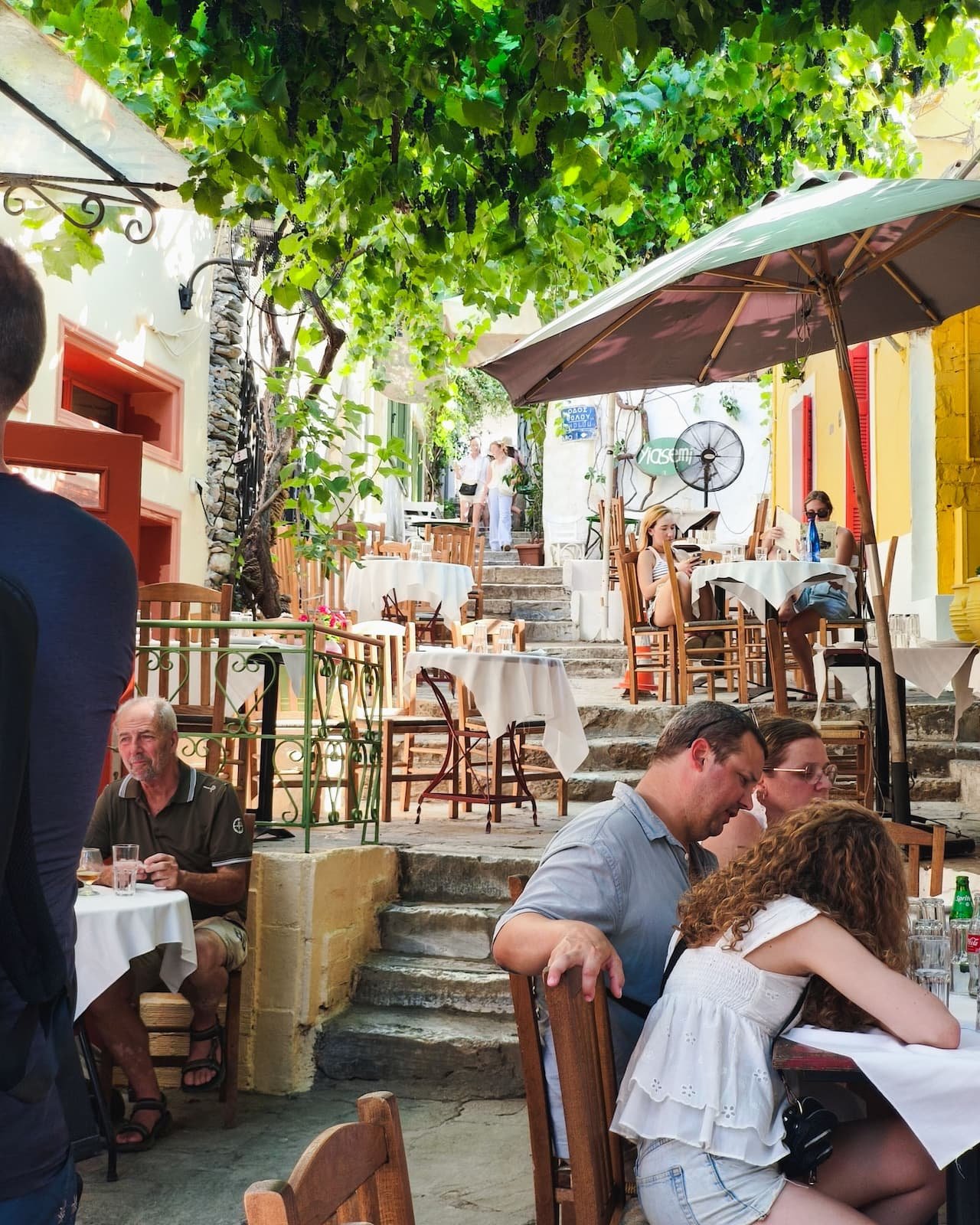
Mnisikleous Stairs: A well-known set of stone steps lined with café tables and plants
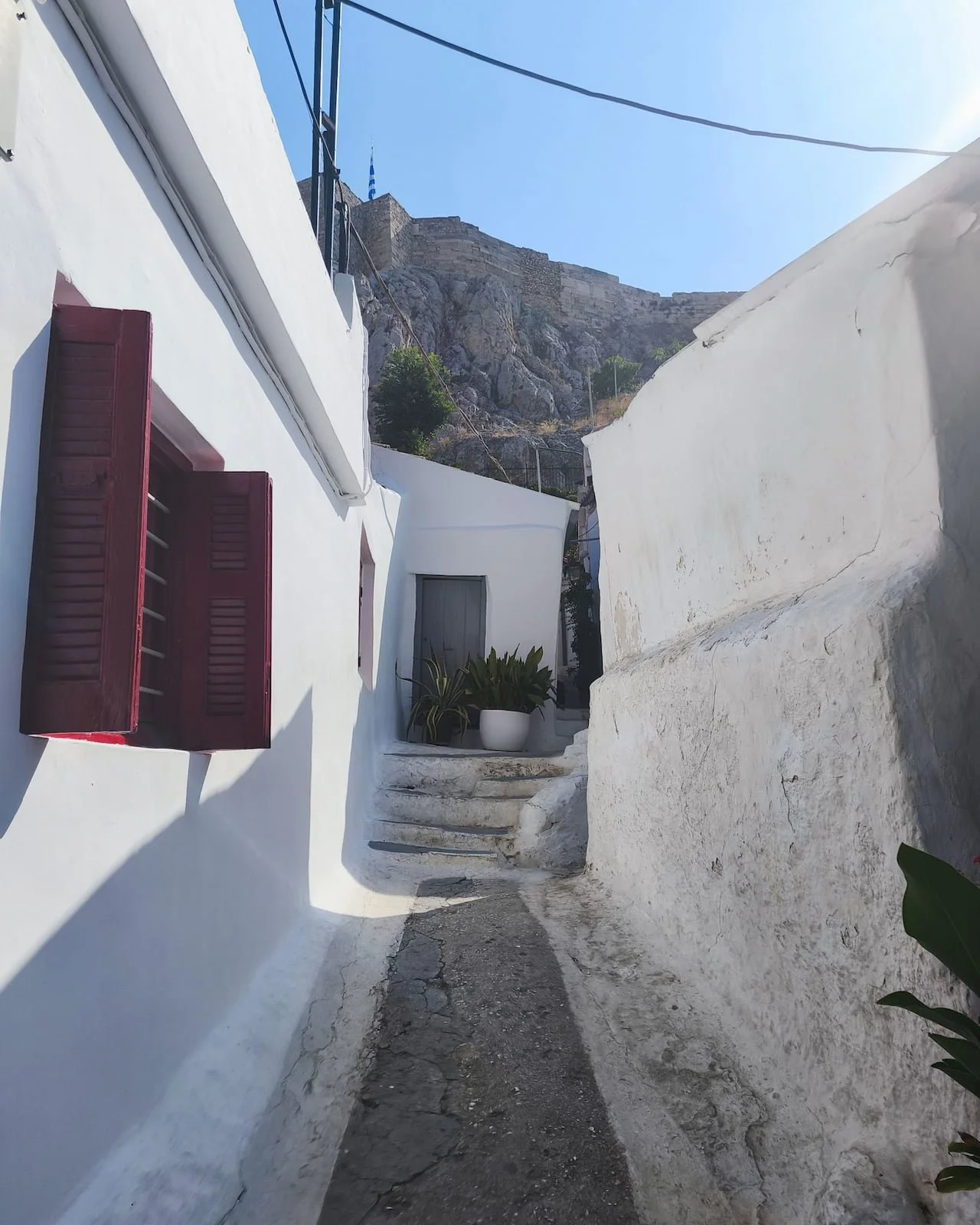
Anafiotika: A tiny neighborhood directly beneath the Acropolis, with whitewashed houses and narrow paths that resemble a Greek island village
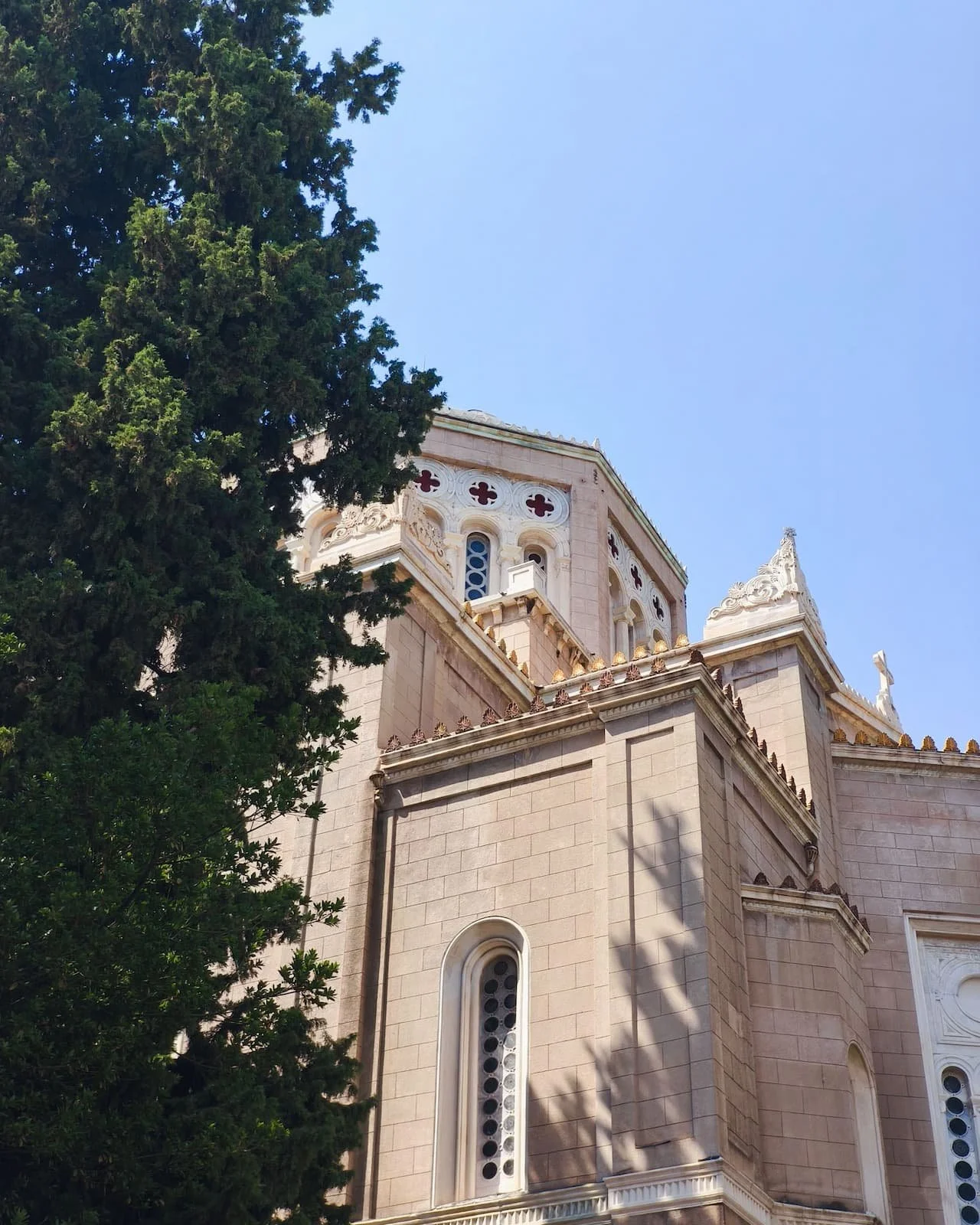
The Metropolitan Cathedral of Athens: Athens’ main Greek Orthodox cathedral, completed in the 19th century, is a striking building with twin bell towers, patterned stonework, and an impressive marble façade.
A simple flow is to begin near the museum, wander Plaka through Adrianou Street toward the Mnisikleous Stairs, climb into Anafiotika, and then descend toward the cathedral and Syntagma.
My favorite part was the quieter area after climbing the Mnisikleous Stairs. Only just a little removed from the bustle downstairs, we could hear the birds chirping as we meandered (often alone) along the winding paths, with the occasional elegant cafe appearing along a brightly painted wall.
We enjoyed our quick climb to Anafiotika too — its narrow streets and white-painted houses give you a taste of the Greek islands, but it’s a residential area so explore quietly and be respectful around people’s homes (there are signs that say so as well).
If you’re tired, you can also use this time for dessert, another coffee, or a longer sit-down break. One possible stop is Kafeneio Oraia Ellas, an old-school Athens café serving coffee, ouzo, and small sharing dishes. It also advertises a tucked-away upper-floor view.
Optional Final Stop — Syntagma Square
Walking time: Around 10–15 minutes from Plaka
Allow: Around 30 minutes to 1 hour
If you still have time and energy, continue toward Syntagma Square and its surrounding shopping streets.
Syntagma is Athens’ main public square and sits in front of the Hellenic Parliament, which occupies an imposing 19th-century neoclassical building that was the former Royal Palace.
The shopping streets leading toward it have a much more modern feel than Plaka’s winding stone lanes, so this also gives you a glimpse of a different side of central Athens.
You don’t need to force this stop. If you would rather have a longer dinner, stay in Plaka, or need to return to the airport, the itinerary still feels complete without it.
Example Timing
Here is suggested timing for the full version of the itinerary:
08:30–09:15: Coffee near Monastiraki
09:15–10:15: Roman Agora area
10:15–10:50: Walk to the Acropolis entrance and queue
11:00–12:30: Acropolis
12:30–13:00: Walk toward Koukaki
13:00–14:15: Lunch at Dyo Dekares i Oka
14:15–16:00: Acropolis Museum
16:00–18:00: Plaka and Anafiotika
18:30 onward: Optional Syntagma Square, dinner, or additional wandering
The exact timing is flexible except for your Acropolis entrance.
What to Book in Advance
Acropolis
This is the main booking to make ahead of time, and you should do so as early as you can because tickets might sell out. See the official Hellenic Heritage site for bookings.
Entry is organized through timed windows, so select a slot that works with the rest of your day. I liked 11:00 because it gave us time for coffee and a nearby archaeological stop first without feeling rushed in the morning and without pushing the exposed Acropolis climb into the late afternoon. It was hot on the hills, but still less so than the afternoon.
Arrive before your assigned time because a timed ticket does not necessarily eliminate the entrance line.
Acropolis Museum
The museum entrance is separate from the Acropolis ticket, so you’ll have to buy it separately. You can book tickets on the Acropolis Museum’s official website ahead of time, and if you do so you might be required to choose a time for entry. You can also queue at the museum door for tickets when you get there.
We didn’t prebook tickets to this since we wanted to keep our entry time flexible, and our queue at the museum was only around 10 minutes on a weekday afternoon in July.
Dyo Dekares i Oka
Reservations are available through the restaurant’s website but may not be necessary except during especially busy periods. There were plenty of available tables when we walked in.
A Few Final Practical Notes
Read About the Acropolis Before You Go
Because the museum comes after the archaeological site in this itinerary, read a short overview before your visit.
Even basic context will make it easier to understand how the structures all fit together in the complex, and appreciate it more (it did for me at least) while you’re standing there.
Prepare for the Heat
The Acropolis is exposed and has very little shade.
Bring water, wear sunscreen, and consider a hat if you’re visiting in summer. During periods of extreme heat, archaeological sites may reduce their hours or temporarily close.
Watch Your Step
The marble and stone surfaces around the Acropolis can be surprisingly slippery, even when they are dry. We definitely felt that we had to tread carefully at places.
Wear shoes with reasonable grip and take your time on the descents.
Bring a Portable Charger
You will probably use your phone for your archaeological-site tickets, museum tickets, airport transportation, walking directions, and photos.
This is especially important during a layover, when you also need enough battery to retrieve your luggage and board another flight at the end of the day.
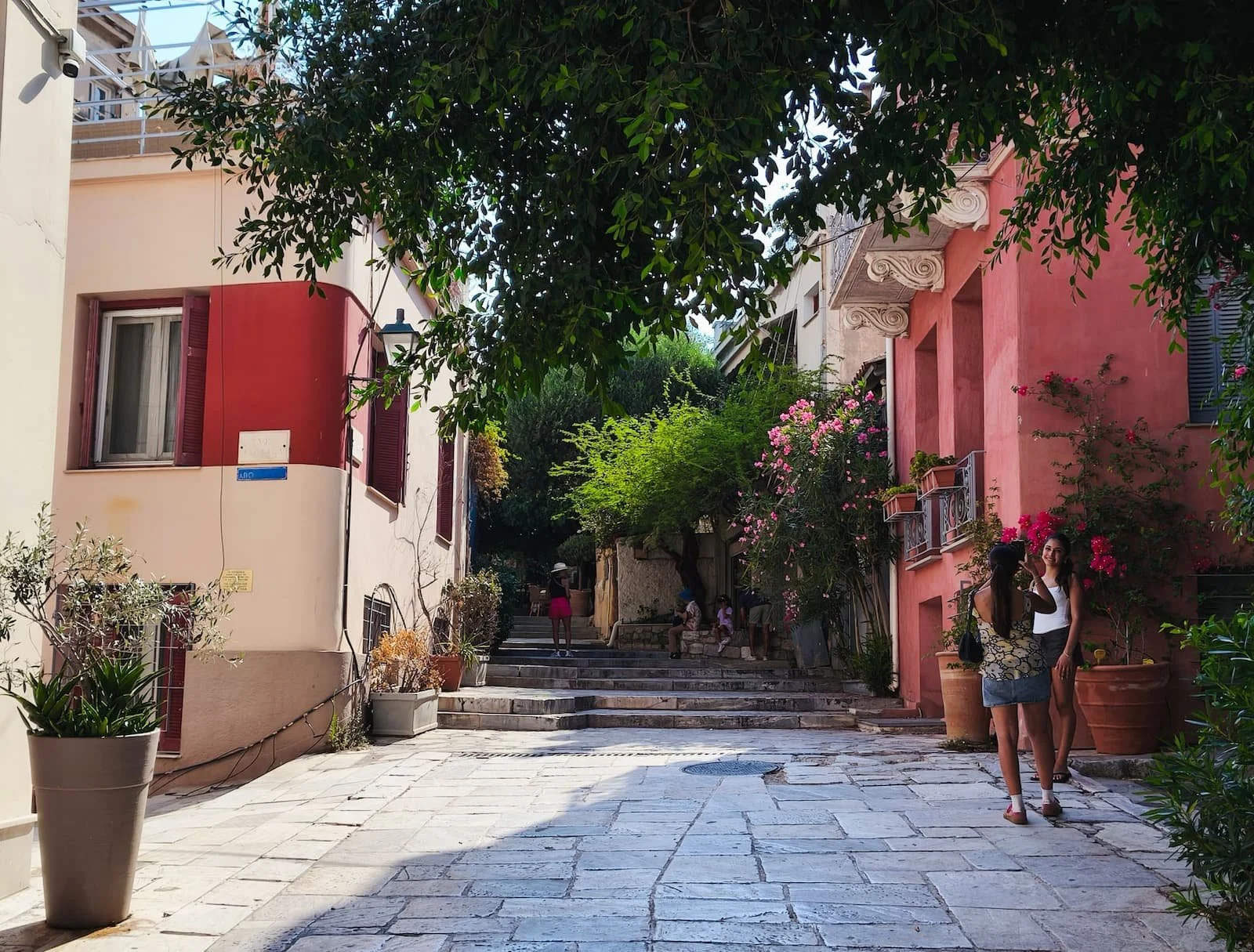
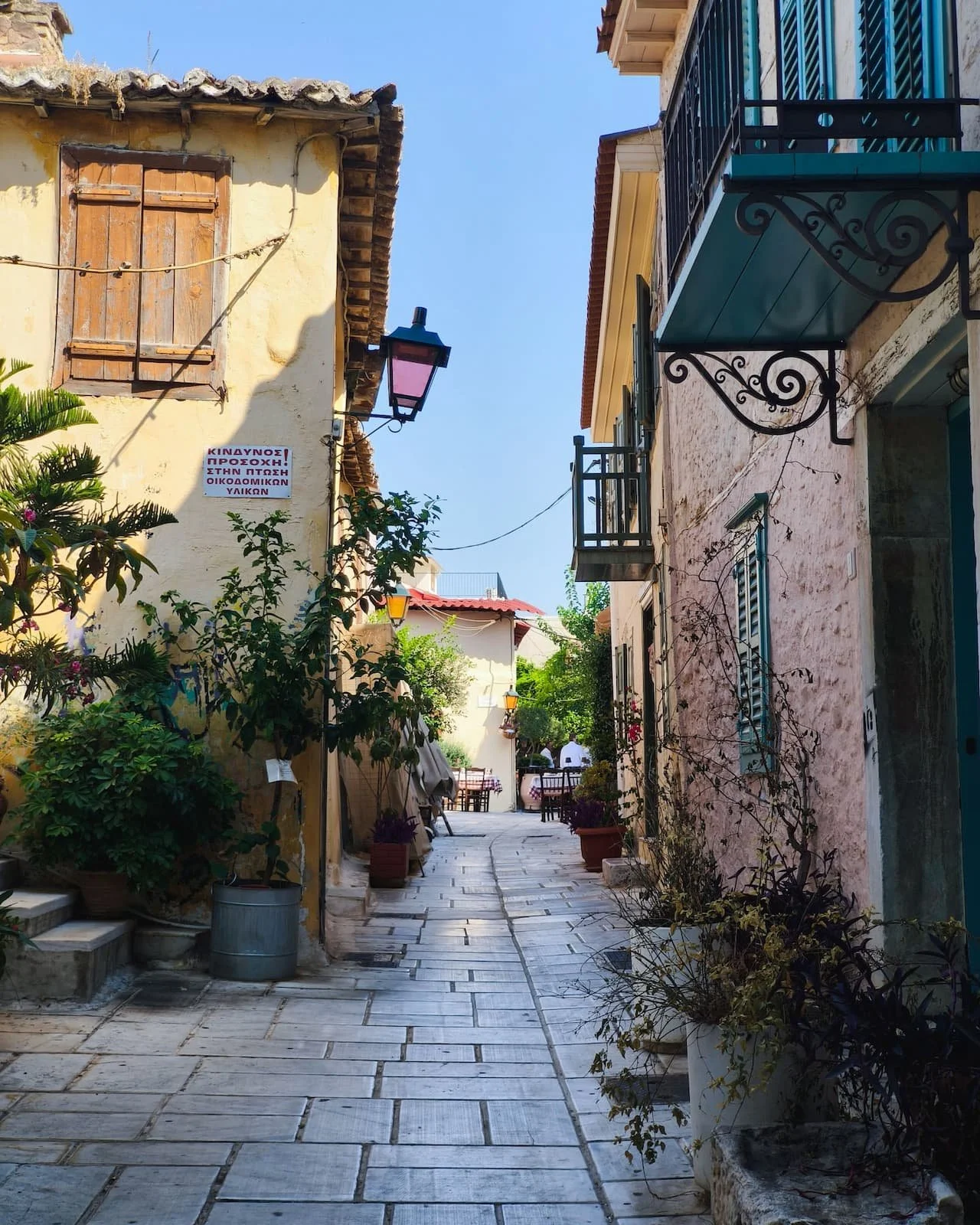
Colorful street in the Plaka. I loved that salmon-colored wall with the pink flowers.
Should You Add the Ancient Agora?
If you have more than one day in Athens, or simply want to spend more time exploring the city's archaeological sites, the Ancient Agora is well worth adding to your itinerary. It's larger and historically more significant than the Roman Agora, with highlights including the remarkably well-preserved Temple of Hephaestus and the reconstructed Stoa of Attalos.
We skipped it because we flew into Athens early in the morning and only had that one day for a layover, so we wanted our morning to be more flexible and low-effort and leave enough time and energy for the other big sites in this itinerary. Trying to fit the Acropolis, Acropolis Museum, Plaka, and the Ancient Agora into a single layover day would have made the itinerary feel very rushed.
We were a little sad to miss it, but you don’t have to if you have more time! If you're already staying in Athens and can start your day earlier, I'd consider swapping Roman Agora for Ancient Agora in the morning, or visiting the Acropolis first thing in the morning and adding the Ancient Agora afterward.
Other Ways to Plan Your Athens Visit
If You’re Especially Interested in Ancient Athens
Swap the Roman Agora for the Ancient Agora in the morning, following the alternative described above. You could also shorten your time in Plaka or skip Syntagma Square to leave more time for the archaeological site.
If You Have Less Time
Prioritize the Acropolis, lunch, the Acropolis Museum, and a shorter walk through Plaka.
Cut or significantly shorten the Roman Agora area, and skip Syntagma Square.
If You Have Two Days
Keep the Acropolis, Acropolis Museum, Koukaki, and Plaka together on one day. On the second, visit the Ancient Agora and Roman Agora, then continue toward Monastiraki, Syntagma Square, the National Garden, and the Temple of Olympian Zeus.
Closing
Thanks for reading! I hope this itinerary helps you plan a full but manageable day in Athens.
If you try the route, I'd love to hear how it goes. And if you're still planning and have questions, feel free to leave a comment or send me a message. I'm always happy to help when I can.
You may also like:
Athens Airport Layover Guide — everything you need to know about luggage storage, getting between the airport and the city, how much time to leave before your next flight, and other layover logistics
Belgrade Layover Itinerary: Make the Most of Half a Day — the route we used during a 12-hour layover, with Belgrade Fortress, Dorćol, Skadarlija, Serbian food, and airport logistics
Panama City Layover Itinerary — another long-layover itinerary for getting out of the airport and seeing as much of the city as you reasonably can between flights
My One-Bag Gear List — everything I pack for indefinite four-season travel with just one bag, which makes getting out and exploring during a layover much easier