Why I'm Drawn to One-Bag, Minimalist Travel
Ever since I came across the idea of one-bag traveling — specifically, traveling as light as possible with one backpack — it's been as if a lightbulb went on in my mind. I tested it out for the first time in 2017 with a solo Europe trip, using a crappy 55L backpack that I could afford. And I remember feeling (even with its unsupportive straps digging into my shoulders) free and unencumbered when I easily climbed out of the congested Paris metro without a suitcase lugging behind me. After that trip, I had not fully converted to one-bag travel, but one time several years ago, as I ran to catch a train in London and my suitcase bounced and clanked on the cobblestones, I really, really missed my backpack. And that was the last time I traveled with a suitcase.
Since then, I have only ever traveled with a backpack, and have gradually whittled down from a 55L (I had replaced my crappy one with my Osprey Farpoint repurposed from camping) to an everyday-sized 30L Patagonia Refugio. One-bagging with an everyday backpack provides the first-order travel perks: not having to pay for overhead bin space on budget airlines, breezing through airport customs, being able to be flexible and take side trips (such as my layover tour of Panama City) without worrying about how to carry my luggage or where to store them. Plus, as someone who does not like to stand out, not lugging around big bags makes me look less like an obvious tourist.
But to me, one-bagging also appeals to a fundamental side of me. I've always had a love for intentional, customizable, multipurpose design. Ever since I was a kid, I've loved the idea of carrying less stuff by having one thing that works for multiple contexts (that pen that comes with multiple colors? those modular notebooks I can insert pages customized for my agenda, my journal, and my class notes??). So it was no surprise that I was quickly taken by one-bagging and by the desire to find the right gear and develop the packing system that optimizes how I travel.
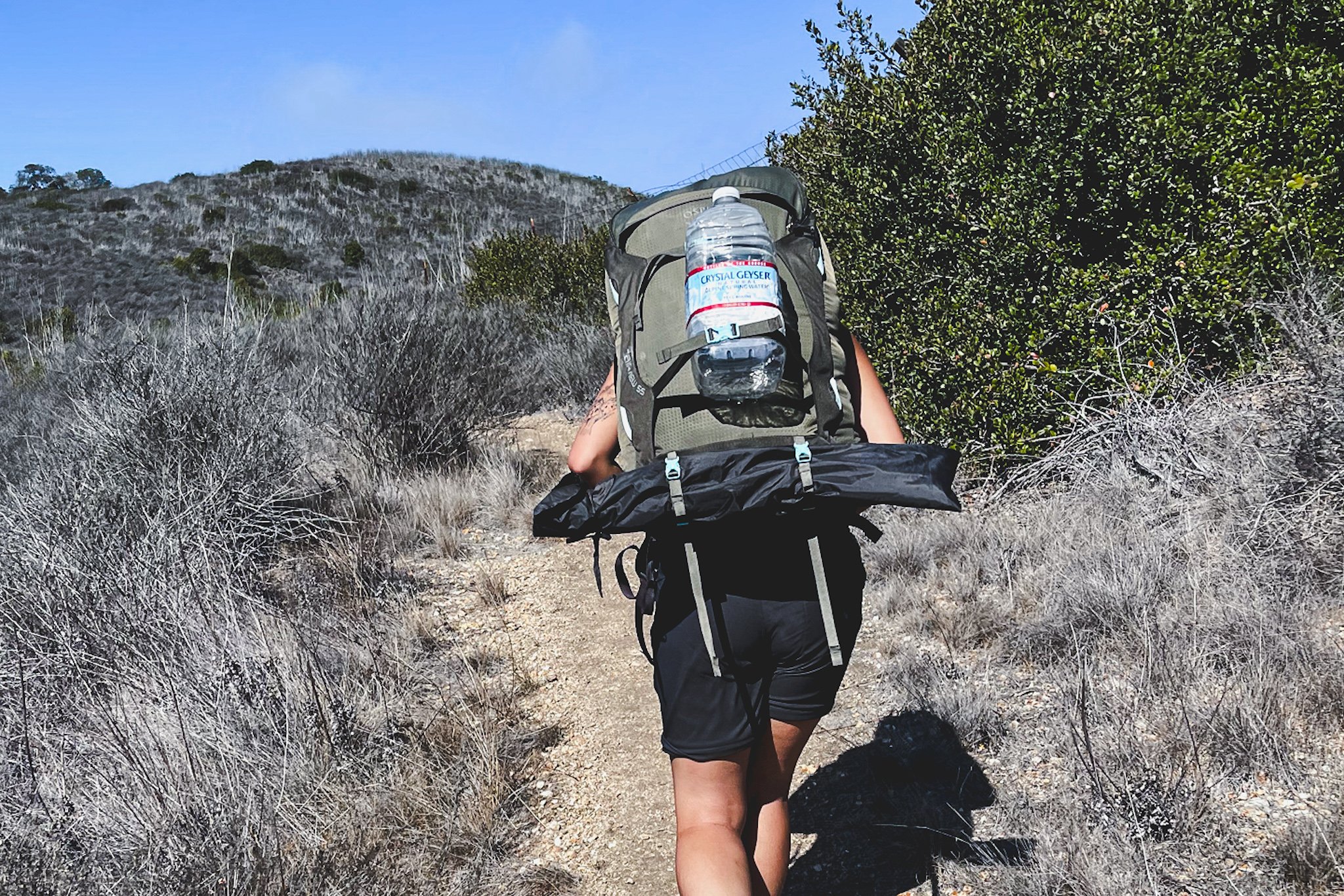
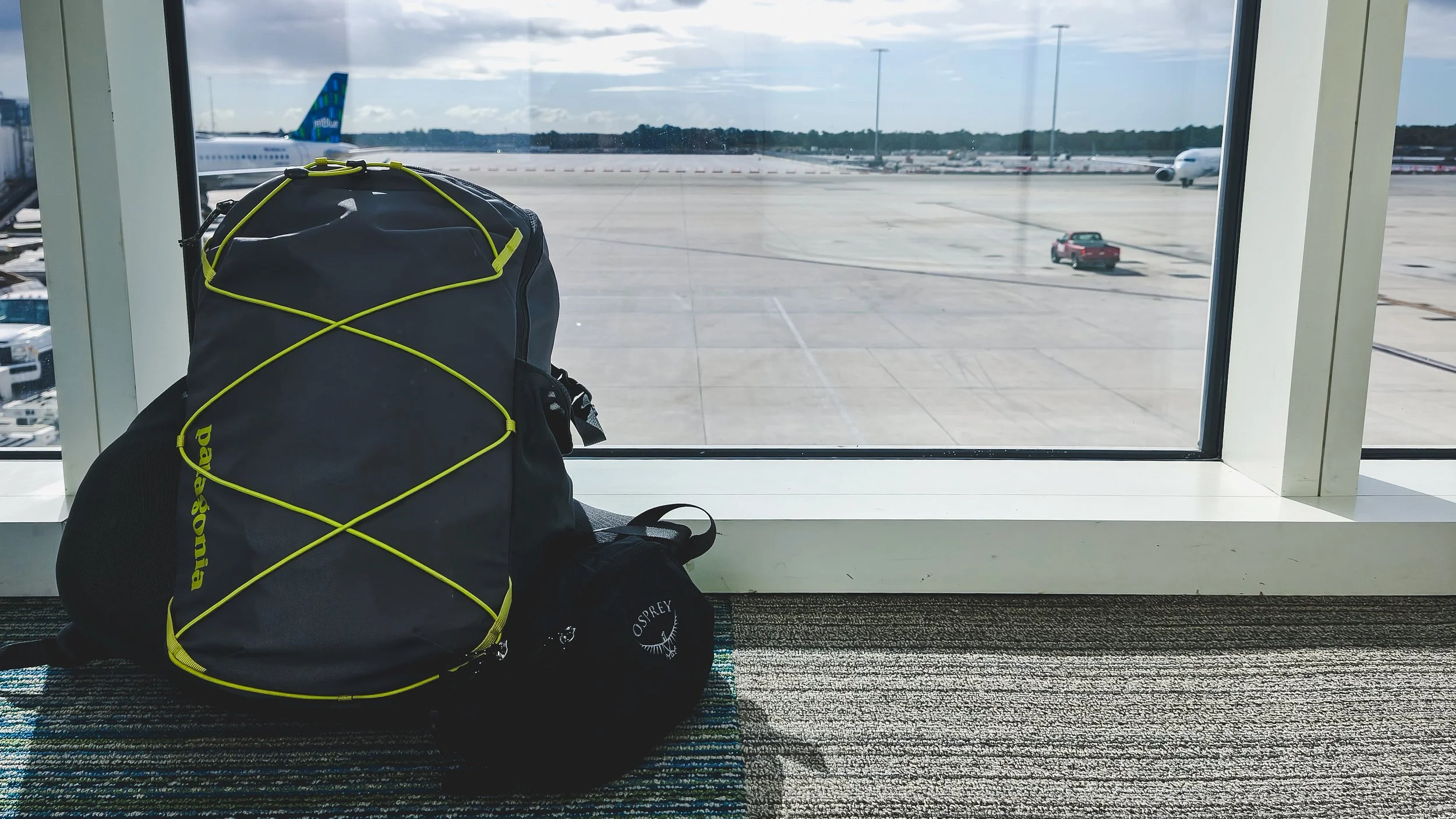
My first one-bag, the 55L Osprey Farpoint, which was repurposed from my camping backpack.
Through my pursuit of this optimized system, I've experimented with various setups — from a week-long summer trip to Spain and France with my 55L Farpoint (too much) to a month-long winter trip to Japan and Korea with only an 18L Fjallraven Kanken (not enough haha) — before finally settling down with my 30L Refugio that I've used for full-time, four-season travel. I love my Refugio because it's spacious enough to carry all of my stuff, but after I unpack at my destination, I can take it out as my daily sightseeing or work bag. Its square-ish shape (and generous stretch side pockets) makes it hold more than it looks, and its tough material means that it can hold the weight of all my stuff and rough handling during travel.
My current packing setup, like my backpack, is also something I've continuously refined over time. The main work behind this refinement is to slowly learn what I can give up or not need anymore. One of it is being particular about fashion and style — rather than buying that new pair of pants in today's style or that leather jacket that only works for certain occasions, I've curated a capsule wardrobe of only 15 pieces that fits my personal style and that I can wear practically anywhere. As someone who kind of loves clothes, that habit is one I've had to work hard toward mentally, but besides volume in my pack, it has also saved me a good amount of money. Another mindset is shifting gears towards exercise that requires less gear while traveling. . For example, I dabble in skateboarding at home, but since packing a skateboard defeats the purpose of one-bagging, I’ve picked up activities like freestyle jump rope, which has become the practice I keep coming back to, and that has allowed me to not only stick to packing minimally, but learn some new skills. Although it took me years to get to my current one-bag setup, I’ve distilled it down to a downloadable workbook to help you do the same.
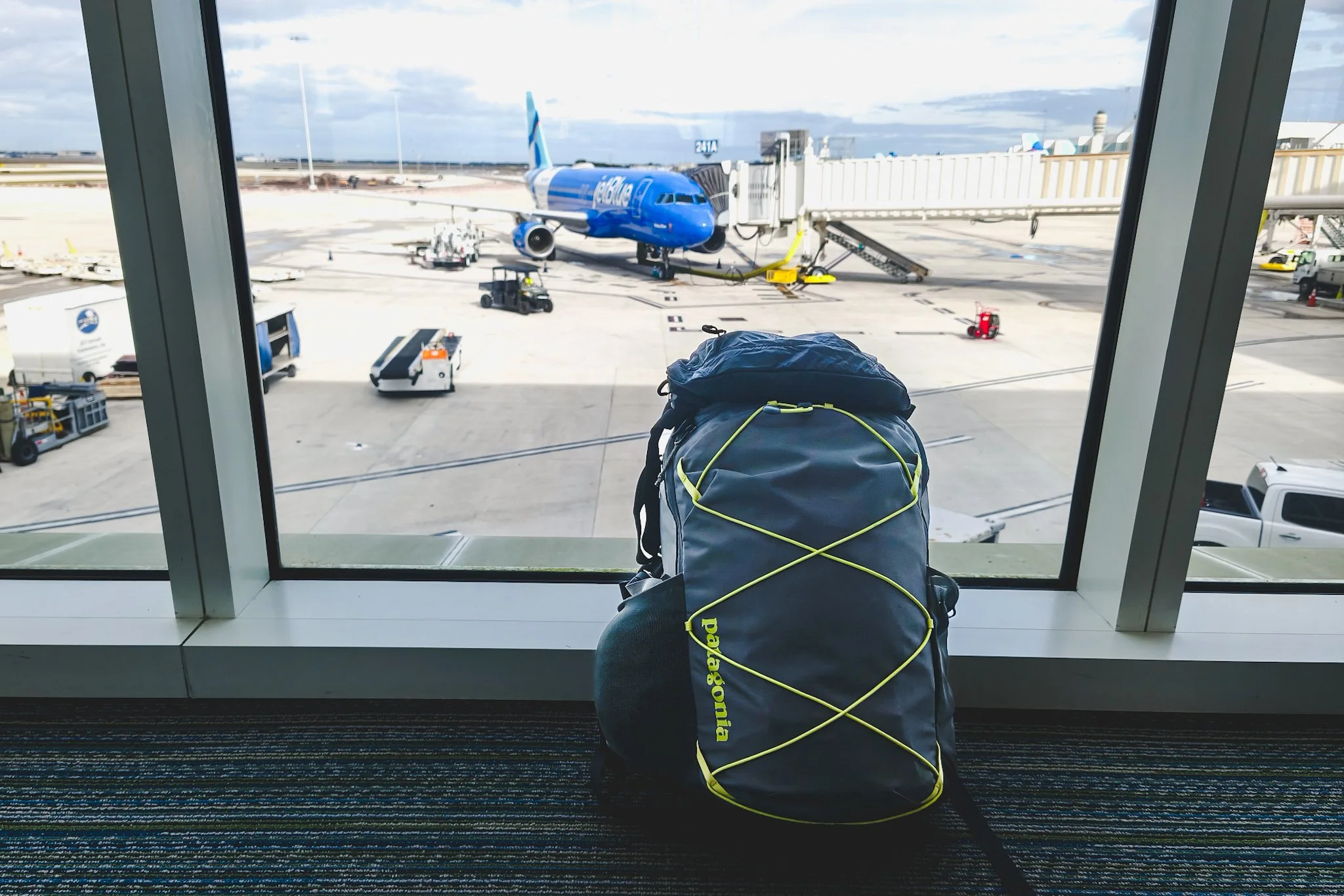
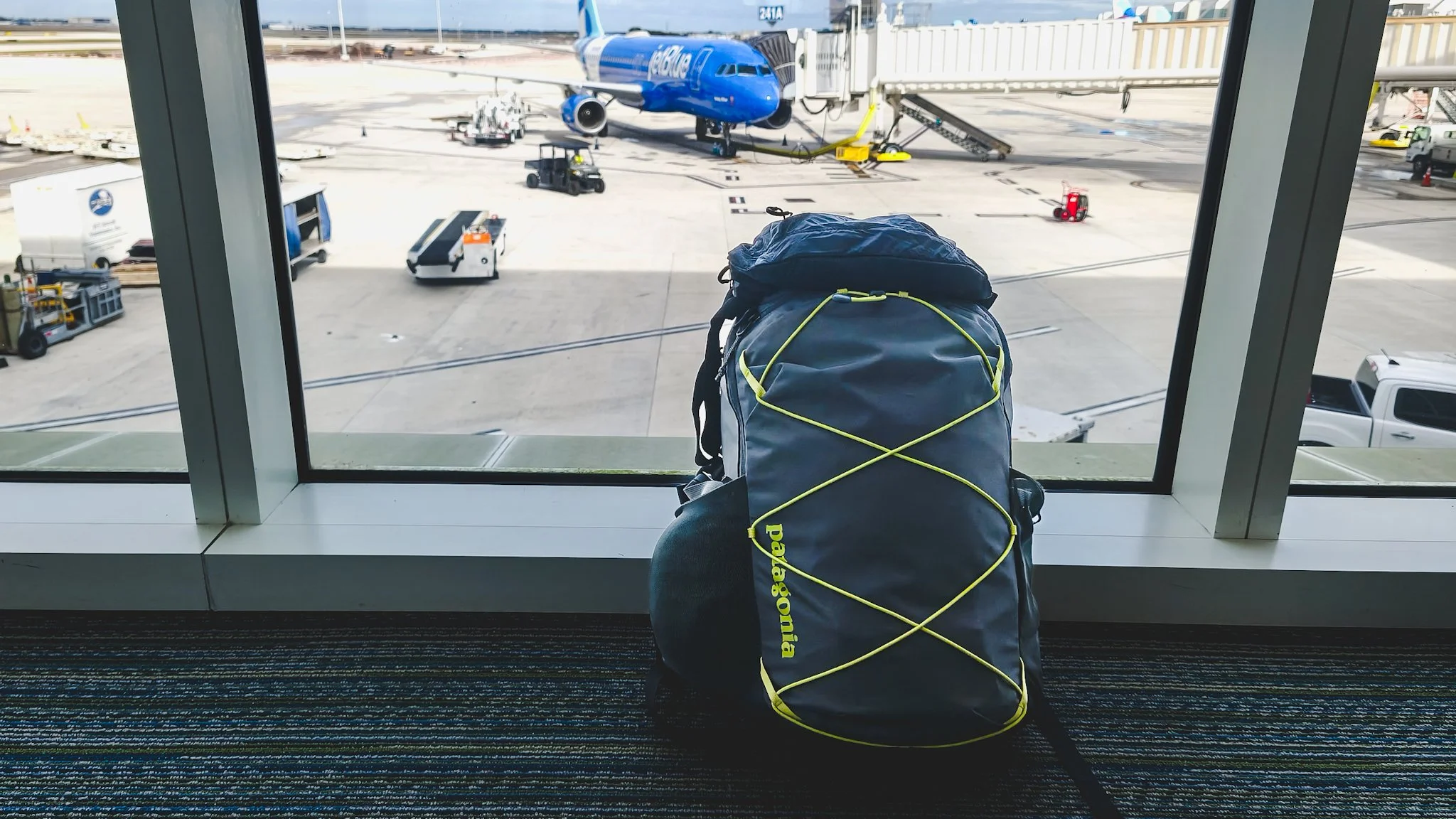
My current one-bag, the 30L Patagonia Refugio, packed and with my sling for essentials on top.
Now, a few years after I started seriously refining my one-backpack system, packing has become automatic (and very fast) for me since I do the same thing every time. And when things just work like a well-oiled system, I can stop thinking about it and instead spend my energy on the experiences. I find that once my brain knows it doesn't need to spend time on packing, it marks that item as done and opens up to other things. (Though ironically, I still do spend a lot of time thinking about one-bag packing systems outside of travels — heck, I've dedicated a whole blog to this! But that's only because I love it so much.) In the future, I do want to continue to reduce volume and weight (even though 18L was not enough for my Japan and Korea trip, it was amazing traveling that light), but I'm happy parking in my current setup for a bit.
One unanticipated effect of this whole exercise is that, over time, one-bag traveling has translated to one-bag living. Through my travels, especially the slower, longer term ones, I've gotten used to living everyday life out of only the things in my one backpack. So, when I travel, I don't find myself missing the comforts of home, because I already have all my comforts with me. Now, in my daily life, even at home, I don't really need anything else beyond what's in my travel bag for most aspects of life anymore. And in my day to day life, I try to be minimalist, notably less consumerist, and more intentional in what I own and buy. When I want to buy a piece of clothing, for example, I always think about the practicality of the piece for my travels, and whether I already own something that serves the same purpose. So I'd say one-bagging has not only changed the way I travel, but the way I live as well — and it's a direction that I'd like to continue down.
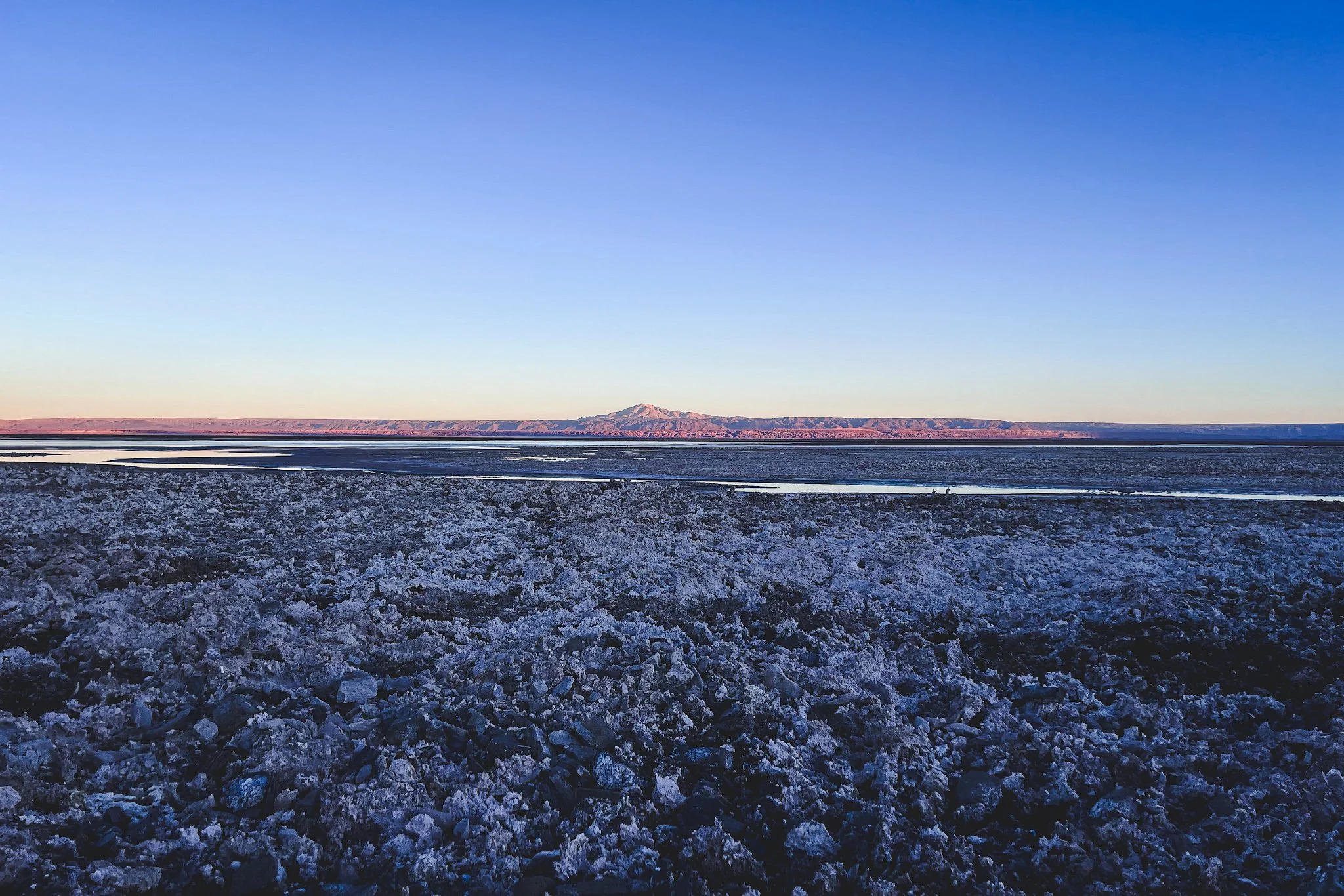
One of the places I’ve been able to take my one-bag, the high-altitude salt flats of the Atacama Desert, at sunrise.
Have a question about this or want to share your thoughts about one-bag travel?
Shoot me a message or leave a comment below — I read everything, and I’d love to hear your perspectives!