Best Things to Do in Prague: A First-Timer's Guide
I stopped in Prague after a couple of months in other European capitals, most recently Berlin, and the architecture was like I landed in a fairytale (not even exaggerating). The incredibly well-preserved historic center throws you into its medieval charm. And the city’s many viewpoints show red rooftops topped with towers and stone bridges spanning the sparkling river. “City of a Thousand Spires” is aptly nicknamed indeed.
This guide covers the major sights and neighborhoods I'd recommend for a first trip to Prague, along with a few additional places depending on your interests. I've included some historical context, practical information, and my own observations to help you decide what's worth your time.
If you want these sights arranged into realistic days, see my 3-Day Prague Itinerary for a ready-to-follow route with maps and suggested timing.
My Top Picks for a First Visit to Prague
Old Town Square + Astronomical Clock
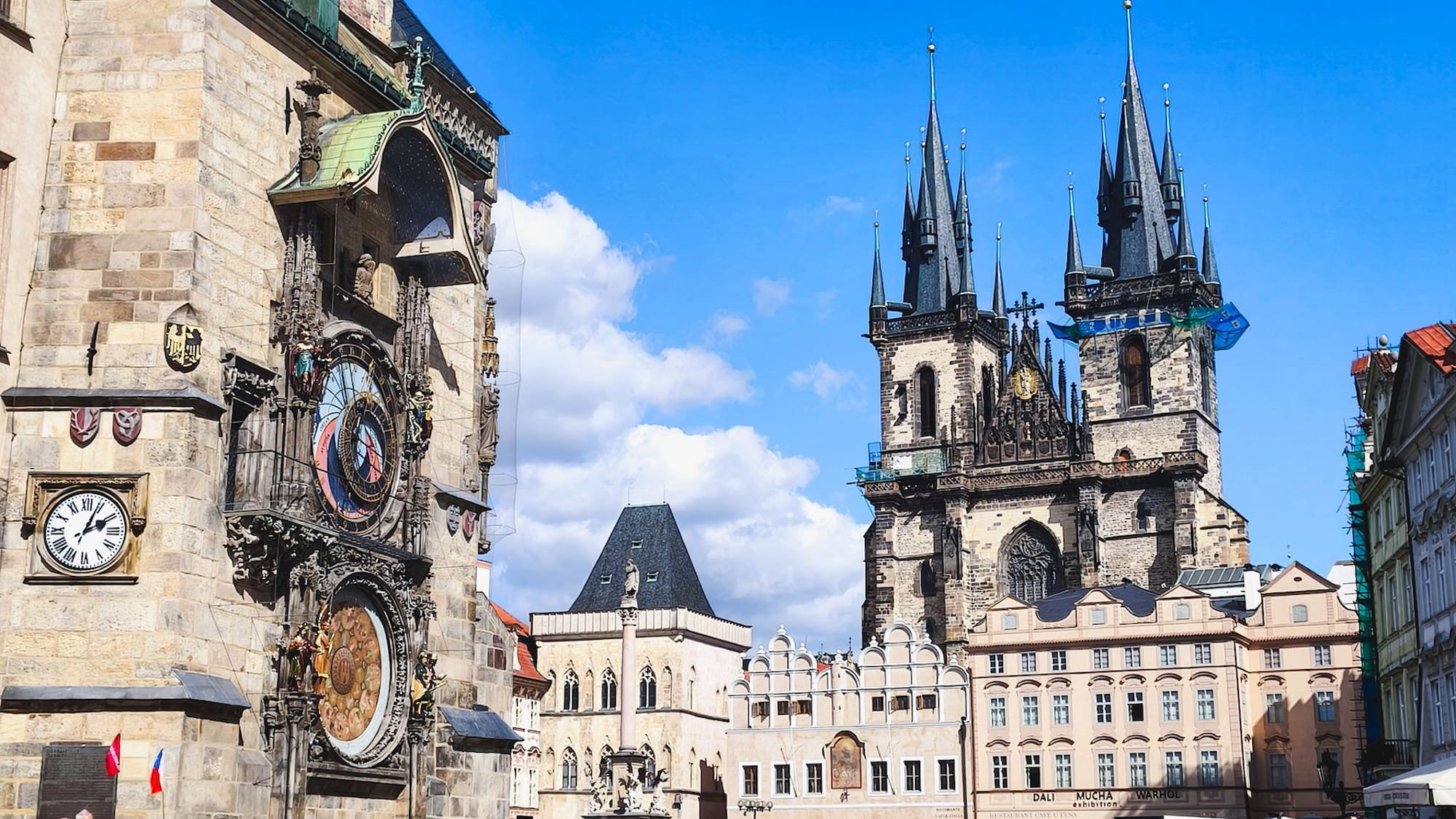
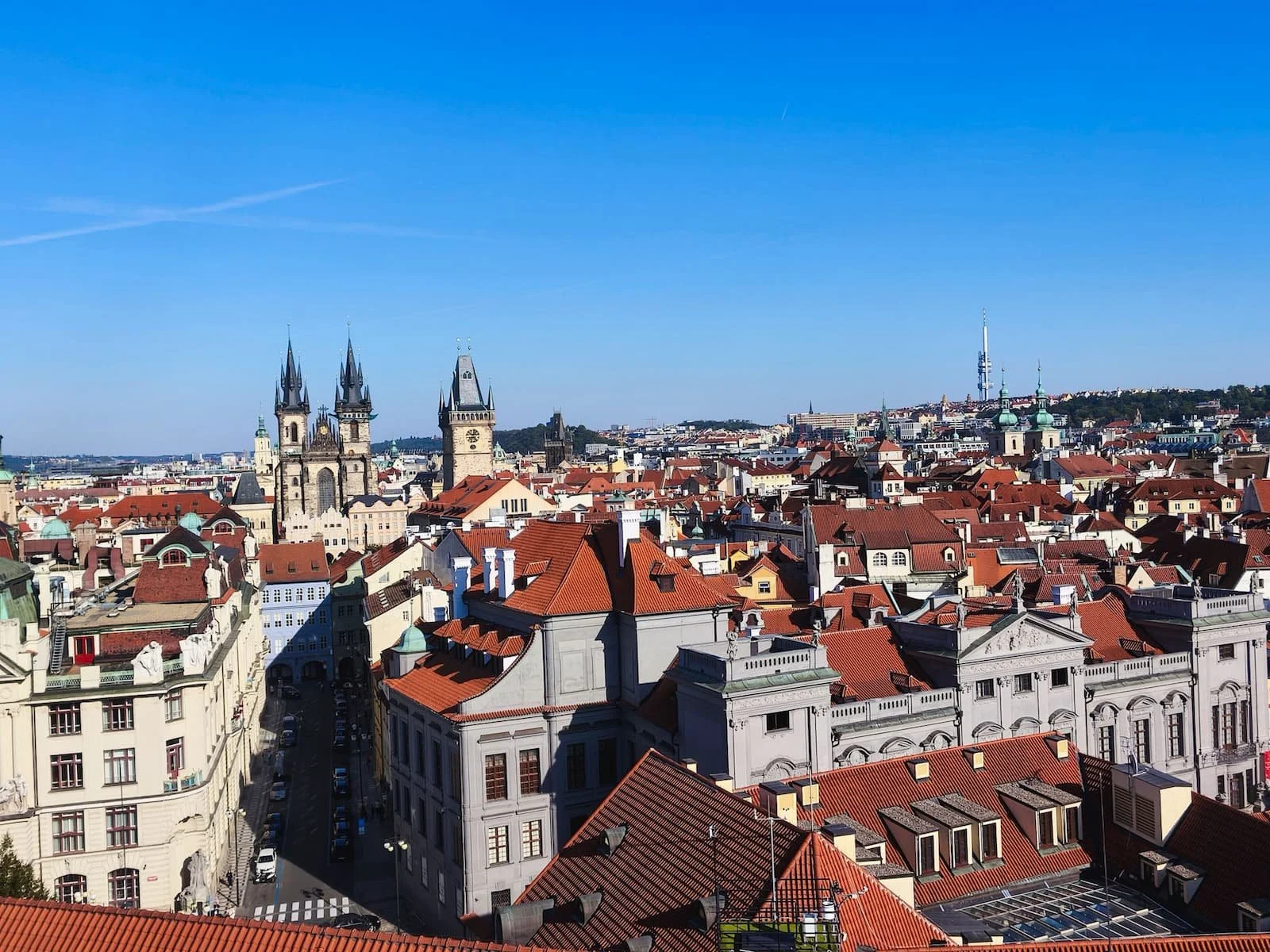
Old Town Square is the heart of Prague's historic center, surrounded by colorful Gothic, Renaissance, and Baroque buildings. It’s not only one of the most fairytale-like areas of the city, but one of the best places to appreciate how well-preserved Prague's historic architecture is.
One of its most famous attractions is the Prague Astronomical Clock, a colorful medieval clock dating back to 1410. Every hour, it performs a brief, whimsical mechanical show featuring the Twelve Apostles rotating around and a skeleton ringing the bell (very cute). I’d definitely try to catch it if you’re there around the hour, though the show is very short and does draw a crowd.
Across the square, you'll also see the Church of Our Lady before Týn, which dates largely to the 14th and 15th centuries and whose distinctive twin Gothic towers are one of the most recognizable features of Prague's skyline.
You can also climb the Old Town Hall Tower for panoramic views over the square and Prague's historic rooftops. We didn't go up ourselves, but it's a convenient viewpoint if you want to see the city from above while in Old Town.
How long to spend: Around 30–45 minutes to explore the square and see the clock, plus another 30–45 minutes if climbing the tower.
Practical info: The Astronomical Clock performs its mechanical show on the hour during the day. Climbing the Old Town Hall Tower requires a ticket. See the official website for current prices and hours.
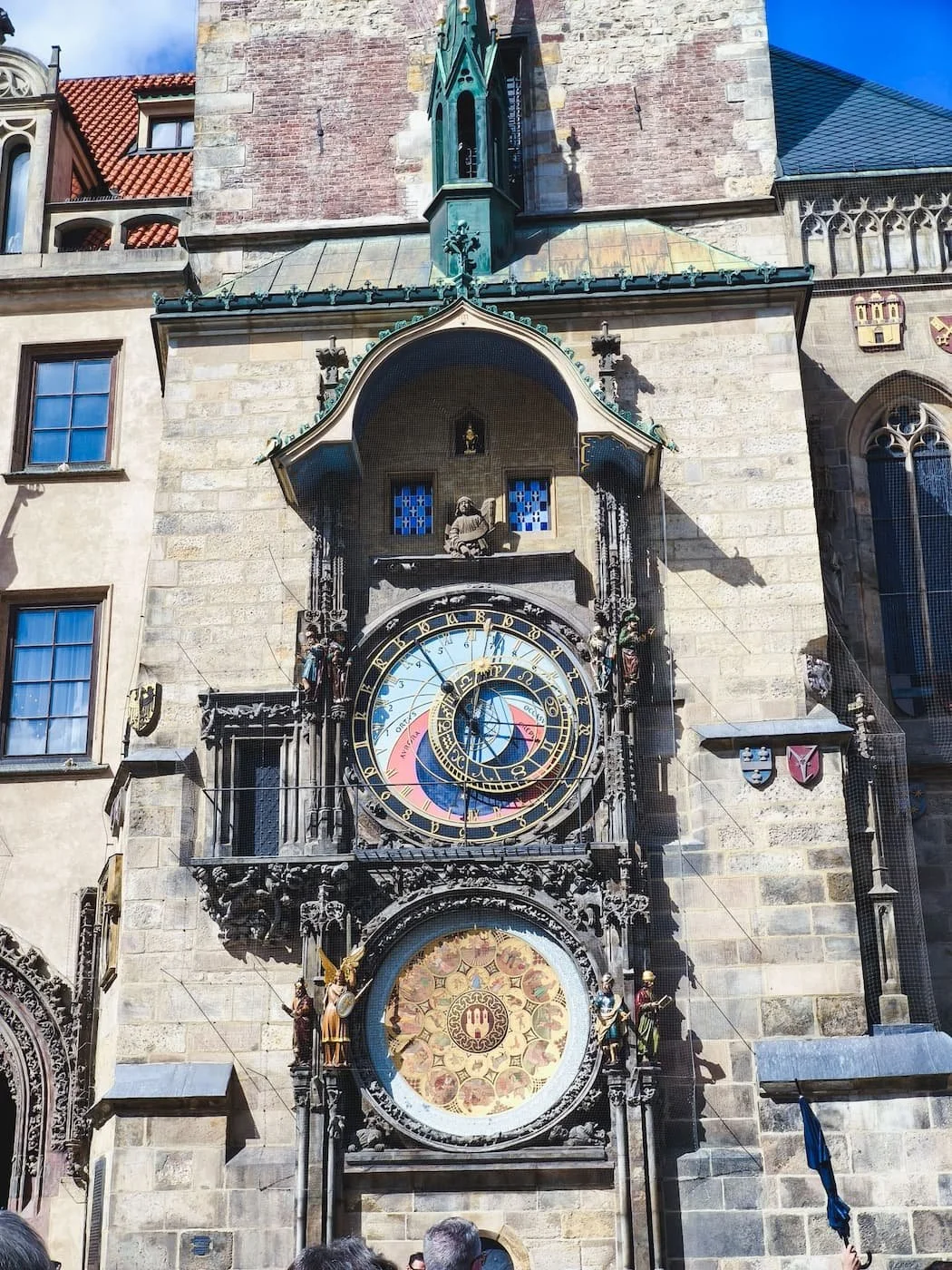
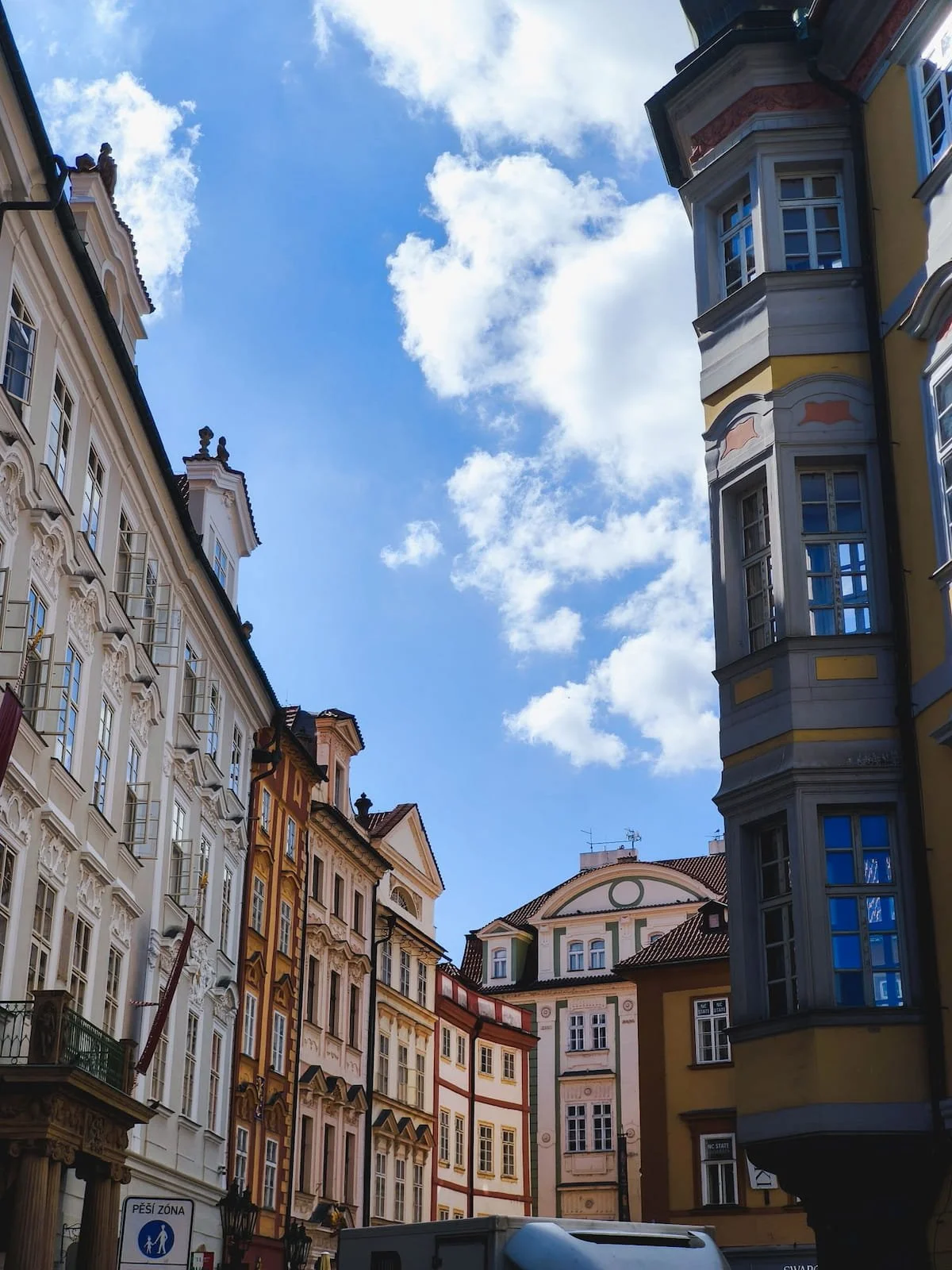
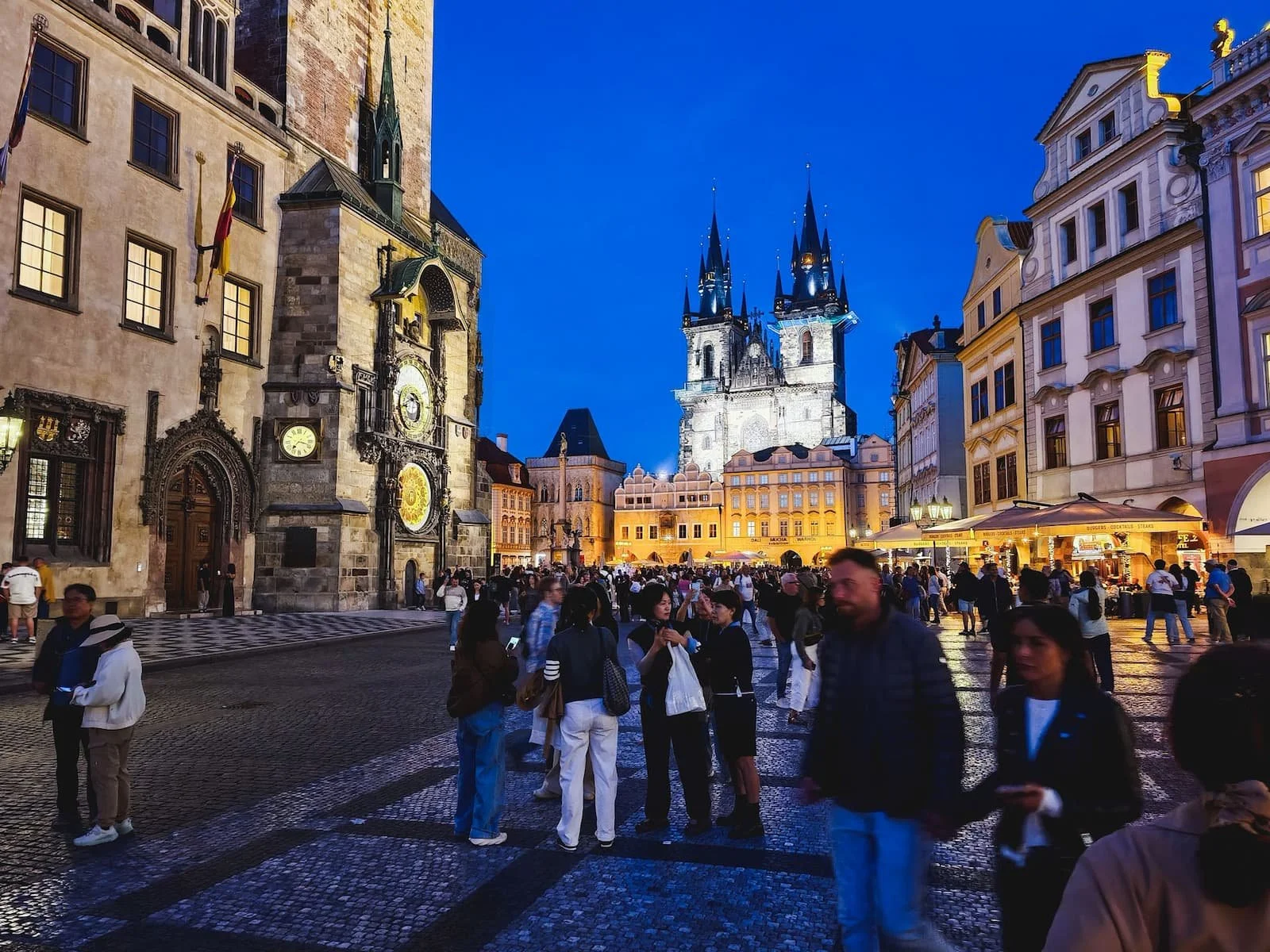
It’s quite a vibe during blue hour too.
Prague Castle
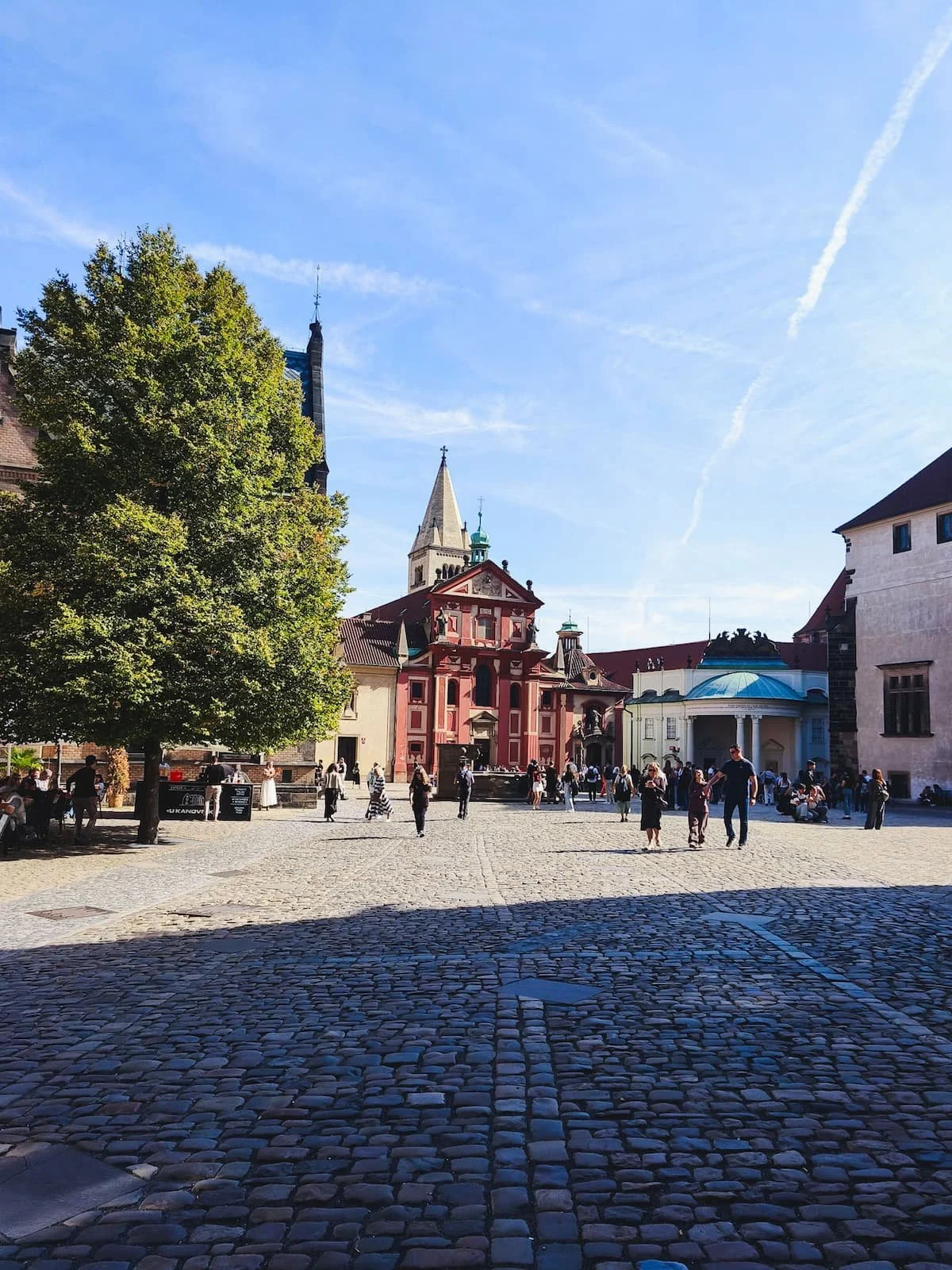
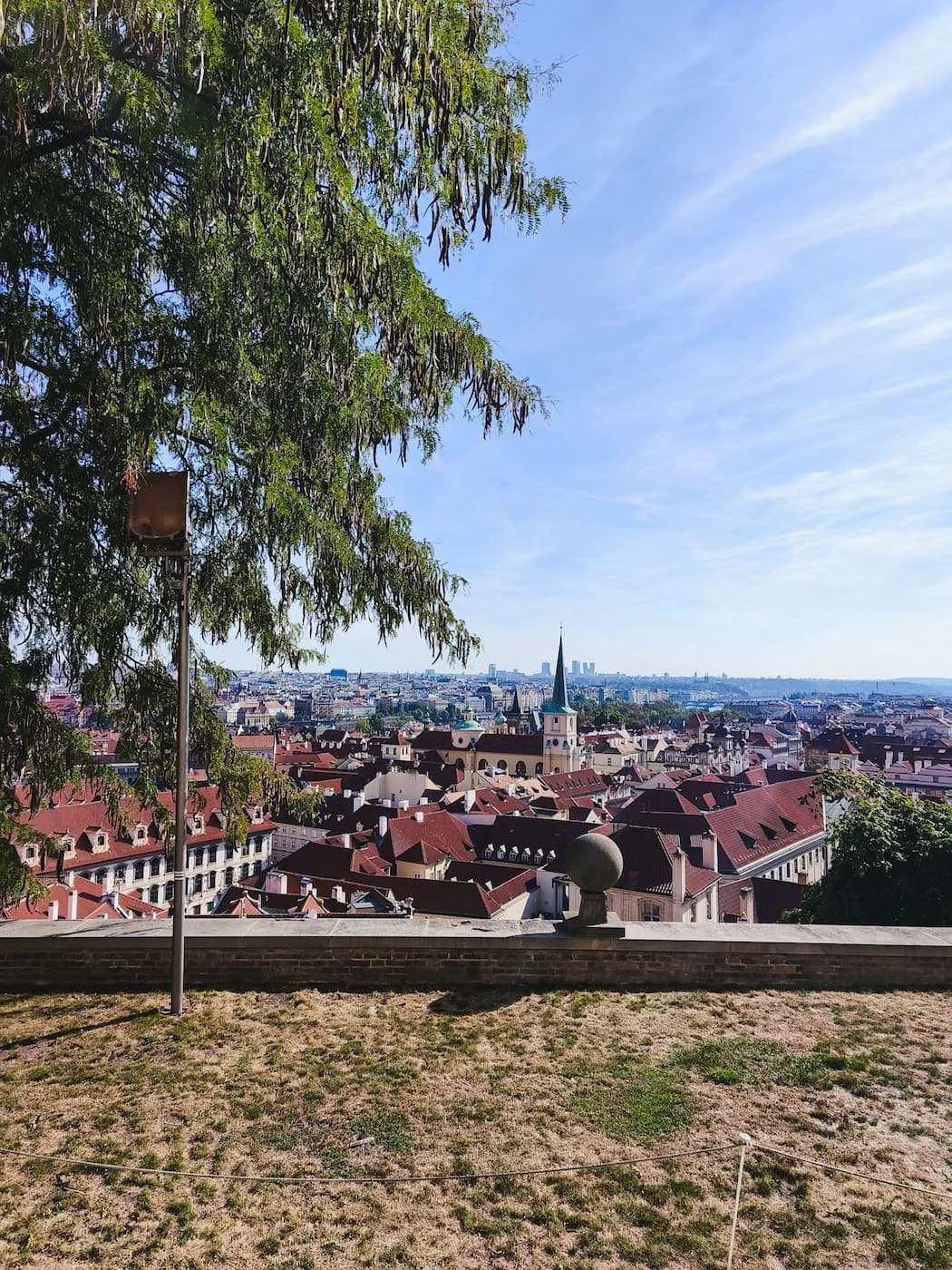
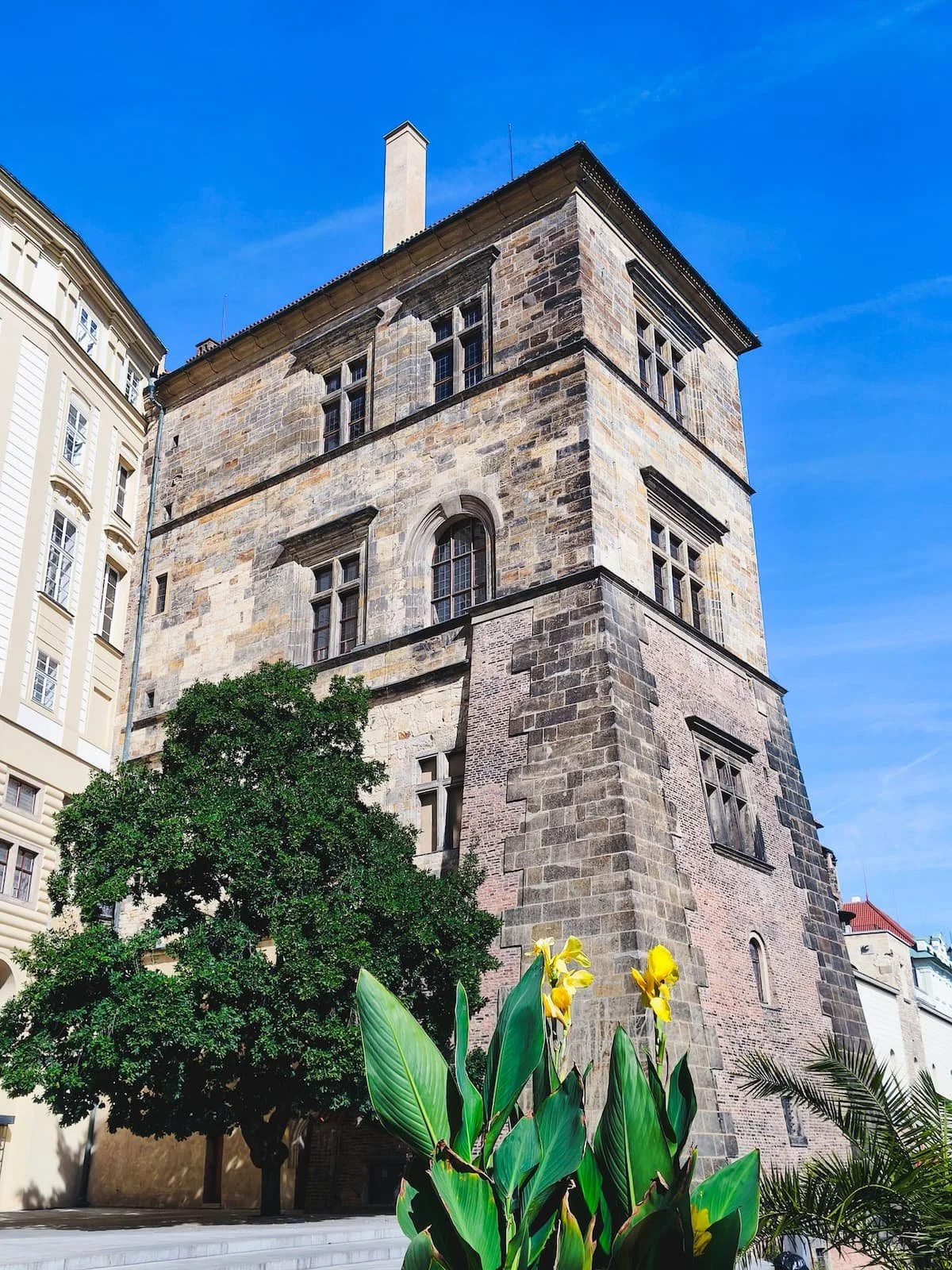
Overlooking the city, Prague Castle is one of the largest historic castle complexes in the world. Founded in the 9th century, it served as the seat of Bohemian kings and later Czech presidents. Rulers over the centuries added buildings in different architectural styles, so the complex is a mixture of Gothic, Romanesque, Renaissance, and later architecture.
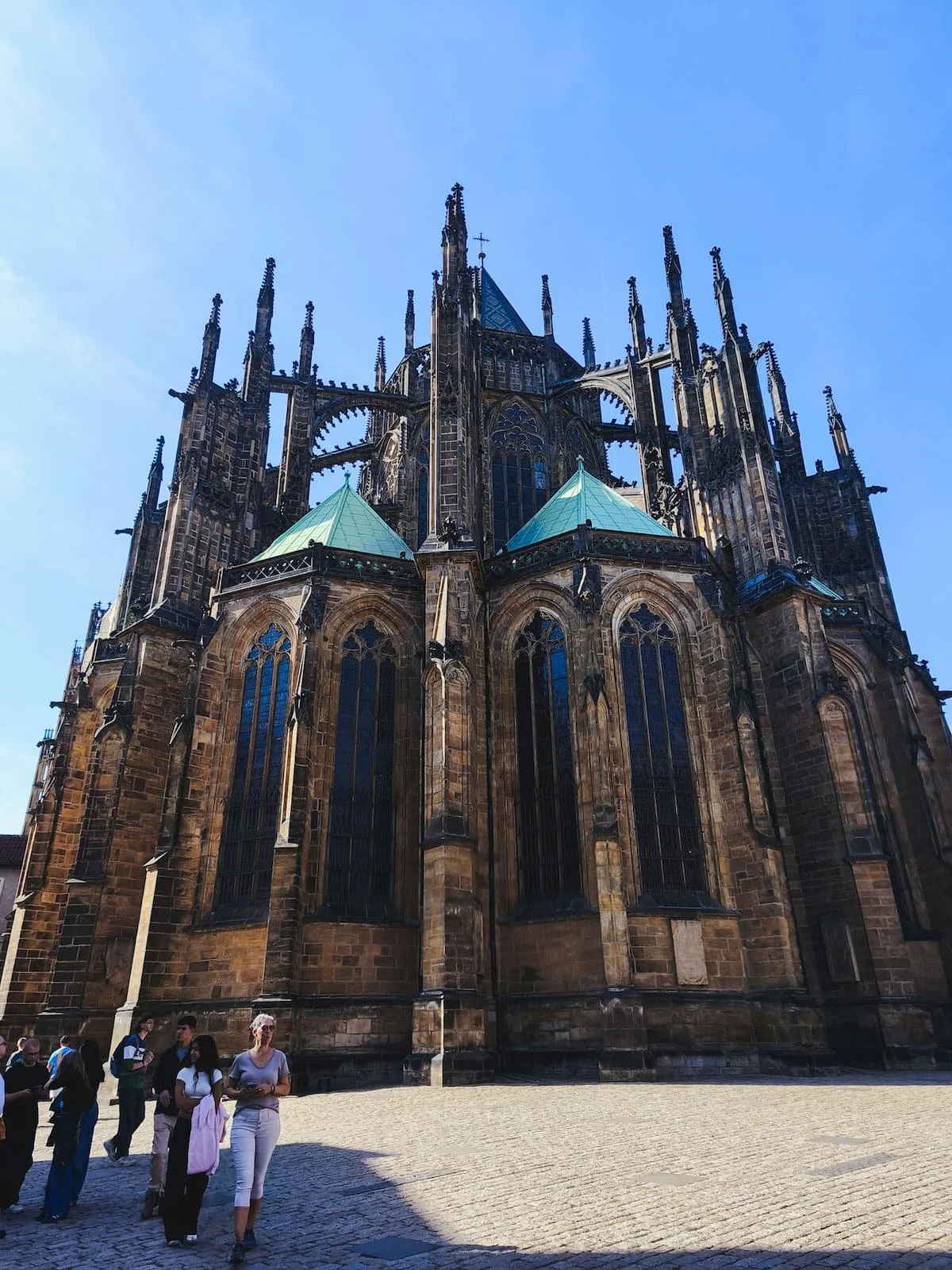
The main sights include the magnificent Gothic St. Vitus Cathedral (look up for some scary gargoyles), the Old Royal Palace with its enormous Vladislav Hall, the Romanesque St. George's Basilica, and Golden Lane, a little street lined with colorful houses once inhabited by castle guards and workers. There are also expansive gardens with beautiful views overlooking Prague.
One place outside of the main guidebooks that my inner high-school history nerd wanted to see was the window of the 1618 Defenestration of Prague, when two royal officials and their secretary were thrown out of the window (and somehow survived!), helping trigger the Thirty Years' War. You can see the window for free from outside the Old Royal Palace. It’s a bit hard to find, so here are my instructions: from Prague Castle's Third Courtyard, look for the Bull Staircase, a covered staircase with bronze bull sculptures at the top (it’s a small entrance). Going down the staircase takes you directly to the spot in the South Gardens where the window is.
How long to spend: Around 2 hours for the grounds, or 3–4 hours if visiting the interiors.
Tickets: Much of the castle complex is free to explore (we actually spent almost two hours here without entering any paid attractions). The main interiors and Golden Lane are covered by the Main Circuit ticket (450 CZK for adults), valid for two days. See the official ticket information.
Hours: The castle grounds are open daily from 6 AM–10 PM. The main historic interiors are open 9 AM–5 PM (April–October) and 9 AM–4 PM (November–March). Check the official opening hours and current closures before visiting.
Josefov / Jewish Quarter
Prague has one of the oldest Jewish communities in Central Europe, dating back more than a thousand years. Although much of its historic Jewish Quarter was redeveloped in the late 19th and early 20th centuries, several synagogues and the old cemetery have been preserved. Many of these sites now form the Jewish Museum in Prague.
I visited all the sites included in the combined ticket, and I think it was worth it since each felt distinct. Pinkas Synagogue was one of the more moving stops, since it serves as a Holocaust memorial with the names of Czech and Moravian Jewish victims inscribed across its interior walls. It was quite a visual impact seeing so many names packed onto the walls.
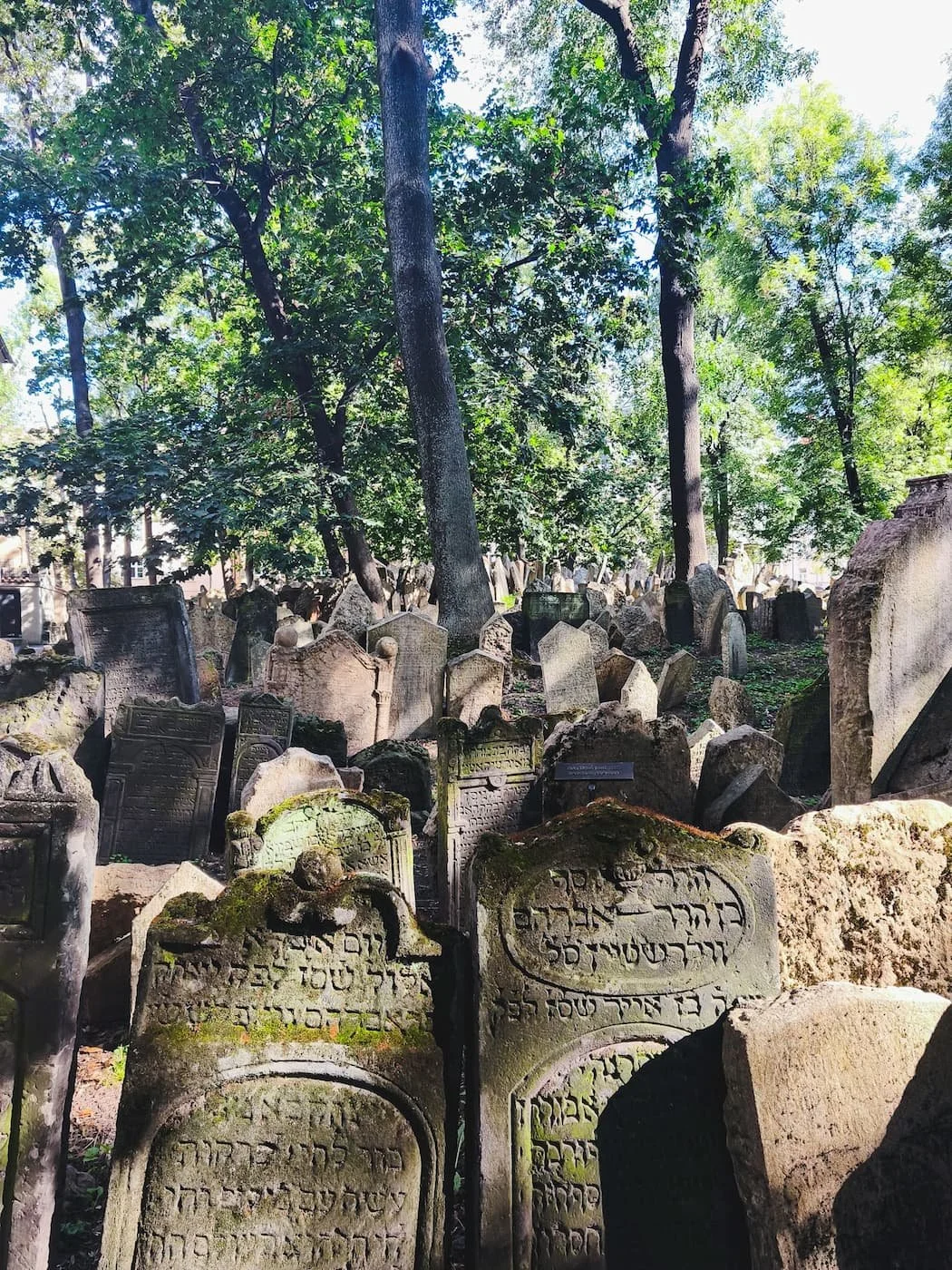
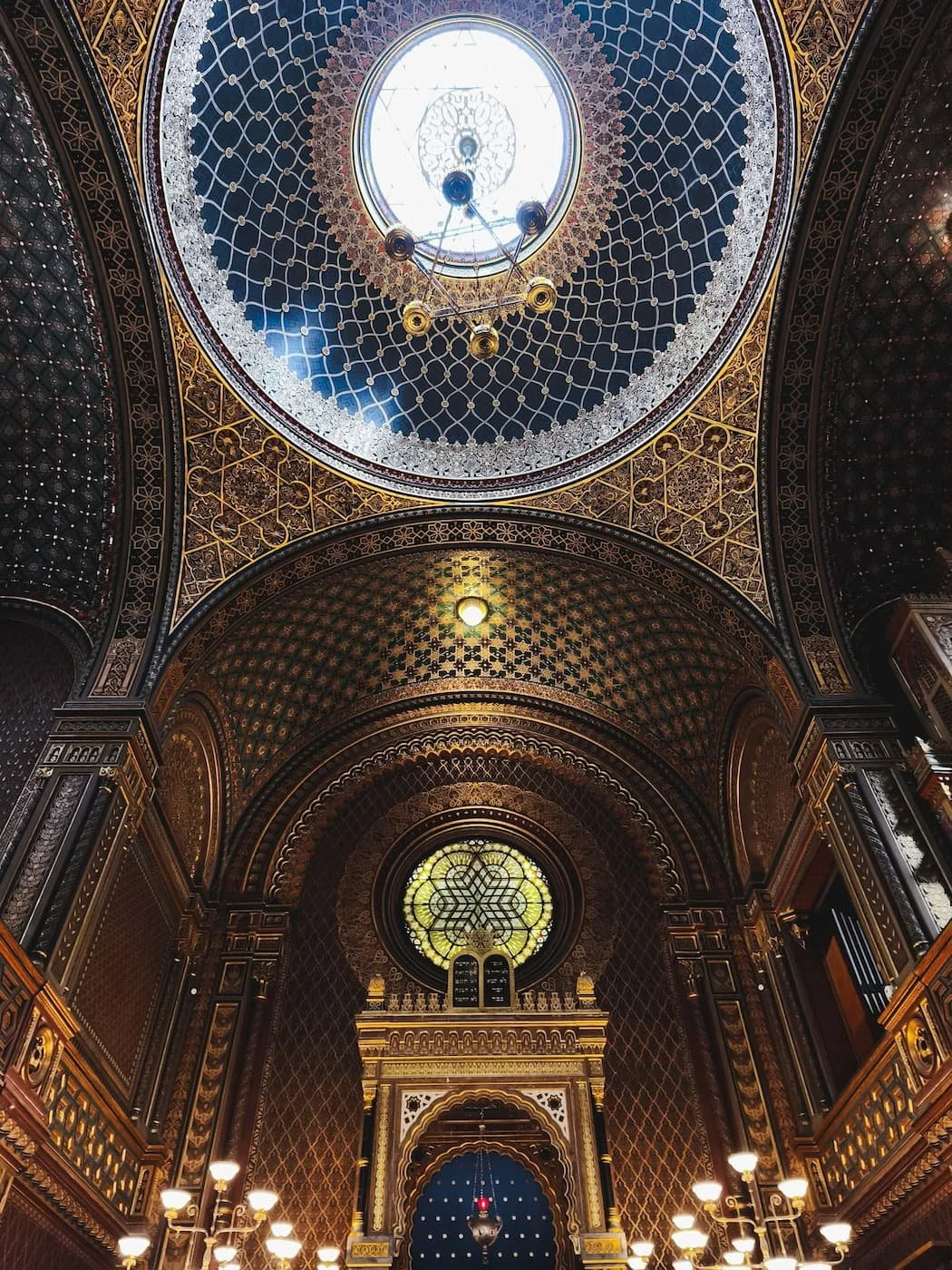
The Old Jewish Cemetery was one of the most distinct cemeteries I’ve been in — it was used for centuries within a limited space, so burials were layered over time, resulting in densely packed, uneven tombstones. The Spanish Synagogue has a beautiful Moorish Revival interior and interesting exhibitions on Jewish history, while the 13th-century Old-New Synagogue is one of Europe's oldest active synagogues. According to Prague's famous Golem legend, the Golem is supposedly still hiding in its attic :)
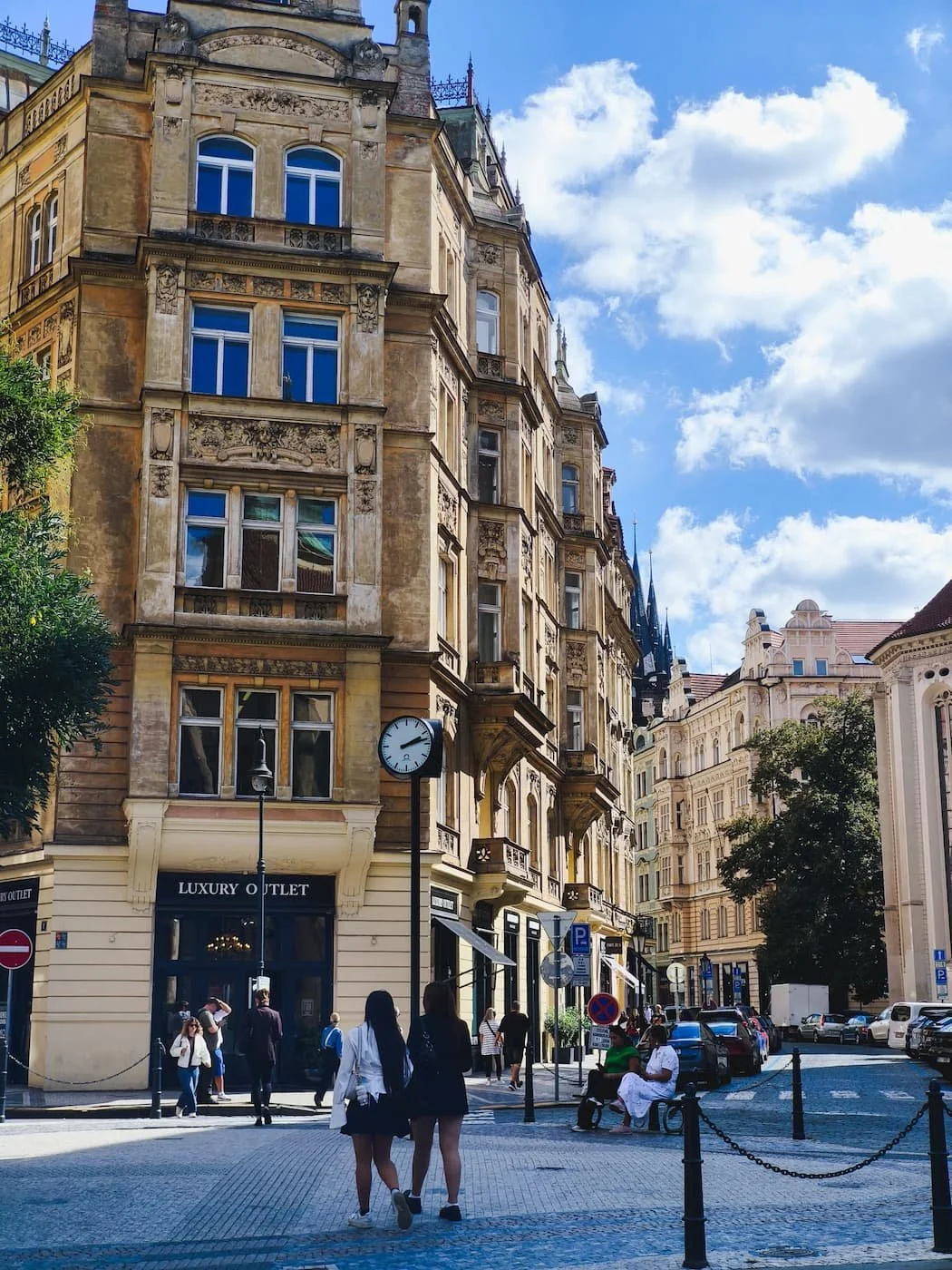
Besides visiting the historic sites, I'd also recommend taking some time to walk around Josefov's streets. A lot of it is dedicated to luxury shopping, but the grand architecture and elegant façades are beautiful.
How long to spend: Around 2–2.5 hours, or up to 3 hours if you read the exhibitions extensively.
Tickets: The combined ticket costs 600 CZK for adults and is valid for three opening days. I'd recommend purchasing it online ahead of time to avoid queuing. Each synagogue has a security bag check, so build in a little extra time.
Hours: The sites are closed on Saturdays and Jewish holidays, and hours vary seasonally. See the Jewish Museum opening hours.

Charles Bridge
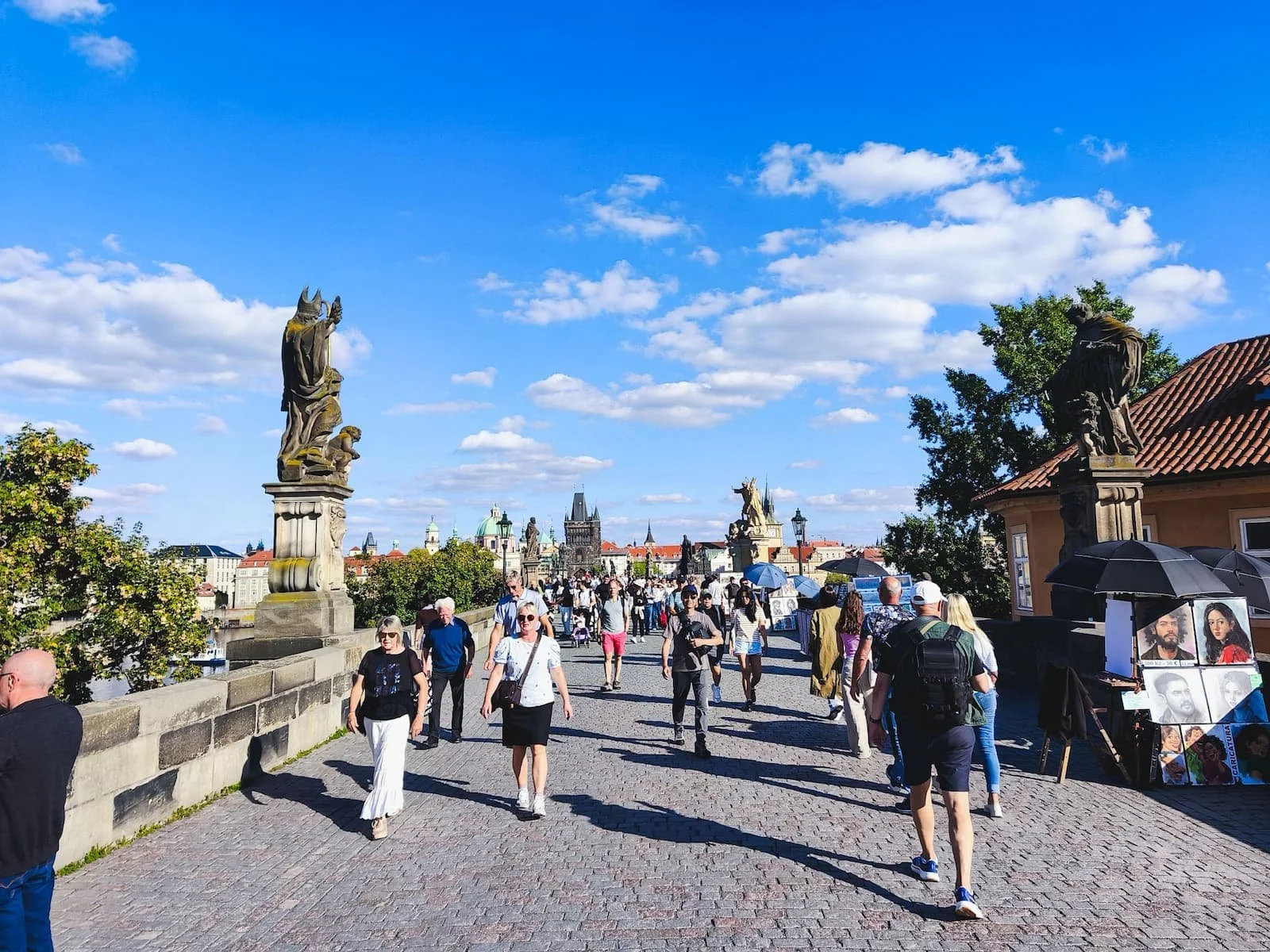
Charles Bridge is a stone bridge that connects Old Town with Malá Strana across the Vltava River, and it’s one of Prague's most iconic landmarks for good reason. It's been around since the 14th century and is lined with 30 statues and sculptures, making the bridge itself just as interesting to look at as the views around it.
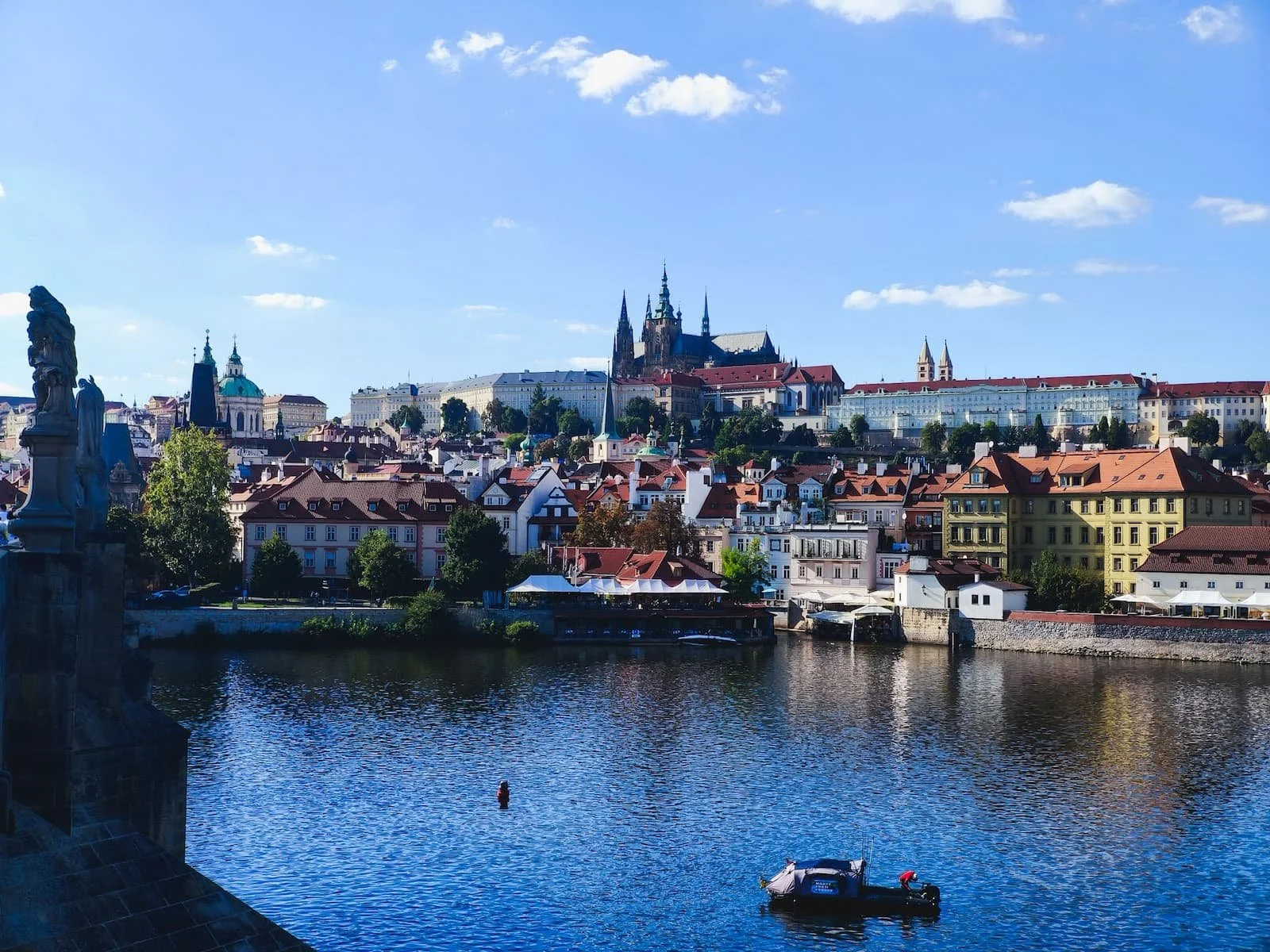
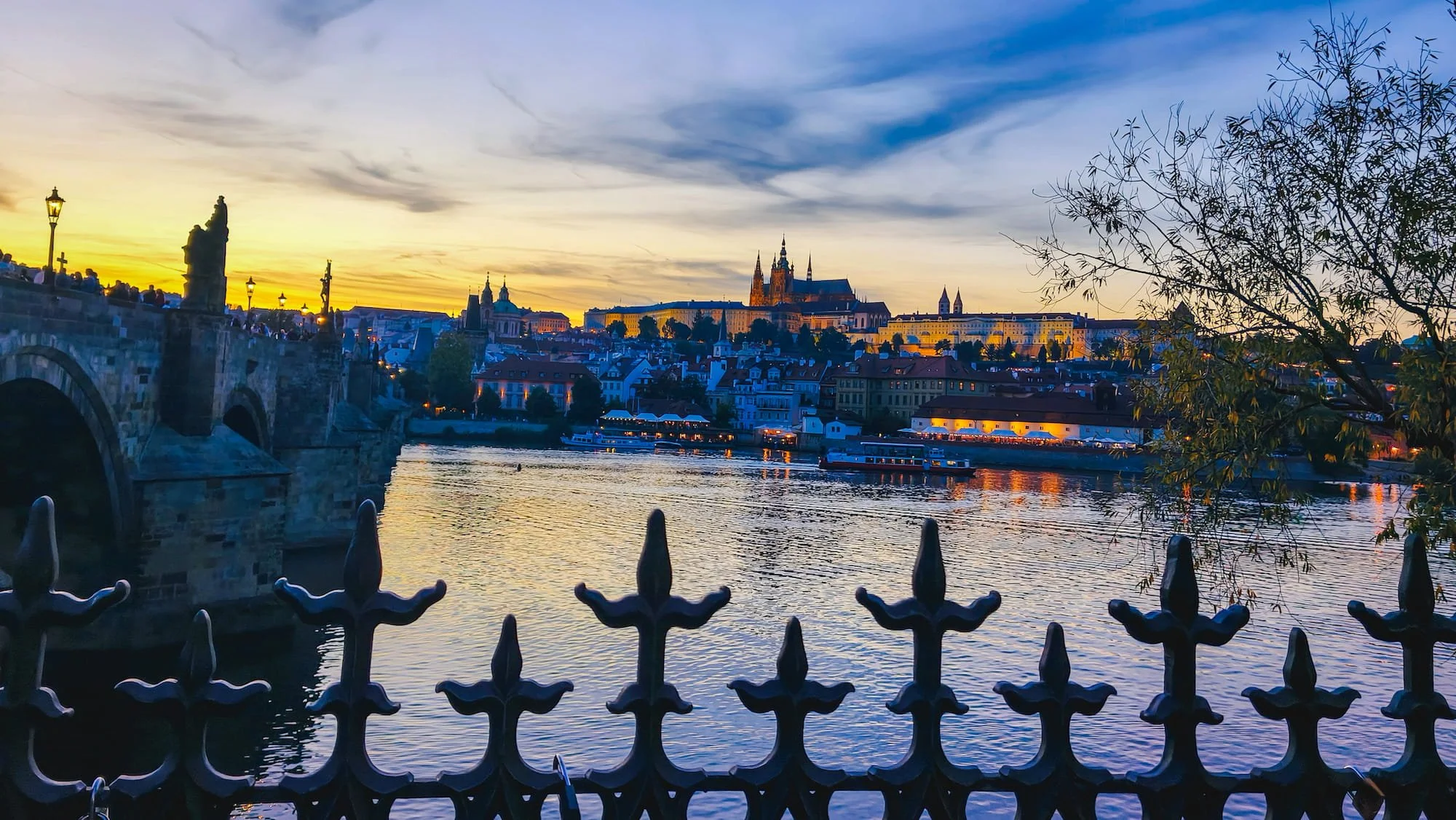
But for me, the view towards Malá Strana and Prague Castle for me is one of the most spectacular in all of Prague. On a sunny day, it is quite a magical experience being on a rustic stone bridge, atop the sparkling blue river with saturated red rooftops and the dramatic Prague Castle skyline as the backdrop.
The bridge is also one of the busiest attractions in Prague though, particularly during the middle of the day. The crowds didn’t detract from the views for me, but it did make it difficult to take a good picture. If you'd like to experience (or photo) the bridge with fewer people, I'd recommend going early in the morning.
Malá Strana
Malá Strana, or Lesser Town, is one of Prague's most beautiful historic neighborhoods, sitting just below Prague Castle on the other side of the river from Old Town. It was home to nobles and wealthy residents, which helps explain all the grand Baroque palaces and residences in the area.
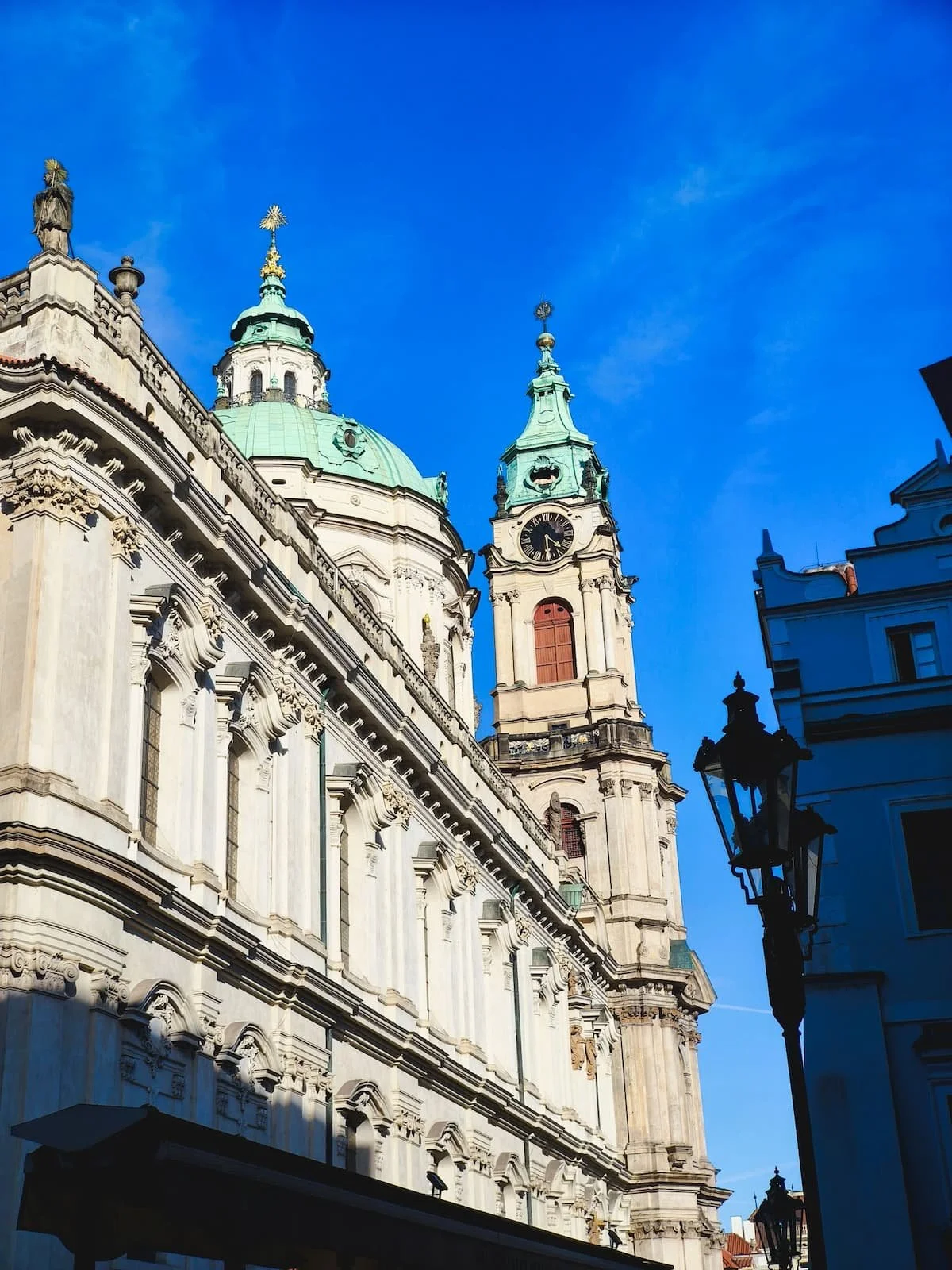
One of the best streets to wander is Nerudova Street, which descends from the castle area and is lined with Baroque façades and traditional house signs from before modern street numbering (like the Three Violins, Two Suns, and Golden Horseshoe — super picturesque!). There's also Malostranské náměstí, the neighborhood's main square, dominated by the magnificent Baroque St. Nicholas Church.
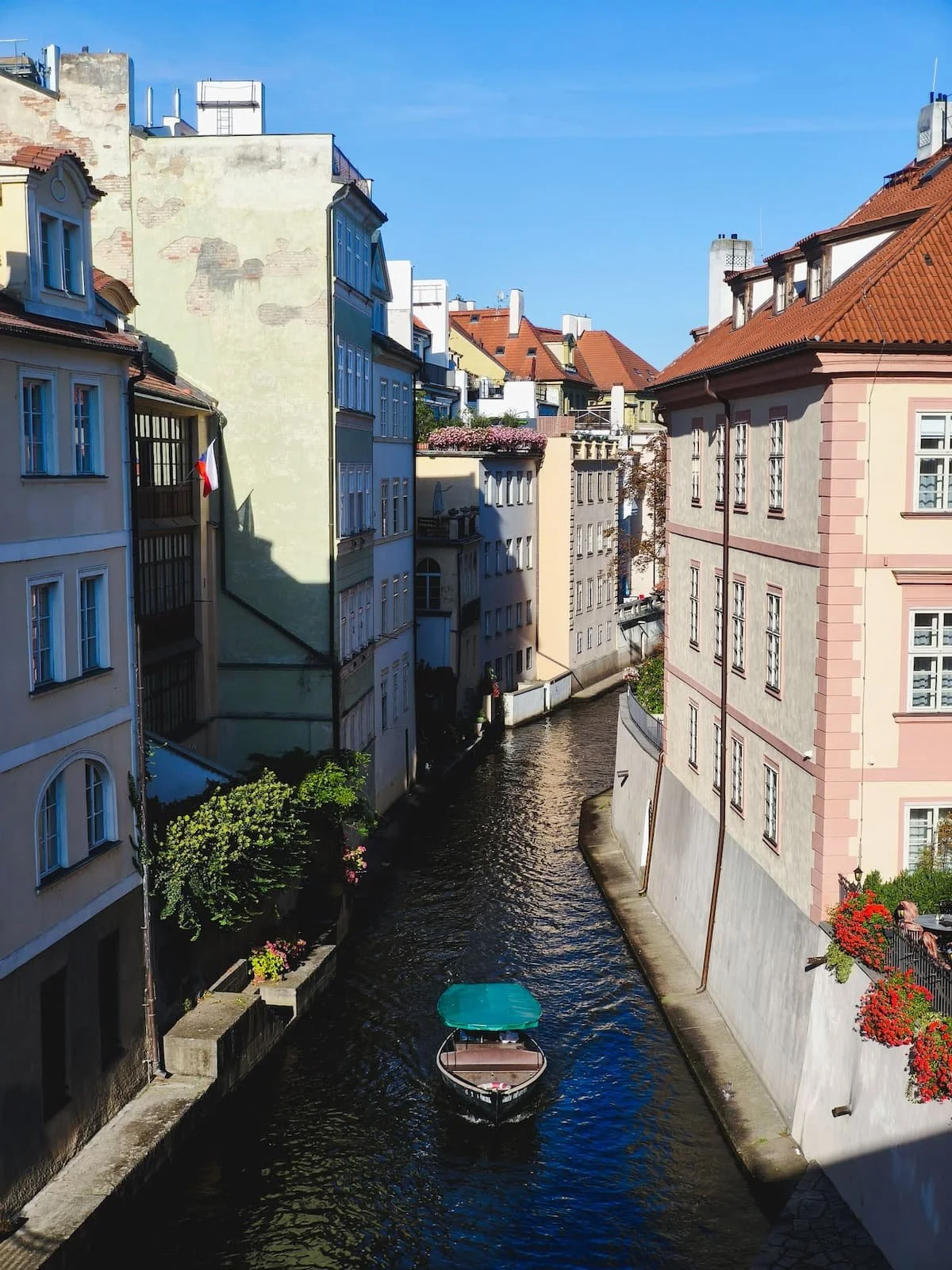
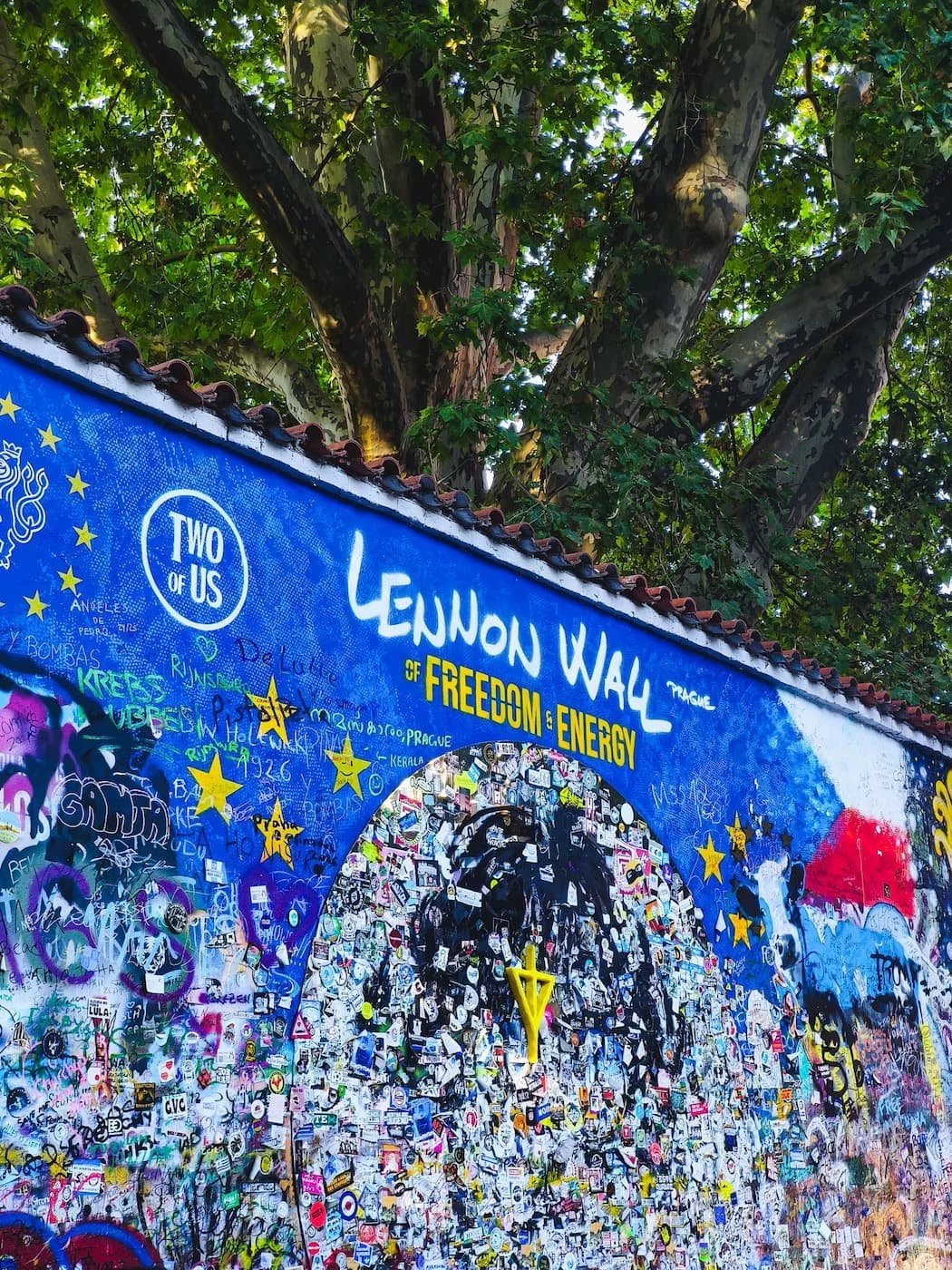
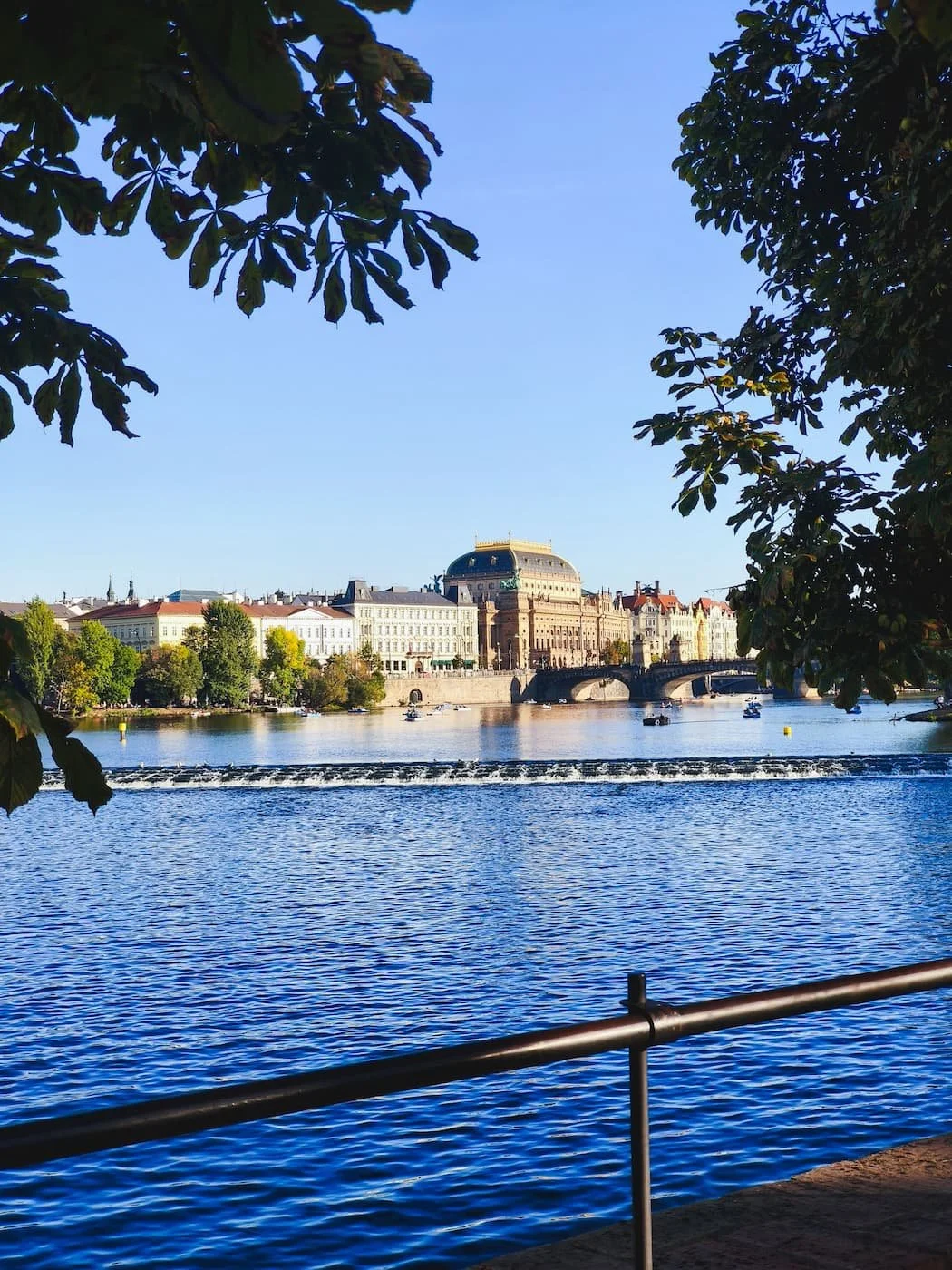
Closer to the river, the neighborhood shifts more modern.The Lennon Wall is a graffiti-covered wall associated with John Lennon, peace, and anti-communist expression. It's a quick stop and a good photo backdrop. And nearby is Kampa Island, separated from the rest of Malá Strana by the atmospheric Čertovka canal. I particularly like the island's parkland and riverside benches as a place to take a break after walking around all day.
Clementinum
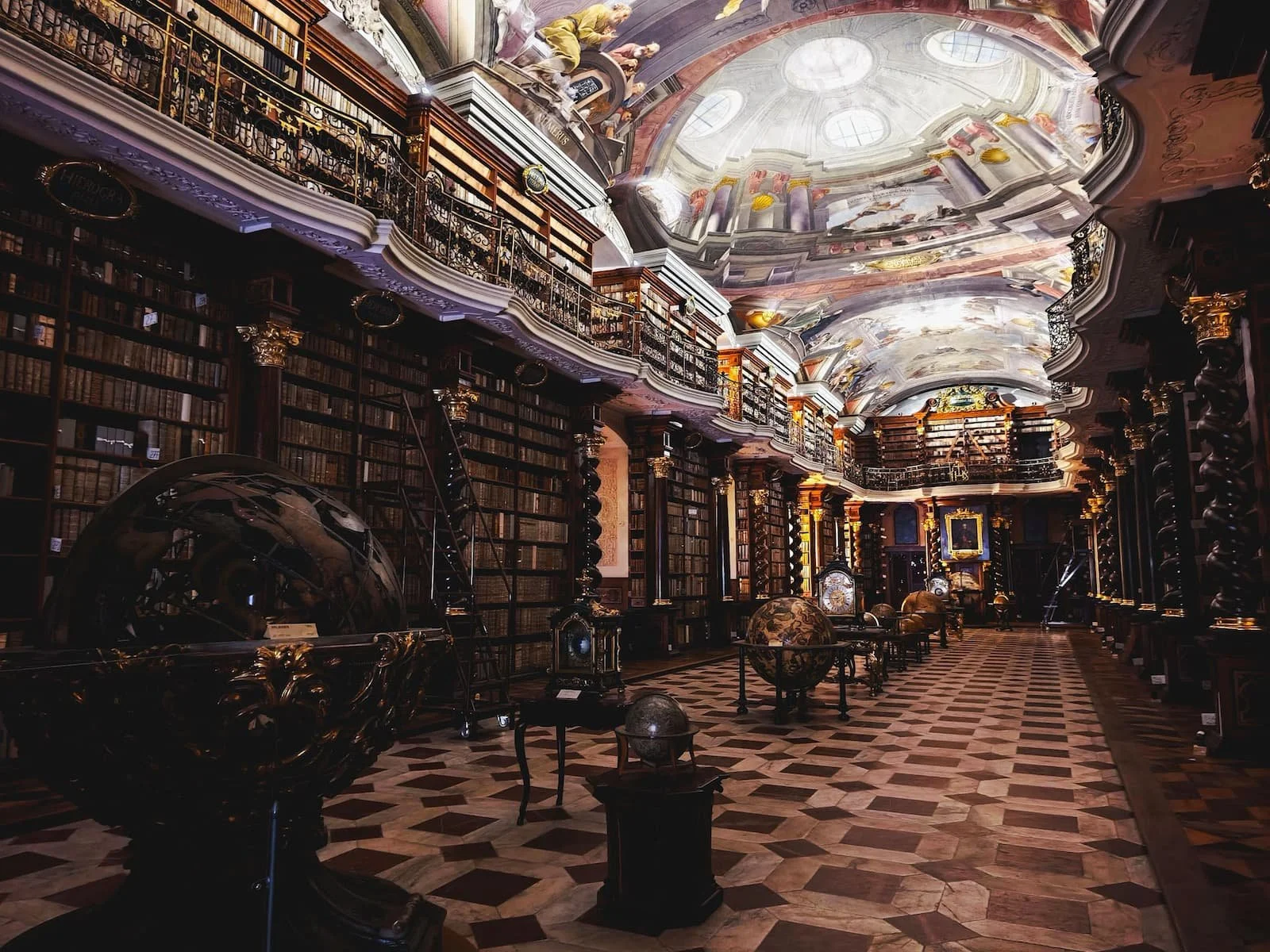
The Clementinum is a large complex established by the Jesuits in the 16th century as a college and center of education, research, and astronomy. Today, it's particularly famous for its stunning 18th-century Baroque Library Hall, often called one of the most beautiful libraries in the world.
You can only visit the interiors on a guided tour, which includes a look into the library (you can't actually walk around inside it), some history of the complex, and access to the Astronomical Tower, formerly used for scientific and meteorological observations.
Our tour group took turns standing at the viewing area by the library's entrance, so everyone had a chance to admire it and take photos without anyone blocking the view. You could smell the old books as soon as you stepped inside, so it was as much an olfactory experience as a visual one.
I thought the guided tour was pretty interesting too, including a story about a giant iron door that supposedly led to a room where students were punished for bad behavior.
The tour ends with a climb up the original wooden staircase to the Astronomical Tower, where you're rewarded with magnificent 360-degree views over Prague. This was the only panoramic viewpoint we went up in the city, and honestly, I didn't feel the need to visit another one.
How long to spend: Around 45 minutes for the guided tour.
Tickets: Guided tours only, costing 380 CZK for adults. Tour capacity is limited, so I'd recommend booking ahead. The tower climb involves 172 steps with no elevator.
Hours: Open daily, 9 AM–8 PM (January–October) and 8 AM–9 PM (November–December). Check the official website for current tour times.
More Things to Do in Prague: Architecture + History
Municipal House + Powder Tower
These two neighboring buildings near the eastern edge of Old Town are a nice example of Prague's different architectural periods sitting side by side.
Powder Tower is a late-Gothic city gate dating to the 15th century. It originally marked one of the entrances into Old Town and later served as a storage place for gunpowder, which is where it gets its name. Immediately beside it is Municipal House, an elaborately decorated early-20th-century Art Nouveau building, with beautiful mosaics, sculptures, and ornamental details on its façade.
We only admired both buildings from the outside, but you can also climb Powder Tower for views over Old Town or take a guided tour of Municipal House's interiors, including its concert hall and decorated rooms. See Powder Tower and Municipal House official sites for current schedules and admission information.
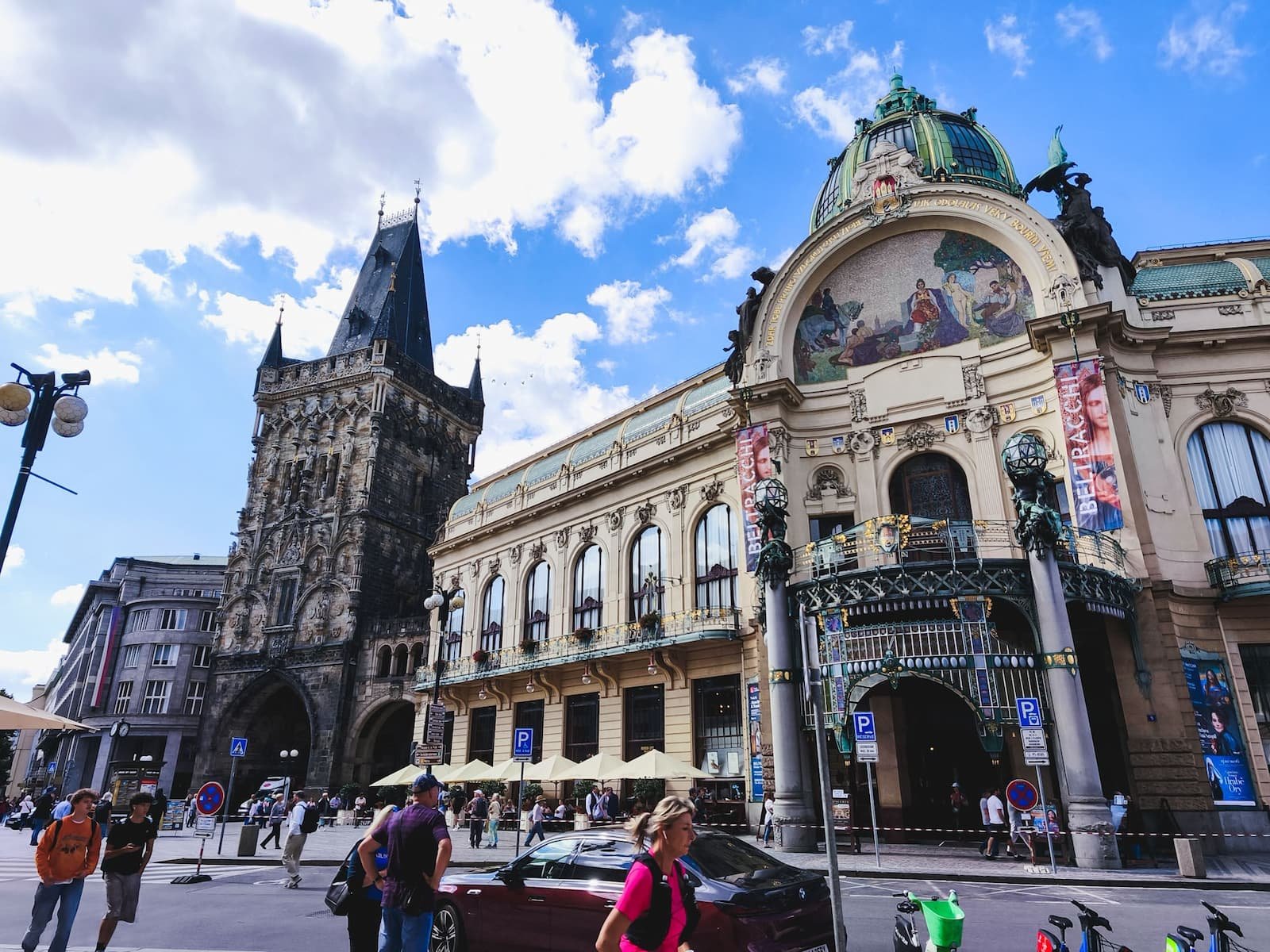
Powder Tower on the left, beside the ornate Municipal House.
House of the Black Madonna + Czech Cubism
One of Prague's more unusual architectural contributions is Czech Cubism, which brought the geometric, fragmented shapes of Cubist art into architecture and furniture design.
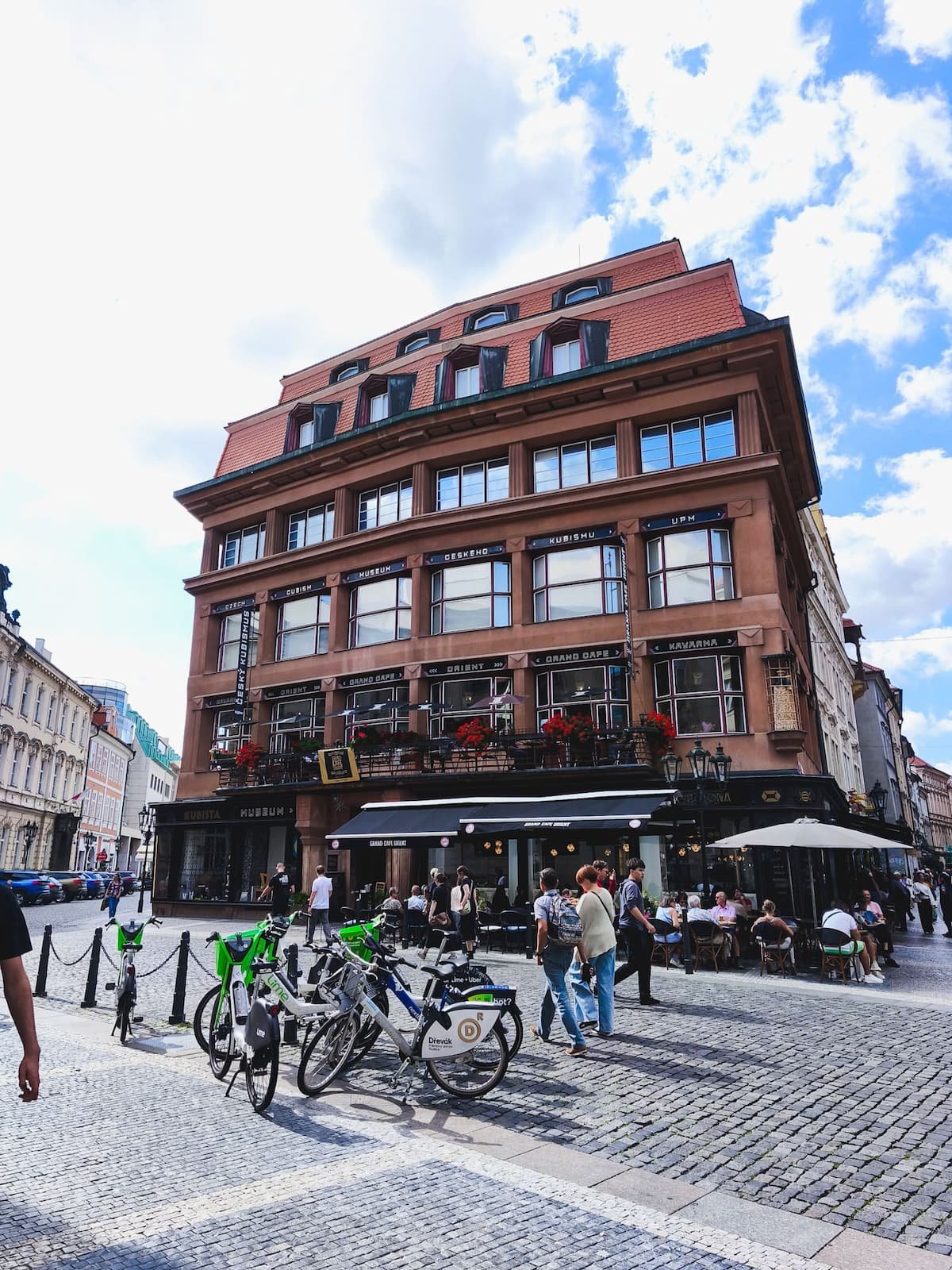
The House of the Black Madonna is one of its best-known examples. Designed by architect Josef Gočár and completed in 1912, the building has angular façades and geometric details that stand out among the medieval and Baroque architecture of Old Town.
Today, it houses an exhibition on Czech Cubism and Grand Café Orient, a café with a Cubist interior. Even if you don't plan to visit the museum, it's an interesting building to look out for while exploring Old Town. See the official museum information for current admission prices and hours if you plan to visit.
Wenceslas Square + National Museum
Despite its name, Wenceslas Square is more of a long, broad boulevard. It's one of the central points of Prague's New Town and a bustling area full of shops and restaurants.
Originally laid out in the 14th century, the square has also been an important site for political gatherings throughout Czech history. Most notably, it played a major role during the Velvet Revolution of 1989, when large demonstrations helped bring an end to communist rule in Czechoslovakia.
At the upper end is the monumental National Museum, housed in a grand Neo-Renaissance building overlooking the boulevard. We didn't visit the interior, but the building is known for its impressive architecture and houses collections covering Czech history, natural history, and more. If you want to enter the National Museum, check the official website for info.
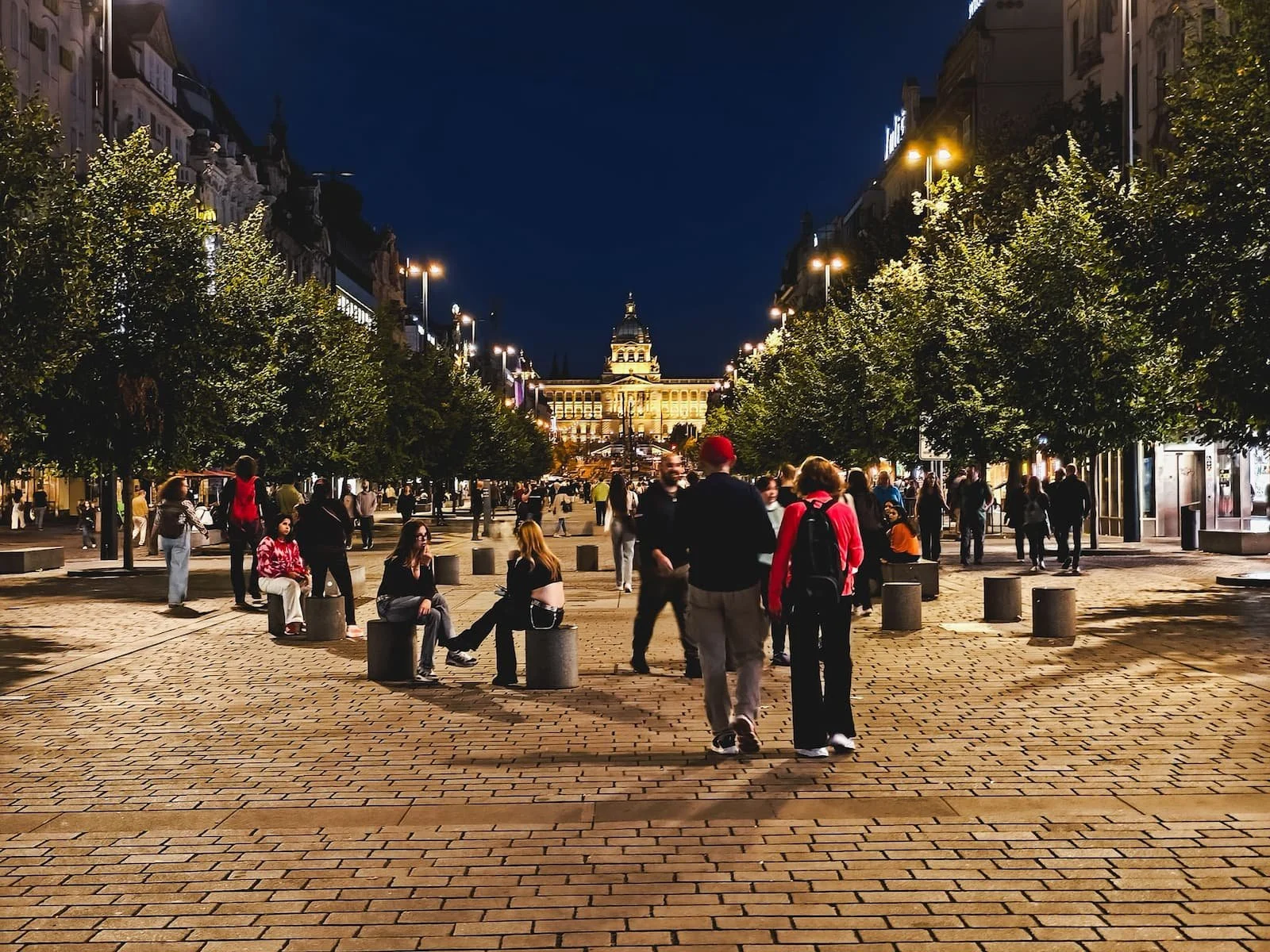
Wenceslas Square with National Museum at the end. Generally I liked the atmosphere here at night more so than in daylight.
Lucerna Passage + Franz Kafka Rotating Head
Prague has quite a few historic shopping passages, many of which are somewhat hidden within buildings and easy to stumble upon while walking around. Many were built in the late 19th and early 20th centuries as shortcuts between streets.
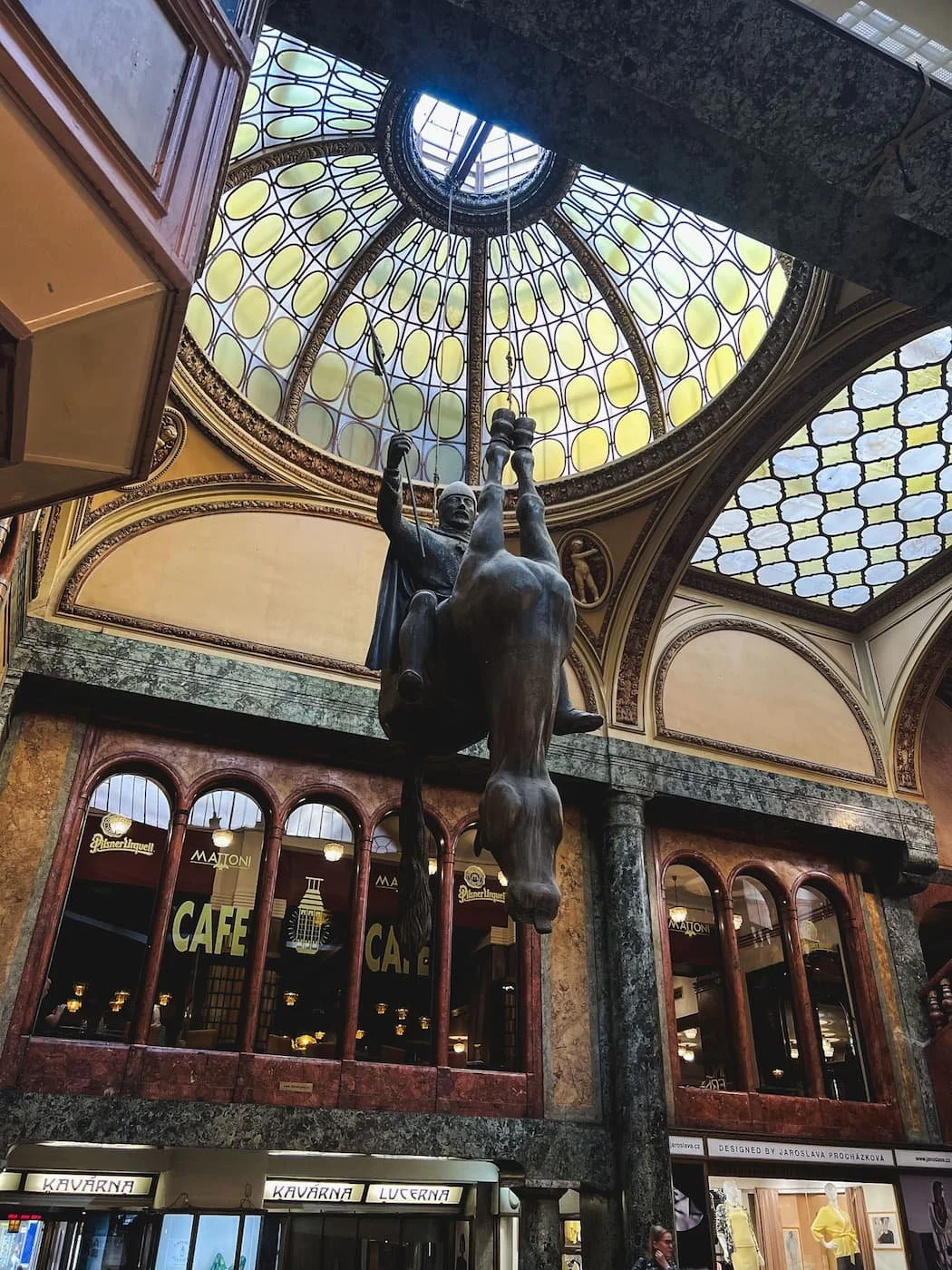
Lucerna Passage is one of the better-known examples. Built in the early 20th century, it has a beautiful old-fashioned interior with decorative details, high ceilings, and a large glass-covered hall that makes you feel like you've stepped into another era. It also has an unusual sculpture by Czech artist David Černý showing St. Wenceslas riding an upside-down dead horse. It's a satirical take on the traditional equestrian statue of St. Wenceslas outside the National Museum.
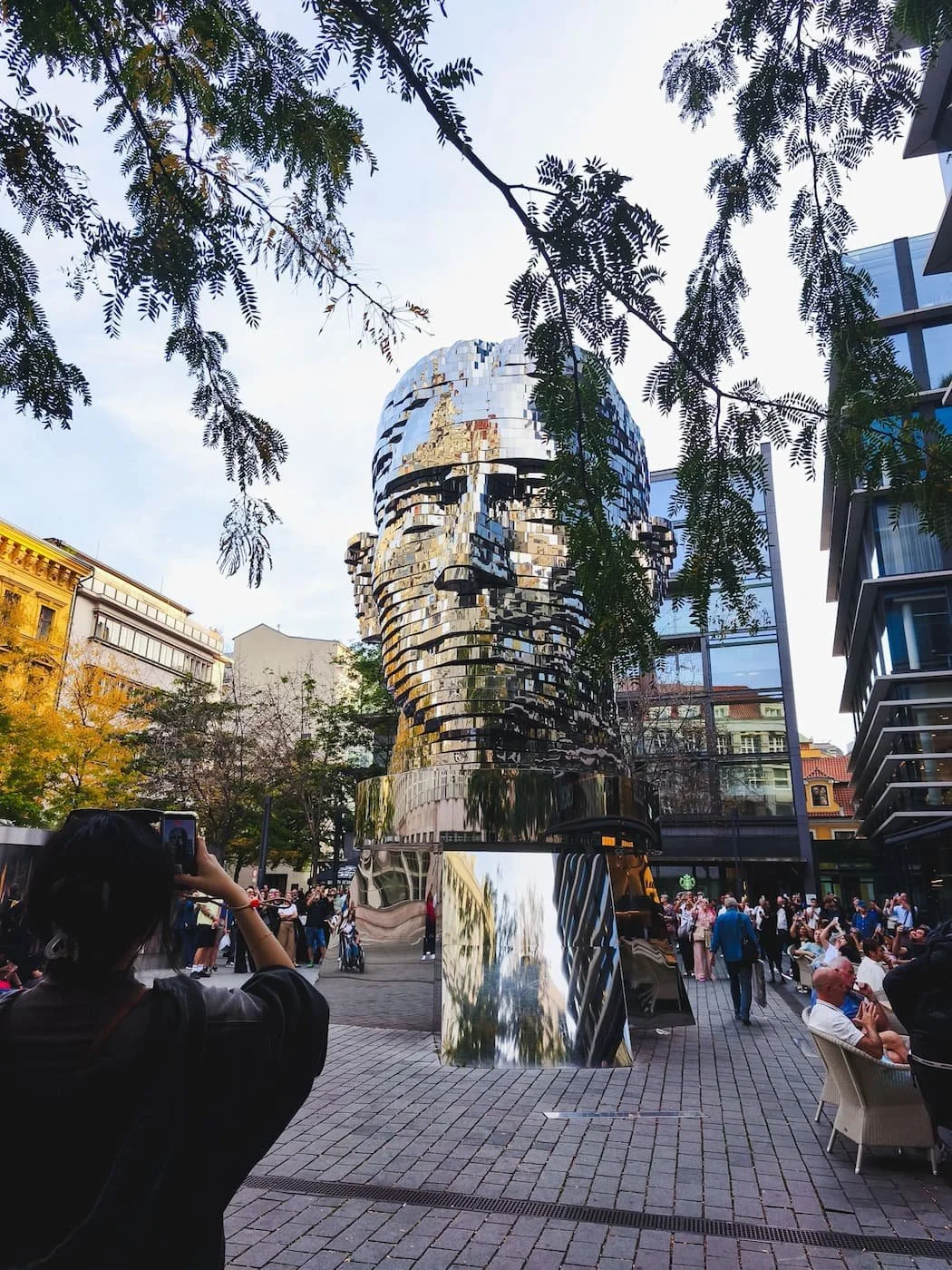
A short walk away is another work by Černý, the Franz Kafka Rotating Head, a large mirrored sculpture made of independently rotating metal layers that periodically shift to rearrange Kafka's face. It normally rotates during the first 15 minutes of every hour, from 9 AM–11 PM. See the official sculpture information.
Dancing House
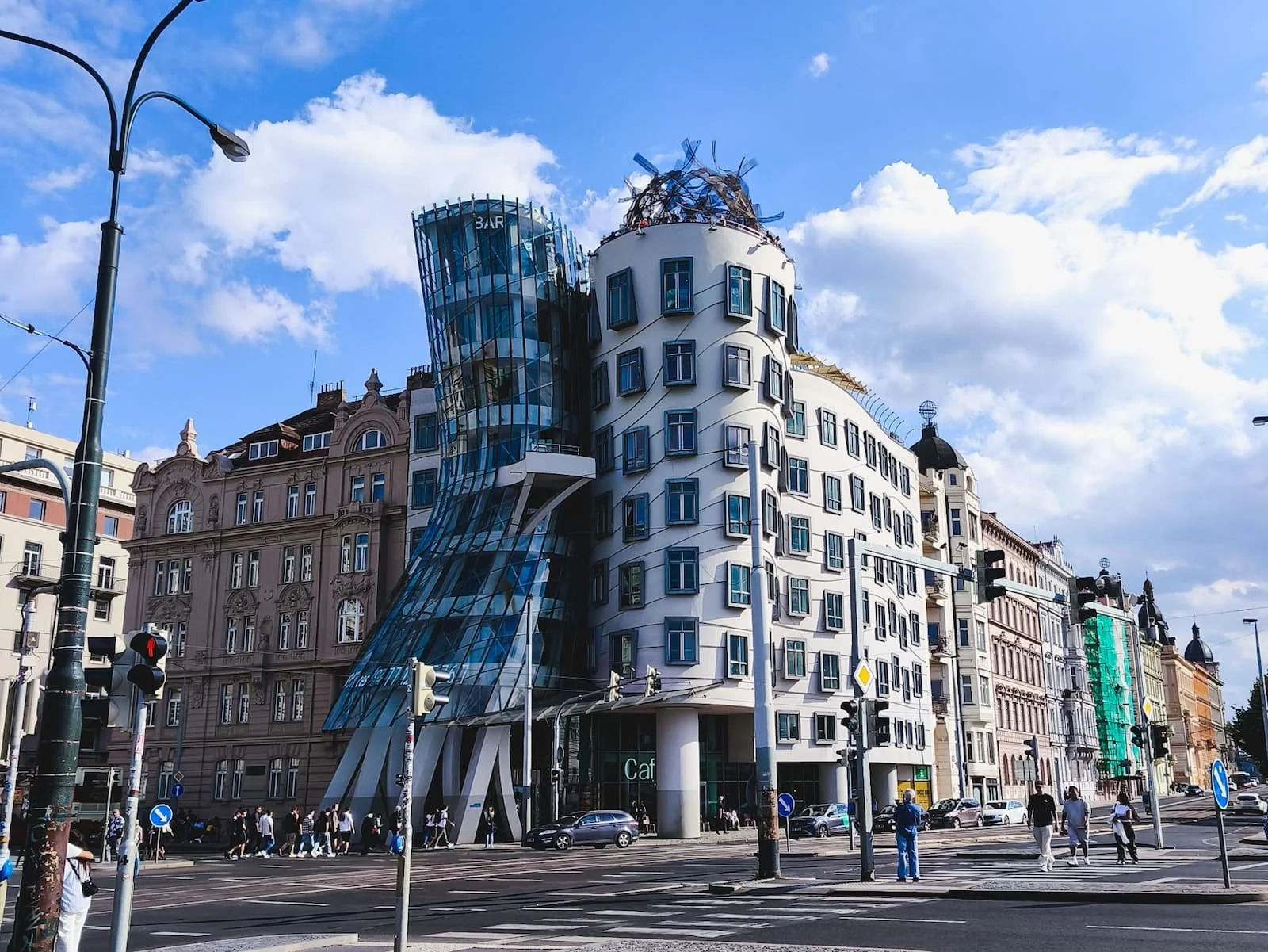
The Dancing House is one of Prague's most recognizable examples of modern architecture, designed by Vlado Milunić and Frank Gehry and completed in the 1990s, after the fall of communism. Its unusual curving shape is often nicknamed Fred and Ginger, after the famous dancing duo Fred Astaire and Ginger Rogers.
It's quite a memorable building, especially in contrast to Prague's historic architecture. I think it's worth seeing if you're interested in architecture or already walking along this section of the river, but I wouldn't go too far out of my way for it.
More Things to Do in Prague: Viewpoints + Neighborhoods
Letná Park + Prague Metronome
Letná Park is a large park on a plateau overlooking the Vltava River. Because it overlooks the river from a more perpendicular angle, it offers some of Prague's best views of its bridges. You can see several of them lined up across the river and the historic center in the background.
The park also has an interesting piece of modern Czech history. Where the Prague Metronome now stands, there was once an enormous monument to Joseph Stalin, built during the communist period and demolished in 1962. The metronome was installed in 1991 after the Velvet Revolution, symbolizing the passage of time.
There's also the Letná Beer Garden, a popular seasonal outdoor spot where you can have a Czech beer while enjoying views over the city. It wasn't open when we visited, but I thought the views around the beer garden were actually the best in the park.
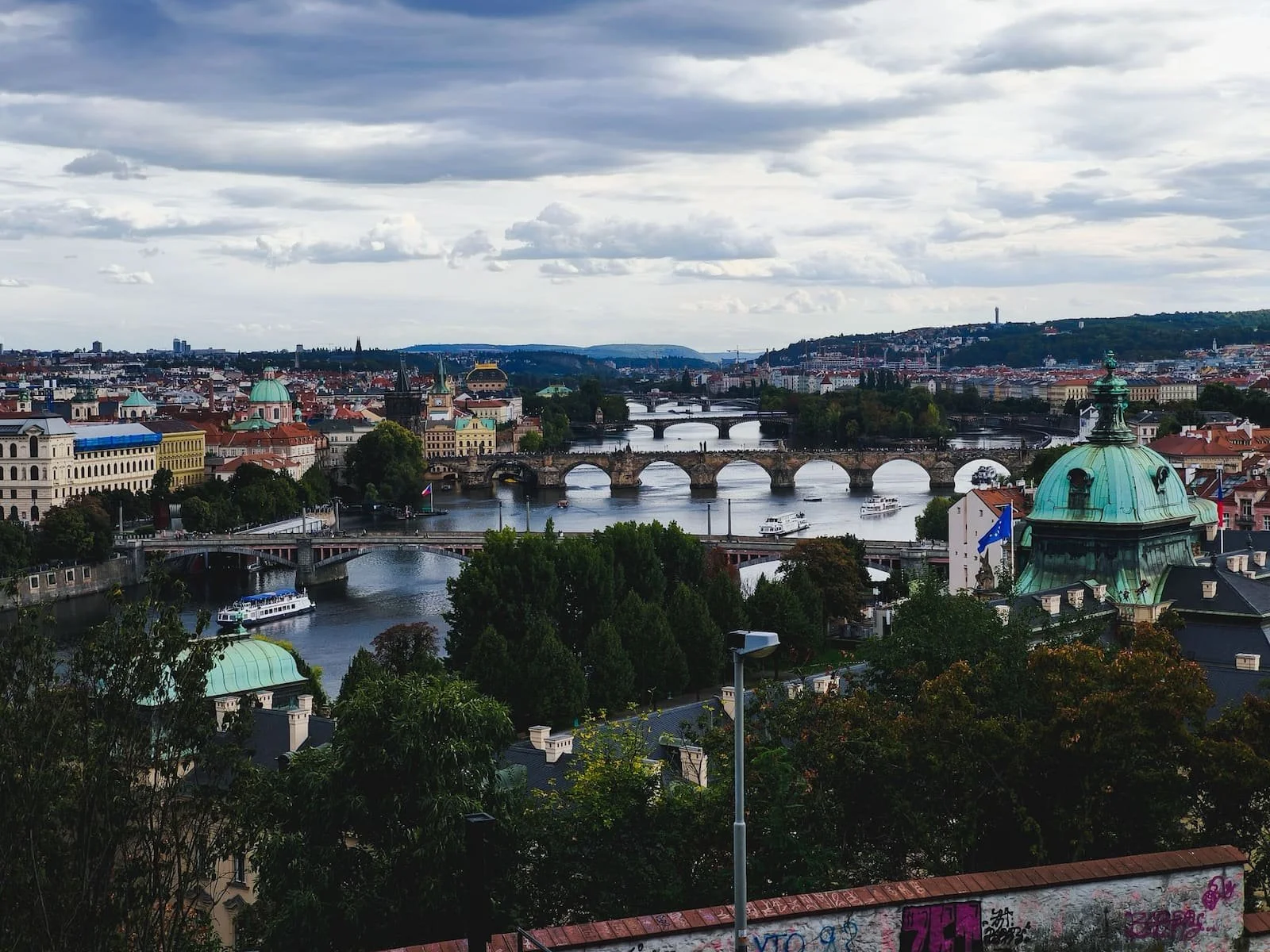
View from the hill near Letná Beer Garden.
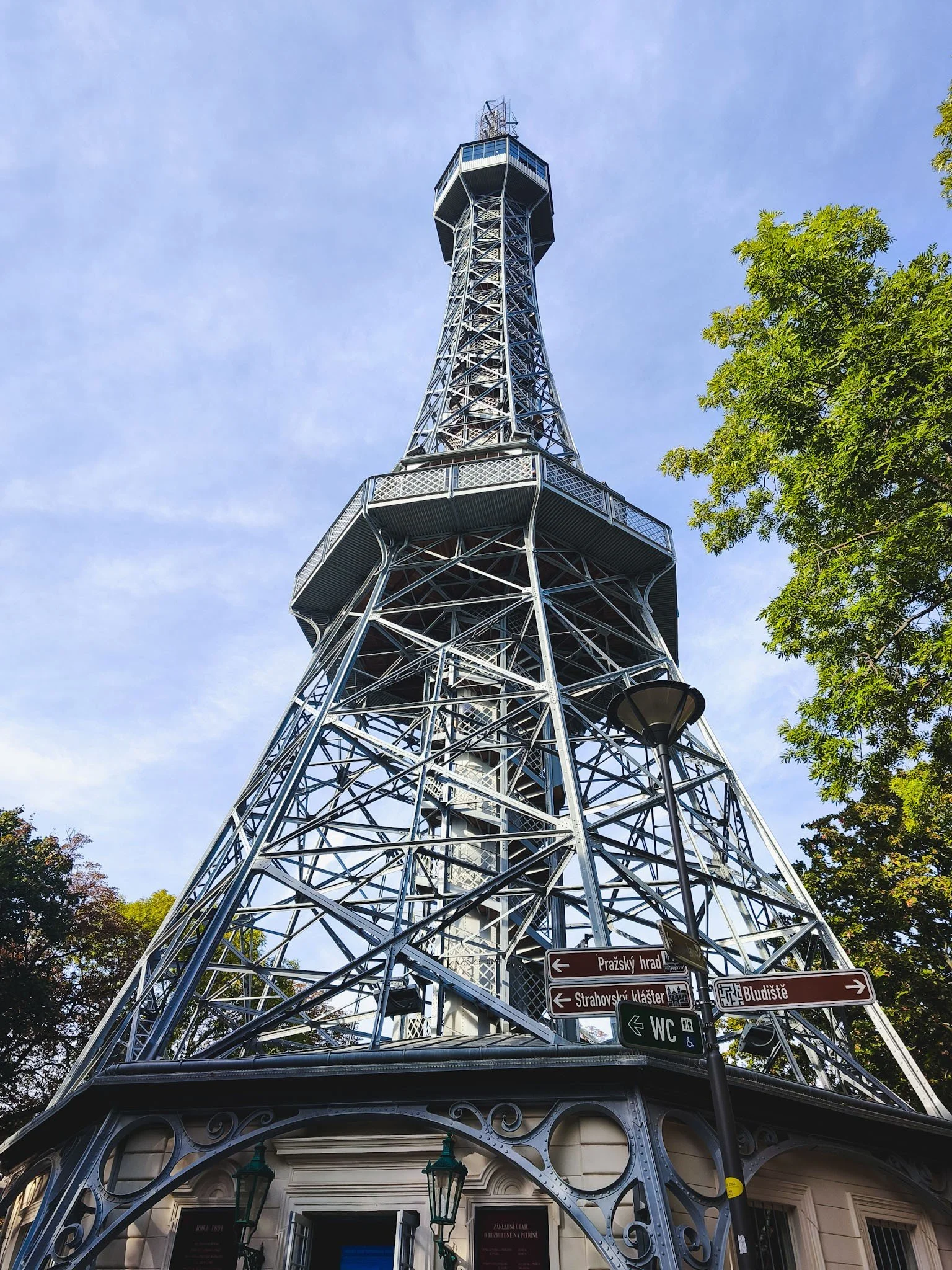
Petřín Hill
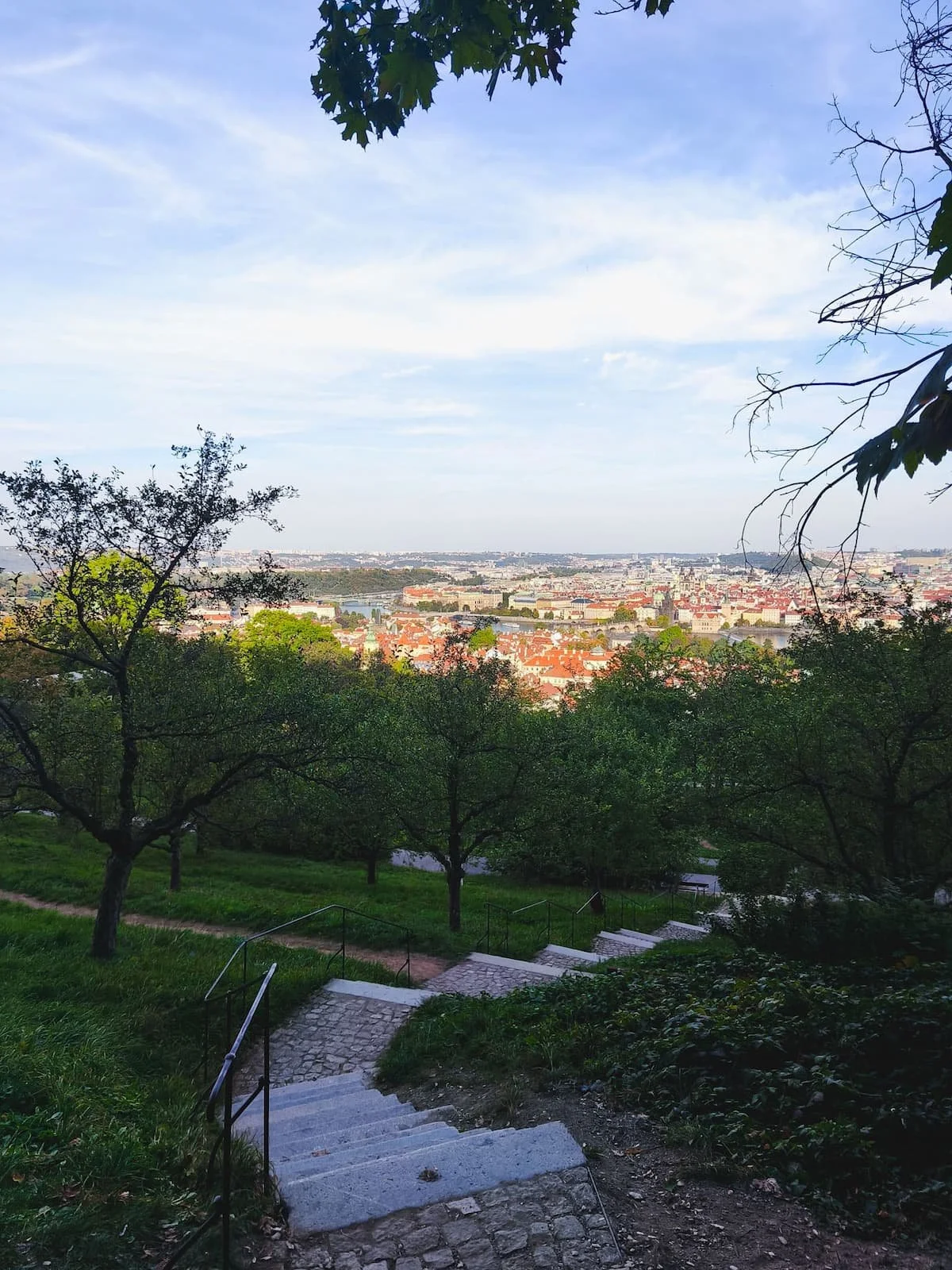
Petřín Hill is a large green hillside above Prague with gardens, walking paths, and amazing views over the historic center. Parts of it are quite forest-like, and it's a nice change of pace after visiting Prague Castle.
One of its best-known landmarks is the Petřín Lookout Tower, built in 1891 and inspired by the Eiffel Tower. You can pay to climb it for panoramic views, though there are already great views from the surrounding hillside.
It's quite a climb from Malá Strana, so I'd recommend coming here after visiting Prague Castle and Strahov Monastery, when you're already at a higher elevation (you'll still have to climb a bit, just a lot less).
How long to spend: Around 1–1.5 hours, longer if climbing the lookout tower.
Practical info: The hillside is free to explore, while the lookout tower requires a ticket. You can also take the funicular from Újezd in Malá Strana. See the official Petřín Tower information for admission and hours.
Vyšehrad
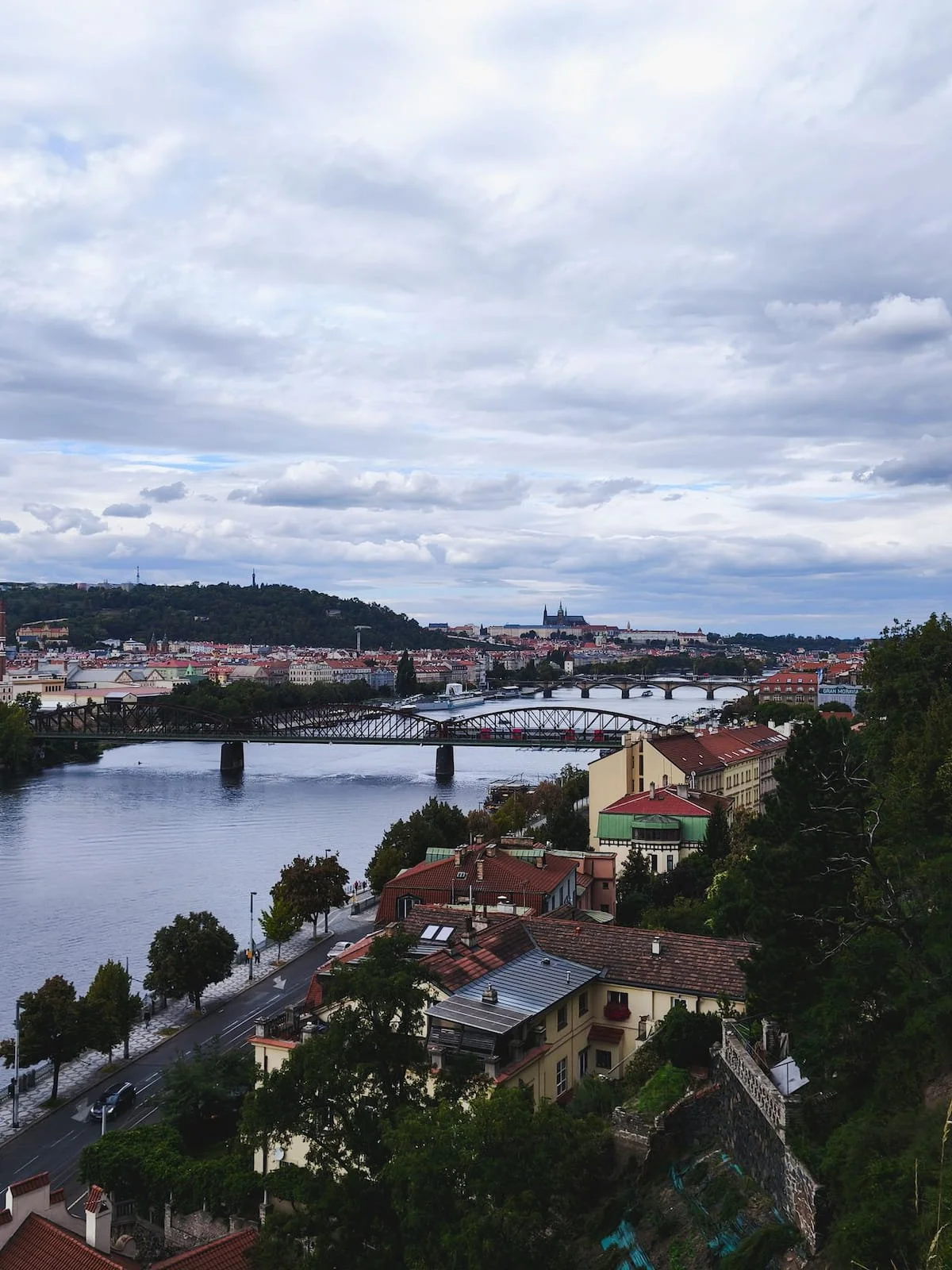
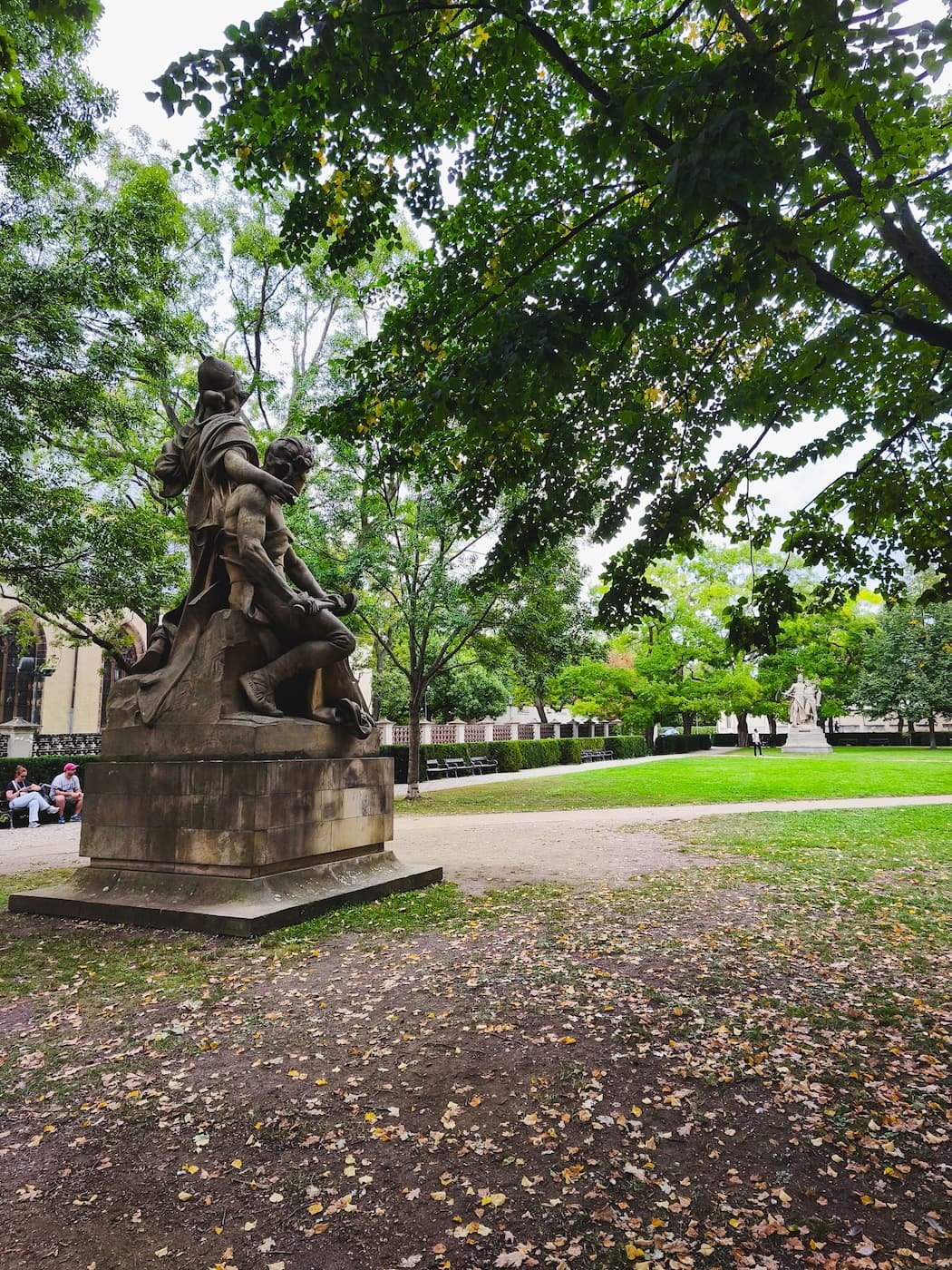
Vyšehrad is a historic fortress complex perched on a hill above the Vltava River, a little south of Prague's main tourist center. It was once an important royal and military site, but today it's a peaceful place to wander among historic buildings, old fortifications, and beautiful views over the river.
We spent most of our visit strolling along the fortress ramparts, which offer amazing views over the river and surrounding city from a different perspective than the hills closer to Prague Castle. It was also much less crowded here.
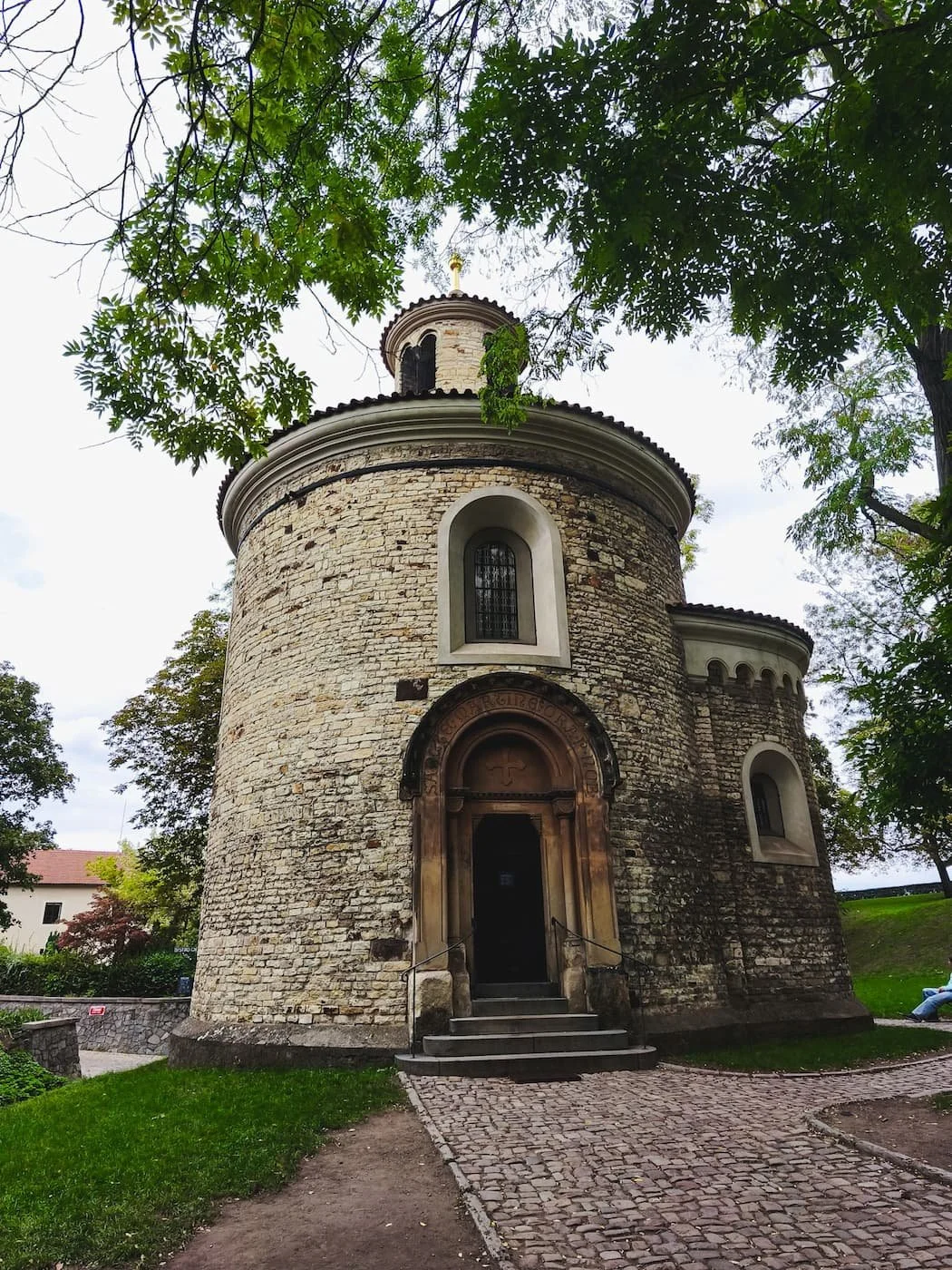
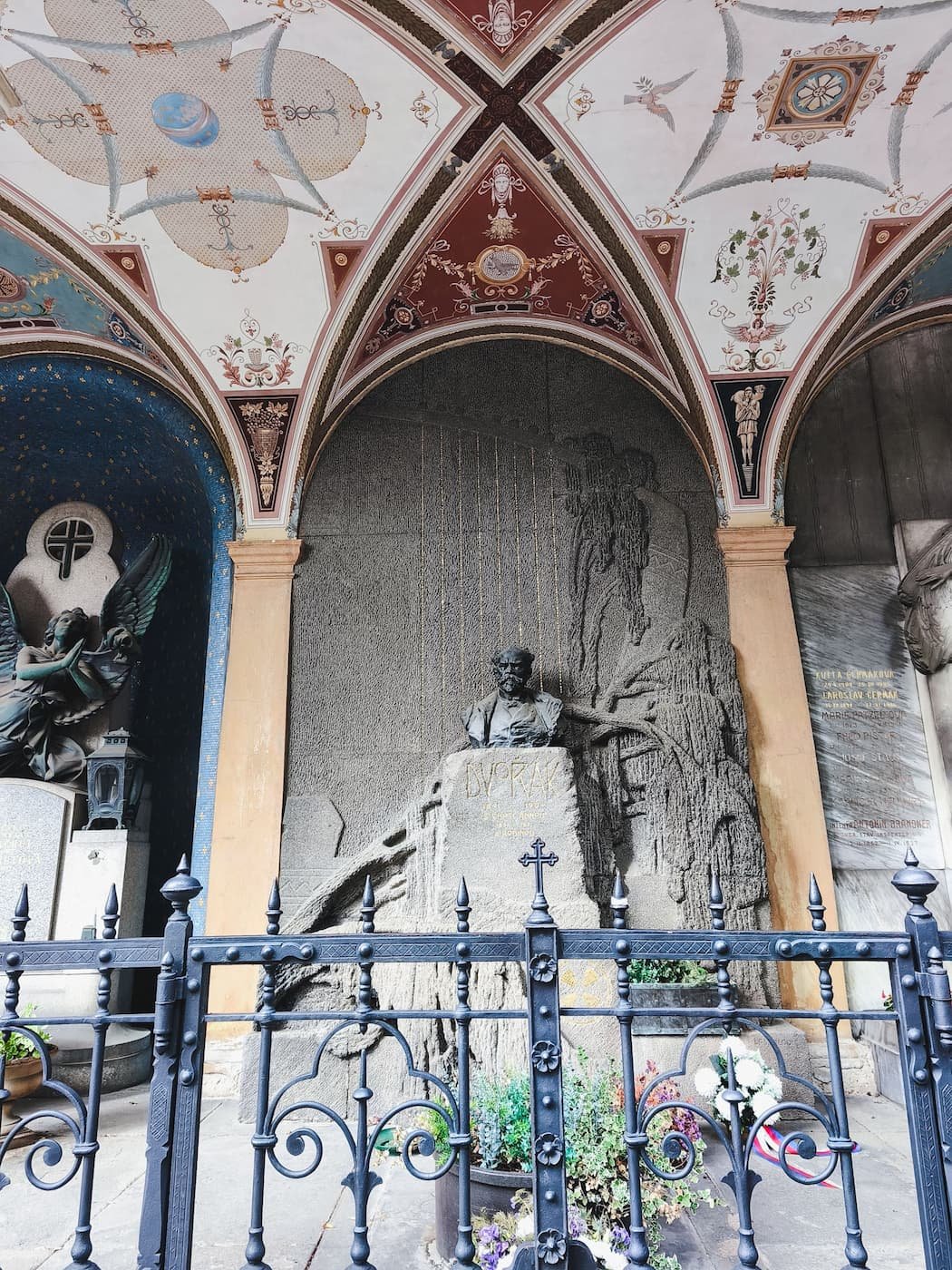
Along the way, we stopped to admire the historic architecture, including the striking Neo-Gothic Basilica of Sts. Peter and Paul, the Vyšehrad Cemetery, where prominent Czech artists and composers like Antonín Dvořák are buried, and my favorite, the Rotunda of St. Martin, a small, round 11th-century Romanesque building that's one of Prague's oldest surviving structures.
How long to spend: Around 1.5–2 hours.
Practical info: The outdoor fortress grounds and cemetery are free to explore, while entering the basilica requires a ticket. See the official Vyšehrad visitor information for opening hours and admission.
Vltava River Walk
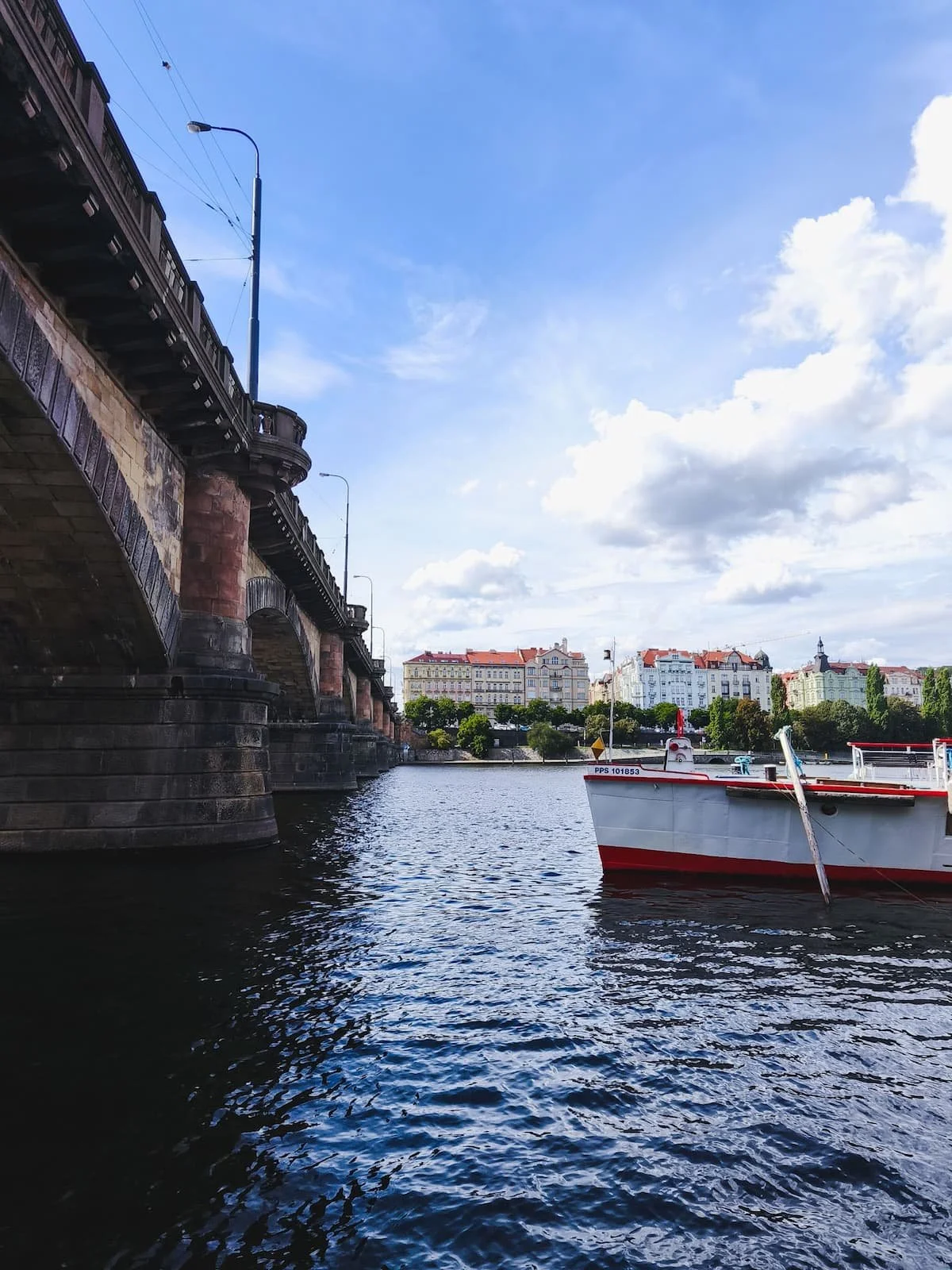
Prague has plenty of viewpoints from hills and towers overlooking the river and city, but there's something special about seeing it all from the riverbanks. For me, walking right alongside the water really lets you soak in the atmosphere.
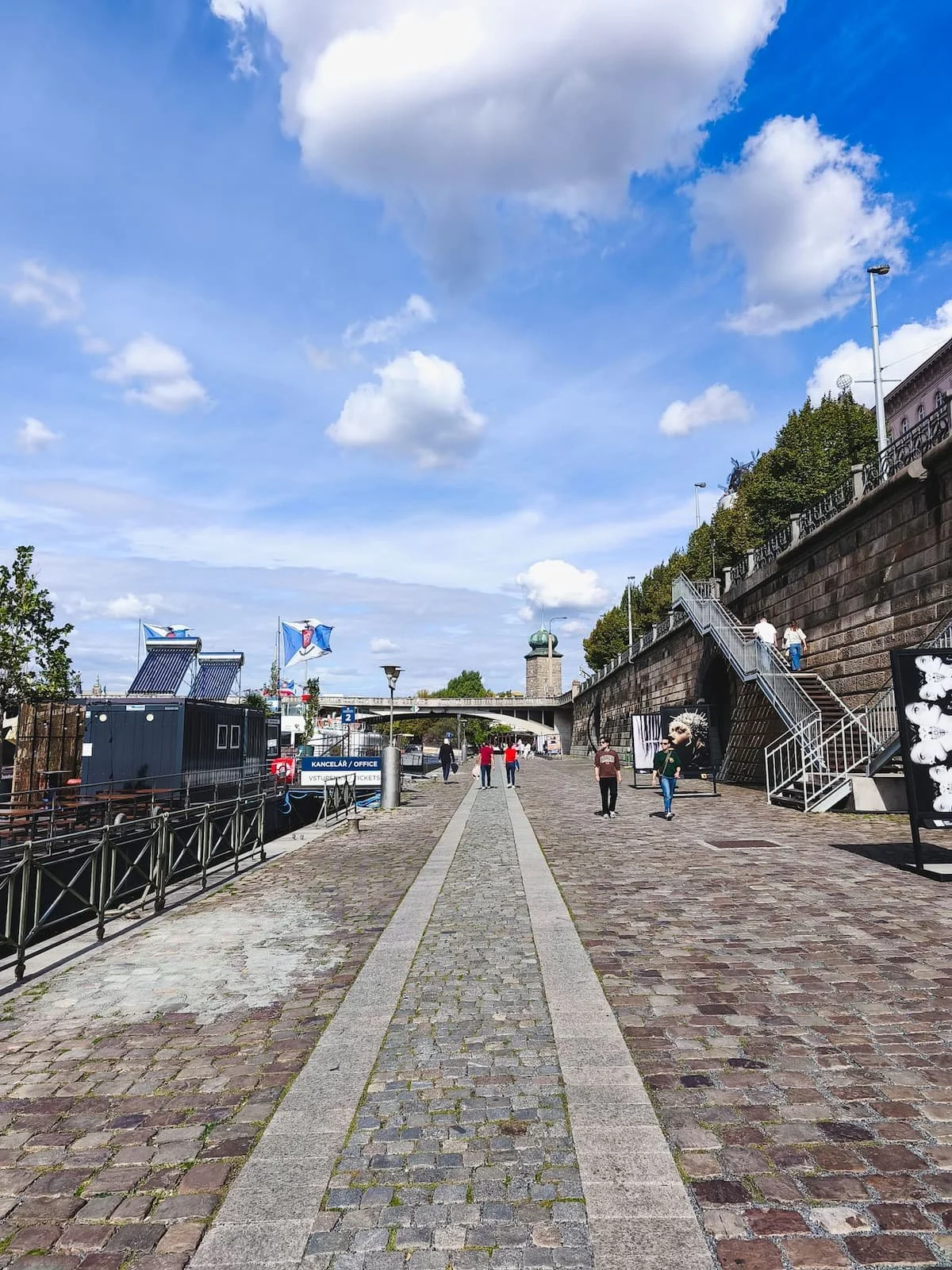
The riverfront around Old Town is especially romantic, with views of the historic buildings and bridges. Further south, along New Town, it’s a bit more of a cool and relaxed atmosphere, with boat cafés and people hanging out by the water, eating and drinking.
One easy walk I'd recommend is along the Náplavka riverfront between Dancing House and Vyšehrad. It's about half an hour of mostly uninterrupted walking right next to the river, and a nice way to connect the two sights.
Vinohrady + Žižkov
If you'd like to explore some of Prague's residential neighborhoods beyond the historic center, Vinohrady and Žižkov are two areas worth considering.
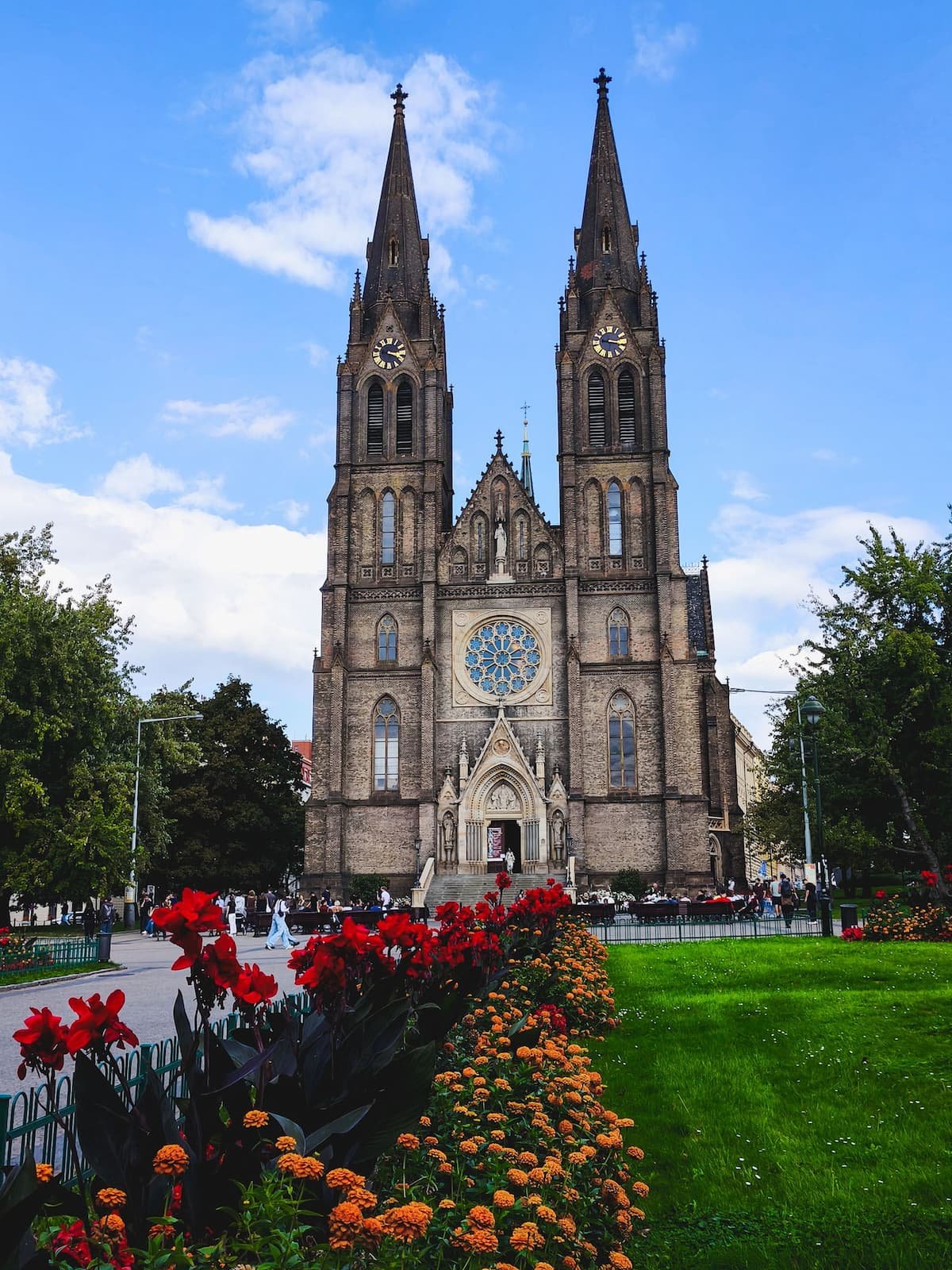
Vinohrady is an attractive residential neighborhood with beautiful late-19th-century buildings and broad streets. We stayed here during our recent monthlong visit and found it much more peaceful for a long stay than the Old Town area. One of its main landmarks is Náměstí Míru, a square dominated by the Neo-Gothic Church of St. Ludmila. Its metro station also has the longest escalators in the EU, taking over two minutes to ride all the way down!
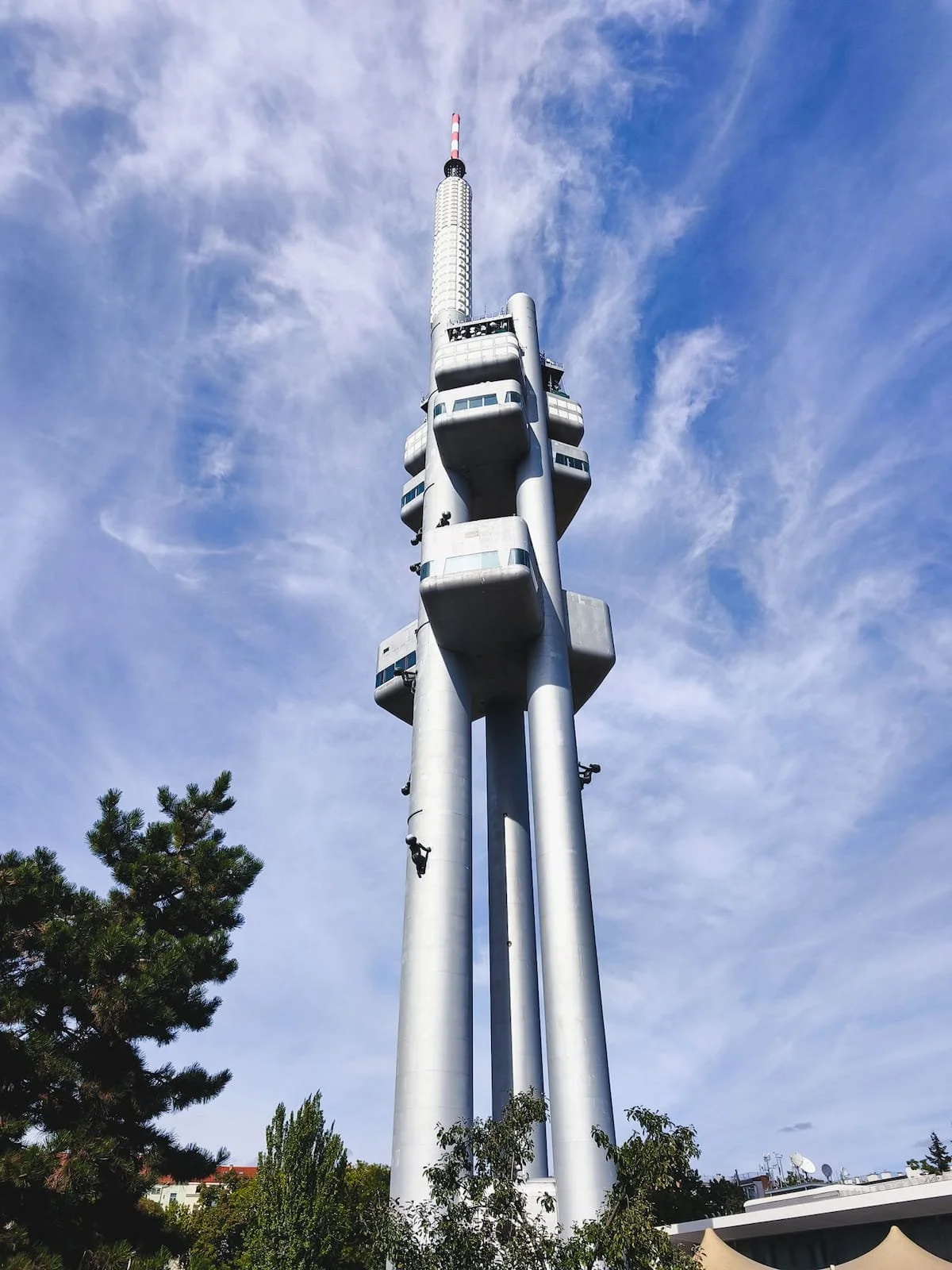
Neighboring Žižkov has a more working-class history and is known for its pubs, alternative atmosphere, and nightlife. Its most recognizable landmark is the Žižkov Television Tower, a futuristic communications tower built during the communist period, with giant crawling baby sculptures by artist David Černý attached to its exterior.
I went for a quick run to the base of the tower during our stay, and just loved how quirky it was. There's even a giant mirror at the base that makes it easy to take a picture with the tower.
What to Eat in Prague
Czech food is hearty, with plenty of meat, rich sauces, dumplings, and, of course, beer. Here are some of the foods we tried and places we enjoyed in Prague.
Traditional Czech Food
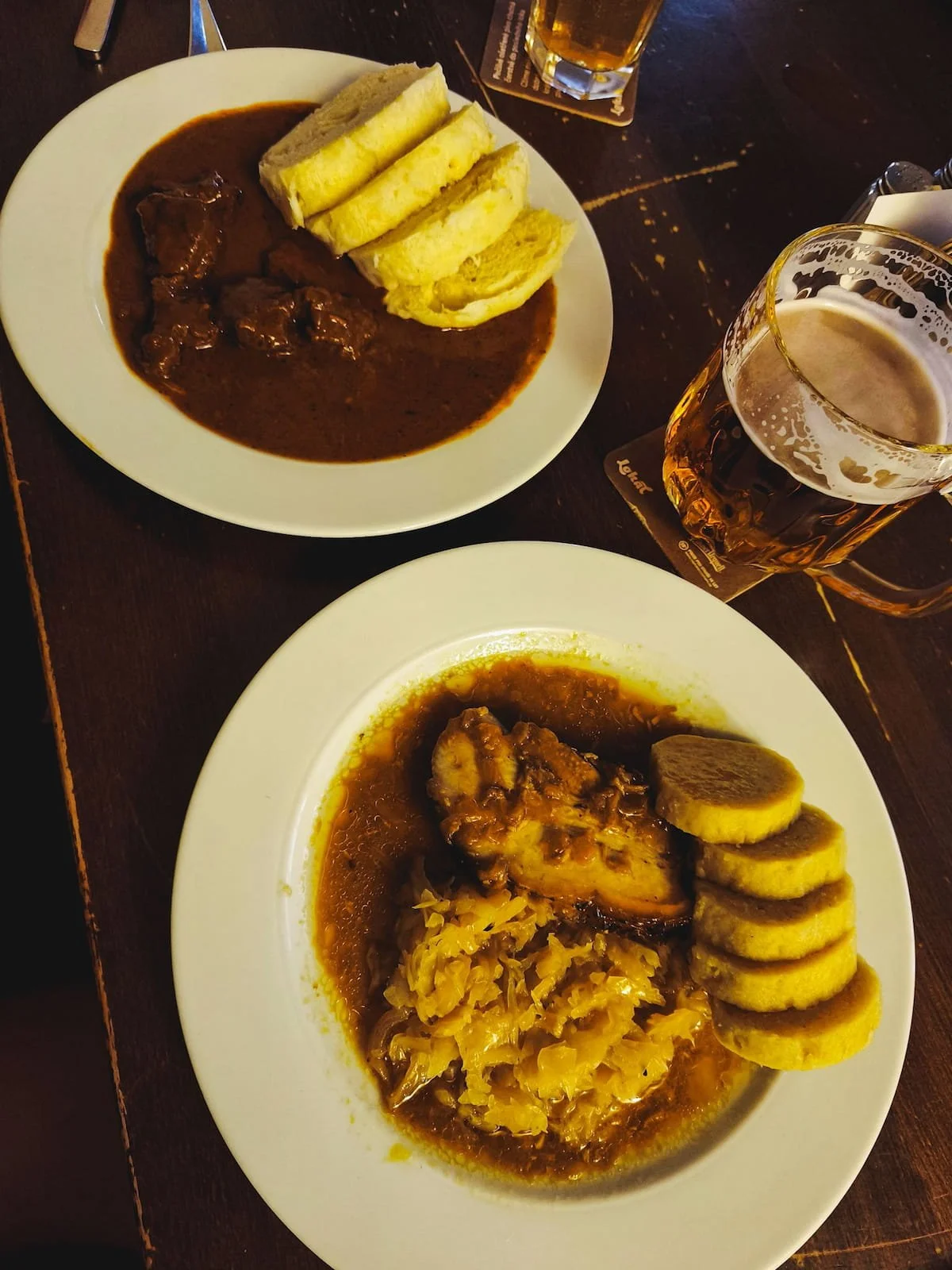
Traditional Czech food tends to be quite filling, with dishes like svíčková (beef in a creamy sauce with bread dumplings), Czech goulash, and giant pork knuckles.
We ate at Lokál U Bílé kuželky, one location of the very popular Czech pub chain Lokál that serves traditional dishes and tank beer. I'd definitely recommend making a reservation, since it can get very busy.
Another place we tried was Pod Vyšehradem, a more casual neighborhood restaurant just below Vyšehrad. The pork knuckle we had there was excellent, and the portion was huge.
Fried Cheese / Smažený Sýr
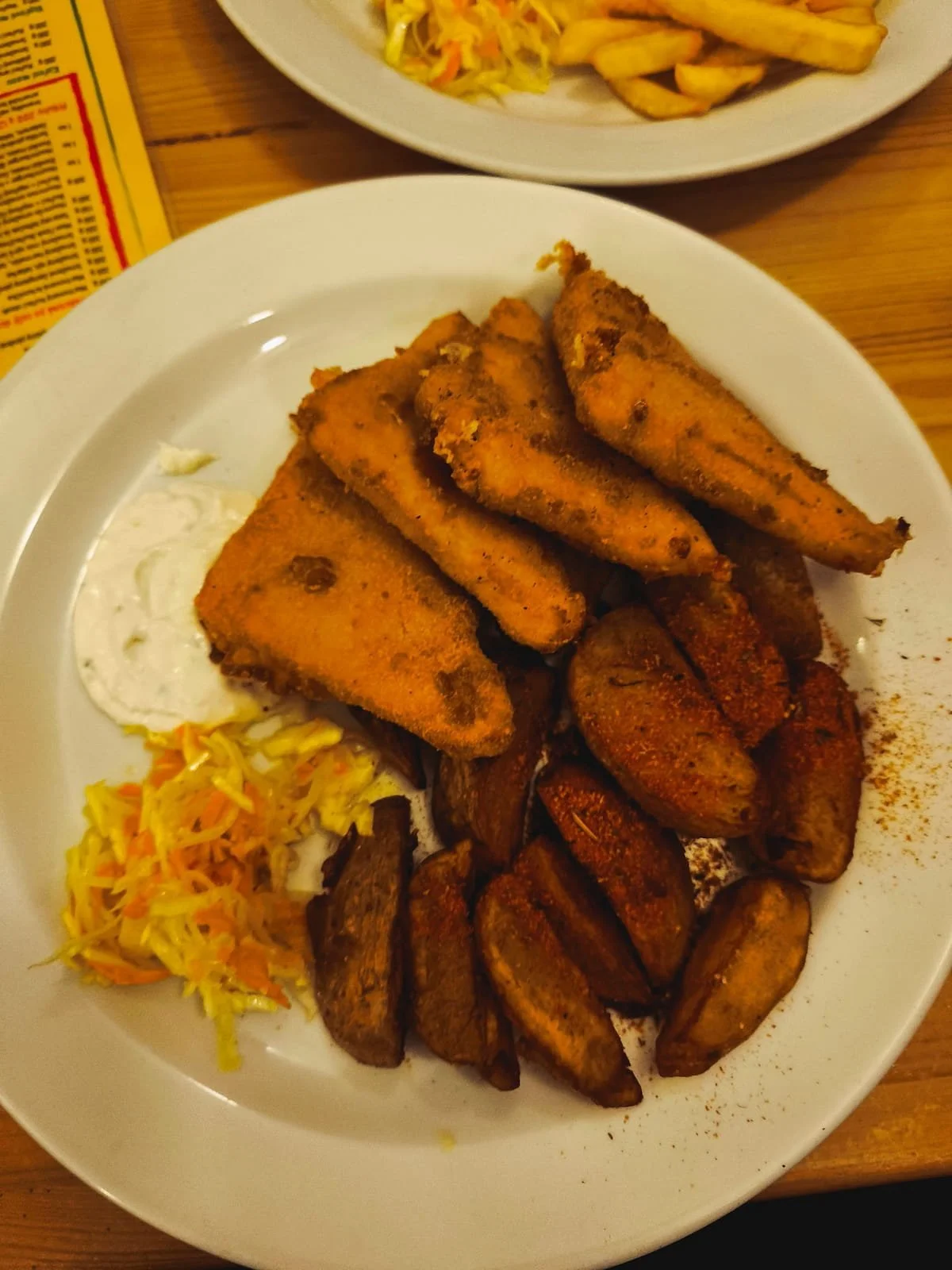
Smažený sýr is a popular Czech comfort food consisting of a thick slice of breaded, deep-fried cheese, usually served with potatoes or fries and tartar sauce. If you love cheese like me, you must try it.
Our favorite version by far was at U Houmra in Vinohrady, which served giant portions of cheese that were perfectly fried on the outside and melty inside, all at very reasonable prices.
Chlebíčky / Czech Open-Faced Sandwiches
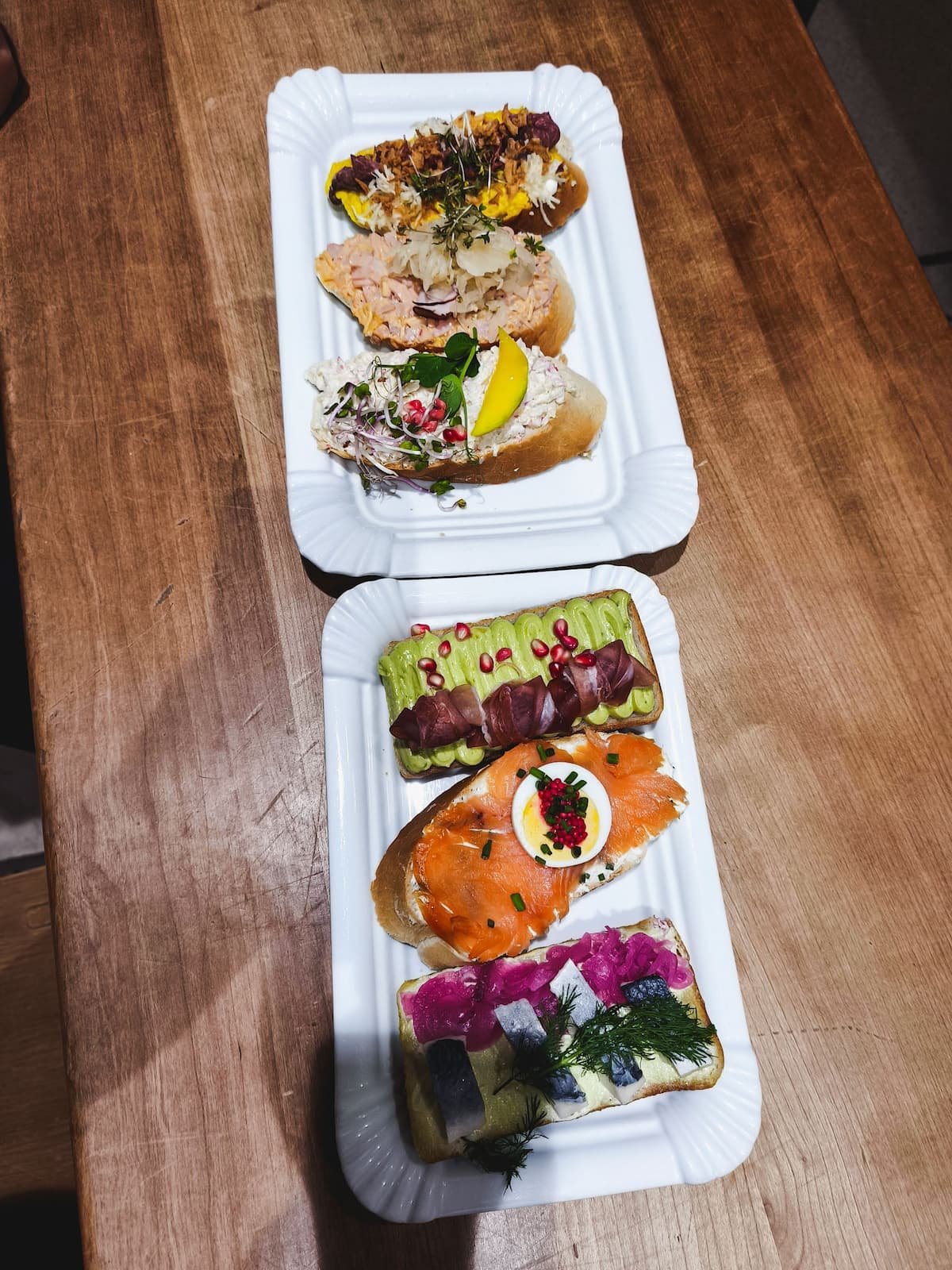
Chlebíčky are traditional Czech open-faced sandwiches topped with ingredients like spreads, eggs, ham, cheese, or vegetables. They're commonly eaten as snacks or party food, but also make a nice light lunch.
We had ours at Sisters Bistro near Old Town, which serves a variety of modern versions. My favorite was the herring!
Czech Beer
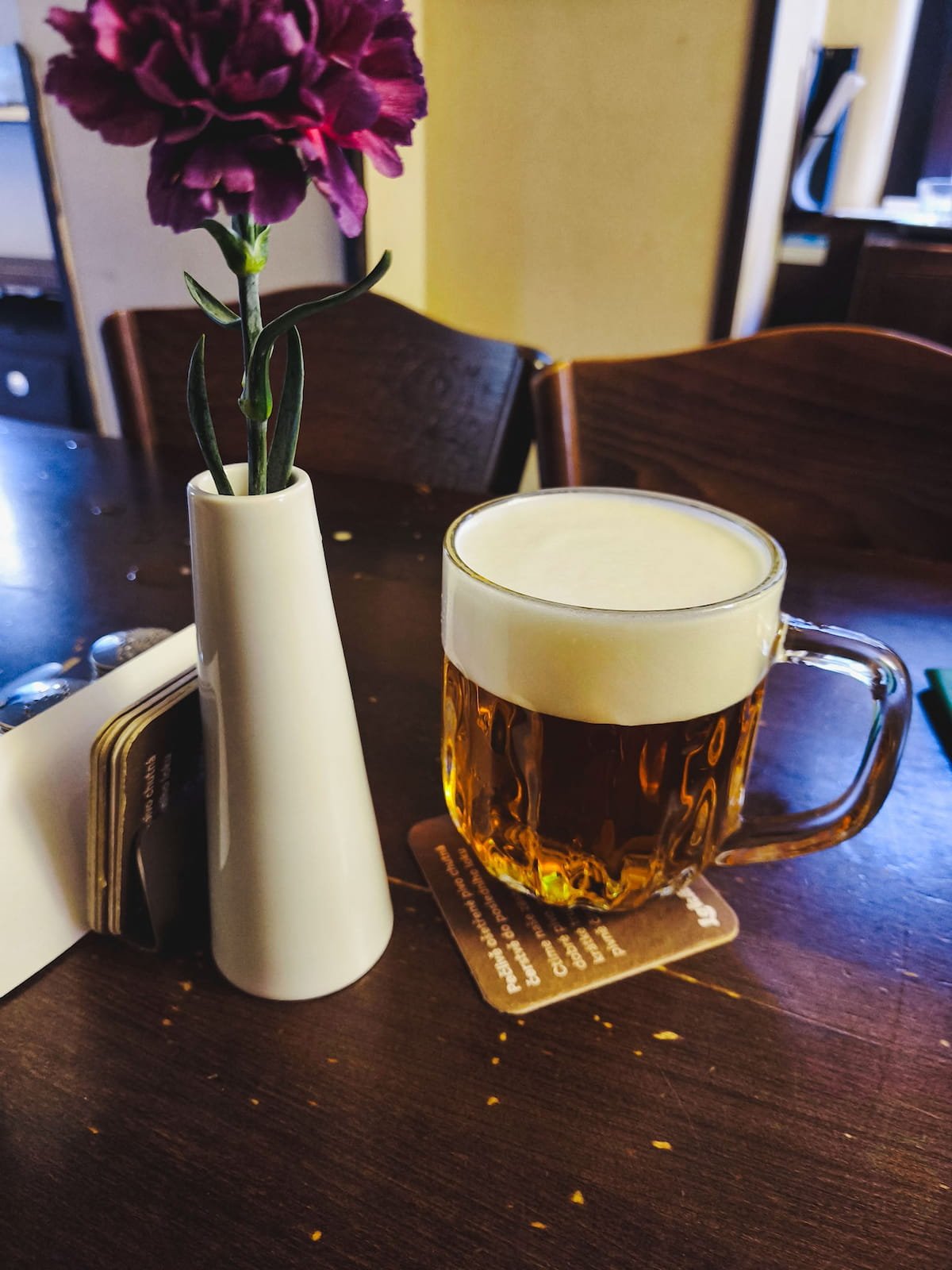
The Czech Republic is famous for its beer, particularly Pilsner Urquell, first brewed in Plzeň in 1842 and considered the original pale Pilsner-style lager.
You'll find it served all over Prague, often straight from large beer tanks rather than individual kegs. We had some excellent Czech beer during our trip, including at Lokál and Strahov Monastery Brewery (I actually thought the beer at Strahov was much better than the food haha).
Trdelník / Chimney Cake
You'll see trdelník all over Old Town and around Charles Bridge. These are spiral-shaped pastries coated in sugar and cinnamon, sometimes filled with ice cream or cream. They're very photogenic, though not exactly a traditional Czech specialty in the way they're marketed to tourists.
For me, they're a bit too sweet to finish on my own, so I'd recommend sharing one.
Cafés and Lighter Food
After a few heavy Czech meals, you might appreciate something lighter. I love Healthy Longevity Café for its giant portions of smoked salmon, which made for a nice break from all the meat, dumplings, and creamy sauces.
Questions?
Thanks for reading! Feel free to leave a comment below or send me a message with any questions — I'm always happy to help when I can. And if you visit any of these places, I'd love to hear what you think!
If you're ready to put together your Prague trip, check out my 3-Day Prague Itinerary for realistic daily routes, suggested timing, and maps to help you plan your visit.
You may also like:
4-Day Berlin Itinerary — another European capital (one direct train ride from Prague!) with historical sights, distinct neighborhoods, and realistic daily routes.
What to Do (and Eat) in Berlin — a curated guide like this one, but for Berlin.
My One-Bag Gear List — everything I pack to travel with just one bag, making it easier to move between cities and use public transportation.
3 Days in Prague: A Walkable Itinerary with Maps + Routes
Related Posts