Best Things to Do in Berlin: A First-Timer's Guide
I visited Berlin after a couple of months in smaller cities, and the scale and energy of the city hit me instantly. Germany’s capital is sprawling, cosmopolitan, and full of contrasts. Gritty murals and graffiti stand next to elegant cafes, while austere Soviet-era architecture mixes with restored neoclassical buildings.
I also felt that Berlin makes a real effort to engage with its complicated history. Its museums tend to be detailed, nuanced, and focused on helping visitors learn. The story of restoration is visible in how the city has rebuilt and revived damaged architecture from past conflicts, while its food reflects its immigrant history and multicultural identities.
Some of my favorite experiences were the places that helped me understand Berlin’s history, as well as the neighborhoods that immersed me in the everyday energy of the city. This guide covers the major things I did in Berlin, what each one was actually like, and how I’d prioritize them on a first trip.
If you want these sights arranged into realistic days, see my 4-day Berlin itinerary.
My Top Picks for a First Visit to Berlin
The sights and experiences I'd recommend prioritizing on a first visit.
Brandenburg Gate
Brandenburg Gate is one of Berlin’s most recognizable landmarks and has taken on different meanings across German history. King Frederick William II of Prussia built the gate in 1791 as “Peace Gate.” During the Cold War it was trapped in no-man’s-land directly behind the Berlin Wall and was used as a backdrop by Ronald Reagan in his speech to demand unity. And now, it’s a symbol of reunification.
The gate sits between Pariser Platz, a grand square that marks the end of the famous tree-lined boulevard Unter den Linden, and Tiergarten, Berlin’s enormous central park. You don’t need a huge amount of time here — we mainly took our time admiring it while eating currywurst from the Curry Wolf stand right on Pariser Platz, then walked around it taking photos before going towards Tiergarten.
How long to spend: Around 10–20 minutes.
Pair with: The Memorial to the Murdered Jews of Europe and Tiergarten.
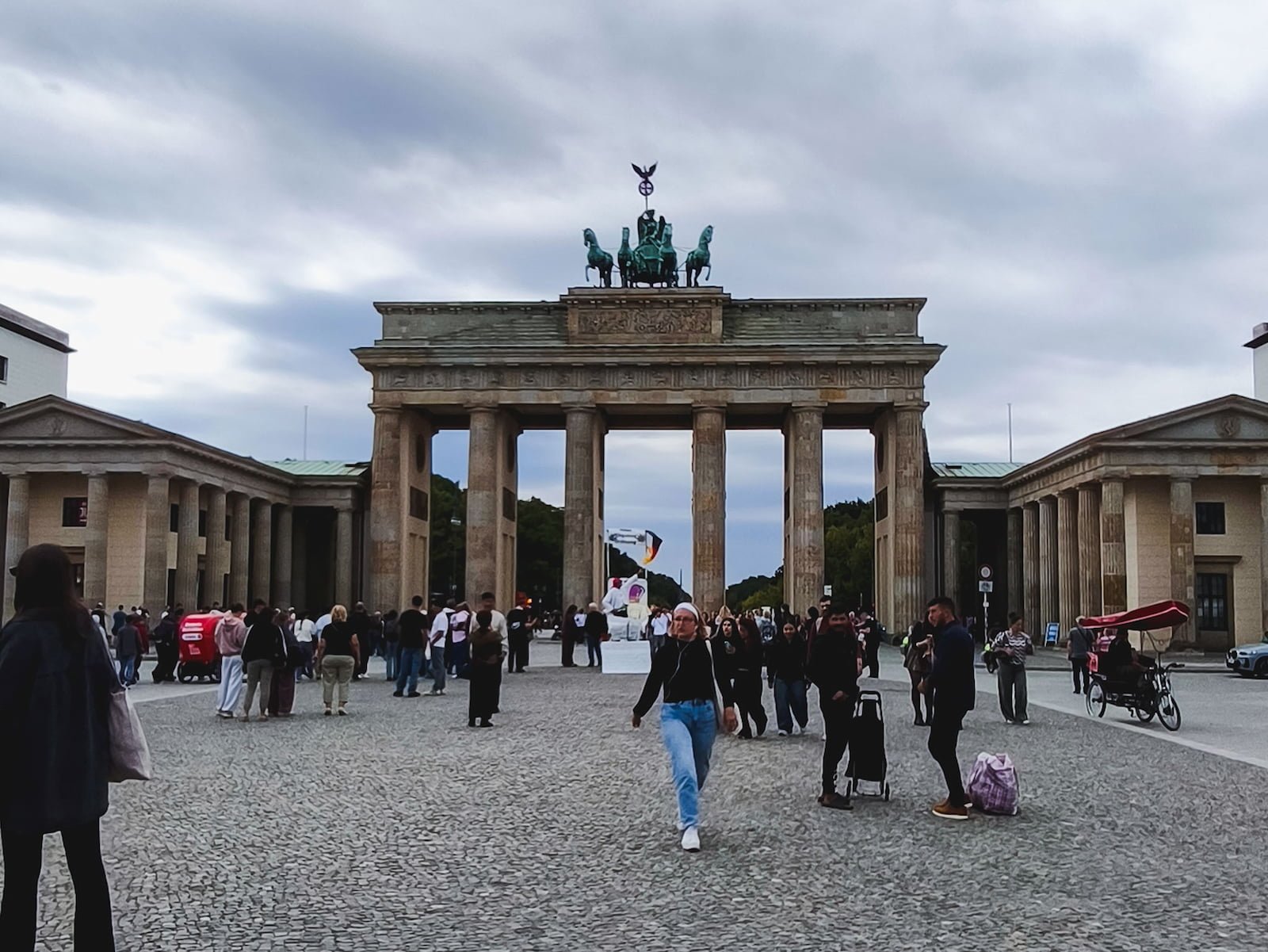
Brandenburg Gate from the Pariser Platz side.
Berlin Wall Memorial
If you want to understand how the Berlin Wall functioned and the human impact of it, visit the Berlin Wall Memorial on Bernauer Straße.
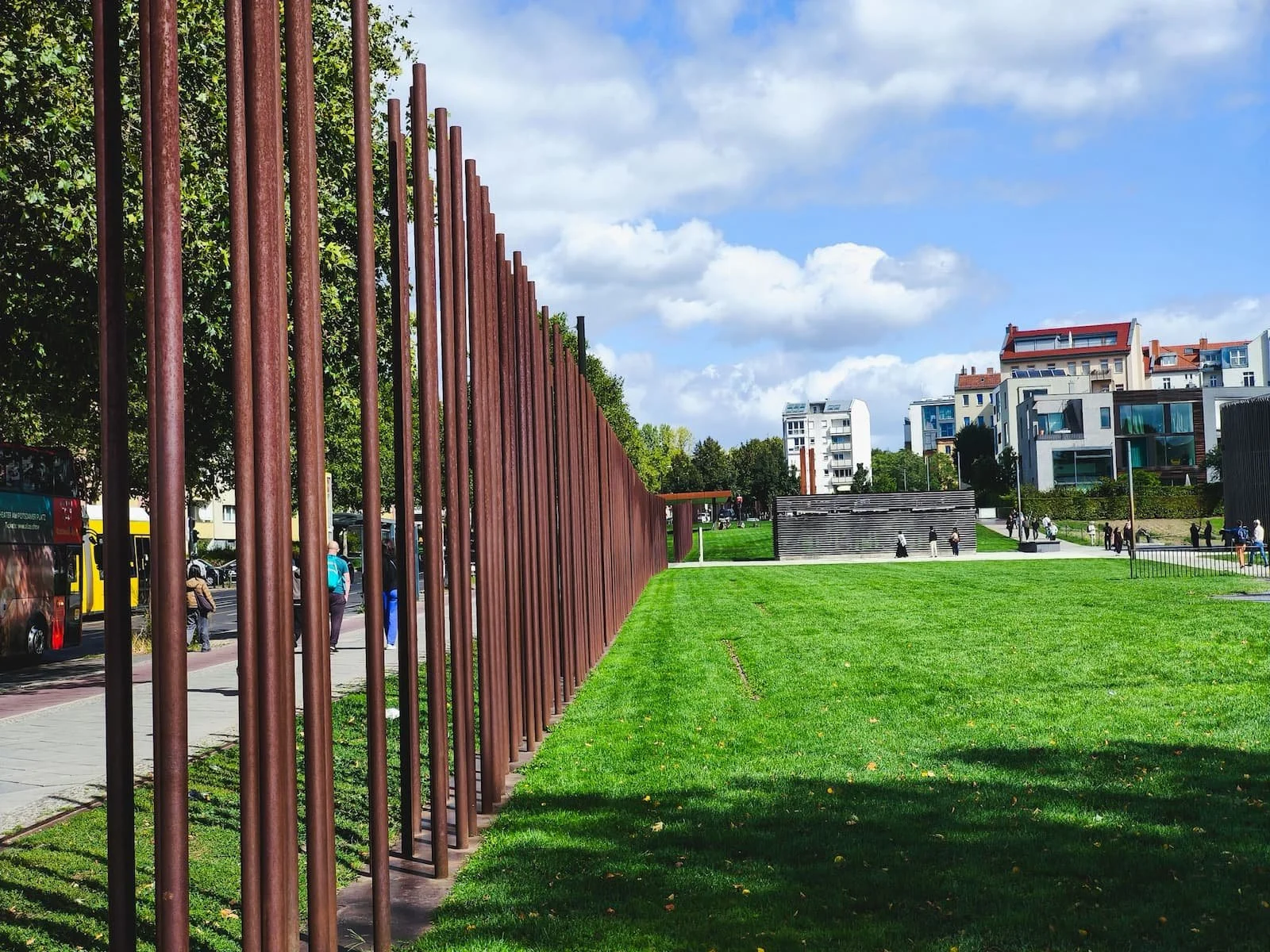
The Wall ran right along Bernauer Straße, and this is the only part of the wall where a section of the former death strip (the guarded zone where East German guards had a shoot-and-kill order for anyone trying to cross over to West Berlin) could be seen, along with a watchtower.
Besides the preserved sections, there are detailed outdoor information plaques and also a separate Documentation Center with additional context. I think it’s one of the most worthwhile places to learn history in Berlin.
How long to spend: Around 1.5–2 hours.
Pair with: Mauerpark and Prenzlauer Berg.
Practical info: Admission is free. The outdoor memorial is open daily from 8 AM to 10 PM, but the Documentation Center is only open Tuesday–Sunday, 10 AM–6 PM.
East Side Gallery
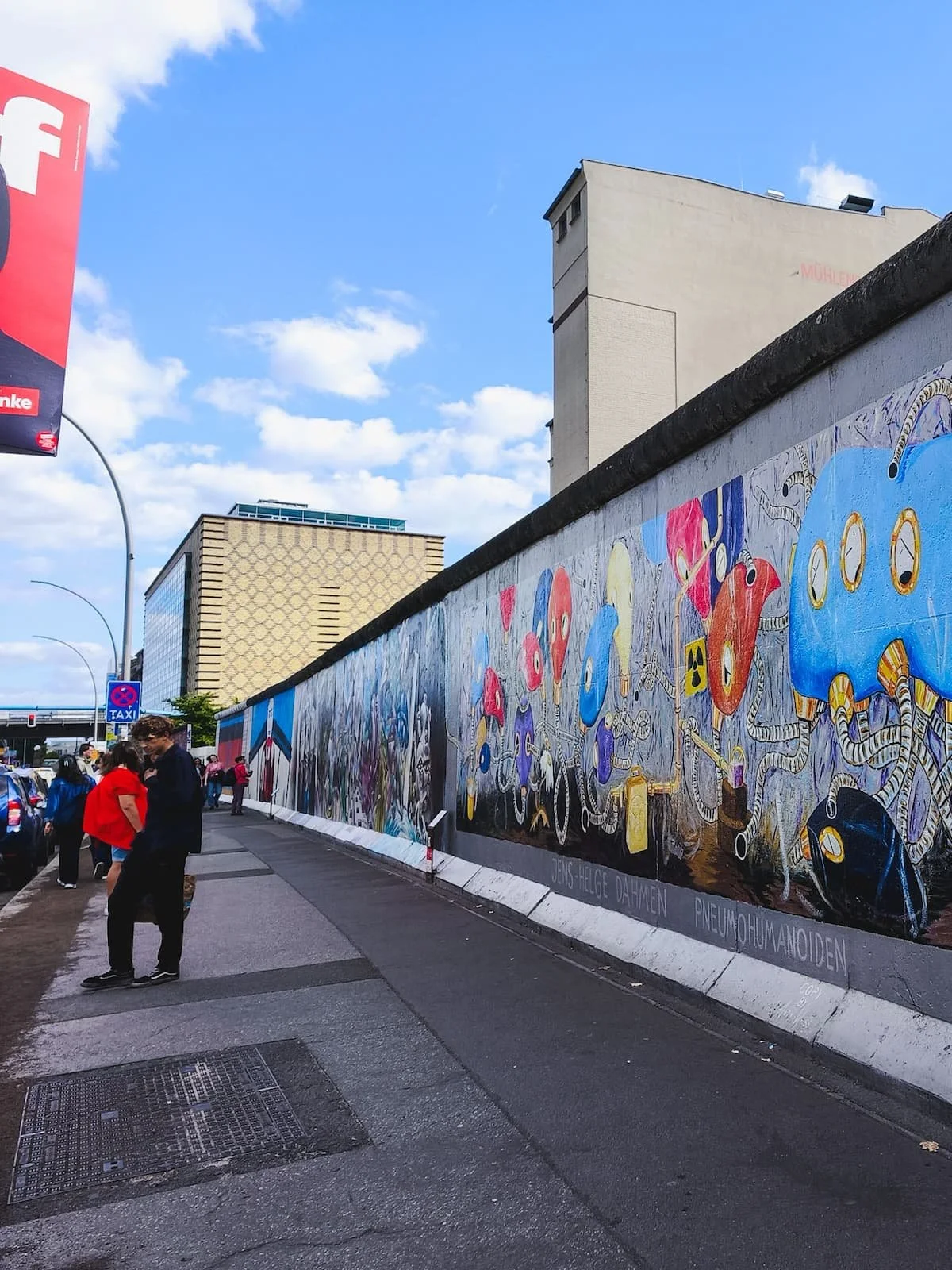
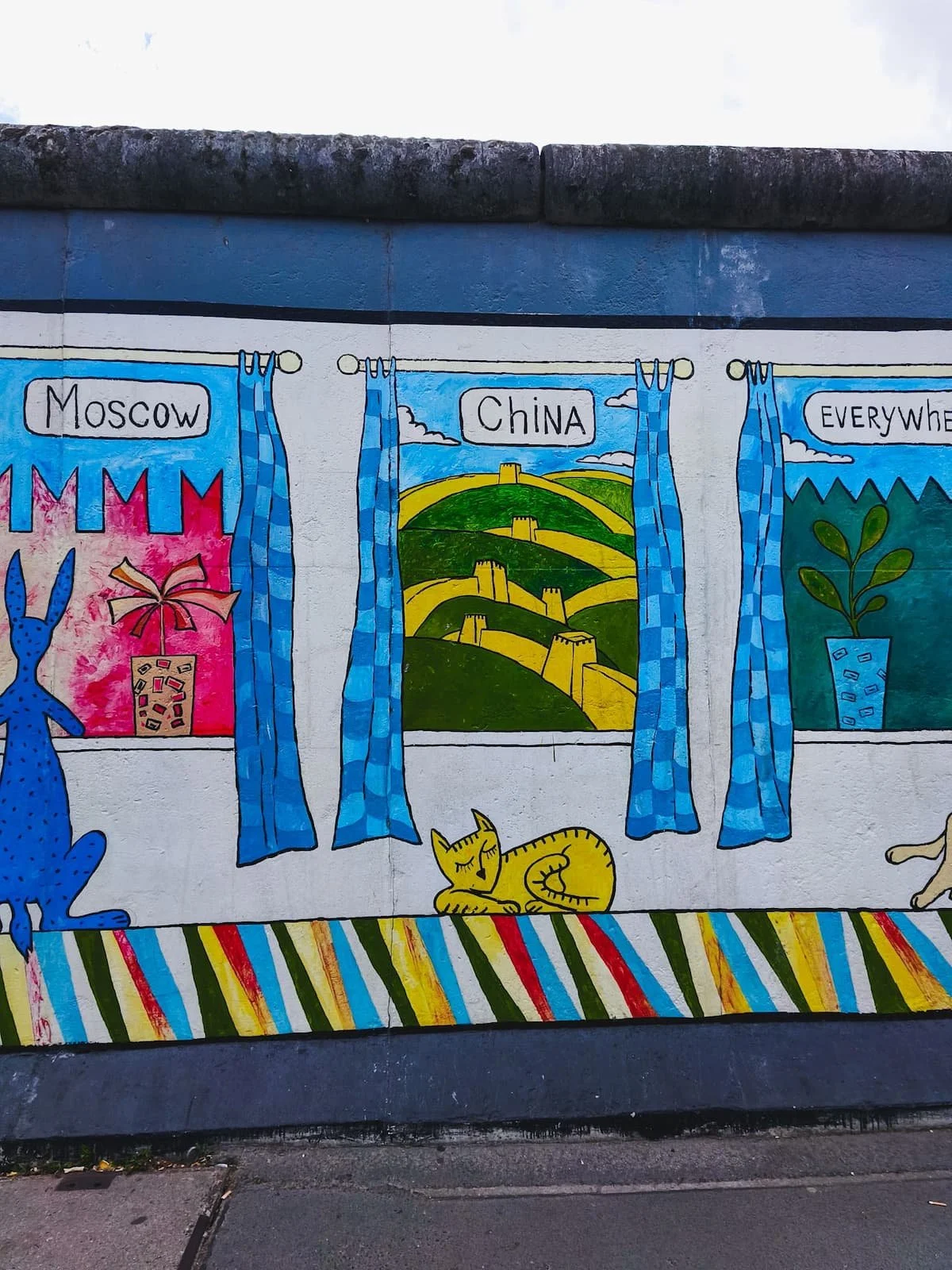
The East Side Gallery is a roughly 1.3-kilometer surviving stretch of the Berlin Wall covered in murals created after reunification.
For me, it’s quite moving to see how this physical symbol of division was transformed into colorful pieces of art that showcase human spirit and resilience. There are several pieces about the value of peace and unity, some cheeky, some more direct.
I’d recommend visiting the Berlin Wall Memorial before the East Side Gallery on the same day, so you can first understand the history of the wall before seeing how it’s now repurposed into something beautiful.
There’s also a nice park next to the Spree right beside, so you can take some time strolling the waterfront too and take a look at the distinctive red-brick Oberbaum Bridge.
How long to spend: Around 45–75 minutes to walk the gallery and look at the murals.
Pair with: Oberbaum Bridge, Friedrichshain, and Kreuzberg.
Practical info: Free to visit and open 24/7. The gallery stretches between Ostbahnhof and Oberbaum Bridge, so you can walk it in either direction.
Topography of Terror
The Topography of Terror occupies the former site of the Gestapo and SS headquarters and is one of the most detailed historical museums I visited in Berlin. It’s definitely worth prioritizing if you’re interested in Berlin’s WWII history.
It’s organized into five main chapters tracing the Nazi regime from the seizure of power and its instruments of terror to wartime atrocities and the post-war period. Outside, there is also a trench-style exhibition focused more specifically on Berlin during the Nazi period, plus a surviving stretch of the Berlin Wall beside the complex.
Because of how detailed the exhibits were and their emotional weight, we spent around two hours there, and I would not rush the visit. There is a lot to read, and the subject matter is obviously very heavy.
How long to spend: Around 1.5–2 hours, or longer if you want to read extensively.
Pair with: Checkpoint Charlie, the Memorial to the Murdered Jews of Europe, and Brandenburg Gate.
Practical info: Free admission, with no advance booking required. The exhibitions are open daily from 10 AM to 8 PM, although the outdoor areas close at dusk.
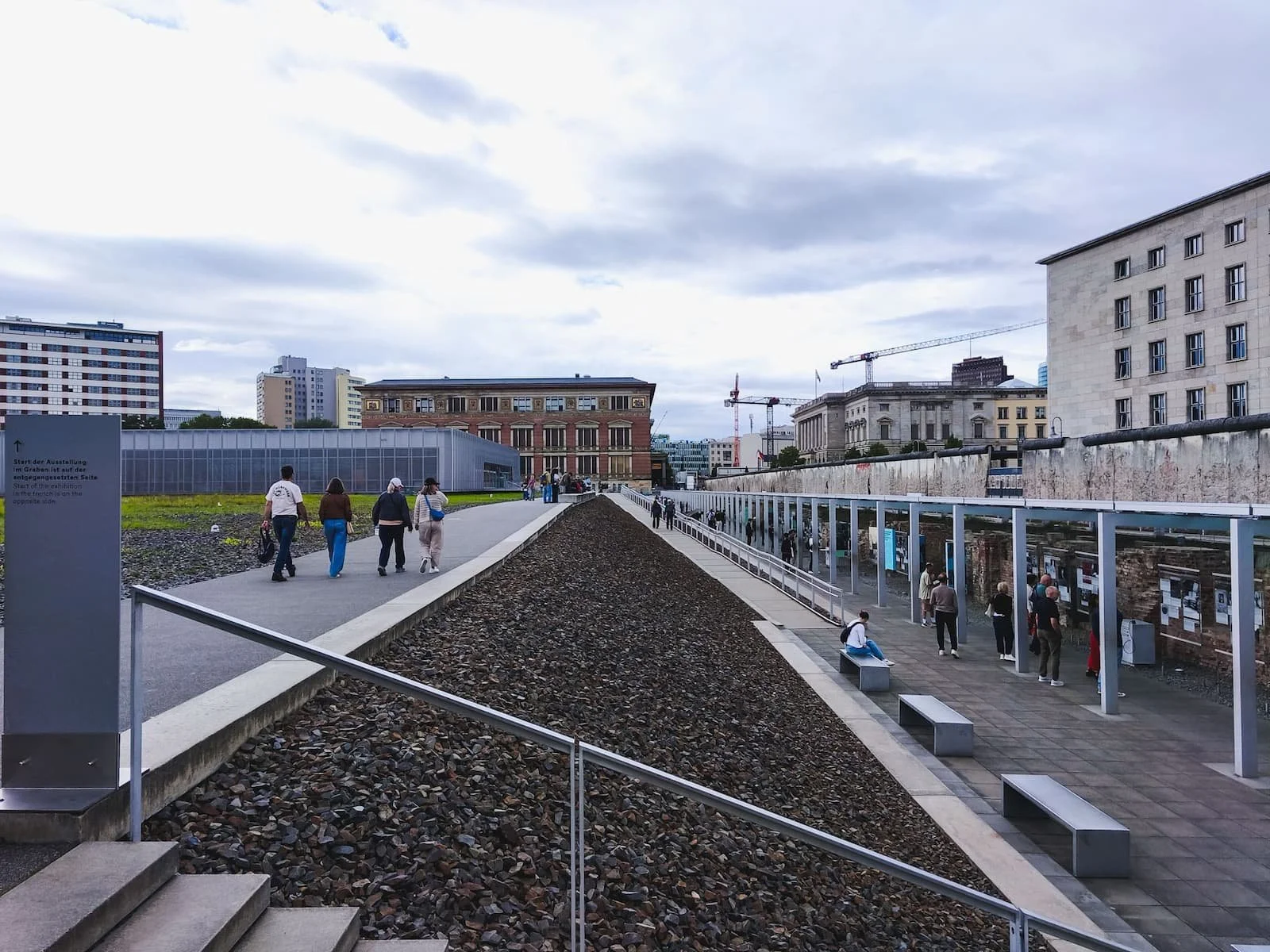
Topography of Terror museum grounds. The interior exhibit is in the building on the left side, and on the right side you can see the exterior exhibition and the Wall on the far right.
Memorial to the Murdered Jews of Europe
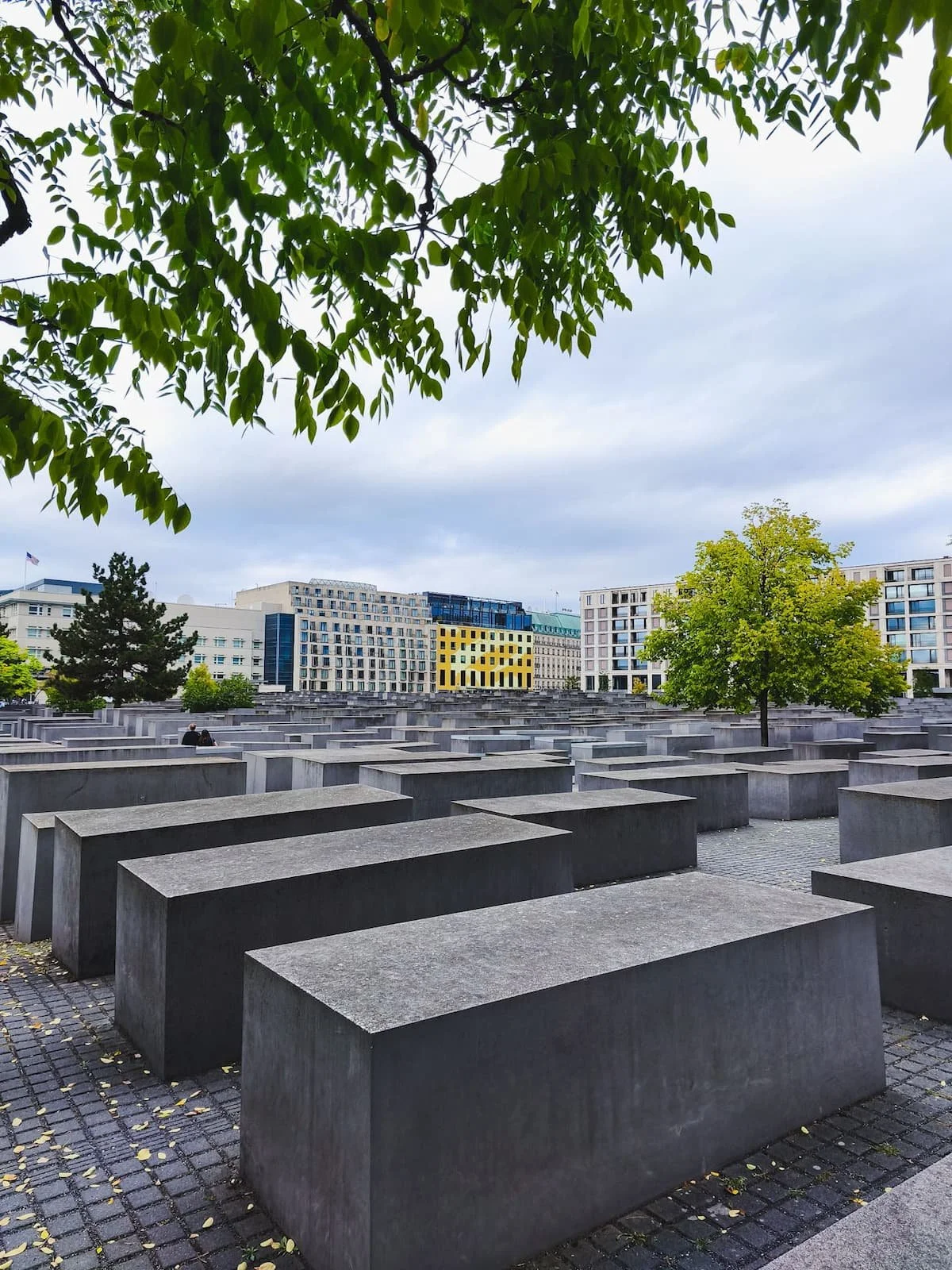
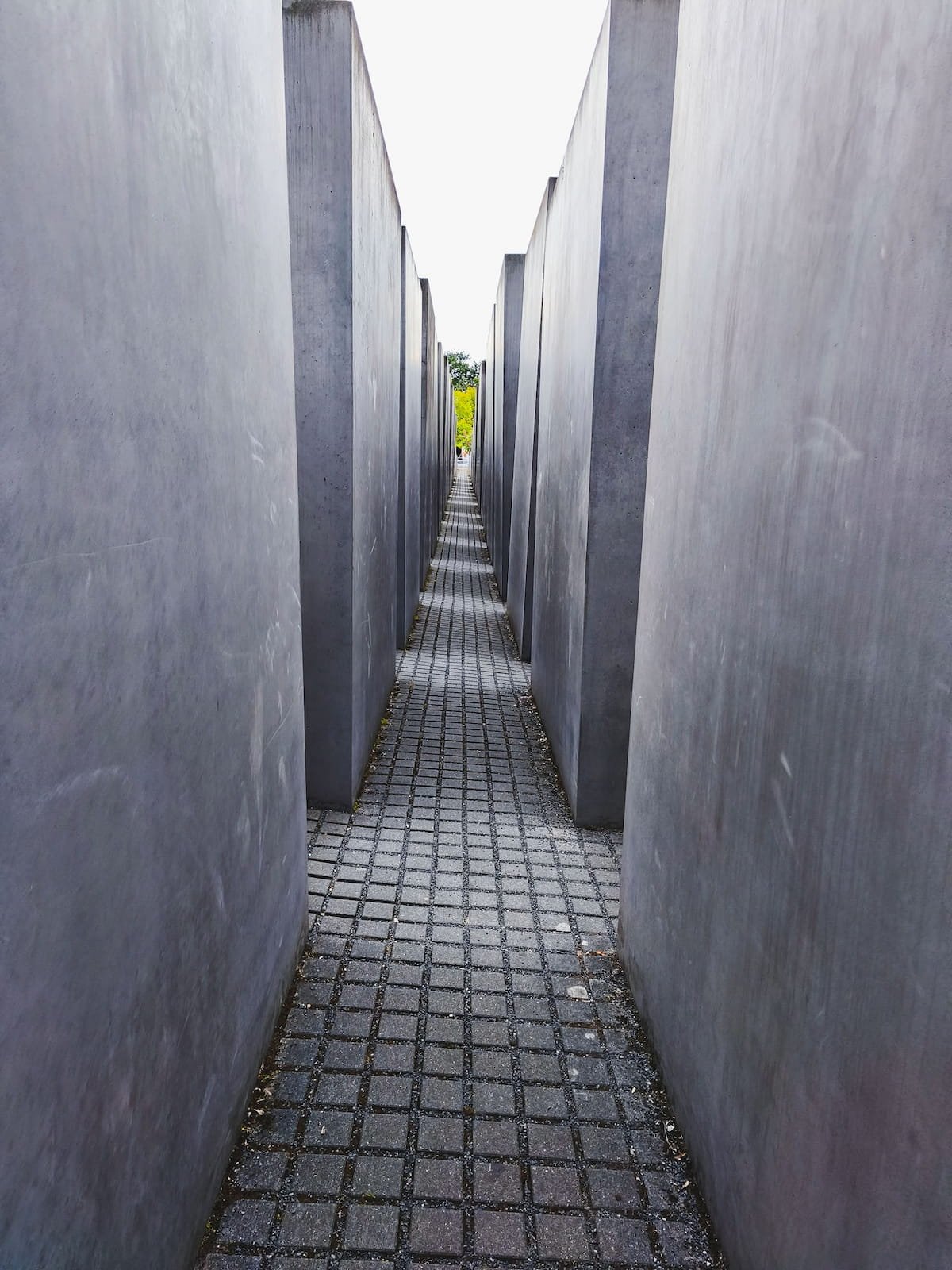
The Memorial to the Murdered Jews of Europe consists of 2,711 concrete stelae near Brandenburg Gate.
The monument is designed to feel disorienting and isolating. From outside, you see the stelae all relatively smooth and uniform, but once you enter and start moving through them, the ground shifts lower and the surrounding stelae start to envelop and tower over you, blocking out the surrounding city. The physical experience of walking through it was much more affecting than seeing the memorial from the edge.
There’s also an underground information center focused directly on the lives and stories of the individuals victims and families. I’d recommend visiting if you have the time, since it was quite powerful.
How long to spend: Around 15–30 minutes for the outdoor memorial; allow additional time for the information center.
Pair with: Brandenburg Gate, Reichstag Dome, and Tiergarten.
Practical info: Both the outdoor memorial and underground information center are free. The outdoor memorial is accessible 24/7, while the information center is open Tuesday–Sunday, 10 AM–6 PM.
Museum Island
A UNESCO World Heritage Site, Museum Island is one of Berlin’s most important cultural areas. The island’s monumental museum buildings were constructed over the 19th and early 20th centuries as a major cultural complex, but the buildings were badly damaged during World War II.
Restoration of the buildings stretched from the divided-city to the post-reunification eras, becoming the renewed museum district of today. So, besides visiting the museum collections, you’re looking at buildings that have themselves passed through destruction, division, neglect, and reconstruction.
Unless museums are the main reason for your trip, I’d choose one museum based on your interests and give it enough time. For many first-time visitors, the Neues Museum is the obvious choice because of its Egyptian collection and the Bust of Nefertiti, and it’s also the one we visited. Like the other museums in Berlin, it did a great job with the information aspect, and the Bust of Nefertiti was even more elegant in person.
How long to spend: Around 2–3 hours for one museum, depending on your interests; less if you are only exploring the outdoor area.
Pair with: Berlin Cathedral, Unter den Linden, and Alexanderplatz area.
Practical info: Museum admission is ticketed, and opening hours vary by museum. The Neues Museum is currently open Tuesday–Sunday, 10 AM–6 PM, and closed on Mondays. Check individual museum schedules before visiting.
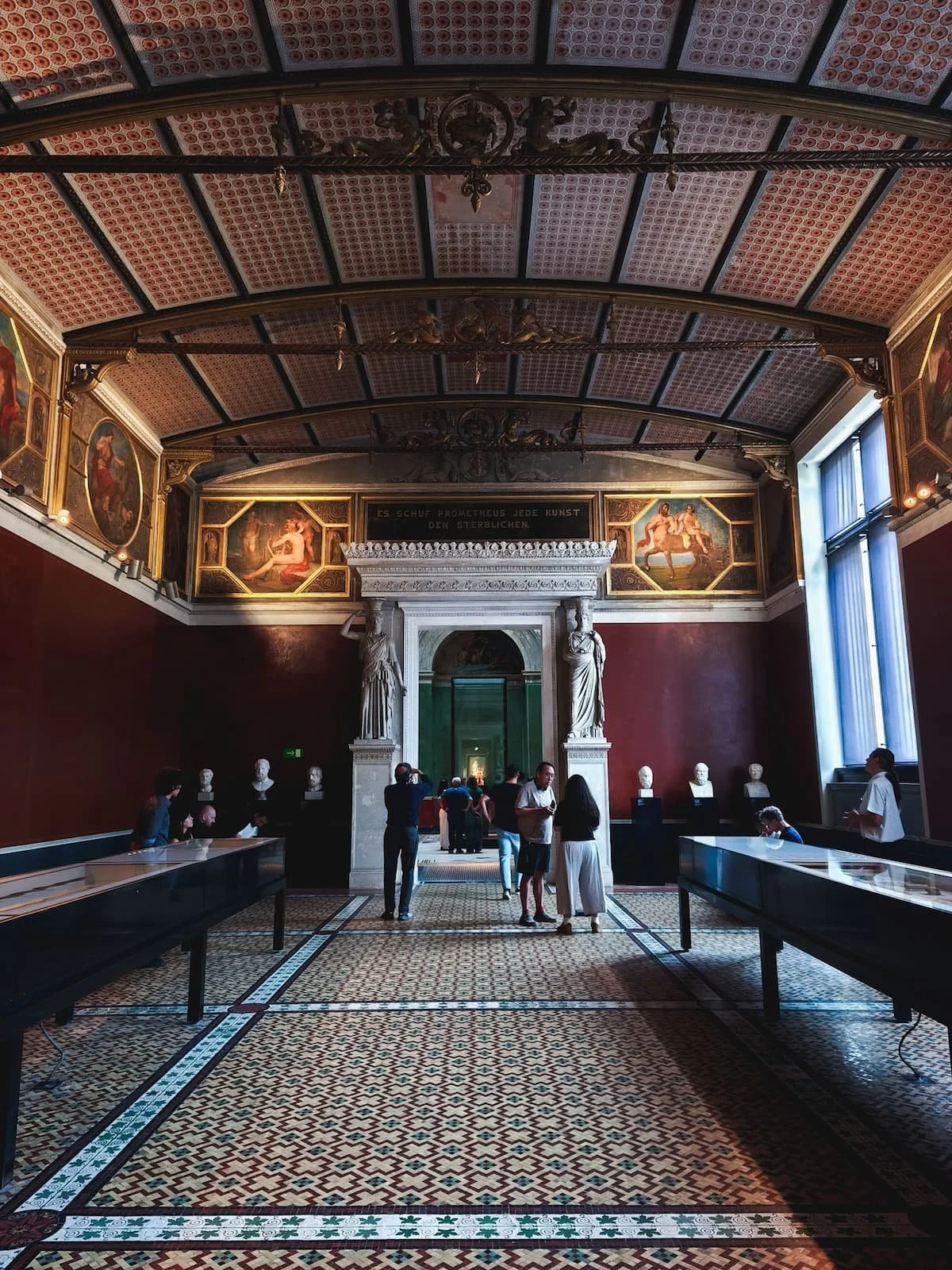
Inside the Neues Museum. The interior, besides the collection, was full of grand architecture and art too.
Prenzlauer Berg and Mauerpark
Prenzlaur Berg is a neighborhood near the Berlin Wall Memorial and was once a hub for artists and bohemians in East Berlin. Now, it’s a trendy neighborhood with boutique stores, cafes, restaurants, and organic markets.
The neighborhood also contains one of Germany's largest areas of surviving Wilhelminian-style (pre-WWI) buildings that escaped heavy World War II destruction, and you can see a stretch of them especially on Oderberger Straße. I really liked walking down the street, seeing people enjoying outdoor dining in the sun and looking up at the elegant buildings with flowered balconies.
Mauerpark is a popular public park in the neighborhood that occupies part of the former border strip. Its biggest draw for many visitors is the Sunday flea market, which is huge and full of vendors and people.
How long to spend: Around 1–1.5 hours, with additional time if visiting the Sunday market or having a meal.
Pair with: Berlin Wall Memorial.
Practical info: If you want to visit the Mauerpark flea market, plan for Sunday. It's normally open from 10 AM to 6 PM, with free admission.
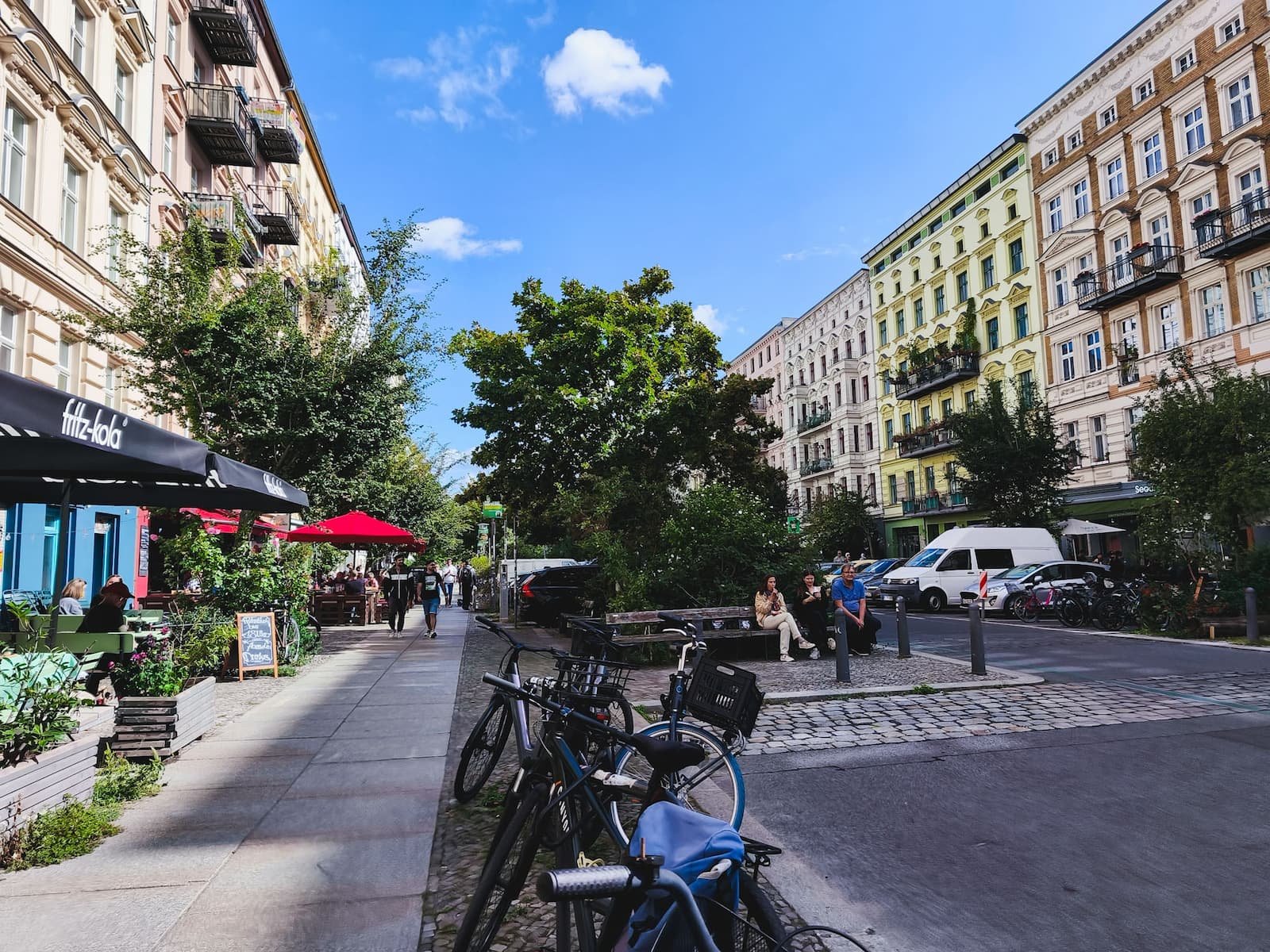
Oderberger Straße.
Alexanderplatz and Surroundings
Alexanderplatz is a major square and transport hub and was formerly one of the commercial centers of East Berlin.
For me, the appeal is the area’s memorably stark socialist-era architecture and a gritty urban atmosphere. On Alexanderplatz, the most recognizable landmark is the Fernsehturm, Berlin’s modernist-style television tower. It’s the tallest structure in Germany and is visible from much of the city. There’s also the World Clock, which displays the time across different world cities and is a familiar meeting point for locals.
In the surrounding area, I also liked walking around the railway arches along Dircksenstraße, with their graffiti-covered walls and busy streets. And not far from Alexanderplatz is Karl-Marx-Allee, a wide boulevard lined with monumental socialist-era buildings. The grand, imposing buildings give you a sense of East Germany's approach to architecture and urban planning.
I wouldn't dedicate too much sightseeing time to Alexanderplatz itself, though the surrounding area is great for shopping and wandering around.
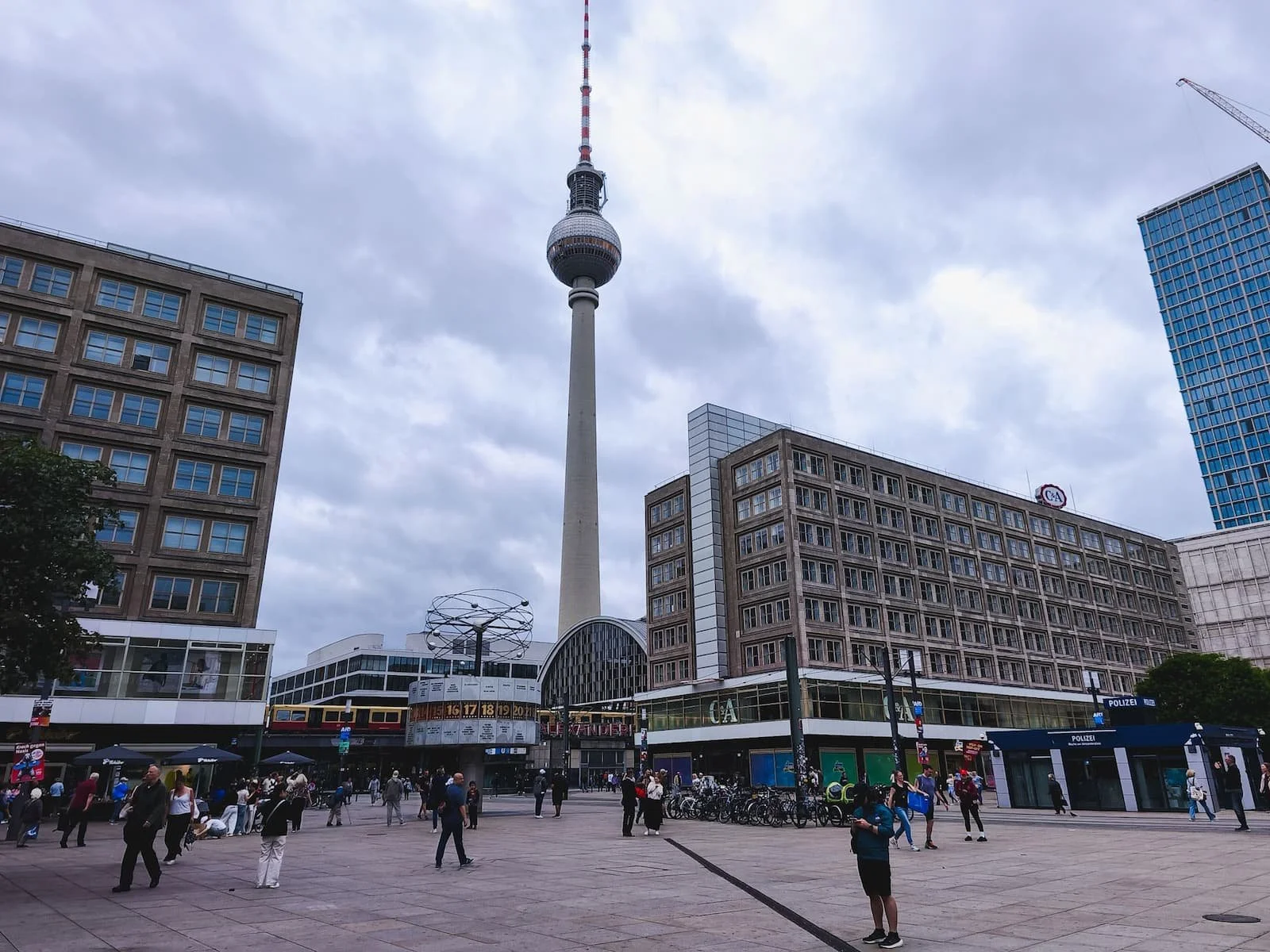
Alexanderplatz with Fernsehturm rising above, and the World Clock on its left.
More Things to Do in Berlin
Worthwhile sights and experiences depending on your interests.
Reichstag Dome
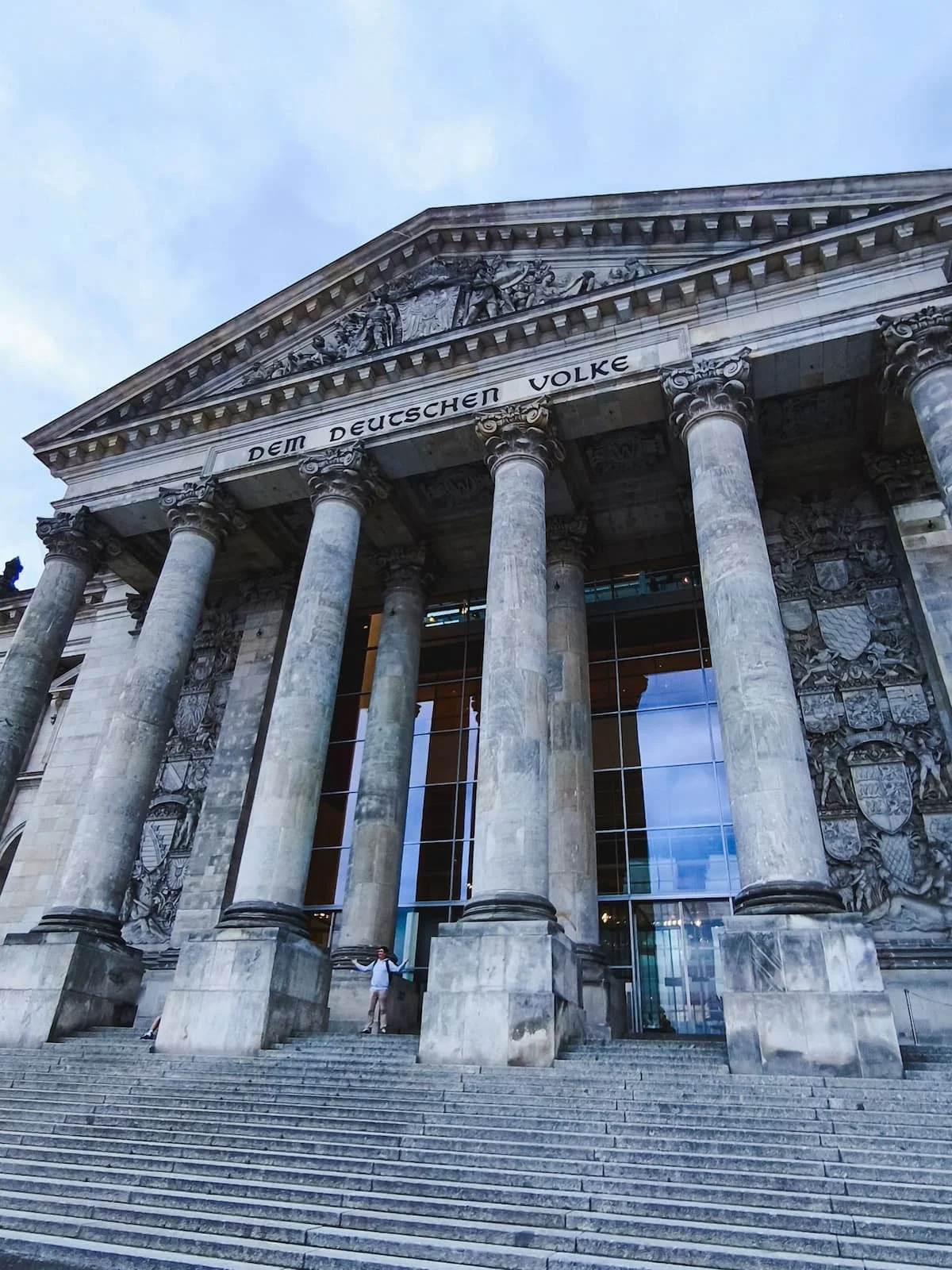
Visiting the Reichstag roof and glass dome is one of Berlin’s best-known free experiences, but the actual visit is quite involved in logistics.
The registration process requires multiple steps, and you need to get a confirmed visit time ahead of time. On arrival, there are identity checks, airport-style security, queuing, and controlled movement into the building before you’re eventually brought up to the roof.
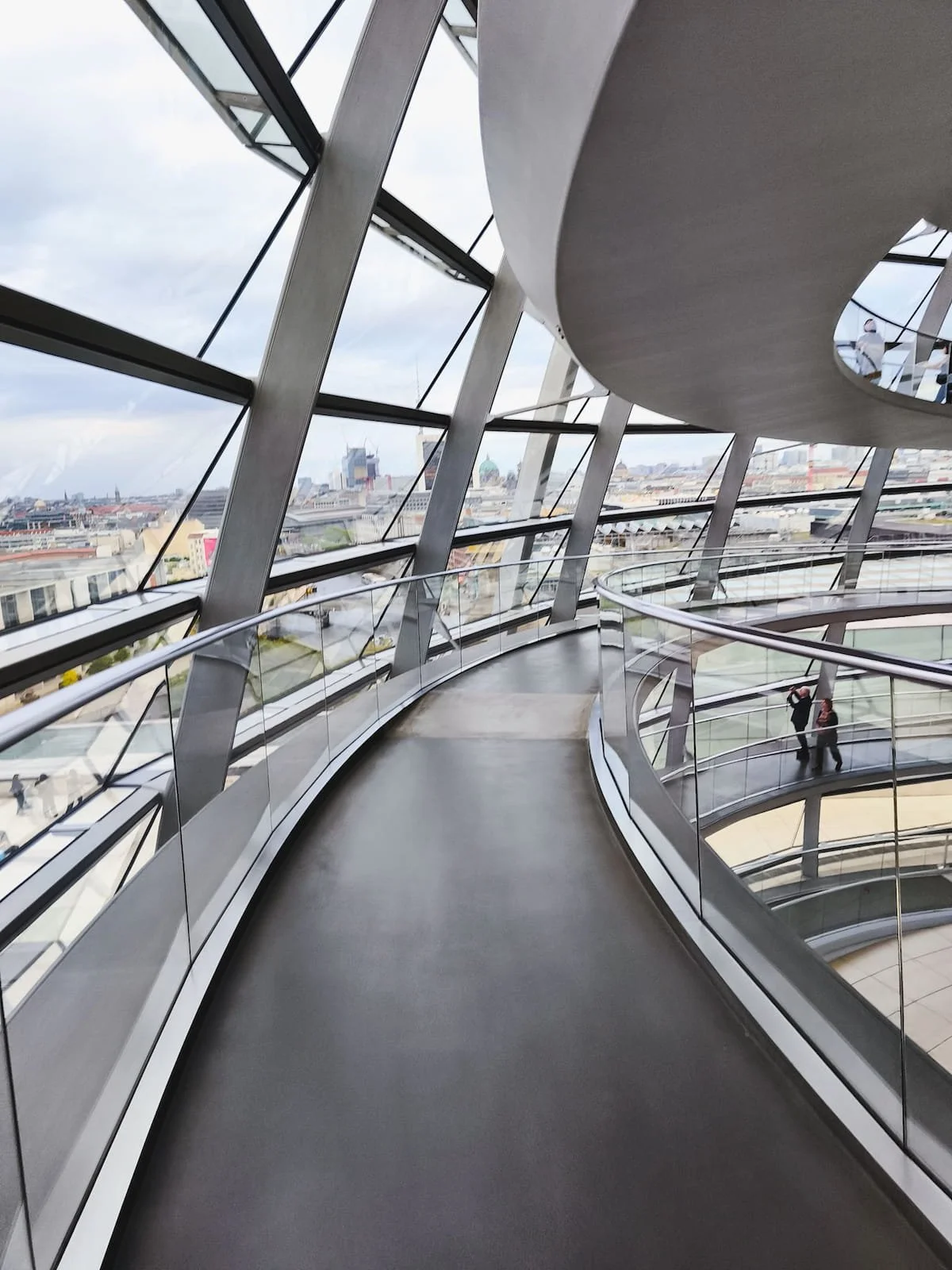
Once up there, you can walk around the rooftop before heading into Norman Foster’s glass dome for panoramic views across Berlin. Inside the dome, there's a bit of information displayed about the German government, and the main thing is the walking ramp that slowly spirals along the dome for you to see all around Berlin.
The architecture is interesting, and it was unusual to visit the German parliament building itself. But at the same time, you don’t really see much of the parliamentary interior, and the whole process takes considerably longer than just going up to a viewpoint. So overall, I’d recommend it most strongly if you’re interested in city views or briefly seeing the interior of the building.
How long to spend: Allow around 1–1.5 hours for the full visit, including security and waiting.
Practical tip: Advance registration is required. Bring the identification specified in your booking confirmation.
Pair with: Brandenburg Gate, the Memorial to the Murdered Jews of Europe, and Tiergarten.
Practical info: Free admission, but advance registration is required. Book through the official Bundestag website and bring a valid photo ID. The dome may close for maintenance or parliamentary operations, so check availability before planning your visit.
Checkpoint Charlie
Checkpoint Charlie is probably one of the best-known Cold War sights in Berlin. The checkpoint now sits in the middle of a very busy commercial intersection, and the juxtaposition makes it fascinating to imagine just how differently the same street once functioned
For me, though, it’s really just a quick stop. It’s worth seeing because it’s iconic and close to places like Topography of Terror, but the area today is very touristy and chaotic. There was a line to take pictures with it when we visited (which we didn’t do), so you couldn’t really get close to it anyway.
How long to spend: Around 10–15 minutes.
Pair with: Topography of Terror.
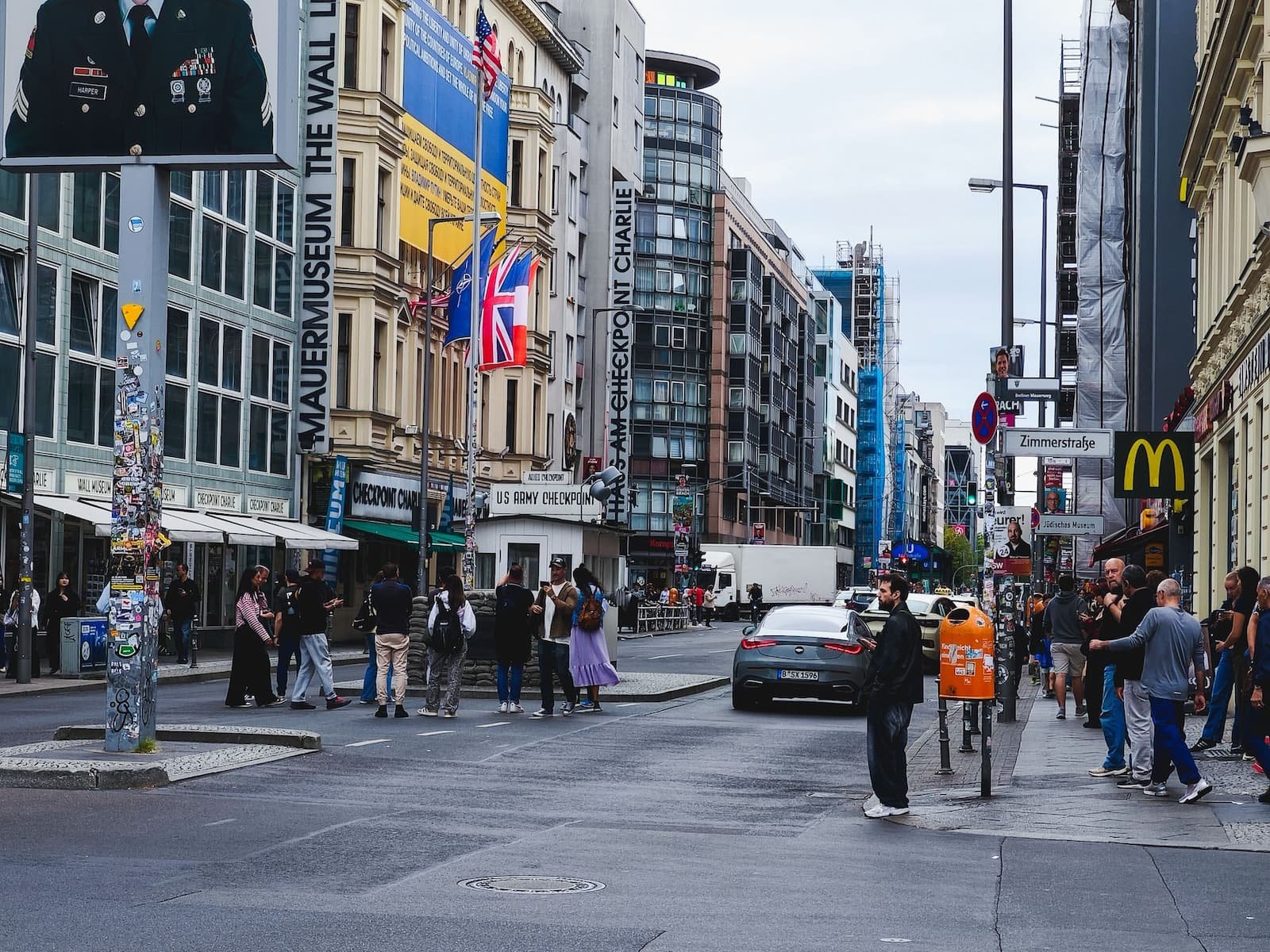
The busy interaction with Checkpoint Charlie (the little “U.S. Army Checkpoint” structure with flags rising up).
Berlin Cathedral
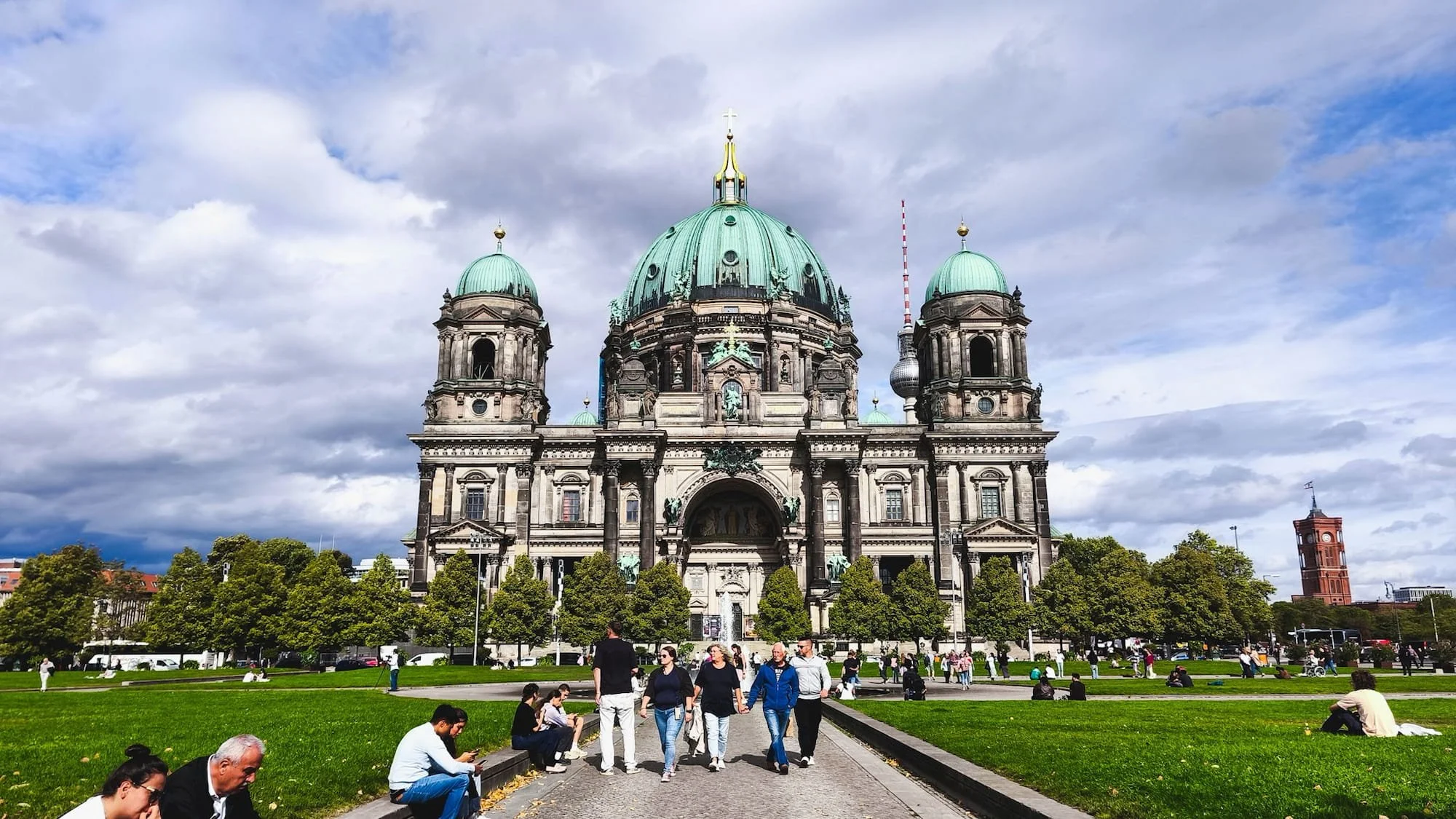
Berlin Cathedral sits prominently beside the Lustgarten and Museum Island. Even if you don’t go inside, the magnificent exterior and surrounding setting give you much of the visual impact (see the top hero image of this post!). We spent some time resting on the benches of Lustgarten facing the Cathedral after visiting the Neues Museum, and it was a nice break for our legs and a feast for our eyes.
How long to spend: Around 10–20 minutes for the exterior; longer if visiting inside.
Pair with: Museum Island, Unter den Linden, and Alexanderplatz area.
Practical info: Viewing the exterior is free, but entering the cathedral costs €15 for adults. The ticket also includes access to the dome's panoramic viewpoint and an audio guide. Opening hours may vary for services and events.
Gendarmenmarkt
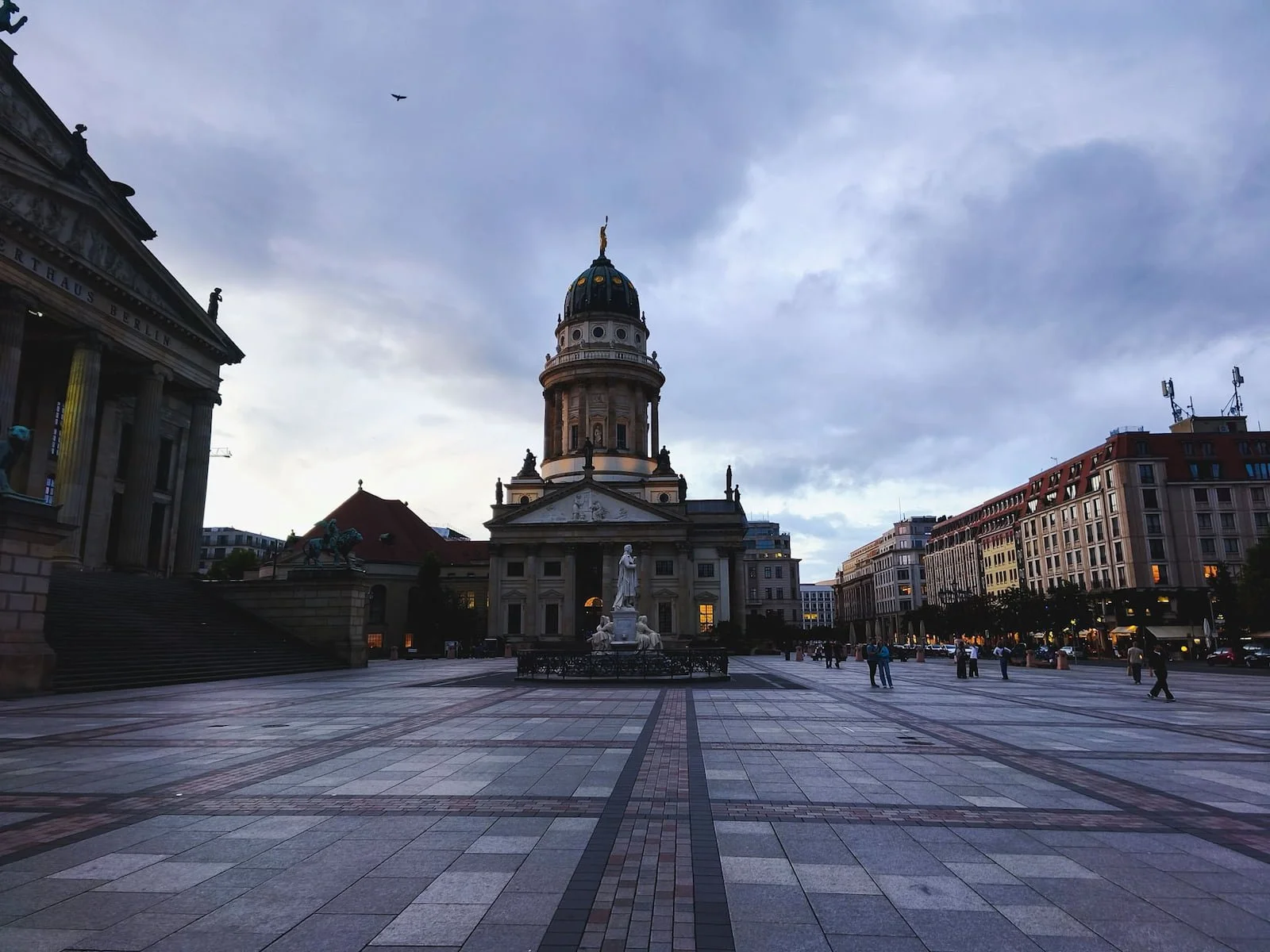
Gendarmenmarkt is one of Berlin's grandest squares, surrounded by elegant historic buildings including the German Cathedral, French Cathedral, and Konzerthaus.
We stopped by briefly before dinner at Augustiner am Gendarmenmarkt, and I really liked the square's elegant architecture and atmosphere. It's a lovely place to admire the buildings for a bit, especially if you're already in the area, and especially when the square is awash with purple evening light.
Charlottenburg Palace
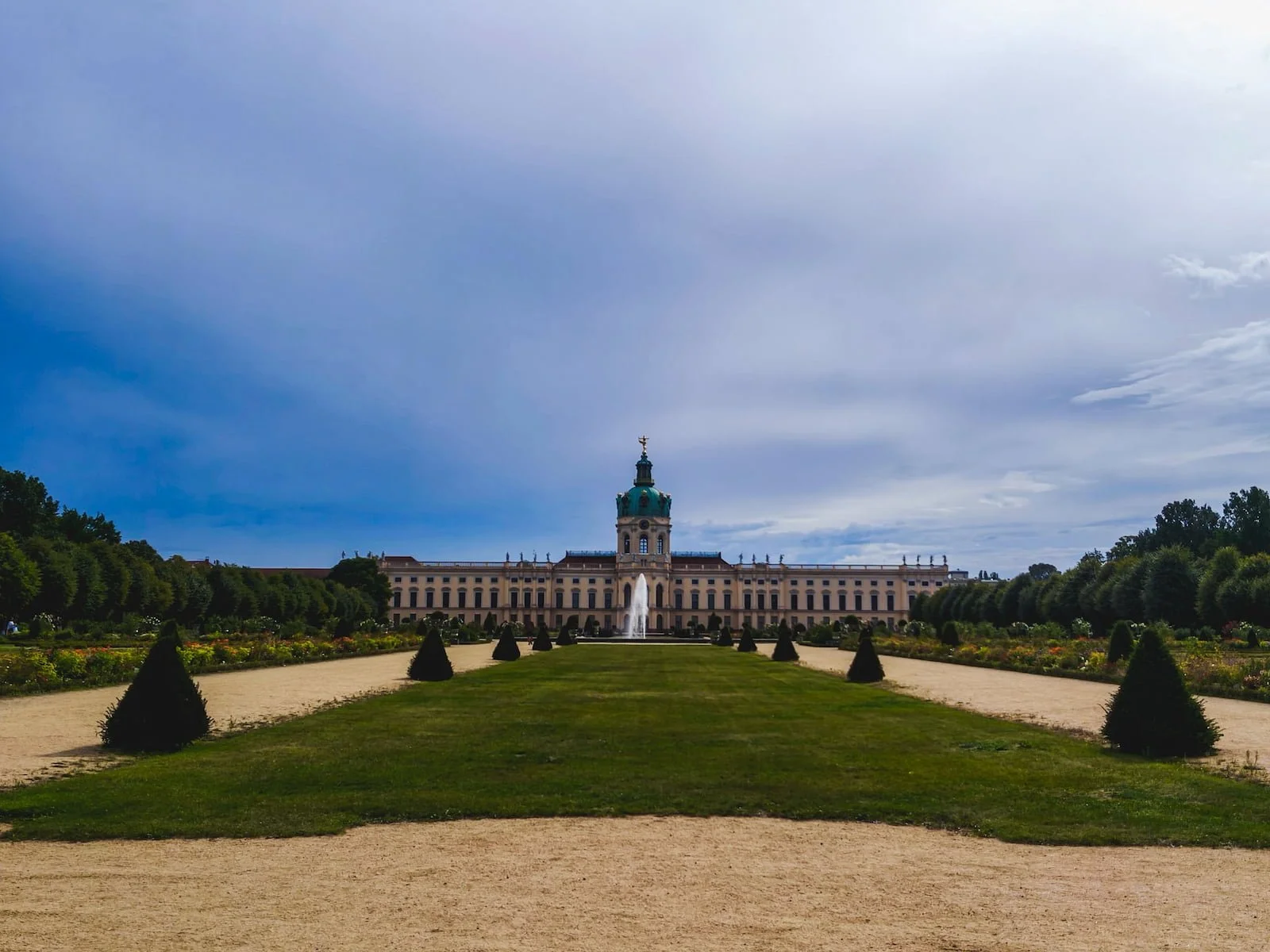
Charlottenburg Palace is Berlin’s largest surviving royal palace and gives you a different period of German history from most of the sights in central Berlin.
We took it easy on our visit there and just strolled around the grounds and gardens looking at the palace façade. When we visited midday on a weekday, it was very quiet, with some joggers and people tending to the gardens, so definitely a peaceful walk.
We didn’t go inside, but if elaborate royal interiors are one of your interests, absolutely see if an interior visit is worth it for you. Otherwise, I think the exterior and gardens work well for a casual West Berlin morning.
How long to spend: Around 45–90 minutes for the exterior and gardens, but considerably longer if visiting inside.
Pair with: Kurfürstendamm and City West.
Practical info: The palace gardens are free and generally open daily from 8 AM until dark. Visiting the palace interiors requires a ticket, and the main palace buildings are normally closed on Mondays.
Hackesche Höfe and Haus Schwarzenberg
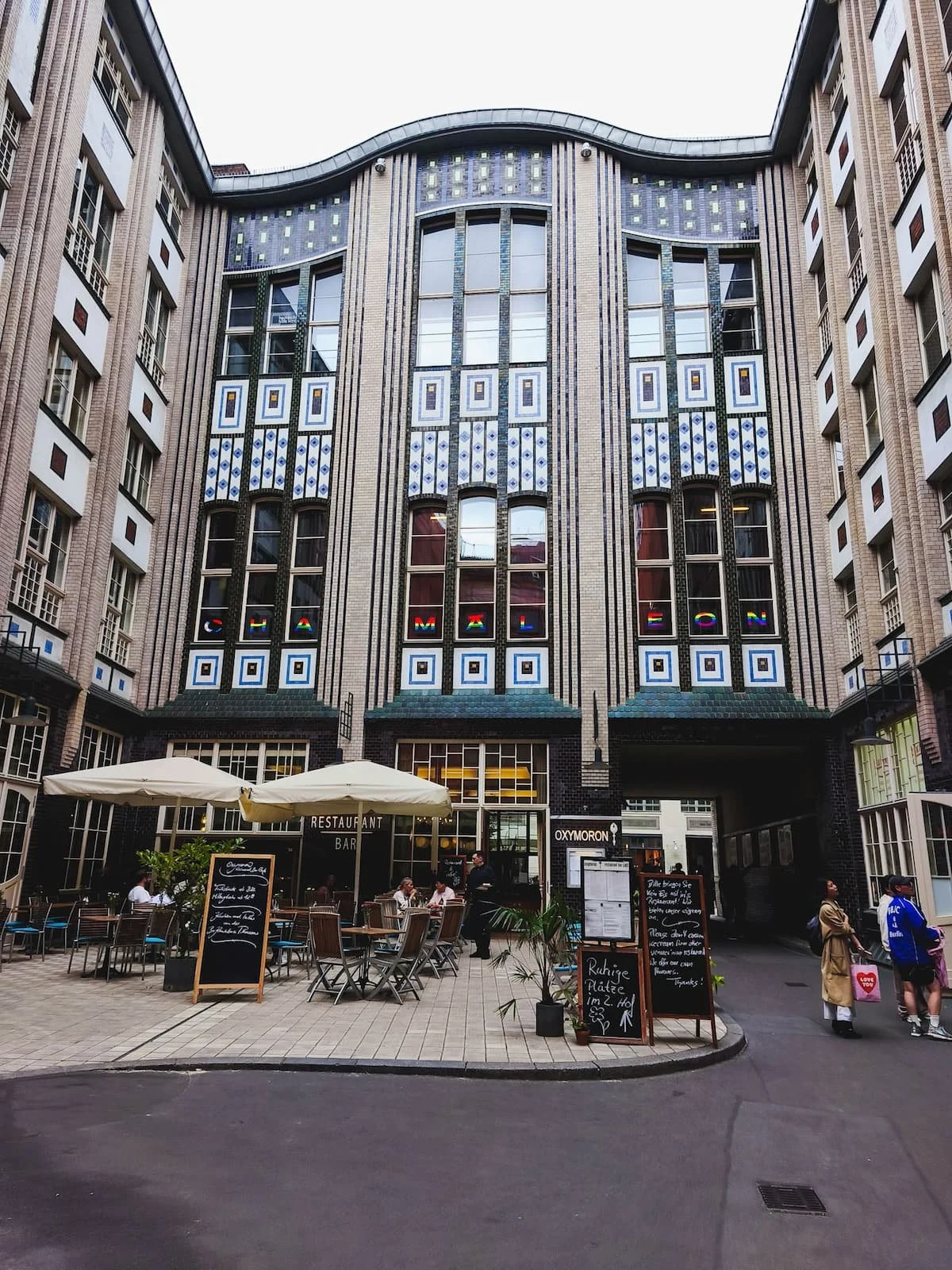
Hackesche Höfe is a series of interconnected Art Nouveau courtyards filled with shops, cafés, and businesses. There is one particularly cute courtyard with green umbrellas and string lights covering an outdoor cafe
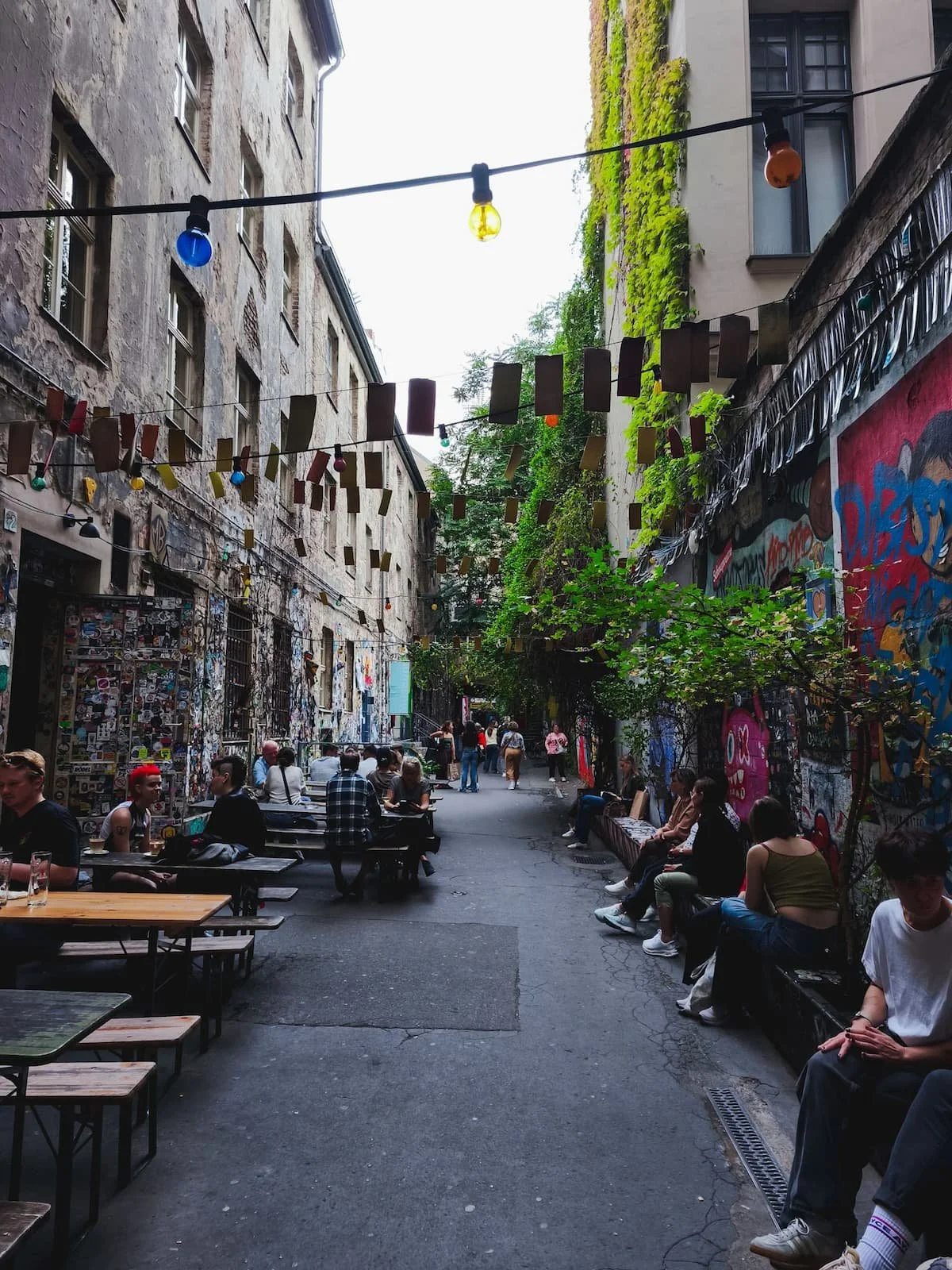
Immediately nearby, Haus Schwarzenberg showcases Berlin’s grunge side. You pass through an unremarkable, easily missed tunnel between buildings to a narrow courtyard covered in street art, with galleries, cultural spaces, and casual pubs with outdoor benches.
Both are quick stops unless you stay for a coffee or beer, but you get two very different visual sides of central Berlin within a few minutes of each other.
How long to spend: Around 30–60 minutes for both, depending on whether you stop at any shops or cafés.
Pair with: Museum Island, Alexanderplatz, and the surrounding Mitte streets.
Kurfürstendamm and City West
West Berlin has to me a noticeably more “fancy” and modern atmosphere from the historical sights around Mitte, and Ku’damm and City West for me was like shopping on steroids.
We visited here on our last day in Berlin and pretty much just spent our entire afternoon and evening shopping — the area is large, dense with all the shops you can think of, and very energetic. Kurfürstendamm (Ku’damm for short), the main boulevard, was historically one of the main commercial streets of West Berlin and today retains the bustle with more than 1 km of shops, hotels, restaurants, and cafés. And KaDeWe is Berlin’s famous historic luxury department store with an aesthetic wooden escalator and large food court.
Besides shopping though, one of the most interesting stops in the area is Kaiser Wilhelm Memorial Church. The original church was badly damaged during World War II, but rather than reconstructing it completely, the ruined tower was preserved beside a modern replacement church. The contrast of the tower and the busy commercial surroundings was especially striking.
Another fun little stop is the free rooftop terrace in Bikini Berlin, where you can look into the monkey enclosure of the Berlin Zoo. We actually did manage to see some rhesus macaques out and about in their enclosure. Bikini Berlin itself is a restored 1950s building that has been converted into a concept mall, but we didn’t enter inside.
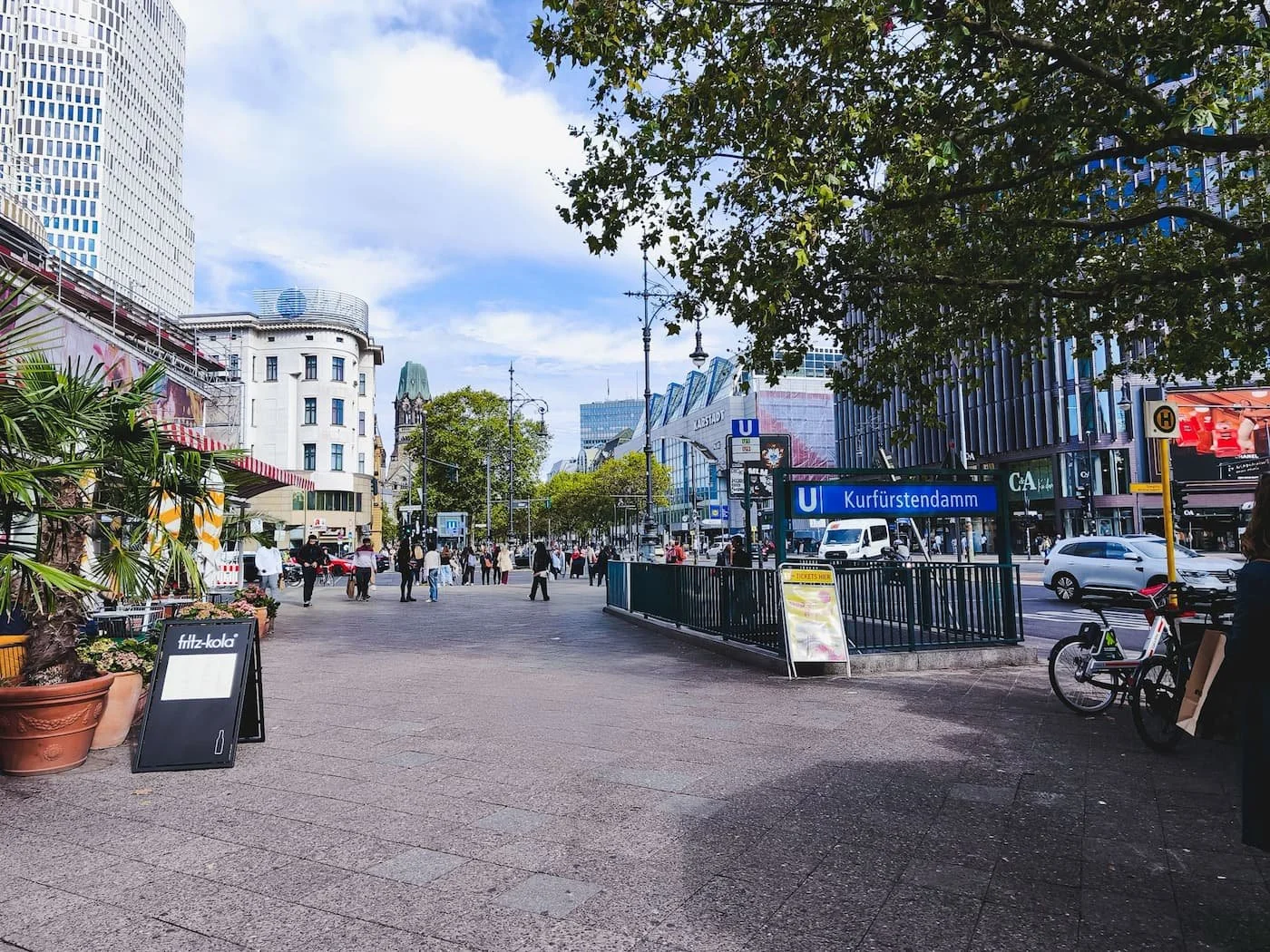
Kurfürstendamm, lots of shops and energy, with Kaiser Wilhelm Memorial Church partially visible in the back.
Tiergarten
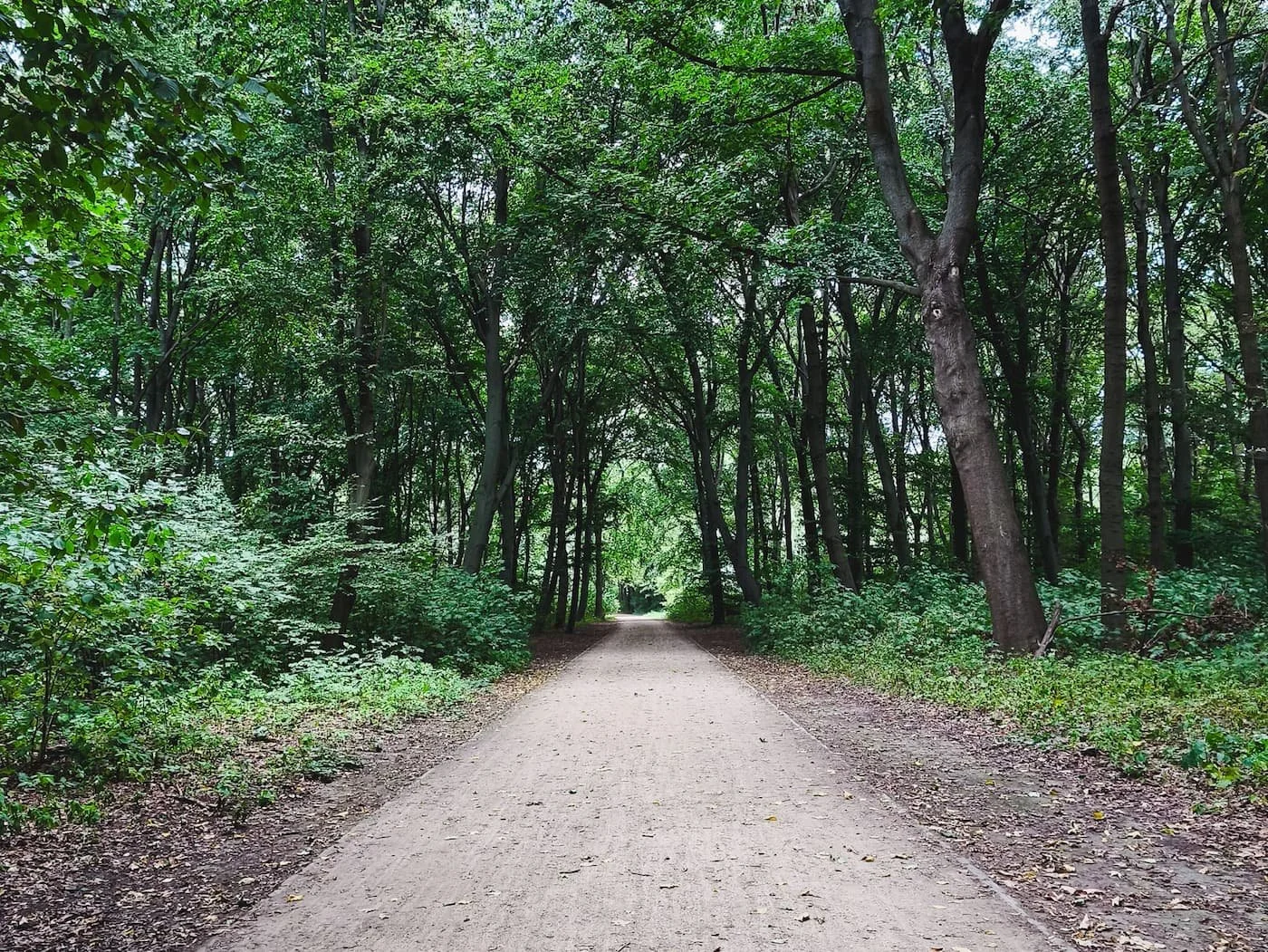
Tiergarten is Berlin’s enormous central park. But unlike New York’s Central Park or London’s Hyde Park, Tiergarten felt quiet and quite forest-like for being in the middle of the city. The paths are wide and long, and the dense and tall trees block out the city sounds when you’re inside.
We walked inside the park after spending the morning at several emotionally heavy historical sites, and it was a welcome change of pace. I’d give yourself time to just walk through the greenery and rest and relax a bit on the many benches.
How long to spend: As little as 20–30 minutes for a short walk, or considerably longer if you want to explore the park.
Pair with: Brandenburg Gate and Reichstag Dome.
Kreuzberg
Kreuzberg is a vibrant, culturally diverse neighborhood known for its nightlife, alternative culture (punk music, street art), and its large Turkish community. A large influx of Turkish residents came and settled into the neighborhood when West Germany invited Gastarbeiter (guest workers) in the 1960s and 1970s.
The neighborhood is directly across the Oberbaum Bridge from the East Side Gallery area, so we primarily walked through the neighborhood the evening after. We also had a Turkish dinner at Adana Grillhaus, a long-running restaurant that specializes in Turkish charcoal-grilled meats.
How long to spend: Around 1–1.5 hours, with additional time if having a meal or enjoying nightlife.
Pair with: East Side Gallery.
Unter den Linden
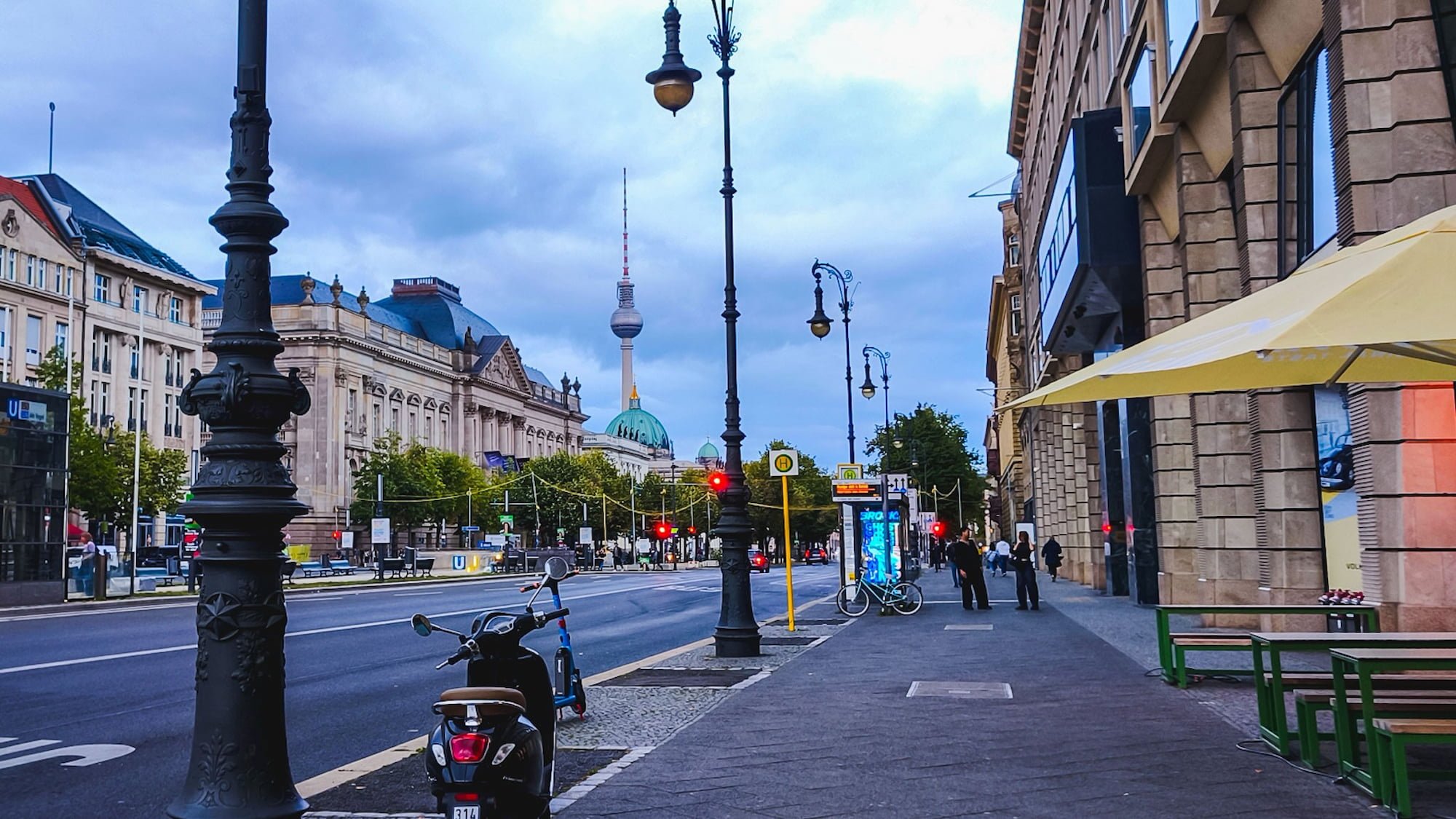
Unter den Linden is the historic boulevard that runs through central Mitte. Unter den Linden translates to “under the lime trees,” for the trees that line the central pedestrian walkway. Along the boulevard, there are a few places to see, including Neue Wache, Germany’s central memorial to victims of war and dictatorship, and nearby Bebelplatz, the plaza where the Nazi book burning of May 10, 1933 took place.
Besides the history, it's an atmospheric walk, and I particularly liked the boulevard in the evening light. Also I recommend stopping by the AMPELMANN flagship on the street — it’s a shop dedicated to the pedestrian traffic light men in the city and it’s super cute.
How long to spend: Around 30–60 minutes, depending on how often you stop.
Pair with: Museum Island and Brandenburg Gate.
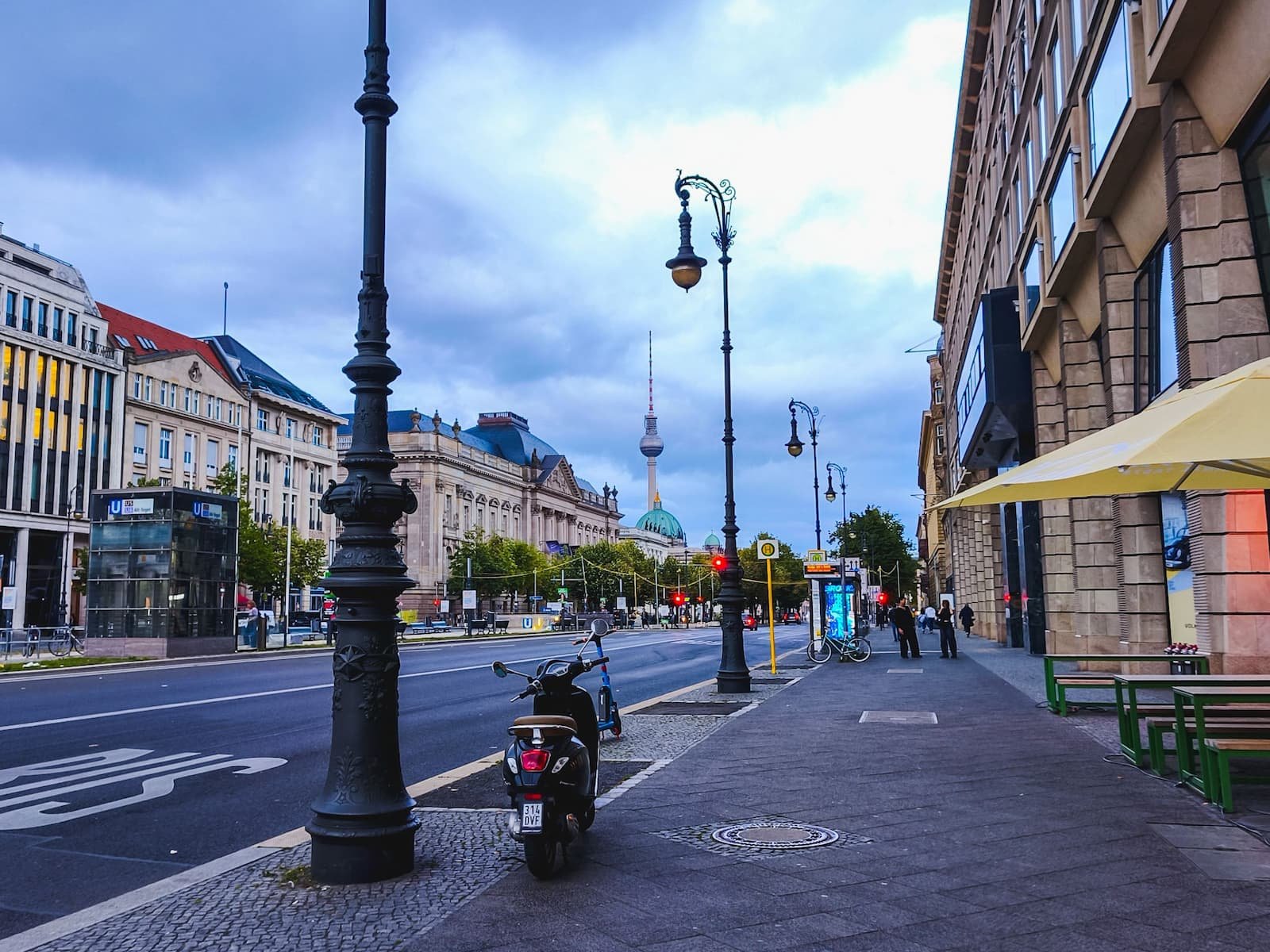
Unter den Liden facing east. You can see the Fernsehturm and the dome of the Berlin Cathedral in the background.
Nikolaiviertel
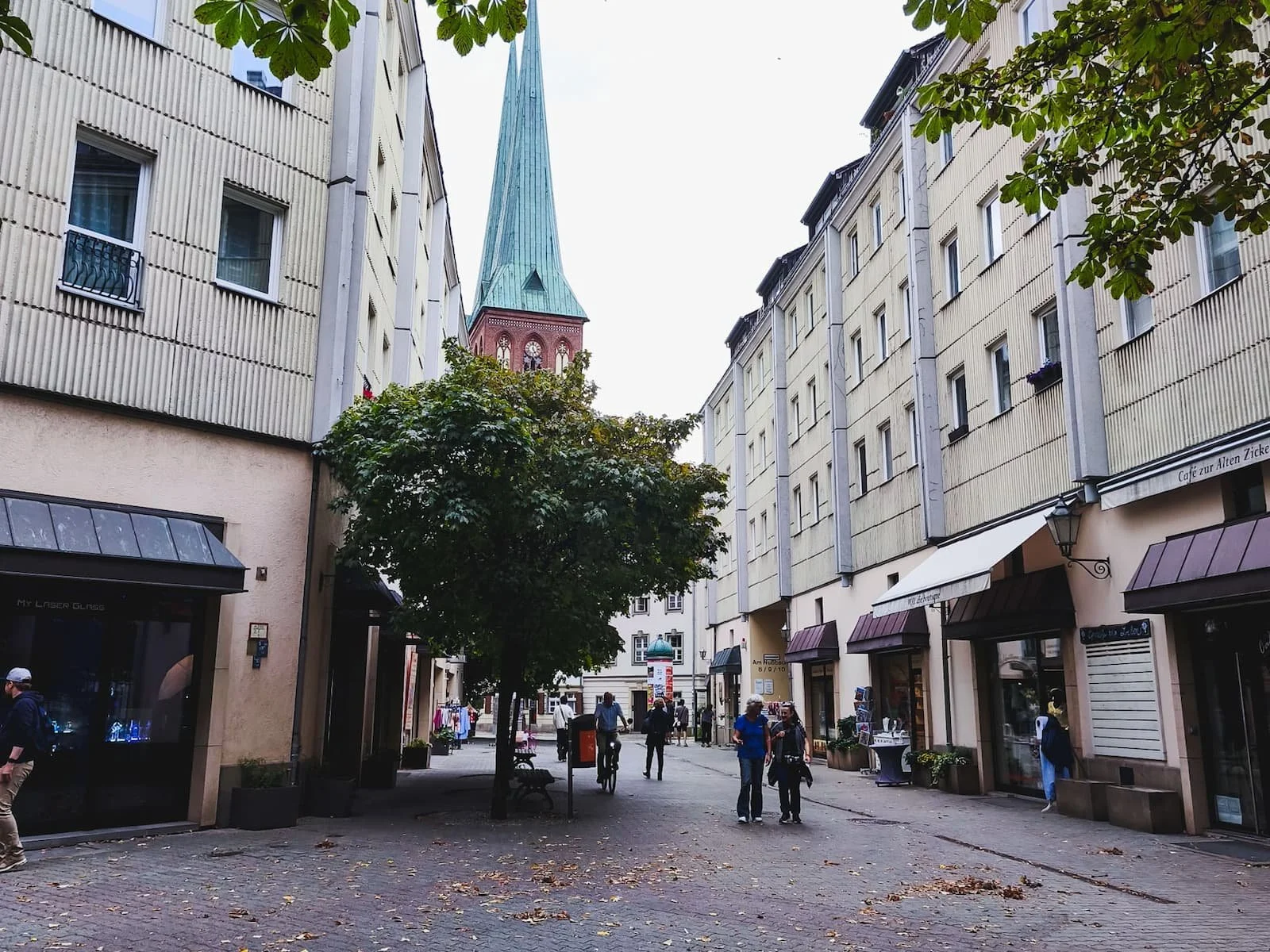
Nikolaiviertel is often described as Berlin’s old quarter, although that description can be a little misleading. Much of the neighborhood was heavily damaged during World War II and what you see today is largely reconstructed.
But even when it’s not an untouched medieval old town, there are cobbled streets, traditional-looking façades, and the 13th-century St. Nicholas Church (the oldest church in Berlin). Plus, the little area is surrounded by apartment buildings, so it does feel like a quiet pocket among the hustle bustle.
Spree River Walk
The Spree runs through Berlin, and you'll encounter it especially when walking around Mitte. But honestly, unlike cities like Paris and London, I felt like the river was less central to the city's atmosphere.
I mostly just strolled along the river on my way between places in Mitte, but there are some nice waterfront walkways, especially around Museum Island.
What to Eat in Berlin
Berlin's food scene reflects the city's multicultural character, with everything from traditional German beer halls to Turkish kebab shops and Vietnamese restaurants. Here are some of the foods we tried and places we enjoyed.
Döner Kebab
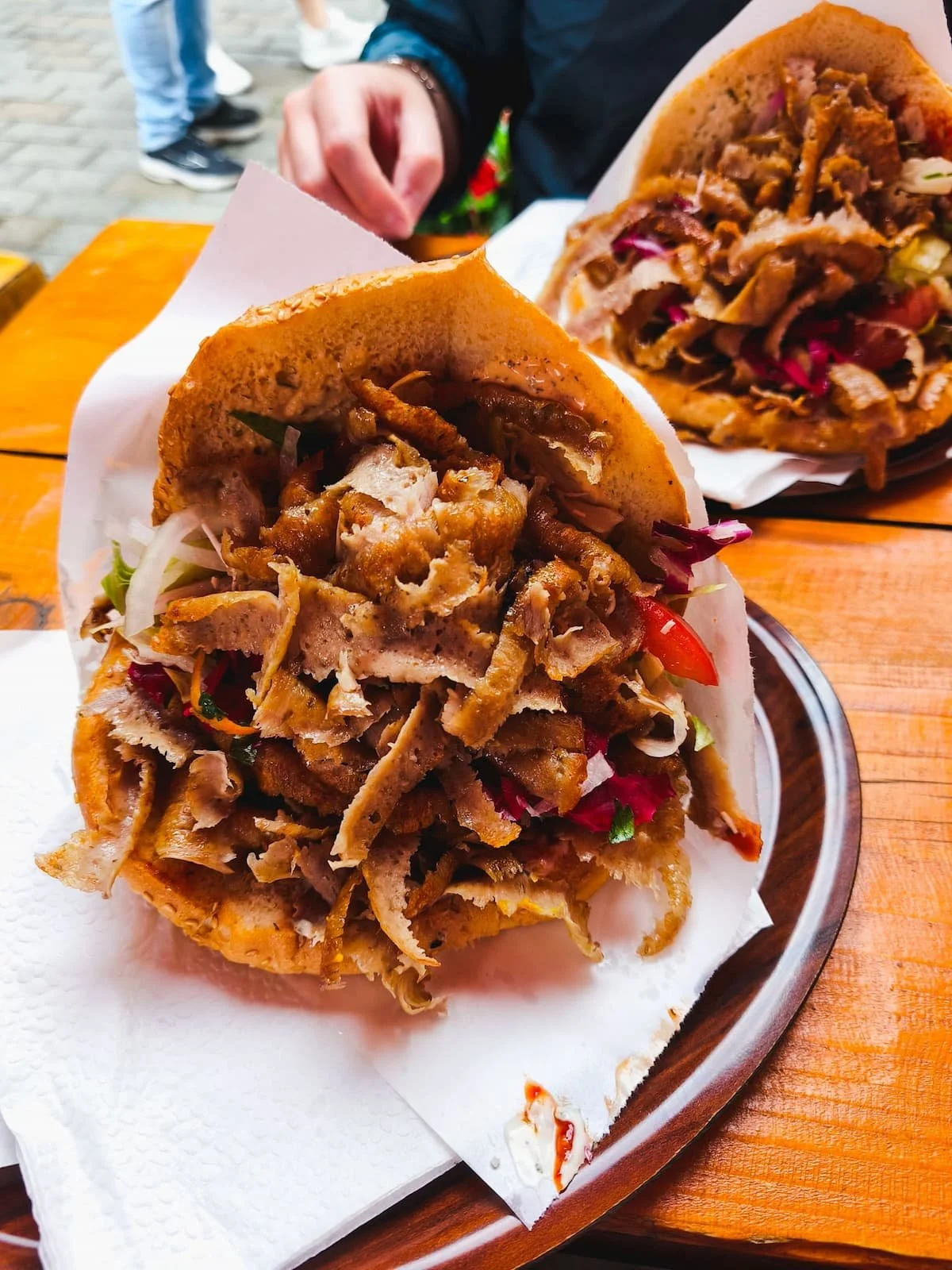
One of the most popular casual eats in Berlin, you'll see döner kebab stands everywhere. Originally a Turkish dish, döner became a staple of Berlin's street food scene through Turkish immigration, with the popular German version typically served in flatbread with thinly sliced meat from a rotating spit, vegetables, and sauces.
We had ours at Mustafa's Can Gemüse Kebap, a popular spot in Mitte near Hackescher Markt.
Currywurst
A popular German fast food, currywurst is pork sausage cut into bite-sized pieces and drenched in a curry-flavored tomato sauce.
We had it a couple of times at two different Curry Wolf locations, and both times opted for the extra-spicy Opium sauce, which was actually properly spicy.
Traditional German Food
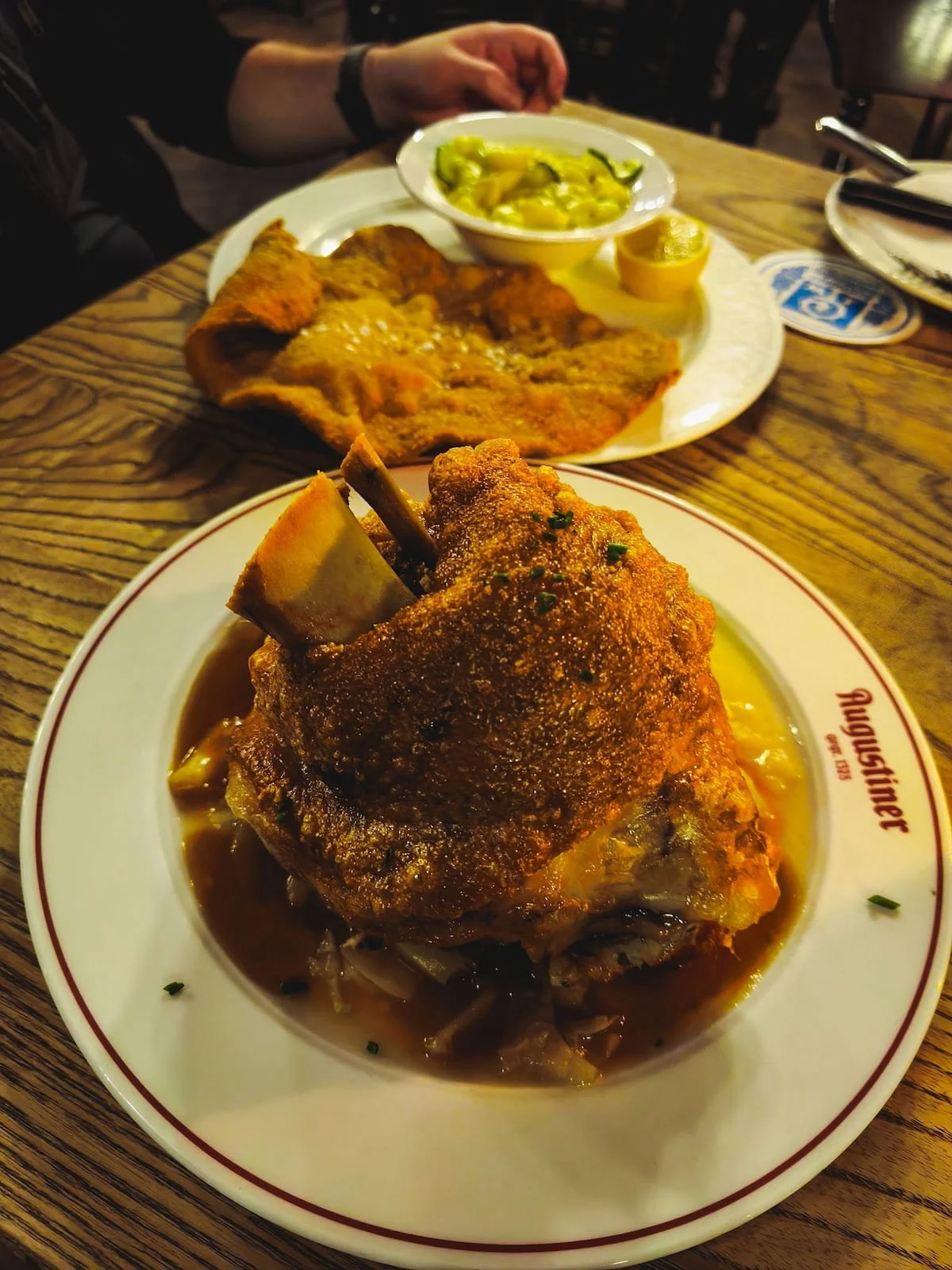
Beer, sausages, and giant pork knuckles — need I say more? Traditional German food can be quite heavy, though, so we only had one meal of it on our trip.
We went to Augustiner am Gendarmenmarkt, a traditional Bavarian-style beer hall that excelled in mood-setting, with the staff even wearing traditional-style clothing. The pork knuckle was excellent and could probably feed three people.
Vietnamese Food
Berlin has a significant Vietnamese community, partly due to migration to former East Germany, which recruited Vietnamese contract workers during the Cold War. Today, the city has a thriving Vietnamese food scene.
We had Vietnamese food quite a few times during our visit, and some of our favorite places were Song Nguu “Wasserbüffel” in Prenzlauer Berg for its bún bò nam bộ and Saigon Com Nieu in Schöneberg for its beef pho.
Turkish Food
Beyond döner kebab, Berlin has plenty of Turkish restaurants serving grilled meats and other traditional dishes.
We had dinner at Adana Grillhaus in Kreuzberg, a long-running restaurant specializing in Turkish charcoal-grilled meats. We ordered a şiş kebab wrap and an Adana kebab wrap, along with a salad and ayran (a Turkish yogurt drink) to complement the meat. The grilled meat had that perfect smoky flavor and juiciness, though in retrospect, I would’ve ordered a plate rather than a wrap so the meat could take center stage.
Questions?
Thanks for reading! Feel free to leave a comment below or send me a message with any questions — I’m always happy to help when I can. And if you visit any of these places, I’d love to hear what you think!
If you’re ready to put together your Berlin trip, check out my 4-Day Berlin Itinerary for realistic daily routes, suggested timing, and tips for making the most of your visit.
You may also like:
Berlin Public Transportation Guide (coming soon) — how to navigate Berlin's U-Bahn, S-Bahn, trams, and buses, including tickets and fares.
Copenhagen 2-Day Itinerary — another European capital (one direct train ride from Berlin!) with historic sights, beautiful architecture, and neighborhoods worth exploring.
My One-Bag Gear List — everything I pack to travel with just one bag, making it easier to move between cities and use public transportation.