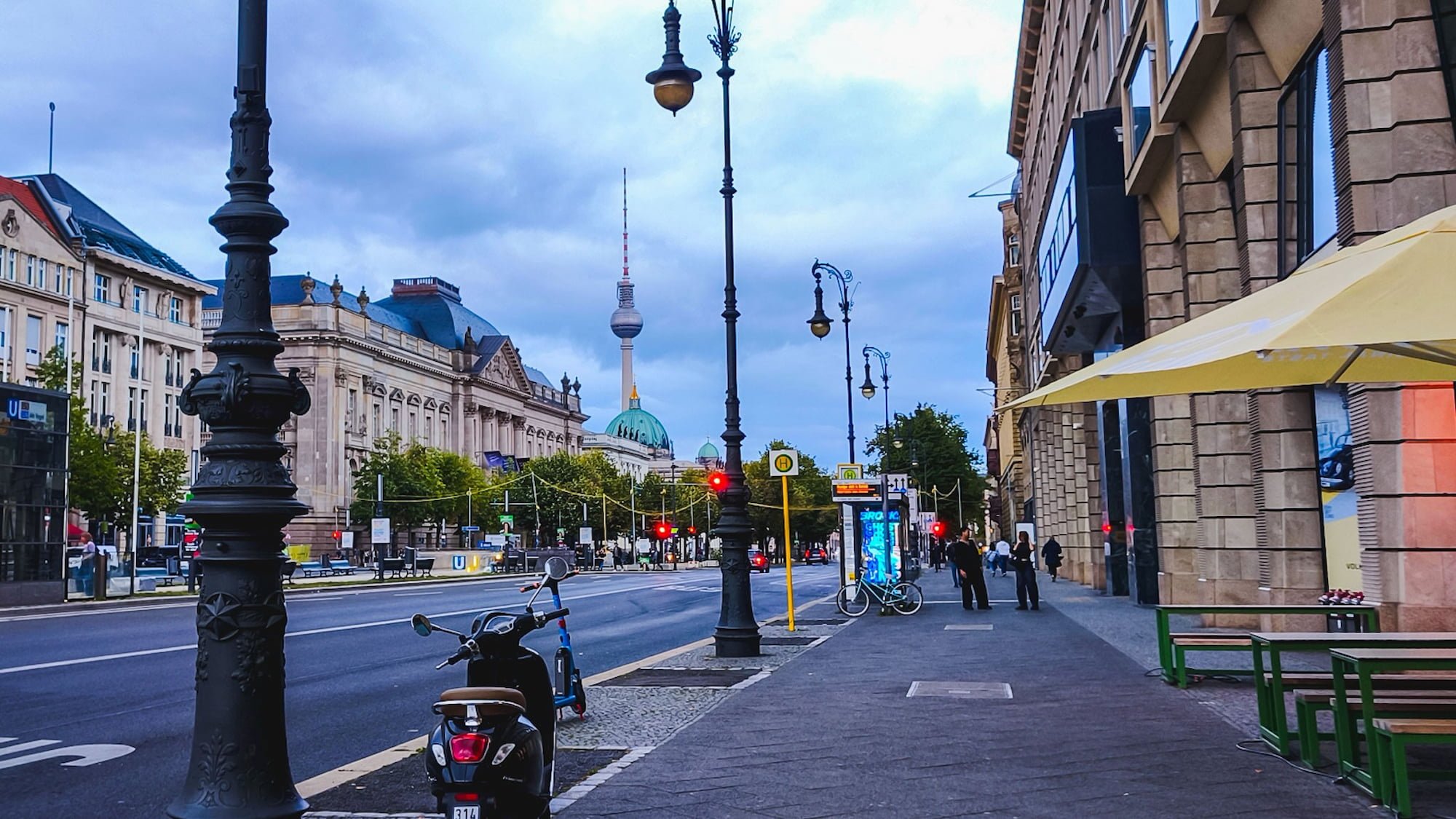
4 Days in Berlin: A Day-by-Day Itinerary with Maps & Routes
Berlin is sprawling, history-rich, and a little more complicated to plan since its major sights are spread out across neighborhoods rather than sit within one compact historic center.
This four-day Berlin itinerary is designed to be ready to follow as-is. I built and followed these routes for my own trip, covering Berlin’s major 20th-century historical sights, historic Mitte and Museum Island, the Berlin Wall and surrounding neighborhoods, and former West Berlin. I’ve already accounted for geography, realistic time at each stop, transportation between different parts of the city, and emblematic foods to eat in the city. So, you can just take it and go, but I also included notes for scheduling considerations, reservations, and practical notes when navigating the city :)
This guide is intentionally focused on the itinerary itself. If you want more detail on individual sights, including my personal impressions and recommendations, see my Things to Do in Berlin guide, coming soon.
Quick Plan
Best for: First-time visitors who want a structured, well-planned way to experience Berlin’s major historical sights, neighborhoods, museums, and food without guided tours.
Day 1 — 20th-Century Berlin: Checkpoint Charlie, Topography of Terror, Holocaust Memorial, Brandenburg Gate, Tiergarten, the government district, and Reichstag.
Day 2 — Historic Mitte + Museum Island: Alexanderplatz, Nikolaiviertel, Hackescher Markt, Museum Island, Berlin Cathedral, and Unter den Linden.
Day 3 — Berlin Wall + Neighborhoods: Berlin Wall Memorial, Mauerpark, Prenzlauer Berg, East Side Gallery, Oberbaum Bridge, and Kreuzberg.
Day 4 — West Berlin: Charlottenburg Palace, Savignyplatz, Kurfürstendamm, Kaiser Wilhelm Memorial Church, Bikini Berlin, and City West.
Pace: Full overall. Days 1 and 2 are the most structured because of the major museums and timed-entry considerations.
Walking level: High. All four days involve substantial walking, though public transportation cuts down the longer stretches between neighborhoods.
Transportation needed: Public transportation to/from start/end points each day, and to cut longer stretches of walking.
Main scheduling considerations: Reichstag reservations, Museum Island museum opening days, the Sunday Mauerpark flea market if you want to see it, and Charlottenburg Palace if you plan to enter. See the Planning Notes section below for booking links and current-hour notes.
Berlin Itinerary Map
Below is an overview map of the main places covered each day, but here are also ready-to-use Google Maps routes for each day:
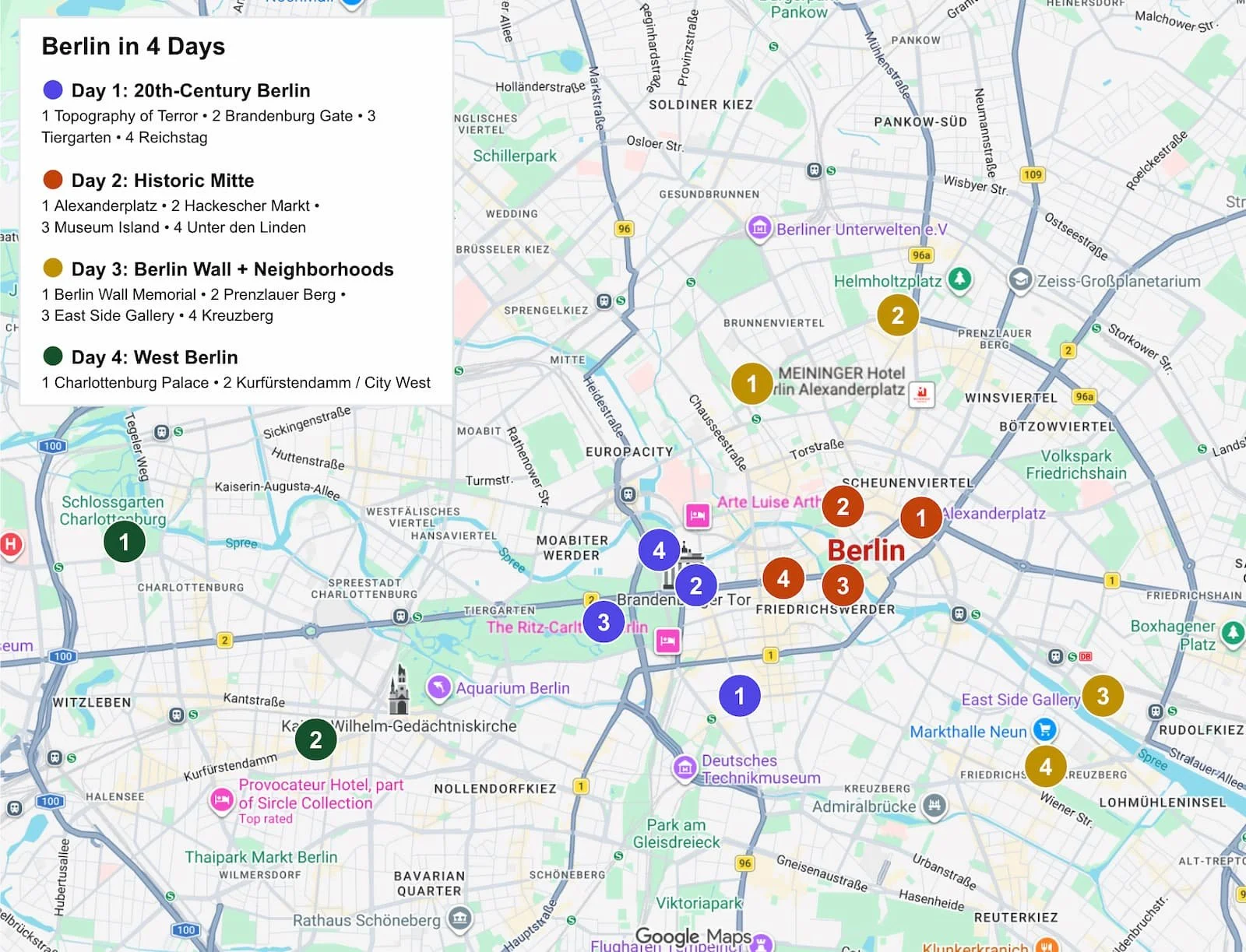
Map data © Google.
Day 1: 20th-Century Berlin
This day has a strong historical arc, covering some of the defining events of Berlin’s 20th-century history — from Nazi terror and Holocaust remembrance to Cold War division — before finishing among the institutions of modern democratic Berlin.
Route
Checkpoint Charlie → Topography of Terror → Holocaust Memorial → Brandenburg Gate → Tiergarten → government district + Reichstag → traditional German dinner at Gendarmenmarkt
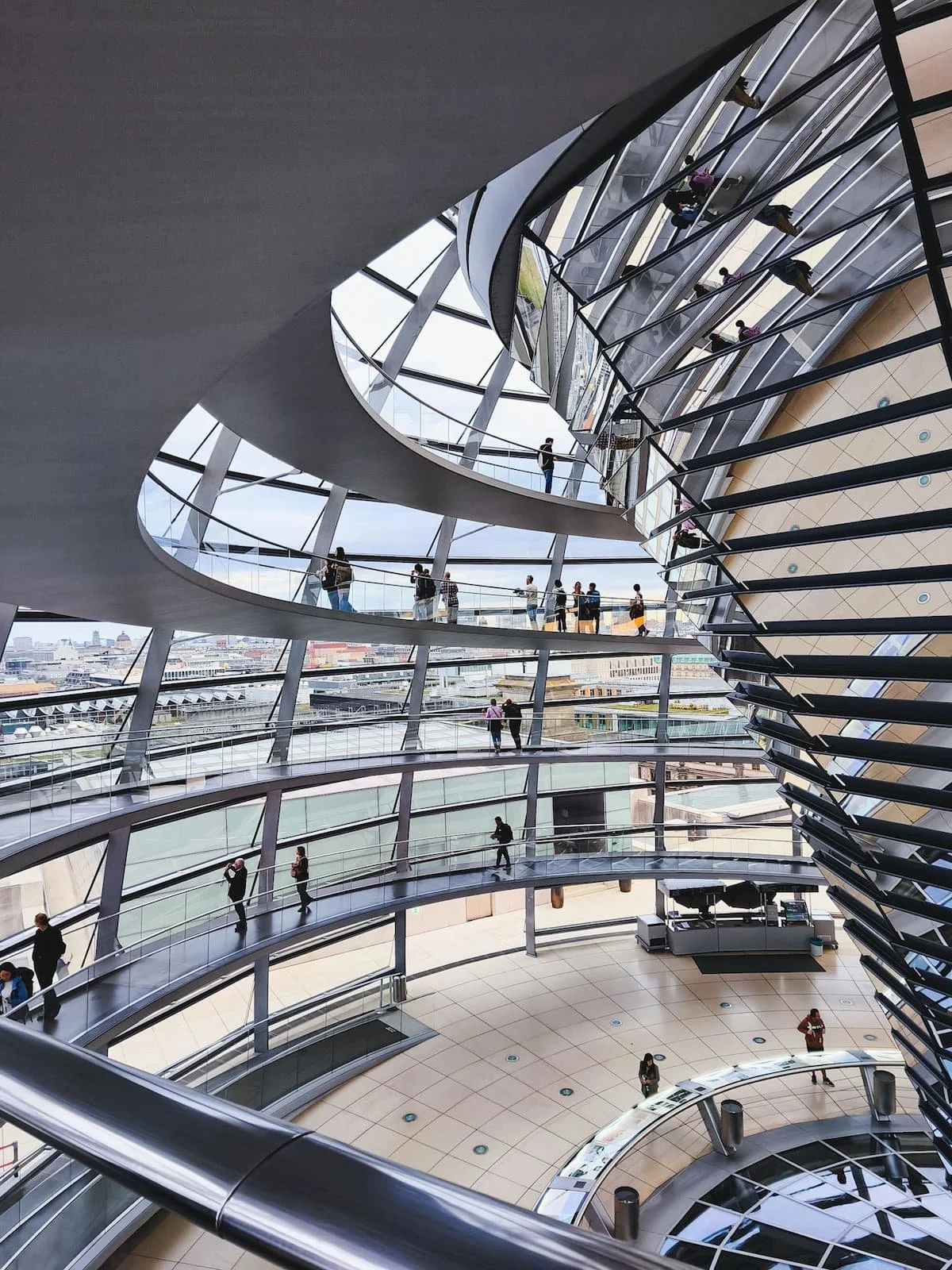
Inside the Reichstag dome, where you can walk the ramp and see a panoramic view of the city.
Morning — Checkpoint Charlie + Topography of Terror
Checkpoint Charlie — The best-known former crossing point between East and West Berlin during the Cold War. Today it’s very touristy, so I’d treat it as a quick stop; 15–20 minutes is plenty.
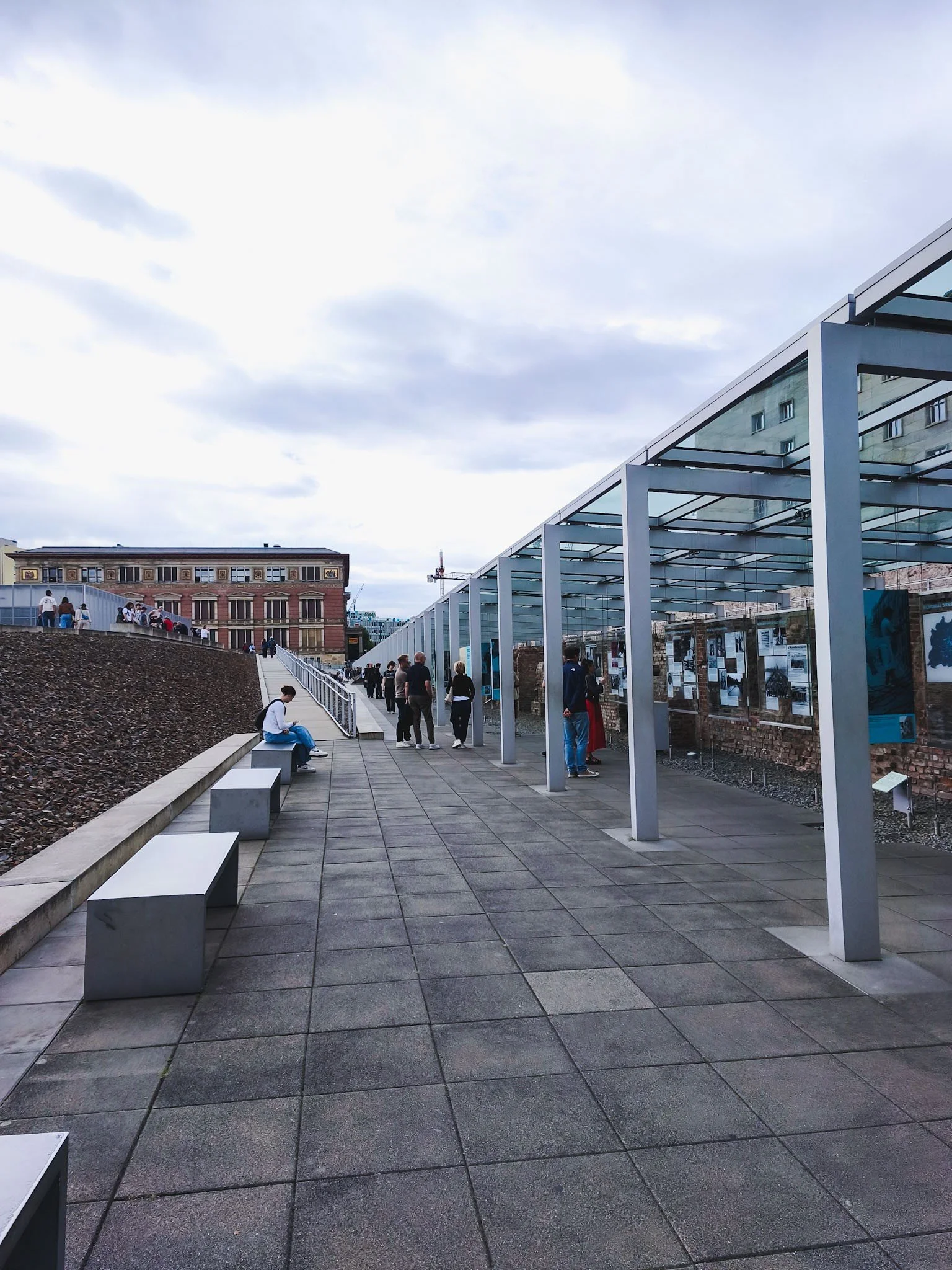
Topography of Terror — A free museum on the former site of the Gestapo and SS headquarters, documenting the institutions and crimes of the Nazi regime. The exhibition is incredibly detailed and emotionally heavy, so I’d allow around 1.5–2 hours here.
Midday — Holocaust Memorial
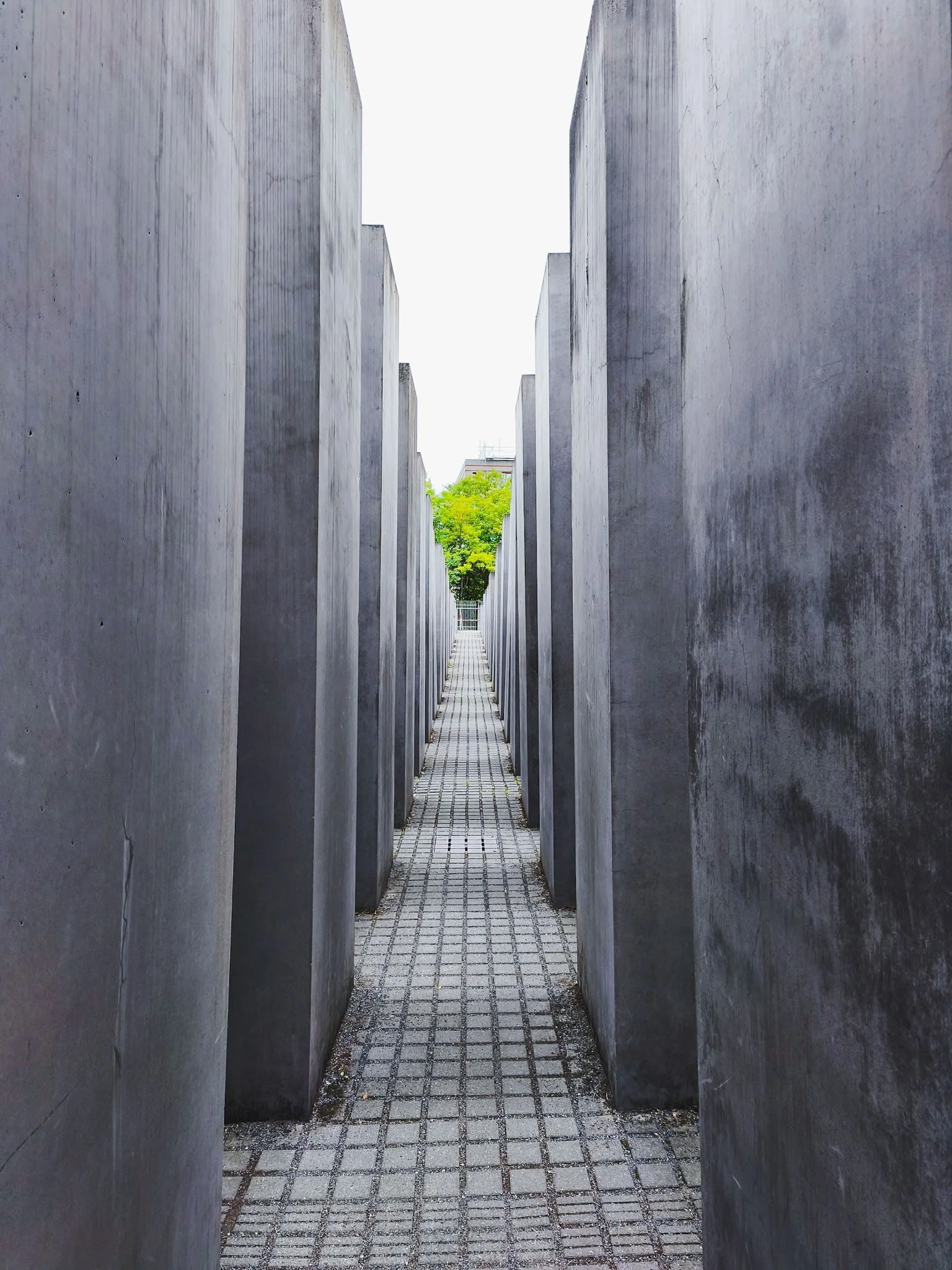
Memorial to the Murdered Jews of Europe — A memorial of 2,711 concrete stelae near Brandenburg Gate, with an underground information center focused on the lives and stories of Holocaust victims. Allow around 30–45 minutes, or longer if you spend significant time in the information center.
Lunch — Currywurst at Curry Wolf
Curry Wolf — Casual stand near Brandenburg Gate serving currywurst, a Berlin street-food staple of sliced sausage topped with curry-spiced tomato sauce and curry powder. I’d get the original Berliner currywurst with fries, plus the Opium sauce only if you genuinely like spicy food. Allow around 30 minutes for lunch, and they accept credit cards or cash.
Afternoon — Brandenburg Gate + Tiergarten
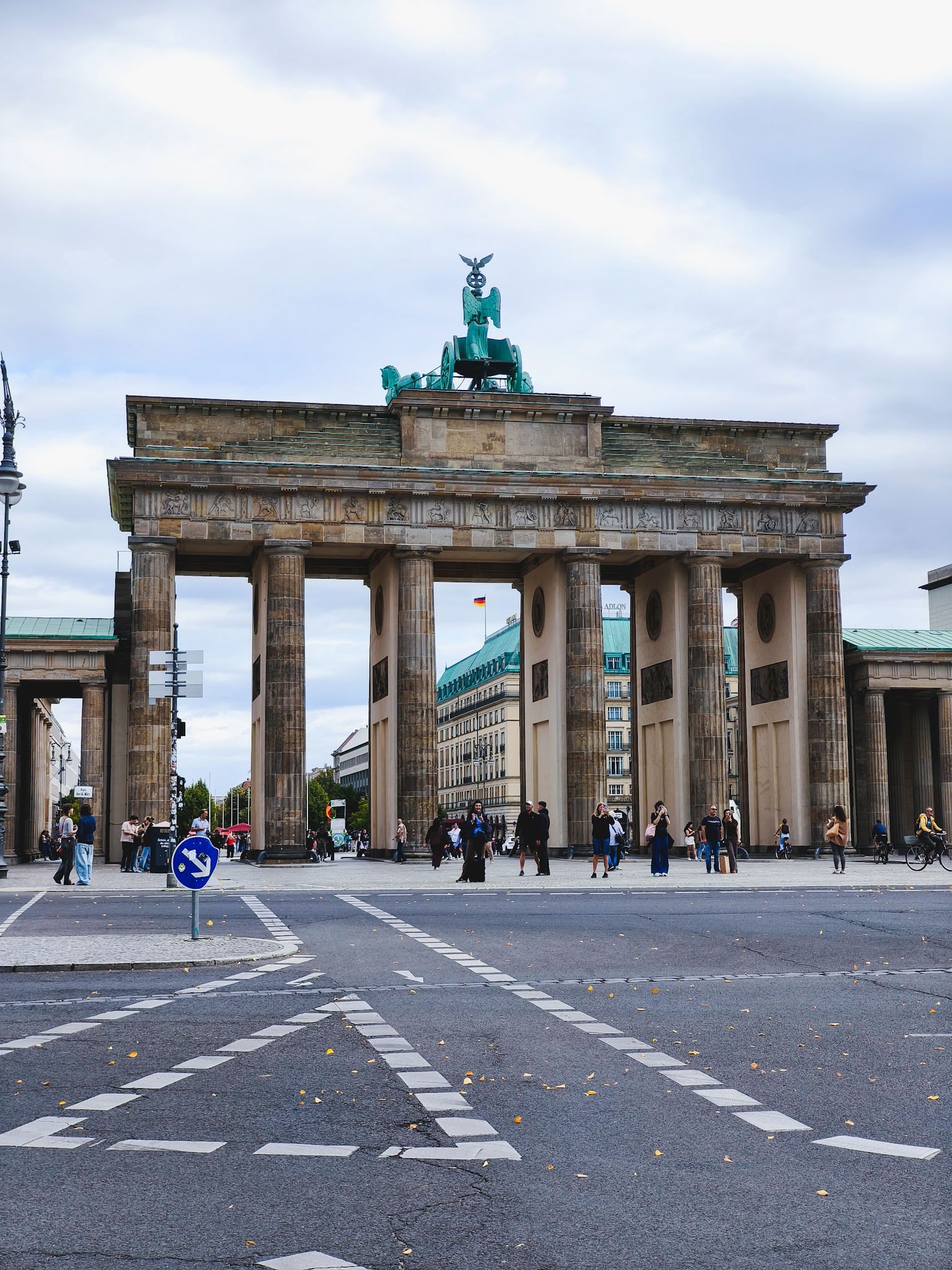
Brandenburg Gate + Pariser Platz — Berlin’s most recognizable landmark and a major symbol of the city’s division and later reunification, set on the grand Pariser Platz. Around 20–30 minutes is plenty to see the gate and surrounding square.
Tiergarten — Berlin’s enormous central park, with wooded paths, lawns, and plenty of space to slow down after the heavier historical stops earlier in the day. I’d give yourself around 1–1.5 hours to walk through the park toward the government district without rushing.
Late Afternoon / Evening — Government District + Reichstag
Government district — The modern parliamentary area along the Spree, including the Federal Chancellery and major Bundestag buildings. Allow around 30–45 minutes to walk through the area before continuing to the Reichstag.
Reichstag — Germany’s parliament building, topped by Norman Foster’s glass dome with panoramic views across Berlin. The visit itself takes around 1–1.5 hours, but arrive at least 30 minutes before your reservation for identity checks and security.
Dinner — Traditional German in Gendarmenmarkt
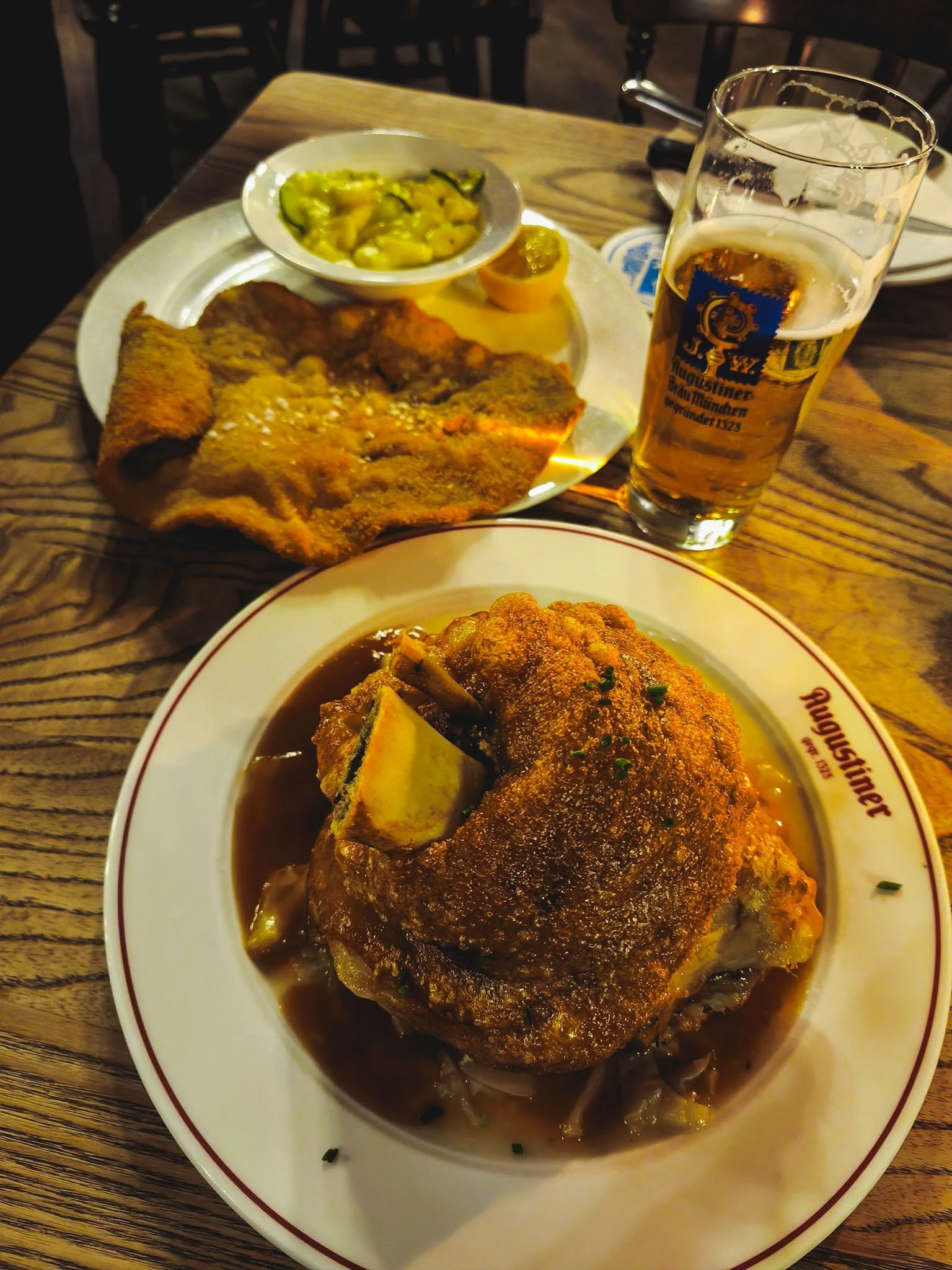
Augustiner am Gendarmenmarkt — Bavarian-style restaurant on one of Berlin’s grandest central squares, serving traditional German dishes and Augustiner beer. For two people, I’d order the crispy pork roast, pork schnitzel Wiener Art, apple strudel to share, and beer. Plan around 1.5 hours for a relaxed dinner, and they accept credit cards or cash.
Day 1 Example Timing
Day 2: Historic Mitte
This day focuses on Berlin’s historic center, moving from major former East Berlin landmarks through the reconstructed old quarter, then to Museum Island and the grand boulevard of Unter den Linden.
Route
Alexanderplatz + Nikolaiviertel → döner lunch at Mustafa’s Can Gemüse Kebap → Hackesche Höfe + Haus Schwarzenberg → Museum Island + Berlin Cathedral → Unter den Linden + Neue Wache + Bebelplatz
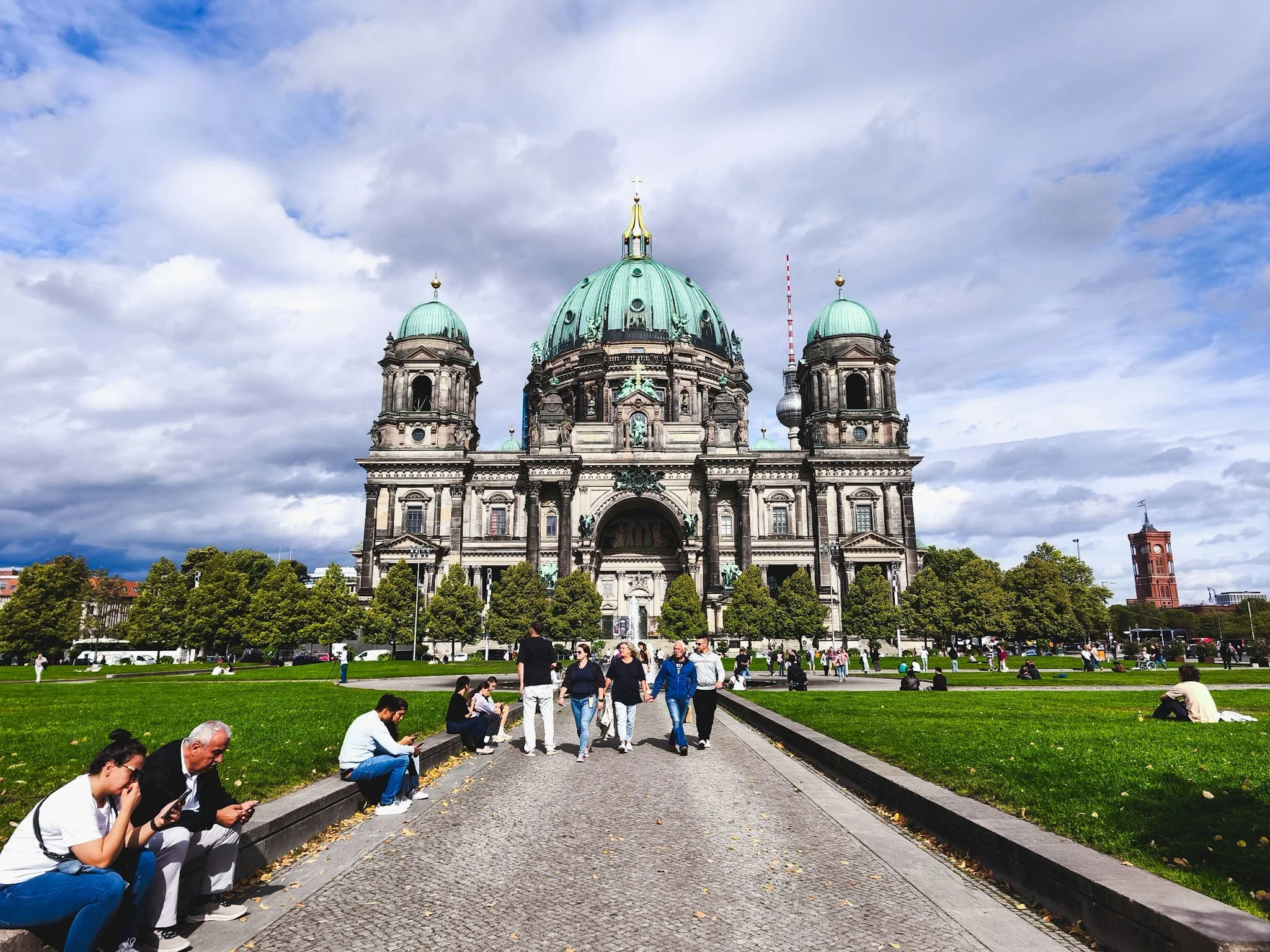
Berlin Cathedral is quite impressive in the open setting of Lustgarten.
Morning — Alexanderplatz + Nikolaiviertel
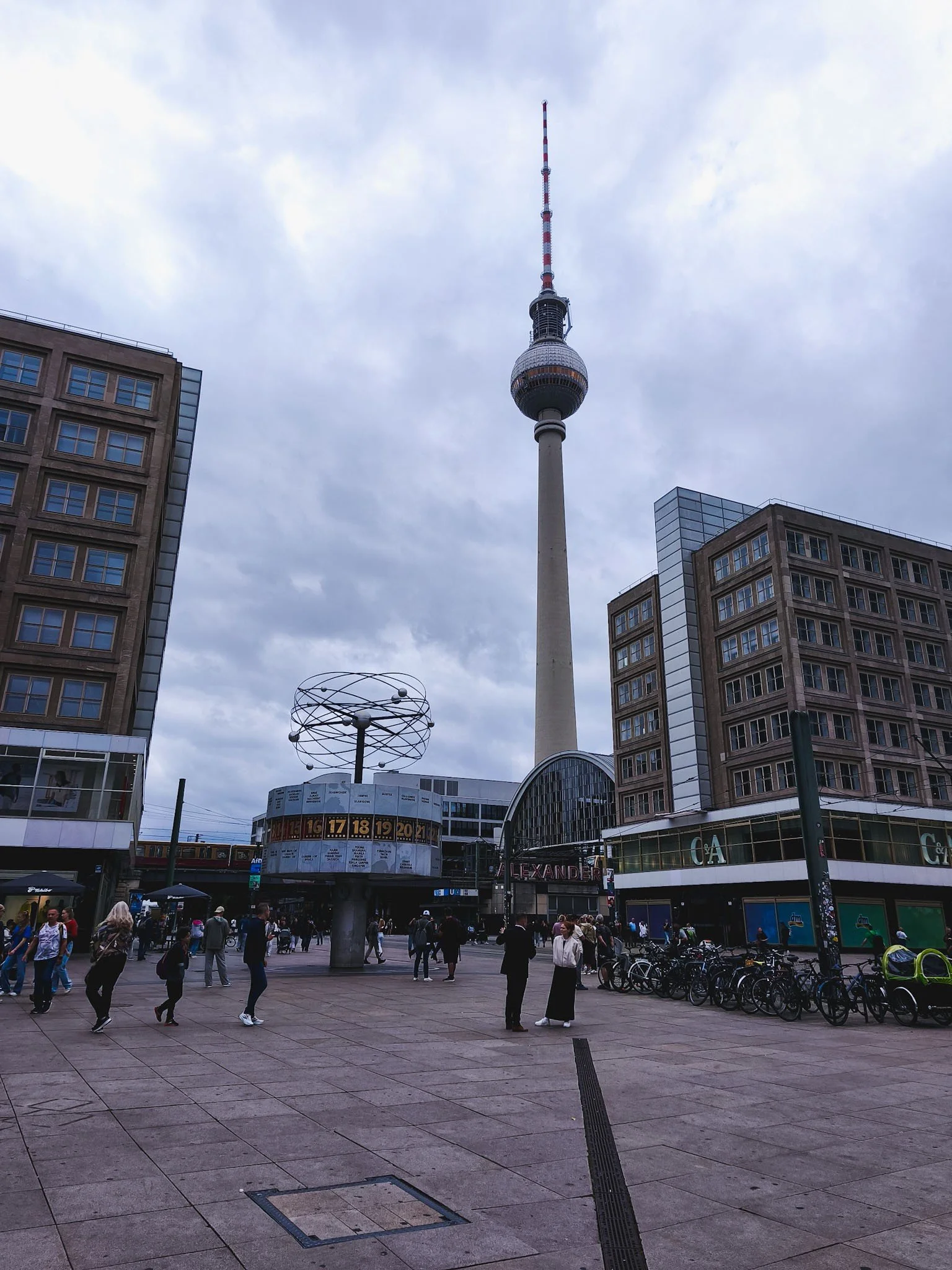
Alexanderplatz — Major square and transport hub known for its Soviet-era architecture and its role as a commercial center of East Berlin. You’ll also see the Fernsehturm, Berlin’s distinctive television tower, and the World Clock. Around 30 minutes is enough here.
Nikolaiviertel — Reconstructed historic quarter beside the Spree, with cobbled lanes, traditional-looking façades, and St. Nicholas Church at its center. This was a quick look for me — 10–15 minutes is enough to wander through the neighborhood and continue toward Hackescher Markt.
Spree riverside — From Nikolaiviertel, continue along the river toward Hackescher Markt for a more scenic transition through central Berlin.
Early Lunch — Döner at Mustafa’s Can Gemüse Kebap
Mustafa’s Can Gemüse Kebap — Popular döner stand near Hackescher Markt serving Berlin-style kebabs with meat, grilled vegetables, cheese, lemon, sauces, and fresh toppings. I’d get the chicken Gemüse kebap in bread with the full toppings. Recommend going for an early lunch since the line tends to be long during proper lunch time. Plan around 1 hour for queueing and eating, and they accept credit cards or cash.
Early Afternoon — Hackesche Höfe + Haus Schwarzenberg
Hackescher Markt — Busy central square surrounded by restaurants and shops, including many modern chains.
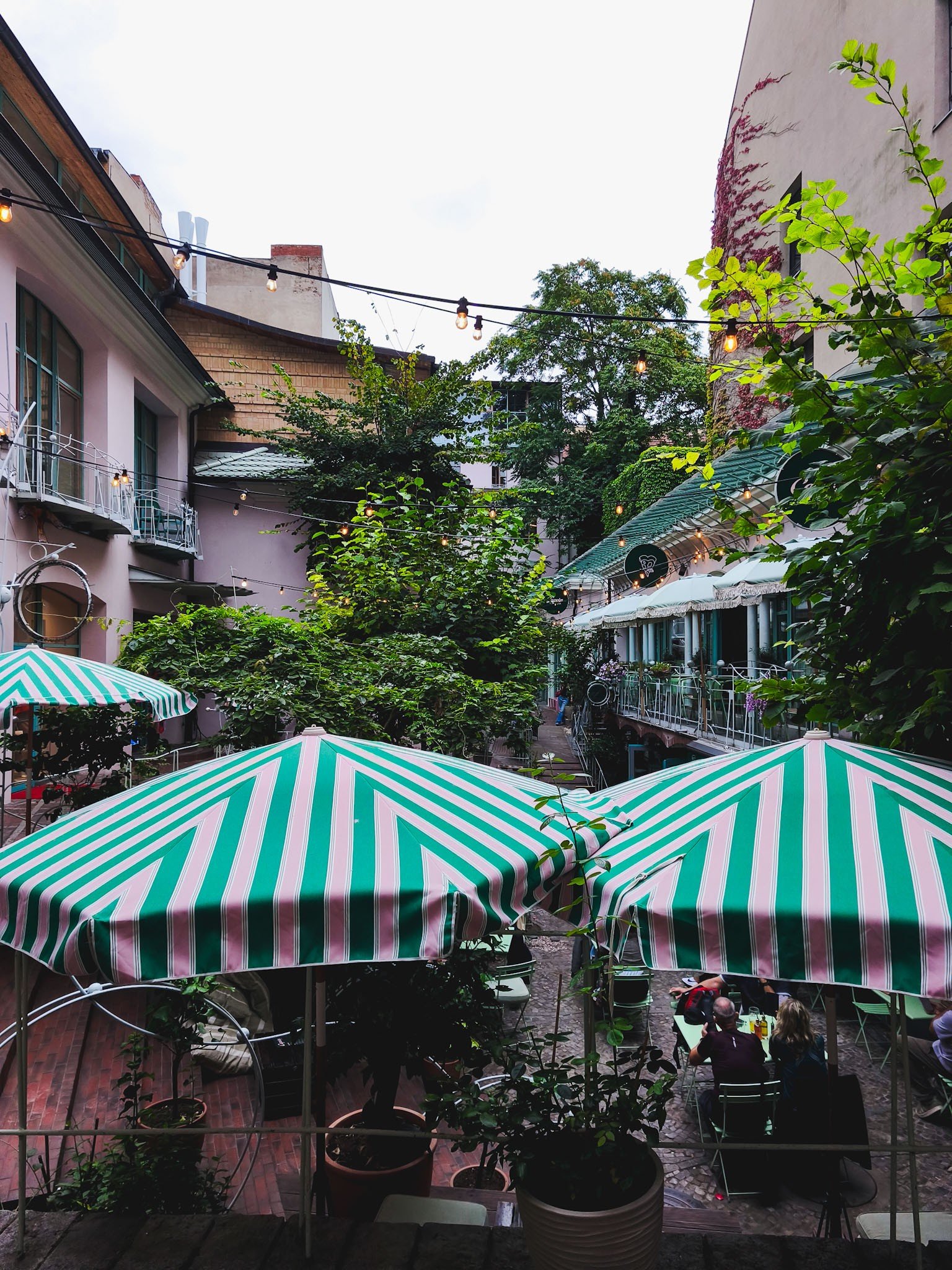
Hackesche Höfe — A series of eight interconnected early-20th-century courtyards with distinctive Art Nouveau details, now filled with shops and cafés. A good place for a coffee break among the string lights and elegant outdoor seating.
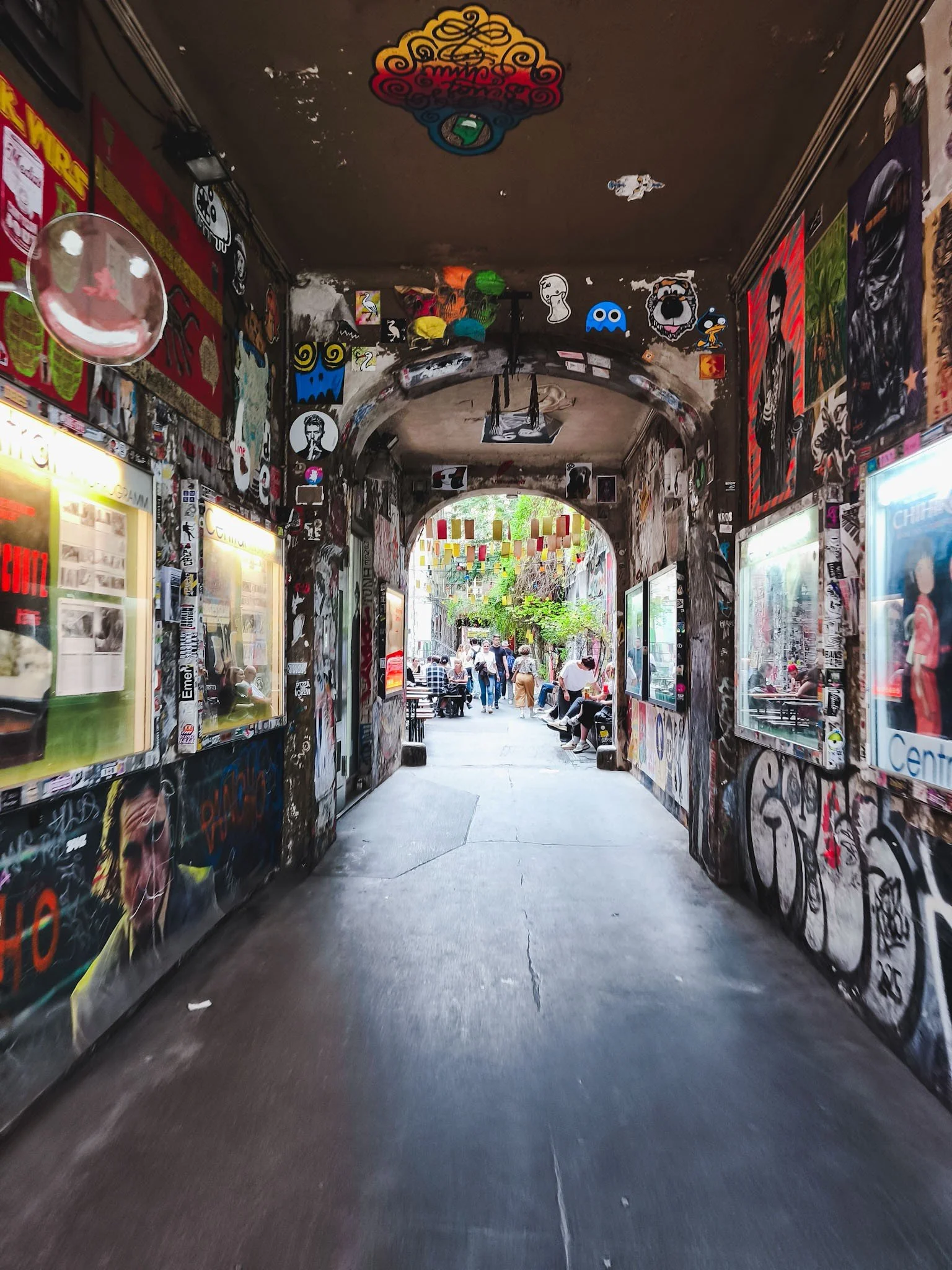
Haus Schwarzenberg — A nearby courtyard with a much rougher, alternative atmosphere, covered in graffiti and street art and home to independent cultural spaces. It’s also a good place to stop for a beer.
Allow around 40–50 minutes for the area, longer if you stop for coffee or a drink.
Afternoon — Museum Island + Berlin Cathedral
Museum Island — UNESCO-listed complex of five major museums on the Spree, notable for both their collections and monumental buildings, many of which were badly damaged in World War II and later restored as part of Berlin’s broader story of destruction, division, and reconstruction.
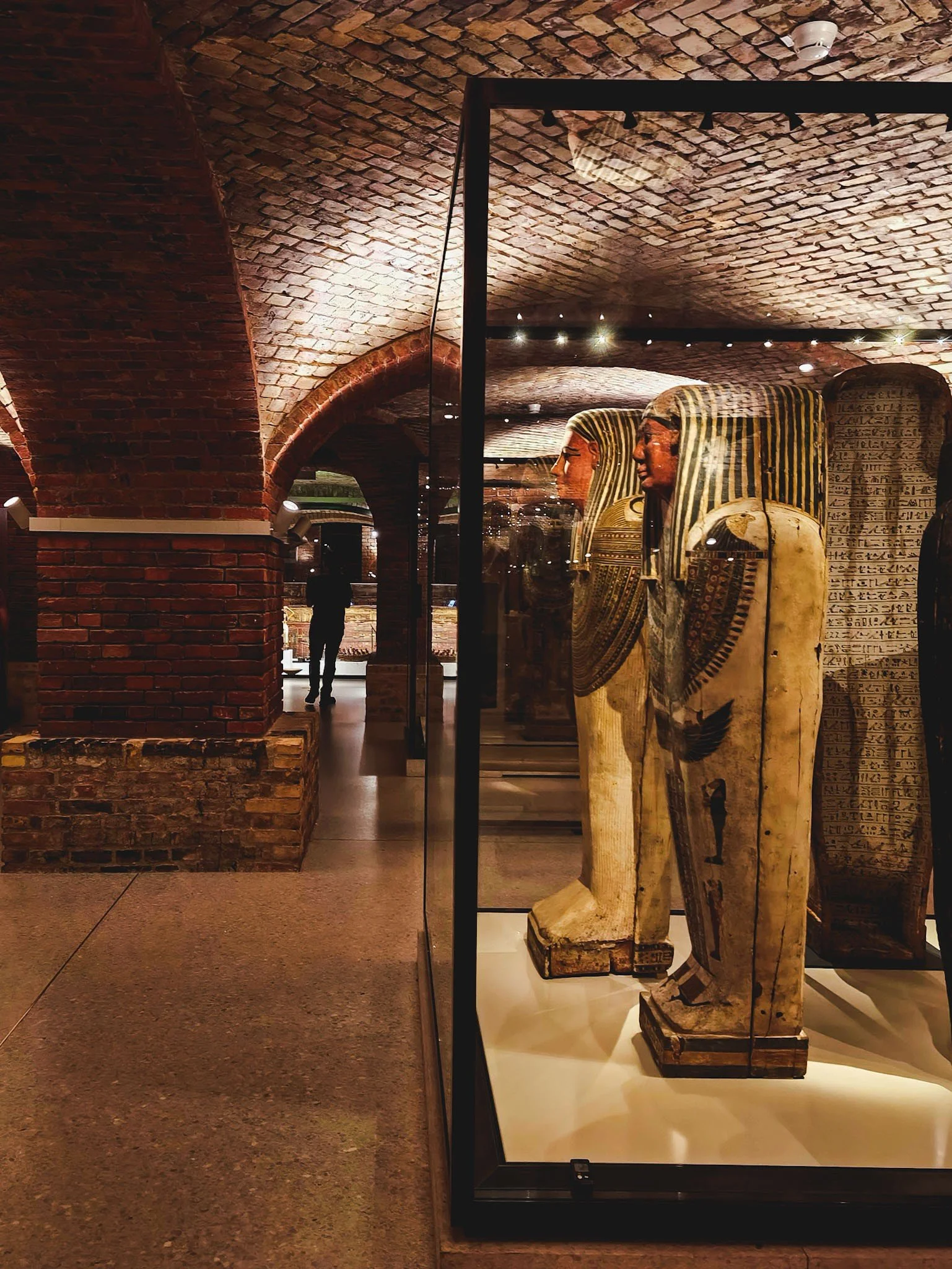
Neues Museum — For this itinerary, I’d choose one museum rather than trying to visit several on Museum Island. A strong first-time choice for its Egyptian collection and the Bust of Nefertiti. This is the one we went, and there was a lot to see. Allow around 2 hours inside.
Berlin Cathedral — Monumental Protestant cathedral beside Museum Island, overlooking the Spree and the open lawn of the Lustgarten. Even if you don’t go inside, the impressive exterior and open surrounding setting are worth seeing. Allow around 20–30 minutes.
Evening — Unter den Linden
Unter den Linden — Berlin’s grand historic boulevard, with a formal, monumental feel that ties together some of the city’s most important central sights. I especially liked walking down it in the evening light.
Neue Wache — Small neoclassical building now serving as Germany’s central memorial to victims of war and dictatorship. This is a quick stop along Unter den Linden.
Bebelplatz — Historic square remembered as the site of the Nazi book burning on May 10, 1933.
Day 2 Example Timing
Day 3: Berlin Wall + Neighborhoods
Day 3 focuses on the Berlin Wall through two very different surviving sections, while also spending time in Prenzlauer Berg’s leafy residential streets and cafés and Kreuzberg’s more multicultural, alternative atmosphere.
Route
Berlin Wall Memorial + Mauerpark → Vietnamese lunch + Prenzlauer Berg → East Side Gallery → Oberbaum Bridge → Kreuzberg + Turkish dinner
→ Open the Day 3 route in Google Maps
Map note: The link above displays this route as walking, but I recommend taking public transportation between Prenzlauer Berg and the East Side Gallery.
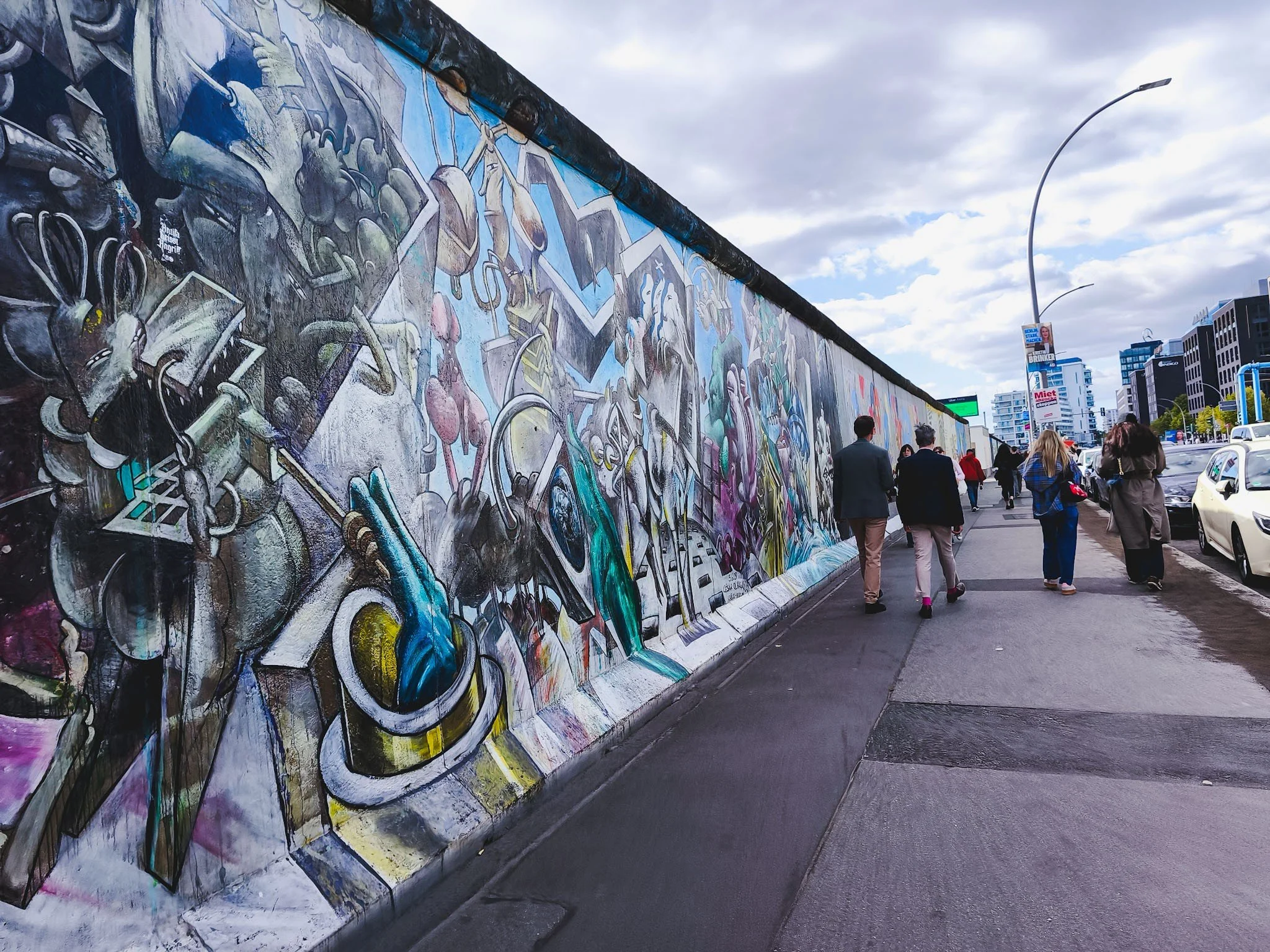
The gritty and moving East Side Gallery, with colorful murals covering the surviving Berlin Wall.
Morning — Berlin Wall Memorial + Mauerpark
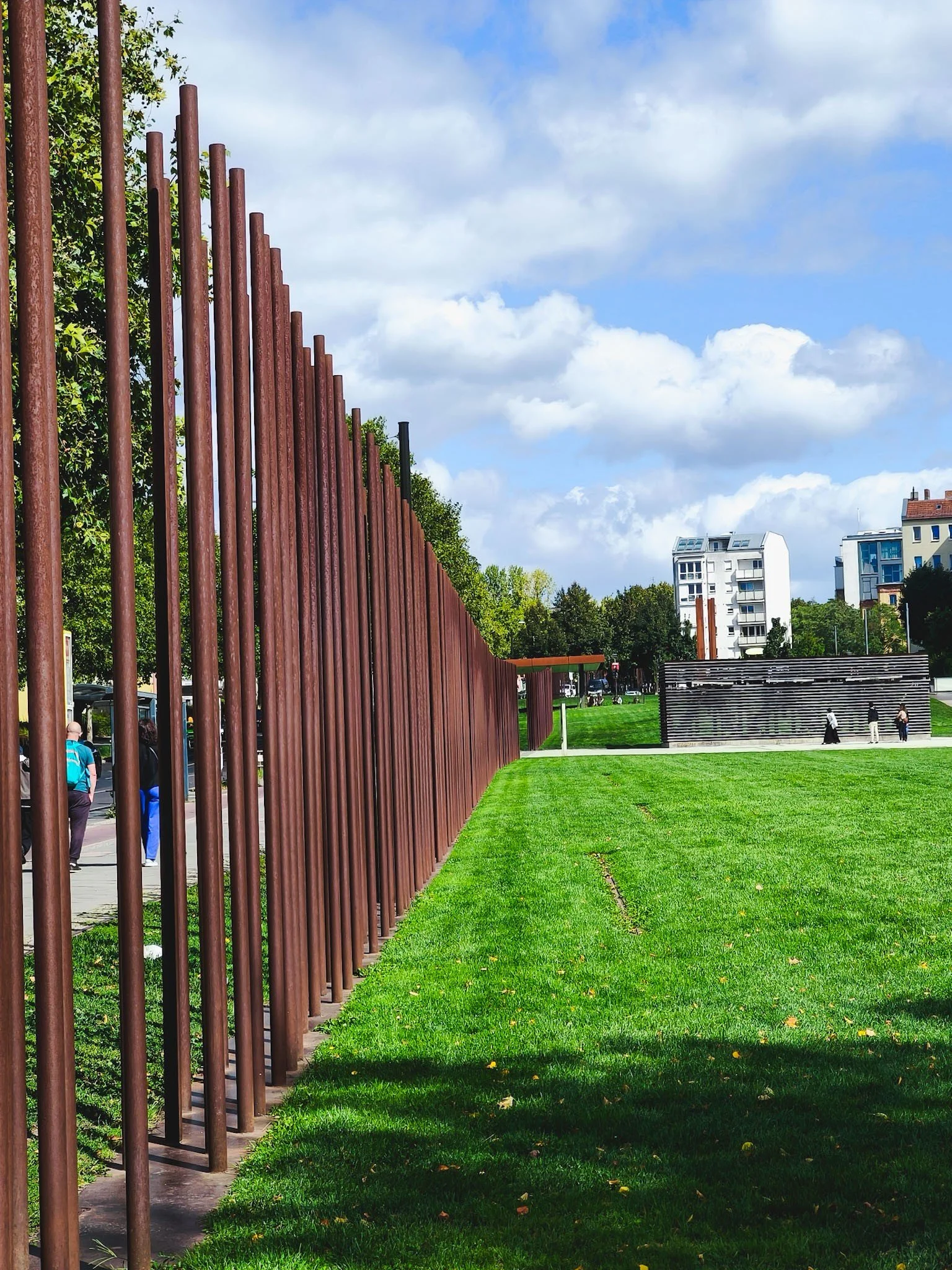
Berlin Wall Memorial — The most complete preserved section of the former border system, with surviving sections of the Wall, the former death strip, and an outdoor memorial along Bernauer Straße. The Documentation Center adds more context on how the border was constructed and operated. Allow around 1.5–2 hours.
Mauerpark — Public park occupying part of the former border strip, now known for its lawns, neighborhood atmosphere, and large Sunday flea market. Allow around 30–45 minutes, or longer if you visit on Sunday and want to browse the market.
Lunch — Vietnamese Food
Vietnamese lunch — Berlin has a significant Vietnamese food scene connected in part to migration between Vietnam and former East Germany. There are several Vietnamese restaurants in the area, but we went to Song Nguu “Wasserbüffel”, which had an excellent bún bò nam bộ, They accept credit cards or cash.
Early Afternoon — Prenzlauer Berg
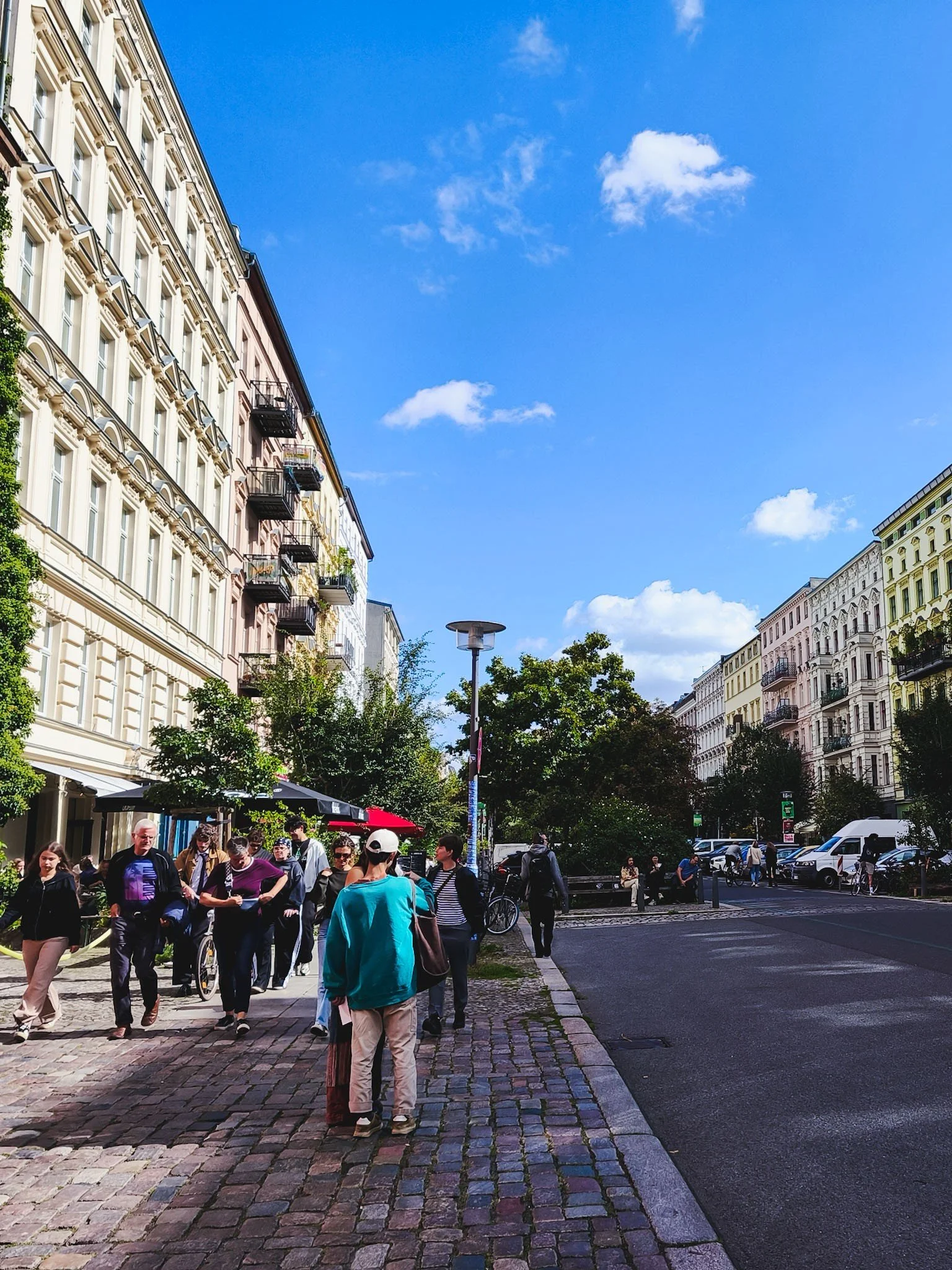
Prenzlauer Berg — Spend some time wandering this leafy former East Berlin neighborhood, known for restored 19th-century apartment buildings, cafés, restaurants, and independent shops especially on Oderberger Straße. Allow around 30 minutes.
From here, take public transportation to East Side Gallery (this is a totally different area and the long walk isn’t worth it). Budget around 35–40 minutes.
Afternoon — East Side Gallery
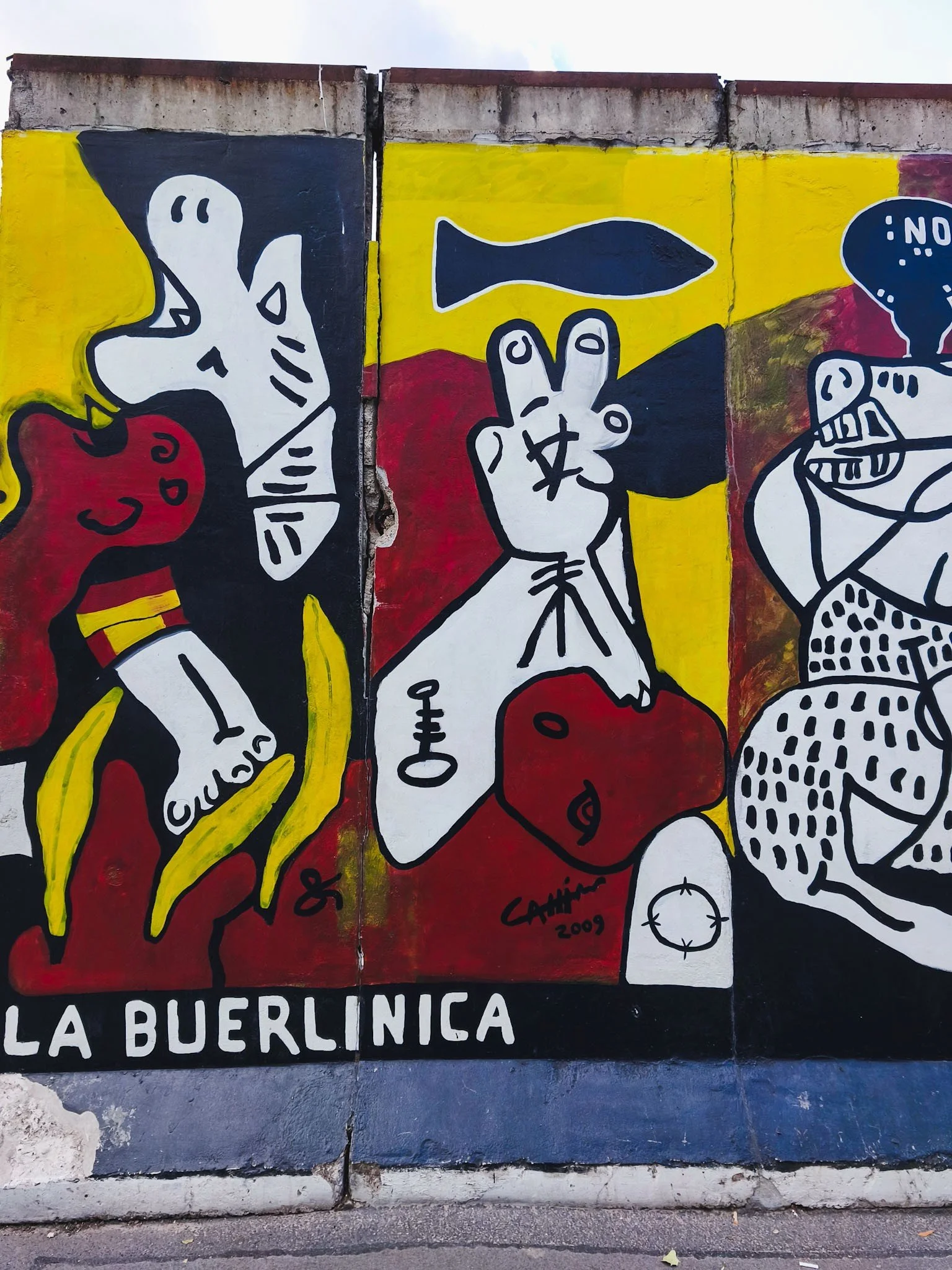
East Side Gallery — Roughly 1.3 kilometers of surviving Berlin Wall transformed after reunification into an open-air gallery of murals by artists from around the world. Most of the murals face the road, while the opposite side runs alongside a park on the Spree. Allow around 1–1.5 hours.
Late Afternoon + Evening — Oberbaum Bridge + Kreuzberg
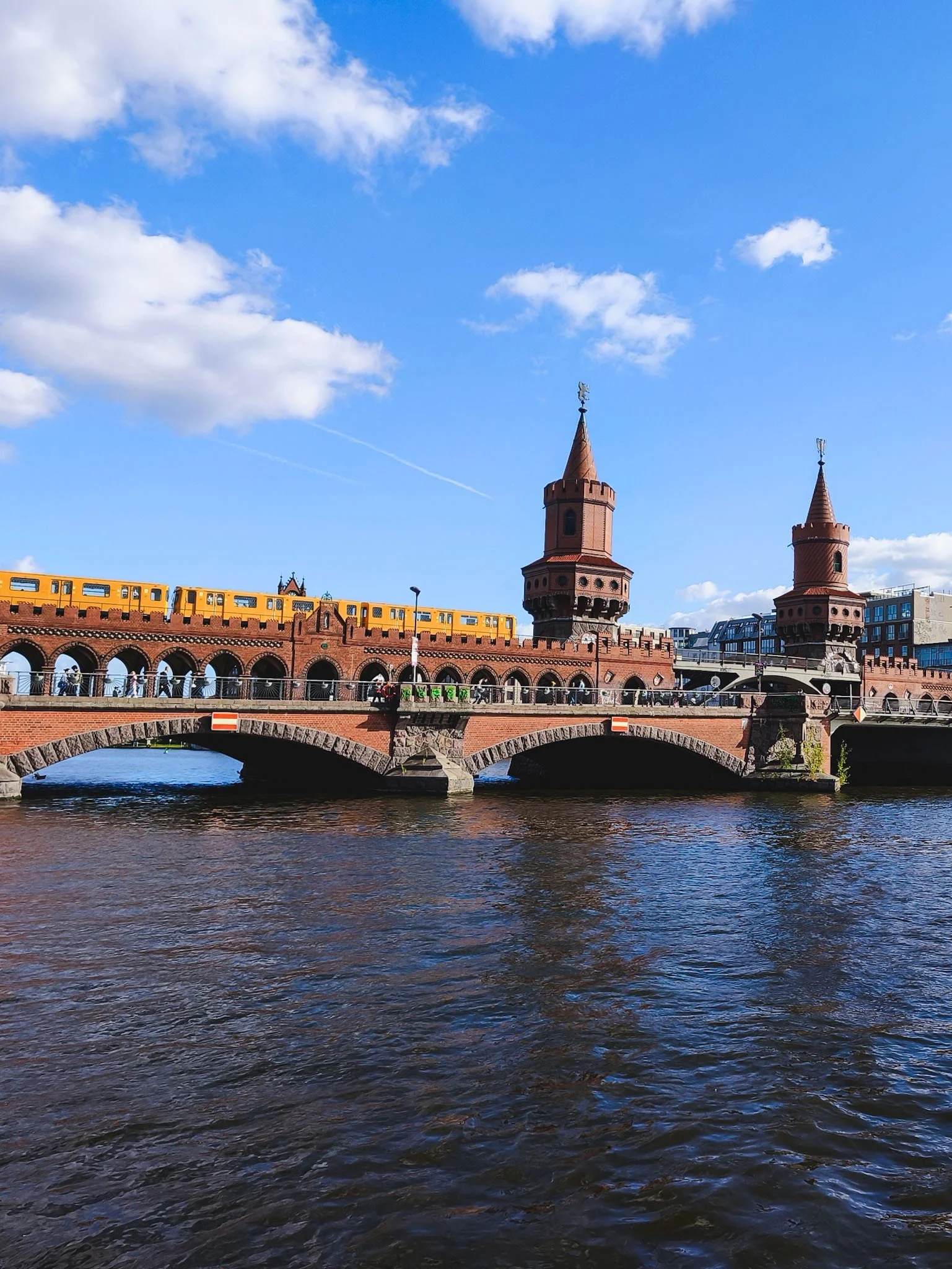
Oberbaum Bridge — Distinctive red-brick bridge crossing the Spree between Friedrichshain and Kreuzberg. You can get a good view of it from the East Side Gallery waterfront area, then walk across it to continue into Kreuzberg. Allow around 15–20 minutes.
Kreuzberg — Diverse neighborhood shaped by immigration, counterculture, nightlife, and Berlin’s Turkish community. The area around Schlesisches Tor is good for wandering and street life.
Dinner — Turkish Grill at Adana Grillhaus
Adana Grillhaus — Kreuzberg is one of the best areas of Berlin to experience the city’s Turkish food culture. Adana Grillhaus is a long-running restaurant specializing in Turkish charcoal-grilled meats. We ordered an Adana kebab wrap and şiş kebab wrap, plus an ayran to share. The zesty ayran balanced the grilled meats well.
Day 3 Example Timing
Day 4: West Berlin
The last day of this itinerary shifts west to Charlottenburg and City West for a much more relaxed day, combining Prussian royal history with leafy residential streets, shopping, and one of former West Berlin’s most recognizable wartime landmarks.
Route
Charlottenburg breakfast + Charlottenburg Palace → Savignyplatz → Kurfürstendamm + Kaiser Wilhelm Memorial Church → Bikini Berlin → optional KaDeWe
→ Open the Day 4 route in Google Maps
Map note: The link above displays this route as walking, but I recommend taking public transportation between Charlottenburg Palace and Savignyplatz / City West.
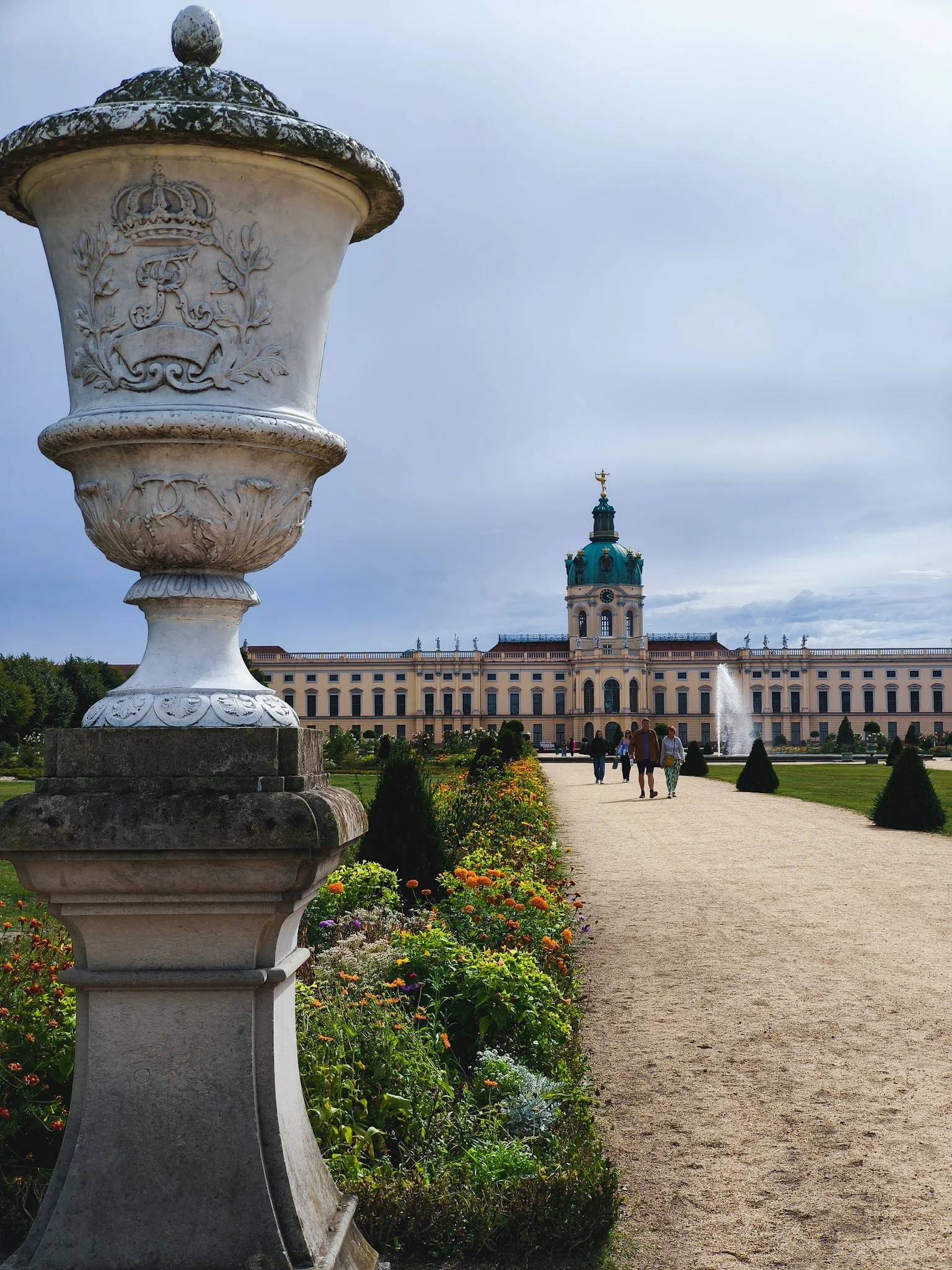
Charlottenburg Palace from its gardens.
Breakfast — Charlottenburg
Breakfast / brunch — Start near Charlottenburg Palace before sightseeing. Café Friedrichs is a classic neighborhood café option (though cash only), while Humboldt Kaffeemanufaktur is more of a modern brunch and coffee spot (and accepts credit cards or cash).
Morning — Charlottenburg Palace + Gardens
Charlottenburg Palace — Berlin’s largest surviving royal palace and a former residence of the Prussian monarchy, with a grand Baroque and Rococo façade and formal courtyard. For this itinerary though, I’d stick to the exterior and gardens unless royal interiors are a particular interest, since going inside might add 1.5–2 hours.
Charlottenburg Palace gardens — Extensive grounds behind the palace that begin with formal landscaping before opening into a larger park. Allow roughly 1–1.5 hours total for the palace exterior and gardens.
Afternoon — City West
From Charlottenburg Palace, take public transportation toward City West, the shopping and commercial heart of former West Berlin. The rest of the day is intentionally flexible: wander the shopping streets, stop for coffee or lunch, and dip into whichever sights or stores interest you.
Savignyplatz — Leafy square surrounded by cafés, restaurants, bookshops, and attractive residential streets. It’s a good place to stop for lunch, coffee, or cake, or simply pass through on the way toward Kurfürstendamm.
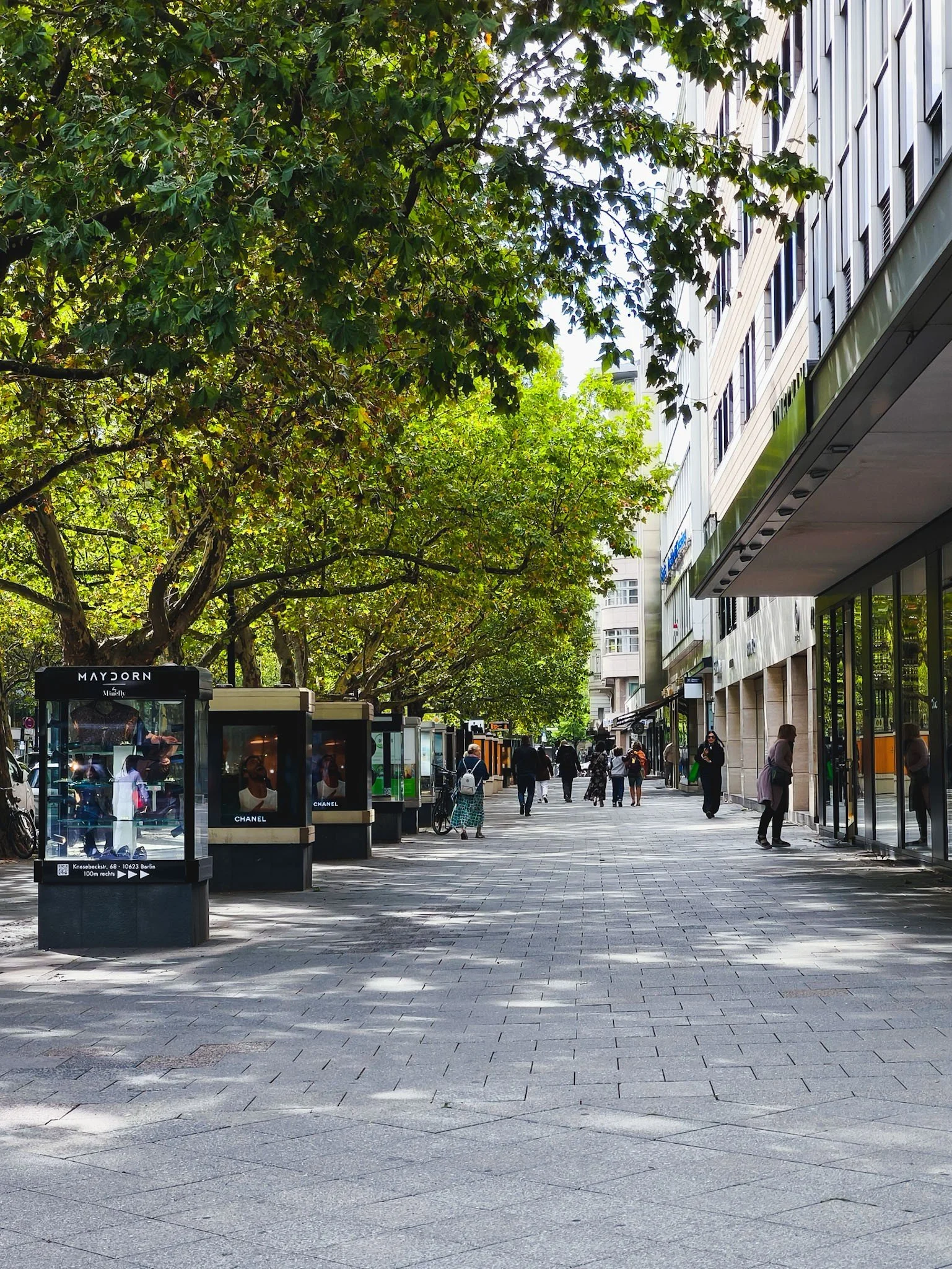
Kurfürstendamm (Ku’damm) — Former West Berlin’s best-known commercial boulevard and still one of the city’s main shopping areas, lined with stores, malls, cafés, and hotels. You don’t need to walk the entire avenue; use it as the main spine through City West and stop wherever interests you.
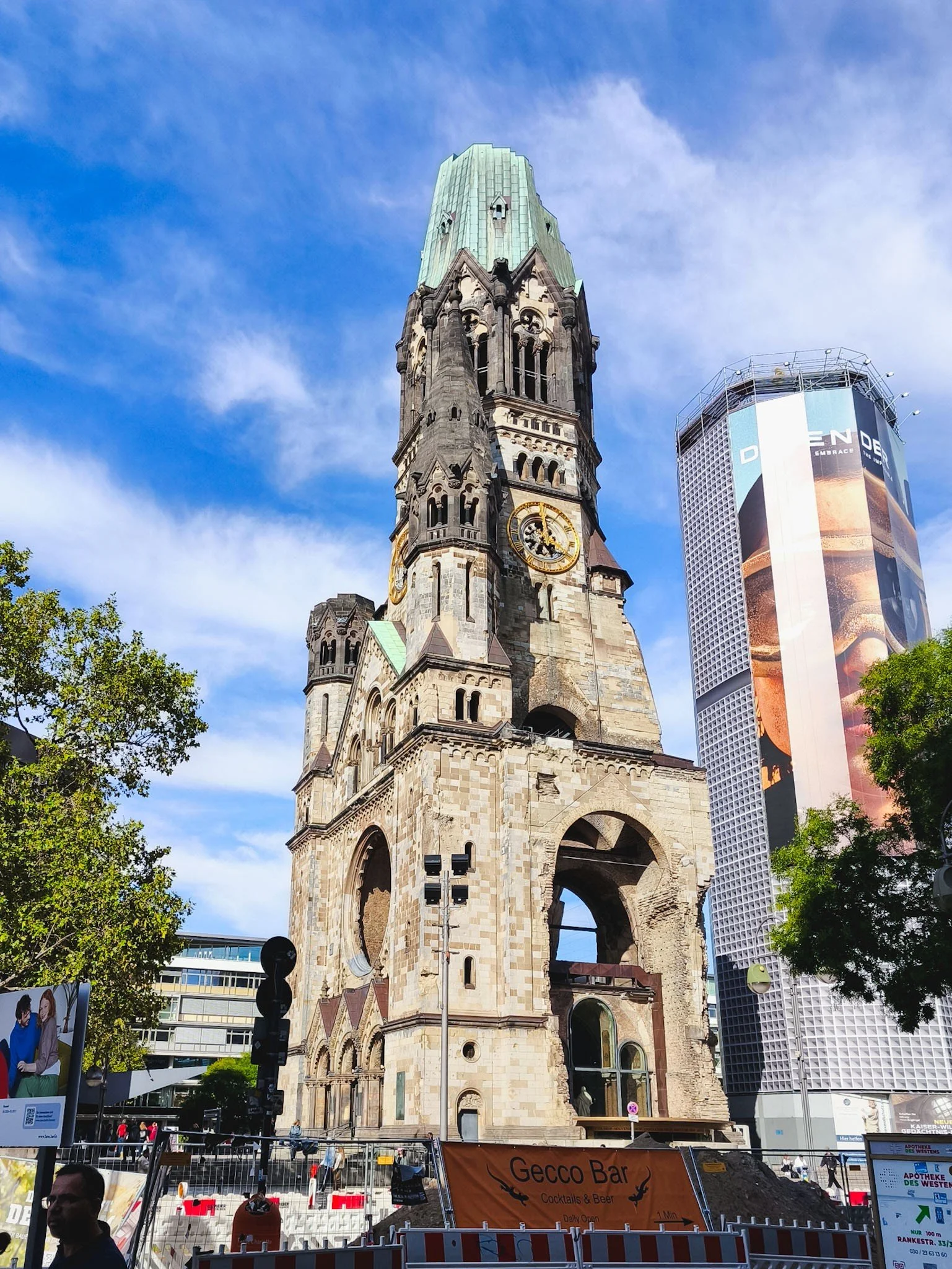
Kaiser Wilhelm Memorial Church — The bomb-damaged tower of the original church was deliberately preserved beside a modern replacement as a memorial to war and destruction. A quick exterior stop is enough, or allow around 10–20 minutes if you go inside.
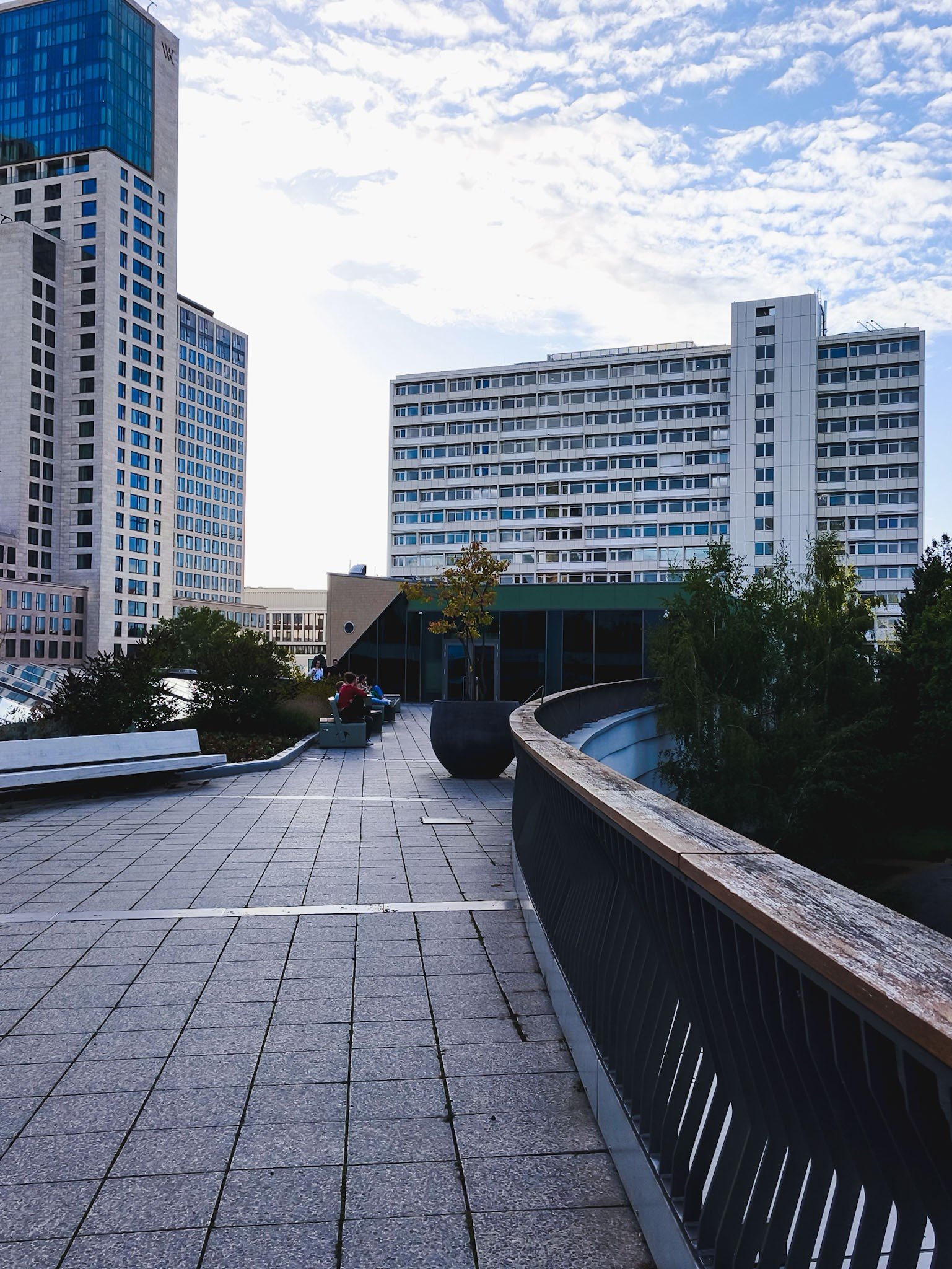
Bikini Berlin — Restored 1950s building turned concept mall. The main reason I’d stop is the free rooftop terrace overlooking Berlin Zoo; we could even see some of the monkeys from above. Allow around 30–45 minutes if you stop.
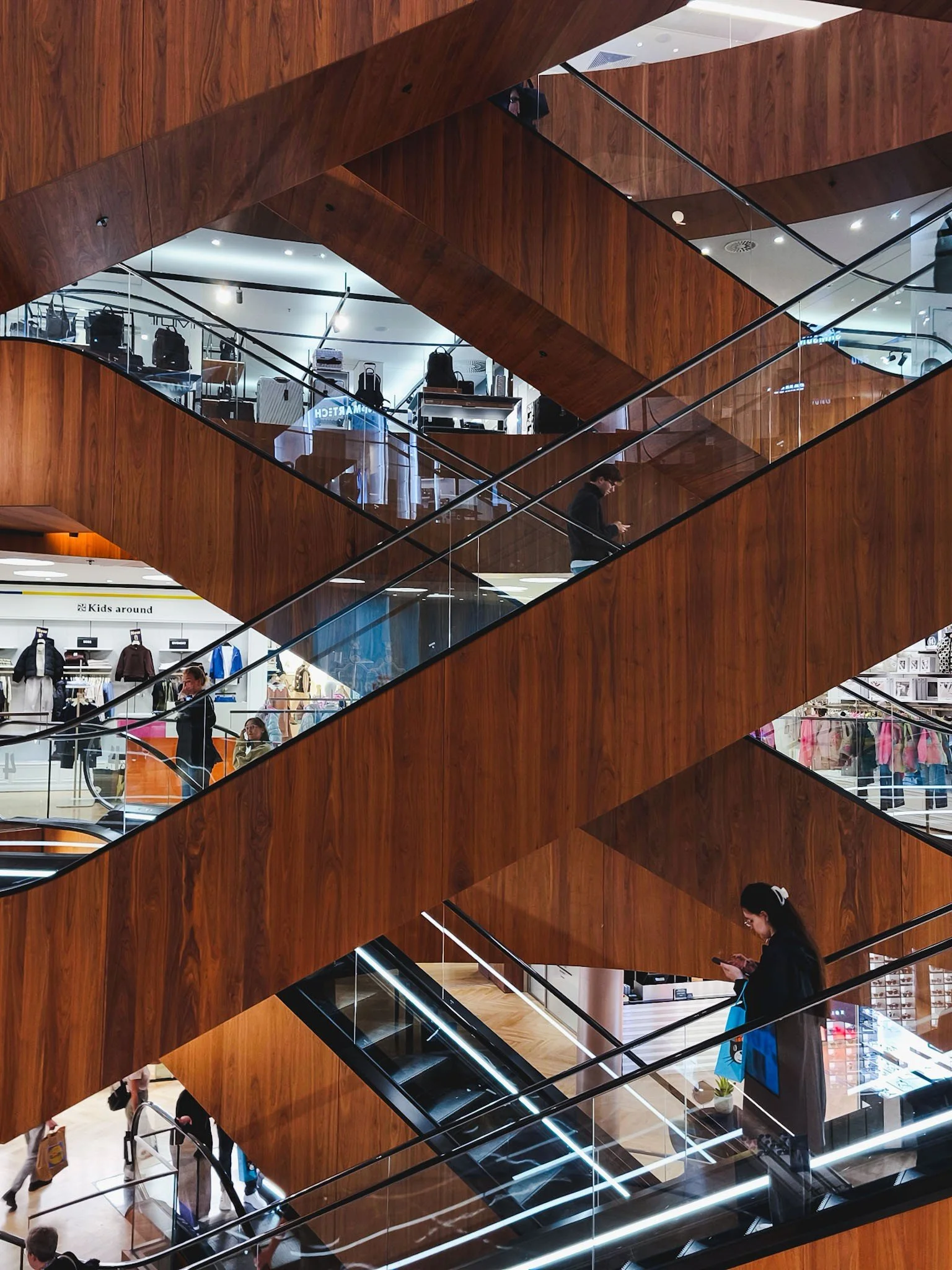
KaDeWe — Historic luxury department store known especially for its large food department. Treat this as optional unless shopping or food halls particularly interest you.
Day 4 Example Timing
Planning Notes
How to Schedule the Four Days
Each day is dependent on the sights being open or whether you obtained reservations for that day, so check your travel dates before deciding which route to do on which day.
Day 1 — Reichstag: If you want to visit the Reichstag dome, your confirmed reservation may determine when you do Day 1. Advance registration is required, and the dome can also close periodically for maintenance, so check the official visitor information before your trip. → Reichstag visitor information + registration
Day 2 — Museum Island: Schedule this day for a day when your chosen Museum Island museum is open. For example, the Neues Museum is currently open Tuesday–Sunday and closed Monday. → Neues Museum hours + visitor information
Day 3 — Mauerpark: If you want to see the Mauerpark flea market, do Day 3 on a Sunday. It currently runs Sundays from 10:00–18:00. Otherwise, the route works on other days too. → Mauerpark flea market information
Day 4 — Charlottenburg Palace: This is the most flexible day if you’re only visiting the palace exterior and gardens. If you want to go inside, check current opening days before assigning Day 4; the palace interiors are currently closed Mondays. → Charlottenburg Palace hours + tickets
What to Book in Advance
✅ Must Book: Reichstag Dome
Admission to the Reichstag roof and dome is free, but advance registration is required.
Submit your visitor count and up to three preferred dates/times. I'd fill in all three options since availability isn't guaranteed.
Provide the requested information for each visitor.
Wait for confirmation before considering your visit booked.
Availability can also be affected by parliamentary business, maintenance, weather, or security, so I'd register as early as possible.
→ Official Reichstag visitor information + registration
🟡 Recommended: Augustiner am Gendarmenmarkt
If you're following Day 1 of this itinerary, I'd reserve a table.
You'll likely arrive around 8:00 PM, which is a popular dinner time.
We had a reservation and were seated immediately.
Online reservations are available for smaller parties.
→ Augustiner am Gendarmenmarkt information + reservations
🟡 Recommended: Museum Island Museum
Once you've chosen which museum to visit, I'd consider booking online if your schedule is fixed.
Booking ahead can save you time at the ticket counter.
Tickets are also available onsite. I actually booked my Neues Museum ticket online right at the door, so you don't necessarily need to commit far in advance.
Optional: Charlottenburg Palace
No advance booking is needed if you're only visiting the exterior and gardens.
If you're touring the interior, I'd book online since tickets may have a fixed admission time.
Getting Around Berlin
Berlin is very spread out, so you’ll use public transportation to get to and from different neighborhoods throughout this itinerary. That includes reaching the start and end points of each day, plus a few longer transfers within the routes, like between Prenzlauer Berg and the East Side Gallery and between Charlottenburg Palace and City West.
Thankfully, Berlin’s public transportation system is excellent and super convenient. I’ll have a full Berlin public transportation guide coming soon with ticket options, how the system works, and practical tips.
Cash vs. Card
Berlin is still more cash-oriented than many other major European cities, particularly at smaller cafés, markets, casual restaurants, and independent businesses.
If it’s easy for you, I’d keep some euros on hand even if you normally travel mostly with cards. But I personally avoid having to get cash, so the restaurants and food stops I recommend in this itinerary mostly take card. They’re also places I personally ate at during my trip.
Scams + Pickpocketing
One tourist scam we encountered a couple of times involved people carrying lists or clipboards and approaching visitors for donations to supposed charities. We even saw signs in Berlin warning about this type of approach.
The donation request may itself be fraudulent, and the interaction can also create an opportunity for distraction theft or pickpocketing. I’d just keep moving and avoid signing anything or taking out your wallet at all.
We encountered this around busy tourist areas including Checkpoint Charlie and the Berlin Wall Memorial. These are also the kinds of crowded areas where I’d be a little more careful with your stuff.
Questions?
Thanks for reading! Feel free to leave a comment below or send me a message with any questions — I’m always happy to help when I can. And if you try this itinerary, I’d love to hear how it goes.
And if you’re still deciding which Berlin attractions are most worth your time, head to my Things to Do in Berlin guide (coming soon) for more detailed descriptions, personal impressions, and recommendations from my trip.
You may also like:
Copenhagen 2-Day Itinerary — another European capital with historic sights, beautiful architecture, and neighborhoods worth exploring.
Stockholm 3-Day Itinerary — a ready-to-use itinerary for exploring Sweden's capital, from Gamla Stan to the waterfront and archipelago.
How I Plan Low-Friction Itineraries — the approach I use to plan routes like this one, minimizing backtracking and unnecessary decisions.
My One-Bag Gear List — everything I pack to travel with just one bag, making it easier to move between cities and use public transportation.