2 Days in Copenhagen: A First-Timer’s Itinerary I’d Happily Do Again (+ Maps)
Copenhagen is compact and easy to explore, but it still feels like there’s a lot going on: bikes streaming past everywhere, canals running through the city, colorful waterfronts, cozy cafés, and the kind of everyday hygge Danish culture is famous for.
I designed this two-day itinerary, followed it myself, and adjusted a few parts afterward based on what actually felt realistic. Day 1 is the classic Copenhagen day, with Rosenborg Castle, the historic center, Nyhavn, and the royal waterfront. Day 2 shifts to Christianshavn, Christiania, Refshaleøen, and Reffen before ending at Tivoli Gardens after dark, when the lights and old-school atmosphere make it especially magical.
We walked the entire route, although I’ve pointed out a few stretches where biking or public transportation can save your legs. I’ve also mixed in both budget-friendly food stops and a couple of places worth spending more on.
Quick Plan
Time needed: 2 full days.
Best for: First-time visitors and independent travelers who want to see Copenhagen’s major sights and neighborhoods without a guided tour.
Day 1 — Historic Copenhagen + Waterfront: Rosenborg Castle, Round Tower, Torvehallerne, historic center, Nyhavn, Kastellet, and the Little Mermaid.
Day 2 — Christianshavn + Refshaleøen + Tivoli: Church of Our Saviour, Christianshavn, Christiania, Refshaleøen, Reffen, Vesterbro, and Tivoli Gardens.
Pace: Full. Day 1 is especially walking-heavy.
Getting around: Mostly walking. The itinerary is walking-heavy, but public transportation or biking can cut out some of the longer stretches.
Watch out for: Bikes! Copenhagen’s bike lanes are everywhere, and cyclists move fast, so make sure you’re not accidentally standing or walking in one.
Opening hours: Check your exact dates, especially outside summer: Rosenborg has some seasonal Monday closures, the Church of Our Saviour tower closes in January, and Reffen and Tivoli are seasonal. See Planning Notes below.
Route Maps
The overview map below shows the areas covered across the two days. I’ve also made ready-to-use Google Maps routes for each day.
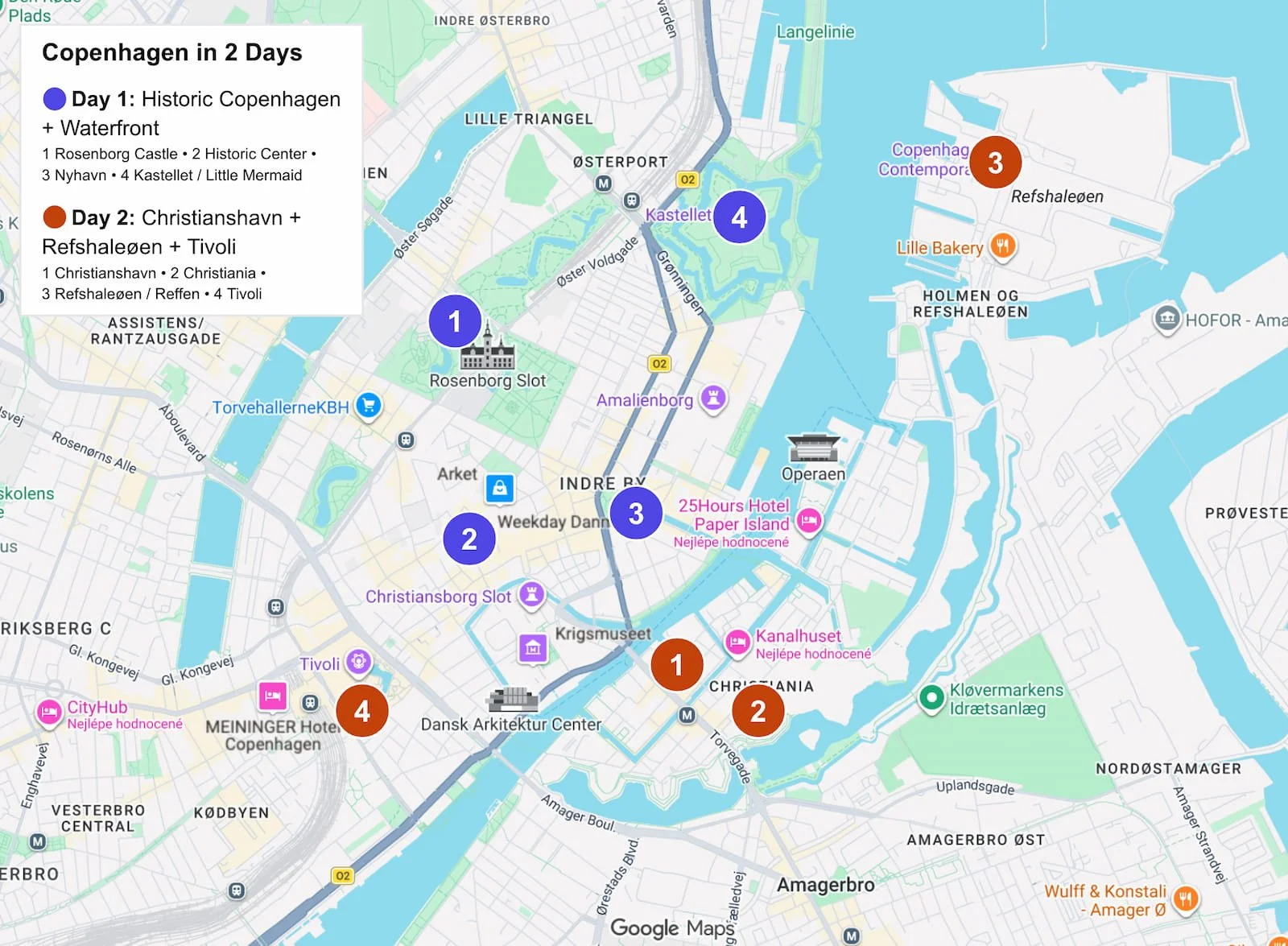
Map data © Google.
Day 1 — Rosenborg, Historic Copenhagen + the Waterfront
Day 1 is the classic Copenhagen day: Rosenborg Castle in the morning, then the historic center, smørrebrød at Torvehallerne, Nyhavn, the royal waterfront, Kastellet, and the Little Mermaid. It’s a full walking day, but most of the sights after Rosenborg fit naturally along the route rather than needing much time on their own.
Route
Rosenborg Castle + King’s Garden → Round Tower + historic center → Torvehallerne → Christiansborg → Nyhavn → Amalienborg + Marble Church → Gefion Fountain + Kastellet → Little Mermaid → dinner at Karla or PUK
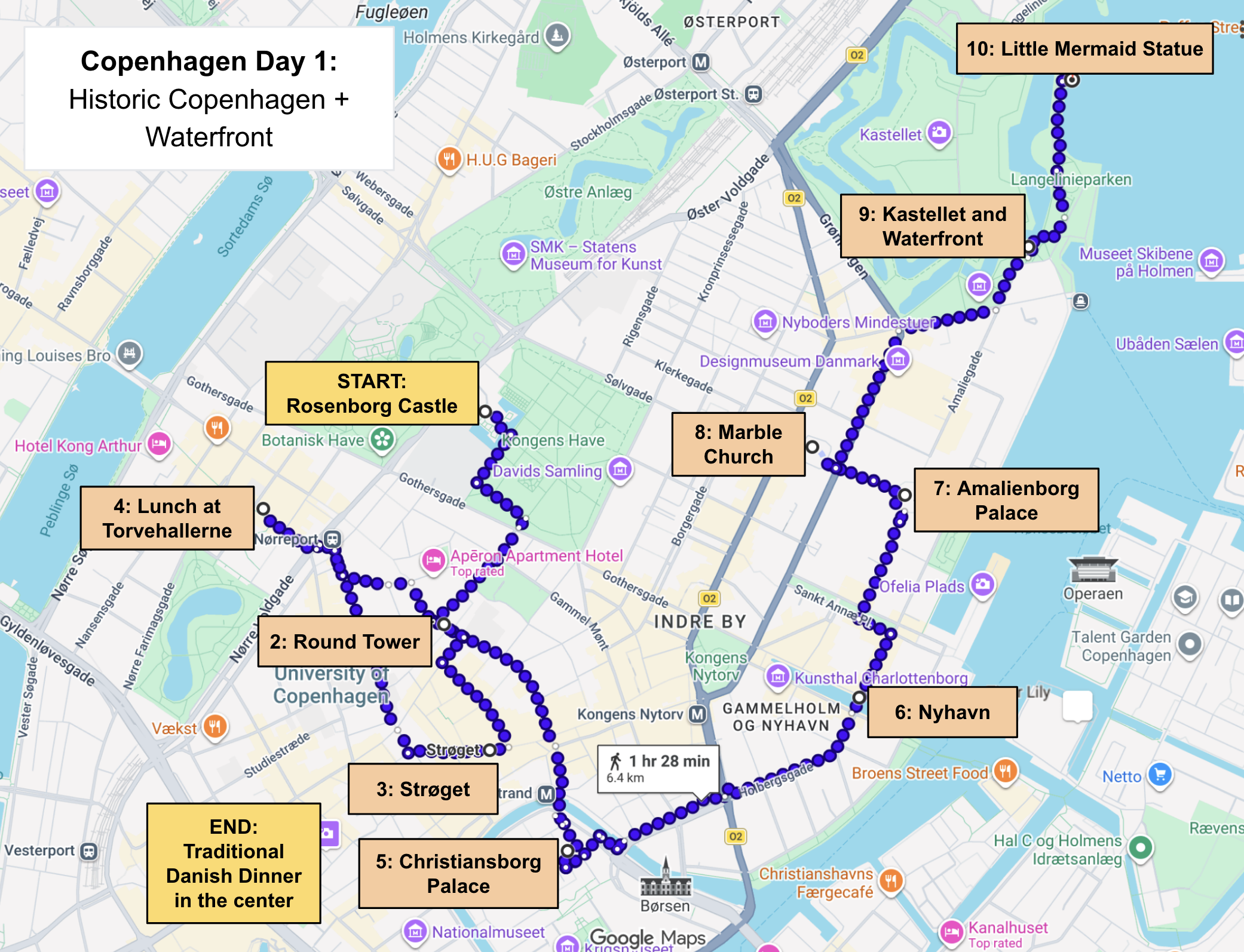
Map data © Google.
Morning — Rosenborg Castle + King’s Garden
Allow: around 1–1.5 hours
Start at Rosenborg Castle, a Renaissance castle built for King Christian IV in the early 1600s and one of the main places in Copenhagen to see Denmark’s royal collections. Inside, you’ll pass through historic royal rooms filled with paintings, furniture, and decorative objects, while the basement treasury holds the Danish Crown Jewels and royal regalia. My favorite was the preserved bathroom and toilet xD
The rooms themselves are fairly small, though, and when we visited, the castle was crowded with tour groups. I felt like I spent a decent amount of time waiting for people to move before I could properly see things, so to be honest, I enjoyed some of Copenhagen’s other sights more.
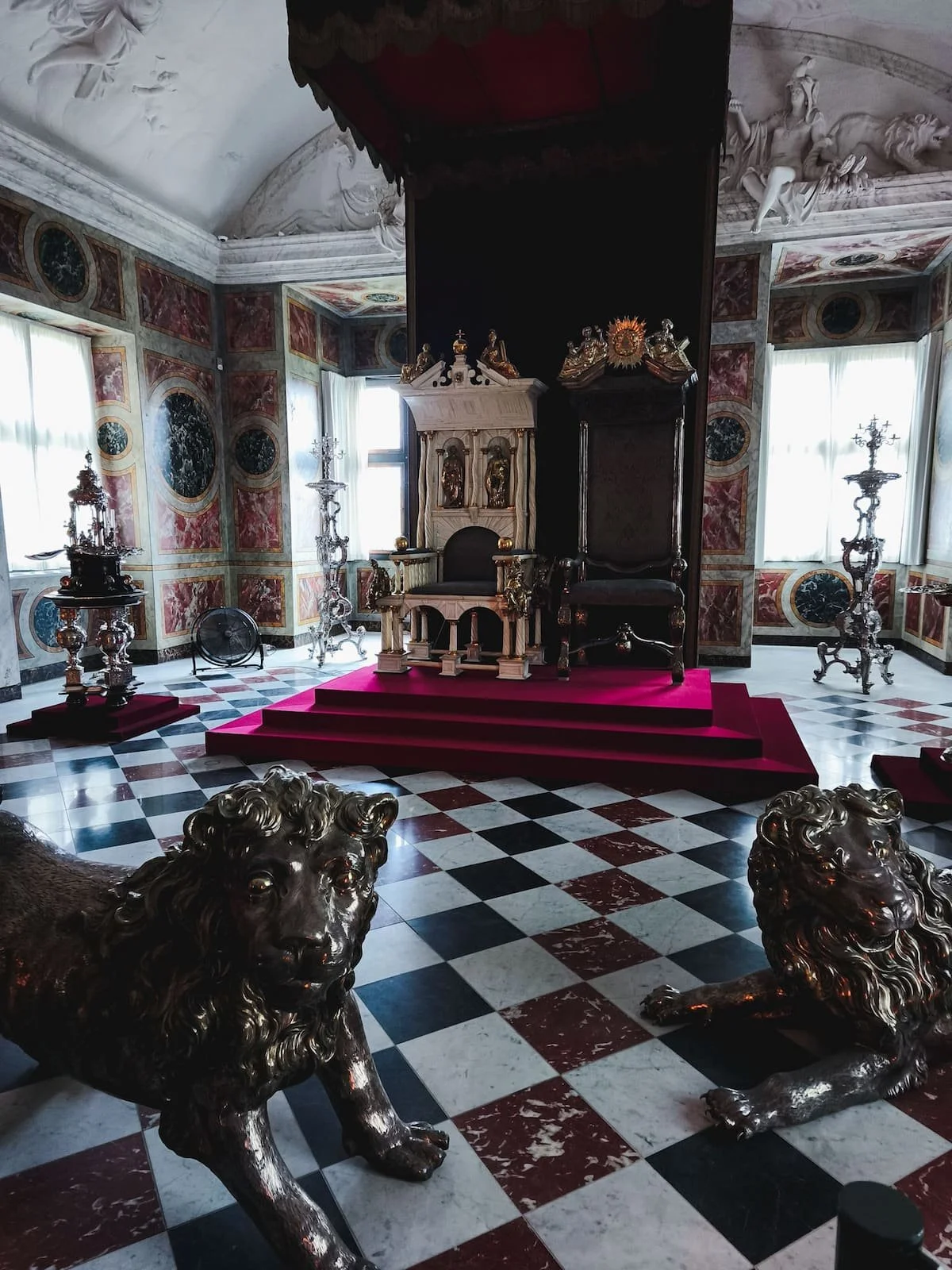
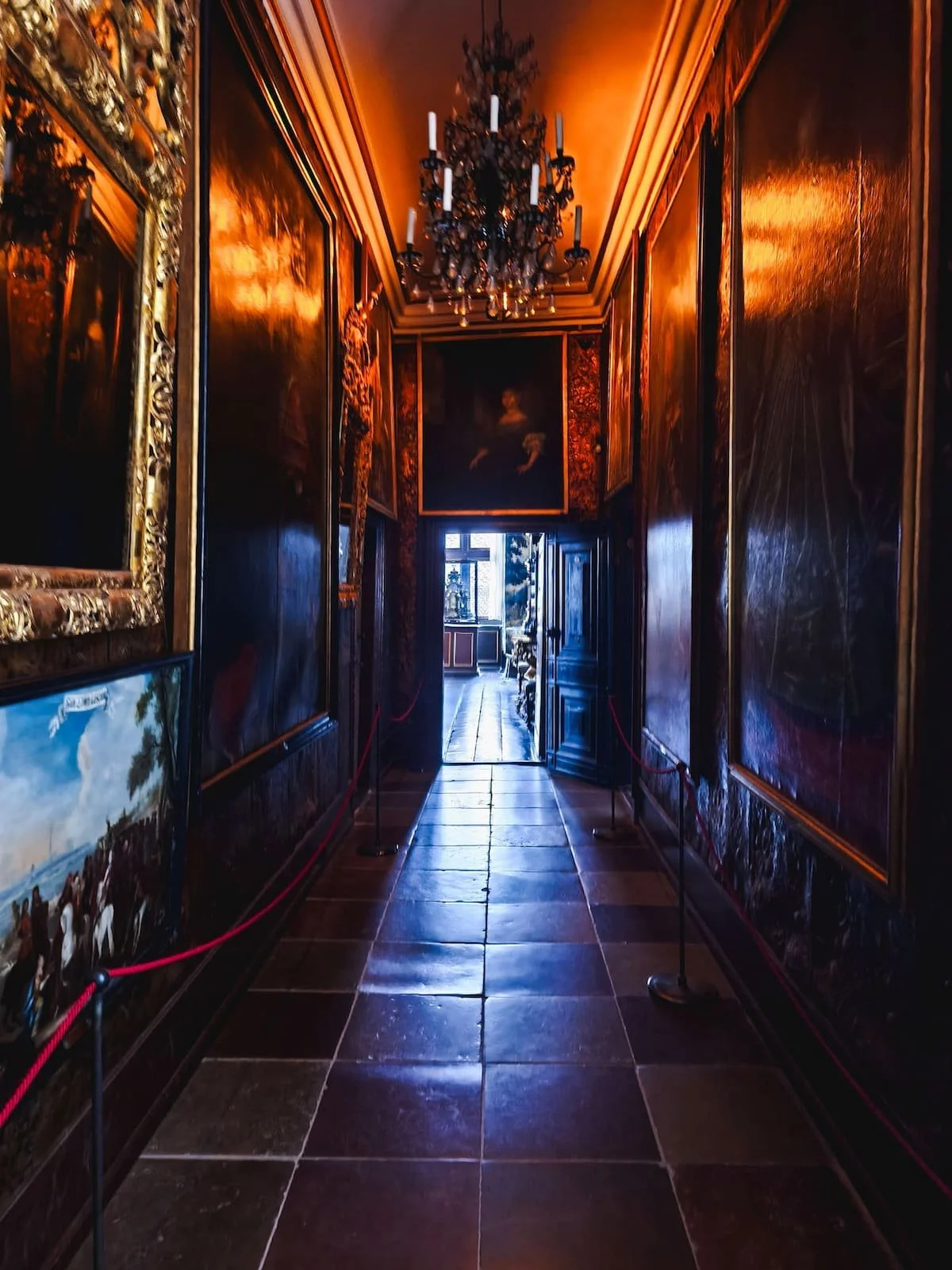
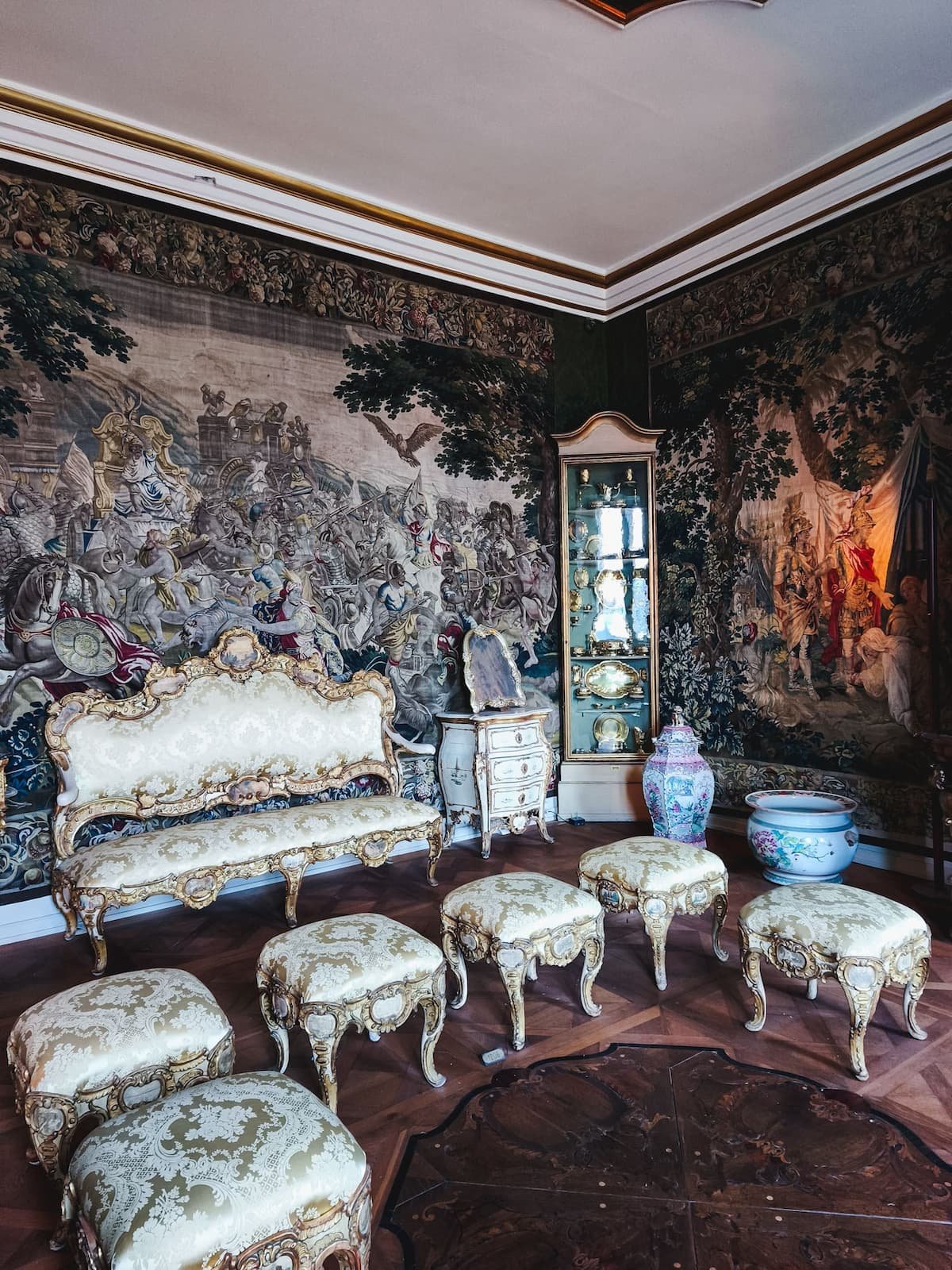
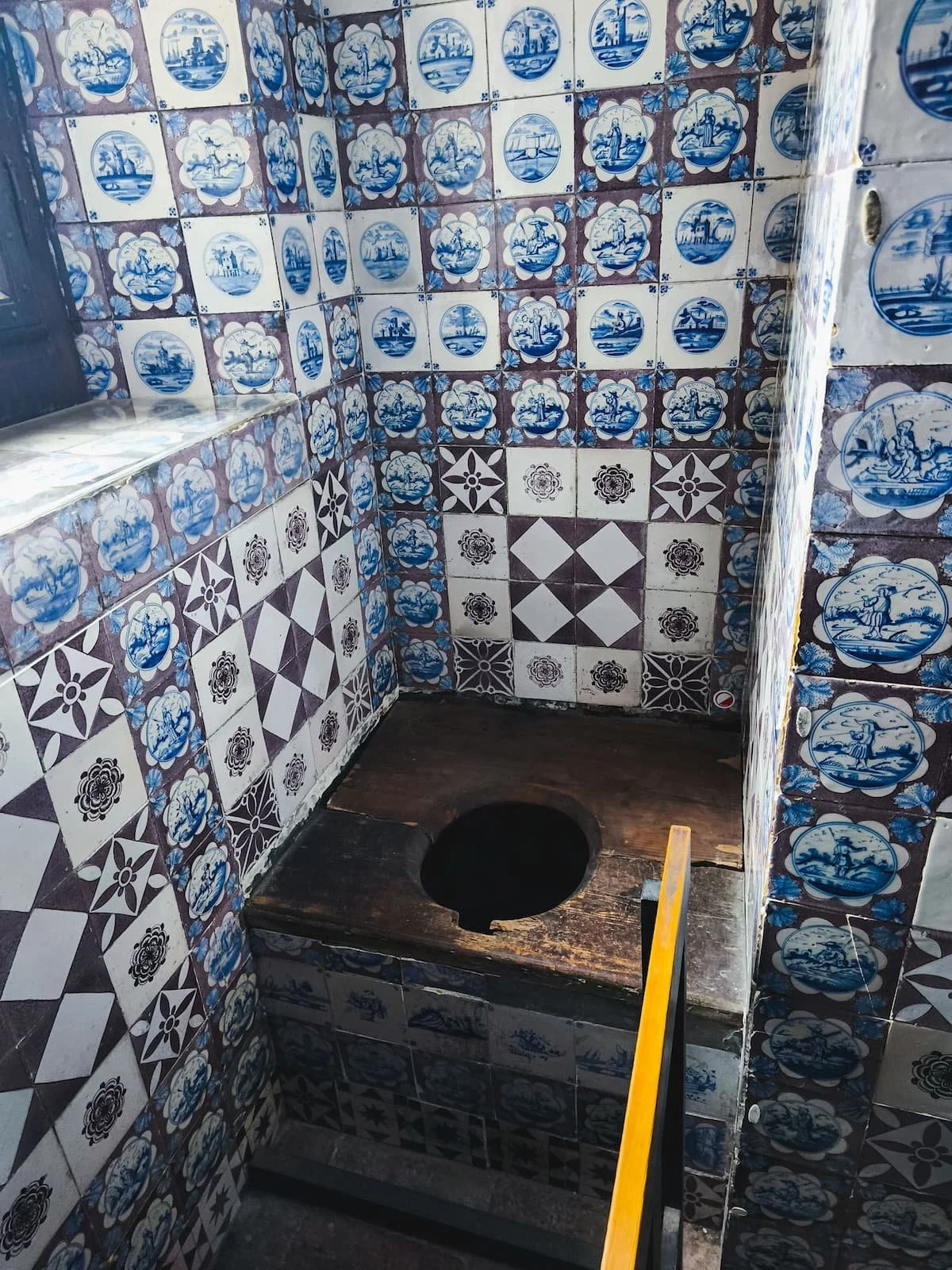
Rosenborg has limited capacity and uses timed admission slots, so I’d buy your ticket ahead of time, especially during busier periods. See the Planning Notes section below for booking details.
Afterward, walk through King’s Garden on your way toward the historic center. It’s one of Copenhagen’s central green spaces and has plenty of benches and views back toward the castle. It was nice to have some open space after the crowded interior.
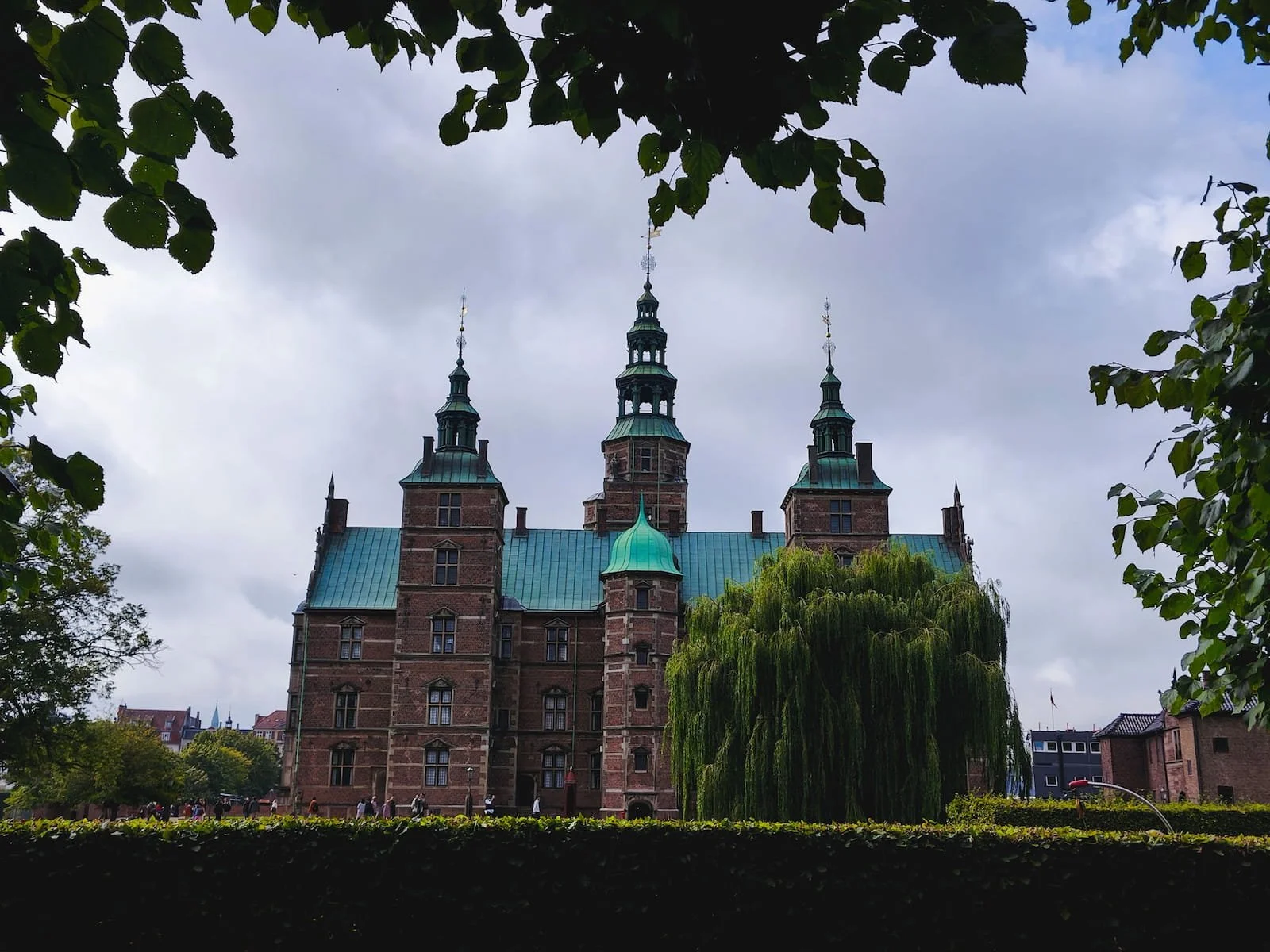
Rosenborg Castle as seen from the King’s Garden paths.
Late Morning — Round Tower + Historic Copenhagen
Allow: around 1–1.5 hours
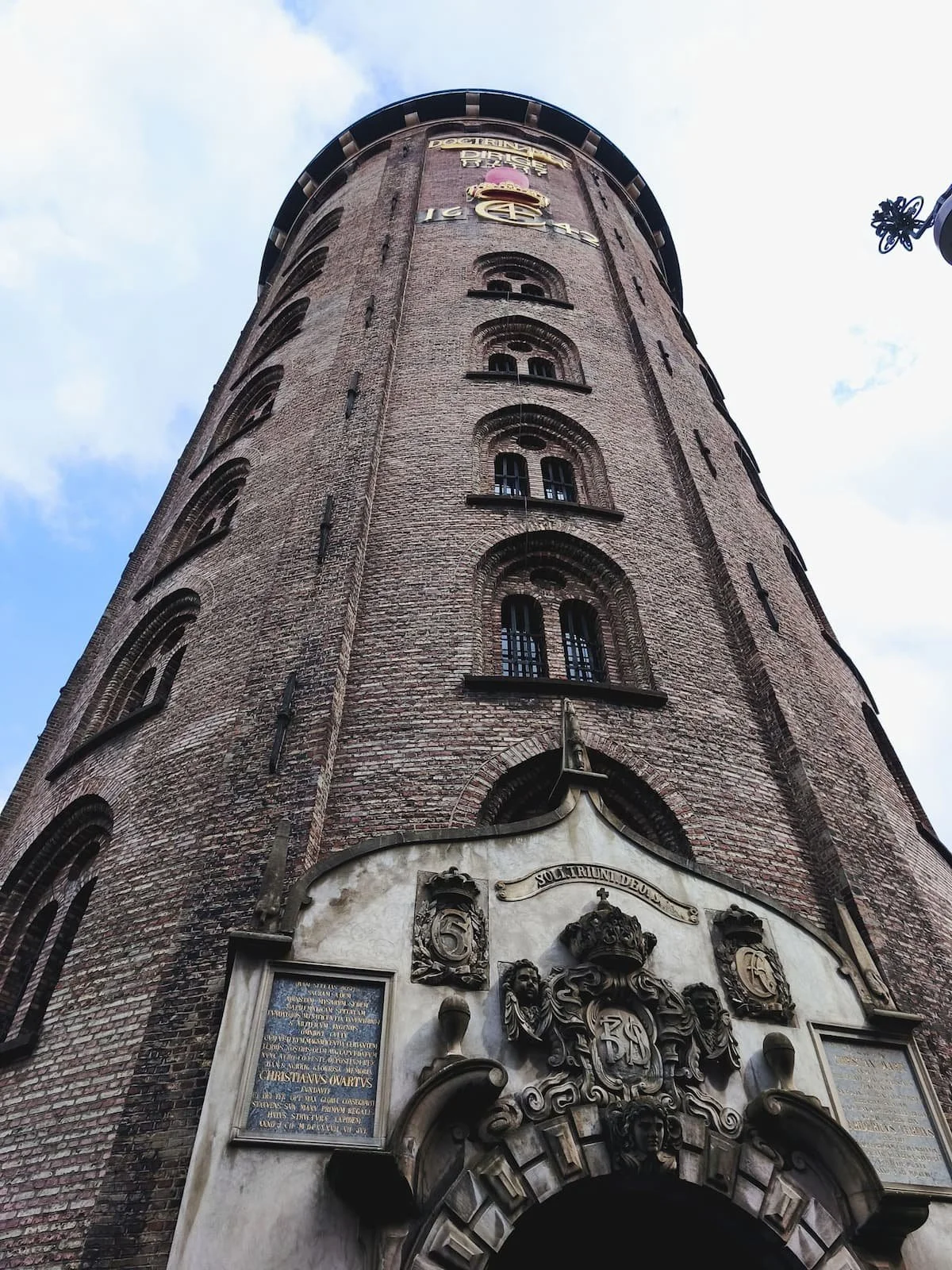
From Rosenborg, continue into the historic center and stop by the Round Tower. Built during the reign of Christian IV and completed in 1642, it formed part of a complex with a church, university library, and astronomical observatory. It has a broad spiral ramp that winds 7½ times around the tower on the way toward the top.
We didn’t make the climb because we were already planning to climb the Church of Our Saviour tower the next day, but even from outside, it’s one of the more distinctive buildings in the center.
From there, keep this part loose and wander toward lunch through some of Copenhagen’s older streets and Strøget, the long pedestrian shopping area through the center, where stores mix with historic buildings and cobblestone side streets. This area has your classic European charm, and I enjoyed strolling around there.
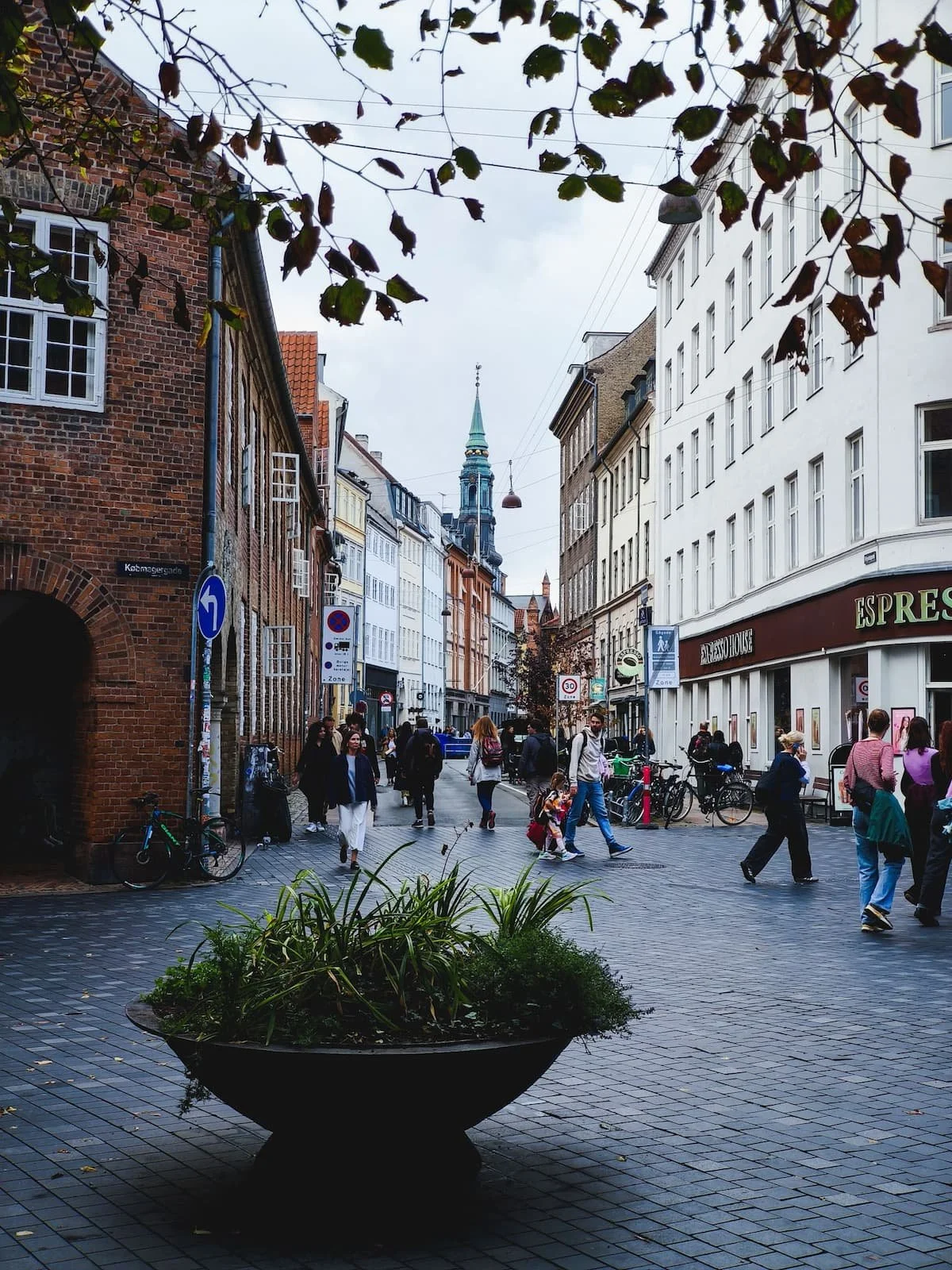
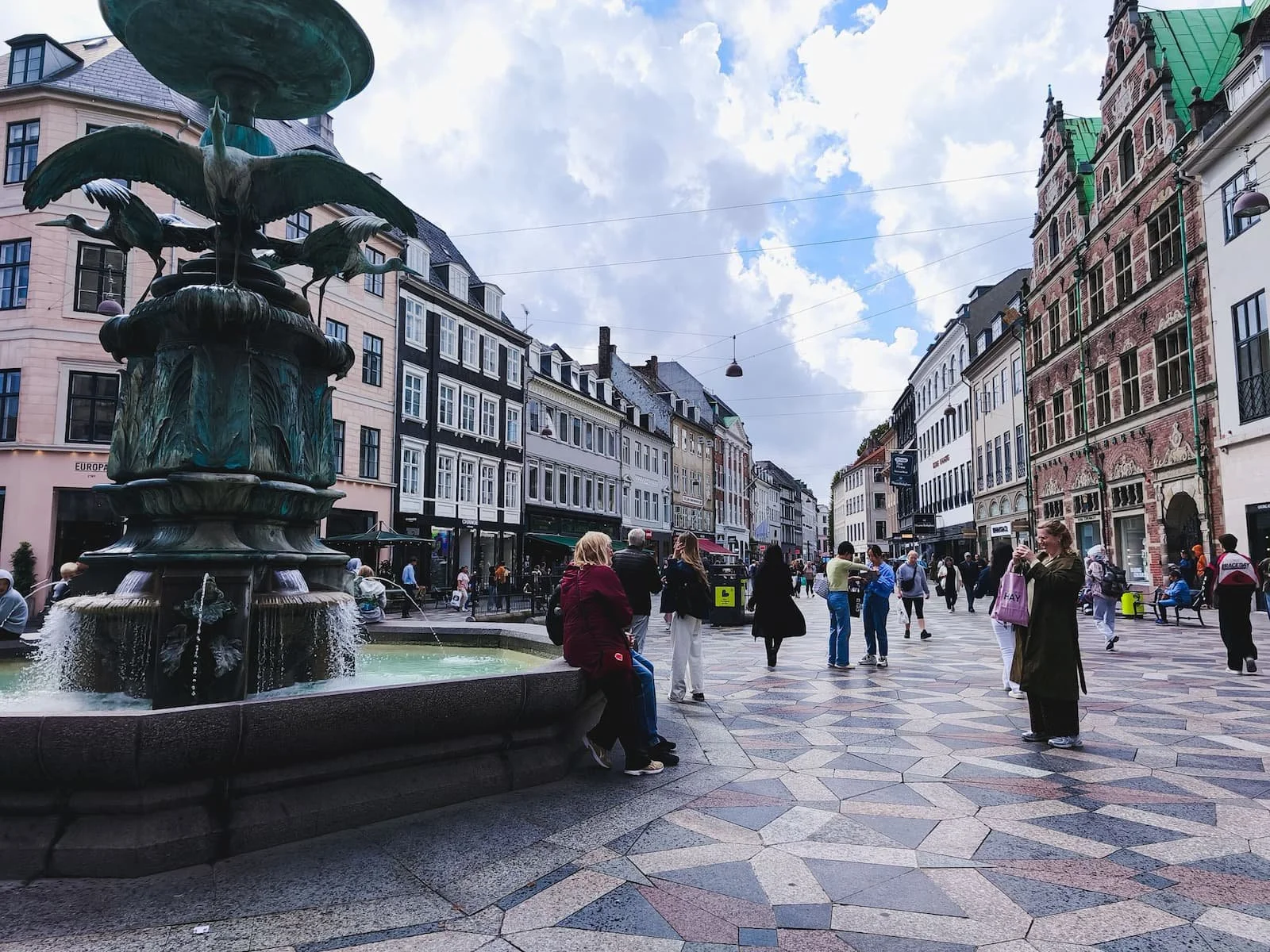
Amagertorv, a historic public square along Strøget.
Lunch — Torvehallerne + Smørrebrød
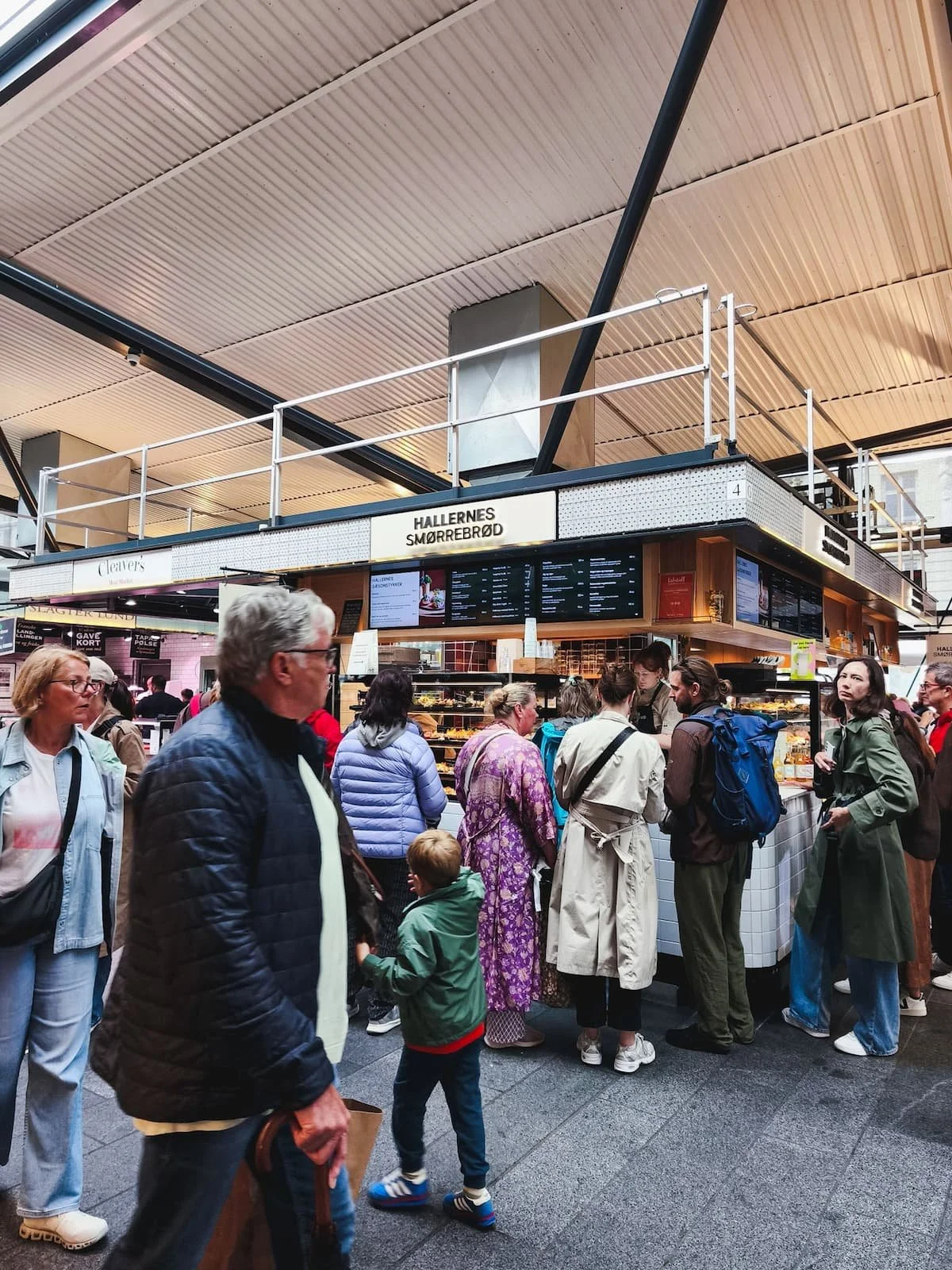
Stop for lunch at Torvehallerne, Copenhagen’s covered food market near Nørreport, where you can try smørrebrød, Denmark’s traditional open-faced sandwiches.
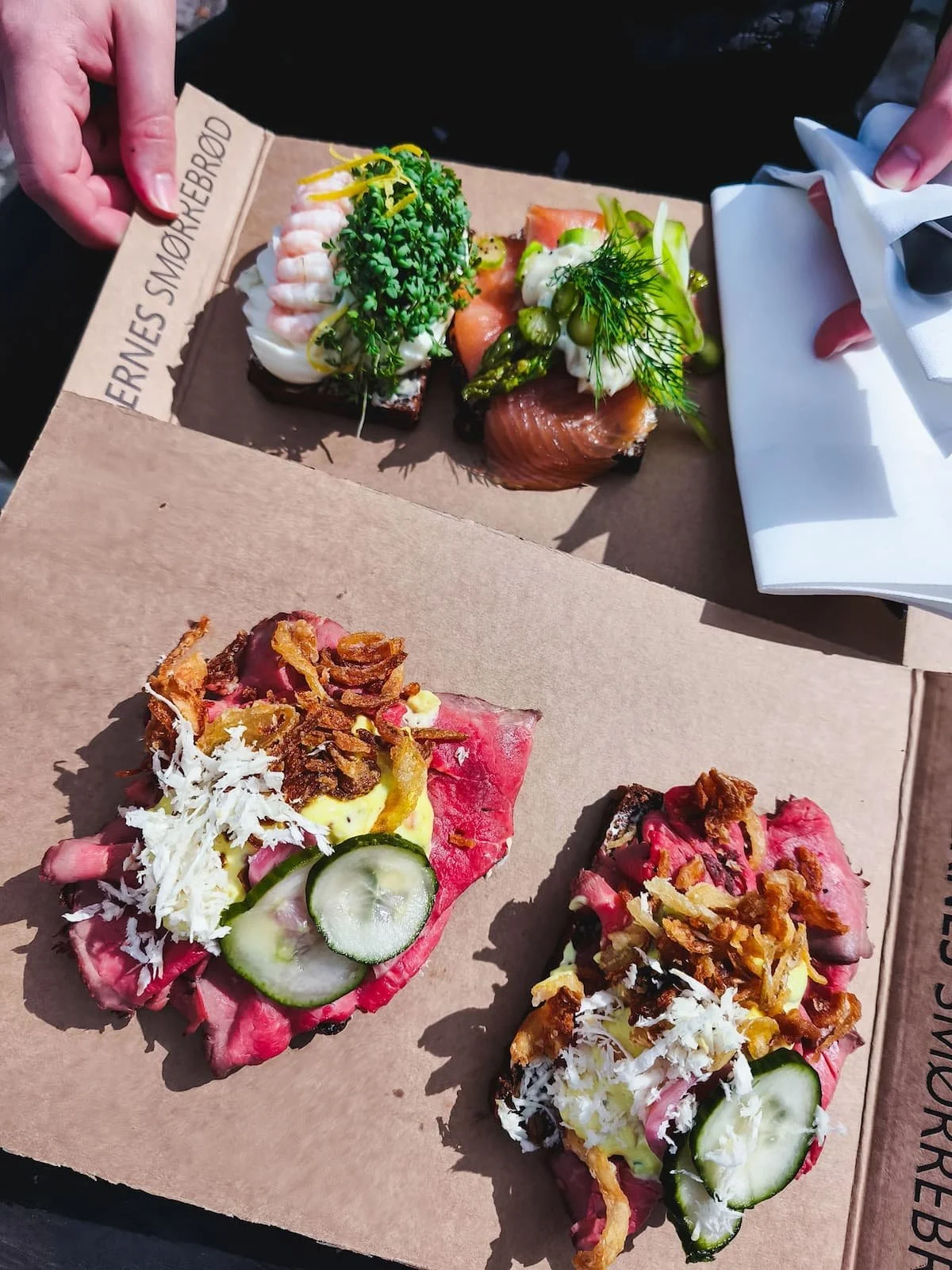
We went to Hallernes Smørrebrød, a popular stall inside the market. For two people, I’d get around three or four pieces to share so you can try a few different kinds. We ordered two roast beef ones because we both wanted one, plus a shrimp and a salmon. They were delicious and beautifully presented, and definitely felt like a gourmet version.
One thing to know is that smørrebrød can get expensive pretty quickly for the amount of food you get. Ours were around $15 each, and each piece is more like half of a regular sandwich than a full meal on its own.
I still think they’re worth trying while you’re in Copenhagen, but if you want to keep lunch cheaper, you could split a couple as more of an appetizer and round out the meal with something less expensive elsewhere in the market.
Afternoon — Christiansborg + Nyhavn
Allow: around 1.5–2 hours
After lunch, continue toward Christiansborg Palace, which today houses the Danish Parliament, Supreme Court, and Prime Minister’s Office alongside royal reception rooms. The Royal Stables are also part of the palace complex and house the royal horses and carriages.
After already visiting Rosenborg, I wouldn’t add another palace interior unless royal history is especially your thing. I’d mainly walk through the grounds, take in the scale of the complex, and continue toward Nyhavn.
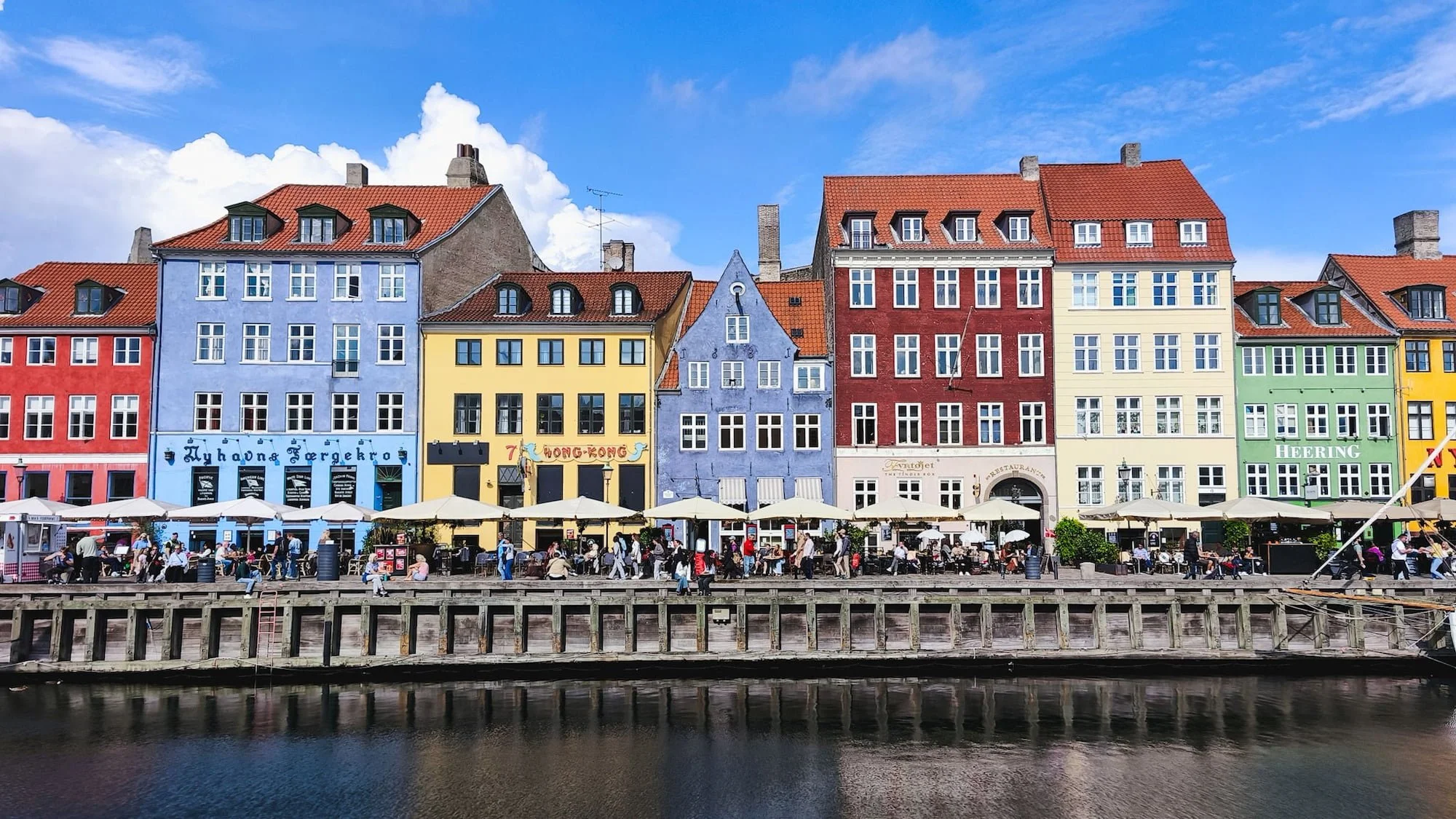
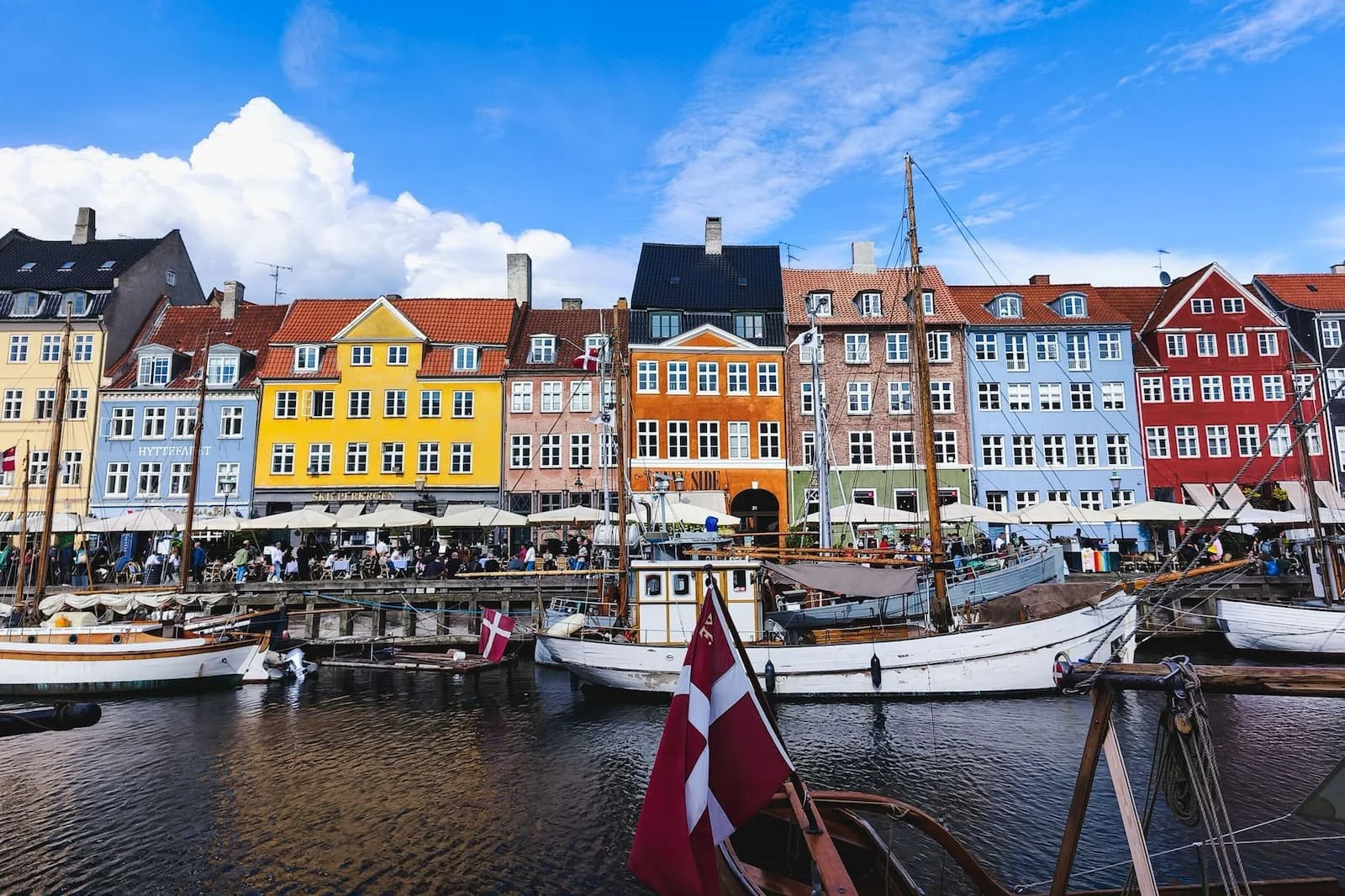
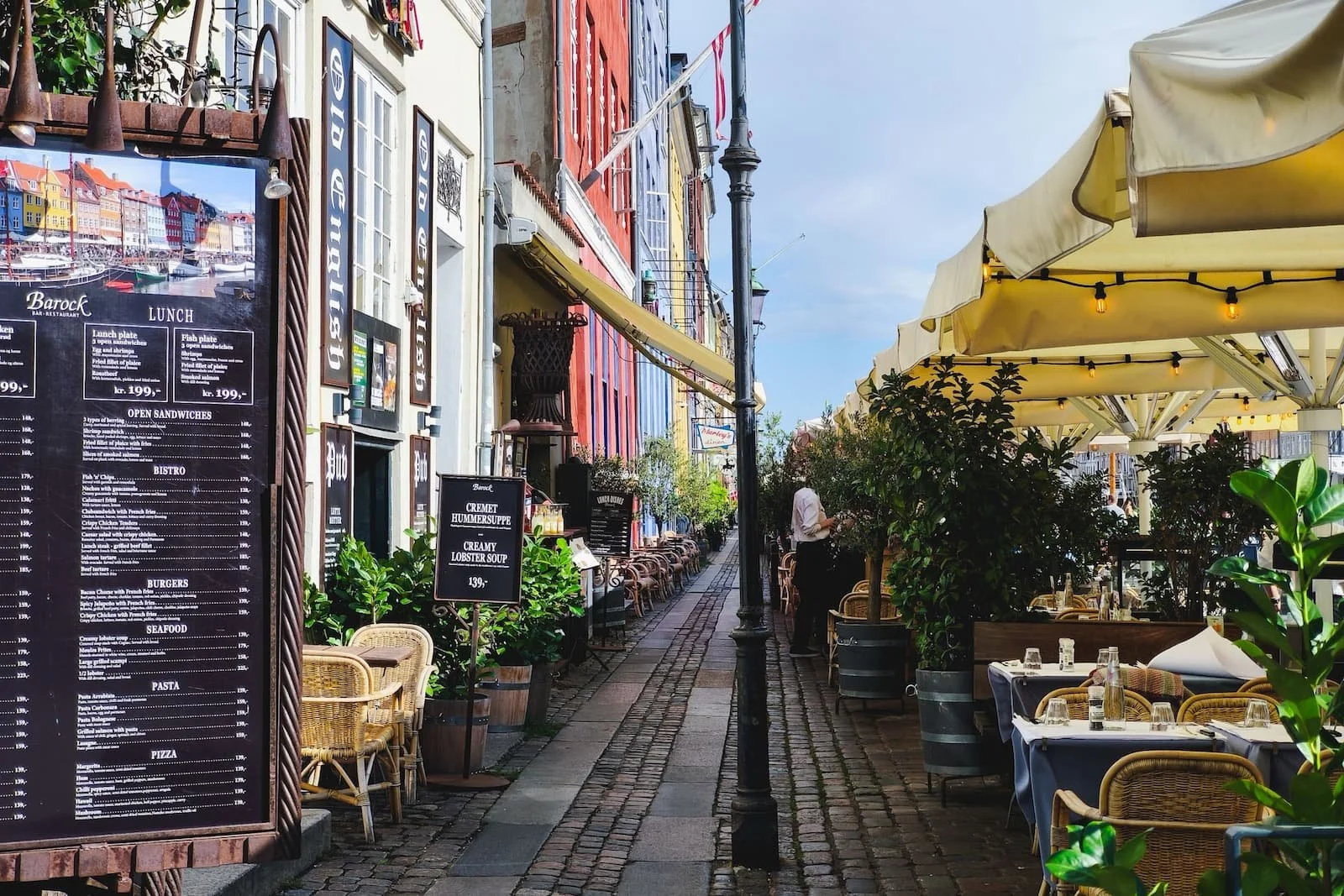
Nyhavn is Copenhagen’s colorful 17th-century harbor, originally built as a commercial port and now lined with brightly painted historic houses, boats, restaurants, and cafés. Hans Christian Andersen also lived at several addresses along the canal.
It’s obviously one of Copenhagen’s most touristy areas, but it’s still absolutely worth seeing on a first trip, and where you’ll recognize a lot of those classic Copenhagen photos (including the hero photo in this post!).
It had been cloudy for most of our day, but the sun finally came out right around the time we reached Nyhavn, and the blue sky made the colors of the buildings look even more saturated. Lucky us.
It was also packed with people taking photos along the fairly narrow waterfront, so we didn’t linger too long. We did sit on a bench for a bit to rest and enjoy the view.
Late Afternoon + Early Evening — The Royal Waterfront to the Little Mermaid
Allow: around 2–2.5 hours including a break
From Nyhavn, continue along the waterfront toward Amalienborg Palace and the Marble Church.
Amalienborg is the main residence of the Danish royal family and consists of four 18th-century palaces arranged around a large square. Just behind it, the domed Marble Church is one of the most recognizable buildings in the surrounding Frederiksstaden district.
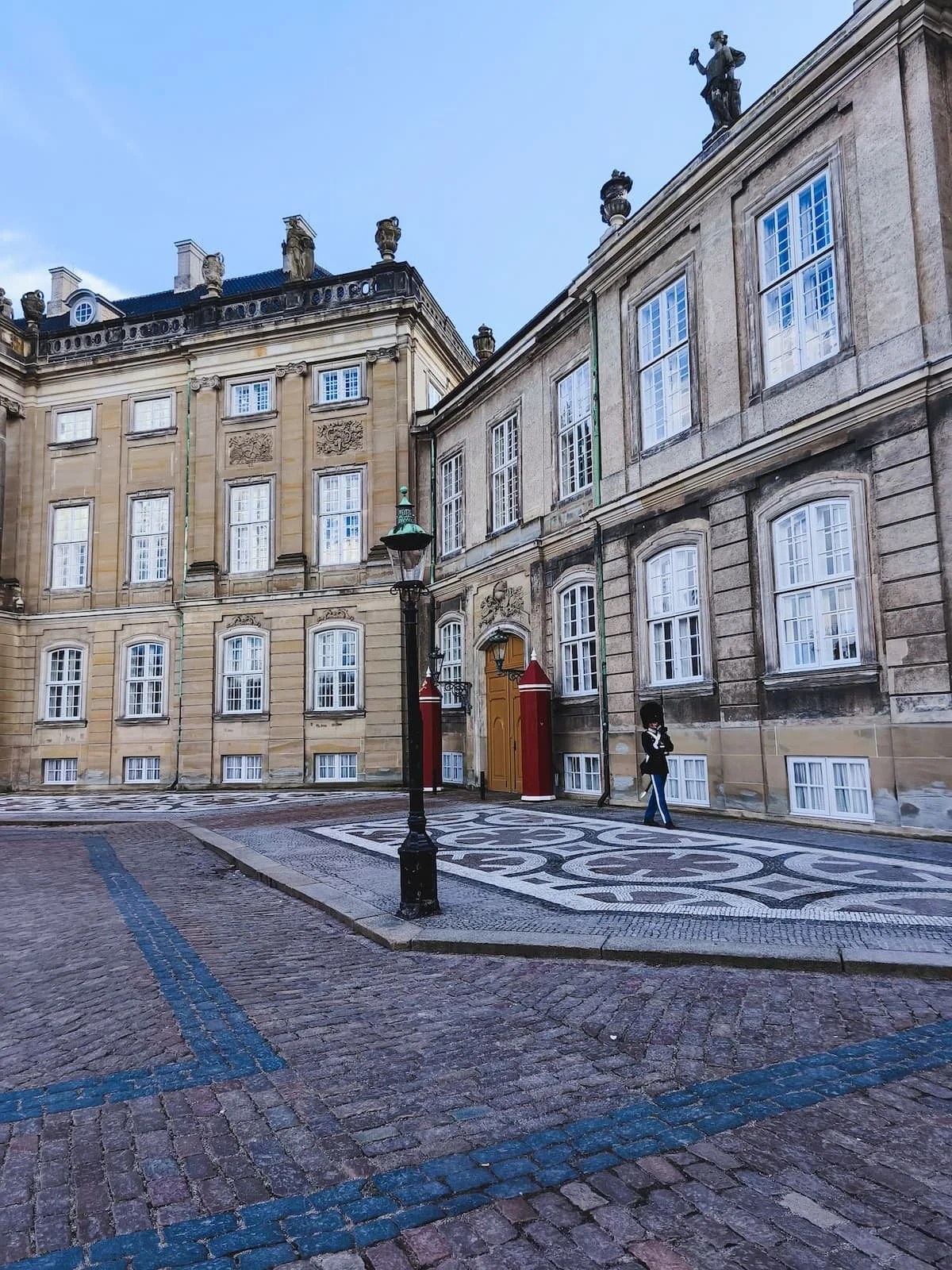
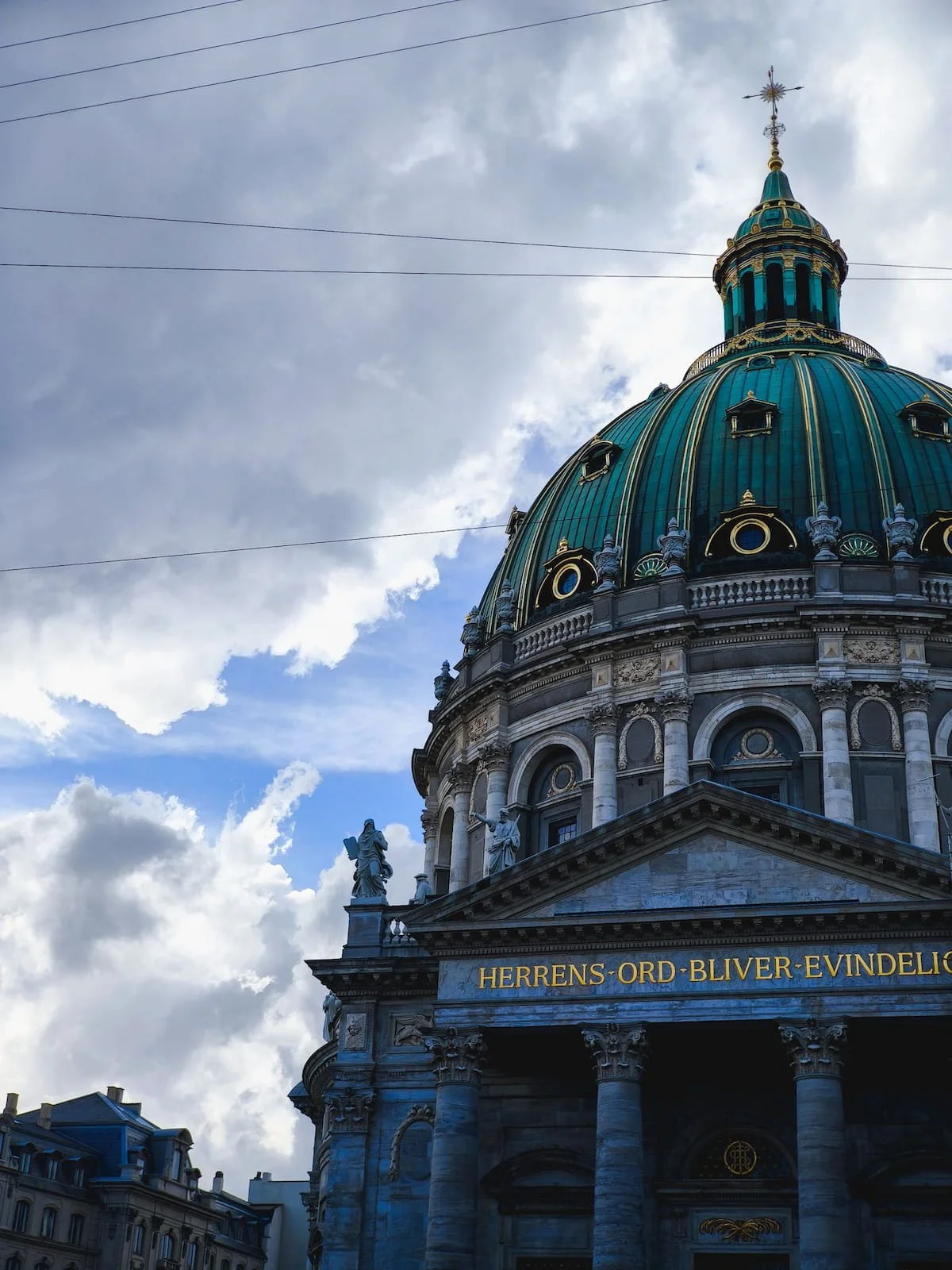
I’d treat both mainly as part of the walk rather than another pair of major sightseeing stops. After Rosenborg and Christiansborg, you’ve already seen plenty of royal Copenhagen, and this stretch is more about the transition from the historic center into a broader, more open waterfront.
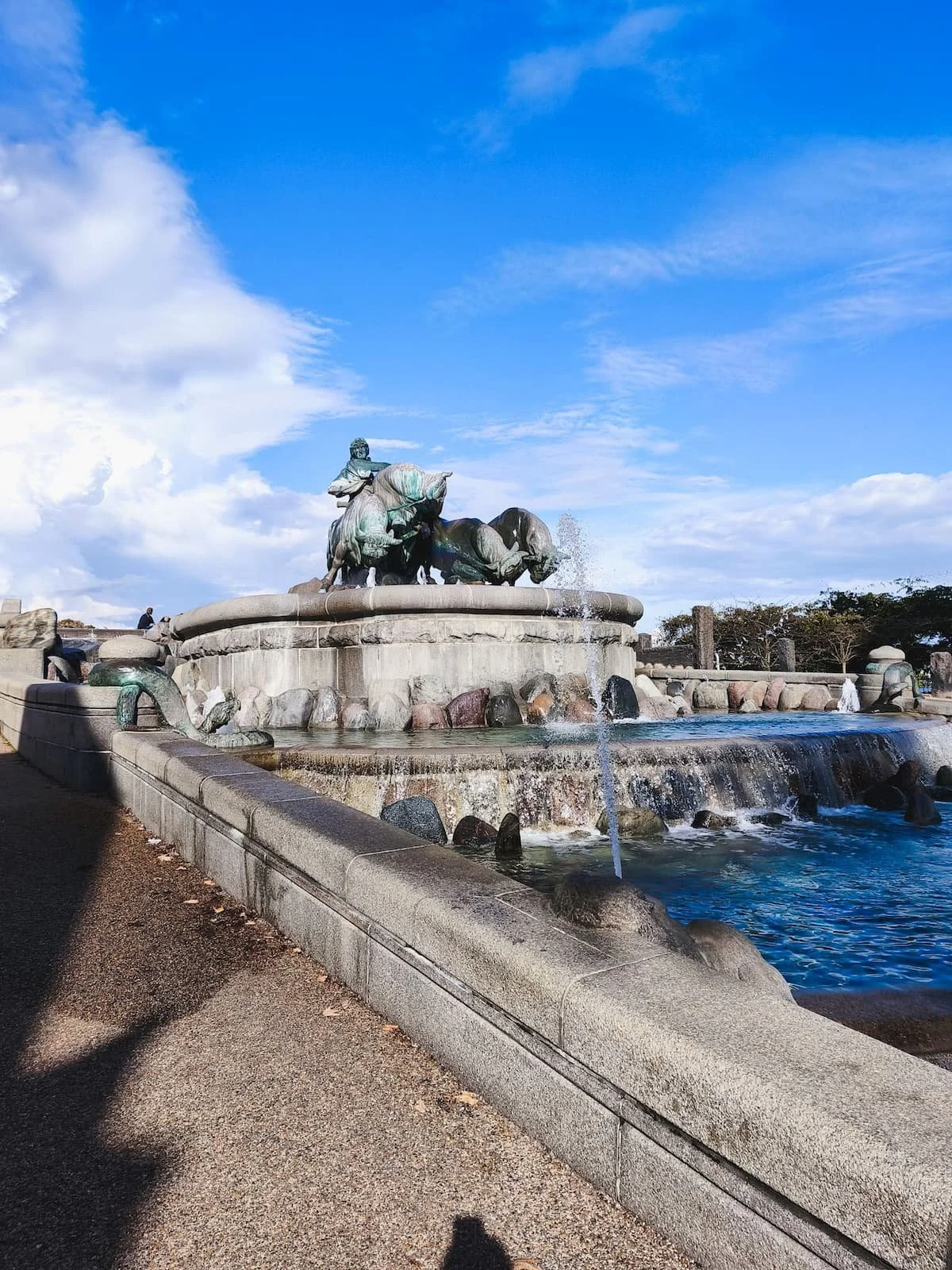
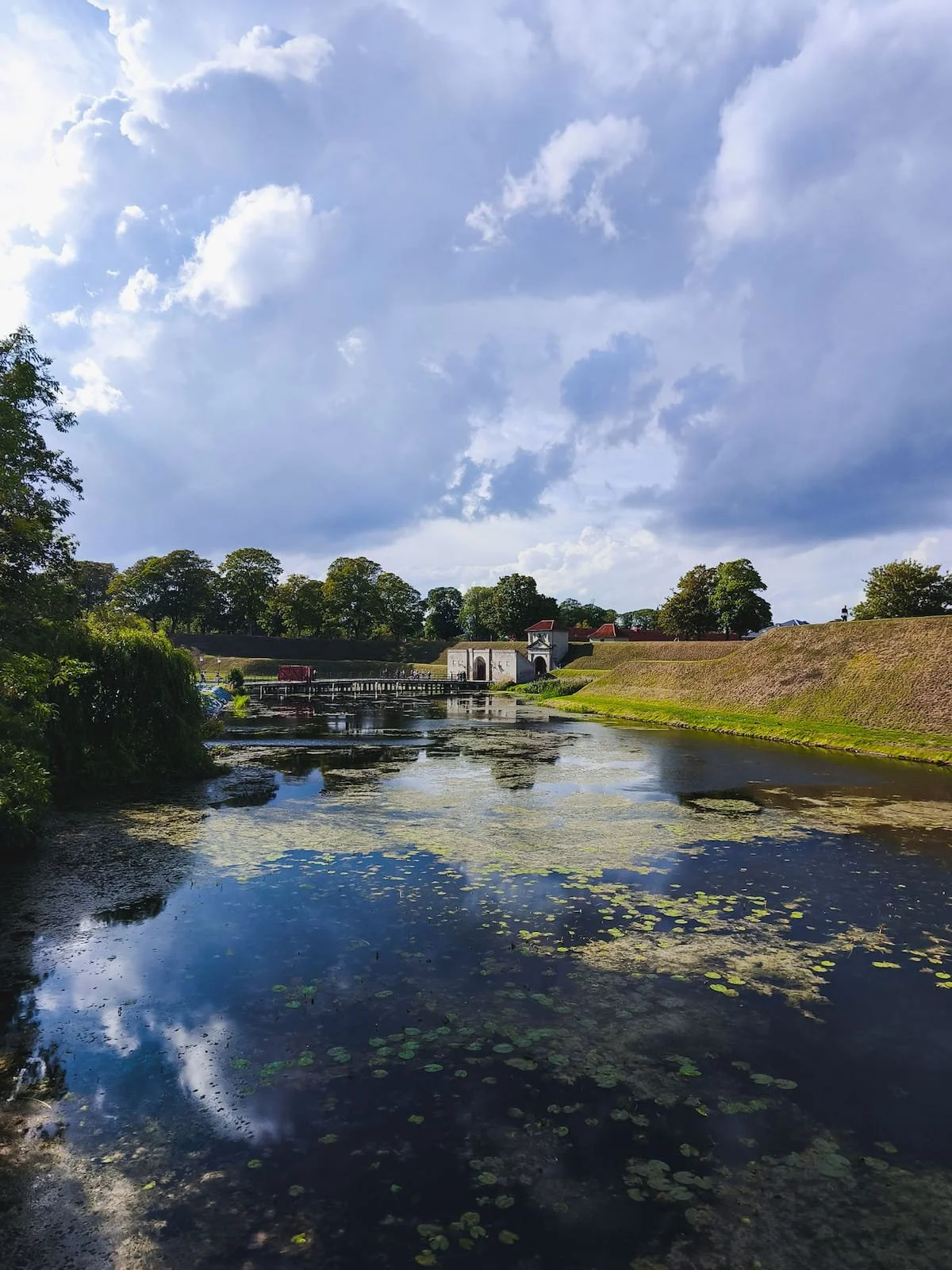
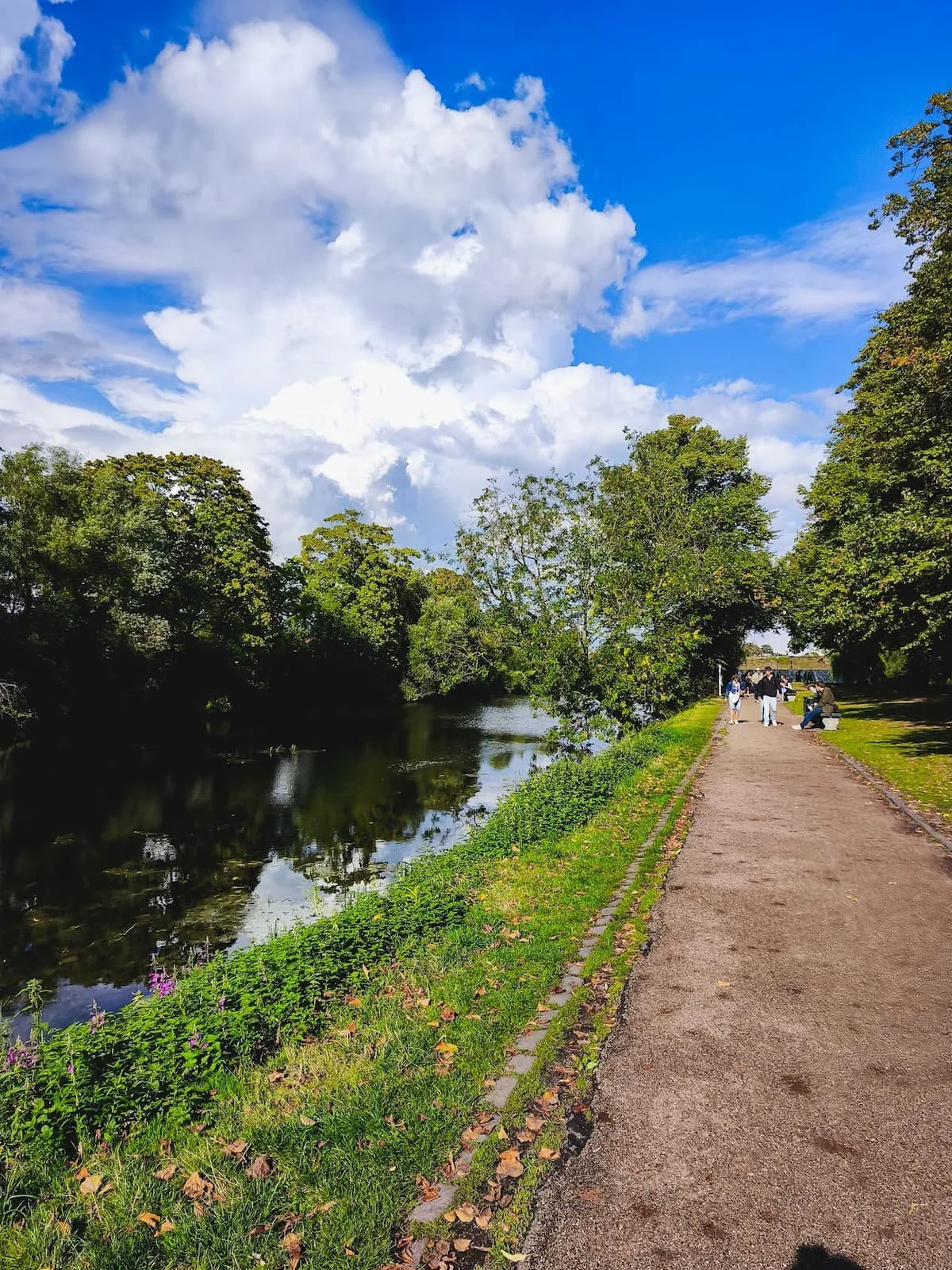
Then continue past the Gefion Fountain toward Kastellet, Copenhagen’s preserved star-shaped fortress. The fountain depicts the Norse goddess Gefion driving four oxen, while Kastellet is still a military site but also functions as a leafy public space with paths along its old fortifications.
This whole stretch was less about individual “must-see” landmarks for me and more about the walk itself. It gets greener, you keep getting views of the harbor, and it really highlights how closely Copenhagen is tied to the water.
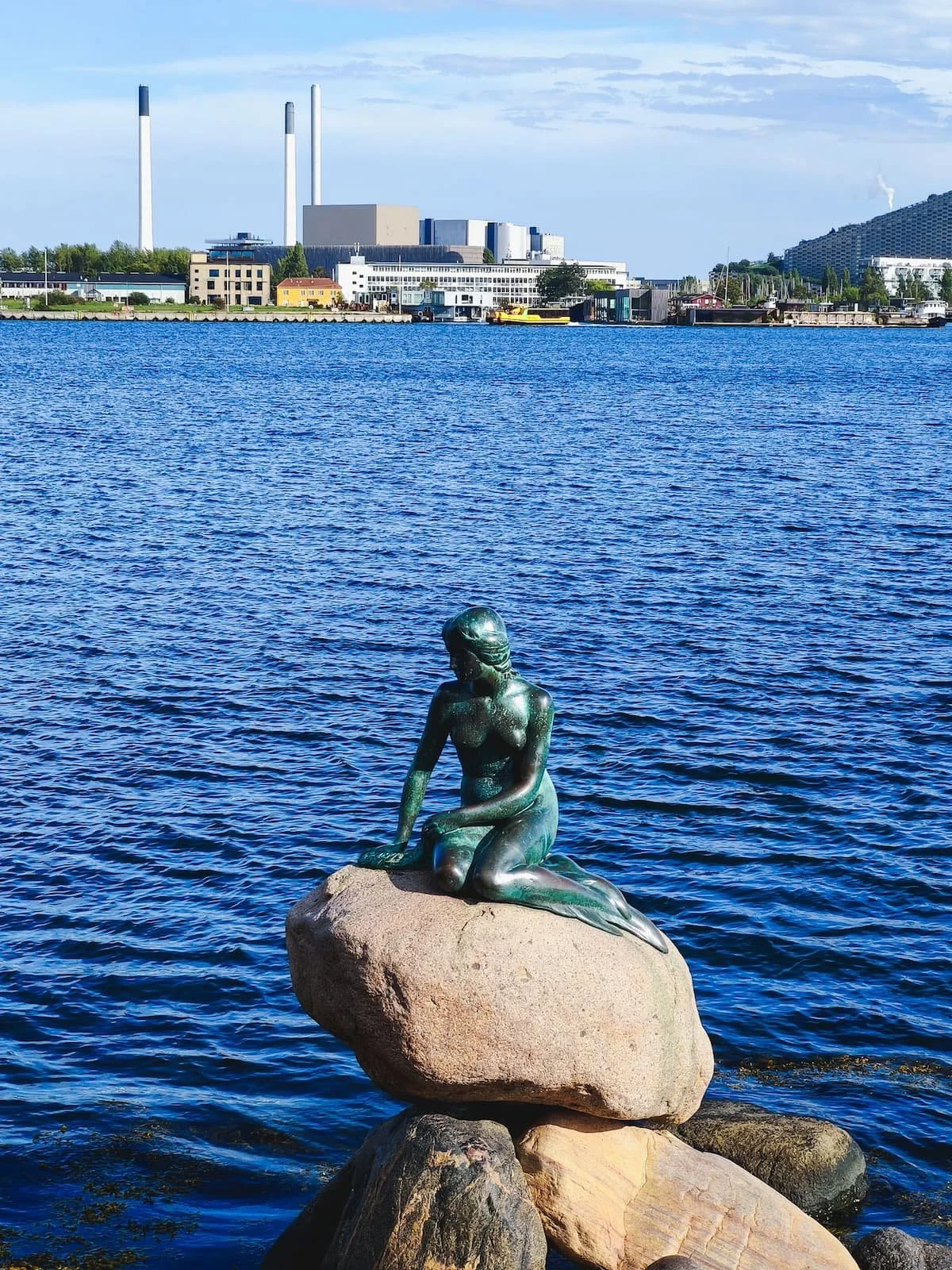
From Kastellet, stroll to the Little Mermaid, the bronze sculpture inspired by Hans Christian Andersen’s fairy tale. Created by sculptor Edvard Eriksen and unveiled in 1913, it has become one of Copenhagen’s best-known symbols. She seems to be in transition from tail to legs. To be honest, I wouldn’t make a special trip all the way out here just for the statue, but it fits naturally at the end of this waterfront route, so you might as well see it while you’re already nearby.
Afterwards, we did walk back to our hotel in the center area and didn’t find it too bad, but consider taking public transit to save your legs after a long day.
Dinner — Traditional Danish Food at Karla or PUK
For dinner, I’d head back toward central Copenhagen and stick with traditional Danish food.
More Affordable — Karla
This is where we ate, and we think it’s one of the more well-priced traditional Danish meals we found, especially by Copenhagen standards.
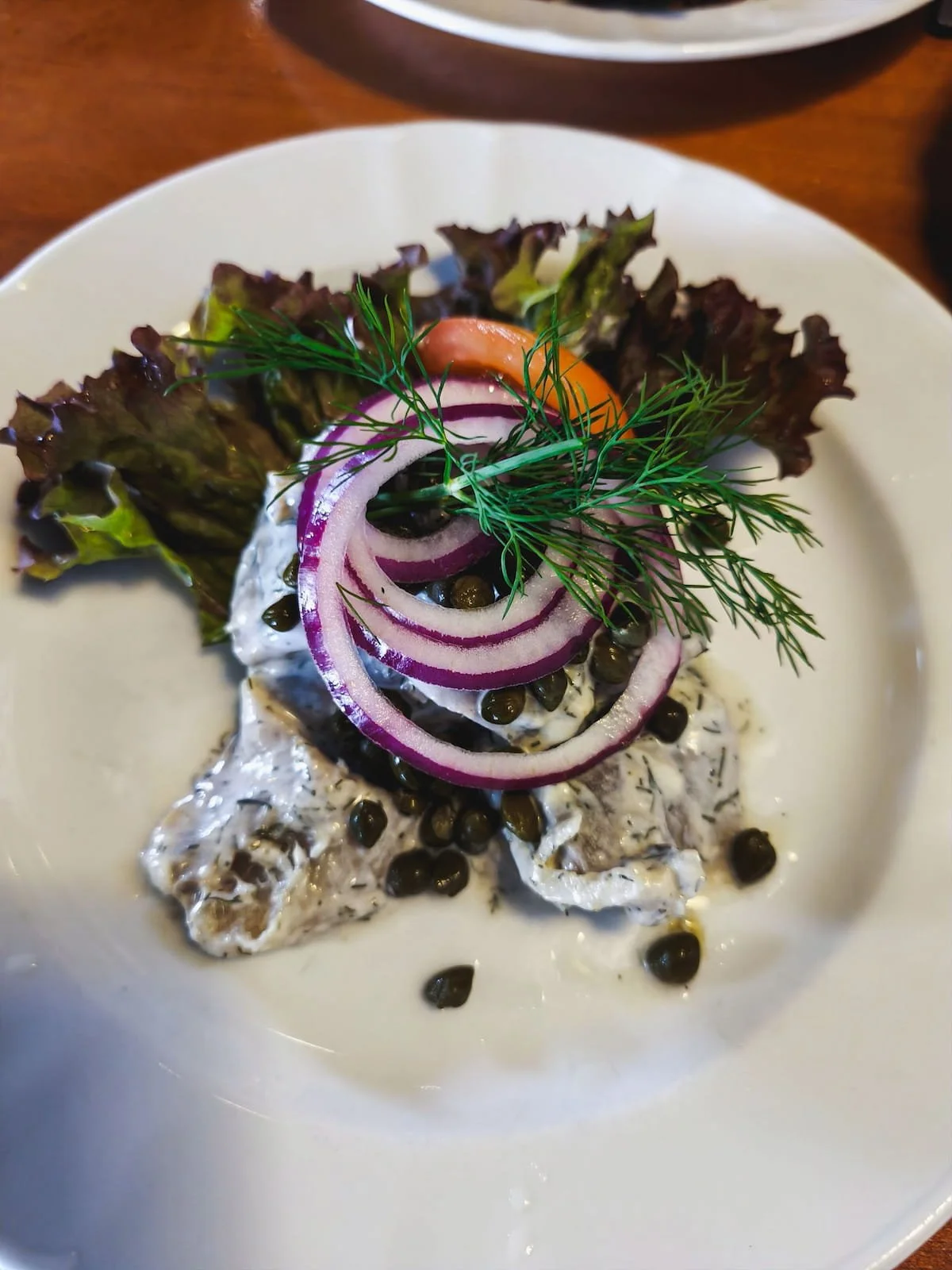
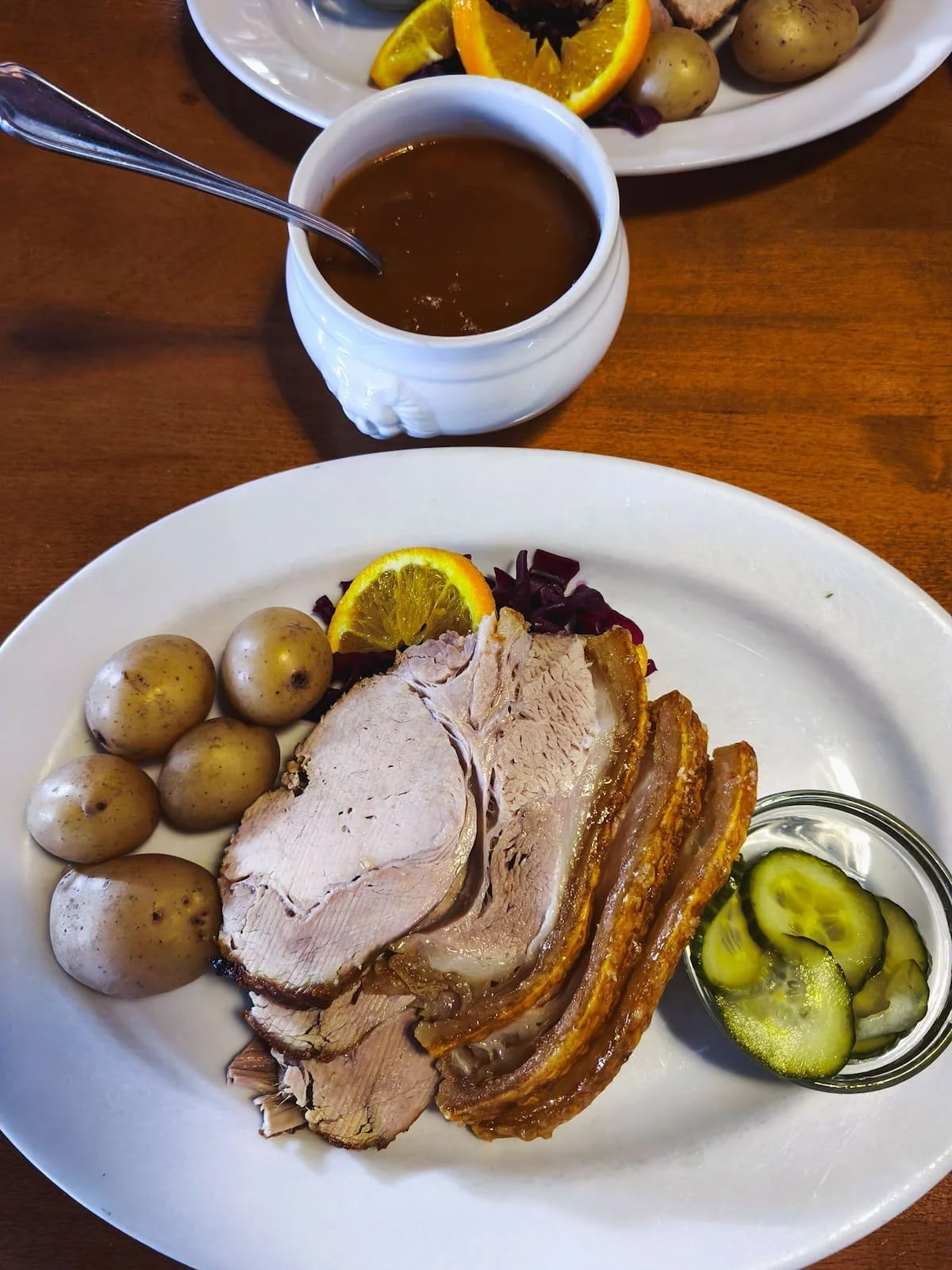
We both ordered the two-course menu, which included kronesild, a pickled herring appetizer, followed by flæskesteg, Danish roast pork served with red cabbage, boiled potatoes, and gravy.
It was a lot of food, and everything was delicious. The herring portion was generous (I was like half full after it), and the pork came with this extremely scrumptious crackling skin. It was also an easy way to try two classic Danish dishes in one meal without ordering a whole spread.
Alternative — Restaurant PUK
If you want an even more old-school traditional Danish dinner, Restaurant PUK is another good option. The restaurant dates back to 1750 and is known for classic Danish dishes, including stegt flæsk med persillesovs — Danish national dish consisting of crispy pork served with potatoes and parsley sauce.
I’d choose Karla for the more affordable option, or PUK if you specifically want the historic setting and a very classic Danish pork dinner.
Day 1 Example Timing
Day 2 — Christianshavn, Refshaleøen + Tivoli
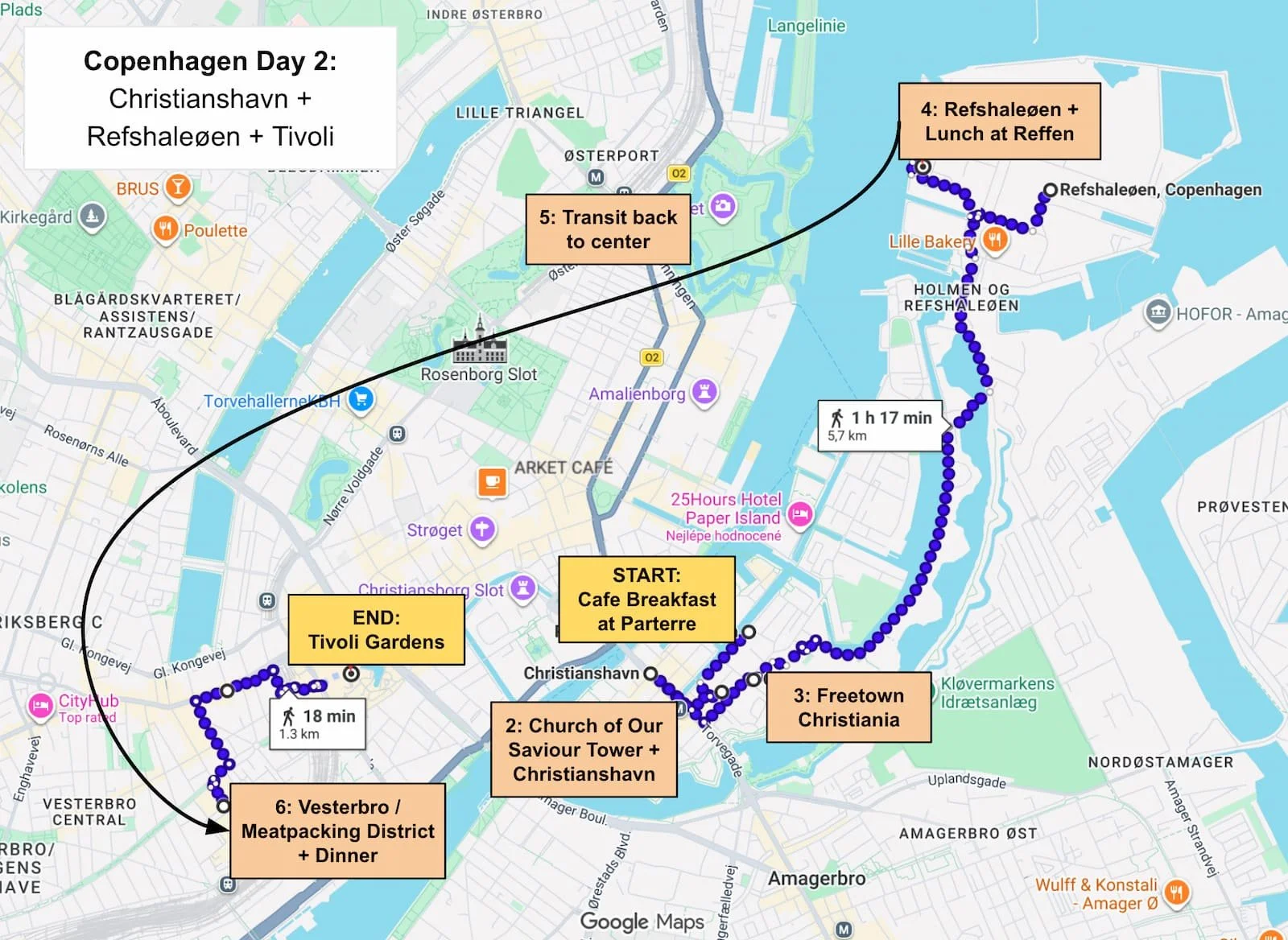
Day 2 shows a pretty different side of Copenhagen: quieter canals in Christianshavn, the alternative community of Christiania, and the former industrial waterfront around Refshaleøen, where you’ll stop for lunch at the huge Reffen street-food market. Finish around Vesterbro and the Meatpacking District before spending the evening at Tivoli Gardens.
Route
Parterre → Church of Our Saviour → Christianshavn canals → Christiania → Refshaleøen + Reffen → Vesterbro + Meatpacking District → Tivoli Gardens
Map data © Google.
Morning — Christianshavn + Church of Our Saviour
Allow: around 1.5 hours including breakfast
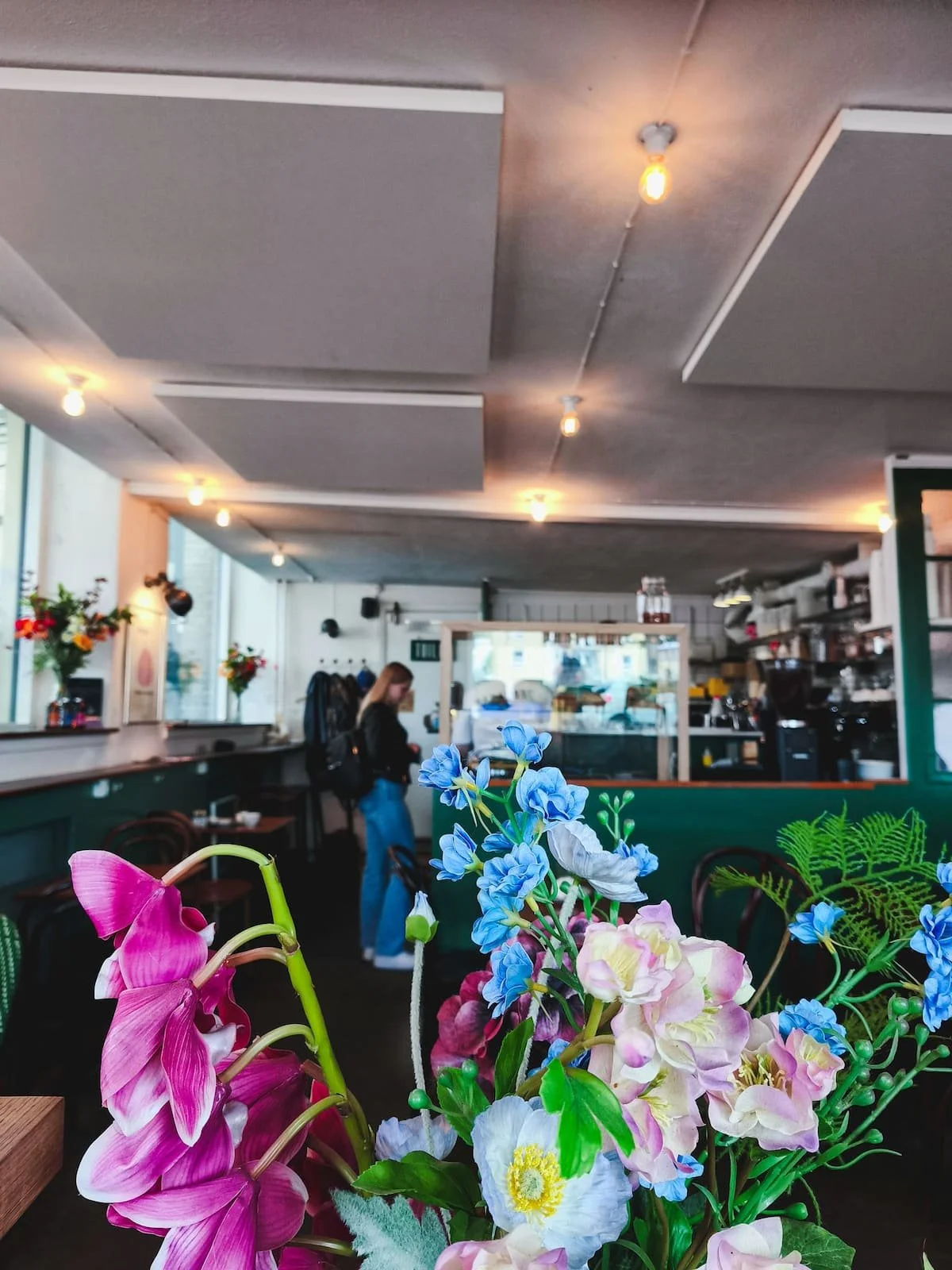
Start with breakfast and coffee at Parterre, a small, relaxed café in Christianshavn.
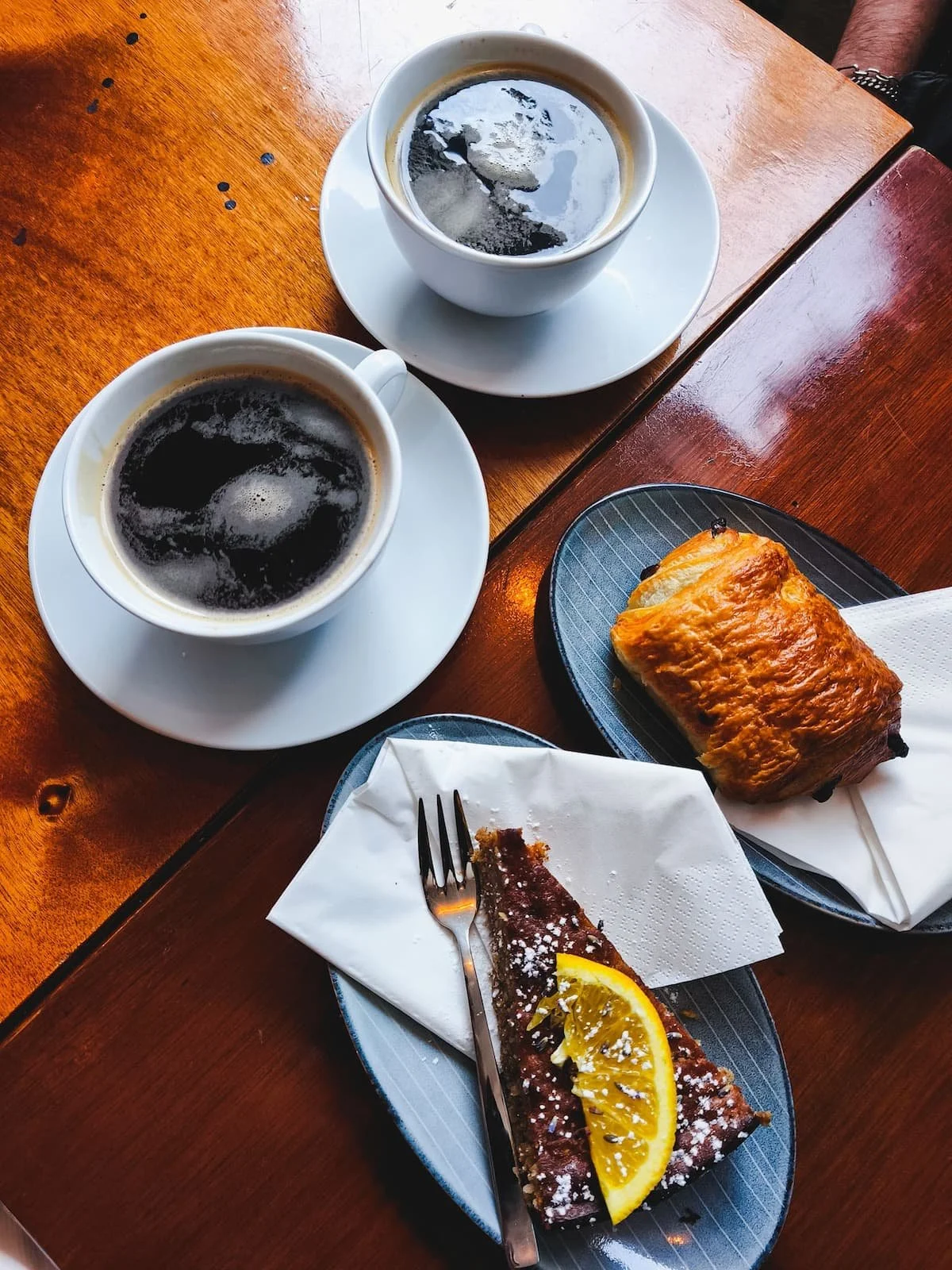
This was probably our most hygge café moment in Copenhagen. The interior is super cozy, and the staff were so relaxed that they basically told us to sit, chill, and even leave if we changed our minds and didn’t want anything. We ordered a couple of coffees with a pain au chocolat and orange cake, and both were really good.
From there, it’s a short walk to the Church of Our Saviour, best known for the golden corkscrew spire wrapping around the outside of its tower. The church itself dates to the late 1600s, while the spire was added in the 18th century; reaching the top involves about 400 steps, with the final 150 outside.
The views are amazing, but I would not recommend this one if you have a strong fear of heights. The final staircase circles the outside of the tower, gets narrower as you climb, and I actually saw someone freeze up on the way. I have a bit of a fear of heights myself and definitely felt that tingly “why am I doing this?” feeling, but if you can handle it, I highly recommend the climb. It’s thrilling, and the views over Copenhagen are worth it.
There are also quite a few steep, narrow stairs inside before you even reach the outdoor section, and it can get very windy at the top. Keep hold of your hat and your phone when you’re taking photos.
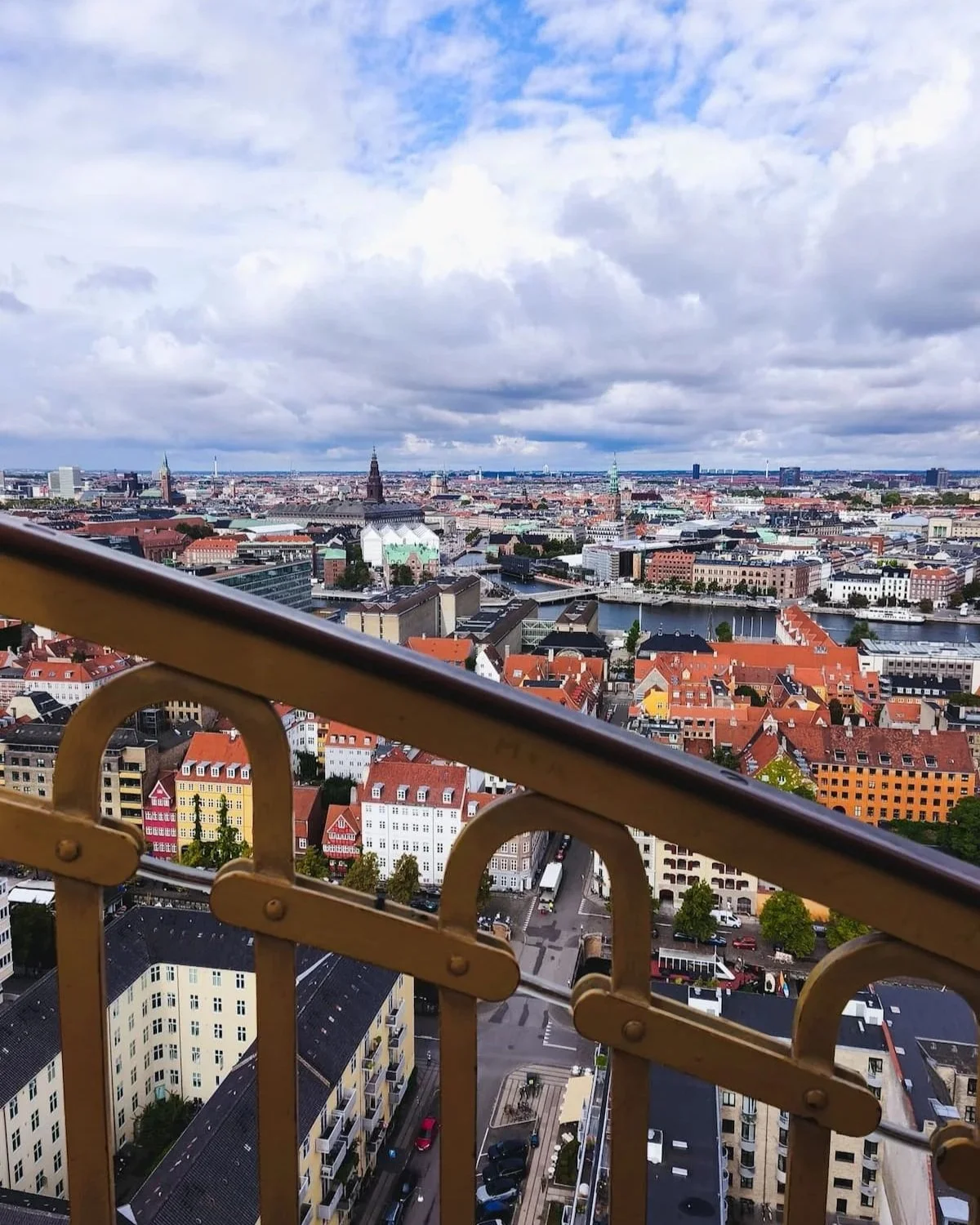
View from Church of Our Saviour tower spiral. Not my best photo since this doesn’t capture the exposed feeling very well, so you’re just going to have to experience it yourself :)
Late Morning — Christianshavn + Christiania
Allow: around 1–1.5 hours
After the tower, spend a little time around the canals of Christianshavn before continuing toward Freetown Christiania. Christianshavn is technically part of central Copenhagen but has much more of a neighborhood feel, with colorful houses, canals, houseboats, and quieter streets.
We didn’t wander too extensively here because our legs were still recovering from Day 1, but it felt noticeably calmer than the busier parts of central Copenhagen across the water.
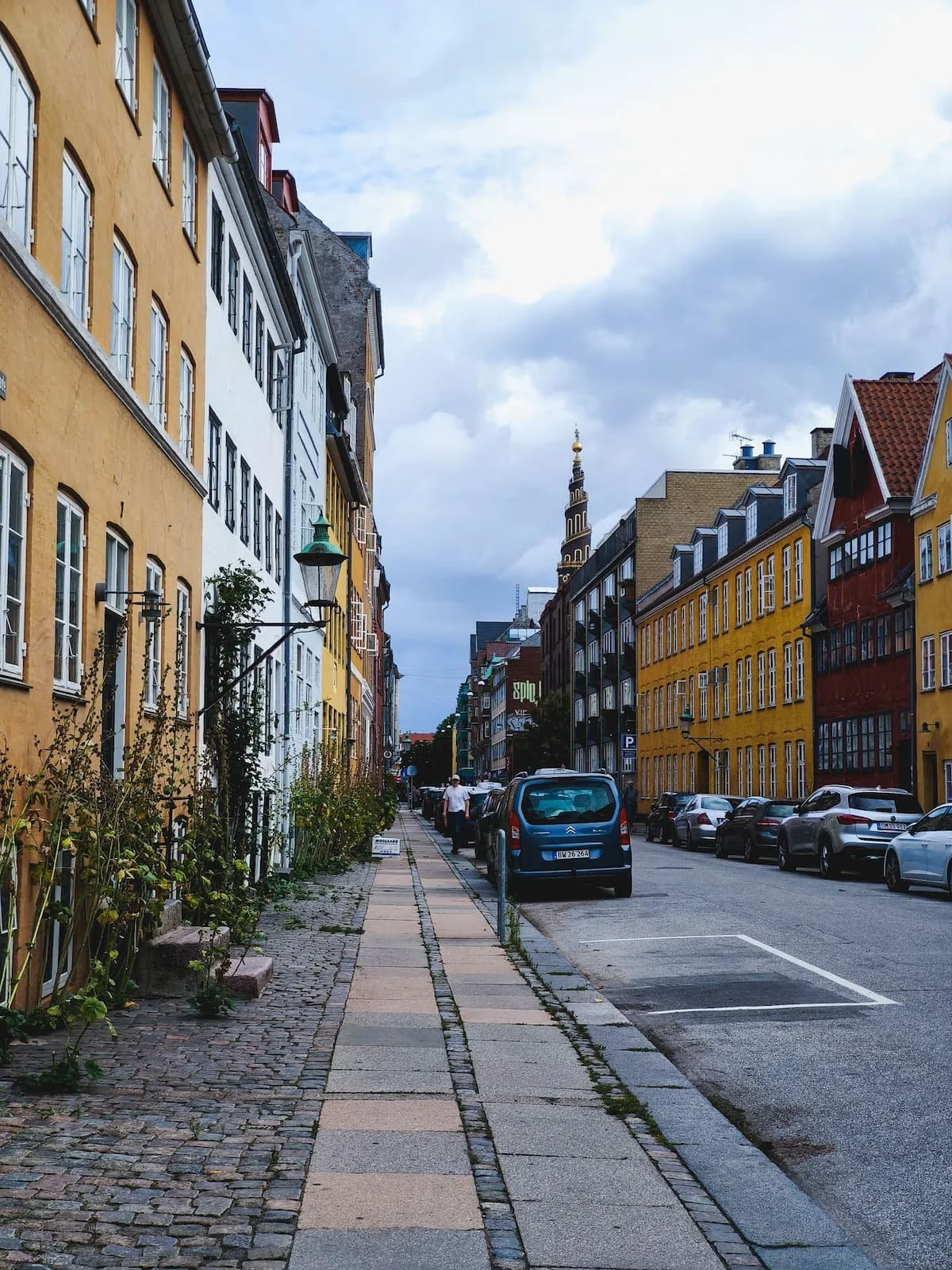
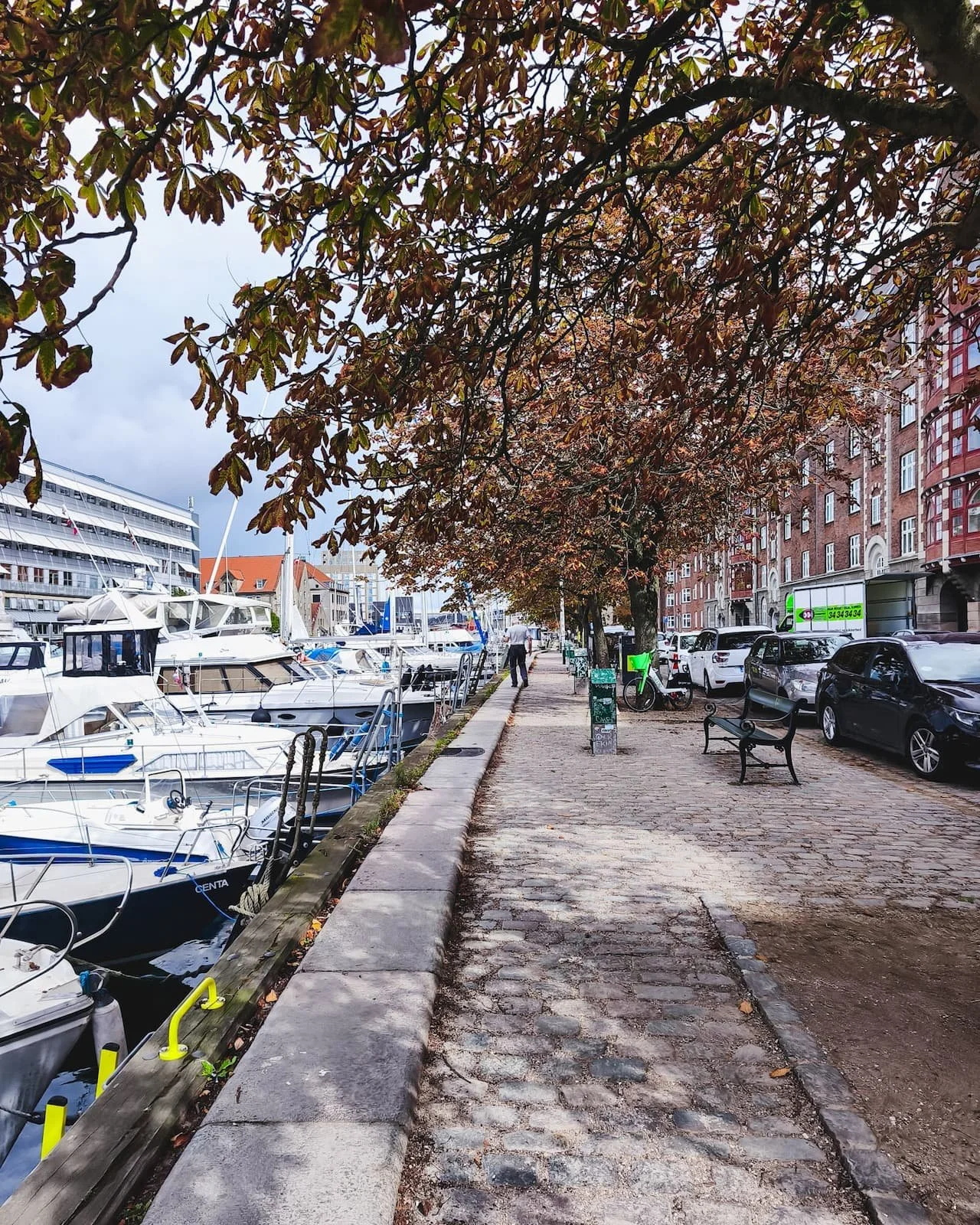
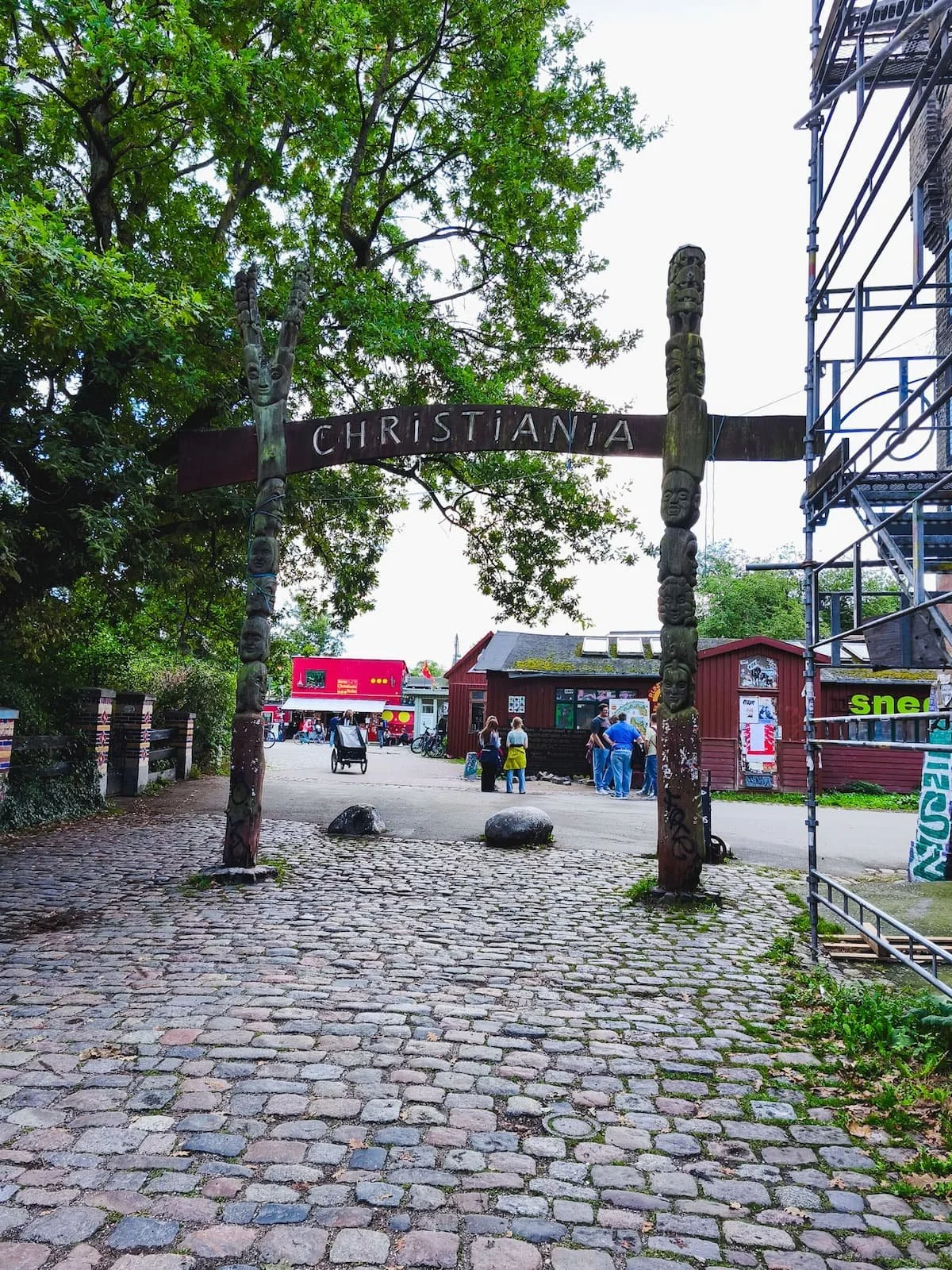
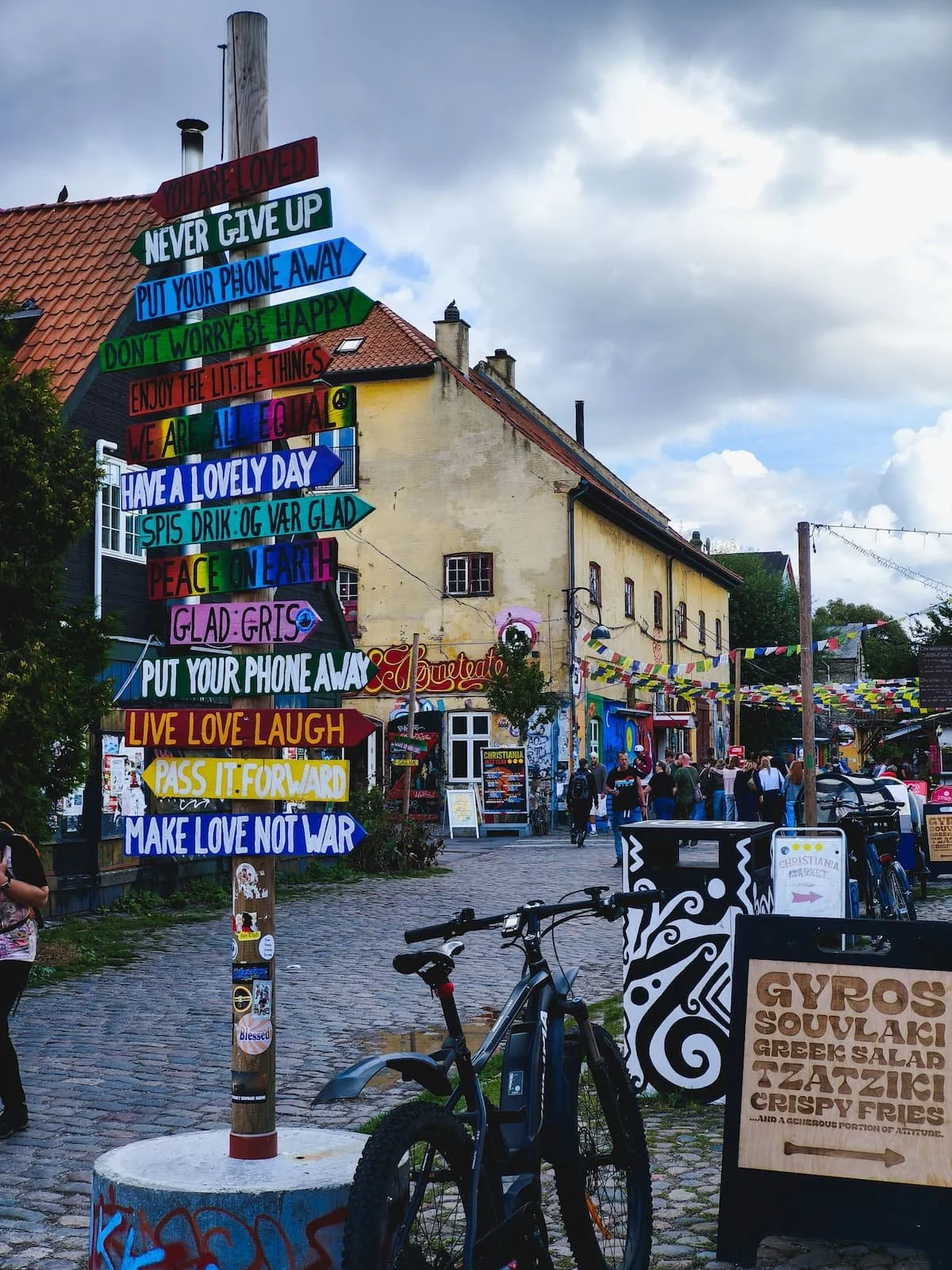
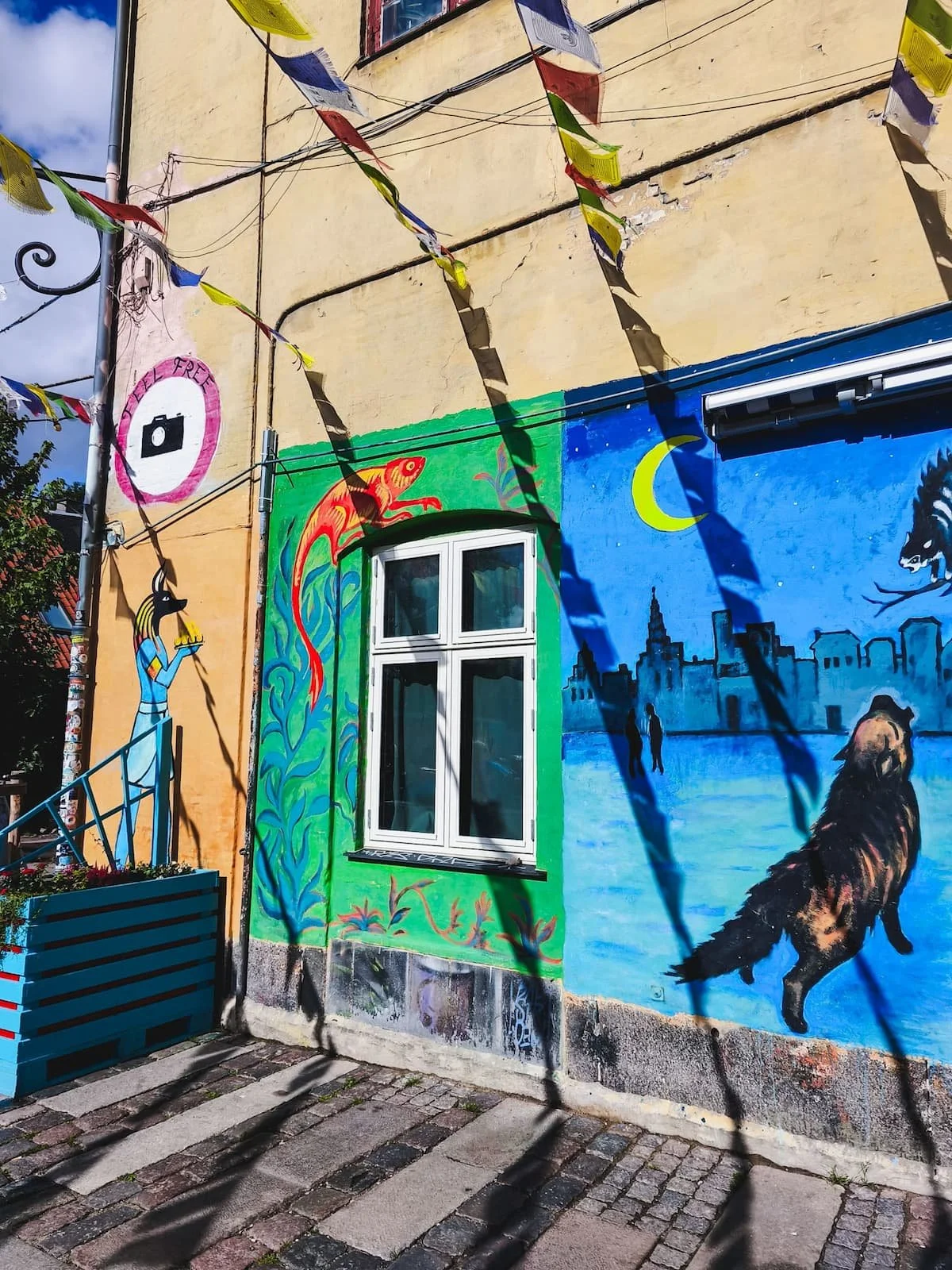
Christiania was established in 1971 on a former military site and developed around ideas of communal living, creativity, and self-governance. Despite the “free town” label, it’s still subject to Danish law.
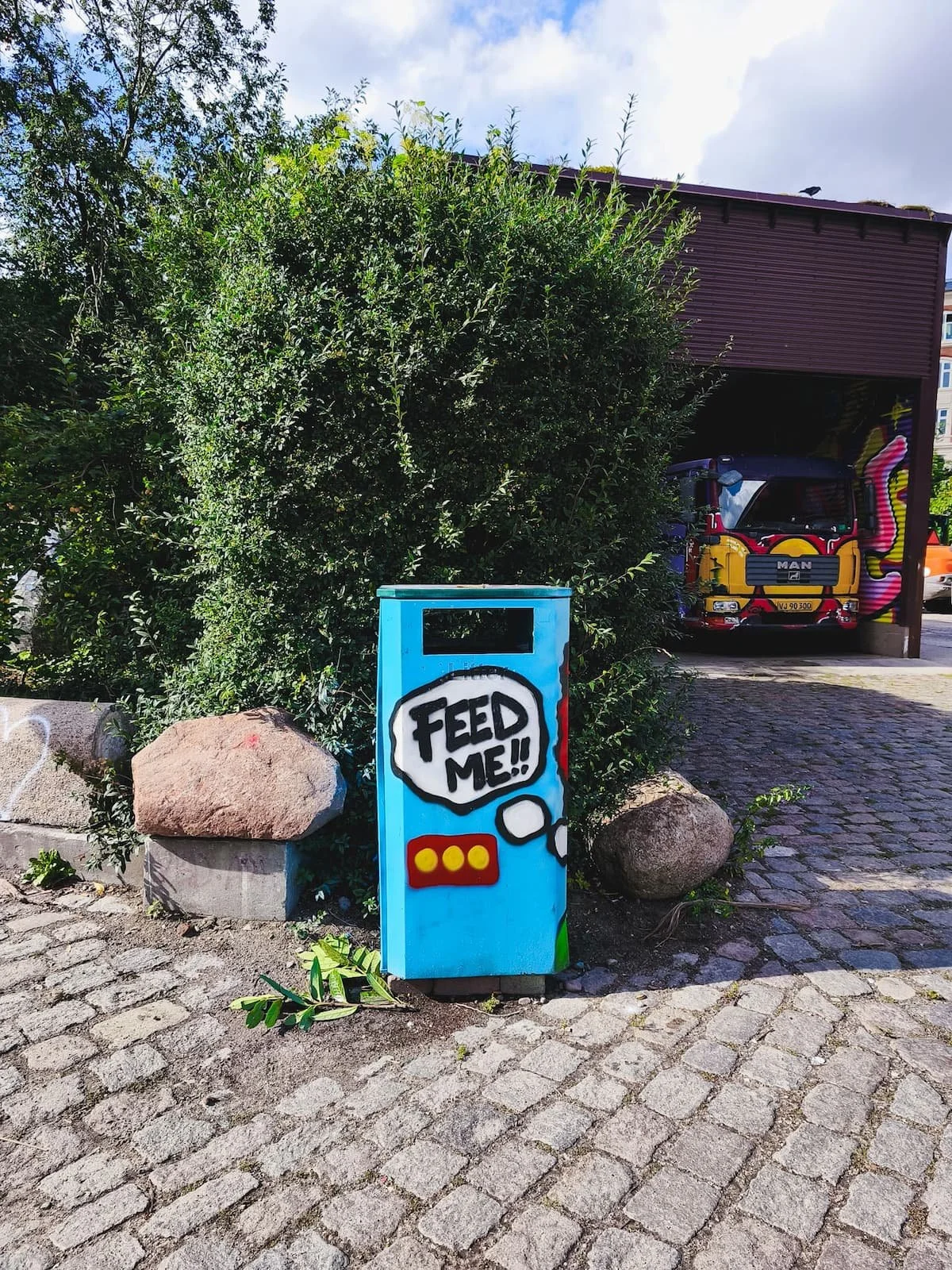
To be honest, Christiania wasn’t one of my favorite parts of Copenhagen, but I still found it interesting to see. It’s almost like a giant co-op with its own culture, art, businesses, and unconventional buildings, and I think it makes more sense to approach it as a neighborhood people actually live in than as a checklist stop. We spent around 30 minutes walking through.
Christiania has also changed quite a bit from the reputation many travelers may associate with it. The longtime open cannabis market on Pusher Street was dismantled in April 2024, and the area is now being reshaped around cafés, shops, art, and community spaces. Cannabis remains illegal in Denmark.
Be respectful when taking photos since people actually live here, and follow any signs marking areas where photography isn’t allowed.
Lunch — Refshaleøen + Reffen
Allow: around 1–1.5 hours, plus the trip there
From Christiania, continue toward Refshaleøen, a former shipyard area that has been transformed into one of Copenhagen’s more creative, industrial waterfront districts.
We walked from Christiania, which took around 45 minutes. The first stretch was really nice along the water; farther out, the surroundings started to feel much more industrial and less polished. If you don’t feel like walking, this is also one of the stretches where biking makes a lot of sense, and you can also reach Refshaleøen by bus or harbor bus.
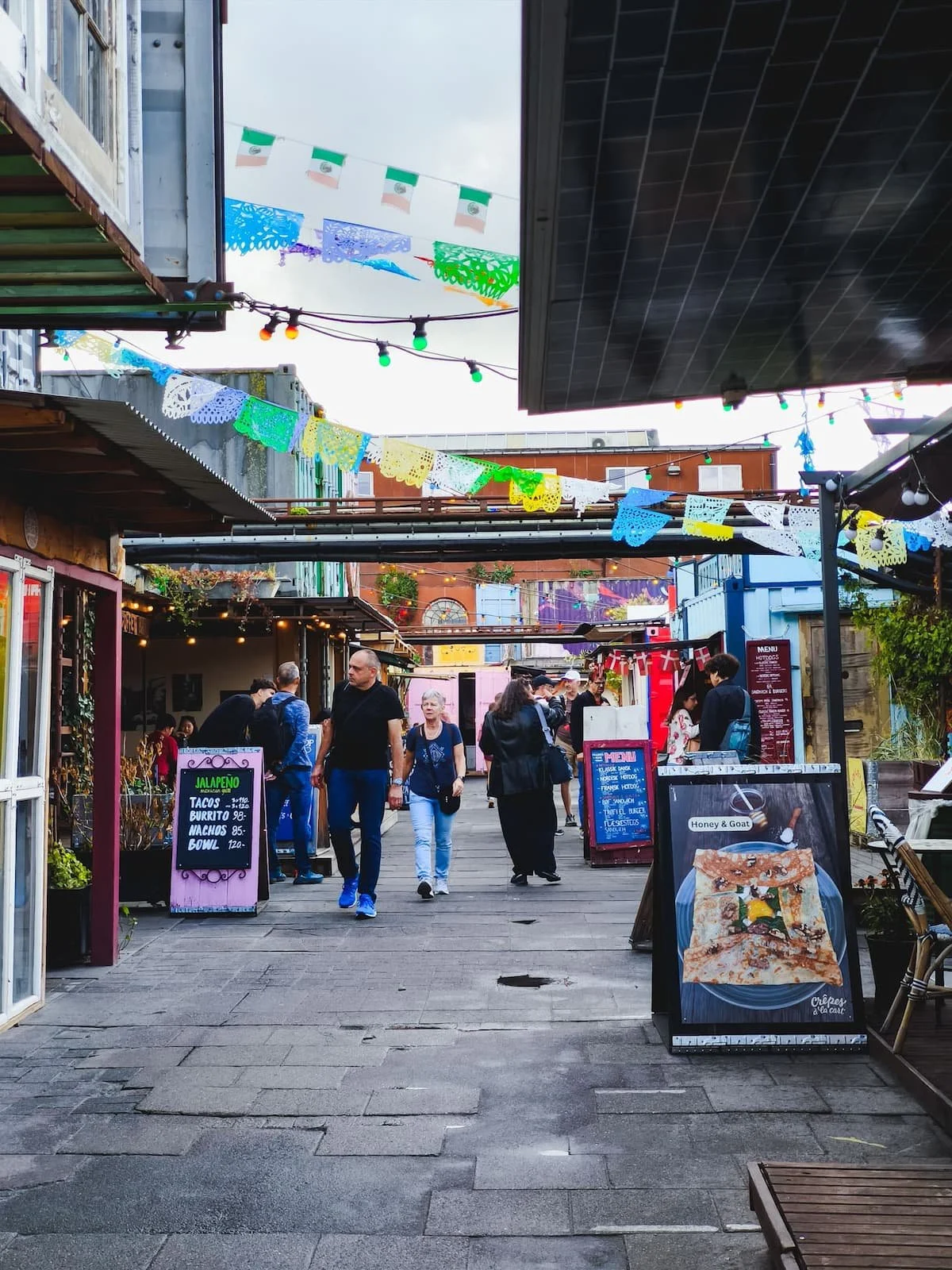
Have lunch at Reffen, the huge street-food market right on the waterfront. It opened on the former industrial site in 2018 and now has dozens of food stalls alongside bars, workshops, events, and plenty of outdoor space by the harbor. The food spans cuisines from Danish and Indian to West African and plenty more.
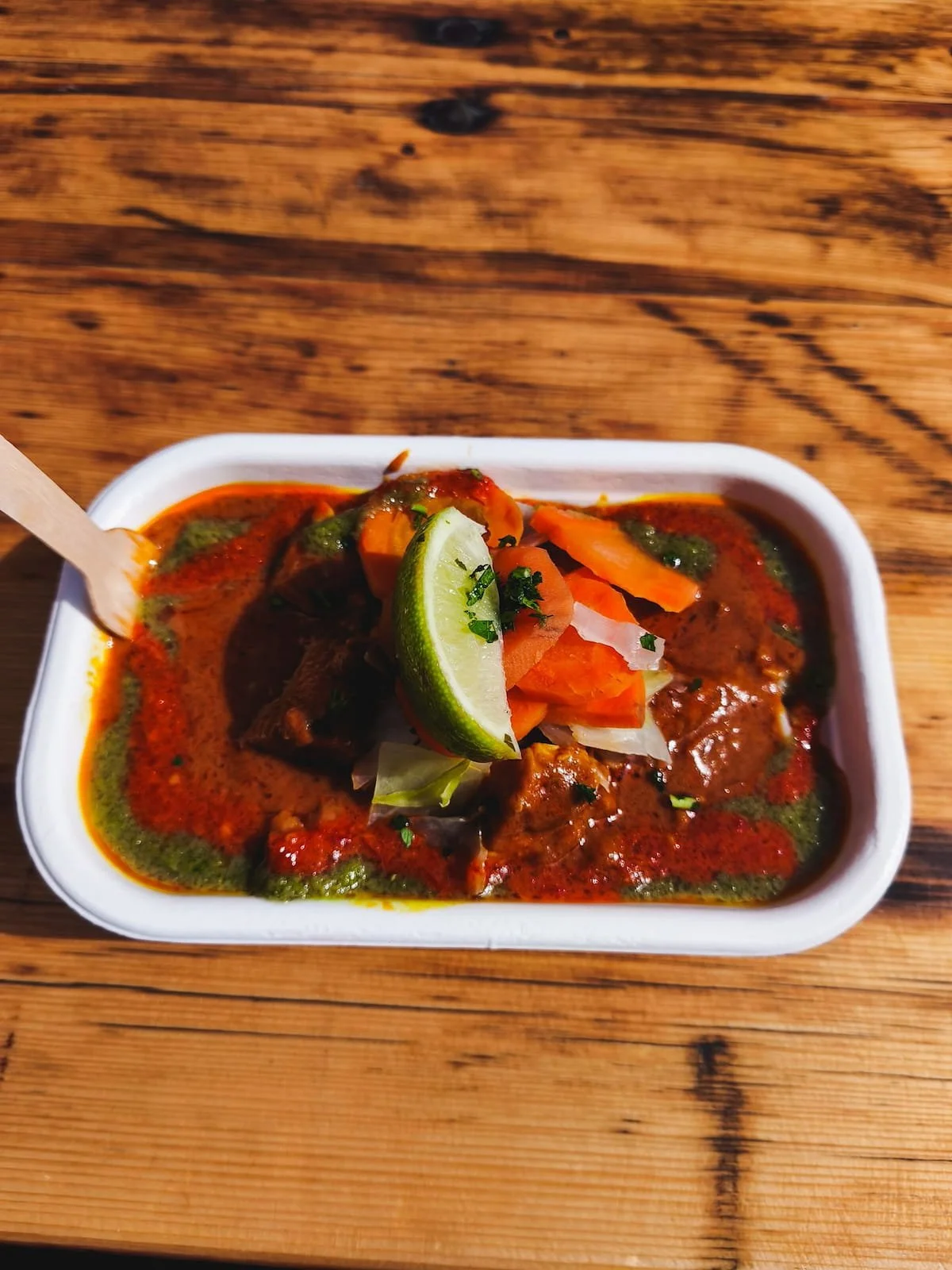
My partner and I both got the domoda with chicken from Baobab, a West African peanut stew served with rice. It was really good and very filling.
I’d leave some time after eating to hang out rather than immediately heading back. There’s plenty of outdoor seating around the food stalls and along the water, and on a nice day, it’s a great place to just sit for a while.
Afternoon — Back Toward Central Copenhagen
After Reffen, head back toward central Copenhagen.
We actually walked all the way back because apparently we hadn’t walked enough already xD, but you definitely don’t need to. This is another good stretch to bike, or you can save your legs and take public transportation.
I’d leave the next hour or two flexible — stop for coffee, walk along the harbor, or go back to your accommodation and take a break before the evening.
Late Afternoon + Dinner — Vesterbro + Meatpacking District
Spend the late afternoon around Vesterbro and Kødbyen, Copenhagen’s former Meatpacking District, where the old industrial buildings now hold restaurants, bars, and nightlife.
For dinner, I’d choose based mostly on how much you want to spend.
Splurge — Kødbyens Fiskebar
If you want a nicer seafood dinner, Kødbyens Fiskebar is right in the Meatpacking District and focuses on fish, shellfish, oysters, and seasonal seafood in a pretty casual industrial setting.
I didn’t actually eat here, so I’d treat this as the splurge option I considered rather than a firsthand recommendation.
Budget — Smagsløget + a Danish Hot Dog
This is what we actually did.
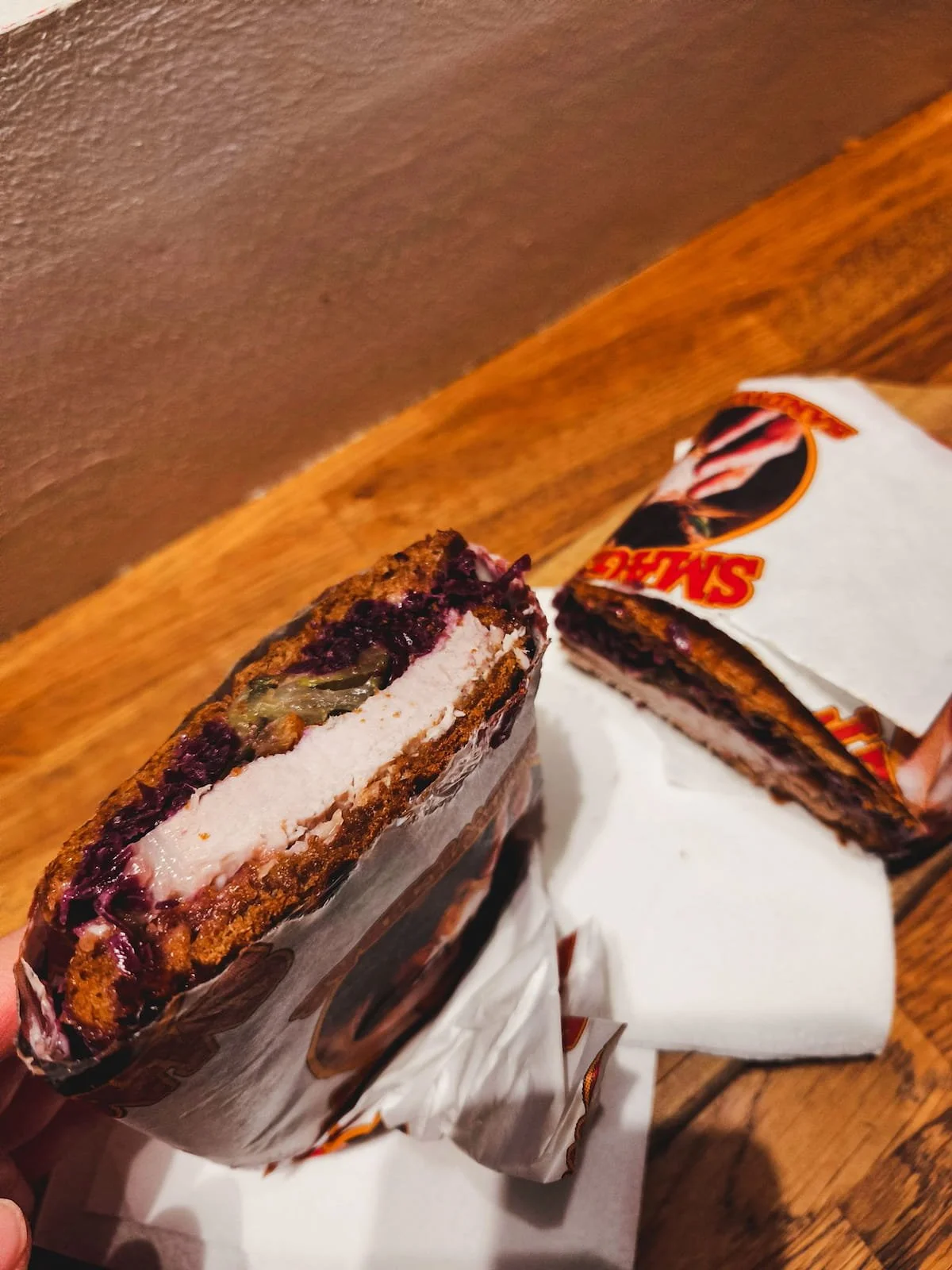
Smagsløget makes enormous sandwiches that are much more affordable than a lot of Copenhagen restaurant meals. We liked it enough that we actually ate there twice.
We tried the flæskesteg sandwich with roast pork and a spicy Italian sandwich with Manchego, which I especially liked. The sandwiches are huge, flavorful, and easily filling enough for dinner.
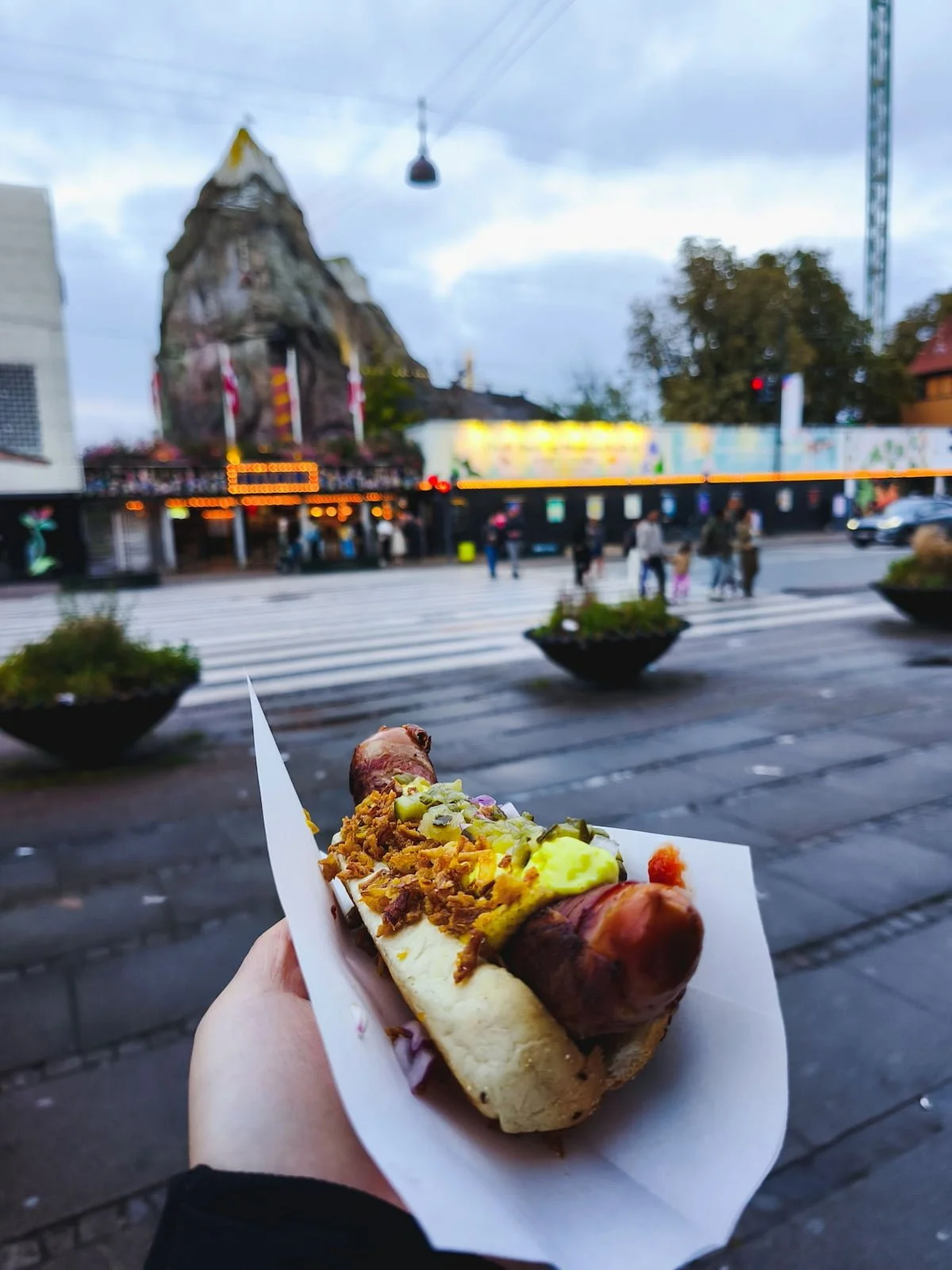
We also liked John’s Hotdog Deli near Copenhagen Central Station, so another cheap option is to split a sandwich and add a Danish hot dog.
Copenhagen food gets expensive fast, so I actually think having one deliberately cheap dinner somewhere in these two days makes sense.
Evening — Tivoli Gardens
Finish the trip at Tivoli Gardens.
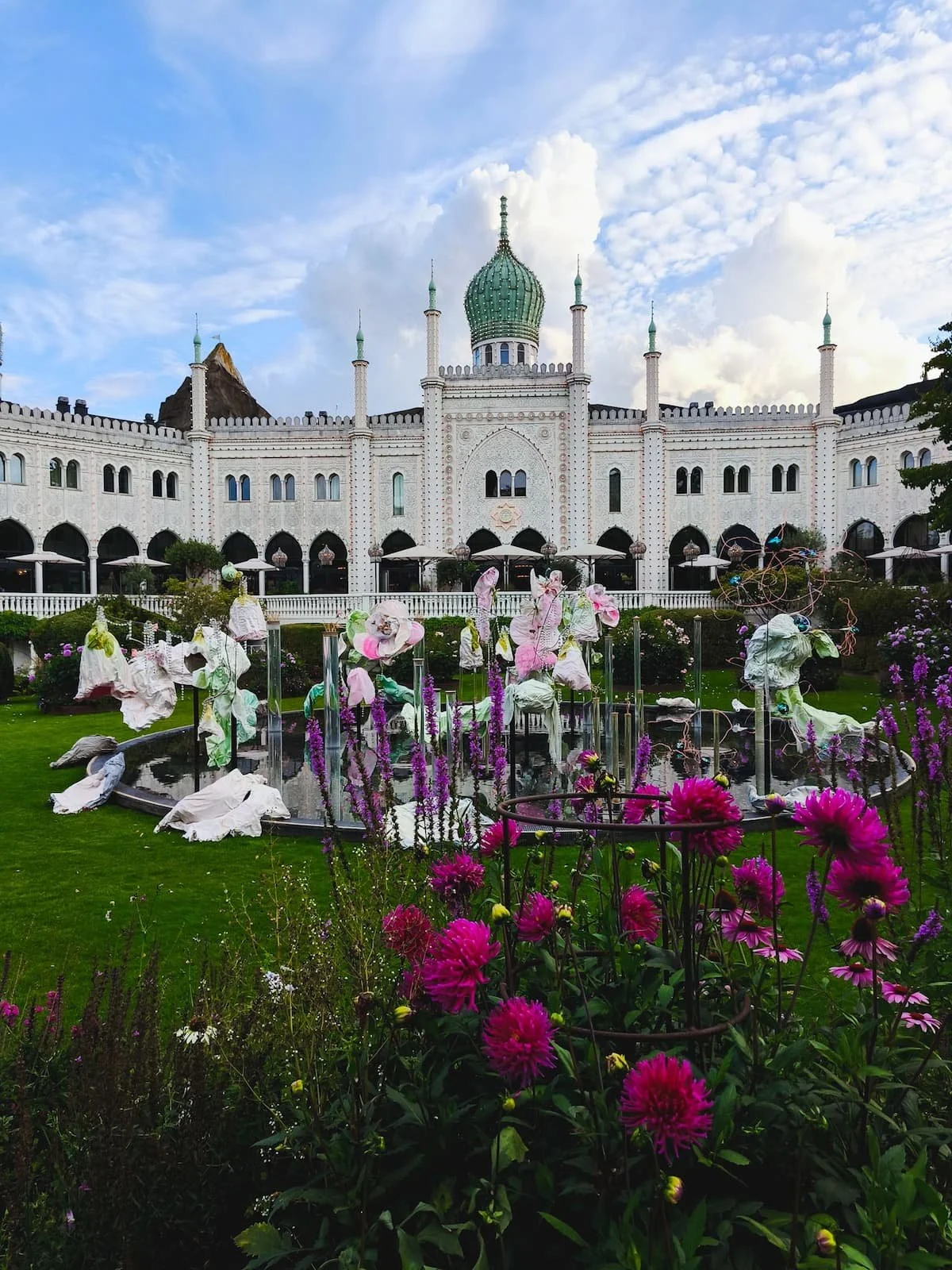
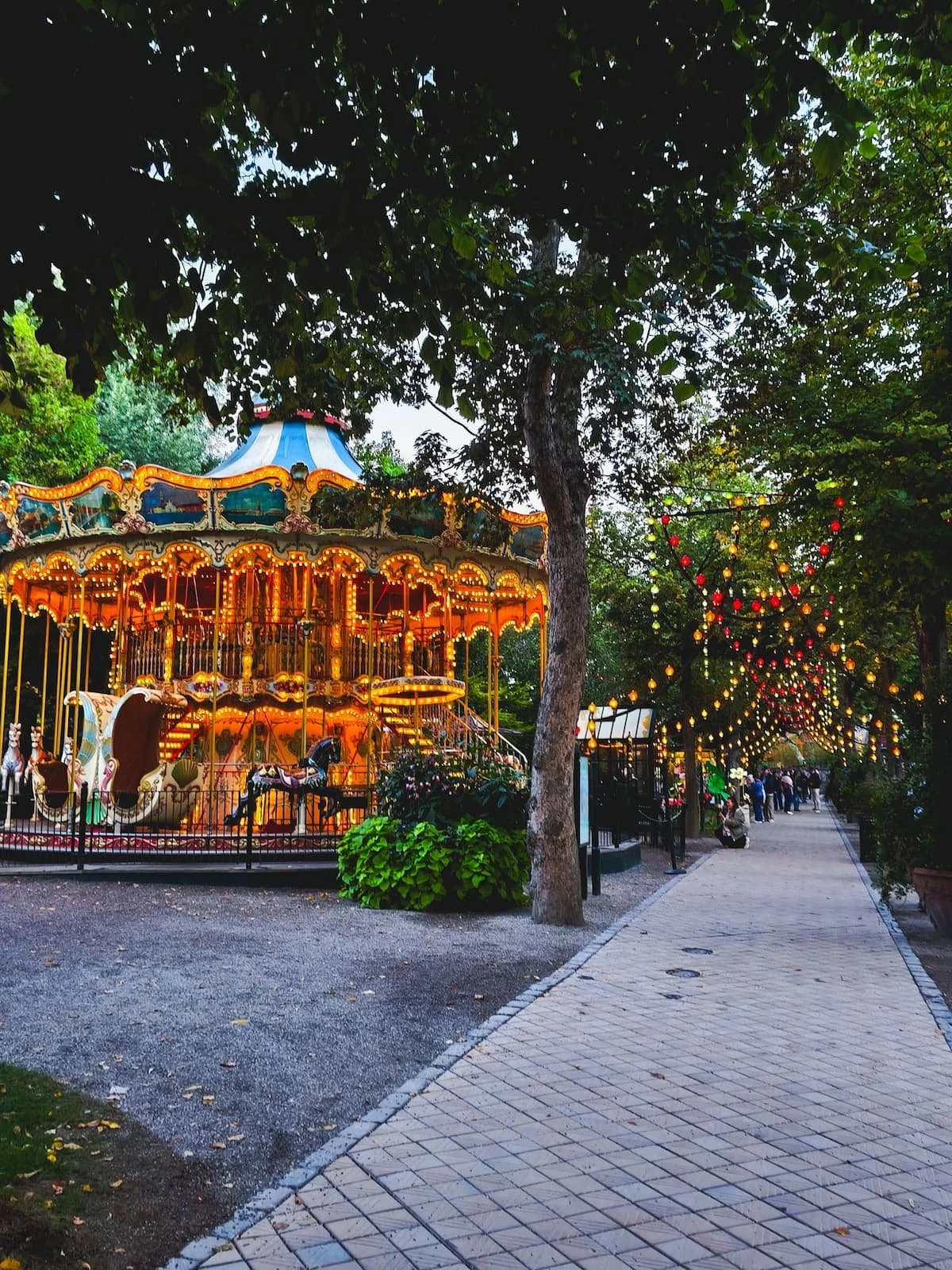
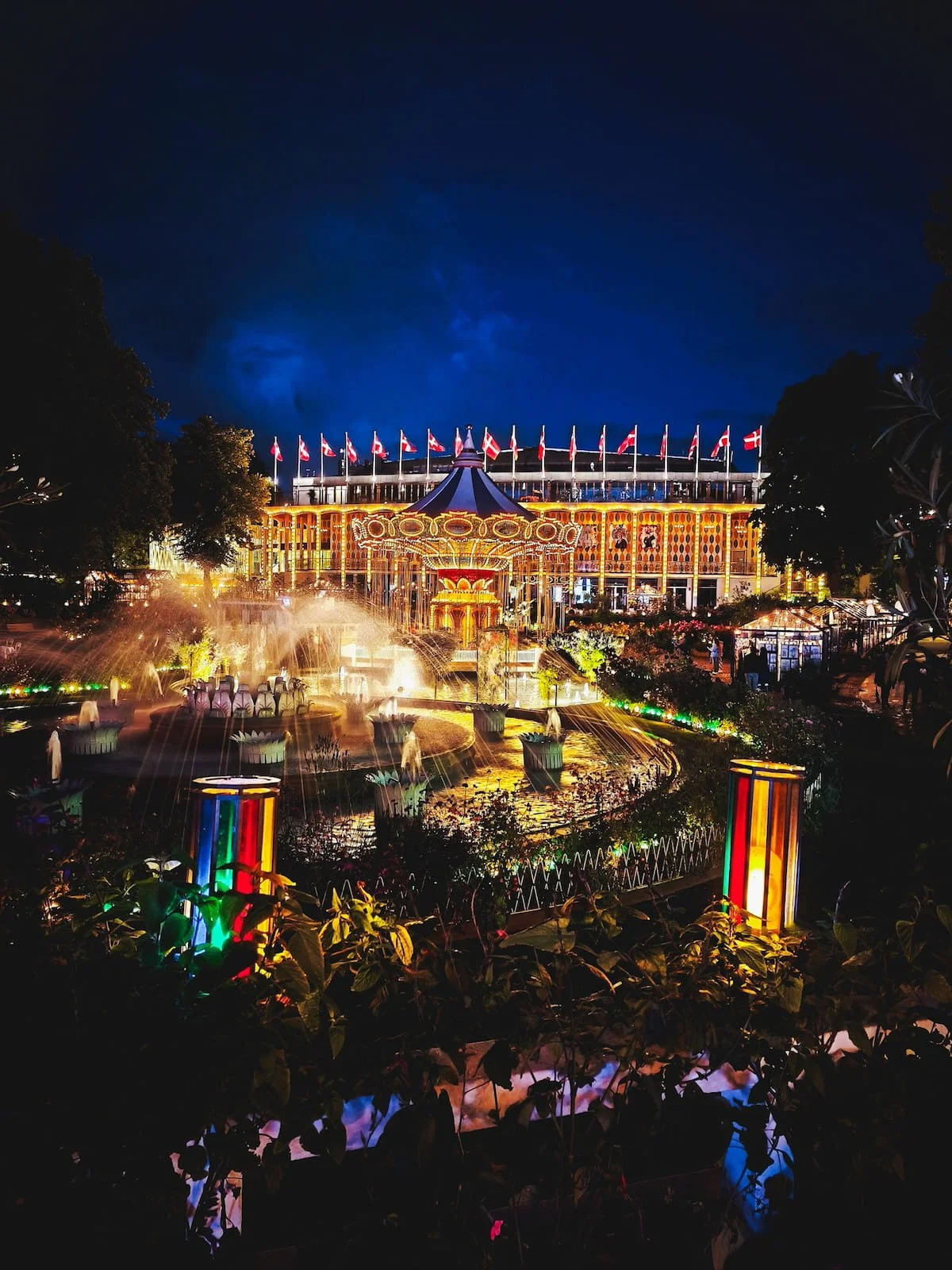
Even if you’re not particularly interested in rides, I think Tivoli is absolutely worth visiting for the gardens, lights, and atmosphere — and I’d specifically go in the evening so you can see everything after dark.
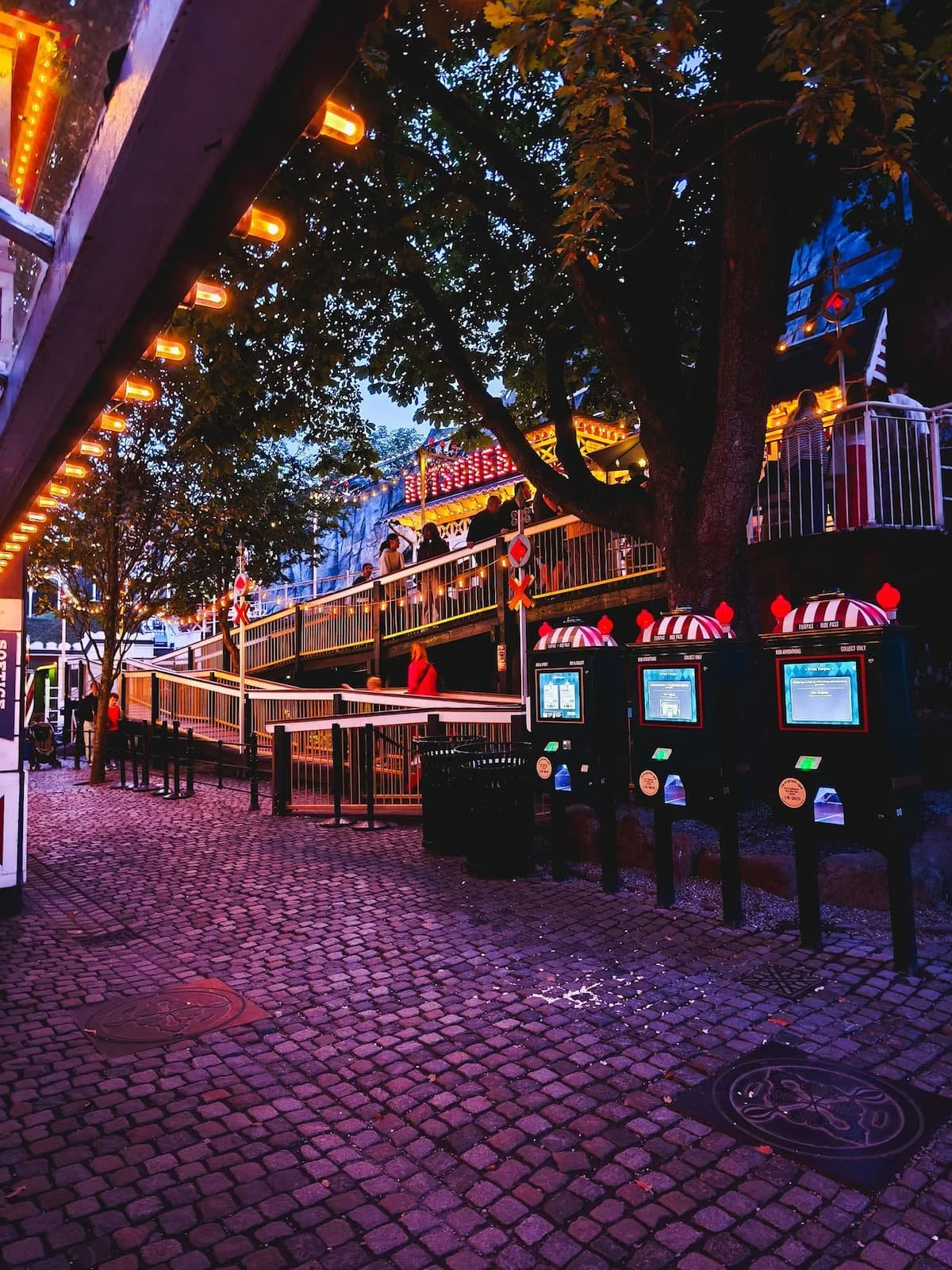
The park was just beautiful at night. There are lights everywhere, and the whole place has this old-school, magical circus feel. It’s not really about huge thrill rides as much as the romance and nostalgia of the place. Honestly, it felt a little like an amusement-park manifestation of hygge.
You can buy admission by itself, add a ride pass, or pay for individual rides. If you only want to ride one or two things, individual tickets may make more sense; if you’re planning to ride more, compare the cost with the ride pass. See the Planning Notes section below for current ticket options and booking details.
We only bought a ticket for Rutschebanen, Tivoli’s wooden roller coaster from 1914. It’s one of the world’s oldest wooden roller coasters still operating and one of only a handful that still uses a brakeman riding aboard the train to manually control its speed.
It’s not an intense coaster by modern standards — the turns are slower and the drops are pretty manageable — but it was still super fun, especially because the whole experience feels so old-school.
Tivoli operates seasonally, so check the calendar for your exact dates before planning the evening.
Day 2 Example Timing
Planning Notes
What to Book in Advance
Rosenborg Castle:
Book a timed ticket in advance, especially during busy periods. Entry is capped and tickets are sold in 10-minute time slots, so popular times can sell out.
Church of Our Saviour tower:
I’d also reserve ahead if you care about a specific time. Capacity is limited because of the narrow climb, and a visit takes around 30–45 minutes. The tower can also close temporarily in strong wind or bad weather.
Tivoli Gardens:
Tickets are date-specific. Regular admission covers entry to the park, while rides are either paid individually or through a Ride Pass. Tivoli also operates seasonally, so check the calendar for your exact dates.
Restaurant Information + Reservations
Hallernes Smørrebrød: No table reservations. The Torvehallerne stall has limited counter seating plus shared seating outside, and currently closes at 4:00 PM daily, so I wouldn’t leave this until late afternoon. Information
Karla: Reservations available online, although it’s open daily and serves dinner into the evening. Information + reservations
Restaurant PUK: Reservations available and worth making if you specifically want to eat here. Information + reservations
Kødbyens Fiskebar: I’d reserve if this is your preferred Day 2 dinner. They also keep some bar seating available for walk-ins; the dinner kitchen currently opens at 5:30 PM. Information + reservations
Smagsløget: Casual sandwich shop; no reservation needed. Opening hours
Reffen: No reservation needed, but it’s seasonal, so check that it’s operating during your trip. Information + opening hours
Getting Around Copenhagen
We actually walked this entire itinerary, but public transportation is useful when your legs are done, especially after the Little Mermaid or to/from Refshaleøen.
The same ticket system covers Copenhagen’s metro, buses, trains, and harbor buses. You can buy tickets in the Rejsebillet app or at metro and train stations.
If you expect to use transit a lot, City Pass Small covers zones 1–4, including central Copenhagen and the airport, with unlimited travel for 24–120 hours. If you’re mostly walking and only taking transit once or twice, individual tickets will probably make more sense.
What to Bring
Comfortable walking shoes: Especially for Day 1.
A jacket or extra layer: Copenhagen can get windy, particularly by the water.
A secure hat: Very specifically for the Church of Our Saviour tower lol.
Portable phone charger: Useful for long days of maps and photos.
For the rest of what I pack, see my One-Bag Gear List, including the clothing, electronics, toiletries, and small travel items I use on longer trips.
Practical Tips
Watch the bike lanes. Cyclists move fast, so make sure you’re walking in the pedestrian area rather than accidentally stepping into a bike lane.
Food is expensive. If you’re budget-conscious, mix nicer meals with sandwiches, hot dogs, markets, and street food rather than making every meal a sit-down restaurant.
Accommodation is expensive too. We stayed in a private room at Next House Copenhagen, a “luxury hostel.” The room was super small and ours wasn’t particularly clean, but the price was reasonable by Copenhagen standards and the location was amazing.
Check seasonal opening dates. Reffen and Tivoli don’t operate on the same schedule year-round, so check your exact dates before finalizing Day 2.
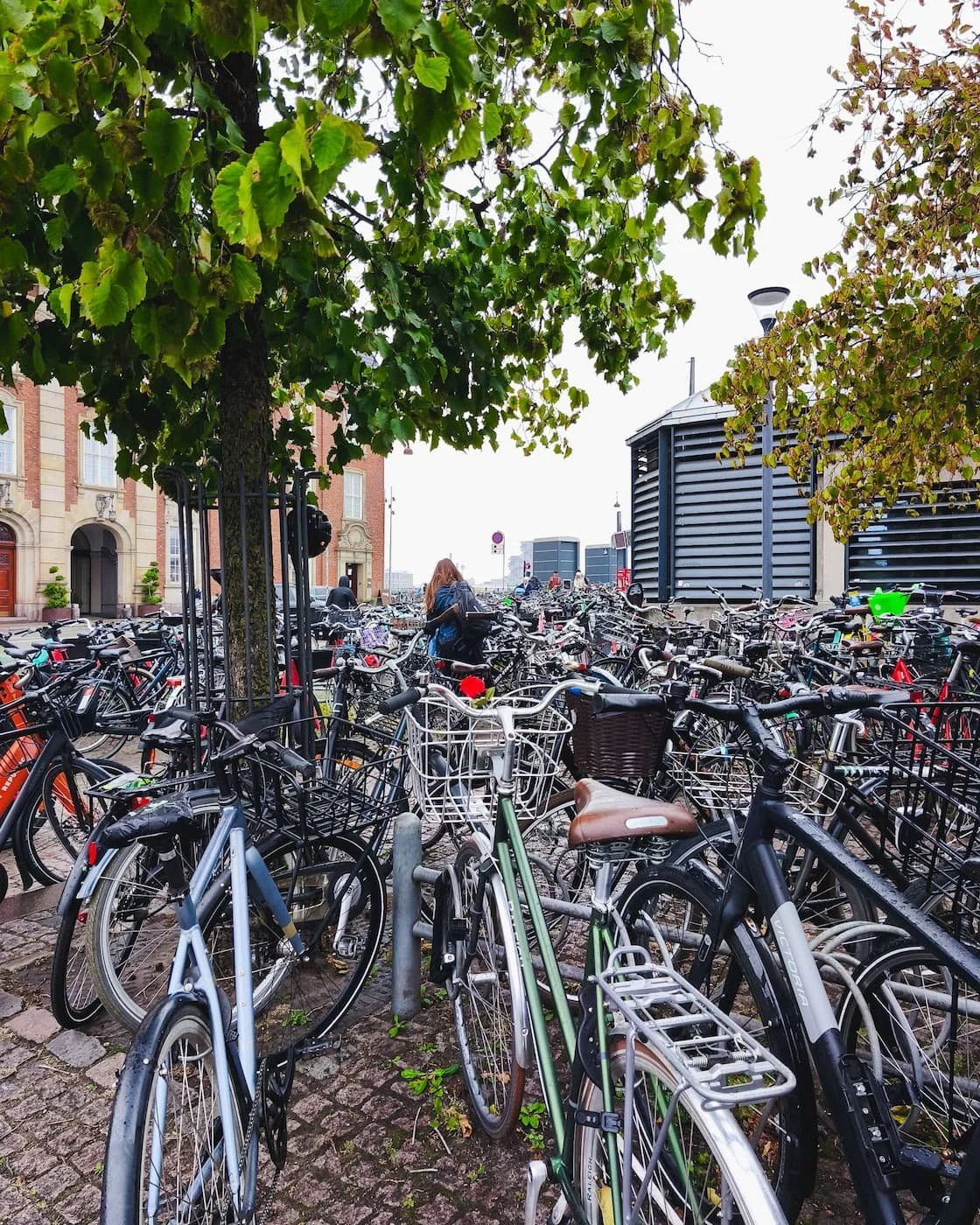
Sooooo many bikes! This is just one example — we routinely saw this number of parked bikes in the city.
If You Have More or Less Time in Copenhagen
If You Only Have 1 Day
With one day, I’d prioritize the historic center, Nyhavn, Christianshavn, and Tivoli rather than trying to cover the full waterfront route from Day 1.
I’d structure it roughly like this:
Morning: Rosenborg Castle if you want one major interior, followed by the Round Tower and historic center.
Lunch: Smørrebrød at Torvehallerne.
Afternoon: Christiansborg → Nyhavn → cross into Christianshavn and spend some time around the canals and Christiania.
Dinner: Traditional Danish food in the center.
Evening: Tivoli Gardens after dark.
I’d skip Kastellet and the Little Mermaid with only one day unless seeing the statue is a particular priority.
If You Have 3 or 4 Days
With another day or two, I’d mostly spread this itinerary out rather than trying to add a ton more sightseeing.
For 3 days, I’d structure it like this:
Day 1 — Historic Copenhagen: Rosenborg Castle, Round Tower, Torvehallerne, Christiansborg, and Nyhavn.
Day 2 — Christianshavn + Refshaleøen: Church of Our Saviour, Christianshavn, Christiania, Reffen, and more time around the waterfront without needing to rush back for Tivoli.
Day 3 — Royal Waterfront + Tivoli: Amalienborg, Marble Church, Kastellet, and the Little Mermaid at a much slower pace, then Tivoli Gardens in the evening.
For 4 days, I’d use the extra day for another Copenhagen neighborhood rather than stretching the main sights even further:
Nørrebro: Spend time around Jægersborggade, Assistens Cemetery, Dronning Louise’s Bridge, and the Lakes, with plenty of cafés, restaurants, and independent shops along the way.
Frederiksberg: A quieter alternative with Frederiksberg Gardens, residential streets, cafés, and shops.
Or a canal cruise: An easy way to add more time on the water without another long walking day.
Questions?
Thanks for reading! Feel free to leave a comment below or send me a message with any questions — I’m always happy to help when I can. And if you try this itinerary, I’d love to hear how it goes.
You may also like:
Stockholm 3-Day Itinerary — a natural next stop if you’re pairing Copenhagen with another Scandinavian capital.
Madrid 3-Day Itinerary — another ready-to-use city itinerary if you’re planning a broader Europe trip.
How I Plan Low-Friction Itineraries — the process I use to build routes like this one that reduce backtracking and decision fatigue.
My One-Bag Gear List — everything I pack to travel with just one bag, which makes moving between cities and using public transportation much easier.