Lima Travel Guide: Where to Stay, Eat, Pack, and Plan an Easier First Trip
Last Updated: May 30, 2026
I spent 2.5 weeks in Lima working remotely, exploring in between work blocks and using the city as a base rather than rushing through it.
This guide is designed to help you move through Lima with minimal friction — choosing the right neighborhood, eating well without over-researching, and following simple, well-routed itineraries so you don’t waste time figuring things out on the ground. That’s the broader idea behind how I approach traveling with less friction: plan enough up front that the actual day feels easier once you’re there.
If you don’t want to piece together a plan from scattered recommendations, start here.
Start Here: How to Use This Guide
If you’re short on time or just don’t want to overthink it, here’s how I’d approach Lima:
3–5 days in Lima: Stay in Miraflores and follow 1–2 neighborhood-based walking itineraries.
Food-focused trip: Base yourself in Miraflores, prioritize ceviche at lunch, and add one Barranco afternoon or evening.
Culture + history: Add a half or full day in the Historic Center.
Working remotely: Stay in Miraflores or San Isidro so daily life feels easier.
Active traveler / runner: Prioritize access to the malecón, especially in Miraflores.
Lima is not a city where I’d plan every day around crossing town multiple times. The low-friction version is to pick one main area per day, walk as much as makes sense once you’re there, and use Uber between neighborhoods that are farther from each other.
Neighborhood Snapshots + Where to Stay
Where you stay in Lima matters because the city is spread out. You can absolutely explore different neighborhoods, but your base will shape how easy your day-to-day feels: where you eat, where you walk, how often you need rideshares, and whether you have a good place nearby for casual wandering.
During my trip, I spent time in Miraflores, Barranco, San Isidro, and the Historic Center. Here’s how I’d think about each one from a practical, low-friction travel perspective.
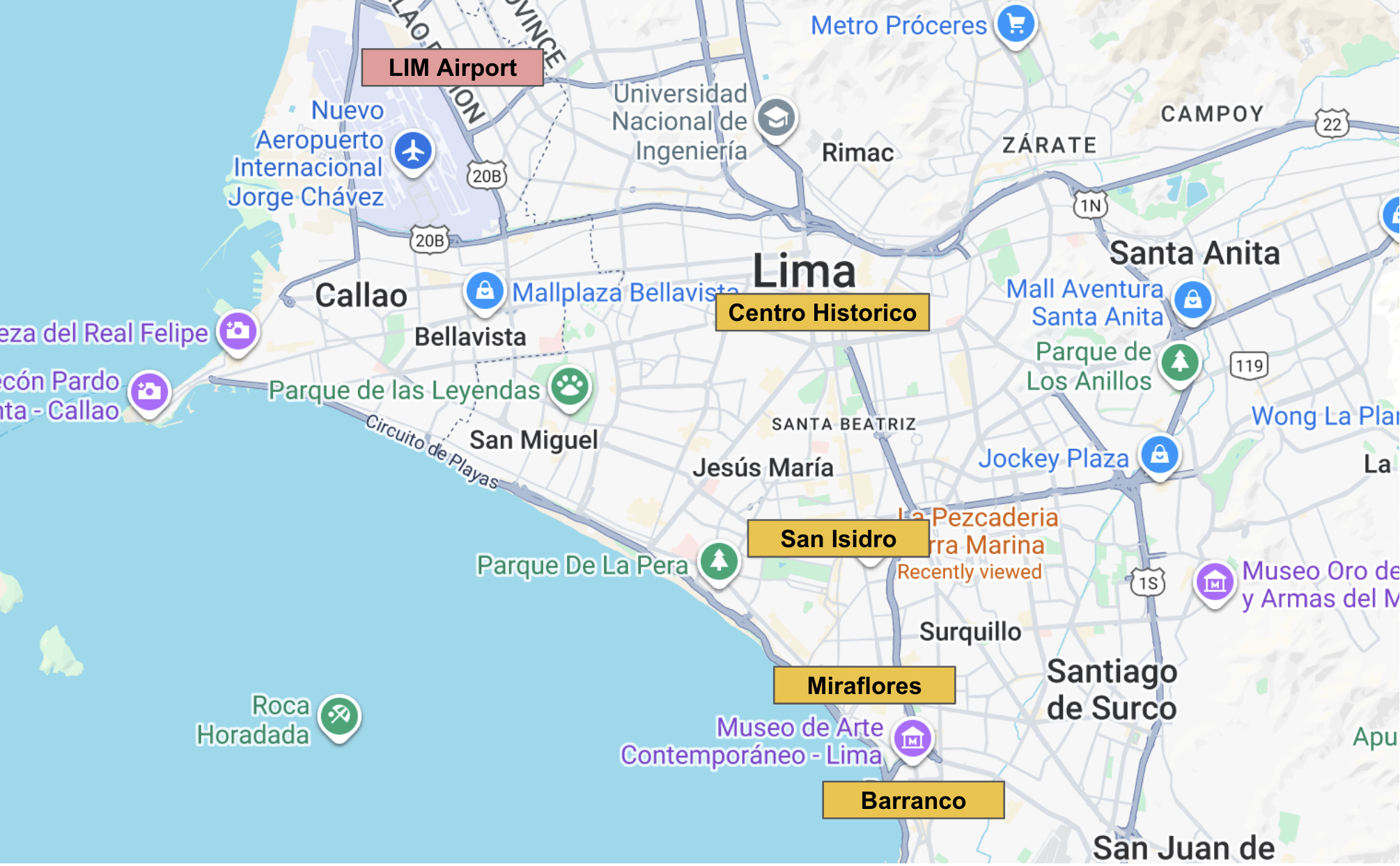
Map of Lima with the four districts marked (Map data © Google).
🌊 Miraflores: The easiest default for a first trip
Miraflores is my default recommendation for most first-time visitors. It’s central, walkable, packed with restaurants and cafés, and has easy access to the Malecón de Miraflores, the long cliffside park that runs along the coast.
This is the neighborhood I’d choose if you want the easiest version of Lima: lots of food nearby, plenty of places to walk, good access to the coast, and a comfortable base for exploring elsewhere.
Best for: first-time visitors, food-focused trips, runners, walkers, short stays
Why it works: compact, lively, safe-feeling, and easy to navigate
Watch for: some blocks are noisier than others, especially near restaurants, bars, or busier streets
My take: If you’re visiting Lima for a week or less, stay here unless you have a specific reason not to.
Miraflores also works well if you like building days around walking. You can start with coffee, visit markets or cultural sites, eat lunch nearby, and end along the cliffs without needing all on foot.
🎨 Barranco: Best for color, murals, and a more atmospheric afternoon
Barranco is Lima’s artsy, bohemian-feeling district, with murals, colorful buildings, indie shops, cafés, galleries, and the Bajada de Baños leading down toward the coast.
It’s one of the most enjoyable neighborhoods to wander, especially if you like visual texture: painted walls, older houses, repurposed mansions, little side streets, and an overall relaxed feel. I think Barranco works especially well as an afternoon route rather than a place where you need to spend multiple full days.
Best for: murals, cafés, nightlife, photography, slower wandering
Why it works: compact, walkable, and full of character
Watch for: nightlife noise and some quieter streets that may feel less comfortable late at night
My take: Great for a half day or full afternoon, especially paired with sunset near the coast.
Barranco can be a fun place to stay if you care more about atmosphere than maximum convenience. But for a first trip, I’d still lean Miraflores unless you specifically want Barranco’s nightlife or artsy feel.
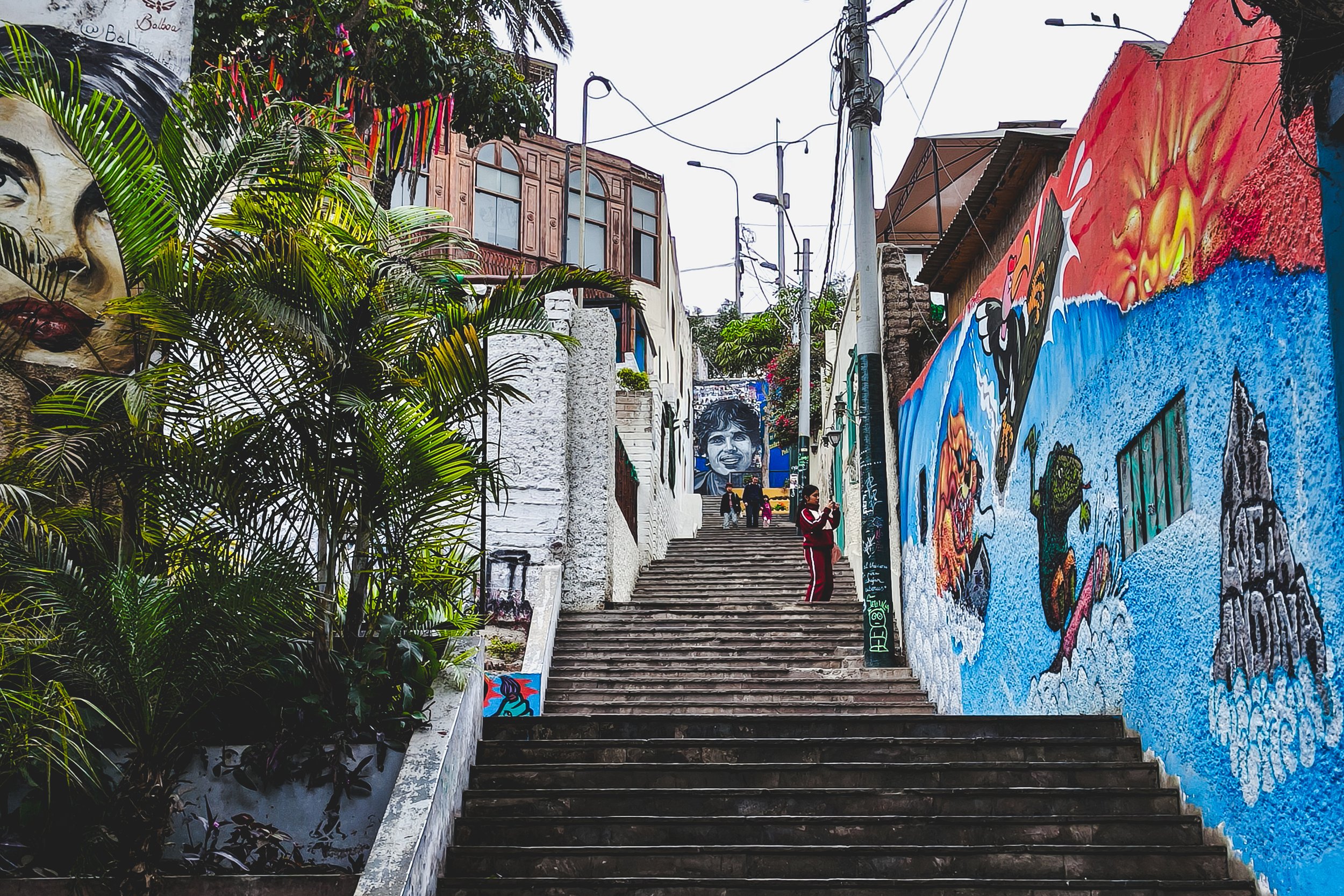
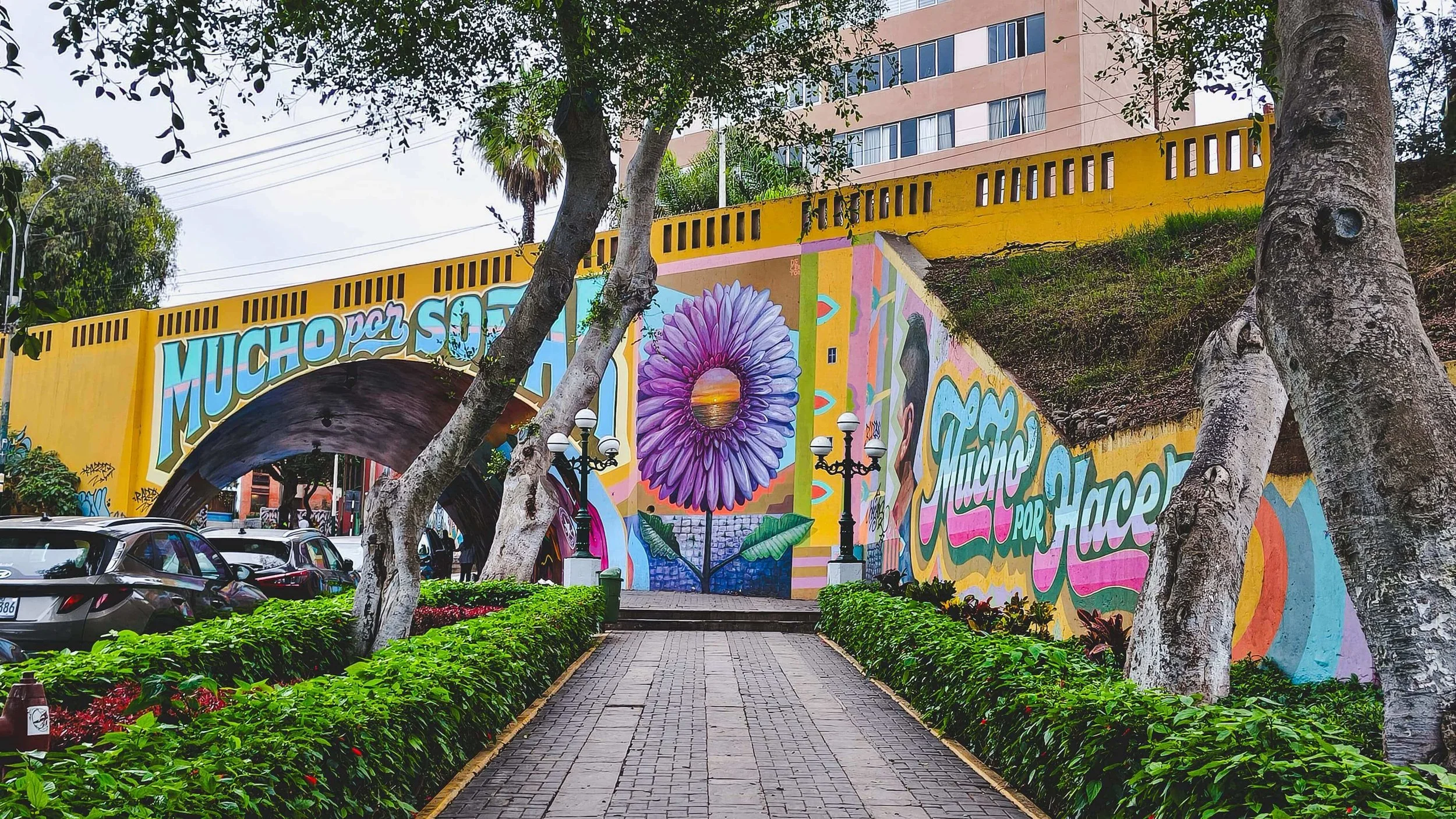
Murals along Bajada de Baños in Barranco.
🌳 San Isidro: Quiet, polished, and good for slower stays
San Isidro is quieter and more residential than Miraflores or Barranco. It feels polished, leafy, and calmer, with upscale restaurants, business-district cafés, green spaces like El Olivar, and some beautiful residential streets.
I stayed in San Isidro for part of my Lima trip and liked it for the slower, more local rhythm. It’s not as instantly convenient as Miraflores for sightseeing, but it can be a nice base if you’re staying longer, working remotely, or want a quieter place to come back to.
Best for: remote work, longer stays, quieter evenings, upscale dining, slower routines
Why it works: calm, safe-feeling, and more residential
Watch for: attractions and casual food options can be more spread out
My take: Better for a longer stay than a short first visit, unless you really want quiet.
San Isidro is also a good fit if you like walking through residential neighborhoods and don’t need every major attraction right outside your door.
🏛️ Historic Center: Worth visiting, but I wouldn’t stay here
Lima’s Historic Center is where you’ll find some of the city’s most important architecture, plazas, churches, and colonial-era landmarks. It’s absolutely worth visiting, especially if you care about history, but I would treat it as a day trip within the city rather than a base.
The Historic Center is farther from Miraflores, Barranco, and San Isidro, and while the main areas are busy and fine during the day, I personally wouldn’t choose to stay there.
Best for: architecture, plazas, churches, museums, colonial history
Why it works: dense with major historic sites
Watch for: heavy traffic, crowds, and a different safety feel after dark
My take: Go during the day, follow a route, and head back to your base afterward.

Plaza de Armas, the main square in the Historic Center.
🛏️ So, where should you stay in Lima?
For most travelers, I’d choose Miraflores. It gives you the best balance of safety, walkability, food, coastal access, and convenience.
If you’re staying longer or working remotely, San Isidro can be a good alternative because it’s calmer and more residential. If you want a more atmospheric, artsy base and don’t mind some nightlife energy, Barranco can also work. During my 2.5-week stay, I spent the first half in San Isidro and the second half in Miraflores, which gave me the chance to explore more local neighborhoods (like nearby Lince) and enjoy quieter residential streets.
I would not stay in the Historic Center for a first trip. Visit it during the day, but base yourself somewhere that makes daily life easier.
Looking for housing on Airbnb? Check out my 5 Airbnb tips I’ve learned from 100+ stays (that people often miss)
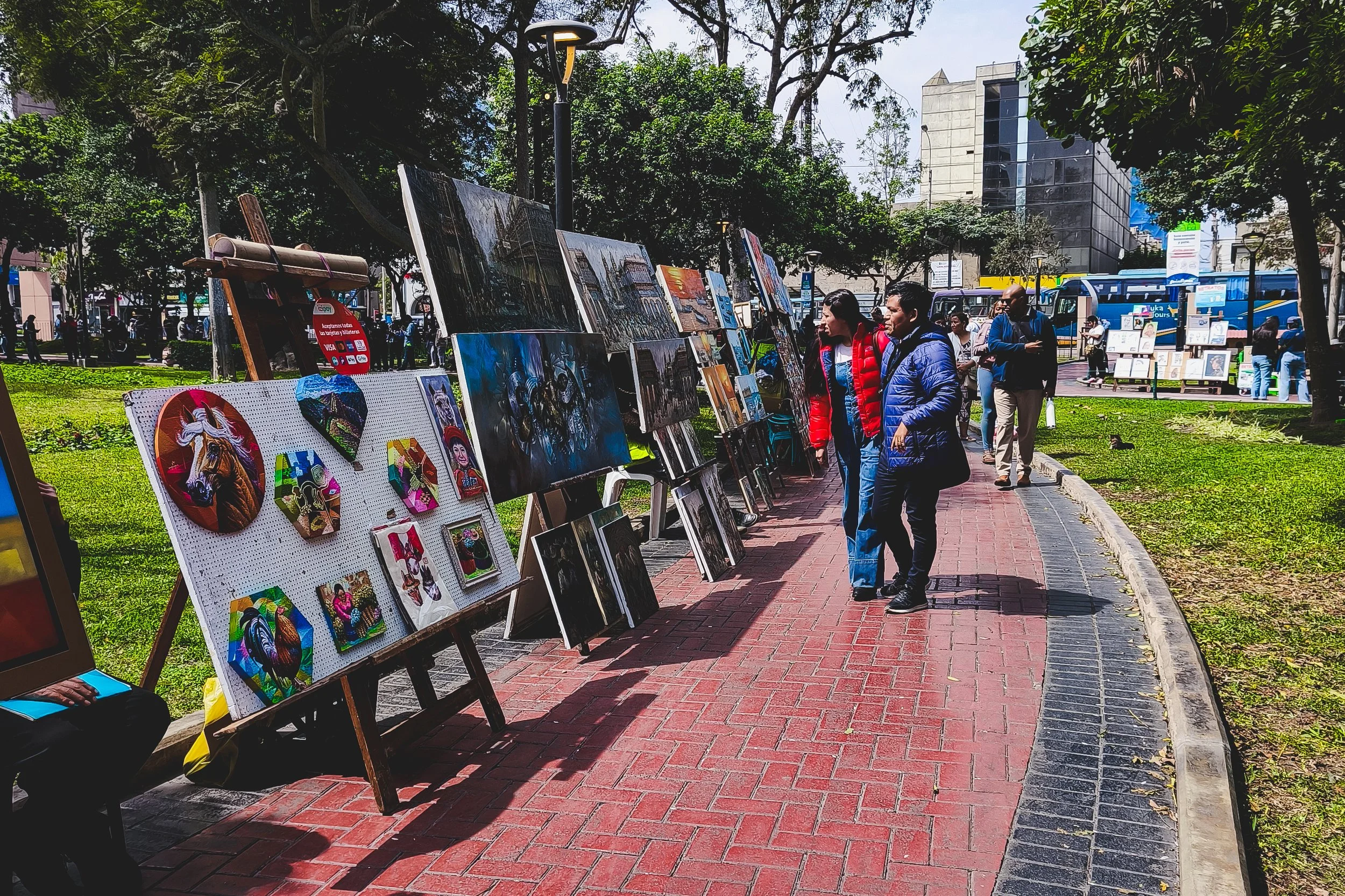
Weekend art fair at Parque Kennedy, the central park and gathering spot in Miraflores.
Ready-to-Follow Routes (Skip Planning)
Use the itineraries below as plug-and-play full-day plans instead of planning from scratch. These are routes that I personally designed and followed, and that I’d recommend for a first visit to Lima. They’re efficient, walkable days that give you a highlight of the food, cultural sites, and the unique vibe of the districts. If you’ve already been to Lima, they’re still great foundations you can adapt to your interests.
My Miraflores itinerary: A walking tour to eat ceviche, play with cats at Parque Kennedy, drink Peruvian coffee, explore artisan markets, and take in the cliffside park.
My Barranco itinerary: A coastal and cultural walk that takes you from colorful streets and street art, down the cliffside to Barranco beach, and ends at a quiet park for sunset views.
My Historic Center itinerary: A full day exploring Lima’s colonial heart—Plaza San Martín, Plaza de Armas, the Cathedral of Lima, the Convent of San Francisco and its catacombs, and other architectural highlights.
My San Isidro itinerary: I don’t have a full post on this since this day consisted of visiting two museums: Museo de Sitio Pucllana, an archaeological site on the ruins of a pre-Inca pyramid, and the Place of Memory, Tolerance and Social Inclusion (Lugar de la Memoria), dedicated to the Peruvian internal conflict of the 1980s and 1990s. I also took a long walk to get from Pucllana to Lugar de la Memoria, through the beautiful residential streets of San Isidro. Lugar de la Memoria is also situated right on the cliffside and opens up to the view of the ocean.
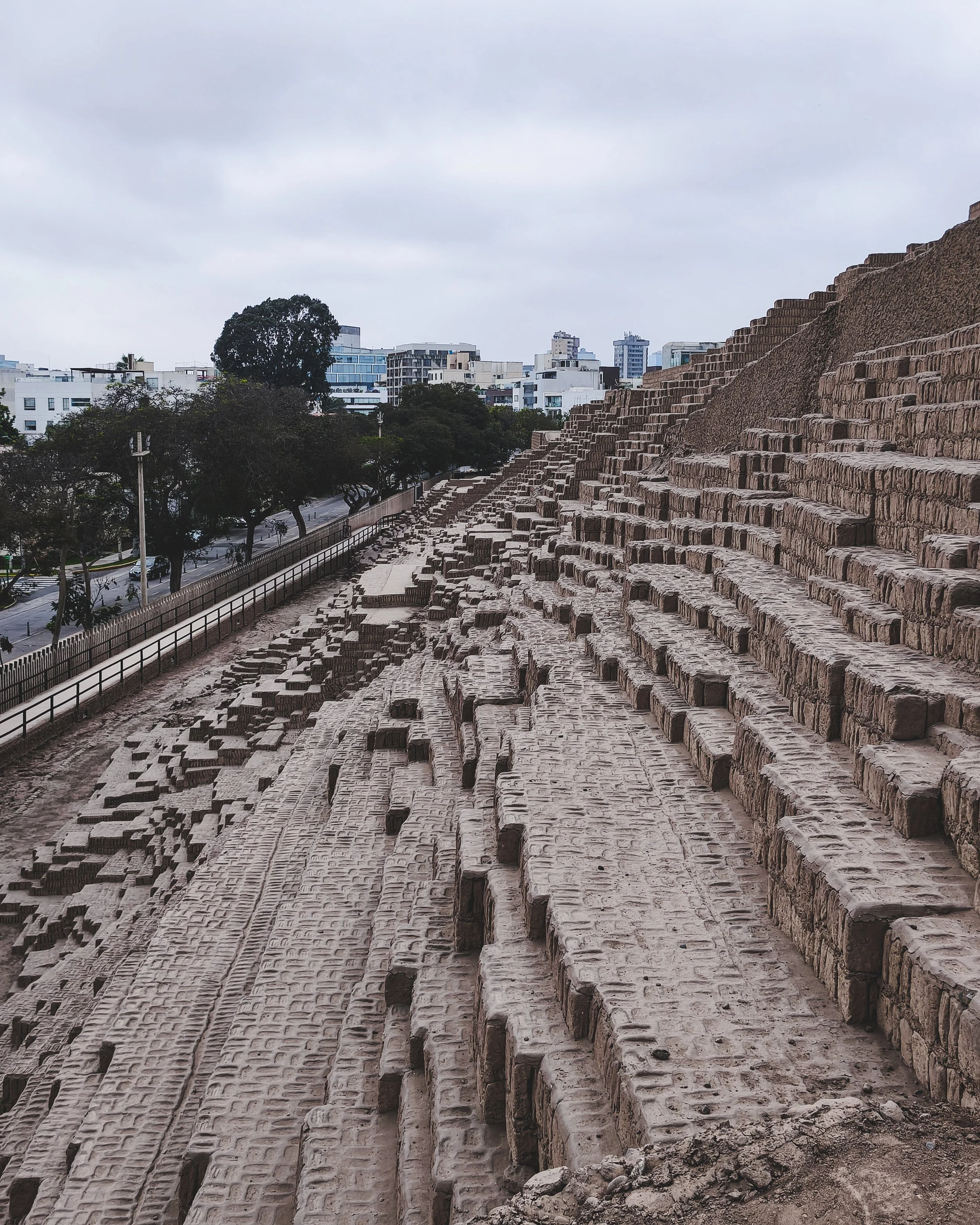
Museo de Sitio Pucllana, the ruins of a pre-Inca pyramid from the Lima culture.
Best Food Spots for Peruvian Classics
As I said in my intro, I tried a lot of food from various locals in my 2.5 weeks in Lima. I thought the best way to present my findings would be to pull out the places where I personally had the best version of each classic Peruvian dish. And I also include some general tips to Lima restaurants below, as well as some notes for Panchita and Punto Azul, two restaurants that I recommend.
🍽️ General tips for eating in Lima
Eat ceviche only for lunch, as early as possible: in Lima, the best places will only serve ceviche for lunch since fresh fish comes in the mornings. I basically realized that the reason I didn’t like fish ceviche in the past while I had it in other countries like in the US was because they did not consistently use fresh fish, and fresh fish is all they use for any reputable cevicheria in Lima. And boy all boy, it revolutionized the way I see ceviche.
Make reservations when you can. Popular restaurants can get busy, especially for lunch or dinner in Miraflores.
Carry a little cash for street food. Restaurants generally took cards in the areas I visited, but street stands tend to take cash. So if you plan to stop by street stands to try anticuchos (Peruvian meat kebabs) or picarones (Peruvian donuts), plan to have some cash on hand.
⭐ Recommended restaurants for each dish / cuisine
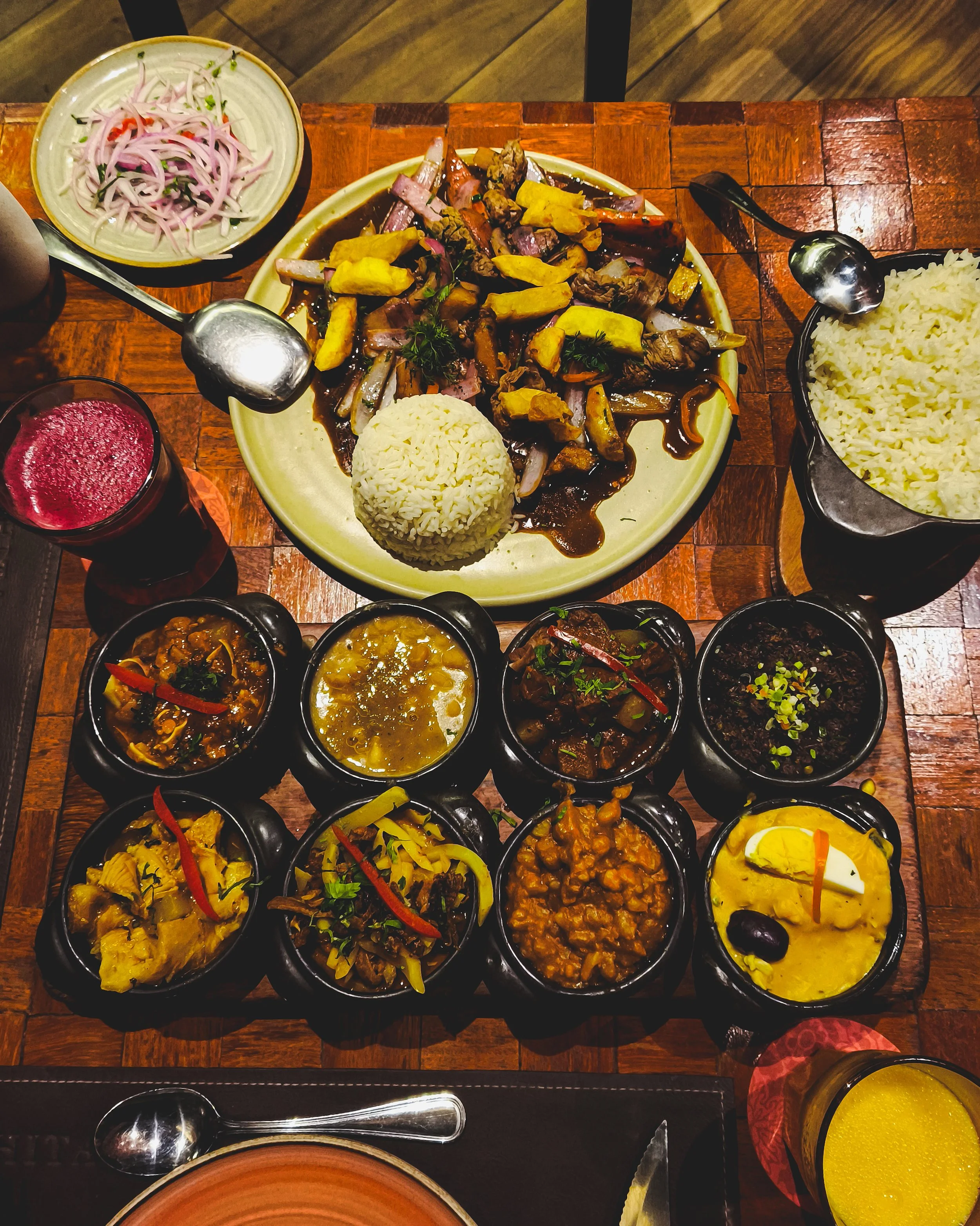
Lomo saltado and a sampler platter (La Jarana Limeña) at Panchita, both absolutely amazing.
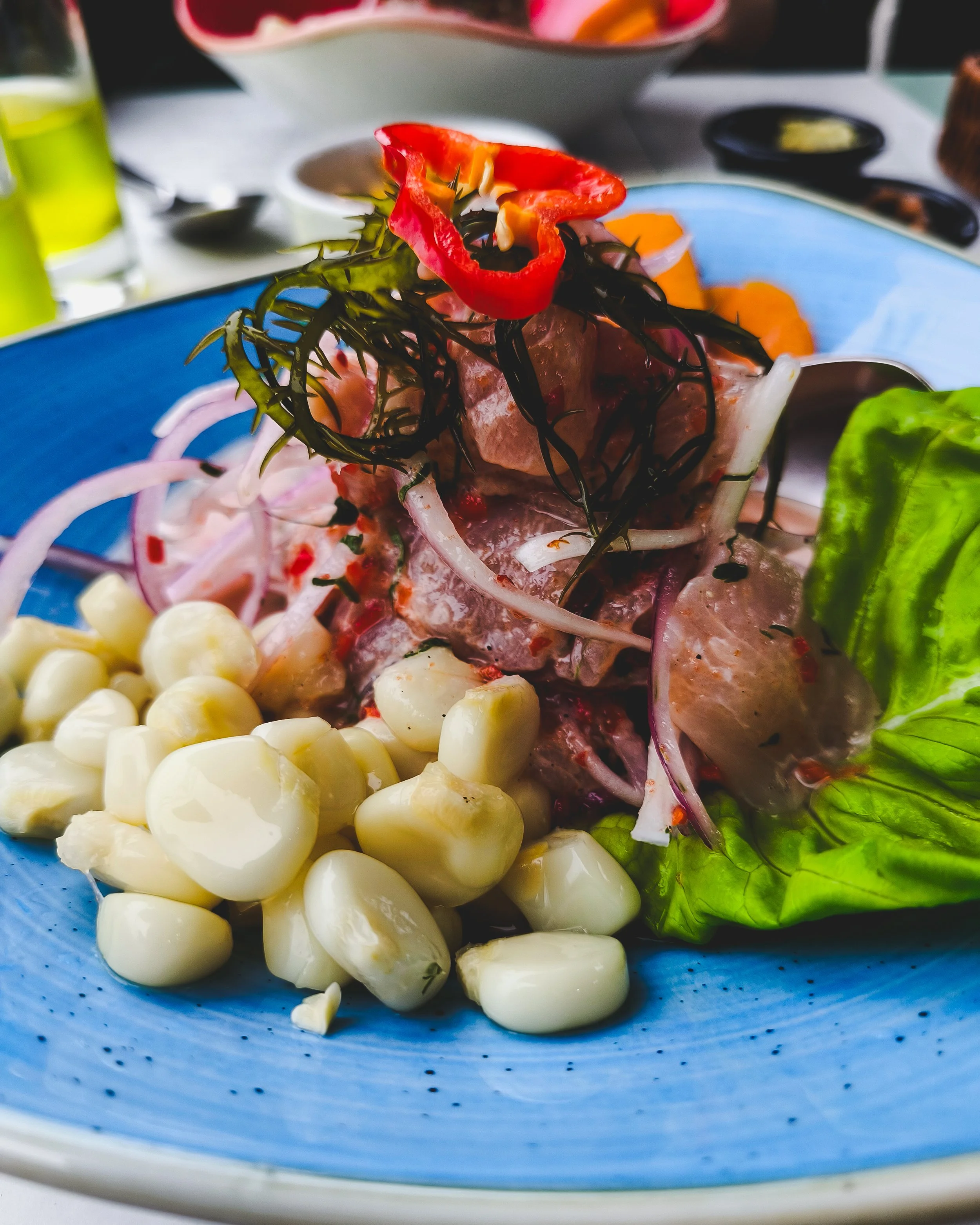
Fish ceviche at restaurant Barceloneta, in San Isidro.
Overall traditional Peruvian
Panchita ($$–$$$) — Miraflores
Overall seafood
Punto Azul ($$) — Miraflores
Ceviche
Punto Azul ($$) — Miraflores
Barceloneta ($) — San Isidro
Aji de gallina
Panchita ($$–$$$) — Miraflores
Lomo saltado
Panchita ($$–$$$) — Miraflores
Doomo Saltado ($$) — Multiple locations
Pollo a la brasa (rotisserie chicken)
Primos ($–$$) — Multiple locations
Sánguches (Peruvian sandwiches)
La Lucha Sanguchería ($) — Multiple locations
Pavos y Chicharro New Santa Monica ($) — Lince (near San Isidro)
Peruvian soups (e.g., sopa criolla, chicken soup)
Siete Sopas ($–$$) — Miraflores
Chicha morada (purple-corn drink)
Panchita ($$–$$$) — Miraflores
Some notes:
Panchita is known for its generous portions of traditional “criolla” (Creole) and comfort food. Make a reservation as early as possible – Panchita is extremely popular and reservations fill out. If you go without reservation, waits could be over an hour.
Punto Azul is a very popular spot for ceviche, and honestly no question the best ceviche I had in Lima (and I had a lot). They don’t take reservations, so try to get there as early as possible (it opens at 11AM) to beat the lunch rush. The restaurant has a few locations, but I would recommend the original one in Miraflores. For a longer review of this restaurant, find it in my Miraflores itinerary!
Doomo Saltado, Primos, and La Lucha Saguchería are all chain restaurants that focus on their specific dishes of lomo saltado, pollo a la brasa, and saguches. We also tried those dishes at various other places, and found that generally, those places do it well for the convenience. However, for sanguches, I also listed above this very local spot in Lince (neighborhood north of San Isidro) with a chincharrón sandwich (fried pork belly) that actually blew our minds. So if you happen to be around there, definitely do check it out.
Packing Guide for All Four Seasons
Lima’s climate is actually a coastal desert (it’s one of the largest desert cities in the world)! With less than 3 inches of rain a year, you really don’t have to prepare for rain. However, Lima does get pretty misty and foggy during the colder months.
I travel with a single everyday-size backpack year-round, so I think about packing in terms of versatile layers: pieces that work for walking, casual restaurants, cafés, and long days outside without taking up much space.
If you want my full travel setup, see my one-bag 30L packing list.
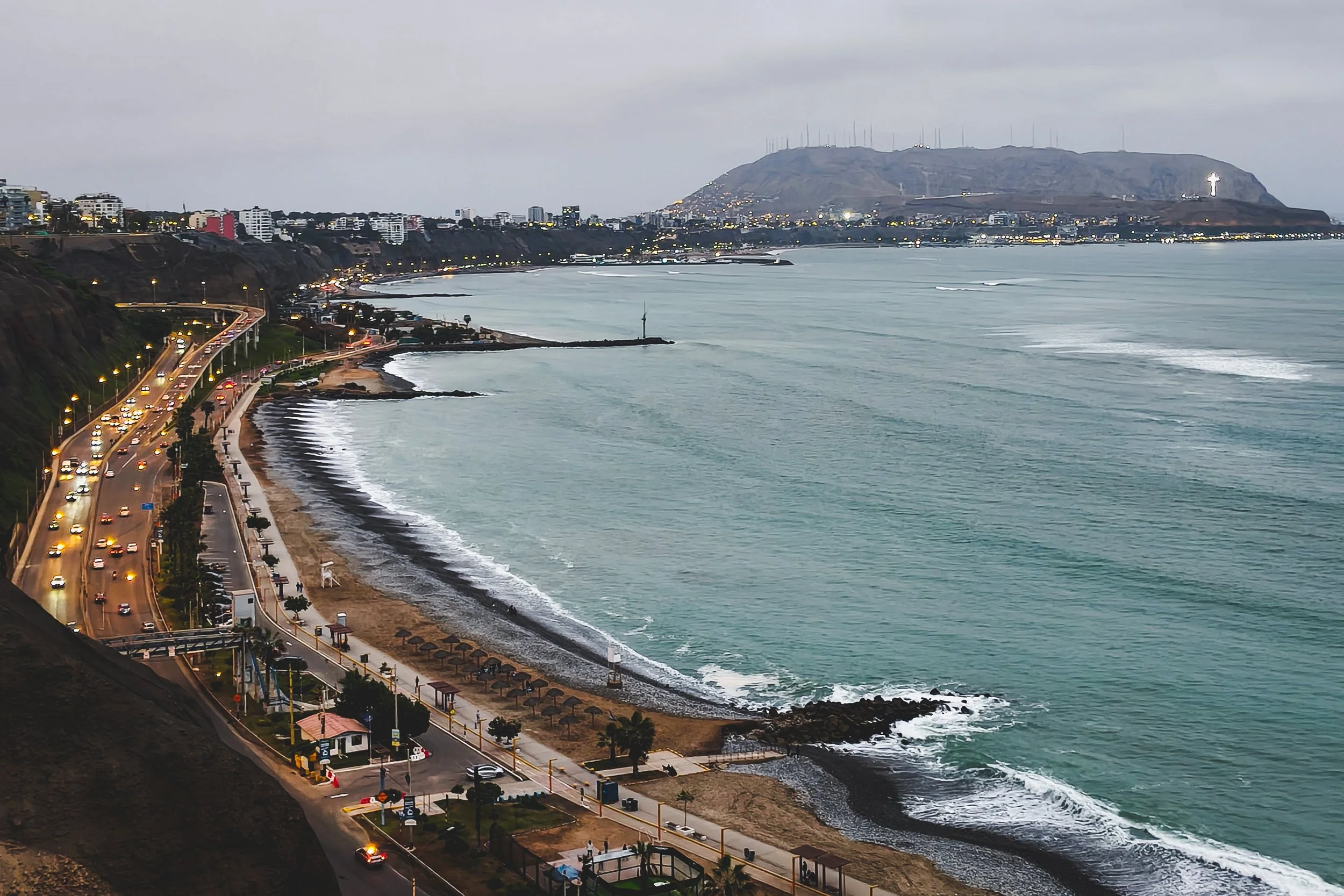
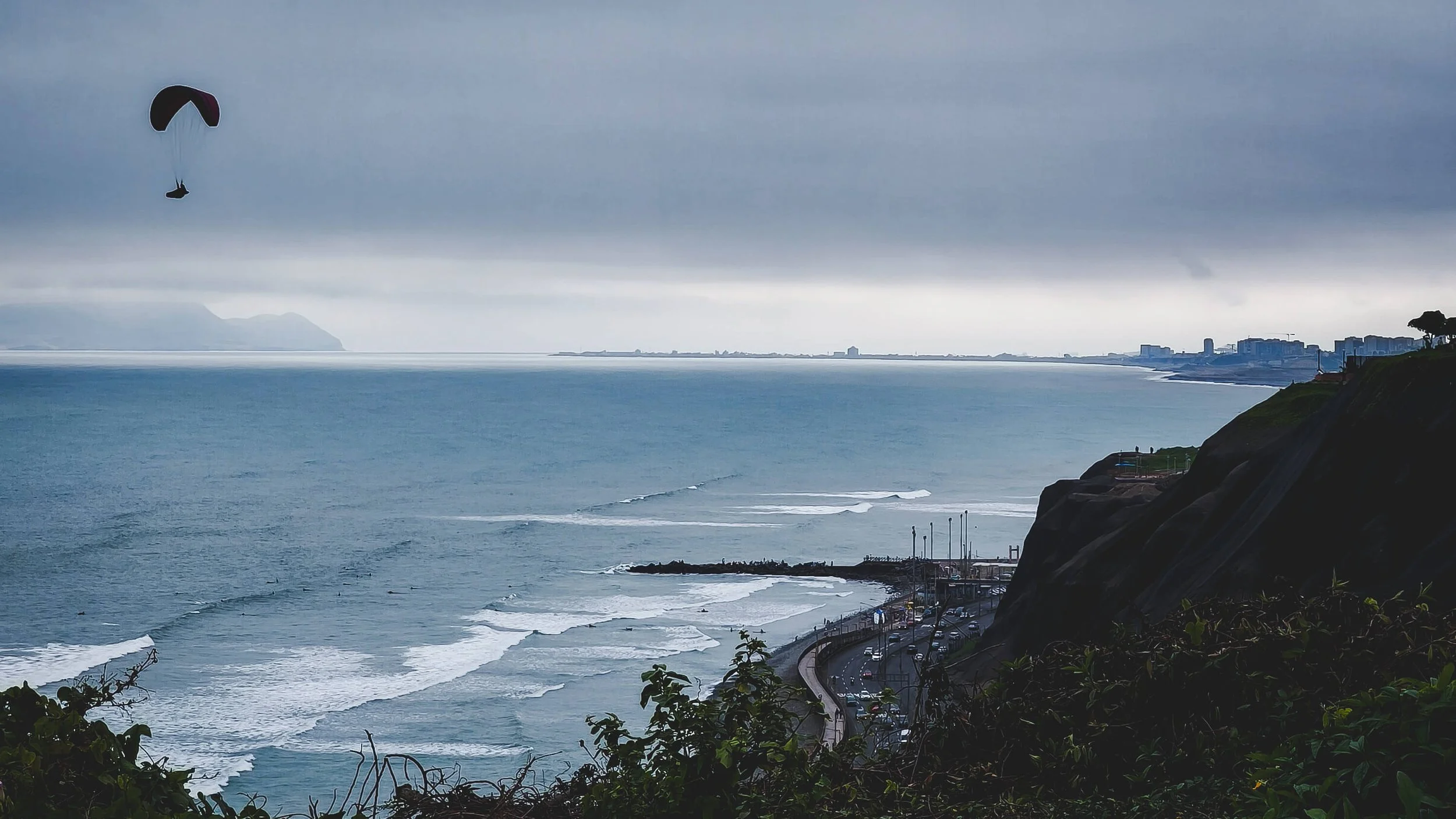
The garúa, the coastal fog, envelops the Malecón de Miraflores, the cliffside park.
🌞 Summer (December–February)
Typical temperatures: 75–81°F (24–27°C) highs / 65–68°F (18–20°C) lows
Weather: Warm, sunny, often clear skies; can be humid.
What to pack:
Lightweight tops or dresses
Shorts or breathable pants
Sandals or sneakers
Sunglasses
Sunscreen
A hat if you use one
Breathable fabrics like linen, cotton, or lightweight athletic synthetics
🍂 Fall (March–May)
Typical temperatures: 72–80°F (22–27°C) highs / 62–68°F (16–20°C) lows
Weather: Mild days with cooler, breezy evenings.
What to pack:
Short sleeves or light long sleeves
Lightweight pants
A light jacket or mid-layer
Comfortable walking shoes
A layer for breezy evenings
🌫️ Winter (June–August)
Typical temperatures: 66–68°F (19–20°C) highs / 59–61°F (15–16°C) lows
Weather: Cool, cloudy, foggy, and misty. Lima winter = garúa, the coastal fog.
What to pack:
Long sleeves
Long pants
A sweater or fleece
A light puffer or insulated jacket if you run cold
Closed-toe walking shoes
Layers that still feel comfortable indoors
This is not the place where I’d pack bulky winter gear, but I would bring enough warmth for cloudy, misty days near the coast.
🌤️ Spring (September–November)
Typical temperatures: 66–71°F (19–22°C) highs / 58–62°F (15–17°C) lows
Weather: Cool mornings, mild afternoons, coastal fog.
What to pack:
Short sleeves and/or light long sleeves
Lightweight pants
A windbreaker or light jacket
A scarf if you get cold easily
Comfortable walking shoes
Besides clothing, also remember to bring
Travel adapter: Peru commonly uses Type A and Type C outlets, so check what your devices need.
Basic toiletries: Some Airbnbs in Latin America don’t provide soap, shampoo, or other basics, so check the listing instead of assuming.
Day bag or sling: Lima is very walkable within neighborhoods, and a small bag makes it easier to carry water, a layer, sunglasses, and any small purchases without dragging around your main pack.
General Tips for the City
These are the small logistics I’d want to know before arriving.
Housing
Be careful with Airbnb listings that have lots of extra house rules. Read the full listing carefully, including the house rules, and screenshot anything important.
My partner and I had a bad Airbnb experience in Lima and had to find last-minute lodging the day before arriving, so I’m now much more careful about checking rules, host behavior, cancellation policies, and anything that feels overly complicated.
For more on that and how to protect yourself, read my posts on that experience and on Airbnb tips from 100+ stays.
Transportation
My preferred Lima transportation strategy is to walk within neighborhoods and Uber between them.
Miraflores, Barranco, and the Historic Center are all walkable once you’re there, but they are not all right next to each other in a way that makes walking between them the best use of time. Rideshare makes the city much easier to navigate, especially for airport transfers or moving between districts. This is also why I recommend grouping your itinerary by neighborhood.
Pharmacies
In Peru, medicine like painkillers or allergy meds is usually sold at pharmacies rather than convenience stores or grocery stores. Inkafarma and Mifarma are common pharmacy chains, and you’ll find locations in popular areas like Miraflores.
Groceries and convenience stores
Oxxo is useful for quick snacks, drinks, and basics. For groceries, common chains include Plaza Vea, Tottus, and Metro. I also liked browsing Vivanda in Miraflores, a 24/7 grocery store that is a bit more luxury.
Water
Tap water in Peru is not potable. You can use tap water to wash dishes, your hands, and to shower, but for drinking and for brushing your teeth, buy bottled water. You can find large (gallon+) sized bottled water in grocery and convenience stores.
Safety and daily movement
Lima felt easiest when I planned my days around well-trafficked areas, daytime sightseeing, and simple transportation choices. I was comfortable walking around Miraflores and San Isidro, enjoyed Barranco during the day and early evening, and treated the Historic Center as a daytime visit.
As always, your comfort level may vary, but I’d plan Lima in a way that avoids unnecessary late-night wandering in unfamiliar areas.

Walkway along Avenida Arequina in Miraflores. I appreciated these pedestrian islands in the middle of busy avenues in the district.
Final Thoughts: How I’d Plan Lima Again
Lima is big, busy, and spread out, but it becomes much easier when you explore one neighborhood at a time, with good food, sensible routes, and enough flexibility to enjoy the city instead of constantly managing logistics.
For a first trip, I’d stay in Miraflores, use Barranco and the Historic Center as routed day trips within the city, plan ceviche for lunch, and pack light layers for the coastal weather. If I had more time, I’d add San Isidro for a calmer museum-and-walking day.
Explore Other Destination Guides
These destination guides use the same low-friction approach to itineraries, logistics, active travel, and one-bag packing.
Madrid Travel Guide: Start Here
A practical guide to planning Madrid, including neighborhoods, transit, itineraries, day trips, one-bag packing, and active ways to experience the city.
Lima Travel Guide: Start Here
A practical guide to planning time in Lima, including neighborhoods, food, transportation, and realistic itineraries built around how people actually move through the city.
Have a question about this?
Shoot me a message or leave a comment below — I read everything, and I’m always happy to help if I can!